Under the influence of his punk loving father and cabaret / comedy performing mother, Janek moved from singing in his school choir to learning to play drums and piano. Now, as well as producing music under his own name, Janek is also one of the founding members of the Neukolln based outfit Liquid Brain Orchestra, and one half of off-kilter duo Tutu Amuse with guitarist, vocalist and actor Rosa Landers. Janek"s debut solo album "Circle Of Madness" is a record that is best described by himself as a snapshot of "something at some point" and encourages the listener to "stay curious while trying to maintain a balanced and non toxic relationship with perfectionism on this discovery of new land through music, channelling self expression and learning".
Cerca:point music
After 2021’s critically acclaimed album “Afraid To Leave”, Berlin based post-punkers Bleib Modern invited artist friends to take an outside perspective on their tracks, resulting in the “2 Afraid 2 Leave” compilation, featuring remixes and reworks from several esteemed names within the darkwave, post-punk and EBM music scenes.
From club bangers like IV Horsemen’s version of “Bitter Smile” and M!R!M’s dreamy lo-fi bedroom synthpop sound on “Into The Night” to Danish deviant pop artist Dune Messiah’s crooner “Loony Voices”. The album also boasts contributions from luminaries like The KVB, The Underground Youth, Blind Delon, Shad Shadows and various Bleib Modern band member side projects.
“2 Afraid 2 Leave” offers listeners a chance to experience Bleib Modern’s music from an altered vantage point, a welcome interlude as the band forges ahead with new creations.
Authenticity is important in music culture, at least to those whose relationship with it is a lifelong love affair. As listeners, we instinctively respond to artists whose musical output is an authentic representation of their inspirations, experiences and working methods.
By any measure, Guillaume Metenier’s collaborative Soul Sugar project oozes authenticity. It began in the late 2000s as an outlet for the virtuoso organist and producer’s updated takes on ‘60s and ‘70s soul-jazz and Hammond funk, but over the years it has evolved into something entirely different: a vehicle for classic dub and reggae inspired musical fusions made in collaboration with friends and like-minded musicians. As a result, Soul Sugar albums mix impressive musicianship with great grooves and untold nods to the sounds and artists that have helped shape Metenier’s musical outlook.
This authentic approach and soul-enriching sound is naturally in evidence on Soul Sugar’s firth studio set, Just a Little Talk, which is set to be released by Metenier’s own Gee Recordings label in March 2024. This time round, Metenier’s close circle of musical collaborators includes Blundetto, Samuel Isoard, Yvo Abadi, Jolly Joseph, Jahno, Shniece, Slikk Tim and Leo Carmichael. While many are old friends who have appeared on previous albums and singles, there are some first-time collaborators too.
This familiar-but-also-fresh approach is mirrored by the blend of tracks on offer on Just a Little Talk. New songs and instrumentals sit side by side with a small selection of on-point cover versions – something Metenier has been doing since the inclusion of Jimmy Smith and Dr Lonnie Smith covers on 2009 debut album Nothing But The Truth. Memorable covers since have included ‘Why Can’t We Live Together’, ‘I Want You’ and ‘Never Too Much’, all featuring the honeyed voice of Leo Carmichael.
This time round, the headline-grabbing covers are undeniably special. You’ll find takes on Curtis Mayfield’s ‘Makings Of You’, re-framed as a languid roots reggae song featuring voiced by the returning Carmichael, and Donald Byrd’s ‘Blackbyrd’, which Metenier has brilliantly re-imagined as a fabulous fusion of Studio One dub and Blaxploitation funk.
Yet it’s the album’s original compositions that arguably stand out. For proof, check lovers rock-influenced reggae-soul treat ‘The End of Your World’ (featuring heart-aching roots style lyrics and Junior Murvin-esque lead vocals by Jolly Joseph), the similarly conscious ‘Just a Little Talk’ and recent single ‘Top of My List’– an effortlessly emotive gem marked out by Metenier’s weighty dub bassline and Shniece’s incredible lead vocal.
The original instrumentals, in which Metenier often trades licks and solos with guitarists Slick Tim and Samuel Isoard, are similarly impressive – and, to return to our theme, as authentic as they come. Fittingly, one of these – ‘Tubby’s Ghost’ – was originally written and recorded in 1998 with bassist Patrick Bylebyl, who was then Metenier’s partner in a project called Seven Dub. It is, then, a new cover of one of Metenier’s own tunes – and a pleasingly heavyweight one at that. It delivers a genuinely pleasing conclusion to Soul Sugar’s most true and authentic album to date.
John Coltrane's landmark 1961 jazz album My Favorite Things was born of the same recording sessions that yielded a majority of the albums Coltrane Plays the Blues (1962), Coltrane's Sound (1964), and Coltrane Legacy. That My Favorite Things was recorded in less than three days was in itself, remarkable. This record marked a significant turning point in Coltrane's career and showcased his distinctive playing style, which continues to inspire and influence musicians to this day. Coltrane's playing on My Favorite Things can be described as innovative, exploratory, and deeply emotive. The unforced, practically casual soloing styles of the assembled quartet — which includes Coltrane (soprano/tenor sax), McCoy Tyner (piano), Steve Davis (bass), and Elvin Jones (drums) — allow for tastefully executed passages à la the Miles Davis Quintet, a trait Coltrane no doubt honed during his tenure in that band, notes AllMusic. Coltrane was known for pushing the boundaries of jazz and expanding the possibilities of the saxophone as an instrument. Throughout the album, Coltrane's improvisations are characterized by their intensity, virtuosity, and sheer creativity. The title track is a modal rendition of the Rodgers and Hammerstein song "My Favorite Things" from The Sound of Music. Coltrane's use of modal playing made him a pioneer — modal jazz emphasizes improvisation over specific chord progressions. Coltrane's modal approach allowed him to explore a broader range of tonal colors and to create more open and expansive musical landscapes. Each track of this album is a joy to revisit. The ultimate listenability may reside in this quartet's capacity to not be overwhelmed by the soloist. As a soloist, the definitive soprano sax runs during the Cole Porter standard "Everytime We Say Goodbye" and tenor solos on "But Not for Me" easily establish Coltrane as a pioneer of both instruments. In 1998, My Favorite Things received the Grammy Hall of Fame award. The album attained gold record certified status in 2018, having sold 500,000 copies. We've given this definitive reissue of such a landmark album the presentation it deserves: Mastered directly from the original master tape by Ryan K. Smith at Sterling Sound and cut at 45 RPM. Pressed on 180-gram vinyl at Quality Record Pressings, and housed in tip-on old style gatefold double pocket jackets with film lamination by Stoughton Printing.
Miles Davis created just one studio album with his original sextet: Milestones. And he made every moment count. Pairing with Cannonball Adderley, John Coltrane, Red Garland, Paul Chambers, and Philly Joe Jones, Davis not only laid the groundwork for the modalism that immediately followed but tailored a genuine modern-jazz masterwork laden with performances among the most explosive of his distinguished career. Sandwiched between the more famous 'Round About Midnight and the epochal Kind of Blue, Milestones remains a seminal work of art.
Sourced from the original master tapes and pressed on dead-quiet SuperVinyl, Mobile Fidelity's numbered-edition 180g LP grants each musician their own space amid broad soundstages. Afforded the benefits of a nearly non-existent noise floor and supreme groove definition, this vinyl reissue doubles as a time machine back to the February-March 1958 recording sessions.
Colors, shapes, and dimensions appear in the manner that resembles what you'd glean from behind a studio control room's window. Davis' burnished trumpet is rendered in three-dimensional perspective and seemingly coaxes the band to play with unburdened zest. Coltrane's trademark saxophone teems with lifelike tonality and images with specificity; his solos work in tandem with and against the driving rhythms. Garland's swaggering piano lines? Visualize the keys as he hits full stride, the chords and fills slithering around skeletal frameworks.
Inducted into the Grammy Hall of Fame and selected as a "Core Collection" record by the Penguin Guide to Jazz, Milestones is as famous for its title track – widely considered ground zero for modalism and bolstered by Jones' hallmark "Philly Lick" rim shot – as the players that produced it. The launching pad for many of Davis' improvisational flights, the album teases the explorations Coltrane would soon chase. Davis' own solo work broaches territories that far exceed what he had done in his bop-rooted past. Every song is a highlight.
Take the bravado "Dr. Jackle," featuring a hot-foot pace and bebop strains, or "Sid's Ahead," which continues the album's blues theme while juggling edgy harmonics and inside-out structures. On "Billy Boy," distinguished with an arco bass solo from Chambers, Garland gets a turn in the spotlight and channels the openness practised by one of his heroes, Ahmad Jamal. Even more instructive is the band's reading of Dizzy Gillespie's "Two Bass Hit." Three years removed from the version Davis and company recorded for the trumpeter's Columbia debut, this interpretation demonstrates the extent to which the group had jelled in a relatively short amount of time.
Then there's "Straight, No Chaser," the definitive rendition of Thelonious Monk's signature piece. Coltrane's marbled playing pulls at the tune's borders, Adderley takes liberty with solos, and Davis dances around his mates, at one point quoting "When the Saints Go Marching In" while demonstrating his knowledge of tradition and casting an eye towards the future.
About that future. Garland already had one foot out the door during the Milestones sessions to the extent Davis spells him on "Sid's Ahead." Jones would stick around for a bit longer but soon plot his exit. History proves Davis navigated the changes with visionary aplomb. Yet the chemistry, excitement, and beauty the sextet achieves on Milestones cannot be overstated. This reissue helps put the album in proper perspective – and presents the music the fidelity it deserves.
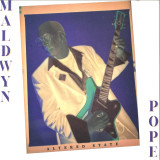
Starting his career with appearances on BBC Radio 1 and signing with Elton Johns label as a teenager, Maldwyn Pope's presence in music has been rich and productive from an early age eventually leading to working with people like Cliff Richards, Art Garfunkel and Bonnie Taylor. However, his presence in Italo-Disco has been quite scarce, but completely on point. "Altered State" is a masterpiece amongst enthusiasts and collectors of dancefloor sleaze and downtempo wellness. Heavy rock influence meets Rimini with this one off experiment from the seasoned multi instrumentalist. Original instrumental remix done by none other than Alessandro Novaga, the entity responsible behind one of Ron Hardy's favorite DJ tools (Faces Drums). B-side features an 11 minute excursion into a completely new altered state of dubby delayed trance, for special cosmic holes only. Re-issued with new full artwork.
The fresh-faced folk pop band Stornoway seem promising: They play with guileless vigor, have a light-stepping chemistry as a unit, harmonize well. Their lead singer Brian Briggs has a lovely, pure high tenor, the kind of voice that effortlessly conveys simple longing. And yet, on their second album, Tales from Terra Firma, they continue to be almost crushingly dull, making well-appointed and cheerfully empty music that successfully communicates next to nothing.
Their Achilles Heel is a simple and unfortunate one, the same on Tales as it was on 2010's Beachcombers Windowsill. Stornoway are clearly in love with Celtic and British folk, and yet they can't write a memorable melody to save their lives. Try to sing along to the verse melody of "Zorbing", their most well-known tune, and pay attention to what your face muscles are doing; most likely furrowing with the effort of recall. Each of Tales' painstakingly arranged nine songs sinks underneath the weight of this insurmountable problem, which is a shame.
If you're making folk-pop, an inability to write a catchy melody is a difficult deficiency to overcome. Stornoway try valiantly with their complex arrangements, which quickly grow exhausting. “You Take Me as I Am” is cluttered with horn charts and pointlessly banging piano. “(A Belated) Invite to Eternity” builds to a full Explosions in the Sky crescendo, with glimmering tremolo guitar and a “Tonight, Tonight”-style sweeping string section, but having built zero momentum and generated zero heat until that point, their planned fireworks display fizzles.
“Farewell Appalachia” follows the same pattern, with celesta, finger-picked acoustic and electric guitar all tracing an emptily pretty circle with nothing in the center. The melody of "The Great Procrastinator" is almost cleanly written enough to be memorable-- and then the ersatz Dixieland jazz interlude crashes in. Stornoway are deft players, and the transitions are tightly managed, but this is praise on the same order as praising the brushwork in a hotel-room painting.
Briggs’ lyrics are filled with uncomplicated images of the good old British countryside, but his lyrics trample over all these dew-covered fields with wordy, awkward phrasing: "And in the gathering dew, I was lucid as a floodlight,” goes a line from “(A Belated) Invitation to Eternity”. “There's a hunger in the air/ A lemon swollen in the trees" he bleats on “Knock Me on the Head”. On “The Great Procrastinator”, he sings that he is “a scientist with far too many metaphors and far too little data to conclude in time.” They don’t read particularly well, and they don’t sound much more natural when sung.
Tales From Terra Firma is a peculiar record-- carefree music that feels leaden; tuneful-sounding songs that offer no tunes to hold onto. They seem an odd fit for 4AD, a label mostly home to singular voices. They may be a mercenary signing, an attempt to ride the coattails of Mumford and Sons' success. But Mumford and Sons, as head-smack simple and pandering as they are, have a pretty crucial ingredient in their arsenal: they write anthems. In that regard, they have Stornoway pretty thoroughly beat.
- 1: Big Hitters Feat: Armand Schaubroeck (Rock Version)
- 2: Roma
- 3: Everybody's Ill (At The Moment) Part 1
- 4: Everybody's Ill (At The Moment) Part 2
- 5: Moving On
- 6: Nobody Likes Me Feat: Jessica Winter
- 7: Make Luv (I Like To Party)
- 8: Alpha Business
- 9: These Hands Aka Danny Knife Feat: Peter Doherty
- 10: Sort It Out Down There
- 11: Wimpy (Album Version)
- 12: Two Kinds Of Music
- 13: Big Hitters (Reprise)
Arctic Moss Vinyl[25,17 €]
PREGOBLIN II is a strange name for a debut album. For the artist who created it, Alex Sebley aka PREGOBLIN, its astonishingly heartfelt and brilliantly catchy assemblage of songs is the culmination of a tortuous genesis period. Its release finally, he hopes, will usher in a fresh, more positive chapter for him, a sequel to all the misery and bullshit up to this point – hence the title. The creative journey to this point has been labyrinthine and frequently painful. As far back as the early ’10s, Sebley was registering his embryonic talent alongside Lias and Nathan Saoudi in The Saudis, the chaotic pre-Fat White Family ensemble where he played guitar and co-authored raw, post-punk material including FWF’s breakthrough tune ‘Touch The Leather’. PREGOBLIN receive a healthy 50,000 plays a month on Spotify. Previous singles include: Combustion which to date has amassed 2.2M streams and was dubbed ‘Single of the year’ last year in The Quietus. Other PREGOBLIN songs include Anna (flowers Won’t Grow), Love Letters, Snakes & Oranges and Wimpy & Wimpy Love with the Pop Group. “PREGOBLIN II’s genre-straddling dexterity and melodic riches mark it out as a loser classic fit to rank alongside Beck and Daniel Johnston. The tunes are memorable and the execution’s forward-facing and inspired” ★★★★ MOJO MAGAZINE // Live Shows February: 2nd Friday London - Amp Studios (with Harry Merry) 17th Saturday Leicester - Academy 2 (with Pip Blom) 19th Monday Cambridge - Junction 2 (with Pip Blom) 20th Tuesday Brighton - Chalk (with Pip Blom) 21st Wednesday London - Heaven (with Pip Blom) 24th Saturday Bristol - Simple Things Festival 25th Sunday Milton Keynes - MK11 (with the Libertines)
- 1: Big Hitters Feat: Armand Schaubroeck (Rock Version)
- 2: Roma
- 3: Everybody's Ill (At The Moment) Part 1
- 4: Everybody's Ill (At The Moment) Part 2
- 5: Moving On
- 6: Nobody Likes Me Feat: Jessica Winter
- 7: Make Luv (I Like To Party)
- 8: Alpha Business
- 9: These Hands Aka Danny Knife Feat: Peter Doherty
- 10: Sort It Out Down There
- 11: Wimpy (Album Version)
- 12: Two Kinds Of Music
- 13: Big Hitters (Reprise)
Linen White Vinyl[25,17 €]
PREGOBLIN II is a strange name for a debut album. For the artist who created it, Alex Sebley aka PREGOBLIN, its astonishingly heartfelt and brilliantly catchy assemblage of songs is the culmination of a tortuous genesis period. Its release finally, he hopes, will usher in a fresh, more positive chapter for him, a sequel to all the misery and bullshit up to this point – hence the title. The creative journey to this point has been labyrinthine and frequently painful. As far back as the early ’10s, Sebley was registering his embryonic talent alongside Lias and Nathan Saoudi in The Saudis, the chaotic pre-Fat White Family ensemble where he played guitar and co-authored raw, post-punk material including FWF’s breakthrough tune ‘Touch The Leather’. PREGOBLIN receive a healthy 50,000 plays a month on Spotify. Previous singles include: Combustion which to date has amassed 2.2M streams and was dubbed ‘Single of the year’ last year in The Quietus. Other PREGOBLIN songs include Anna (flowers Won’t Grow), Love Letters, Snakes & Oranges and Wimpy & Wimpy Love with the Pop Group. “PREGOBLIN II’s genre-straddling dexterity and melodic riches mark it out as a loser classic fit to rank alongside Beck and Daniel Johnston. The tunes are memorable and the execution’s forward-facing and inspired” ★★★★ MOJO MAGAZINE // Live Shows February: 2nd Friday London - Amp Studios (with Harry Merry) 17th Saturday Leicester - Academy 2 (with Pip Blom) 19th Monday Cambridge - Junction 2 (with Pip Blom) 20th Tuesday Brighton - Chalk (with Pip Blom) 21st Wednesday London - Heaven (with Pip Blom) 24th Saturday Bristol - Simple Things Festival 25th Sunday Milton Keynes - MK11 (with the Libertines)
The ever poignant yet exceedingly elusive Chorg Dorgon speaks on the new album by Charles Moothart, entitled Black Holes Don’t Choke: “For the sake of clarity, and its clarity that we seek, Charles has been a pillar of our musical experience since he began playing eons ago in the various projects and countless albums he has contributed to. Charles is a musician who has been constantly on the road for years playing in Ty Segall’s Freedom Band and Fuzz. When there has been a rare time away from those engagements especially in the post-pandemic scramble to catch up world of gigs and tours, he has been spending all of his time in his laboratory figuring out how to synthesize all of the info he has collected and musical ideas he has developed in the past few years since the last CFM record and subsequent shows for this new solo work. Just before the pandemic started, he was out playing solo shows in a project that revolved around an MPC sampler, just to give an example as to the wideness of his explorations. His result is Black Holes Don’t Choke. Love songs for the apocalypse. A prayer toward optimism amid chaos. A plea toward nature. The themes on this album are the themes of today. Charles appeals for us to visualize evolution. And with a signature, the music sounds exactly as you want it to. It sounds like Charles Moothart’s music only more evolved and with greater focus and direction. With greater textural dynamic and more sonic variation and realization, but never sacrificing the insane riff that he is clearly the master of. He gets to the point on this record. He is presenting a voice you can understand and rely on as you make your own journey into it. Create your own meanings. The record now belongs to the world. Because we all start a thought as that which is beginning-less and endless and at some certain point it becomes its own thought, takes it owns shape and becomes itself, separate from the thinker, separate from the observer. alive in the ether!”
When accidents happen, they are normally over in seconds, sometimes minutes; this one has been going on for 20 years. It is two decades since the members of Emile Parisien’s quartet played a jam session together. At the end, they looked at each other in disbelief. They had not just been hit by a collective musical thunderbolt, they also knew they had just brought...well...something...into being. The common ground between them was jazz, but each had all kinds of seeds to sow in it, from classical music and contemporary sounds to rock, electronica and chanson. Saxofonist Emile Parisien, Pianist Julien Touéry, Bassist Ivan Gélugne and drummer Julien Loutelier rip up labels, break down barriers, upset codes, and yet they know exactly where they are headed. There is a shared obsession with narrative. “The central axis of the quartet has always been storytelling,” Parisien emphasizes.
“Let Them Cook” is like a breath of fresh air, and with a band sound now firmly and unmistakably of 2024 rather than 2004. There was a particular turning point: at a concert in Sweden near the end of their “Double Screening” album tour, they had taken a chance and tried out a move from an entirely acoustic sound to incorporate some electronics.It worked, so they stayed with it: they found that these electronic punctuations never polluted the band’s DNA, but rather stimulated it. The electronic apparatus was clearly additive to the stories of these compositions, the way it all fitted together was astounding.
Which brings us back to the ever-present question: how do you get away from the classic jazz quartet of sax, piano, bass and drums? “We’re always trying to find the answer! There’s no point in redoing what the John Coltrane and Wayne Shorter groups did, because in many ways you’ll never reach their level.” “There’s a certain road in life most people walk on,” Wayne Shorter once said, “because it’s familiar, and they can jostle to get in front. I prefer to take a different road that’s less crowded, with many forks, where you get a wider view of life. I call it ‘the road less travelled’. That’s where I want to be.” In the year which marks its 20th anniversary, Emile Parisien’s quartet has never been more in tune with the thinking of one of its main influences.
slide 7 to 10 of 8
Les Égarés
Les Égarés
DOODSESKADER (Dutch for “Death Squad”) is a merging of the minds of Tim De Gieter (Amenra, Much Luv Studio) and Sigfried Burroughs (Kapitan Korsakov, Paard).
Throughout their three years of existence, DOODSESKADER has been relentlessly pushing the envelope of what it means to be a “heavy” band. From the grunge-infused sludge on their EP “MMXX : Year Zero” to the punishing blend of hiphop and hardcore of their debut album “Year One” and the sonic onslaught of relentless rapping on standalone singles such as “FLF” and “Still Haven’t Killed Myself”, they’re breaking free of any form of categorization.
The duo has been compared to genre-defying trailblazers such as Ghostemane, Show Me The Body, and Ho99o9, however, they clearly bring their own sonic palette to the table.
The red thread in all of this has been their brutally honest and introspective lyrics. Far from your run-of-the mill type of band, DOODSESKADER uses their instrumentation as a sonic backdrop for the emotion and message they try to convey; their music serves as a mirror for life itself. Sometimes brutal, sometimes fragile, sometimes energizing, but always unexpected.
Now, on March 8th, with the arrival of their sophomore album “Year Two”, DOODSESKADER takes things up another couple of notches. From silky-soft “Pastel Prison” to the absolute carnage of “The Sheer Horror Of The Human Condition”, this record is a testament to both their creativity and their will to leave their mark on this world. It’s a trip in every sense of the word, tapping into even more genres such as R&B, techno, hardcore punk, and moody ballads reminiscent of the 90s, all blended seamlessly in their musical vocabulary and making for a sonic journey unlike anything you’ve heard before.
Where their last record “Year One” saw the duo struggling with their inner demons both past and present, “Year Two” is an undeniable display of progress; not only introspectively, but also musically. De Gieter and Burroughs sound outright bloodthirsty, ready to take on anyone in their way. Tracks like “Bone Pipe” or “I Ask With My Mouth, I’ll Take With My Fist” paint a vivid picture of the band’s will to plot their own their path through this world, while at the same time slowly coming to terms with their pasts on tracks like “Peine” or “People Have Poisoned My Mind To A Point Where I Can No Longer Function”. “Year Two” undeniably sees DOODSESKADER’s promise fulfilled: it’s both a complete teardown of genres and boundaries, a sonic wrecking ball wielded by two people trying to get better.
Live, DOODSESKADER proves to be an absolute must see, translating into their sold out AB-release and a sleuth shows over Europe playing with acts such as Brutus and Amenra and on the stages of festivals such as Hellfest (FR), Mystic Fest (PL), Lokerse Feesten (BE), Fluff Fest (CZ) and much more.
- A1: Long Life Death
- A2: Vortix
- A3: Zarathustra Dance
- B1: Eternal Sunshine Of Solitary Mind (W/ Massimiliano Pagliara)
- B2: Sadness Is Only Way To Happiness
- C1: Raver's Heart Is A Mess (W/ Brame & Hamo)
- C2: Memory Is A Clock
- D1: We Don't Know The Way, We Just Stay (W/ Pablo Bozzi)
- D2: Music Will Never Stop, Party Will Never End
Younger Than Me announces his debut full length "The Golden Age Of Love", to be released on 90's Wax this coming March 2024. The record is the perfect example of the breadth of his irrepressible and unique sound. Featuring collaborations with Massimiliano Pagliara, Brame & Hamo and Pablo Bozzi. The artist is an Italian native known for a modern interpretation of '90s club music' - a dynamic blend of Progressive House, Trance, EBM, Breakbeat, and Techno ideas. This first album is a love letter to a deep-rooted passion for the idiosyncrasies of rave culture and the crossover points with contemporary electronic music.
Younger Than Me, an artistic project by Francesco Mingrino that is steeped in the nostalgia of ‘90s rave, yet not at all trapped in that past. A project that has cemented a special place in the electronic music scene with a string of records on labels like Bordello A Parigi, Amsterdam-Utrecht based platform XXX, Rotterdam’s Bar and Jennifer Cardini’s Dischi Autunno. To this point Francesco has pushed his fun yet forceful sound, with many releases on his own 90's Wax, and collaborations with people like Skatebård, Francesco Farfa, Timothy Clerkin and Curses (as Y2C).
"The Golden Age Of Love" as a package is curated in Younger Than Me's characteristic style. Opening with "Long Life Death", a track that sets the stage with a cinematic soundscape in a classic Carpenter vibe. Picking up the tempo "Zarathustra Dance" takes you right into the golden age itself, its low slung beat and carefully sequenced lead line pushes an ever building tension designed to crack any dancefloor. The track with Massimiliano Pagliara, "Eternal Sunshine Of Solitary Mind", is one of the highlights, perfectly building around a catchy lead with tight arpeggio and sequenced acid. Leading us into the 2nd half of the record "Sadness Is The Only Way To Happiness" is a proto-trance beast, inspired by that period in the early 90s when Trance was less bright lights and big stages and more dark rooms and smoke filled spaces, an ever building progressive run of haunting vocals, rave stabs and rolling bass.
Whilst YTM is at home presenting dancefloor focussed material, we see him explore the other side too, with "Memory Is A Clock" like the earlier "Vortix", he ditches the 4x4 for breakbeat territory. Whilst the bass keeps the solid metronome you would expect, "Memory Is A Clock" is a track that takes a few moments, contemplative melody and trademark arpeggios take the lead. When it comes to the other collaborations on the record, the appearance of Brame And Hamo on "Raver's Heart Is A Mess" sees them lean into the Progressive nature both artists love so much. Then Pablo Bozzi lends his own unique outlook to "We Don't Know The Way, We Just Stay" in one of the standout tracks, epitomising Younger Than Me’s ability to create profound experiences.
The album concludes with "Music Will Never Stop, Heartbeat Will Never Fade, Party Will Never End", less of a title and more of a personal philosophy – the perpetual essence of rave culture and its timeless impact on music. A rhythmic belter, juxtaposed with incendiary synth-lines and staple catchy sequence work, finishing the record with one of the true highpoints. In addition the release also features four digital bonus tracks, including "The Other Face Of Loneliness" and a Prog Dance Reshape of one of the records more eclectic cuts "Zarathustra Dance" all offering an extended exploration into the creative landscape YTM inhabits.
"The Golden Age Of Love" is a debut album that ticks all the boxes; it's a celebration of a bygone era through the lens of the contemporary. Younger Than Me stands as a testament to the enduring spirit and evolving nature of the music that began in the ‘90s rave scene, with an LP that pushes Love, Progression and Fun to the forefront.
"L'idée nous est venu lors d'une conversation un peu arrosée dans un pub du sud de Londres avec Philippe du label Tapeworm" dixit François Kirmann Gamaury alias Franz Kirmann alias Dj Salinger – producteur français établi à Londres depuis plus d'une vingtaine d'années.
"Voyage voyage voyage" est une mixtape. Mais pas dans le sens traditionnelle du terme. Kirmann l'appelle une mixtape subjective, où les morceaux ne sont pas joués tels quels mais présentés tels qu'ils sont ressentis par l'artiste.
Un peu comme le DJ Vladimir Ivkovic qui ralentit certain morceaux sur ses platines pour en révéler un autre aspect, Kirmann zoom dans l'étoffe même des enregistrements, étire les notes et les sons à l'infini, pour en mettre à jour un sens caché, altérer notre perception de ces chansons qui peuvent parfois sembler un peu désuètes. Ici elles sont transformées en nappes fantomatiques et envoutantes qui évoquent un souvenir d'une période de sa vie, une trace sonore d'une époque un peu naive, qui revient aujourd'hui sous forme d'echo, une musique nostalgique trempée dans la reverb et la distortion.
Kirmann a grandit au Sénégal pendant les années 80 et il se souvient des étés de son enfance passé chez ses grand parents, les chansons à la radio, dans le bus du centre aéré, dans un Prisunic en Dordogne, où une fête de camping en Alsace: Catherine Lara, Elsa, Veronique Jeannot et bien sûr Desireless et son fameux tube "Voyage voyage".
Les chansons sélectionnées pour la cassette ont toutes en commun une incitation au départ, une recherche de l'ailleurs, un amour perdu, un souvenir, les thèmes de predilection d'une certaine pop française que l'on nommait variété.
Ces idées d'évasion sont accentuées ici par le traitement sonore qui leur est appliqué. Les chansons sont paralysés dans le temps, figées dans le son, comme si l'on avait souligné certain passages dans un roman pour les détacher du texte intégral.
Distortion, écho, réverbération et autres effets sont appliqués et donnent à la musique et au son une qualité rêveuse et distante. Certains passages reconnaissables se dévoilent et sortent de la brume sonore, ils se révèlent plus net, d'autres sont noyés dans un brouillard imprécis, une musique proche de l'ambient qui enveloppe l'auditeur.
Kirmann: "Chaque track est basé sur une chanson de variété française des années 80, je voulais re-créer une impression de distance, quelque chose de lointain. Les morceaux deviennent des sortes de tapisseries sonores mais dont l'essence de la chanson originelle est toujours présente. Il y'a un roman de Patrick Modiano où les personnages lancent des avis de recherche pour la France à partir d'une station de radio d'un pays lointain. Le son est brouillé, les voix étouffées. J'avais un peu cette idée en tête de faire quelque chose de similaire, comme si les chansons étaient entendus sur un vieux poste de radio mais émises d'une station lointaine et d'un autre temps."
Le résultat est un voyage nostalgique, une musique ambient et nébuleuse façonnée à partir de tubes synthétiques 80's. Imaginez Fennesz ou My Bloody Valentine jouant des reprises de Laurent Voulzy et vous y êtes presque…
Loveless non, Desireless oui!
DJ Salinger. Voyage Voyage Voyage – Disponible en cassette uniquement. 100 exemplaires sur le label Tapeworm.
—
Franz Kirmann is a French music producer living in London. He has made albums for various labels including Denovali, Bytes, Mercury KX. He also writes music for film and TV and is a lecturer in music production at Point Blank Music school.
- A1: Garden Of Eden (Feat. Charlotte Savary) - 3’38
- A2: Middle Of Nowhere (Feat. Charlotte Savary) - 4’22
- A3: Insomnia - 3’46
- A4: The Trip (Feat. Charlotte Savary) - 3’44
- A5: Andy’s Dream - 4’27
- B1: Game Over (Feat. Charlotte Savary) - 3’43
- B2: Around The Corner - 2’58
- B3: Stranger Night - 3’19
- B4: One Day (Feat. Charlotte Savary) - 3’30
- B5: Last Call From Earth - 3’29
The Trip is the first solo album by N'Zeng, better known as Sébastien Blanchon. It has to be said that he hid behind his (hollow) nose to sniff out the right projects (ex Le Peuple de l'Herbe, member of Entourloop). His nose is hollow, but not for the trumpet, and yet it's with this instrument that he started out. And he reinvents it, giving it a subtle place on this musical road trip we call The Trip.
A journey open to all, with no tolls and no filters, apart from the cinematic filter of this lover of original soundtracks and trip hop. Beautiful images flash before our eyes, and in our ears, the smooth voice of Charlotte Savary (Wax Tailor). An album, a very good trip for lovers of Portishead, Gorillaz, and well-felt scratches in the form of controlled skids.
He's making a name for himself as N'Zeng, with his smooth arrangements.
N'Zeng's father played trumpet with his grandfather in the Feurs brass band in the Loire department. When he arrived in Saint Etienne, young Sébastien started out with a cornet à pistons at the Conservatoire. His teacher at the time, Marcel Heyte, had won a prize in Paris at the same time as a certain Maurice André.
His father took lessons in orchestral conducting, accompanying the offspring's budding musical career, which included a course at the Festival de Cuivre in Monastier-sur-Gazeille, where he met the soloists of the Radio France orchestra. A new awareness, a new confidence: off to Lyon, not for a soccer derby, but to "beef up his game". In 1997, he was awarded a gold medal for trumpet by a unanimous jury at the Conservatoire National de Lyon.
Lyon, capital of the Gauls, was the starting point for N'Zeng, who went on to become a member of the group Le Peuple de l'Herbe. 15 years later, with several successful records to his credit, a concert in 2003 at the Transmusicales with Beth Gibbons (Portishead), and a Victoire de la Musique award, it was time for N'Zeng to move on to other things.
Arrival in the City of Light, the place where dreams come true. Nzeng's dreams are not only sonic, but also visual, for Sébastien is not only a friendly presence and a talented musician, but also a cinephile. His knowledge of music theory, acquired during his years at the conservatory, enables him to tackle music for pictures.
He created a soundtrack for the cult film Alien - The 8th Passenger, and worked with musician Rone (collaborating with Baxter Dury) and his bandmates from Le Peuple de l'Herbe, composing 2 tracks for the soundtrack of Virginie Despentes's hard-hitting film "Baise-moi". On the album "Hollywood Hustlers", with the group "Mustang Force", he pays tribute to the soundtracks of Lalo Shiffrin, Ennio Morricone... The album is also well received by the critics. He conducts the arrangements and orchestrations for the Degiheuga Orchestra, and composes the original music for the Hôtel Bellevue dance show, another success!
2019 sees the birth of "The Trip" project. On this record, no masks, but a female voice, that of Charlotte Savary (Wax Taylor), laid on a carpet of strings. With this musical voyage, trip hop takes pride of place, with a balance between the body of the instruments and the mechanics of beatmaking.
There's no getting off track on this well-balanced record, with its silky orchestrations. N'Zeng accompanies us elegantly, with his trusty trumpet as GPS, here used subtly. The album cover is a photograph taken by Sébastien Blanchon's mother, in 1973, a year when Saint Etienne was about to become French champion for the 7th time.
Sully returns to Astrophonica for a celestial collaboration with young Manchester based vocalist Salo.
Always one step ahead of the pack, Sully relinquishes the signature crusty Jungle breaks in exchange for crisp and steely, live sounding drums to provide the groove for a stripped back and crushed 808 bassline - a hi-def take on his iconic sound. This minimalist structure gives the foundations and space for Salo’s bittersweet vocals to take the lead with clarity and float off into the glorious twilight. A celestial collaboration that spotlights both artists’ strong points.
Sully totally flips the script with the ‘Not Just a Dub Mix’ by taking Salo’s vocals and giving them the Tubby treatment. The Jungle breaks return and sirens ring out - one for the club Salo, born in Tbilisi, Georgia before moving to Manchester via Glasgow as a child, is a classically trained pianist with all the swagger and charm of Manchester club music. She studied at Glasgow Music Academy and Royal Northern College of Music before working with club legends such as Zed Bias, Chimpo and Bassboy.
This is Sully’s first return to the label since 2020’s seminal, highly requested and repressed Swandive EP. At this point he honestly needs little introduction - he’s become one of the highest selling and most sought after Jungle artists for the best part of a decade and shows no signs of stopping
For his premiere recording on God Records, Phill Niblock confirms his minimalistic musical approach and composes two monumental pieces for flutes and additional voices, respectively. Commissioned by Erik Drescher and Natalia Pschenitschnikova, Niblock again delivers an almost stripped, uncompromising one-way sound monolith. Tremendous, straight, and to the point...
Phill Niblock - composition
Natalia Pschenitschnikova - bass flute, voice
Erik Drescher - glissando flute
Hakushi Hasegawa sind ein Musikerinnen aus Tokio, Japan, und die ersten japanische Künstler, welche beim Label Brainfeeder unter Vertrag stehen. Im Einklang mit dem Ethos von Brainfeeder, seit der Gründung des Labels im Jahr 2008 Künstler zu suchen, die außerhalb der Genregrenzen agieren, ist Hakushis Musik schwer zu kategorisieren, da they sich zwischen mehreren Genres bewegen: Alternative, Elektronik, Jazz, Pop/J-Pop. Manchmal ist sie hübsch, manchmal ist sie sehr intensiv und rasant. They veröffentlichen seit 2018 und haben sich in Japan mit einer Reihe von wunderbar wilden Veröffentlichungen bereits einen Namen gemacht und begonnen, international eine Kultanhängerschaft aufzubauen. Zu den bisherigen Kollabos gehören Kid Fresino, yuigot, TOKYO SKA PARADISE ORCHESTRA, Yukichikasaku/men und Eye from Boredoms. "Somoku Hodo" war Hakushis Debütveröffentlichung im Jahr 2018 als Teenager, mit den Fan-Favoriten 'Somoku' und 'Doku' - ein hyperspeed Junglist-Jazz-Workout, der frühes Squarepusher-Material positiv langweilig klingen lässt. Ihr Debütalbum "Air Ni Ni" folgte ein Jahr später im Jahr 2019 und festigte ihren Ruf als eine der aufregendsten und abenteuerlichsten Künstlerinnen Japans. Hakushi traten im Mai 2020 auf dem von Porter Robinson moderierten Online-Festival "Secret Sky" auf (4 Millionen Zuschauer) und zierten im September 2020 das Cover der einflussreichen Musikzeitschrift "MUSIC MAGAZINE".
Meatbodies’ latest undertaking and borderline lost album, Flora Ocean Tiger Bloom, is their most varied and realized work to date. It’s a melodic, hook-filled rock epic in which frontman and lead guitarist Chad Ubovich faces the trials of sobriety, redemption, reinvention while literally learning to walk and play again. Resurrection not only accompanies the record, but its production as well, Flora Ocean Tiger Bloom examines themes surrounding love and loss, escapism, defeatism, hedonism, psychedelics and much more. By 2017, Ubovich had reached a crossroads. After years of increasingly insane shows playing to heaving crowds with an everevolving and rotating door of personnel, fatigue had taken its toll and he realized another change was on the horizon. Retreating to the seedy Los Angeles underbelly—in search of meaning and a reset—he escaped into that world, ignoring his own well being, trying to forget his successes. It was at this point that Flora Ocean Tiger Bloom began to take shape—a project built by a man searching for new beginnings and his own sense of self. After sobering up, sessions began with longtime collaborator Dylan Fujioka. However, due to discrepancies with the studio, tensions were high and the plug was pulled. And as the world took a back seat, so did the idea of Flora Ocean Tiger Bloom. Not wanting to sit still at home, Ubovich began to comb through his previous demos, and, with that, 333 was born, the now de facto third Meatbodies album. Yet Flora was never far from Ubovich’s mind. When restrictions started to lift, Ubovich headed to Gold Diggers Sound in Los Angeles, backed by engineer Ed McEntee and a team of colleagues and friends, and completed the final act to the album. It recalls the searing Blue Cheer-meets-Iggy Pop-with-psychedelia that permeated previous releases, but adds new elements of shoegaze, classic alternative, Britpop, drone, and hints of country. Simultaneously an ode to ’80s LA punk and the rise of indie / alternative music in the U.K., it plays like a radio station broadcasting from the void.
Australischer Rock-Glanz trifft auf 80s Sunset Strip! The Neptune Power Federation kehren mit ihrem sechsten Album zurück, einer Sammlung fieberhafter Night Stories, untermauert mit purem Rock! Die vertonten Kindergeschichten mit einem ausgesprochen US-Rock-Sound der frühen 1980er Jahre sind inspiriert vom unbeschwerten und rücksichtslosen Sunset Strip in LA. Und hier wendet sich die Band bei 'Goodnight My Children' auch dem Radiorock der späten 1970er Jahre zu. Die acht Tracks feuern mit purer Rock-Inbrunst, inkl. dröhnender Gitarrensoli und dem stets markant verlockendem und hypnotisierenden Gesang von Front-Lady Screamin' Loz Sutch. Dieses Album dürfte die bisher beste Vocal-Performance der Sängerin mit dem beeindruckenden Kopfschmuck sein.
Die Sessions waren organisch und intuitiv, ermöglichten es Sutch so, die klassischen Pop-Strukturen der Tracks zu erweitern. Perfekt zum Album-Thema, das eine Sammlung nächtlicher Geschichten symbolisiert, die, so schrecklich sie auch sein mögen, den Zuhörer in der fürsorglichen Umarmung von Sutch, der kaiserlichen Priesterin, zurücklassen. Und als zusätzlichen Bonus erhalten die Fans ein illustriertes Märchenbuch, das die Veröffentlichung begleiten wird.
Die Band wird Ende Februar / Anfang März auch Deutschland-Konzerte spielen und dabei u.a. in Hamburg das 'Hell Over Hammaburg'-Festival beehren.
Rock Hard (10/10 Pkt.)
"Wie starb Sid Vicious? Wo ist Richie Edwards? Wann kommt ein neues Guns-N´-Roses-Album? Was ist die wahre Identität von Jens Peters? In die Reihe der großen Mysterien des Rock fügt sich das Rätsel, warum THE NEPTUNE POWER FEDERATION in gottverdammten kleinen Clubs spielen, während die konzeptionell ähnlich gelagerten Ghost Arenen füllen. Mangelnde Vielfalt ist nicht die Ursache: Die Aussies packen rustikalen Rock´n´Roll, Düster-Doom und Schrägo-Psych ebenso in ihre knallbunte Wundertüte wie überlebensgroßes Musiktheater mit viel Pomp, Musical-Flair und Pop-Appeal. Die Songs stehen dem Durchbruch auch nicht im Wege. Sie sind entweder ziemlich gut, verdammt gut oder schlicht großartig. Manche tänzeln leichtfüßig im glamourösen Power-Pop-Gewand einher (´Let Us Begin´, ´Twas A Lie´), andere klingen, als würden Heart Black-Sabbath-Stücke interpretieren (´Lock & Key´). Wieder andere lassen New-Age-bewegte Queen auf die synthetisierten ZZ Top der Achtziger treffen (´Woe Be Father´s Troubled Mind´, ´Hariette Mae´). Viele lassen sich auf Anhieb mitpfeifen, wobei die Eingängigkeit nie auf Kosten der Tiefe geht. Vielmehr sind die Arrangements so detailverliebt und wendungsreich, dass es fast zu Tränen rührt. Doch kommen wir zum "unique selling point" der wahnwitzigen Truppe: dem intergalaktischen, Brautkleid tragenden Christbaum mit Hirschgeweih namens Screamin Loz Sutch. Dass sich die "Imperial Priestress" in den hochherrschaftlichen Gesangskreisen von Farida Lemouchi, Chrissie Hynde oder gar Ann Wilson bewegt, war bereits erwiesen. Der hochdramatische Titeltrack zeigt jetzt, dass sie nicht von dieser Welt ist. Kurz: Es gibt keinen Grund, warum TNPF nicht längst Megastars sind - außer einer großen kosmischen Ungerechtigkeit. Es ist an euch, diese zu korrigieren!"
Legacy (12/15 Pkt.)
"Die australische Ausnahmekapelle um Screaming Loz Sutch, ihres Zeichens Exzentrikerin und Frontfrau mit großartiger Stimme, legt das sechste Album auf den Tisch, und bereits nach dem ersten Hören ist klar: Das Ding könnte verdammt groß werden! Full Energy Rock'n'Roll spielst du nicht, ohne, wenn du es gut machst, an die Großen zu erinnern. Aber auch wenn die Dinos im Sound der Band präsent sind, wirken die Songs easy und frisch von der Leber weg gerockt ('Let Us Begin' und 'Lock & Key'). Manche Parts lassen einen fast unverschämten Pop-Appeal in den Rock'n'Roll tropfen und begeben sich auf Ausschweifungen in die psychedelisch poppige Ecke ('Woe Be Father's Troubled Mind'). Ein Stück, in dem die Musik mit einer überlebensgroßen Attitüde flirtet, was die Gitarrensoli vor dem beschwörenden Part schön ins Rampenlicht setzt. Danach die klassische Mitklatsch-Nummer, ab da mutiert die Platte langsam zum Überflieger ('Betrothed To The Serpent'). Am Ende strecken sich Musik und Songwriting und wachsen aus dem bisherigen, schon vielschichtigen Können der Band nochmals hinaus. Da trifft der Pop-Appeal auf gefühlvollen Blues-Sound und wird zu wuchtigem Siebziger-Rock. Das funktioniert bestens. Nicht zuletzt, weil die Instrumentalfraktion auf dem Album fast blind miteinander zu harmonieren scheint und Screaming Loz Sutch die Kunst vollbringt, die nötige Theatralik, das gewisse Quäntchen an Exzess und die genau dosierte Übertreibung in ihr Organ zu legen. Der Titeltrack legt davon erstaunliches Zeugnis ab! It ain't a long way to the top … anymore."