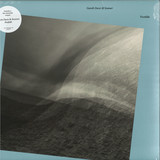
‘Still Strange’ reaches back into the prized loft tapes of Jeff Sharp aka Orior following the revelatory discovery of his overlooked early ‘80s gems on 2016’s ‘Strange Dream’ collection, as coaxed out by
DDS dons Miles Whittaker and Sean Canty.
Huddling another sublime, dusty set of analogue tapes freshly baked and remarkably well-restored by Andy Popplewell, ’Still Strange’ contains four gorgeous flashbacks to the era 1979-1983
surrounding and even pre-dating ‘Strange Beauty’, and then shifts focus to recordings that Orior made around the early ‘90s.
As with its predecessor, Orior is not alone on the material in ’Still Strange.’ From those feted early tapes we find Phil Hollis returning to lend jagged guitar on the drum machine sizzle of ‘Feels Like
Summer’, while the mysterious synth player New Cross John makes vital contribution to ‘Invium.’
Along with the aching synth sigh of ‘To Return’, which pre-dated all of these recordings, and the nine minutes of haunting bedsit strums in ‘Larbico Alt Mix’ which came from the first batch, the
early material is all arguably worth the price of admission alone for seekers of lost synth treasures - really this stuff is just so good..
However, the album’s other six tracks expand knowledge of Orior’s work into the ‘90s and also contain some extraordinary material. Salvaged from further loft tapes found in various states of degradation, and subsequently mixed down between London’s Goldsmiths College and Miles Whittaker’s Whalley Range attic (and elsewhere), they are decidedly more blunt and gloaming, especially in the Deathprod-like ‘Under Shadow’ and the near static witching hour ambience of ‘Endless’, while shorter vignettes such as ‘Unknown Future’, ‘Gothic’ and ‘Another’ point to pre-echoes of BoC’s crepuscular scapes and even Bladerunner-esque sci-fi noir soundscapes
Suche:point no point
Hailing from one of the world’s most famous harbours, Rotterdam, a true multicultural melting-pot, the music by 6-piece band called the Greyheads mirrors the daily life of this busy city. They approach jazz from a hip-hop point of view, or hip-hop from a jazz point of view, always carefully adding a perfect dose of other influences (all the members are heavily influenced by artists like Miles Davis, J Dilla, Herbie Hancock and Robert Glasper) with an exciting, groovy and vibrant tone.
After having self-released their debut EP "GREYHEADS × KYTOPIA" in 2017, they recently finished recording "HOMES", their first full length album.
Led by drummer Nello Biasini, this truly international band of like minded musicians was formed in 2016 and have since been busy creating their own, fresh and unique sound. Whether an intimate jazz club or the main stage of a big festival, they are all about creating a feel-good groovy vibe using live rlectronics, drum 'n bass, jazz, hip hop and pop fused together.
GreyHeads performed at NN North Sea Jazz 2019 and several other festivals such as So What's Next Festival, Jazz Delft Festival, Cutting Edge, ProJazz, Big Rivers Festival, as well as opening for the bands Moonchild and Knower.
'Homes' is a journey through space and time, travelling in opposite but jointed paths that lead to the places we call home. The concept of the record is to carry the listener to experience what every place and time can in any way, represent home, characterized by different atmospheres, sounds, images and sensations.
The two collaborators, known separately for contemporary electronic music & free clarinet experimentations team up to create the delirious trip, Footfalls.
Two scenes are presented here, seemingly taken from different sides of the same desolated seaside setting, loosly inspired by poet and novalist T.S Elliot and Samuel Becket. In Towards the Door, Gareth Davis´ bass clarinet breathes slow, wave-like tones that merge with the oft-rythmic electronic textures from his counterpart. A third of the way in, Robin Rimbaud´s synth erupts into a Blade Runner-esque epic harmonic section that disappears as suddenly as it arrives - leaving ripples of oscillation in its wake, slowly unfolding into the sound of waves, as it arrives back where it begun : as a full circle, drawn in echo´s of sound.
Smokefall begins with the words „Invisible choirs“, subtly spoken by a woman’s voice among a blurred distant conversation, as textural sound effects creep forwards to the point where a slow progressing but steady LFO rhythm enters. Water, metal & smoke are absorbed into a creeping tribal passage, acompanied by long clarinet tones. The piece expands further and further into a state of ecstatic harmonic noise that fulfills all parts of your body – if played loud. Both artists from here on move into full on crushing electronics, all while Rimbaud´s Kilpatrick Phenol synth drives the background with its pulses and repetative bassline. The piece has an ellipse like rotation that makes one feel a sort of blissful vertigo that reverberates in your mind after the piece has ended.
Footfalls is an euphoric trip from two artists that – although prolific - manages to arrive at the perfect meeting point to deliver two hard to shake pieces of dizzying electro-acoustic perfection.
- A1: Music To My Ears
- A2: Little Journey
- A3: Birds Of A Feather
- A4: Golden Dream
- A5: Chubby Cheeks
- A6: Guiding Light
- B1: Saskamodie
- B2: Somehow Someway
- B3: Jiinti
- B4: Music To My Ears (Reprise)
- B5: Sleepy Time
- B6: For Pepecito
- A1: Birds Of A Feather (Single Edit) 7
- A2: Guiding Light (Gonzales Solo Piano Version) 7
- B1: Birds Of A Feather (Vulfpeck Version) 7
- B2: Birds Of A Feather (Remix Feat Gza) 7
12" + 7"
In 2009 Mocky made a radical decision: after having become one of the cult figures of the leftfield Berlin electronic music scene of the early 2000s, Mocky retired his sampler and travelled to Paris to embark on an all acoustic journey with the producer Renaud Letang in the vintage Studio Ferber, previously inhabited by the likes of Nina Simone and Serge Gainsbourg.
Named after a song he made up when he was 7, using imaginary words, "Saskamodie" was an instant new future/retro classic: a return to pure musical expression by a cutting edge artist who was no longer bound by the electronic music scene. "Saskamodie" was a brave step into unchartered waters, the sound of a musician exploring where his talent can take him with rare confidence and authority. At different points you could hear a vintage soundtrack suite, a debonair jazz record (minus the solos) or a golden era '60s soul ballad recording ... yet, as if all these charming stylistic sorties weren't loveable enough, cut "Saskamodie" through the middle and you'll find that sweet, inescapably infectious melody is the lifeblood trickling through its core.
Mocky is listed as playing drums, bass, rhodes, piano, guitar, percussion, bells, recorder, vocals, whistle, organ and toys as well as writing string arrangements. Taylor Savvy, Gonzales, Jamie Lidell and Feist contribute additional instrumental and backing vocal performances that make this record sound more like a live performance than a studio creation.
"Saskamodie" has definitely stood the test of time and Mocky still successfully follows the path he started with this recording - be it on his series of digital Moxtapes, his album "Key Change", his recent "recorded-in-one-day" jazz album "A Day At United", his score for the japanese Netflix anime "Carole & Tuesday" or his writing and production work for the likes of Feist or Kelela.
Originally only released as CD/Digital Download, this 10 years anniversary limited vinyl edition brings us "Saskamodie" in it's original form, re-mastered for deluxe 180g vinyl and accompanied by an exclusive bonus 7" with a new single edit of the album's hit "Birds Of A Feather", a solo piano version of "Guiding Light" by Chilly Gonzales, the recent coverversion of "Birds Of A Feather" by LA's underground funk sensation Vulfpeck and a remix featuring a collaboration with noone less than the Wu Tang's GZA.
"An exceptionally musical album – there’s no other word for it – that could fail to seduce only the hardest of hearing, or the hardest of hearts" (Pitchfork, 8.0 review)
"An amazing record…a big hit for me" (Gilles Peterson)
"If Saskamodie was a film, it would undoubtedly be The Science of Sleep by Michel Gondry. Please take that as a wholehearted endorsement" (BBC)
With absolute devotion Shook has created an exceptional listening experience in which timeless influences of Hiroshi Yoshimura, Ryuichi Sakamoto, Steve Reich and Erik Satie are honored and thoughtfully integrated in his modern, energetic sound. Shook merges Japanese ambient and Indonesian gamelan with an uplifting mixture of electronic pop, jazz and funk. Inspired by city pop, techno pop and ambient Music for City and Nature spreads a new light on the contrasting balance between what we make and what we are. Shook: “In my 5th album I tried to document my emotional and mental state at this point in my career. It is inspired by the conflict between the energetic and busy city life and the calm, warmth and peace that nature gives. It isn’t a city ‘versus’ nature album though, it is about daily life existing in a gray area in between. I try to find a balance by connecting both sides. We can build a future in the city, but we must not forget that nature is our future.”
In her most personally narrative work to date, A Fossil Begins To Bray is the follow up on Dais Records for NYC producer Hiro Kone, furthering the dialogue set forth on her 2018 release, Pure Expenditure. While the statements on Pure Expenditure rallied behind a point of dangerous excess and injustice, the material on A Fossil Begins To Bray embark upon a journey of discovery and selfanalysis, proposing a potential reorientation towards absence in hopes of illuminating potential futures.
In Mao’s own words, “This album considers the power of absence as neither a lack or deficit, but as a quiet, indeterminable force to cultivate in this time of looming and unrelenting techno-fascism. It asks that we take pause to consider our learned languages and actualities and to better consider how desire shapes our recollections and interpretations of this ‘existence.’” This allegory is expertly applied to every song on A Fossil Begins To Bray. Mao has established a long history of employing absence in her productions to maximum effect. With a vast assortment of diverse elements at play, no single track ever feels overly convoluted and further illustrates Hiro Kone’s skillful attention to dynamic tension and flow. Tracks such as “Fabrication of Silence” and “Submerged Dragon” perfectly represent the power of absence, utilized in a matter to create unique amalgams of decisive, cinematic techno rhythms from the electronic void. As the melodic elements contained within A Fossil Begins To Bray begin to unravel and slowly take form, the unaware are rewarded with a driving yet tangible refrain that offers resolve in contrast to the dense, textureladen backdrop that forms the album’s foundation. The first single, “Feed My Ancestors”, expands upon Hiro Kone’s signature take on electronic music structures. Seemingly free from the predictable contracts imposed by any one genre’s stereotypes, Hiro Kone throttles the foreboding bassline in favor of more calculated, abstract cut-ups that gracefully hold the track in place between hopeful utopia and something more ominous.
Planning the imminent arrival of the 50th release on Touchin’ Bass, label boss Andrea Parker was digging through the warehouse during a stock take and it became apparent that there was something missing. There was a gap in the catalogue numbers. Where was TB036? Searching the archives it transpired that, for one reason or another (not least Parker’s inability to count), there actually wasn’t one.
So what better way to backfill this now documented gap than to welcome the multitalented guitarist and drummer, mathematician and multidisciplinary improviser Maria Gamboa Perez into the Touchin’ Bass fold with an updated focus for 2019.
Perez combines elements of rage, chaos, tension and anguish to form a visceral style. Her musical terrain and talent is shaped by dissonance and NO art. Under the moniker NonZero!, Perez brings Matrix Equation to the fore; a heavy 8 track EP with electro aesthetics from none other than Carl Finlow Scarletron/Silicon Scally/Voice Stealer.
Beginning her artistic career as a teenager playing as a bassist and guitarist in groups with influences from Noise, Avant Garde and the No-Wave, Perez was introduced into several areas of electronic music during the club culture years in Madrid and opted for styles such as Electro or Industrial, at which point she began to be interested in the introduction of rhythm boxes together with traditional drums.
Her passion for sound synthesis and musical exploration led Perez to introduce electronics into a solo project under the pseudonym NonZero!. Under this name she aims to make electronic music her field of sound research and for years has been continuously searching for existing relationships between sound and mathematics, focusing on the perceptual limit between music and noise.
Matrix Equation indulges in an evidential brooding angst, shifting between abstraction and the kind of elevated introspection carefully harvested over the years. With dramatic frontage in parts, blasts of boisterous energy and machine mayhem, its deployment of surprise, shifting focus and spontaneity operate in an assured statement.
Splintered beats and a foreboding sense of tension give way to a more DJ friendly logic of instinctive introductions and codas of gradual builds and breakdowns as Finlow further reworks the results to great effect.
Mount Kimbie, WXAXRXP Session, 21/06/2019: Das erweiterte Live-Lineup von Mount Kimbie demonstriert hier hervorragend, wie sehr sich ihr Material 'on the road' weiter entwickelt hat. Aufgenommen für den WXAXRXP x NTS Event. Inklusive eines Gastauftritts von Mica Levi.
Zur Sommersonnenwende 2019 nahm Warp den Onlineradiosender NTS für ein ganzes Wochenende in Beschlag, um die Feiern zu seinem 30-jährigen Jubiläum zu eröffnen. Über 100 Stunden Programm mit Mixsets, Dokus, Live-Performances und Sessions des gesamten Warp-Artistrosters von Aphex Twin über Brian Eno bis Kelela samt Gästen wie Ryuichi Sakamoto wurden von hunderttausenden Fans weltweit live verfolgt. Jetzt knüpft Warp mit der Veröffentlichung der "WXAXRXP Sessions" an diesen Event an, einer Serie aus zehn 12" Vinylen mit Radiosessions aus 30 Jahren Labelgeschichte, von frühen Peel Sessions bis zum diesjährigen WXAXRXP x NTS Wochenende, allesamt in höchster Audio- und Design-Qualität. Feat. Boards Of Canada, Aphex Twin, Flying Lotus, Bibio, Oneohtrix Point Never, Mount Kimbie, u.v.a.
A-Future presents a fierce electro-charged production debut for EON Records.
After a solid summer of gigs at IICON Glastonbury, Inner City Electronic Leeds, Gottwood and Boiler Room, A-Future now shares a progression for his DJ project which has been impressing crowds across the UK with its range of left field beats and punchy up-tempo tracks.
Deploying tricks learned from his weighty record collection, the Birmingham based producer works in hardcore breakbeat flares, deep electro basslines and headsy IDM synths into original track No Era for what is a high-grade first showing.
Censor records head and long time friend Alex Jann and Berlin’s mysterious electronica producer Secret Universe provide a remix each. Jann comes in deep with a gritty bass line that drives his version with a solid flow primed for 140bpm dance floors. Secret Universe then sets etherial moments beside to belting syncopated jungle beat programming for a headsy and heavy take on No Era.
This is the second release on A-Future’s EON Records label which launched in March 2019 with Sepehr’s Cybernetic EP featuring Stratowerx and A-Future remixes.
15 years ago in a basement in the Bronx, I attended a bunch of sessions with my long time collaborator and friend, Ray West. Ray is a lifelong DJ and home producer, and only in 2012 did he begin to release music via his well-respected underground label, Red Apples 45. He had a main studio but also this much smaller room in the back which I dubbed “Studio B” in the tradition of any multi-room recording facility who would have a second “B” or third “C” room, and the name stuck. Despite the much lower-level quality equipment in that room, like a Yamaha MiniDisc board burning mixes realtime to CD-R, there was a certain vibe to it that inspired creativity, and a simplicity that encouraged faster working methods. One of the groups that worked there was called Results. Their philosophy was whatever happened in the moment was meant to be on tape and they didn’t spend hours perfecting it. This is rather opposite to how I work in the studio and especially on my own material, of which I can be thorough to the point of finishing less than I’d like. Through working there I realized the potential of having a smaller, simpler second setup, one that was not related to my work as an engineer, or my artist career as a performing electronic musician and techno producer.
Fast forward to 2016 and I would have both a professional studio outside of the home and enough spare gear to make a smaller studio based around a 4-track cassette recorder in my living room. This was a place where I could make whatever I wanted, whenever I wanted, without the disturbances of clients, the chaos of 30th St., or any genre restrictions that I might place on myself in the big studio. I spent some time tracking down a functioning Akai MG614, the holy grail of 4-track recorders. It’s a large machine, making even the MPC3000 look small on the table next to it. With no computer, things were focused. I went through a couple of variations of the setup in my living room beginning with an MPC1000, DSI Evolver, Sonic Potions LXR, Bastl Microgranny, and a variety of classic effects that I didn’t keep in the rack at Butcha Sound like the Yamaha SPX90 and Ensoniq DP-4, plus a bunch of pedals and eventually a Korg Karma keyboard. Then I had the good sense to bring home the Emu SP1200 I was borrowing from The Martinez Brothers. Eventually I brought home the MPC3000 as well. Another thing I kept connected was a Zoom field recorder that captured sirens, street noises, and me playing the upright piano in my apartment live to tape. Results. These recordings were made in Hell’s Kitchen from July 2016 - May 2017 with the window open and the sounds of my Manhattan block inspiring the takes. — Phil Moffa 2019
Yellow Vinyl
Serotonin returns to revenge with Serotonin's Revenge 2, a four track compilation representing the depth and breath of what we live for.
While resting with his camel in the Taklamakan Desert in Xinjiang this summer, bpmf noticed a shiny object. He picked up a DAT labeled "Static Breaker - 1994". It contained some solid electro, including "Transmission Complete”. Who made this? Did it fall out of a UFO? We may never know. Look for more releases from this find coming from Serotonin Records in the future.
Hailing from Biella, Piedmont and now based in Milan, Kreggo is an eclectic and versatile artist. Defined by Juno as part of "the gum-under-the-schooldesk underground", he has been active since 2014. Along with being the brain behind the Art-Aud label and the cult Secret Rave series, he has released collaborations and projects for labels such as Lobster Theremin, Helena Hauff’s Return To Disorders, Super Rhythm Trax, FTP and Melodies Souterraines to name a few. For Serotonin, he delivers evolved, deep breaks with an edge of electro funk.
Siviyex is Toronto duo Castelvi (Bass Guitar, Vocals, Synths, Vocoder) and M. Gomes (Synthguitar, Programming). Their sound combines elements of Shoegaze, Electro, Italo and New Wave, with the conceptual influence of alternate dimensions, space, dreams and out-of-body experiences. The next wave sound of "Dreams in Wannex" is a definitive part of the world Serotonin envisions.
Schooled in dance culture since a young age, with influences and experiences ranging from rock to rave, London based Nexus 23 brings a "Vortex" of his stark, bass-heavy blend of electro and industrial sound to Serotonin records.
Also included on the vinyl version 4 loops from Serotonin in-house artists: John Selway, bpmf, Synapse and Pointsman.
Look for the digital release everywhere November 5th, 2019 and the vinyl wherever cutting edge records are sold.
Neurot Recordings are proud to reissue the landmark collaboration Neurosis & Jarboe, which was originally released in 2003. This latest version is fully remastered and with entirely new artwork from Aaron Turner.
Very limited silver metallic and black swirl 2LP - Non-Returnable
Steve Von Till explains the idea behind the remastering; "Bob Weston (Chicago Mastering Service, and member of Shellac) worked closely with Noah on making these new versions sound as good as the possibly can. Noah has the most trained critical ear for fidelity out of all of us being an engineer himself. We recorded this ourselves with consumer level Pro Tools back then, in order to be able to experiment at home in getting different sounds and writing spontaneously. The technology has come a long way since then and we thought we could run it through better digital to analog conversion and trusted Bob Weston to be able to bring out the best in it....This new mastered version is a bit more open, with a better stereo image, and better final eq treatment."
He continues about the original artwork..."Aaron felt he could create something that would unify the energy of both Jarboe and Neurosis in an elegant manner. We let him do his thing and I think it definitely adds to mystery of the album and sets it apart from the rest of our catalog."
When two independent and distinct spheres overlap, the resulting ellipse tends to emphasise the most striking and powerful characteristics of each body. Such is the case with this particular collaboration between heavy music pioneers Neurosis and the multi-faceted performer Jarboe (who performed in Swans and who has collaborated with an array of people from Blixa Bargeld, J.G. Thirlwell, Attila Csihar, Bill Laswell, Merzbow, Justin K. Broadrick, Helen Money, Father Murphy, the list goes on...) The musicians pull from one another some of the most harrowing and unusual sounds ever heard from either artist at the time - a sentiment which also rings true to some 15 years later.
Neurosis & Jarboe opens with a high-pitched whirring sound winding up as Jason Roeder's ominous tom-drum beat and Noah Landis' slinking synth line writhe in unison until Jarboe drops in, drawling in her characteristic, corrupted Southern belle voice, "I tell ya, if God wants to take me, He will." From there on in, the album is a series of abrupt shifts and cleverly juxtaposed themes that flows in a rhythm of its own. The sinister and ethereal sounds, vocal coos and electro-pulses of "His Last Words" seem like the perfect soundtrack to a David Lynch film. On "Erase," song parts are dissected and grafted one atop the other, continually building tension as Jarboe wails and yelps with Banshee fervor.
The project began with the artists working in seclusion, recording the elements that would best highlight their own characteristic integrity and personality, rather than either attempting to mimic one another's familiar elements. As recorded ideas were passed back and forth, the collaboration proved to bring out the most unhinged and urgent talents of all those involved.
Throughout the album, that signature "Neurosis note" - the sound of something simultaneously recoiling and erupting, the apocalyptic tone announcing the birth of a new world - reaches its apex and becomes evermore icy and eviscerating. Guitarists Steve Von Till and Scott Kelly trim their tones for cleaner, chorus-drenched effects layered between the thunderous distortion blasts of bassist Dave Edwardson. Likewise, Jarboe's operatic wail and other vocal contortions sound perfectly suited to the eruptive emotional fray of the music.
The collaboration is a deeply textured mosaic that is a culmination of merged aesthetics from two major influences on free-thinking sounds. It unlocked the hidden potential of electronic music as a new force in heavy rock. At a time when groups like Oneida, Wolf Eyes and Black Dice were beginning to experiment with technology in making mind-numbing leaden electro-drone freed from any essence of "dance music," Neurosis & Jarboe redefined all notions of their past - and outlined the course of heavy music to come. It's interesting to look back through the lens of this release, and think about these ideas and concepts in the present.
Neurosis & Jarboe remains the meeting point of all art that takes us beyond ourselves.
Captivity is the next highly anticipated extended EP by Kush Arora aka Only Now, following a triptych of self-released output in 2019. Continuing the project’s ever evolving engagement with themes of time and existence, Captivity encompasses versatile synthesis, mutant kuduro, widescreen sound design, turbulent cold fronts of power ambient and melodic undertones of black metal.
The product of a two-year period in which Arora was contending with transitional shifts in his personal life, Captivity is a culmination of what the project has explored both in a prolific run of recent material and as a whole, across several years of time dilating, mind altering music.
Although shaped by adversity and corresponding sentiments of angst and insignificance, Captivity is pitched at total transcendence. Adopting a meticulous approach to production, a methodology which opens up almost every element to transformation and deconstruction, Arora generates forms which possess a sense of pointillist precision, as well as a keen psychedelic potency.
Despite consistency with his earlier output as Only Now, Captivity is nevertheless an indication of Arora’s ability to challenge internal and external assumptions. The introduction of new hardware – namely, the Nord Drum 3P synthesizer – as well as the incorporation of far-flung atmospherics – closing track ‘Clock Lust’ features field recordings from a trip to Kyoto – delivers fresh enterprise and experimentation, contributing to the expansion of a sound signature which remains as unpredictable and compelling as ever.
With the eponymous opener, Arora combines fathomless underworlds and riotous breakbeats. On ‘Mutants’ a hyper-kinetic onslaught of percussion, low-end and stray cut-ups of noise break out, building to a panorama of thunderous industrial firmaments. ‘Perpetual Slaughter’ maintains momentum with icy, ricocheting FX and concussive, tribal drums, and then unexpectedly shifts into a poignant outro which brings to the fore the enduring influence of black metal on the project. ‘Bound 2’ is cut with relentless sub-bass and rapid syncopation, resembling an abstracted form of juke music, something that could feasibly have been masterminded by Autechre. With the LP’s finale, ‘Clock Lust’, Arora presents a finale of transfixing 3D ritualism, the lone toll of a bell ringing out into a mesmeric emptiness.
Together these form a complete statement from Arora, illustrating the fertile and open-ended territories the Only Now project has arrived at after promising outings on Infinite Machine and Discrepant imprint Sucata Tapes. With Captivity Arora delivers a substantial highpoint and a profound voyage into the world of Only Now.
Maybe it’s too much to ask for a moment of your attention. As we grow older and keep
diving into this era of information, disinformation, fake news and all that, we also tend to
take a step back and listen to the intents of those social media adverts that tell us to slow
down, breathe in, breathe out, enjoy everything around you a little bit. So, if it’s not too
much to ask, you can press play and start enjoying “D-A-D”. If you’re doing that, you can
even stop reading this, because you don’t need further instructions.
It’s the second time in less than two years that we release music from London based
Greek musician Tasos Stamou (Athens, 1978). The wordplay of “Musique Con Crète”
(CREP54, 2018) was a backdoor to an adventurous and ‘concrete’ experience with
sound. “D-A-D” follows up on that. Recorded between 2015-2018 as an homage to both
his Dad and the more commonly used tuning on the Greek Bouzouki, D-A-D, Stamou
delivers 40 minutes of music that explores ancient and modern languages, while crossing
his unique instrumentation with celebrations of new/old folk, field recordings and
electronics. In his music, there’s a constant flow of ideas that defy standard tonalities and
the conception of “traditional”.
Improvisation was the starting point for the creation of some of the nine pieces Tasos
Stamou wrote for “D-A-D”. The electronics often serve to interact with field recordings that
are wisely manipulated, while acoustic instruments, like a Bouzouki, build up the
connection with the tradition and the necessity to slow down.
With his unique atmospheres, Tasos is whispering some life hacks to build a better life.
Nowadays, it’s quite rare for a record to organize the way the listener wants to listen to
music, to sounds. “D-A-D” creates a beautiful systematization between old and new,
folk/traditional music and the technology in sound. There’s – still - some boldness in that.
All songs by Tasos Stamou
Mastered and Cut by Rashad Becker
After their brilliant label debut with "Grow Yes Yes" in 2017, Professor Wouassa now returns with their brand new third album on Matasuna Records.
The Swiss band's career spans more than 15 years, where they have played at many major festivals in Switzerland and abroad. The 11 members of the band have perfected their musical qualities over the years and captivate as a well-rehearsed live band with their energetic and rousing shows. So it isn't surprising that they supported concerts of Afrobeat legends like Ebo Taylor or Seun 'Anikulapo' Kuti.
Their still exuberant creativity can also be heard on their new work entitled Yobale Ma!, which in Wolof's language can be translated as "take me" or "get me". With their new album they take the listener to their musical island to explore the borders of Afrobeat and beyond.
The song Fallou Fall opens the album in a jazzy & big band way, and quickly switches to an afrobeat theme and solo. In the middle the song breaks into an Afro-style pattern, which is performed by Thaïs Diarra in Bambara (Malian dialect) in a traditional Mandingo way of singing. The track ends with a Sabar percussion part - a traditional Senegalese drum.
Yobale Ma is the single of the album, which is inspired by the funky guitars of a Nile Rodger and some typical fast Ghanaian highlife of Ebo Taylor.
The track Thiaroye Gare is about the Tirailleurs sénégalais, a unit of the French army who fought for France in WWII. After returning from captivity they were taken in Camp Thiaroye northeast of Dakar. Corrupt and racist colonial officials led to a revolt, which was bloodily suppressed by French troops.
From the musical point of view the song shows a link between afrobeat and funky James Brown rhythms, which ends in a fast afrobeat style with baritone saxophone and trombone solos.
Beguente Len in the middle of the album is a kind of interlude that represents Wouassa's own way of interpreting traditional afro beats and rhythms.
With the two songs Djongoma and Sama Yone Professor Wouassa leaves his usual afrobeat path to explore the "sound of the islands" (Mauritius, La Réunion, Cape Verde or Cuba) and blend it with their personal and unmistakable style.
With Iba Niawoulo the professors investigate a kind of Ghanaian highlife medium tempo with a chord progression from Serge Gainsbourg's song "Initial BB". The tracks change in the middle to a fast Rhythm'n'Blues beat, which is accompanied by afro guitars. The singer "Mamadou Diagne" talks about his alter ego in Dakar.
In Djougoudja typical afro rhythms are mixed with pure Ethiopian 70's brass sounds and funk guitars. As heard several times in other songs, the track breaks into a very personal and hard to describe Wouassa beat in it's middle. At this time, Mamadou Diagne recites a big slam about the spiritual ideas and the history of the famous senegalese theologian and poet Serigne Touba (Cheikh Ahmadou Bamba). Under his flow some sabar percussions (typical senegalese percussions) build a strong and intense musical rug.
Industrial Doom Hardcore, or maybe Hardtechno at some point but anyway not too speed, very fat, crunchy and defenitly Hardcore in the spirit.
‘Synth Expressionism/Rhythmic Cubism’ LP from Chicago’s Jamal Moss aka Hieroglyphic Being is a collection of idioms that have no past and no future, his jarring use of polyrhythmic polyphony imbues a sense of timelessness.
The prolific catalog of Moss’ covers many musical dialects from his hometown and beyond. Never standing in one artistic sphere for too long, this adventure for On the Corner Records sees Hieroglyphic Being exploring a multitude of expressions of the American Avant-garde.
Abstractions Of The Future Past — Afro-Cubism: The Designation, conceived by an African With A Mainframe — An Etude Of Effigy — A Hieroglyphic Being.
Rhythmic Cubism: In this ‘Dissertation Of Disorientation’ Neal Andrew Emil Gustafson temporal considerations are put aside as polyrhythmic propulsion is the current flowing through the work. As prelude the fastidious ‘Rhythmic Cubism’, Moss enacts a flurry of white noise and musical coda as it phases in-and-out of synchronicity.
The disjointed dance of an alternative Black Music, ‘The Spiritual Or ‘Electromagnetic Worlds’ takes the meter down a fraction to exonerate a granular groove of visceral refracted complexity. Sonorus static sits alongside spastic shards of synthesis to reveal a melancholic medley before its conclusion.
‘Apocrypha’ collages distinct rhythmic source materials in an entrancing abstraction of ‘Hypersonic Hemiola’. An assertion of Art Blakey proportions. Perpetually pushed forward through the building of distorted percussion, Moss precludes into syncopated synapsis before and end of reductive symmetry.
Evolving into a studdered off-kilter groove, ‘The Redemption Project’ flows as a dissipating organ medley dissolves into a deluge of layered sonic textures, creating an indiscernible metric center before fading to a distant vanishing point.
Departing with a common-time ‘Timbuk2’ takes off like a classic Chicago Acid track, then makes a left turn towards the center as it drives the rhythmic motion into a dystopian dreamland, as the sax line surges forcing the track to break free from it’s charted course.
The Fragmented Fantasy of The Synth Expressionism/Rhythmic Cubism LP is a conclusive work that has no end, a conundrum of conceptual calculated improvisation. Drifting through time, this fragmented abstraction of Afro-Cubism leaves room for posterity, as each listen summons a new perspective on the suite. Something ever so common in the work of Jamal Moss. Charting new sonic directions, the very nature of its precedent makes it a truly Hieroglyphic affair.
Words By Neal Andrew Emil Gustafson
Destiny is made. Realised. Driven by the acts of vision. Hireroglyphic Being is a seer. Atomic resonance echoing from the big bang defies the conceptual reality of purity. The nuclear static of ‘white noise’ is HBs canvas. Channeling poly rhythms into the universe. Experience, repetition and eternal decay. From purity back to the absolute by way of a deluge of slurry across time. Infinite layers of distortion and refracted complexity. This is HBs canvas. Sound of eternity channelled through a bass bin, represented by its own impure reflection and fragments. Always more than it's whole but never as was before.
This album seeks to reach beyond ideas and emotions, beyond the comprehension of a human archetype. Beyond ultimate history, forwards and back. To ends and a singular beginnings. Timbuk2 is the frenetic intersection where the call and response of these ideas lock and dissipate back into the void.
- A1: Heavenly Tide
- A2: Tides
- A3: Petit Portrair
- A4: Dedicated To You
- A5: Unidentified Lovers
- A6: The Love We've Shared
- A7: Night Tide
- A8: Ground
- B1: Future Tides
- B1: Ancient Tide
- B2: Crown Of Thorns
- B3: I Love You
- B4: Handmade Paradise
- B5: Gloomy Points
- B6: Tomorrow
- B7: Standing Still
- C1: Suspension
- C2: Leap 4 Years Later
- C3: Vital Sign
- C4: Purple Tides
Music From Memory’s latest release is a reissue of the lost Art record ‘Marea/Tide’ from Italian Wave duo Alessandro Pizzin and Piergiuseppe Ciranna also know as ‘Ruins’.
Made to accompany and as a response to the works of painter ‘Luigi Viola’ the record was released limited to a run of 600 with original artworks by the painter included in the first 200 copies.
A number of special showcases were performed at various galleries by the duo alongside Viola’s work, with records being available solely at those events. Due to poor management and disagreements with the label who produced the record, 300 copies were held for many years in storage and then in fact later even destroyed, the record disappearing almost without a trace.
Finally now available again and with a bonus 7” including four beautiful unreleased tracks, the release is printed in colors true to the original work of Luigi Viola with insert.
Casino Times? aka Nicholas Church and Joseph Spencer
from London have been betting against the house for
close to 10 years already, winning big with releases on
Wolf Music, Needwant, Omena and their own Casino
Edits label. The pair also hosts the radio Show “What’s
My Derivative?” on Bloop Radio.
Since Mireia Record’s big cheeses RSS Disco have been keen to gamble with the Time’s
music, routinely lighting up dancefloors with it, a loose connection and mutual admiration
formed over the years and eventually lead to this fine record here.
RUSH & KAWAI
Casino Times demonstrate their cunning yet natural and flowing sound with two originals:
“Rush” and “Kawai”. Both tracks are a proper trip of its own, psychedelic pinball machines
that’ll catapult you to the further edges of the known sphere.
An arpeggiated melody line leads the “Rush”, while a rock solid foundation of hard hitting
drums keep you steady. The melody filters into acidic fringes and a strange voice guides the
traveler to the core of this outer-body experience.
By intertwining a pulsating E-Bass with sharp percussions and a brazen guitar chords,
“Kawai” steers the travels even further out of world’s reach. A whole ensemble of sirens and
vocal fragments warn of imminent rapture. After this, it’ll be hard to return to the mundane.New Release Information
KAWAI (Conga Fever’s Belgian Fries Remix)
Leading the string of three remixes is Mireia’s Conga Fever. Known by now for impeccable
and inspired productions he might just have outdone himself again with this interpretation
of “Kawai”.
Taking cues from Belgian New Beat while sounding unconditionally modern at the same
time, Conga Fever has crafted a bona fide festival anthem. After confidently building up
tension and taking his time in the breakdown, the remix manages to release an incredible
amount of energy. We’ve seen people out of their minds and literally stage dive to this one.
KAWAI (Rigopolar Remix)
A new face and dream cast to the label: Rigopolar aka Menio Brown. The Brooklyn-based
producer and DJ has been on our radar for some years with a string of captivating releases
for Tom Tom Disco, Nazca Records and an upcoming EP on Duro. Especially “Sun Of
Lemuria’s” hypnotic brittleness turned our heads.
Adding a new high point to his repertoire, Rigopolar’s take on “Kawai” is an expansive, dark
journey into the void. Powerful lasers and strobe lights appear to lead the way, emergency
broadcast voices beckon the dancers to the floor. The clobbering bassline and twitching
melody help to reach previously unseen heights.
RUSH (Filburt Remix)
Working his signature slow-burn magic on his remix of “Rush” is Filburt. More than happy to
welcome him back to the label. The O*RS label head, DJ and producer is responsible for
some of our favorite material in the past and does not disappoint with this remix either.
Lush pad sounds oppose salient drumming, slowly tightening the atmosphere while a robotic
voice evokes a melancholic mood. The whole night’s rooted on this fervid bassline and it’ll
carry you into next Monday
Die besten musikalischen Außenseiter sitzen nie lange still. Sie mutieren stetig, verwandeln sich in neue Formen und weigern sich, in Schubladen gesteckt zu werden. Floating Points hat so viele Gestalten, dass es ohnehin nicht einfach ist, ihn irgendwie einzuordnen. Da ist zum einen der Komponist, dessen Debütalbum „Elaenia“ im Jahr 2015 begeisterte Kritiken erhielt, darunter als Pitchforks „Best New Music“ und Resident Advisor's „Album of the Year“ - und ihn von den Tanzflächen auf die Festivalbühnen weltweit brachte. Dann ist da wiederum der Kurator, dessen Plattenlabels gefühlvolle neue Klänge in den Club gebracht haben, und der auf seinem geschätzten Imprint Melodies International alte Klänge wieder zum Vorschein gebracht hat. Ferner ist da der Traditionalist, der Disco-Typ, der Maschinenmusik macht, der Digger, der stets auf der Suche nach unentdeckten Edelsteinen zwecks Wiederveröffentlichung ist. Und dann ist da noch der DJ, dessen offener und zugleich mutiger Umgang mit dem Genre ihn einst ein 20-minütiges Instrumental des Spiritual-Jazz-Saxophonisten Pharoah Sanders im Berghain spielen ließ.
Nach der Veröffentlichung seiner Zusammenstellung von funkelnder, analoger Ambient- und Atmosphärenmusik für die geschätzte „Late Night Tales“-Reihe, stellt Floating Points' erstes Album seit vier Jahren, „Crush“, alles, was man über ihn zu wissen meint, wieder auf den Kopf. Nicht minder als ein knallender Donnerschlag elektronischen Experimentalismus’, dessen Titel auf den langsam überkochenden Schnellkochtopf anspielt, den die aktuelle politische Gemengelage in der Welt suggeriert, in der wir uns derzeit befinden. So hat Shepherd einige seiner bisher härtesten und treibendsten Tracks produziert, mit Blick auf die britische Bass-Szene (aus der er in den späten 2000er Jahren selbst hervorgegangen ist), wie beispielsweise die zuvor veröffentlichte markante Lead-Single „LesAlpx“ (Pitchforks „Best New Track“). Auf „Crush“ sind allerdings auch einige seiner ausdrucksstärksten Songs zu finden: seine charakteristische Melancholie ist in den erhabeneren, sanfteren Momenten des Albums oder im Buchla-Synthesizer zu finden, dessen unheimliche Modulation das Album prägt.
Sein neues Album fühlt sich augenblicklich an - und lebendig. Es ist der Klang der vielen Seiten von Floating Points, die schließlich miteinander verschmelzen. Es bezieht sich auf die „explosiven“ Momente während seiner Sets, die normalerweise auftreten, wenn er unerwartete Genres zusammenwirft, aus dem ganz einfachen Grund, weil er sich darüber freut, diese Platte „jetzt wirklich laut hören zu können“ und dann die Nadel aufsetzt. Es ist „genau wie das, was passiert, wenn man zu Hause mit seinen Freunden Musik spielt und diese sich überall im Raum ausbreitet.“, erklärt er.