"I wish I could turn or turn back" "Sometimes it’s hard to resist the feeling that there was a crucial turn in life out of which everything else flowed. Maybe in our more reasonable frames of mind we can dismiss that thought and take our plans and intentions very seriously. But, there’s often a lurking conviction that, like the oak from the acorn or the movie from its opening scene, it is already all there. In the first moment of Relics of Our Life, anything could happen, anything could come next. But as the suspense is broken with the first notes, the world of the record springs up as both an internal experience and a landscape of which we will learn something, but definitely not everything. The songs induce a swimming sense of cycling repetition and variation where shifting details tilt the ground under us. The round and round doesn’t make us dizzy; like breathing the right way, it makes us both heavier and higher. "Pawliczek’s songs can be located in the company of the greats of Flying Nun Records – maybe the delicacy of The Great Unwashed with the heavy heart of The Verlaines and smartness of The Chills. But, ultimately, his interests are elsewhere – a heart-break song over an earthly lover feels like only the tipping point for longing and devotion that outstrips the personal. In this sense, Popul Vuh for their hymnal geometry and switched-on Palestrina, and Terry Riley for cosmic elation come to mind. The songs have sweeping and cinematic proportions and depths of field constrained by a pop economy love of leanness. "But who’s supplicating whom here? The songs’ devotional quality is not upward to the sacred or even outward to the profane. It’s more like a magnetism between its elements – sounds, voices and rhythms. The track No Talk intones “why don’t you talk to me?” over a driving guitar and one feels visited by some kind of archaic god on whom the tables have been turned, finding himself jealous of our thousand little thoughts. The record finishes with his distorted lilting dance, trying to seduce us with some red red wine that is no one’s blood, but everyone’s favorite drug." -- Karina Gill (Cindy, Flowertown) 2024
Search:point no point
Another Interplanetary STAR CREATURE team up for a Chicago Tokyo expedition across a soundscape ranging from bossa nova lounge to pre-vaporwave exotica; new age city pop to minimal library boogie. JUNE CHIKUMA is best known now for her ground breaking Video Game soundtracks throughout the late 1980s and early 90s, most notably the now cult-classic status Bomberman Hero OST for Nintendo. During this same period she produced many recordings for a wide variety of clients including Japanese Public Transit Commercials, Video Game Arcades and VHS Nature Documentaries. STAR CREATURES combed her archives and selected a nice mix of tracks as entry point into her work. These tracks have been rescued from obscurity, remastered and waxed up for contemporary universal enjoyment. 500 Copies. Pressed in Detroit.
For their fifth collaboration Marc Barreca and Kerry Leimer set aside their more abstract creative approaches to composition in favor of basing the music of Arrhythmian on beats. Using rhythm as texture, the tracks gravitate to concussive and bass voices, high bpm rates, and constantly evolving timbres shaped by granular synthesis, sampling, heavy processing, audio manipulation, rich distortion, with the maximum dynamic range vinyl can offer. “We’re always thinking about sound quality, about what’s possible in a recording for vinyl demands a very specific approach. Pitch, dynamics, layering, density all play a more significant role in analog recording and reproduction,” says Leimer, as Barreca continues, “Let’s just say it’s not music you can dance to...” Arrhythmian is released as a double disc vinyl set, produced to safely allow the grooves their maximum possible excursion while giving one’s stylus a rewarding and demanding workout. Marc Barreca and Kerry Leimer have worked on a nearly parallel musical course for more than forty years. Nearly parallel because their musical paths do occasionally cross. First in 1980 with “Four Pages From An Unfinished Novel” on K. Leimer’s first solo album Closed System Potentials. Again during the live performance of Music For Land And Water and for the massive loop piece “Heart Of Stillness” from The Neo-Realist (At Risk) by the virtual group Savant. K. Leimer founded Palace Of Lights in 1979 and has been actively producing music since the mid 1970s. Marc Barreca has created and performed electronic music since the mid-1970s. His 1980 vinyl album, Twilight, was among the first releases for Palace of Lights Records. Their work is part of the Collection of the British Library. With Steve Peters, Leimer and Barreca form the collaborative trio Three Point Circle
The new album from Lebanese-American musician Solpara, Melancholy Sabotage, marks his full length debut and return to Nicolas Jaar's Other People label. While it was recorded over Covid lockdowns, Jaar had been talking about wanting to back a Solpara full-length since he put out Swing. The album came to life while Solpara was living alone in a Brooklyn loft, collecting unemployment checks and viewing ample free time as the artist residency he'd dreamed of; he'd previously been forced to make music in odd windows between numerous jobs and the unmerciful pace of city life. Free from obligations, he would wake up early to take Arabic lessons online, read Tracey Thorn's autobiography, and skateboard the deserted streets, then come home and design sounds until he had a track that felt like it needed to be released. While this easy going lifestyle was peaceful in many ways, Solpara found more complex inspiration in the emotion that stemmed from participation in Black Lives Matter protests and the 2020 Beirut Port explosion, which rocked all of his extended family members in Lebanon.
Melancholy Sabotage explores the theme of sabotaging melancholy. Echoing sounds from the post-punk, trip-hop, and ambient genres, it is about sabotaging the cycle of melancholy and looking at this process without ignoring the sources that put it into motion. It may be compared to a rattling breaking free from retention, reaching states of dreamy euphoria while simultaneously acknowledging the sources of retention, viewed from above. The sources can be personal, political, or socio-economic. They are to be apprehended post-melancholy, after the sabotaging of the initial cycle of melancholy. In other words, it is about transcending melancholy and understanding where it came from with some distance. It may be beautiful and healthy to feel for a while, but how may one sabotage this cycle when it becomes paralyzing? Ultimately, this album is about feeling melancholy but also resisting it and naming the sources that initiated it.
"Time To Hold Better" points to neglect on both personal and group levels. "This Time Last Year" is a personal time capsule. "We Keep Us Safe" is about solidarity, autonomy, and care witnessed within protest groups. "Melancholy Sabotage" is a sonic exploration of the album concept illustrating anger and sadness, but finally, resistance and liberation from these feelings. "Measures" is a more fluid exploration of the latter after the initial storm has passed. "We Don't Owe" points to bigger bodies inflicting harm on populations that we owe nothing to. "Breaking Points" harkens the times that we may lose focus while pushing to transcend melancholy. "Eviction" is about being pushed out of a space unwillingly while simultaneously being forced to move forward.
Melancholy Sabotage pulls from a range of genres, uniting electronic sounds under the same post-punky glow. It pulls from complex, heavy themes including damage and injustice, presenting Solpara's most moving body of work to date. It highlights the poignance that has always been at the heart of his fluid sound, which caters to dancefloors and avant-garde spaces in equal measure. Working with a mix of dissonant guitars, distorted drum machines, and distant, reverb-washed vocals, Melancholy Sabotage is Solpara's uneasiest outing to date. The record pinpoints the duality at the heart of Solpara's sound, which is as plaintive as it is searing.
The long running vessel for Cameron Stallones' psychedelic excursions, Sun Araw, returns to Discrepant after last year's split with Tarzana via Keroxen sister label (KRXN033).
Without much precedent in his own - already wide-ranging - back-catalog, 'Cetacean Sensation' discards the dubby vibes, psych-rock sunburnt jams, tropical visions, or stalking sensibilities of such classic efforts as 'On Patrol' or 'Ancient Romans' towards a deeply focused and vivid solitary approach, while still retaining this Sun Araw blissed out escapist feeling.
Composed of hydrophone recordings of whales and dolphins sourced during a summer in Galicia, 'Cetacean Sensation' paints an impressionistic and sensory floating canvas that expertly escapes both academic-like documentarian purposes and any new-age spa vibrations one could associate with such subject matter. Processing those raw recordings into alluring collages that flow gracefully between moments of clear eco-location and submerged impressions of wildlife social dynamics. By the third track - Dance of the Minke - we're introduced to this ringing MIDI tone that evokes a CD-ROM era of mystic educational programs and click-and-deploy strategies that still feel very much like an unfulfilled future, conjured again by 'Spider Crab Elegy's sparse keyboard pads and sound effects that give way to this properly elegiac tentative melody. 'The Spider Crab Point' ends the album on a more uneasy vibe, with synth tones pointing towards no particular direction, confounding and strangely inviting at the same time. As sensations often do.
Music written and produced by Cameron Stallones using hydrophones and digital synthesisRecorded in 2019 in Galicia, ES
Mastering by Rashad Becker
January 2023, Dorset. Snow is piled at the door, icy roads are closed, and Emily Cross is in a coffin. Not a setting typical for a rebirth. But for Loma, this is where they bring their band back from the brink. "It's like a demon enters the room, whenever we get together", writer, singer and instrumentalist Cross says of the struggle to bring new Loma music into the world. Following the release of their 2020 second album Don't Shy Away, Loma's three members were cast around the globe and the band-not for the first time-entered a deep sleep. Multi-instrumentalist and recording engineer Dan Duszynski remained in his studio in Don't Shy Away's central Texas heart, but Cross, a UK citizen, moved to Dorset, and writer and instrumentalist Jonathan Meiburg left the US for Germany to research a book. In the pandemic years, even being in the same room was impossible, and attempts to start a new record faltered. The following winter, in an attempt to salvage the record and the band, Cross suggested they regroup in the UK, in the tiny stone house-once a coffin-maker's workshop-where she works as an end-of-life doula. With minimal recording gear and few instruments, Loma turned two whitewashed rooms into a makeshift studio, using a padded coffin as a vocal booth. It was a turning point. They scrapped much of what they'd made, letting a new place set a new course. The one-lane roads, hedgerows and dark skies of Dorset gave the new songs an ineffable but unmistakable Englishness. The band used the ruin of a 12th-century chapel as a reverb chamber-surprising hillwalkers who peeked in to find them singing to no one-and the sounds of Cross's chilly workshop wormed their way into the recording: a leaky pipe, a drummer's brushes on a metal lampshade, the voices left on an ancient answering machine. What emerged was How Will I Live Without A Body?: a gorgeous, unique, and oddly comforting album about partnership, loss, regeneration, and fighting the feeling that we're all in this alone. Many of its songs have a feeling of restless motion; faceless characters drift through meetings and partings, tangling together and slipping away. "I Swallowed A Stone" is like a nightmare with a happy ending; "How It Starts" and "Broken Doorbell" reflect on the challenge (and necessity) of wrestling with agoraphobia. Though the record nods to the trio's separate lives- a German percussion ensemble, a pair of Texan owls, and the surf at Chesil Beach make guest appearances-the core of Loma's sound remains intact: earthy, organic and deeply human, anchored by Cross's cool, clear voice. Loma's previous album, Don't Shy Away, was galvanized by the unexpected encouragement and contributions of Brian Eno. This time, they found inspiration in another hero, Laurie Anderson, who offered a chance to work with an AI trained on her entire body of work. Meiburg sent her a photo from his book-in-progress about the once and future life of Antarctica; Anderson's AI responded with two haunting poems. "We used parts of them in a few songs," he says. "And then Dan noticed that one of its lines, 'How will I live without a body?' would be a perfect name for the album, since we nearly lost sight of each other in the recording process." In the end, Loma's efforts to reconnect with one another are the album's central focus: what do you owe a shared past, when everyone and everything has changed? "Making this record tested us all," says Duszynski. "I think that feeling was alchemized through the music." Alchemized, because How Will I Live Without A Body? is by no means a stressed-out record: an undercurrent of deep calm runs through it. But maybe 'relaxed' isn't the right word. It's more like a feeling of relief, of making it through a tough journey together.
- A1: Fuck The System
- A2: Fucking Liar
- A3: Holiday In The Sun
- A4: You're A Fucking Bastard
- B1: Lie To Me
- B2: There Is No Point
- B3: Never Sell Out
- B4: Noize Annoys
- B5: I Never Changed
- C1: Why Are You Doing This To Me
- C2: Chaos Is My Life
- C3: Violent Society
- C4: Was It Me
- D1: Adding To Their Fears
- D2: Death Before Dishonour
- D3: Drive Me Insane
- D4: Pulling Us Down
Grandeza, the debut album by Sao Paulo’s Sessa, points to new, subtle directions for modern Brazilian music – a deep, minimalist, almost insinuated use of the rich textures that define the songwriting history of Brazil, one which Sessa now joins among its most promising new voices. His songs are sung in Portuguese, with visceral, sensual lyrics in the vein of Caetano Veloso, and the melodic flourishes of Tom Jobim and Arthur Verocai.
However, the music gets a deliberate minimalist treatment rarely found in contemporary Brazilian music, more reminiscent of the bareness of Leonard Cohen, with touches of tropicalia, psychedelia, and the mystic jazz of Moondog and Pharoah Sanders. Recorded in various locations between São Paulo and New York City.
HOMESHAKE ist das Projekt des kanadischen Home-Producers Peter Sagar, dessen Sound halluzinatorisch und herzzerreißend in seinen Schreien nach Verbindung ist, strukturiert, tiefgründig, auf einzigartige Weise seine vielfältigen Einflüsse würdigend. "Horsie", das siebte HOMESHAKE-Album und das zweite in 2024, vertieft Sagars Beziehung zu Einsamkeit und Angst und untersucht diese Themen im Kontext von Live-Auftritten. Die 12 Songs verwenden von Künstlern wie Four Tet und My Bloody Valentine beeinflusste Texturen, die rhythmischen Formen von D’Angelo und Sade sowie Ambient Americana-Momente im Stile Ry Cooders.
Following March's CD Wallet, HOMESHAKE presents his second album of 2024, Horsie. Written and recorded at his home studio in Toronto, it explores Sagar’s complicated feelings about returning to live performance. Deepening his relationship to loneliness and anxiety, the record examines those themes in the context of touring.
Horsie employs various textures influenced by artists like Four Tet and My Bloody Valentine, the rhythmic forms of D’Angelo and Sade, and moments of ambient Americana found in the works of Ry Cooder. The cornerstone pieces of gear used were an Ensoniq EPS and Roland Juno 60, though the album also employs a great deal of electric guitar, along with his beloved SP-404. He maintains a philosophy of “less is more,” finding the simplest route from one point to another.
HOMESHAKE, the musical project of Peter Sagar, is an expression of adjustment and contortion within the world as he experiences it and the sounds he wants to hear in it. Hallucinatory and heartbreaking in its cries for connection, Sagar’s sound is often imitated but has proven to be entirely his own; textural and profound, uniquely honoring his diverse influences but adrift within its own transportive imagination.
With a squall of guitar and a crash of drums, two years on from the release of their exhilarating debut EP, Chicago noisemakers Babe Report finally release their debut album in 2024, in the form of the rough-and-ready Did You Get Better, released this Spring via Exploding In Sound. Formed of ten new songs, and all wrapped in under half an hour, it’s an immediate and breathless arrival.
Opening track ‘Turtle of Reaper’ arrives in a flurry of noise and energy. Presented as an indictment of the fear-mongering in click-bait media, it’s a cacophonous two-minutes of scorched vocals and frenetic drums, the chorus a call back to 12/31/99, when all the news told people to turn off their computers before Y2K hit.
‘Universal’ offers something somewhat more refined, with occasional moments of restraint amid the commotion that arrives in a hardy whack of heavy riffs.
“This one is all about climbing up onto your neighbor’s back to succeed,” the band explain. “Most aspects of life are not a zero-sum game, but when they are, it feels ethically wrong to win.”
Elsewhere, ‘Allergy 2000’ is the album’s weighty centre-point, characterized by its soaring guitar lead line and stifled, murky vocals what might have started out as an experiment in writing a Yo La Tengo song soon comes into its own with a rabid tempo shift that feels indicative of the album’s fervent nature, never allowing the listener to rest on their laurels.
However it finds you or you find it, Did You Get Better finds a way to take the reins, ploughing headfirst into its journey and rarely looking back for approval, to even worry if anyone else is joining for the ride."
- Induction
- Dot In The Sky
- 39: By Design
- Not Just A Name
- Hath No Form
- Too Soon To Tell
- Cold Souls
- A Spire Points At The Heavens
- Kissing The Ground
- Forget Tomorrow
- Behind The Wall
- Too Soon To Tell (Cold Cave Remix)
- Forget Tomorrow (Drew Mcdowall Remix)
- 39: By Design (Martial Canterel Remix)
- Kissing The Ground (Silent Servant Remix)
Deb Demure's powerful presence and hypnotic sound has firmly defined the identity of Drab Majesty. After releasing the debut album, Careless, Drab Majesty split time between touring and studios, piecing together the ideas for the follow-up album, "The Demonstration", an album depicting Deb Demure as only one part of Drab Majesty's overall being and storytelling saga.With "Induction", Drab Majesty sets up an ethereal backdrop for which the rest of the album follows. Tracks such as "Dot In The Sky" and "39 By Design" (a song pointing to the doomsday Heaven's Gate cult) use lush, shoegaze approach to portray the fragility of humanity's loss of self, looking only to the heavens for answers. "Cold Souls" flawlessly executes Drab Majesty's arpeggiated finger picking signature, complete with washes of hazy noise and atmospheric reverb. With the addition of Mona D. to Drab Majesty's mysterious portfolio, songs from The Demonstration perpetually create new meanings and depth with every listen. After Drab Majesty wraps up The Demonstration with "Behind The Wall", one is left wondering what kind of identity is truly their own Compact disc features two bonus tracks plus four exclusive remixes by Cold Cave, Drew McDowall, Silent Servant and Martial Canterel.
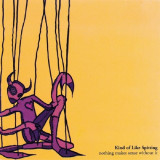
Nothing Makes Sense Without It, the seminal sophomore LP by Kind of Like Spitting, is finalyl getting the deluxe reissue that it deserves.. The group's second album, originally released in 2000, is a heartbreakingly tender effort, with songwriter Ben Barnett's signature, sullen voice aching across twelve slow-burners. Now, 24 years after its original vinyl pressing, the album has been reissued as a deluxe 2xLP featuring an entire extra LP of demos and unreleased tracks. Whether you're replacing your worn out original pressing or just discovering Nothing Makes Sense Without It, this reissue is a must have for both longtime die-hards or any fan of the music of Kind of Like Spitting's northwest indie contemporaries like Death Cab For Cutie, Pedro The Lion and Elliott Smith.
*Illustration similar / Abbildung ähnlich
Ortofon cartridge alignment protractor
An alignment protractor is used to find the correct distance from stylus tip to tonearm pivot.
When aligning a cartridge for tangency using the alignment protractor, it is essential to remember that you are attempting to align the cantilever (and, hence, the stylus), not the cartridge body. There is no guarantee that the cantilever is perfectly aligned within the cartridge body, so simply aligning the cartridge body will not necessarily produce the desired result.
Furthermore, many cartridge bodies have non-parallel sides, making tangential alignment of the cartridge body with the lines of tangency on the gauge virtually impossible.
An alignment protractor is a plastic template onto which are printed the null point(s) and lines of tangency against which the cartridge should be aligned. The template is placed over the turntable's spindle (made possible via a spindle-sized hole drilled in the template) and placed against the platter.
Cartridge must be adjusted until the cantilever is parallel to the set of parallel lines. And this should be achieved for both the indicated points. When the cartridge's longitudinal axis is parallel with the horisontal lines, tracking error will be at a minimum.
DJ Support: Disclosure, Ross From Friends, Eliza Rose, Floating Points, Emerald, Jaguar, Danny Rankin
3 years in the making, Peaky Beats debut 10 track LP 'Bloodlines' takes us on a spiritual journey through ancient and modern middle eastern sounds fused with the spectrum of UK Bass music. Heavy subs and intricate rhythms bring this listening experience to life from the hypnotic melodies to the samples only a well-trained ear can catch. As well as teaming up with some good friends on two collaborations, Peaky has delved into a diverse and new sound whilst staying true to his musical roots in late 90’/ early 00’s UK Garage / Dubstep.
Released in 1999 on Taylor Deupree’s 12k label, »optimal.lp« was the debut album by Dan Abrams under his Shuttle358 moniker. For its 25th anniversary, Keplar presents it on vinyl for the first time with three previously unreleased tracks—the digital version also includes a alternative version of »Tank«—as well as a new artwork recreated by Daniel Castrejón and a remaster by Andreas LUPO Lubich based on the original pre-masters that were been restored and cleaned up for the reissue project by Abrams. »optimal.lp« was inspired by the rich tradition of ambient music and the rhythmic complexity of 1990s electronica while also sharing many traits with the then-emerging clicks’n’cuts movement, making it a true sui generis piece of work—both informed by tradition and visionary, idiosyncratic and seminal for many artists after him.
Abrams developed an interest in ambient music when he was still a child, scouring through cassette tapes of environmental sounds, new age music, and world percussion. Discovering Brian Eno’s »Thursday Afternoon« as a young teenager marked a turning point for him. »It gave me the idea that ambient music could be an intentional creative act, that tone itself is a legitimate form of expression,« he says today. During the 1990s, he increasingly immersed himself in the electronica scene and the output of labels such as Instinct, where Deupree worked as an Art Director and released his first records as Human Mesh Dance. Abrams found a home on 12k after sending Deupree a demo tape that would later evolve into »optimal.lp,« released as the label’s fifth catalogue number.
Abrams was still in college when he started experimenting with a sound module, his laptop and a mixer as well as a MIDI card and a small controller. »Each note was composed in MIDI and played back when I was ready to record,« he explains his working process at the time. »The tracks could be replayed, but the sound interactions with glitches and noise would be a little different each time. I decided to base the concept of the album on these interactions.« Each piece started with a single sound or tone that, as Abrams puts it, already contained the entire composition: »I let these interactions guide me, and tried to complement them as I added sounds. It’s a conversation of sorts with the medium.«
While refining this technique that he would go on to use on every album until 2004’s »Chessa,« reissued by Keplar in 2021, he also used the first-ever Native Instrument product, the Generator soft synth, to write the record’s title track—possibly making it the first album on which it was being used. »optimal.lp« is marked by this curious interplay of cutting-edge technology, the limitations with which every college student with a small budget is faced, and boundless creativity. »I’ve talked with other artists about how we feel about our early work,« Abrams says today. »We all agreed that there were elements that remain a part of us in a timeless way, despite our techniques—or lack thereof—at the time. ›optimal.lp‹ has a lot of things that will always be with me, that are me. I think I left some clues in there for my future self.«
This sense of timelessness remains tangible after a quarter of a century after the album’s original CD release and is even being expanded upon by the vinyl reissue, which is complemented by three pieces that were made while Abrams was working on the album. The digital release even features an entirely new take on the original album’s final piece, »Tank.« While Abrams let one of the masters go through his customised reverb unit when preparing the reissue, he started recording the results of this accidental dialogue between past and present. It’s a fitting tribute to an album whose delicate circular rhythms, rich textures, and ethereal melodies are precisely so exhilarating because their interplay seems to suspend the passing of time altogether.
Die norwegische Progressive Metal-Größe Rendezvous Point legt mit "Dream Chaser" das mit Spannung erwartete dritte Studioalbum vor. Nach dem von Kritikern gelobten Vorgänger "Universal Chaos" setzt die fünfköpfige Band um Leprous-Schlagzeuger Baard Kolstad, Keyboarder Nicolay Tangen Svennæs, Sänger Geirmund Hansen, Gitarrist Petter Hallaråker und Bassistin Gunn-Hilde Erstad ihre Erfolgsgeschichte fort, indem sie ihr Songwriting noch klarer definiert und sich intensiver auf Groove, Riffs, Melodien und Hooks konzentriert.
"Dream Chaser" taucht tief in das Feld künstlerischer Entwicklung ein und konzentriert sich auf das unerbittliche Streben nach Perfektion. Mit Themen, die von gesellschaftlicher Desillusionierung bis zu persönlichem Wachstum reichen, bietet "Dream Chaser" einen fesselnden Einblick in die menschliche Wahrnehmung. Rendezvous Point laden den Hörer ein zusammen die Komplexität der modernen Existenz und die Tiefen des emotionalen Aufruhrs zu erkunden.
10-piece UK afro-fusion outfit TC & The Groove Family are proud to share their new EP ‘We Have Each Other’. Releasing on Friday 7th June via Bridge The Gap, the project sees the band refine the sound debuted on their 2022 album ‘First Home’. Returning to work once again with producer Tom Excell (Nubiyan Twist, ONIPA), the project explores a darker sonic palette, channelling a deep appreciation of UK bass and electronic music alongside afro-jazz sounds and hip-hop sensibilities.
The record documents a time of change within the group - a new lineup, plus members living in different cities and pursuing various paths - whilst also reflecting the turbulent socio-political climate, and the major shifts and changes on the horizon for humanity. However, despite the heavy subject material, the band strike an optimistic, uplifting tone, with MC Franz Von channeling the music into a message encouraging listeners to look around and embrace
community, whatever that may look like. Bandleader Tim Cook shares:
“Our collective purpose is to craft music that empowers and energises individuals to embrace their true selves with pride, celebrating the unity and strength we radiate as one community. No one needs to be alone when they are striving for common humanity. No one should be lonely when we celebrate each other, drawn together by a sound that says it’s good to be me, it’s better to be us. As our MC, Franz Von says, music brings peace, love & energy”.
Opener and lead single ‘Stand Strong’ is a love letter to afrobeat, creating a contemporary twist with its Khruangbin-esque guitar lines and weaving horns, whilst ‘Here, Now’ takes the tempo down to an atmospheric haze of dubbed-out ambient effects, pierced by uplifting horn melodies. ‘Blessed’ sees the group welcome Nubiyan Twist’s Aziza Jaye for a dancehall-meets-North African-flavoured feature, subtly reimagining what Elephunk era Black Eyed Peas would
sound like today.
At the EP’s centre-point and emotional peak, title track ‘We Have Each Other’ showcases the band’s jazz fusion, Latin and dark electronic influences. The tracks growling, subbed-out bass tones return as a theme for ‘Wile Out’ - a UK hip-hop & jungle tinged collaboration with SANITY complete with virtuosic, tight-knit grooves, furious horn lines and a whirlwind of immersive turntablism.
Originally formed in Leeds, TC & The Groove Family’s sound reflects the diverse musical and cultural backgrounds at the core of the project, with songs exploring grooves and genres including afrobeat, broken beat, jungle, jazz and grime. Their music has drawn widespread acclaim, supported by tastemakers including Jamz Supernova and Craig Charles on BBC Radio 6, BBC Introducing West Yorkshire, Jazz FM, Rinse FM, Radio FIP and more. The group have performed at the likes of Glastonbury, We Out Here, Greenman and Boomtown, and will embark on a UK tour across May & June in support of the release of ‘We Have Each Other’.
*REMASTERED ROUGH TRADE 4 TRACK E.P LIMITED TO JUST 500 COPIES*
Everything on “Up Home!” is bigger, richer; the guitars are huge, as though they’re being played through the clouds, massive gusts of blue-green noise that move across the stereo spectrum like weather systems. “Baby Milk Snatcher” is built around face-flattening dub bass, with glinting piano and shards of guitar ricocheting through the song. “W.O.G.S.” is delirious to the point of expiration; “One Way Mirror” is their attempt at weird, lopsided ‘anti-funk’, the song’s melody crushed by avalanches of six-string interference. And the closing “Up” is AR Kane’s masterpiece, a disembodied thud pulsing at its heart as a six-note guitar melody spirals ever onward, Ayuli’s voice lost in its own reverie, hymning escapism via references to Jamaican political activist Marcus Garvey’s ‘black star line’.
• Jon Dale, lead review in Uncut Magazine
who grew up together in Stratford, East London. From the off the pair were outsiders in the culturally mixed (cockney/Irish/West Indian/Asian) milieu of the East End, with Alex and Rudy’s folks first generation immigrants from Nigeria and Malawi, respectively. The two of them quickly developed and fostered an innate and near-telepathic mutual understanding forged in musical, literary and
artistic exploration. Like a lot of second-generation immigrants, they were ferocious autodidacts in all kinds of areas, especially around music and literature. Diving deep into the music of afro-futurist luminaries such as Sun Ra, Miles Davis, Lee Perry and Hendrix, as well as devouring the explorations of lysergic noise and feedback from contemporaries like Sonic Youth and Butthole Surfers, they also thoroughly immersed themselves in the alternate literary realities of sci-fi and ancient history (the fascination with the arcane that gave the band their name), all to feed their voracious cultural thirsts and intellectual curiosity.
It was seeing the Cocteau Twins performing on Channel 4 show the Tube that spurred A.R. Kane into being - “They had no drummer. They used tapes and technology and Liz Fraser looked completely otherworldly with those big eyes. And the noise coming out of Robin’s guitar! That was the ‘Fuck! We could do that!
The duo debuted with the astonishing ‘When You’re Sad’ single for One Little Indian in
1986. Immediately dubbed a ‘black Jesus & Mary Chain’ by a press unsure of WHERE to put a black band clearly immersed in feedback and noise, what was immediately apparent for listeners was just how much more was going on here – a tapping of dub’s stealth and guile, a resonant umbilicus back to fusion and jazz, the music less a conjuration of past highs than a re-summoning of lost spirits.
The run of singles and EPs that followed picked up increasingly rapt reviews in the press, but it was the ‘Up Home EP’ released in 1988 on their new home, Rough Trade that really suggested something immense was about to break. SimonReynolds noted the EP was: Their most concentrated slab of iridescent awesomeness and a true pinnacle of an era that abounded with astounding
landmarks of guitar-reinvention, A.R. Kane at their most elixir-like.
If anything, the remastered ‘Up Home’ is even more dazzling, even more startling than it was when it first emerged, and listening now you again wonder not just about how many bands christened ‘shoegaze’ tried to emulate it, but how all of them fell so far short of its lambent, pellucid wonder. This
remains intrinsically experimental music but with none of the frowning orthodoxy those words imply. A.R. Kane, thanks to that second generation auto-didacticism were always supremely aware about the interstices of music and magic, but at the same time gloriously free in the way they explored that connection within their own sound, fascinated always with the creation of ‘perfect mistakes’ and the possibilities inherent in informed play.
2024 Reissue
Alphacut Records reloads its third wave with an upfront jungle plate. Meticulously selected over the years since the last allover amen statement Fundamentals EP as of cat.nr. ACR 3001, these four new killer tunes take no prisoners as well.
Sumone (with his Planet Mu fame) and Dan Miles (formerly Skubi like on Modern Ruins) as the midwest cowboys meet the North Sea sailors Istari Lasterfahrer (running his Sozialistischer Plattenbau) and Ill_K (on Nord and re:st)to execute this smashing Darka Mentors EP!
"Wicked Man Sound" is one of the most sinister jungle sciences we came across lately. Choppage on point, layerslike spread, stabbing basses, dark percussion, oldskool pads - you name it. "Crash!" feels like a UK hardcore banger, but is refreshingly switching breakbeats instead of gabba kicks. "Echo Chamber" drops an irresistible rave stab into the dubber dungeons and "Kuro" celebrates a very samurai style of a halftime cut to round up this breaksfest menu with ease.
Alphacut operates on a non-profit level, most releases cover their costs, if even. Half of any returns will be donated to Webster's Amen Break Gesture campaign II raising funds for the original creator of The Winston's Amen Brother breakbeat: Richard Spencer. With the deepest respect for this milestone of a sample!
Mick Harris is one of the world's greatest compositional treasures. Starting his career as the energy dynamo behind the drum kit of the UK's Napalm Death, he made the term Blastbeat a household reference, wrote the band's music on his mother's one string guitar, and joined the Guinness Book of World Records for composing the world's shortest song. In the decades succeeding, he has re-inventedmusic several more times, from the wild abstract jazz of Painkiller with John Zorn and Bill Laswell, to the drowning ambience of his Lull project, all while continuing to build a world that he can truly call his own - the dark post-dub of SCORN. "Reaching 54 this year - this won't stop the challenge, driving me more so now than ever" - says Mick Harris, commenting on the recent phase in his creativity. The pandemic isolation and lockdown pushed the work of the maestro more than anything else could have. In 2021, his output is ever-increasing, releasing the newest collabs with Justin K. Broadrick and the single "Distortion", featuring one of the most outstanding voices of hip-hop - Kool Keith - his closest collaborator, Ohm Resistance founder - Submerged. Commenting on the release of "Distortion", Mick Harris said to mxdwn: "I enjoy collabs - they bring something different to the swim." Working on his own and collaborating with everyone from Sleaford Mods' James Williamson, on the previous SCORN release or with Kool Keith and Submerged on "Distortion", Mick Harris never had problems with putting energy into beats and sound landscapes, combining various surreal elements with three basic elements that always push Harris further, that are extremely crucial for both Mick Harris and SCORN as a project - frustration, anger and anxiety. Combining the signature soundscapes of Scorn with tartareous textures, the newest album "The Only Place" reaches a psychedelic groove, based on what Harris calls "Pushing an original idea further" with his own shades of light and dark and celestial electricity of what SCORN is. These 10 new tracks add elements unheard in Scorn since Evanescense and Gyral - ethereal ambiences and floating, near-melodic-but-not-quite moments, a signature of Harris' abilities to generate feelings in a lost world of his own creation. 2024 vinyl version on orange coloured vinyl!