"'AYII' is a collection of roadside Souvenirs on the rural highway of our
inevitable evolution," shares Jon Stone.
"Polaroids
Storms. Open fields. Tears. Therapy. Burning of fields to make way for new
growth. We've attempted to open personal doors that have been patiently waiting,
annoyingly, stubbornly waiting for a sliver of truth. Hopefully we've delivered."
Kristy Osmunson adds, "Parenthood. This album was created during the most
pivotal time in life made while creating two humans. If I could capture the
process this music brought about in five words I would say, sobriety, health,
growth, responsibility and joy. This last five years has been a massive transition.
Playing festivals, weddings, funerals, therapy sessions, and music lessons has
become the soundtrack of life. 'Gonna Be You' landed on this planet the same
weekend as my first son so I will love that song through eternity. As she always
does, this music brought about a full revolution in my existence as a human." The
11-track project was produced by American Young, Kyle Schlienger, Lee Brice, and
John Vesley.
Suche:pol on
The debut album of Zasky & Smith, producers of New Blade Runners Of Dub. Built on the legacy of Zasky' s internationally known Dub Reggae Band Dubblestandart, New Blade Runners Of Dub blend Jed Smith's, LA native, composer/producer's new school visions of sound & Zasky's European shaped Dub Reggae background in a unique way. Call it Europe & America in a unity reconfiguring rhythm driven music for new generations: The Los Angeles based music group, combining cutting edge rhythm productions and up 2 the time sonic visions. It is a collaboration of international known musicians from the US, Europe, England & Jamaica. Altered concepts for new generations who identify through a new understanding of art, communication and therefor ultimately for the politics, that will shape their world. This is music for the 21st century. Decoding what lays ahead.
In a generation of musicians that came of age in postwar Japan, Kazuki Tomokawa stands as a pioneer of radical individualism, with a sound marked by shocking intimacy and blistering honesty. In his third album, A String of Paper Cranes Clenched between My Teeth, released by Harvest Records in 1977, Tomokawa creeps "ever more inward," as Kiichi Takahara writes in the record's original introductory text-embracing an attitude pervasive amongst musicians of the time who interrogated the prosaic and the profound alike, eschewing politics and society in favor of an "attitude of total self-containment." Tomokawa recorded the album over the course of a month-from August 24 to September 25, 1977-at Tokyo's famed Onkio Haus studio in the bustling Ginza district. The arrangements, accordingly, are amped up: paired with the Black Panther Orchestra, Tomokawa's "screaming philosopher" vocals find their match with the orchestra's electric guitar, bass, piano, tuba, and ground-thumping drums played by the Brain Police's Toshi Ishizuka-who appears on Tomokawa's first three records and remains his collaborator to this day. "This is Kazuki Tomokawa in the flesh," concludes Takahara. A String of Paper Cranes Clenched between My Teeth is, in Tomokawa's uncanny way, able to cut through facade and artifice in pursuit of truth. "You call that life?" he heckles, exhausted by the melodrama and nihilism of youth counterculture, "try saying you're alive!"
- 1: Fool To Cry
- 2: Honky Tonk Women
- 3: All Down The Line
- 4: Crazy Mama
- 5: Hand Of Fate
- 6: Mannish Boy
- 7: Route 66
- 8: Tumbling Dice
- 9: Crackin’ Up
- 10: Dance Little Sister
- 11: Hot Stuff
- 12: Star Star
- 13: Around And Around
- 14: Let’s Spend The Night Together
- 15: It’s Only Rock ’N’ Roll (But I Like It)
- 16: Rip This Joint
„Live At The El Mocambo“ - ein legendäres Ereignis in der unglaublichen 60-jährigen Geschichte der Rolling Stones ist ab 13. Mai zum ersten Mal in voller Länge erhältlich. Das Album markiert die erste offizielle Veröffentlichung der beiden berühmten Geheimkonzerte der Band in dem Club El Mocambo in Toronto im März 1977. „Live At The El Mocambo“ enthält das komplette Set
der Stones vom 5. März sowie drei Bonustracks vom 4. März, neu abgemischt von Bob Clearmountain.
Das Album erscheint als 2CD und Ltd. Vinyl Box.
Like a book club - only with albums.A simple, but beautiful concept
MJ McArthy (Zoey Van Goey) asked a small group of his pals to gather at The Laurieston – that mystical voodoo Glasgow boozer…that adored bar that defies all reason and logic – and they would talk about a record, track by track, and see what happens.They didn't know each other. There were theatre people:, Playwrite Douglas Maxwell, Isobel McArthur (actress and writer, the genius behind smash hit Pride and Prejudice Sort Of) and Cathy Forde (acclaimed YA novelist and playwright) and Rhona NicDhughaill who works for Gaelic arts company Theatre Gu Leor, as well as being an old band buddy of MJ's from their student days. Peter Geoghegan, award- winning firebrand political journalist and writer of the wonderful Democracy For Sale was there. And lastly - and slightly freaking them out on that very first night - were two actual Delgados: Emma Pollock and Paul
Savage.
And then…MJ had songs. MJ always has songs. And he started to wonder if this particular group of humans could, as well as talk about an album, make an album? For the musicians I don't suppose that was a particularly weird notion, but for the rest of the band it was quite a leap. However, MJ was adamant…let Album
Club become ALBUM CLUB. The Band!
Within Reason Records welcomes Hugh Mane to the fold with a four track EP that is his most polished work to date. Veering away from his usual club ready sound, Hugh takes a much more relaxed approach on 'Resonant Moods', choosing to focus on meticulous production techniques and textural layering to create an EP that transcends both time and space. Often the case with Hugh's music, you can be 6 minutes into a track and not know that any time has passed at all. 'Resonant Moods' is a wonderfully crafted EP that encapsulates emotive tonality and playful rhythms, whilst oozing spacious sub frequencies.
South London based producer and multi-instrumentalist Neue Grafik announces his new EP 'Foulden Road Part II' from his Neue Grafik Ensemble band, released 25th March on Total Refreshment Centre. The sequel to their impressive 2019 release 'Foulden Road', Neue Grafik continues to incorporate 100% live takes with the ensemble, as well as solo productions that reflect Neue Grafik's past work with both the Rhythm Section and 22a labels.
Neue Grafik explains, "This EP is a reflection of the social context which surrounds me" – created in a year of much social isolation as well as political unrest, 'Foulden Road II' explores the complex feelings that he found himself battling. He adds "In 2019, we released 'Foulden Road Part I', which was a transitional album, exploring a new culture and navigating between two worlds: Paris and London. 'Part II' is a bit darker, closer to realness with a sprinkle of hope. I couldn't have predicted that I'd finish it encased in my flat, between four walls, in December 2020 after a year of lockdown, Brexit, George Floyd protests, and without London's brilliant culture mesmerising my mind. Everything was sad and closed. Hills were difficult to climb. But it also gave me the time to work hard and deliver this second part of Foulden Road, pushing it forward".
Combining an array of influences — from London, to Paris via New York, Nigeria and Cameroon — with well-measured confidence, ' Foulden Road II' allows you to reflect on the complexities of the last year, whilst braced with energy and hope to move forward positively. Heavy horns and hypnotic poetry form the backbone record, which will ignite any room. 'Foulden Road II' begins with the grounding poetry of MA.MOYO on 'Black Bodies'. The EP is dedicated to Adama Traoré, a black man who died in police custody in Paris. Neue Grafik explains "His name is not well known outside of France. I was shocked, devastated even, to learn that his story didn't cross the Channel". 'Queen Assa' is a heavily percussive dancefloor-hitter which honours French activist Assa Traoré, (Adama's sister) her family, and her struggle to support all families hurt by police brutality. Broken beat elements flow through the horn accompanied 'Officer, Let Me Go To School', while West London rapper Lord Apex offers an unapologetic and poignantly personal perspective on 'Step To It'.
Released on the Total Refreshment Centre label, based out of Stoke Newington's Foulden Road, the EP is a testament to his versatility as an ever-shifting figurehead. Engineered by Capitol K, recorded at Total Refreshment Centre, mixed by Marcus Linon at Greasy Records and mastered by Guy Davie at Electric Mastering – a significant pillar in Neue Grafik's musical career. Having played a DJ set there in 2017, he was convinced by TRC founder Lex Blondin to start a band after he was heard playing some compositions on the communal piano. After spending a couple of sleepless nights on the living room couch, his first gig was booked in the venue space downstairs a week later. The ensemble was established and he has remained in London ever since.
Neue Grafik Ensemble's musicians include; Matt Gedrych, Benjamin 'The Chief' Appiah, Jack Banjo Courtney, Chelsea Carmichael, Dougal Taylor, Yahael Camara-Onono, Xvngo, Rebekah Reid, Dan-Iulian Drutac, Jamie-lee Glinsman and Zara Hudson-Kozdój.
Neue Grafik hosts The Orii Jam Sessions, an energising weekly jam night at Hackney Wick's Colour Factory, which has become a pivotal weekly gathering, inspired by the likes of Unit 31 and Steam Down.
- A1: Avalanche
- A2: Having Our Way (Feat Drake)
- A3: Straightenin
- A4: Type Shit (Feat Cardi B)
- A5: Malibu (Feat Polo G)
- A6: Birthday
- A7: Modern Day
- A8: Vaccine
- A9: Picasso (Feat Future)
- A10: Roadrunner
- A11: What You See (Feat Justin Bieber)
- A12: Jane
- A13: Antisocial (Feat Juice World)
- A14: Why Not
- A15: Mahomes
- A16: Handle My Business
- A17: Time For Me
- A18: Light It Up (Feat Pop Smoke)
- A19: Need It (Feat Youngboy Never Broke Again)
Culture III is the fourth studio album by American hip hop trio Migos. It was released by Capitol Records, Motown Records, and Quality Control Music on June 11, 2021. The album features guest appearances from Drake, Cardi B, Polo G, Future, Justin Bieber, Juice Wrld, Pop Smoke, and YoungBoy Never Broke Again. It is the follow-up to their 2018 album Culture II and serves as the conclusion to their Culture trilogy
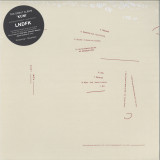
LNDFK (aka Linda Feki) presents her ground-breaking debut album, "Kuni" on Brooklyn-based Bastard Jazz Recordings. Undeniably on the rise after her 2019 breakout performance at Primavera Sound, LNDFK has already caught the attention of Pitchfork, Rolling Stone, Clash Magazine, Noisey, and Brooklyn Vegan (among many others) while being championed by the likes of Gilles Peterson, Tom Ravenscroft, and Jamz Supernova & landing spots on tastemaker playlists like Spotify's "Pollen" and "Fresh Finds."
"Kuni" is a spellbinding exploration of dichotomies: Love & Death (Eros & Thanatos), Flower & Fire, Delicacy & Violence, Poetry & Realism, Purification & Destruction. These opposites are reified in the 10-track LPs multifarious and multifaceted sounds, elegantly meandering through a variety of styles and genres, spearheaded by Linda and features the production wizardry of Darrio Bassolino who co-wrote the album.
"Kuni" opens with "Hana-bi," an ambient instrumental piece that sets the tone for the album. Inspired by the Takeshi Kitano 1997 film of the same name – particularly Joe Hisaishi's stunning soundtrack, as well as Kitano's paintings which appear in the film. "Hana-bi" expresses the dialoguing opposites of flowers and fire, the first of many dichotomous representations throughout the album. "Takeshi" acts as an extension and to "Hana-bi," albeit one of opposing sound, with its driving, highly syncopated drums (which reappear throughout "Kuni") – à la Karriem Riggins, Questlove, or Yussef Dayes – frenetic bass line, and jazz chords. Linda's sultry voice is interspersed, initially jumping around in scat fashion, being triggered as if a sample, before her lyrics come in; her vocals are used like an additional instrument, adding to the song's rich texture. "Kuni" truly hits its stride with the next song, "Smoke – a moon or a button" (its title lifted from the 1959 book by Ruth Krauss and Remy Charlip), which is structured like a jazz standard yet flows into neo-soul territory sonically with those prodigious drums a highlight once again.
LNDFK touches on experimental hip hop in two songs on the record (both of which were released as singles in 2021): "Don't Know I'm Dead or Not (feat. Chester Watson)" – track #4 – and "How Do We Know We're Alive (feat. Pink Siifu)" – track #9. Although they embrace a more hip hop-leaning sound, these songs by no means shy away from the exploratory theme, and feature two of the alt-rap scenes rising stars with Chester Watson and Pink Siifu who offer provocatively impressing verses, combining dense word play with unconventional flows. While these tracks may first appear to be outliers on the album, they are undeniably in tune with "Kuni's" message and sonic palette, acting as testaments to LNDFK's willingness to explore and experiment.
Meanwhile, "Ku" – the third and last single before the album release – furthers the pre-established future soul sound while meandering through nu jazz and left-field electronic. Inspired by the graphic novel and film, "Sin City," and its female assassin protagonist Miho, "Ku" is a musical interpretation of Miho's story, incorporating both her beauty – the first half of the song – and murderous tendencies – the second half – to create a stunning juxtaposition, culminating in an ambient finale that suggests the character's vulnerability and inner peace. The song gracefully bridges the gap between Hiatus Kaiyote-esque songwriting, Dilla's rhythmic syncopation, and Thundercat's instrumental prowess (LNDFK has shared a stage Brainfeeder labelmate Kamasi Washington).
Mixed in throughout "Kuni" are a series of instrumental pieces that function as something akin to an interlude. The aforementioned intro, "Hana-bi," and the album closer "se mi stacco da te, mi strappo tutto:" act as bookends, while "Om" indicates the half-way mark, and "Ktm" sees Jason Lindner add his sound the album. These tracks are the ambient foundation of "Kuni," representing the thematic duality of the work. Clocking in at only 24 minutes, "Kuni" packs an astonishingly diverse array of sounds, styles, and themes, all while showcasing virtuosic musicianship and instrumental prowess.
Appearing on "Hana-bi" and "Ktm," renowned international artists Asa-Chang and Jason Lindner add an additional perspective to "Kuni": Asa-Chang on "Hana-bi," and Jason Lindner on "Ktm." Asa-Chang - famously of the Japanese avant-garde group Asa-Chang & Junray - provides vocals and percussion to an alternate version of the instrumental opener, while the acclaimed keyboardist Jason Lindner offers his synth expertise on "Ktm." These features highlight the spirit of collaboration found in LNDFK's music, always willing to try out new ways of working.
LNDFK is a singer and songwriter, born of two cultures – an Italian mother and Arab father. She grew up in Naples, away from her father, the Sahara, her homeland and traditions, which has helped nourish the desire to rediscover – through art – an engagement to her roots. Her music melts with jazz, neo-soul and hip-hop influences, filtered through her experiences and sensibility.
Her first EP, "Lust Blue," was composed with the artistic production of Dario Bass and released by Feelin' Music; after that she released several singles that saw international radio support (BBC, NTS, Wordwide FM) and gained a massive audience on digital platforms. Together with her band, she toured around Europe, performing alongside such notable artists as Kamasi Washington and Mndsgn, among others. Most recently she toured Italy, and performed at Primavera Sound Festival 2019 in Barcelona.
"Kuni," is due out on NYC label Bastard Jazz Recordings in February, 2022, while the vinyl LP will follow shortly after.
Ferocious JP / US free jazz bomb. A rare meeting between the NYC free jazz scene and the Japanese free music scene. Old-style Gatefold LP, with rare photographs & liner notes by Alan Cummings.
Following hot on the heels of the first, mid-sixties generation of Japanese free jazz players like Kaoru Abe, Masayuki Takayanagi, Yōsuke Yamashita, Motoharu Yoshizawa, etc., an exciting second wave of younger players began to emerge in the seventies. Two of its leading members were the saxophonist Kazutoki Umezu and multi-instrumentalist Yoriyuki Harada. Both were post-war babies and immigrants to the city, Umezu from Sendai in the north and Harada from Shimane in the west. They first met as students in the clarinet department at the Kunitachi College of Music, a well-known conservatory in western Tokyo. Harada was already securing sideman gigs on bass with professional jazz groups and was active in student politics, making good use of his connections to set up jazz concerts on campus. It was around this time that the two began to play together in an improvised duo, with Umezu on clarinet and bass clarinet and Harada on piano. They also experimented with graphic scores and prepared piano.
These experiments eventually led to the creation of a trio, with a high-school student called Tetsuya Morimura on drums, that they decided to name Seikatsu Kōjyō Iinkai (Lifestyle Improvement Committee) in joking reference to the Marxist discourse of the student radicals of the time. Around 1973, Umezu and Harada decided to call it a day and go their separate ways. Umezu began playing with the Toshinori Kondo Unit and Harada with the Tadashi Yoshida Quintet. In 1974 Harada formed his own trio and began to play at jazz coffeehouses across Japan.
Then, in September 1974 Umezu travelled alone to New York, where he set about building connections with the loft jazz scene in the city. It was a fortuitous moment to arrive in New York. Rents were cheap in the Lower East Side, possibilities for squatting existed, so many musicians and artists had moved to the area. Umezu soon became known on the scene as Kappo and he started to make connections with some of the young musicians like David Murray, Arthur Blythe, and Oliver Lake. He recalls making the rounds of the lofts every evening, checking out the performances, and getting the chance to sit in with many groups including Juma Sultan’s Aboriginal Music Society and trumpeter Ted Daniel’s orchestra.
Things were going so well that Umezu wrote to Harada and invited him to come to New York. He accepted and arrived in the city in July 1975. Harada and Umezu took the opportunity to resume their artistic collaboration. Their first concert together in over two years took place on July 20th at another loft, Sunrise Studios at 122 2nd Avenue. Umezu remembers Sunrise as an unusually sunny loft with the rarest of things, a grand piano. He invited along Ahmed Abdullah, a trumpeter he had got to know while playing with Ted Daniel. Abdullah led his own group and was a long-term Sun Ra sideman. William Parker, one of the key figures in the loft jazz scene of the period, was on bass. Abdullah also brought along Rashid Sinan on drums. Sinan drummed in Abdullah’s units throughout the seventies, but he had also played on Frank Lowe’s immortal Black Beings album and collaborated with Arthur Doyle, playing on Doyle’s Alabama Feeling album. By all accounts the evening was a huge success, with speed and dynamism of Harada’s piano playing gaining him lots of support.
Since they had managed to save some money from their day jobs, Umezu and Harada decided to set up a recording session with the same line-up on August 11 at Studio We, where there was a well-equipped studio on the third floor. Umezu recalls the session as follows, Of course, we recorded our performances in one take, with zero retakes as far as I remember. On all the tracks we recorded, we moved as one unit, sharp and fast. That was the nature of Lifestyle Improvement Committee, New York Branch.
Umezu and Harada would later become known for the elements of parody and entertainment that they brought to their music, a freewheeling blend of pastiche, humour and on-stage performativity that paralleled the approaches of the Art Ensemble, Sun Ra, and Holland’s ICP. But here, on their first recordings, the humour element is not yet present. Instead, there is a febrile sense of joy in creation and connection. On the Umezu-penned “Kim”, for example, Harada opens the piece with a speedy exploration of the full-range of the keyboard, hitting hard on the bass keys to create a rhythmic bed out of which patterns begin to emerge. Umezu enters at a much slower pace, longer held notes that at first float weightlessly over the urgency of the piano before they begin in splinter and accelerate. When Parker and Sinan kick in, it’s a rollicking tempo with Parker plucking deep and hard and the left-handed Sinan skittering hard across the topside of his kit. Abdullah kicks in a glorious solo twelve minutes in, bright and breathy at once. The piece slows and grows more spacious towards the end, giving Parker a chance to showcase some arco work that shades beautifully into the air against Abdullah’s trumpet.
‘Wax Limousine’ is the third solo album from London’s Wesley Gonzalez. Set for release on 18th March via Moshi Moshi Records, the record is the follow up to last year’s critically acclaimed ‘Appalling Human’ and finds the indie stalwart delivering his most personal album to date, via a collection of 12 irresistible pop songs. The announcement arrives alongside the title track, which received its first play from Marc Riley on 6Music and its accompanying video, the second to be revealed from the record following ‘Greater Expectations’, released earlier this year. In support of the release, Gonzalez heads out on tour this November, headlining Electrowerkz on 25th and supporting Young Knives across the country (full dates below).
With its truly eclectic range of musical influences drawing on Gonzalez’s ever developing sonic palette, the album’s uplifting sound juxtaposes its themes, documenting the end of a long-term relationship and the overwhelming experience of dealing with a family member’s cancer diagnosis and subsequent treatment. ‘Wax Limousine’ navigates these hurdles with a razor-sharp wit and often brutally perceptive self-awareness, nowhere more so than on the new single. Inspired by both 'Faithless' by Scritti Politti and Aretha Franklin, it is Gonzalez’s version of an 80’s gospel song and, as he explains, written at a crucial point over the last 12 months
“This was written right after the breakup and cancer diagnosis. It was that early stage of a breakup where you can't really understand what went wrong for you or for your ex. There was resentment for the extreme change I had suddenly found myself in, and I was asking what it really was I did wrong. The title Wax Limousine came from old phrases like "as useless as an ashtray on a motorbike". I was trying to express how useless I felt within every situation that had just arrived at my doorstep.”
Wesley Gonzalez first made a name for himself as the leader of Let's Wrestle, whose tuneful and eccentric punk earned critical accolades and a devoted audience with three albums, including 2011’s Steve Albini produced ‘Nursing Home’. Gonzalez wasted little time forging his own path and quickly assembled a live band for his solo work, expanding upon the guitar-driven music of his former band, with an interesting concoction of classic 70’s pop, soul, and indie rock. Gonzalez released his debut solo record ‘Excellent Musician’ in 2017, then the follow up ‘Appalling Human’ in June 2020 through Moshi Moshi Records.
JOYFULTALK returns with its third album for Constellation; another vibrantly divergent stylistic take on the analog materiality and sensibility of electronic composer-producer Jay Crocker, whose previous two records forged trance-inducing polyrhythmic intricacy, each from a distinct angle and sound palette, each enlisting a single instrumental collaborator. Familiar Science rallies contributions from a larger cast of musicians into a looser, cosmic recombinant combo_still shot through with JOYFULTALK's singular mixing desk kinetics, but this time deep-diving into gnarled and twisted, spliced and diced out-jazz. Crocker draws inspiration from 1980s M-Base music and Ornette Coleman's harmolodic funk period, while his own prior history as an improv guitarist also resurfaces for the first time in many years_an element in this polyvalent artist's chemistry set that hasn't appeared prominently in his own music for over a decade. Familiar Science finds Crocker folding time (as lockdown will do), immersed in his present-day kaleidoscope of solitary art and music practices in rural Nova Scotia, while channeling his former life as a bustling jazz collaborator in Calgary, Alberta. Building outwards from roiling resampled acoustic drums, Crocker extracted additional sonic and rhythmic textures, then formed the head of each song using dusted-off archival recordings and his own bass, keys and midi sequencing. Albertan percussionists Eric Hamelin (Ghostkeeper, Chad Vangaalen) and Chris Dadge (Lab Coast, Alvvays) provided improvised drum tracks to be chopped and harvested; Nova Scotia-based Nicola Miller (Ryan Driver, Doug Tielli) laid down resplendent excursions on saxophone and flute; Crocker's own dexterous guitar appears on several cuts. Familiar Science also poignantly features samples from live recordings by the late Calgary saxophonisticonoclast Dan Meichel, catalysing some of the album's heaviest contortions. Crocker weaves all these raw materials into exuberant compositions that blur the line between sizzling corporeal combo and sampledelic futurist jamz, variously conjuring (leftfield) Flying Lotus, (later) Tortoise, BADBADNOTGOOD and Squarepusher's Music Is Rotted One Note. The rubbery hyper-compression of boom-bap opener "Body Stone" initiates the séance, and the album offers a panoply of skittering grooves and soaring melodic pathways thereafter, through quags of heady jazz alternately streaked with dayglo delirium and other more vaporous states of revelry. Crocker's own wordless stacked vocals are the giddy secret sauce on several cuts, and his lead guitar work (in kinship with the lean progressions of Mary Halvorson or Jeff Parker) features on "Take It To The Grave", "Stop Freaking Out!" and the album's title track. More honeyed passages on songs like "Blissed For A Minute" and "Ballad In 9" center around Miller's bouyant alto sax and flute. Familiar Science is a rousing feast of noise-tinged polychrome electronic avant-jazz: richly harmolodic compositions teeming with intersecting textures and turbulences; exploratory, exhilarated and indeed joyful.
Famed free jazz concert registration of an early New Direction for the Art performance. Recorded in 1971. Old-style Gatefold LP, with rare photographs & extensive liner notes by Alan Cummings.
The performance by Takayanagi Masayuki New Direction for the Art at the Gen’yasai festival on August 14, 1971 was an intense, bruising collision between the radical, anti-establishment politics of the period in Japan and the febrile avant-garde music that had begun to emerge a few years before. The ferocious performance that you can hear here was received with outright hostility by the audience, who responded first with catcalls and later with showers of debris that were hurled at the performers. Takayanagi though described the group’s performance to jazz magazine Swing Journal as a success, “an authentic and realistic depiction of the situation”.
In 1962, Takayanagi, bassist Kanai Hideto and painter Kageyama Isamu went on to form an AACM-style musicians’ collective called the New Century Music Research Institute. Every Friday, members gathered at Gin-Paris, a chanson bar in the fashionable Ginza district of Tokyo, to push the outer limits of jazz creativity.
But the pivotal moment for his music was the creation a new trio version of his New Directions group in August 1969, with the free bassist Yoshizawa Motoharu and a young drummer Toyozumi (Sabu) Yoshisaburō. Experiments eventually led to the creation of two basic frameworks for improvisation that Takayagi referred to as Mass Projection and Gradually Projection.
“La Grima” (tears), the piece that was played at the Gen’yasai festival, is a mass projection and listening to it, you can get a clear sense of what Takayanagi was aiming at. Mass projection involves a dense, speedy and chaotic colouring in of space that destroys the listener’s perception of time, and thus of musical development.
The ferocity of the performance of “La Grima” at the Gen’yasai Festival in Sanrizuka on August 14, 1971 was consciously grounded by Takayanagi in a particular historical moment, ripe with conflict and violence. A month after the festival, on September 16, three policemen would die during struggles at the site. This was the context that the three-day Gen’yasai Festival existed within. The line-up reflected the radical politics of the movement, with leading free jazz musicians like Takayanagi, Abe Kaoru, and Takagi Mototeru appearing alongside radical ur-punkers Zuno Keisatsu, heavy electric blues bands like Blues Creation, and Haino Keiji’s scream-jazz unit Lost Aaraaff.
New Direction for the Arts trio topped the bill on the opening day, playing an aggressive, uncompromising “mass projection” set of polyphonic improvisation. Alongside drummer Hiroshi Yamazaki and saxophonist Kenji Mori, Takayanagi soloed hard and continuously for forty minutes. This was performance as precisely calibrated metaphor: three musicians responding to the demands of the moment with instinctive force and fury, untethered by rules, leaderless yet not rudderless (the direction part of the group’s name was no accident). The piece was entitled La Grima – tears - and the fusion between the palpable anger of the performance and hopeless sadness of its title were also perfectly apt for the situation. This was a fight that the state was always going to win. Yet, by all accounts, the band’s set went down like a fart at a funeral. The band were showered with catcalls and debris throughout, and by chants of “go home” when the music finally came to an end.
However, looking back at the event in the year-end issue of Japan’s leading jazz magazine, Swing Journal, Takayanagi was surprisingly upbeat: New Directions brought a solid political consciousness to our performance and succeeded in an authentic and realistic depiction of the situation. But journalism revealed its superficiality in its inability to penetrate the core of the music. I don’t know much about anyone else, but we at least left behind a competent record.
It’s a fascinating statement in many ways. Perhaps on one-hand it can be read as stubborn, solipsistic and self-justifying, yet in conjunction with his statement in 1971 there are points that guide us towards an understanding of just what Takayanagi intended with his performance at the festival. As Kitazato Yoshiyuki has argued, it becomes an almost religious act, directed at the earth deities of the land. A union of anger, sorrow and malevolence that can be placed nowhere effective, all it can do is find expression and channeling. The forcible land seizures at Narita, the eviction of farmers from land that had been in families for generations, the destruction of communities: none of this can be prevented, not least by an artistic action. All that can be done is an attempt to mark the land itself, to soak it with the combined force of emotions and the volume of the performances, to bury something there that cannot be drowned out, even by the coming roar of jet engines.
Protean producer Jaymie Silk returns to Shall Not Fade with an intensely club-driven LP. On "The Rise & Fall Of Jaymie Silk & Rave Culture" a range of vocal samples tell a story over assertive rhythms that switch rapidly so that hard-hitting acid becomes breaks before melting into sleazy, low-end bass techno. Strap in!
It"s not easy to anticipate how any release from the Paris-based Jaymie Silk will sound. A self-proclaimed musical nomad and a real jack-of-all-trades, his artistic identity is defined by its undefinability. With this release - a follow-up from "The Legend of Jack Johnson" EP released on Shall Not Fade last year - Jaymie references the kaleidoscope of sounds which inspired him to make music in the first place.
Sampling an iconic Malcolm X speech, the force of which is bolstered by giant synth swells and clattering percussion, "Freedom For Everybody" places the album in the context of diaspora and resistance - themes that run ever-present through Jaymie's music. With "The Heat", he pays tribute to late '80s dance music, with a classic Lyn Collins drum break sample and diva-esque vocals. The hard-hitting acid-tinged techno of "Start Swinging" sees the album at its most assertive before "Bad B" takes things camper with deep bass pulses and
pitched-shifted vocals which affirm "I'm a bad bitch, yeah you heard about me". "Cats Love Drums" offers another direction completely with polyrhythmic percussion and real meow's before the two closing tracks leave a taste of sentimentality, with a major-key vocal melody and a giddy 150BPM pulse ("Waiting For The Day") and an intimate slow burner ("Take Time To Breathe").
The Rise & Fall Of Jaymie Silk & Rave Culture LP drops 6th May via Shall Not Fade.
Re-release of Swedish Lustre's second album "A Glimpse of Glory" on CD and coloured vinyl. Long-since sold out and highly sought after - this classic is being treated to a proper packaging. The new cover artwork comes courtesy of Joan Llopis Doménech, the Valencian illustrator who made the amazing piece that adorns the "Night Spirit" re-issue from 2021.
Lustre is one of Nordvis' oldest and still-running collaborations. We discovered this band with "Night Spirit", and so had high expectations when "A Glimpse of Glory" came out in 2010. For anyone who appreciated the debut, this was a treat. Filled to the brim with the same atmosphere-driven lo-fi black metal as the first: the sound which has now become characteristic for Lustre. Majestic soundscapes built on hypnosis-inducing repetition, tastefully curated with various theatrical elements in the form of nature samples.
Sound Like: Summoning, Caladan Brood, Stellardrone, Carbon Based Lifeforms, Midnight Odyssey, Dead Can Dance
"Every 4,044 years comet Calanhi enters the inner solar system, returning from its long and silent voyage through the Oort cloud. As it approaches perihelion, billions on Earth gaze into the night sky, transfixed by the celestial spectacle of their lifetime. While solar winds tear at the comet's surface, deep inside the glowing ball of ice, ancient machinery springs to life..." Over the past five years Daniel Lodig and Martin Sovinz aka /DL/MS/ have been continually commuting through the electro singularity, constructing their unique brand of fragile bass music from extradimensional sound salvage, and spreading their frequency patterns via the subspace channels of Frustrated Funk, Pomelo, and TRUST. 'Calanhi' is the Viennese duo's debut album - 12 tracks that combine the eternally fresh aesthetics of Detroit-style electro with a relentless curiosity for rhythmic and harmonic experimentation. Seismic club thumpers like 'Invisible Bits', 'Mountains', and 'Trusted Funk' alternate with moody ambient interludes, boldly constructed beat inventions, and blissfully melodic acid breaks. Two collaborations further switch up the flow: Nigerian artist G.Rizo (Hezekina Pollutina, Deejay Gigolo) drops her cryptic rhymes on 'Divide & Conquer', and Spanish singer Xx Isis xX provides vocals for 'Accelerated Frequency'. Mastered by Keith Tenniswood aka Radiocative Man. Sleeves designed by dextro_org. Vinyl version ships with postcard and Bandcamp download code.
Konduku returns to Nous'klaer with a two tracker on the fourth instalment of his K-series. Starting out with Gelgit; a typical Konduku poly groover with mesmerising bells and subtle drops. On the flip we hear Konduku channeling his four to the floor affection into one of his sweatiest cuts yet. Crafted for big soundsystems.
Deep Heads in association with Dubstar records are proud to present the 2021 Remaster, Vinyl edition special, of the seminal album ‘My Sound’ by Dubstep legend Kromestar.
Originally released in 2009, with high critical acclaim, the record is no doubt one of Kromestar’s most celebrated and recognised albums he’s ever created. An absolutely timeless collection of music, the album was groundbreaking at the time and still holds up as a quality album from start to finish in 2021.
"Off-kilter melodies, dense instrumentation and lyrical explorations of the darkest side of the human condition" -- The Guardian
With B FLAT A this much acclaimed quartet from Gdansk, Poland have
produced their most epic and visceral statement to date.
A universe where echoes of Can, Syd Barrett and Fugazi lovingly collide. Cryptic and possessing of a great moral force, Trupa Trupa is a band for these times, whether we are ready for them or not.
The frst single "Twitch" is already out and is receiving strong airplay from BBC6 Music. Clash magazine wrote "Polish art-rock group Trupa Trupa return with the storming 'Twitch.' The band's imposing physicality is matched to some truly ground-breaking artistry - imagine a kind of Eastern European answer to Swans and you'd be close. With their intense live shows and crunching studio output,
Trupa Trupa have built an imposing catalogue, one with an international reach."
UK GIGS
19.02.2022 – UK – London – Lexington
21.02.2022 – UK – Brighton – Green Door Store