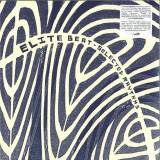
Elite Beat is a musical collective from Portland, Oregon with a history spanning back to 2006.
'Selected Rhythms' captures the finest moments from all three of their ultra limited cassette series 'Casual Rhythms'.
Packed full of DIY dub mixing, cosmic orchestration and raw, percussion driven polyrhythms, the recordings have been remastered and put to vinyl for the first time with sections from Casual Rhythms Vol. 1 being re-shaped into previously unavailable single tracks.
Recording plays a big role in the Elite Beat creative process. The studio as an instrument. Much of the Elite Beat music is mixed in an all-hands-on-deck dub style approach - live with an analog mixer and loads of FX being thrown and dubbed in real time. The sound is genre-less rhythm music with an emphasis on live playing, free form expression and technique that borrows from soundsystem culture. Inspiration can be heard from all parts of time and place. Some Ethio Jazz, Black Ark psychedelia, Exotica, Malian blues, even Haight-Ashbury in the summer of love. Each member an accomplished musician in their own right, Elite Beat thrive on collaboration. 2018 saw the release of their astral-Saharan jams with celebrated Taureg guitarist Mdou Moctar.
The players get together every Wednesday evening, sometimes to chat, sometimes to play. The 'record' button gets pressed when they find what they are searching for. For this crew it's all about 'Casual Rhythms / Harmonious Lifestyles' - if things don't fall under that mantra, then it's got to go. 'Less is more' for Elite Beat and their cosmic sounds.
Search:pol on
Early support by: Laurent Garnier, AME, Marco Bailey, Jennifer Cardini, Terrence Fixmer, Kyle Geiger, Marcel Dettmann, Apparat, Richie Hawtin, Vril, Charlotte De Witte, Sasha, Benjamin Demage any many more..
Fresh off of a remix for Grimes’ “My Name is Dark”, producer Julien Bracht has been powering through CV19 studio seclusion on full-power, with a distinct vision for brighter days ahead. Bracht’s new album, “Now Forever One,” an emblem of dark analog synthwave, is set to drop June 11. Bracht’s first solo album under his own namesake is cut with surgical precision for the shoegazing astral sound travellers who long to break out of their pandemic quarantines, and reconvene for techno-induced ascension. The album’s first single, “Melancholia,” and it’s accompanying video, is already breaking hearts and charts. An exquisite sonic hybrid of communal revelry and profound introspection, “Now Forever One,” focuses Bracht’s multilayered craftsmanship on resolving this era’s angst with sensory exploration and optimism.
As a lifelong drummer, Bracht’s insatiable musical energy lead him to bang out his first 3 EPs within one year of first being signed in 2011-12. In 2015 he founded the band Lea Porcelain with Markus Nikolaus in London. Their hypnotic post-rock debut release in 2017, “Hymns to the Night,” gained instant acclaim from UK tastemakers Lauren Laverne, Steve Lamacq and Zane Lowe, to name a few. The lads broke back onto the international stage with dates on several major festivals around Europe, including the Leeds/Reading Festival, Great Escape Brighton and Latitude. Rich output combined with the inclusion of live drums in his solo live sets quickly gained Bracht recognition and slots on the global tour circuit.
“Now Forever One” forges Julien Bracht’s transition from techno djing, while continuing the explorations of texture and timbre over functional song structures from Lea Porcelain, to a more open-ended search for the aural sublime — the substrate on which music, life and light glide to create momentary nodes of meaning in an increasingly meaningless sociopolitical atmosphere. These are crucial themes to Bracht’s process and approach. “The intention in my music is to strengthen people’s awareness and minds… I want us all to gather in spirit and stick together.”
The album exemplifies Bracht’s hunt for elemental juxtaposition with the warm Prophet 6’s sawtooth howls and bright pads against chillingly indifferent pulsing basslines and percussion. Clocking in at just under 65 minutes, “Now Forever One’s” tracks are sequenced to take the listener through the full emotional arch of a 15-hour rave, with an emphasis on those moments of collective epiphany where heaving techno floors become the perfect microcosm for an idealistic and interconnected future. Interspersed with improvisational one-takes, the album submerges the listener in polyrhythmic meditations, of which “Streets” and “Nocturne” are standout examples, and soars on the vaulted synth melodies of future dance floor favourites “Melancholia” and “Dreams of Euphoria.” Sascha Ring of Apparat & Moderat puts it perfectly: “I played “Melancholia” the night I got it at Mutek Festival in Mexico City, and instantly knew it’ll shine on a big floor at the right time. It’s just the right balance of majestic melodic deepness.” The sounds are both triumphant and exploratory.
Greater than the sum of its parts, Bracht’s latest release hints at the artist’s emerging potential for nailing our moment’s zeitgeist; learning to live smaller while constantly seeking higher heights. Inhabiting the fertile ground between solitary rumination and dance-floor convenance, the launch of “Now Forever One’s” lunar expedition into the techno oblivion of pandemic lockdown is oddly fitting.
Burning Injustice’, the second album by Torn Relics, forthcoming on the Berlin based label Instruments of Discipline, weaves mythical and futuristic elements of an unknown world. Haunting, visceral and diverse in production styles, the duo continues to pave their own musical territory. This album was written between 2017 – 2021, in which the music produced reflects the decay of the political and social landscape in the UK, from the Brexit divide to covid isolation. This music serves as antidote in these turbulent times. Torn Relics are an experimental electronic duo based in London, composed of Romek Boyer (AKA Rommek) & Aimée Mullen. The body of their work is a mixture of cyber-punk electronics with tribalistic violin, rhythms and tones. Their debut EP, The Poisoned Chalice, was released on Sacred Court in 2019 and included a remix from SNTS. Abolish The Dogma, the duos debut 8-track album was released in 2020 on Leyla records, which showcases the diversity of their production styles.
Nick Dunton has been involved with music since the early 90's and helped push the sound of UK Techno to it's very limits as one half of the 65D mavericks with Richard Polson (RIP). He has recorded and remixed for his own labels and many others and released music from the leading lights of the UK scene and beyond.
Exalt Records are pleased to release the first album from Nick Dunton under his Ever Vivid guise. These 12 tracks were recorded between 2003 and 2013 and reflect the most personal side of Nick's musical production, echoing around themes of movement, loss, bereavement and love.
Presented in a beautiful gatefold sleeve with original artwork and design from David Watson at Grid Pattern.
While the world continues to be in a bizarre mixture of feelings and circumstances, we can thankfully still hark back to last fall when the sophomore LP from the elusive and innovative KAMM band, Cookie Policies gave us an opportunity to reflect on the past while fully looking toward the future.
The album presented a beautifully unique blend of listening-oriented music styles, combining the early roots of the four producers and their pre-DJ formative musical travels. It is now our great pleasure to introduce an EP set of specifically dance floor-focussed remixes that take the diverse textural arrangements and expansive sonic bliss of the LP and stretch it around some solid percussive membranes, sure to excite many DJs and dancers out there in the wild as things begin to reopen.
KAMM band members Dave Aju, Alland Byallo, Kenneth Scott, each chose one original album track to rework with a more propulsive feel and from Aju's psychedelic West Coast breaks rendition of the noir-esque "CCBPGC", to Byallo's high vibe leveled-up flight of "Bird Call", or Scott's bold section-by-section recreation of the sprawling "The Soft Glow Of Electric Sex" laser-designed for heads-down late night club sessions, the boys came through to say the least. The real A1 treat of this reinterpretation package however comes from unanimous artist choice and label favorite I:Cube, whose majestic take on "Shleem" sees the veteran producer and master remixer move the bubbling ambient piece into bumping and rich space-age deep house territory, equal parts angelically uplifting and pure 5am club-belter/mind-melter.
Far Out Recordings presents the peerless and criminally undervalued Quartin catalogue, beginning with the reissue of Jose Mauro’s forgotten masterpiece Obnoxius. Over the course of the 60s, Roberto Quartin released more than 20 albums in Brazil on his label Forma, by artists including the likes of Eumir Deodato and Quateto Em Cy. Selling the rights of Forma to Polygram in 1969, Quartin struck out for pastures new at the dawn of the 1970s with the launch of his self-titled label. Significant works and high-water marks for Brazilian music overall followed in that decade’s first year, with Victor Assis Brasil Plays Antonio Carlos Jobim and the aforementioned Obnoxius. These singular gems in Brazilian music, difficult to categorise yet compellingly haunting, have for too long gone unheard.
Today, very little is known about Jose Mauro and as a result those searching for some kind of insight on the man behind the music must attempt to glean what they can from the music itself. One rumour claims he died in a car accident shortly before the album’s release, a fact that could have lent his brief musical career a touch of mythology were it not for how scant the details concerning any other aspects of his life are. The political turmoil from which the album emerged is significant also; recorded during an era of oppressive state censorship, the album, like all the Quartin catalogue, is the result of steadfast defiance in the face of a crushing military dictatorship. While many musicians of the era fled the country, preferring their prospects in the affluent, liberated USA, rebellious, young musicians like Mauro chose to stay and reflect their anger at the authorities through thinly veiled protest songs such as the stirring ‘Apocalipse’. Herein lies the basis for a more dramatic theory; that Mauro was in fact abducted by the military! Whatever the truth, the mystery remains unsolved, and all that remains is his bewitching music, all of which is composed by Mauro and Ana Maria Bahiana. Production on the record was cancelled after Mauro’s death and it was never sold commercially until its rerelease decades later. What appeal does Mauro’s music hold to today’s listeners, forty-something years removed from its conception? Simply put, there is very little else that sounds much like it all. Take the title track of ‘Obnoxius’. A wholly singular piece of music, blending string-drenched melancholia with orchestral pomp, sunny psychedelic strumming with propulsive percussion, topped off with Mauro’s yearning vocals. The result is indicative of Mauro’s unique blend of sounds from Latin Jazz and samba to psychedelic folk and baroque orchestration.
Today, Obnoxius retains its strange, otherworldly appeal – A firm favourite amongst a small circle of deep diggers including Madlib, Gilles Peterson, Floating Points. Jose Mauro’s mournful and melancholic vocals create a dark, brooding atmosphere that stands in contrast to the usual joyfulness and high-spirited rhythm of the more prominent Brazilian music of the era. Despite this air of foreboding, Mauro’s confident baritones, chord patterns and sumptuous arrangements have the ability to induce in the listener an almost trance-like state of ecstasy. Mauro’s long hidden masterpiece, a complex and uniquely stunning work is being offered the chance to be heard by the wider audience it has always deserved. A second Jose Mauro release, A Viagem Des Horas, compiling more incredible tracks unreleased in Mauro’s lifetime, will follow, alongside other unreleased jewels from the Quartin catalogue, from the likes of Piri and Victor Assis Brasil…
The principles of the inclusive band "21 downbeat": Intoxication and ecstasy, or thump and confetti! Beyond the usual boundaries and ideas, the band members create their very own sound from their own texts and poems by contemporary authors. Perhaps the musicians can be called Satyroi, cheerful demons in the wake of Dionysus, who is difficult to tame and for whom our current limits and ideas do not play a role. At appearances at Mensch Meier, the canteen at Berghain and at the Fusion Festival, the band has already put on spectacular stage shows that caused euphoria right down to the last row.
The now appearing debut ep "Shower" contains 4 pieces. Energetic percussion meets a rough synthesizer sound, the vocals are mostly polyphonic, clear and straightforward. All lyrics of the EP are based on poems by the award-winning author Yoko Tawada.
Spirits Having Fun records are ones made from and for shows and spaces—arrangements rooted in a deeply collaborative process, that come to life through intuitive and locked-in live improvisation. Following their 2019 debut Auto-Portrait, Two finds the New York and Chicago based four-piece continuing to challenge ideas of what a rock band can be, pulling apart their musical experiences and reimagining them as kinetic compositions, equally studied but palpably organic.
Two is constructed around gut feelings and strong grooves, elastic rhythms and playful pacing. Its twelve songs expand, contract, and make sharp turns between melodies under singer-guitarist Katie McShane’s meditative lyrics. “Broken Cloud,” which was also released last year on a compilation in support of Chicago Community Jail Support, offers a glimpse into her reflections on the natural world: "A city grew out of the ground / to a mountain it's only a blur."
True to its name, the internal logic of the band is also just a lot of fun, built on trust and deep-rooted musical relationships. Before there was Spirits Having Fun, McShane, bassist Jesse Heasly, guitarist-vocalist Andrew Clinkman, and drummer Phil Sudderberg had performed together in various arrangements over the years. McShane, Heasly and Clinkman met in a specific corner of the Boston underground in 2013, a time when a scene had coalesced around students from local music conservatories frequently collaborating with punk bands and noise artists, exchanging ideas and warping musical worldviews. Heasly and Clinkman played together in Cowboy Band, making mutant, free jazz-inspired takes on old country tunes. When Clinkman moved to Chicago, Heasly and McShane played in experimental groups like EKP and Listening Woman; in Chicago, Clinkman met Sudderberg playing in projects like jazz scene fixture Ken Vandermark’s high-powered band Marker.
Spirits first came together as an attempt at a long-distance collaboration among friends in 2016, driven by the simple feeling of missing each other; they’d meet up for marathon weekends here and there to practice, playing small loops through dive bars and art spaces around the Midwest—just enough for McShane and Heasly to afford plane tickets back home. Being split between Chicago and New York forced the project into a deliberate pace. “We tried to take it slow and let it be what it was,” said McShane. That sense of patience unexpectedly prepared them for March of 2020, when their planned tours and the release of Two were indefinitely delayed.
Two was mostly recorded in the summer of 2019 with the help of omnipresent Chicago engineer Dave Vettraino and DPCD’s Alec Watson, whose contributions on organ, synths, and piano are laced throughout the record. The album reflects a synthesis of solitary and communal songwriting processes—each song drawing on fragments written by individuals, which McShane threaded together and shaped through her distinct compositional lens, making the songs whole before returning to them to the band to mature collectively. When composing, McShane writes first on the keyboard before adapting parts for guitars played by herself and Clinkman. Their dueling approaches to guitar are complementary: McShane, being a newer guitarist, brings a freshness to the project (“I'm just discovering the whole time,” she says) while Clinkman has been playing since childhood.
“There's a lot more collaboration on this record,” says Clinkman, “in terms of all of us letting stuff bloom a little bit more.” The record’s first single, “Hold The Phone” is a good example of this process—it started with a playful intro riff from Clinkman, a melody and bridge added by McShane, a wobbly outro groove added by Heasly, which Sudderberg brought to life. Another single, the dynamic “See a Sky,” written primarily by Heasly, underscores the rhythm section chemistry at play across the record, the song ebbing and flowing around Heasly and Sudderberg’s eclectic percussive palettes.
“Entropy Transfer Partners” is the only song on the record with lyrics by Clinkman, and the album’s most politically direct—a call for solidarity in the face of systemic failures, an acknowledgment of the shared material devastation caused by our country’s ongoing healthcare and housing crises: “These are not things we're experiencing individually. We struggle through them collectively. And we could actually declare, all of us, that it doesn't have to be this way, and fight and organize to ameliorate some of those conditions.” (“We won't work to create the shit you monetize, to run our lives,” they sing.)
From front to back, Two is an absorbing listen simply for its impressive range. But as the members explain themselves, the complexity of the record is about more than its intricate riffs, or how often they count out an odd time signature, but how they reject the notion of boxing the songs in, letting the melodies take on lives of their own. “Making music that feels alive is important to us,” says Clinkman. “Music feels most powerful to me when it deepens our sensation of feeling alive and connected to other humans. It’s so easy to feel worn down and isolated; that your life’s value is fixed to your productivity at your job, or the things that you have or don’t have. Making music that feels joyful and fun seems like one effective antidote to that feeling.”
Power punks, Hot Milk, have announced their second EP, ‘I JUST WANNA KNOW WHAT HAPPENS WHEN I’M DEAD” via Music For Nations.
It follows the success of the band’s first EP, 2019’s ‘Are You Feeling Alive?’, a fizzy collection of gutsy emo-pop which established them as one of the most exciting new bands in the UK. Their 2019 was a whirlwind year that saw them tour with Foo Fighters, Deaf Havana and You Me At Six, as well as playing some of the UK’s biggest festival stages.
The band were formed in 2018 by vocalist and guitarist duo, Han Mee and Jim Shaw, two friends who met working behind the scenes in the Manchester music scene. Yet they yearned to be in a band themselves. “We got to the point where we were why not? What else have you got to lose?” says Jim. “We thought, we can go for this or we can get to 60 and know we didn’t do right by ourselves.”
Debut EP, ‘Are You Feeling Alive?’, which was penned during a drunken songwriting session, was an effervescent refusal to settle for second best in life. “We’ve both realised that life you don’t get another face,” Han continues. “You get one face and then you’re done, and you will never exist ever again.”
That sense of not letting life slip through your fingers is at the core of Hot Milk’s punk-indebted ethos. And having taken a leap of faith to grasp their platform, the band, completed by bassist Tom Paton and drummer Harry Deller, aren’t about to let it go to waste. “Art is about your interpretation of your own experience,” adds Jim. “The first EP was written five years ago. We’ve grown up and realised who we are and what the world is like right now.”
‘I JUST WANNA KNOW WHAT HAPPENS WHEN I’M DEAD’, which was produced by Jim Shaw, is another vivacious call to arms, rammed with sharp hooks and huge, catchy choruses, to encourage everyone, everywhere, to follow their dreams. But elsewhere, the lyrics are more personal, with the band bottling the anxieties and frustrations of their everyday lives. ‘Woozy’ openly tackles depression, ‘Good Life’ takes on societal corruption and the distribution of wealth, while elsewhere the band address the pursuit of happiness in a modern world.
“These songs are honest,” says Han. “I have nothing to hide. Everyone’s on antidepressants these days. It’s the world we live in, it makes people sad. Capitalism. Is it broken? 100 per cent. I’m angry that the fact that we’re sold a world that actually doesn’t make your inner peace happy. Humans need love and community and a lot of the time, there is no love and the community has dissolved.”
“The anger resides in us at the unfairness of the world,” adds Jim. “Online communities are all about flexing and battling your peers to look or sound a certain way that is better than everyone else. It’s constant and it’s dangerous. You’re teaching kids that to be content, you have to be best. It’s a question again. Are you really living?”
“We’re angry, both politically and existentially in terms of the system we now live in. But also, we’re angry at the fact that we’re sad quite a lot,” continues Han. “But we’re trying to not just sit there and take it. We’re trying to fix it, by building a family through this band.”
Walk into any Hot Milk show and you will feel that sense of community. Through their honest lyrics and inclusive approach, the band say their aim is to create an “aggressively space safe” where fans are empowered to be themselves, “authentically and unapologetically”, as well as opening up a dialogue for people to talk. That will become clear later this year when the band get their chance to air the new material. This summer, they will return to Reading and Leeds Festivals, this time to play the main stage, as well as embarking on a headline UK tour in September. And believe, when the times comes to finally get back into those sweaty pits, these new songs will provide the perfect, life-affirming soundtrack.
“Life is fragile,” says Jim. “You can’t take things with you, but you can make the best memories. That’s the most important thing in life. Your currency is your memory.” “What you can take with you is something that absolutely makes the blood pump round your veins and gives you goosebumps,” agrees Han. “That’s what this band is to us. It’s our passion. That’s what this EP is about.”
It was once said that listening to ‘Antiphonals’ was, “like listening to a
progressive rock album except it’s just the keyboard parts.” As the
second full-length LP on Late Music, Davachi offers here a slow and
sedate solo affair composed with the various horns and woodwinds of
the mellotron alongside organs, pianos, harpsichord and more quiet
delights.
CD in 4 panel gatefold lancing pack.
LP in standard 3mm spine printed sleeve, poly-lined inner bag and
digital download card.
As a composer and performer of both acoustic and electronic music,
Sarah Davachi’s work is concerned with the close intricacies of
intimate aural space, utilizing extended durations and simple
harmonic structures that emphasize subtle variations in texture,
overtone complexity, psychoacoustic phenomena and temperament
and intonation.
Similarly informed by minimalist tenets of the 1960s and 1970s,
baroque leanings toward slow-moving chordal suspensions and
experimental production practices of the recording studio
environment, in her sound is manifest an experience that lessens
apprehension of consonance and dissonance in likeness of the
familiar and the distant.
Davachi has toured extensively across the globe and has shared the
stage and collaborated with artists such as Grouper, William Basinski,
Ariel Kalma, the Bozzini Quartet, the London Contemporary
Orchestra, Oren Ambarchi, Donald Buchla, Suzanne Ciani, the BBC
Scottish Symphony Orchestra, Jessica Moss, Áine O'Dwyer,
Alessandro Cortini, James McVinnie, Ian William Craig, Kara-lis
Coverdale, Aaron Dilloway, Robert Aiki Aubrey Lowe, Ellen Arkbro,
Loren Connors and filmmaker Paul Clipson.
Between 2007 and 2017, Davachi had the unique opportunity to work
for the National Music Centre in Canada as an interpreter and content
developer of their collection of acoustic and electronic keyboard
instruments. In 2020, she established her own label, Late Music.
Don Tiki, the leaders of exotica's turn-of-the-21st-century revival, bring their soundtrack for a Technicolor Polynesian pop paradise to Aloha Got Soul in 2021.
Each LP includes a pair of custom Don Tiki 3D glasses.
Don Tiki debuted from Honolulu in 1997 with the album, 'The Forbidden Sounds of Don Tiki', featuring the legendary Martin Denny in what would become one of his final recordings before his passing. The group, led by Fluid Floyd (Lloyd Kandell) and Perry Coma (Kit Ebersbach), draws inspiration from the original masters of the exotica sound, Denny, Arthur Lyman and Les Baxter, to bring such evocative music into the 21st century.
Following 'The Forbidden Sound', Don Tiki's recordings further deepened the group's reverence for and exploration of the poly-rhythmic, mid-century sounds pioneered by Denny, Baxter, and Lyman. Those albums, originally available on compact disc, include 'Skinny Dip with Don Tiki' (2001), 'South of the Boudoir' (2009), 'Don Tiki's Hot Lava Holiday Songs' (2012), and a remix album entitled 'Adulterated' (2004).
'Hot Like Lava' collects the group's top instrumentals for an exhilarating, paradisiacal ride through the world of tiki subculture on lava-colored vinyl.
About Don Tiki:
"Tiki supergroup Don Tiki knows the world, the subculture of tiki…it really doesn’t get much better than this!” ~ Anthony Bourdain, No Reservations
"Don Tiki is providing the soundtrack for this Technicolor projection of a Polynesian pop paradise." ~ Sven Kirsten/The Book of Tiki
"A great band from Hawaii, friends of ours...keeping the spirit of Martin Denny alive." ~ Jimmy Buffett
Don Tiki is:
Kit Ebersbach – keyboards, bandleader
Lloyd Kandell – producer, congenial host
Lopaka Colon - congas, bongo, bird calls
Hai Jung - bass, vocals
Sherry Shaoling – vocals, dancer
Abe Lagrimas, Jr. – vibraphone, percussion
Ryoko Oka - keyboards
Bonny B. - drums
Tim Mayer – reeds
Violetta Beretta – dancer, costumer, vocals
- A1: Paragraph One (After The Rain)
- A2: Marshland Lullaby (Feat Kitty Whitelaw)
- A3: Partial Recall
- A4: No Words (Feat Tamar Osborn)
- A5: When The Are No Birds (Feat Tamar Osborn)
- B1: Paragraph Two
- B2: Not Now Karen
- B3: Men Bearing Lanyards (Feat Tamar Osborn)
- B4: Time To Clear Away Your Toys (Feat Tamar Osborn)
Amateur Dramatics is Awkward Corners AKA Chris Menist's second LP in the space of a year. In 2020 – a time when the global pandemic gave artists more time and space to think about their music – Chris took his collaborations and compositions to a different level. Having already collaborated remotely with Sarathy Korwar, as well as Kitty Whitelaw through Karthik from Flamingods' Isolate/Create/Collaborate community, Chris turned his thoughts towards a new project. Amateur Dramatics is influenced by the events of early 2021 and alludes to the general atmosphere of political life in the UK right now where we are chivvied along by people who seem woefully unqualified to be commanding authority. Musically, the LP builds on foundations of the meditative, devotional electronic aspects of previous LP Dislocation Songs but this time frames it more in a jazz context with significant collaborations with Collocutor and Maisha's Tamar Osborn on four tracks.Vocals (from Kitty Whitelaw) feature on an Awkward Corners track for the first time, as well as double bass provided by David Leahy.The result is a thoughtful and deep listening 40 minute listening experience.
Hold onto your hats! The Allergies are back in the building. Yes, the UK beatmakers have got an absolute one-two punch with this new 7" single, as both sides are fire-in-the-hole, future classics in the making, ready to soothe your soul and ignite the party.
Leading the way is the vintage funk and beefed-up breaks bomb, 'Love Somebody'. A mix of crazy up-tempo grooves and loops, snatches of reworked soul samples, deft scratching, and dancefloor energy up the wazoo. It's that unique Allergies signature sound, with a whole new splash of club-rocking polish smothered on top.
Oh, my… And holding its own on the B-side of this release is the title track from that feverishly anticipated full length album, 'Promised Land'. This beaty, meaty, Moby meets Fatboy Slim-style anthem, will have your loins stirred, and feet tapping with its next-level sampling skills, and hugs-all-around, end-of-a-festival wonderment.
Composer and saxophonist Brian Brown produced some of the most refined Australian jazz recordings during the 1970s. A versatile musician whose distinct impressionist music melded modern jazz with the outer limits of free experimentation. Considered to be his greatest work was the 1975 concept album Carlton Streets, an ambitious recording that romanticised the sights, sounds and the nostalgia of this once-bohemian Melbourne neighbourhood. Differing from his eco-jazz composition Wildflowers heard on the recent Roundtable compilation Pyramid Pieces, Carlton Streets explores the polar opposite, offering jazz impressions of the urban environment. Comparable to other pioneering jazz-rock groups such as Ian Carr's Nucleus and mid-period Soft Machine, the album is a mosaic of ecstatic jazz-rock groove, spirited free improvisation and expanded experimental textures. A potent fusion that owes as much to Australian 20th-century avant-garde composers as it does to the influence of the electric jazz innovators, specifically early Weather Report and Herbie Hancock's Mwandishi. The Roundtable are pleased to showcase this important artist and offer a new edition of this landmark Australian jazz recording. Restored from the original master tapes and presented in a gatefold sleeve including liner notes and rare photos. Released for Record Store Day 2021.
Gold Vinyl
Though the hallowed halls of Berlin’s nightlife excess now sit cold, the sounds that once haunted their depths beat ever onward, and colder still. Birthed in these hushed plaguelands, XTR HUMAN’s new full-length G.O.L.D evokes the frozen melancholy of a post-pandemic city, driven ever onward by the impetus of night’s primary currencies: sweat, release and change. The latest full-length from Johannes Stabel, G.O.L.D finds the German producer evolving as much as the rest of the world has had to. Taking his political and socially conscious lyrics into his native tongue brings a deeper and more powerful thrust to their weight—particularly at a time when Germany is weighing its own social consciousness after years of being seen as a leading world figure. Across G.O.L.D’s ten tracks, Stable brings our zeitgeist into a new realm, where the anger and frustration at our current existence is refined into the energy that fuels our engines, that primal desire always amplified during times of social upheaval—the desire to move your body. Many of the songs delve into Stabel’s own experiences as a German, from explorations of the Deutsch mentality of persistent fear to tackling the fake news, jingoism, racists and coronavirus deniers on hypnotic bangers ‘Dark Germany’ and ‘Dieser Klang’; issues just as prevalent in Germany as in the USA and UK. Yet each song carries just as much weight on to the dance floor, melding driving EBM bass with soaring synthlines and coldwave atmospheres that dispel the tenseness that such heavy topics imbue, in favor of intensity and beauty. Influenced by the pop hooks of Austrian New Wave legend Falco, G.O.L.D never neglects its danceability and HD club accessibility, no matter how heady the lyricism. ‘Starker Junge’, a dissection of toxic masculinity, drops down onto the listener with sparkling synths and razor-sharp guitar, while capitalist critique ‘Fleisch’ is a pogo synthpop anthem that could send any floor into a twirling frenzy. Wrapped in darkened beats and political ideals, G.O.L.D can’t hide the light that emanates from within its glistening, imminently catchy hooks and groove-laden rhythms. In a time where the dance floor sometimes seems like a distant memory, it’s the perfect philosopher’s metal to transmogrify your existence. All songs written and recorded by Johannes Stabel Mixing by Andrew Wiseman Arwork by Nicolas Zupfer Mastering at Dadub Studio
Following their critically well received debut album, Seekers, in 2017 - Our Kingdom Undone sees BEYOND GRACE refining and redefining their sound into something that’s simultaneously more intricate and more intense than ever before, combining conceptually ambitious songwriting and high octane heaviness in equal measure. Our Kingdom Undone’s gestation period took place under a pall of social unrest and political uncertainty the world over, so it’s perhaps no surprise that each of these eight songs is a cathartic scream of raw emotion and primal poetry. Full to the brim with lyrics that rage with unfettered fury and unbound frustration against the rise of isolationism, exploitation, rampant militarism, and religious indoctrination. Recorded at Stuck On A Name studio by Ian Boult and Bookhouse studio by Tom Hill, before being mixed and mastered by Charles Elliott (Tastemaker Audio / Abysmal Dawn), Our Kingdom Undone (whose stunning artwork was provided by in-demand UK artist Shindy Reehal) is both a crushing statement of intent and a vital reminder that the personal is political, that the ends do not justify the means, and that we must not let our fear divide us and drive us into an age of unreason.
When his mother brought Stanley Turrentine’s Salt Song LP back from a trip to Canada, Julien Lourau, then a teenager, was impressed by the scope of the sound and the groove of the saxophone. He was also charmed by the lush arrangements and funky sound of the record, typical of releases on the CTI label. Created by producer Creed Taylor, CTI left an imprint in the minds of 70s jazz fans much like Blue Note did in the 60s, and it even ended up releasing work by artists who started out on this mythical label such as Stanley Turrentine and Freddie Hubbard. The two even shared the same sound engineer, the great Rudy van Gelder.
Yet CTI, though highly prolific during its 15 years of activity, has not benefitted from the same aura as its predecessor. “To breathe life into this album, I listened to a wealth of CTI releases and discovered some I had never heard before. I noticed, oddly, that many of today’s musicians know very little about CTI - a label unfairly considered as minor.”
The choice of tracks was determined by Julien’s personal tastes, always keeping in mind a desire to help people discover them yet focusing on the joy of actually playing them too.
"The album is made up of 9 pieces. Mathieu Débordes got everything down to the nearest note before we even attempted to play them. CTI didn’t hold back in fuelling their compositions with brass and violins, but I erased this aspect and pared things down to a bass, drums and two keyboards."
English drummer Jim Hart, someone Julien worked with during his London years, propels the group - from hard-bop polyrhythms with “drum & bass” inflections to a reworking of classic Red Clay.
Sylvain Daniel on the bass and Arnaud Roulin on the analogue keys are two musicians close to the saxophonist, and that he met when they were students in 1999 while organising a master class at the Conservatoire de Nantes. Since then, they have become his esteemed companions.
The collaboration with young pianist Léo Jassef began on this recording, where he also plays the Prophet 5. The dynamic and overlap of the many keyboards played by Arnaud and Léo bring the record a richness of timbre and harmony that the strings and brass provided on the CTI recordings.
For the final track on the record, Julien called upon his friend of 30 years, guitarist Bojan Z, for a fresh, Gospel take on Love and Peace, a track recorded by Quincy Jones in 1969, which here, is dedicated to Bojan’s recently departed brother.
“When it comes down to it, this album really is as I had imagined it, with, luckily, a few unexpected turns. I created a playlist I then claimed as my own. But in the end, I must admit that I would have loved to have composed some of these tracks.”
180g vinyl record. only 300 copies - all hand numbered.
pressed in two verison - 200 black and 100 transparet with one white line ("crack" as the name of the TV series).
The first 100 copies have the Urbanski signature on the back cover.
This is another, after "Ultraviolet" collaboration project of the AXN Polska, U Know Me Records and the artist - Wojtek Urbański. The soundtrack for the Rysa series with Wojtek's original music will premiere on the 9th April.
"The music for the Rysa series is a combination of the world of electronics, modernity with traditional instruments and folk accents. On one side we have synthesizers, deep bass and wide spaces, characteristic of electronic music and close to my musical style. In opposition to these elements, however, I used traditional instruments such as hurdy-gurdy, pipes, flutes and strings" says Wojtek Urbański.
"I wanted the duality of this music to reflect the struggles and double life of the main character of the series. She lives in a certain suspension, between the 'day' world which she knows and remembers, but also the 'night' world which happens beyond her consciousness. Through music, I tried to convey the character of both these worlds, touching very dark and heavy emotions in one of them. I have invited an expert of traditional music, Sebastian Wielądek (hurdy-gurdy, pipes, flutes) and the outstanding violinists Stanisław Słowiński and Agnieszka Świgut to record these works. " adds Urbański
180g vinyl record. only 300 copies - all hand numbered.
pressed in two verison - 200 black and 100 transparet with one white line ("crack" as the name of the TV series).
The first 100 copies have the Urbanski signature on the back cover.
This is another, after "Ultraviolet" collaboration project of the AXN Polska, U Know Me Records and the artist - Wojtek Urbański. The soundtrack for the Rysa series with Wojtek's original music will premiere on the 9th April.
"The music for the Rysa series is a combination of the world of electronics, modernity with traditional instruments and folk accents. On one side we have synthesizers, deep bass and wide spaces, characteristic of electronic music and close to my musical style. In opposition to these elements, however, I used traditional instruments such as hurdy-gurdy, pipes, flutes and strings" says Wojtek Urbański.
"I wanted the duality of this music to reflect the struggles and double life of the main character of the series. She lives in a certain suspension, between the 'day' world which she knows and remembers, but also the 'night' world which happens beyond her consciousness. Through music, I tried to convey the character of both these worlds, touching very dark and heavy emotions in one of them. I have invited an expert of traditional music, Sebastian Wielądek (hurdy-gurdy, pipes, flutes) and the outstanding violinists Stanisław Słowiński and Agnieszka Świgut to record these works. " adds Urbański
Before joining vibraphonist Terry Gibbs’ quartet in 1962, Detroit-born pianist Alice McLeod
played intermissions at the Paris Blue Note and appeared on French TV with saxophonist
Lucky Thompson, reaching Gibbs’ attention in a duo with vibraphonist Terry Pollard; in the
quartet, she became the perfect foil for Gibbs, her understated piano making room for his
intense improvisation, stepping up with her own expression when needed. El Nutto, their
third LP, captures Alice at her best in this setting, as heard on the reveries of ‘El Flippo’ and
the title track, this solid set of Gibbs originals showing her virtuosity, composure and
curiousness, which would soon reach more cosmic highs, once she became Alice Coltrane.


