quête:pol on

Genres
Tout
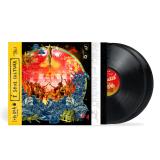
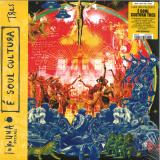
Desmond Dekker and The Aces - 007 Shanty Town

180 GRAM AUDIOPHILE VINYL
- LIMITED EDITION OF 750 INDIVIDUALLY NUMBERED COPIES ON ORANGE COLOURED VINYL

Desmond Dekker recorded some of his best known songs together with his backing group the Aces (consisting of Wilson James and Easton Barrington Howard). Their debut album 007 (Shanty Town) includes their single of the same name, which made him Jamaican music's first outernational superstar, reaching the 14th place in the UK charts. You'll hear how the Ska music from the mid-60s is developing to the Rocksteady sound. This was 'Ska' or 'Blue Beat'—(or its new name for the slower tempo 'Rock Steady'), and the lyrics come from the Calypso-Mento method of telling about current events in music. So in a groovy way, Desmond, James and Barry (the Aces) have given a report of love, politics, nagging women, the celebration of the Fifth anniversary of Independence, and gang warfare. This is were it all started before Desmond became the international star.

Even before Bob Marley and Jimmy Cliff Jamaica already had their own international superstar, Desmond Dekker was his name. Famous because of his international hits, such as 'Israelites' (1968) and 'It Miek' (1969).

007 (Shanty Town) is available as a limited edition of 750 individually numbered copies on orange coloured vinyl.

pas en stock

Commandez maintenant et nous commanderons l'article pour vous chez notre fournisseur.

33,19

Last In: 7 years ago
DIRT BUYER - DIRT BUYER III

DIRT BUYER

DIRT BUYER III

12inchBRLP74
Bayonet
06.02.2026
  • Baseball
  • For Me
  • Halfway
  • Bullshit Fuck
  • Betchu Won't
  • Get To Choose
  • Wait On The World
  • Multizeal
  • Me Before You
  • Old As Sin
  • When You Were A Kid

,Dirt Buyer III" fängt mit einem Song über Sport an. "Baseball/ Is somethin'/ I'll never get, but I/Sleep on it/ Wake up/ And try again", singt Joe Sutkowski zu einer zunächst langsamen, dann dröhnenden verzerrten Gitarre. Aber natürlich weiß jeder, der mit der emotionalen Tiefe der Musik von Dirt Buyer vertraut ist, dass Sutkowski nicht einfach nur über Amerikas Lieblingsfreizeitbeschäftigung singt. ,Es geht darum, mit bestimmten Erwartungen aufzuwachsen und sich an sie zu halten, nur weil man gesagt bekommt, dass man das tun soll", erklärt Sutkowski. ,Der Song handelt davon, Autonomie und Unabhängigkeit zu erlangen." Gleich zu Beginn kehrt Dirt Buyer III zu den Ursprüngen zurück, zu den in der Kindheit fest verankerten Brüchen, um ein Album zu schaffen, das von da an ein viszerales Dokument der Bewältigung derselben Prüfungen im Erwachsenenalter ist. Als ,Dirt Buyer II" 2023 erschien, hatte es bereits drei Jahre lang in der Schublade gelegen. Zu diesem Zeitpunkt hatte Sutkowski bereits alle Songs für ,Dirt Buyer III" geschrieben, während einer besonders turbulenten Phase seines Lebens. Anstatt wie früher die für ein Album notwendige Anzahl an Songs zu schreiben und dann direkt ins Studio zu gehen, hatte er hier mehr als zwei Dutzend Tracks angesammelt. Nur wenige Wochen, nachdem "II" veröffentlicht worden war, nahm Sutkowski "III" auf. ,Ich war so bereit, etwas anderes zu machen", erklärt er. Er war bereit, diese Jahre hinter sich zu lassen. Genauso wie es einen klanglichen Sprung von den selbstgemachten Aufnahmen von "Dirt Buyer" zum moderaten Studio-Polish von "Dirt Buyer II" gab, hat Sutkowskis Musik zwischen den Alben wieder eine logische, aber substanzielle Entwicklung durchlaufen. Das Grundgerüst ist dasselbe: zerklüftete Akustikgitarren, elektrische Riffs, die mal herbstlich, mal bissig und übersteuert klingen, Schlagzeug, das mit dem selben verzweifelten Tempo vorwärts taumelt, mit dem Sutkowski diese Jahre durchlebt hat. Und dann seine Stimme über allem: klagend, sich windend, manchmal brüchig und manchmal voller neuer Kraft. Getragen von den soliden Strukturen dieser Songs und einer kraftvolleren Produktion präsentiert Dirt Buyer III die bisher vollendetste und eindringlichste Version von Sutkowskis Sound. Im Oktober 2023 traf sich Sutkowski mit seinen Freunden Hayden Ticehurst und Chris Cubeta im Brooklyn Studio G. Er zeigte ihnen alle Demos, und gemeinsam wählte das Trio die ,stärksten Stücke aus der Reihe" aus, wobei sie sich auf die 11 Kompositionen konzentrierten, die auf "III" zu hören sind. ,Wir wussten, welche Songs es werden würden, und haben uns direkt an die Arbeit gemacht", sagt Sutkowski. Trotzdem nahmen sie sich Zeit, um alles genau richtig hinzubekommen, und verteilten die Aufnahmen, das Abmischen und die letzten Feinheiten über ein ganzes Jahr. Das Ergebnis ist ein Dirt Buyer-Album, auf das Sutkowski so stolz ist wie nie zuvor. Er sagt: ,Es spiegelt am besten wider, wo ich als Songwriter gerade stehe ."

pré-commande06.02.2026

il devrait être publié sur 06.02.2026

22,27
J Mascis + The Fog - More Light LP
  • A1: Same Day
  • A2: Waistin
  • A3: Where’d You Go
  • A4: Back Before You Go
  • A5: Ground Me To You
  • B1: Ammaring
  • B2: All The Girls
  • B3: I’m Not Fine
  • B4: Can’t I Take This On
  • B5: Does The Kiss Fit
  • B6: More Light

Best known as the frontman of the influential indie rock trio Dinosaur Jr., J Mascis has also been a solo artist, producer, and film composer. Getting his start as a founding member of the hardcore band Deep Wound, Dinosaur Jr. was founded in 1984 and the group emerged among the most highly regarded alternative rock. By introducing volume and attack in his songs Mascis shed the strict limitations of early 1980’s hardcore, becoming an influence on the burgeoning grunge movement. Mascis’ body of work continues to inspire a generation of guitar players and songwriters today.


In 1997, Dinosaur Jr. disbanded and Mascis released More Light, his first recording under the moniker J Mascis + The Fog. Members and collaborators of The Fog have included Mike Watt (Minutemen / fIREHOSE), Ron Asheton (The Stooges), Robert Pollard (Guided By Voices), Kevin Shields (My Bloody Valentine), Dave Schools (Hard Working Americans / Widespread Panic) and Kyle Spence (Harvey Milk).

pré-commande06.02.2026

il devrait être publié sur 06.02.2026

24,79
Ski Mask The Slump God - The Lost Files (Tape)

Ski Mask The Slump God is a vaunted underground rap legend and pioneer in the Soundcloud Rap era
The Lost Files is a collection of songs from the soundcloud era, some unreleased, some never on streaming before.
Includes rarely heard features from XXXTentacion
Recently released “Catch Me Outside 2,” the followup track to his iconic “Catch Me Outside” track - with the single and video going viral
Over 8.5M streams on Spotify alone since release
Recently performed Sold-Out hometown concert celebrating release of The Lost Files. The show sold out in 4 minutes

pré-commande06.02.2026

il devrait être publié sur 06.02.2026

15,84
BELLBIRD - THE CALL

BELLBIRD

THE CALL

12inchCSTLP190
CONSTELLATION
06.02.2026
  • Firefly Pharology
  • Murmuration
  • Soft Animal
  • Blowing On Embers
  • Eternity Perspective
  • Phthalo Green
  • The Call
  • Mourning Dove

Bellbird hat seinen Namen und seine musikalische Inspiration von dem Vogel, der für einen der lautesten und markantesten Rufe im Tierreich bekannt ist. Die Band beschäftigt sich mit Themen wie der Verbundenheit zwischen Musikern, Genres und der Natur. Ihr zweites Album und erstes für Constellation, The Call, ist direkt vom Weißglockenvogel inspiriert, dessen extremer, unverwechselbarer Ruf analysiert und direkt in den explosiv schönen Titeltrack des Albums eingewoben wurde. Das in Montréal ansässige Quartett bestehend aus Claire Devlin (Tenorsaxophon), Allison Burik (Altsaxophon, Bassklarinette), Eli Davidovici (Bass) und Mili Hong (Schlagzeug) begann während der Pandemie bei Park-Jams zusammen zu spielen, inspiriert von der Jazz- und Free-Improvisationsszene, die sich um das Café Résonance gebildet hatte. Aber die vier Montrealer Neuzuzügler fanden erst nach einer Einladung zum Ottawa Jazz Festival 2021 als Bellbird zusammen und haben seitdem ihre Harmonie und ihren gemeinsamen Sound durch jahrelanges Touren und Zusammenspiel verfeinert. Das Quartett geht über sein gefeiertes, 2023 selbst veröffentlichtes Debütalbum ,Root in Tandem" hinaus und setzt auf einen stark kollaborativen Kompositionsprozess. Nachdem sie zuvor die Kompositionsaufgaben aufgeteilt hatten, entstanden die acht Songs auf The Call aus musikalischen Workshops und Improvisationsspielen, wobei sie sich auf Gedichte und Gespräche stützten, die sie während ihrer Aufenthalte außerhalb der Stadt ausgetauscht hatten. Das Ergebnis ist ein kraftvolles, stimmiges Statement, das ihre jazzzentrierte Instrumentierung mit Einflüssen aus Rock, Fusion und Folk verbindet, von Mingus und Eric Dolphy bis hin zu Ornette Colemans Prime Time und Indie-Rock. Ein wesentliches Merkmal ihres Sounds ist, wie sie die üblichen Rollen ihrer Instrumente umkehren, wobei die Blasinstrumente rhythmische Muster und unterstützende Texturen einsetzen, während Akustikbass und Schlagzeug die Form bestimmen. Dieser Ansatz ist ein Mikrokosmos der egalitären Ethik der Band: Sie agieren als echtes Kollektiv, ohne ihre individuellen Stimmen zu opfern. Das Album schafft einen Ausgleich zwischen kraftvollen Kompositionen wie dem Titelsong ,The Call" und Momenten, in denen die Band das Tempo drosselt, um sich der thematischen Einfachheit hinzugeben, wie in ,Soft Animal" und ,Phthalo Green". Im Gegensatz zu ihrem Debütalbum, das in der Stadt erarbeitet, aber auf dem Land aufgenommen wurde, wurde ,The Call" im legendären Hotel2Tango in Montréal von der Toningenieurin Sylvaine Arnaud aufgenommen, die die rohe Energie der Live-Auftritte der Band einfängt. Die Produktion verzichtet weitgehend auf eine traditionelle Ästhetik und setzt stattdessen auf kraftvolle Drums und einfallsreiche analoge Bearbeitung, die die viszerale Wirkung der Musik unterstreichen. Obwohl die Musik oft melodisch reichhaltig und zugänglich ist, scheut sich die Band auch nicht vor ,hässlichen" Klängen und nutzt Multiphonics, gestrichenen Bass und metallische Texturen, um eine Klangpalette zu schaffen, die ebenso eindringlich und naturalistisch wie explosiv ist. Das Album ist sozial und politisch engagiert und ein Beweis für die tiefgründige Musik, die nicht von einem einzelnen Leader, sondern von einem zutiefst einfühlsamen Quartett geschaffen wurde, das als Einheit zuhört, reagiert und kreiert. The Call vermittelt die Gefühle der Band zur Klimakrise und zur globalen Solidarität, wobei einer der zentralen Titel des Albums, ,Blowing on Embers", ausdrücklich einem freien Palästina gewidmet ist. The Call ist ein entscheidender Schritt nach vorne, ein einheitlicher Aufschrei einer Band, die ihre kraftvolle kollektive Stimme voll und ganz gefunden hat.

pré-commande06.02.2026

il devrait être publié sur 06.02.2026

21,43
Knut Avenstroup Haugen - Dune: Awakening (2x12")
  • A1: Awakening
  • A2: Welcome To Arrakis
  • A3: Breath Of Shai-Hulud
  • A4: Prescience
  • A5: Sayyadina’s Lament
  • A6: Into Arrakeen
  • A7: Transcendence
  • B1: When The Sun Is Low
  • B2: Mirages At Dawn
  • B3: The Prophecy
  • B4: Remnants Of Green
  • B5: Legacy Of The Fremen
  • B6: Spice Dreams
  • C1: Crucible Of Sand
  • C2: Whispers In The Wind
  • C3: Beneath Two Moons
  • C4: Echoes Of The Lost
  • C5: The Mind Killer
  • D1: Dance Of The Blade
  • D2: The Narrow Path
  • D3: Descent
  • D4: Children Of The Tube
  • D5: Shadows’ Womb
  • D6: Memories Of Caladan

Bless the Maker: the Great Houses of Laced Records and Funcom have forged a temporary trade agreement to bring you the expansive soundtrack for ‘Dune: Awakening’ on vinyl.  The hit survival game has garnered critical praise for its incredibly faithful and detailed realisation of the Dune universe - from its sprawling vistas to deep lore and political intrigue. The music is integral in recreating the atmosphere of Arrakis, conjuring not only its striking landscapes but the human experience of life on the planet.  Recorded live at Air Studios in London with The Chamber Orchestra of London, Knut Avenstroup Haugen’s soundtrack conjures a planetary sense of scale.

Arcing strings shimmer and twist weightless in the air like heat rising from the desert floor, while resonant brass evokes dawn stretching out across the sands.  The luscious acoustic instrumentation is enhanced and elevated by rippling electronics, capturing Dune's singular blend of science fiction and spiritual tradition.  Soaring vocal performances from Clara Sorace, Eurielle and Emília Rovira Alegre centre this sense of the sacred, pushing the soundtrack to ecstatic emotional peaks.  Black heavyweight double vinyl.  24 tracks from the acclaimed 2025 survival game.  Widespined outer sleeve  Printed, spined inner sleeves.  Bespoke sleeve artwork by Funcom.

pas en stock

Commandez maintenant et nous commanderons l'article pour vous chez notre fournisseur.

36,93

Derniere entrée: 73 jours
J Mascis + The Fog - Free So Free LP
  • A1: Freedom
  • A2: If That's How It's Gotta Be
  • A3: Set Us Free
  • A4: Bobbin
  • A5: Free So Free
  • B1: Tell The Truth
  • B2: Someone Said
  • B3: Everybody Lets Me Down
  • B4: Say The Word
  • B5: Outside

Best known as the frontman of the influential indie rock trio Dinosaur Jr., J Mascis has also been a solo artist, producer, and film composer. Getting his start as a founding member of the hardcore band Deep Wound, Dinosaur Jr. was founded in 1984 and the group emerged among the most highly regarded alternative rock. By introducing volume and attack in his songs Mascis shed the strict limitations of early 1980’s hardcore, becoming an influence on the burgeoning grunge movement. Mascis’ body of work continues to inspire a generation of guitar players and songwriters today.


In 1997, Dinosaur Jr. disbanded and Mascis released More Light, his first recording under the moniker J Mascis + The Fog. Members and collaborators of The Fog have included Mike Watt (Minutemen / fIREHOSE), Ron Asheton (The Stooges), Robert Pollard (Guided By Voices), Kevin Shields (My Bloody Valentine), Dave Schools (Hard Working Americans / Widespread Panic) and Kyle Spence (Harvey Milk).

pré-commande06.02.2026

il devrait être publié sur 06.02.2026

24,79
Sam Slater - Lunng LP

Sam Slater

Lunng LP

12inchMBD_LP003V
MT. BRINGS DEATH
05.02.2026
  • 1: Heatsick (Feat. Hilary Jeffery)
  • 2: Plastic Fascist
  • 3: Praya (Feat. Bendik Giske, Maria W.horn)
  • 4: Past Blast
  • 5: Mancini Sighs
  • 6: Black Metal Rewind (Night Drive Astra, 200)
  • 7: Death By Nostalgia, 1688
  • 8: Passengers (Feat. Bendik Giske, Maria W Horn, Adam Betts)

Loaded with tension and anchored by bold textural and stylistic contrasts, Sam Slater’s third solo full-length finds the British sound artist, composer, and engineer grappling with his creative contradictions head-on.

Having spent a life time in bands and producing records, Sam transitioned somewhat by accident through his work with Johan Johansson into working as a composer on high profile projects such as his collaboration with Hildur Guðnadóttir on the Grammy Award-winning Joker and Chernobyl, and with Pulitzer Prize-winning journalist Mstyslav Chernov on the soundtrack to the lauded 2000 Meters to Andriivka. Having a vast set of interests and influences is an asset when helping realise a directors vision for a soundtrack, but one's own musical voice can end up being constrained. In Lunng, Slater has gone back to his wildly divergent range of influences and rather than shy away from the extremes, he's used them to create a singular vision.

Take the opening track “Heatsick”: Slater imagines an extravagant fusion of 2000s drone metal and vintage British brass, welding ear-splitting overdriven drones and blown-out choral vocals to stirring trombone swells from veteran player Hilary Jeffery. On paper, it’s hard to imagine—but Slater’s intentionality conducts these polarizing elements into a surreal blur of sonic extremes, with the guitars’ relative harshness softened by Jeffery’s eerily nostalgic colliery echoes.

His last solo album, I do not wish to be known as a Vandal (Bedroom Community, 2022), showcased this breadth by assembling a team of collaborators including Sam Dunscombe and Yair Elazar Glotman. On this record he’s linking up with acclaimed multi-instrumentalist Maria W. Horn, idiosyncratic sax virtuoso Bendik Giske, versatile percussionist Adam Betts, and the aforementioned Jeffery, Slater ushers these players toward a lattice of calculated confutations.

Working to explore the tension between the divergent practices of his collaborators—Lunng was meant to be challenging. On “Praya”, Giske’s familiar overblown horn phrases are almost vaporized, vanishing among Slater’s weightless synths and Horn’s chillingly hoarse vocals. There are traces of Horn’s Funeral Folk project, but Slater shifts the emphasis, letting her voice brush past the other elements like a hallucination.

Slater’s use of extremes isn’t just in the micro; dynamics drive the album’s overall flow. “Praya” sets the stage for the record’s heaviest, most prickly moment: “Passengers”. Here, Horn’s voice cracks, rasps, and gurgles over serrated synths and Betts’ ritualistic drums. Slater turns an industrial symphony into a folk opera—dark, dramatic, and strangely beautiful—etched with Giske’s fluttering phrases.

But the mood soon shifts. Slater careens toward chaos, unleashing double-time rhythms and piercing textures familiar to anyone with a soft spot for classic black metal. These grotesque incongruities are deliberate; Slater surveys years of musical conflict and leans in, using dissent as fuel to build kinetic energy.

The weight of sentimentality bears down on “Black Metal Rewind (Night Drive Astra, 2006)”, melting teenage memories into hypnagogic ambience—shoegaze dreams whirled with angelic choral delusions. On “Death by Nostalgia, 1688”, he ventures further into polarizing territory, distorting AutoTuned voices with cryptic strings and medieval tonalities, unsettling any stable sense of past or present.

In this record Slater focuses on pure energy, color, and mood. Lunng distills years of listening into a bracing brew—boiling each sound down to its essence, then serving it with unflinching intent.

John Twells, 2025

pré-commande05.02.2026

il devrait être publié sur 05.02.2026

26,01
Less J - Ocean View

Less J

Ocean View

12inchLESST01
Less Time
03.02.2026

Since 2018, Less J’s been laying it down on local labels and pushing his own imprint, Law Heart Records. No shortcuts, no polish — just rough-cut soul and heavy samples, stacked brick by brick into a sound that hits as hard as the city he comes from.
Bricklayer by day, bedroom producer by night, Less J builds grooves the same way he builds walls — with patience, grit and a touch of soul.
Some call him Adrià, others Lessito — but around here he’s simply L'Hospitalet’s own Moodymann. A nickname not given lightly, earned release after release through effort and persistence.
Rather than a weight to carry, it’s fuel — a reason to push harder, sharpen the sound and prove it every time.
This EP oozes truth. Three solid cuts, slow-cooked and straight to the point, topped off with a Mistanomista remix for dessert. No garnish, no tricks — just real music, meant to be listened to properly.

pas en stock

Commandez maintenant et nous commanderons l'article pour vous chez notre fournisseur.

12,56

Derniere entrée: 65 jours
Various - ANTENA/ATENAS LP

In 2017, at Documenta Kassel (but in Athens), I invited José Jiménez Bobote, a remarkable gitano artist from the Tres Mil Viviendas neighbourhood in Seville, to record a series of actions in specific locations in the Greek capital. Ancient Greece and modern Greece. I wanted him to draw sound from the city, to strike it as only a flamenco artist can, with his feet. To hit the ground and make it moan, ring out with noises evoking significant moments in history: from Diogenes the Cynic and the Apostle Paul’s sermon at the Areopagus to Rosa Eskenazi’s resistance to the Nazi-German occupation, and the ups and downs of police Inspector Costas Haritos’s survival at the European Bank during the PIGS crisis. Bobote struck the ground and Athens responded, sending back echoes of the past, in an exceptional anachronistic exercise. In flamenco it is possible for several times to sound simultaneously.

We took seventeen hours of footage, and water from many wells.

I then shut away producer, musician, and friend Raül Refree with this material so that he could take the long titles and use them as scores, turning them into mere songs. It was very important to think in terms of songs. The tracks had to have the capacity to be songs, the kind of thing one whistles while absent-mindedly walking down the street. Generally speaking, the scores—that is, the texts—defended the use and abuse of the loose coins that people carry around in their pockets. Loose change as a kind of everyday fetishism against big financial capital. Pistis! Refree managed to coax that distinctive unity of songs, their bright catchiness, from the amalgamation of sounds that would, in other hands, end up being labelled concrete music. Peter Szendy would be pleased and grateful. Being able to sing under one’s breath something that others consider simply noise.

Seven songs, yes. And if you get the chance, take a stroll through Athens with them: the locations are clearly defined. If not, then let Athens fill your home with all its ancient wisdom, boring into your ears like worms, making holes in history.

Listen, and, as people used to say, turn up the volume!

Pedro G. Romero, Santa Marta, Colombia, November 2025

Comes with booklet with song lyrics written by Pedro G. Romero. Limited edition of 250 vinyl records.

pré-commande02.02.2026

il devrait être publié sur 02.02.2026

26,47
BLACK MARKET BRASS & OBI ORIGINAL - IF I DO MY OWN / I NO BE (COLONIZER) (7")

,BMB x OBI II" ist die Fortsetzung der super begehrten Zusammenarbeit zwischen Minnesotas Afro-Psych-Powerhouse Black Market Brass und dem jungen, visionären Talent Obi Original. Beide Seiten zeigen die rohe, hartnäckige Haltung, für die die beiden Künstler einzeln bekannt sind, mit einer Songauswahl, die ein breiteres Spektrum abdeckt als die erste Ausgabe. Obi Original zieht eine direkte Linie zwischen dem Godfather of Soul und dem Vater des Afrobeat und führt das raue 10-köpfige Ensemble auf eine Weise, die an die Bühne von Zaire '74 erinnert. Diese Tracks hauen rein, bleiben heavy und entschuldigen sich nicht dafür. Die A-Seite, ,If I Do My Own", ist Funk. Dieser Track ist schwer auf der Eins und zeigt Obis Bandleitung à la James Brown; wenn man ihn nur tanzen sehen könnte in der Gesangskabine. Gestapelte Blasinstrumente, ein Anführer, der Befehle brüllt, und eine Rhythmusgruppe, die nicht aufhört, führen die Zuhörer ins Land des Get-Down. ,If I Do My Own" ist ein Track, der die Tanzfläche zum Beben bringen wird, mit Bläsern und Gesangshooks, die dir noch lange nach dem letzten Aufruf im Kopf herumschwirren werden. Die B-Seite ,I No Be (Colonizer)" lässt in keiner Weise nach. Mit diesem Song kehrt BMB jedoch zu seinen polyrhythmischen Wurzeln zurück und schafft ein vielfältiges Geflecht aus Zeitgefühl, Metrumkonstruktion und rhythmischer Betonung. Diese Herausforderung wird durch Obis von Ebo inspirierte Texte und Hornmelodien gemeistert, die sich um den Gesang winden, anstatt nur als Hintergrund zu dienen. Kraftvoll, schnörkellos und roh hält sich das Trio nicht zurück, wenn es diesen Rhythmus-Break liefert, der den Song in einen unerbittlichen Four-on-the-Floor-Vamp mit einem auf 11 gedrehten Gitarrensolo verwandelt, das dich aus den Schuhen tanzen lässt.

pas en stock

Commandez maintenant et nous commanderons l'article pour vous chez notre fournisseur.

14,50

Derniere entrée: 76 jours
osman.fcy, Belia Winnewisse - Vertex

Belia Winnewisser and Fatuma Osman have known each other since childhood, a friendship rooted in shared afternoons of music and late 90s/early 00s girl core. Their first joint debut EP Vertex, released through the Swiss label Light of Other Days, emerges as both a continuation of that bond and an exploration of process, weaving together collective memories with their present-day musical language.

Resisting polished closure, the record circles around the idea of limerence in sound: suggesting rather than declaring, outlining atmospheres that leave room for the listener’s imagination to fill out the blanks. Across its five tracks Belia and Fatuma oscillate between the personal and the universal, immediacy and nostalgia. The opening track Emerald rises like morning light; fragile, blissful, and quietly radiant. Covering Madonna’s 80s single Angel feels natural and slots seamlessly into the EP’s arc: as a defining pop presence of the last four decades, she embodies less an idol than a subtle compass. Surrender, the first track on the B-side, draws you into the club, vibrating between vulnerability and release. Each step extends their vision further, revealing a cohesive body of work.

Vertex holds opposite poles in tension, creating a space where vulnerability and intensity create dialog. What lingers is a realm of possibilities: a conversation between two friends and collaborators who understand that sound can be as much about what is left out as about what is expressed. Vertex documents their progression, marking a milestone without concluding it.

pré-commande31.01.2026

il devrait être publié sur 31.01.2026

12,56
Various - Wizzz! French Psychorama Volume 5 (67-75)

The journey through French-speaking pop archives continues with this fifth volume, packed with fuzz, gimmicks, and dissent. Far from the charts, the selected tracks display a great creative freedom, often backed by corrosive humor. Welcome to the surprising, kaleidoscopic, and colorful world of the late sixties and early seventies, Wizzz!
Born in Montauban, Robert Pico stumbled into music by chance when he met René Vaneste, then artistic director at Pathé-Marconi. René brought him to Paris to record his first 45 RPM EP in 1964. A year later, Pierre Perret introduced him to Vogue, where he recorded his second album with Claude Nougaro’s orchestra. Sylvie Vartan then introduced him to RCA, where he recorded four singles, including the astonishing "Chien Fidèle," a track backed by a hair-rising fuzz guitar. Alongside his solo career, he also composed for other artists like Alain Delon (the song was recorded but remains unreleased), Magali Noël, Bourvil, and Georges Guétary. In the Paris of the sixties, he mingled with Mireille Darc, Elsa Martinelli, Marie Laforêt, France Gall, Françoise Hardy, Petula Clark, Régine, Dani, Serge Gainsbourg, Joe Dassin, Franck Fernandel, Charles Level, and Roland Vincent. Despite his efforts and winning a Grand Prix Sacem for his final record, Robert Pico didn’t achieve the expected success in show business and decided to leave Paris and return to the Southwest, where he devoted himself to writing. He is the author of 23 books (including Delon et Compagnie, Jean-Marc Savary Editions 2025, a memoir about his youth and his many encounters). Today, he is relieved to never have become a celebrity and devotes himself to his work with passion.
In 1969, the Franco-Italian movie Erotissimo was released, directed by Gérard Pirès (who later directed Taxi in 1998, written and produced by Luc Besson). This pop comedy features Annie Girardot, Jean Yanne, Francis Blanche, Serge Gainsbourg, Nicole Croisille, Jacques Martin, and Patrick Topaloff. The soundtrack was written by Michel Polnareff and William Sheller, with lyrics by Jean-Lou Dabadie. "La Femme Faux-cils," performed by Annie Girardot. It recounts the feelings of a rich CEO's wife who seeks to develop her sex appeal under the influence of advertisement and magazines. Groovy, sparkling and light, this track, with ITS lush arrangements humorously critiques consumer society and feminine beauty standards.
“Je suis l’Etat” (1967) is the flagship track of the first EP by singer-songwriter Spauv Georges, aka Georges Larriaga, better known as Jim Larriaga (1941-2022). Born into a family of bakers, the young man was initially planning to become a hairdresser when he discovered English-speaking music through Elvis Presley and the Beatles. After this revelation, he decided he would become a songwriter and gave himself five years to succeed. He recorded his first two EP’s independently for RCA under the pseudonym Spauv Georges; meaning “that poor George”, a nickname given to him by the mother of her friend Jean-Pierre Prévotat (future drummer of the Players, Triangle, or Johnny Hallyday). Portraying a depressed and eccentric young man, Spauv Georges created corrosive and amusing songs that didn’t reach a wide audience, despite a TV appearance with Jean-Christophe Averty.
Supported by his loyal friend and fellow songwriter Jean-Max Rivière, Georges Larriaga met the future singer Carlos in the early '70s, then Sylvie Vartan’s assistant. He wrote songs for Carlos, including the popular "La vie est belle," "Y’a des indiens partout," and "La cantine", which went onto become a huge hit in 1972. He also composed for Claude François (“Anne-Marie”, 1971), Charlotte Julian (“Fleur de province”, 1972), helped launch child singer Roméo (who sold 4 million records), and later wrote the hit "Pas besoin d’éducation sexuelle" (1975) for the young Julie Bataille. In 1971, Jim recorded an album for Disc'Az: “L’univers étrange et fou de Jim Larriaga”, which featured pop gems like “La maison de mon père”.
The story of the song "Zoé" began when Pierre Dorsay, artistic director at Vogue Records, asked Swiss singer and musician Pierre Alain to write a song for a new female singer. The inspiration came when he realized that Zoé (the artist's name) was also the name of France's first atomic battery, created in 1948, which consisted of uranium oxide immersed in heavy water! The lyrics reflect a bubbling energy that must be handled with caution, while the instrumentation echoes this atomic theme, notably with the use of a theremin.
Zoé’s career lasted only as long as a single 45 RPM, but it seems Christine Fontane was the vocalist behind this pseudonym, who is known for several EPs, a good "popcorn" album in 1964, and a handful of children’s singles in the '70s. Regardless, the photograph on the cover is of a different girl entirely.
Later, Pierre Alain continued his career, writing songs for himself, Marie Laforêt, Danièle Licari, Alice Dona, Arlette Zola (3rd place in Eurovision 1982), and achieving multiple gold and platinum records in Canada. Also an inventor with several patents, president of the Romande Academy, and head of the French Alliance in Geneva, he now composes atonal music, books, and poetry. Moreover, he is also the host of "Les Mardis de Pierre Alain" at "Le P'tit Music'Hohl" in Geneva.
Filled with oriental choruses and fuzz guitar, "Fou" is from Jacques Da Sylva's only EP released by Vogue in 1967. Despite the quality of this recording, all traces of this singer disappear after this first effort.
Valentin is a baroque pop singer born in Belgium. He is the songwriter and composer of most of the tracks on his three singles released in the late 60s in Canada. A legend says that he reincarnated himself as Jacky Valentin during the 1970s for a rock'n'roll revival career in Belgium, but his older brother sadly debunked this story. Valentin's first two singles were arranged by Claude Rogen, a Parisian session pianist who had come to Canada to promote the song “Mister A Gogo”, a cover of David Bowie’s “Laughing Gnome”, adapted by singer Delphine, his wife at the time. Far from his usual network, Claude Rogen arranged music for Polydor, including the arrangements for “Je suis un vagabond” in 1969, a jerk tune with string arrangements and a furious optimism.
Jacques Malia wrote, composed, and recorded his only 45 EP for Festival in 1966. “Histoire de gitan” is an incredible beat track with bohemian scat that tells the story of a gypsy musician who came to Paris to make it in the Music-Hall, to no avail. The hero of the song and its author probably shared a similar fate, as Jacques Malia faded into anonymity after this remarkable attempt.
Bernard Jamet recorded two EPs for Barclay in the late sixties and co-wrote several songs with Christine Pilzer, Pascal Danel, and prolific songwriters Michel Delancray and Mya Simile. The track “Raison Légale” (1968), his masterpiece, immerses the listener in a courtroom right when a murderer is being judged, with jerk rhythm and free arrangements. A unique, paranoid, judicial, and psychedelic oddity.
Jean-Pierre Lebrot-Millers started his career in show business in 1967 as a singer and songwriter for the Philips label. After three singles, he wrote several songs of a new kind with his friend Pierre Halioche, in the midst of the sexual liberation movement and the democratization of drugs. With provocative lyrics, “Les filles du hasard” and “Barbara au Chapeau Rose” were released on a Philips singles in 1968. The character of Barbara was inspired by a queen of Parisian nightlife during the psychedelic years: model Charlotte Martin, who dated Eric Clapton from 1965 to 1968, then Jimmy Page from 1970 to 1983. Jean-Claude Petit’s arrangements, with a table-filled intro, soul brass, and Hendrixian guitar, emphasize the flamboyance of a hedonistic and sexy character, whose dog is named Junkie because “Junkie est un nom exquis”! The track was recorded live in three takes with a full orchestra.
Upon its release, the record was censored by Europe 1 and RTL due to its references to drug use. Jean-Pierre Lebrot was then banned from the airwaves and later dismissed by his record label. He changed his artist name to Jean-Pierre Millers, while his companion Pierre Halioche became D. Dolby for a new dreamy composition, “Chilla”, which Jean-Pierre produced himself with arrangements by Jean Musy. Once again, the song was immediately censored everywhere. After this setback, he decided to stop singing and started taking on odd jobs to support his Swedish wife and their son until the day he met Jean-Pierre Martin, then production manager at Decca, who had worked with Manu Dibango. Martin offered Jean-Pierre Lebrot-Millers, then employed at Rank Xerox, the position of artistic director at Decca. He accepted and became, a year later, promotion director (radio, press, TV). He worked on Julio Iglesias’s first album for Decca, which became a massive hit and allowed him to meet Claude Carrère. The latter asked him to write new songs and find their performers, much like a “talent scout.” It’s through him that Jean-Pierre discovered Julie Pietri and Corinne Hermès. He composed “Ma Pompadour” for Ringo, Sheila’s husband, and took the microphone again for the syncope hit “Rendez-Vous” in 1982.
That same year, Jean-Pierre Lebrot-Millers tried to release a track for which he had heavily gone into debt: “Si la vie est un cadeau”. Having recorded it in London, he presented it to numerous professionals, all of whom refused to get involved. The same thing happened with Antenne 2 and the Sacem when he proposed the song as France’s entry for Eurovision. He then met Haïm Saban, who was producing cartoon soundtracks and had just launched the Goldorak theme song. Saban, having listened to the song, declared it had the potential to become a hit. He sent Jean-Pierre and Corinne Hermès to meet the CEO of the Luxembourg radio and television network. The latter received them, asked to hear a verse and chorus a cappella in his office, and immediately hired them to represent Luxembourg at Eurovision 1983. They reworked the arrangements and recorded a new version with Haïm Saban as co-producer. The song ended up winning Eurovision 1983, a great comeback for our hero. He continued producing and hung out with the band Nacash in Belgium when a couple came to introduce their daughter for an impromptu audition in a hotel room. The girl sang “Les démons de minuit” while dancing to a radio cassette. Impressed, he had her take singing lessons for a year and composed a song for her (for which he had the melody and title, but no lyrics). This required him to go on the hunt for a lyricist, who ended up being Guy Carlier. They recorded the song, which was initially a ballad, at Bernard Estardy’s CBE studio, and gave the singer a new name: Melody. They showed the song around their industry network without success. Later, Estardy called Jean-Pierre to suggest changing the rhythm and making it pop-rock. Orlando, Dalida’s brother, liked the result and decided to co-produce the track. “Y’a pas que les grands qui rêvent » became a classic hit. The song has since been covered by Juliette Armanet (as a ballad, like the original) and Valentina.

Born into an aristocratic Breton family, Hervé Mettais-Cartier worked as a DJ at Queen Kiss, a nightclub in Poitiers, where he formed the band Les Concentrés with Michel (an actor) and Christian (a radio technician). Together, they created a repertoire of whimsical songs (“Ma bique est morte”, “J’suis un salaud”, “Fils de dégénéré”...) that they performed on stage dressed in white (in homage to “concentrated milk”). They performed at Bliboquet and Olympia in 1968 for the 10th edition of the “Relais de la chanson Française” organized by L’Humanité-Dimanche and Nous les Garçons et les Filles, sponsored by Pepsi Cola. Winners in the author-composer category, alongside Danish singer Dorte, their visibility allowed them to record a 45, and appear on television in Jean-Christophe Averty’s show. The A-side of the disc features Bruno le ravageur, a casatchok dedicated to Bruno Caquatrix, the director of Olympia, nicknamed in the song “Coq Atroce” or “croque-actrices”. The B-side is dedicated to “Fils de dégénéré”, a quirky tribute to Hervé's aristocratic roots, mixing absurdity with sophisticated vocal harmonies.
After Les Concentrés, Hervé Mettais-Cartier formed the duo La Paire et sa Bêtise with his friend Olivier Robert. They performed in Parisian cabarets and toured with Pierre Vassiliu. In the late 1970s, Hervé began a solo career. He recorded two albums for the Motors label in 1978 and 1979, which did not achieve their anticipated success due to lack of promotion. In 1980, he met Bernadette, with whom he started a family and created a “Chansons à voir” (songs to see) show that he performed until his death at the end of 2024.

Publicité comes from the final EP by the Missiles (Ducretet Thomson, 1966), a disc that also includes “La (nouvelle) guerre de cent ans”, featured on Volume 4 of our Wizzz! series. Please refer to the booklet for the story of the band.

“He’s 1.82 meters tall, 28 years old, weighs 135 kg, is black and Belgian”: this is the description of singer Hegesippe on the back of his sole single (Decca, 1967). He appears on the album cover wearing a Greek toga, like a hippie gag – we are at the end of the year 1967. In “Le crédo d’Hegesippe”, this former bodyguard of Antoine and the Charlots plays the delightful card of the thick brute converted to Flower-Power and non-violence, with arrangements by Jean-Daniel Mercier, aka Paul Mille.
“Ethéro-disco” was released on a promotional record for clients of the Maréchal company (Liège, Belgium) for the New Year 1979. Over a funky rhythm, celebrity impersonations (Brigitte Bardot, Jacques Dutronc, Fernandel…) deliver an enigmatic text about pharmaceutical products like ether, bismuth, and aspartate. The track was composed by Dan Sarravah (responsible for Joanna's “Hold-up inusité” featured on Wizzz! Volume 3) and Tony Talado, who was also a singer (one 45 in 1967), songwriter (with over a dozen credits between 1964 and 1985 in various styles from surf music to disco), author (Devenez Végétarien, Dricot Editions, 1985), ad designer, and psychologist.

Décollez-les is on the A-side of Mamlouk's only single, a pseudonym for Marsel Hurten, who is known for his work on several EPs in the late sixties, as well as composing music for Hervé Vilard’s “Capri, c’est fini”, Claude Channes' “La Haine”, Annie Philippe’s “On m’a toujours dit”, and Nancy Holloway’s “Panne de Cœur”.
This strange song, with Afrobeat horns and absurd dialogues between a chef and his kitchen staff, is the result of a collaboration between Marsel Hurten and one of his neighbors, a photographer from Pavillon-sous-Bois (93), where the musician settled after returning from the Algerian War. A music video was shot to promote the record.
Marsel Hurten was born in Tourcoing (59) into a musical family. At a young age, he joined the brass band founded by his grandfather, playing the piston before studying trumpet at the conservatory, as well as teaching himself how to play the guitar. As an orchestra musician, he toured in France, Belgium, Germany, and England. He released a series of solo 45’s between 1965 and 1968 for the DMF and Az labels before stopping recording to focus on working for other artists (Gilles Olivier, Noëlle Cordier…).
“L’amour nu” (Vogue, 1971) is the work of the short-lived Belgian band Mozaïque. The track, written by singer Jacques Albin, closely resembles another of his compositions, “Carré Blanc”, which he recorded in 1969 for Disc’AZ.
Represented by the Lumi Son micro-label based in Marignane (Côte d'Azur), Jean-Marc Garrigues released two 45 RPMs in the late sixties, defending the French jerk sound. The song “Je dis Non” is a short, joyful ode to youth, pop music, and rebellion.
Songwriter and performer Jacques Penuel released three singles. The first one, “Astronef 328” (Fontana, 1969), features a dizzying series of chords punctuated by sound effects, a sci-fi story, and arrangements by Jean-Claude Vannier.

We would like to sincerely thank Pierre Alain, Moon Blaha, Marsel Hurten, Bastien Larriaga, Jean-Pierre Lebrot-Millers, Bernadette Mettais-Cartier, Robert Pico, Olivier Robert, Claude Rogen, Micky Segura.

pas en stock

Commandez maintenant et nous commanderons l'article pour vous chez notre fournisseur.

23,11

Derniere entrée: 79 jours
Anar Band with E.M. de Melo e Castro - Dou Dou Doudo: Ao Vivo Na Cooperativa Árvore

Audio taken from a live performance by Anar Band (Jorge Lima Barreto and Rui Reininho) with E.M. de Melo e Castro in November of 1978 at Cooperativa Árvore, Porto. The performance was filmed. A segment was included in »Obrigatório Não Ver«, a weekly programme presented by Ana Hatherly on Public Television’s Second Channel. It was not possible to determine the exact date of the event, and no documentation seems to be available in the relevant archives.

»Encontro que Tenho« and »Profissões«: these titles are specific to this release. Having failed to locate the respective poems after a thorough search in E.M. de Melo e Castro’s body of work, it was deduced both texts were created for the occasion.

Even without a full contextualisation, the sound transmits the spirit of cultural agitation proper to these sessions. When this show happened, Anar Band were Jorge Lima Barreto (ARP Odyssey synthesizer) and Rui Reininho (Ibanez double-neck guitar), with the addition of E.M. de Melo e Castro, whom we shall call a poet but whose creative intervention was far reaching. Besides poetry, also continued his efforts in linking up diverse artistic areas (painting, drawing, collage, performance, video) and his official training in textile engineering. He was one of the artists featured in Henri Chopin's »OU Revue« in 1966, establishing his natural connection to the European concrete/visual/sound-poetry avant-garde. Melo e Castro was also proficient in the agitation of minds and political awareness. A good example in »Profissões«, where initially separate professionals (an intellectual, a fisherman, a soldier, a factory worker) are gradually mixed in a show of interdependency. Symbolically, through his words one listens to a transformation of society, although the same conclusion arises twice: surplus always finds its way to the hands of the capitalists.

That was the state of affairs many were looking to change, an economic and social malaise that the 1974 Revolution in Portugal fully uncovered, when dissident voices could finally be heard in public. Each in his own way, all three participants in this recording were non-believers in the structure of society such as it was presented. Through his books and press writings, mainly concerned with Jazz, Jorge Lima Barreto pushed his way into Portuguese artistic and critical circles since the late 1960s. Consciously and unwittingly, he collected enemies and pointed them by name, people he labelled as reactionary, people who delayed progress, social and cultural mixes, the avant-garde; they even delayed the chaos from which new forms and attitudes arise.

Rui Reininho, a non-conformist by heart, experienced incomprehension from an early age. His anarchic ways, a tendency to baffle others, were revealed through the choice of clothes and accessories, public behaviour, and »real life« performances. Just as Lima Barreto, and even together with him, he enjoyed provoking the extremes: Maoists on one side, right-wing conservatives on the other. He translated leftist books and joined Anar Band precisely on the day a duck or swan or goose (one of them) was thrown on stage in Porto, 1976.

This record documents a concrete action, a snapshot of the agitation, something we have no problem calling punk activism, something which allowed two people with little to no musical training to play and record music. By then, Anar Band had managed to release their only LP in 1977. It’s this performance, however, that reveals the naked rawness of the music: improvisation, mutual listening, and choice of intervention between both musicians and Melo e Castro, clearly sensing when the synth has to change tone, the voice has to make pauses, the guitar punctuates both and finds the space to… scream. The sound was captured by the film crew, adding to the rawness: the instruments are palpable, the voice often too close to the mic. Everything was preserved. First time on disc.

pré-commande30.01.2026

il devrait être publié sur 30.01.2026

23,95
Elvis Presley - On Stage LP

Elvis Presley

On Stage LP

12inchMOVLP2685B
Music On Vinyl
30.01.2026
  • A1: See See Rider
  • A2: Release Me (And Let Me Love Again)
  • A3: Sweet Caroline
  • A4: Runaway
  • A5: The Wonder Of You
  • B1: Polk Salad Annie
  • B2: Yesterday
  • B3: Proud Mary
  • B4: Walk A Mile In My Shoes
  • B5: Let It Be Me

On Stage is a live album by legendary American singer Elvis Presley. Recorded in Las Vegas in 1969-1970, the album was a follow-up to From Memphis to Vegas/From Vegas to Memphis. Unlike its predecessor, On Stage is focused on songs that weren’t associated with Elvis previously. The album features the worldwide number one single “The Wonder of You”, written by Baker Knight and originally recorded by Vince Edwards. Some other notable songs include “Sweet Caroline” (Neil Diamond), “Yesterday” (The Beatles) and “Proud Mary” (Creedence Clearwater Revival). “See See Rider” would eventually become Elvis’ frequent opening songs during concerts up until his last show. The album brings Elvis’ charismatic stage presence straight to your living room, and contains nothing but classic songs to sing along to. Pressed on transparent red vinyl, this record is available as a limited edition of 2500 individually numbered copies.

pré-commande30.01.2026

il devrait être publié sur 30.01.2026

33,19
Weston Olencki - Broadsides

'In 2023, sound artist and composer Weston Olencki toured across the American South. Beginning in their hometown in South Carolina, they snaked a circuitous path from the mountains of West Virginia to the banks of the Mississippi River. As the miles accumulated, so did the initial seeds of new work.
'Instruments and artifacts they acquired hitched a ride in the backseat, while songs and sounds filled their portable recorder: water in its various states, the familiar insectoid buzz of those summer nights, trains cutting through the landscape, the traditional music that lived alongside the communities that kept it. Olencki took it all in, and over time, found ways that these experiences coalesced into a bramble-like perspective of time, where past, present, and future intersect in ways both barbed and beautiful.
'Broadsides, Olencki’s newest solo full-length is the multilayered result of this journey. The album follows their landmark release Old Time Music from 2022, which presented radical interpretations of traditional tunes from Appalachia and throughout the South alongside original compositions that drew significantly on archival recordings. On Broadsides, Olencki rejects delineations between the unmoored avant-garde and the rootedness of one’s cultural heritage, revealing their porous and intertwined nature. “My mother was a quilter. Her mother before that,” they write in the album’s liner notes. “Quilting, like music, is a practice of embedding knowledge and remembrance into the very core of the thing you are making. It’s not just about the materials, but how they’re reassembled, recontextualized, stitched, woven to form new patterns - the minutiae of craft holding significance to those looking to find it. Stories woven from stories, never told the same way twice.”
'Like all great road trips, Broadsides unfolds slowly and continuously, with moments of dramatic reverie punctuating the endless melt of highway in the rearview. We’re immediately confronted by the uncanniness of revisiting old haunts, as Southern storms break through the initial churn of the freight locomotives of Alabama. Olencki’s interpretation of the bluegrass standard “Foggy Mountain Breakdown” captures the euphoria of melancholy in motion. The permutational plucks of banjo are bounced around the frame by a computer, its pitches determined within algorithmic sequences and transcriptions of classic three-finger licks. The tonalities of old-time are smeared and stretched until all that’s audible is the insistence that Heaven might be real.
'In the album’s second half, “Omie Wise,” a murder ballad made famous by Doc Watson, follows an interlude recorded on the river in North Carolina in which the titular character’s body was laid. Ghostly echoes of a dozen other renditions float through the substrata as Tongue Depressor’s Henry Birdsey accompanies them on the pedal steel guitar. The album’s central composition, “all my father’s clocks,” is a profound meditation on entropy and impermanence. The sound of their father’s extensive clock collection ticks away as Olencki pulls a bow across the length of an autoharp sourced from a rural strip mall. The instrument was left as detuned as it was found, the resonance of its deep bass drone and clanging high-end the result of years of neglect and the warping effects of Southern humidity.
'Historically, broadsides were an early form of broadcasting, an often- musicalized telling of current news pasted in the public square. The name was later taken up by Sis Cunningham and Gordon Friesen in the 1960s, whose Broadside magazine published songs and social commentary when American folk music resurfaced as an urgent way of communicating the multifaceted politics of its time.
'Olencki borrows the phrase to recall both this old form of songmaking and that later prominent reexamination of traditional music’s role in modern life, but also to draw attention to the fragmented and machine- mediated way heritage is diffused in this very different, but no less pivotal, moment.
'As a sanitized past is used as justification for current violence and domination, we can turn to these artifacts to better understand the history of ourselves, but only if they are consciously pushed to evolve. Broadsides represents one personal, striking vision of what far-flung futurisms could be respun from = these high, lonesome sounds: a reflection of the unbridled joy and deep sorrow inherent to living together through time, and a desire to push further into the untold and unknown.'

pré-commande30.01.2026

il devrait être publié sur 30.01.2026

24,16
Au Pairs - Playing With a Different Sex

Playing with a Different Sex was the debut album by seminal post-punk band Au Pairs, released in 1981.

Described retrospectively by AllMusic as ‘one of the great post-punk records’, a review by Record Mirror on its release said the band’s ‘critique of all forms of possession and sexual stereotyping assumes a devastating power’. Themes include sexual politics and the torture of women imprisoned in Northern Ireland during The Troubles of the 1970s, as well as a stunning cover of David Bowie’s ‘Repetition’ about domestic violence. It peaked at No. 33 in the UK, and features the single ‘It's Obvious’, which reached No. 37 on the US Club Play Singles chart. Playing with a Different Sex is available as a numbered limited edition of 750 copies on turquoise coloured vinyl and contains an insert.

pré-commande30.01.2026

il devrait être publié sur 30.01.2026

33,19
Sweatmaster - More!

Sweatmaster

More!

12inchSVART359LP
Svart Records
30.01.2026
  • 1: Dirty Water
  • 2: Destroyer
  • 3: Scream Out Loud For Love
  • 4: Police Bastard
  • 5: More!
  • 6: Hole In The Ground
  • 7: We Take All
  • 8: Eazy
  • 9: Spring That Never Ends
  • 10: Sad Song Man
  • 11: Chevy Van
  • 12: Tail Down
  • 13: Leather
  • 14: All Right, All Night
également disponible

Orange/Black Smoke Vinyl[29,37 €]

Transparent Orange/Black Smoke Vinyl[24,33 €]


Sweatmaster releases a new full-length album after a 15-year hiatus via Svart Records Sweatmaster, one of the aristocrats of Finnish garage rock, is making a big comeback with the release of their fifth album More! in January 2026. After the release of their 2010 album Dig Up the Knife, the band took a long break, which ended a few years ago with live performances both domestic and abroad. At the same time, new material began to emerge in the rehearsal room, and the band quickly found a common strategy for working on it. "We were unanimous about the strengths of our band and decided to get to the heart of the matter. The main idea was to make straightforward songs carried by the vocals. The kind that would work well live with our aggressive playing style," says the band's drummer Matti Kallio. Svart Records will release Sweatmaster's fifth album early next year. More! is a sharp package of fourteen songs that has not been polished to death. "We wanted a raw and electric sound for the new album, built tightly around the three of us playing. The aim was to stick to Sweatmaster's original energy and not spread ourselves too thin. However, despite our efforts, the intervening years brought some new tones with them," guitarist Mikko Luukko explains the background of the new album. The album's first single will be released on Friday, September 19th, and according to singer-bassist Sasu Mykkänen, Destroyer is the essence of Sweatmaster. "The drum fill draws you into the pull of the electric triangle. The guitar taps at the ballads and wants nothing more than to drive the rhythm until the passionate vocals take over. The song doesn't lead anywhere, it's already there. 2 minutes, 37 seconds. Wham bam. Here you go." More! is available for pre-order now at Svart’s webstore on Svart exclusive vinyl, limited coloured vinyl, classic black vinyl, and CD. Release date January 30th, 2026.

pré-commande30.01.2026

il devrait être publié sur 30.01.2026

23,49
Various - Music from the Caucasus – The Archive of ORED Recordings, 2013–2023

The label ORED Recordings was founded in 2013 by Circassian friends and fellow musicians Bulat Khalilov and Timur Kodzoko, in order to start an activity which is dedicated to documenting and preserving the traditional and post-traditional music of the North Caucasus. Khalilov and Kodzoko, were just as excited about this music as it sounded like a force that transcends borders and in which time dissolves and community becomes the only compass.

Through hundreds of field recordings, which have been made at communal gatherings, local festivities or family meetings, the label has captured a wide range of individual voices and their unique acoustic manifestations. All recordings on this album capture the raw expressiveness of the mountainside villages. Music performances being played by people who dedicate their love to music and an additional willingness to share intimate emotions.

Whereas most academic ethnomusicologists travel around the world in order to study foreign cultures, Bulat Khalilov and Timur Kodzoko were fascinated by what they just heard in the familiar regions of their then home town Nalchik. In resolute contrast to Russian academic circles, they soon developed a DIY Punk ethos for their far reaching work, beginning to formulate their own language in the field of ethnomusicology and to push the traditions forward.

However, the label’s work goes far beyond mere preservation. »We started traveling around the North Caucasus and did recordings with people from many different ethnic groups. In the North Caucasus, our work had a political dimension because there used to be (and still are) a lot of conflicts between different ethnic groups. We quickly understood that our work is not just about music and art,« states Bulat Khalilov.

The work of the label aims to reflect not only the great music of the Caucasus and its various communities but also to tell the stories behind it. They are stories of struggle, of independence, of working with historical memory in the present times of the 21st century.

Since Bulat Khalilov and Timur Kodzoko are now based at the University of Göttingen, we were able to meet each other many times and to eventually exchange ideas which resulted in the release of this collection of recordings. The compilation »Music from the Caucasus« provides a first introduction to the comprehensive work of ORED Recordings. For this collaborative release on TAL the recordings are being made accessible for the first time ever on vinyl, CD and various digital formats, all coming with extensive liner notes and yet unpublished photographs.

Bulat Khalilov and Stefan Schneider, November 2025

pré-commande30.01.2026

il devrait être publié sur 30.01.2026

23,95
Articles par page:
N/ABPM
Vinyl