The phoenix symbolizes a new beginning. The fire burns off the last vestiges of the past as the bird spreads its wings and takes flight into the future. The Polyphonic Spree harness the flames of rebirth on their 2023 full-length offering, Salvage Enterprise. Led by frontman, founder, producer, multi-instrumentalist, and visionary Tim DeLaughter, the group embark on their next season. They're reverent of their history, yet they're also ready for an even brighter tomorrow. "Across all of the music I've done, lyrically there's a sense of desperation and a moment of convincing myself I'm going to make it through regardless of how the music dresses up," notes Tim. "On this one, I struggled with the amount of vulnerability I was experiencing and was willing to share both musically and lyrically, but ultimately decided to let it play out. Now that it's done, I'm happy with the dance between the two. It's a `rising-from-theashes' record." Salvage Enterprise beckons complete immersion. Opener "Galloping Seas (Section 44)" affixes softly strummed acoustic guitar to an orchestral hum as Tim urges, "Hold on through the galloping seas." "We're all galloping through rough waters," he says. "I tried to describe the process as well as I could and encourage people to keep their heads above the storm and the waves. Ride it out. It's going to be okay. It starts off very calm and introspective, and you can envision where it's going." Flute echoes over nimbly plucked guitar during "Shadows On The Hillside (Section 48)" as keys twinkle. A glorious harmony amplifies the nostalgia of "Hop Off The Fence (Section 49)." It concludes with "Morning Sun, I Built The Stairs (Section 52)." Optimism strains through his hopeful intonation, "I learned to fly, the more that I become a new reason, I want to try," uplifted by boisterous horns and cinematic strings. It crashes into an Ennio Morricone-style crescendo bolstered even higher by operatic vocals. "There is an arc of leaving the world behind, stripping your old self away, and becoming new again," he offers. "You're shedding off this old world, and you're heading into the future. It's an epic ending. You've made it. You're going to be alright." In the end, The Polyphonic Spree are the soundtrack to that light at the end of the tunne
Cerca:pol
Fittingly, for the release of "White Bread, Black Beer", which was a beautiful expression of the creative energy Gartside had sustained over two decades at that point, Scritti Politti returned to Rough Trade for the first time since the mid-1980s. Humbly described by Green on release as "an album of me playing around in the back room... just me alone at home", "White Bread, Black Beer" was universally acclaimed. Described as "a return to the top" by The Guardian, "the best record of this restlessly self-critical career" by Uncut and "a sophisticated, gloriously gentle thing" by Pitchfork, the record was duly nominated for the 2006 Mercury Prize (and was only pipped by Arctic Monkeys" debut).
Originally released in Canada in 2006, and worldwide by 2007, Patrick Watson's breakthrough album has sold over 100,000 copies. Wooden Arms is Patrick Watson's highly anticipated follow-up to the critically acclaimed Close to Paradise, which vaulted the man and his band to international stardom in 2007. The Montreal band toured non-stop for two years following initial Canadian release of Close to Paradise in 2006, and in many ways Wooden Arms is the story and sound of a band waking up in strange places all around the world.
Whether it's the bicycle-city sound of Beijing,' or the warmth of a hole in the wall' in sweet New Orleans' on Big Bird in a Small Cage,' or the haunting European waltz of the title track, you can't help but feel in listening to Wooden Arms like you're on the road with the band. Sometimes it's dirty, sometimes it's wild, but it's never, ever boring.
Close to Paradise won Canada's prestigious Polaris Prize in 2007, turning more than a few heads in beating out offerings from Arcade Fire and Feist, among others. By the time it saw release in the United States, Europe and Japan, the band was flying all over the world, garnering rave reviews for the album and their blistering live show alike.
- A1: Sciame (Adams Alpha Marimba)
- A2: Enigma (Adams Alpha Marimba)
- A3: Bosco (Adams Alpha Marimba)
- A4: Viaggio (Adams Alpha Marimba)
- A5: Corale (Adams Alpha Marimba)
- A6: Treno (Adams Alpha Marimba)
- A7: Sguardi (Adams Alpha Marimba)
- B1: Appuntamento (Adams Alpha Marimba)
- B2: Racconto (Adams Alpha Marimba)
- B3: Respiri (Vienna Symphonic Library Trumpet)
- B4: Ribattuti (Vienna Symphonic Library Trumpet)
- B5: Imperfezione (Vienna Symphonic Library Trumpet)
- B6: Atollo (Petrof Grand Piano)
Tape
Atollo« is the debut solo album of the Italian percussionist and composer Daniele Di Gregorio, a virtuoso of the marimba and the vibraphone who has worked with a large number of artists, including Donato Dozzy, Giorgio Gaslini, Tony Scott, Randy Becker, Luis Agudo, as well as Mina, Andrea Bocelli, Fabio Concato, Malika Ayane, and many others. He also has a long-standing collaboration with poet and composer Paolo Conte.
His latest work »Atollo« is divided into three very different sound paths. The first and most extended section is entirely played with the marimba, an instrument that is still fairly new and in full evolution. Some pieces have been performed using special gloves and see the over-layering of two marimbas, in order to build polyrhythmic designs and hypnotic sequences. Other marimba pieces have been performed in “solo” versions using soft, medium and hard mallets.
Secondly we encounter the trumpets of the Vienna Symphonic Library, which pieces after dissecting sound by sound build up the compositions with overlapping rhythmic and melodic loops. »Atollo« the piece that gives the title to this album is the closing track and is created with the Petrof Grand Piano, an evocative and hypnotic piece intended to describe the sound of the sea and the movement of its waves.
All the compositions are deliberately descriptive of the title they take, and are a sonic journey into the composer's past and present.
Composed and performed by Daniele Di Gregorio
Produced and mixed by Niccolò Di Gregorio
Mastered by Luca Sammartin
Original artwork and layout by Marco Ciceri
- A1: Chaos Magic
- A2: Drifting Away
- A3: Dino’s Deo
- B1: Hell & Heaven (W/ Faux Real)
- B2: Night Walk
- B3: Palace In My Head (W/ Alma Jodorowsky)
- B4: I Forget
- C1: The Chamber Of Love
- C2: Cyborg (W/ John Moods)
- C3: L’horizon (W/ Alma Jodorowsky)
- C4: Galactic Romance (W/ Yu-Ching Huang)
- D1: Trouble Man
- D2: Let’s See How Things Go
Chaos Magic ist ein aufregender Streifzug durch das Jaakko-Universum mit kosmischem Jazz, Dub-Reggae, Neon-Synthie-Pop, zarte Balladen und Space-Rock-Nirvana. Features auf dem Album kommen von der französischen Schauspielerin und Sängerin Alma Jodorowsky, Jimi Tenor, Faux Real, Yu-Ching Huang und dem deutsch-polnischen Sänger John Moods.
Most of Gen X-ers who grew up in the mid-1980s Indonesia must have seen Soedjarwoto Soemarsono, known with his nom de guerre “Gombloh” performing on a state-run television station, playing some of his biggest hits from that era, pop gems like “Kugadaikan Cintaku (I Pawn Off My Love)”, “Setengah Gila (Half-Crazy).”
But of course, it is not fair to judge Gombloh only from these hits. Dig deeper and you will find buried treasure in his early stuff from Indra Records, and there are many of them.
His album with the band Lemon Tree’s Anno ‘69 (yes, that’s the name of the band) is all remarkable, but what he did for Chandra Records was no less spectacular. How can you go wrong with songs like “Kebyar-Kebyar”, the unofficial national anthem for Indonesia, dan “Berita Cuaca” one of the better epic songs in a catalogue full of epochal songs? These were all long out of print and in our journey to source the original master for these albums we met Bob Djumara of Nirwana Records, the Surabaya, East Java-based label which broke Gombloh into the mainstream in the mid-1980s. Almost all albums Gombloh recorded for his early labels, Indra Records and Chandra Records were critically acclaimed, but commercially they bombed, big time. Nirwana Records came up with an ingenious plan. What if they recorded Gombloh performing live and release it as is. After all, the first song in Gombloh debut record Nadia & Atmospheer is him strumming on his guitar backed by the cheering of a crowd, who could be heard going wild when he hurled that epithet “bastard” at the end of the song
The end result is a brilliant recording which despite being recorded live the sound quality so pristine leading many to doubt the claim of being live. Regardless, Nirwana shipped a decent number of units and Gombloh could buy his first car, a Katana Jeep, with money from the royalty.
One of the best things about Live Gila is its perfect sequencing, beginning with Gombloh’s social commentary on the rich’s debauched lifestyle of preying on young boys and girls, one of the most popular subjects allowed by the censoring machine of the New Order authoritarian government. The second song “Untuk Persada” is a soaring ode to the nation. For this song, Gombloh could be heard drawing his inspiration from The Police, which was undoubtedly popular in the early 1980s, even in a faraway port city like Surabaya.
Listening to this record as a whole (we omitted the last song from the original master tape “Bagimu Negeri” which sounds too jingoistic), we could not help but point to some of similarities it has with Bob Dylan’s Blood on the Tracks. Not a single composition in this record sound indigenous (the Malay-influenced rock of Panbers or Koes Plus come to mind); they all sound modern and effortlessly catchy, and had it not been for the language, this album could be mistaken for a musical output from someone growing up in Laurel Canyon or Southern France.
There are only limited copies of vinyl records in the second-hand market today available for Gombloh music, if at all. For his ardent fans, they have to scavenge for old cassettes to continue to be able to enjoy his music and have to pay top dollar for that. In Indonesia, where he was a superstar in the early 1980s, Gombloh was largely forgotten. With this project, we can only hope that the time is ripe for Gombloh to reemerge and now, more than ever, his music could speak to a bigger audience.
"Swedens best kept rock n roll secret is back to claim their throne!"
With over a half a million sold albums The Refreshments has proven to be one of Sweden's most solid rock ´n´ roll acts.
It rocks and it rolls in a way like if Chuck Berry was born in Wales and formed a band with Dave Edmunds.
You can call it pub rock, rhythm and blues, country, and all the above but I prefer to call it rock n roll as it was meant to be delivered.
"Swedens best kept rock n roll secret is back to claim their throne!"
With over a half a million sold albums The Refreshments has proven to be one of Sweden's most solid rock ´n´ roll acts.
It rocks and it rolls in a way like if Chuck Berry was born in Wales and formed a band with Dave Edmunds.
You can call it pub rock, rhythm and blues, country, and all the above but I prefer to call it rock n roll as it was meant to be delivered.
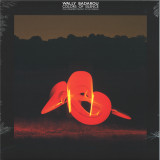
Synth pioneer and musical polymath, Wally Badarou is a genius. But you know that already. A vinyl version of his majestic Colors Of Silence has been craved by the Balearic cognoscenti ever since its low-key 2001 release. Indeed, when we first started work on Be With, we asked some pals with exquisite taste what their dream release would be. We asked Balearic legend Moonboots and, without hesitation, he said Colors Of Silence by Wally Badarou. We didn't know Wally had made this album. And most still don't. But that's about to change.
Colors Of Silence is ostensibly a new age album. As ever though, Wally's sophisticated synth textures and expressive keyboard runs are so full of character, so full of life, that this work of art transcends any easy genre categorisation. It's simply stunning, throughout. It sounds like A.r.t. Wilson or Suzanne Kraft, with traces of CFCF and Jonny Nash. But it was made a good decade earlier than the work of these modern giants. Sometimes, it doesn't seem far from some Larry Heard albums.
Island Records founder Chris Blackwell's friend Nathalie Delon asked Wally to provide music for the yoga DVD she was to release. Lack of time on both sides made them agree on using "quality demos" Wally had in his ideas bank. It's understandable why Colors Of Silence remains somewhat of a lost gem. As Wally explains: "Total lack of promotion made it an 'intimate' release, which was exactly what I was looking for: just a buzz-maker and time-buyer that would allow me to concentrate on the real thing as soon as I'd have time, which could also turn into a rare collecting item later, once the final versions made their way to success. You never know."
Over the years, Colors Of Silence has become a true cult record for the ambient/Balearic heads.
The beguiling but brief "Dance In The Dust" is the shuffling, hyper-percussive, hypnotic opener. It gives way to the deep serenity of "Amber Whispers". It's a gliding, divine, mini melodic masterpiece. It'll make you swoon in its extreme beauty. The bright and breezy "Where Were We" follows, a tropical, reggae-tinged bounce through the islands.
The uptempo groove is maintained on the keys-drizzled soca-funk of "The Lights Of Kinshasa" before Side A is rounded out with "Pictures Of You". It starts with stately, melancholic, unadorned piano and this alone would make for a beautiful song. But Wally always gives us that bit extra and he effortlessly introduces warm, dreamy pads and minimal, slo-mo percussion to augment a frankly stunning piece of work.
Ushering in Side B, Wally's mesmeric piano playing is to the fore again, in the intro to uber-chilled "Serendipity For Two". The playing becomes more mellifluous as the track progresses and adds warmth through exotic percussion, woodwind, sweeping synths and digi-drums. It has echoes of, er, Echoes. It segues seamlessly into the more propulsive, wavy "Smiles By The Millions". If you're not nodding and grinning along widely to the gently throbbing bassline underpinning this, we can't help you. The meditative "Higher Still" follows, cinematic in feel and ever so slightly sinister with the strings. It sounds particularly Badalamenti-esque, if you ask us.
That unmistakable, almost peculiar Badarou funk - so lyrical, so texturally rich and so rhythmically spacious - is all over "Oriental". Next up, "Days To Wonder" brings the serenity back, insistent yet melodic keys, as if played in a place of worship, coupled with birdsong, conjure a kind of instant nostalgia for halcyon days of youth. The contemplative "Dawn Of Europa" is a sombre, beatless, ambient journey whilst the glorious, too-brief "Crystal Falls" features soft percussion and sparkle before fully glistening with some gentle head-nod beats. Wally brings this incredible collection to a mellow, tender close with the graceful "Purple Lines".
There can be few artists more under-appreciated given their vast influence than Wally Badarou. His solo work practically defined the sound of the Balearic DJs of the 1980s, and thus the more sophisticated sound of dance culture thereafter. A synth specialist, Badarou was the long-time associate of Level 42. He was one of the Compass Point All Stars (with Sly and Robbie, Barry Reynolds, Mikey Chung and Uziah "Sticky" Thompson), the in-house recording team of Compass Point Studios responsible for a series of albums in the 1980s recorded by Grace Jones, Tom Tom Club, Mick Jagger, Black Uhuru, Gwen Guthrie, Jimmy Cliff and Gregory Isaacs. Badarou's keyboard playing could also be heard on albums by Robert Palmer, Marianne Faithfull, Herbie Hancock, M (Pop Muzik), Talking Heads, Manu Dibango and Miriam Makeba. He also produced Fela Kuti. Phew!
Meticulously remastered and cut by both Simon Francis and Cicely Balston respectively, it has been pressed to the highest possibly quality at Record Industry in Holland. Special thanks must go to Apiento from Test Pressing who first introduced us to Wally and facilitated all those early zoom meetings. It couldn't have happened without his help. Not least on pulling the art together, too, which features striking original photography by Mads Perch. Benji Roebuck of Roebuck Press did his thing brilliantly in art working the whole package to completion. All in all: essential.
Brueder Selke, a polyinstrumental composer duo originally from East Berlin, consistently enriches the repertoire of their two primary instruments: cello and piano. Their independent curator role shines through as they frequently host boutique concerts and happenings, featuring both established and emerging artists during their yearly Q3Ambientfest.
'Go East' marks a significant milestone in the long-term collaboration of Brueder Selke, two brothers who grew up on the socialist side of the Berlin Wall. The tracks are driven by the essential components of a restored Piano-Strings machine, along with two electronic organs named Sandy and the ET6-1, and a E-Piano, all manufactured by Vermona in the late 1970s and early 1980s.
Their innate sense of interplay, developed during their upbringing in GDR times, stems from a deep-rooted longing for connection and exchange with like-minded musicians and individuals. Through their music, they convey ideas that embrace a universal duality, showcasing how diverse elements harmoniously complement each other. The album encompasses a wide range of atmospheric moods, from intimate classical chamber music to expansive textural landscapes created by these now rarely intact socialist synthesizers, with their parameters mimicking strings and keyboard instruments. In this ironic and thoughtful manner, Sebastian and Daniel once again skilfully let their main instruments, cello and piano, merge into one another.
'Go East' aptly reflects the artist's profoundly experimental yet accessible approach, making it their 8th duo album. The 2x2 recordings were produced in their Klingenthal Studio in Potsdam in February 2022.
Disciples bringt eine Neuauflage des modernen Detroit-Elektro-Klassikers des enigmatischen Projekts NRSB-11 heraus, das in erster Linie eine Zusammenarbeit zwischen Gerald Donald (Drexciya, Dooplereffekt, Arpanet, Japanese Telecom) und DJ Stingray 313 (Urban Tribe, offizieller Drexciya-Tour-DJ, gefeierter Solokünstler) ist. Ursprünglich 2013 als limitierte Auflage auf dem belgischen Label WéMè erschienen, war ihr einziges Album 'Commodified' schnell vergriffen und erfreut sich seitdem großer Beliebtheit, derzeit steht es auf 1.783 Discogs-Suchlisten. Die erste Reissue erscheint als CD mit 3 Bonustrack (NRSB-11 EP aus 2012) und als Clear-Vinyl-2LP-Edition, bei der das Original-Cover im Siebdruckverfahren auf eine PVC-Außenhülle gedruckt wurde, mit den beiden Vinyl-Discs in transparenten Poly-Innentaschen.
2xLP LP recorded live at the Rivoli Club in June 2014, 6 days after the release of “Glass Boys”. This release gives you Fucked Up at their peak, bringing you as close as possible Fucked Up’s fabled live energy. Material from Glass Boys, Hidden World, David Comes to Life, as well as the early hits are all here. Originally released exclusively on Bandcamp in May 2020, “Rivoli” is on vinyl for the first time and released directly by the band.
- A1: It's Gonna Rain 3:27
- A2: Don't Care 2:08
- A3: Away From Home 2:55
- A4: Rich In A Ditch 2:46
- A5: Grandelinquent 3:09
- B1: Guerilla 3:32
- B2: Old School 2:44
- B3: Excesses 3:12
- B4: Kinetic Ritual 4:18
- C1: Thrills 2:20
- C2: Office Girls 2:16
- C3: Too Kool To Kalypso 2:27
- C4: Stay Ready 3:03
- C5: Strange Things Happen 2:41
- D1: Love Lessons 3:34
- D2: Yo Ho Ho 3:39
- D3: Someone Else 5:06
- D4: Office Talk 6:51
STEWART COPELAND'S KLARK KENT war das erste Soloprojekt eines Mitglieds von The Police. Die innovative Musik von KLARK KENT, die 1978 mit einer Reihe von Singles begann und 1980 in einem selbstbetitelten Debütalbum gipfelte (das kürzlich als limitierte Vinyl-Veröffentlichung zum Record Store Day neu aufgelegt wurde), war seit dem 1995 erschienenen Album Kollected Works nicht mehr erhältlich.
BMGs umfassende neue Sammlung KLARK KENT (erhältlich als Deluxe 2CD/2LP-Set) enthält neu remasterte Versionen aller ursprünglichen Singles, des kompletten selbstbetitelten Albums von 1980 sowie zwei unveröffentlichte Studioaufnahmen.