The prolific MC, producer and musician Oddisee’s album ‘The Iceberg’ is a plea for humanity to dig deeper in search of understanding and common ground. ‘The Iceberg’ is a distillation of stereotypical tropes in hip-hop and beyond, 12 tracks about money, sex, politics, race and religion that appear superficial until his multi-dimensional lyrics unfurl to expose the complexities of individuality and identity; how we see ourselves and how others see us. Deeply soulful, and shot through with jazz, Go-go, gospel, thick R&B and hard beats, the album is a timely, poetic statement. Oddisee has released two studio albums, several EP’s, mixtapes, and instrumental albums, and has over 30 million plays on Spotify. He’s been profiled by NPR, the Washington Post, praised by Pitchfork and Stereogum, performed on NPR’s Tiny Desk, Red Bull Sound Select, and at festivals including Glastonbury and Sasquatch. ‘The Iceberg’ follows two releases in 2016, the ‘Alwasta EP’ and the instrumentals album ‘The Odd Tape.’ His 2015 full-length ‘The Good Fight’ was a top five album on the iTunes Hip Hop/Rap chart and he was #5 on Billboard’s Next Big Sound Chart.
Suche:pol
Das Phänomen POWERWOLF: Innerhalb der deutschen Heavy-Metal-Szene findet sich wohl kaum eine
andere zeitgenössische Band, deren Erfolgskurve seit vergleichbar langer Zeit derart steil nach oben zeigt,
was mithilfe der im vergangenen Jahr veröffentlichten opulenten Werkschau „Best Of The Blessed“ zum
15-jährigen Bestehen deutlich sicht- und hörbar unter Beweis gestellt wurde. Nun, nur rund 12 Monate
später, steht das achte Studio-Album unter dem Titel „Call Of The Wild“ in den Startlöchern, von dem
mit Fug und Recht behauptet werden darf, dass es neue Maßstäbe setzt!
Zeitsprung ins Jahr 2005. Bereits auf seinem Debüt „Return In Bloodred“ etabliert das Quintett um den
Lead-Gitarristen und Haupt-Songwriter Matthew Greywolf einen in dieser Form nie dagewesenen Stil, der
klassischen Metal melodischer Spielart mit erhabenen Orgelklängen und orchestralem Bombast vereint.
Alles an POWERWOLF, von den elaborierten Texten - die mal augenzwinkernd humorvoll, mal bitterböszynisch von Phantastischem und Historischem handeln - bis zur omnipräsenten sakralen Symbolik, nährt
die mystische Aura des Fünfergespanns, die über die folgenden Jahre mit jedem weiteren Werk an
Bedeutung gewinnen und auf unzähligen Touren in eine einmalige, nicht von ungefähr als
„Metal-Messe“ bezeichnete Liveshow übersetzt werden soll. Die süßen Früchte der eisernen Treue zu den
traditionellen musikalischen Wurzeln, bei gleichzeitiger konsequenter Weiterentwicklung ihres ureigenen Sounds, ernten POWERWOLF aber nicht nur von den Bühnen ausverkaufter Konzertsäle aus, sondern
auch an der hart umkämpften Chart-Front. Dreimal gelang in den letzten Jahren der Sprung aufs
Treppchen der offiziellen deutschen Albencharts - zweimal davon auf die Pole-Position - und im
europäischen Ausland wurden die jüngeren Veröffentlichungen „Blessed & Possessed“ und „The
Sacrament Of Sin“ mit Gold, die Hit-Single „Demons Are A Girl' Best Friend“ gar mit Platin
ausgezeichnet.
Warum außer Frage steht, dass das am 16. Juli 2021 erscheinende Opus „Call of The Wild“ in Sachen
Popularität einen weiteren Quantensprung bedeuten wird, erklärt sich sowohl langjährigen als auch frisch
gewonnenen Fans schon im ersten Hördurchlauf wie von selbst: Gerahmt vom Eröffnungs-Titel ”Faster
Than The Flame”, der sich pointiert als „POWERWOLF in Reinkultur“ beschreiben lässt, und dem
großen Finale ”Reverent Of Rats” verströmen die elf enthaltenen Songs zwar stets Vertrautes, wagen aber
auf jedem Schritt des Wegs Weiterentwicklung in vielerlei Hinsicht. So mutet etwa das
unverschämt-eingängige ”Dancing With The Dead” regelrecht tanzbar an, während ”Alive Or Undead”
als Power-Ballade allererster Güte den Ruf des Frontmanns Attila Dorn als absolutem Ausnahme-Sänger
endgültig zementiert. „Call Of The Wild“, das sich einmal mehr als heißer Anwärter auf den
Chartstürmer-Titel ins Rennen stürzt, ragt anno 2021 als turmhohes Ausrufezeichen aus der
Musiklandschaft hervor und vermittelt wie kein anderes Werk das leidenschaftliche Credo
POWERWOLFs: Metal is religion!
COS might not be the first genre defying progressive music group you’ve heard who share both wordless onomatopoeic vocals and a snappy three letter title (complete with philosophical leanings and alchemic penchants) but on listening to this first ever custom Cos compendium you might have just discovered a new favourite!
Perhaps it’s no coincidence that COS share close spiritual, stylistic or social connections to the aforementioned bands, as one of the few long-withstanding single-syllable ensembles to remain utterly idiosyncratic and incomparable within their hyper-focussed and impenetrable creative bubble. But as a 1970s group that effortlessly MIX head-nod prog, synth-driven jazz, cinematic sound-designs, dislocated disco, arkestral operatics and high-brow conceptual anti-pop grooves, it’s easier to remember the name COS than thumb the vast amount of genre-dividers in your local record shop which COS COULD occupy. With the crème de la crème of Belgian jazz/prog/psych/funk within their ranks, their combined idea-to-ability ratio litters the Cos-ography with concepts that aficionados, future fans, collaborators and critics still haven’t began to unravel.
With their earliest roots in the compact jazz group Brussels Art Quintet the group spent their sapling years creating art-school prog under the name Classroom, this flourishing collective, cultivated by multi-instrumentalist mainstay Daniel Schell, would soon shed its leaves, dropping band-members and typographics reducing its moniker to simply COS (a multi-purpose, globally recognised word, with links to Alchemy and philosophy, with a hard phonetic delivery to suit the groups heavier rhythmic approach). In it’s new skin COS also shed all forms of orthodox language to find its true exclusive voice. Fronted, in the conventional sense, by the daughter of author and part-time jazz player Jean De Trazegnies, the bands wordless singer changed her name to Pascale SON, to accentuate the French word for “sound”. Drawing comparisons with sound poets like Polish jazz legend Urszula Dudziak or Hungarian Katalin Ladik, but retaining the crystalline femininity (and funk) of Flora Purim, while effectively sharing an imaginary lyric book of non-words with Damo Suzuki, Magma or a future Liz Fraser... To use the word “unique” would, by COS academic standards, be lazy journalism.
You may know Rodrigo Amarante already. You may have heard "Tuyo," his theme tune to the Netflix drama Narcos, or the Little Joy album, recorded with Fab Moretti and Binki Shapiro, you might have noted his name among the credits on songs by Gal Costa, Norah Jones and Gilberto Gil; or perhaps you saw him play live with Brazilian samba big band Orquestra Imperial, or with Rio rockers Los Hermanos; you really should have heard his debut album, Cavalo, released in 2014. You may think you know Rodrigo Amarante already, but Drama, his second solo album, is going to introduce a whole new level of confusion to the mix.
Drama is purposefully caricatural, cinematic; "As biased as memory". It flows as an arch, playfully deceiving, like a tale. The ominous opening number gives you a hint that things might not be what they appear, and clues are hiding in plain sight. "Projection,
attachment, deception: that is Drama." The sunny upbeat start of "Maré", with a nearly childish opening melody, echoes something less naïf: "The tide will fetch what the ebb brings". The beat helps you move past. "Tango" sounds like falling in love on the dance floor, warm and tropical, it celebrates companionship, while perhaps pleading for it, yearning. "Tara," meanwhile, feels like something Astrud Gilberto might have sung at the height of bossa nova’s global popularity, with the twist of the big-band-era muted horns on the chorus, nearly self-deprecating, as if mocking such idealized infatuation.
Drama closes with the piano on "The End." To live is to fall. After all the emotional upheavals the singer has put his cast through, is this some kind of farewell to this mortal coil? "Everything Furthers." says Amarante. "Whispering, you get louder like that, people respond better to an invitation," and adds: "Staring at the absurd while remaining kind, being open to the gifts of confusion; that's why we create these tools that are stories and songs, to help us see each other."
Beautifully presented translucent blue heavyweight vinyl LP, cased in 4 panel printed outer and inner sleeves.
Subexotic Records presents our first project with talented producer Onepointwo. Konstantinos Giazlas (aka Onepointwo) hails from Thessaloniki, Greece, and sites influences from the late 50s electronic experimental sounds, motorik,krautrock, lush shoegaze melodies and modern electronica. Talking about hiscreative outlook, Kostas says: "I continually look to emulate a musical journey into space, time, memories and frequencies". This journey is conducted with the use of minimal electronics, abstract and distorted shortwave radio signals, dystopian soundscapes, all carefully wrung out from criss-crossing digital and analogue sources, fused with a passion for heavyeffects and percussive sounds. Fashioned from a collection of tracks hitherto believed to be lost to a cruel computer malfunction, Synchronization was salvaged from a final reboot. No editing, no tweaking, no second chance - these tracks have reached terminal velocity. Luck is on our side, as what remains reveals a series of intricate yet powerful soundscapes, with finely wrought motifs that repeat and build to create Onepointwo's trademark shimmering psychedelic impact. His previous discography includes Keene (Poeta Negra) / SANS (Lotus RecordShop Editions) and various appearances & remixes on domesticlabel compilations. 2020 brought about 2 album releases on highly regarded cult UK labels Miracle Pond and Woodford Halse, garnering a slew of positive reviews, including warm praise in Electronic Sound Magazine.
After several collaborative releases, German drummer Simon Popp is back on Squama with his second solo album 'Devi'.
While his phenomenal debut 'Laya' was a percussive take on ambient and third stream minimalism, 'Devi' features eight tracks of bold organic grooves, uplifting and hopeful in one moment, sinister and dark in the next. This dualism is reflective of the ups and downs in Simon's own life, making the album a brutally honest and deeply personal record.
Over the past two years Popp has steadily refined his skills both as a player and an engineer: There are virtuoso drumming parts, revealing his passion for polyrhythm and complex structures and recording techniques such as heavy limiting, using gated reverb and pitch-shifting give the record a modern 90s vibe. 'Devi' is a forceful statement of what contemporary drum music can sound like today.
York Pennsylvania born and raised, R&B vocalist Carman Bryant has performed throughout the U.S. and all over the world. There’s a saying in the Harrisburg/York Pa.area “If you want a seat, you better get there early” for a performance by Carman and her band.
Carman's recording "Midnight Star” is an unreleased recording that was produced many years ago by Cecil DuValle of the Teddy Pendergrass band. The original studio masters were lost when Cecil moved to England because Teddy Pendergrass stopped performing. "Take a Chance" is a duet by Doug Payne and Carman from the same recording sessions at Alpha International Studios that was located in South Philadelphia. This was during the time that Doug Payne was on the "We are Family" tour with Philly recording group "Sister Sledge''. Doug Payne is a graduate of Howard University Washington D.C., and Fiorello LaGuardia High School of Music & Art in New York City, this is the same school that was used for the movie and television series "FAME" starring Debbie Allen and Irene Cara. Doug had two songs signed with TSOP Gamble & Huff's publishing that were selected to be recorded by Phyliss Hyman before her death. In 1981 Doug Payne started his own label in Philadelphia with the release of "HOLIDAY" by Doug Payne & Polygon.
Carman and her son Terrell Bryant aka Nakuu both have been busy lately
recording new music to hit the scene around the same time.Terrell Bryant is
the son of Jason Bryant who started The SOS Band.
Doug's wife June Payne is a former member of Philadelphia recording group The "Three Degrees".
Released in 2020, Rheinzand’s self-titled debut LP heralded an authentic vibe of retro-futuristic disco-pop, distinguishing themselves in the current climate of dance music. The album was met with acclaim, picked by Piccadilly Records as their nr. 1 album of the year.
Since, the material on that album have proven fertile ground for practitioners in the art of the remix. On this EP, we release a selection of those efforts.
On the first slot, we have Running Back label owner and longstanding DJ heavyweight Gerd Janson polishing off his house music fluency with a gleaming take on ‘Blind’. The swerving vocals of Charlotte Caluwaerts’ reverberate through space ray arpeggiators and burnished drum gates. Belgian compatriot Blitzzega, the neon-drenched moniker of composer Bjorn Eriksson, features with a dizzyingly switched-on version of ‘Mi Mundo’, sporting gnawing synths and hijacked funk licks.
Next, dub-pop wizards Peaking Lights serve up a heady brew of plugged-up melodies braided around Reinhard and Charlotte’s shuffling vocals. This remix blends the magenta glow of synthwave with the deep grooves of maybe late Theo Parrish.
We round off the EP with a treat form Dennis ‘Citizen’ Kane, the iconic dance music figure who emerged in mid-90s NYC downtown scene. A veteran DJ and disco-head, Kane applies a luminous hand to Rheinzand’s ’14 Again’, deepening the vibe of kittenish mystery through carefully layered work of phasing drones, wandering synths, and mushrooming rhythm section (think T-Connection).
The Italian producer Daniele Serraino aka D/n, label boss of Spazio Magnetico, publishes his EP entitled Phase Transitions, a title connected to the concept of the album which is magnetism, paying homage to the label's name.
There are three tracks produced by D/n, "Anomaly" and "Dipolar" characterized by hypnotic sequencers, tunnels, with dance flore rhythms. With "Polarity" D/n explores abstract, floating settings with broken rhythms.
Thanks to the dotdat remix of track Anomaly, powerful dance floor track.
Tkać means ’to weave’ in Polish. On this album, Swedish–Polish composer and musician Marta Forsberg delivers two compositions that capture her unique ability to transmit visions of light into glimmering sonic landscapes. To weave: crossing threads of dreams and light under and over each other.
LED AND LOVE SOUNDS is a live recording of a piece based on frozen and processed violin sounds. Weave and Dream was composed on an OP-1 synthesizer, and Forsberg’s use of LED light strips played a crucial role in the composition process.
This is tactile drone music, enriched by Nikos Veliotis' mixing work (MMMΔ) and the mastering by Mell Dettmer (collaborator of Eyvind Kang, SunnO))), Earth, Tim Hecker).
"The composer and sound artist now lives in Berlin, but is closely associated with the so-called Stockholm Drone Society around artists such as Kali Malone, Mats Erlandsson and Ellen Arkbro.
Having recently presented a composition for an installation with LED lights with her album New Love Music, now combines older material from very similar contexts: »LED AND LOVE SOUNDS« was performed in an art gallery and consists of processed violin sounds that Forsberg layers into haunting drones in front of the clearly audible soundscape of the room. »Weave and Dream« has been written for synthesiser and was part of an installation style that combined LED lights and fabrics with music.
More insistent in style and more intense in sound, the effect of »Weave and Dream« is similar to that of the first piece: Forsberg’s music enters into a dialogue with space and time that unfolds its full power even without the originally associated visual and physical experiences – very slowly and carefully, of course." (field notes)
Binding a deep social and political conscious with rigorous musical experimentation, the Brussels based, Italian pianist, performer, composer, Giovanni Di Domenico, delivers Downtown Ethnic Music, the 4th instalment of Die Schachtel’s Decay Music series, focused on inspired contemporary experimental efforts in the ambient, ethereal, and emotively abstract music.
Over the last decade or so, Giovanni Di Domenico has carved a deep path through a diverse number of discrete fields within experimental music, working in various ensembles - Abschattungen, AufHeben, Bonjintan, Cement Shoes, Delivery Health, Going, etc. - as well as producing a discography of critically heralded solo efforts, and intimate collaborations with Jim O'Rourke, Tatsuhisa Yamamoto, Akira Sakata, Arve Henriksen, Tatsuhisa Yamamoto, Alexandra Grimal, Nate Wooley, Chris Corsano, and others.
Downtown Ethnic Music encounters Di Domenico reimagining the future of urban music, pluming the mysterious and emotive depths of self, to arrive at vision of sonorous utopia, radically divergent from those of the past. Hybridizing numerous forms of musical practice, while making a conceptual nod to Jon Hassell’s notion of the "fourth world”, as well as the cross-temporal transnationalism of Roberto Musci, Aktuala, Futuro Antico, and the Third Ear Band, Di Domenico’s vision of democracy - rendered through the creative metaphors of sound - is a true to life, bristling conflict, as open-ended as it is ordered, and as dramatic and tense as it is beautiful, playful, and refined.
A colorful tapestry of ideas, experiences, histories, and reference points, woven from a pallet of electronics, synthesis, and various acoustic sources - the intervening rhythms of drummer João Lobo, vocals by Pak Yan Lau and Patshiva CIE women choir, the horns of Ananta Roosens and Jordi Grognard etc. - across the length of Downtown Ethnic Music, the boundaries between idiom, expressive concept, collective, and individual blur, giving way to a visionary, forward-thinking rendering of electroacoustic music, that subtly reminds us of the social and political potential of art.
Seamlessly incorporating bubbling electronic abstraction, sprawling ambience and long tones, throbbing kosmische, acoustic free improvisation, and the human voice, Giovanni Di Domenico’s Downtown Ethnic Music represents a high-water mark in an already astounding career. Issued by Die Schachtel in a one-time edition of 250 copies, pressed to 180g marble vinyl and housed in a pro-printed inner sleeve and jacket, contained in a silk-screen PVC sleeve.
_asstnt & Roll Dann collaborate to deliver the inaugural release on their Opera 2000 imprint entitled "Back From The Morgue".
Roll Dann has been in contact with music from a very young age and picked up inspiration from the destructive techno sound that invaded Spain between 2005 and 2010. With releases on the likes AINE, PoleGroup, Modularz and Clergy the young producer is quickly leaving his imprint on the techno world which hasn't gone unnoticed seeing him being signed to Slam's Soma imprint in 2019. "Back From The Morgue" sees him team up with _asstnt on their new Madrid based techno project, Opera 2000 for his first full EP following their track together on a compilation celebrating five years of Involve Records. _asstnt's sound comes from the heart of a passionate artist conveying romanticism, truth and dedication within his music and philosophy.
"Back From The Morgue" kicks things off with blistering drums scattered around growling modulations and twisted vocals keeping the atmosphere weird yet wonderful before "The Hill of Hanged" continues with resonating kicks fused with undulating, grime-influenced strings and sinister elements throughout. On the flip, "Coalescence" maintains the effervescent moods through storming grooves, dramatic soundscapes and powerful oscillations while "Dirty Mistress" features heavy, syncopated percussion peppered with distortion and dystopian leaning oscillations to bring this beautifully dramatic EP to a close.
Order OPR001 now
unsubscribe from this list update subscription preferences distribution.triplevision.nl
Triple Vision Record Distribution BV · Achterhaven 160 · Rotterdam, Zuid-Holland 3024 RC · Netherlands
Madrid's Roll Dann keeps up the high quality of his first few releases with a new EP on his Opera 2000 label that offers four fine cuts.
Roll Dann has already impressed with outings on Modularz, Soma and PoleGroup. It is the direct nature of his floor facing techno that appeals, and it comes infused with the inspirations he has picked up from a stint living in Berlin, as well as with the legacy of his teenage love of hardtechno-schranz. The start of Roll Dann & _asstnt's Opera 2000 marks a shift Roll Dann's creative direction where he focuses on an aggressive yet beautifully emotive style which is displayed wonderfully in his first solo release on the imprint entitled "Oppression Dance".
Big opener "When The Hate Goes Away" is a frazzled, over driven techno monster with slamming kick drums and fizzing synths that will rewire any dance floor. The brilliant "Break The Dance" then hammers you over the head with its brutal drums and big synth walls, but a more thoughtful pad also smears over the groove to bring some tenderness. "Oppression" is quick and slick, with a kinetic sense of techno funk getting you on your toes. Last of all "The Club" is another winner, this time with its eerie pads, acerbic textures and rusty hits all racing along on powerful drum programming as a distorted voice is trapped in its midst.
Thirty years after his disappearance, Miles Davis, both the man and his character, is still a subject for debate and controversy. And haven’t we heard that before with all artists? But when it comes to the importance of his contribution to music in the 20th century there is only unanimity.
Everyone says, sure, he was the greatest trumpeter. Other opinions are that he left the world of jazz behind him in 1965. It’s also said he was the catalyst of every decade from 1949 to 1989; that he revolutionised jazz, and brought it out of the ghetto; that he buried jazz; that he was the most important musician of his century... Each of those statements has its share of truth. Whichever way
you look at him, he remains a major figure in jazz and in 20th century music overall. Miles surpassed (or at least equalled) the importance of both Louis Armstrong and Duke Ellington for the simple reason that he addressed not only the jazz world but all worlds of music, and that he created (among other things) a fusion of the spheres people knew as jazz, blues, rock and pop, and spoke to every audience, either in turn or collectively.
There was a dinner at the White House during which a perfectly respectable lady, married to a politician no doubt, asked Miles what he did for a living. With some annoyance Miles replied, “Well I’ve changed music five or six times, so I guess that’s what I’ve done ... now tell me what have you done of any importance, other than be white? [...] You tell me what your claim to fame is.” The provocative tone in Miles’ words lifted the veil over his refusal to be hassled, his revulsion against America’s treatment of Black people, and Miles’ awareness of his own importance in the world of music. Even when speaking, Miles maintained the art of synthesis.
In the beginning – this was 1944 – there was a concert in St Louis, Missouri where Miles heard Charlie Parker and Dizzy Gillespie for the first time. “Man, that shit was terrible, I mean Dizzy Gillespie, Charlie ‘Yardbird' Parker, Buddy Anderson, Gene Ammons, Lucky Thompson and Art Blakey, all together in one band [...] that shit was all up in my body and that’s what I wanted to hear [...] and me up there playing with them.1” Miles was 18, he’d been playing trumpet for years and now he knew that this was what he wanted to play, and nothing else: to play with Bird! A year later he’d turned 19 and he was in New York, where he learned it all, up there alongside Bird and Dizzy.
Another sure-shot from the 5 Boroughs - rare and classic hip hop & soul on 45
- A1: Fantas Variation For Voices (Feat Evelyn Saylor, Lyra Pramuk, Annie Garlid &Amp; Stine Janvin)
- A2: Fantas For Saxophone And Voice (Feat Bendik Giske)
- A3: Fantas For Two Organs (Feat Kali Malone)
- A4: Fantas For Electric Guitar (Feat Walter Zanetti)
- B1: Singeli Fantas (Feat Jay Mitta)
- B2: Fantas Hardcore (Feat Baseck)
- B3: Fantas Resynthesized For 808 And 202 (Feat Carlo Maria)
- B4: Fantas Morbida (Feat Kara-Lis Lis Coverdale)
Fantas is the epic opening track on Caterina Barbieri’s acclaimed 2019 release Ecstatic Computation. The original Fantas laid out a magical path of patterns leading the listener on a journey into the sound itself. Fantas Variations maps out eight new potentials sprung from this initial path as constructed by a diverse mix of artists lending to a wide spectrum of new works extrapolated from the original work. For this project Barbieri invited friends and long time collaborators from a variety of musical backgrounds to create a more sustainable and inclusive landscape in terms of stylistic, geographical, gender and generational balance. The results are a diverse array of approaches and instrumentation which blur the boundaries between the acoustic and electronic.
Fantas Variations embraces a platform for mutual exchange and support between like-minded artists, where active and collective re-imagination is prioritised over the traditional model of remixes, which is often strategic, functional and more passive.
Longtime friend and collaborator Kali Malone rearranged Fantas to a slowed-down, austere and eerie version for two Organs. Evelyn Saylor created a piece for a vocal ensemble consisting of her, Lyra Pramuk, Stine Janvin and Annie Garlid, joining forces to express the choral, psychedelic and vitalistic nature of the piece. Barbieri’s former guitar professor at the Conservatory in Bologna, Walter Zanetti, composes Fantas for electric guitar, by translating every single gesture of the original electronic piece into a personal, nuanced and detailed interpretation. Bendik Giske’s reinterpretation for Saxophone and Voice captures the atmospheric essence of Fantas and its psychic meteorology. Longtime collaborator and along with Barbieri the other half of the outfit Punctum, Carlo Maria, resynthesizes Fantas for TR808 and MC202, bringing a more club-oriented dimension of the piece to life whilst unveiling the sonic continuum between rhythm and pitch through a sensitive timbral approach. Jay Mitta’s Singeli reinterpretation of Fantas transpires with pitched-up percussion and turbo-fast polyrhythmic patterns unleashing the frenetic, shifting, transformative matter within the piece to a higher plain of euphoric dance. Baseck’s variation is a rave fantasia, where the prismatic trance of the original is channeled into fierce, uncompromising hardcore, whilst Kara-Lis Coverdale’s take is a phantasmagoria for piano that gently, yet inexorably, captures the relentlessness chimerical qualities of the original, unveiling its spectral backbone.
Evelyn Saylor (feat. Lyra Pramuk, Annie Garlid & Stine Janvin) - Fantas Variation for Voices (7’38’’)
Composed by Evelyn Saylor. Performed by Evelyn Saylor, Lyra Pramuk, Stine Janvin and Annie Garlid. Recording, mix and additional production by Bridget Ferrill at Real Surreal Studio, Berlin 2021.
Bendik Giske - Fantas for Saxophone and Voice (7'31'')
Adapted and performed by Bendik Giske. Recorded, mixed, and produced by Bendik Giske in Funkhaus, Berlin 2020.
Kali Malone - Fantas for two Organs (10'21'')
Arranged for The Utopa Baroque Organ, The Sauer Organ and tuned sine waves. Recorded by Benny Nilsen at Orgelpark, Amsterdam 2020.
Walter Zanetti - Fantas for Electric Guitar (7'27'')
Recorded by Walter Zanetti, Bologna 2020.
Jay Mitta - Singeli Fantas (12'03'')
Recorded by Jay Mitta in Sisso Studios, Dar Es Salaam 2020.
Baseck - Fantas Hardcore (4'44'')
Mixed by Anthony Baldino, Los Angeles 2020.
Carlo Maria - Fantas resynthesized for 808 and 202 (4'29'')
Recorded by Carlo Maria, Milano 2020.
Kara-Lis Coverdale - Fantas Morbida (3'04'')
Performed, recorded and mixed at The Shop in Valens, Ontario by Kara-Lis Coverdale, January 2021. Engineering assistance from Robert Coverdale and Adam Feingold.
Continuing our ambitious People Like Us vinyl reissue program with Welcome Aboard – a strangely relevant 10-year-old album (originally released in May 2011) when People Like Us aka Vicki Bennett became stranded in the US after the Icelandic Eyjafjallajökull volcano eruption closed much of northern Europe’s airspace.
Volcanically marooned in Baltimore and NYC, Bennett utilized some of her “free” time to work on the album and even gained audio contributions from fellow experimental musicians Jason Willett (of Half Japanese) and M.C. Schmidt (of Matmos) via her extended stay
Bennett derived thematic material of displacement, travel, and a longing for elsewhere from the natural disaster that caused her own predicament. Now strangely echoed by the Covid-19 outbreak and the various grounding of planes and stay at home policies worldwide.
While the general mashup culture often centres on the instant gratification of seamlessly juxtaposing hooks, People Like Us tracks transform the source material into collages that are equal parts dissonance and pleasure, making artful commentaries on our culture and Bennett’s own existential amusement within such a wondrous world. No one could have predicted how relevant this album would have been 10 years later.
Volcanoes or Viruses, Welcome Abroad is what happens when you’re stranded due to a freak natural occurrence trapping people all over the world and causing mass plane cancellations.
- A1: Africa Is My Root - Osayomore Joseph And The Creative Seven
- A2: Ta Gha Hunsimwen - Akaba Man The Nigie Rokets
- A3: Popular Side - Akaba Man And The African Pride
- B1: Iranm Iran - Victor Uwaifo And His Titibitis
- B2: Sakpaide No 2 - Victor Uwaifo And His Titibitis
- B3: Ta Ghi Rare - Akaba Man The Nigie Rokets
- C1: My Name Is Money - Osayomore Joseph
- C2: Ogbov Omwan - Akaba Man The Nigie Rokets
- C3: Aibalegbe - Victor Uwaifo And His Titibitis
- D1: Who Know Man - Osayomore Joseph And The Ulele Power Sound
- D2: Obviemama - Victor Uwaifo And His Titibitis
- D3: Ororo No De Fade - Osayomore Joseph And The Ulele Power Sound
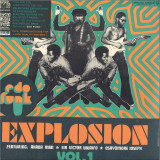
Analog Africa Presents Edo Funk Explosion Vol. 1, available on
2xLP/Gatefold LP with 20-page booklet / CD with 36-page booklet. It was
in Benin City, in the heart of Nigeria, that a new hybrid of intoxicating
highlife music known as Edo Funk was born.
It first emerged in the late 1970s when a group of musicians began to experiment with different ways of integrating elements from their native Edo culture
and fusing them with new sound effects coming from West Africa s night-clubs.
Unlike the rather polished 1980 s Nigerian disco productions coming out of the
international metropolis of Lagos Edo Funk was raw and reduced to its bare
minimum.
Someone was needed to channel this energy into a distinctive sound and Sir
Victor Uwaifo appeared like a mad professor with his Joromi studio. Uwaifo
took the skeletal structure of Edo music and relentless began fusing them with
synthesizers, electric guitars and 80 s effect racks which resulted in some of the
most outstanding Edo recordings ever made. An explosive spiced up brew with
an odd psychedelic note known as Edo Funk.
That’s the sound you’ll be discovering in the first volume of the Edo Funk Explosion series which focusses on the genre’s greatest originators; Osayomore
Joseph, Akaba Man, and Sir Victor Uwaifo: Osayomore Joseph was one of the
first musicians to bring the sound of the flute into the horn-dominated world
of highlife, and his skills as a performer made him a fixture on the Lagos scene.
When he returned to settle in Benin City in the mid 1970s - at the invitation of
the royal family - he devoted himself to the modernisation and electrification
of Edo music, using funk and Afro-beat as the building blocks for songs that
weren’t afraid to call out government corruption or confront the dark legacy of
Nigeria’s colonial past.
Akaba Man was the philosopher king of Edo funk. Less overtly political than Osayomore Joseph and less psychedelic than Victor Uwaifo, he found the perfect
medium for his message in the trance-like grooves of Edo funk. With pulsating
rhythms awash in cosmic synth-fields and lyrics that express a deep personal
vision, he found great success at the dawn of the 1980s as one of Benin City’s
most persuasive ambassadors of funky highlife.
Victor Uwaifo was already a star in Nigeria when he built the legendary Joromi
studios in his hometown of Benin City in 1978. Using his unique guitar style as
the mediating force between West-African highlife and the traditional rhythms
and melodies of Edo music, he had scored several hits in the early seventies,
but once he had his own sixteen-track facility he was able to pursue his obsession with the synesthetic possibilities of pure sound, adding squelchy synths,
swirling organs and studio effects to hypnotic basslines and raw grooves. Between his own records and his production for other musicians, he quickly established himself as the godfather of Edo funk.
What unites these diverse musicians is their ability to strip funk down to its
primal essence and use it as the foundation for their own excursions inward to
the heart of Edo culture and outward to the furthest limits of sonic alchemy.
The twelve tracks on Edo Funk Explosion Volume 1 pulse with raw inspiration,
mixing highlife horns, driving rhythms, day-glo keyboards and tripped-out guitars into a funk experience unlike any other.
- A1: All Ausländer Go To Heaven (Reprise) 05 42
- A2: Deutsche Pässe 02 01
- A3: Professional People 01 53
- A4: The Price Of Teilhabe 03 02
- A5: Automobile Love 02 27
- B1: Bürogebäude In Und Um Frankfurt 04 57
- B2: Dark Boys 01 52
- B3: Freizeit ´20 03 15
- B4: The Good Policeman 03 01
- B5: Proposal For A Worker`s Anthem At Dmu2 Daglfing 02 44
- C1: Doggerland 03 43
- C2: All We'll Ever Need 03 18
- C3: In Every City, In Every Aldi The Blood Of My Brothers And Sisters Taints Your Spargel 03 11
- C4: The Crowd 02 12
- C5: Home 02 59
- D1: Soziokultur 02 10
- D2: Transatlantic Ideology 02 58
- D3: Mjunikcentral Is A Dangerous Place, We Need More Guns To Keep You Safe 3 45
- D4: Wohlfahrt 03 45
In view of the immense Black Lives Matter mobilisation in reaction to the murder of George Floyd and the comparatively meagre societal reaction to the attack in Hanau, the question arises: How come our society does not show the same empathy and solidarity towards its own fellow citizens with Kurdish, Turkish, Bulgarian, Bosnian, Afghan migrant backgrounds or members of the Roma and Sinti?
How limited is our postcolonial discourse if we are unable to address the racist exploitation of those who repair our cars, deliver our parcels or harvest our asparagus?
It’s all a sham. Shake it off like a biometric photograph. Shake off that false consciousness. The Black Diaspora is a transatlantic lie invented by music curators and journalists. Embrace this nuanced return to structures and superstructures, to articulations and historical constellations as analytical tools.
Allow me to dampen your expectations. This is not the sound of decolonisation. This is no compilation of BLM protest songs. This is no celebration of Black emancipatory struggles. You will not be able to play this at your hip post-pandemic house party. This will not go down well with your woke friends. This is music for the square in the room. For that reluctant BAME/Person of Color repelled by your fetishisation of the African-American experience.
This is music for gated communities. This is Fehler Kuti singing of class relations, not of identities and positionalities. This is Fehler Kuti resisting.
Listen to these songs of infrastructure and appraisal of the welfare state. Join me in mourning the broken promises of prosperity for all. Send that “Ausländer“ of your mind to heaven. Colonialism fucked you up. Platform Capitalism is keeping you in chains. Are we to unionise all human and non-human workers at Amazon? Will modernity always have that "forever nigger“? What about those dispossessed field hands harvesting your asparagus?
All is lost. The system is rigged. Because all histories, gestures and identities have been absorbed into this late capitalist apparatus we call diversity. It can integrate anything and anyone. It made me. It is the price of the ticket. And it is unable to challenge its own premise of an atomised society. As if you and I had so little in common.
They will try and help you. They will build a museum for your history and a scholarship program for your future. I warn you. Don‘t let them give you a name. Resist appellation. Don’t get that German passport. Don‘t eat asparagus.
Fehler Kuti, Spring 2021
All songs by Julian Warner. Produced by Markus Acher and Tobias Siegert.
Markus Acher – drums, percussion, backing vocals Micha Acher – sousaphone, trumpet Cico Beck – synthesizer Jenny Bohn – backing vocals Pacifico Boy – vocals Katja Kobolt – spoken word Theresa Loibl – bass clarinet, backing vocals Sascha Schwegeler – steeldrum, kalimba, percussion, backing vocals Tobias Siegert – bass, synthesizers, percussion, backing vocals Julian Warner – piano, memotron, vocals
recorded and mixed by Tobias Siegert at Minga Records, july – december 2020 mastered by Moritz Illner at Duophonic
Cover art and photography by Andreas Neumeister. Layout by Sascha Schwegeler.
Fehler Kuti “Professional People” is part of the same multiverse as “The History of the Federal Republic of Germany as told by Fehler Kuti und die Polizei”. A production by Julian Warner. In cooperation with Münchner Kammerspiele. Funded by the Department of Arts and Culture of the City of Munich. Released by Alien Transistor.
The Go! Team return with their new album ‘Get Up Sequences
Part One’ out via Memphis Industries and featuring the singles
‘Cookie Scene’, ‘World Remember Me Now’ and ‘Pow’.
On ‘Get Up Sequences Part One’, Ian, Ninja, Nia, Simone, Sam
and Adam have created a musical world distinctly of their own
making. A place where routine is outlawed and perfection is the
enemy. Where Ennio Morricone meets The Monkees armed
with flutes, glockenspiels, steel drums and a badass analogue
attitude. We’re talking widescreen, four-track, channel hopping
sounds that are instantly recognisable.
In The Go! Team's world, old’s cool, the future’s bright and
melody is the star. Just check the second cut ‘Cookie Scene’
with a bouncing flute and junk shop percussion it introduces
guest rapper Indigo Yaj, who delivers an old school vocal that
continues this sonic trip. ‘Pow’ channels Curtis Mayfield and
enter stage centre, the inimitable Ninja in full flow and you don’t
stop, you won’t stop to this flute driven free for all.
By way of demonstrating The Go! Team’s old’s cool manifesto
comes the ‘needle-in-the-red’ ‘I Love You Better’, a defiant
message to an ex love, spelling out exactly how he’s messed
up - and then there’s those steel drums. Following that comes
the soda fountain soul courtesy of ‘A Bee Without Its Sting’, a
groovy protest song that makes its point with a tambourine.
The musical wagon train then takes you into the widescreen
windswept Western that is ‘Tame The Great Plains’, heading off
into a polyrhythmic panorama that’s full of hope. Slappin’ you
back to reality comes ‘World Remember Me Now’, a timely
reminder that when you’re lost in the routine of life, you can
always count on The Go! Team.