Tiny Habits were formed in Boston, MA by artists Maya Rae, Cinya Khan and Judah Mayowa. The three singer-songwriters met at Berklee College of Music and the band was born at the beginning of 2022.
They started out by sharing covers recorded in the stairwell of their dorm and posting them on social media. Focusing on beautifully intimate three-part harmonies the trio's enticing signature sound, offered exquisite, reimagined versions of songs from across a spectrum of styles and quickly drove them to viral success. They received recognition and early support from artists as diverse as David Crosby, Marcus Mumford, Phoebe Bridgers, and Noah Kahan. Collaborations include work with Mark Ronson, JP Saxe and Lizzy McAlpine, who they supported on NPR’s Tiny Desk
Their debut EP “Tiny Things” was released in April 2023 and established them as one of “the” bands to watch in the year ahead.
In early 2023, the band opened for Gracie Abrams “Good Riddance Tour” across North America, followed by their own sold-out US “Tiny Tour”
At the end of 2023, the trio opened for Noah Kahan on his “Stick Season Tour” across Europe, followed by a sold-out headline show in London. In January 2024, the band rejoined Gracie Abrams, opening for the Australian leg of her “Good Riddance Tour”. This was followed by a sold-out headline show in Melbourne and a performance at the Minetta Lane Theatre in New York with Kacey Musgraves. The New Yorker recently wrote a feature piece on the band, coining them “The Prodigies of Harmonies”.
Cerca:pop 3
LIMITED INDIES LOSER EDITION PRESSED ON BLUE TRANSPARENT VINYL! Stella makes her Sub Pop debut with the mesmerizing Up and Away, an old-school pop paean to the pangs and raptures of love. From the Greek folk-inflected get-go, we're swept up in Stella's world - and it's quite the captivating place to be. The singer-songwriter joined forces with artist and producer Tom Calvert (aka Redinho), and it was a match made in Athens; the results are heavenly. Tom caught one of Stella's gigs on a visit to the city. He reached out, they started hanging out, and the pair soon clicked creatively. Both mention chemistry when asked about their collaboration and it's clear, from what we hear, they had it in spades. The meld is seamless. Stella's songs have always riffed on American and Greek mid-century pop but Up and Away doubles down on the vintage aesthetic. Tom says he styled the record "as if it was a rare gem from the '60s found in a box of records in Athens," and Stella notes she was ready for a more "deeply Greek touch - it felt comfortable and right, smoothly fusing with the pop." The bouzouki appears on a full five tracks played by Christos Skondras who, she says, "was brilliant at improvising," while Sofia Labropoulou on the kanun "brought an insane amount of dreaminess to the last two songs. Having these amazing musicians play for Up and Away - I couldn't be more grateful." While not exclusively a confessional artist, Stella is always intimate - when she sings, it's personal. She writes "about things I feel passion for. Stories about me, about others, about all that's there in love and war." Stella was "in a very emotional state at the time, which came through in the lyrics and vocals." And it's true, her honeyed voice - layered in those unmistakable harmonies of hers - thrillingly runs the gamut from tender to terse, by turns bracing and smitten, aching and forlorn. But it's the lyrics that feel key. Across her output, Stella has proven herself a strong storyteller, and Up and Away is no exception (the guise of the medieval bard she assumes on the cover is telling). Past releases have been studded with gem-like vignettes - a diverse array of stories set tightly together to form non-linear narratives unified by emotion. Her latest feels singular in that it seems to trace a longer-form tale across songs, with each track escalating the record's erotic arc. By the end of the album, Up and Away's core concerns are clear: the conflicting and conflicted emotions inherent in love, that live on in ways we can't always understand or control. Love is like this record: when it's over, you still feel it for time to come.
Odie Leigh would never have called herself a musician before the depths of the 2020 pandemic when her rapper roomies made a bet: Whoever records a song that goes viral first, wins. Slightly ticked off that they hadn’t included her in the wager, she decided to hit them with her best shot, and Leigh was crowned the victor when a track she wrote blew up on TikTok. “I was like, ‘I’m gonna show y’all. I’m gonna win.’“ Four years after posting what she calls “that silly joke song” on TikTok, Odie Leigh has continued to transform and evolve as an artist — from what she calls “acoustic, ethereal folk sad girl music” to harder-edged tunes that flirt with early Aughts pop-punktivism.
Born and raised in Louisiana, Odie Leigh sang in the church choir, sure — her grandfather built the building, after all, and her family attended three times per week. But after moving to New Orleans to study English, she fully intended on making her bones in the film industry. That 2020 wager changed things, though, when Odie realized that she could win hearts in addition to bets. After her releases began gaining steam on social media, Odie Leigh started hitting stages hard. She toured Europe, North America, and played Newport Folk in 2023, followed this year by gigs at Boise, ID’s Treefort Music Fest with more to come.
- A1: Jun Sato - Lorang
- A2: Fumihiro Murakami - Miko
- A3: Tadahiko Yokogawa - Stop Me
- A4: Love Peace Trance - Yeelen
- B1: Ichiko Hashimoto - Lete
- B2: Yosui Inoue - Pi Po Pa
- B3: Eiki Nonaka - Phlanged Vortex Clip
- C1: X Cara - Night In Aracaju
- C2: Poison Girl Friend - Nobody
- C3: Dream Dolphin - Take No Michi
- D1: Keisuke Sakurai - Harai Cd Version
- D2: Hiroki Ishiguro - Unity
- D3: Dido Shizuru Ohtaka Michiaki Kato - Mermaid
- D4: Keisuke Kikuchi - Retro Electric
2024 repress
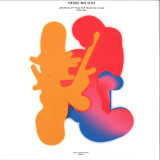
Music From Memory is excited to announce a special compilation that they’ve been working on for some time now; MFM053 – VA – Heisei No Oto – Japanese Left-field Pop From The CD Age (1989-1996). Compiled by long-time friends of the label, Eiji Taniguchi and Norio Sato, Heisei No Oto delves into a world of music released almost exclusively on CD and brings together a fascinating selection of discoveries from a little known and overlooked part of Japan’s musical history.
The last ten or so years have seen a global wave of interest in Japanese music encompassing ambient, jazz, new wave and pop records from the 1980s, some of which is increasingly considered the most innovative and visionary music of that time. Although some music from this period, in the form of ‘City Pop’ or ‘rare groove’ records, had been coveted by collectors and DJs for a number of years, most Japanese music from the time was little known outside and often even within Japan.
Sometime around the mid 2000s, two Osaka record store owners, Eiji Taniguchi of Revelation Time and Norio Sato of Rare Groove, along with a handful of deep Japanese diggers such as Chee Shimizu of Organic Music records in Tokyo, began to explore beyond the typical ‘grooves’ or ‘breaks’. Much like their counterparts in Europe and the US, they began delving into home-grown ambient, jazz, new wave and pop records, discovering visionary music, often driven by synthesizers or drum computers, that broke beyond the typical confines of their genres.
Spending tireless hours in local record stores and embarking on digging trips across the country, Eiji Taniguchi and Norio Sato, much like Chee Shimizu, have been at the forefront of unearthing and introducing many of the very Japanese records now loved and sought after around the world. Yet as YouTube algorithms and vinyl reissues would transport such music into the global consciousness and demand and therefore scarcity intensified for such records, so Eiji and Norio have recently begun to turn their attention to CDs.
The title of the compilation Heisei No Oto refers to the sound of the Heisei era, which began in 1989 and corresponds to the reign of Emperor Akihito until his abdication in 2019. Marking the culmination of one of the most rapid economic growths in Japanese history, 1989 also coincided with the music industry’s final shift away from vinyl in favour of CDs. And, although compact discs were first introduced seven years earlier it wasn’t until late into the ‘80s that, beyond dance music labels, CDs became the exclusive format for major and independent labels in Japan and throughout the world.
This however didn’t signal the end of the innovation in Japan. Many of those same musicians who have become known for their work in the ‘80s would continue to produce outstanding music well into the mid ‘90s, as greater innovation and advances in musical equipment allowed Japanese musicians and producers to refine and explore new sounds. While musicians such as the seminal Haruomi Hosono, whose productions feature on a number of tracks, would continue to push the boundaries of these new technologies, these technological advances also meant less established musicians were able to make use of increasingly affordable but state-of-the-art equipment.
Including music by Haruomi Hosono as well as Yasuaki Shimizu, Toshifumi Hinata and Ichiko Hashimoto who have become known and loved around the world in recent years, Hesei No Oto also features Japanese pop star Yosui Inoue, producers Jun Sato and Keisuke Kikuchi in aaddition to less established artists from the contemporary, jazz, new wave, pop and dance music scenes. Bringing together a selection of tracks that seem to define these specific genres and in fact move fluidly between a number of them, the music on the compilation is again underscored by experimentations with synthesizers and drum computers though with something of a gentle Pop sensibility. Reimagined here then under the encompassing term ‘Left-field Pop’, this is an exciting chapter in Japanese musical history that has only just begun to be fully explored.
VA - Heisei No Oto - Japanese Left-field Pop From The CD Age (1989-1996) is a 2xLP/2xCD that includes liner notes by Chee Shimizu and artwork by Hagihara Takuya and is released on February 28th.
Pop Music by Iggy Pop is the 1996 compilation featuring the 20 best tracks released through BMG between 1979 and 1981, including ""Bang Bang"", ""I Need More"", ""I'm Bored"", ""New Values"" and ""Five Foot One"". Iggy Pop was associated with Virgin Records for much of his post-Stooges solo career, but for a brief spell during the late '70s and early '80s he called Arista Records (BMG) his home. This era saw punk's godfather stray away from the primal style he is known for, as he experimented largely with new wave sounds. For the very first time, Pop Music is available on vinyl as a limited edition of 1500 individually numbered copies on ash grey coloured vinyl and includes an insert.
Emerging from the vibrant Leeds DIY scene, Pop Vulture wield influences from the dissonance of the No-Wave movement and the unconventionality of post-punk and drape them over tightly-wound grooves. All of this simmers away underneath stream-of-consciousness narratives, often of mental health and the relentlessness of living. Having received radio support from Steve Lamacq, Emily Pilbeam and Jericho Keys, as well as sharing stages with Yard Act, English Teacher, KEG and DITZ, Pop Vulture’s “potential is tantalising”, as noted by Louder Than War. Performances at Long Division, Live at Leeds and In Colour festivals have spotlighted the band’s “angular rock with a heavy dose of percussion”. The debut EP from Pop Vulture sees them pushing the boundaries of guitar music. This EP is a culmination of musical tastes. From the rowdy, driving nature of punk and its commentary on social issues, to the pulsing flirtatiousness of electronic music, and experimental edges of alternative rock. ‘Another Success’ sees an eclectic mix of songs inspired by the post-brexit mindset of Britain along with self reflection of mental state. It has a distinct and tasteful soul to it leaving behind thought provoking notions and romanticised ideals.
2025 Repress
Operation Sole like the summer, hopefully, imminent; “Operazione Sole” like the 1967 song by Peppino Di Capri, considered, perhaps wrongly, the first ska in Italy, but certainly the first to talk about Jamaica and upbeat rhythms.
The record you have in your hand is intended to be a testimony to how much the sounds born in Kingston between the '60s and '70s had a significant influence on local pop.
With the first explosion of reggae in England between 1968 and 1970, as well as with the rise of Bob Marley to a worldwide cult phenomenon, parallel to the all-English phenomenon of Two Tone and the ska revival, Italy, always attracted by the new trends not only English, he certainly couldn't stay on the sidelines.
Therefore these innovative and unknown upbeat sounds, derived from the blues of the 1950s and mixed with a Caribbean sauce, have also taken hold in the Bel Paese.
It began as early as 1959 with the song “Nessuno” by Mina, considered to all intents and purposes a Jamaican shuffle, to arrive in a few years at blue-beat (I4 di Lucca, Claudio Casavecchi) and ska (Margherita, Peppino Di Capri , Silvano Silvi, Renzo and Virginia) and be exposed to the first reggae (for example Jo Fedeli and his Italian version of “Israelites” by Desmond Dekker). Thus, we quickly reach the end of the decade of the economic boom and the culture, styles, references change: everything becomes more busy (on a cultural, artistic and political level).
After a stalemate phase that lasted more than five years, Bob Marley's reggae (considered a sort of new Messiah) conquers the planet, including Italy: the producers and artists, even at a high level, for a few years do not remain at all indifferent to this novelty and decide to introduce the "upbeat", primarily reggae, into the various pop repertoires: well-known names such as
Loredana Bertè, Mario Lavezzi, Rino Gaetano, Ivano Fossati, Ilona Staller, Adriano Celentano, Edoardo Bennato throw themselves headlong into new sonic adventures, in a pioneering way, but often with excellent results.
The "Operazione Sole" collection wants to take the credit, instead, of proposing and discovering lesser-known artists (with the exception of Gino Santercole, former associate and relative of Il Molleggiato), often real meteors in the Italian musical panorama, who have tried to achieve (or achieve again) success by adapting the pop that was so popular in those years to the new black sounds prevailing in the West.
We are in the early 80s and we range from the most classic reggae, to Italo-disco contaminated by dub up to the true Neapolitan style which, on more than one occasion, in its being endemically "black" and full of groove, has wrung out the watch out for agreements made in Kingston and London.
“Operation Sun”: a pleasant philological work, but surrounded by an equally pleasant aura of disengagement.
- Head Over Heels
- Thought You Were On My Side
- Come Back And Stay
- Kyrie
- Wouldn't It Be Good
- Victims
- New Moon On Monday
- To Be With You Again
- Too Shy
- Love Changes (Everything)
- Living In A Box
- We Close Our Eyes
- Dancing With Tears In My Eyes
- The Sun Always Shines On T.v
- Things Can Only Get Better
- Human
- Shattered Dreams
- Two Tribes
- You Can Win If You Want
- Wonderful Life
- The Look Of Love Pt. 1
- Never Gonna Give You Up
- Misfit
- Highly Strung
- More Than I Can Bear
- So In Love
- Lean On Me (Ah-Li-Ayo)
"80s Pop Stars Collected is the new electrifying compilation featuring the hits from legendary pop stars and bands who defined the 80s era. Unforgettable tracks included are by iconic bands, which produced a string of numerous hits, Tears For Fears ""Head Over Heels"", Culture Club ""Victim"", Duran Duran ""New Moon On Monday"", ABC ""The Look Of Love Pt.1"", The Human League ""Human"", and artists such as Paul Young ""Come Back And Stay"", Climie Fisher ""Love Changes Everything"", Rick Astley classic ""Never Gonna Give You Up"". 80s Pop Stars Collected is available as a limited edition of 2000 copies on red (LP1) and silver (LP2) coloured vinyl and includes an insert. "
Am 28. Juni wird Sub Pop das fünfte und bisher kühnste Album von Washed Out veröffentlichen: „Notes From a Quiet Life“. Die Musik von Washed Out kreierte schon immer eine Art zeitlosen Schwebezustand, mit eindringlichem, amorphem Gesang, weitläufigen Klanglandschaften und wehmütigen Erzählungen. 2021 verließ Ernest Greene, die kreative Kraft hinter Washed Out, die Stadt Atlanta, um in die ländliche Gegend zurückzukehren, in der er aufgewachsen war. Wo früher Eskapismus seine Gedanken durchflutete, beschäftigt er sich heute mit dem Universum der Wunder in der Realität um ihn herum. Die ehemalige Pferdefarm, auf die er gezogen ist, hat er "Endymion" genannt (nach dem pastoralen Gedicht von John Keats über einen von Liebeskummer geplagten Hirten, dessen erste Zeile lautet: "A thing of beauty is a joy for ever"). Sie hat alles geprägt, was er dort geschaffen hat, von seiner Musik über die kreative Ausrichtung des Albums bis hin zu seinen geplanten groß angelegten Experimenten in der bildenden Kunst. Diese Reinheit der Vision ist es, die „Notes From a Quiet Life“ so wirkungsvoll macht. Es ist das erste Album, das Greene komplett selbst produziert hat, mit Unterstützung von Nathan Boddy (James Blake, Mura Masa) und David Wrench (Caribou, Florence + the Machine). Für das Musikvideo zur Leadsingle „The Hardest Part" holte Greene den multidisziplinären Künstler, Autor und Regisseur Paul Trillo ins Boot. Das Video wurde mit Sora von OpenAI erstellt und ist die erste Zusammenarbeit zwischen einem Musiker und einem Filmemacher, die vollständig mit dieser neuen Technologie realisiert wurde.
January 2023, Dorset. Snow is piled at the door, icy roads are closed, and Emily Cross is in a coffin. Not a setting typical for a rebirth. But for Loma, this is where they bring their band back from the brink. "It's like a demon enters the room, whenever we get together", writer, singer and instrumentalist Cross says of the struggle to bring new Loma music into the world. Following the release of their 2020 second album Don't Shy Away, Loma's three members were cast around the globe and the band-not for the first time-entered a deep sleep. Multi-instrumentalist and recording engineer Dan Duszynski remained in his studio in Don't Shy Away's central Texas heart, but Cross, a UK citizen, moved to Dorset, and writer and instrumentalist Jonathan Meiburg left the US for Germany to research a book. In the pandemic years, even being in the same room was impossible, and attempts to start a new record faltered. The following winter, in an attempt to salvage the record and the band, Cross suggested they regroup in the UK, in the tiny stone house-once a coffin-maker's workshop-where she works as an end-of-life doula. With minimal recording gear and few instruments, Loma turned two whitewashed rooms into a makeshift studio, using a padded coffin as a vocal booth. It was a turning point. They scrapped much of what they'd made, letting a new place set a new course. The one-lane roads, hedgerows and dark skies of Dorset gave the new songs an ineffable but unmistakable Englishness. The band used the ruin of a 12th-century chapel as a reverb chamber-surprising hillwalkers who peeked in to find them singing to no one-and the sounds of Cross's chilly workshop wormed their way into the recording: a leaky pipe, a drummer's brushes on a metal lampshade, the voices left on an ancient answering machine. What emerged was How Will I Live Without A Body?: a gorgeous, unique, and oddly comforting album about partnership, loss, regeneration, and fighting the feeling that we're all in this alone. Many of its songs have a feeling of restless motion; faceless characters drift through meetings and partings, tangling together and slipping away. "I Swallowed A Stone" is like a nightmare with a happy ending; "How It Starts" and "Broken Doorbell" reflect on the challenge (and necessity) of wrestling with agoraphobia. Though the record nods to the trio's separate lives- a German percussion ensemble, a pair of Texan owls, and the surf at Chesil Beach make guest appearances-the core of Loma's sound remains intact: earthy, organic and deeply human, anchored by Cross's cool, clear voice. Loma's previous album, Don't Shy Away, was galvanized by the unexpected encouragement and contributions of Brian Eno. This time, they found inspiration in another hero, Laurie Anderson, who offered a chance to work with an AI trained on her entire body of work. Meiburg sent her a photo from his book-in-progress about the once and future life of Antarctica; Anderson's AI responded with two haunting poems. "We used parts of them in a few songs," he says. "And then Dan noticed that one of its lines, 'How will I live without a body?' would be a perfect name for the album, since we nearly lost sight of each other in the recording process." In the end, Loma's efforts to reconnect with one another are the album's central focus: what do you owe a shared past, when everyone and everything has changed? "Making this record tested us all," says Duszynski. "I think that feeling was alchemized through the music." Alchemized, because How Will I Live Without A Body? is by no means a stressed-out record: an undercurrent of deep calm runs through it. But maybe 'relaxed' isn't the right word. It's more like a feeling of relief, of making it through a tough journey together.
China Crisis is a band that has attracted critical acclaim and chart success over the course of a career stretching back well over 30 years. All tracks recorded at The Paul McCartney Auditorium, Liverpool Institute of Performing Arts, 16th September 2005. Except 'You Did Cut Me', recorded in 2003 during 'An Audience With'. This China Crisis release containing nine chart sigles, is pressed on Yellow vinyl incl. a 18 track bonus CD of the full concert, and includes insert with sleeve notes.
Tiny Habits were formed in Boston, MA by artists Maya Rae, Cinya Khan and Judah Mayowa. The three singer-songwriters met at Berklee College of Music and the band was born at the beginning of 2022.
They started out by sharing covers recorded in the stairwell of their dorm and posting them on social media. Focusing on beautifully intimate three-part harmonies the trio's enticing signature sound, offered exquisite, reimagined versions of songs from across a spectrum of styles and quickly drove them to viral success.
They received recognition and early support from artists as diverse as David Crosby, Marcus Mumford, Phoebe Bridgers, and Noah Kahan. Collaborations include work with Mark Ronson, JP Saxe and Lizzy McAlpine, who they supported on NPR’s Tiny Desk
Their debut EP “Tiny Things” was released in April 2023 and established them as one of “the” bands to watch in the year ahead.
In early 2023, the band opened for Gracie Abrams “Good Riddance Tour” across North America, followed by their own sold-out US “Tiny Tour” At the end of 2023, the trio opened for Noah Kahan on his “Stick Season Tour” across Europe, followed by a sold-out headline show in London. In January 2024, the band rejoined Gracie Abrams, opening for the Australian leg of her “Good Riddance Tour”. This was followed by a sold-out headline show in Melbourne and a performance at the Minetta Lane Theatre in New York with Kacey Musgraves. The New Yorker recently wrote a feature piece on the band, coining them “The Prodigies of Harmonies”.
- A1: Brigitte Bardot - Contact
- A2: Gillian Hills - Tut Tut Tut Tut
- A3: France Gall - Laisse Tomber Les Filles
- A4: Jacqueline Taieb - 7Am
- A5: Fabienne Delsol - I'm Gonna Haunt You
- A6: Les 5 Gentlemen - Si Tu Reviens Chez Moi
- B1: Anna Karina - Roller Girl
- B2: The Liminanas - Migas 2000
- B3: L'epee - Dreams
- B4: Nino Ferrer - Les Cornichons
- B5: Brigitte Bardot - Harley Davidson
- B6: France Gall - Poupee De Cire Poupee De Son
- C1: Charlotte Leslie - Une Filles C'est Fait Pour Faire L'amour
- C2: Dani - La Fille A La Moto
- C3: Zouzou - Tu Fais Partie Du Passe
- C4: Serge Gainsbourg - Requiem Pour Un C
- C5: Jean-Jacques Perrey - Eva
- D1: Stereolab - Cybele's Reverie
- D2: Air - Don't Be Light
- D3: Pierre Henry - Psyche Rock (Fatboy Slim Malpaso Mix)
Black vinyl[27,94 €]
Repress!
Pop Psychedelique vereint frühe Superstars des französischen Pop (Serge Gainsbourg, Brigitte Bardot) mit 60er Lieblingen (Frances Gall, Gillian Hills, Jacqueline Taieb), neuen Psych-Sounds (L'Epee, The Liminanas), 60er Pariser Coolness (Anna Karina), Freak-Beat-Psych-Rock (Les 5 Gentlemen), Dancefloor-Freuden (Charlotte Leslie), Exzentrik (Nino Ferrer) und schierer Moog-Pop-Brillanz (Jean Jacques-Perrey). Den Abschluss bilden Stereolabs French Pop, die einflussreichen Air mit Synthie-Psych-Pop und Pierre Henrys epischer Big Beat im Fatboy Slim Mix. Pop Psychedelique bedeutet pure Freude!
Swamp Green[21,81 €]
Knocked Loose eröffnen den Pit mit einem brutalen Sound, der sich zwischen Hardcore, Punk und Metal bewegt. Nach der eröffentlichung dieser Debüt-EP hat sich die Band eine große Fangemeinde unter ihresgleichen erspielt. Die EP erscheint auf Vinyl in neuer Farbe: Lavender Eco-Mix.
NEW LABEL ALERT!!!
Tropical Pop arrive on the scene to serve peak-time refreshment to the stale dancefloors of the world.
Bursting with flavour, artificial sweeteners and a whole load of E numbers, these cuts deliver totally tropical disco pump and tangy technoid madness - teased, tweaked and transformed for maximum sugar rush.
LIMITED EDITION - ILLICIT INGREDIENTS
Feel the fizz, folks.
When Man Man released its last album, "Dream Hunting in the Valley of the In Between," frontman Honus Honus (née Ryan Kattner) was in a state of unrest, oscillating between hope and cynicism. Perhaps fittingly, the album dropped during the pandemic, a time at which we could all relate. But, much like that bizarre turn of events, the ennui now seems so distant to Man Man. A revived sense of purpose washes through Man Man's new album, Carrot on Strings, radiating a mix of calm and confidence. Kattner always embodied a wild-man pied-piper vibe: his melodic, unhinged art-rock was at once intriguing and angsty. He was so alluringly creative that you went along with it, even if you were never sure where Man Man would take you. Carrot on Strings is no less inventive, but its ethos is radical in context of the band's two-decade career. "When I was younger, I would feed off of chaos. I would, you know, be upset and get drunk and smash chairs," Kattner explains. "Now those chairs are in my head: It's less of an outward projection, more of an interior monologue." The name "Carrot on Strings" came to Kattner while experimenting with the sound of someone munching on the vegetable, which you can hear in the cacophonous, similarly named song. It alludes to how success always seemed to dangle uncertainly before him, often just out of reach. But listen intently and you'll hear a more content Kattner finding an uneasy peace: "Life, as far as I've known it, has always been side hustles. Would it be great if I could go into a studio and record for a year without figuring out how to finance it? Yeah, it would be," he says. "But ultimately, I need to keep making music because art is an extension of my psyche. It's how I have learned to translate the palpitations of my heart. Simply put, I'd go insane without it." Growing up as a multiracial Hapa kid (half Filipino, half white) with a father in the U.S. Air Force, Kattner lived an itinerant childhood that included a few pivotal years in Germany, where he honed in on an appreciation for out there German cinema and art. His film obsessions and screenwriting background were crucial to Carrot on Strings. The album nods to the films of Werner Herzog and Rainer Werner Fassbinder as much as Italo-disco, Randy Newman, goth rock, and avant pop. (Kattner continues to work in the film industry with an acting role in the upcoming horror-comedy movie Destroy All Neighbors, for which he also served as composer; music supervising season 1 & 2 of the Interview With The Vampire AMC TV series; and shopping around, with director Matthew Goodhue, a script he wrote that he describes as a Wim Wenders road movie on acid.) In a bid to not overthink anything - his last album took seven years to make - he recorded the bulk of Carrot On Strings in five days in Mant Sounds studio in Glassell Park, Los Angeles with "very chill" producer Matt Schuessler, who had worked on Man Man's cover of Neu!'s "Super" for the seminal Krautrock band's box set. The resulting album represents a newfound sense of self for Kattner, who finds himself inspired and at peace both personally and artistically in ways that eluded him for most of his first 15 years playing music. When, on Carrot On Strings, you hear Kattner croon humbly, or sing of the tension between his outsize stage persona and the thoughtful, soulful guy he actually is, you're hearing Kattner liberate himself. "I first got into music to escape from myself," he says. "And now, it sounds so corny, but I have zero doubt that music ended up saving my life."
- Part - Hiirejaht 1965
- Part - Operaator Kops Uksikul Saarel 1968
- Rannap - Lend 1973
- Rannap - Varvilind 1974
- Rannap - Lugu Janesepojast 1975
- Grunberg - Klaabu Kosmoses 1981
- Grunberg - Liigub Liigub 1977
- Grunberg - Linalakk Ja Rosalind 1978
- Ehala - Aeg Maha 1982
- Aare - Korb. Dzungel - Kas Maakera On Ummargune 1977
- Aare - Linn - Kas Maakera On Ummargune 1977
- Aare - Kodu - Kas Maakera On Ummargune 1977
- Naissoo - Naerupall 1984
- Naissoo - Meemeistrite Linn 1983
- Ehala - Kaelkirjak 1986
- Ehala - Pagar Ja Korstnapuhkija 1982
- Ehala - Harjutusi Iseseisvaks Eluks 1980
Compilation of (mainly instrumental) music from 1960-80s Estonian animated films. Comes with 8-page full-colour booklet in Estonian with texts by Andreas Trossek and Berk Vaher.
Musically all over the place, as you'd expect.
Note: The animated films of this LP can be watched online at kohilarecords.eu/ark
In the mid1970s, when Tallinnfilm animation studios recruited a youthful bunch of skilled artists and cartoonists, interesting things started to happen. Contemporary themes and ironic depictions of domestic life were introduced into Estonian animation – as well as pop-art aesthetics and even psychedelic imagery. Also, composers found their chance to exercise something beyond the routine standards of pop and academic music, to try their hand at the edges of orchestral sonic palette and electronic soundscapes.
Suddenly, pop art merged pop music, and electric guitars, Rhodes pianos and synthesizers were telling tales of a better future that still hasn’t fully arrived today.
THIRD EAR BAND stammen aus Canterbury und begannen als psychedelische Band namens THE GIANT SUN TROLLEY, die in Südlondoner Clubs lange und improvisierte Sets spielte. Nach einem Auftritt wurde der Band fast die gesamte Ausrüstung gestohlen. So wurden sie aus purem Zufall und offensichtlicher Notwendigkeit eine Akustikband und nahmen den Namen THIRD EAR BAND an. Von 1969 bis 1972 veröffentlichte die Band drei Alben auf dem progressivem Harvest-Label, "Music From Macbeth" (1972) war davon das bekannteste und kommerziell erfolgreichste. Am 24. April 1970 traten die Third Ear Band beim 2. Essener Pop & Blues Festival. Aus welchen Gründen auch immer tauchten sie aber weder auf dem offiziellen Plakat zur Veranstaltung noch in den Programmheften zum Festival auf. Das Billing des Tages war mit Acts wie The Flock, Ekseption, Rhinocerous, The Groundhogs, It"s A Beautiful Day und den noch unbekannten Black Sabbath, die gerade ihr erstes Album veröffentlicht hatten, prall gefüllt. Das Essener Konzert in der Quartettbesetzung mit Sweeney am Schlagzeug, Minns an der Oboe, Coff an der Violine und Smith am Cello fand nur wenige Wochen vor der Veröffentlichung des zweiten Albums statt, das die Fans als "Elements" kennen, obwohl es schlicht "Third Ear Band" heißt und im Juni 1970 erschien. Von den vier Elementen spielte die Band an dem Abend "Earth" und "Water", aber in einer kürzeren Fassung im Vergleich zu den Albumversionen. Erst vor kurzem sind die professionellen Tonaufnahmen vom Festivalauftritt der Third Ear Band wieder aufgetaucht und jetzt restauriert, klanglich aufgearbeitet und gemastert worden.
cassette[18,07 €]
Maya Hawke ist US Musikerin, Songwriterin, Schauspielerin und Produzentin - und nebenbei Tochter von Uma Thurman und Ethan Hawke. Sie hat bisher zwei hochgelobte Musikalben veröffentlicht, "Moss" (2022) und "Blush" (2020), die beide ihre natürliche Begabung für Songwriting und Geschichtenerzählen sowie ihr Händchen für eine eindrucksvolle visuelle Präsentation mit selbst entworfenen Coverdesigns unter Beweis stellen. "Thérèse", die Leadsingle von Moss, erregte mit dem faszinierenden Video unter der Regie von Brady Corbet weltweite Aufmerksamkeit - und zig Millionen Streams - und bescherte Maya einen beeindruckenden TV-Auftritt in der Tonight Show mit Jimmy Fallon. Maya und ihre Band ernteten jede Menge begeisterte Kritiken für ausverkaufte Shows in den USA und der EU, sowie Support-Slots für Bright Eyes und Faye Webster. Auf ihrem dritten Album "Chaos Angel", geht Maya, die mittlerweile 25 Jahre alt ist, mit ihrem sparsamen, ehrlichen Songwriting, mit dem sie sich einen Namen gemacht hat, noch einen Schritt weiter. Es ist ihr bisher klanglich anspruchsvollstes und thematisch nuanciertestes Werk und fühlt sich wie ein Höhepunkt an. In diesen 10 Songs katalogisiert Hawke Umbrüche, Enthüllungen, Schwächen und gebrochene Versprechen, während sie die Muster durchläuft, die wir wiederholen, während wir nach Wachstum streben, uns verirren und unseren Weg zurück zu einem grundlegenden Verständnis von uns selbst finden. "Chaos Angel" ist auch ein Dokument dafür, dass Hawke als Musikerin immer mehr zu sich selbst findet. Nach ihren beiden vorangegangenen Alben war Hawke im Studio abenteuerlustiger und lehnte sich an ihre Ambitionen an. Viele dieser Tracks werden immer noch von der Akustikgitarre und Hawkes anmutigem, aber dennoch gesprächigem Gesang getragen, aber ihre Umgebung ist komplizierter und üppiger als je zuvor. Sie hat sich erneut mit ihren langjährigen Mitarbeitern Benjamin Lazar Davis und Will Graefe zusammengetan, wobei Christian Lee Hutson als Produzent fungierte.