- 1: Shake & Pop
- 2: All Men Are Liars
- 3: Lately I've Let Things Slide
- 4: You Inspire Me
- 5: Rollers Show
- 6: (What's So Funny 'Bout) Peace, Love And Understanding
- 7: I Read A Lot
- 8: Half A Boy And Half A Man
- 9: Checkout Time
- 10: I Live On A Battlefield
- 11: Raging Eyes
- 12: Cruel To Be Kind
- 13: Heart Of The City
Cerca:pop 3
- A1: Call It Confidence
- A2: Indigo
- A3: Not To Anybody
- B1: I Feel Embarrassed
- B2: Bus Crush
- B3: All Over Again
Mit Framing Reality veröffentlichen The Livelines aus Osnabrück ihre neue EP - ein musikalisches Coming-of-Age-Tagebuch zwischen Selbstzweifel, Selbstbehauptung und dem Versuch, Kontrolle in einer sich ständig verändernden Welt zu finden. Die sechs Songs zeigen eine junge Band, die ihre Realität selbst in die Hand nimmt: ehrlich, direkt und mit einem Sound, der Pop-Melancholie mit tanzbarer Rock-Energie verbindet.
Nach über 60 Shows, zahlreichen Festivalauftritten, Supporttouren für Acts wie KAFFKIEZ, DAMONA und Hi! Spencer sowie ausverkauften Headline-Shows machen The Livelines klar, dass sie gekommen sind, um gehört zu werden. Framing Reality steht für den Versuch, das eigene Leben zu rahmen - zu entscheiden, wie man gesehen wird, wie man sich selbst sieht und was man aus den Dingen macht, die man nicht ändern kann.
- A1: Les Limites
- A2: L'autre Banc
- A3: Ce Que Tu Me Fais
- A4: Tout Pour Moi
- A5: Le Pardon Et L'oubli
- B1: Le Jour Où Tu M'as Regardé
- B2: The Cycle
- B3: Motion (Feat Tony Stone)
- B4: The Love
- B5: Toute Crue
Five years after her bossa nova single "Tes petites fesses" and a notable appearance at the Colors studio in 2023, singer LYNN releases her debut album: La vie me va si bien. Comprising eleven tracks, it blends French neo-soul, smooth R&B, and minimalist pop, with a confident and sincere approach. For LYNN, each song explores the fragility of moments when tenderness shifts into doubt, expressing the fatigue of loving, the fear of losing oneself, and the beauty of longing. Her writing, precise and nuanced, focuses on detail and restraint. Accompanied by guitars, pianos, and layered voices, she tells stories between childhood and lucidity, in an organic and harmonious soundscape. The album exudes a controlled sincerity, meant to be listened to in calm, establishing LYNN as a distinctive voice, ready to mix gentleness with truth in a hurried world.
- God
- First Man On The Sun
- King George
- Stay
- Lost It All
- In Your Room
- The Deal
- Man Without Past
- Solitude
- The Retainer
Naked Lunch - Songs for the Exhausted (Reissue) 2004 markierte für Naked Lunch einen radikalen Neuanfang. Nach dem kometenhaften Aufstieg in den 90ern, geplatzten Major-Deals und finanziellen Katastrophen stand die österreichische Band vor dem Aus. Doch statt aufzugeben, zog sich das Quartett mit Produzent Olaf Opal (u.a. The Notwist) in ein Studio zurück und schuf über drei Jahre hinweg ein Werk, das als "nicht für möglich gehaltenes Meisterwerk" (Der Standard) gilt. Songs for the Exhausted ist kein leichtes Album: dunkel, intensiv, sperrig - und dennoch tröstend. Es erzählt von Müdigkeit und Wiedergeburt, von kompromissloser Kunst fernab des Pop-Business. 22 Jahre später erscheint dieses Kultalbum erstmals als Vinyl-Reissue bei Tapete Records - ein Muss für Liebhaber anspruchsvoller Indie-Musik.
"Angels' Share is the new album from Nathan Evans and the Saint PHNX Band, including the hit tracks Milarrochy Bay, Arabella and Cotton Eye Joe. After co-writing the UK Top 40 single ‘Heather On The Hill’ which hit over 100 million streams, and selling out a UK/EU tour to the tune of 25,000+ tickets, Nathan Evans and SAINT PHNX have teamed up for their first collab album as a folk/pop band. They were awarded the ‘Artist of the Year’ at the 2025 Scottish Music Awards, sold out their show at Glasgow’s OVO Hydro Arena in minutes, and with major festivals and a world tour under their belts, they're kicking off an exciting new chapter.
- 1: Micha
- 2: Si Tu M’aimes Demain
- 3: Garçon Manqué
- 4: Tête Brûlée
- 5: Wherever You Hide, The Party Finds You
- 6: Cocoon
- 7: Ta Vedette
- 8: Cent Fois
- 9: Quelque Chose De
French chanson, electro beats, pared-down or synthetic piano: at 21, Iliona draws on all of this. Plural, multifaceted, elusive. Yet her lyrics resonate as if one were singing heartache—and the love one hopes for—for the very first time.
She composes, records, and produces her tracks alone, determined to keep them as close as possible to the tunes, harmonies, and silhouettes she holds in her mind. This time, they are infused with the light of an intense love, and still carried by extreme sparseness in their arrangements: nothing—from electronic arpeggios to melodic autotune—is ever superfluous; everything has its place. Lifted by a new lightness, the tracks also echo the spirit of the yéyé sound Iliona has been listening to for a few years, without necessarily knowing the name of every songwriter or the mark they left behind. It’s their longing for carefree abandon that hovers over the hypnotic Si tu m’aimes demain and its music video inspired by the New Wave, the Beatles, and all those future memories you begin to build when you’re in love.
A gentle warmth also sweeps through the hazy doo-wop contours of Tête brûlée, and the lo-fi twist of Cocoon; but always with that veil of shadow that once floated over the apparent nonchalance of Françoise Hardy’s songs. That unease, that worried smile, resurfaces in the lovely pop gallop of Garçon manqué, an ode to the deepest friendships—the ones you hold in your arms to dance or, sometimes, to cry. Or in the delicate Cent fois, which whispers, “when will the movie scenes we quietly dreamed of come to life?”
The answer, perhaps, lies in wherever you hide, the party finds you, a superb soundtrack to an imaginary drama, whose venomous keyboards unfold the pictorial strength of Iliona’s songs.
- A1: King For A Day
- A2: Make Metal Royal Again
- A3: Schlaf Kaiser Schlaf Featuring Steffi Stuber (Mission In Black)
- A4: Hammerschlacht
- A5: For Crown And Kingdom
- B1: Kneel Before The Throne
- B2: Major Domus
- B3: Hoheitsgebiet
- B4: Hell Awaits The King
- B5: The Last Kingdom
Sunburst vinyl version of “Make Metal Royal Again” (previously released August 15th, 2025 via Reaper Entertainment), HAMMER KING once again raise their banners high: the throne of power metal is theirs to claim. Following the chart-breaking success of their last two records – “Kingdemonium” (#17 DE) and “König und Kaiser” (#16 DE) – the German quartet returns in 2025 with even more grandeur, might, and majestic songwriting. Produced by Charles Greywolf (Powerwolf) and Titan Fox V, and mixed & mastered by Jacob Hansen (Amaranthe, Volbeat), the album delivers ten powerful new tracks and a surprise bonus cover. With “Danger Zone”, the band pays a thunderous, metallic tribute to pop culture for the very first time. From anthemic epics like “For Crown And Kingdom” to the cinematic grandeur of “Hoheitsgebiet” and the touching ballad “Schlaf Kaiser schlaf”, HAMMER KING offer a full royal banquet of sound and spirit. Introducing new drummer Count Shandorian, whose precision and creative drive elevate the band’s sound even further, Make Metal Royal Again marks a new peak in the group’s journey. The magnificent artwork by Péter Sallai (Powerwolf, Sabaton), inspired by The Last Supper, captures the album’s core themes: power, identity, and loyalty. This is not just an album – it’s HAMMER KING’s metal manifesto for a new golden age.
- A1: Herb Alpert & The Tijuana Brass - Casino Royale (Main Title)
- A2: Dusty Springfield - The Look Of Love
- A3: Moneypenny Goes For Broke
- A4: Le Chiffre's Torture Of Mind
- A5: Home James, Don't Spare The Horses
- A6: Sir James' Trip To Find Mata
- B1: The Look Of Love (Instrumental)
- B2: Hi There Miss Goodthighs
- B3: Little French Boy
- B4: Flying Saucer/First Stop Berlin
- B5: The Venerable Sir James Bond
- B6: Dream On James, You're Winning
- B7: Herb Alpert & The Tijuana Brass - The Big Cowboys & Indians Fight At Casino Royale/Casino Royale Theme (Reprise)
- C1: Herb Alpert & The Tijuana Brass - Casino Royale (Main Title)
- C2: Opening Cars Converging/To The Bond Chateau
- C3: The Black Rose/James Bond In Scotland
- C4: The Widow Duty Of Lady Fiona/Wassail
- C5: The Grouse Shoot/Mimi's Lament
- C6: Gymnasium Training
- C7: Proposals, Super 8 & Costumes
- C8: Sir James' Trip To Find Mata/Temple Dance
- C9: Mike Redway - Have No Fear Bond Is Here (Single Version)
- D1: Dusty Springfield - The Look Of Love (Film Version)
- D2: Sitar Background/Old Berlin House/Mata Hari School For Spies
- D5: Vesper's Kidnapping/End Of Torture Sequence
- D6: Fight In Casino Manager's Office/Dr Noah's Headquarters/The Lsd Room
- D7: Mike Redway - The Big Fight At Casino Royale/Even Bond In Heaven/End Title (Have No Fear Bond Is Here)
- D3: Bond Arrival In France/Vesper In The Shower
- D4: Le Chiffre's Magic Act
Quartet Records and MGM present the re-issue of the first official complete vinyl edition of Burt Bacharach’s timeless classic soundtrack for the 1967 James Bond spoof Casino Royale.
The infectious main theme performed by Herb Alpert and the Tijuana Brass is just the starting point of an epic comedy ride that includes such highlights as the unforgettable “The Look of Love,” sung by Dusty Springfield, or the epic fight music at the end of the film. Produced by record industry legend Phil Ramone, the original soundtrack LP offered selected highlights, expertly edited to showcase the best parts of the entire score. Thanks to the legendary sound quality of the stereo copies, this record became one of the most highly sought-after collectibles in the industry.
This straight re-issue of our 2019 vinyl edition was produced, restored and mastered by Chris Malone, rebuilding the score from the ground up. The soundtrack album has long been considered a cornerstone of an audiophile’s collection. Lauded by The Absolute Sound, the original Colgems release continues to remain in pole position as the best sounding “popular” LP vinyl disc of all time.
Malone’s work was focused on addressing unintended technical anomalies (such as filling dropouts and covering analogue splices) rather than broadly applying a modern sound palette. He has eschewed dynamic range compression and retained the brilliance of the original recording. The first LP is a fully remastered reissue of the iconic original stereo vinyl, playing in all its splendor. The second LP contains all the unreleased material, in mono, which are still the only available source to date.
This special 2xlp is a limited edition pressed on 180-gram black vinyl, all of it housed in a gatefold jacket, retaining the iconic original cover art by Robert McGinnis
- 1: Siphium
- 2: Moly
- 3: Psalacantha
- 4: Styrax
- 5: Argos
- 6: Murena
- 7: Snake Of Arabia
- 8: Gold Eating Ants
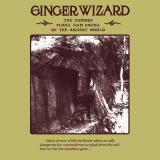
Crypt of the Wizard is proud to present Ginger Wizard - The Curious Flora and Fauna of the Ancient World on vinyl and digital formats.
About ten years ago in a record store in Prague, the Ginger Wizard discovered a copy of Bo Hansson’s Lord of the Rings LP. Although initially unfamiliar with the record, the reference to Tolkien’s masterwork and the incredible cover art drew him in and, rather fittingly, sent him off on a journey of discovery that would reshape his creative trajectory.
Years later while working in cassette tape manufacturing, Ginger Wizard noticed that most fantasy-inspired music fell into two camps: metal and dungeon synth. With little interest in the former, but intrigued by the latter, he began writing a few songs imagining a beautifully packaged and tactile cassette tape. However, dungeon synth he soon realized was “the most boring music to make”.
So began the Ginger Wizard’s own mythological discography. In 2022 came The Feast for the Dead King and Other Musical Themes recorded at home in a cold kitchen, is conversely an album full of warmth drawn from sheer exploration. A year later Can I Choose My Own Psychopompos? was recorded for the legendary Stoned to Death label - a 7” séance of semi-improvised noise and melody featuring allies from the Ginger Wizard’s live backing band The Peter Jacksons. The following year with Bathysburg Tales, a new approach was needed in order to keep the project interesting. Drawing inspiration from Popol Vuh and the inclusion of vocals lent by Protomartyr’s Joe Casey and Jakob Battick, a new more cinematic sound began to emerge.
Now, we present The Curious Flora and Fauna of the Ancient World marking a step into something stranger while still channeling the spirit of Bo Hansson. The new album rejects swords and sorcery for the mythology of the natural world “the ancient stuff,” he explains in the record’s insert, “has a similar taste for me as fantasy.” These songs bloom, creep, and shimmer like forgotten plants under distant suns while rooted in something real and organic. Inspired by the myths of nature rather than heroic quests, it’s an album that feels alive, equal parts archaeological dig and psychedelic garden.
Currently at work on a soundtrack for an imagined 1970s fantasy film in collaboration with The Peter Jacksons, the Ginger Wizard continues to expand his strange universe while The Curious Flora and Fauna of the Ancient World serves as a new map to somewhere ancient, beautiful, and unknown.
- A1: Young Love And Laughter
- A2: Stop Using My Love
- A3: If You Want You Can Be My Girl
- A4: Do You Remember When
- A5: Your Picture
- A6: Catch You On The Rebound
- B1: Some Kind Of Magic
- B2: In My Dreams
- B3: Magic Mary
- B4: Made Me Change My Mind
- B5: Six Eighths Of Your Time
- B6: Gonna Catch You
The Sha La Das are Bill Schalda and his talented sons Paul, Will and Carmine, originating from Staten Island, NY.
Your Picture, the Sha La Das’ second album and the first release on producer Tom Brenneck's own label, Diamond West Records, is yet another singular testament to the stirring power of blood harmony and a celebration of the enduring love story between Bill and the family matriarch, Linda.
Traces of old memories flicker through Your Picture. Bill’s classic songwriting and lush vocal arrangements get whirled into new territory, updating doo-wop with the bottom-heavy groove and swirling pop of Brenneck’s lean, spacious production. “We brought in some psychedelic sounds and drew inspiration from deep soul records to the Beatles and Beach Boys alike,” Brenneck says.
Love radiates throughout Your Picture, flowing out from the shimmering melodies Bill and his sons produce. Bill Schalda and sons are living their musical dream—Your Picture is the proof.
- 01: My Voice
- 02: Demon Seed
- 03: Fiona &Amp; The Rain
- 04: Home From Here
- 05: Changes
- 06: Times
- 07: The Lower Angels
- 08: Bathe In My Light
- 09: Prophecy Of Drowning
- 10: Winnie&Apos;S Garden
The Lower Angel Band are a British folk-rock band formed in Warrington, Cheshire in 2025.
The band blend folk rock and pop, weaving in traditional instruments and warm keyboard textures beneath a rich, blues-inflected female vocal from front-woman, Vicky Williams. Their style is marked by memorable melodies and lyrics that explore everyday life and spiritual growth through stories and reflections. Since forming earlier this year the band have been drawing crowds across Warrington and the surrounding area. Notable performances include 'The Narrowboat Sessions' and Newton Festival 2025. The Lower Angel Band also have support from Radio Warrington - having starred on their Country & Folk Show in October.
'All In' as a whole, is inspired by nature, endurance and reflection. Each song derives from personal experiences and discoveries - following both the physical and spiritual journeys taken along the way. This album celebrates the human experience of both the highs and the lows of life, 'All In' together.
- A1: Ree-Vo 'Protein' (The Bug Remix)
- A2: Ree-Vo 'We Go' (Object Object Remix)
- B1: Nøise 'Automatic' (Ree-Vo Remix)
- B2: Ree-Vo 'Groove With It' (Deadverse Remix) By Dälek
Originally released as a digital double a side both lead tracks were chosen by the remixers and the results are like an electrical storm.
Newark, NJ’s Dälek (Will Brooks) drags T. Relly’s growl through the quicksand, a cacophony of whiplashed beats and visceral loops spurring our protagonist on. It’s a gaggle of Ghostface Killas trapped in a hall of mirrors; it’s next door’s MBV heard through the walls whilst submerged in a low-lit bathtub. And Wu Tang are pulling the plug out.
Kevin Martin aka The Bug continues to release teeth rattling sonic masterpieces, his most recent being November’s ‘Implosion’ on his own Pressure label. In his hands ‘Protein’ becomes a submarine bass, head n’ rig wrecker opting here for more of his hooky ‘In Blue’ style Bug mix. As Kevin said – “to my fantastical mind it sounds like Bug dirt ‘n’grind Vs Yin Yang Twins’ louche swagger and Neptunes funk”.
“In Bristol, it was hip-hop and reggae renegades meeting up with white ex-punk guitarists, alternative pop pioneers hanging out with underground roots music makers, and sound system sonic stalwarts grooving out with rave’s space cadets that laid the bedrock for such an explosion. And if you think that such an eclectic melting pot ever went away, you would be wrong. Ree-Vo is all the proof that you need” – The Big Takeover
- A1: Permafrost
- B1: Mass Production
THE ART GRAY NOIZZ QUINTET is spearheaded by twisted Australian guitar legend STU-ART GRAY, most notoriously known as STU SPASM of LUBRICATED GOAT, CRUNT, SALAMANDER JIM, and THE BEASTS OF BOURBON. Adding another crazed chapter to an already solidly sordid musical history, THE ART GRAY NOIZZ QUINTET stars some of the finest scoundrels of the New York City underground scene - SKELETON BOY of WOMAN on two-string bass, NIKKI D'AGOSTINO on sax, and veteran drummer RICH HUTCHINS of LIVE SKULL providing the savage, swinging beat. A rotating roulette of characters swagger into the second guitar slot as needed, each showcasing their particular specialty - twang, treble, or atmosphere. Stuart Gray's wayward path through the flashpoints of noise, grunge, and swamp-rock history is well-represented in the Quintet's sound - chaos with a cinematic edge. Sharing stages with kindred spirits such as THE SCIENTISTS and MUDHONEY got the attention of audiences early on. Their recordings and incendiary gigs throughout the New York scene and beyond soon caught the eye of the infamous LYDIA LUNCH, and it was only a matter of time before a new collaboration was born . . . Now, THE ART GRAY NOIZZ QUINTET collide with the queen of no wave LYDIA LUNCH on a new two-fisted ten-inch single . . . Melting the MAGAZINE classic "PERMAFROST", and grinding out an apocalyptic version of IGGY POP's "MASS PRODUCTION". Only on IN THE RED RECORDS! "Speaking of noise, that’s kind of Stu Spasm’s thing — from LUBRICATED GOAT in the late 1980s, to his current project, THE ART GRAY NOIZZ QUINTET. This elder statesman of clamor hasn’t lost his touch." - THE NEW YORK TIMES
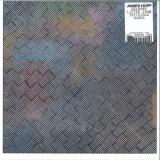
Shadows Lifted from Invisible Hands is an autobiographical record, comprised of four songs that Hoff refers to as ambient media. Each track is composed from sources drawn from his own involuntary aural landscape, specifically musical earworms and tinnitus frequencies.
Neither sound nor a daydream, the earworm (or stuck song) emblematizes music as a commercial form—immediate, ubiquitous, and persistent. Likewise, tinnitus is inaudible and unscrupulous, manifesting across a spectrum of frequencies at will. The cognitive swirling of these phenomena provides an ambivalent, internal soundtrack that scores a person’s movement through the world.
Those suffering from tinnitus or those who have grown accustomed to the “Tinnitus Effect” in movies will likely recognize the buzzing pitches on the record, but will likely not recognize the songs. Distorted and distilled, Shadows Lifted from Invisible Hands features altered versions of four commercial pop songs: Blondie’s “Heart of Glass,” David Bowie’s “Space Oddity,” Madonna’s “Into the Groove,” and Lou Reed’s “Perfect Day.”
Having been haunted by these songs on and off for years, Hoff tweaks the tracks, transposing and recomposing them for orchestral instrumentation. Speaking back to these involuntary echoes, these tracks go to great lengths to obfuscate their sources; to be sure not to simply re-introduce each earworm, as though they were samples. Otherwise, what’s the point? No one needs another stream.
Besides, earworms are not music, although we perceive them as such. They are non-cochlear and exist as an affective force that is neither subjective nor objective, which is to say they are an invasive—and alien—phenomenon. Like tinnitus, they are aggravated by economic, social, and environmental forces as well as emotional states, mental health, and aging. Hoff doesn’t underplay his own struggles with mental health in discussing the record—noting a long history of depression and its acuteness over the last few years, which serve as the backdrop to the composition of this record.
Scratch any pop song hard enough and you’ll find sadness underneath it. Subdermal, the songs on this record evoke a type of ephemeral weariness and despair. By recasting the original songs through their shadowy doubles, Hoff provides a window into the dark core of pop music. At the center of which lies capitalism’s desperate attempt to replicate itself through a cheap high built on echoing refrains. Just below the surface the listener finds a hangover of shadows dancing through the mind.
Swan Song
The vinyl LP at the heart of this éthiopiques 31 tracks 2 to 11 was one of the very last vinyl records ever released in Ethiopia. But above all it represents, we felt, the absolute masterpiece of the Ethiopian Groove – the Swan Song of Swinging Addis. The album leaves a clear idea for posterity of the level of sophistication and mastery that modern Ethiopian music had achieved, before being crushed under the Stalino-military heel of the Derg – as the bloody revolution that was unfolding came to be called.
Ethiopia1976.
The Revolution that broke out in February 1974 rolled on in a ruthless march. The whole of Ethiopian society was utterly stunned. The bouquets of flowers handed joyfully to the first tanks of the coup d'état were to wilt very rapidly. From September 1976 to February 1978, 18 months of Red Terror (the name given by the junta itself) spilled blood throughout the country. This fratricidal conflict took its heaviest toll among students and youth. The shift from feudalism to a cruel and primitive Stalinism left the country's citizens deeply traumatised, and snuffed out any pretence of activism, whatever the sector of society. This ice age was to last for seventeen long years.
ሙሉቀን፡መለሰ Mulukèn Mellèssè Muluqän Mälläsä
It was three tracks by Muluken that served as the opener for éthiopiques-1 more than 25 years ago. Seven more tracks appeared on éthiopiques-3 and 13, all accompanied by The Equators, which was soon to become the Dahlak Band.
The first track, Hédètch alu, also the very first piece that Muluken ever recorded, left audiences both unsettled and amazed. Reflecting the singer's extremely young age (he was just 17 at the time), this angelic voice mystified many, who thought they were in fact listening to a feminine voice. He was not yet 22 when he released his last vinyl record in 1976 with Kaifa Records (KF 39LP), one of the very last to be issued in Ethiopia, before the cassette tape became the dominant medium for music distribution – and before the new revolutionary regime put a stop to all independent musical life, via an unspeakable barrage of prohibitions and other persecutions.
Mulu qèn, literally, “A well filled day”. This tender maternal intention wasn't enough to ward off the cruelty of fate. His mother's premature death drove Muluken to leave his native Godjam, in northeast Ethiopia, to live with an uncle in Addis Ababa. Born Muluken Tamer, he took his uncle's last name – Mèllèssè.
The spelling Muluken appeared in his administrative records. Transcription of Amharic to the Latin alphabet, both in Ethiopia and for scholars, gives rise to controversies and quibbles that can never be neatly settled. French allows for a closer approximation of the original pronunciation, thanks to its battery of accent marks, confusing as they may be to anglophones.
Between rather accommodating administrative record-keepers and the various versions that pop up in interviews given by the artist, Muluken's year of birth oscillates between 1953 and 1955…
1954? One thing is certain: the artist's talent made itself known very early indeed, because he got his start in 1966-67, at the age of 13 or 14. Photos from the period attest to his extreme youth. It's a strange sort of initiation for a very young teenager to become a sensation in the heart of Addis's nightlife at the time, Woubé Bèrèha – the Wilds of Woubé. And what's more, in the club of the Queen of the Night, the Godjamé Assègèdètch Alamrèw herself, the very same that was portrayed by Sebhat Guèbrè-Egziabhér in his novel-memoir Les Nuits d’Addis Abeba2… The legendary female club owner who is remembered to this day by the capital's ageing boomers.
Muluken first tried his hand at the drums, before he grabbed the microphone. He emigrated briefly to the Zula Club, across the street from the old Addis Post Office, one of the ground-breaking bars of the burgeoning musical scene, before joining the Second Police Band in 1968, for around three years. He spent a few months with the short-lived Blue Nile Band founded by saxophonist Besrat Tammènè. As the musical scene grew increasingly successful, and pulled slowly but decisively away from its institutional ties, Muluken released his first 45rpm single in February 1972 (Amha Records AE 440). It was included in two LP Ethiopian Hit Parade compilation albums in September of the same year. All in all, Muluken released eight two-track 45s and the same number of original cassette tapes between February 1972 and 1984, the year that he departed for permanent exile in the USA. After converting to Pentecostalism in 1980, Muluken gradually abandoned all secular musical activity. In 1985, at the end of a concert in Philadelphia, he decided to quit concerts and recording for good. Mèlakè Gèbré, the historic bass player from the Walias band who was playing with him that night, recalls that everything appeared so irredeemably diabolical in Muluken's eyes, that it was to be the end of his contribution to Ethiopian Groove.
The end of the story, the beginning of a legend.
Dahlak Band, forgotten by History
Aside from his personal history and vocal talents, it must be remembered that Muluken Mèllèssè was one of the biggest names in the musical innovations that marked the end of the imperial period. These éthiopiques aim to convince those who are just discovering this hidden gem... As for Ethiopians themselves, they are to this day captivated by this singular and atypical figure in the Abyssinian pop landscape – even though he withdrew from public life some 40 years ago. Incorrigible devotees of poetic twists, of more or less hidden meanings, Ethiopians appreciate above all the care Muluken took in choosing his lyrics and the writers who penned them, such as Feqerte Haylou, Alemtsehay Wodajo and, here, Shewalul Mengistu (1944-1977). Love songs, written by women, a far cry from the conventional drivel that pleases sappy sentimentalists.
Muluken is equally acclaimed for his perfectionism when it came to music, the opposite of the overly casual approach that is all too common. He remained a faithful partner of musicians who came from a lineage that borrowed from several inventive and pioneering bands (Venus, Equators, Dahlak). Amongst them were certain artists who began their musical lives with Nersès Nalbandian at the Haile Sellassie Theatre and who come of age in around 1973 – at just the wrong time, you might say. Among them were the pillars Shimèlis Bèyènè (trumpet), Dawit Yifru (keyboards) and Tilayé Gèbrè (sax & flute). Most notably Tilayé Gèbrè, certainly one of the most important musicians, composers and arrangers of his generation, of the end of the imperial era, and of the early years of the Derg.
It was only in 1981 that a miraculous opportunity arose for Tilayé to escape the Stalinist paradise of the dictator Menguistou Haylè-Maryam. Once again it was Amha Eshèté (1946-2021) who provided a solution. The spirited and courageous producer, who had been in exile in Washington since 1975, succeeded, thanks to his incredible perseverence, in bringing the Walias Band to the USA. It was, in fact an extended Walias Band comprising ten musicians3, six of whom chose to slip away after a few concerts and the recording of an LP (The Best of Walias, WRS 100). Tilayé Gèbrè was one of these. He has been living in the USA ever since. There he joined the then-nascent Ethiopian diaspora, which lived largely unto itself, and was making only very modest headway in the American musical market. It seems unfair that Tilayé Gèbrè and the Dahlak Band were not able to benefit earlier from the public recognition that they do deserve.
A similar draining away of the top-rate talents would lead to the reorganization of the major groups of the “Derg Time”. The remaining artists spread themselves around between Ibex Band (renamed Roha Band), Ethio Star Band and a remodeled Walias Band. That spelled the end of the Dahlak Band.
With this record, produced by the essential Ali Abdella Kaifa a.k.a. Ali Tango, we can appreciate everything that the Derg not only destroyed, but also prevented from flourishing. This gem of Ethiopian-style afrobeat came out in 1976 (and, by way of a parenthesis, before the FESTAC 1977 in Lagos, which was attended by an impressive delegation of Ethiopian musicians — although Fela was already personna non grata in his own country). Despite everything that might distinguish this ethio-groove from Fela’s music – no colonial axe to grind, no question of political confrontation with the authorities, no claims to negritude or Africanism for the Ethiopian musicians, and less extrovertion! –, this LP fits beautifully into the saga of intense and electrified soul of the new “African” groove that Fela and Manu Dibango embodied so well from that point onwards.
In restoring this record to its place in the afrobeat epic, it can be seen that, if nothing else, the timeline bestows a legitimate pedigree and a historical primacy to works that had no international impact when they were originally released.
Warning! Masterpiece!
Editions Mego is proud to release the new album by Australian producer Jasmine Guffond. Developed over a two year period, Microphone Permission is an unsettling musical journey utilising contemporary tools of communication to display Guffond's ongoing research into online surveillance and sound as a method of investigation.
Source material on Microphone Permission are from various projects Guffond has been working on; a commission to sonify the data of the city of Melbourne, a dance performance about the future sounds of an extinct forest, an installation that sonifies Twitter meta data in real time, a job as a composer for a theatre work about music and feminism by five young female identifying performers in Western Sydney and a site specific installation at the Linachtalsperre dam that employed the harmonic frequencies of electric currents.
The results are a stark, brooding, disorientating journey into a paranoid musical field that sits somewhere between ambient club music and a dystopian soundtrack. Elements of techno, classical music and sound art form a dark intriguing masterwork that questions the nature of invasive, algorithmic and computational listening practices.
For example Microphone Permission refers to the consent we routinely give when installing various apps. onto our smart devices. Inspired by a 2018 scandal in which fans of Spain's most popular soccer team were effectively turned into unwitting spies by granting the La Liga application microphone permission. No matter which make or model, all smart devices are built with a microphone that is by default, forever listening. Listening in these situations often takes on an algorithmic form that enables tech developers to bypass public response to what is intuitively considered invasive practice, that is, traditional modes of eavesdropping such as using the microphone to listen and record audio.
NPVR is the avant garde duo made up of the late Peter Rehberg and Nik Void. Editions Mego is proud to present their second and final release. No this is not some kind of Beatles synthetic AI that raises the dead reconstructed recordings but rather a new album made by the humans and their machines.
The initial meeting of Rehberg and Void was in London in 2016 and despite or due to their mutual awkwardness found solace and compatibility in the fact that they both had a similar electronic modular set up, along with matching cases to transport all. The idea to collaborate was an obvious and organic process as a means to connect their individual gear together and observe the outcome. The fruits of these initial experiments, recorded in London, resulted in the playful experimentation of their acclaimed 2017 release 33 33 (eMego 251).
Now in 2024 Editions Mego presents the logically titled follow up, 33 34. These sessions were recorded six months after the initial recordings at Peter’s home in Vienna. This was planned out as a mirror city release to the original London recordings. With Peter having access to his full studio set up this time around we encounter a rich audio landscape which organically folds together a variety of musical genres blurring any distinction between these forms so the resulting music hovers as a new cloud of sound. Any musical form, be it industrial, electro-acoustic, ambient, drone and techno all coexist and melt into the other as the ensuing result unveils a hypnotic swarm of divergent sounds (music). When active there were no lines or contexts with NPVR, either between sound or genre within these recordings or live where NPVR were at home playing at a techno club one night and an avant garde venue the next.
The initial session of these recordings was edited by Rehberg and sent to Void to further develop. Over time the final versions were agreed on and then shelved as other outside projects took over. The awkwardness had been surmounted and the two had become close friends. NPVR performed at a range of venues such as Tresor, Sutton House, Corsica, Blitz, Paris GRM #Focus2, LEV Festival and Rigas Skanumezs Festival. Following Rehberg’s untimely passing Void had difficulty listening back to the sessions but eventually thought it fit to complete and release this album, of which even the artwork (like 33 33, an image from Zurich photographer, Georg Gatsas) had been decided upon prior to Rehberg parting ways.
There is an unmistakable joy to these recordings. One encounters an enthralling exploration of their chosen machines which conveys the excitement of what can be randomly conjured when people speak through such devices. There is no grand statement or argument here, just the sheer thrill of creation and the recorded results of random encounters. The art of collaboration was always a mainstay of Rehberg’s practice from the advent of the MEGO adventure. Rehberg & Bauer was an initial collaboration with former business partner Ramon Bauer. Even at this stage one can hear a relaxed sense of delight in the sheer discovery of sound.
A mix made for the Wire magazine following the release of 33 33 hints at the freedom that comes with endless urge for exploration and discovery. Abstract tracks from Z'EV. Jérôme Noetinger and Jung An Tagen are included alongside British stalwarts The Fall and New Order. There were no lines between pop / academic / underground or mainstream in Rehberg’s world. All of it sat at the same table. It is just matter in the atmosphere, like the diverse exploration found in these recordings that comprise 33 34.
Towards the end of his life Rehberg was obsessing over the immense output of the German ambient musician Pete Namlook. An artist renowned for not only his sprawling catalogue of ambient masterpieces but one who often said his main inspiration was nature. This is apt with regards to the work of NPVR which also aligns with such thought as the intertwining of the two individual artists and their machines results in a natural symbiotic flow, as it happens, just like in the world around us.
Vinyl reissue of the most acclaimed album by Brazil's legendary female vocal quartet, this LP captures the group at their creative peak, featuring sophisticated arrangements by Edu Lobo and Luiz Eça (Tamba Trio), A post-bossa gem filled with stunning vocal harmonies. Originally released in 1972 on the Odeon label, Quarteto Em Cy stands as a high-water mark in the group's prolific discography-and a hidden gem for collectors of Brazilian vinyl. Known for their intricate vocal harmonies and deep roots in the bossa nova movement, the quartet ventures into post-bossa territory here, where sophistication meets groove in all the right ways. Arrangements by Edu Lobo and Luiz Eça (of Tamba Trio) lend the album a richly layered sound-elegant, jazzy, and emotionally resonant-while the group's harmonies remain as mesmerizing as ever. It's a masterclass in vocal interplay and tasteful orchestration, with an unmistakable Brazilian soul running through every track. Highlights include their stunning interpretation of Milton Nascimento's 'Tudo Que Você Podia Ser,' along with deep cuts like 'Quando o Carnaval Chegar,' 'Canto de Obá,' and 'Cantoria.' These recordings capture a moment when the group, already respected collaborators of Vinícius de Moraes, Jobim, and Chico Buarque, hit a new creative stride. A MPB landmark and long out of print, often cited as QEC finest work, this self-titled LP has become a sought-after piece among collectors of MPB, bossa, and 70s harmony pop. For those drawn to groups like The Free Design or The Mamas & The Papas-but with a distinctly Brazilian elegance-this album offers a rare and rewarding listen. Reissue on 180g vinyl.
- Dame Un Cachito Pa' Huelé
- Dundunbanza
- Como Se Goza En El Barrio
- Esas No
- La Gente Del Bronx
- Mambo En La Cueva
- Que Negra P'acelerá
- Blanca Paloma
- Mami Me Gustó
- El Dolorcito De Mi China
- Hay Fuego En El 23
- Besame Aquí
- La Fonda De Bienvenido
- No Quiero
- Juégame Limpio
- Pimienta
- Cambia El Paso
- Que Me Manda La Niña
- Pobre Chinito
- Baila Simón
- El Reloj De Pastora
- Sabor De Pachanga
- Hachero Pa' Un Palo
- Errante Y Bohemio
- El Divorcio
- Papa Upa
- Lo Que Le Pasó A Luisita
- No He Visto A Caridad
- Suéltala
- Adiós Carmelina
- Emilio Dolores
The Godfather Of Salsa - HAVANNA & NYC RECORDINGS 1946-1962! Grosso! again presents this compilation from "El Ciego Maravilloso", the authentic godfather of salsa. His early Havana & NYC recordings. The tracks have been remastered and restored and some are available on vinyl after many years. Format and selection designed for DJs, collectors and latin lovers. Ignacio de Loyola Rodríguez Scull aka Arsenio Rodríguez (30 August, 1911, Güira de Macurijes, Matanzas, Cuba - 30 December, 1970, Los Angeles, CA, USA) was a Cuban musician, bandleader and prolific composer who developed the son montuno and other Afro-Cuban-based rhythms. Today he is seen as one of the most important figures in Latin music, with his influence reaching beyond the Spanish speaking world to also include African popular music of the 20th Century, though when he died he was not widely known by the public for his contributions and influence. He is also recognized (along with Israel 'Cachao' López and Dámaso Pérez Prado) as one of the creators of mambo, what Rodríguez himself often referred to as "ritmo diablo". Some of his best-known, and most-often covered recordings from the 1950s and early 1960s are included here, among them "Dame un cachito pa' huele'," "Dundunbanza," "El reloj de pastora," "Cambia El Paso," and "Hay Fuego En El 23."
- A1: Paris Latino (Original Version)
- A2: Paris Latino (Version Longue)
- A3: Paris Latino (Latin Mix)
- A4: Paris Latino (House Mix)
- A5: Paris Latino (Special Reserve Mix)
- B1: Paris Latino (Instrumental Version)
- B2: Rêves Noirs (Original Version)
- B3: El Bandido Caballero (Original Version)
- B4: Cocoloco (Original Version)
- B5: Paris Latino (Hot Paris Latino Us Remix)
Autumn 1983: "Paris Latino" hits the radios. The hit was then ranked No. 1 in the Europe 1 and RTL charts, No. 1 in Spain, No. 2 in Germany, Italy and Switzerland, No. 3 in the famous Top 50 in France and No. 19 in Belgium. Very quickly, the Bandolero group sold 3 million records of this first single. With a rather funk-disco-pop sound, the title is taken over by the students of season 2 of Star Academy and finds itself ranked No. 1 in the Top 50! Bandolero then released four more singles. On the occasion of the 40th anniversary of "Paris Latino", Bandolero offers this compilation of 10 tracks containing several versions of their mega hit (remixes, foreign version...) but also of their other singles, for the first time on color vinyl. LIMITED EDITION AND REMASTERED TRACKS