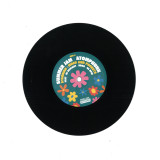
As a true Brazilian music aficionado, Skinshape was naturally captivated by Pedro Mizutani's charm. So, when Pedro visited Europe in the summer of 2023, Skinshape invited him to its London studio. Together, magic effortlessly unfolded.
Pedro sets the rhythm, while Skinshape sets the grain. With Skinshape weaving in basslines and other arrangements around Mizutani's mesmerizing guitar playing, the collaboration was a breeze. The two musicians understood each other in the blink of an eye.
Together, they crafted a true homage to bossa nova. Without overshadowing Mizutani's style, Skinshape brought out his full musicality. It was a seamless symbiosis. The duo created a one-of-a-kind work. In the spirit of the Afrobeats movement, one could even describe it as "bossa-pop," maintaining the essence of the genre while incorporating British aesthetic elements under Skinshape's discerning ear. A sprinkling of shimmering bells here, kicks dipped in reverb there, and jazzy basslines for that extra touch of groove. As for Pedro Mizutani, he excelled in delicacy as always and did not lose altitude, soaring to even greater heights.
quête:pop 3
repressed !
The multi-media project Kraftwerk was started in Düsseldorf, Germany 1970 by Ralf Hütter and Florian Schneider. They set up their electronic Kling Klang Studio where they conceived and produced all Kraftwerk albums.
Kraftwerk created the soundtrack for the digital age of the 21st century. AUTOBAHN 1974, RADIO-ACTIVITY 1975, TRANS EUROPE EXPRESS 1977, THE MAN-MACHINE 1978, COMPUTER WORLD 1981, TECHNO POP 1986, THE MIX 1991, TOUR DE FRANCE 2003. Their compositions, using innovative techniques, electronic sounds and synthetic voices combined with computerised rhythms, had a major musical influence on Electro, Hip Hop, Techno and Synth-Pop.
Mit seinem Soloprojekt Konstantin Unwohl veröffentlichte der in Hamburg lebende Künstler Korbinian Scheffold in den vergangenen Jahren einige Kassetten.
2021 erschien das Debütalbum Im Institut für Strömungstechnik über das Berliner Label aufnahme + wiedergabe. Darauf perfektionierte er seinen
musikalischen Stil; eine Mischung aus minimalistischem Darkwave und kontemporärem Synth-Pop. Mit Neuer Wall, seinem ersten Album auf Tapete Records, legt Unwohl nun
seine zweite, komplett in Eigenregiekonzipierte, geschriebene und produzierte LP vor.
- A1: To Circle The World
- A2: I See Something Shining
- A3: Takeoff
- A4: Aloft
- A5: San Juan
- A6: Brazil
- A7: Crossing The Equator
- A8: The Badlands
- A9: Waves Of Sand
- A10: The Letter
- A11: India And On Down To Australia
- B1: This Modern World
- B2: Flying At Night
- B3: The Word For Woman
- B4: Road To Mandalay
- B5: Broken Chronometers
- B6: Nothing But Silt
- B7: The Wrong Way
- B8: Fly Into The Sun
- B9: Howland Island
- B10: Radio
- B11: Lucky Dime
Nonesuch Records releases Laurie Anderson’s Amelia, the 2024 Grammy Lifetime Achievement Award recipient's first new album since 2018’s Grammy-winning Landfall. The record comprises 22 tracks about renowned female aviator Amelia Earhart’s tragic last flight. Anderson, who Pitchfork says, ‘sees the future, but she starts by paying attention’, wrote the music and lyrics for this subjective narrative piece. On the album, she is joined by the Czech orchestra Filharmonie Brno, conducted by Dennis Russell Davies, and Anohni, Gabriel Cabezas, Rob Moose, Ryan Kelly, Martha Mooke, Marc Ribot, Tony Scherr, Nadia Sirota, and Kenny Wolleson.
Earhart was a passionate pioneer of early aviation, achieving fame as the first woman to cross the Atlantic, in 1932. Five years later, she embarked on a flight around the world. Before she could complete the voyage, her plane disappeared without a trace; it has never been found. “The words used in Amelia are inspired by her pilot diaries, the telegrams she wrote to her husband, and my idea of what a woman flying around the world might think about,” Anderson says. First premiered at Carnegie Hall in 2000, the updated piece was recently performed across Europe.
Laurie Anderson is one of America’s most renowned – and daring – creative pioneers. Her work, which encompasses music, visual art, poetry, film, and photography, has challenged and delighted audiences around the world for more than 40 years. In a recent 60 Minutes profile, Anderson Cooper said she ‘is a pioneer of the avant-garde, but ... that doesn’t begin to describe what she creates. Her work isn’t sold in galleries. It’s experienced by audiences who come to see her perform: singing, telling stories, and playing strange violins of her own invention... she blends the beautiful and the bizarre, challenging audiences with homilies and humor. She blurs boundaries across music, theater, dance, and film.’ The Washington Post has said she ‘doesn’t just tell stories; she draws out every word with a kind of physical pleasure, tasting its flavor as she probes the everyday mysteries of life,’ and the Guardian has called Anderson ‘one of the great popular artists and storytellers of our time.’
Anderson released her first album with Nonesuch Records in 2001, the critically lauded Life on a String. Her subsequent releases on the label include Live in New York (2002), Homeland (2010), the soundtrack to Anderson’s acclaimed film Heart of a Dog (2015), and her Grammy-winning collaboration with Kronos Quartet, Landfall (2018). Additionally, Anderson’s virtual-reality film La Camera Insabbiata, with Hsin-Chien Huang, won the 2017 Venice Film Festival Award for Best VR Experience, and, in 2018, Skira Rizzoli published her book All the Things I Lost in the Flood: Essays on Pictures, Language and Code, the most comprehensive collection of her artwork to date.
Recent exhibitions and installations of Anderson’s work include Habeas Corpus at New York’s Park Avenue Armory; her largest exhibition to date, The Weather, at Washington, DC’s Smithsonian’s Hirshhorn Museum of Modern Art; and Looking into a Mirror Sideways at Stockholm’s Moderna Museet, which was her largest European exhibition to date. Anderson recently toured with Sex Mob, performing her piece Let X=X. Earlier this year, she was awarded the 2024 Stephen Hawking Medal for Science Communication, along with Christopher Nolan and David Attenborough, and the International Astronomical Union named a minor planet in her honour: Asteroid 270588, Laurieanderson.
Nonesuch released a re-mastered edition of Anderson’s landmark 1982 album Big Science in 2007 for its 25th anniversary, followed by a vinyl LP re-issue in 2021; its beloved single, ‘O Superman’, became a surprise viral hit on TikTok earlier this year.
Pink Rhythm was one of John Rocca"s mid-80"s solo side projects and a somewhat evolution of his pioneering early-80s band, Freeez. After Freeez ended, John still had some ideas left over which he explored with Andy Stennett of Freeez. John also re-worked one of the final jazz funk songs written (but unused) by Freeez called "India". He named the project Pink Rhythm after his self-funded, entrepreneurial record label that he used to launch Freeez. Pink Rhythm lasted a brief year or two, between 1984 and 1985. In 1985, three singles were released, including "Melodies Of Love, which has become a cult favorite. It has been described as "timeless drum-machine soul music" and a "cult funk slow jam". Over the years, John Rocca"s music has been sampled by many, including Jamie xx, Empress Of, Brandy, Burial, Todd Terry, Coolio, Cut Chemist and more. Often credited as one of the pioneers of brit-funk, John"s music is iconic and has been used in TV/Movies like; Better Call Saul, Midsommar, Irma Vep plus the fashion world for brands including Calvin Klein, Louis Vuitton and more. "Melodies of Love" - though never a pop hit - was recently been used the Joaquin Phoenix film Beau is Afraid as well as in the acclaimed British Film Blue Jean. It was also recently featured in a high-end ad campaign for Piaget. It is pure, smooth 80s drum machines, it is synth sounds, saxophones and keyboards.... it"s retro, but it could also be current. Either way, it"s as refreshing now as it was then.
We interrupt our regular Drum Chums programming to bring you a little V/A tackle via the 'Percussion Pals' project.
These razor sharp cuts come from friends near and far, old and new, each one primed to upgrade your record collection.
Debuts abound on the A-side, first via international man of mystery DJ Poufsouffle and his Balea-rock disco stomper "Totally Manic". Brimming with Flash & The Pan style pub-rock wonk this one boasts a growling vocal, sparkling keys and an uplifting chorus which doesn't quite break the spell of extreme silliness.
On the A2, Bristol's Spice Route rescue a nebulous reggae gem from Library obscurity, swinging the scalpel and working the desk to turn out an unstoppable groover.
Built around an irresistible rhythm section, "Gruler Dub" keeps on getting higher as the space-based vocals and trilling synths turn your brain inside out.
The B1 brings the return of Drum Chum extraordinaire Neil Diablo, who follows the Balearic brilliance of his last label outing with a cosmic caper into pure oddball pop. "Starry Night" slinks along in a chromed out catsuit, purring weirdo vocals over robo-chug and mechanical drums before indulging in a catchy chorus packed with addled innuendo. Not only is this as arch as Gina X doing a forward fold, but it also boasts some serious bass weight in the later stages - you have been warned.
We're delighted to finally feature a little magic from Australian Italo wizard Hysteric, who brings the curtain down in utterly emotional fashion via AOR disco dream "Pinball". A steady beat, infectious bassline and glistening chords play host to a swooning vocal, which reminds us to go with the flow and follow fun at all times.
100% Drum Fun Guaranteed.
Neil Feather has spent decades creating a musical world of his own through dozens of one-of-a-kind instruments he invented and built himself. His work as an instrument inventor, improviser, musical iconoclast, and stalwart of the idiosyncratic Baltimore experimental scene culminated in the late 2010s when filmmaker Skizz Cyzyk shot hours of footage of Feather taking stock of his workshop and his collaborations with musicians from Baltimore and beyond as he prepared to relocate permanently to New Zealand. That period produced Sound Mechanic, Skizz’s 2022 feature-length documentary about Feather’s work and music. It also produced an album-length collection of recordings of Feather’s music from the film that captures the spectrum of his unique sonic vision. Uninterested in the traditional rules and roles of music from his early years, Feather began constructing noisemakers out of what was around him—pieces of metal, spare parts from bikes and other gadgets, discarded traditional instruments, various electronics, ball bearings, and so on. By the time he moved to Baltimore in 1985, his work had become more codified into a practice of instruments and families of instruments, such as the Nondo, the Vibrawheel, and the Former Guitars. At the same time, he became a mainstay of the burgeoning experimental / improvised music scene that erupted from the Red Room and the internationally renowned High Zero Festival.
4-channel rotary mixer with 3-band frequency isolator and filter section for DJs
OMNITRONIC TRM-422: THE ROTARY MIXER ON A NEW LEVEL
The desired child
Omnitronic's popular TRM series has been expanded: the TRM-422 combines all the proven features of the previous models, but additionally offers functions that numerous fans had wished for. During the development of the mixer, the focus was on the demands and suggestions of the community.
FULL CONTROL
Each of the 4 input channels has 2 line inputs, one of which can become a phono input at the touch of a button. The channels are each equipped with a volume as well as a gain control. In addition to the master isolator (bass, mid & high), the DJ has the option to activate a filter with HPF, BPF, LPF, resonance and sweep controls in each of the 4 input channels.
The master output is available to the DJ in both XLR and RCA versions.
EFFECT WAYS
The use of external effect devices is possible through an FX-In and FX-Out via 6.3 mm jack. The mixer's master insert is also equipped with a send & return (unbalanced) path. This allows additional external effects to be looped into the mixer.
DVS INTEGRATION
The mixer's timecode outputs allow easy integration of a DVS system (Digital Vinyl System) such as Traktor or Serato.
MONITOR SECTION
The booth output of the TRM-422 is provided with one XLR and one RCA connector. The signal of the booth output can be easily adjusted to the conditions in the DJ booth with the help of an EQ (High & Low).
MICROPHONE INPUTS
The TRM-422 offers 2 microphone inputs. The first mic input gives the DJ the ability to modify the mic signal with EQ (high & low).
BACKUP SOURCE
With the help of the AUX input on the front panel, players such as smartphones, tablets or MP3 players can easily be connected via mini-jack (3.5 mm) and thus serve as a backup solution.
ACTIVATABLE CROSSFADER
If you don't want to do without a crossfader during your DJ set, you have the option to assign each of the 4 channels to the integrated crossfader. If the crossfader is not used, it can easily be switched off.
SET RECORDING
The RCA record-out makes it easy to record your own DJ set.
FEATURES
4-channel rotary mixer with 3-band frequency isolator and filter section for DJs
3-band master frequency isolator with vintage ALPS potentiometers (Blue Velvet RK27)
Kill cut feature allows DJs to completely remove low, mid and high frequencies for amazing mixing
Filter section with HPF, BPF, LPF, resonance and sweep control for creative sound shaping
4 stereo input channels with gain control, clip LED, 3-way equalizer and phono/line switching
2 microphone input channels with gain control, 2-way equalizer on air switch
High-grade components ensure long life and excellent sound quality
16-digit stereo LED level meter, switchable between master and booth outputs
Booth output with separate 2-way equalizer and level control
PFL section with 16-digit stereo LED level meter, level control, PFL/master mix control and cue mix/split option
Fully assignable VCA crossfader with adjustable curve
2 effects send/return paths
4 direct outputs for Timecode applications
Inputs: 8 x line and 4 x phono (RCA L/R), 1 x front aux (mini jack)
Outputs: master and booth (XLR/RCA L/R), record (RCA L/R), master insert send/return (RCA L/R), FX in/out (stereo jack)
483 mm rack installation possible with supplied mounting brackets
Desktop console housing
TECHNICAL SPECIFICATIONS
Power supply: 100-240 V AC, 50/60 Hz
Power consumption: 24 W
Protection class: Class I
Power connection: Mains input IEC connector (M) mounting version Power supply cord with safety plug (provided)
Frequency range: Microphone 20 - 20000 Hz
Line 20 - 20000 Hz
Phono 40 - 18000 Hz
S/N ratio: >97,2 dB line
>91,7 dB Microphone
THD: Line -68 dB
Control elements: Power switch, source selector, Crossfader, Crossfader selector switch, Crossfade curve switch; Cue mix split function, EQ controls
Status LED: Power, master level meter, clip, CUE
Connections: Input: 4 x line via stereo RCA
Input: 4 x line/phono via stereo RCA
Input: 2 x Microphone via 3-pin XLR
Output: 1 x headphones via 6.3 mm jack socket (stereo) mounting version
Output: 1 x headphones via 3.5 mm jack (stereo) mounting version
Output: 1 x rec. via stereo RCA
Output: 2 x booth via 3-pin XLR
Output: 1 x booth via stereo RCA
Output: 2 x master via 3-pin XLR
Output: 1 x master via stereo RCA
Output: 1 x AUX sends via 6.3 mm jack socket (stereo) mounting version
Output: 1 x AUX returns via 6.3 mm jack socket (stereo) mounting version
Chanals: Input chanel: 4 x stereo with Line-Line/Phono switch via RCA, channel control via Rotary, 3-band tone control EQ, source selector, gain control, CUE switch, FX routing switch, Crossfader selector switch,
Microphon chanal: 2 x mono via XLR, channel control via Rotary dial, ON AIR switch,
Master output: 2 x stereo via XLR, channel control via Rotary
Booth output: 2 x stereo via XLR, channel control via Rotary
Rec. output: 1 x stereo via RCA
Headphones output: 1 x stereo via Plug 6,3mm/3,5mm (Jack), channel control via Rotary dial, Cue mix split function,
Max. level: Output: +18 dBu
Material: Metal
Housing design: Desktop console housing
Dimensions: Width: 41 cm
Depth: 28,5 cm
Height: 10,5 cm
Weight: 5,74 kg
For Fans Of... Ralfi Pagan, Kent Gomez, Joe Bataan, Boogaloo Assassins. Pressed on limited edition clear with black swirl vinyl (indies only). Second Dewey Kenmore 45 to be released under Cosa Records. Produced by Joey Reina. Features West Coast legends, The Boogaloo Assassins. Crack open the fire hydrants and break out the popsicles, as Dewey Kenmore hits us with another bonafide block-party staple! "It's Never Too Late" is the highly anticipated sophomore 7" single, a sun-drenched, Latin-soul sure shot that is arriving just in time to burn off that winter gloom. Also joining Dewey & co. this time around are the West Coast legends, The Boogaloo Assassins, on background vocal duties, adding a little sweetness under Dewey's raw vocal stylings.
Your summer anthem has arrived!
- A1: Kickin' Incredibly Dope Shit (Intro)
- A2: Outside
- A3: Get Em Up
- A4: Nikes On My Feet
- A5: Senior Skip Day
- B1: The Spins
- B2: Don't Mind If I Do
- B3: Paper Route
- B4: Good Evening
- B5: Ride Around
- C1: Knock Knock
- C2: Mad Flava, Heavy Flow (Interlude)
- C3: Kool Ald & Frozen Pizza
- C4: All I Want Is You
- C5: Poppy
- C6: Face In The Crowd
Farbige Vinyl-Neuauflage des vierten Mixtapes von Mac Miller, das zuerst 2010 gratis im Internet kursierte und erst Anfang 2020 auf allen Streaming- und Download-Portalen kommerziell veröffentlicht wurde. Es folgte die physischen Formate Black Vinyl 2LP und MC. Der Titel ist eine Abkürzung für "Kickin' Incredibly Dope Shit" und bezieht sich auf den Coming-Of-Age-Film "Kids" (1995), der während des gesamten Mixtapes mehrfach zitiert wurde. Seite D ist unbespielt.
The weather might never be hot in the UK but the 7th release from Regulate Recordings is an absolute scorcher! Coming hot on the heels of the “The Rhythm / Make Em Bounce” going to the top of the Juno charts and doing serious dance floor damage the North West imprint have gone even bigger for the next release with a daisy age inspired transatlantic cross over.
Manchester producer Atomphunk has teamed up with Seattle Duo Mugs and Pockets with turntablist extraordinaire DJ Deviant on the cuts. The results are without doubt the jams of the summer, which is handy because the A side is called “Summer Jam”. With a popping funk bass line and rhymes dancing over the top that immediately evoke the spirit of the Native Tongues, but added into the mix is that Grand Central / Fat City groove and the West Coast USA bounce of Jurassic 5 and their collaborators, (Chali2Na is a big supporter of Mugs & Pockets). In a packed field “Summer Jam” might just be Regulate’s biggest release yet.
Things don’t let up on the flip “Back For More” sees Atomphunk go for the hotter stickier side of the season, with a more laid back synth driven groove evoking Roy Ayers and Quincy Jones, but with crisp beats and Mugs and Pockets bringing it once more. Don’t sleep on this one.
Much time has passed since the Queer Australian/Italian-Armenian, multifaceted artist, Kristian Bahoudian aka Kris Baha, swapped the parched red earth and searing midday sun of the Australian landscape for the brutalist communist-era apartment blocks and slate-grey skies of former East Berlin. Kris is now a fixture in Berlin’s club scene and has toured most of the world as a DJ & live artist with his own unique production style of cyber industrial, EBM, wave, post punk, and early ‘90s IDM mutations. Remixing some of the scene’s most notable artists such as Boy Harsher and techno pop lord Boys Noize, Kris has garnered respect and trust in the electronic music scene for the last 13 years. To respond to the current AI revolution, Kris uploads himself to the cyber ether through his latest project: GHOSTS IN THE MACHIИE.
Across Dual Timelines —
” GHOSTS IN THE MACHIИE ” unfolds as a sci-fi cyberpunk concept project inhabiting dual timelines. In one, we glimpse a trans-humanist future where human consciousness exists as intricate sequences of binary code, entwined and controlled by omnipresent AI systems. In this coded future, a profound awakening stirs among a select few who manage to mutate the code they were governed by, unlocking memories of their history that was erased by the AI. Through this discovery they realize they can traverse temporal boundaries and utilize this power to send warning messages back in time to their former fully human selves. These eerie missives carry a dire warning for humanity, urging them to rectify the course of society before the relentless march of artificial intelligence deprives humanity of its essence. In this terrifying future, humans are rendered mere specters within the digital expanse, stripped of their souls, to become Ghosts In The Machine.
Collaboration with the future self —
The cyber odyssey unfolds from a unique perspective— Kris’s very own future self (his future ghost): a spectral entity endeavoring to caution its present incarnation against the ominous path it treads, attempting to avert a dystopian future.Sonic Alchemy —
A fuse of cybernetic synth waves, hyper-punk, and pulsating drum and bass laid out against the dystopian, industrial sonic landscape of this grim future “civilization”. Each track recounts a new chapter in the gripping narrative, drawing listeners deeper into their own story and the role we all play as a collective society with the future possibilities of unregulated AI.Recorded in Berlin with software and hardware synthesisers. AI was used to assist me with lyric themes, concepts and ideas. I also used a trained AI model of my own voice as backing vocals in ‘Haunting Me’.ll music, words & concepts by Kristian Bahoudian aka Kris Baha and his future ghost,
GHOSTS IN THE MACHIИE
Man könnte meinen, das musikalische Erbe der 1960er-Jahre sei bis zur Erschöpfung gefeiert worden (und da hätte man recht), und dennoch, und was noch erstaunlicher ist, werden die Pretty Things unter all den großen bahnbrechenden britischen Bands dieser Zeit immer noch routinemäßig unterschätzt und unterschätzt oft übersehen.Mit ihrer einzigartig rauhen Interpretation des R&B-Repertoires legten die Pretties die Vorlage für einen Sound, der später als ,English Freakbeat" bezeichnet wurde, und gingen in einer Ära der beispiellosen Pop-R/Evolution hin zu Psychedelia und darüber hinaus immer an die sprichwörtlichen Grenzen, indem sie wohl die ersten schrieben und aufnahmen und möglicherweise die beste Rockoper in ihrem Meisterwerk S.F. Sorrow (and what about Parachutes then?).In diesem Jahr jährt sich ihr Debüt ,Rosalyn" zum 60. Mal, was ein guter Vorwand zu sein scheint, ihr Vermächtnis mit einer Tribute-EP zu feiern. Doch anstatt die Klassiker abzudecken, haben sich die vier hier versammelten Psych-Pop- und Mod-nahen Künstler, Bandkollegen und Gare du Nord-Mitarbeiter dafür entschieden, in die weniger bekannten Tiefen des Pretty Things-Katalogs einzutauchen:Der Produzent und Multiinstrumentalist Andy Lewis spielt ,Walking Down The Street" aus den Electric Banana-Sessions von 1967. Der Pariser Popmeister Popincourt übernimmt ,You Don't Believe Me" aus dem Pretties-Album "Get the Picture" aus dem Jahr 1965. Dann ist da noch Ian Buttons ,Papernut Cambridge", der sich der seltsamen Stop-and-Go-Seltsamkeit des Kult-Pop-Juwels ,Defecting Grey" stellt, während Canterburys eigener kontinentaler Pop-Korrespondent Robert Rotifer ,House of Ten"von der häufig vergessenen, aber allgemein glorreichen Kammerpop-LP "Emotions" von 1967 einen Besuch abstattet.,Das ist ein großes Kompliment an die Band", schrieb Dick Taylor, Gitarrist der Pretties, als er um Zustimmung zur Veröffentlichung gebeten wurde, was alle seine Fans bei Gare du Nord Records sehr glücklich machte.,House of Four" (VÖ: 23.08.24/Gare du Nord) wird in einer limitierten Auflage von 300 Exemplaren als 10" EP mit 45 U/min (und digital) erscheinen, mit einer zusätzlichen Postkarte mit dem von Robert Rotifer liebevoll gezeichneten Puppenhaus-Covermotiv. Es ist ein anglo-französisch-österreichisches Cross-Continental kulturelles Unterfangen zu Ehren einer großartigen britischen Band, die sechs Jahrzehnte später immer noch kein bekannter Name ist (außer in den besten Haushalten), es aber immer verdient hat.Schade nur, dass Phil May nicht mehr da ist, um es zu hören ...
Kompakt is proud to announce, finally, a reissue of the first, self-titled GAS album. Originally released on electronica imprint Mille Plateaux back in 1996, it’s been unavailable in its original form ever since – the version of GAS included in 2008’s Nah Und Fern box featured several different tracks. Here, however, GAS is restored in all its glory, the debut full-length from Wolfgang Voigt’s most enigmatic, quixotic project.
There had, of course, been signs of what was to come. Back in 1995, Voigt essayed the first GAS release, a slender, yet remarkable four-track EP, Modern. Its centre label featured a reduced symbol – an overhead or lamp light, switched on, its glow radiating outwards in four bold black lines – a perfect representation of the tight, stylised ambient electronic pop contained on that 12”. A few curious compilation tracks were floating around, too, for Mille Plateaux’s Modulation & Transformation and Electric Ladyland series. If you were attentive enough, you could tell something was up.
But nothing quite prepared us for the languorous, effervescing loops and regular-like-clockwork beats that Voigt folded together on GAS. Its six long tracks, all untitled, neither begin nor end but hazily fade into earshot, vibrate majestically in your cochlea for fifteen-or-so minutes – some a bit shorter, some longer – and then meander away, reading the mise-en-scène for the next example of Voigt’s drift and dream logic to unfold. The material is referential in the most distant way, and you can sense only the most evanescent of ghostly presences, haunting these six compositions.
GAS feels, also, like a more pliable hint at what’s to come, as the GAS concept really solidified on its successor, 1997’s Zauberberg, and reach its apotheosis on Königsforst and Pop. Those three albums share a very similar palette – blurred, hazy samples, often of classical music, stacked and cross-thatched across a muted 4/4 thud. GAS, then, is an outlier of sorts: it’s more expansive in its remit, lighter in its mood, perhaps more fleet of foot. This, of course, is part of its charm.
In clearing space for Voigt, by preparing the terrain, GAS sits both at the edge of the forest, and at the verge of an expansive, wide-eyed future; one where GAS would become truly eternal.
Text by Jonathan Dale
Kompakt ist stolz, endlich eine Neuauflage des ersten, selbstbetitelten GAS-Albums ankündigen zu können. Ursprünglich im Jahr 1996 auf dem Electronica-Label Mille Plateaux veröffentlicht, ist es seitdem nicht mehr in seiner ursprünglichen Form erhältlich – die gleichnamige Version von GAS, die 2008 in der Nah Und Fern Box enthalten war, enthielt verschiedene andere Titel. Nun liegt das 3er Album in seinem naturbelassenen Originalzustand wieder vor.
Bereits 1995 zeichnete sich mit der Maxi GAS - Modern auf Profan, sowie einigen Kompilation-Beiträgen auf Modulation & Transformation und Electric Ladyland auf Mille Plateaux dieser frühe, weltentrückte, rätselhafte GAS Sound ab, der sich erst in den sechs scheinbar endlosen, majestätisch-sprudelnden Tracks des Albums voll entfaltete. Die Musik ist von ätherischer Leichtigkeit, in der wie aus einer anderen Sphäre abstrakte Referenzen aus weiter Ferne nur andeutungsweise herüberzuwehen scheinen.
Dieser frühe, eher sphärisch-leichte, gleich einer sonnendurchfluteten (Wald-)Lichtung anmutende GAS Sound, stellt gewissermaßen den Ausgangspunkt der audiovisuellen „Welt“-Reise in den düster-romantischen Acid-Wald dar, in den sich GAS ab 1997 mit den Alben Zauberberg, Königsforst, Oktember und ab 2000 mit Pop an anderer Stelle wieder hinaus und in seine ganz eigene Ewigkeit begeben hat.
The year 2020 sure wasn't the most ideal time to form a band, especially for a group of musicians who never played together before. But for New York rock quintet GIFT, this strangest of periods was the auspicious backdrop for a bold new sound - a dizzying blend of early shoegaze, classic `90s alternative rock and even modern pop. Indeed, that GIFT emerged somewhat fully formed on their 2022 debut album Momentary Presence was a testament to the creative possibilities laying deep within. Now, Illuminator, their Aug. 23 debut album for revered New York independent label Captured Tracks, is the long-awaited payoff of GIFT's ever-growing musical and human chemistry. And while nods are apparent to label forerunners such as Beach Fossils, DIIV and Wild Nothing, GIFT are shepherding those elements into wondrous new vessels for the present moment - sleek, often danceable and frequently mesmerizing. GIFT - vocalist/guitarist TJ Freda, multi-instrumentalists Jessica Gurewitz and Justin Hrabovsky, drummer Gabe Camarano and bassist Kallan Campbell - are firmly enmeshed in the New York scene as talent buyers, photographers, DJs, audio engineers, art directors and, in the case of Campbell, an owner of the beloved Brooklyn DIY venue Alphaville. GIFT introduced Illuminator with "Wish Me Away," their first new song in the 18 months since the debut. With its earworm guitar lines, propulsive rhythms, riveting vocals and mind-expanding aural flourishes, "Wish Me Away" is the perfect sonic springboard from Momentary Presence to where GIFT are going next. It's also a potent reminder that you can still preserve that twinkle in your eye even when you feel like everything's slipping away. On songs such as "Light Runner", "Going In Circles" and "Destination Illumination," Freda demonstrates a newfound confidence and versatility, embracing pop music as a vehicle. The relentless, often painful dance of love has never sounded as exhilarating as on "Going in Circles," while the strident tone poem "Water in My Lungs" conjures the unreal feeling of watching a romantic partner both figuratively and literally fade from view. "This album has a lot of themes of going fast, time passing and things changing," Freda says. Throughout, Freda and company thankfully do much of the hard work for us: falling in love, heartbreak. Watching events and moments go by like cars on the highway. People you once knew coming in and out. Grieving the loss of different phases. Watching everything happen simultaneously. For these and many other reasons, Illuminator, friends, will be the soundtrack to the throughline of your life.
Gregory T.S. Walker’s Minstrels & Minimoogs was self-published by a young, nomadic composer and virtuoso in 1988 to accompany an immersive multimedia performance at the University of Colorado Boulder’s Fiske Planetarium. Created with this outer, and other, world setting in mind, the four tracks find Walker stretching toward an ancient-to-future vision where Egyptian myths and Hieronymus Bosch-ian tableaus are rendered in a screaming three dimensional circuitry of electronic drums, synth guitars, and, of course, Minimoog. Given the musical terrains and outmoded topics traversed, and that this entirely DIY effort was originally released as a micro one-sided 12” edition, Minstrels & Minimoogs is as perplexing and euphoric a document lost-to-time as it is now found.
Born in 1961 into an intensely musical family spanning four generations, Gregory’s mother Helen Walker-Hill was a noted musicologist specializing in the rediscovery and work of historical Black female composers, while his father, George Walker, was the first African American composer to win the Pulitzer Prize for music. Both parents studied with the famed (and famously strict) Nadia Boulanger in Paris in the 1950s, and held to lofty aesthetic standards in their home life. Walker began studying the violin as a child, but when a burgeoning interest in the electric guitar and rock music as a teen manifested, it was largely verboten in the household. The rule was that the music played in the home was to be acoustic and classical. Although the elder Walkers eventually relented and allowed Gregory’s guitar to be plugged in for a brief interval on the weekends, the remaining days he settled for strumming it sans amplification.
Gregory, conditioned and eager for a life in music but looking to get out from under the influence and yoke of his famous composer father, ultimately chose to study computer music at the University of California at San Diego, where he earned a Master of Arts. This was followed by another MA in electronic music composition at that hotbed of West Coast experimental music, Mills College. Intermedia and multimedia in the arts was the rage in the 1980s, and Mills was one of the centers for it; audacious spectacle meeting visionary performance, such as one of the realizations for Anthony Braxton’s music for multiple orchestras a young Gregory performed in with his violin.
After a series of solo synthesizer concerts around California, Gregory followed a girlfriend on a mid-country move to Boulder, Colorado. After picking up yet another composition degree at University of Colorado Boulder, his life as a composer really started, writing a piece for extended technique for guitar, a passacaglia for vocoder and orchestra, as well as Minstrels & Minimoogs.
Envisioned as a multimedia performance such as the kind he’d experienced at Mills (which was all but unknown in Boulder at the time), Gregory roped in a number of college going or aged friends of varying skill levels and musical sympathies to accompany him with distorted sax or oblique spoken interludes. Confronted with a lack of finances, but driven to get his ideas captured in a complete musical package, the album was recorded in his brother’s apartment. If not every player assembled was on Gregory’s virtuosic level, so be it; it was more about capturing the spirit of his intentions and embracing the serendipity of mistakes.
An inspired attempt at world building, Minstrels & Minimoogs draws on the deep well of musical knowledge Gregory gathered from his parents and teachers, but all the while subverting that historical basis by incorporating mutant strains of prog and pop music. The work accumulated is not unlike the playful 1980s work of Gregorio Paniagua, where medieval estampies and rondeaus are wrenched into an anachronistic present where Hildegard Von Bingen and Kate Bush are contemporaries. Ars nova, new art, a 20th century minimalist jester and troubadour.
A one sided LP was the cheapest option Gregory found to have Minstrels & Minimoogs memorialized on vinyl, so somewhere between 50 to 100 copies were pressed. There was no distribution, outside of copies that were handed out to friends or sold at the performances at the planetarium. Gregory T.S. Walker’s cosmic-futuristic forays into oblique pop and baroque subversion could forever reside perfectly in both the domed simulacrum of our universe for which it was composed, in the formats it is being reintoduced now, and our own biblical firmament. For in the words of Gregory, straight from the original liner notes: “God Is A Minimoog”
Gregory T.S. Walker’s Minstrels & Minimoogs arrives again August 23, 2024 on vinyl and digitally as part of uncommon¢ (“uncommon sense”), an open-ended, serialized endeavor from Freedom to Spend that provides new meaning for rarefied recordings from music's outermost fringe.
- If You See Me
- Taste Of Love
- I Love You
- Oh Lover
- I'm Under Your Spell
- Waiting For The Moment
- Get It On
- Expense
- Sunshine Lady
- Higher
- It's The Things That You Do
- Ladie
- You're All I Need
- Stone Lover
- Cohesion
- I Do Love My Lady
- Got To Be Something Here
- I Have Love At Home
- I've Got You On My Mind
- Can You Deal With It
- Quick
- If You Love Me
- I've Got My Eyes On You
- Should I Or Should I Not?
- O'neal Do You Dare
- Contagious
- Borrowed Time
- One Life To Live
- Somebody Said
- Do It Baby Do It
- Together
- No One Else Can Do It To Me Baby
Lavender Vinyl. In the late 1970s, a peculiar sound began bubbling up from the land of 10,000 lakes. Buried beneath 50 solid inches of annual snow, Minneapolis made a Sound quite different than what the pop world foresaw. It issued forth as a slick, black, technologically advanced fusion, poised to storm the charts. Never known for sizable African-American populations, the Twin Cities of Minneapolis and St. Paul in fact harbored a tight-knit community of musicians working feverishly through the late '70s and early '80s toward a radical manipulation of American dance music, coating futuristic funk with the glamorous sheen of guitar rock. Synthetic ebony and ivory met electricity, with sexed-up results sent shockingly across the pop heavens like violet lightning.
Previously Unreleased Recording. Limited to 1200 copies on transparent cherry vinyl. Tip-on jacket, Download code. Insert featuring LP sized original art by Grungie O'Muck. Includes the original recording of Richard Tucker's "Are You Leaving For The Country", later covered by Karen Dalton, and the only song co-written by Karen & Richard, "Sleeping In The Garden". "Richard, Cam & Bert seem to have grasped The Great Harmony. That is, ensemble singing that is at once sweet, precise, funky and a bit sardonic..." -Mike Jahn / New York Times (1970) "For a few years in the late sixties and early seventies Richard Cam & Bert ruled MacDougal St. walking a fine line between the increasingly commercialized demands created by groups like Crosby Stills and Nash and the fierce integrity of earlier folk performers, the generation to which Richard belonged. They managed this with great aplomb, producing original tunes of great integrity and obvious folkloric origins, as well as those which expressed the anarchic omnipresent psychedelia of the moment. They also never abandoned the idea of including some traditional material in their performances. But for the usual random application of luck they could have been very big." - Grungie O'Muck / Artist, Bluesman, Cover artist for their first album and contributor to this one. Richard Tucker, Campbell Bruce, and Bert Lee coalesced as a trio in the spring of 1968, and by the end of that year had become regular performers at fabled Greenwich Village nightspots - The Gaslight, The Bag I'm In, Cafe Feenjon, among others. But mostly they were street singers, busking regularly in Central Park. Their only LP, Limited Edition, was released in 1970, and sold mainly at gigs and on the street. Somewhere in The Stars compiles earlier, previously unreleased recordings, when all three members were signed with Peer-Southern Music publishers as writers and began using their studio to make demos and experiment musically. Beautifully recorded by house engineer Charlie Mack (supervised by Jimmy Ienner), the demos capture a back room casualness and rustic, homespun quality. For me, listening to their songs and harmonies is like entering a world you always hoped existed but had never experienced. Some of the songs were re-recorded the following year for Limited Edition, but many are heard here for the first time. Among them is the original demo for Richard Tucker's song, "Are You Leaving For The Country", which Karen Dalton covered on her seminal 1971 release, In My Own Time. Richard and Karen were husband and wife for much of the 1960s, performing as a duo (initially as a trio with Tim Hardin), and navigating their time on the Village scene while alternating living in a small mining town outside Boulder, Co. before splitting up in 1967. Also making its debut, is the only song Richard and Karen ever wrote together, the haunting "Sleeping In The Garden". Also contains two epic songs by Cam "One Of These First Nights", and "Stockholm") not on their LP, but staples of their live performances, and noted in a gig review by The New York Times, and in a column by future A&R hero, Karin Berg, who was an early champion. Another rarity is the only cover of "Sweet Mama" by Fred Neil we've ever heard. Campell Bruce came to New York in 1967 as lead singer with a band from Washington, DC, The Natty Bumpo. They'd recently signed a record deal with Phillips, but were falling apart. Cam landed in the Village with an acoustic guitar and first started playing and singing in the basket houses, and shortly thereafter at The Gaslight, as the "Cam Bruce Trio" (which included Collin Walcott). After opening for Mose Allison, Cam's hero, the trio went their separate ways, and Cam returned to regular solo gigs at The Flamenco, and the basket houses on Bleecker. Richard and Cam met up on that scene and quickly found a musical kinship as well as becoming best pals. Bert Lee arrived in New York as a runaway the following winter, and began playing and sleeping wherever he could. His sometime accompanist, Ron Price, introduced Bert to Richard and Cam just as Bert's own songs were garnering attention from publishers. According to Bert, "I arrived on the New York scene during a time of great change, and it was the notion of change that influenced me. All around me I saw there were two sorts of songwriters, on the one hand dedicated to the traditions that had inspired them, folk, jazz, the American songbook. On the other hand were songwriters influenced by the wave of experimentation that The Beatles were the perfect example of. Mixing genres, writing lyrics that weren't just about ordinary love and loss. Richard Tucker was a country blues player, with a relaxed and melodic approach to the craft. Cam wrote something more akin to soul songs, with a hint of jazz in the changes. I was writing tunes that sometimes drew on classical structures with a tendency toward what I suppose would be known as prog-rock. But I was rather adamant about not being pinned down stylistically, and so I would write, for example, a song based on some complex classical chord structure, and then go right ahead and write a simple folk song, like Evelyn. Our band was popular locally, and it was this variety that made it distinct." Delmore is excited to present this unearthed treasure, fifteen years in the making. In the words of Richard Tucker, "Tap on your knee, roll on the floor; if you aint free, what's it all for?" "The trio's singing, playing, and writing have all withstood the test of time. Believe me, because I was there. In 1969 R,C&B, myself, Charles John Quarto, David Bromberg, Ron Price, and Keith Sykes were just a few of that year's crop of song-slingers. We were young turks back then, out on the prowl in New York's Greenwich Village for record deals, gigs, and beautiful young women to sleep with and maybe even write a song about. I've lost the names and numbers of those lovelies and I'm not sure what happened to Ron Price, but Richard, Cam, and Bert are back! - Loudon Wainwright lll
The latest full-length from Kishi Bashi, Kantos is a work of exquisite duality: a party album about the possible end of humanity as we know it, at turns deeply unsettling and sublimely joyful. In a sonic departure from the symphonic folk of his critically lauded 2019 LP Omoiyari - a career-defining body of work born from his intensive meditation on the mass incarceration of Japanese-Americans during World War II - the Seattle-born singer/songwriter/producer's fifth studio album encompasses everything from Brazilian jazz and '70s funk to orchestral rock and city pop (a Japanese genre that peaked in the mid-'80s). Informed by an equally kaleidoscopic mix of inspirations - the cult-classic sci-fi novel series Hyperion Cantos, the writings of 18th century enlightenment philosopher Immanuel Kant, a revelatory trip to ancient ruins on the island of Crete - Kantos ultimately serves as an unbridled exaltation of the human spirit and all its wild complexities. During the earliest stages of creating songs for the album, Ishibashi's main intent was to return to his highly eclectic musical roots, in part by tapping into his jazz background and by delving into the dance-rock-leaning sensibilities he previously embraced as co-founder of Brooklyn-bred indie band Jupiter One. But not too long into the songwriting process, he stumbled upon an AI-equipped website capable of composing catchy song hooks based on a prompt - a turn of events that quickly catalyzed the existential inquiry at the heart of Kantos. Although his ruminations on AI, transhumanism, and humanity's troubled fate indelibly guided the making of Kantos, Ishibashi nonetheless views the album as "less of a warning about this kind of hubris but more a celebration of the very characteristics that make us human: desire, passion, empathy, and love." "If there's anything I want people to come away with when they hear this record, it's a feeling of excitement about the possibilities of human-created art," he says. "Even as we're learning more about all the amazing things AI can do, I think humans will always be one step ahead in terms of our creativity and innovation. There's still no limit to what we have to offer."
- Satellite
- Dayton, Ohio-19 Something And 5
- Is She Ever?
- My Thoughts Are A Gas (Fucked Up Version)
- Knock ?Em Flyin?
- The Top Chick?S Silver Chord
- Key Losers
- Ha Ha Man
- Wingtip Repair
- At The Farms
- Unbaited Vicar Of Scorched Earth
- Optional Bases Opposed
- Look, It?S Baseball!
- Maxwell Jump
- The Stir-Crazy Pornographer
- 158: Years Of Beautiful Sex
- Universal Nurse Finger
- Sadness Is To End
- Reptilian Beauty Secrets
Color Vinyl[27,52 €]
Originally released in 1996 as a limited fan-club pressing for Rockathon, Guided By Voices’ Tonics And Twisted Chasers has always existed as an anomaly in Robert Pollard’s vast discography. In many ways, the album serves as the tail of a creative comet that in just two years included the “classic line-up” trilogy of Bee Thousand, Alien Lanes, Under the Bushes, Under the Stars and countless singles that crammed endless hooks in their grooves. In the intervening space, Tonics And Twisted Chasers has taken on a mythic status. It’s arguably Pollard’s strangest, gnarliest, most enlightened record and also the fans first chance to see the stitches that bind his galaxy of songs. It’s like peering at the caliber inside a watch, responsible for making the whole enterprise tick. This nineteen-song collaboration with guitarist Tobin Sprout could be interpreted as spontaneous sketches, late-night improvisations, ideas that blossomed later in the timeline (“Knock ’Em Flyin’” and “Key Losers”), but as with anything in Pollard’s orbit, its intention is clear when heard as a cohesive whole. The Pollard tenet that “less is more” is on full display here. The songs rarely creep past ninety seconds and coalesce much like Pollard’s collage-styled visual art. Arena anthems in miniature (“158 Years Of Beautiful Sex”) bash up against eerie piano laments (“Universal Nurse Finger”) without any time to breathe, acoustic lullabies that sound like a Midwestern summer’s twilight (“Look It’s Baseball”) segue into monochromatic post-rock (“Maxwell Jump”). The euphoric joy and obtuse melancholy in Pollard’s voice is so palpable on the album’s standout, “Dayton, Ohio 19 Something & 5” (which has since become a live staple), that it’s impossible to find a more autobiographical yarn in his catalog. The album’s closest analog is 1993’s Vampire On Titus, as it contains that album’s prickly, dark and shimmering obfuscation that only reveals its beauty after repeated listens. Tonics And Twisted Chasers maintains the lore because the melodies are so strong. Using a primitive drum machine, Radio Shack effects, minimal instrumentation and the DIY spirit that guided them in the first place, Pollard and Sprout constructed a masterpiece of pop that could only come from a basement in north Dayton, Ohio. Anyone in that hallowed era who happened upon it, kept it as a secret.