Swiss-born pianist Camille-Alban Spreng, who has resided in Brussels for over a decade, has been active since 2010 in a diverse range of bands and projects within jazz, improvised (electronic) music, art performance and theater. He can be seen on stages all over Europe and trained at various conservatories with renowned players such as Emil Spanyi (HEMU, Lausanne), Eric Legnini and Kris Defoort (CRB, KCB, Brussels).
Together with his regular band ODIL, he has already released two records: 'Something' (QFTF Records - 2016) and 'RESON' (QFTQ Records - 2019), with the collaboration of Leïla Martial, and Valentin Ceccaldi on the latter album. ODIL operates from Brussels but, with in its ranks a pivotal figure with Swiss roots, a French drummer and an Irish saxophonist, is a band with international allure. Nina Kortekaas' unique voice is also an absolute asset.
His third album, titled "Unheimlich," will be released on W.E.R.F. records, one of Belgium's finest jazz not jazz labels. The new album sprung from Camille-Alban's fondness for Allen Ginsberg and the beatnik movement. Poems by Ginsberg are provided with music, notably "Pull My Daisy" (co-written by Jack Kerouac and Neal Cassady at the time) and "White Shroud," with the approval of the rights holders/heirs.
The lyrics that Camille-Alban himself wrote for the album exude the same beatnik vibe. In that sense, the new work is also an homage to Allen Ginsberg. "I love his way of writing: it's funny, twisted, quirky ánd spiritual," Camille-Alban said. "I couldn't think of a better title for the new album. 'Unheimlich' doesn't translate. The black cat in the lobby of a creepy hotel in 'The Matrix,' I think of that image, that atmosphere."
ODIL's music has a narrative character and in terms of form, the compositions are not ordinary. Impro plays a role and the music is unmistakably characterized by a contemporary jazz aesthetic but at their core the compositions are also songs, a unique feature. 'Unheimlich' is a jazz album that can be listened to just as well as a pop rock album.
Поиск:pop act
Все
'Debut album from the 2006 X-Factor winner. The album is a mixture of pop ballads and soulful R&B tracks and includes her first single 'A Moment Like This', the international hit single 'Bleeding Love' and 'Better in Time'. A double, Gold coloured LP Vinyl package. Promo & marketing activity.
- Flowers Are Red (W/ Chevy Chase)
- Stranger With The Melodies
- W.o.l.d
- Get On With It
- Cat's In The Cradle
- Poor Damned Fool
- I Wanna Learn A Love Song
- Odd Job Man
- Mail Order Annie
- A Better Place To Be
- Mr. Tanner
- 30: 000 Pounds Of Bananas
- Taxi
- Harry's World Hunger Speech (Spoken)
- You Are The Only Song
- All My Life's A Circle
MARBLE VINYL[57,94 €]
Natural Clear Vinyl. Harold Forster Chapin was an American singer, songwriter, philanthropist, and hunger activist best known for his folk rock and pop rock songs. He achieved worldwide success in the 1970s. Chapin, a Grammy Award-winning artist and Grammy Hall of Fame inductee, has sold over 16 million records worldwide. This is an intimate concert with just Harry and his guitar.
- Flowers Are Red (W/ Chevy Chase)
- Stranger With The Melodies
- W.o.l.d
- Get On With It
- Cat's In The Cradle
- Poor Damned Fool
- I Wanna Learn A Love Song
- Odd Job Man
- Mail Order Annie
- A Better Place To Be
- Mr. Tanner
- 30: 000 Pounds Of Bananas
- Taxi
- Harry's World Hunger Speech (Spoken)
- You Are The Only Song
- All My Life's A Circle
CLEAR VINYL[51,05 €]
Natural Clear Vinyl. Harold Forster Chapin was an American singer, songwriter, philanthropist, and hunger activist best known for his folk rock and pop rock songs. He achieved worldwide success in the 1970s. Chapin, a Grammy Award-winning artist and Grammy Hall of Fame inductee, has sold over 16 million records worldwide. This is an intimate concert with just Harry and his guitar.
. The genre-defying Welsh group define their vision with a breath-taking new album, Islet’s ‘Soft Fascination’ is an ecstatic experience in music, an explosion of emotion subsumed in sound. The album is filled with high energy cadence and meditations on collective joy, a balancing act underpinned with glorious melodies and Emma Daman Thomas’ evocative vocals that swirl in the symphonic surf. Self-produced, and with instruments recorded live with few overdubs, the effect is direct, it veers from the upfront and immediate to the spacious and challenging. The first half is intentionally fast, intense, almost relentless. The second half is more spacious, as the album unravels and becomes more hazy. There is excitement and fascination and a willingness to show a lack of restraint in realising it, traversing hailstorms, hedgerows, broken promises and poisoned prayers; constantly breathing real life all in. Featuring standout singles: the pulsating ‘Euphoria’, the liberating flow of energy on ‘River Body’ and the recurring conundrum of choice of ‘Hat Person’, ‘Soft Fascination’ is an album of rare beauty. “A bewildering psychotropic storm” The Line Of Best Fit. // “Free-flowing experimental pop.”
- A1: High Energy (Extended Version)-Evelyn Thomas-1984-7.51
- A2: In The Evening (Original 12" Version)-Sheryl Lee Ralph-1984-6.16
- A3: Another Night (Dance Mix)-Aretha Franklin-1985-6.40
- B1: Body Rock (Dance Mix)-Maria Vidal-1984-6.30
- B2: Tell It To My Heart (Club Mix)-Taylor Dayne-1987-6.46
- B3: Love Will Save The Day (Extended Remix)-Whitney Houston-1988-7.59
- C1: Passion (Full Length Album Version)-The Flirts-1982-5.04
- C2: So Many Men So Little Time (Extended Version)-Miquel Brown-1983-8.14
- C3: Can't Take My Eyes Off You (12” Version)-Boys Town Gang-1981-9.31
- D1: The Male Stripper (Original Extended U.s. Remix)-Man 2 Man Meet Man Parrish-1987-7.51
- D2: Love Reaction (12" Version)-Divine-1983-5.34
- D3: Rocket To Your Heart (Remix)-Lisa-1983-9.35
- E1: Why? (12” Version)-Bronski Beat-1984-7.48
- E2: You Spin Me Round (Like A Record) (Murder Mix)-Dead Or Alive-1984-8.01
- E3: Theme From S ‘Express (12" Version)-S ‘Express-1988-5.58
- F1: No G.d.m. (Dedicated To Quentin Crisp) (12" Version)-Gina X Performance-1981-5.55
- F2: Relax (New York Mix)-Frankie Goes To Hollywood-1983-7.26
- F3: Don't Drop Bombs (Extended Remix)- Liza Minnelli-1989-5.57
- G1: Oh L'amour (The Extra Beat Boys 12” Mix) -Dollar-1987-6.53
- G2: Fascinated (Club Mix)-Company B-1986-7.33
- G3: Love In The First Degree (Jailers Mix)-Bananarama-1987-6.02
- H1: You Came (The Shep Pettibone Mix)-Kim Wilde-1988-7.36
- H2: Call Me (Viva Mix)- Spagna-1987-5.40
- H3: In Private (12” Version)-Dusty Springfield-1989-7.16
Box 2[78,19 €]
The influence that 80s gay nightlife had on electronic music, pop music in general and the evolution of clubbing for
subsequent generations is pretty much incalculable. In spite of the shadow of AIDs and reactionary political and media
forces both at home and in the USA, the period 1980 – 1990 bore witness to a dazzling explosion of dance music that
artfully drew a line from the peak of late-70s disco to the emergence of house and its 90s glory days. The art of the
12” single, the thrill of the remix, the rise of the superclub, the electronic spark of chart pop, the challenging of gender
barriers… all had their origin in the gay clubs. It’s not unreasonable to make the claim that by the end of the 80s,
virtually ALL chart pop music sounded like it had its origins on the dancefloors of Heaven nightclub!
Over 4LPs and 24 tracks, ‘Box Of Sin’ strives to tell the story of that decade, and to tease apart the strands of 80s gay
clubbing to show a period of unrivalled creativity and disco diversity. Via the box’s themed discs it shows how highenergy became house, how gender-bending synth bands took over the pop charts, how pop stars the whole world
over found a route to fame via the gay clubs, and how the era’s biggest producers aimed their masterworks purely at
the dancefloor. High energy, deep house, Eurobeat, synthpop, divas, acid house… all combine to paint a picture of a
rich and vibrant lifestyle. Along the way, ‘Box Of Sin’ unearths some overlooked gems rarely compiled today:
meanwhile some of the decade’s biggest names in club music gather to get into the picture – from Whitney Houston
to Dead Or Alive, Bananarama to Bronski Beat, Aretha Franklin to Inner City.
Based on the actual club charts at the time and with a stunning design package inspired by the small ads section of
80s gay press, ‘ Box Of Sin’ comes fully annotated and with an introduction by renowned gay author Paul Burston.
Throughout, it’s illustrated with photography documenting 80s gay clubbers in action, provided for Demon by The
Bishopsgate Institute, the UK’s LGBTQ+ archive. The project also resurrects the much-loved brand ‘Disco Discharge’, a
recognisable hallmark of quality among collectors and aficionados of club music heritage.
Discrepant proudly presents the Vinyl edition of Lebanese trio Malayeen. Malayeen is the project of Lebanese musicians Raed Yassin (Keyboards, Turntables & Electronics), Charbel Haber (Electric Guitar & Electronics) and Khaled Yassine (Darbouka, Percussion). Born from Yassin and Haber's love for the music of quintessential Egyptian guitarist Omar Khorshid, Malayeen disassembles and re-configures the work and style of the iconic guitarist innovative take on Arabic music. The final result makes for an original and unique update of Khorshid & belly dancing inspired songs from the past. Over the course of 7 compositions, appropriately named after Khorshid and famous belly dancers from the Arabic diaspora, the three musicians' varied backgrounds and techniques collide and coalesce in an experimental yet magical fashion, not actually playing Khorshid's music, but inspiring themselves from the cult guitarist's genius to create something completely new, modern and unexpected. A unique LP featuring the combined talents by key players of the Lebanese avant-garde. The Malayeen LP edition is released by Discrepant in collaboration with Lebanese exploratory label Annihaya effectively combining East and West musical strains of thought as well as conclusively deconstructing and displacing this particular form of 'popular' music. Design by Studio Safar S.A.L. Comes with full color poster painting by Omar Khouri Special vinyl one time pressing to 500 copies. "Uplifting, beat-driven pieces, often melodic, definitely Arabic, with destabilizing touches from external sounds, sound manipulations, and textural plays. The 17- minute 'Samia' is a roller-coaster ride culminating in a dizzying solo/duo between Yassine's darbouka and a darbouka track from a record played by Yassin. Great stuff. Monsieur Délire
Four years after they went all the way to Antarctica, Flat Worms are back in gen pop with the rest of us - but, as intoned on the album opener "Sigalert," "back again like I never was." Is this a nod to the way time passes over our sorely vexed synapses? Or are we to believe that there"s hope to be found in this broken world? Kick back with Witness Marks and see what other traces Flat Worms have left us in the dust. The album title alone leaves a foreboding impression. But look closer - "witness marks" aren"t something out of a forensic analysis - they"re actually practical; scratches placed in old clocks designed to aid continued maintenance further in time. Sure, there"s big questions and more on the board; primarily if we"re at all distinct from the absurdity coming down around us, or just another character in the mirror? Flat Worms are looking inward this time, outlining personal space in relation to themselves and others - sometimes even people they barely know. Among the slabs of slategrey outrage, the flowers of compassion are blooming, and the simmering power of their trio grows exponentially. Working once again with Ty Segall, Flat Worms continue to find new answers by digging into themselves and playing their kind of rock: hard and flat, bass and drums thrusting stalwartly forward with conviction, guitar twisting and spinning in outrage, deadpan vocals decrying a dire set of circumstances. The democracy of working together, so often messy and frustrating, was found to be a powerful release for Justin, Tim and Will. Acting as one, Flat Worms navigated challenging times by coming together, finding release in the clockwork repetitions of practice and the shared creative space they occupied together against the encroaching world. In the short century of their existence, Flat Worms have agitated against the status quo with a disquieting lyric bent, to emphasize the psychosis of the times. These are positions taken within songs, sung out to individuals in the world. As evidenced by the lyrics, "But I know I can always see you at the show Even though it"s only temporary and it"s time to go." . . .Witness Marks surveys an evolving sense of community. Flat Worms are dedicated to persevering and using the power of their collective. Come witness!
Originally released on Rocket Girl in 2000, Piano Magic’s third album proper heralded a seismic and surprising shift away from its more electronic predecessors, ‘Popular Mechanics’ and ‘Low Birth Weight.’ ‘Artists’ Rifles’ is Piano Magic’s first band-band album and marks their debut, actual recording studio appearance. Improvised on the spot and produced/recorded over just five days by John A. Rivers (Dead Can Dance, Felt), at his Woodbine St Studios in Leamington Spa, stylistically, the record could feasibly be described as the first (only?) baroque post-rock record, utilising as it does, consciously or otherwise, influences as broad as Bach and Codeine.
For ‘Artists’ Rifles’ the core of Glen Johnson (vocals/guitars/keyboards), John Cheves (guitars), Paul Tornbohm (bass) and Miguel Marin (drums/percussion) were augmented by guests Caroline Potter (vocals) and Adrienne Quartly (cello).
The success of ‘Artists’ Rifles,’ particularly in Spain, kickstarted a wealth of touring possibilities and over the next 16 years, the band toured all over Europe. It also caught the attention of 4AD Records, for whom they signed to the following year.
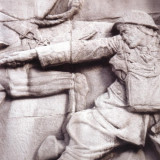
This 2023 vinyl re-pressing honours the original (Matt Dornan) sleeve design and beautiful photography of Royal Artillery Memorial (Hyde Park, London), by John Cheves of the band.
“Classic English folk music for the 21st century” – Record Collector
“Glen Johnson and cohorts explore a doomed English romanticism, boldly linking contemporary romantic mores with the lost generation of 1914 – 18…. strangely it works….” – The Wire
“Another endearingly odd record, drifting along the seawall between the macabre and melancholy. This is the work of 4AD obsessives who have learnt to love electronica.” - Q
- 1: Subterranean - Movement I
- 1: 2 Subterranean - Movement Ii
- 1: 3 Subterranean - Movement Iii
- 1: 4 The Long Wait - Movement I
- 1: 5 The Long Wait - Movement Ii
- 1: 6 To Hold And To Be Held - Movement I
- 1: 7 To Hold And To Be Held - Movement Ii
- 1: 8 Mon Coeur - Movement I
- 1: 9 Mon Coeur - Movement Ii
- 1: 0 Mon Coeur - Movement Iii
- 1: Be Without Being Seen - Movement I
- 1: 2 Be Without Being Seen - Movement Ii
- 1: 3 Be Without Being Seen - Movement Iii
- 1: 4 Les Parenthèses Enchantées - Movement I
- 1: 5 Les Parenthèses Enchantées - Movement Ii
- 1: 6 Les Parenthèses Enchantées - Movement Iii
- 1: 7 Les Parenthèses Enchantées - Movement Iv
- 1: 8 Les Parenthèses Enchantées - Epilogue
- 1: 9 Night Looping - Movement I
- 1: 20 Night Looping - Movement Ii
- 1: 2 Night Looping - Movement Iii
Colleen thrives on reinvention. For over two decades under the name, French artist Cécile Schott has continuously pushed her compositional practice into new directions. Her creative approaches have included complex samples and loops, instrumental processing and even dub production techniques applied to the baroque viola da gamba. Each album immerses the listener in a wholly unique world while remaining unmistakably a work by Colleen. Schott"s compositions glow with carefully considered textures that move in captivating revolutions while subtly evolving. A connective thread of Schott"s work is the exploration of the intricacies of emotion while reveling in the act of contorting pop and classical forms into new shapes. Colleen"s Le jour et la nuit du réel is a voyage deep into the world of synthesis, a dense thicket populated by drifting echoes and pulsating arpeggios. More than just a creative approach, sound synthesis here becomes a means to interrogate complex concepts, from the self and perception to shifting notions of what is "reality".
Punk pioneers Crass continue their vinyl reissue series, repressing their limited releases by adjacent artists through Crass Records, in association with One Little Independent. The series, including over twenty bands and solo artists recorded at the legendary Southern Studios and produced by Penny Rimbaud, continues with two more historic pieces from the Crass Records catalogue; ‘Farce’ by Rudimentary Peni and ‘Can’t Cheat Karma’ by Zounds.
Zounds are an English post-punk band from Reading, Berkshire, formed in 1977. Originally, they were part of the cassette culture movement, releasing material on the Fuck Off Records label, and were also involved in the squatting and free festival scene. The name of the band is derived from the old English ‘zounds’, a contraction of ‘God’s wounds’, referring to the crucifixion wounds of Jesus Christ, formerly used as a mildly blasphemous oath.
The band met up with fellow anarchists Crass when, legend has it, their van broke down on the road. They made their way to nearby Dial House, where Crass were based, who helped them with repairs. The two bands became friends, and although musically very divergent, they shared many common political views. Zounds shortly afterwards released their first EP, ‘Can't Cheat Karma’, on the Crass Records label in 1980. The EP featured possibly their most well-known track ‘Subvert’, a call to arms against the grind of daily life. The release of this EP and association with Crass led to an increase in the band's profile in the embryonic anarcho-punk scene, touring with both Crass and Poison Girls. They split in 1982 but reformed in 2007, and remain active today.
Penny continues; “Zounds could have made a fine pop group, but they were far too socially sassy to fall for that one. No, their commitment to radical political change, so abundantly clear in their lyrics, set them apart from the commercialism that had so blighted the likes of The Clash and other punkish pretenders. Having been drawn from the ranks of hippy bands like Here and Now, Zounds encouraged dissent and personal change, and, at their own cost, to pursue and promote them as ideologies. Can't cheat karma? No, nor ever beat it. Zounds were hip to this fine point. Want a better life?
Then make it for yourself. Ain't no one gonna help you out on that one. Find your own way, it's the only way there is.”
First released on 7” vinyl, limiting the sound, the new series has been remastered for 12” by Alex Gordon at Abbey Road Studios, allowing them to be heard as never before. This, plus enlarged replicas of the original covers, brings new gusto to their already radical sound.
The story of the invention of the term, 'deepfunk' is probably only known among fans and practitioners of this niche-genre. In short, it all started in the 1990s when DJs like Keb Darge, Mark 'Snowboy' Cotgrove and others began spinning obscure and feral Funk 45 RPM singles from local American bands, ostensibly generating another sub-category branch off of the mighty Northern Soul tree. The dance-club phenomenon inevitably spilled over to contemporary groups on the funk scene which immediately tried to record their music the way their idols did. The 'rare groove' and 'acid jazz' movements had run their course and there was a concerted effort to reinstate primitive idiomatic styles and techniques into the music, most notably by 90s funk collective The Poets of Rhythm. As more years passed by the number of bands steadily increased (although in tiny numbers, compared to the mainstream market). Almost every country had a representative with the majority of them coming from the United Kingdom. The deepfunk sound was still a niche, however a very few bands made it onto the mainstream charts, most notably Sharon Jones & the Dap Kings.
At the height of the retro-soul movement a questionable development took place. As more bands arrived on the scene, the production became more and more polished and pop-ish. Some of that squeaky-clean tidiness began to creep into the recordings, encouraged in part by the signature sounds of the digital recording technology available at that time. Some bands even tried to jump onto the possibility of promoting their music as 'deepfunk' although they were actually playing slick, funky pop music. This way some people who thought they were listening to raw, energetic funk actually felt quite ambushed when hit with real deepfunk. In fact, a certain percentage of funk music produced within the past 20 years does not deserve to be described as 'deepfunk' at all. Fortunately there were (and are) some pleasant exceptions which did not just imitate but actually rendered amazing funk music just like some of the finest funk combos of the 1960s and 70s.
One of those creative minds is without a doubt Joel Ricci aka Lucky Brown. Originally from Seattle, Washington, USA, he has enriched the deepfunk community since the mid-2000s with his stellar abilities. He is not only an amazing musician playing multiple instruments, but also a brilliant composer, arranger, and producer too. But for us here at Tramp he is much more, a close friend and remarkable human being. Whenever we were struggling, whether with the label or in private life, Joel and his musical work helped us to overcome everything and to keep going our path.
So here we are in 2023. The songs you are listening to right now are the complete Space Dream collection, split into two parts, representing the two living-room recording sessions from which his 2011 Tramp Records debut was compiled. Each fully remastered album contains unreleased material and comes with brand new, beautifully reimagined artwork by Ricci himself, housed in an authentic 1960s tip-on cover. A first class product from a first class musician for the discerning funk enthusiast.
The story of the invention of the term, 'deepfunk' is probably only known among fans and practitioners of this niche-genre. In short, it all started in the 1990s when DJs like Keb Darge, Mark 'Snowboy' Cotgrove and others began spinning obscure and feral Funk 45 RPM singles from local American bands, ostensibly generating another sub-category branch off of the mighty Northern Soul tree. The dance-club phenomenon inevitably spilled over to contemporary groups on the funk scene which immediately tried to record their music the way their idols did. The 'rare groove' and 'acid jazz' movements had run their course and there was a concerted effort to reinstate primitive idiomatic styles and techniques into the music, most notably by 90s funk collective The Poets of Rhythm. As more years passed by the number of bands steadily increased (although in tiny numbers, compared to the mainstream market). Almost every country had a representative with the majority of them coming from the United Kingdom. The deepfunk sound was still a niche, however a very few bands made it onto the mainstream charts, most notably Sharon Jones & the Dap Kings.
At the height of the retro-soul movement a questionable development took place. As more bands arrived on the scene, the production became more and more polished and pop-ish. Some of that squeaky-clean tidiness began to creep into the recordings, encouraged in part by the signature sounds of the digital recording technology available at that time. Some bands even tried to jump onto the possibility of promoting their music as 'deepfunk' although they were actually playing slick, funky pop music. This way some people who thought they were listening to raw, energetic funk actually felt quite ambushed when hit with real deepfunk. In fact, a certain percentage of funk music produced within the past 20 years does not deserve to be described as 'deepfunk' at all. Fortunately there were (and are) some pleasant exceptions which did not just imitate but actually rendered amazing funk music just like some of the finest funk combos of the 1960s and 70s.
One of those creative minds is without a doubt Joel Ricci aka Lucky Brown. Originally from Seattle, Washington, USA, he has enriched the deepfunk community since the mid-2000s with his stellar abilities. He is not only an amazing musician playing multiple instruments, but also a brilliant composer, arranger, and producer too. But for us here at Tramp he is much more, a close friend and remarkable human being. Whenever we were struggling, whether with the label or in private life, Joel and his musical work helped us to overcome everything and to keep going our path.
So here we are in 2023. The songs you are listening to right now are the complete Space Dream collection, split into two parts, representing the two living-room recording sessions from which his 2011 Tramp Records debut was compiled. Each fully remastered album contains unreleased material and comes with brand new, beautifully reimagined artwork by Ricci himself, housed in an authentic 1960s tip-on cover. A first class product from a first class musician for the discerning funk enthusiast.
- A1: Boku No Kakera (Lp1 Hidari Ude No Yume Japanese Edition)
- A2: Saru To Yuki To Gomi No Kodomo
- A3: Kacha Kucha Nee
- A4: The Garden Of Poppies
- A5: Relache
- B1: Tell 'Em To Me
- B2: Living In The Dark
- B3: Slat Dance
- B4: Venezia
- B5: Saru No Ie
- C1: Boku No Kakera (Lp2 Hidari Ude No Yume Instrumental Mix)
- C2: Saru To Yuki To Gomi No Kodomo
- C3: Kacha Kucha Nee
- C4: The Garden Of Poppies
- C5: Relache
- D1: Tell 'Em To Me
- D2: Living In The Dark
- D3: Slat Dance
- D4: Venezia
- D5: Saru No Ie
RYUICHI SAKAMOTO'S LANDMARK 1981 ALBUM REISSUED FOR THE FIRST TIME IN DECADES OUTSIDE OF JAPAN. THE ALBUM WILL BE REISSUED IN ITS RARE JAPANESE EDITION TOGETHER WITH A 2-LP LIMITED EDITION FEATURING THE ALBUM PLUS A 2ND LP FEATURING ITS NEVER-RELEASED FULL INSTRUMENTAL MIX, ALL REMASTERED BY BERNIE GRUNDMAN.
Wewantsounds is proud to announce the reissue of Ryuichi Sakamoto's third solo album "Hidari Ude No Yume" (Left Handed Dream), originally released in 1981 on the Alfa label. Save for a small-scale Dutch vinyl release in 1981, it is the first time the album's original Japanese edition is released outside of Japan (the European release on Epic Records included significantly different tracks and mixes). Newly remastered from the original tapes by renowned engineer Bernie Grundman, this LP edition comes with original artwork featuring a striking cover shot by famous photographer Masayoshi Sukita (sourced from the original negative), OBI strip and 4-page insert with new introduction by journalist Anton Spice. The album will also be released as a 2-LP limited edition gatefold including the album's full instrumental mix.
Ryuichi Sakamoto's third album, "Hidari Ude No Yume" was recorded at the legendary Alfa Studio 'A' in Tokyo during the Summer of 1981. it came after "B-2 Unit" in 1980 and his debut album "Thousand Knives Of" in 1978, the very year Sakamoto was invited by Haruomi Hosono to join Yellow Magic Orchestra alongside Yukihiro Takahashi. In the process, they became global stars as the group rewrote the rules of electronic pop and toured around the world, yet Sakamoto was keen to remain active as a solo artist.
?In 1981, the musician decided to record an album rooted in Pop, following "B-2 Unit" which had a more of an experimental edge and his landmark electro debut from 1978. For this new album entitled "Hidari Ude No Yume," Sakamoto invited British producer Robin Scott, who had had huge hit with 'Pop Muzik,' to co-produce. They entered the Alfa studio in July 1981, accompanied by a handful of musicians. These included his fellow YMO musicians Haruomi Hosono and Yukihiro Takahashi, keyboard programmer extraordinaire Hideki Matsutake who'd been on Sakamoto's first two albums and became YMO's unofficial fourth member, violinist Kaoru Sato, saxophonist Satoshi Nakamura and American guitarist Adrian Belew who'd played with David Bowie, The Talking Heads' "Remain In Light" and more recently, Tom Tom Club’s debut (co-writing 'Genius Of Love').
?Together, they created a fascinating mix of pop, ambient and electronic music with elements of avant garde and traditional Japanese music, the whole firmly rooted in a solid groove. Sakamoto wanted to give the album a spontaneous feel and decided to let ideas flow and evolve organically during the sessions as musicians would develop them together. From the funk of 'Relâché' to the new wave feel of 'Venezia' and the ambient minimalism of 'Slat Dance,' the album is remarkably consistent while displaying a wealth of global influences as shown by the diversity of instruments featured on the credits: Marimba, didgeridu, traditional Japanese instruments such as the Sho and Hichiriki flutes.
?The album was released in Japan in 1981 and Epic Records picked it up for Europe a year later but decided to release it in a significantly altered version. The sequencing was completely reshuffled and two tracks, 'Saru No Ie' and 'Living In The Dark' were completely dropped while three others, ‘Relâché’, ‘Tell 'em To Me’, ‘Venezia’ were heavily remodelled with english lyrics and became 'Just About Enough', 'Once In A Lifetime' and 'The Left Bank'. Last but not least, a new English-sung track, 'The Arrangement,' was added, making the album nine tracks instead of ten for the Japanese edition.
Altogether this International version called "Left-Handed Dream" was a very different album from the Japanese one and although both were successful at the time and further established Ryuichi Sakamoto as a global solo artist, the Japanese edition of "Hidari Ude No Yume" remains largely unknown to international ears.
Wewantsounds is now delighted to release this original Japanese edition for the first time in decades as a single LP together with a 2-LP limited-edition set adding, as a bonus, its fascinating instrumental mix, discovered in the label's vaults a few years ago (Note that 'The Garden Of Poppies', 'Slat Dance' and 'Saru No Ie' are instrumentals but for the consistency of the album we kept them on the Instrumental Mix). "Hidari Ude No Yume" is an essential album in Ryuichi Sakamoto's rich discography. It is now available in its purest original Japanese form.
"If you can imagine a love child between MAC DEMARCO and SPAR-KLEHORSE, then this would be what you're left with." - SO YOUNG MAGA-ZINE
Raised in North Queensland, Australia, Jarrod Mahon is not one to shy away from bold new endeavors. Once parting ways with his previous record label in 2019, Mahon chose to go fully independent, relocating to Berlin in 2019 (where he still resides), despite having no contacts at all in the country. What’s more, having recorded/performed under the pseudonym Emerson Snowe for over a decade - during which time he home-recorded five albums and 13 EP’s, toured with the likes of King Krule or Ariel Pink, played showcases SXSW and the Great Escape, the works - Mahon took that brave, most uncommercial decision to release under his own name and start almost totally anew.
“There was never really a concept to that name Emerson Snowe other than having some kind of separation from who I was as a person,” Mahon explains, “using a moniker gave me that confidence to push myself further mentally and to give myself some kind of a freedom”. And through the process of creating what would become his debut album, Mahon saw that he had outgrown the need for this protective persona. ‘Everything Has A Life’ was meant to be the debut Snowe album”, he admits, “but after I finished mixing it with Syd Kemp, co-producer I realized that I had actually grown a lot and was much more comfort-able with who I am and what my personal beliefs are.”
The choice of ‘Everything Has A Life’ as the album title, pulled from beauteous opening track ‘All I Know’, neatly summarizes this new outlook: moving on from ‘self-pity’ of the past-self by becoming present for the loved ones around you, improving understanding of one’s own self, via the wider world at large.
That track marks the first written during a lockdown stint in LA where Mahon wrote and recorded every day for 2 months, produced nigh on 250 demos and birthed the bulk of the record. It also brought Mahon back to his all-time favorite, Sufjan Stevens’ Ilinois and its blend of widescreen orchestral landscapes and more candid, naked acoustic-leaning variations - an important influence for the album's stylistic contrasts. Another key inspiration for the record too brought Mahon back to his roots - those full-bloom strains of his Mum’s Beloved Neil Diamond, an annual Christmas irritant to Mahon as a child, yet an artist he’s come to respect in adulthood. “Whatever the reason, with age I came to love the big show band sounds,” he says, “the idea of a performer on stage with a mas-sive orchestra with strings was amazing to me.”
With the help of producer Syd Kemp (Ulrika Spacek, Vanishing Twin), such grand designs could be met. - “When we first met, he asked me if I would like real strings on it. I said of course.” Enter Magda Mclean on violin (Caroline/the Umlauts), and Gamaliel Rendle Traynor on Cello (Sweat, Fat White Family), whose strings helped lift the record to romantic new heights.
He continues: “I said to Syd that the only thing I wanted to achieve with this rec-ord was that I wanted it to make me cry at one point. And we got there eventual-ly.” The final culmination of all these strands, ’Everything Has A Life’ is indeed a treasure trove of emotive riches. Locking into that bittersweet, quintessentially ‘pop’ combination of triumphant rhythms and confessional, stream-of-consciousness lyrics plucked straight from the heart, Mahon faces up to years of substance abuse with a series of gorgeous, blushing melodies: “I was using, I was drinking, I was lying to my friends, I was messing up again, I was hiding from myself”, he joyously chants on ‘The Growing’.
A banquet fit for an indie king, Everything Has A Life is loaded with psych-pop lusciousness (‘All I Know’) and anthemic glam fuzz (‘Death Of The Ladies Man’, ‘Deadstar’, or ‘Sonny is my Best Friend’); recalling that foundational Sufjan Ste-vens influence too with shambling flecks of country (‘Charly (Romantic Heart)’). There’s also those lo-fi crepitations of ‘My Man’ and ‘I can’t’ harking back home-recorded demos that lie at the core of Mahon’s creative process.
Here is another mystery from the universe comming straight out from London! Popping up from nowhere, don’t expect any infos about the person behind, it’s a very well kept secret… actually Tutu Ta reached us by telepathy to propose this sensationnal album for Macadam Mambo.
A concentrate of punkish dubby tunes combining ruffness, deepness, darkness, light, humour and serious vocals on very heavy beats and supa loud basslines. It’s raw but so gracefull in the meantime, 12 tracks, 47 min of pure bliss that won’t leave you on your knees, grab it fast it’s high demands style of music
"We never even planned to release a full-length album, and here we are with our second! "Deities of Deathlike Sleep" was conceived and recorded with the same mindset and the same team as our previous recordings, keeping it quick, spontaneous and enjoyable. This time it turned out a bit more dynamic, with the pummeling fury interspersed with some doom, gloom and darkness. But still, it's simply ten tracks of Swedish Fucking Death Metal, the way we love it"
The vocalist Mikael Stanne is also active in "Dark Tranquility" and highly popular band "The Halo Effect".
Other members from Dark Tranquility, Novarupta, Pagandoom, Vordor, Novarupta, Ex-Katatonia and more!
The previous album "Into The Maw of Death" was well received and topped the charts in Sweden when released!
Belgian jazz veterans W.E.R.F. records and JazzLab are celebrating their 30th anniversary together with three unique creation projects for which they are joining forces. One of them is with percussionist Chris Joris, a veteran of Belgian jazz who is releasing a haunting new project.
Until the Darkness Fades' immediately says something about Chris Joris' career path, in which the musical and the personal invariably overlap. This percussionist has written one of the most colorful chapters of Belgian jazz. For many years he was active within various genres, but is now mostly praised as the percussionist who constantly demolished boundaries. Not only between all those oppressive genre boxes - pop, experiment, theater, world music, jazz - but also between complete worlds.
Chris Joris was playing "world jazz" long before there was that term, and he signed on for some hot-blooded jazz classics, with "Out Of The Night" perhaps the best-known example. That album was originally released in 2003, was then unavailable for years, but is back on shelves in 2023 and on vinyl for the first time. And rightfully so. Joris also eagerly seized the prospect of a new tour and a brand new album for a musical self-portrait. With "Until the Darkness Fades," he highlights different aspects of his musical identity, both expected and unexpected.
Joris composed new material, but also keeps a prominent place for free improvisation. It will be a tantalizing dichotomy full of hybrid sounds, with familiar and less familiar sounds, between romanticism and uninhibited adventure. He explores these in the presence of notable associates on violin and cello. In this way, he combines earthy percussion with the freedom of jazz and the elegance of chamber music. Discover this story of a Belgian master who is far from finished.
RYUICHI SAKAMOTO'S LANDMARK 1981 ALBUM REISSUED FOR THE FIRST TIME IN DECADES OUTSIDE OF JAPAN. THE ALBUM WILL BE REISSUED IN ITS RARE JAPANESE EDITION TOGETHER WITH A 2-LP LIMITED EDITION FEATURING THE ALBUM PLUS A 2ND LP FEATURING ITS NEVER-RELEASED FULL INSTRUMENTAL MIX, ALL REMASTERED BY BERNIE GRUNDMAN.
Wewantsounds is proud to announce the reissue of Ryuichi Sakamoto's third solo album "Hidari Ude No Yume" (Left Handed Dream), originally released in 1981 on the Alfa label. Save for a small-scale Dutch vinyl release in 1981, it is the first time the album's original Japanese edition is released outside of Japan (the European release on Epic Records included significantly different tracks and mixes). Newly remastered from the original tapes by renowned engineer Bernie Grundman, this LP edition comes with original artwork featuring a striking cover shot by famous photographer Masayoshi Sukita (sourced from the original negative), OBI strip and 4-page insert with new introduction by journalist Anton Spice. The album will also be released as a 2-LP limited edition gatefold including the album's full instrumental mix.
Ryuichi Sakamoto's third album, "Hidari Ude No Yume" was recorded at the legendary Alfa Studio 'A' in Tokyo during the Summer of 1981. it came after "B-2 Unit" in 1980 and his debut album "Thousand Knives Of" in 1978, the very year Sakamoto was invited by Haruomi Hosono to join Yellow Magic Orchestra alongside Yukihiro Takahashi. In the process, they became global stars as the group rewrote the rules of electronic pop and toured around the world, yet Sakamoto was keen to remain active as a solo artist.
?In 1981, the musician decided to record an album rooted in Pop, following "B-2 Unit" which had a more of an experimental edge and his landmark electro debut from 1978. For this new album entitled "Hidari Ude No Yume," Sakamoto invited British producer Robin Scott, who had had huge hit with 'Pop Muzik,' to co-produce. They entered the Alfa studio in July 1981, accompanied by a handful of musicians. These included his fellow YMO musicians Haruomi Hosono and Yukihiro Takahashi, keyboard programmer extraordinaire Hideki Matsutake who'd been on Sakamoto's first two albums and became YMO's unofficial fourth member, violinist Kaoru Sato, saxophonist Satoshi Nakamura and American guitarist Adrian Belew who'd played with David Bowie, The Talking Heads' "Remain In Light" and more recently, Tom Tom Club’s debut (co-writing 'Genius Of Love').
?Together, they created a fascinating mix of pop, ambient and electronic music with elements of avant garde and traditional Japanese music, the whole firmly rooted in a solid groove. Sakamoto wanted to give the album a spontaneous feel and decided to let ideas flow and evolve organically during the sessions as musicians would develop them together. From the funk of 'Relâché' to the new wave feel of 'Venezia' and the ambient minimalism of 'Slat Dance,' the album is remarkably consistent while displaying a wealth of global influences as shown by the diversity of instruments featured on the credits: Marimba, didgeridu, traditional Japanese instruments such as the Sho and Hichiriki flutes.
?The album was released in Japan in 1981 and Epic Records picked it up for Europe a year later but decided to release it in a significantly altered version. The sequencing was completely reshuffled and two tracks, 'Saru No Ie' and 'Living In The Dark' were completely dropped while three others, ‘Relâché’, ‘Tell 'em To Me’, ‘Venezia’ were heavily remodelled with english lyrics and became 'Just About Enough', 'Once In A Lifetime' and 'The Left Bank'. Last but not least, a new English-sung track, 'The Arrangement,' was added, making the album nine tracks instead of ten for the Japanese edition.
Altogether this International version called "Left-Handed Dream" was a very different album from the Japanese one and although both were successful at the time and further established Ryuichi Sakamoto as a global solo artist, the Japanese edition of "Hidari Ude No Yume" remains largely unknown to international ears.
Wewantsounds is now delighted to release this original Japanese edition for the first time in decades as a single LP together with a 2-LP limited-edition set adding, as a bonus, its fascinating instrumental mix, discovered in the label's vaults a few years ago (Note that 'The Garden Of Poppies', 'Slat Dance' and 'Saru No Ie' are instrumentals but for the consistency of the album we kept them on the Instrumental Mix). "Hidari Ude No Yume" is an essential album in Ryuichi Sakamoto's rich discography. It is now available in its purest original Japanese form.