2024 BLACK VINYL REPRESS.
One can hardly imagine the genre-busting, culture-crossing musical magic of Outkast, Prince, Erykah Badu, Rick James, The Roots, or even the early Red Hot Chili Peppers without the influence of R&B pioneer Betty Davis. Her style of raw and revelatory punk-funk defies any notions that women can’t be visionaries in the worlds of rock and pop. In recent years, rappers from Ice Cube to Talib Kweli to Ludacris have rhymed over her intensely strong but sensual music.
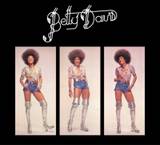
There is one testimonial about Betty Davis that is universal: she was a woman ahead of her time. In our contemporary moment, this may not be as self-evident as it was thirty years ago – we live in an age that’s been profoundly changed by flamboyant flaunting of female sexuality: from Parlet to Madonna, Lil Kim to Kelis. Yet, back in 1973 when Betty Davis first showed up in her silver go-go boots, dazzling smile and towering Afro, who could you possibly have compared her to? Marva Whitney had the voice but not the independence. Labelle wouldn’t get sexy with their “Lady Marmalade” for another year while Millie Jackson wasn’t “Feelin’ Bitchy” until 1977. Even Tina Turner, the most obvious predecessor to Betty’s fierce style wasn’t completely out of Ike’s shadow until later in the decade.
Ms. Davis’s unique story, still sadly mostly unknown, is unlike any other in popular music. Betty wrote the song “Uptown” for the Chambers Brothers before marrying Miles Davis in the late ‘60s, influencing him with psychedelic rock, and introducing him to Jimi Hendrix — personally inspiring the classic album ’Bitches Brew.’
But her songwriting ability was way ahead of its time as well. Betty not only wrote every song she ever recorded and produced every album after her first, but the young woman penned the tunes that got The Commodores signed to Motown. The Detroit label soon came calling, pitching a Motown songwriting deal, which Betty turned down. Motown wanted to own everything. Heading to the UK, Marc Bolan of T. Rex urged the creative dynamo to start writing for herself. A common thread throughout Betty’s career would be her unbending Do-It-Yourself ethic, which made her quickly turn down anyone who didn’t fit with the vision. She would eventually say no to Eric Clapton as her album producer, seeing him as too banal.
In 1973, Davis would finally kick off her cosmic career with an amazingly progressive hard funk and sweet soul self-titled debut. Davis showcased her fiercely unique talent and features such gems as “If I’m In Luck I Might Get Picked Up” and “Game Is My Middle Name.” The album Betty Davis was recorded with Sly & The Family Stone’s rhythm section, sharply produced by Sly Stone drummer Greg Errico, and featured backing vocals from Sylvester and the Pointer Sisters.

Suche:pop da funk
- A1: Hotline - Fellas Doing It In Lagos
- A2: Peter Abdul - Don't You Know
- A3: Steve Monite - Only You
- B1: Oby Onyioha - Enjoy Your Life
- B2: Kio Amachree - Ivory
- B3: Livy Ekemezie - Holiday Action
- C1: Willy Roy - Don't Give Up
- C2: Danny Offia & The Friks - Funk With Me
- C3: Rick Asikpo & Afro Fusion - Too Hot
- D1: Toby Foyeh - Ore Mi
- D2: Gboyega Adelaja - Colourful Environment
- D3: Mike Umoh - Shake Your Body
- E1: Burnis Moleme - Where Is The Answer
- E2: Sony Enang - Don't Stop That Music
- E3: Nkono Teles - Be My Lady (Mix)
- F1: Veno - Groove I Like
- F2: Godfrey Odili - Let's Do More Music
- F3: Terry Mackson - Distant Lover
- G1: Ofege - Burning Jungle
- G2: Lexy Mella - On The Air - Rap Mix(Frankie Francis Edit)
Happy to see the 'Doing It In Lagos' compilation from 2016 on Soundway being repressed. It's one of the few comps out there that put together so many amazing boogie tracks hailing from Nigeria. Nowadays it's really tough to find good condition copies of the original records, and if you do it will cost you a lot of cash too. This 3 LP with 7 inch bonus takes ((arguably) the standout tracks from the LP's and to create this 20 track opus. It's safe to say that it has a great bang for buck ratio if you like that infectious boogie sound infused with catchy synths, bumpin' basslines and often killer drumcomputer programming.
If you are new to these sounds it's a perfect intro into the works by these very talented musicians that had a high output during the end of 70's and 80's, we encourage you to dive deeper into material from the hands of for example Jake Sollo, Dizzy K. Falola, Tony Okoroji, Odion Iruoje, Nkono Teles. You will find many more names along the way..
Compliments for Uchenna Ikonne who co-compiled this and accompanied the release with liner notes.
Wewantsounds is delighted to reissue one of Michel Legrand's best soundtracks composed for the French thriller "La Piscine" (The Swiming Pool), released in 1969 and featuring Alain Delon and Romy Schneider. Legrand penned the score straight after "The Thomas Crown Affair" OST and it features the same ultra cool mix of memorable themes, slick jazzy instrumentals and funky pop songs....
Unidisc 40th anniversary continues with a Saturday Night Band classic featuring brand new Dave Lee remixes!
"Come On Dance, Dance" is a disco funk track by the Saturday Night Band, originally released in 1978. The song features an upbeat tempo and groovy bassline, with brass and string sections adding to the lively and energetic vibe. The catchy chorus invites listeners to join in the dancefloor, with the lead singer's soulful vocals urging everyone to let loose and have a good time. The song is a quintessential disco anthem, with its infectious rhythm and joyous spirit capturing the essence of the era's dance music. "Come On Dance, Dance" has become a classic of its genre and continues to be a popular choice for parties and events.
Dave Lee, also known by his stage names Joey Negro and Jakatta, is a British DJ, remixer, and producer known for his contributions to the house, disco, and dance music scenes. Lee has been active in the music industry since the late 1980s and has released numerous singles and albums under his various aliases.
Throughout his career, Lee has been a champion of disco and funk music, often incorporating these genres into his productions and remixes. He is also known for his expertise in crate-digging and his extensive record collection, which he has used to source samples and inspiration for his music.
- A1: I Wanna Dance With Somebody (Who Loves Me) (Who Loves Me)
- A2: Just The Lonely Talking Again
- A3: Love Will Save The Day
- A4: Didn't We Almost Have It All
- A5: So Emotional
- B1: Where You Are
- B2: Love Is A Contact Sport
- B3: You're Still My Man
- B4: For The Love Of You
- B5: Where Do Broken Hearts Go
- B6: I Know Him So Well
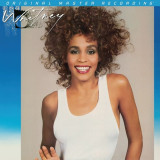
Whitney did more than turn Whitney Houston into a pioneering sensation known around the world by her first name. Originally released in June 1987, the singer's blockbuster sophomore record became the first album by a female artist to debut at No. 1 on the Billboard 200 chart — a position it claimed for a total of 11 weeks en route to selling more than 10 million copies in the U.S. The Diamond platinum effort also contains four No. 1 Hot 100 hits that, when combined with the three chart toppers from her 1985 debut, gave her seven consecutive No. 1 singles — an accomplishment that no other artist has accomplished. Commercially and creatively, Whitney stands on hallowed ground — especially now that the record plays with a sound that puts into perspective just how extraordinary, engaging, and vital Houston's music remains.
Mastered from the original master tapes and pressed on MoFi SuperVinyl at RTI, Mobile Fidelity's 180g 33RPM SuperVinyl LP of Whitney invites listeners to experience the Rock & Roll Hall of Fame inductee's pivotal album in audiophile quality for the very first time. Free of the dynamic limitations and tonal flatness prevalent on prior vinyl and CD pressings, it lets the music breathe and reveals the copious detail, nuance, and texture within the immaculately produced songs. MoFi's SuperVinyl profile offers further advantages in the forms of a nearly inaudible noise floor, dead-quiet surfaces, and superb groove definition.
In addition to featuring extreme clarity and immediacy, this numbered-edition reissue does wonders for the attribute that inspired more than 20 million people around the globe to add Whitney to their record collections: that inimitable voice. Houston's trademark mezzo-soprano — an acrobatic instrument equally capable of taking off on fantastic flights and unwinding for hushed meditations — benefits from the fantastic airiness and transparency afforded by this meticulously restored edition. Whitney has never sounded or looked better. The crossover landmark deserves nothing less.
Issued just two years after Houston's breakthrough debut, Whitney immediately signalled the genre-defying singer's intent to continue to push ahead and expand her palette. Shot by photographer Richard Avedon, the album cover depicts an iconic image of Houston — captured with a gleaming smile, bright eyes, teased-out afro, toned arms, and a right hand that appears to wave a friendly hello — whose active, athletic profile stands in contrast to the extremely formal sit-down shot of her that graces her '85 record. The change is telling: Whitney overflows with unfettered joy, rhythmic vibes, and deep-seated emotions that forever endeared her to the hearts and minds of countless listeners — and which set the standard for the wave after wave of divas that followed in her footsteps.
It's no coincidence that the first track on Whitney is the declarative "I Wanna Dance with Somebody (Who Loves Me)." Like Michael Jackson's "Billie Jean" and Madonna's "Material Girl," the feel-good smash is one of the quintessential '80s gems — a lithe, melodic, celebratory release of pent-up energy and loneliness that glides across club floors, shouts to the rooftops, and shrugs off any concerns about vulnerability or embarrassment. Houston's swooping voice moves in sync with the sleek beats and dipping-and-diving synths. She practically takes her fellow musicians by their hand and leads them in a blissful dance that nobody would dare sidestep. Focusing on Houston's singing — a task made challenging only because of the impossible-to-ignore hooks and grooves — showcases the virtuosic facets of not only her register but her control, discipline, smoothness, and warmth.
That she replicates those feats for the entirety of the nearly 53-minute-long album makes Whitney that much more special. Houston reaches back and channels her childhood gospel training on the R&B-flared "So Emotional"; effortlessly slips into Quiet Storm mode on the duet with her mother, gospel great Cissy Houston, on "I Know Him So Well"; flirts with smooth jazz and collaborates with tenor saxophonist Kenny G on the lush "Just the Lonely Talking Again"; conjures dreamscapes and shadow-boxes with supple funk on a romantic cover of the Isley Brothers' "For the Love of You"; and, for the majestic power ballad "Didn't We Almost Have It All," displays the sky-scraping reach of her vocals amid a grand arrangement made even bigger by Houston's sweeping performance and triumphant finish.
Houston's once-in-a-generation talents weren't lost on the adoring public, radio deejays, or industry experts. In addition to harbouring four No. 1 hits and receiving nominations for four Grammy Awards, Whitney generated another Top 10 success in the guise of the Afro-Cuban-leaning "Love Will Save the Day." The album also netted Houston four American Music Awards; two Billboard Music Awards; back-to-back People's Choice Awards; a Soul Train Award; and various other accolades. It all makes the crux of the Washington Post's July '87 review of the album appear prophetic: "Her voice sounds stronger still and the songs are varied but so consistent she could garner 10 Top 10s out of a field of 11."
That claim still holds true. A brilliant fusion of pop, R&B, smooth jazz, and soul, Whitney is a showstopper – and one of the key reasons Houston is the most-awarded female artist of all time.
Julian Cannonball Adderley's only Blue Note album, Somethin' Else, would likely forever be famous in music lore if just for the presence of Miles Davis. The iconic composer/trumpeter steps into the role of sideman on the 1958 set, one of just a handful of times he'd make such a move after the calendar passed the mid-1950s. Yet evaluating Somethin' Else strictly on Davis' involvement misses the big picture. Plain and simple, Adderley's jubilant work remains a jazz landmark due to the chemistry of its Hall of Fame personnel, enthusiasm of its participants, and sophistication of its arrangements – not to mention the reference-grade production and inclusion of the definitive renditions of two all-time jazz standards.
Limited to 6,000 numbered copies, pressed on dead-quiet MoFi SuperVinyl at RTI, and mastered from the original master tapes, Mobile Fidelity's ultra-hi-fi UltraDisc One-Step 180g 45RPM 2LP collector's edition pays tribute to the record's merit and includes the bonus track "Allison's Uncle." Offering reference-calibre sonics, this spectacular collector's version provides a clear, transparent, ultra-dynamic, and up-close view of a cornerstone effort that witnesses Adderley and Davis sharing horn duty alone for the only time in their fabled careers – an arrangement that occurred as a result of Adderley having joined Davis' majestic sextet a year prior.
The premium packaging and beautiful presentation of the UD1S Somethin' Else pressing befit its extremely select status. Housed in a deluxe slipcase, it features special foil-stamped jackets and faithful-to-the-original graphics that illuminate the splendour of the recording. No expense has been spared. Aurally and visually, this UD1S reissue exists as a curatorial artefact meant to be preserved, touched, and examined. It is made for discerning listeners that prize sound quality and production, and who desire to fully immerse themselves in the art – and everything involved with the album, from the iconic photos to the gorgeous finishes.
The vibrant potency reveals itself openly on an analogue set that provides full-range reproduction of an ensemble that also includes pianist Hank Jones, bassist Sam Jones, and drummer Art Blakey. Each and every snare hit, downbeat, and cymbal splash registered by the latter take on realistic proportions, blooming and decaying as they would right in front of you on a stage. Jones' foundational bass lines register with uncommon depth and palpability, the litheness of the strings and fullness of the instrument epitomizing the definition of rhythm. Stellar, too, are the surefooted 88s. Sublime in scale, tonality, and attack, with the delineation such you can practically separate the white and black keys in your mind. As for that liquid interplay between Adderley and Davis? Breathtakingly lifelike in timbre, naturalism, purity, and presence. This collector's version takes you there – there being Rudy Van Gelder's legendary New Jersey studio in March 1958 to witness it all unfold, again and again.
For reasons that extend far beyond the outstanding playing and flawless repertoire, Somethin' Else is without question a record you'll always want to watch and hear come together. As veteran critic Bob Blumenthal observed writing about the album four decades after its release, "The instant rapport achieved by the quintet is thus the product of much shared and common history, though the tensile strength that they create throughout created a totally unique feeling that can be attributed to the sensitive musicianship of all concerned, including the supposedly hard bopping leader and drummer." Such inimitable feeling, or emotion, courses throughout every passage, and no where more obviously than on "Autumn Leaves" and "Love for Sale."
Without question, the discreet interpretations of the Johnny Mercer and Cole Porter songs, respectively, found on Somethin' Else have long been considered part of jazz's alluring mystique. Adderley and Davis bring contrasting approaches to the table yet sound of a singular mind on "Autumn Leaves," with the latter's muted trumpet and the headliner's lush alto saxophone dovetailing into a performance that endures as a blueprint for expression, counterpoint, sophistication, fluidity, and linearity. Blues, melody, and romance pour from their horns. Their bandmates, picking up on the intimate vibe and calm mood here – as well as on the spry, head-over-heels spirit of "Love for Sale" – join in on the conversation with sharp economy and float-on-air roundedness.
Not to undersell the other three numbers, all deserving five-star status. Twelve measures in length, the title track offers a slow burn in swing. Written by Adderley's brother, Nat, the 12-bar "One for Daddy-O" transmits funk flavors. The closing "Dancing in the Dark" pops with lushness and temptation, its stream of bold colours and understated textures calling for a moonlight twirl, or at least fantasies suggestive of a memorable night. Somethin' else, indeed.
- A1: Don't Stop
- A2: Message From The Other Side
- A3: 3 A.m. At Moëf Gaga
- A4: When The Rain Is Falling ('85 Interlude)
- A5: Talk Too Much (Instrumental)
- B1: Jump In The Water (24-Track Mix)
- B2: Armer Teufel Am Morgen Nach Dem Maskenball
- B3: Close To You ('86 Interlude)
- B4: September Garden (Instrumental)
- B5: Message From The Other Side (Alternative Instrumental Mix)
"Don't Stop" is the third album retrospectively released by Ghia. As the subtitle "Early Works & Artefacts 1984-1987" implies, it features some of their earliest compositions as well as tracks that were recorded during the same period as their "Curaçao Blue" LP.
The album is a fusion of diverse music styles. Listeners will delight in a range of genres, including electro, funk, soul, jazz-funk, synth pop, and even rap/hip-hop, all woven together as a cohesive work that remains mostly instrumental. As a whole, "Don't Stop" represents Ghia's funkiest and most experimental release to date. Notably, the LP features a rap version of Hermann Hesse's controversial German poem "Armer Teufel am Morgen nach dem Maskenball" ("Poor Devil the Morning After the Costume Ball") from 1926, accompanied by a drum machine rhythm and funky guitar. This poem depicts a person who drank too much the night before, telling the story and describing his hangover. The title track "Don't Stop" and the thrilling minimal electro-funk tune "3 A.M. at Moëf Gaga" both evoke old-school electro influences. The latter references the Spanish discotheque Moëf Gaga, located on the Balearic coast, which the dynamic duo of Lutz Boberg and Frank Simon frequented during their 1980s holidays. While the exact music played at 3 A.M. is unknown, listening to Ghia's track will undoubtedly capture the mood of the place.
One of the key tracks of the album is "Message From The Other Side", which could easily be noted as one of the nicest European synth-funk instrumental pieces ever. The track is based on a sick synth bass line, sparkled with DX7 chord hits, funky guitar, and a delightful "marimba" solo in the last third. The solo was actually played on Boberg's keyboard, using a special sound cartridge. This particular track had to be edited and technically revised by Marian Tone and DJ Scientist as the existing demo version of the song could not be used as is. With its stunning groove, this track will surely be a DJ's favorite.
Listening to the complete album, there is more of Boberg's keyboard wizardry: could you believe that the trumpet solo on "Jump In The Water" as well as the short but stunning slap bass solo on "Talk Too Much" were both played by on the DX7? However, this new release, unlike the jazzy "Curaçao Blue", is not about solos or virtuous playing - it clearly shows the duo's direction towards more electronic composition and clear song structures. The versions of "September Garden", "When The Rain is Falling" as well as "Talk Too Much" are actually instrumental mixdowns of vocal songs. And again, we get a blissful take of "Close To You", here a version from 1986. This soulful jazz-funk ballad could already be heard on "Curaçao Blue" while the final vocal version with singer Lisa Ohm can be found on the recently released "This Is" LP. This shows that the Ghia composers, Boberg and Simon, were perfectionists - tracks were reworked again and again, making them better and better.
The album was mastered and restored with great care, and we are pleased to provide you with a perfect example of mid 1980s home-recording pleasures, tinged with a youthful spirit and providing a sound that cannot be recaptured anymore nowadays. Alongside "This Is" and "Curacao Blue" it should be another perfect addition to any 80s groove collection as well as a great pick for DJs that love and play disco, leftfield electro and funk. The LP is limited to 500 copies.
The collaboration between Klara Lewis and Nik Colk Void somehow seemed inevitable. Both artists having seen their releases published by Editions Mego, individually carving out idiosyncratic voices in the worlds of extreme, abstract electronic music. With Full-On, Lewis and Void explore and assimilate the very edge of their individual practice where a unique collaborative interface allows two voices to combine and morph into a third voice.
Lewis and Void play ping pong with the conversation of sounds, generating ideas and bouncing them off each other, simultaneously encouraging the other to go further with their ideas opening up an opportunity to engage with previously unexplored terrain. Guitars, synths, euro rack modular systems, voice, sampling and outboard processing are folded in a playful unification with a propensity to tease, explore and extract new ideas and shapes, sometimes brutal, sometimes playful.
Trust was also a compositional tool allowing instinct to freely move on any aspect of the sound and space. This sound/feeling/instinct/association let this wild and wonderful material grow organically into something new.
The result of this exploratory interplay are 17 intense miniatures reveling in the process of unadulterated experimentation and whimsical interplay, not just between the humans, but the machines themselves. United in an endless series of sonic U-turns, this daring duo intertwine pop and noise whilst also bringing together visions of tender techno and forthright ambient.
The various zones which manifest from all this reveals vocals shifting in mysterious ways, dust drenched beats churning limpidly and devilish string loops navigating a disorientating domain. The experience of listening to Full-On is to be confronted with a range of ideas resulting in a platter of emotions. A place where beauty and the beast collide with the impulsive and outright weird. What a wonderful world.
Codek is the brainchild of Jean-Marie Salaun who grew up in Paris influenced by the folklore of the inner city. In 1978 he joined art rock group SpionS and collaborated with Robin Scott (M 'Pop Music'). He began working as Codek, a play on the brand name Kodak with the 'Me Me Me' single released in 1980. In 1981 the 'Tam Tam'/'Closer' single was released on West African Music, a tiny label from the Ivory Coast, and re-released a year later by Island Records in the UK (where the B-side was re-named 'Tim Toum'). 'Tam Tam' was inspired by Burundi drummers playing in the plaza in front of Beaubourg where the song was recorded. Jean-Marie enlisted one of the drummers from the circle, Georges Atta Dikalo, to lay down percussion for the song. The female singers were from the French Caribbean and added falsetto tribal chants. Claude Arto achieved complex rhythmic patterns using a modular synthesizer and heavy processing. Jean-Marie recorded himself beating his chest for the thump noises. The recording of spanned over two years. They started on 16-track in Studio d'Auteuil, where Jean-Marie blew the woofers, before resuming in Studio Centre Georges Pompidou with an added 8-track recorder.
In 2017 we reissued the 'Tam Tam'/ 'Closer' single and shortly after the 24-track master tapes were discovered in Paris by original engineer Gérard Chiron. We arranged for graphic designer Maycec to pick up the tapes and immediately began to think of remixers for this project. First up is producer and DJ Daniele Baldelli who gave the original single a spiritual home in the Cosmic 80s scene of Italy. Here he's teamed up with Marco Dionigi for two remixes. Remix A goes full on funky disco baseline while Remix B a more balearic affair. We remember Justin sharing a memory of DJing the original Island Records promo at the Mudd Club in 1981 so we had to ask him for remix. He teamed up with his Whatever/Whatever production partner Bryan Mette and delivered an hypnotic pulsing house remix and an extended edit. All songs have been mastered for vinyl by George Horn at Fantasy Studios in Berkeley. The jacket is new twist designed by Eloise Leigh on the 1981 edition artwork by Angela Boy, inspired by primitive electronics and African paintings.
Fünftes Album von Holy Wave aus Austin, Texas. Im Tarot steht die Karte der Fünf Kelche für Verlust und Trauer. Die Karte zeigt eine verhüllte Gestalt mit gesenktem Kopf, die über drei verschüttete Kelche blickt, während sie die beiden verbleibenden Gefäße ignoriert. Die Fünf Kelche wird im Allgemeinen so interpretiert, dass sie ein verzweifeltes Verharren in der Vergangenheit und die Unfähigkeit darstellt, die positiven Dinge der Gegenwart zu schätzen. Die Tarotkarte wurde zur Muse für das sechste Album von Holy Wave, "Five of Cups". Zu Beginn ihrer Karriere lehnten sich Holy Wave in ein ruhiges Reich der Psychedelik zurück und verzichteten auf lange Jams und Gitarren-Heldentaten zugunsten eines verträumten Pop-Ansatzes. Als sich die Band weiterentwickelte, wich der frühe Sgt. Peppers-meets-the-Velvets-Sound ausgefeilteren Melodien und einer ausgefallenen Instrumentierung und lenkte ihre Musik weg von sonnengebleichter Nostalgie hin zu einer farbenfrohen Dimension, in der sich Klänge der Vergangenheit, Gegenwart und Zukunft vermischten. Wie Pink Floyd in den frühen 70er Jahren haben Holy Wave es verstanden, auf ihrem neuen Album aus dem Pathos ein Gefühl tiefer Erheiterung zu zaubern, indem sie dunkle Elemente durch eine Linse filtern und sie in ein Kaleidoskop des Lichts verwandeln. Five of Cups eröffnet mit dem Titeltrack, der von Anfang an den auditiven und thematischen Modus Operandi des Albums festlegt. Die lysergische Texturpalette von Holy Wave wird sofort in den wabernden Synthie-Leads und dem Gitarren-Jangle des Songs deutlich, aber die untypischen Akkordfolgen und die Gesangsmelodie lenken die Musik weg vom anodynen Eskapismus hin zu einer nachdenklichen Auseinandersetzung zwischen Selbstbestimmung und Defätismus. Holy Wave reiten weiter auf dem wehmütigen und phantasmatischen Zug von "Bog Song" und schwanken zwischen Anschwellungen von strengen Moll-Akkorden und überlagerter elektrischer Orchestrierung. Die zuvor veröffentlichte Single "Chaparral" spielt mit der Nostalgie der Band und verwebt Verweise auf ihre Vergangenheit in El Paso zu einem Teppich des transzendentalen Triumphs. Wie so oft bei klassischer, albumorientierter Rockmusik entfaltet sich die wahre Magie erst in der zweiten Hälfte von Five of Cups. Auf "The Darkest Timeline" rekrutieren Holy Wave ihre Freunde Lorena Quintanilla und Alberto Gonzalez von dem Psych-Duo Lorelle Meets The Obsolete aus Baja California, Mexiko, um ihren berauschenden After-Mid-Night-Grooves zusätzliche ätherische Schichten hinzuzufügen. "Nothing in the Dark" funktioniert nach einem ähnlichen Prinzip, wobei ein gleichmäßiges, treibendes Schlagzeugmuster als Fundament für bandverwaschene Synthesizer, arpeggierte Gitarrenakkorde, Fuzz-Sounds und ruhige Vocals dient. Die Überlegungen von Five of Cups zur Bekämpfung von Niederlagen und Enttäuschungen werden im letzten Stück des Albums, "Happier", direkt aufgegriffen. Wieder einmal auf der melodischen Linie zwischen Melancholie und luftiger Raffinesse, untersuchen Holy Wave das synthetische Konstrukt des Glücks in unserem modernen Zeitalter und wie oft die Erlangung von Komfort jegliches wahre Gefühl von Freude vermissen lässt. Dennoch ist dies kein nihilistisches Klagelied. Vielmehr ist es eine beschwingte Erinnerung daran, dass die Bandbreite menschlicher Erfahrung von Natur aus Höhen und Tiefen erfordert und dass Euphorie oft in der Suche außerhalb des Vertrauten zu finden ist.
After taking time out from working together to focus on separate musical projects, maverick composer Alan Roberts (Jim Noir) and crowd-rousing vocalist Leonore Wheatley (International Teachers of Pop / The Soundcarriers) have re-joined forces to introduce Co-Pilot. Each the other’s wing person, they’re plotting an escape through Manchester’s claustrophobic grey skies with the pencil case colour of a hand-sewn multi-coloured primary school patchwork quilt. “We are both the creators in charge of navigating Co-Pilot’s overall sound which changes from track to track,” Leonore hints at what to expect. “There are about 6 different genres on one album, it's a pick n mix record!”
Happy in the haze of many boozy hours the album was recorded over just a few months whilst holed up and hanging out in Al’s city centre Dookstereo studio. The former Mill allowed the pair to relax, laugh and create without constraint. Armed with their original demos and vocal recordings from Al’s flat, they’d nip by the offie to pick up some Dutch courage before setting to work: building arrangements from a drum beat and basic chord pattern, the pair were so in tune they rarely spoke, allowing only the music to lead the way. “We’d communicate through nods of agreement or grimaces of dismay,” Leonore recalls. “Using the instruments with Al in production mode, we let the sound dictate the process whilst being drunk enough to follow it.”
The sound of life coming full circle after honing their separate crafts, Leonore had previously played keys and vocals in Jim Noir’s live band before moving on to front International Teachers of Pop for two critically lauded albums of joyous dancefloor filling bangers - their self-titled debut (2019) and Pop Gossip (2020). During that time Al would further expand Jim Noir’s universe with AM Jazz, which was celebrated as the no.1 album in Piccadilly Records’ ‘End of Year Review’ (2020), followed by the Deep View Blue E.P. (2021) cementing his status as one of Manchester’s finest songwriters.
As Leonore added her vocal magic to Al’s early demos of what would eventually become Co-Pilot’s ‘Spring Beach’ and a crooked original version of closing track ‘Corner House’, the vibe was prophetic “like the ending of Grease as Danny and Sandy take flight through the clouds”, letting their imaginations fly. The songs were the catalyst to spark a new phase of the pair working together, picking up where they left off. “From messing about with sounds during rehearsals in the very beginning it was always clear we liked the combination of sounds we made,” Leonore recalls.
Powered by a ‘try anything’ approach, Co-Pilot blends the musical DNA of what you’ve come to expect from each of the pair’s previous flight paths. “Whatever is switched on or nearby gets used. There's no 'correct' for us. If it sounds good, record it,” Al tells. United through typically turbulent wonky pop and lurking samples, whether culled from 70s TV themes or recreations of past and found sounds (see Al’s 60s tropicalia guitar on ‘Brick’, or the innocent ‘Swim to Sweden’ which opens with an ice cream van jingle Al recorded from his bedroom window) their process offers up a bucket load of Easter eggs. The album even features snippets from dearly departed pal Batfinks whilst ‘Motosaka’ is perhaps the most expensive 2-minutes on the album, featuring a Columbia Records Japan-cleared sample of Ryuichi Sakamoto’s ‘Thousand Knives’. Its synth squelches and Tom Tom Club funk also received the blessing of Haroumi Hosono, Godfather of Japanese Electronica, who agreed to being sampled in an original version of the song. “We just kept listening back and hitting gold,” Al recalls. “I was thinking ‘yeah, not sure what this is but I like it! We were buzzing with what we had made.”
But the sound wouldn’t come without self-imposed instrumental challenges. Thanks to an old mellotron sample on ‘Move To It,’ the moog riff and nautical accordion breaks on ‘Swim To Sweden’ and the 6/8 and 7/8 jaunt of ‘Brick’, time signatures were lovingly skewed to create Co-Pilot’s unique mood. “It was a bastard getting the drums right,” Leonore reveals, “but I like the wonkiness”. Levelling up through the lyrics, the words of smoky and evocative ‘She Walks In Beauty’ are based on a Lord Byron poem, with the sentiment of remembering Leonore’s late grandparents. “I wanted to see how much I could get away with just singing on one note, and how I could harmonically change everything else around it vocally,” she says. Elsewhere ‘Can You See’ was written from the perspective of a concerned sister to a brother which tells of keeping someone safe. “The lyrics are quite metaphorical about day-to-day happenings, people loved and lost. Others are rhythmic nonsense! It’s up to the listener to figure out what’s true.”
It’s clear from Al’s productive production techniques and Leonore’s knack for vocals and lyricism, Co-Pilot’s course is engineered by two aeronautically adept sonic storytellers. “We share a pretty similar sense of humour,” Al tells, “It is funny listening to this quite serious album but knowing we were giggling as we recorded it all. It’s been great to have another brain to bounce off.” Their destination might be unknown, but the clouds are about to part for a sound that is light years ahead. “You'll like at least one song,” Leonore suggests, “and hopefully them all.”
Betty Davis was a musical maverick with vision. Image, substance, sex, and grit combined with a badass band that could deliver the funk bed backbone to the sultry music between the sheets. After cutting two notorious discs for the Just Sunshine label (Betty Davis and They Say I’m Different), and Nasty Gal for Island Records, Davis went to work on her most personal and expressive record yet. After capturing 10 hard-hitting tracks in 1976 at the remote Studio In The Country (Louisiana), a creative difference with her then label caused the platter to be unexpectedly shelved. Davis would cut one final album and soon retreat from the music business, completely disappearing from the public eye.
Is It Love Or Desire is a little-known gem in the Davis catalog. Mastered from the original tapes, and untouched for over 30 years, this release features detailed liner notes, the originally intended artwork housed in a lavishly packaged digipak, rare photos, archival material, and recent interviews with Davis and her skin-tight band Funk House.
Never bootlegged, never released, never heard until now, the secret story of this lost album will finally enter the history books and cement this bold soul sisters contributions to music and popular culture. Its time to get down…
- A1: Last Broadcast
- A2: Step Outside
- A3: Morning Haze
- A4: Broken Sleep
- B1: Long Highway
- B2: Rolling On
- B3: There Only Once
- B4: Out Of Place
- C1: Signals
- C2: Rise And Fall
- C3: Hideaway
- C4: Celeste
- D1: Long Highway (Inst.)
- D2: Out Of Place (Inst.)
- D3: There Only Once (Inst.)
- D4: Last Broadcast (Alt. Mix)
- D5: Celeste (Alt.mix)
Black Vinyl[26,85 €]
There's something intangible about Celeste, the Soundcarriers’ second album, originally released in 2010. It has a light, lucid quality, almost like driving exhausted through a strange city at night. Freeflowing yet tethered, dreamy yet attacking, the band continue the fight to reconcile competing impulses. Various threads just about keep the shimmering tapestry from tearing. Haunting folk melodies underpinned by rhythmic static and the physicality of the totally analogue recording and mixing, baroque keyboard counterpoints and sweeping arrangements. The opener “Last Broadcast” seems to encapsulate this but it's almost as if the album gets the angst out of its system with this track and is free to explore the quieter, less crowded back streets. After the smoke of “Last Broadcast” has cleared, the twisting road takes in the soft introspection of “Hideaway” and “Morning Haze”, both tracks morphing into heavy psyche grooves or the eastern tinged psyche funk of “Signals” and “Rise And Fall”. Or takes another turn with the tightly arranged opening segment of “Long Highway”. Somehow it still manages to fit in ‘60s pop gems like “There Only Once”. An album to really lose yourself in, yet more concise than the sprawling Harmonium and more relaxed and freeflowing than the nervy rush of Entropicalia, Celeste could be arguably their most indispensable album and not to damn it with faint praise, their most listenable.
Rare Detroit Jazz-Funk Fusion Album from 1988.
Wendell delivers a unique and different sound compared to his earlier body of work.
First ever vinyl reissue. Mastered on 45 RPM for an optimal audiophile experience.
Featuring an all-star line-up including Tribe alumni Marcus Belgrave & Duke Billingslea.
180g BLACK vinyl limited to 500 copies (w/obi strip). Non-Returnable.
Wendell Harrison was born in Detroit in 1942 where he began formal jazz studies for piano, clarinet and tenor saxophone. At 14, while still in high school, Harrison started performing & recording professionally with artists such as Marvin Gaye, Grant Green, Sun Ra, Hank Crawford … and many others.
In 1971, Harrison began teaching music at Metro Arts (a multi-arts complex for youth) where he also connected with Marcus Belgrave, Harold McKinney and Phil Ranelin…soon after they formed the (now legendary) Afro-centric TRIBErecord label and artist collective. TRIBE used the Metro Arts complex as a vehicle to convey a growing black political consciousness. Wendell Harrison also published the very popular TRIBE magazine, a publication dedicated to local and national social and political issues, as well as featuring artistic contributions such as poetry and visual pieces.
In 1978 Harrison and McKinney co-founded REBIRTH, a non-profit jazz performance and education organization, in which many notable jazz artists have participated. Around the same time Wendell Harrison also created the WENHArecord label and publishing company, which released many of his (now classic) recordings as well as those of other artists, such as Phil Ranelin, Doug Hammond and Reggie Fields (The Real ShooBeeDoo).
In the early 1990s, Wendell Harrison was awarded the title of “Jazz Master” by Arts Midwest. This distinction led Harrison to collaborate with fellow honorees and gave him the chance to tour throughout the United States, Middle East and Africa. Even to this day Wendell Harrison’s recordings for the TRIBE, WENHA and REBIRTH labels have a large worldwide fanbase.
It is on REBIRTH that Harrison released the opus: THE CARNIVOROUS LADY (1988), which we are proudly presenting you today.
‘The Carnivorous Lady’ is a monster of an album featuring an all-star line-up that includes Marcus Belgrave (Ray Charles, Houston Person, Charlie Mingus) on guitar, Duke Billingslea (Martha Reeves) & Pamela Wise (Tribe) on keyboards, Larry Fratangelo (Fred Wesley, Dennis Coffey) on percussion and Shirley Hayden (Parliament/Funkadelic) on vocals.
On this fantastic sounding album (produced by the maestro himself) the listener is invited to experience a synthesis of what has been and what is now. The record shows Wendell’s trademark proficiency on saxophone, flute and clarinet. Although you can hear the 80ies creeping in with a smoother fusion sound, infectious boogie synths, R&B vocals and a lot of mind-blowing Jazz-Funk percussions…this album remains a very spiritual (and soulful) hard bop jazz record. From the first to the last note you get an irresistible blend of so
Wildfire was a household name in Tropical Island music circles due to their excellent albums and performances throughout Trinidad, Tobago, the Caribbean & US Virgin Islands and French Guadeloupe. In 1962 they started off as ‘The Sparks’ (a well-respected Calypso outfit who released a bunch of successful singles) but with the release of their hit single ‘Come On Down’ from 1975, they exploded into Wildfire.
Wildfire had a very fruitful career and released four top full-length albums and a vast amount of singles before calling it quits. Led by bandleader Oliver Chapman (bass & guitar player, vocalist, arranger, producer and co-writer for the majority of the bands’ songs) and comprised out of high talented musicians, Wildfire was out there with the big boys in the niche they carved out for themselves.
On the album we are presenting you today (Time Is The Answer from 1980) you’ll find the perfect mix of funk, soul and disco, basically the popular sounds of the day, and all tracks are originals. The album is FUNKY and the production quality can rival with any of their peers and records produced/recorded in the US. The performance of Wildfire on this album is beyond excellent. This release was also the first time the group took control over production and getting their album out in the world. Also included is the hit single ‘Say A Little Prayer For The Children’ which is just one of those songs that will be stuck in your head forever.
Besides virtuoso Oliver Chapman: the talent that was featured on ‘Time Is The Answer’ is exceptional. Anstey Hamilton carries around a rich noticeable tenor voice. Arthur Byron who also did vocals on the album, has a beautiful rasping tone that can knock you out anytime he gets into his act. Fitzroy Isaac on keyboards and Donald Leid on drums are the guys that were responsible for keeping the groove tight. Clifford Wilson like Oliver had been with band since the start. He is calm in his approach, he played the bass guitar and sung background vocals, he also chipped in with Oliver whenever they wrote songs together. Finally we have Cyllan Charles, who was known as the Wildfire voice. Cyllan had been doing most of the lead vocals since he joined the group in 1972, he was the most experienced of all the members, and can really take you to higher heights anytime he gets into doing his thing both on stage and on wax.
“Time is the Answer" by Wildfire is a scarce and increasingly sought-after LP. Filled with hit-bound songs it comes as no surprise that the album has now become a much-wanted item due to its addictive and original-sounding nature. This is a must-have for any self-respecting record digger!
- A1: Curtis Mayfield - Move On Up
- A2: Marlena Shaw - California Soul
- A3: James Brown - The Payback Pt. 1
- A4: Bill Withers - Use Me
- A5: Minnie Riperton - Inside My Love
- A6: Sly & The Family Stone - Stand!
- A7: Bobby Womack - I’m A Midnight Mover
- A8: The Delfonics - Ready Or Not Here I Come (Can’t Hide From Love)
- A9: Gil Scott-Heron - The Revolution Will Not Be Televised
- B1: Marvin Gaye - What’s Going On
- B2: Wilson Pickett - In The Midnight Hour
- B3: Ike & Tina Turner - Workin’ Together
- B4: Clarence Carter - Patches
- B5: Jerry Butler - Never Give You Up
- B6: Irma Thomas - Anyone Who Knows What Love Is (Will Understand)
- B7: Willie Hightower - Walk A Mile In My Shoes
- B8: The Isley Brothers - That Lady Pt. 1
- C1: Fontella Bass - Rescue Me
- C2: Otis Redding - Fa-Fa-Fa-Fa-Fa (Sad Song)
- C3: Donny Hathaway - The Ghetto Pt. 1
- C4: Smokey Robinson & The Miracles - I Second That Emotion
- C5: Aretha Franklin - Chain Of Fools
- C6: The Impressions - People Get Ready
- C7: Odetta - Hit Or Miss
- C8: The Brothers Johnson - Strawberry Letter 23
- D1: Isaac Hayes - Walk On By
- D2: Solomon Burke - Everbody Needs Somebody To Love
- D3: The Staple Singers - The Weight
- D4: The Temptations - War
- D5: Freda Payne - Band Of Gold
- D6: James Carr - The Dark End Of The Street
- D7: Etta James - I’d Rather Go Blind
- D8: Lamont Dozier - Fish Ain’t Bitin
Soul music originated in the African American community throughout the United States in the late 50s and 60s. Having its roots in African American gospel music and rhythm & blues, it became popular for dancing and listening with prominent record labels as Motown, Atlantic and Stax.
On this 2LP compilation classic soul songs by Curtis Mayfield, Marlene Shaw, Bill Withers, and Aretha Franklin are paired with funky soul stompers by James Brown, Sly & The Family Stone, The Isley Brothers, and poetic soul by Gil Scott-Heron, Marvin Gaye, The Impressions and many more influential artists and groups.
Soul Collected is available as a limited edition of 2000 individually numbered copies on yellow (LP2) and orange (LP2) coloured vinyl and includes an insert.
Heels & Souls Recordings step back to 1988 for their sixth reissue, relicensing and remastering Flair's anthemic soul number 'Chasin' The Rain.' For the uninitiated, strap yourself in for six blissful minutes of heavy bass licks, soaring vocals, and infectious synth lines.
Consisting of Janet Rose (aka UK Soul queen JB Rose), Joe Matz, Peter Bielig, and Peter Shindler, Flair was a predominantly German affair, with Rose being the only UK band member and Bieling living in London during the late '80s. This is a curious detail considering 'Chasin' The Rain' is often lauded today as a UK Soul classic - partially due to its release on the prolific UK label Champion. However, it's squeaky-clean production values, and the fact it was mixed and mastered at the famous Jankowski studio in Stuttgart by three Germans, reveals a somewhat different story.
The track has that UK street soul heavy low-end, but with a synth-pop flavour sprinkled in the mix - swinging synth lines and gated snares aplenty. Yet from chatting to Peter Bielig, who's been instrumental in getting this record reissued, the sounds sweeping across the Atlantic from the likes of Jam and Lewis, who blended R&B, funk, soul and pop, were clearly a big influence too.
Those were heady days for four young twenty-something musicians, with Peter recalling cherished memories these tracks bring back, telling of his and JB's PA sessions at London's Gulliver's nightclub. However, while 'Chasin' The Rain' had all the hallmarks of a chart-breaking hit, Champion prioritised other projects and the record never broke. Sadly the group disbanded after only two releases, and this musical gem was consigned to the crates of those in the know. Soon after, Peter Bielig went to Jamaica to work at Tough Gong Studios, working on albums for Rita Marley Music. He now lives in Brazil, producing local artists in his studio in Salvador.
Unfortunately, the master tapes were nowhere to be found, so we had the maestro, Sean P, rip and restore a mint copy of the record, with award-winning mastering engineer Cicely Balston working her studio magic for that added punch.
Indonesian City Sound: Panbers’ Psychedelic Rock and Funk 1971-1974
The Pandjaitan Brothers or Panbers came from the North Sumatra minority Christian group, the Bataks, whose ancestry traces back to an island at the center of Lake Toba. As a minority group within Indonesia's Muslim-dominated society, this ethnic minority has produced top military generals, celebrity lawyers, and a legion of pop and rock superstars.
Suffice to say, some of the biggest names in the country's pop history were Bataks. Panbers fit the bill perfectly.
The band's strong Christianity belief looms heavily in the music they produce. The prominent use of the Hammond organ in their early materials is evocative of church music the band members have been around in their whole life. Bandleader Benny Pandjaitan's fills his characteristic wail with existential dread, with many utterances of the word "mengapa" (why).
Guilt is another central theme Pandjaitan repeatedly comes back to in his lyrics. But they balance it with joy, on songs such as "Come on You Dance" "Let's Dance Together" or "Haai" (a play on the word high), where references to recreational substances are plentiful.
Although they modeled themselves after the era's rock bands Beatles and fellow countrymen Koes Plus, Panbers had a unique aversion to the electric guitar. In "Jakarta City Sound," a fiery three-note guitar solo is laid so far down in the mix that they are barely audible. In "Haai" they modify the guitar to sound like a jungle instrument playing traditional North Sumatran music. In "Rock and the Sea," arguably their most well-known song globally, they decided to ditch electric guitar altogether and replace it with a sitar.
In the absence of an electric guitar, Panbers had to rely on Doan's inventive bass playing and Asido's drum works to do the heavy lifting - and boy, do they deliver (Their 1971 debut "Volume 1" saw plenty of drum breaks). In this compilation, listeners will hear recordings from Panbers' fertile four-year period - a time that produced in some of the grooviest and hardest-sounding psychedelic music in Indonesia's rock history.
For those uninitiated on the glory Panbers, consider this compilation an introduction to some of earliest and heaviest rock sound to come out of Indonesia.
Shapes of Rhythm is proud to present the self-titled debut LP of Turkish psychedelic pop from MLDVA & Çınar Timur. This record is a celebration of the classic music and culture typically of the 70s and 80s, but which also leans into western jazz funk and soul jazz moments. If you're into the Turkish music legends of the 70s and 80s such as Barış Manço and more recently Altın Gün or Derya Yıldırım & Grup Şimşek, you've come to the right place.
MLDVA were formed in Krakow, Poland in 2013 as a DJ and production outfit. Under the influence of Greek and Turkish folk and psych-rock music they began to transform into a band, taking up instruments including the Saz which is one of the most recognisable trademarks of the Turkish sound. Two years later in 2015 they invited Turkish instrumentalist Çınar Timur to join them and this completes the line up on their debut. This electric album is packed with excellently-recorded expansive tracks which are full of energy, psychedelic deep grooves, hard-hitting breakbeats and everything else you'd expect with classic Turkish sounds.
The instrumental double-header of Neşat Erkaş' Zülüf Dökülmüş Yüze, moving into the time-honoured traditional Kozan Dağıis the perfect opening track. The introduction is an overture of sorts with two minutes of Çınar Timur's pondering guitar. This tees up the record perfectly before heading into a break-beat driven workout with the band matching Çınar's evocative and energetic riffing. The result is a tight sound and a heavy groove that sets the tone for what's to come.
With the band unveiled, Sarı Çizmeli Mehmet Ağa, written by Barış Manço (a legend in Turkish popular music), hits a relaxed, deeper and more psychedelic groove, dominated by Wojciech Długosz's dreamy Rhodes piano, set against choppy wah-wah guitar licks that characterize that classic electric Turkish pop sound. We're introduced to Ulaş Çıbuk's vocals for the first time, telling the historic tale of a charitable village lord Mehmet Ağa from 19c Anatolia known for his generosity. He shared his fortune with people inneed and as a result, died penniless. This track also features the unique sound of Çınar's Mictrotonal electric guitar.
Bir Adım Öte is MLDVA & Çınar Timur's magnificent mellow moment, marking the halfway point in their debut. The group shows that it's not all about the frenetic in a nod to western Soul-Jazz constructs. They showcase restraint, emotion and that joy in repetition of a wonderful guitar refrain. Not content with holding this down, Wojciech Długosz's Rhodes solo steps into a world that's US-influenced Soul jazzand is a lesson in reduction and feeling. Çınar Timur then takes a solo turn, keeping it western-influenced with an on the spot improvisation. When the three minutes of solos are over, we're brought back out of thedream and towards the East again.
Adımız Miskindir Bizim kicks off like a hip hop/funk crossover tune, until the chord changes muscle in, to remind you where you are in the world. As with other tracks on the debut, the tune is marked by recurring motifs, this time from Çınar's microtonal electric guitar. We've more solo Rhodes action, thist ime busier and more urgent. The lyrics–originally written by Yunus Emre – criticizevalues such as holding grudges that destroy ideas of love, friendship and peace among people which causes hostility. Adımız Miskindir Bizim concludes with an uplifting vocal vamp which switches it up unlike any of thetracks on the LP.
In Fesupanallah– made most popular by Erkin Koray – Ulaş Çıbuk sings about the simple subject ofbeing patient with never ending problems in life, and trying to find a solution for them. This cut takes a rhythmical side-step to the rest of the album. The kick drum maps out a solid four-four, but the vocals and guitar lines move around it to impose Fesupanallah as being the record's most traditionally Turkish-sounding cut.
The album's closing track Ölüm Allah'ın Emri (another Manço classic) was recorded live in the band's more familiar surroundings of Krakow's Cheder Cafe during 2020's Jewish Culture Festival. The lyrics tell the tale of someone who has accepted death but cannot accept the separation that comes with it. We open with a dreamy, psychedelic mood before progressing into a heavy-riffing rock feeling with probing synths. Ulaş delivers his vocals over the top of a stripped back, shuffling groove. As the track progresses towards a frenetic conclusion, drummer Szymon Piotrowski cuts loose, combining with Grzegorz Dąbek's synth lines.
MLDVA & Çınar Timur's debut LP is not the sound of a band starting out. Taking time to hone their craft and let influences across the global spectrum of music mature, this is the result of years of jamming, gigging and collaborating. Now, after prestigious festival appearances and their place on Saz Power – an essential modern Turkish music compilation – they're making a lasting contribution to a rich, time-honored culture. MLDVA & Çınar Timur releases Friday 30 June 2023 on limited edition vinyl LP and digital download/streaming services on Shapes of Rhythm. Global distribution by Kudos Records.
Keni Burke's seminal Changes yielded the eternal club classic "Risin' To The Top". You need this record for this iconic steppers anthem alone. However, it's crucial to acknowledge that the whole of Changes, first released in 1982 on RCA but now a tricky one to find, is something truly special. It's a masterpiece of sophisticated 80s groove, containing first class funky soul that sounds as fresh as ever. This is multi-tempo soul music conceived in heaven.
Ace bass player, songwriter, arranger and producer, Keni Burke was discovered by Curtis Mayfield and a childhood member of the Five Stairsteps. Emanating from that magical 81-83 era and pristinely recorded at Philadelphia's legendary Sigma Sound Studios, his third solo album Changes really perfected Keni's groove. It incorporated tight, snappy rhythm arrangements which, despite the era, featured *real drums* courtesy of Steve Ferrone (from Average White Band) to compliment Keni's meaty bass lines. With Dean "Sir" Gant on synths and keyboards and Ed Walsh handling the Vocoder-OBX and Prophet 5, wonderful lines from Earth, Wind & Fire's legendary horn section and hooky rhythm and lead guitar riffs courtesy of Ed "Tree" Walsh, Keni was truly spoiled for excellence. With Doc Gibbs on percussion and Vince Montana on vibes elevating the sensational writing and arrangements, Keni couldn't really go wrong.
“Risin’ To The Top” is undoubtedly the defining crown and lasting legacy of this album. Wth its instantly captivating bassline, slowly creepin' groove and uplifting lyrics, it was a favourite among both the 80s soul steppers and hip-hop crowd and remains canonical to this day. Written by Burke, Allan Felder, and former Chic member Norma Jean Wright, it incredibly failed to garner much American radio play or really trouble the soul charts. Whilst it was an instant classic in the U.K., in the States it took the hip-hop generation and later R&B and hip-hop samples of the tune to finally make it popular, many years later. Of note, Big Daddy Kane sampled it for "Smooth Operator", LL Cool J for "Around The Way Girl", Pete Rock & CL Smooth for "Take You There" and O.C. with "Born 2 Live".
But the highlights are not restricted to this one behemoth. For example, the track which precedes "Risin'" on Side B is another steppers favourite. "One Minute More" is a perfect mid-tempo ballad and the epitome of deep modern soul. A truly timeless work of genius. We, for one, struggle to think of a better song segue than the moment you're still reeling from the intense beauty of "One Minute More" and "Risin'" elegantly stirs into action. Frisson in excelsis. The propulsive, bass-heavy opener "Shakin" is an indisputable cracker and its followed by the timeless mid-tempo class of "Hang Tight". Just gorgeous. Next up, "Can't Get Enough" is another emotional, horn heavy chugger. The side closes with the sparse, tender, floating sl-o-o-w jam "Who Do You Love"; a truly divine ballad. The B-side beings with the title-track, "Changes", a squelchy, melodic boogie banger with fantastic keys, incredible vocals, ace shuffling percussion and spacey synths. It's followed by the ultimate one-two in "One Minute More" and "Risin'" before this sensational set closes with the glorious easy glide "All Night".
An absolutely essential record for fans of deeply soulful modern-funk, Changes was mastered for vinyl by Simon Francis and cut by Cicely Balston for Alchemy at AIR Studios. The artwork was restored at Be With HQ over many painstaking months so, hopefully, this fresh new edition ensures this long-lusted after album is no longer so awkward to find.