For many all-time-great rock bands in the ascendant, the fourth album is often the point where youthful years of febrile creativity and progressive momentum culminate in a masterwork for the ages, setting the seal on an early signature sound while opening it up to future possibilities. From enchanting 2016 debut Prelude, through 2018's assured II: Sojourn, to 2020's wizardly III: Pentecost, each Wytch Hazel album has embodied that old-fashioned notion of unstoppable progress, and the glittering treasure chest that is IV: Sacrament proves eminently worthy of rising to the toughest challenge. Not just the Lancashire quartet's most classically beautiful production, but their strongest yet front-to-back collection of affecting hooks and ageless melodies.
Buscar:pos
- A1: Free State Fence
- A2: The Surfer
- A3: Prayer For Civilisation
- A4: Hillbrow 1
- A5: Hillbrow 2
- B1: Hippo In Town
- B2: Independence Day
- B3: Don't Dance
- B4: Crossed Cheques
- B5: September 1984
This is an album made during a crucial period in South Africa’s history during which there was a palpable feeling of a slow turning towards the collapse of the apartheid state side by side with an increasingly well-organised culture of resistance through the formation of the United Democratic Front (UDF) and various affiliated bodies. However, as a result, there was increased pushback from the state security establishment, a turning to dirty tricks and the formation of hit squads whose members murdered and tortured many of our friends and created chaos throughout South Africa as well as neighbouring countries.
This album is situated in this political environment however it took advantage of the new do-it-yourself music technologies available at that time. Technologies that made it possible to make and release records without interference from traditional record company executives. Two musician friends of mine pooled their resources after their respective bands had broken up. Ivan Kadey (National Wake) and Lloyd Ross (Radio Rats) built an 8-track recording studio control room and fitted it out in a second hand caravan and called it Shifty. They parked it in a garage attached to the only house left in a demolished and derelict mining village near Soweto on the outskirts of Johannesburg.
All the work on this album was completed there, mainly after hours and mostly alone where I enjoyed an exhilarating freedom to develop a whole new set of musical skills and ideas, incorporating my love of a wide range of music I’d grown up with. Influences of 1970s progressive/kraut/and psychedelic rock combined with mbaqanga bass styles, early reggae/dub and Indian tabla rhythms. Stockhausen, early Zappa and Holgar Czukay were radio text and shredding influences, and Chris Cutler’s band Henry Cow & Art Bears helped me see a way to political expression. Mostly though was the exciting post-punk and no-wave music coming through to us from Europe and America: bands like This Heat, the Mekons, Raincoats, Sonic Youth and Pere Ubu were immensely important to me as was my reading from the period: J.M.Coetzee’s first 3 novels are strong influences on Free State Fence; the stark landscape, superstition, ritual, and sexual repression are in many of his settings. JG Ballard was a constant presence throughout that period, especially whilst living in such a surreal environment, surrounded by mine dumps, but mostly I think the whole French post-modern philosophical movement—Derrida, Foucault and of course, Baudrillard’s Simulacra and Simulation—set out a new sense of possibilities, possible ways to express oneself, ways to think, and ways to try and analyse the political intersection of public and private life. Most important at that time was the influence of sound recordings I had made and experiences garnered from working as a sound recordist on documentary films. These financed my work and later the studio and were consistent employment throughout the 1980s. Film work also enabled me to experience much of South Africa that was hidden from most. The track Independence Day is a good example; drawn from some time spent in the rural homeland of Venda. This then was the first full length Kalahari Surfers album, completed in summer of 1984 it was taken to EMI pressing plant but rejected by the cutting engineer as being ""political, pornographic and anti religious"". Chris Cutler at Recommended Records took up the challenge and released the album through his label. He wrote the original liner note
- 1: Barbados Bbq
- 2: The Earth's Mandrill
- 3: Mowin' The Lawn
- 4: Pluto
- 5: Freeman
- 6: Whale Tale
Named after a (US) West Coast grocery store chain, The Whitefronts started out in 1982 as a quartet of art and theater students attending UCSB. The band quickly mutated into a sextet. In 1984, they moved north to establish themselves as part of the SF DIY culture. Live shows usually consisted of open jams drawing from what the band was obsessing about at the time—free jazz, The Velvet Underground, Caribbean music, improv noise—as well as their own unheralded genres that popped in and out of existence like subatomic particles. Shows with local bands like Slovenly, Camper Van Beethoven, Caroliner Rainbow, Vomit Launch, Barnacle Choir and Barbara Manning provide some context as to their eccentric position within the indie scene of the era.
In 1985, the band released their sole LP, Roast Belief, on their own Bogden label. This was an ambitious attempt to document the various ideas that were happening live. Though practically unknown today, it’s an extraordinary record—a mid-80s classic serving up eclectic derangement on a par with contemporaries like the Butthole Surfers, Meat Puppets, Sun City Girls, Tuxedomoon and Eugene Chadbourne.
The Mamo Waves LP was compiled from recordings made between 1982-1987. As with Roast Belief LP, it’s a mind-melting jumble of the genres explored by Whitefronts throughout their existence. It was originally supposed to be released by Camper Van’s Pitch-A-Tent imprint, as a couple of WF members were touring with CBV in 1987, but the release fell through the cracks when CBV was airlifted to Virgin Records in 1988. Today, it’s clear that Mamo Waves belongs to the same 1980s Californian sub-underground aesthetic that nurtured mythical 80s bands like Departmentstore Santas and Prominent Disturbance. It’s a real WTF m.o. that still sounds like the future.
- A1: Horror Clowns Are Dickheads
- A2: Goodbye Sam, Hello Samaritans
- A3: Rawlplugs Of Yesteryear (Breaking The States)
- A4: The Bliss Of The Hereafter
- A5: Mccalliog And His Hens
- A6: Record Store Day
- A7: I'm Going Out Of My Mind Trying To Get Into Yours
- B1: No-One Likes A Polymath
- B2: Don't Get Me Wrong Yvonne
- B3: Birmos In The Cowshed
- B4: Falmouth Electrics
- B5: Jack's Been To The National
- B6: Possible Side Effects
Das in der schottischen Stadt Edinburgh gegründete Doom-Rock Trio KING WITCH engagierte für die Produktion von "III" den eigenen Gitarristen Jamie Gilchrist, der das neue Album auch in seinem Nameless City Sound Studio mischte. Am Schlagzeug saß Andrew Scott. Das Cover-Artwork gestaltete Blasted Heathen. Die Scheibe beschäftigt sich mit dem Status Quo der Menschheit und unserem scheinbar vorhandenen Wunsch, uns selbst zu zerstören, sowie dem mentalen Kampf, damit umzugehen und dennoch ein positives Leben zu führen.
Unreleased electronic / jazz / madness from two titans of jazz and experimentation: JOHN SURMAN and KARIN KROG.
I could now write a load of blown up puffery about how amazing this is, but everyone does that, and a lot of the time it’s all a load of bollocks. But basically this was sent to me by Karin / John when I asked if they had anything hanging about that had not been released. This came through and blew my tiny mind. Like something from prime Annette Peacock “Pony” period. Here is what John Surman said…
John Surman writes:
Back in 2012/13 there had been some talk about a big futuristic open air urban dance/theatre production for about 80/100 actors/dancers with lasers and all kinds of lighting effects on different stages. I was invited to get involved and, together with Ben and Karin, we eventually decided to get to work on some ideas. I think that the original plan was that in performance there would be a mixture of live music and electronica.
Not altogether surprisingly, bearing in mind the complexity of the project, it never moved forward and developed into anything more than an interesting idea. It was probably over ambitious & I guess the funding never came through.
The only information I that I can find relating to the production refers to two silent movies made in 1927/1928 by the filmmaker Eugene Deslaw, entitled `La Marche Des Machines´ and `Les Nuits Électriques.These were clearly intended to act as inspiration for the project.
After months turned into years it became obvious that the project was going nowhere, and so the recorded music laid around gathering dust until Johnny Trunk asked Karin if she had any interesting music that he might be interested in releasing. One thing led to another and so, finally, Electric Element found a home!
For anyone interested in the equipment used this will have to be an approximation since the memory might be playing tricks. Karin was probably using a Yamaha Rex50 f/x unit, a Roland VT-3 Voice Transformer and an Oberheim Ring Modulator. I was playing Bass Clarinet and Contrabass Clarinet through various f/x units together with a Yamaha WX5 wind synth. All the instruments and voice were also processed through Ben´s equipment. After writing this I asked Ben for his recollections and he came up with the following:
John, Karin and I created this music in 2 or 3 days in the winter of 2013 at their studio in Oslo, Norway. I followed up with another 2 or 3 days of mixing, editing and post-processing . We kept a collaborative, improvisational and free-form approach to the sessions. I grew up immersed in music such as Cloudline Blue, the 1979 duo album of Krog/Surman, and this felt like a similar approach. I have mixed sound for many of their live duo concerts and I would use effects and electronics as an
accompaniment and counterpoint to the performed music. The relation of organic and artificial sound sources in music has always fascinated. In this case, I used some contemporary digital signal processing to introduce my own aesthetic into the conversation, in particular using granular synthesis to recombine small 'clouds' of sound into alternate forms. Some of the software tools I used included Ableton Live, Max/MSP and Reaktor.
Remixes V1[12,56 €]
Remixes V2[8,61 €]
Remixes V4[11,72 €]
Remixes V5[12,56 €]
Remixes V6[11,35 €]
2025 Repress
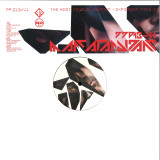
The Godfather of Hardcore, Marc Acardipane, needs no introduction. His outstanding releases over the past 30 years speak for themselves. He has been instrumental in helping to create electronic music history, with countless well-known productions which have been unsurpassed by any other artist of this calibre. His timeless masterpieces have been and always will be heard at hardcore raves spanning the circumference of the Planet. With "9 Is A Classic", "Slaves To The Rave", "Pitch-Hiker", "Stereo Murder" and "We Have Arrived", just to name a few, he clearly proves who's the boss. "The Most Famous Unknown" is a well compiled collection of Marc's music, which showcases a mere portion of what he has composed and produced since the early nineties! The vinyl and digital selection of "The Most Famous Unknown" features remixes by Body Sushi a.k.a. VTSS & Randomer, Dasha Rush, Gabber Eleganza feat. Delirio, Jasss, Kilbourne, Minimum Syndicat, Nina Kraviz, Perc, Solid Blake, Stranger, Umwelt and VTSS, which all deliver excellent interpretations of tracks they have chosen to revamp. All original tracks have been re-mastered to the highest possible standard of quality.
- A1: Program 1 A K A. Marc Acardipane - World's Famous Mf (Stranger Remix)
- A2: Marshall Masters A K A. Marc Acardipane Feat. The Ultimate Mc - Hustler For Life (Jasss Remix)
- B1: Marshall Masters A K A. Marc Acardipane - E-Day (Body Sushi Remix)
- B2: The Phuture Project A K A. Marc Acardipane - Escape From 2017 (Dasha Rush Remix/Ambient Mix)
Remixes V1[12,56 €]
Remixes V2[8,61 €]
Remixes V3[11,72 €]
Remixes V5[12,56 €]
Remixes V6[11,35 €]
2025 Repress!
The Godfather of Hardcore, Marc Acardipane, needs no introduction. His outstanding releases over the past 30 years speak for themselves. He has been instrumental in helping to create electronic music history, with countless well-known productions which have been unsurpassed by any other artist of this calibre. His timeless masterpieces have been and always will be heard at hardcore raves spanning the circumference of the Planet. With "9 Is A Classic", "Slaves To The Rave", "Pitch-Hiker", "Stereo Murder" and "We Have Arrived", just to name a few, he clearly proves who's the boss. "The Most Famous Unknown" is a well compiled collection of Marc's music, which showcases a mere portion of what he has composed and produced since the early nineties! The vinyl and digital selection of "The Most Famous Unknown" features remixes by Body Sushi a.k.a. VTSS & Randomer, Dasha Rush, Gabber Eleganza feat. Delirio, Jasss, Kilbourne, Minimum Syndicat, Nina Kraviz, Perc, Solid Blake, Stranger, Umwelt and VTSS, which all deliver excellent interpretations of tracks they have chosen to revamp. All original tracks have been re-mastered to the highest possible standard of quality.
“Ti Ho Sposato Per Allegria” (1967) is a comedy directed by Luciano Salce, taken from the theatrical play of the same name (1965) by Natalia Ginzburg. The main characters are Pietro and Giuliana, respectively interpreted by Giorgio Albertazzi and Monica Vitti. A lawyer from a good family, serious, accustomed to a calm and regular life who got married to a indolent and dazed girl with a difficult past a month after meeting her at a party. Despite Giuliana's inability to transform herself into a good housewife, his relationship with Pietro continues to flourish, because he seems to find enjoyment in each of his wife's many mistakes. The reason for their union lies not in love but, perhaps, in a genuine sympathy, as strong as it is mutual. The story has become a minor classic with each new representation. On both stage and screen the themes of everyday life, and the more complex and existential ones, are addressed. The subtle irony of the work relies on recounting problematic events in a carefree tone: realities such as abortion, death, separation and the couple's incommunicability are underplayed with naturalness. The funny events of the film are commented on by Piero Piccioni's music, published for the first time on vinyl by Musica Per Immagini, with an harmonious tracklist. For this first orchestra rehearsal with the director, which will be followed by other important soundtracks, the composer makes an effective and elegant synthesis: on the one hand he reworks moods and aesthetic intuitions of some previous and happy experiences, while on the other he identifies and anticipates the first bars of that unmistakable sound between bossa nova, funk and lounge nuances that will characterize almost all the production of the Seventies. In fact, the Turin-native artist simplifies in a positive sense the articulated harmonic structures that have always distinguished his authorial figure – where the so called jazz features are to be considered more than central in the musical texture, as prominent elements of the harmonic syntax – and he tries a melodic reduction that will make the compositions more catchy or memorized, but not easier for this. Lightness of spirit and rarefied elegance are the keys of this new Dionysian world.
Civilistjävel! x Mayssa Jallad’s ‘Marjaa: The Battle of the Hotels (Versions)’ is a radical response to Mayssa Jallad’s 2023 original LP, a lyrical account of epochal events in Beirut at the dawn of Lebanon's civil war. ‘…(Versions)’ sees Civilistjävel! (aka Swedish producer Tomas Bodén) apply a stripped, dub methodology to Mayssa's rich stems, refracting the Arabic source through the hazy prism of Northern European electronica. Retaining ‘Marjaa…’s deep spatial framing and vaporous, shifting nature, traces are lifted and set down in a new landscape: a ghost of a ghost. Informed by Tomas' singular strand of ambient, minimalist, dub techno, ‘… (Versions)’ recalls the reductive, shimmering pulse of pioneering Berlin-based practitioners Basic Channel/Chain Reaction, but with the parameters stretched into the ether. Where versions typically focus on a rhythm, here the anchor is the tone and texture of Mayssa’s voice, around which a new world has been constructed. Disembodied and liminal, it conjures an eerie panorama that feels like a postscript to the original, further emphasizing the geopolitical events that have had such devastating effect in Mayssa’s homeland of Lebanon since that record’s release. ‘Marjaa…’ (tr. ‘reference’) combined Mayssa Jallad’s two main vocations: music and urban research/architectural history. The album was co-written with Fadi Tabbal and based on Mayssa's Historic Preservation master's thesis (‘Beirut’s Civil War Hotel District: Preserving the World’s First High-Rise Urban Battlefield’). The thesis examined a 5-month conflict that took place within Beirut's skyscraper-laden luxury hotel district of Minet El Husn near the start of the Lebanese Civil War. Addressing a post-war generation who have never been taught this difficult history, ‘Marjaa…’ was an attempt to process trauma, and “a call to protest for the renewal, rather than the recycling of the political class that once destroyed the country and holds us, to this day, hostage of its violence.” Often perceived as a mysterious, shadowy presence, Civilistjävel! has come increasingly to the fore in recent years through a consistently dazzling stream of records, released both anonymously and via Fergus Jones’ FELT imprint, often appearing with scant information and tracks for the most part untitled. Having featured tracks from ‘Marjaa…’ on mixes, and included the album in his picks of 2023, in early 2024 Tomas asked Mayssa to provide vocals for a track on his album ‘Brödföda’. Mayssa remembers, “Tomas asked me to choose one of the tracks he was working on. I was in Boston at the time, so I took a walk and chose a track. I wrote the lyrics at the public park, wondering if I was the only one around that was losing sleep over the genocide in Palestine and the war in South Lebanon. I went back to the apartment and recorded the vocals on my phone, while listening to the track on headphones. Tomas reworked it with the voice and sent it back. I liked it immediately.” Despite the geographical distance from Beirut to Uppsala, Sweden, where Tomas resides, Mayssa’s contribution sounds very much at home in Civilistjävel!’s atmospheric, contemplative sound-world. Tomas’ request was reciprocated by Mayssa soon after, resulting in the spectral, glassy ambience of ‘Etel, Kharita (Version)’. This was followed by an invitation to work on more tracks, which Tomas immediately embraced, intensively jamming out versions live to two-track tape in downtime between travelling. If not entirely dissimilar to his regular working practice, the immediacy of it was unusual. Much was improvised live with just a keyboard (not tethered to a grid), and a restricted set-up that largely forbade later edits - only the rhythm tracks are programmed. A sharp conceptual thinker and composer, Tomas takes creative liberties with Mayssa’s songs in a way that is deeply felt and sympathetically aligned, whilst unashamedly outside of the original context of the record. The voice is leaned into as an instrument, without the clear, specific details of language, and this axis provides an uncertain, amorphous footing - structure is often suggested or hinted at, before disappearing or collapsing into fog, and folding back into the message within the song. A somewhat unprecedented source for an album of versions, even those familiar with ‘Marjaa: The Battle of the Hotels’ may at points struggle to hear the songs these versions are rebuilt from, despite the vocal narratives remaining virtually intact. The light has shifted; eroded buildings are foregrounded; fragments of memories appear in chiaroscuro. Signs and signifiers have been replaced. Shorn of the original's warm guitar, ‘Baynana (Version)’ feels like an ominous visitation, the sun no longer visible. ‘Holiday Inn (March 21 to 29) (Version)’ is a molten, clattering invocation. The beat-less tracks nod towards the cold, otherworldly sound-scaping of late '90s isolationism. More propulsive and embodied, ‘Holiday Inn (January to March) (Version)’ and ‘Kharita (Dub)’ are strobing, iridescent techno - lithe, shifting and mutating with almost implausible finesse. A stunning addition to Civilistjävel!’s growing catalogue, ‘…(Versions)’ is a luminous counterpoint to ‘Marjaa…’, and a welcome reminder of how incredible that record remains.
"High urgency music with a very personal expression of the artist: in one way or another", this has always been the important or maybe even the core factor of every Cortizona release so far.
So it was just a matter of time until DJ Marcelle/Another Nice Mess, longtime fan of The Fall and Jiskefet, topnotch producer, dj wizard with three turntables (and a lovely person in general) - and myself - would collaborate towards a Cortizona release.
I guess the initial idea of working together with DJ Marcelle/Another Nice Mess dates back to 2019. One day she called me four times in five minutes just to hear Mark E. Smith's voice message on my phone. Since then there has been no going back. I mean: what's not to love about her?
Some time ago, she sent me the digital files of her new LP 'Sorry, No Service'. One of the tracks, 'Sorry, No Silence', features the Nan Goldin sample: 'this is clearly ethnic cleansing', taken from Goldin's impressive speech to which the audience cheered in support at the opening of her exhibition at the Neue Nationalgallerie in Berlin end of 2024.
Two weeks later Marcelle contacted me again: her German label refused to release the track. This was the moment we had both been waiting for: at last Cortizona and Marcelle would work together!
The album is due to be released later this year, but, with things as they are in Gaza, it is important to issue 'Sorry, No Silence' as a stand-alone track as soon as possible.
Talking about urgency!
'Sorry, No Silence' resonates feelings of global despair over the genocide in Gaza and the moraland political bankruptcy of 'western values'. It does so over a repetitive, militant tribal beat, complete with heavy basslines. The spirits of Mark Stewart, On-U Sound and Muslimgauze loom over the track, but as is always the case with Marcelle, both on stage and in the studio: she has an authentic style of her own, where playfulness meets courage and - also in this case - anger meets rhythm.
'Sorry, No Silence' is a track I didn't know I was waiting for. A track reflecting the sign of the times. The 12'' also features an even more heavy (and faster) dub version and the avant garde track 'Never Again Means', featuring more Nan Goldin samples: 'never again means never again for everyone'.
For obvious reasons the proceeds of this 12 inch and the digital Bandcamp release will be donated to PCRF, Palestine Children's Relief Fund.
Support more than welcome.
(written by Philippe Cortens)
- A1: Paprika
- A2: Be Sweet
- A3: Kokomo, In
- A4: Slide Tackle
- A5: Posing In Bondage
- B1: Sit
- B2: Savage Good Boy
- B3: In Hell
- B4: Tactics
- B5: Posing For Cars
From the moment she began writing her new album, Japanese Breakfast’s Michelle Zauner knew that she wanted to call it Jubilee. After all, a jubilee is a celebration of the passage of time—a festival to usher in the hope of a new era in brilliant technicolor. Zauner’s first two albums garnered acclaim for the way they grappled with anguish; Psychopomp was written as her mother underwent cancer treatment, while Soft Sounds From Another Planet took the grief she held from her mother‘s death and used it as a conduit to explore the cosmos. Now, at the start of a new decade, Japanese Breakfast is ready to fight for happiness, an all-too-scarce resource in our seemingly crumbling world.
Jubilee finds Michelle Zauner embracing ambition and, with it, her boldest ideas and songs yet. Inspired by records like Bjork’s Homogenic, Zauner delivers bigness throughout - big ideas, big textures, colours, sounds and feelings. At a time when virtually everything feels extreme, Jubilee sets its sights on maximal joy, imagination, and exhilaration. It is, in Michelle Zauner’s words, “a record about fighting to feel. I wanted to re-experience the pure, unadulterated joy of creation...The songs are about recalling the optimism of youth and applying it to adulthood. They’re about making difficult choices, fighting ignominious impulses and honouring commitments, confronting the constant struggle we have with ourselves to be better people.”
Throughout Jubilee, Zauner pours her own life into the universe of each song to tell real stories, and allowing those universes, in turn, to fill in the details. Joy, change, evolution - these things take real time, and real effort. And Japanese Breakfast is here for it.
2025 Repress
The Godfather of Hardcore, Marc Acardipane, needs no introduction. His outstanding releases over the past 30 years speak for themselves. He has been instrumental in helping to electronic music history, with countless well-known productions which have been unsurpassed by any other artist of this calibre.
His timeless masterpieces have been and always will be heard at hardcore raves spanning the circumference of the Planet. With 9 Is A Classic, Slaves To The Rave, Pitch-Hiker, Stereo Murder and We Have Arrived, just to name a few, he clearly proves who's the boss. "The Most Famous Unknown" is a well compiled collection of Marc's music, which showcases a mere portion of what he has composed and produced since the early nineties!
The vinyl and digital selection of "The Most Famous Unknown" features remixes by Body Sushi a.k.a. VTSS & Randomer, Dasha Rush, Gabber Eleganza feat. Delirio, Jasss, Kilbourne, Minimum Syndicat, Nina Kraviz, Perc, Solid Blake, Stranger, Umwelt and VTSS, which all deliver excellent interpretations of tracks they have chosen to revamp.
All original tracks have been re-mastered to the highest possible standard of quality.
- A1: Sun People (Intro)
- A2: Sun Children (Original Mix)
- A3: La Lluvia (Feat Richard Shepard & Quantic)
- A4: The Love Feeling (Feat Brian J)
- A5: 2 Sips & Magic
- B1: Just Move! (Feat Mc Kwasi)
- B2: Brookarest
- B3: Didibina (Feat Falu & Quantic)
- B4: Gira Do Sol (Feat Liliana Araujo)
- B5: Calle Sol (Feat Tempo & Candela All Stars)
- B6: N`dini (Feat Ismael Kouyaté)
Wonderwheel is happy to present the very first pressing of Nickodemus' longtime classic "Sun People", pressed on translucent yellow vinyl. Originally released in 2009 by Thievery Corporation's Eighteenth Street Lounge label, "Sun People" was built with songs made for people who love the sun, sunshine and brighter days to come. Appropriate, of course, as Nickodemus has made his mark soundtracking NYC summers with his massively popular Turntables On The Hudson live events as well as with 20 consecutive years touring the World. The songs were inspired by various people Nickodemus met and places he's been, along with his collective feelings of optimism. It's these positive sonic vibes from all over the globe that Nickodemus matches with collaborators hailing from destinations including Guinea, Colombia, Puerto Rico, Brazil, Romania, India, Turkey, United Kingdom and New York City. These are the Sun People.As songs like "N'dini" "Sun Children" & "The Love Feeling" continue to kept parties dancing until today, "Calle Sol" & "Gira Do Sol" are being discovered by new fans & playlists today. As Jason Bentley, former Music Director at KCRW once said, "Sun People reflects a rich musicality, while infectious rhythms keep the party live. Nickodemus truly knows
no borders on this global dancefloor."Wonderwheel recordings is happy to keep the fire burning with this special limited color vinyl reissue out on June 21st, 2024.
a 01: Sun People (Intro) feat. Ismael Kouyaté
b 02: Sun Children (Original Mix) [feat. The Real Live Show]
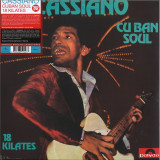
"Cuban Soul-18 Kilates" is Cassiano's third studio album, released in 1976, and stands as a milestone in Brazilian soul music. It combines Brazilian rhythms with classic American soul elements, creating a unique fusion. Cassiano's smooth, soulful vocal style and the album’s larger-than-life arrangements, reminiscent of Tim Maia's sound, give it a rich, deep feel.
The standout track, ‘Onda,’ is a relaxing anthem evoking beach vibes that has become a DJ’s favorite in recent years and also made it into several compilations. "Cuban Soul-18 Kilates" has earned cult status over the years, securing its place as one of the most coveted Brazilian records of all time. Remastered from the original tapes and pressed on 180g vinyl. This release is part of a new reissue series that will include many other outstanding Brazilian classics like Evinha “Cartão Postal” or Gerson King Combo.
"Cuban Soul-18 Kilates" is Cassiano's third studio album, released in 1976, and stands as a milestone in Brazilian soul music. Influenced by artists like Otis Redding, Eddie Kendricks, Stevie Wonder, and others, it combines Brazilian rhythms with classic American soul elements, creating a unique fusion. The album features 9 tracks, with ‘A Lua e Eu’ becoming a major commercial hit and the theme song for the soap opera “O Grito”. Cassiano's smooth, soulful vocal style and the album’s larger-than-life arrangements, reminiscent of Tim Maia's sound, give it a rich, deep feel. The standout track, ‘Onda,’ is a relaxing anthem evoking beach vibes, with its captivating bassline, subtle percussion, and natural sounds of the sea, making it perfect for moments of relaxation. This song, along with the album’s other tracks, showcases Cassiano's mastery of Brazilian soul, making “Cuban Soul-18 Kilates” a definitive and cherished record in the genre. This album has earned cult status over the years, securing its place as one of the most coveted Brazilian records of all time. Once incredibly rare and expensive, it's now at the top of every serious collector's wishlist. After not being available outside of Brazil for years, it’s finally been reissued – don’t miss your chance to own this legendary piece of music history.
- A1: Voces Fugaces (Cautivo Y Desarmado)
- A2: Mirando Atras (En La Rebelión)
- A3: Radical (Noctámbulo)
- A4: Fuera De Lugar (Tierra Negra)
- A5: Entre Bastidores (Sobre Otra Ruta)
- A6: Una Vez Mas
- B1: La Frontera Perdida
- B2: El Éxodo (Es Solo El Comienzo)
- B3: Bajo Un Cielo Abierto
- B4: Sinceridad (Contra La Naturaleza)
- B5: Un Hombre Solo
- B6: Paisaje Rural
Décima Víctima were a Spanish-(Swedish) band that, during their short-lived career between 1981 and 1984, developed a very personal sound reminiscent of Joy Division, The Cure and other British post-punk bands. Although commercial success evaded them, rarely has any Spanish band achieved such a high degree of quality and coherence in their music and personality. This LP contains previously unreleased tracks recorded by Décima Víctima in November 1983, one month before their last concert. Seven of these songs feature different lyrics to the ones later recorded for the "Un hombre solo" album. This is the way they performed them that night on the Rock-Ola stage, so this record can be considered, to some extent, an approximation to their last show and to their powerful live sound. After many years a rehearsal session that DV had recorded on an old cassette tape has been resurfaced. It had originally been laid down on a four-track recorder but unfortunately the tape got lost.The story of these tracks goes back to the last weekend of October 1983, when DV went to record at friend Paco Trinidad's family home in the mountains north of Madrid. Paco recorded the latest songs on a four-track tape recorder at the house. It was done live, except for extra takes of clarinet and some guitar details. The garage sound, as the name suggests, was achieved in the garage and an adjoining room where the drums were played. The sleeve design is a photo montage of our performance for the Maqueta de Oro (Gold Demo) at the Diario Pop awards in March 1983, plus another photo of the band in the dressing room at Rock-Ola after playing our last gig. The directness and passion of the tape makes it an interesting item for collectors and fans and the fact that some of the lyrics were not the definitive ones is an added rarity that reveals the development process for the following LP "Un hombre solo".
Borghesia is an electronic music group, founded in 1982 in Ljubljana, Slovenia. The band was formed by four members of alternative theatrical group Theatre FV-112/15: Dario Seraval, Aldo Ivancic, Neven Korda and Zemira Alajbegovic. They established FV Video to self-publish their video projects and FV Založba – the first independent record label in ex-Yugoslavia. Aldo and Dario took care of songwriting, production and recording while Zemira and Neven handled the visuals. In the late 80s the band signed to PIAS and went on to release a string of successful albums and played world-wide tours.
Clones was Borghesia's second album, self-released on cassette only in 1984. The band borrowed synthesizers (Roland SH-101, Casio VL-1, Korg Polysix) and a Roland 808 drum machine from friends. Every song was played live - no overdubs - and recorded to a cassette deck over a few nights at their club Disco FV during 1983-1984. The music on "Clones" is meant to accompany various video installations and performances. All of the songs are instrumental and feature various cutting edge techniques for 1983. Hypnotic, proto-techno and acid rhythms and synth lines. Music on the A Side of the LP is faster and club oriented while the B Side offers a drugged out soundtrack to get lost in.
All songs have been remastered for vinyl by George Horn at Fantasy Studios in Berkeley directly from the original master tape. Each LP is housed in a silver jacket with original gelatin print by photographer Jane Štravs. A fold-out poster is included with unreleased photos, original artwork and liner notes by Željko Luketić. After 28 years, Borghesia's "music for video" is finally appearing on vinyl for the first time.
- A1: Post Malone– White Iverson
- A2: Post Malone– Congratulations; Featuring – Quavo
- A3: Post Malone– I Fall Apart
- A4: Post Malone– Rockstar:featuring – 21 Savage
- B1: Post Malone– Psycho; Featuring – Ty Dolla $Ign
- B2: Post Malone– Better Now
- B3: Post Malone & Swae Lee– Sunflower (Spider-Man: Into The Spider-Verse)
- B4: Post Malone– Circles
- B5: Post Malone– Chemical
- C1: Post Malone– Go Flex
- C2: Post Malone– Candy Paint
- C3: Post Malone– Stay
- C4: Post Malone– Wow
- C5: Post Malone– Goodbyes; Featuring – Young Thug (2)
- D1: Post Malone– Take What You Want; Featuring – Ozzy Osbourne, Travis Scott (2)
- D2: Post Malone, Doja Cat– I Like You (A Happier Song)
- D3: Post Malone, The Weeknd– One Right Now
- D4: Post Malone– Feeling Whitney
- A1: Benzedrine
- A2: Pink Lightning (B.)
- A3: Beautiful Boy; Written By – Gillian Welch
- A4: Knees
- A5: Rollin', Rollin', Rollin' (B.)
- A6: Jane Greer With A Gun
- B1: Monkey (B.)
- B2: Git Paid (B.)
- B3: In Some Dreams
- B4: Drinkin' 'Bout You
- B5: None Of Us Became Anything
- C1: Bacall
- C2: January (B.)
- C3: Sit 'N Squirm
- C4: Howlin' Heart
- C5: Ketamine (B.)
- D1: With Half Your Heart
- D2: True Love Waits; Written By – Radiohead
- D3: Lil Dead Eye-D (B.)
- D4: Gene (B.)
- D5: Love (B.)
- E1: Inchyra Blue (B.)
- E2: The Beach
- E3: Pineapple
- E4: Sister Wives (B.)
- E5: Everytime; Written By – Britney Spears
- F1: Sandra's Stuff
- F2: Postcard (B.)
- F3: Further 2 Fall
- F4: Disappeared Planets (B.)
- F5: Estonia (B.)