Rerelease of the fourth album of the Intercommunal Free Dance Music Orchestra recorded with the Guinean saxophonist Jo Maka. The title says it all: Vol.4 – Jo Maka.
The Intercommunal Free Dance Music Orchestra was created in 1971 by an “old hand” of French free jazz, François Tusques. Free Jazz, was also the name of the recording made by the pianist and other like-minded Frenchmen (Michel Portal, François Jeanneau, Bernard Vitet, Beb Guérin and Charles Saudrais) in 1965. But, six years later Tusques had had his fill of free jazz.
So he then founded the Inter Communal, an association a name under which the different communities could become closer and compose, simply. In 1976, on the first album: L’Inter Communal, we can already hear Tusques playing without borders in the company of Carlos Andreu, Ramadolf, Michel Marre and Jo Maka (as a conclusion to this Vol. 4, we can hear them in 1977 at the Moulin de Prades Le Lez). Over the next decade, the, association kept going with concerts at the Dunois theatre, in 1980 and 1981, it welcomed old hands and new recruits (Bernard Vitet, Jean-Jacques Avenel, Jacques Thollot, Sylvain Kassap…).
If Vol. 4 – Jo Maka is an homage to the Guinean saxophonist, who passed away a few months before the release of this selection of concert recordings, it also displays a proud collective inspiration! One foot in the blues, and ears open to everything else, Tusques begins with a lament that the Company rapidly transforms into a joyful dance (“Vive la Commune”), weaves a full-blown party piece (“Poses ton fardeau et remets la machine en route”, “7 rue des prêcheurs”, “Mazir”) or gets fabulous with Mingus (“Fable Of Faubus”). And there you have it, with so many revolutions François Tusques is almost back to free jazz.
Поиск:pos
Все
- You (The Feral Human Thunderstorm)
- One Of The Dreamers
- I Was There
- From The Ashes Of Our Age
- Father
- Calliope
- Your Beloved Hollywood
- Believe In Something
Die Berliner Post-Punk-Band The Underground Youth um den Musiker und Autor Craig Dyer meldet sich mit ihrem zwölften Studioalbum „Décollage“
zurück. Das von Dyer selbst geschriebene, aufgenommene und produzierte Album ist eine Übung in künstlerischer Dekonstruktion, sowohl im Namen
als auch in der Form, und markiert eine entscheidende musikalische Wende. „Décollage ist die Kunst, ein Bild zu erschaffen, indem man Teile eines
bereits existierenden Werks herausreißt, abreißt oder entfernt. Meine Idee war es, diese Technik auf die Musik anzuwenden“, erklärt er. „Ich baute
Wände aus statisch überzogenen Hip-Hop-Drum-Samples, Schichten von Streicherarrangements im Stil von Lee Hazlewood und von Serge Gainsbourg
inspirierten Mellotron-Melodien auf, dann begann ich, diese schönen, chaotischen Wände aus Lärm abzureißen und legte einen neuen Sound für The
Underground Youth frei.“
Von Momenten geisterhaften Minimalismus bis hin zu ausladenden Crescendos aus Lärm und Melodie haben die Songs hier eine schattenhafte,
traumhafte Qualität. Neben Dyer besteht The Underground Youth aus der Schlagzeugerin und bildenden Künstlerin Olya Dyer, dem Gitarristen
Leonard Kaage (der auch bei der Postproduktion des Albums mitwirkte) und der Bassistin Samira Zahidi. Ursprünglich als Soloprojekt von Dyer im Jahr
2008 gegründet, hat die Band inzwischen 11 - mittlerweile 12 - Studioalben und 4 EPs veröffentlicht und dabei einen einzigartigen Sound entwickelt,
der im Laufe der Jahre von cineastischer Lo-Fi-Psychedelia über rauen, melancholischen Post-Punk bis hin zu Gothic-Folk-Noir reichte.
This is a recorded document performed by Mark Holub, Johanna Pärli and Sofía Salvo.
As a trio, they had not met until sound-checking for their gig at Berlin’s Cashmere Radio on September 1, 2023 — a fact that may be concealed by their immediate understanding as a musical entity but is obvious by their artistic freedom and curiosity towards each hoc encounters, flexible and steadfast in its performance, and that culminated in an experience that shook the floor of the radio station’s headquarters.
The day after, Sofía, Johanna and Mark gathered in Adam Asnan’s studio and deepened their quest for a communal language. They ignored any musical fetters or conventions, enjoyed the possibilities of a wider time frame without a live audience — and exceeded all hopes of what three personalities can achieve when they are given the space and time to experiment, detached from any restrictions.
Mark Holub is a drummer of outstanding versatility and responsiveness, full of ideas and quick on his feet. Through his playing as well as his experience as a band-leader and composer he is able to steer this coequal group towards thundering crescendo, but sits equally comfortable in the centre of complex and fine rhythm probing in response to impulses thrown in by his companions.
Johanna Pärli makes use of her double bass’s entire body, extracting an armada of multi- layered sounds with an immensely high sonic spectrum that is also reflected in the diversity of her musical projects. She is both patient and wildly adventurous in her performance, and in this trio her contribution wanders from considerate bow work to brisk fingerpicking, gnarly string strikes and pedal use to startling effects.
Sofía Salvo unleashes the full unbounded potential of her voice by taking advantage of her baritone saxophone’s broad range of possibilities. She is one of Berlin’s most singular musicians and her widely proven capabilities cover gentle additions to support and underline pulsive interplay just as masterfully as rapid licks and roaring bursts of noise, spurring the collective to unpredictable intensity.
If music of this particular kind often gives the impression of a constant search, this international trio certainly managed to find common ground and capture a special moment in time for listeners to (re-)discover. Contrary to what frequent misconception sometimes suggests, it’s also tremendous fun.
NERR — Filling Open Spaces was instantly composed and performed live in studio by Mark Holub on drums, Johanna Pärli on double bass and Sofía Salvo on baritone saxophone, recorded in Berlin on September 2, 2023 and mixed by Adam Asnan. Mastered and cut by Rashad Becker, vinyl pressed at Pallas. Artwork and design by Stefan Lingg, produced by Christoph Berg and Stefan Lingg.
Scientist's name will be found on many dub releases in peoples record collections.His connection to King Tubby's studio is inseparable and many say when the dub end of Reggae music had fallen on quieter times it was Scientist with his often stripped back style and at other times, wild off the wall remixes that breathed life back into the dub cannon.
Scientist (born Overton Brownie,1960, Jamaica) was in many ways King Tubby's apprentice. Having helped his own father out repairing televisions and such like, he would help Tubby on winding transformer coils, that the amps of the day all needed. His interest in recording grew as he watched the many sessions taking place at Tubby's Dromilly Avenue Studio, learning the ropes as the musicians came and went. His first break happened when King Jammy (then Prince Jammy) was too tired to work on a session booked for producer Errol 'Don' Mais. Scientist engineered the session to every one’s bewilderment and great satisfaction.
His first hit would be a mix of Barrington Levy's 'Collie Weed' and his reputation built on the many versions he cut at Tubby's where he would become the engineer of choice. His pared down mixing style suited the new Dancehall reggae sound that came at the tail end of the 1970's and rolled into the 1980's. Such was his stature that albums were now sold with his name on their jacket, 'Scientist Vs Prince Jammy, 'Scientist meets The Space Invaders' to name but two.
His time at King Tubby's was followed as chief engineer working for the Hookim Brothers at the mighty Channel 1 Studio's and on many of top producer Henry 'Junjo' Lawes tracks, that were hit after hit at the time.
We have compiled some tuff tracks from the late 70's / early 80's just before everything went digital. Some great dub versions to some killer tracks that rocked the dancehalls around this golden time.The mighty Tristan Palmer whose killer cuts 'BadBoys','Stop Spreading Rumours','Eveready' and 'The Greatest Lover’ alongside Michael Palmer's debut release 'Mr Landlord' and Robert Trench's 'Mr Babylon'. The songs stand back-to-back with Tony Tuff's timeless 'Never Trouble Trouble' and the biblical Rod Taylor's 'The Lord is My Light'. Sammy Dread's 'Wah Dah Wah' and the always respectful Dennis Brown's 'Time and Place' all benefited a touch of magic from The Scientist and his laboratory of effects.
Hope you enjoy the set.....
Wie Hip-Hop nach Hamburg kam
Die Compilation ist als Zeitreise zu den Anfängen der Hamburger Hip-Hop-Kultur konzipiert und umfasst über 100 weitgehend unveröffentlichte Songs und Skits. Begleitet wird das Triple-Vinyl von einem 96-seitigen Booklet, das von den frühen Jahren von Hip-Hop, Rap und DJing in Hamburg erzählt. Präsentiert wird das Werk von den Herausgebern des Buchs und den Kuratoren der Museumsausstellung EINE STADT WIRD BUNT.
Kennt eigentlich noch jemand Easy Business? Was wie ein Ratgeber Video auf YouTube klingt, ist der Name einer der ersten Hamburger Rap-Gruppen. Die vierköpfige Formation aus Steilshoop gründete sich schon in den späten 1980er Jahren und begann bald erste englischsprachige Texte zu schreiben. 1989 nahmen sie gemeinsam mit Mario von Hacht den Song „Money“ in einem Jenfelder Jugendzentrum auf.
Als House-Produzent verfügte Von Hacht über ein vergleichsweise schon recht ansehnliches Produktions-Equipment. Selbst die legendäre Roland TR-808, analoger Drumcomputer und Allzweckwaffe von Hip-Hop-Produzenten, war bereits 1989 Teil seines Maschinenparks. Nur hatte er sie eben nicht für Rap genutzt – bis Easy Business anklopften. Und so öffnete ein Musik-Nerd und Technik-Freak dem Hip-Hop eine Tür in Hamburg. Von Hachts Offenheit für den neuen Musikstil sollte sich auszahlen: 1995 produzierte er mit „Nordisch by Nature“ den ersten Chartstürmer von Fettes Brot.
Es sind Geschichten wie diese aus der Gründerzeit des Rap in Hamburg, um die sich die 3-Vinyl-Compilation EINE STADT WIRD BUNT dreht. Unter den über 100 Songs und Skits aus den frühen Jahren des Rap in Hamburg finden sich neben dem Song „Money“ von Easy Business auch ein Mitschnitt eines Auftritts der Gruppe in der Fabrik im Mai 1991.
Von frühen Aufnahmen von MC Africa True, der später unter dem Namen Nana einige Hits landen würde, bis zu den Britcore-Veteranen von Readykill, von 2 Ruff, deren Mitglied Simple Simon zu den ersten Hip-Hop-Produzenten der Stadt gehörte, bis zu den Reim Banditen, die als eine der ersten hiesigen Bands mit einem Majorlabel-Vertrag als Hamburger Antwort auf die Fantastischen Vier positioniert werden sollten, vereint das Triple-Vinyl eine einzigartige Sammlung musikhistorischer Zeitdokumente. In Kombination mit dem begleitenden Booklet vermitteln sie ein authentisches – und überaus unterhaltsames – Bild von den Anfängen des Rap in Hamburg.
Nach dem preisgekrönten, 2021 erschienenen Buch „EINE STADT WIRD BUNT. Hamburg Graffiti History 1980-1999“ und der gleichnamigen Ausstellung, die bis Anfang Januar 2024, als eine der erfolgreichsten aller Zeiten, im Museum für Hamburgische Geschichte gezeigt wurde, folgt mit der Compilation nun also eine weitere Dokumentation Hamburger Subkultur Geschichte der 1980er und 1990er Jahre. Im Fokus diesmal: die Pioniere des Rap in der Hansestadt.
Zum Team hinter dem Triple-Vinyl gehören neben den vier Herausgebern von EINE STADT WIRD BUNT. Oliver Nebel, Frank Petering, Mirko Reisser und Andreas Timm drei ausgewiesene Kenner der deutschen Hip-Hop-Szene. Oliver Herbst, einst DJ der Hip-Hop-Band City Nord, betreibt heute ein Musiklabel, auf dem die Platte erscheint, und konnte im Zuge der Recherche an viele alte Kontakte anknüpfen. Ebenfalls mit an Bord: der langjährige Chefredakteur des Hip-Hop-Magazins Backspin Dennis Kraus und der Musikjournalist und Moderator Falk Schacht.
Über einen Zeitraum von über zwei Jahren hinweg hat sich das Team auf Recherche begeben. Sie nahmen Kontakt zu Bands, Rapper*innen, DJs und Produzenten auf, die in den 1980er und 1990er Jahren in und um Hamburg aktiv waren. Sie sichteten und archivierten unzählige Stunden von Radio-Shows, Tapes, Demo-DATs und Live-Mitschnitten und führten Interviews mit Hip-Hop-Pionieren aus der Hansestadt. „Unser Ziel war es, ein kaum beleuchtetes Kapitel Hamburger Subkulturgeschichte zu erzählen“, sagt Mirko Reisser.
Begleitet werden die Platten deshalb von einem rund 80-seitigen, reich bebilderten Booklet im Vinyl-Format, das in aufwändig recherchierten Texten nachzeichnet, wie der neue Musikstil ab Mitte der 1980er Jahre in Hamburg langsam heimisch wurde. Zu den zentralen Themen dieser Erzählung gehört die Abwesenheit von technischem Equipment – und der Umgang der jungen Szene mit diesem Mangel.
Ein Vierspur Kassettenrekorder musste für die ersten Aufnahmen im Kinderzimmer reichen. Und wer DJ werden wollte, übte Scratchen mit dem Plattenspieler der Eltern. Anders als heute, wo man mit einem Smartphone in der Hand theoretisch ein Millionenpublikum erreichen kann, stellte die Aufnahmetechnik damals eine große Hürde dar. Wer jedoch über die technischen Voraussetzungen verfügte, Songs aufzunehmen, wurde schnell zur Anlaufstelle für die junge Rap-Szene.
Parallel zu dieser Ära der Technik-Autodidakten, öffneten die Rapper*innen der frühen 1990er Jahre ebenfalls ein Fenster in eine neue Welt: Indem sie anfingen, auf Deutsch zu rappen, grenzten sie sich bewusst von den amerikanischen Vorbildern ab und schufen ein ganz neues Selbstbewusstsein der jungen Subkultur. Und ganz nebenbei auch ein ganz neues Bewusstsein für die Möglichkeiten der deutschen Sprache. „Hier wurde etwas gänzlich Neues erschaffen“, sagt Oliver Herbst.
Viele Künstler, die auf der Compilation vertreten sind, dürften heute nur noch echten Hip-Hop-Nerds bekannt sein. Doch es finden sich auch bekannte Namen auf der Tracklist. Jan Eißfeldt etwa, der heute solo als Jan Delay oder als Teil der Beginner Konzerthallen füllt. Oder Fettes Brot, die von einem Hip-Hop-Trio aus dem Hamburger Umland zu einer der erfolgreichsten deutschen Popbands der Gegenwart heranwuchsen. Oder Deichkind, die zu einem massentauglichen Universal Kunstprojekt avanciert sind.
Wie schon das gleichnamige Buch und die Museumsausstellung, so blickt auch die Compilation EINE STADT WIRD BUNT. hinter die Kulissen einer jungen Subkultur – und erzählt parallel spannende Kapitel Musik-, Technik- und Stadtgeschichte aus der Hip-Hop-Hochburg an der Elbe.
INTERPRETEN
Fettes Brot, Absolute Beginner, Deichkind, Das Bo, Ferris MC, Mr. Schnabel, Sleepwalker, Kastrierte Philosophen, Mellow Mark, David Fascher, Easy Business, Reim Banditen, Readykill, TobiTob, I.L.L. Will, City Nord, MK Cram (Poets of Peeze), Dialektik, 2 Ruff, Nina, Flashmaster Ray, Dennis Deutschland, 2BIAS, MC Africa True alias Nana, Vers Chaoten, Die Erstausgabe, THC (Ter Hartchor), R.A.F. (Reimende Antifaschisten), Direkt Aktion, Fogmoor, Syren, Mental Disorda (Crime Code Barets), Dennis the Menace, Selma, 08/15, Hamburg Royal, Skunk Funk, B-Low, Gizmo, AJ, SMG, Phantom Black, Leon Le Pro alias EL’OMC, Paolo 77, Monti, Hanseknaller, Schlechta Umgang u.v.a.
ZITATE VON
André Luth, Jan Eißfeldt, Mathias Arfmann, Ale Dumbsky, David Fascher, Fatih Akin, Carsten Bohn, Schiffmeister (Björn Beton), Pasha Kamber (DJ MPK), Boris Ekambi, Sleepwalker, Mr. Schnabel, Nana Abrokwa, Simon Vegas u.a.
PRODUCER
Mario von Hacht (Super Mario), Sleepwalker, B-Base, Bubblez, TobiTob, X-Ray, Simple Simon
LINER NOTES BY BOOM BASS
A FIRST ALBUM AFTER SIGNING THE CONTRACT TO RELEASE OUR DEBUT ALBUM, WE WERE SUDDENLY INUNDATED WITH AN OVERWHELMING NUMBER OF TASKS.
TOWARD THE END OF THE 20TH CENTURY,MUSIC PRODUCTION WAS STILL A HEAVILY INDUSTRIAL PROCESS. FACTORIES MANUFACTURED CDS, VINYL RECORDS, AND EVEN AUDIO CASSETTES, WHICH WERE THEN SHIPPED BY TRUCK TO WAREHOUSES BELONGING TO VARIOUS FRENCH MAJOR LABELS. DEDICATED TEAMS BRAINSTOR-MED IDEAS, DEVISED STRATEGIES, AND ORCHESTRATED PLANS TO DISTRIBUTE THESE RECORDS TO SPECIALIZED STORES. AT THE TIME, RADIO, TELEVISION, AND THE PRESS HELD THE KEYS TO SUCCESS.
WITHOUT THEIR SUPPORT, REACHING THE GENERAL PUBLIC, OR EVEN A NICHEA UDIENCE, WAS NEARLY IMPOSSIBLE.OUR FIRST ALBUM AS CASSIUS, SLATED FOR RELEASE IN JANUARY 1999, SPARKED GENUINE EXCITEMENT WITHIN THE VIRGIN RECORDS TEAM. AS A FORMER ARTISTIC DIRECTOR, I KNEW THIS LEVEL OF ENTHUSIASM WAS RARE. FOR PHILIPPE AND ME, STEPPING INTO THE SPOTLIGHT WAS A COMPLETELY NEW EXPERIENCE.
AFTER YEARS OF WORKING BEHIND THE SCENES FOR OTHERS,FOCUSED AND IMMERSED IN THE STUDIO, WE WERE NOW AT THE FOREFRONT, ENTIRELY INCONTROL. THIS SHIFT BROUGHT A WHIRLWIND OF EMOTIONS: AMBITION FUELED OUR FEARS,AND CREATIVE CHAOS OFTEN BLURRED OUR JUDGMENT ABOUT WHEN TO STOP REFINING OURWORK.NAVIGATING DECISIONS AS A DUO, WE QUICKLY DISCOVERED THE COMPLEXITIES OF PARTNERSHIP AND PRODUCTION. WITHOUT MANAGEMENT, WHOSE CRITICAL ROLE IS OFTEN TO SHIELD ARTISTS FROM THEIR OWN TENDENCIES, WE OCCASIONALLY STRUGGLED TO MAKE THE RIGHT CHOICES.
YET, EXCITEMENT AND SHEER JOY ULTIMATELY PREVAILED, AND WE THREW OURSELVES WHOLE HEARTEDLY INTO THE ADVENTURE. AS POSITIVE FEEDBACK ROLLED IN FROM SUBSIDIARIES, MARKETING BUDGETS EXPANDED, AND THE ALBUM'S RELEASE STRATEGY SKYROCKETED TO NEW HEIGHTS.
DAFT PUNK'S GROUNDBREAKING ALBUM HOMEWORK HAD JUST OPENED THE DOOR FOR FRENCH ELECTRONIC MUSIC TO REACH GLOBAL AUDIENCES. FOR ARTISTS ROOTED IN DJ CULTURE,THIS WAS A TURNING POINT. FRENCH ACTS WERE FINALLY BEING INVITED TO PLAY AT BURGEONING FESTIVALS AND ICONIC CLUBS. THE BRITISH AUDIENCE WAS THE FIRST TO EMBRACE US, AND WEEKEND AFTER WEEKEND, WE TOURED THE UK.
INSPIRED BY THOSE NIGHTS BEHIND THE DECKS, WE SUGGESTED RELEASING A VINYL FEATURING EXTENDED VERSIONS OF TRACKS FROM 1999. DESIGNED AS A PROMOTIONAL DJ TOOL, IT CELEBRATED EXPANSIVE, LONG-FORM TRACKS REMINISCENT OF THE ONES WE LOVED TO PLAY, AN HOMAGE TO OUR EARLY EXPERIMENTS WITH NDLESS LOOPS, LIKE DINAPOLY FROM 1996.
THE VINYL WAS PRESSED IN AN EXTREMELY PROMO LIMITED SERIES, ECHOING OUR EARLY MAXI-SINGLES AND THE RARE RECORDS WE USED TO HUNT FOR AS COLLECTORS. FOR FANS, IT WAS A CHANCE TO OWN SOMETHING TRULY UNIQUE; FOR US, IT WAS A FINAL OPPORTUNITY TO RE-EXPLORE THEA LBUM'S MUSIC.PRODUCED IN THE STYLE OF LA FUNK MOB'S EP, WITH THE TWO OF US IN A RECORDING BOOTH SURROUNDED BY FLOPPY-DISK MACHINES AND TWO OR THREE SYNTHS, THE ALBUM'S SONGS WERE STRUCTURED AND MIXED DIRECTLY IN STEREO ON A DAT (DIGITAL AUDIO TAPE).
MOST TRACKS, ORIGINALLY VERY LONG, WERE EDITED INTO A COHERENT, HOUR-LONG LISTENING EXPERIENCE. THE DJ TOOL WAS ASSEMBLED FROM THOSE ORIGINAL MIXES, AS A FINAL, FREE WHEELING VARIATION OF OUR THREE WEEKS OF FUN IN THE STUDIO.HOLDING THAT VINYL TODAY BRINGS BACK VIVID MEMORIES OF THOSE EARLY TRAVELS, THE NIGHTCLUBS AT THE CUSP OF TRANSFORMATION, THE CROWDS GETTING YOUNGER AT NEW PARTIES, AND THE VINYL RECORDS THAT WERE JUST STARTING TO FADE FROM DJ BOOTHS.
I ALSO RECALL BEING 32 YEARS OLD, NAVIGATING THIS EVOLVING WORLD. NOW, AS I PREPARE FOR THE UPCOMING CASSIUS CLUB TOUR, I'M STRUCK BY HOW CLOSELY IT MIRRORS THE ERA OF THE DJ TOOL RELEASE. TWENTY-FIVE YEARS LATER, I FEEL INCREDIBLY FORTUNATE TO STILL BE DOING THIS.
IN THE STUDIO, PHILIPPE ONCE SHOUTED, "CASSIUS IN THE HOUSE !" INTO MY EAR. TODAY, I FEEL LIKE TELLING HIM, "I'M GOING BACK TO OUR ROOTS."BOOMBASS.
'199 DJ TOOL", 2025 UNRELEASED ALBUM BY CASSIUS FEATURING 8 EXCLUSIVE EXTENDED VERSIONS OF THE MOST ICONIC TRACKS FROM THE ALBUM 1999 AND THIS EXCLUSIVE SHORT STORY BY BOOMBASS.
- A1: Perfect Hit!
- A2: Blue Chairs, Blue Floors, Blue Folders
- A3: Merchandise
- A4: Another Face Entirely
- A5: The Local Void
- A6: King Conker
- B1: List Of Walls
- B2: Songs For The Quarrymen
- B3: Blip
- B4: The Slowing Of The Shoes
- B5: Whitsun Sound
- B6: Slug Circles
- B7: (Function Suite)
Buffet Lunch have been a band since 2017. They are a pop group formed of musicians based in Glasgow, Edinburgh and (sometimes) Newcastle. Described previously as a band that creates 'a hodgepodge of noises' who are 'lyrically ridiculous'. Both claims are strongly denied by the group.
Buffet Lunch have released 3 EPs & 2 LPs since 2019 and 6 months after self-releasing 'For Display Purposes Only' are back on Upset the Rhythm with their third album 'Perfect Hit!'
‘Perfect Hit!’ was recorded in the West Highlands, in the shadow of the UK’s Biggest Ben, during Leap Year week 2024. George Horler (Holy Loaf) joined the band as recording engineer along with new members Matthew Lord and Jack Shearer plus founding members Perry O’Bray & Luke Moran, to spend a week writing and creating the record. The majority of the record was completed in the studio, with as much recorded ‘live’ as possible and the week flew by, and we had such a lovely time we forgot to go on a walk. Most of the songs are new and only been played a few times live.
Lyrically, the album contains more deliberately personal lyrics than previous records, with several songs addressing ancestry and becoming a parent (Quarrymen, Shoes, Blue Chairs). Elsewhere, the songs deal with thorny issues such as; identity & full face tattoos, hands, legs & a swordfish sighting (Perfect Hit), the importance of kindness (Blip), disgraced Presbyterian John Knox (Merchandise), a potentially disgraced sportsman featuring star turn from Beef Jerk front man Jack Randall Lee (King Conker) and historical consciousness via Wikipedia (List of Walls).
Musically, the aim (as ever) was to make an album which is as fun to listen to as it was to make. These are mostly playful pop songs with a focus on melody and hooks. There are approximately 40% more guitar chords featured on ‘Perfect Hit!’ than on previous records.
- Web Of Unfolding Appearance
- Figure Of Reflected Light
- Trancher And The Inheritors
- True Dimension (From The Opaque-Spike)
Entering its 26th year of activity, the morphing, Los Angeles based experimental outfit, Sissy Spacek, joins Shelter Press with Entrance, among the project's most captivating outings to date. Encountering the duo of John Wiese and Charlie Mumma joined in various configurations by an incredible cast of collaborators - Tim Barnes, Marco Fusinato, Aaron Hemphill, Brad Laner, Katsura Mouri, Ralf Wehowsky, and C Spencer Yeh - collectively transformed into a series a deeply intimate and delicate gestures of musique concrète, Entrance radically repositions the possibilities presented by group improvisation outside of time and place. Founded at the end of the last millennium, the Los Angeles based project, Sissy Spacek, initially emerged from the knotted, fiery context 1990s American noise and grindcore, producing sheets of visceral sonority that quickly set the scene on its head. Going through numerous evolutions, before eventually settling as a duo of John Wiese and Charlie Mumma - joined by a rotating and often recurring cast collaborators - over the last 25 years the band has continuously entered states of evolution that have defied the expectations of its own context, seeding the sonic extremes noise with subtle and sophisticated approaches to free improvisation and musique concrète. Fiercely positioning its efforts within the outer reaches of contemporary experimental music, while resisting the constraints of a singular sound or proximity, Wiese regards Sissy Spacek as being primarily centred around the practice of musique concrète and the pursuit of extremes. From its earliest releases - collage treatments of material gathered from the band's full throttle practice sessions - the project's conceptual framework has continuously evolved within a deeply engaged process of experimentation, not only reworking tactical approaches, but also definitions and perception regarding the location and action of their work. In recent years, this has led to an increasingly varied and diverse output. Percolating within, is a thread marked by a striking sense of delicacy and intimacy, driving forward while doubling as an unexpected challenge, in real time, to perceptions connected to the band's past. Entrance is the most recent of these. Embarking upon the four compositions that comprise the finalized four sides of Entrance, Wiese and Mumma enlisted longstanding collaborators, Tim Barnes, Marco Fusinato, Aaron Hemphill, Brad Laner, Katsura Mouri, and C Spencer Yeh, as well as new initiate, Ralf Wehowsky (of the seminal German electronic noise collective P16.D4), requesting a contribution of sounds from each, determined by a general set guidelines that dictated certain qualities the given sonorities, while allowing for the expression of each player's distinct creative voice. The sets of resulting recordings were then chopped, harvested, manipulated, and reassembled as the four tape compositions that make up the album - Web Of Unfolding Appearance, Figure Of Reflected Light, Trancher And The Inheritors, True Dimension (From The Opaque - Spike) - each blurring the lines of authorship and clear creative proximity in remarkable ways. Where historical gestures of musique concrète tend to draw upon non-instrumental sound sources - regarding its sonorous material as raw elements, unburdened by inherent meaning or association, to be transformed and imbued with musicality - Sissy Spacek turns this position on its head. Entrance comprises works of musique concrète that not only draw upon instrumental sound sources, with all their possible meanings or associations, but also individual characters and personalities of their players, crediting each resulting piece to its respective configuration of contributors. As such, Entrance is an effort of sound collage defined by a rare sense of intimacy and humanity: four pieces that often take on the resemblance of group improvisation, but have, in fact, been assembled outside of time and place. Bent under the ever-present hand of Wiese's tape treatments and manipulation, each of the album's four compositions unfurl startling states of sonic abstraction and percolating texture, marked by a striking sense of hard-shifting structure, that culminate as tense, driven manifestations of ambient music: scrapes, squeals, rattles feedback, rolling drums, bouncing tones, whispers, bent electronics, electric artefacts, and seemingly everything else under the sun, configured into immersive, sublime mediations in sound from the most improbable events.
Every so often an album of such deceptive genius, of such aesthetic clarity, comes across our desk and transfixes us. Thought Leadership's III Of Pentacles is one such work of art. It's an instant classic and glides into the pantheon of timeless guitar-soul totems. Originally out on cassette only, we present the first ever vinyl issue. It's a hideously limited pressing of 300 for the world, so don't sleep on this.
Thought Leadership has already garnered big support from such tastemakers as Ruf Dug, Jason Boardman, Nathan Gregory Wilkins, J Walk, Evan Woodward, Justin Robertson and Heavenly's Jeff Barrett. The first time we heard III Of Pentacles, we nearly wept at the thought that something so beautiful, so bursting with real hope, could even exist in this brutal world. To quote the Quietus, "imagine if Stockport was situated somewhere along the Pacific Coast Highway rather than the M60, and you’ll have some idea of the coordinates to the post-industrial, sunburnt dream space opened up here."
So, who is Thought Leadership? What do we know about them? They reside in Stockport and are obsessed with ethereal guitar records. That’s about it. That and these X ideas shared with you, the listener.
Captured on a multitrack recorder in a terraced house in Stockport, this is as DIY as it gets. Glaringly obvious is a love for classic Factory and early 4AD. Perhaps it is the proximity to the River Mersey where the ideas arrived, and there being but three miles between where this and the Durutti Column’s classic “LC” was recorded, as the two operate across a familiar aural plain. Be it geographic or otherwise, limited by a true economy of means, namely guitar, pedals and drum machine, the fruit borne from these humble tools has been indelibly shaped by the perma-gloom that hangs low over the Manchester and Stockport environs.
Ushered in on 808 kicks, “I” opens the record as a beautiful Sketch for Stockport; a chiming maj7 chord dripping in chorus and delay sets us on our way. The Vini Reilly comparisons are unavoidable. “II” is all John McGeoch, with its trippy goth-psyche arpeggiated pattern cascading across the stereo image. Do those drums swing? But goths don’t swing?! They do here. We’re treated to a bit of crunch on the lead guitar part and some really lush reverb. We even step forth into shoegaze territory, albeit briefly, for the middle eight. “III”, a firm Be With favourite, continues the dreamy psyche leanings of the previous track, with an even bigger melody this time. We’re hearing The Teardrop Explodes on quaaludes here. A proto-dream pop cut soaked in melancholy. But watch out! The coda finds Johnny Marr has gotten into the ‘ludes and gatecrashed the final bars with some incredibly ignorant B minor pentatonic noodling.
“IV” ditches the drum machine for the first in a suite of three beatless electric guitar duets. The first of these semi-improvised rubato ideas is a striking departure from the earlier playful pieces, coming over emo and moody. Greyscale sulking for Stratocaster. Sign us up. “V” contains some really lyrical phrasing; a gorgeous conversation between two guitars. Real Stopfordian Primitive; meditative, crude, rain-soaked. We cycle through the same feels, then end on an alluring chord that breaks the pattern. Sometimes thoughts are like this. “VI” creeps in all plaintive, then a huge reverberating descending guitar line comes tumbling in like something off those classic Dif Juz 12”s. There’s some Maurice Deebank in there too, for sure, and the coda nods to early Meat Puppets.
“VII” rounds out the A Side, and succinctly presents a summary of all ideas explored thus far on our journey. The drum machine is back, this time with some wispy delay, before both guitars enter together playing interlocking lines. As we start, we end, with the delayed 808 guiding us out.
Opening Side B, “VIII” sees us embark on the other side of our journey as we slow down and space out. The drum machine is here, but the guitars are different now. Think Sensations Fix or Göttsching at his most peeled out. Drones, ambient drifts of broken chords and distorted lead lines all swirl round the mix. Side B is one for headphones for sure. “IX” is almost too exquisite for words. A New Age Mixolydian voyage through the cosmos. If you’re unmoved by the end you’ve probably got no pulse. We were left blunted ineffable by this one, such is the smudged elegance radiating from this idea. All hail the Thought Leader.
“X” is a full circle moment, and a fitting end. If you’ve not already elsewhere across the platter, you will be getting heavy Robin Guthrie vibes from this piece. Like the rest of Side B, this improvised jam sticks within a framework of related chords but the celestial energies channelled might invite us to wander “outside”, especially when the Tubescreamer is engaged.
RIYL Durutti Coulmn, Cocteau Twins, Dif Juz, Sensations Fix, Spike and adjacent guitar musicks – but, ultimately, this is just its own thing; such is the strength of ideas presented. "It’s good music to chill out to." (??)
Be With is honoured to present the first ever vinyl release of III Of Pentacles, carefully remastered by Be With's engineer Simon Francisco to ensure it sounds better than ever after its initial tape release. Cicely Balston's expert skills have made sure nothing is lost in the cut whilst the records have been pressed to the highest possible standard at Record Industry, in Holland. The original tape cover artwork, so crucial to Thought Leadership's striking visual aesthetic, has been rejigged for vinyl issue here at Be With. Its stark presentation befits the music contained within. They inform us that they shuffled their tarot deck to ask what the album should be called and the card you see on the cover popped out. The III Of Pentacles tarot card represents teamwork, shared vision and the ability to achieve goals through collaboration. We like to think Thought Leadership and Be With have nailed this one.
Rosettes are finally here with their debut album on Timmion Records, Lifestyles, a compelling journey into psychedelic soul, jazzy funk, and introspective grooves. For the listener, it creates an experience that manages to be both sophisticated and raw to the bone. Expanding on the sound they refined with their previous singles, this 10-track album captures the group in top form while crafting intoxicating sonic potions that pull you in. Featuring standout tracks like the soulful opener "The Call," the Isaac Hayes-inspired title track "Lifestyles," and the introspective groover "Spirals," the album weaves together cinematic instrumentals, intricate horn arrangements, and deeply personal storytelling, courtesy of lead singer Tytti Roto. Drawing inspiration from a range of vintage and contemporary masters_Cymande, SAULT, and Sade, to name a few_the rest of the eight-piece group doesn't linger in the shadows. Instead, they make it their mission to position the groove front and center. The album closes with "The Queen," the sole instrumental track, which evokes the spirit of 1970s blaxploitation soundtracks with its wah-wah and fuzz guitars and jazzy changes. Every track on Lifestyles is a testament to the Rosettes' ability to craft genre-blending masterpieces that are as emotionally gripping as they are musically intricate. For fans of adventurous soul and funk, this album offers a rich and rewarding journey.
Barker's debutalbum Utility (on Berghain's Ostgut Ton label) was something of a sensation in the world of electronic music when it was released. Utility made numerous Best of 2019 year's end lists, including Pitchfork (8,2 review), The Quietus, DJ Mag, Resident Advisor (Recommends) and others. It also earned title of Mixmag's Album of The Year 2019. Now its finally time for the follow-up Stochastic Drift on Smalltown Supersound. And where Barker on Utility was "using ambient materials to remake techno" as Pitchfork's Philip Sherburne wrote, he takes this approach even further here creating - as the title suggests - a dreamy stochastic drift and beautiful freeform float.
A veteran of the UK reggae scene, Peter Spence meets young and ambitious Portuguese singer Fidel of Real Rockers posse, both providing their very own unique style with sharp lyrics and flow on the brand new 'Suburban' riddim.
"Outlaw" encourages to seek for righteousness and keep on pursuing what's yours, and Peter Spence here makes his best with vocals and lyrics.
Fidel's "More Love" is a message of peace, unity and cooperation - the simple things that we always need to remember about.
This EP is the first one to feature Seafront Crew on production duties.
Peter Matson is a Brooklyn, NY based musician, producer, DJ, and founder and leader of the seminal NYC post-punk dance outfit Underground System.
Hotel PMis the debut LP from Matson and third release with Bastard Jazz having released two EPs Short Trips in 2019 and The Right Way in 2022.
Album features a who's who of artists collaborating with Matson including Toribio, Kendra Morris, Pahua, The Phenomenal Hand Clap Band, and core members of The Rapture, Ibibio Sound Machine, Poolside, and Sly5thAve.
Including Bastard Jazz, Matson has released music with Soul Clap, planet e, Razor N Tape, Heist Recordings, Heavenly Sweetness, and Hell Yeah.
Recording, production and mixing by Ross Orton (M.I.A., Arctic Monkeys) and Ewan Pearson (Depeche Mode, Confidence Man) between London, Sheffield, UK, Mexico City and Oaxaca, Mexico and Peter's home of New York City.
Press, Radio, and Sync support include Apple Music's WWDC22 Keynote Speech, Rolling Stone, DJ Mag, NTS, Worldwide FM, BBC Radio 6, KCRW, Ibiza Global Radio and more.
It’s always fun to let our audience peer through the party peephole with some hot behind-the-scenes info. For months, Black Light Smoke’s Control EP has supplied several of label head Tiga’s secret DJ weapons. In fact, he’s been sneaking out constantly after 9pm to play it out anywhere they’ll have him. And it’s little wonder to those who wonder why, as the Chicago-born producer’s top-flight mix of EBM, electro and Benadryl-soaked vocals has all the right people dancing.
Leadoff track "New York Is Dead” eulogizes the famous Big Apple Dance Party Scene in a way that will confuse the many who have embraced the city’s thriving “Groove With the Avengers” day rave series in Times Square. But the nihilism-liking doesn’t stop there, with the Friday-Til-I-Die attitude of “Black Hole at the Disco,” the pleather-dreaded post-cyberpunk of “Last Song Before Sunrise”, and the oxygen-deprived acid of “Break Your Back” culminating in the 11:45am-peak-time industrial trance of closer “Mind Control.”
Because we want this to be available to as many inhabitants of the blasted apocalyptic landscape we have pencilled in for 2034 or so, we have decided to make this release available both digitally and on vinyl. So whether you’ve managed to jack in illegally to a Spotify Wind Farm or you’re relegated to the hand-cranked misery of a Victrola while living in a barn or something, we’ve got you covered!
2025 Repress in Arctic Pearl Vinyl
Alles fließt, nichts bleibt wie es ist. Diese philosophische Erkenntnis gilt auch für das dritte Studioalbum der aufstrebenden niederländischen Rockband DOOL. Der treffende Titel "The Shape of Fluidity" zielt keineswegs nur auf die musikalische Innovation. Sondern das Album dreht sich um Themen wie persönlicher Wandel, physische Veränderung, psychologische Weiterentwicklung und die sich erneuernde Welt um uns herum. DOOL und insbesondere Sänger/in und Gitarrist/in Raven van Dorst stellen Fragen: Wie wirkt sich der Wandel auf uns aus? Wie bleiben wir uns selbst in einer Welt treu, die so unglaublich herausfordernd und aggressiv gegenüber dem Individuum ist? Wir müssen so fließend wie Wasser sein, um in diesem Ozean von Möglichkeiten und Ungewissheiten erfolgreich zu navigieren - und Frieden mit Chaos und Unbeständigkeit zu schließen. Musikalisch setzen DOOL den auf den beiden vorangegangenen Studioalben eingeschlagenen Weg fort, der emotionale Rockmusik mit Elementen aus dem Metal kombiniert. Dabei demonstrieren die Niederländer eine auffällige Reife und Kontrolle im Songwriting, die aus Jahren der Erfahrung gewachsen sind. "The Shape of Fluidity" zeigt eine eklektische, aber nahtlose Verschmelzung von Progressive und Post-Rock sowie Doom und Heavy Metal, die mit einer stets präsenten Eingängigkeit und hintergründigen Dynamik kombiniert sind. Es ist offenkundig, dass sich das Album thematisch mit dem Konzept der Identität vor dem Hintergrund einer sich ständig verändernden Welt befasst. Die Texte des Albums sind eng mit der Biografie von Leadsänger/in Raven verknüpft. Von Geburt an intersexuell, entschieden die Ärzte chirurgisch, dass der Säugling als Mädchen durchs Leben gehen solle. Dies führte zu einer Existenz auf der Suche nach der eigenen Seele, dem Kampf gegen Tabus und die Überschreitung von Grenzen, bis Raven vor kurzem beschloss, das zurückzufordern, was andere versuchten hatten, ihnen wegzunehmen - und ihre hermaphroditische Natur zu akzeptieren. Der Bandname DOOL leitet sich vom niederländischen Wort für "Wandern" ab. Bereits das im Jahr 2017 erschienene Debütalbum "Here Now, There Then" landete einen sofortigen Volltreffer. Der frisch-wilde Rock- und Metalsound aus den Niederlanden wurde von den renommierten deutschen Magazinen Metal Hammer und Rock Hard zum "Album des Monats" gekürt. Auch Vice (US), Aardschok (NL) und De Volkskrant (NL) überschütteten die junge Band mit Lob. Mit ihrem zweiten Album "Summerland", das 2020 erschien, übertrafen DOOL die ohnehin schon hochgesteckten Erwartungen. Es gab weitere "Album des Monats"-Auszeichnungen in den deutschen Magazinen Rock Hard (10/10) und Sonic Seducer sowie eine #2 Soundcheck-Position in Metal Hammer (DE) und Metal.de, und eine weitere #1 im polnischen Metal Hammer - mit einem Berg herausragender Kritiken auf beiden Seiten des Atlantiks. Mit "The Shape of Fluidity" bieten DOOL sehr viel mehr als nur verdammt coole Musik. Die zusätzlichen Dimensionen von Tiefe und Bedeutung sind Teil ihres einzigartigen Reizes und kommen auf dem neuen Album deutlich zum Vorschein. Mögen sich alle, die wandern, unter der fluiden Flagge von DOOL versammeln!
- A100:
- Carry No Thing
- Careful
- Please Slow Down
- The White Light Of The Morning
- Wake
- Heavy Hearts
- How It Was It Will Never Be Again
- Something Beautiful And Bright
- Heartbreakdown
- Nobody Lives Here
SYML is the solo venture of artist Brian Fennell. Welsh for “simple”—he makes music that taps into the instincts that drive us to places of sanctuary, whether that be a place or a person. Born and raised in Seattle, Fennell studied piano and became a self-taught producer, programmer, and guitarist. Says Fennell about his album Nobody Lives Here, "We change, the world changes, and there is so much unknown. About a year ago I started writing songs that represent the change that is happening in front of my face, a group that have emerged to become the third SYML album. Many of these songs are about getting older, and the intimate, and sometimes frightening, passing of time. Some are about how getting older revolves around looking forward to things happening, and when they don’t happen, or they feel different than anticipated, we can be left with surprise and sadness. I’m actually reminded of this watching my 2 year old! We learn to live with disappointment. I recorded some of these songs with kids and dogs making noise in the background, and others in silent studios with musicians I’ve listened to and admired for many years. These songs are meant to be pieces of clothing to wear as you need (or I need). Some are bright and bold and others are gentle, but they were all made with a sense of comfort in mind, even when things feel bleak. My wife jokes that when our friends hear some of these songs, they might think we are not “ok”. Thankfully, putting myself inside a sad song is still a good place to feel happy. There's this generally unspoken feeling that musicians don’t listen to their own music. That isn’t true for me. I love living with my songs because their meaning changes as I change. There is as much fear and beauty in the big questions as there is wonder and possibility in the simple, everyday shit we live through.”
- 1: What Am I, Gatsby?
- 2: She Never Leant Upon A Bar
- 3: Soundtrack
- 4: Take Me Out To A Bar
- 5: Driver's High
- 6: Not Cool Like Ny/Not Cool Like La
- 7: Fade Like Rain
- 8: Big Business
- 9: The Show Mustn't Go On
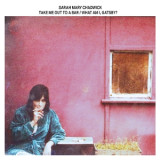
Take Me Out To a Bar / What Am I, Gatsby? marks a deliberate pivot. The album’s open, introductory chords evoke seem fit to score a scene in a Michael Haneke movie in which some stern German woman stomps down a whitewashed hallway. By the time that Chadwick’s crackly soprano joins in, it figures almost as a kind of intrusion upon what had been, up until that point, a pure mood. “You don’t have to listen to all the lyrics,” she attests. Chadwick's calling card since her earliest releases — a jagged, one-take immediacy — has been dialed back, leaving room to inconspicuously crowbar as much poeticism into the songs as she possibly could.
Flying Vipers record murky dubwise reggae on a Tascam 8-track in their basement bunker. Their love of Jamaican and UK 70's roots and dub is their north star, but eclectic crates of records and a couple decades worth of punk shows bleed through on tape. Twin brothers Marc & John Beaudette on drums and bass telekinetically lock-in with Zack Brines' layers of vintage organs and electric pianos in concise melodic meditations. "With ‘Off World’, their first full-length album featuring vocalist Kellee Webb, the Boston area band uses this foundation to explore the fight or flight of contemporary survival." While largely original compositions, three covers encapsulate the lyrical and musical themes found throughout the LP; an alienation anthem from Northwest punk pioneers Wipers; the theme from the cult classic animated film La Planete Sauvage, featuring the acclaimed jazz harpist Brandee Younger; and quite possibly the first dubwise Sun Ra tribute. Their own singles like "Believers & Deceivers" and "Jackals" confront the grim reality of modern culture, wondering if life in America, and/or Earth, is worth fighting for or leaving behind. Through it all the drum and bass is there, to help you hold your ground and to guide your escape into sonic space.