We leapt.
With sound as our compass,
and trust as our fire.
Out of silence,
a pulse.
Out of doubt,
a song.
Out of darkness,
our first light.
Endless thanks to Barac for breathing new life into Hraach’s creation,
and to everyone whose energy made this possible.
Search:pos
Iter, Calgolla's latest concept album, is an intense and layered sonic journey into the contradictions of the contemporary human condition.
With a musical language that combines alt-rock, post-rock, post-punk, spoken word and forays into performance art, the group constructs a complex work that defies any simple definition.
The record deals with themes such as migration, inner transformation, social alienation, ecological collapse and a sense of loss, layering lyrics and sounds into a coherent but fragmented narrative, like the time it tells.
The lyrics are taken and adapted from Viaticus, a graphic poem written by the singer together with visual artist Giacomo Della Maria, reshaped to adhere to tense, dense and visionary soundscapes.
The nine tracks of Iter thus form a journey that crosses different languages, styles and moods, like stages of an initiatory path that reflects the precariousness of modern life.
An album that refuses to offer answers, but invites immersion, surrender and transformation through listening. It is a meditative, multi-layered exploration of transformation, perception and resilience in the fragmented reality of modern life. With nine tracks and several languages, Iter (‘journey’ in Latin) traverses internal and geopolitical, sacred and profane landscapes, layering spoken words and sound collages into a deeply expressive experience. The guitars weave textures that are now ethereal and now abrasive, while the rhythm section builds a pulsating framework that supports and amplifies the evocative atmosphere of each piece. Iter does not merely recount the decay of our time, but attempts to bring it to life, immersing the listener in an emotional flow that blurs the boundaries between dream and nightmare, between meditation and chaos. An album that refuses to offer answers, but invites immersion, abandon and transformation through listening.
Having carved out a place in the contemporary club scene with releases on Glitterbox/Defected, Boogie Angst & Lovemonk Records amongst others, Madrid's Casbah 73 recently shed his skin and is now ready to introduce The Jade, a live ensemble that prioritises emotion, excitement and the art of the song. Led by Oli Stewart (Casbah 73), the project brings together a remarkable group of players. At its core, this is about people: musicians in dialogue, shaping rhythms and melody, singing songs from the heart, that shared pulse based on a timeless musical vocabulary.
Opening with the exuberant 'Let The Light In', this is sizzling hi-jazz and sunny soul, shot through with a dose of funky Afro-Latin rhythms for good measure. Josh Hoyer leads the charge, delivering a powerhouse vocal performance, while Nia Martin and Deborah Ayo bring that gospel glow. As, indeed, they continue to do so throughout, especially on the deep, soulful standout 'When Love Left' or the shimmering, street soul meets Brit-funk feel of 'Change!' Experience the spontaneity and playful nature of tracks like 'Si No Me Quieres Esperar' (with Cuban maestro Ale Gutiérrez on vocals) infused with funky Latin and Brazilian rhythms, as well as sparkling, alien disco dub in the form of 'Space Lines'. There's no-holds, hands-in-the-air, fluid disco club grooves on 'What It Takes' and driving, riotous soul-jazz on 'Being Seen'. Just when you think you've got it figured out, the band change it up and stretch out with beautiful jazz-funk instrumentals like 'At The Queensboro' or lush sonic gem 'On That Strange', a track that feels like a long, blissful afternoon fading into evening, with things left unspoken in the air and mystery in its kinky grooves.
The Jade's sound is post-pout, studs up, raw soul, free from modern dancefloor tyranny.It's intimate disco, dead-selfie freedom, Afro-Latin jazz-dance and Iberian funk all rolled into one, rooted in emotion and shot through with a healthy dose of funky bad ass groovism. Genres that blend and bleed into each other following one simple idea: songs and the expressive power of live instrumentation.
The writer Max Sebald often pondered over the nature of human memory, specifically, how our thoughts and desires - and their results - overlap and mutate over time. In A Place in the Country, he writes of the significance of what see as “similarities, overlaps and coincidences”. Are they the “delusions” of the self and senses, or manifestations of “an order underlying the chaos of human relationships, ... which lies beyond our comprehension”?
Song of the Night Mists, the new album by post-classical composer Stefan Wesołowski, often feels it draws on Sebald’s premise.
On a simpler plane, the one where the market dictates the neatly ordered information we consume, Song of the Night Mists can be described thus: recorded in the main by Stefan Wesołowski in Gdańsk, both in his studio and in Saint Nicholas' Basilica, the album incorporates acoustic instruments - piano, violin, double bass - and classic synthesizers such as the Roland Jupiter-8, the Soviet Polivoks. A Roland Space Echo RE-150 tape delay was also pressed into service as an instrument. We also hear the basillica’s organ and field recordings from the Tatra Mountains. Other musicians were Maja Miro, who played the flute parts on ‘Glacial Troughs’ and brother Piotr Wesołowski, who played the organ on ‘Wilhelm Tombeau’. Sound engineer was Marcin Nenko, who was also on hand to record the basilica organ parts. The album was mixed in New York by Al Carlson (Oneohtrix Point Never, Jessica Pratt, Zola Jesus, Lady Gaga, and Liturgy) and Rafael Anton Irisarri handled the mastering.
Ostensibly, Song of the Night Mists is the last in a trilogy, following on from albums Liebestod (2013) and Rite of the End (2017). All three deal with existential matters such as love, death, decay and “an ultimate end”; apocalyptic and Promethean in spirit, and betraying very human conceits. The Sebaldian nature of the new record starts to make itself felt when Wesołowski talks of how he used sampling. One element is unexpected, that of sampling himself: “I go back to dozens of my own unused sketches and recordings, treating them as raw material to cut, slow down, reverse, and transform in every possible way.” Memory as sound, to be reemployed by the listener through their own imaginings.
Another set of samples made by Wesołowski plays another role. These are field recordings, originally created for an audio illustration of the formation of the Tatra Mountains, and used in a film by sound designer Michał Fojcik. Wesołowski: “You can hear cracking ice, streams, footsteps in the snow and the wind, and a real avalanche, recorded from the inside.” The “Tatra connection” on the album is also found in samples referencing composer Karol Szymanowski. The album’s title alludes to a poem about the mountains by Polish poet, Kazimierz Przerwa-Tetmajer.
Wesołowski’s Tatra recordings are “about a world without humans - about the fact that the world existed, was beautiful, and had meaning long before people arrived, and for the vast majority of its history, it was a place without us.” Wesołowski, using one iteration of the natural world, plays out in sound Sebald’s idea of another order, underlying the chaos of human relationships lying beyond human comprehension.
These feelings play themselves out on the five album tracks. Sonorous and rich, they illustrate tectonic shifts we have no control over. Wesołowski hints that the overall sound is a “meditation on the metaphysics of the non-human set against the spirituality that human presence has brought into it.” In that light, the opening number, ‘Core’, with its slow build, and crackling and straining sound effects, create an effect of the earth groaning into life in a creation myth. Once the piano part raps out a simple melody and modulated tonguing trumpet samples add to the overall atmosphere, the listener can certainly find a cue in the “spiritual”, or “human” side of the story. Human versus nature: from the strains and harmonic muscle stretches of the second number, ‘Glacial Troughs’, through to the powerful and filmic ‘Stalagmite’ and heart-on-sleeve romance expressed in closer, ‘Wilhelm Tombeau’, we listeners are cast as Friedrich’s wanderer, looking out over a landscape that will appear only if we engage with it.
Formations of melody appear incrementally, almost appearing by chance - like hidden footings in the rock shelves to give us something to grasp onto. Rhythms are used sparsely: the prolonged percussive taps on ‘Glacial Troughs’ are an anomaly and maybe there to give pace to the album to come; essentially to keep the listener strapped in. Elsewhere, percussion is used as an aid to mood, the two thudding, timpani-style passages on ‘Peak’ there to offset the short, beautiful, kosmische passage that splits them.
Elements of the borderline religious spirit that drove German electronic music in the late 1960s and 1970s also find a place on Song of the Night Mists. The swells and recessions of the organ find their emotional climax on ‘Wilhelm Tombeau’, a track which summons up echoes of the “mountain magic” vistas created by Popol Vuh or Tangerine Dream, especially with the slightly atonal wobble of the Mellotron that counters it.
This is a dramatic album, but it does feel a strangely short, or curtailed listen on ending, evoking the feeling one gets when waking from a dream, and, for all its incipient grandeur, a track like ‘Stalagmite’, for instance, ends on a minor note. Wesołowski admits that Song of the Night Mists is born of the all too human process of temptation, doubt and recalibration - Sebaldian overlaps and coincidences forming something that must live another life, away from its creator. In Wesołowski’s words, the album is “a newborn foal must stand up and walk right after birth.” Now it is yours to ponder.
Nobody thinks it is strange anymore that an artist changes his nom de plume to reflect a new direction; a metamorphosis of his art. As listeners, we must resist the temptation to compare a new expression with previous works but instead allow the artist the necessary leeway to follow where his muse leads. So it is with Lone Wolf & Friends. There is a departure from his previous work that is his alone to define. We are simply recipients and must let the work wash over us like waves on the beach and be slightly moulded by the force of each one.
By definition, a Lone Wolf has no friends so we are left with the nagging question of why the name has significance. Perhaps Lone Wolf’s friends are his previous artistic incarnations and although he alone created this work, those earlier versions were there to encourage his creative drive. We are never truly loners, are we?
Written, composed and produced in Vancouver, Canada, by Lone Wolf & Friends.
Mastered in Groningen, the Netherlands, by Johanz Westerman at Balyhoo Studio Mastering.
Designed in London, UK, by Irene Fo + Agente Morillas + Positivland.
- A1: Treble Control
- A2: Bass Control
- A3: Playback Amplifier
- A4: Speed Tolerance
- A5: Monitoring
- B1: Transistors
- B2: Consumption
- B3: Reel Size
- B4: Standard Model
- C1: Erase & Bias + Signal/Tape Noise
- C2: Tape Speeds
- C3: Frequency Response
- C4: Play Head
- D1: Mains Voltage
- D2: Record Level
- D3: Demdike Stare - Process Ion (Part 1 - Remix)
- D4: Demdike Stare - Religious Dub (Part 2 - Remix)
Organic Analogue returns with a rediscovery of Beppu's rare dubbed-out electronica and circuit-bent techno. Andrew Hargreaves is the Manchester-based producer behind this alias which was first making waves back in the late-2000s. Back then it was three limited CDr EPs in 2009, which came with just 50 copies each, that made a stir and still stand up today. As such, the sought-after recordings receive a proper vinyl pressing and have been mastered by Miles Whittaker. Two distinct remixes from Demdike Stare also add further quality and contemporary context to the origins, which blend dub techno and braindance with textured noise. IPOP continues Organic Analogue's tradition of spotlighting overlooked talent having already done so with names like DJ Guy and Jean-Louis Huhta.
DJ Feedback
dBridge:
"A moment in time."
Ben UFO:
"This is gorgeous, thank you."
Tolouse Low Trax:
"Very much my start into Electronic Music back in the days. Cool Reminder!"
Stonecirclesampler:
"All time Manchester classic from one of the best in the city, incredible project and so so so happy for it to be reissued and on vinyl, original and Demdike remixes are all beyond incredible and absolutely nail the sound of the late 2000s early 2010s post-Sandwell District/Berghain techno and pre-noise/techno/post-punk - an absolute snapshot of a city and sound moving FWD, brilliant cant wait for the wax!!!"
Eric Cloutier (Palinoia, Tresor | Detroit):
"Well god damn. I mean...god damn."
Yu Su:
"These are so good. Demdike Stare's remix also!!"
Ruf Dug:
"Next level even almost 20 years later."
Silent Era (Of Paradise) :
"Great project. What a gem."
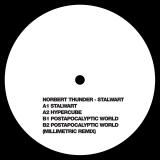
Hungarian power comes through the roof as it can be said and it comes from none other than by Norbert Thunder. The artist that always has known and will know the sence of style whether it’s clothing or the sound of the drums, saw cutting riffs of synths or readiness to penetrate the soul with genuine love and respect for the electronic groove.
On this disc the remix duties are taken by none other than Millimetric, the legendary artist that has been putting people through frequencies for many years and that has been generating feelings for a while. Having Norbert over and sharing many words together have made the process genuine and it is a truly wonderful time that the disc has been shaped in a visually and muscially rich matter that it did.
Remixes V2[8,61 €]
Remixes V3[11,72 €]
Remixes V4[11,72 €]
Remixes V5[12,56 €]
Remixes V6[11,35 €]
Repress
The Godfather of Hardcore, Marc Acardipane, needs no introduction. His outstanding releases over the past 30 years speak for themselves. He has been instrumental in helping to create electronic music history, with countless well-known productions which have been unsurpassed by any other artist of this calibre. His timeless masterpieces have been and always will be heard at hardcore raves spanning the circumference of the Planet. With "9 Is A Classic", "Slaves To The Rave", "Pitch-Hiker", "Stereo Murder" and "We Have Arrived", just to name a few, he clearly proves who's the boss. "The Most Famous Unknown" is a well compiled collection of Marc's music, which showcases a mere portion of what he has composed and produced since the early nineties! The vinyl and digital selection of "The Most Famous Unknown" features remixes by Body Sushi a.k.a. VTSS & Randomer, Dasha Rush, Gabber Eleganza feat. Delirio, Jasss, Kilbourne, Minimum Syndicat, Nina Kraviz, Perc, Solid Blake, Stranger, Umwelt and VTSS, which all deliver excellent interpretations of tracks they have chosen to revamp. All original tracks have been re-mastered to the highest possible standard of quality.
Since 2019, Amsterdam-based curator Pieter Jansen has used his yeyeh label as a vehicle for carefully considered (and sometimes unlikely) ‘first time’ collaborations between different experimental and avant-garde artists including Eversines, Carolina Eyck, Greetje Bijma and Oceanic. After pairing saxophonist/composer/producer Jerzy Maczyński with fellow Polish experimentalist Waclaw Zimpel on 2021 collaborative release Sariani (which was credited to Jerry&ThePelicanSystem in a nod to the former’s earlier album for Warner Music’s Polish Free Jazz series), yeyeh founder Pieter Jansen had an idea. That simple idea – getting Maczyński in the studio with Chicagoan DJ/producer Hieroglyphic Being – was the genesis of this record, the debut album by Universal Harmonies & Frequencies. In June 2022, Hieroglyphic Being flew to Amsterdam to spend five days improvising with Maczyński in a rented studio beneath Volkshotel, under the watchful eye of recording and mix engineer Rein De Sauvage Nolting, better known in electronic music circles for his work as RDS. During those sessions, 26 long, improvised compositions were recorded, with Maczyński contributing saxophones and electronic tools, and Hieroglyphic Being laying down synthesizer parts and vocals. These sessions were captured on film by VLF (Katarzyna Debska), who later created the artwork and visual language for this record release. Some days after the recording sessions, Sauvage Nolting – who had delivered artistic input during the improvisations – sat down with Jansen to select 13 pieces to put forward for the album and a loose conceptual framework. It was then that the hard work began. While a decision was taken to present some improvisations in full, most of what you will hear on Tune IN, as the album is titled, is based on fragments of improvisation. The resultant pieces were reconfigured, re-worked and re-produced by Maczyński and Sauvage Nolting over many months, and in discussion with Hieroglyphic Being. Maczyński added more layers of instrumentation, creating a “whole digital band of reed instruments” – a method he previously utilized on Sariani. What you hear when you play the record defies categorization. It is rooted in a specific moment in time and the spontaneity of musical improvisation – both Maczyński and Hieroglyphic Being are experienced improvisers, albeit with different musical instruments and tools – but also the product of extensive post-production and reflective re-shaping. It is not free-jazz, ambient, electronica, rhythmic cubism (as Hieroglyphic Being’s distinctive sound has previously been called), or avant-garde experimentalism, but something that combines all these musical approaches and more, with a sprinkling of far-sighted futurism mixed in. It is a magical and mystical meeting of musical minds that will pass the test of time in decades to come.
Blending British techno and hyperpop with the Baile Funk and samba of singer Paula's native Brazil, PPJ are considered by British magazine NME to be one of the most innovative bands of the moment.
The double EP "Bloco Vol.1 & Vol.2" tells the story of the band's journey to Rio de Janeiro, far from the postcards we know of Brazil.
"One of the most innovative new names around" NME
"A fascinating and exhilarating blend of neoperreo, techno and electroclash from a group to watch" RESIDENT ADVISOR
"Kaleidoscopic techno-pop" DJ MAG
"A real anti-depression remedy"LINE OF BEST FIT
"Their main goal? To make everybody dance" METAL MAGAZINE
‘It’s hard to find an act as distinctive as PPJ » MIXMAG
Several years ago, the Disco Records DJ Crew members got their hands on a couple of original 70s obscurities, while these standout records shone brightly in their own right, the team finally decided to put them out as those obscure old records fetch eye-wateringly high prices on the second-hand market. Due to popular request & lovingly mastered to the highest possible standards, they are now available to play and share in very special moments at parties around the world. This will surely be one of the most keenly anticipated disco release of the year. For our first release, we are extremely proud to bring you at last, three very hard to find disco anthems on sides A & B in their glorious full extended versions
- A1: Twist And Shout
- A2: You Can't Do That
- A3: All My Loving
- A4: She Loves You
- A5: Things We Said Today
- A6: Roll Over Beethoven
- A7: Can't Buy Me Love
- B1: If I Fell
- B2: Boys
- B3: A Hard Day's Night
- B4: Montréal Press Conference
- B5: Larry Kane Interviews Backstage
- B6: Toronto Press Conference
The Beatles played two shows at the Montréal Forum on September 8th 1964, a matinee at 4pm and an evening performance at 8pm and at 6pm they held a press conference for Canadian Broadcasting Corporation from the Forum’s stage. A local newspaper had reported that somebody was going to kill Ringo, so instead of staying the night in Montréal, they flew out straight after the evening show and arrived at Key West at 3.30am where hundreds of fans were awaiting them. After a day off in Miami, the group performed at the Gator Bowl in Jacksonville, Florida the following night.
We have done the best we possibly could with these admittedly lo-fi yet important historical recordings. The source is AM radio and there is considerable distortion on the vocals. The broadcast was faded out halfway through A Hard Day's Night so the last two songs of the show, I Want To Hold Your Hand and Long Tall Sally were not transmitted.
- A1: I'm Dirty
- A2: G Strings
- B1: Side Winder
- B2: Phoenix Theme (G's Out Dub)
- C1: Daily Prayer
- C2: Magic Potion
- D1: My Fathers Farda (Mr G's Soundboyz Dub)
- D2: Gladesmen
- E1: Danger Glyph Theme
- E2: Eye Poke
- F1: Day After B
- F2: Emotionz (Unreleased)
- G1: Hear Me Out
- G2: Pepsi
- H1: Jet Black
- H2: Shelter (Unreleased Version)
- I1: Lights
- I2: Live And Let Me Live
- J1: Song For My Cantor
- J2: Potion (Unreleased)
- K1: Moments
- K2: Mmmm
- L1: Going Home
2026 Repress
Mr. G, aka Colin McBean, presents a remastered, 23-track compilation entitled 'OG Retrospective'
'The day I found my original studio masters and got my rights back was the starting point, and then I realised it's 25 years on and it's time to recode, remaster and reevaluate because I've never looked back properly. I've always been like a bat out of hell, never quite thinking I'm good enough or great at what I do, but it's important to celebrate, because there's nota lot of people still here, still doing it after this length of time'.
With new masters provided by Simon at the renowned London mastering house The Exchange London, a direct link to the original mastering done by the late-Nilz (Nilesh Patel) from The Exchange, Mr. G's 'OG Retrospective' marks a reflective period in McBean's life.
'All I've ever done is write and move forward, but more and more, I get the new generation sending me videos of my old tracks and sometimes I don't even recognise them, so finally I thought, 'ok, you're comfortable in your own skin, let's really see how you sounded at the beginning, how you've changed, how have the techniques changed'?
It was quite raw going back over these; some of the memories are riddled with pain and angst - friends dying, where I was in my life at the time, having a heart attack and so on. Having a sound, too, can be a cross to bear. You're only ever competing with yourself, your only game is being better than your last game, so if you dwell on the past too much you can't move forward. Getting to the point where I can look back and feel happy, feels good.
Invariably, what will come from this is 'more', because, with my own label I have endless possibilities and will continue telling my story.'
- A1: The Twine And The Twist
- A2: To The Great Work Only
- A3: Twilight Leaves
- A4: The Lighthouse And The Catacombs
- A5: This Slaughter Behold
- B1: Remember To Dare
- B2: Mine Were Of Marble
- B3: The Baron (Ordeal By Fire)
- B4: Ire And Troth
- B5: This Hour Her Vigil
At the end of the project’s 20th anniversary celebrations, ROME tolls in the next era of the band with a fresh and visionary album: ‘The Tower’. ROME’s new and ever more mature sound is informed by a radically minimalist folk approach, with nonetheless charmingly lush arrangements. ‘The Tower’ is an introspective and enigmatic work at whose centre stands nothing less than ROME’s raison d’etre: The Great Work and the sacrifices both necessary and essential on the demanding path to light. As an unreachable bulwark against the general decline of every value in life, the tower would have been erected long ago to defend the coast.
It would have been raised on a rocky platform resting on the sea floor. It would have been joined to the continent by a thin tongue of sand. It would have offered a heroic, magical point of view. A place for our claim to know and point out vaster horizons. It would have stood firm on the ramparts. This isolated tower would not have been just a refuge for more or less mystic escape, but also a post of resistance and combat.
- A1: Music Is The Healing Force Of The Universe
- A2: Masonic Inborn
- B1: A Man Is Like A Tree
- B2: Oh! Love Of Life
- B3: Island Harvest
- B4: Drudgery
Music Is the Healing Force of the Universe is a powerful and often ignored 1970 recording from the American avant-garde jazz saxophonist, singer and composer Albert Ayler. Apart from the posthumous album The Last Album, this was to be Ayler's last studio album, recorded and released before his death in November 1970. The album was initially judged as too difficult by Down Beat, then recognized by the most as “an important portrait of a man facing a life and death inner struggle beyond the boundaries of jazz, which takes jazz itself into a new dimension”. It also includes some of the most innovative use of sound by the free-jazz icon Albert Ayler.
A previously unissued post-bop document from 1970, Jyväskylä Workshop Band 1970 assembles American saxophonist Charlie Mariano, Norwegian bassist Arild Andersen and Finnish luminaries Heikki Sarmanto, Eero Koivistoinen, Paroni Paakkunainen, Seppo Ranniko, Pekka Pöyry, Edward Vesala and Matti Koskiala. Professionally captured in concert, the album delivers a vibrant set of groovy, exploratory and subtly exotic tunes that helped assert Finland’s place on the international jazz map.
- A1: Cloud Nine
- A2: I Heard It Through The Grapevine
- B1: Run Away Child, Running Wild
- C1: Love Is A Hurtin’ Thing
- C2: Hey Girl
- C3: Why Did She Have To Leave Me (Why Did She Have To Go)
- C4: I Need Your Lovin’
- D1: Don’t Let Him Take Your Love From Me
- D2: I Gotta Find A Way (To Get You Back)
- D3: Gonna Keep On Tryin’ Till I Win Your Love
The Temptations Get High on Psychedelic Soul: Cloud Nine Soars with Ambitious Arrangements and Production, Features Standout Vocal Performances and Instrumentation by the Funk Brothers
The Temptations’ Cloud Nine announced that Motown — and “The Sound of Young America” — would never be the same. Influenced by the emergence of cutting-edge rock and pop currents, as well as increasing sociopolitical turmoil, the album broke down barriers between rock, psychedelia, and soul while heralding the arrival of visionary arrangements and production techniques. Bookended by traditional R&B numbers, the 1969 record sent the Temptations in bold new directions and signaled the advent of psychedelic soul.
Sourced from the original master tapes, strictly limited to 3,000 numbered copies, pressed at Fidelity Record Pressing, and housed in a Stoughton gatefold jacket, Mobile Fidelity’s 180g 45PM 2LP set presents Cloud Nine in audiophile sound for the first time on a domestic pressing. This collectible reissue bestows Norman Whitfield’s extraordinary production with the grand-scale dynamics, natural tonality, expansive openness, and low-end weight it deserves. The timbre of each of the five members’ voices is readily identifiable — even within the group harmonies — bestowing a realism never experienced outside the recording studio.
Making its debut on 45RPM, the album further benefits from the wide groove space by playing with greater separation and more realistic presence than prior editions. Everything from the brassiness of the horns to the dry snap of the snare comes across with reference-grade clarity and positioning. And since Motown’s renowned Funk Brothers backing band plays on many of the cuts, you’ll want to savor every note. The imaging, soundstaging, and organic bloom-and-decay of the notes make that possible.
Amid Cloud Nine, the instrumentation and architecture stand out as much as any element. Never before had a Motown album contained such ambitious patterns and complex passages. Seemingly conscientious of the departure from their past methods, the Temptations and Whitfield bunched together the tracks that mark a deep dive into psychedelic territory and counterbalance them with seven sterling soul cuts that dovetail with Motown tradition drenched with heartfelt vocals, swelling strings, and finger-snapping beats.
On the original 33RPM release, traditional Motown soul — laden with heartfelt vocals, swelling strings, and finger-snapping beats — occupies Side Two. These songs reveal an ensemble still very much on top of delivering pristine pop-soul material graced with romantic sweetness, persuasive insistent, and soaring highs. Re-energized after the departure of lead singer David Ruffin, who was fired for a variety of reasons in June 1968, the Temptations seamlessly meld with his replacement, Dennis Edwards, on one melodic gem after another.
The collective tackles five songs co-written by the legendary Motown team of Barrett Strong and Whitfield. Not the least of which are the smooth, shuffling “Why Did She Have to Leave Me (Why Did She Have to Go)” and deceptively simple, horn-spiked “Gonna Keep on Tryin’ till I Win Your Love.” On these tracks, as well as on a lush rendition of the ballad “Love Is a Hurtin’ Thing” and pleading, tender send-up of the Gerry Goffin-Carole King classic “Hey Girl,” Edwards and Paul Williams take turns on the lead with the estimable Eddie Kendricks, Melvin Franklin, and Otis Williams providing backing support.
All five vocalists trade-off leads on the simmering title track, a groundbreaking composition shot through with wah-wah-pedal effects, liquid funk, deep bass lines, Cuban percussion, saturated reverb, and gang choruses. Whitfield mines each member’s natural vocal range with spectacular results, keeps time with cymbals, and channels both the heated temperatures and escapist desires of a society embroiled in war, conflict, and experimental drugs.
Amazingly, the Temptations top themselves on the similarly revealing “Run Away Child, Running Wild.” Nearly 10 minutes in length, the song explodes R&B parameters and harbors a cinematic scope. Urgent pianos, distorted guitars, stripped-down percussion, steamy Hammond organs, minimal bass motifs, five distinct voices narrating the tale of a boy who fled home and now finds himself amid the scary, unforgiving external world: They combine to give the urgent tune a walls-closing-in atmosphere where fear and desperation reign. Bolstered by an extended instrumental section that precedes a climactic return of the singers’ voices, “Run Away Child, Running Wild” equaled the success of the record’s title track, with both reaching No. 6 on the pop charts.
COLLECTING ORDERS FOR 2026 REPRESS
Night falls, the lights dim, and the Extrasensorial Catalog presents its third chapter—an eclectic VA built for late hour mind-bending moments on the dancefloor.
On the A side, we open with Dani Labb and his explosive contribution "Rin Raje", a raw, hypnotic roller designed to twist minds and bodies alike. Saturated grooves, razor-sharp percussion and just the right amount of darkness make this an undeniable peak-time must.
A2 features the Italian craftsman Niki IL B with "Monte Moggio", a mystical excursion into deep, textured terrain. This track feels like wandering through fog-covered hills at dawn—delicate, groovy, and haunting in the best possible way.
Flip to the B side, and Ludovic wastes no time with "Vitesse, Argent, Sexe (5am Mix)", a late-night anthem soaked in tension and sweat. Pulsating basslines and seductive rhythms carry you into a euphoric state where the rules no longer apply.
Closing things off is Kebab Traume with "Mindlock", a cerebral journey that merges dreamy pads, off-kilter drumwork and warped melodies—like stepping into a lucid dream you never want to wake up from. An ideal closer for those deep after-hours rituals.
People’s Instinctive Travels and the Paths of Rhythm with the first-ever action figures of Phife, Q-Tip, Ali, and Jarobi.
Their music, characterized by a light-hearted and positive tone, with incredible wordplay, paved the way for hip-hop artists of the time.
This 4-pack of figures is inspired by the band members as they appeared in the music video,
I Left My Wallet in El Segundo—and yes, a wallet accessory is included.
All 4 figures appear in collector-friendly window-box packaging with original Super7 artwork influenced by the People’s Instinctive Travels and the Paths of Rhythm album cover.
This album is considered one of the most impactful influences at the time, mixing alternative hip-hop and jazz rap.
So, hop in the car for a road trip in time with this 4-pack ReAction Figure set of the members of A Tribe Called Quest.
- Hotel California
- New Kid In Town
- Life In The Fast Lane
- Wasted Time
- Wasted Time (Reprise)
- Victim Of Love
- Pretty Maids All In A Row
- Try And Love Again
- The Last Resort
The moment the instantly recognizable intertwined guitar passage on the title track to the Eagles' Hotel California begins, the record's genius becomes obvious all over again. Ranked the 118th Greatest Album of All Time by Rolling Stone, certified by RIAA as the third best-selling LP in history, and considered the foundation on which the Golden State's mid-‘70s music scene was built, the 1976 landmark is a music staple immune to shifts in trends, eras, and styles. Fearlessly addressing the chaos and consequences of American life, its songs remain strikingly prescient and gain creedence with each passing day.
Mastered from the original analogue master tapes, pressed on MoFi SuperVinyl, and limited to 17,500 numbered copies, Mobile Fidelity's UltraDisc One-Step 180g 45RPM 2LP vinyl box set ensures you will want to permanently check into and never leave this particular Hotel California. Up to the herculean task of standing head and shoulders above all prior reissues, this collectible edition plays with extreme clarity, organic richness, tube-like warmth, massive dynamics, and microscopic levels of detail. You'll be able to practically smell the colitas and feel the breeze in your hair. Songs come across with an epic sweep and feature immersive, front-to-back soundstages that allow the music unprecedented air, roominess, and separation. As for the noise floor? It's basically as invisible as the spirits that waft in the corridors of the unforgettable title song.
Aesthetically, the premium packaging and presentation of the UD1S Hotel California pressing befit its esteemed status. Housed in a deluxe box, it features gorgeous foil-stamped jackets and faithful-to-the-original graphics that illuminate the splendour of the recording. From every angle, this UD1S reissue exists as a curatorial artefact meant to be preserved, touched, and examined. It is made for discerning listeners that prize sound quality and production, and who desire to fully immerse themselves in the art – and everything involved with the album, from the renowned cover art to the meticulous finishes.
Indeed, the opportunity to zero in on all the particulars of the 26-million-selling Eagles record dubbed "a legitimate rock masterpiece" by vaunted Los Angeles Times scribe Robert Hilburn has never been better. A global phenomenon that marked the band debut of guitarist-singer Joe Walsh, Hotel California continues to resonate and connect with listeners of all generations taken by its narrative depth, stark directness, picturesque melodies, daring majesty, and ardent emotionalism. Adorned with a breathtaking exterior photograph of the Beverly Hills Hotel that serves as the simultaneously haunting and alluring cover art, and rounded out by a rear-cover shot of the Lido Hotel lobby that reinforces a notion that teeters between permanence and transience, Hotel California is brilliantly tied to a specific place that functions as a universally understood metaphor for the American Dream.
Confronting the darker undercurrents and oft-ignored constructs attached to that romantic notion, the record's songs revolve around a host of shared themes: excess, mobility, stability, illusion, fame, destruction, and idealism included. Notably, Hotel California appeared at a crucial junction in American history: During the country's bicentennial and amid escalating controversies related to the Vietnam War, energy crisis, and governmental corruption. That the Eagles manage to channel such cultural, social, and economical matters into a cohesive, stately, big-picture statement is alone a stupendous feat. That the album's reach, boldness, vitality, accessibility, and understated intensity have never waned make it a marvel.
Reflecting on Hotel California 40 years after its original release, and indirectly explaining its enduring appeal and increasing relevance, singer-songwriter Don Henley confirmed the record pertains to the "loss of innocence, the cost of naiveté...the difficulties of balancing loving relationships and work, trying to square the conflicting relationship between business and art; the corruption in politics, the fading away of the Sixties dream of ‘peace, love and understanding.'"
It can be argued that Henley and company squarely hit on and drove home those ideas in the surreal title track, chart-topping "Life in the Fast Lane," and grand "The Last Resort" alone. But that would miss the forest for the trees. Experienced as an unbroken whole, complete with the pristinely shot imagery and physical grooves, Hotel California unfolds like a geography-conscious saga by James Michener and plays like colour-saturated movie shot on 70mm film by Martin Scorsese. It's about our collective and individual decisions – and the shape of our past, present, and future. And, just like that conjured by our imaginations, Hotel California continues to take on a life of its own.
More About Mobile Fidelity UltraDisc One-Step and Why It Is Superior
Mobile Fidelity Sound Lab's UltraDisc One-Step (UD1S) technique bypasses generational losses inherent to the traditional three-step plating process by removing two steps: the production of father and mother plates, which are created to yield numerous stampers from each lacquer that is cut. For UD1S plating, stampers (also called "converts") are made directly from the lacquers. Since each lacquer yields only one stamper, multiple lacquers need to be cut. Mobile Fidelity's UD1S process produces a final LP with the lowest-possible noise floor. The removal of two steps of the plating process also reveals musical details and dynamics that would otherwise be lost due to the standard multi-step process. With UD1S, every aspect of vinyl production is optimized to produce the best-sounding vinyl album available today.
MoFi SuperVinyl
Developed by NEOTECH and RTI, MoFi SuperVinyl is the most exacting-to-specification vinyl compound ever devised. Analogue lovers have never seen (or heard) anything like it. Extraordinarily expensive and extremely painstaking to produce, the special proprietary compound addresses two specific areas of improvement: noise floor reduction and enhanced groove definition. The vinyl composition features a new carbonless dye (hold the disc up to the light and see) and produces the world's quietest surfaces. This high-definition formula also allows for the creation of cleaner grooves that are indistinguishable from the original lacquer. MoFi SuperVinyl provides the closest approximation of what the label's engineers hear in the mastering lab.