With his Premise EP, Felix Fleer unites long-held ideas into a cohesive and deeply personal collection, offering a unique blend of intricate textures and fragile harmonies that reward attentive listeners with its meticulous attention to detail. The title track “Premise“ opens the A- side with an infectious garage groove and Fleer’s signature brand of detuned vintage polysynths, building up to a bright crescendo that reveals a rhythmically captivating vocal hook. “Know U” features a piercing drum groove, occasionally interrupted by abstract Buchla glitches and a reduced RnB vocal chop paired with ethereal, almost organ-like layers of pads to culminate in a stripped-down moment for the bass line to take center stage. The main theme of “Thinkage” is a classic break paired with a layered pattern of abstract, percussive vocal chops. This rhythmic pulse is accompanied by a wild harmony of constantly warping and evolving pads and drawn-out bass sounds. Opening the B-side, “Real Love” is the darkest tune on the EP. Its unstable chords and intricate, unpredictable textures induce a constant sense of unease, held together by a subtle techno groove. “Rush” contrasts this with a euphoric chord progression reminiscent of early post-dubstep anthems. The EP closes with “Drift,” a final climax that revisits previous themes, offering a powerful and uplifting resolution.
Cerca:pow pow
When Your Old Droog first entered the Hip-Hop scene a decade ago, he was cloaked in anonymity. The Ukraine-born, Brooklyn bred rap phenomenon was known solely for his sharp, punchy lyrics wrapped in a gruff delivery. He finally came into the light with his eponymous debut release, the catalyst for what has become a prolific career. Since then, Droog has crystallized his place in hip-hop as the erudite rapper who can tackle any beat with precision; a product of the underground, yet designed for the mainstream. With his new project Movie, YOD is in a new era, where his days of being the dark horse in rap are over. He has countless co-signs from some of the greatest to ever touch a mic, and now he’s finally geared to join them. “Movie is everything that's dope about me,” Droog explains. “Every song, every mood. This is my story.” A layered masterpiece, the album features appearances by Method Man, and Denzel Curry, plus production by industry stalwarts like Just Blaze, Harry Fraud, Conductor Williams, and the legendary Madlib.
Label founder Mark Gavrikow presents Body2Body, his debut release, delivering a powerful tribute to the energy of the dancefloor.
The A-side is a driving mix of UK influences and the hard,
percussive sounds of the classic CLR Schranz era. Drum-heavy and full of energy, it's perfect for peak-time sets.
The B-side reveals a different side: more housey, dubby, and infused with warm chords, deep grooves, and hypnotic acid, offering the perfect balance between functionality and depth.
This beautiful splatter vinyl, color-matched to the inner sleeve, comes in a tie-dye cover with a large HFM logo. This special edition is strictly limited to 200 copies.
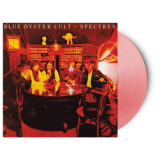
Blue Öyster Cult’s 1977 album, Spectres, is a pivotal release that highlights the band’s blend of hard rock, metal, and psychedelic influences. Released by Columbia Records, the album features the hit single “Godzilla,” a fan-favorite that showcases BÖC’s signature blend of catchy riffs and sci-fi-inspired lyrics. The album Spectres exemplifies the band’s dynamic range, from melodic harmonies to powerful, guitar-driven anthems. Known for their theatrical sound and enigmatic lyrics, Blue Öyster Cult expanded their sonic palette with Spectres, incorporating elements of pop and experimentation while retaining their hard rock edge. For fans of classic rock, Spectres is a must-listen, representing an era where BÖC continued to innovate and influence the genre
Brain Thrust Mastery, the second album by Californian art rockers We Are Scientists was originally released on Virgin Records in March 2008, its heady brew of retro futurism, indie and sparkling shiny power pop make it sound thoroughly contemporary - Working in conjunction with the band, this 2LP version of the album adds B-sides and tracks recorded live at London's Union Chapel and is pressed onto high-quality 180g vinyl. Named after founder members Keith Murray and Chris Cain's dress sense led a truck rental supervisor to surmise that they had to be academics, We Are Scientists were formed in Berkeley, California around the turn of the century. Their first 'proper' album, 2005's With Love And Squalor, became an underground hit as the band toured Britain, where they gained a substantial fanbase before the album was released in America the following year. Material for Brain Thrust Mastery was debuted on an early 2007 UK tour, before the band returned to the studio with producer Ariel Rechtshaid (who would go on to win Grammys with Vampire Weekend). We Are Scientists maintain a strong sense of theatre and comedy in their live performance - at this time, the group acted as their own support, offering seminars in self improvement called 'Brain Thrust Mastery'. The album is full of well-written pop songs, rich in hooks and melody. Lead single After Hours reached No 15 in March 2008, and after the release of the album the same month, it was followed by further hit singles Chick Lit and Impatience. A summer of touring, including performances at Glastonbury, T In The Park and Reading and Leeds underlined the group's popularity.
We welcome Habgud back on Warg Records after his release on our various artists compilation.
The rumbling and driving low end combined with the rhythmic hats in each of the tracks brings out a lively energy. Dominics use of stylistic and funky vocals is
distinctive, adding a sense of ambience to such a powerful style of production.
Making a return to his Chronicle alias for the first time since 2001, Tim Cant brings his unique blend of laid back atmospherics to the Spatial family for the first time with Time and Space on Curvature. Sit back, relax, or dance Chronicle has you covered for either with this welcome return to the scene.
A1 Geosynchronous
Getting straight to business with an intro of thick Hot Pants breaks, Geosynchronous sees Chronicle bring his unique take on atmospherics to Curvature in welcome style. An early breakdown with synths and subtle melodies is followed by a dreamy layer of two step amens and 808 basslines, completing a collage of beats as the increasingly memorable melodies slowly weave their story throughout the track.
A2 Life On Earth
A dream like, reflective affair is up next with Life On Earth Chronicle returning to the late 90s vibe of the moniker with a plethora of classic FX, vocal samples and long constant synthwork cascading above. Utilising a simple but effective core melody, danceable two step breaks and layers of detail that would fit in any retrospective set from the Progression Sessions era to the modern renaissance, this is one to savour.
B1 Future Fragments
A real treat for fans of synthy, sci fi tinged atmospheric goodness from eras gone by as Chronicle transports you to 99 Shepherds Bush Empire you had to be there now you can be with a track that encapsulates the era perfectly. Drizzling the mix with frequent echoing effects and washes of spacey synths and pads over an earworm melody not to mention the crisp rolling breaks this is a versatile and enduring track youll keep going
back to.
B2 Nostradamus
Closing out the EP, we have Nostradamus which opens lightly with hi hats and airy padwork before finely edited old school breakwork injects energy to the mix.
The breaks build with additional elements creating a very danceable and rhythmic loop, punctuated by a catchy melody. One sample proclaims The Future Is Power - if its in the hands of producers like Chronicle, effortlessly channeling the past with a modern twist, we know
we are in good hands.
Words by Chris Hayes Spatial Red Mist
- A1: A Day In The Life (Lennon-Mccartney) 5:49
- A2: Watch What Happens (M. Legrand-N. Gimbel) 2:44
- A3: When A Man Loves A Woman (Lewis-Wright) 2:54
- A4: California Nights (Hamlisch-Liebling) 2:32
- A5: Angel (Wes Montgomery) 2:49
- B1: Eleanor Rigby (Lennon-Mccartney) 3:08
- B2: Willow Weep For Me (Ann Ronnell) 4:34
- B3: Windy (Ruthann Friedman) 2:22
- B4: Trust In Me (Weber-Schwartz-Ager) 4:28
- B5: The Joker (Newley-Bricusse) 3:25
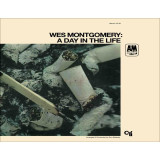
A Day in the Life' was released in 1967 and reached #1 on the Billboard Jazz Albums chart.
From the early 1960s to the late '80s, A&M was one of the most eclectic and powerful independent record labels in the world. The roster of artists who recorded there includes The Carpenters, Captain Beefheart, The Police, Joe Cocker, Suzanne Vega, Procol Harum and Janet Jackson, among others. Founded as an independent company by Herb Alpert and Jerry Moss in 1962, soon the label garnered interest and success, and was acquired by PolyGram in 1989. Throughout its operations, A&M housed well-known acts such as Sting, Sergio Mendes, Supertramp, Bryan Adams, Burt Bacharach, Liza Minnelli, Paul Williams, Quincy Jones, Cat Stevens, Peter Frampton, Carole King, Extreme, Joan Baez, the Human League, Soundgarden, Duffy, and Sheryl Crow, among others. Reissue of the debut album on A&M Records by jazz guitarist Wes Montgomery, released in 1967. It reached #1 on the Billboard Jazz album chart and #2 on the R&B chart. Considered by far the best of his three albums on A&M (in partnership with Creed Taylor’s CTI Records), A Day in the Life features a plethora of star sidemen, such as Herbie Hancock, Ron Carter, Ray Barretto and Grady Tate, among others, as well as superb arrangements by Don Sebesky.
. For Fans Of: The Weather Station, Weyes Blood, Adrianne Lenker, Phoebe Bridgers, Joan Shelley, Lana Del Rey, Cass McCombs, Angel Olsen & Neil Young. Camelot, the legendary seat of King Arthur’s court in Early Middle Ages Britain, was probably not a real place. A corruption of the name of a real Romano-Briton city, the word “Camelot” accumulated symbolic, mythic resonances over centuries, until achieving its present usage as a near-synonym of “utopia.” In the mid-20th century alone, Camelot inspired an explosion of representations and appropriations, among them the violent, affectless Arthurian court of Robert Bresson’s 1974 film Lancelot du Lac and the absurdist iteration of Monty Python’s 1975 Holy Grail, both of which feature armoured knights erupting into fountains of blood; the mystical Welsh world of novelist John Cowper Powys’s profoundly weird 1951 novel Porius, with its Roman cults, wizards and witches, and wanton giants; and the nationalist nostalgia of President John F. Kennedy’s White House. Unsurprisingly there are fewer Camelots in more recent memory. Camelot, Canadian songwriter Jennifer Castle’s extraordinary, moving 2024 chronicle of the artist in early middle age, charts a realer, more rooted, and more metaphorical place than the fabled Camelot of the Early Middle Ages (or its myriad depictions), but it too is a space more psychic than physical. In Castle’s Camelot, the fantastic interpenetrates the mundane, and the Grail, if there is one, distills everyday experience into art and art into faith, subliming terrestrial concerns into sublime celestial prayers to Mother Nature, and to the unfolding process of perfecting imperfection in one’s own nature. Co-produced by Jennifer and longtime collaborator Jeff McMurrich, her seventh record is at once her most monumental and unguarded to date, demonstrating a mastery of rendering her verse and melodies alike with crisply poignant economy. For all their pointedly plainspoken lyrical detail and exhilarating full-band musical flourishes, these songs sound inevitable, eternal as morning devotions. “Back in Camelot,” she sings on the lilting, vulnerable title track, “I really learned a lot / circles in the crops and / sky-high geometry.” The album opens with a candid admission of sleeping “in the unfinished basement,” an embarrassing joke that comes true. But the dreamer is redeemed by dreaming, setting sail in her airborne bed above “sirens and desert deities.” If she questions her own agency whether she is “wishing stones were standing” or just “pissing in the wind” it does not diminish the ineffable existential jolt of such signs and wonders. This abiding tension between belief and doubt, magic and pragmatism, self and other, sacred and profane, and even, arguably, paganism and monotheism, suffuses these ten songs, which limn an interior landscape shot through with sunstriped shadows of “multi-felt dimensions” both mystical and quotidian. The epic scale and transport of “Camelot,” with its swooning strings, gives way dramatically to “Some Friends,” an acoustic-guitar-and-vocals meditation in miniature on Janus-faced friends and the lunar and solar temperatures of their promises—“bright and beaming verses” versus hot curses which recalls her minimalist last album, 2020’s achingly intimate Monarch Season. (In a symmetrical sequencing gesture, the penultimate track, the incantatory “Earthsong,” bookends the central six with a similarly spare solo performance and coiled chord progression, this time an ambiguous appeal to … a wounded lover? a wounded saint? our wounded planet?). Those whom “Trust” accuses of treacherous oaths spit through “gilded and golden tooth” cynics, critics, hypocrites, gurus, scientists, doctors, lovers, government, the so-called entertainment industry sow uncertainty that can infect the artist, as in “Louis”: “What’s that dance / and can it be done? What’s that song / and can it be sung?” Answering affirmatively are “Lucky #8,” an irrepressible ode to dancing as a bulwark against the “tidal pools of pain” and the “theory of collapse,” and “Full Moon in Leo,” which finds the narrator dancing around the house with a broom, wearing nothing but her underwear and “big hair.” But the central question remains: who can we trust, and at what cost faith, in art or angels or otherwise? Castle’s confidence in her collaborators is the cornerstone of Camelot. Carl Didur (piano and keys), Evan Cartwright (drums and percussion), and steadfast sideman Mike Smith (bass) comprise a rhythm section of exquisite delicacy and depth. This fundamental trio anchors the airiness of regular backing vocalists Victoria Cheong and Isla Craig and frames the guitars of Castle, McMurrich, and Paul Mortimer (and on “Lucky #8,” special guest Cass McCombs). Reprising his decennial role on Castle’s beloved 2014 Pink City, Owen Pallett arranged the strings for Estonia’s FAMES Skopje Studio Orchestra. On the ravishing country-soul ballad “Blowing Kisses” Pallett’s crowning achievement here, which can be heard in its entirety in the penultimate episode of the third season of FX’s The Bear Jennifer contemplates time and presence, love and prayer and how songwriting and poetry both manifest and limit all four dimensions: “No words to fumble with / I’m not a beggar to language any longer.” Such rare moments of speechlessness “I’m so fucking honoured,” she bluntly proclaims suggest a state “only a god could come up with.” (If Camelot affirms Castle as one of the great song-poets of her generation, she is not immune to the despairing linguistic beggary that plagues all writers.) Camelot evinces a thoroughgoing faith not only in the natural world including human bodies, which can, miraculously, dance and swim and bleed and embrace and birth but also in our interpretations of and interventions in it: the “charts and diagrams” of “Lucky #8,” a daydreamt billboard on Fairfax Ave. in LA in “Full Moon in Leo,” the bloody invocations of the organ-stained “Mary Miracle,” and all manner of water worship, rivers in particular. (Notably, Jennifer has worked as a farmer and a doula.) The album ends with “Fractal Canyon”s repeated, exalted insistence that she’s “not alone here.” But where is here? The word “utopia” itself constitutes a pun, indicating in its ambiguous first syllable both the Greek “eutopia,” or “good-place” the facet most remembered today and “outopia,” or “no-place,” a negative, impossible geography of the mind. Utopia, like its metonym Camelot, is imaginary
Highly polished, cinematic “hypernoise” melded with industrial metal /rock. Follow up to 2019’s industrial noise classic, The Origin Of My Depression. Uboa’s fifth album Impossible Light almost never made it out of the dark. From its initial conception in 2018, this record went to hell and back, dragging its immensity and too-big-to-hold emotion through the torturous process of translation to sound and returned triumphantly as a full-bodied record in a distinct new style. Impossible Light begins where Uboa’s 2019 breakout album The Origin Of My Depression left off—and ends somewhere entirely different. The Origin stunned with its methodical use of doom, harsh noise, and ambient soundscapes while documenting a raw, unhindered account of Xandra Metcalfe’s experiences with her transition and her struggles with mental health. Over time The Origin steadily grew a cult-like following which developed into a full-fledged internet community focused around noise, neurodiversity and transness. While Uboa’s signature style of highly polished, cinematic “hypernoise” is front and center in Impossible Light, there is also a daring departure into the genres of industrial metal / rock, setting it apart from any other Uboa release thus far and distinguishing it from other contemporary noise records. Metcalfe kept the lyrical content of this record as a time capsule of the catastrophic ups and downs and rapidly changing environments within herself and in the world from 2018-2023. Key collaborators include Blood Of A Pomegranate, Otay:onii, Charlie Looker and Haela Hunt-Hendrix of Liturgy. Impossible Light dives fearlessly into queer sexuality, trans embodiment, grief for those who couldn’t make it, solidarity for those facing unimaginable discrimination, the toxic spread of transphobic hatred and misinformation, and the ultimate hope of recovery from trauma and mental anguish. This is a record about the light at the end of the tunnel and the power it takes to keep moving towards it
- Pressure
- High Time
- Regrets
- Fafo
- Caroline Light Up
- Madison
- You Could Be So Pretty
- Lover
- Hold My Hand
- Call Your Momma
- And Here A Garden
Discovered while working as a publishing assistant at Mute Records, Nerina Pallot signed to Polydor Records and released her first album in 2001. The release of her critically acclaimed second album, Fires, drew comparisons with Joni Mitchell, Fiona Apple and Tori Amos, and spawned hit singles Everybody's Gone To War and Sophia, plus Brit Award and Ivor Novello nominations.
Now two decades into her career, Pallot's rich and varied back catalogue suggests an artist determined to carve her own path. She has lent her distinctive vocals to songs like Circus from Amazon's Modern Love and her version of Love Will Tear Us Apart on BBC/RTE's Normal People.
The creation of her latest album, A Psalm for Emily Salvi, is a deeply personal endeavour. Born from an unexpected connection, the record is both a love letter to those who have supported her over the years and a tribute to the power of music in the face of adversity. One day, Pallot received a message from a woman named Emily (not her real name), who shared how Pallot's music had been a lifeline during her darkest moments. That message became the catalyst for the album, a reminder of the importance of perseverance, connection, and vulnerability. Recorded in London and featuring a stellar cast of British musicians from the jazz and soul scene, it is an album of light and dark and steeped in the classic singer-songwriter tradition.
In 1997 a CD compilation called Calambre Techno was released in Spain which included a track called Utopia. Its producers were two Spanish brothers who had been making electronic music since 1991 under the name INTRO. The track of the compilation was a remix of the original included in the Ep Intro - @Utopia from 1994. @UtopiaRemix is a simple but perfect Techno-Trance anthem, Retro-Psychedelic but futuristic, one of those timeless tracks that always sound original despite its 30 years. Now UFC is proud to re-issue this techno-trance gem on vinyl as its eighth release accompanied by remixes from current producers of different visions.
About the remixes; The duo The MFA give us their '94 On The Floor Remix', a perfect “hit” to hear at dawn where they perfectly combine IDM, Indie-House and Experimentalism. Spanish producer Promising/Youngster presents 'Electric Shock Remix', a titanic version of the original remix where powerful Electro rhythms collide with Experimental and Futuristic IDM.
In the case of Brassica we left the way free to experiment with the original remix and he gives us his 'Psytalo Remix', a perfect fusion of Techno, Breaks and Psychedelia, originality in its purest form as this producer has accustomed us to in all his productions. To close the Ep, we find 'FutureCosmicalAscension Mix' by R.I.P. Bestia, truly a different version that is difficult to include in a specific style where the main melody is progressively guided towards a state of euphoria.
Original Track Produced by Intro: Francisco & Nacho Sotomayor. Liscensed with permission of Absolute Ambient (ES) 1994
To continue our LP series, this time we are welcoming back Δ which will mark a second full album on the label. The mysterious dirty D has prepared a 9-track LP to once again showcase his ability to be able to immerse himself in the mystic of the electronic groove. To have this artist come up for the label once again with the biggest work to date is an incredible honor and the testament to the synergy of older sound and newer that aims be a powerful tale on the modern dancefloor. “Garbage World” is what the story is about, provoking a thought of the population that made it this way with their over consumption, greed and neglection of the beautiful things that deserve love and care in life. Our globe that induced a great level of pain due to its inhabitants and still manages to hold it together despite bleeding profoundly. This has been illustrated by the art of our visual guru Geka in the style of the art of tattoo. The LP is not guaranteed to fix it, but for sure should make it a little bit better in right hands and minds.
A Walking Contradiction welcomes Sciama to the team with a full EP of his magnificent rhythm workouts. The Auxiliary affiliate, known for his futuristic takes on ambient, techno and drum & bass and everything in between presents an excellent pack of fast moving, ultra focused soundtrips. From breathtaking drone scapes to wiggly high-paced rhythm experiments, all sublimely sound designed with a focus on the low ends.
- Kitchen
- Skin On Skin
- Highfield
- Breaking In Reverse
- You Are The Morning
- Best Friend's House
- Guy Fawkes Tesco
- Dissociation
- Tall Girl
- New Shoes
- Roan
- Elephant
- Transition
- Woman
You Are The Morning was formed amid personal upheaval in 2021. "I came out as trans to my nearest and dearest," she says, "Some did not accept me, but some did." Jasmine got divorced, and a difficult home life meant she was writing while experiencing homelessness and precarious housing, sleeping on friend's couches and relying on community support. Despite the pain of some of its background, the record is an uplifting look at t4t love. Jasmine describes her first trans romance as the first time she experienced joy in a deep sense, because of her experience of living as a woman. First single `Skin on Skin' explores the new joy of physical touch. Usually a quick writer, it's a rare song that grew over time, during which a close connection with a friend began to form. "Sticking to the physical boundaries we wanted to have with each other became increasingly difficult. We were spending lots of time together, then falling in love. This song became a celebration of healing and physical catharsis found through unrepressed queer love." The first UK signee on Saddest Factory Records, the album was produced by Julien Baker, Phoebe Bridgers and Lucy Dacus. Jasmine and her band travelled to L.A. to record at Sound City Studios. It was made across 12 days in a highly collaborative and emotional process, and because Jasmine sees her songs as fluid and ever-changing, the recordings carry that free and spontaneous spirit. jasmine.4.t is supported by an all-trans band, Phoenix Rousiamanis contributes piano and strings, with Eden O'Brien on drums and Emily Abbott on bass. With Jasmine's voice and songwriting at the centre, the record incorporates a wider cast of voices. `Best Friend's House' features a chorus including her bandmates, Julien Baker, Phoebe Bridgers and Lucy Dacus ("the girls and the boys"), Saddest Factory Records label-mate Claud, Becca Mancari and E.R. Fightmaster. The song carries the communal spirit of the record's creation. On the closing track, `Woman', she is backed by the Trans Chorus of Los Angeles, a cross-generational group of trans singers who, like Jasmine, use their voice as a source of communal power. The song blossoms from solo performance to wider group catharsis. All the while, Jasmine sings unwaveringly about the power of knowing yourself at a core level: "I am, in my soul, a woman". The writing of You Are The Morning pulled from dark moments to tell its story. Surrounded by friends, the recording process was full of light. Through her performances, activism and artistry, jasmine.4.t is ushering in a new dawn.
Strange Power!, the fifth record from Durham, NC-based songwriter and poet Anne Malin Ringwalt, emerges from the darkest waters of the self into a world remade. Releasing in conjunction with her second book of poetry, What Floods (Inside the Castle, Oct. 2024), Strange Power! overflows with Ringwalt's teeming and sensuous personal symbolry: glowing lilacs and gentle queens, dolphins wild and girls who grew up brave _ T.S. Eliot sung by Cat Power, backed by Mount Eerie. She sings: "I rose up from water." Ringwalt writes and performs with the authority of a lifetime spent harnessing the alchemy of storytelling; her belief in the power of words to heal and transform is palpable in each achingly- delivered lyric. Made amidst profound inner and outer change, Strange Power! also sees Ringwalt taking up the role of self-producer for the first time, mirroring and supporting the record's Orphic quest by gathering contributions from a coterie of friends wielding an electric range of American instruments. Violins, vibraphones, drum machines, electric guitars dappled with spring reverb, wind-blown shells, and a host of other numinous sounds form an unfurling and shadowy world which was then carefully honed during the mixing process (shepherded by Michael Cormier-O'Leary and Lucas Knapp) _ settling the final record in an eerie meridian between spareness and verdancy. The result is a beguiling and darkly blooming realm: the sound of a personal cosmos being remade, piece by piece. Ringwalt is at the height of her spirit as both songwriter-poet and singer, her willowy voice by turns conjuring and keening as she reckons with her deep past and the stories told since. Opening track "The Pines" sets the stage for a record of truly life-long scope: "I was a child, now I hold her / I was asleep for many years." Some songs, like the gorgeous "North Carolina" and "The Saint," were written as early as 2013 but, Ringwalt says, "insisted upon being remembered" as the record took shape; in its final form, they serve as inciting moments of self-discovery before the journey to come. "The Visionary" recalls one of Ringwalt's earliest musical breakthroughs _ her re-rendering of an Emily Brontë poem into a song at age 15 _ and, she says, "`cites' the melody of that song in the context of this new one _ a holding of the past and present and every layer in between/beyond, in utter solitude _ a solitude that reflects certain aspects of abandon as a child and an adult..." This unusually lengthy time-scale lends Strange Power! a deeply moving sense of narrative fullness. Stretches of the record _ particularly the "Judgment Day" ? "River" ? "Lilac Bloom" trifecta that form the black heart of Side 1 _ may recall familiar wanderings of personal underworlds such as Mount Eerie's Lost Wisdom Pt. 2 or Neil Young's Ditch Trilogy. Yet this hollowed landscape is in turn exorcized by the a capella "I Know," in which Ringwalt sings "I won't be gutted by you / For giving and trying to heal / I won't be gutted, I am not a fool / I deserve a love that is new" before the song concludes with a piano passage that recalls hymnal music _ suggesting a faith in life itself to offer new beginnings. Side 2 features some of Ringwalt's most powerfully introspective writing to date, as the songwriter casts off myth after myth in her search for personal transformation. By the final song, "Stories," the energy that has been gathering all throughout the record breaks loose as Ringwalt reflects: "I wrote so many stories, not knowing what the end was." But at this stage in the journey, we know there is no such thing as an ending; if the healing process is never complete, the storyteller's strange power is what finally offers liberation.