Returning for his third appearance on Frigio, Maurizio Martinucci (aka TeZ, Most Significant Beat and permanent member of Clock DVA since 2010) introduces one of his darkest works to date. Forged in his studio/lab in Amsterdam, the Italian artist casts three works of industrial paranoia with none other than Clock DVA delivering a very special remix.
The same intensity, the same fevered energy that permeated Dusk, is plain to hear in this production. Pulsating drums are pierced by metallic groans and choking voices for the alienating assault that is “Amna.” Clock DVA take on this factory floor demon, soothing and reworking the original. Keys cascade against throbbing basslines and stuttering rhythms, vocals by Adi Newton taking the form of a poem that circles and swoops in a track of brimming with a primal force. Stalking chords introduce “Dene.” A lancing beat lashes a lone string, static and resonance building as layers of machine noise make their inhuman presence known. The end comes from the hull of an abandoned ship, or so it sounds. Aquatic echo swirls around a spread of sunken snares, shrieks and slicing through the crash and squeal of wrought iron. Primordial music from the mind of Pragma.
Поиск:pragma
Все
- 1
Maurizio Martinucci (aka TeZ) is being warmly welcomed back into the Frigio fold. Following his work with Most Significant Beat, a partnership with Saverio Evangelista of Esplendor Geometrico, this Italian artist, and member of Clock DVA since 2010, is flying solo on new wings: Pragma.Martinucci examines, scrutinises and magnifies mechanics. And under such inspection all things change. Drums blossom into serrating melodies. Snares, hi hats, toms blur into one as they are distilled into a heady brew. At times this reduction is sour and sharp, as in the cruel cud of 'Ospel', at others its strangely smooth like in 'Dusk.' The lines that divide electronics and techno all but disappear, dissolved into insignificance under Pragma ´s barren palette. 'Espex' is stripped. Percussion is dipped in distortion, bass bleached by hiss as the reductionist manifesto is applied. An artist cut from the same caustic clothe closes.Arturo Lanz of Esplendor Geometrico amplifies the fuzz and static of 'Espex', shaving away all decoration to leave all but a harrowing husk of cables, wires and pain.
Sampled by Dr.Dre and Jay-Z, cult combo CALIBRO 35 release the new studio album "DECADE" and celebrate 10 years.
Italian super cult combo CALIBRO 35 release their 6th much awaited studio album "DECADE" on February the 9th 2018. "DECADE" marks 10 years of Calibro 35's releases and it's the very first album recorded by Calibro with an orchestral-inspired enlarged line-up that features horns, strings and percussions. Mixed and recorded by CALIBRO's usual suspect and Grammy Award winner Tommaso Colliva, on the album all the influences collected by the band during their last ten years' journey like music, collaborations, movies, gigs, books find their space. "DECADE" is CALIBRO 35's "time capsule" and is as rare and complex as a timeless work.
Musically CALIBRO 35's inner influences like Ennio Morricone, listen for instance to the epic journey of the album's end credits "Travelers", Luis Bacalov and David Axelrod are still there but are now mixed with elements from afrobeat or cosmic jazz. "Psycheground" sounds like Tony Allen involved in writing a score for a vintage Hollywood production while Sun Ra lurks on "Modo". Everything is mixed up with new influences from modern musical languages. References to Jaga Jazzist, Budos Band or Alternative Jazz and Alternative Hip Hop new acts such as Makaya McCraven, Yussef Kamaal, Oddisee can all be found on the album. In tracks such as "Modulor "you realize that Decade is certainly not a point of arrival and expresses the ambition of the band to look further and evolve. All classic Calibro's vintage instruments such as clavinet, eco, analog synths, fuzz guitars are now supported by new ones such as Dan Bau, Balafon and Waterphone ("Polymeri") in the band's new wall of sound. Thanks to the enlarged line-up and the orchestrated parts involved, which pushed the band to experiment new methods of composition, Calibro 35 on "DECADE" sound strong, full and tight as never before.
Active since 2008 CALIBRO 35 enjoys a worldwide reputation as one of the coolest independent band around. During their ten years career, they have been sampled by Dr. Dre on his Compton album, Jay-Z Love Child & Damon Albarn, they shared stages worldwide with the likes of Roy Ayers, Muse, Sun Ra Arkestra, Sharon Jones, Thundercat, Headhunters and as unique musicians they've collaborated with, amongst others PJ Harvey, Mike Patton, John Parish and Stewart Copeland and Nic Cester (The Jet). Described by Rolling Stone magazine's as "the most fascinating, retro-maniac and genuine thing, that happened to Italy in the last years", Calibro 35 now count on a number of aficionados worldwide which includes VIP's fans such as Dj Food (Ninja Tune), Mr Scruff and Huey Morgan (Fun Lovin' Criminals) among others.
- A1: Theme Of Laura Ii
- A2: White Noise (Actual Noise)
- A3: What Lurks In The Forest
- A4: The Girl Behind The Gate
- A5: Ordinary Vanity’s Solitude
- A6: Arcane Disconsolation
- A7: Wistful Refrain
- B1: Promise Of The Forgotten
- B2: Beneath The Null Moon
- B3: Lament Of Heavens Night
- B4: Shadows Of The Lover’s Tree
- B5: Veil Of Forgotten Dreams
- C1: Angel’s Thanatos & Celestial Peaper
- C2: Phantasmagoria
- C3: The Cry Of The Nurse
- C4: Shadow Of My Past
- C5: The Day Of Night Shadows
- C6: Magdalene’s Elusive Lament
- C7: Lady Of The Door Finding Key
- C8: Echoes Of Silence
- C9: Cryptic Echoes
- C10: Nocturnal Reverie
- D1: The Infinite Heartbeat
- D2: Ethereal Dichotomy
- D5: Arcane Confinement
- D6: Cinderella Music Box
- D7: Eldritch Enchantment
- D8: Theme Of Laura (Repetition)
- D9: Overdose Delusion (Existence & Truth)
- E1: Anam Cara
- E2: Eddie’s Sweet Sorrow
- E3: Ephemeral Despondence
- E4: After Daddy
- E5: Desolate Reverberations
- E6: The Moment Our Paths Entwined
- E7: Manic Delirium
- E8: Savage Requiem
- E9: Transcendental Bonds
- E10: Transitory Melancholy
- F1: Obfuscate
- F2: Lake Of Enchantment
- F3: Savage Crusade
- F4: Abyssal Cell
- F5: Nocturnal Epiphany
- F6: Anathema Of Temporal Veils
- F7: Abstract Daddy Appear
- F8: Twin Pyramid
- F9: Unhinged Betrayal
- G1: Chthonic Symphony
- G2: The Enchanted Abyss
- D3: Madcap Descent
- G3: The Enchanted Abyss Part Ii
- G4: Delirium’s Embrace
- G5: Serendipity
- G6: The Reverse Will (Unseen Paths)
- G7: Surreptitious Whispers
- H1: Ontological Quandary
- H2: Socratic Ignorance
- H3: Ephemeral Solipsism
- H4: Ethereal Alleyways
- H5: Chimeric Obfuscation
- H6: Serpentine Shadows
- H7: Promise (Pragma Version)
- I1: Love Psalm Of Eternal Devotion
- I2: Laura Plays The Piano (2024)
- I3: Umbra Vel
- I4: Esoteric Woe
- I5: Tenebrous Anguish
- J1: Metaphysical Inquiry
- J2: Sepulchral Solitude
- J3: Enigmatic Despondency
- J4: Colossal Despair
- J5: Veiled Melancholia
- J6: True (2024)
- J7: James Find Eddie In Prison
- J8: Unhinged Realms
- K1: The Haunting Mirage
- D4: Desolate Heart
- K2: Nocturnal Mirage
- K3: Days Gone By
- K4: Eclipsed Affliction
- K5: Abstract Torment
- K6: Veiled Perdition
- K7: Ethereal Melancholia
- L1: Glimmering Void
- L2: Murmurs In The Gloom
- L3: Inscrutable Lamentation
- L4: Ineffable Lament
- L5: The Monolithic Doors Start To Awaken
- L6: Betrayal’s Reverie
- L7: Tenebrous Enigma
- L8: Tears Of Magdalene
- L9: Theme Of Laura (Laura’s Emotions)
LP 2x12"[42,82 €]
Konami Digital Entertainment und Laced Records tauchen in den Nebel, um den fesselnden und eindringlichen Soundtrack von SILENT HILL 2 (2024) auf Vinyl zu bringen.
Diese 6-LP-Box enthält den kompletten Soundtrack, der vom langjährigen Komponisten der Serie, Akira Yamaoka, komponiert und sorgfältig arrangiert wurde. Besonderes Augenmerk wurde auch auf die Verpackung gelegt, die Gedanken des Komponisten in einem Buch mit Linernotes enthält.
Yamaoka hat den Soundtrack für das von der Kritik gefeierte Remake von Bloober Team komplett überarbeitet. Brandneue, neu eingespielte Cues für SILENT HILL 2 aus dem Jahr 2024 fangen die unheimliche Atmosphäre der titelgebenden Stadt perfekt ein, indem sie Elemente von Trip-Hop und Industrial Rock mit düsterer Atmosphäre und Musique Concrète verbinden. Für Fans der beliebten Survival-Horror-Serie ist der neue Soundtrack vertraut und neu zugleich.
Der Score führt Yamaokas unnachahmliches Sounddesign und seine ätherischen Arrangements zu neuen Höhen und zeigt seine kreative Entwicklung seit der Veröffentlichung des Originalspiels im Jahr 2001. Die Musik geht über die funktionale Rolle eines Videospiel-Scores hinaus und ist sowohl ein wesentlicher Bestandteil der Atmosphäre der SILENT HILL-Spiele als auch ein eigenständiges Werk, das eine Reise durch die dunklen Tiefen der menschlichen Psyche unternimmt.
"Heith and Tarawangsawelas met at the University of Traditional music in Bandung in 2017. Their collaboration has been evolving since then, both in person and remotely. Recording and arranging songs over a long period of time and across a vast geographical distance has lent their practice a distinct character. This distinctive distance allows the possibility to see things from different perspectives and creates music that hovers both in place and out of it. Here, in this music, we are both inside the Sundanese Land, and outside of it, both on the European continent and not. This record carries compositions from one side of the globe to the other, catching spirits and energies from different places, societies and rituals."
In these times of much needed peace, we deliver Paz.
This EP joins the restraint and balance of one of the punchiest and most pragmatic Uruguayan producers at the moment, Arturo Hernzama. His sound is strong and honest, baked with love.
On the B side, we find a more introspective and complex take on dance music by Lightmaker AKA Federico Lijtmaer, who transcends genre to deliver the unique style of music only he can do.
Two sides of the same Uruguayan coin, one carved with love.
Sunny Crypt reaches double digits on their release catalogue with a fully remastered new edition of the now sought after debut EP from Most Significant Beat. M.S.B. is an electronic music project active since the early 90s, formed by Maurizio Martinucci and Saverio Evangelista; their first record - originally released by Marco Passarani’s Nature Records in 1994 - is a masterclass in hypnotic patterns, pulsating rhythms and mind-bending leftfield techno. While “Heart Thinks Wide” and “A Flux To Follow” on A side give more breath to lushy textures and classy, dreamy pads, B side
reflects more carefully another aspect of the duo’s background with a rawer, electro leaning, percussion driven sound palette; in fact, both Martinucci and Evangelista have deep roots in the industrial and experimental music scenes. Martinucci has been a member of Clock DVA since 2010, while also working on a wide array of projects including The Anti Group and his solo Pragma alias. Evangelista, on the other hand, has been a core member of the cult industrial outfit Esplendor Geométrico since 1990.
The third release of Diggers Society Records comes from two artists who have distinguished themselves on the international scene. Side A is crafted by Two Phase U, a veteran of the Montevideo scene, who delivers two of his finest works, Aether and The Mansion, tracks that embody the essence of his signature sound, refined over the years. The B-side of Diggers Society Vol. 2 showcases the exceptional ability of Ukrainian talent Koloniari to blend house, electro, break, and techno into atmospheres with an authentic feel. The result is a sonic journey that merges pragmatism with a futuristic vision, reaffirming his versatility and artistic sensibility.
Eccentric soundscapes, cryptic atmospheres, unexpected rhythms – with the second episode of the Intelliance series, the concept label Augmented Research once again holds up a mirror to the progressive present and provides various perspectives on the innovative electronic club sound of a new generation.
A1
Raär's music manages to draw the masses beneath the surface of common perception. The blend of deep, organic atmospheres, liquid sound design and supersonic drums awakens a deeply rooted but rarely accessible state of mind. "Riparian Zone" is a tool for transcendental experiences.
A2
There are only a handful of artists like Nebuchadnezzar who have made a name for themselves and demonstrate that rules in electronic music are meant to be broken. "Fidget" is a good example of the obsolescence of obsessive genre categorization. Unpredictable rhythms and glitchy, whipping drums feel like a race against time (extended to almost nine minutes).
B1
With "Sea And Bunkers", Sukkube proves her virtuoso and versatile handling of modular sound synthesis. The rapid, loopy beat, accompanied by a serious and simultaneously playful melody and hissing atmospheres, generates a mysterious, fresh mood. Influences from different eras form an interesting symbiosis of futuristic, uplifting techno and nuances of classic styles.
B2
If an artist were given the task of dealing with vintage drums in the most innovative way possible, while at the same time retaining a sense of nostalgia, "Pragma" would be the clear result. Edict has broken the rules of classic techno styles, pushing polyrhythm and distortion to their limits.
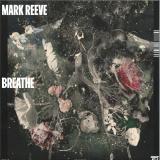
Breathe – the stunning eight-track mini album from long-standing British techno artist Mark Reeve out via Adam Beyer's iconic Drumcode Records.
Following a slew of critically acclaimed single and EP releases on Drumcode over the course of his esteemed decade-long career – the last of which came in the form of his mammoth Distance EP back in February 2020 – Breathe marks Mark Reeve's most extensive musical opus on the legendary imprint, and goes a long way in showcasing the inexhaustible creativity of one of the most prolific and original artists in techno today.
A career-defining moment for Reeve, Breathe has extraordinary allure and maintains the impressive quality of engaging the listener from the very start. A rich and complex body of work, the stunning eight-tracker goes far beyond Mark's trademark transcendental crowd pleasers, encompassing lilting moments of euphoric ambience alongside a sundry offering of full-throttle warehouse juggernauts and ravey breakbeat cuts.
- A1: Theme Of Laura Ii
- A2: White Noise (Actual Noise)
- A3: Beneath The Null Moon
- A4: Lament Of Heavens Night
- A5: Shadows Of The Lover’s Tree
- B1: The Girl Behind The Gate
- B2: Ordinary Vanity’s Solitude
- B3: Serendipity
- B4: The Reverse Will (Unseen Paths)
- B5: Transitory Melancholy
- B6: Theme Of Laura (Repetition)
- B7: Overdose Delusion (Existence & Truth)
- C1: Chimeric Obfuscation
- C2: Serpentine Shadows
- C3: Promise (Pragma Version)
- C4: Ephemeral Despondence
- C5: After Daddy
- C6: True (2024)
- C7: Transcendental Bonds
- C8: The Enchanted Abyss
- C9: The Enchanted Abyss Part. Ii
- C10: Surreptitious Whispers
- D1: Love Psalm Of Eternal Devotion
- D2: Laura Plays The Piano (2024)
- D5: Anam Cara
- D3: Umbra Veil
- D4: Colossal Despair
LP 2x12"[131,89 €]
Konami Digital Entertainment und Laced Records tauchen in den Nebel, um den fesselnden und eindringlichen Soundtrack von SILENT HILL 2 (2024) auf Vinyl zu bringen.
Diese Doppel-LP enthält die wichtigsten Stücke des Soundtracks, sorgfältig arrangiert vom langjährigen Komponisten der Serie, Akira Yamaoka.
Yamaoka hat den Soundtrack für das von der Kritik gefeierte Remake von Bloober Team komplett überarbeitet. Brandneue, neu eingespielte Cues für SILENT HILL 2 aus dem Jahr 2024 fangen die unheimliche Atmosphäre der titelgebenden Stadt perfekt ein, indem sie Elemente von Trip-Hop und Industrial Rock mit düsterer Atmosphäre und Musique Concrète verbinden. Für Fans der beliebten Survival-Horror-Serie ist der neue Soundtrack vertraut und neu zugleich.
Der Score führt Yamaokas unnachahmliches Sounddesign und seine ätherischen Arrangements zu neuen Höhen und zeigt seine kreative Entwicklung seit der Veröffentlichung des Originalspiels im Jahr 2001. Die Musik geht über die funktionale Rolle eines Videospiel-Scores hinaus und ist sowohl ein wesentlicher Bestandteil der Atmosphäre der SILENT HILL-Spiele als auch ein eigenständiges Werk, das eine Reise durch die dunklen Tiefen der menschlichen Psyche unternimmt.
- 1: Lucifer, Bringer Of Light
- 2: Laird Of Heimly
- 3: Stanley (Tonight's The Night)
- 4: The Comeback
- 5: Kip Satie
- 6: Balthazaar
- 7: Bed Of Roses
- 8: Neotzar (The Second Coming)
- 9: Core Memory Corrupt
- 10: Three Frightened Monkeys
- 11: Dead Of Winter
After two pandemically conditioned ‘reaction’ albums - Yay! (2023) and Neigh!! (2024) - a few non-album singles and a compilation album, a downsized and sleek Motorpsycho is back where we all know and love them, with an epic, sprawling double album, filled to the brim with inventive, organic and ecstatic rock-based music. Rejoyce Psychonaut! This eponymously titled, 11 song work, has exactly as much variety & diversity, accord and discord, as one expects from a band that has released a few albums before, and that these days must be regarded as an institution in European rock. From concise 3min-something pop-rockers, to 20mins plus progressive epics, via acoustic intimacies and psychedelic wig-outs, this is concentrated Motorpsychosis: commenced Rebis, countdown initiated. Ever closer. Ever sharper... Since the traditional 3 or 4 piece rock band seems to be a dying breed these days, and MP always was a band in flux anyway, a new pragmatic era has begun in the Psychoverse. The band has, in what one might call alchemical terms, been ‘dissolved and purified’, and is by now again reduced to the core two founding members HMR & BS. This is nothing new, it has happened a few times before, but these days they are also the owners and creators of the record company NFGS, which is now the hub of all recorded band activity, and Motorpsycho marks the final severance of existing ties to other labels for the first time in 35 years. If ‘freedom is free of the need to be free’, this is it. Yikes! The minimalist title of the album is then not just easy to remember, it’s also a statement: a new era has begun in the Psychoverse, a state of affairs reflected in execution and details as well as title, if not perhaps, in ambition or size: “Senex psittacus negligit ferulam” *. This is a time of new beginnings for a band that has spent two years consolidating and reseting before charging ahead anew on a new path, trumpets blaring (...and trumpets don’t come much more blaring in the Psychoverse than with this grandiloquent hyperbole. Good fun! ). New day rising indeed. The core band was adroitly helped by a gaggle of greats from all over the Scandinavian musical landscape on these recordings: drummers Ingvald Vassbø and Olaf Olsen, string arranger/violinist Mari Persen, vocalist Thea Grant, and - as usual - honorary psycho, brother Reine Fiske, were all fellow travellers on this musical journey. Motorpsycho was co-produced by the band and Deathprod, and mixed by Andrew Scheps. Motorpsycho are not the best at what they do, they’re the only ones that do what they do. NFGS2025 *: “Senex psittacus negligit ferulam,” or “An old parrot doesn’t mind the stick.”
- 1: Databass
- 2: He Screamed As He Fell To The Soil
- 3: Correspondence
- 4: Shaking Hands With Time
- 5: 1:1 Am
- 6: Gone Six
- 7: Your Dreams Are Still With Me
- 8: Pragma
- 9: Outside The Dragon
- 10: Have You Ever Ridden Bareback On A Red Eyed Cougar Through Midnight?
- 11: Ponds Above The Trees/One Long Touch
Sweetheart is the first Cassie Ramone album in ten years, a crowning glory for a singular artist who has forged a unique path through the underground. Breaking out in the late 00s with the revered Vivian Girls, to her current status as a traveler on the
heartworn highway, Cassie Ramone has survived and thrived. Sweetheart is Ramone's greatest recorded statement to date:
focused songwriting shot through with American tragedies, distorted guitars and tear-stained fretboards. Recorded with
collaborator Dylan White in Richmond, VA in the latter's Valley Structures barn studio between December 2023 and March
2024, Sweetheart is Ramone's songwriting rendered direct but with a sweeping cinematic quality. Smeared with reverb and
scintillating like stars in the pitch black night, these songs fulfill the promise of Ramone's songwriting prowess.
Ranging from heart-stealers like I'm Going Home or Joy to the World to the riotous guitar scree of the titular Sweetheart,
Ramone's songwriting here is raw and direct, bolstered by White's perfectly balanced instrumentation. White's work on
Sweetheart blows up Ramone's songs to epic proportions, with waves of shoegazed guitars crashing and cresting with
emotion. As a result, Sweetheart fits effortlessly in with the best of Ramone's work with Vivian Girls and The Babies. With the
emotional vulnerability at its core, Sweetheart is Cassie Ramone emerging as one of the most honest and vital songwriters of
the underground.
Sweetheart, released on White and Ramone's new CD-R Records, builds on Cassie Ramone's legacy as a DIY pioneer. With Vivian Girls, Ramone and her bandmates forged a distinctive sound from 80s Punk, Shoegaze and 60s Girl Groups, delivering it with a dedication to world-building and Do It Yourself pragmatism. CD-Records and this first release are a continuation of Ramone's mission to maintain creative and aesthetic control over her art, communicating directly and honestly. Sweetheart may
also be the best record of her career.
Released on Cassie Ramone and Dylan White's label CD-R Records
. For Fans Of: The Weather Station, Weyes Blood, Adrianne Lenker, Phoebe Bridgers, Joan Shelley, Lana Del Rey, Cass McCombs, Angel Olsen & Neil Young. Camelot, the legendary seat of King Arthur’s court in Early Middle Ages Britain, was probably not a real place. A corruption of the name of a real Romano-Briton city, the word “Camelot” accumulated symbolic, mythic resonances over centuries, until achieving its present usage as a near-synonym of “utopia.” In the mid-20th century alone, Camelot inspired an explosion of representations and appropriations, among them the violent, affectless Arthurian court of Robert Bresson’s 1974 film Lancelot du Lac and the absurdist iteration of Monty Python’s 1975 Holy Grail, both of which feature armoured knights erupting into fountains of blood; the mystical Welsh world of novelist John Cowper Powys’s profoundly weird 1951 novel Porius, with its Roman cults, wizards and witches, and wanton giants; and the nationalist nostalgia of President John F. Kennedy’s White House. Unsurprisingly there are fewer Camelots in more recent memory. Camelot, Canadian songwriter Jennifer Castle’s extraordinary, moving 2024 chronicle of the artist in early middle age, charts a realer, more rooted, and more metaphorical place than the fabled Camelot of the Early Middle Ages (or its myriad depictions), but it too is a space more psychic than physical. In Castle’s Camelot, the fantastic interpenetrates the mundane, and the Grail, if there is one, distills everyday experience into art and art into faith, subliming terrestrial concerns into sublime celestial prayers to Mother Nature, and to the unfolding process of perfecting imperfection in one’s own nature. Co-produced by Jennifer and longtime collaborator Jeff McMurrich, her seventh record is at once her most monumental and unguarded to date, demonstrating a mastery of rendering her verse and melodies alike with crisply poignant economy. For all their pointedly plainspoken lyrical detail and exhilarating full-band musical flourishes, these songs sound inevitable, eternal as morning devotions. “Back in Camelot,” she sings on the lilting, vulnerable title track, “I really learned a lot / circles in the crops and / sky-high geometry.” The album opens with a candid admission of sleeping “in the unfinished basement,” an embarrassing joke that comes true. But the dreamer is redeemed by dreaming, setting sail in her airborne bed above “sirens and desert deities.” If she questions her own agency whether she is “wishing stones were standing” or just “pissing in the wind” it does not diminish the ineffable existential jolt of such signs and wonders. This abiding tension between belief and doubt, magic and pragmatism, self and other, sacred and profane, and even, arguably, paganism and monotheism, suffuses these ten songs, which limn an interior landscape shot through with sunstriped shadows of “multi-felt dimensions” both mystical and quotidian. The epic scale and transport of “Camelot,” with its swooning strings, gives way dramatically to “Some Friends,” an acoustic-guitar-and-vocals meditation in miniature on Janus-faced friends and the lunar and solar temperatures of their promises—“bright and beaming verses” versus hot curses which recalls her minimalist last album, 2020’s achingly intimate Monarch Season. (In a symmetrical sequencing gesture, the penultimate track, the incantatory “Earthsong,” bookends the central six with a similarly spare solo performance and coiled chord progression, this time an ambiguous appeal to … a wounded lover? a wounded saint? our wounded planet?). Those whom “Trust” accuses of treacherous oaths spit through “gilded and golden tooth” cynics, critics, hypocrites, gurus, scientists, doctors, lovers, government, the so-called entertainment industry sow uncertainty that can infect the artist, as in “Louis”: “What’s that dance / and can it be done? What’s that song / and can it be sung?” Answering affirmatively are “Lucky #8,” an irrepressible ode to dancing as a bulwark against the “tidal pools of pain” and the “theory of collapse,” and “Full Moon in Leo,” which finds the narrator dancing around the house with a broom, wearing nothing but her underwear and “big hair.” But the central question remains: who can we trust, and at what cost faith, in art or angels or otherwise? Castle’s confidence in her collaborators is the cornerstone of Camelot. Carl Didur (piano and keys), Evan Cartwright (drums and percussion), and steadfast sideman Mike Smith (bass) comprise a rhythm section of exquisite delicacy and depth. This fundamental trio anchors the airiness of regular backing vocalists Victoria Cheong and Isla Craig and frames the guitars of Castle, McMurrich, and Paul Mortimer (and on “Lucky #8,” special guest Cass McCombs). Reprising his decennial role on Castle’s beloved 2014 Pink City, Owen Pallett arranged the strings for Estonia’s FAMES Skopje Studio Orchestra. On the ravishing country-soul ballad “Blowing Kisses” Pallett’s crowning achievement here, which can be heard in its entirety in the penultimate episode of the third season of FX’s The Bear Jennifer contemplates time and presence, love and prayer and how songwriting and poetry both manifest and limit all four dimensions: “No words to fumble with / I’m not a beggar to language any longer.” Such rare moments of speechlessness “I’m so fucking honoured,” she bluntly proclaims suggest a state “only a god could come up with.” (If Camelot affirms Castle as one of the great song-poets of her generation, she is not immune to the despairing linguistic beggary that plagues all writers.) Camelot evinces a thoroughgoing faith not only in the natural world including human bodies, which can, miraculously, dance and swim and bleed and embrace and birth but also in our interpretations of and interventions in it: the “charts and diagrams” of “Lucky #8,” a daydreamt billboard on Fairfax Ave. in LA in “Full Moon in Leo,” the bloody invocations of the organ-stained “Mary Miracle,” and all manner of water worship, rivers in particular. (Notably, Jennifer has worked as a farmer and a doula.) The album ends with “Fractal Canyon”s repeated, exalted insistence that she’s “not alone here.” But where is here? The word “utopia” itself constitutes a pun, indicating in its ambiguous first syllable both the Greek “eutopia,” or “good-place” the facet most remembered today and “outopia,” or “no-place,” a negative, impossible geography of the mind. Utopia, like its metonym Camelot, is imaginary
Camelot, the legendary seat of King Arthur's court in Early Middle Ages Britain, was probably not a real place. A corruption of the name of a real Romano-Briton city, the word "Camelot" accumulated symbolic, mythic resonances over centuries, until achieving its present usage as a near-synonym of "utopia." In the mid-20th century alone, Camelot inspired an explosion of representations and appropriations, among them the violent, affectless Arthurian court of Robert Bresson's 1974 film Lancelot du Lac and the absurdist iteration of Monty Python's 1975 Holy Grail, both of which feature armored knights erupting into fountains of blood; the mystical Welsh world of novelist John Cowper Powys's profoundly weird 1951 novel Porius, with its Roman cults, wizards and witches, and wanton giants; and the nationalist nostalgia of President John F. Kennedy's White House. Unsurprisingly there are fewer Camelots in more recent memory. Camelot, Canadian songwriter Jennifer Castle's extraordinary, moving 2024 chronicle of the artist in early middle age, charts a realer, more rooted, and more metaphorical place than the fabled Camelot of the Early Middle Ages (or its myriad depictions), but it too is a space more psychic than physical. In Castle's Camelot, the fantastic interpenetrates the mundane, and the Grail, if there is one, distills everyday experience into art and art into faith, subliming terrestrial concerns into sublime celestial prayers to Mother Nature, and to the unfolding process of perfecting imperfection in one's own nature. Co-produced by Jennifer and longtime collaborator Jeff McMurrich, her seventh record is at once her most monumental and unguarded to date, demonstrating a mastery of rendering her verse and melodies alike with crisply poignant economy. For all their pointedly plainspoken lyrical detail and exhilarating full-band musical flourishes, these songs sound inevitable, eternal as morning devotions. "Back in Camelot," she sings on the lilting, vulnerable title track, "I really learned a lot / circles in the crops and / sky-high geometry." The album opens with a candid admission of sleeping "in the unfinished basement," an embarrassing joke that comes true. But the dreamer is redeemed by dreaming, setting sail in her airborne bed above "sirens and desert deities." If she questions her own agency_whether she is "wishing stones were standing" or just "pissing in the wind"_it does not diminish the ineffable existential jolt of such signs and wonders. This abiding tension between belief and doubt, magic and pragmatism, self and other, sacred and profane, and even, arguably, paganism and monotheism, suffuses these ten songs, which limn an interior landscape shot through with sunstriped shadows of "multi-felt dimensions" both mystical and quotidian. The epic scale and transport of "Camelot," with its swooning strings, gives way dramatically to "Some Friends," an acoustic-guitar-and-vocals meditation in miniature on Janus-faced friends and the lunar and solar temperatures of their promises_"bright and beaming verses" versus hot curses_which recalls her minimalist last album, 2020's achingly intimate Monarch Season. (In a symmetrical sequencing gesture, the penultimate track, the incantatory "Earthsong," bookends the central six with a similarly spare solo performance and coiled chord progression, this time an ambiguous appeal to _ a wounded lover? a wounded saint? our wounded planet?) Those whom "Trust" accuses of treacherous oaths spit through "gilded and golden tooth"_cynics, critics, hypocrites, gurus, scientists, doctors, lovers, government, the so-called entertainment industry_sow uncertainty that can infect the artist, as in "Louis": "What's that dance / and can it be done? What's that song / and can it be sung?" Answering affirmatively are "Lucky #8," an irrepressible ode to dancing as a bulwark against the "tidal pools of pain" and the "theory of collapse," and "Full Moon in Leo," which finds the narrator dancing around the house with a broom, wearing nothing but her underwear and "big hair." But the central question remains: who can we trust, and at what cost faith, in art or angels or otherwise? Castle's confidence in her collaborators is the cornerstone of Camelot. Carl Didur (piano and keys), Evan Cartwright (drums and percussion), and steadfast sideman Mike Smith (bass) comprise a rhythm section of exquisite delicacy and depth. This fundamental trio anchors the airiness of regular backing vocalists Victoria Cheong and Isla Craig and frames the guitars of Castle, McMurrich, and Paul Mortimer (and on "Lucky #8," special guest Cass McCombs). Reprising his decennial role on Castle's beloved 2014 Pink City, Owen Pallett arranged the strings for Estonia's FAMES Skopje Studio Orchestra. On the ravishing country-soul ballad "Blowing Kisses"_Pallett's crowning achievement here, which can be heard in its entirety in the penultimate episode of the third season of FX's The Bear_Jennifer contemplates time and presence, love and prayer_and how songwriting and poetry both manifest and limit all four dimensions: "No words to fumble with / I'm not a beggar to language any longer." Such rare moments of speechlessness_"I'm so fucking honoured," she bluntly proclaims_suggest a state "only a god could come up with." (If Camelot affirms Castle as one of the great song-poets of her generation, she is not immune to the despairing linguistic beggary that plagues all writers.) Camelot evinces a thoroughgoing faith not only in the natural world_including human bodies, which can, miraculously, dance and swim and bleed and embrace and birth_but also in our interpretations of and interventions in it: the "charts and diagrams" of "Lucky #8," a daydreamt billboard on Fairfax Ave. in LA in "Full Moon in Leo," the bloody invocations of the organ-stained "Mary Miracle," and all manner of water worship, rivers in particular. (Notably, Jennifer has worked as a farmer and a doula.) The album ends with "Fractal Canyon"'s repeated, exalted insistence that she's "not alone here." But where is here? The word "utopia" itself constitutes a pun, indicating in its ambiguous first syllable both the Greek "eutopia," or "good-place"_the facet most remembered today_and "outopia," or "no-place," a negative, impossible geography of the mind. Utopia, like its metonym Camelot, is imaginary. Or as fellow Canadian songwriter Neil Young once sang, "Everyone knows this is nowhere." "Can you see how I'd be tempted," Castle asks out of nowhere, held in the mystery, "to pretend I'm not alone and let the memory bend?"
Veiga lands straight on the dancefloor, no ambiguity about it. Spurred by the guys from RS Produções, he's been honing his DJ skills since he was 17 (currently 23), initially with partner Nunocoox, who gave him even more motivation. Production came naturally sometime in 2020. We venture: maybe one of the good things coming out of the lockdown? Summer of '22, his debut at Musicbox (at the Príncipe monthly residency) is recorded as a festive, lively set, punctuated by the kind of crowd shouts only heard when things go really happy and sweaty. Since then, Veiga's name has been spotted regularly in the afro club scene, growing in reputation
This side of kuduro, "Leandro" is as expressive as it gets, with percussive forces pulling in deceitfully different directions, much in the same style as the slower form of tarraxo. But we can call this house, yeah? No niceties, however: little over 3 minutes and the track abruptly cuts into silence, exuding the raw power of something made for the mix, not in the least "for the people". In a similar pragmatic mode, the stabs in "Sem Nome" get the party started unannounced. Full mode, for the duration. Minimal groove, broken beats and emotive highlights. "Boiler Room" may be wishful thinking, an interpretation of what is required to rock the place or, ultimately, just a title to wrap up the project. In any case, here's a feisty vocal-and-whistle driven stormer, building up to perfection over three and a half minutes. All elements exactly where they belong. Relentless pace in "X de Destroi", a dark side operation, unreal ambiance, breakneck beats, a purgation?
The title "Tudo É No Guetto" contains all the necessary theory. Everything happens in the ghetto. This uplifting house slab celebrates life as it is, freezing hardships for a moment, the ghetto seen as welcoming, a natural place to be. Vocals stashed away in his cell phone come from the animação crew Os Twinni (he joined them for a while). Clipped, repeated and manipulated to convey the very simple feeling of good times. Veiga himself talks about growing up with minimum resources but still happy. That is the memory he retains from being a kid in the ghettos of Amadora, just outside of Lisbon, born to a Cape Verdean father and Portuguese mother. Though the music sounds carefree and the message is chilled, let us not be tempted to rebrand Reality.
Docile Recordings is for itself. We are an expression of the beautiful moments that hold us frozen. Warm confusion that breathes life to the senses. The Docile sound captures a nostalgia for times yet to come. We are a familiar resonance always shifting for the correct approach. Always aiming for the heart and soul. Docile speaks to the basic instincts of the techno rebel; supplying sonic reasons to trudge on.
The “last of a kind e.p.” is the 32nd release from the Docile Recordings record label. The feel of this release ranges from a pragmatic spiritual funk to a loose heabangin’ frivolity. Docile 32 is 4/4 minimal held together by soulful synth and smart percussion advanced by ringing highs and detuned horns. Proper mathematics of programming moves a mix match of harmonies through a gauntlet of invisible edits gaining momentum until it is taken away. This is Docile music.
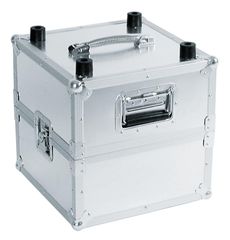
Record case in aluminum housing
For 100 LPs
Pragmatic 50/50 separation
Interior upholstered with foam (10 mm, black)
High-quality workmanship with plywood multilayered glued, aluminum-colored laminated
Aluminum profile frames (22 mm) with rounded edges
Three-leg, medium sized steel ball corners
Chromium plated corners and locks
2 high-quality butterfly locks
8 steel-enforced rubber feet
3 rugged carrying handles
Maximum load: 20 kg
Material: Glued plywood, 7 mm
Color: Alu colored, laminated
Outer dimensions/corners approx.: 50 mm
Dimensions: Width: 37,5 cm
Depth: 37,5 cm
Height: 44 cm
Weight: 6,60 kg
- Für 100 LPs
- Praktische 50/50 Teilung
- Schaumstoffgepolsterter Innenraum (10 mm, schwarz)
- Hochwertige Verarbeitung mit 7 mm mehrschichtig verleimtem Holz, aluminiumfarben laminiert
- Aluminiumprofilrahmen (22 mm) mit abgerundeten Ecken
- Dreischenklige, mittelgroße Stahlkugelecken
- Ecken und Schlösser verchromt
- 2 hochwertige Butterfly-Schlösser
- 4 stahlverstärkte Gummifüßen
- 3 robuste Tragegriffe
Maximalbelastung: 20 kg
Wandstärke: 7 mm
Außenmaße (BxTxH): ca. 375 x 375 x 430 mm
Innenmaße:
Einbaubreite: 322 mm
Einbauhöhe: ca. 370 mm
Einbautiefe: ca. 325 mm
Außenmaß der Ecken: ca. 50 mm
Gewicht: ca. 7,8 kg
Feels as if we're stepping outside the known universe of Nigga Fox but simultaneously being invited in. It's not about being hermetic, shutting out followers of his trademark dance beats or making an experimental statement per se. All this music comes effortlessly during sessions such as any other, so don't throw away valuable time searching for a concept.
"Chá Preto" sounds revolutionary but not so much in his discography, accustomed as we are to game-changing compositional solutions in the afro musical continuum but - never forget - also in Dance Music taken as a broad genre. But is it Dance? Certainly a fair amount of suffering and introspection comes clear throughout the album, namely in the sequence made up of "Má Rotina" and "Mutadoree Leonor". "Mutadoree" is a free, alternative spelling of "much pain" and each listener can process the info as s(h)e pleases. The music is also strikingly beautiful, so there's really no final word on this.
Beats come sparse, a very personal phraseology, the dancefloor a memory. Or just something to keep in mind for a future night out. Presently there's no lack of adventure or excitement in these grooves, a uniquely themed one-person show of musical skills and bare emotion. It ends in a snap, not a trace of embellishment. Pragmatic and out of the loop. Rewind and feel it all over again. Any comparison in mind? Flip through History books and you won't find this chapter.
Gladio Operations label presents its ninth release, with volume 2 of the Split Machine series, which this time features two new and recognised faces on the European and American electro scene.
One of these new faces is producer Noamm. This Greek artist, who has releases on such respected labels as Bass Agenda and Fundamental Records, opens the EP with “Clone Machine” and “Scientific Technological Device”, two excellent rough and pragmatic tracks which link perfectly with “Verruckter Wissenschaftler”. The latter track, a fast-paced cut impregnated with tasty dark textures, perfectly defines the talent of the Hellenic producer.
The B-side bears the signature of Brice Kelly, who also debuts on Gladio Operations and gifts us three fantastic, enveloping, and melodic tracks. The American producer kicks off with “Beings of Alpha”, a deep and very well-constructed journey that gives way to “If You Don’t Think Like Us”.
We really like it, even more so if it is accompanied by an elegant vocoder and enigmatic strings. Lastly, we arrive at “Powers That Be”, the closing track of the album, where we can perceive a cut of aggressive bass lines and gloomy textures, well aligned with well-chosen robotic vocals.
Ben Glas (b. 1992) is an experiential composer based in Berlin. Through ephemeral compositions Glas' work questions preconceived notions between the acts of passive hearing and active listening. In seeking to discover open ended forms of music and pragmatic listening perspectives, Glas' compositions focus on the realms of subjective perception and cognition, via the use of acoustics, psychoacoustics and space as tools for sonic composition. His work has been exhibited and performed internationally, including the Portland Institute for Contemporary Art (PICA), Glasgow's Radiophrenia Festival, the Soundwave Biennial (SF) and the Czong Institute for Contemporary Art (CICA). He is currently receiving his M.A. in Sonic Studies at the UdK.

Ben Glas writes… "Anonymous Sextet for Perverted Piano is a conceptual performance piece that combines a traditional grand piano, six long-distance remote controlled vaginal/anal vibrators and the prolonged use of the piano's sustainer pedal.
The six vibrators were strategically (and preparedly) placed atop of the strings of a various grand pianos (and one harpsichord), while random strangers around the globe connected to and operated the sex toys remotely. After the random and unwitting performers had befriended and synced-up with a catfishing account linked to the six individual vibrators and controlled by three different smartphones, they then sent vibrational patterns and pulses to stimulate their assumed target. The then-kinetic vibrators bounced, slid and bopped aleatorically through the tonal possibilities that the piano and piano's soundboard itself permits. The piano's sustain pedal was held down throughout the performance, elongating the triggered notes and the good vibrations.
All tracks on side A are performed by those unwitting performers, while side B's single track was performed with (more than) a little help from my friends (Anonymous (1), Genesis Victoria, Harry Hudson-Taylor and Hayden Dean)." – Ben Glas, Berlin, 16 February 2023.
Faitiche presents the album Exq I by Berlin underground techno legends Muellie Messiah & Punk not Punk, mainly known under their 100Records moniker. Weighing in at 36 minutes, the track was recorded in 2010, effortlessly intermingling dub, drone and collage, a blend achieved thanks to the duo’s jazz-inspired approach to improvisation.
_
100records is one of the last undiscovered treasures of the Berlin underground of the 1990s and 2000s. Like Elektro Music Department, 100records is unthinkable without techno and the club scene, but with a few exceptions the duo’s tracks are not aimed at the dancefloor. With a claim to universality and a broader frame of reference, 100records developed a more extensive understanding of sound that rests on three pillars: the understated analogue drums of the Roland TR-808, a blurred, dubby sound, and improvisation.
On first hearing, Exq I has little in common with the groovy, detailed, variation-rich sound usually associated with 100records. Recorded at the end of a highly productive decade, it is an echo speaking of exhaustion in which dub, drone and collage converge to form something whose jazz sensibility makes it readily identifiable as the work of 100records.
100records was founded in 1994 by Muellie Messiah (Dirk Budde) and Ekki 808 (Ekkehard Rau), who were joined in 1999 by Punk not Punk (Martin Osti). Around 2002, Ekki departed, leaving Budde and Osti to continue as a duo. Since then, their relationship has shaped 100records: Budde is the driven lone genius doggedly pursuing sounds, Osti the pragmatist who turns ideas into music.
As well as making music, Budde is also a musicologist. In 1997 he published his PhD thesis entitled Take Three Chords... Punk Rock and the Development to American Hardcore. As well as being his specialization, punk is also part of his identity: in the 1980s he sang and played keyboards in various punk bands in Kassel, the best known being Haunted Henschel.
After the fall of the Wall, attracted by the freedom of the newly reunited Berlin, Budde packed his bags and drove to the formerly divided city, having already become acquainted with techno at Kassel’s influential Stammheim club.
If we want to look into the future, we have to start considering the implications more holistically. All too often, science fiction is a dystopian projection of the current era's grimmest realities spiked with pragmatic historical hindsight - but what if instead it was able to reflect our needs, hopes, and dreams? On "SPINE", award-winning Danish composer SØS Gunver Ryberg considers a sustainable alternative, buoyed by interconnectedness, empowerment, and understanding. Channeling her dextrous sound design into advanced, time-bending music that fluctuates through techno, experimental ambient, and soundsystem-vibrating bass music, she maps out an artistic landscape that's futuristic and complex, but never oppressive.
Ryberg is an accomplished producer who's developed her sound over many years, playing concerts and working tirelessly on video game soundtracks, film scores, dance, performance, and multichannel installation pieces. Her first solo album "Entangled" appeared in 2019 on Berlin's esteemed Avian imprint, and was praised for its sensitive approach to noise and abstracted techno, while its EP-length followup "WHYT 030" was nominated for the Nordic Council's prestigious music prize this year. "SPINE" is the inaugural release on Ryberg's own label Arterial, and stands as a thematically dense statement of intent. The label provides a platform to extend Ryberg's artistic goals and reflect not just her world but a world she wants to see develop in the future: somewhere connected and creative, where exploration and free expression is prioritized over genre division and petty compromise.
This philosophy is central to the sounds on "SPINE", which have been carefully sculpted to accurately lay out Ryberg's worldview. Opening track 'Unfolding' presents a sonic ecosystem that flourishes as it spreads itself out, and quivering kick drums vibrate alongside unstable atmospherics. There's the faint fingerprint of Chain Reaction's notional dub techno in there somewhere, but Ryberg interrupts the thought before it can coagulate, assuring the listener that her vision isn't ponderous but playful and optimistic. This mood flickers into view again on the title track 'Spine', as fragmented breaks rumble beneath disorienting synths, faint images of a life we once knew refracted into cosmic beams of light. 'Mirrored Madness' meanwhile is warm, assertive, and optimistic, contrasting skittering cybernetic percussion with dense, enveloping harmonies.
When she pushes rhythm into the background, like on the cinematic 'We tumble on the edges', Ryberg's compositional skill is placed under the microscope. We're presented with the opportunity to examine another dimension of her work, the mystery beneath the stone, hearing saturated, alluring pads infused with hidden harmonies. In these moments, Ryberg implores all of us to consider the environment, asking us to think about the earth's essential nutrients on the dreamy 'Phosphorus Cycle', and what we might do to save ourselves on the delirious 'Where do we go from here'. Ryberg's concern isn't chastising, it's laid out in a warm embrace. The future could still be bright - there's something beautiful in the complexity if you just take the time to look closely.
Space Dimension Controller’s first release in 2023 is also his first outing to Running Back. Needless to say that it pushes all the right buttons. Warm and playful, but forcing and with fresh jive, Neuclidea and its siblings revolve around classic SDC values. Nevertheless, the Irish melodist is also moving on to new pastures. Hardware sequencing, vintage digital synthesizers via analogue processing spawn a sound that pirouettes as much around the lost cyber-hippie poetry of Border Community as it’s the effigy of fast balearic euphoria – if Ibiza would have been a party scene in Gattaca. Completing this treasure chest is a remix by Hodge for the pragmatic minded out there. Using some heavy drums of the west, his version of Neuclidea extracts the trance-like elements of the original and turns it into a floor-polishing brush. To sum up: music for heartbroken and lovesick victims alike.
2023 Repress
"banging piece of sound art" - The Observer
"...a fascinating piece of Brutalist techno that pivots between crisp machine-like minimalism and granulated noise." - Clash
"A piece of immediately engaging techno it reveals more of itself with each listen." - CMU Daily
Nik Colk Void is well established with her work as one half of Factory Floor, one third of Carter Tutti Void (alongside Chris Carter and Cosey Fanni Tutti) and with the late Peter Rehberg as NPVR, but perhaps surprisingly, "Bucked up Space" is her first solo album release.
Void explains, "When Peter Rehberg initially asked me to produce a record for Editions Mego, I didn't feel quite ready and asked if we could make a record together instead. Collaboration is so ingrained into what I do, I only felt ready to make this album after working through ideas live, using the audience in place of the collaborator."
Bucked Up Space combines Void's love of improvisation with the driving force of beat-driven music absorbed from performing in galleries, residencies and clubs across the UK and Europe. She goes on to say, "You find out more about yourself when you explain your ideas to others, and that's how I felt the live performance worked for me."
The process steadily teased out a language and Void employed a variety of tactics in the recording process including a methodical approach of collecting data at her home studio in a manner not dissimilar to keeping a diary. Her microscopic focus on raw instrumental noise, layered and reformulated, resulted in a sound catalogue that Void divided into groups for their tone, density and texture.
These initial pieces were taken to a studio in Margate to put them into a more cohesive compositional context. Something that pragmatically started as cold and detached was given warmth, unity and emotion in the studio. Via improvised repetition co-existing alongside organised production, Void conjures new sonic muscle with tracks such as 'Interruption Is Good' and 'FlatTime'. Initial recordings are rendered into sequences initiating the organic rhythms, triggering awkward jerks of high hats and percussion, or used to activate the margins of post effects detectable in the tracks like 'Demna', 'Big Breather' and 'Oversized'.
Void explains: "It was important to me that the simplicity in the work disguised a lot of complexity, I want this work to be absorbed instinctively."
The sleeve image, a still from We Are City by Brazilian artist Maria de Lima, was chosen to illustrate Bucked Up Space, which Void describes as "a distorted reality, the space that lives at start of an idea, then floats in public view, before returning to inform my understanding of the idea. Once the idea is out in the world, it moves and morphs into something else entirely."
Written, performed and produced by Nik Colk Void, the album was engineered by James Greenwood, mastered by Rashad Becker and tracks 1, 4, 5, 7 and 9 were mixed by Marta Salogni.
Bucked up Space is the result of the ideas and resulting sounds of free exploration morphing into a personal structured album that fearlessly moulds patience, listening and restraint. It's a sharp focussed work embracing collective action through the lens of the self. All this, and also one of the best abstract dance records you will hear in some time!
Sieben pragmatisch durchnummerierte Tracks hat Wallner komponiert und produziert, obwohl man Pragmatismus hier vergeblich sucht, denn die niemals überladene Opulenz ist ein fester Bestandteil seiner Musik. "Voices" ist natürlich in erster Linie ein Gitarrenalbum, hält aber nicht stumpf aneinander gereihte Griffbrett-Kabinettstücke parat, sondern folgt einem Narrativ, einer Art undertow unter, zwischen und hinter den Tracks: sie sind ineinander verwoben und miteinander verwandt und erzählen fortlaufend eine zusammenhängende Geschichte. Arpeggierte Synthie-Kaskaden und verdichtetes Riffing liefern hier die Staffelei für episch singende Soli, an denen Wallner hörbar Spaß hat. Allerdings hier wird nicht kopflos gegniedelt, man hört die Arbeit eines erfahrenen Komponisten und mehrere Themen und Motive ziehen sich wie Ariadnefäden durch die Tracks.
"Voices" wird höchsten audiophilen Ansprüchen gerecht und ist wie jede Produktion Wallners demanding listening, reife Kompositionen, in denen sich Herz und Hirn vertragen und ergänzen. Das Album illustriert den Jetzt-Zustand eines Musikers, der sich eine luxuriöse Position erarbeiten konnte, kompromisslos sein zu dürfen. Vielleicht sogar zu müssen. Sieht man sich die rund 26 Jahre seiner Diskographie an, war er das eigentlich schon immer und es sieht nicht so aus, als würde sich das jemals ändern.
Als Gäste sind mit an Bord: Arno Menses (Subsignal), TANYC, Yogi Lang (RPWL) sowie der renommierte Drummer Marco Minnemann.
Neben dem formschönen CD-Digipak wird es eine 180 Gr. Vinyl (Clear Vinyl) mit bedruckten Inner Sleeves geben.
Classic Rock: "…exzellentes musikalisches Gespür für Spannungsbögen, faszinierende Sounds und gekonntes Songwriting. … Dies ist eine Scheibe für Freunde des guten Geschmacks."
Rock It 8.5/10: "Musikalisch bewegt sich auch der Rest der Truppe auf höchstem Niveau, die Produktion ist druckvoll und klar und passt sehr gut ins stimmige Gesamtbild. Eine gelungene Reise durch progressive Musikwelten."
eclipsed 7.5/10: "Mucke für Fans zwischen David Gilmour, Maxxess und Joe Satriani und gerade unterm Kopfhörer ein spannendes audiophiles Erlebnis."
Guitar 5/5: "…spielt der Liebhaber hochwertiger Gitarrensounds, unterstützt durch Marco Minnemann am Schlagzeug, feinsten Prog mit atmosphärischer Dichte, tighten Riffs und sagenhaften Gitarrensoli."
Slam 8/10: "Vielfältig, stimmungsvoll und mit jeder Menge Melodie gerät "Voices" zum überaus gelungenen Werk, das vor allem durch sein farbenprächtiges und intelligentes Songwriting überzeugt."
Rock Hard 7.5/10: "Abwechslungsreichen, angenehm rockigen und zeitlosen Instrumental-Progrock zockt RPWL-Gitarrist KALLE WALLNER auf seinem vierten Soloalbum "Voices" (Gentle Art Of Music/Soulfood)."
Rocks 7/10: "Kalle Wallner, Gitarrist bei RPWL und Blind Ego, hat mit diesem Album ein kraftvolles Statement fast ohne Gesang aufgenommen. Die titellosen, durchnummerierten Tracks basieren vor allem auf massiven Riffs, die die Basis schaffen für stimmungsvolle solistische Ausflüge des Gitarristen. …Voices ist keines dieser aufregenden Gitarrenhexer-Alben, sondern eher lautstarke Kontemplation."
Break Out: "Die Stücke sind sehr spannend aufgebaut und in sich schlüssig. Oder wie es im Presseinfo steht: "reife Kompositionen, in denen sich Herz und Hirn vertragen und ergänzen." Dem ist nichts hinzuzufügen, nur dieses: beide Daumen hoch für dieses starke Soloalbum!"
Myrevelations.de 13/15: "Verdammt starke Platte, Prog, Instrumental- und Gitarrenfans, sowie Post Rock Anhänger werden begeistert sein!"
Darkstars.de 9/10: "…ähnlich wie bei David Gilmour schafft es Kalle Wallner seine Gitarre sprechen zu lassen und den Hörer mit auf eine Reise zu nehmen. Ganz großes Gitarrenkino und mit Marco Minnemann sitzt zudem ein echtes Ass auf dem Schlagzeug Hocker. Ein Album zum Entdecken…"
With 10 years in the 'biz' firmly under his belt, Jiah Wells is poised to release the first full-length LP of his Galtier project, Pulchra Es Elementis. Whilst Galtier is arguably one of the originators of the percussive style that would eventually fall under the Hard Drum label, the heightened theatrics of his recent output have seen him channel Blade Runner-styled sonics and move further away from absolute club functionality. Whilst Galtier's output often seems to soundtrack hypothetical, off-planet words, Pulchra Es Elementis turns the focus inwards: towards Wells' own emotional constellation, his evolving spirituality and his attempts to tap into planes of existence beyond the tangible. The album's Latin title translates to 'Elements are Beautiful' and encapsulates the artist's belief that there is grace in all of life's aspects; pushing past what we deem as good or bad, minuscule or massive.
Pulchra Es Elementis begins with Crystalised Larva, a brooding opener of breathy pad synths and expansive kick drums which reverberate through the mix as if the hits originate from the bottom of a valley. There's an indistinct sense of tension on this track, in part due to a central melody, which never resolves but only descends lower in pitch. This tension turns to explorative wonder on Wilfull Saviour, where a mirage of musical ideas come in and out of focus. Although the sonic worlds Galtier explores are internal to him, Wilfull Saviour still possesses that sense of a cosmic journey we've come to expect from Wells; an ardent fan of dystopian films and literature.
Continuing this emotional odyssey, Bruised, But Not Broken sees the artist push deeper into the psychological undergrowth; its murky tonality juxtaposes crisp, Reggaeton-inspired drum patterns with a heavily compressed one-note synth line that modulates wildly - cutting through the mix like a nagging thought that won't leave your mind. Next up is U Were, U Are & What U Will Be, one of the more club-ready tracks of the LP, which gets us moving with a snarling bassline and layers upon layers of percussive hits and inflections.
At Pulchra Es Elementis' mid-point is the LP's title track, a drumless interlude where blissful, shimmering synths create a patchwork of intensities. Galtier's approach to songwriting shines through here; ignoring musical pragmatics, he opts to feel his way through his compositions without knowing where they might end up. Following on from that weightless breather, Phantasiai turns up the freneticism with its head-spinning mix of drum programming and a glitched-out synth line that yo-yos up and down octaves. Things get even more furious on the Superficie-featuring Cavernam, a hollow Hard Drum banger inspired by Eskibeat sensibilities and designed to create a sense of self-implosion.
The album's penultimate track, (U Are) Beautiful, is a tale of two halves: beginning with a moment of serenity as synthesizers swell like an ocean tide before evolving into a marching crescendo of raw energy. Rounding off the album, Shine Forth hurtles through pacey drum work and all manner of strange zaps and klaxons before giving way to a final dose of nebulous ambience.
A musical journey unlike any other 'club music' albums, Pulchra Es Elementis is an LP that demands to be consumed in one sitting. Reflecting on his place within the universe and the musical landscape, the album could be viewed as a musical exorcism which sees Galtier working through and shedding huge chunks of his ego that stuck to him out of fear of the unknown. Pulchra Es Elementis begins on an insecure, overwhelming or, even, existential note before rounding off with a related sense of vastness seen with new, more positive eyes. It's a voyage we hope you will join him on.
Drab Majesty's first ever release was the 2012 self-released cassette tape "Unarian Dances". Originally limited to 100 copies, tracks from this tape would eventually make their way onto the Completely Careless CD collection as bonus cuts. Now, along with the "Unknown to the I" 12" also released on March 26, these songs are finally made available on vinyl in 45 RPM 12" format, bringing all early Drab Majesty material from the Careless era (2012-2015) to vinyl. Mastered by Josh Bonati with beautiful new packaging by Nathaniel Young.
Drab Majesty is the project of Deb DeMure, the androgynous alter-ego of L.A.- based musician Andrew Clinco and partner Mona D. With its combination of reverb-drenched guitars, synth bass lines, commanding vocals, and rhythmic drum machine beats, this project is a stark departure from Clinco’s previous stints as drummer in Marriages and Black Mare. Dubbed “Tragic Wave” and “Mid-Fi” by DeMure, Drab Majesty eloquently blends classic 80s New Wave and hints of early 4AD with a futuristic originality.
Atalented multi-instrumentalist, DeMure composes all of the elements of DrabMajesty. However, rather than taking personal credit for the music, DeMure insists that the inspiration for the songs is received from an other-worldly source and that Deb is merely a vessel through which outside ideas flow inward. But Drab Majesty is more than just a musical project — it’s a methodical experiment in the identity of creativity. The character Deb DeMure is an enigma that eludes all expectations of gender and ego. When DeMure’s imposing 6’ 4” figure assumes the stage, Deb’s playful, harlequin-esque appearance, tempered by an ominous body language, and clashing with the dreamy, ethereal melodies comes across as a web of contrasts. The result is a perfect balance between seemingly conflicting messages, between the high and the low, the drab and the divine.
In the late ‘80s, a wave of British musicians raised on ‘70s UK pop, Caribbean sound system culture, reggae, lovers rock and Motown/Philly soul music fell in love with synthesisers, drum machines and 8-track recorders. The street soul generation had arrived.
Originally released as a white label 12” in 1989, ‘You’ve Gone’ is the sole release from Bassline, the studio project of Southeast London-raised musician Tony Henry, not to be confused with Tony Henry from Manchester jazz-funk/R&B band 52nd Street. Featuring the singer Lorraine Chambers, it’s one of the true jewels of the UK Street Soul scene. As Lorraine’s heartsick soul vocal glides over sunrise synths, dusty drums, elegant electric piano figures and a reggae indebted bassline, ‘You’ve Gone’ captures the optimism and strength of the era perfectly.
‘You’ve Gone’ was championed by Choice FM UK (now Capital XTRA), Kiss FM, and DJ Trevor Nelson. Tony went from selling white labels out the trunk to booking in Live PAs for Lorraine with London sound systems like Rampage and up north in the street soul loving cities of Manchester and Birmingham. “When Lorraine did PAs up there, she went out on stage like she was Beyoncé.”
The son of a Jamaican father and an English mother, Tony grew up around the London sound system scene. He taught himself bass guitar, keyboards, and production, before playing in the reggae band Chakwanza (Swahili for “the first”). In Chakwanza, Tony rubbed shoulders with Aswad, Barry Boom, Steel Pulse, Maxi Priest, Gregory Issacs, Dennis Brown, Ghettotone and Saxon Sound, before focusing on a career in banking over music. “Music was my first love, but it couldn’t have afforded me the sort of level of - let’s be blunt and pragmatic about it - financial success that would have allowed me to support my family.”
Outside of office hours, Tony continued to work on music at home, sometimes serving as a session bassist with local bands. In the late 80s, a work colleague mentioned her sister Lorraine Chambers was a singer. Tony and Lorraine recorded “You’ve Gone” over two sessions. “Lorraine went into the booth, put her headphones on and got into the song. My daughter turned to me and said, ‘Daddy, she can really sing!’”
Despite the success of ‘You’ve Gone’, they never recorded together again. “The world changed, and for me, it changed as well. My younger kids were born, and work started getting more intense. I got a bit more successful and was living a mad, kind of crazy life.”
Thirty-two years on, ‘You’ve Gone’ finally receives an official reissue comprising the lauded original mix, an alternate version and Tony’s Back to Bass-ics remix. Fittingly, in recent months, Tony and Lorraine have re-connected in the studio writing new material.
After six years, The Notwist return with three new tracks on Morr Music. It’s both an exposition of the the band’s musical variety and a prospect on a forthcoming album.
Six years have passed since The Notwist released their last regular studio album, but that doesn’t mean that the members of this outstanding band have been idle in the meantime. There have been side projects, movie scoring, and other activities, like programming four editions of „Alien Disko“, a festival taking place in Munich, Germany. One of that event’s regular guests was the Japanese duo Tenniscoats – and a lovely side effect from that was an evolving friendship between the two bands. It lead to various collaborations: most recently in a new album by international band „Spirit Fest“ (featuring Tenniscoats singer Saya & The Notwist’s Markus & Cico) & a deep digging compilation of Japanese indie music called „Minna Miteru“.
The title track of this new EP is another step in this collaboration – and a first step to an upcoming album by The Notwist – as it features Saya, who lends her voice to the percussive song. It is build around a slightly detuned synthline, which is contrasted by more pragmatic guitar work. „It neither sounds like The Notwist, Tenniscoats, nor Spirit Fest“, tells Markus Acher. „Just like Saya is saying in the lyrics: ‘I want to go outside, I want to meet people’, „Ship“ is another chapter in what The Notwist always tries to do: redefining itself, exploring something new, integrating different styles of music and collaborating with musicians they admire.“
The second song „Loose Ends“ is, in contrast, more classic Notwist material. A gently expanding ballad, this time featuring the distinctive voice of Markus Acher. The song came out of recording sessions for the soundtrack for „One Of These Days“, a movie by Bastian Günther. The EP then closes with „Avalanche“ a carefully optimistic instrumental.
With its variety of styles, „Ship“ also serves as an outlook on an upcoming album, which will be influenced by the band’s experiences from their detailed work of creating sounds and moods for film soundtracks, and it will include more collaborations with international guest musicians.
A multifaceted debut EP from the Berlin-based producer Crore.
The record starts off with “Ultraviolence“, a stomping acid workout, climaxing with the help of sharp hi-hats and its smooth but effective arrangement. On the flip side, the less pragmatic “Thinking In Code“ renounces the 4/4 kick and works more subtle while diving into the deeper spheres of contemporary techno music. Spheric pads meet a pulsating synth in the “Final Sequence“ and create a fuzzy and uncanny atmosphere.
Sonic weapons for a wide range of club settings.
A sadistic God: He doesn't exist until he touches your body, and when he manifests himself he kills you without hesitation, leaving you on the ground, humiliated and stunned by the letal power of a breath that didn't even seem to exist until you inhaled it.
NPVR is moniker taken on board by PITA AKA Peter Rehberg and Factory Floor's Nick Void. 33 33 is their debut recording made in July, 2017 at The Premises, London.
Peter and Nik both share formidable reputations in the post industrial shape-shifting world of sound and form with a vast range of releases and collaborative endeavours over a number of years. Together they tie together their collective experience into a vast array of sonic devices unleashing an album of pragmatic imbalance and psychedelic orientation. Blurring the lines of techno, ambient, avant garde, noise etc
33 33 positions itself in the nebulous realm of contemporary (dis)comfort presenting itself on the border of music and sound, the social and the private.
All tracks by Nik Void & Peter Rehberg
Recorded and edited at The Premises, London, July 2017
Mastered by Russell Haswell at Haswell Studio, London, August 2017
Cut by CGB at Dubplates & Mastering, Berlin, September 2017
Artwork by Nik Void
- 1