Electric Jalaba comprises six accomplished musicians with an empathy thatfeels telepathic and a groove that immerses. In Arabic, the mother tongue ofMoroccan-born singer and guimbri player Simo Lagnawi, a leading practitionerof Gnawa music in Britain, they call this indefinable quality, "El Hal" - "Thefeeling". "It's the feeling that comes when we're playing and totally forgetting where weare," says producer and bassist Olly Keen. "The feeling of being grabbed by themusic and lost in the groove." 'El Hal / The Feeling' is the new third album fromElectric Jalaba and their first release in five years. It's a multi-faceted work thatfinds the band tighter than ever, deploying a vast cache of influences across ninetracks improvised and developed in their south London studio then deftlyproduced by Keen. Some tracks pay homage to the origins of Gnawa music,whose repertoire of Arabic-language praise songs contains remnants of WestAfrican dialects - Bambara from Mali, Fulani and Hausa from the Sahel region -that point to a centuries-old migration. "The trance-inducing effect of Gnawa was what hit us first. It was visceral, heartstopping," continues Olly, whose siblings - producer / keys player Henry Keen,guitarist / multi-instrumentalist Nathaniel Keen and singer / multi-instrumentalistBarnaby Keen - make up Electric Jalaba alongside revered Anglo-Italian kitdrummer Dave De Rose and Simo on vocals, krakeb and guimbri. "Simoselected the chant from the traditional song suites and, as a band, we extendedthese short pieces of ceremonial music and experimented with sound andstructure," explains Olly. Tracks include the Juno-led dancefloor single 'CubailiBa', 'Agia Hausa', a multi-layered wig-out that partly takes its inspiration fromSenegal's fiercely percussive mbalax rhythms and 'Daimla', a gloriously dubbyode to Allah and iconic maalems including the late Mahmoud Guinea. "There's avery strong rhythmic element within the band but because of our differentperspectives but the melodic components are really unique as well," says Henry.That feeling of being outside of yourself but totally within yourself at the sametime... That's what all of us, collectively, are striving for."
Cerca:praise
Alto saxophonist, composer and producer Logan Richardson’s career has been marked by his deep engagement with the Black American improvised music tradition as much as by his fearlessly open-minded embrace of the contemporary sounds of the global diaspora and his keen gaze towards the future.
‘AfroFuturism’ (his fifth solo album) synthesises all those elements together into a stunningly audacious statement that is epic in its scope while providing a deep, intimately personal view into its creator’s inner life.
The core of the album is a series of towering alt-rock/trap/wonky beat soundscapes created Logan’s extensive range of keyboards, synthesizers and programming along with the latest iteration of his Blues People band - Igor Osypov
on guitar and Peter Schlamb on vibes and keys, with Dominique Sanders on bass and sharing production duties, and the thunderously virtuosic drumming of Ryan J. Lee and Corey Fonville rounding out the rhythm team.
Logan intersperses these with an array of diverse sonic interludes, scraps of found audio, unexpected, limpid pools of introspective strings performed by Ezgi Karakus and quiet glades of hushed balladry from long-time collaborator, vocalist Laura Taglialatela. Over all, his unmistakable keening voice on alto sax provides the constant narrative thread. “I was trying to get back deeper to the core of my artistic voice: using fresh production processes to mix in my interconnected influences and all the sounds I hear, while trying to find a sense of roots.”
As one of today’s most singular voices in contemporary music, with AfroFuturism Richardson delivers not only a hugely impressive statement, but one with a direct and urgent message for the future that is rooted in his own and the larger contemporary Black American state of affairs, while reminding us of his musical unpredictability. One can only imagine what he’ll do next.
The dusty streets of apartheid-era Soweto, 27 July 1987. The politically charged funeral of a young activist who fled South Africa to became a commander in the military wing of Nelson Mandela's African National Congress. Police await in armoured cars. The funeral is restricted by specific government decree.
The man being buried is Peter Motau, assassinated in neighbouring Swaziland on the orders of South Africa's most notorious government-sanctioned killer, Eugene de Kock, orders carried out by his secret police unit in a bloody ambush.
For De Kock and the apartheid government, Peter Motau was a terrorist. For the singing, chanting mourners at his funeral, he was a freedom fighter, a hero from the streets of Soweto itself.
ZA87 is a raw audio document of one extraordinary day under apartheid. A father mourns, himself breaking the regulations declaring any political statements at the funeral illegal. Young activists, the "Comrades", sing in praise of the banned ANC's military wing, sirens blare, helicopters hover overhead, a police officer orders all television and photojournalists to leave. Nigel Wrench's microphone remains. Also there is Winnie Mandela, on behalf of the ANC's exiled leadership. Banned from speaking at the funeral, she speaks instead into Wrench's microphone and stages a remarkable intervention as the police seek to detain activists.
The authorities sought to keep the events of that day away from the eyes and ears of anyone who wasn't there. ZA87 breaks that silence.
Nigel Wrench is an award-winning journalist whose career began in South Africa under apartheid. He is the winner of a Sony Award for "Out This Week", BBC Radio's first national lesbian and gay news programme, and a New York Radio Award for BBC Radio 4's "Aids and Me", chronicling his experience of living with HIV. "Few journalists have quite so intimately captured the essence of their era's great moral panics as Nigel Wrench" (The Quietus).
ZA87 is the follow-up to Wrench's acclaimed first cassette on The Tapeworm, ZA86, "a remarkable documentation of South Africa under apartheid in 1986" (Boomkat), "chilling and at times stunningly beautiful" (The Quietus), "stylistically not dissimilar to Adam Curtis's 2015 documentary 'Bitter Lake', its hypnagogic float through the rushes feels curiously vivid, free of the dating or distancing effect further media packaging might bring" (The Wire).
- A1: High Tide Or Low Tide
- A2: Slave Driver
- A3: No More Trouble
- A4: Concrete Jungle
- A5: Get Up, Stand Up
- B1: Rastaman Chant
- B2: Burnin’ And Lootin’
- B3: Iron Lion Zion
- B4: Lively Up Yourself
- C1: Natty | Dread
- C2: I Shot The Sheriff – Live At The Lyceum, London/1975
- C3: No Woman No Cry – Live At The Roxy, 1976
- D1: Who The Cap Fit
- D2: Jah Live
- D3: Crazy Baldhead
- D4: War
- E1: Johnny Was
- E2: Rat Race
- E3: Jamming – 12″ Mix
- E4: Waiting In Vain – Advert Mix
- F1: Exodus – 12″ Mix
- F2: Natural Mystic
- F3: Three Little Birds – Alternate Mix
- F4: Running Away
- G3: Is This Love – Horns Mix
- G4: Smile Jamaica
- H1: Time Will Tell
- H2: Africa Unite
- H3: Survival
- H4: One Drop
- H5: One Dub
- I1: Zimbabwe
- I2: So Much Trouble In The World
- I3: Ride | Natty Ride – 12″ Mix
- J1: Babylon System
- J2: Coming In From The Cold – 12″ Mix
- J3: Real Situation
- J4: Bad Card
- K1: Could You Be Loved – 12″ Mix
- K2: Forever Loving Jah
- K3: Rastaman Live Up
- K4: Give Thanks And Praises
- L1: One Love/People Get Ready – 12″ Mix
- L2: Why Should I
- L3: Redemption Song – Live At The Stanley Theatre, Pittsburgh, 1980
- G1: Keep On Moving – London Version
- G2: Easy Skanking
Eine neu überarbeitete ”Island Years”-Auflage des klassischen Bob-Marley-Boxsets, zum ersten Mal auch auf Vinyl. Mit Marleys vielen Klassikern von ”Concrete Jungle” über ”Redemption Song” bis hin zu seltenen 12”-Mixen, B-Seiten, jamaikanischen Singles und Alternates. ”Songs Of Freedom: The Island Years” erscheint als 6LP-Set.
Das 6LP-Set auf schwarzem Standard-Vinyl (180 g) enthält ein 20-seitiges Booklet mit seltenen Fotos,
mehreren Essays und Titelinformationen.
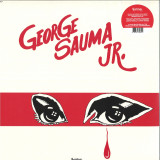
Favorite Recordings proudly presents an exclusive eponymous LP by Brazilian singer and composer George Sauma Jr., originally produced in 1985. Imagine a never-marketed release on which you’d hear not only the beautiful and genuine George’s songs but also the work from two figures of the Brazilian Music Golden Age: Arthur Verocai and Junior Mendes! A much-needed album for all Brazilian connoisseurs.
Back in the days, George Sauma Jr. was a young artist from Rio de Janeiro, learning on his side how to play chords and compose songs since he was 10. Still at the university, he’s influenced by Brazilian artists like Cassiano or Tim Maia, deeply fascinated by the arrangements and the “levada” (the groove) of all these new Brazilian songs. Simple and romantic music that resonated to his soul and creativity.
Around 1985, the story took an unexpected turn. George tells: “Dna Deyse Lucidy, the mother of Junior Mendes was a candidate for deputy and went to my father’s company to advertise. When I saw her, I shouted, “I’m a big fan of your son!” ” Of course, she could not praise more the work of her son. On her advises, George went to his studio on Rua Siqueria Campos at Copacabana. Junior loved the project and sent him to Arthur Verocai to improve the arrangements. Without money, the decision was taken to record everything at Junior Mendes’ studio on an 8-channel mixer. It was a small set-up but the emotions were there! George surely had other plans for some of his songs but without the budget, they ended up doing everything the best they could. And they did very fine with a top-notch team of musicians: Paulo Black on Drums, Arthur Verocai on Guitar, Ricardo Do Canto on Bass and Helvius Vilela on Keyboards.
Leaving the studio with the tapes, George tried to knock doors of international labels, but none did even dare to give him an answer. With less than 1000 copies pressed back in the days and without any distributor or label behind him, he went with proud to record stores, but received nothing than a strong reality check regarding the difficulties for a young Brazilian artist to achieve something on the saturated market of the 80s. Even for free, record stores didn’t want it. In the end, he ended up giving copies to friends and families, knowing deep inside that the songs were good! George tells: “I decided to leave, calm and conscious. I’ve still made three more albums, however on tapes, as it was more affordable. This time, just for my pleasure…”.
Thirty-five years after, it’s with great emotion that this first album by George Sauma Jr. is now made available as Vinyl LP with its original offset printed innersleeve & CD
*** UNRELEASED AOR / YACHT ROCK FROM 1979 AS FEATURED ON PRAISE POEMS 7***
It is a rare occurrence, especially when you consider that we are writing this in the year 2020, that an unreleased AOR/Yacht Rock album surfaces after 40 years. The Tramp crew first heard about it while discussing Penn Central's inclusion of their song "Sometimes" on "Praise Poems Vol.7".
The band Penn Central was formed about 1978 by Gary Phelps and his younger brother Shawn Phelps. They had been playing together in a few different groups in the Erie, Pennsylvania area since Gary returned there from Penn State in 1974. In 1978 Shawn was going to college at Edinboro State University, just south of Erie, where he met Curt Salvador, a student from the Pittsburgh area. They began playing together in a local Edinboro group when Shawn introduced Curt to Gary. Gary, Shawn, and Curt began to collaborate and soon Gary brought in friend and former high school bandmate Allen Bennett who was an accomplished musician on trumpet and percussion. Shawn then found Dave Lindgren who was playing drums in various bands locally and Penn Central was formed.
The group began rehearsing and playing small venues together. Soon, they began to work on original songs that Gary and the band were writing. They decided in 1979 to record some of the original music at a small independent studio in Erie that was owned and operated in by Keith Veshecco and John Mazza. Soon after recording 7 songs there, a large FM radio station, WDVE, in Pittsburgh sponsored a contest for local bands for a compilation album of local groups. Because of Curt's roots in Pittsburgh, he entered the Penn Central song "Sometimes" in the contest and it earned a spot on the 10 track album that was released in 1980. The band subsequently played in the area for the next few years before drifting apart as the members left college, began new careers, and started raising families. Gary, his brother Shawn, and Curt continued playing together and with other group configurations and as solo artists off and on since that time. They remain friends and share musical ideas to this day.
Key selling points:
- previously unreleased album from 1979
- all songs taken from the original reel-to-reel master tapes
- including full album download code
500 only LP. One of the first full-length recordings of Hauka ritual music. Praise songs and sacred incantations to the spirits to inhabit the body. Call and response chants, the pluck of a monochord lute and relentless pounding percussion combine in a dizzying nonstop session. The Hauka movement started nearly a century ago and has persisted on the fringes of Nigerien society. Documented in the 1955 Jean Rouch film Les maitres fous, the Hauka are a pantheon on spirits mirrored on colonial and military figures. Central to the religion is the "Holley Hori" possession ceremony, a ritual driven by militaristic percussive music, wherein spirits come into the body in powerful and violent manifestations. Lingo Seini has played ritual music for almost 60 years, learning from his father. He is joined by his son Youssouf on the calabass and Issaka Moulla, playing his homemade kuntigi. The group regularly accompanies Hauka priests in ceremonies. Recorded with a single microphone in the outskirts of Niamey.
Waking the Dreaming Body is the follow-up to Tucson artist Karima Walker's 2017 standout album Hands In Our Names, which garnered praise from Pitchfork, MOJO, and Bandcamp. The album includes dense harmonic arrangements of synthesizer, guitar, piano, percussion, field recordings, tape loops and Karima's dulcet singing voice. The final result is a 40-minute dream-narrative of her conscious and subconscious minds that oscillates between the rich textures of her ambient work and the melody and poetry of her melancholic, Americana-tinged songwriting, their ebb and flow recalling liminal states of half-sleep where images and emotions are recalled and forecasted from the previous night's dreams. Night falls in regular intervals throughout the album, forming a natural dialogue between waking and dreaming.
One of Britain's most consistent and enduring death metal bands, Birmingham's Bolt Thrower has weathered the best and worst of times in the extreme genre's history without ever giving in to commercial temptations, or hardly even altering its sound. The fact that they were unusually blessed with a steady lineup throughout much of their career no doubt contributed to this stability, and though they were rarely bestowed wild praise for their efforts, with most of their competitors or contemporaries either adopting other styles or long retired, Bolt Thrower has gradually established itself as one of the best death metal bands ever to emerge from England. - Ed Rivadavia (All Music Guide)
"New York City’s layers of continuous noise have become the backdrop to a rising four-piece that NME already calls “one of New York’s most exciting new bands.” Just like the city, The Muckers’ sound is equal parts vital and timeless, resolute and vibrant.
As The New York Times tells the story, lead guitarist and vocalist “Emir Mohseni, was inspired by the Strokes to pursue a career in music — a passion that brought him to New York all the way from his native Iran.” The move, profiled across acclaimed publications, from Rolling Stone to Billboard, only marked the beginning of the band’s story. Upon landing in this new environment, Mohseni met the three guys that would become his closest friends, and build with him the vitalizing sound and enrapturing live show that The Muckers are garnering early praises for: Anthony Azarmgin at the bass, Chris Cawley on rhythm guitar, and John Zimmerman behind the drums.
Hunter And The Dog Star is the band’s fifth studio album and their first since 2018’s Rocket—a record that marked a major return for the group following a twelve-year hiatus and was released to widespread critical acclaim. Of the album, Associated Press declared, “a triumphant return…their joy in recording together again is clear on Rocket, a record that touches on a variety of musical styles with ease,” while NPR’s World Café proclaimed, “explosively joyful” and the Austin American Statesman praised, “a beautiful, inspiring, sensational album.” Since forming in Dallas in the mid-1980s, the band has toured extensively across the country and had their music featured in several hit shows including Miami Vice, Girls, Cold Case, Ugly Betty, Wet Hot American Summer: Ten Years Later, American Dad! and more. Since the release of their 1988 debut, the 2x platinum-certified, Shooting Rubberbands at the Stars, the band has continued to earn their reputation as an unclassifiable, genre-blending force. Returning to Arlyn Studios in Austin, TX to record with producer Kyle Crusham, Brickell and the New Bohemians—Brandon Aly (drums), John Bush (drums, percussion), Brad Houser (bass, synthesizer) and Kenny Withrow (bass, guitars, synthesizer)—once again put forth a collection of diverse musical ideas and styles on Hunter And The Dog Star, as they have continuously done for the past three decades. Reflecting on the album, Brickell shares, “Hunter And The Dog Star is a collection of songs reflecting the mystery of self-expression, loyalty, companionship and love in the darkest sky just before dawn.” In addition to Brickell (vocals, guitars), Crusham (background vocals, mellotron, piano, Rhodes, synthesizer) and the New Bohemians, the album also features Matt Hubbard (background vocals, organ, piano, synthesizer, wurlitzer), Burton Lee (pedal steel) and background vocals from Kelly Micwee and Alice Spencer.
‘Push’ is Maral’s debut full-length album due on Leaving Records. The album’s sonic palette includes a collage of Iranian classical and folk
samples and explores the genres of experimental electronic production, touching upon noise, punk / post-punk and dub.
Maral is an active and acclaimed musician in the electronic underground. Her debut mixtape was widely praised and she has contributed to several compilations and Richard Russell’s Crass remix project.
‘Push’ features dub legend Lee “Scratch” Perry and Penny Rimbaud of Crass.
‘Push’ is a confident step forward from Maral’s club and mixtape work into a powerful collection of original songs. The album bursts with an urgent psychedelic energy but its songs also grapple with a sombre undercurrent.
Maral says her album is intended to reflect tense US-Iranian relations: “The history of Iranian music has a lot of melancholy in it. So much of Iranian history is sad. Since ancient times, Iranians were always fighting off invasions.”
- The Premiere Vinyl Release of the Soundtrack - 180 Gram Black and White Swirled Colored Vinyl - Old Style Tip-On Gatefold Jackets with Satin Coating - Artwork by Phantom City Creative - 12"x12" Booklet - Scoring Session Photography - Liner Notes // Waxwork Records is proud to announce THE BRIDE OF FRANKENSTEIN Original Motion Picture Soundtrack with music by Franz Waxman. In celebration of the film's 85th Anniversary, we are thrilled to present the premiere vinyl release of the film's music as a deluxe album featuring re-mastered audio, new artwork, and likeness approvals from famed actress Elsa Lanchester's estate. THE BRIDE OF FRANKENSTEIN is a 1935 horror movie directed by James Whale and starring Boris Karloff & Elsa Lanchester. It is the first sequel to the 1931 film FRANKENSTEIN and widely regarded as one of the greatest sequels in cinematic history. The film has been praised as Whale's masterpiece. In 1998, it was selected by the Library of Congress for preservation in the United States National Film Registry, having been deemed "culturally, historically or aesthetically significant". Sourced from the original master acetates housed in the composer's archives at Syracuse University and original masters from Universal, the album has been meticulously restored and re-mastered. Working closely with Universal Pictures, this historic release marks the very first time the original film music has been made available on vinyl. The album features new artwork by Phantom City Creative, a 12"x12" booklet including artwork and original scoring session photography, and liner notes by album producer and restoration engineer Mike Matessino.
Fleet Foxes' Robin Pecknold shares, "SHORE feels like a relief, like you'd feel when your feet finally hit sand after getting caught in a riptide. It's a celebration of life in the face of death, honoring our lost musical heroes, from David Berman to John Prine to Judee Sill to Bill Withers, embracing the joy and solace they brought to our lives and honoring their memory. SHORE is an object levitating between the magnetic fields of the past and the future." SHORE was released digitally in its entirety on the fall equinox (22/9) alongside an album length Super-16mm landscape film captured and edited in Washington State by the filmmaker Kersti Jan Werdal. The album was recorded in upstate New York at Aaron Dessner's Long Pond Studio, in Paris at Studios St. Germain, in Los Angeles at the legendary Vox, in Long Island City at Diamond Mine, and New York City's Electric Lady. Fleet Foxes' self-titled debut made a profound impact on the international musical landscape, earning them Uncut's first ever Music Award Prize and a spot in Rolling Stone's 100 Best Albums of the 2000's. The follow-up album Helplessness Blues was met with the same critical praise as its predecessor (MOJO âÿ_ âÿ_ âÿ_ âÿ_ âÿ_, Pitchfork's Best New Music) and earned them a GRAMMY nomination. Both Fleet Foxes and Helplessness Blues are certified Gold in the US. The band's third studio album Crack-Up, released in 2017, had the highest European chart entry at #5. Fleet Foxes has sold over 1 million records in Europe
- A1: How Sad
- A2 4: 3 2 1
- A3: Chinese Takeaway
- A4: Johnny Was A Soldier
- A5: Disco
- A6: Eyes In The Back Of Your Head
- A7: You'll Never Walk Alone
- A8: Too Young
- B1: Joker In The Pack
- B2: Lullaby
- B3: My Baby Got Run Over By A Steamroller
- B4: A Man's Gotta Do
- B5: Let's Go
- B6: Easy Way Out
- B7: Shake Rattle, Bang Your Head
- A8: I Wanna Be Sedated
- A9: Bad Boy (Single Version)
- A10: Tokyo (Single Version)
Originally released in November 1982, ‘Sound of Music’ was the second album from ‘Clockwork punks’ the ADICTS. Preceded by the release of the three track “Chinese Takeaway” EP, which also featured “Too Young” and “You’ll Never Walk Alone” - both included here as bonus tracks along with their subsequent hits ‘Bad Boy’ and ‘Tokyo’ and an unreleased version of Ramones’ classic ‘I wanna be sedated’ - the album was widely praised in the music press of the day with ‘Sounds’ saying “thank Christ for The Adicts. In this often grey and depressing world they entertain us, uplift us and unify us”.
Thirteen slices of punk/Oi! fun that made history, in a luxurious one-time GATEFOLD edition with poster, including liner notes by Mark Brennan and a total of 5 bonus tracks!
Cocteau Twins were a Scottish rock band active from 1979 to 1997. The original members were singer Elizabeth Fraser, guitarist Robin Guthrie, and bassist Will Heggie, who was replaced by multi-instrumentalist Simon Raymonde in 1983. The group has earned much critical praise for its innovative, ethereal sound and the distinctive soprano vocals of Fraser.
Four-Calendar Café is the seventh album by Scottish band Cocteau Twins. It was originally released on 18 October 1993 on Fontana. The album distinguished itself from the rest of the Twins' catalogue in two major areas: The sound was much more pop-oriented and less ambient than previous works, and Liz Fraser's lyrics were much more intelligible than usual.
Milk & Kisses is the eighth and final studio album by Cocteau Twins, issued by Fontana Records in March 1996. It proved to be their last
The song ''Rilkean Heart'' was a homage to Jeff Buckley, who was a lifelong lover of the work of poet Rainer Maria Rilke.
‘Del Rio’ is the third album from the Austin triumvirate of guitarist Craig Clouse (Shit and Shine), bassist Nate Cross (Marriage, Expensive Shit) and drummer King Coffey (Butthole Surfers) and the band’s first release to feature vocals from Colby Brinkman (Taverner). While their two prior albums (2017’s ‘Laredo’ and 2019’s ‘Matamoros’) were somewhere on the periphery of rock music , ‘Del Rio’ is a step or several beyond and a real testament to human imagination (maybe you’re impressed by Tesla Powerwall batteries but that’s because you’ve not heard “Soft Taco”, yet)
Coming off a pair of records their respective labels could barely keep in stock and critical assessments that put reviewers’ own chops to the test (see below), USA/Mexico have delivered their most fully realized statement to date.
Prior praise for ‘Matamoros’ :
“Laredo was a bent-out sunstroke of processed vocals and noise-laden riffs, and its follow up Matamoros is slower, freakier, and somehow louder…too defiantly weird and alien for pigeonholing, that’s how they fit inside Austin’s storied noise rock and experimental music scenes: by refusing to fit exactly in anywhere.” Andy O’Connor, Pitchfork
“Monolithic without being monotone: dirty sounds and gritty textures sliding over each other like sandpaper wiped across a chalkboard.” Marc Masters, Bandcamp
“The amplifiers sound broken, the vocals suggest someone's got their leg caught in a mantrap while deep in the woods trying to poach fat brown hares, and the mixing desk squeals as if it is undergoing physical tort
Oldschool Tribecore re-press ! Praised Tunes !