"Over the years, I have had the absolute pleasure of meeting countless wonderful people in every corner of this beautiful planet, and a lot of times these music enthusiasts have expressed a very similar-sounding story. That our presence – whether it be via a studio recording or our ferocious show – is capable of transporting them to a better place and washing away all earthly worries. Doesn't this sound amazing – especially during these challenging times?"
This gentle voice belongs to the vocalist-guitarist Jonne Järvelä, who happens to be the creative force behind the unique Finnish ensemble KORPIKLAANI. Having experienced multiple triumphant years within the inner circle of folk-influenced heavy metal, Jonne now acknowledges his position as one of the most recognisable artists ever coming from the land of a hundred thousand lakes.
KORPIKLAANI – preceded by Jonne's own project SHAMAANI DUO (1993-1997) and the band SHAMAN (1997-2003) – was founded somewhere deep in the primeval northern forests in 2003. Ten celebrated studio albums, numerous world tours and hundreds of millions of digital streams alongside multiple other releases, have established KORPIKLAANI’s status as one of the leaders of innovative heavy music. For their diehard legion of fans, they are known as Folk Metal Superstars.
"I have always been fascinated by ancient Lappish/Samish culture and the infectious melodies of aged folk songs. However, that's only one side of the coin as I have loved rip-roaring metal since I was a frantic kid looking for some rebellious sounds. My butt was kicked by the likes of MOTÖRHEAD, IRON MAIDEN and JUDAS PRIEST", says Jonne.
"Since the early 2000s, KORPIKLAANI has combined these elements as we have tirelessly attempted to pump new life into the ancient tales of joy and heartbreak, and added the enormous energy of current heavy metal into that folk metal melting pot.We have always been on a mission to create something new and unprecedented."
Here and now, KORPIKLAANI’s fearless journey continues on – and this time, the journey is powered by rather serious subject matter. Their eleventh full-length studio record "Jylhä" (which has no direct translation but can be described as majestic, or wild and rugged in a beautiful way) brings all the well-known and essential ingredients to the table: heavy-duty guitar riffing, rhythmic folk melodies and more.
What about the tales of the wilderness then? The fascinating and miscellaneous tales have always been a crucial part of KORPIKLAANI’s journey within the realms of unspoiled Finnish nature, ancient Scandinavian myths, shamanistic voyages and beyond. "Did I already mention that "Jylhä" offers some new angles?", the singer/guitarist laughs. "Well, lyrically, there are definitely some previously unknown passages – such as fables connected to the infamous Lake Bodom murders in Southern Finland in early 1960s."
KORPIKLAANI’s long-time lyricist Tuomas Keskimäki – the renowned Finnish poet and author, comments: "When I am coming up with narratives, interesting wordplays and other ideas for KORPIKLAANI, I often feel like I am diving into some absorbing fantasy world. I would describe this state of mind as some kind of a deep trance", says Keskimäki.
"As a whole textual piece, "Jylhä" is rather widespread. For example, there are stories about the fragility of life, revealed by using nature metaphors. ‘Miero’ is one of these tales: after all, it's a fact that the lifetime of a human being is just one blink of an eye compared to the eternal aeons of the cosmos."
"On the darker side, there are several murder songs - I wasn't really planning these rather untraditional lyrics, they just happened... One of these is ‘Kiuru’, and that story is inspired by a famous Finnish double homicide case, which took place in the small village of Tulilahti in 1959. In these lyrics, the character called Kiuru – Skylark in English – acts as eyewitness and a prophet, but at the same time, this creature also functions as an allegory of many things... All in all, I am really happy with the lyrics and all these new themes!"
When asked about his current sentiment regarding the new KORPIKLAANI opus "Jylhä", the commander of the forest clan sighs and smiles. "Using "Jylhä" as our solid steppingstone, we are able to reach completely new heights. For me, it's crystal clear that KORPIKLANI has never been better."
It is a fitting album for our dark times, summed up well by the song ‘Huolettomat’ (The Careless). It talks about living in the present moment, alongside a story of joy and celebration. Today is today, tomorrow is uncertain.
Suche:presence known
It seems that every major jazz artist has a one-off sort of record in their discography, be it with strings, voices, spoken word or - as in this case - a foray into the funkier side of jazz. Charlie Rouse (going here as Charles Rouse) gets his chance on Two Is One, a funky soul jazz excursion on Strata-East, the artist-run label where creativity and pushing boundaries was at the forefront. Playing mostly with a group of session musicians, Rouse put together an album that may stray a bit from his hard bop roots, but is nonetheless an enjoyable and at times inventive record. The style of music played here - sophisticated soul jazz with some post bop and spiritual jazz thrown in for good measure - is very much a product of it's time. 1974 saw a whole slew of artists stretching the boundaries of what jazz music could be, combining elements from the past two decades into electric jazz adventures. The piano-less group that Rouse put together is a funky one, with lots of rhythmic playing behind either the searching solos of Rouse on the tenor or some inventive electric guitar work from either George Davis or Paul Metzke who appear together on all but a couple of tracks. Cal Scott gets plenty of time to shine throughout on what sounds like an electrified cello, an unusual instrument for modern jazz to be sure, but one that manages to fit in just fine here.
The first side of the album is all slow burning soul jazz, highlighted by the opening track "Bitchin'" where Rouse shows off that he is more than capable of setting down soulful lines over a funky backbeat. The second side is where the group gets a whole lot more inventive, particularly on the title track where they mix some post bop madness with the soul jazz sound. "Two Is One" features different tempos throughout: in the "first section" the bass plays in 9/8 time, the drums in 6/8 time and the cello and tenor are in 3/4 time. For the "second section" the rhythm section switches to 7/8 time while cello and tenor move to 4/4 time. Stanley Clarke is on bass here and his deep and twisty electric bass line is placed prominently up front.
"Two Is One" is certainly the highlight of the album from a pure jazz standpoint, and it lives up to it's title, which according to Gene Lewis' liner notes is taken from a Thelonious Monk phrase meaning two people so in tune with one another that they become one. The album finishes off with "In His Presence Searching," a spiritually informed jazz number that is reminiscent of the work being done during this period by the likes of Pharoah Sanders and Gary Bartz, (while not being quite as out there as their best work). The tune is all rhythmic glory, with Rouse and Scott playing introspective and penetrating solos throughout. It's a nice album closer, and a good reminder that while Two Is One may be best known for it's funkier excursions, Rouse had a few tricks up his sleeve and the album, when taken as a whole, is a complete statement from a legendary jazz musician.
- A1: Mega Corp - Jon Sewi
- A2: Gladdics - Black Soyls
- A3: It's Tea Time - Renegades Of Jazz
- A4: Jagged - Serafin Plum
- A5: Opera - The Maenads
- A6: Sheikah - Double Screen
- A7: Put It On Ice - Stubby Dials
- B1: The Cards - Lucinate
- B2: Waving At A Melting Square Tooth Of A Specific Rabbit (Short Version) - Woodpecking Mantis
- B3: Lucempight - Wrenasmir
- B4: Poets And Rockets - Jay Solomon
- B5: Midnight Sun - The Motion Orchestra
- B6: What - Teis Ortved
- B7: The Last Recording From Earth - Funki Porcini
This compilation sees the coming together of independent music makers from across the globe to meet in one place and gather as a single entity. That simmering hub of warmth and affection is known as Motor Jazz - a place for artists to congregate and share their devotion for songs that are infused with rhythms created by anodic wires, buttons and other digital paraphernalia. That's electronic music to you and me, and in this case electronic music with swing, a sense of freedom and improvisation that some might call 'Jazz'.
The album opens with the ominous drone of the Mega Corp., sounding like one of the parties responsible for 2020's almost post-apocalyptic feel. It's perhaps an unlikely opener for a what's a positive and optimistic collection courtesy of young musicians from across the globe, but we all need to be reminded of who's in charge sometimes, and Dutch producer Jon Sewi does just that!
The mood soon lightens though, with the soulful strings and enticing keys of Gladdics by the mysterious Black Soyls, before well established German musical artisan Renegades of Jazz brings the family in for It's Tea Time with ticking clocks, warm tea pots and slices of cake, whilst being serenaded by a very vintage sounding horn section.
Serafin Plum almost steer us into drum & bass territory with their off-the-wall percussive nugget Jagged, whilst keeping a calming hand on the shoulder (as all good parents should) with soothing keys, before it's playtime once again.
There's nothing conventional about the Motor Jazz family though, and after tea time and play time, it's time to rave! In Greek mythology, The Maenads were female followers of Dionysus; their name literally translating as "the raving ones". Often they were portrayed as being inspired by the god into a state of ecstasy through a combination of dancing and intoxication, during which time they would dress in fawn skins and carry a thyrsus - a long stick wrapped in ivy or vine leaves and tipped with a pine cone. With a sound ranging between Jazz, Techno, Rave and Breaks their track, Opera, delivers a psyche and Jazz influenced piece with colliding styles, busy drums and rich melodies.
Heading over to Dublin, Ireland, and multi-talented producer, musician and DJ, Donal Sharpson (aka Double Screen) makes his presence known with grandiose brass preempting a four-to-the-floor wood block frenzy in the shape of Sheikah, complete with enthusiastic whoops and a persuasive bassline. Meanwhile, somewhere below the Irish Sea, aquatic artiste Stubby Dials delivers the bass worrying Put It On Ice the only way he knows how - living in a submarine, he emerges from time to time to leave his master tapes on the beach with a note saying "Release this!" before submerging, never been seen again.
Back in the Netherlands, Bram van der Hoeven, otherwise known as Lucinate, is an electronic Jazz producer par excellence. His effortless balance of organic musical roots like Fusion, Bossa Nova and Soul, into the world of modern beat orientated sounds is something to behold, and with The Cards he offsets life-affirming keys with rolling drums reminiscent of some of the seminal liquid Drum & Bass he grew up with.
As the global Motor Jazz family expands, we head to Canada, where the wonderfully monikered Woodpecking Mantis brings a little acid to the party with his squelchy, stuttering and brilliantly entitled Waving At A Melting Square Tooth Of A Specific Rabbit……. We're guessing they like acid a lot in Canada.
We're going down under to Newcastle, Australia next, where things take a more serene turn. Wrenasmir, known to his parents as Craig Smith, used to be a baroque pipe organist before he discovered samplers and synthesizers. Now he makes imaginary soundtracks at his studio for the twilight beachside city that lives in his head - full of vinyl and pixels and bittersweet memories. The gorgeous Lucempight is exactly that.
Keeping things low key and tranquil, Poets And Rockets, the latest offering from Jay Solomon is a horn driven slice of futuristic dub that makes way for The Motion Orchestra's majestic Midnight Sun, complete with Alexander Bednasch on double-bass, Mark Matthes on violins, Andy Sells on drums and David Hanke on electronics and production. Though influenced heavily by neo-classical and jazz sensibilities they occupy a musical space that sits in neither sphere, with a compositional style that deftly fuses the orchestral and electronic worlds. The full Motion Orchestra album, All One, will be released later this year on Bathurst.
Sixteen year old, self taught producer and multi-instrumentalist Teis Ortved is something of a prodigy. The Copenhagen based wunderkind has so far self-released two EPs, and if What, his offering here, is anything to go by, he's going to be making big waves across the eclectic music spectrum for years to come.
If Teis is the new kid on the block then what better way to round off this compilation that with its patriarchal figure. Funki Porcini has over a quarter of a century of recordings in his back catalogue, and has spent fifteen of those years dedicated to the independent UK behemoth that is Ninja Tune records. The Last Recording From Earth is exclusive to this album and is in many ways the perfect closing song. Perhaps more concept art than traditional piece of music, the idea behind it is that an alien archeologist has found this recording tens of thousands of years after humans have disappeared into the sand…. You never know, it might just happen, and hopefully Them To Us will take on a whole new meaning.
Linda “Babe” Majika’s insanely brilliant Don’t Treat Me So Bad is a tight six tracks of blistering electro-flavoured bubblegum and synth-drizzled solar-powered machine-funk. It has become increasingly hard to find, with copies currently moving for over £200. But this is definitely a case of eye-watering price equalling heart-thumping quality.
Once of the Hot Soul Singers, Don’t Treat Me So Bad was Linda’s debut LP as a solo artist. It was produced by Ace Mbuyisa of boogie-funk maestros Freeway and was originally released on Umkhonto Records in South Africa in 1988.
The enormous “Let’s Make A Deal” is probably the best known track here, and it’s definitely the best one if you ask us. Linda’s vocals drip with attitude over warm, breezy synths and an urgent, edgy electro beat to create a timeless club-ready bomb that sounds as fresh as ever. But the rest of the album is far from filler.
Opening track “Kunzima (Tabalaza Mjita)” instantly brings the sunshine vibes, strutting out the gate with that unmistakable South African steppers groove. It’s a deceptively simple song, with multiple instrumental elements arriving and taking leave with admirable restraint.
“It’s Our Home” is a powerful showcase for Linda’s vocals, enhanced by some life-affirming call and response backing vocals throughout. In fact they’re a joyous presence on the whole album. The insistent pipes and swirling, bubbling synths of title track “Don’t Treat Me So Bad” follow. A spacious proto-piano house banger that closes out the first side in phenomenal fashion.
Arriving as track two on the second side, “Unga B’Omthemba Umuntu” has the unenviable task of following the huge “Let’s Make A Deal”. It does the job with class, bringing the tempo down to a mid-paced tropical bounce with lilting harmonies and welcome traces of hi-life guitar. Wonderful stuff. “Playboy” is is another unbeatable head-nod groover rounds out the set wonderfully. That bassline high in the mix is to die for, and the chorus will make any dancefloor smile.
As ever, Simon Francis on mastering duties elevates this release, adding heft and elegance in all the right places with his customary deft touch. The memorable cover art, in which Linda appears straight out of the 1950s with her polka dot skirt and butter-wouldn't-melt pose, has been faithfully restored. But don’t let the innocent styling fool you - Don’t Treat Me So Bad is the work of one badass woman who can hold her own, and then some.
Fusing dexterous hand-percussion, hypnotic guitar riffs & soaring melodies, Waaju rise from London’s rich cultural palette with their latest album ‘Grown’, proving UK Jazz doesn’t have to sound the way we expect it to. Led by drummer and percussionist Ben Brown (Alfa Mist, Dizraeli, Ashley Henry), the band comprises percussionist Ernesto Marichales (Jordan Rakei, Sigala), guitarist Tal Janes (Nubiyan Twist, Bahla), Sam Rapley (Fabled, Maria Chiara Argiro) and Joe Downard (China Moses, Judi Jackson), each with their own strong presence on the UK’s extensive music scene. Waaju’s refined and divergent sound connects the dots between the likes of Ali Farka Touré, Alain Peters, Los Muñequitos de Matanzas, Oscar D’Leon and Beth Carvalho. Waaju formed as a means of exploring music’s hidden connections, from trance-inducing Moroccan Gnawa to Caribbean carnival music, and embracing them to reflect different shades of London’s own musical culture. It was the band’s love for Mali’s folk music – and Ali Farka Touré’s stylistic prowess in particular – that first set the project in motion. London’s Jazz Cafe invited Waaju to reinterpret classic tracks from Farka Touré’s catalogue to sold-out audiences in 2018 and 2019. According to Brown: “Ali’s one of the best. He has such a unique sound. His playing is so gnarly. His spirit and attitude are things I always think of when making music.” Waaju (meaning ‘to urge, inspire or influence to take action’ in Malian language Bambara) blends pulsing Latin polyrhythms, psychedelic Malian blues licks and cinematic textures. Following the group’s 2018 self-titled debut record, Grown presents a group more unified and distinctive-sounding than ever with six fresh, bold compositions. The record begins with Moleman, a potent reminder of the intricacy and energy Waaju’s become known for. Gritty, clattering metal defines the landscape for sizzling builds, hinting at rave culture styles like Bashment and Jungle. Listening Glasses follows and it’s clear why this is the album’s lead single – its Afrobeat-like energy and joyful interplay between guitar and tenor sax lies somewhere between Tony Allen’s grooves, Chimurenga guitar and Headhunters’ funk. On late night jam Rollando, Joe Downard’s skulking bass frequencies rule and wonkiness reaches new heights as heavy dub grooves almost tear themselves apart. Time’s Got a Hold was co-written by Waaju and Jordan Rakei for a show together in November 2018. Kicking off side B, this version features special guest vocalist Will Heard over bouncing triplets evocative of 1970’s Sega from La Reunion. A kind of looseness found only at night, the quiet drive of Wassoulou is sparse yet purposeful. Pulling back the tempo and dimming the lights, cavernous percussion fills each corner of the room, springing back as spectral reverbs. The title and final track shows the many dynamic sides of the outfit’s far-reaching sound, with its expansive harmonies and explosive psychedelia, spanning Yoruba Andabo to Hendrix, signing off an exciting and energetic second LP from Waaju at their most scintillating.
The second volume of Nothing Is Real’s self-titled compilation builds on their towering reputation as leading lights within the global electronic music community. As the label’s first release distributed by the respected Dutch record label and store Bordello A Parigi, the collection is set to further establish their international presence and spread their eclectic sound far and wide.
Bringing together diverse influences from across the spectrum of electronica and into new wave and ambient music, Nothing Is Real stand at the forefront of modern dance music as sonic innovators that continue to push boundaries with each offering.
Curated by Alberto Iovine and Alessandro Fumagalli, also known under the stage name Modular Project, this four-track collection takes listeners on a journey through the outer atmosphere of techno, expanding and evolving the genre into new forms along the way.
Cantor’s opening track kicks things off with a hypnotic, driving groove built on acidic synths before Niv Ast & Roe Deers bring a human touch to the proceedings with a vocal-led heater that recalls classic ‘80s sounds. Dharma pairs shuffling rhythms with extraterrestrial soundscapes that recall Squarepusher and Aphex Twin, before Argia closes the record with force and momentum, surrounding voltaic synthesizers and tribal drums with expressive atmospherics.
Reemerging from the threshold of the cosmic vortex, Black Lodge returns with another sonic artifact that is charged with vigorous chaotic energy, known as EXPERIMENT_ZERO. Accounts of the radiant object's origin are as mysterious as the raw energy that utters from its core. Following a close study, the guardians of the portal suspect that "Experiment Zero" was a primordial experiment rooted in the slam jack pits and DIY warehouse rituals of ages passed. A sonic dialog constructed of various languages, spanning from roots-house jak to bare-knuckled electro are revealed across the artifact - a revolutionary tale that surpasses the constructs of ephemerality, with a refusal to be ignored. Across the release the listener is confronted with fearless acid lines that are underscored by a tone of revolution, and sets the stage for a human voice that switches between modes of a sharp and mutated presence. The power of such sonic objects are both celebrated and rejected by various tribal societies. It is all dependent on the belief structures and traditional histories of its members. Those that belong to the cult of Ron Hardy, Mad Mike Banks, Traxx, and JTC will welcomingly be drenched in its riotous energies. It is for the dedicated, not the light-hearted. After further research it has been discovered that, Experiment Zero is the product of Dona, aka Dj Plant Texture and Mike Tansella Jr. of Son of Traders, both products of the ancient mercantile city of Bari in Southern Italy. Previous works from these artists have been featured on Creme Organization, Gravitational Waves, Unknown to Unknown, and Illian Tapes. All sonic experimentation was recorded in one take to capture the raw energy of instantaneous collaborative sound craft operating in flux. Black Lodge's 4th release is sure to find a space in the music collections of those seeking to travel within the uncanny portals that unforgivingly defy the status quo. Mastered by: Alex J Michalski Label design: Kosmik Pressing: Deepgrooves (NL)
- A1: Episode One - Fit The Twenty
- B1: Episode Two - Fit The Twenty-Eighth
- C1: Episode Three - Fit The Twenty-Ninth
- D1: Episode Four - Fit The Thirtieth
- E1: Episode Five - Fit The Thirty-First
- F1: Episode Six - Fit The Thirty-Second
‘Oh, baby, this is where it gets good.’ - Zaphod
The last ever BBC radio series of The Hitchhiker’s Guide to the Galaxy makes its vinyl debut! Materialising in the lavish packaging style of the preceding five series (Primary Phase, Secondary Phase, Tertiary Phase, Quandary Phase and Quintessential Phase) the Hexagonal Phase will make its presence known to all humanity on heavyweight Neon Geen vinyl! First broadcast in 2018, the Hexagonal Phase is based on Eoin Colfer’s And Another Thing…, the first - and, to date, only – official sequel to Douglas Adams’s original book series. This is also the first ever publication of the original radio edits of the Hexagonal Phase, as heard on their original Radio 4 broadcast. Arthur Dent and friends are thrown back into the Whole General Mish Mash in a rattling adventure featuring Viking Gods and Irish confidence tricksters, taking in a rare glimpse of Eccenrica Gallumbits and a brief but memorable moment with The Ravenous Bugblatter Beast of Traal.
Starring John Lloyd as The Book, with Simon Jones as Arthur Dent, Geoff McGivern as Ford Prefect, Mark Wing-Davey as Zaphod, Sandra Dickinson as Trillian/Tricia McMillan, Samantha Béart as Random and Jim Broadbent as Marvin, with a guest cast including Jane Horrocks, Lenny Henry, Jon Culshaw, Mitch Benn, Ed Byrne, Toby Longworth, Professor Stephen Hawking and many more, with music by Philip Pope. Adapted, Directed and Co Produced by Dirk Maggs, based on the novel And Another Thing… by Eoin Colfer, with additional material by Douglas Adams.
Presented on 3 x 180g heavyweight neon green vinyl, and
presented in illustrated wallets inside a rigid, bound 20 page book,
including a perspective sleeve note by Geoff McGivern and a
concluding overview of the series’ development by Jem Roberts,
Adams’s official biograph
You’re home just in time for tea.’ - Fenchurch
Known for its 808s, Bass, Alligators, & Cocaine Cowboys, Florida is the home of Vanguard Sound's Chris Mitchell, who follows his contribution to Squirrels On Acid with an EP of four absolute Rippers at the intersection of classic booty bass & new-school goth electro.
“Every Asshole” announces its presence with an up-tempo red-lined booty beat that will shake the walls of the Strip Mall Strip Club in any neighborhood. Funk is the key ingredient, and it is added generously, even when the synthesizer melodies bring in a darker texture. “Grippers” is more sinister, but no less funky. Dirty South Cold Wave at full frequency, propulsive & punk rock, but this is strictly party music at its core. The drum patterns stay in perpetual motion, programed with skill & precision. “Sh4” is another banger. The sound of a malfunctioning Fairlight over intricate drums & angular arpeggios. Mitchell's tracks never sit still, and again here, the drum programming shines. This is someone who has put in their 10, 000 hours on the MPC, and it shows. “Land Of Make Believe” slows things down & turns ups the Goth. Cybertron Sci Fi Soundtrack moods, but rump shaking nonetheless, wordless alien vocal textures & synth strings weave with the drums, which here are slightly more sparse than the previous tracks, but programmed with the same attention to detail.
If you're familiar with Chris Mitchell, this EP will not disappoint, & if this is your introduction to his music, you'll be wanting to hear more. This sixth release from the world of Squirrels is NOT for standing around at the party looking cool. This for shaking the tail, sweating with strangers at legendary all-ages club & birthplace of Miami Bass the Pac Jam in hedonistic abandon.
“The combined forces of Frederik Valentin & Loke Rahbek first found a way into the world in 2017 with the album 'Buy Corals Online'. Together they now present 'Elephant', an eight-track album that composes an inquisitive space with it's parts.
The economy of movement across Rahbek and Valentin's new collaborative album makes for a gentle transmission of its abstract intimacies. This presence, which we caught glimpses of on their previous work 'Buy Corals Online', is shaped by the delicate interplay between acoustic instrumentation and synthetically rendered sounds. Hauntingly melodic at times, the album feels like a suite of uncanny lullabies that grant access to realities that can only be found in dreams.
Rahbek and Valentin are always leading us somewhere and showing us something—one piece of the scene at a time, coming and going with different parts of a puzzle that eventually settles into a complete form. And through all this we perceive an inviting restlessness on their behalf, encouraging us to stray further and further into the private space of 'Elephant'. Valentin is perhaps best known for his work in the exquisite atypical pop group Kyo, though his widereaching music and videography practices covertly underpin his flagship projects.
Most recently, Valentin has been working with Yung Lean as both producer on his 'Nectar' album as Jonatan Leandoer127 as well as on their commission for Sweden's Cullberg Ballet. As Croatian Amor, Rahbek has made similar forays into unworldly pop and his work with Christian Stadsgaard as Damien Dubrovnik has been as critical as their cofounding of Posh Isolation.
Modest interventions from processed field-recordings and semi-erupting synths invite you to zoom in enough to hear the human hand. An attention to listening, to how sounds cradle the small movements and gestures that naturally accompany the playing of guitar, piano, and viola, is acutely developed by Rahbek and Valentin.
It's in this way that 'Elephant' persuades us that even small stories unfurl into the most intricate and tremendous of sagas"
- A1: Pictures Of Japan (3 41)
- A2: Pictures Of Japan Ii (1 00)
- A3: Pictures Of Japan Iii (1 08)
- A4: Pictures Of Japan Iv (2 28)
- A5: Pictures Of Japan V (1 52)
- A6: Pictures Of Japan Vi (1 52)
- A7: Pictures Of Japan Vii (2 59)
- B1: Pictures Of Japan Viii (1 33)
- B2: Pictures Of Japan Ix (1 57)
- B3: Pictures Of Japan X (3 18)
- B4: Pictures Of Japan Xi (1 50)
- B5: Pictures Of Japan Xii (2 05)
- B6: Pictures Of Japan Xiii (2 46)
- B7: Pictures Of Japan Xiv (2 44)
The first Be With foray into the archives of revered German library institution Selected Sound is one of our favourites on the label - the super in-demand Japan from Victor Cavini, originally released in 1983.
Rare and sought-after for many years now, this is one of those cult library LPs that never turn up. With Daibutsu the giant Buddha of Kamakura’s presence gracing the hefty front cover, this is a record bursting with dope samples for adventurous producers: it’s koto-funk madness!
Victor Cavini was the library music pseudonym of prolific German composer and musician Gerhard Trede. He was known for exploring instruments and styles from around the world (he played over 50 different instruments himself) and Japan is
his collection of 14 musical sketches painted with traditional Japanese wind and string instruments. These are the sounds of traditional Japanese folk music re-interpreted through Western ears, with the occassional contemporary twist. Contemporary for 1983, of course.
These “Pictures of Japan” are hypnotic, sometimes frantic, but always beautiful. The first twelve tracks offer airy explorations of koto and flute, with other strings and percussion being added and then given their own space. Indeed “Pictures of Japan XII” is just drums.
And then “Pictures of Japan XIII” seems to come out of nowhere. But the subtle sleaze of its full band sound still doesn’t quite prepare you for the towering climax of “Pictures of Japan XIV”.
This is Japan’s undoubted standout piece, completely and wonderfully at odds with the rest of the album. It’s the reason this has become such a must-have record. It keeps the traditional Japanese instruments but combines them with shuffling funk breaks, electric bass high in the mix and a Godzilla-sized psychedelic fuzz guitar sound that might actually be a traditional reed flute pushed to its limits. Whatever it is, it sounds awesome.
Recalling both Rino de Filippi’s Oriente Oggi and Giancarlo Barigozzi’s Oriente, the track’s a real head-nod groove for b-boys and b-girls alike that sounds straight out of a late 70s Yakuza film. Indeed, if you were told The RZA or Onra had cooked this up in the lab this century, you’d be convinced. It’s crazy that this dates from 1983.
The audio for Japan has been sensitively remastered for vinyl by Be With regular Simon Francis to keep all the character of the original recordings. Richard Robinson has handled the careful restoration of the original Selected Sound sleeve. Essential.
The highly anticipated album by Jay-Z's 4:44 soul hurricane Hannah Williams & the Affirmations produced by award-winning composer and multi-instrumentalist Shawn Lee.
Hannah Williams, the British soul hurricane who sensationally became part of Jay-Z's chart-topping 4:44 album, is primed and ready for her own national and international breakthrough.
Williams turned heads worldwide when the hip-hop superstar sampled her heart-stopping vocals on 'Late Nights & Heartbreak' for the title track, '4.44' on his 2017 album. Now Hannah and her exemplary, Bristol-based band the Affirmations deliver a definitive career statement with the drop-dead soulful new album 50 Foot Woman which will be released October 18th on the Milan based imprint Record Kicks.
The album captures all of the visceral power of the band's increasingly legendary live performances. Shades of classic Soul and Psychedelic Funk blend uniquely with modern-day flavours on a record destined to set the soul agenda for 2019 and far beyond. "I've never been as proud of anything in my entire career" says Hannah.
Born in High Wycombe in Buckinghamshire, Williams'father was a musically gifted minister, and her mother let her join the church choir at the age of six. Hannah could read music before she could properly read words, and when she discovered soul by listening with her mum to Motown and Bill Withers, there was no turning back.
After a 2012 debut with her previous band the Tastemakers, it was 2016's Late Nights & Heartbreak that announced the arrival of Hannah Williams and the Affirmations. But little did she know that Jay-Z was listening. One day, at her then-day job running the music department at the University of Winchester, he sent her a text.
Once she'd established that it wasn't a wind-up, and summoned the courage to call him back, she learned that JayZ's producer, No I.D., had played him Hannah's track to inspire his response to Beyoncé's Lemonade, on which she sang of his infidelities.
Williams was as in the dark about how 'Late Nights & Heartbreak' would be used until 4:44 dropped. But the substantial sample of her voice opened doors she never dreamed of. "It was an incredible catalyst," she says, "as a change in our collective career, and getting a global audience. Suddenly, there were millions of predominantly American hip-hop fans listening to my voice, going 'Is this from the '60s? Is she dead?'"
What followed was a year of the band's widest-ever touring including an invitation to perform at Central Park Summer Stage NY, Toronto Jazz Festival and Brooklyn Bowl NY and expanded audiences in continental Europe where she and the Affirmations had already made a mark. Then came the burning determination to make the record of their lives. The captivating 50 Foot Woman is that album, produced by Shawn Lee, a respected presence on the funk/soul scene whose credits include Amy Winehouse, Lana Del Rey and Alicia Keys. Lee has released five solo albums as Shawn Lee's Ping Pong Orchestra on San Francisco label Ubiquity Records and is also one half of the cool melodic pop duo Young Gun Silver Fox.
Now the world will hear what the cognoscenti have known for a while: that Hannah Williams is the real deal, and sings from her very soul. "I feel like my performance comes from my solar plexus," she says. "The emotional side of it is so intrinsic; I can't take it away from what I do."
May not know Maedon, the artist formerly known as pulsewidthmod, but you will soon; she has been pulverizing select dance floors with live sets since her arrival in Brooklyn late summer of 2018. Shrouded in mystery, there is one thing known about her, she’s a wizard with the hardware driven by some fierce passion for the music.
After having toured across the country on her own, she released a 12″ EP with the highly-respected Detroit Underground. Now she is ready to bring her work to the next level with a hard-hitting EP that epitomizes her sound on Adam X’s legendary Sonic Groove label. The label, of course, is known for delivering some of the hardest and intricate records in EBM and industrial, having releases from Rebekah, Dasha Rush, and Orphx.
Against His Will opens with the uncompromising ‘Illusion’ and its all-out destructive energy. Industrious and unforgiving synths dominate this cut, while a riff shifts in and out of chaos. The unrelenting percussion almost calls out like demons, as if you’re making your way down the river Styx, but instead of a boat, you’re on a mechanical conveyor belt.
Tasked with the difficult job of following that opener is ‘Limited Hangout’ which ends up proving as powerful as the first. A bit more punchy, this track has more body to it, the percussion is enchanting, and through all the chaos you will be dancing and stomping.
Next up is ‘Special Report’ in an attempt to tame and focus the disarray. The track has less overall unpredictable texture, and more EBM flared body banging beats. Still an absolute powerhouse, it uses door-pounding percussion to drive it along with modulated synths and riffs generating a menacing presence.
‘Alchemy’ brings the proceedings to a close. The textured cut is a slow down to things. Well-thought-out and more EBM than industrial, it demonstrates Maedon’s dynamic range of skills. Rhythmic drum patterns sway the beat while swirling and electric modulations percolate and oscillate throughout. The dark stabs evoke an underground feel, and although the track evokes smokestacks and assembly lines, it is inherently primal.
Returning for his third appearance on Frigio, Maurizio Martinucci (aka TeZ, Most Significant Beat and permanent member of Clock DVA since 2010) introduces one of his darkest works to date. Forged in his studio/lab in Amsterdam, the Italian artist casts three works of industrial paranoia with none other than Clock DVA delivering a very special remix.
The same intensity, the same fevered energy that permeated Dusk, is plain to hear in this production. Pulsating drums are pierced by metallic groans and choking voices for the alienating assault that is “Amna.” Clock DVA take on this factory floor demon, soothing and reworking the original. Keys cascade against throbbing basslines and stuttering rhythms, vocals by Adi Newton taking the form of a poem that circles and swoops in a track of brimming with a primal force. Stalking chords introduce “Dene.” A lancing beat lashes a lone string, static and resonance building as layers of machine noise make their inhuman presence known. The end comes from the hull of an abandoned ship, or so it sounds. Aquatic echo swirls around a spread of sunken snares, shrieks and slicing through the crash and squeal of wrought iron. Primordial music from the mind of Pragma.
The award winning Danish producer and live performer, also known for
her extensive compositional & soundtrack work for video games,
international theatre and dance productions – as well as her own
installation projects, debuts on the Avian label with ‘Entangled’. Forged
in the unique crucible of SØS Gunver Ryberg’s multidisciplinary
practice ‘Entangled’, stalks a hard line at the edge of techno’s stormiest
sector. A thrilling meeting of divergent disciplines and sound system
metrics with a keen skill for the composition of uncompromising club
works, Ryberg’s technique lies in the vital declaration of her own
borders in every setting. Comprised of six club focused pieces, the mini
LP applies itself to rhythmic intensity with a deft touch. Galloping
granulated walls envelope you at every turn as brittle melancholic pads
ease you from one moment to the next. ‘The Presence_Eurydike’ is the
gentlest form that Ryberg is willing to present, whereas ‘Trispider’
builds a monumental terror out of a raw pulse. It’s at these moments
that you sense the careful composition and orchestral drones, and how
keenly Ryberg’s rough modulation is meant to alter states. Displaying
varying approaches to form and structure across the record, the music
riffs on the brooding atmosphere characteristic of the artist’s collected
work by breaking up the havoc on ‘Entangled’ with a series of four
microcompositions spliced between each of the tracks. Finely textured
and rendered in detail they give a glimpse of Ryberg’s capacity for
mesmerising sound design – or to put it another way, they give a sense
of what’s barely contained by the rhythmic works. This is an expansive
and hard hitting rumination on the more caustic, atonal end of the
Techno genre – a truly dynamic and immersive listening experience.
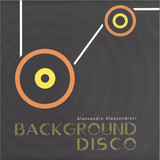
Just say Background Disco and you're quickly reminded of the super-groovy sound that pervaded certain sequences of 1970's Italian films, generally set in discos or clubs with a strong presence of music. Soul, disco, and funk tracks playing in the background, between a dance on the floor and a glass of J&B at the counter, that were supposed not to overcome the dialogues. Two of these jewels, signed by Alessandroni for the sexy comedy FRITTATA ALL'ITALIANA (1976, Alfonso Brescia) and previously released by our label in the collection LOST & FOUND (Four Flies Records 2017), definitely deserve the upgrade to the 12'' format. Therefore, they are proposed in a new edit designed for the dancefloor, each in a double version: the sung one (by lesser known Lorena, a member of Alessandroni's vocal band I Cantori Moderni) and the instrumental one.
As humans living on the planet today, we have become so removed from our original, natural habitat—the forest—that we forget our wild roots, our primal, animal origins. Music is one of the things that can bring us back to that place, that can put us in contact with a felt world of instinct, immediacy, and presence: a world where language and the problem-solving mind are not needed, where the music keeps your mind and body in the present moment, and the point of dancing becomes the dance of our inner wildness and animality itself. Hans Berg's Sounds of the Forest Forgotten affirms that music can bring us to a state of mind and body that can help us feel what we've forgotten from the forest. The overlaying project of the album is to conjure musical and conceptual resonances between mysticism and nature, summoning the incredible depth and force of nature that we usually miss, especially living in contemporary urban cities. Sounds of the Forest Forgotten channels the creativity, playfulness, and freedom of a life both before and beyond ours through the sounds of analog and digital synthesizers, a modular system, drum machines, and computers. Recorded between Hans's studios in Berlin and on the Swedish countryside, the album similarly shuttles between contemplative and ecstatic, between delicate and powerful, mixing sublime psychedelic techno compositions like 'Emerald Sea' with acidic dance-floor bangers like 'Storm' and 'Milk Thistle,' all nestled between contemplative and textural ambient compositions like 'Butterfly' and 'Glow Worm.' Berg is known for his enthralling productions and energetic livesets that capture dance floors with his particular brand of hypnotic techno, replete with angular lines, affecting melodies, pulsating basslines, and big drums. He also produces atmospheric scores and ambient soundscapes to accompany the video art and installations of long-term collaborator and celebrated artist Nathalie Djurberg. Berg's live sets have found a home in nightclubs around the world, with recent gigs in Berlin, Stockholm, New York, Tokyo, and Melbourne, to name a few. In addition to 2MR, he has released his solo work on record labels including Ian Pooley's imprint Montage, Klasse Recordings, and The Vinyl Factory. His ongoing collaboration with fellow Swede Johanna Knutsson - as Knutsson/Berg - has led them to start the label UFO Station Recordings, on which they release their own material. The duo also has released on labels such as Idle Hands, Default Position, Kann, and Random Island.
vailable on 7-inch red vinyl single (includes free digital copy on MP3). Vinyl is limited to 500 copies.
Les Disques du Crepuscule presents All Through the Night, the first of two of newly recorded 7-inch coloured vinyl singles by The Passengers, the late 1970s new wave group from Brussels who subsequently became cult Factory/Crepuscule band The Names.
In 1978, with the Brussels scene still in the grip of raw punk, The Passengers offered a fresh, pop-oriented sensibility, mingled with the darker accents of later post-punk. This was young music in every sense, with none of The Passengers older than 22, shaped more by American than British influences, notably the Velvet Underground, whose radical style was in turn echoed by late Seventies bands like Richard Hell and the Voidoids, Talking Heads and Television. The presence of Isabelle Hanrez on vocals also made comparisons with Blondie inescapable.
With their first gigs in the five-piece quickly became a local sensation, and in March 1978 won a battle of the bands known as the 'First Belgian Punk Contest' - only to reject the prize (a one-off single deal) as a cynical commercial ploy. Instead, the band chose to tape All Through the Night for Brussels punk imprint Romantik Records, only for the label to fold before this came to pass.
The Passengers parted company soon after, with Michel Sordinia, Marc Deprez and Christophe Den Tandt becoming The Names on Factory Records, while Hanrez formed own pop-punk outfit, Isabelle et les Nic-Nacs. Four decades on, the original Passengers quintet decided to record and issue the singles denied a release at the time, recorded and played as if it were still 1978!
Cover portrait by Eric de Merkline. Design by Atomluft.
Available on 7-inch clear vinyl single (includes free digital copy on MP3). Limited to 500 copies.
Les Disques du Crepuscule presents All Through the Night, the first of two of newly recorded 7-inch coloured vinyl singles by The Passengers, the late 1970s new wave group from Brussels who subsequently became cult Factory/Crepuscule band The Names.
In 1978, with the Brussels scene still in the grip of raw punk, The Passengers offered a fresh, pop-oriented sensibility, mingled with the darker accents of later post-punk. This was young music in every sense, with none of The Passengers older than 22, shaped more by American than British influences, notably the Velvet Underground, whose radical style was in turn echoed by late Seventies bands like Richard Hell and the Voidoids, Talking Heads and Television. The presence of Isabelle Hanrez on vocals also made comparisons with Blondie inescapable.
With their first gigs in the five-piece quickly became a local sensation, and in March 1978 won a battle of the bands known as the 'First Belgian Punk Contest' - only to reject the prize (a one-off single deal) as a cynical commercial ploy. Instead, the band chose to tape All Through the Night for Brussels punk imprint Romantik Records, only for the label to fold before this came to pass.
The Passengers parted company soon after, with Michel Sordinia, Marc Deprez and Christophe Den Tandt becoming The Names on Factory Records, while Hanrez formed own pop-punk outfit, Isabelle et les Nic-Nacs. Four decades on, the original Passengers quintet decided to record and issue the singles denied a release at the time, recorded and played as if it were still 1978!
Cover portrait by Eric de Merkline. Design by Atomluft. e
The New York Downtown Producer/Composer Returns With His First New Album In 3 Years
EIGHTEEN: the year of release, 2018. EIGHTEEN: the age at which I first used a synthesizer.
In creating EIGHTEEN I worked independently in the studio, initially building up tracks with synthesizers and found sounds recorded in my daily comings and goings. After working with the tracks over a period of months,I shared them with a few musicians, who added their own instrumental layers. Though working independently, we all shared a similar working process: working in our personal recording spaces, as opposed to larger recording studios.
The musicians are: Gabe Gurnsey (drums) of Factory Floor, with whom I collaborated on the Beachcombing EP and performed live at London's ICA. I appear on Gabe's newly released album Physical;
Larry Saltzman (guitar) has played in my Love Of Life Orchestra since the 1970's. Well-known for his work with Arthur Russell ('Kiss Me Again', Flying Hearts), he is in high demand in NYC by acts such as Simon and Garfunkel;
Paul Nowinski, (bass) has played with LOLO since the 1980's. Paul has an impressive list of credits, including Les Paul, Keith Richards, Bernard Purdie and the Boston Pops; Matt Mottel, (electric piano), is the newest addition to the Love Of Life Orchestra. He is half the duo Talibam!, a leading act in the noise jazz scene; Lewin Barringer, (guitar), is a talented guitarist and producer in Philadelphia.
After mixing the final tracks, I brought the mixes to Berlin. There I worked with the brilliant mastering engineer Mike Grinser who helped to give the album a unified sound.
I think of this album as electronic music. It was created in my home studio, using analog and digital synthesizers, found sounds recorded on my phone, and instrumental parts contributed by friends. Finely crafted melodies and harmonies are set against subway noises, street construction, and distant foghorns. Sometimes there are sustained clusters, generated by my leaning against the keyboard. Deliberateness paired with randomness: this is what guided the artistic process.
This album is atypical for me as I am not playing saxophone. (I do play one reed instrument - a harmonica.) I grew up with the sax as my primary instrument. Yet my father was a radio journalist so the reel-to-reel tape recorder was a ubiquitous presence in the family home. From an early age,
I experimented with the tape machine: recording, overdubbing and splicing tape. I learned about Varese from Frank Zappa liner notes; I read John Cage's 'Silence.' Electronic music was on my radar.
My first exposure to an actual synthesizer came when I recorded my first single at the fabled Sound City Studio in Van Nuys, CA. The studio had a custom Neve board, but it also had a firstgeneration Moog modular synthesizer sitting unused in the maintenance room. I asked and they kindly let me experiment with it. Soon, I enrolled at the University of California - San Diego after I discovered they had separate studios for their Moog and Buchla systems. These large modular synthesizers were affordable then only by institutions and rock stars. But these would be soon eclipsed by smaller, cheaper synths in the 70's and early 80's. In the same way, recording studio technology became accessible in the 90's. . And thus the personal computer and digital audio allowed studio quality production in the home studio. Electronic music had become democratized.
Handmade music by way of digital technology: this is the music of EIGHTEEN