
quête:private eyes


“In October 2018 we took several recordings in and around Eddie Prévost’s home village of Matching Tye in Essex, where he has been living for the past fifty years. The majority of the pieces that made it to this LP took place in All Saints Church, High Laver, the burial site of John Locke. This fact was notable in the choice of title for this set of recordings, and it seemed necessary to put forward Eddie’s own take on Locke that he offered in our correspondences:
“Scholars of Locke’s philosophy will be familiar with the idea of mixing labour with materials as a fore-running notion of possessive individualism and basis for private property. Such ‘mixing’ is a persuasive description of a creative act. But the theory is more worthy of a social dimension.” As for the individual titles for each of the studies on the LP, each takes ideas and elements from music past. For example, MaxPlus makes a nod towards bebop pioneering drummer Max Roach who offered an earlier hit-hat study. Eddie utilises such examples, offering further creative insights which can then be woven back into the common wealth of sound. The final track, returning to the bowed cymbal method of the first, was recorded outdoors on a breezy green, and is pictured on the back cover of the sleeve. It was an attempt to capture the playing in its ‘metamusical’ relationship with the untempered sounds of the external environment.
Eddie has written about Metamusic in his book The First Concert (Copula, 2011): invoking childlike ‘protomusical’ behaviour, or the sense of music that a person might possess before the inevitable influences come to play any role in their productive, and appreciative, musical development.
Ross Lambert provided a few words along side his cover drawing entitled ‘The Metamusician’: “The eyes would symbolise for me things like searching, examining, closeness or friendship I think; engagement with the world. Decisions in making the image were completely intuitive, this is just me looking for the meaning, post-analysing, post rationalising.””
- Daniel Kordik & Edward Lucas, March 2019

10
Amazing and unique private soul/jazz-funk fusion LP, 'New York To L.A.: Coasting' is the first release (1980) on Andrew Scott Potter and David Eric Tillman's PO/ET label. Sublime from the beginning to the end, it has become, just like their second and final release '...Space...Rapture...', a sought-after collector's item.
Andrew and Eric both come from Chicago. They met in the early 70's, shortly after Eric's discharge from the U.S. Air Force. They played together on the local jazz scene for several years (among others, with Maulawi). During that period, Andrew also toured with Minnie Riperton and Eric toured with The Dells, Linda Clifford and others. In the late 70's Eric left Chicago for Los Angeles, when he began touring with The Temptations. Since moving to California Eric has played and/or recorded with a variety of artists, including, Willie Bobo, Justo Almario, Alex Acuna, Norman Connors, Billy Paul, GAP Band, Linda Hopkins, Billy Higgins, O.C. Smith, and many others.

9
Instrumental version of debut album from Andrew Hung Will appeal to fans of Fuck Buttons as the first instrumental, electronic and beat driven music by Andrew since 2015.
As co-founder of Fuck Buttons; the highly-influential electronic duo, Andrew Hung has toured extensively with headline shows at the Kentish Town Forum, Glastonbury and Greenman Festivals, been featured on the 2012 Olympics
opening ceremony and all three albums have featured as Best New Music on Pitchfork. His production work has included Zun Zun Egui’s “Shackles Gift” and co-writing/
co-producing the critically acclaimed “Kidsticks” by Beth Orton. In 2016 he soundtracked the multiple-award winning film “The Greasy Strangler”, and was
nominated for Best Soundtrack at the Empire Awards. In 2018 he soundtracked director Jim Hoskins’ follow up to “The Greasy Strangler”; “An Evening with Beverly Luff Linn” starring Aubrey Plaza and Jermaine Clement. His debut solo
album, ‘Realisationship’ was released via Lex Records in 2017.

- A1: Ohoopee River Bottomland
- A2: Through The Eyes Of Little Children
- A3: New Beginnings (Russian River Rainbow)
- A4: The Truth Ain'y In You
- A5: Canoochee Revisited (Jesus Man)
- B1: Broomstraw Philosophers And Scuppernong Wine
- B2: Lay Me Down Again
- B3: Melt Not My Igloo
- B4: Things Ain't What They Used To Be (And Probably Never Was)
- B5: Bertrand My Son
10
larry Jon Wilson He Can Break Your Heart With A Voice Like A Cannonball.' - Kris Kristofferson. Larry Jon Wilson Came To The Party Late. When He Arrived In Nashville, Country Soul Pioneer Tony Joe White Had Already Made Six Albums. Townes Van Zandt Had Made Seven, Mickey Newbury Eight. Kristofferson, The Accepted High Priest Of The New Nashville, Had Made Five. Larry Jon, By The Time He Arrived, Had Spent Ten Years In Corporate America. He Did Not Start Playing Guitar Until The Age Of 30, But Five Years Later He Released His Debut, New Beginnings (1975) And Followed It Just A Year Later With Let Me Sing My Song To You, Both On Monument Records. A Revelation Among The Hipsters And Critics Of Nashville, The Lps Ensured Larry Jon Was Immediately Embraced As Part Of The Mid-70s outlaw Country Movement' That Eschewed Slick Production In Favour Of A Raw, Gritty Approach. When A Film Crew Came To Document This Burgeoning Sound, They Made Straight For Larry Jon's Door. The Legendary Heartworn Highways (1981) Featured His Mesmerising Performance Of ohoopee River Bottomland', A Boogaloo Funk Monster. He Was A Singer And Writer Of Intensely Private, Painfully Moving Tales Of Southern Life. With His Deep, Papa-bear Voice, Funky Southern Groove, And Richly Evocative Narratives Of Rural Georgia, Larry Jon Was A Unique Stylist But His Gutsy, Greasy Sound Did Not Translate Into Sales.

On her deeply moving debut album At Weddings, Sarah Beth Tomberlin writes with the clarity and wisdom of an artist well beyond her years. Immeasurable space circulates within the album's ten songs, which set Tomberlin's searching voice against lush backdrops of piano and guitar. Like Julien Baker and Sufjan Stevens, she has a knack for transforming the personal into parable. Like Grouper, she has a feel for the transcendent within the ordinary.
Born in Jacksonville, Florida, and now based in Louisville, Kentucky, Tomberlin wrote most of At Weddings while living with her family in southern Illinois during her late teens and early twenties. At 16, she finished her homeschooling curriculum and went to college at a private Christian school she describes, only half-jokingly, as a "cult." By 17, she had dropped out of school, returned home, and begun to face a period of difficult transition in her life. The daughter of a Baptist pastor, Tomberlin found herself questioning not only her faith, but her identity, her purpose, and her place in the world.
"I was working, going to school, and experiencing heavy isolation," Tomberlin says of the time when she first began writing the songs on At Weddings. "It felt monotonous, like endless nothingness. It was a means to get through to the next step of life." In songwriting, Tomberlin found relief and lucidity she had trouble articulating otherwise. When she was 19, she wrote "Tornado" on her parents' piano, and began to develop confidence in her music. A year later, she had written enough songs to fill an album.
Throughout At Weddings, Tomberlin's lyrics yearn for stability and belonging, a near-universal desire among young people learning to define themselves on their own terms for the first time. "I am a tornado with big green eyes and a heartbeat," she sings on "Tornado," her voice stretching to the top of her range. Rich, idiosyncratic imagery — a fly killed with a self-help book, brown paper bags slashed violently open, clouds that weep over a lost love — sidle up to profound realizations about learning to be alive in this world. "To be a woman is to be in pain," Tomberlin notes on "I'm Not Scared." On "A Video Game," she muses, "I wish I was a hero with something beautiful to say."
Tomberlin cites the hymns she grew up singing in church as her greatest musical influence, and while At Weddings in many ways documents the unlearning of her childhood faith, it's easy to hear the reverential quality of sacred music in her songs. "A lot of hymns talk about really crazy stuff — being saved from the depths and the mire, judgment. When you actually realize what you're singing, it becomes really overwhelming," Tomberlin says. "I grew up singing in church. I was still helping to lead worship when I started coming to terms with the realization that I didn't know if I believed. I felt nauseous and shaky reading these words I was singing and feeling their intensity. If I did believe this, how could I sing these words without being scared out of my mind That's what's influenced how I write."
At Weddings is laden with reverence for music itself, for the power it has to heal others and help people navigate their lives. It is a record about learning to love oneself and others without reservation, from a place of deep sincerity — a lifelong challenge whose tribulations Tomberlin articulates beautifully. "My number one goal with my music is for honesty and transparency that helps other people find ways to exist," she says. With At Weddings, this remarkable young songwriter offers up comfort and wonder in equal measure.
a1 | Any Other Way
a2 | Untitled 1
a3 | Tornado
a4 | You Are Here
a5 | A Video Game
b1 | I'm Not Scared
b2 | Seventeen
b3 | Self Help
b4 | Untitled 2
b5 | February
- A1: Jim Spencer Wrap Myself Up In Your Love
- A2: Michael Miglio Never Gonna Let You Go
- A3: Ned Doheny Before I Thrill Again (Demo)
- A4: Johnny Gamboa That Good Old Feeling Back Again
- A5: Solenoid Acquaintances (Promo Version)
- B1: Steps Your Burning Love
- B2: Jeff Harrington Kristi
- B3: Paul Skyland Give Me Your Love
- B4: Rob Galbraith Tell Me With Your Eyes (Just Be You)
- B5: Calvin Johnson Dance Of Love
- C1: Salty Miller One More Time
- C2: Canyon Country Lovin
- C3: A.j. Loria Please Analyze
- C4: Gary Marks Sailing
- C5: Country Comfort To Be Lonely
- D1: Madness Madam Operator
- D2: Chuck Senrick Don't Be So Nice
- D3: Breathers Don't It Make You Feel
- D4: Damon Danielson How Long Has It Been
- D5: Rudy Norman Back To The Streets
20
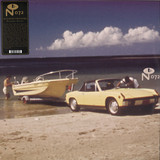
The Numero Group's dive into the deep end of America's private press continues. Having battled the witches and wizards of Darkscorch, the outlaws of Cosmic Americana, and traveled alongside Ladies From the Canyon and their Lonesome Heroes, it's time to take it easy.With pop music's volume knob adjusted for deflation in the early '70s, softness begat smoothness. Crewmen arrived from the worlds of jazz, folk, rock, and soul, all peddling a product that was sincere, leisurely, and lofty. A sound that was buoyant, crisp, defined. Sometimes classified as West Coast—and, later, Yacht Rock—the compass points of our Private Yacht expedition are the blue-eyed harmonies of Hall and Oates, the cocaine-dusted Fender Rhodes of Michael McDonald, and the combover strums of James Taylor. Here, at the glassy apex of rock's softer side, 20 strong swimmers are gathered together. An album for both relaxation and reflection, where listeners can enjoy the present, a cool breeze, and a taste of the good life.

9
There's a myth about music critics that says we are frustrated, wannabe performers. Evidence to the contrary: Vivien Goldman. Ever since she migrated from pitching editors on the little-known music of Robert Nesta Marley to becoming one of the foremost chroniclers of the perfect storm of reggae, punk, hiphop and Afro-Beat, the London-born, New York-based Goldman has made documenting music her primary life work. But between 1979-82, Goldman was also a working musician, creating songs that, years later, would be sampled by The Roots and Madlib. These rare girl grooves are now collected for the first time on Resolutionary, courtesy of Staubgold Records.
Resolutionary takes us through Vivien's first three musical formations: first as a member of experimental British New Wavers The Flying Lizards; next as a solo artist, with her single 'Launderette,' featuring postpunk luminaries; and then as half of the Parisian duo Chantage, with Afro-Parisian chanteuse Eve Blouin. Goldman's synthesis of post-colonial rhythms and experimental sounds are threaded together by her canary vocal tones and womanist themes. Her eclectic musical crew included PiL's John Lydon, Keith Levene and Bruce Smith; avant- gardists Steve Beresford and David Toop; The Raincoats' Vicky Aspinall; the mighty Robert Wyatt; Zaire's Jerry Malekani; Manu Dibango's guitarist; and Viv Albertine, then of her good friends, the Slits. The majority of the tracks were produced by dubmaster Adrian Sherwood, and Resolutionary channels the history of a time when the bon-vivant voice of music was in the air, and Vivien Goldman was its eyes, ears, and mouth.
