country songwriter from Brooklyn's indie underground, Dougie Poole blurs the lines between genre and generation on his third solo album, The Rainbow Wheel of Death. Rooted in sharp songwritingvand the organic sounds of a live-in-the-studio band, it's a classic-sounding record for the modern world. The Rainbow Wheel of Death's title nods to the colorful pinwheel that appears onscreen whenever a computer's application stalls. For Poole _ who found himself working as a freelance computer programmer once the pandemic brought his touring schedule to a temporary halt in 2020 _ it's also a reference to the holding pattern that's left much of society feeling stuck, unable to move ahead in an uncertain world. That feeling was pervasive when he in his New York City bedroom and wrapping up the songwriting process in the recording studio itself. Once hailed as the "patron saint of millennial malaise" for his sardonic wit and topical, tongue-in-cheek songwriting, Poole broadens his reach here. "High School Gym" builds a bridge between 2020s lo-fi textures and 1980s pop vibes, while "Must Be In Here Somewhere" _ whose narrator sits at a lap top, searching through "every server burning in North Carolina" for a digital souvenir of a long-lost relationship _ mixes modern concerns with classic country instrumentation. If records like 2017's Wideass Highway and 2020's breakthrough release The Freelancer's Blues told stories about uninspired Millennials languishing in dead-end jobs and no-good relationships, then The Rainbow Wheel of Death focuses on more universal issues like mortality, love, and the passing of the time. With The Rainbow Wheel of Death, Dougie Poole breathes new life into country music, retaining the acclaimed elements of his previous work _ drum machines, synthesizers, and his deep-set voice _ while pushing toward something warm, organic, and prismatic.
Поиск:process
Все
country songwriter from Brooklyn's indie underground, Dougie Poole blurs the lines between genre and generation on his third solo album, The Rainbow Wheel of Death. Rooted in sharp songwritingvand the organic sounds of a live-in-the-studio band, it's a classic-sounding record for the modern world. The Rainbow Wheel of Death's title nods to the colorful pinwheel that appears onscreen whenever a computer's application stalls. For Poole _ who found himself working as a freelance computer programmer once the pandemic brought his touring schedule to a temporary halt in 2020 _ it's also a reference to the holding pattern that's left much of society feeling stuck, unable to move ahead in an uncertain world. That feeling was pervasive when he in his New York City bedroom and wrapping up the songwriting process in the recording studio itself. Once hailed as the "patron saint of millennial malaise" for his sardonic wit and topical, tongue-in-cheek songwriting, Poole broadens his reach here. "High School Gym" builds a bridge between 2020s lo-fi textures and 1980s pop vibes, while "Must Be In Here Somewhere" _ whose narrator sits at a lap top, searching through "every server burning in North Carolina" for a digital souvenir of a long-lost relationship _ mixes modern concerns with classic country instrumentation. If records like 2017's Wideass Highway and 2020's breakthrough release The Freelancer's Blues told stories about uninspired Millennials languishing in dead-end jobs and no-good relationships, then The Rainbow Wheel of Death focuses on more universal issues like mortality, love, and the passing of the time. With The Rainbow Wheel of Death, Dougie Poole breathes new life into country music, retaining the acclaimed elements of his previous work _ drum machines, synthesizers, and his deep-set voice _ while pushing toward something warm, organic, and prismatic.
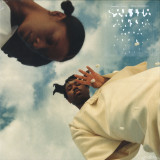
Sampha announces the full details of his highly-anticipated, sophomore album LAHAI, out October 20th on Young. Taken from his paternal grandfather’s name, which is also Sampha’s middle name, LAHAI revels in the awe and magic of our existence, synthesizing the exquisite chaos that one experiences confronting the cycle of life and the beyondness. Spanning 14-tracks, with contributions from some of Sampha’s closest friends, peers and collaborators including: Yaeji, Léa Sen, Sheila Maurice Grey (Kokoroko), Ibeyi, Morgan Simpson (Black Midi), Yussef Dayes, Laura Groves and Kwake Bass, LAHAI, in contrast to Process, is a communal affair seeing Sampha explore the many ways in which we as humans connect to each other, and to something bigger than ourselves. On the album’s latest single “Only,” premiering today via a new music video directed by Dexter Navy in collaboration with Sampha, which follows the recent “Spirit 2.0,” we meet a newly energized Sampha, as he spits melodically over a fragmented hip-hop hued beat with co-production from El Guincho.
Not unlike its maker, LAHAI defies clear categorization. Spanning jazz, soul, rap, dance, jungle and west African music, LAHAI sees Sampha elevating his production and vocal ambition to great new heights. A notable singer, songwriter and producer, it’s no wonder that artists like Kendrick Lamar, Stormzy, Travis Scott and previously, Drake, Solange, Frank Ocean, Beyoncé, Lil Wayne and Alicia Keys have all tapped the artist for his inimitable voice plus songwriting and production contributions to their music. His work expands across multiple disciplines, with previous creative partnerships including the fashion designer Grace Wales Bonner, the Shy Light zine with Durimel (who also shot the LAHAI artwork) his Process film with director Kahlil Joseph, and most recently creative director Jonny Lu, with whom Sampha worked to create the LAHAI album artwork and logo.
If Process, Sampha’s 2017 Mercury-Prize-winning debut album, was an artist figuring out his own place in the world, engulfed in the shadows of grief and loss, LAHAI is an exercise in the radical acceptance and joy in the human condition, and the beauty in the journey itself. Welcome to Sampha’s next musical chapter: LAHAI.
Tysher is back with another massive 3 track EP on his own imprint. Inspired by all the gigs and events in 2022 he put all his ideas and creativity into this release. Shadows EP is named after the contrast between light and dark and generally dualism itself. All 3 tracks have walked through the process of profound sound design, programming groovy and progressive beats and enthusiastic arrangement styles. Stagnation is regression and that’s the reason for Tysher moving forward in developing his own signature sound.
Comes as super limited clear, black & green splattered Collecters Edition.
Ben Bondy dives deep into the aether on this latest full length for Good Morning Tapes, folding blissed chorus-pedal shimmers into smudged dreampop vapours, a bit like like how we’d imagine claire rousay if she were releasing on Chain Reaction.
Mining a similar path to Jake Muir’s Mana album, Bondy explores a late, late night mood on this one, obscuring delicate digital processes behind gossamer webs of static, windchimes and smeared guitars drifting into bliss. Over the space of half an hour, breathy atmospheres blur into a pastel-hued paradise, feeding digitally distressed melodies into whirring machinery and swirling pads.
On ‘Omni Field’ diffracted dub chords swirl around a rainstorm, before ‘Pool’ arranges a guitar arpeggio like some lost E2 E4 edit, and ‘conté' evokes the meditative calm of Harold Budd or Roger Eno with its enigmatic, pastoral ambience. The album’s central point comes with 'kanga', a fuzzy dreamscape assembled from booming subs and psychoactive bells that feel more potent than a blotter under the tongue...
Known for being part of the INNA DE YARD family for almost 20 years, Jamaican singer extraordinaire DERAJAH is a major figure in Kingston music scene. He is the bridge between the old and new generations, passing the knowledge from the elders to the youths. We are delighted to present his latest effort in collaboration with A-class studio band The 18th Parallel: ‘PROSPERITY’. A showcase album of 6 songs with dub versions produced between Geneva, Switzerland and Kingston, Jamaica. With the expert touch of mixing maestro Westfinga, the 11 tracks of ‘Prosperity’ are sonic masterpieces, timeless and innovative.
In between the raw and brutal sound of 80’s Jamaican rub a dub and today’s sophisticated and polished modern sound. Derajah's raw and emotive vocals paint vivid pictures of struggle and resilience, carrying a profound message of social consciousness and resistance against oppressive forces, while The 18th Parallel's ultra-solid riddims create a rich tapestry of sound that will transport you to the heart of roots reggae. With its impeccable production quality, ‘Prosperity’ captures the essence of reggae's golden era.
This groundbreaking album is a testament to the enduring power of music to inspire, uplift, and ignite change.
The story towards the creation of this album also needs to be shared. As Fruits Records members were in Jamaica on tour and to record their first projects, they crossed Derajah paths a couple times without getting a chance to work together. But this was enough to set a strong foundation to a relationship that goes way beyond the musical side only. A few years after this meeting, one phone call only was enough to start the process. The rest is pure magic! Spontaneity, trust and loyalty became the guidelines for the creation of this gem, which stand out of time and space, and aim to carry on its path anyone seeking for knowledge, love and prosperity.
I feel a deep sense of loss listening to this music, but at the same time the possibility of going beyond it through sound. It doesn't want to illustrate anything, but I would like it to be transformative, even of a feeling that sounds like death. It is an elegy." — Furtherset
The Infinite Hour is a shattered elegy synthesized in electronics. Furtherset's music does not explain, settle or justify, it rather simply manifests the grip of anguish. As a whole, the album's six compositions resemble the labored breathing of one who mourns a disappearance and fears oblivion. A feeling like having one's chest weighed down by a stone, while still being attentive to one's breath, and aware of what remains. From this dimension The Infinite Hour arises and transfigures loss into a space that is always extending: the hour is infinite, the melody is circular, and even stasis has its own measure that is exceeded into eternity.
The album was created between 2020 and 2022, in a slow process of writing and continuous refinement parallel to the previous EP, Auras. The compositions found their final form during the mixing process carried out together with composer & sound artist Bienoise (Mille Plateaux). They were later named based on references to authors who influenced and are dear to Furtherset: Amelia Rosselli, Vladimir Chlebnikov, Hubert Damisch, Dante Alighieri. Each track, composed with its live rendition in mind, manifests itself to the listener as a possible variant of a path that is never definitive. Their live performance, an increasingly distinctive moment within Furtherset's work, is a gesture of concentration and extension, where every composition is developed through meticulous variations of each singularity.
The Infinite Hour is one possible manifestation of an ever-changing musical landscape, a universe with unmistakable sounds but always on the verge of disintegrating, collapsing, and opening up spaces, times, infinities.
Furtherset is the musical project of artist and musician Tommaso Pandolfi (1995). His compositions' distinctive traits are stratifications and recursive shifting modulations, synthetic clusters and sampling, alongside rhythmic and embracing harmonies. The project is envisaged as formal research that follows a path towards saturation and layering, but is always capable of generating voids in which the listener can take their place and fill them according to their own focus.
The best I can tell, we thought we'd get this album done in 2016. Roughly (not exaggerating) 60-70 songs later, we've whittled and worked and reworked the songs into 'After the Gold Rush Party.' Danny and I started this album while we lived in different cities (I was in DC and Danny was in OKC), then wrote some of them in the same city (OKC), and then the rest of them in different cities (I was in OKC and Danny was in Costa Rica and then Seattle). And weirdly, some of our most generative times happened when we weren't living in the same city. We've both grown up quite a bit and have real life jobs and families. In these songs we were grappling with trying to be punk rock (which we've never really been) while putting on a suit for work (hence, the Mr. Downtown character). But at the same time, punk rock has all but disappeared as a thing that exists - where are the punks, anyway? (See: Speed Racer). The songs read a bit like a travel guide. Part of the growing up process is coming to terms with one's own escapist tendencies - or embracing them, as you'd hear in a track like "Mexico" or "Culebra". Other times, the escapist themes come out musically, not lyrically, like in "She's a Betty" or "Tijuanarevor" maybe. Other times, we play around with just the idea that people are entitled to anything at all (Ms. Universe). And while Danny mixed most of the album, we have much to thank Chad Copelin for - he mixed four of these tracks, and we learned a ton from getting to spend time working with the man who recorded and mixed BRONCHO, Sufjan, Sports, and others. The time last summer we spent honing those four tracks were kind of the catapult for finishing up the rest of the tracks. So, to conclude, After the Gold Rush Party kind of represents us at this phase of the creative process. Big dreams, absurdly ambitious timelines, put into contradiction with the realities of family life, the challenges of the everyday, the mundanity of the workweek. "After the Gold Rush Party" is a nonsensical phrase, but it's exactly what we wanted to name the album. A frenzy of ambition, and then, the lull that lingers afterward.
Bell Curve's new EP Obelisk for Berlin's SSPB provides a daring evolution of her soundworld, channeling the bristling intensity of her previous work into a more expansive headspace. Alongside six mesmerising new tracks from Bell Curve, the EP features a remix from Hessle Audio rising star Toumba. Obelisk compiles Bell Curve's most compelling and enthralling work to date. Reveling in dazzling repetition and delicate sonic nuance, it is a cathartic and defiant statement in an industry that increasingly demands hollow immediacy and caters to short attention spans - an homage to struggles and affirmation of strength and self-belief, while equally offering euphoric escape for those willing to spend time inside its mystic whorl. Club sonics are here plucked from their original contexts and expanded outwards - icy rave stabs on "Staircase" ascending into the heavens or the astral breaks and springy bass of "Hope It Gets Better".
Subtle shifts in tone and texture guide the listener through the trip, reverb tails slowly extending into lysergic drift or rippling grain and feedback rising from pulsing bass tones. Jordanian producer Toumba amps up the tempo on his remix of "Staircase" while maintaining the original's emotional core, bolstering the track's dextrous rhythms with distinctive Levantine timbres. Obelisk captures a constant push and pull between emotional states - from anxiety and melancholy to joy and euphoria, working through turmoil to find transcendence.
Tracks like "Dance Skeleton Dance" particularly invoke this duality, drawing catharsis from darker sonics, reconfiguring bass pressure and anxious percussion into a humid dancehall stepper. "Without U" contains emotional struggle as part of the very circumstances of its making - written while working through heartbreak, its delicate repetitions and searching tone reflecting the process of reconnecting with oneself. Title track "Obelisk" forms the emotional core of the EP, coalescing from weightless vapors into dramatic synthesizer motifs, evoking euphoric memories of complete immersion on the dancefloor and our ability to find ecstatic experience even in the contemporary hellscape.
Parallel Shift[14,71 €]
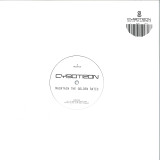
Cybotron has re-emerged in our contemporary cybercultural age when artifactual futures begin a transition into a new era of "Meta".
By combining their knowledge of philosophy, science fiction, and mechanical engineering, at a time when electronic instrument companies were only just beginning to distribute their products to the masses, two prosumer audio technicians named Juan Atkins and Rik Davis were able to re-engineer Cybotron – a combination of the words “Cyborg” and “Cyclotron” (an atomic particle accelerator) – to be used as a home studio performance music that would change the course of independently produced and distributed electronic music.
Dissolving the boundary between singer, songwriter, and producer, Juan Atkins named Cybotron’s future forward funkadelic sound “techno” in reference to Alvin Toffler’s concept of unlikely “techno rebels” against technocracy. Techno is music that sounds like technology, and its purpose was to help society survive our collision with a universally felt “future shock” by inserting an audio virus into the cultural matrix.
Techno’s blueprint spread across the Detroit-Berlin Axis between Metroplex and Tresor. As human society began its transition from a post-industrial to an information-based market economy, Cybotron enabled a thorough system override of the human senses towards a tangible man-machine hybridity and showed the world how to channel their emotions and imaginations into new sound technologies and create new ‘sonic’ spatialities where listeners can transport themselves out of the physical world into the future. The cover of their debut album Enter (1983) transmitted a fragmented view of a body in motion being digitized mid-stride, dissolving physical and virtual reality into sonic fiction.
Today, the man-machine hybridity of Cybotron is still the truest form of techno, coevolving in conversation with the technological music they created and inspired. The latest data disk marks a new chapter that reflects a techgnostic musical expression of the knowledge acquired during their decades-long hiatus. Unlike the dance music industrial replications of the Model 500 formula, acknowledging the content marketing expectations that segments music into specific, sellable genres, this techno music is self-aware. Cybotron processes dance music tropes spawned from its very own blueprint with a meta-tactical precision out of sync with our current rave new world.
Cybotron’s return demonstrates a studied engagement with what techno was and should be with a peerless update of Juan Atkins’ initial inventive idea of do-it-yourself electrically reengineered music xeroxed onto both sides of the 12” – uploaded directly into the alleys of your mind.
- The Rhythmanalyst
- A1: It’s Not Enough
- A2: My Brutal Life
- A3: The Mundane
- A4: Beyond The Estate Agents Window
- A5: Unité D’habitation
- A6: Asymmetrical Living
- A7: Postcards For Comfort
- B1: Hey Serry
- B2: Droppingwell Futures
- B3: Concrete Slit
- B4: Future Townscapes
- B5: Minimal Reconstruction
- B6: Villa Göth Calling
- B7: Béton-Brut
- B8: Kahn
My Brutal Life delves into the profound aspects of our artistic endeavours encompassing brutalism, the environment, and humanity. Throughout our ongoing creative journey, we consistently gravitate towards these themes, documenting and exploring the human experience within these environments. Our unwavering fixation on Symmetry, Synchronisation, and Repetition are the driving force in our artistic expression. Moreover, we strive to peel away superficial layers to expose the underlying emotional strata of the human aspect, unearthing the often overlooked beauty within the ordinary. Although frequently disregarded, the human aspect resonates with echoes from the past, enlightening and guiding our artistic process. Even the failures encountered serve as poignant reminders of the delicate structures we construct. My Brutal Life constitutes a pivotal component within an enduring exhibition, meticulously crafted to delve into the aesthetic and human facets of brutalism.
It's a pertinent start-point because, in many ways, God Is Luck exists firmly within that realm, many of the songs pulled directly from improvisation before being twisted into the mysterious shapes we find here on the finished record.
Recorded between the summer of 2020 and the summer of 2022, God Is Luck is an exercise in artistic freedom. The songs came quickly and easily by design, the whole point of the record and the approach to simply let go.
The third Bad History Month LP - following the Pitchfork-championed Old Blues (2020) - where aspects of the new album mirror the shape of Sprecher's previous work, its creation was an altogether different experience for the Philadelphia-viaBoston songwriter. He describes it as a collaboration with 'luck', the freeform nature of the recording resulting in a process that felt "fun and easy and fearless in a way that recording had never been."
"God is Luck means you can control reality by choosing your perspective to always see the luck, which makes you the god of your own reality," Sean Sprecher says of his latest record. With that notion at its core, Bad History Month's latest adventure finds twisted new ways to tell age-old tales. Even in its most fearless compositions, buried within dense fog, it strives for goodness; freedom from fear, love for friends, surrounding yourself with those who inspire.
Belgium based band formed by BEAR & Cobra The Impaler guitarist James Falck, alongside his Set Things Right bandmate Kristof Du Jardin, with Strains drummer Simon Janssen & bassist Lieven Casters.
Integrity is the word of choice when describing this new project. Initially created by the former Set Things Right guitarist alongside fellow STR bandmate and current BEAR & Cobra The Impaler guitarist James Falck, the pair set out to create music close to their hearts, with the intention of spilling them in the process. Something that has proven both cathartic and painful.
Digging up certain memories and emotions that, in some cases, would normally be better off buried, resulted in the pair spending a number of years writing an exuberant amount of music together. Their close and deep friendship, combined with their previous work together in their previous band, provided their work ethic with a strong foundation for the music they had dreamed of making ever since meeting, 10 years ago.
The line-up was subsequently completed by Strains drummer Simon Janssen & bassist Lieven Casters, who bring their own influences and tastes to the table to create something intrinsically unique. This can be seen clearly, not only from a musical perspective, but also visually and aesthetically. Together they form the musical collective now known as MANKIND. An expression of catharsis, a light in the tunnel, a way out of the darkness through confrontation.
RIYL: The Fall, Royal Trux, The Dead C, Shirley Collins, ’70s British progressive rock, Dean Blunt.
Throughout their legendary, decade-long run, the Shadow Ring were an enigmatic force on the international musical sub-underground. Before their disbandment in 2002, this shambolic rock outfit, formed by a group of rowdy teenagers in southeast England, left behind a mighty run of eight LPs, a handful of 7"s, and a spate of raucous live shows and cryptic zine appearances on both sides of the Atlantic, all which have bolstered their enduring word-of-mouth mystique. Beginning this year with the first-ever vinyl pressing of the self-released pre-Shadow Ring tape The Cat & Bells Club (1992), Blank Forms Editions is conducting a systematic retrospective of the storied group, including a multi-year LP reissue effort and a forthcoming comprehensive CD box set and an over five hundred page book. Recorded in summer of 1994 at S.H.P studios (frontman Graham Lambkin’s parents’ home), the group’s sophomore record Put the Music In Its Coffin is a more sinister, saturnine affair than their debut City Lights. Coffin was many listeners’ introduction to the Shadow Ring, who had hitherto self-released their music, courting a steady stable of international fans through the magazine and mail-order catalog Forced Exposure. For their follow-up, the duo reached out to the ascending Philadelphia label Siltbreeze, whose eclectic roster of sneering, low-fidelity rock and noise connected disparate subterranean scenes from rust-belt America to the English Midlands, Dunedin, and beyond. As luck would have it, Siltbreeze proprietor Tom Lax was already a fan of the band’s first record and arranged to release both a 7” and their “difficult second album.” The connection proved to run deeper than vinyl within six months, Lax would pick up the pair from the airport for their spring 1995 US tour. This episode marked not only their first trip to the States but their first live performances at all, formally introducing the Shadow Ring to the American underground and solidifying the allure of the Folkestone pair. From the get-go, the record has a menacing, vile ambience. Its opening track “Horse-Meat Cakes,” inspired by an anecdote by pulp author Philip K. Dick about how he and his wife subsisted off low-grade pet food when he first arrived in San Francisco, sets the tone lyrically and sonically. Subsequent tracks are filled with Rabelaisian body horror and sinewy, haptic diction. “I try to pass out vital organs, convinced that they are waste,” intones Lambkin in “Heart, Liver & Lungs,” before a chorus of detuned guitars kicks in, nearly drowning out the speaker’s account of consuming chevaline intestines. Later songs similarly detail vernacular cooking (“Caribbean Porridge,” about a cornmeal hangover cure), bodily processes (“Nocturnal Middle Rumbles,” about nighttime defecation), and creaturely conflict (“Crystal Tears” and “Spin The Animal Dial”). The album’s makeshift percussion and teenaged rawness resembles the verve of City Lights, while its screeching strings and gnarly distorted vocals give it a sparse, miasmic atmosphere that look towards the uncompromising, otherworldly experimentation of the band’s Hold Onto I.D. (1996) and Lighthouse (1997), making this one of the Shadow Ring’s most distilled musical statements
FullTime Production is honored to presents Kano "I'm Ready" featuring remixes by Mousse T. and FrescoEdits!
"I'm Ready" published in 1980 on FullTime Production, among the first
success, also peaked at #21 on the R&B and hip hop songs in the United States and at 8# on the most popular songs being played in nightclubs across the United States.
Kano combining elements of 1970s disco, funk and R&B while extensively using synthesizers and percussive handclaps as well as raw-processed and vocoderized vocals inspired by United States and European disco, from Chic and Giorgio Moroder.
The great producer Mousse T. gave us his great musical experience, he wanted to make the song a real hit in the house music and disco music genres.
The piano, the voice and harmony were transformed into something softer and less computerized and metallic. Mousse T. made us glimpse the immensity behind a remix and the most diverse musical facets that only an excellent producer can astound and leave the listener speechless.
The musical break of the "extended club remix" at minute 03:24 makes us raise our arms to the sky and clap our hands!
FrescoEdits introduced his more afro side to the remix by expertly
marking the percussion and resulting in a funk and tribal remix.
FrescoEdits is an artistic project that has based its success from the
love and art of sampling big hits as well as a label and a community, is
among the most highly regarded artists in the disco edits.
Originally released on the Sprüngkartellwachs label (and highly sought after) now comes as a rerelease on Mat Carter’s own Varial label.
A four track track ep striding electro, techno, down beat and new wave flavours. ‘Raspmutal’ kicks things of with spaced out techno flair, offering a mutating analogue mover, constructed with large systems in mind. Driving dancefloor fodder laden with spiralling dub-wise effects. ‘Downturn’ follows with a finely tuned piece of liquid electro. Stripped down and turbo-charged this twists and turns through fragmented beats and lush melodies, creating a sublime and fluid mix.
‘Fullow Street’ is a bundle of down tempo leftfield beatism inspired by hot humid nights in huge cities. A blissed out journey through hazy hip-hop beats and lush, glistening electronics. ‘Process’ completes the ep with dancefloor delight that has more than a nod towards the timeless, analogue sounds of experimental new wave and electrodisco. Beats build into a shimmering eighties-tinged workout, with wave upon wave of gorgeous keys.
Colombian producer Faunes Efe known under his moniker Filmmaker, is one of the most productive and vital producers in the EBM, Industrial, Synth-wave and Electro community. He has quickly built a cult following amongst those with an affinity for dystopian electronics drenched in seductive darkness.
After more than 20 records within a 5 year span, Filmmaker keeps running engines with “Machinations”, a mini-album containing 7 cuts that blast a mechanical blend of Electroclash and Minimal Synth. This ride of prominent square waves, robotic beats and detuned atmospheres is born from mainly two instruments: a Syntakt & a processed guitar.
After releasing her acclaimed debut album "EROSÃO" (Fun in the church 2021), Mariá Portugal launches the original soundtrack she composed for the chilean movie "1976". Directed by Manuela Martelli, the movie premiered at the Quinzaine des Réalisateurs in Cannes in 2022 and has been collecting awards, among them Tokyo, BFI London, Athens and Jerusalem International Film Festival.
Portugal combines analog synthesizers (especially ARP - 2600 and Moogs) with brass and wind instruments to create a pungent score which evolves together with the character in the movie, in a process of continuous humanization in which artificial becomes human.
The score have the participation of the Rotterdam - based french hornist Romain Bly (Bonsai Panda), the Brazilians Maria Beraldo and Joana Queiroz (Quartabê) on clarinets and bass clarinets, and the german tubist Carl Ludwig Hübsch. The improvisations by both Beraldo on clarinets and Hübsch on Tuba have a very special importance within the written score.
Quartabê’s identity was built upon the metaphor of the classroom: the group sees itself as a school class, which chooses its own teachers from among great masters of Brazilian music. Assuming that the learning and creative processes have in common experimentation and play, the quartet is characterized by its bold versions coupled with irreverent performance.
In addition woto its sound, marked by the group’s various music references - from the São Paulo avant-garde movement to the free improvisation, passing through pop and electronic music - Quartabê also stands out for the formation composed mostly of women who, besides instrumentalists are also arrangers, composers, singers and improvisers - which is unusual in Brazil and it has high political relevance in a music scene where positions of creation and power are still held disproportionately by men. The band started its studies by recording a first album about the work of maestro Moacir Santos, “Lição # 1: Moacir” (2015). After performing this show in Brazil and Europe, the group took a break to record ‘Depê’ (2017), also dedicated to the oeuvre of Santos. In 2018 Quartabê released their third album, starting new studies: “Lição # 2: Dorival”, which was released by the Natura Musical / label RISCO
Get On Down proudly present the debut solo album from Wu-Tang Clan’s Ghostface Killah. Released in 1996 on Epic Records, Ironman earned immediate success, debuting at number two on the Billboard 200 chart, and number one on the Top R&B/Hip-Hop Albums chart. Produced by RZA, Ironman found inspiration in sources ranging from blaxploitation films to classic soul and charted a whole new direction for hip-hop in the process. The album features classic bangers like “Daytona 500” featuring Raekwon and Cappadonna to soulful emotionally moving cuts like “All That I Got Is You” with Mary J Blige. The album earned gold status a year after its release and platinum by 2004, a true testament to the staying power or this classic piece of Wu-Tang artistry.