Dame Area's highly anticipated fourth studio album, "Toda la verdad sobre Dame Area" ("The Whole Truth about Dame Area"), a collaboration with the renowned labels Mannequin Records and Humo Records.
Formed in 2017 within the vibrant underground scene of Barcelona's Màgia Roja club, Dame Area comprises the Italian-Catalan duo Silvia Konstance and Viktor Lux Crux. They fuse industrial-tribal polyrhythms with minimalist synth basslines, drawing profound inspiration from avant-garde masters such as Esplendor Geometrico, Throbbing Gristle, Suicide, Einstürzende Neubauten, Can, Coil, Swans, Big Black, and Wolf Eyes.
This record represents a new phase in Dame Area's discography. It's a big step up in terms of sound, composition and ideas. This record it's the perfect representation of what they have been playing live the last three years and what most people know them for. Also it serves as a companion piece to 2022’s Toda la mentira sobre Dame Area ("All The Lies About Dame Area"), which had a stronger focus on melody, while this latest record is more aggressive and industrial-influenced, with a greater emphasis on percussion.
Tracks like the Suicide-influenced "Si no es hoy cuando es" and "Sempre Cambiare" are an onslaught of industrialism and experimentalism—formidable, volatile, and unpredictable avant-garde subversion. Silvia explains, "One of our biggest influences is doing what our influences wouldn't do. We're more into dynamics and structures atypical of electronic music, with changes in time signatures, starts and stops, and dynamics more typical of rock music. We use any musical idea from any genre. Some songs on the album are based on flamenco rhythms, others influenced by '60s experimental pop, heavy metal, or contemporary electronic music."
The confrontational "Vengo dall'aldilà" accelerates with heavy percussion, while "Tu me hiciste creer" builds into a rhythmic, transcendent noise of yelled vocals and hypnotic beats. Viktor adds, "This song took us more time to complete than any other we have recorded. It was a very organic process, evolving slowly from some instrumental percussive stuff we were doing live. Then we started using feedback as a rhythmic element (through a metallic sheet), and this was the first song where we incorporated this element, typical of noise-rock and experimental rock."
Elsewhere, "Esto Es Nuestro Ruido" represents a manic, eclectic form of contemporary industrial music, post-punk, and EBM. Silvia notes, "It's the first album we recorded outside a studio. Although we've been playing live with metallic percussion and floor tom from the very start, in the studio, with some exceptions, it was mostly sample-based until now. On Toda la verdad sobre Dame Area, all drums and almost all metallic percussion have been recorded live."
With a growing reputation as one of the best live bands around since their inception, Dame Area has toured extensively across Europe, performing at renowned festivals like Atonal, CTM, Nuits Sonores, Dour, and Fusion, as well as legendary clubs such as Berghain, Tresor, Apolo, and Spook Factory.
Recorded at Sol de Sants Studios and Estudio Hermetic between August and November 2023
Silvia Konstance: vocals, synths, percussions, electronics, production
Viktor L. Crux: synths, drums, percussions, electronics, production
Mixing and additional production by Guillermo Sánchez Rojo
Mastering by Paul Mac at Hardgroove Mastering
Designed by Leo Sousa
Photography by Fabio Calabretta
Photo concept by Dame Area
Поиск:process
Все
Senking and DYL team up again after first collaborating for a track on 2020’s »Uniformity Of Nature« EP that also featured different solo productions by the two producers. »Diving Saucer Attack« is the first full-length record by the German artist and his Romanian collaborator, released through the Berlin-based Karaoke Kalk label, home to the former’s work for more than a quarter of a century. The six pieces, two of which were produced individually, both showcase the duo’s shared interests for dub-heavy, adventurous electronic music while also emphasising the productive friction generated by the subtle differences between their respective approaches.
Cluj-Napoca-based DYL, real name Eduard Costea, cites his colleague Jens Massel’s work and especially his »Ping« EP—released in 1999 through Karaoke Kalk—as a crucial point of reference for his own development. »He’s one of the producers who inspired me to start making music,« he says. Massel was already familiar with his partner’s eclectic productions when he was approached by him with the idea of collaborating for a piece in 2020. They didn’t stop there, as Massel explains »It went very well and ever since we’ve been sending each sounds and tracks.« As their first joint album, »Diving Saucer Attack« documents the multi-faceted results of this on-going process.
The album opens with a track in true Senking style. Throbbing bass frequencies, haunting synth melodies and carefully placed rhythmic elements form a slow, but driving groove. Before DYL’s »a7r380R« introduces the listener to his anthemic take on IDM, the collaborative second track »2024« showcases how well their respective philosophies complement one another: the two create a detailed soundscape in which an intricate interplay of percussive elements and melodies can unfold. The title track transforms rattling drums and growling bass sounds into a laid-back, spooky trip-hop tune with a live-jazz feel, while »Astral Project« sees the duo venture into the uncanny regions of dub techno. »Not Just Numbers« closes on an even more sombre note—a fitting closing statement to an album full of twists and turns.
»Diving Saucer Attack« is a special album on more than the musical level. Massel released his first records under different guises such as Fumble, Kandis, and Senking through Karaoke Kalk between 1997 and 2001, after which he focused on his work as Senking, putting out a string of iconic albums through raster-noton, among others. 23 years after his last Senking LP for Karaoke Kalk, 2001’s »Silencer,« his return is as non-nostalgic as you’d expect it from such a forward-thinking producer: together with DYL, he continues to explore the possibilities and outer limits of electronic music in an intergenerational dialogue.
“Loves Love” jettisoned STÜM into 2024 and now “Beautiful Dancers” is here to take him ever higher.
As the second single off his forthcoming Essence Of Time EP, “Beautiful Dancers” is a blissful yet haunting take on techno. This track is total club rapture made up of ghostly vocal calls, static-like percussion and howling wind effects. A record of mixed emotions, pleasure and pain all blended up into 6 plus minutes.
Speaking on the tune, STÜM says “The songwriting process involved juxtaposing the organic with the synthetic weaving together contrasting sounds to mirror the duality of human emotion.”
Third in line is “Limbo”, a heaving acid hit full of hypnotic foreign instruments and vocals. This one gives off a massive street party feeling. From there we head to “Escape” a more dreamy and introspective bell-tone tune. A deliberate breather from STÜM before storming into the title track of the EP.
“Essence Of Time” is a shimmering rave piece. Dulcet piano intertwines with airy effects and hammering synths – another excellent example of STÜM’s ability to blend light and shade all at once.
Maelstrom returns to Central Processing Unit for the fourth time, and it's the one born Joan-Mael Péneau's lengthiest drop on the Sheffield label yet. The French artist has been a mainstay in the European electro game since the 2000s, and Malestrom brings that experience to bear on new LP The FM Tapes. He goes about this album with the assurance of a seasoned pro, combining his mastery of electro production techniques with a trademark guile to craft an expertly-paced eleven-track affair.
The first section of The FM Tapes sets out the album's stall with style and aplomb - listeners are in store for a rich feast of off-kilter machine-funk which will feature no shortage of intriguing detours. On opener 'Ondes Courtes' the mix throbs with all manner of strange electronic gristle: a distorted bass hum rattles the monitors; wisps of distortion float across the mix; eerily pretty keys wax and wane before giving way to a radar pulse.
'Ondes Courtes' is an ominous slouch of a scene-setter, and it lines things up perfectly for following cut 'Alt50ser' to lock in. This track's churning, gurgling mid-tempo rattle brings to mind the wacky insistence of Modeselektor. Maelstrom repeats the slow-fast one-two again directly afterwards - 'La Vie Sociale Des', a strange nugget that sounds like an early Eski instrumental stripped for parts and blasted into the cosmos, is an ideal prelude to the twitchy space-funk of 'My Digitone'.
Maelstrom's staying power in the electro world comes, in no small part, from his ability to apply his delightfully idiosyncratic choices to some of the genre's staple production tropes. On The FM Tapes, he marks himself out once more as a pleasingly unorthodox talent by taking tracks in unexpected directions to produce surprising - and often rather moving - results.
There are multiple cuts here which channel the more cerebral end of Richard D. James' AFX/Analord output: 'My Digitone' may be a quicksilver techno-electro number, but there's still something cinematic about the synth treatment here which softens the edges; 'Suede's minor-key oscillations bring other CPU veterans like Cygnus and Bochum Welt into view; 'Res 06', one of two Fasme collaborations on the record, is full of pathos even as the beat programming bangs and whirrs throughout.
While there's a deep emotional undercurrent to The FM Tapes, though, Maelstrom's commitment to bringing the thrills surfaces time and again. If 'Res 06' had Maelstrom and Fasme getting wistful, the album's other Fasme link-up 'Trempo' is one of the hardest club joints here, a piece of old-school Detroit energy replete with some great cascading drum production. Indeed, 'Trempo' comes in the middle of a run towards the album's end where Maelstrom takes the handbrake off - there's a wild-eyed sense of fun to 'The Operator' and 'Upside Down DX7' which has one thinking of the zany cut-and-thrust of KiNK's best work.
Maelstrom's latest drop for Sheffield's Central Processing Unit label is an album of leftfield electro numbers that bring both pounding beats and poignant production.
RIYL: KiNK, Modeselektor, Cygnus, Bochum Welt, AFX
‘Lead You To Water’ marks a new chapter for Quinn Oulton, built around the foundations of 90s and 2000s RnB, whilst carving room for his unconventional production techniques and distinctive songwriting voice. Sitting somewhere in between Sampha, Mk.gee and Nick Hakim, a central thread to his approach on the project is simplicity – rather than relying overtly on production elements to embellish the sound of the songs, Quinn instead sought to create spacious pieces that stand on their own, stripping the core of his creativity down to voice and acoustic guitar.
Over the past year, the prolific multi-instrumentalist and songwriter has been refining his sound and production style. Collaborating with artists including Linden Jay, Reuben James and Col3trane, and relocating from his London base to LA and Berlin, he’s been on a creative drive, pushing his forward-thinking RnB to new places and amassing millions of streams in the process.
The South London-born and bred multi-instrumentalist, vocalist & producer has always been a musical explorer. With a foundation deeply rooted in jazz, he possesses a profound understanding of complex musical concepts which he translates seamlessly into the more mainstream genres of contemporary RnB and alt-pop. With Quinn’s music, you can expect to hear beautifully constructed, classic-sounding tracks with hidden layers for appreciators of depth and detail.
a A1 - When You're Near [ft. Rich]
- Milan Knízák - (Maybe) Sonata (1971)
- Henning Christiansen - Mond-Glass-Fiber-Rohr (1986)
- Milan Knízák - Novelties (From The Cycle Processes Mainly For The Space Of Mind) (1978)
- La Monte Young - Piano Piece For David Tudor #2 (1960)
- Philip Corner - Cello Walking - I. Walk The Walk (2017)
- Philip Corner - Cello Walking - Præludium: Cello Slow Drag (2017)
- Bengt Af Klintberg - Triad No. 2 (2021)
- George Maciunas - Solo For Violin (For Sylvano Bussotti) (1962)
- Milan Knízák - Negations (From Cycle Processes Mainly For The Space Of Mind) (1978)
- Takako Saito - Untitled (2018)
- Toshi Ichiyanagi - In Memoriam Of John Cage (1992-93)
- George Maciunas - Solo For Sick Man (1962)
- Milan Knízák - Destroyed Händel & Chopin (1981)
- Philip Corner - Good Jew, After A Listen To Julius Eastman's Evil Nigger Version Iii
- Philip Corner - Man In Field (Sound As "Hero") (2020)
- John Cage - Mozart Mix (Edit) (1991)
- Geoffrey Hendricks - Sky Music V. Ii (1985)
- Nam June Paik - Video Flag (1985)
- Sara Miyamoto - Peck And Plunk (2022)
- Ken Friedman - Rational Music (1987)
- Yoko Ono - Voice Piece For Soprano (Scream Against The Sky) (1961)
- Yoko Ono - Voice Piece For Soprano (Scream Against The Wall) (1961)
- Yoko Ono - Voice Piece For Soprano (Scream Against The Wind) (1961)
- Josef Anton Riedl - Tabchiernchau (Für Sprechen) (1998)
- Giancarlo Cardini - Foglie D'autunno Lentamente Trascolorano (1983)
- Ay-O - Ha He Fu Hi Ho (1976)
- Milan Knízák - Tramp Sonate (2021)
- George Brecht - Water (1963)
- Philip Corner - Good Jew, After A Listen To Julius Eastman's Evil Nigger Version I (2021)
- Jen Friedman - Zen For Record (1966)
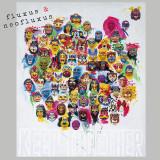
In April 2023, there was released the first part of the Fluxus edition called Stolen Symphony. The year has come and gone and there is the second part of the Fluxus edition called Keep Together. At the centre of both parts of this edition was a broken piano, acquired by the Opening Performance Orchestra for the purpose of making live and studio recordings. During this time other new works for this broken piano were written by diverse Fluxus and non-Fluxus composers. In the spring of 2022, the Opening Performance Orchestra and broken piano participated in an event hosted by Mieko Shiomi. This was a new version of her early work Spatial Poem, documentation of which was presented at the 2022 Aichi Triennale in Tokyo. At present, broken piano lies in the open air in Prague and is subject to gradual decay.
These both parts of this edition contain 73 new and old pieces, live and studio recordings, finished pieces and scores to be performed, solos and pieces for ensemble, using classical and special instruments from 33 Fluxus artists, which have been played by 10 soloists and 4 ensembles. There are new essays and articles from 15 writers on the theme Fluxus, original photos and other documentation in the booklets.
Most of the writing of Naima Bock's second album, Below A Massive Dark Land, was a solitary affair. It may not sound like it - it's made up of strong, purposeful arrangements with a huge host of musicians, filled with cradling space and warm light. This will also come as a surprise to anyone who has seen Naima perform in the time since the release of her 2022 debut Giant Palm, which was undoubtedly a communal experience. But there's power in the solitary, too. Giant Palm was arranged with collaborator Joel Burton, but going this one alone in search of something that was truly hers, Naima found she was capable of more. "After me and Joel stopped working together", she remembers, "it was an impossibility to even fathom doing arrangements myself but then I started learning violin and it was possible". Finding that she could go it alone was incredibly powerful for Naima: "I think I needed it, to be able to feel proud of something". Beyond the writing process, however, the record is not a stark, stripped back affair. Below_ still has the majesty that made Giant Palm so remarkable. Having tugged the first record down from the skies and spreading it across the earth, Naima finds a newfound vocal power and confidence born from hundreds of hours on stage, and the music sounds fuller, more tangible, and no less enveloping. This can be heard on the album's lead singles: "Kaley" feels fresh and surprising in its rug-pull choppiness but is distinctly Naima in its swinging, jubilant choruses. The accompanying "Further Away" takes a different tack, drawing you in with its simplicity. Finally, the hazy, luxurious beauty of "Feed My Release" draws on the sepia-toned traditions of The Roches, John Prine and Loudon Wainwright III and imbues them with the kind of stark confessional songwriting of Mount Eerie. These are ambitious, rich arrangements that reach deeper and darker lyrically than Giant Palm. Below a Massive Dark Land was predominantly produced by Jack Osborne (Bingo Fury) and Joe Jones, and recorded at The Crypt in north London, with additional production and arrangement by Oliver Hamilton (caroline, Shovel Dance Collective) and Naima herself. Six of the tracks on Below_ were mixed by Jason Agel, with the remainder done by Osborne and Jones. The album was mastered by Kevin Tuffy.
SPECKLED DRAGON EGG COLOR VINYL[23,49 €]
Black Vinyl[23,95 €]
PURPLE TREE FOG VINYL[23,95 €]
Speckled Dragon Egg Color Vinyl. Being Dead knows how to make an entrance - within the first several seconds of EELS, the duo's new record, the bright, hard-strummed guitar line on "Godzilla Rises" conjures cinematic immediacy, a creature emerging from the depths of the ocean in campy, freaky stop motion, fittingly so. Being Dead's records are mosaics, technicolor incantations, each song its own self-contained little universe. And while the dreamlike EELS probes further into the depths of the duo Being Dead's psyche, it is, most importantly, in the year of our lord 2024, a 16-track record that is genuinely unpredictable from one track to the next: a joyous and unexpected trip helmed by two true-blue freak bitch besties holed up in a lil' house in the heart of Austin, Texas. They decamped to Los Angeles for two weeks to record with GRAMMY-winning producer John Congleton, writing songs for the record until days before they left. The radical shift in process was welcome - a good balance and a challenge, Congleton helping them find new ways to work and helping peel back the layers on the core of their songwriting. Being Dead has grown from a duo to a trio live, including bassist Ricky Motto (who is immortalized finally on record here, particularly in the giggles on "Rock n' Roll Hurts") The resulting EELS is a darker record, tapped more into the devilishness within, but it's also a more raucous, rougher ride sonically. There's heartbreak, excitement, enchantment, dancing - we move through it all at a high-octane pace. Falcon Bitch and Smoofy never want to do the same thing twice on any song, and they don't. From the pummeling garage rock distortion of "Firefighters" to "Dragons II," which appears in its demo form taped on a hand recorder, it's unexpected but intuitive, and, most importantly, singularly Being Dead. Like its animal namesake suggests, the songs on EELS are malleable, the record like slithering through murky waters or strange half dreams, mysterious and beautiful in how it moves, reflective in a wavering sheen. Dipping into each song feels like uncovering a new cavern, plunging into depths unknown but fully open to what will be revealed. On the album artwork, an illustration by the artist Julia Soboleva, there are some weird disparate spectral creatures, a stark glimmer against a cloudy darkness. It's a fitting encapsulation of Being Dead, exuding a welcoming, playful energy even if something foreboding lurks just beyond the pale - more out of frame that's left to uncover, no path unexplored, strange and beautiful in the light.
Tahiti 80, the cult French group, is back with a tenth album entitled Hello Hello.
Since their formation in Rouen in the 90s, Tahiti 80 have built a substantial discography, collaborating with artists such as Cornelius, Tore Johansson, Adam Schlesinger and Richard Swift. The indie pop quintet offers us today twelve irresistible and captivating songs on a solar tenth album. With its welcoming title, Hello Hello presents itself as a desire to merge the spontaneity of live performances with the chemistry of a band working in the studio. Xavier Boyer, lead singer and songwriter, explains: “We felt a slight frustration with our previous album, Here With You, released in 2022. The pandemic had forced us to record separately at home. When we realized our new demos were going in this live direction, we looked for the perfect place to capture that spirit."
It is at the Paraphernalia studio, located in the French countryside, that the members of Tahiti 80, including in addition to the singer, Pedro Resende, Médéric Gontier, Raphaël Léger and Hadrien Grange, perfected their musical interactions for ten days during the summer 2023. Integrated very early in the process, Stéphane Laporte, aka Domotic, brought his distinctive experimental touch to the arrangements and production. The vocals and additional synthesizers were then finalized between Paris, Rouen and Montpellier in the fall
The twelve songs that make up Hello Hello form a homogeneous suite, highlighting the creativity, diversity and maturity of a group which has just celebrated twenty-five years of career. Opening the album, “Every Little Thing” subtly mixes shoegaze guitars and synth pop. It’s also one of the rare Tahiti 80 tracks that keeps the same chords from start to finish. The singer confides: “It was an exercise in minimalism, with the constraint of finding varied vocal melodies revolving around the same chords. Singing the line ‘I Love Every Little Thing About Us’ made me realize that it could also be about us as a group.” The title song also plays the simplicity card with Boyer’s unique timbre, complemented by a drum machine passed through a tape echo and a catchy recorder theme – proof that years of practice of this instrument in French schools was not in vain!
The other distinctive trend is Brazilian: “Lose My Head”, “Soft Echo” or “Poison Flower” each display tropicalist attributes: swaying rhythms, rounded bass, soft guitars, all enhanced by a reverberated sound treatment. “From Caetano Veloso to Tim Bernardes, there is a unique way,” notes the vocalist, “of linking rhythm and melody that has always inspired us.”
However, the Tahiti 80 touch is not being put aside. “About Us”, sung by guitarist Médéric Gontier who can also be heard on “1+1” and “Anyway”, marks a return to the roots of indie pop. An impression confirmed by the hit “Vertigo” and its signature all in major sevenths supported by the elastic groove of bassist Pedro Resende. The song which sounds like a quick return trip between late 70s California and Tokyo City Pop, will find its place after “Crush!” and “Heartbeat” in the Rouennais’ songbook. Xavier Boyer concludes: “ if we manage to surprise ourselves, it will also work for the listener. but when you reach the tenth album, you must also manage to renew ourselves without denying ourselves what we did previously.”
With their innovative and unique approach to indie pop, their timeless melodies and their sophisticated productions, Tahiti 80 has never ceased to resonate with fans around the world. Their latest collection, Hello Hello, should easily consolidate their status as a singular group and esteemed personalities on the international music scene.
Continuing his fruitful relationship with Discrepant after the third volume of his ongoing Organic Music Tape Series on Sucata Tapes, Tiago Sousa returns with two longform pieces for organ with 'A Thousand Strings'. A self-explanatory title in itself, 'A Thousand Strings' drifts fluidly into a celestial realm of cascading melodies and cycling patterns that never feel forced or strict throughout its two hypnotic tracks. Pulsating with life and ecstatic abandon.
Taking cues from the tradition of American minimalists like Steve Reich and, particularly, Terry Riley, the Portuguese composer's work flows with a life of his own, that, while acknowledging those influences, transcends them into his own signature. On the A side, 'A Thousand Strings' goes seamlessly from intertwining crepuscular harmonies to ascending keyboard runs in the manner of 'Persian Surgery Dervishes' finishing with a coda of rhythmic marimba-like pulses. On the flipside, 'The Things Passed' creates this maze-like tapestry of melodies that seem to drift apart only to converge back again into its internal process before setting on sustained tones infused with a sense of longing. For all things passed. For what is yet to come.
The alternative rock of bôa was a natural procession for the kids of Bad Company’s Paul Rodgers. The band, which is fronted by sister/brother duo of Jasmine Rodgers and Steve Rodgers, came together in 1993 with Alex Caird (bass), Paul Turrell (keyboards) and Lee Sullivan (drums). Together their single “Duvet” was a hit for the Japanese animal sci-fi series LAIN. Since then they have on on to achieve critical acclaim in the UK and Japan, winning fans via the internet.
As the 21st century was born, so Kreator underwent what was nothing less than a seismic creative rebirth. By this time, the iconic German band had released nine studio albums in the 1980s and '90s, which had established them as one of the most important metal names of these decades.In the first period, they had helped to shape and pioneer the thrash scene through such releases as 'Pleasure To Kill' (1986), 'Terrible Certainty' ('87) and 'Extreme Aggression' ('89). During the following decade, the band had opened up exciting horizons of experimentation on albums like 'Coma Of Souls' (1990), 'Renewal' ('92) and 'Endorama' ('99).
Now, though, it was time to move into a fresh era, as vocalist/guitarist Mille Petrozza explains.
“During the 1990s, we were definitely experimenting with what the band were doing. But (drummer) Ventor and I decided that for this album – our first of the new millennium – we wanted to go back to the sort of sound that we had at the start of Kreator. In other words, to get back to the reason why we began the band in the first place.”
There was also new guitarist introduced, as Sami Yli-Sirniö (who had made his reputation with Finnish band Waltari) took over from Tommy Vetterli. The latter (also known as Tommy T. Baron) had joined in 1996 and played on the 'Oucast' (1997) and 'Endorama' albums.
The producer for this album was Andy Sneap, who was now making a name for himself as one of the pre-eminent masters of this art in the modern metal world.“I had known and liked Andy since the days he had been the guitarist in Sabbat, as they were signed to Noise Records as Kreator were on that label. He was our first choice to work on this new project. I liked what he'd done for Testament on their album 'The Gathering' (released in 1999). He had given them a sound they'd never had before, and that really was what we were after. It was natural and organic, and also very modern. I remember phoning him at his Backstage Studios in England (Ripley in Derbyshire). And Warrel Dane, the vocalist in Nevermore, answered. Andy was producing their new album at the time ('Dead Heart In A Dead World', 2000). And when I heard this, again I was very impressed. So, I was delighted when he agreed to produce the new Kreator album.”
The album title came from something Petrozza had read. “In a book I came across a comment that John F. Kennedy said (in 1962). This was: "Those who make peaceful revolution impossible will make violent revolution inevitable”. I thought 'Violent Revolution' would make a good title for an album. So, I kept it in my mind for this record. I think 'Violent Revolution' is a title that makes a real impact.”
One interesting aspect of the track listing was that the 52 second instrumental 'The Patriarch' actually came after the opening song 'Reconquering The Throne'. Fans might have been expected that it would have opened the album. But for Petrozza, there was a logical reason for this not to happen. “We really wanted to lead off with a thrashing track, to show everyone what we were now doing musically. After 'Endorama', it was important that everyone should recognise this was a new era for Kreator.”
'Violent Revolution' is without question an excellent album. While in some ways it does hark back to the glories of the band's earlier days, nonetheless it does not sound at all nostalgic. The performances and production values are very much part of the contemporary era, and the strength of the compositions themselves are of the highest values. Rising to the challenge offered by a new generation of ambitious metal bands, Kreator proved they were far from being a spent force. Unlike so many of their peers, here was a band who still had so much creativity to offer, and were also clearly excited themselves by what they were doing. And when you hear the band themselves enjoying the entire process, then you know this is a bona fide revitalisation.
- Pacific (Twig Harper Remix)
- Two Forms Moving (Twig Harper Remix)
- The Scout Is Here (Twig Harper Remix)
- Black Tea (Twig Harper Remix)
- Companion Rises (Twig Harper Remix)
- The 101 (Twig Harper Remix)
- Haunted And Known (Twig Harper Remix)
- Mark Yourself (Twig Harper Remix)
- Worn Down To The Light (Twig Harper Remix)
6OOA"s 2020 opus is reunmanaged by sound composer Twig Harper, whose unlimited brief takes this REMIX places no other remix record could dare to go. In the process, it affords the wizard of Six Organs, Ben Chasny, the chance to re-present the record in a form as insane as the world into which the record was - and is - headed. A soundtrack to California chaos, done two ways, sometimes at the same time! RIYL: Electronic, New Age, Modern Classical
Dean Spunt"s all-new Basic Editions is an excursion in electronic sound that instrumentally unpacks his fascination with language - in this case, the syntax of systems and processes. By turns meditative, compulsive and consumptive, Basic Editions distills a 64 voice module through a head full of ideas - somewhat like pouring a cornucopia of possible ambient moods and EZ listening impulses backwards through a funnel, inspiring a deceptively absurd rainbow of soul to spray out the other end. With this new release, Dean IDs his process as "using sounds, rather than making sounds". This approach to music-making is a train of thought that"s been rolling out from the far horizon of the past for ages now - but for Dean, whose previous works within and without No Age depended on their making of sounds, it"s a fresh work stance. Given, however, No Age"s traditional sonic manipulations (via loops and treatments), Basic Editions delivers further unexpected hard-rights and lefts in the non-aesthetic aesthetic that has defined Dean"s path over the past two decades. Steering toward wacked digital soundscapes that bounce colorfully across the stereo azimuth, Dean creates a kind of post-ambient neo-exotica that hinges upon a giddy conflation of cosmic and comic.
Sciahri and his label Sublunar are thrilled to present "VEIL OF ECHOES," a new project that brings together both emerging and established talents from the label.
This release showcases
a fresh dimension of techno and electronic music, celebratingf originality by combining timeless cuts from the past with cutting edge sounds of the present and future. The journey begins with "IIum" by Temudo, an entrancing track with hypnotic synths that seamlessly transitions into Troys Awakening, featuring an irresistible and cerebral groove. Neel takes over with Follow Me, pushing the boundaries with intricate sound design crafted to move your body, followed by Marcal's Ancient Swing, renowned for its unique sound and processed vocals. Kameliia's Insolitam then transports you to another dimension with its deeply immersive and mental vibes.
Kaiser kicks off the next phase with Fearless Attitude, a powerful yet refined track, while Roll Dann continues the momentum with "Area 24," offering a softer yet penetrating synth line.
On side D, Cirkle's "Mooree" showcases his talent for
creating minimalistic yet razor-sharp tracks, leading into Juri Heidemann's "Reger," a mysterious piece with a groove designed to carry you to another realm. The project culminates with Kerrie's Jump The Gun, featuring intricate synths and a mind-bending bassline.
With "VEIL OF ECHOES," Sublunar aims to share a visionary collection that encapsulates the essence of techno and electronic music, bridging past influences with future innovations.
The new dance album by Biicla called HYPER HOUSE is an imaginary club, where the main hero is the listener. The vibe in this house is Uk influenced modern take on bass / garage with a kind flow and naked emotions. The record has been in the making last 3 years and you could have heard some singles from the album already - GAS (4.21), MAKING NEW, MISS YA were all released via System 108 in 2023, the label has also become by accident a new home for the artist. Before arriving on System 108, Biicla has been releasing music for a while and getting exposure in big US Festivals, like Lollapalooza, Hard Summer, Bonaroo and many more, celebrating millions of streams worldwide. With System 108, Biicla found a new home and new dedicated audience, and it seems like a match made in heaven.
The process of production of the album took time during some challenging years - when our ordinary world started to shatter... Therefore the cover is divided in two parts - on the right, we observe chaos and destruction; on the left, people are having a quiet and happy life. Modern / hybrid club sounds in the album co-exist with sensible, soulful vibes, sorrow and hope. On top, the finishing comes in a close to perfection studio-engineered sound. HYPER HOUSE therefore is an intimate record with a personal meaning for Biicla and for us, as a label. Together as a team, we represent Biicla in all facets of his creative output, would it be his self-branded party BIICMAK, live shows or support of new names in the scene, discovered by the artist, as an example here comes the V/A Radar 108, curated by Biicla - tip!
Warped and dragged through the murky underbelly of the Levantine underground comes 'Volume 1' the x-rated left-field debut from the pseudonymous DJ GAWAD.
Via pitched up vocals dripping with delay, DJ GAWAD takes us on a tour of the region's most urgent artists, his interjections oscillating between cocky boast and frustrated lament.
Through this new persona, DJ GAWAD pulls back the curtain to reveal himself as the protagonist of the mixtape-like album, as replete with features as it is with expletives, an enigmatic ghoul in the back of the studio with an endless supply of broken sample flips, giving the album its old school feel while still speaking to contemporary hip hop aesthetics.
A Jordanian/Palestinian Memphis gangster rap parody par excellence, the album is infused with satirical commentary on the state of the contemporary music scene, yet DJ GAWAD shows as much as he tells, expertly fashioning a sound that makes you wonder about the identity of the artist behind the braggadocious persona of the self-titled "best producer in the Middle East."
Drawing heavily from the Memphis rap mixtapes of the mid 1990s, DJ GAWAD has clearly identified the same brooding atmosphere in his own surroundings. On Mat3'anish (feat. Bleng & Fara7) DJ GAWAD makes his most explicit reference to the Memphis sound, twisting the hallmark cowbells that defined that movement to reflect the equally raw nature of his own setting.
Similarly, in Bandana (feat. Jurum), DJ GAWAD finds the perfect tension between his romantic sampling tendencies and the brutal sensibilities of his featured artist. As if liberated by DJ GAWAD's anonymity and irreverence, his menagerie of artists appear to have been emboldened, embracing the obscene free naturedness of the album, setting their lyrical prowess free to wander.
No expense was spared in the post production treatment of DJ GAWAD's debut, with Iraqi-American artist Mark Gergis incorporating the Nakamichi Dragon cassette deck in the mastering process, as is evidenced by the crisp saturation of the album's sonics.
Formed in leafy Surrey in the late 1980s, Threshold rose to prominence in the decade that followed, quickly establishing themselves as Britain's leading pioneers of progressive metal. Since debuting "Wounded Land" in 1993, the proven core creative duo of guitarist Karl Groom and keyboard maestro Richard West have developed a unique form of fierce progressive music that features precise melodies, thought-provoking lyrics and complex yet thunderous arrangements united. Threshold have tirelessly evolved over three decades of creative passion and may have reached a new peak in their performance with 2017's conceptual and musical feast, Legends Of The Shires. With the return of vocalist Glynn Morgan to the band, the Brits' permanent line-up of Groom, West, drummer Johanne James and bassist Steve Anderson have reached new heights and received critical acclaim in the process. The band's latest (and twelfth) studio album, Dividing Lines, was darker, heavier and even more adventurous than its predecessor, producing some of the most creative and melodically powerful material they have ever recorded. With these reissues of the remixed and remastered albums “Clone” and “Extinct Intinct” come the next two new vinyl formats and CDs with bonus tracks.
Cultivated Electronics Ltd's ''For The Floor'' series features split EPs available on vinyl (only) with Electro tracks aimed strictly at the dance floor, bringing together CE regulars alongside new artists. Previous instalments have presented tracks by DeFeKT, Rico Casazza, Tripeo, Cycloplex, Steve Allman and Alex Jann. Volume 4 now delivers 2 new tracks apiece by Ben Pest and Maelstrom. Bristol's Ben Pest has established notoriety as an exponent of jacking live hardware-based techno and electro with numerous releases on labels including Asking For Trouble, I Love Acid, No Static / Automatic, Orson Records, Don't and more. Here he delivers heavy bass, vocal distortions and tough beats on ''Who Would Have Thought I'd Be'' and the accompanying ''26 Hybrid''. Maelstrom has a history of aliases and side projects, illegal raves thrown in warehouses, fields and basements, but he came into his own under his Maelstrom moniker, releasing music on the likes of RAAR (the label he co- founded with Louisahhh), Cultivated Electronics, Central Processing Unit, Mechatronica, Private Persons and Discos Atonicos.
Aesthetically, Ed Schrader’s Music Beat hates to tread water. At the same time, the Baltimore-based two-piece of vocalist Ed Schrader and bassist Devlin Rice won’t force their songs to fit a preconceived style. “The next album’s always gotta be different from the last one. We’re different people from record to record. So, writing authentically to ourselves will always bring our work to a place that we haven’t been to yet,” Rice said. Schrader added, “We’re terrified of turning into AC/DC. We never want to be married to one scene or time or sound. We want to be the Boba Fett of bands! Constantly altering the way in which we make records has been pretty key in that process.”
For Orchestra Hits, the band’s latest, that alteration was welcoming longtime musical comrade Dylan Going into the fold as a co-writer and co-producer. A songwriter in his own right, a guitar sideman for ESMB on their last two tours, and a collaborator with Rice in the noise riffage band Mandate, Going had both a unique vision and an intimate familiarity with the ESMB vibe.
“Dylan came to every show we’ve ever played in New York—no matter how weird it was,” Schrader said. “He’d be standing there ready to move an amp or feed us barbecued cactus after the gig and toss on some Golden Girls so we could decompress. It felt like family as soon as we began working, but I honestly had no idea how damn good he was at tossing out these hooks.”
According to Schrader, the songs “just poured out of us” over the course of a highly caffeinated three-day weekend in a tiny room in Devlin’s house while his cat, Sandy Goose, screamed continually. “It was like three kids hiding from the world to get into some lovely mischief,” they said. The lack of external pressure in the process gives Orchestra Hits an almost paradoxical vibe. For all of the album’s layers, that mix live and sequenced instruments, it never loses the raw energy of a small handful of friends in the same room plugging in, cranking up, and playing until they pass out.
Lyrically, the album finds Schrader, now 45, meditating on experiences in their youth to make sense of the present moment. “We are not into the garden,” Schrader wails on the relentless “Roman Candle,” a song about the sad debacle of Woodstock ’99, and a direct response to Joni Mitchell’s “Woodstock,” a utopian ode to hippie idealism. A 19-year-old Schrader, having snuck into Woodstock ’99 through a hole in the fence, was there the night members of the crowd used candles intended for a vigil for victims of the Columbine High School massacre to set fires all over the grounds. Even before the fires, Schrader remembered feeling disconnected from the music, the nostalgic cash grab, and the meatheads in the crowd. After watching a press tower collapse, they boarded a random shuttle bus and were dropped off near a Denny’s. “It was a far cry from the Garden of Eden,” Schrader said. “That experience defined what I didn’t want to be a part of, and yet America is more like Woodstock ’99 than ever.”
With percolating synthesizer arpeggios, and climbing bass grooves, “IDKS” is the album’s dance-floor slapper. “’IDKS’ is a funny one,” Schrader said. “We already had a pretty satisfying suite of songs when Dylan was packing up to head back to New York, but he missed the train because of a freak snowstorm. Realizing he’d be stuck in town another day, he says to me, ‘Here’s this other weird thing I have.’ It was ‘IDKS.’ The hooks were so good I felt like Homer Simpson at a free donut convention. I just dove right in, and we cranked that baby out in like 20 minutes.”
Lyrically, “IDKS” is a letter from the true self to public-facing self. “It’s an angry song,” Schrader said. “Because the public-facing self is always looking for an easy escape, but it forces the true self into a cage. I honestly thought my lyrics were corny and was about to change them, but Dylan was digging it just the way it was. So that’s what you hear.”
With the soaring “Daylight Commander,” the band went against all of their musty-basement-bred instincts. “I went full High School Musical with the vocals,” Schrader said. “At first it felt almost embarrassing, but I remember reading somewhere that Bowie recommended always floating a little bit above your comfort zone, and that’s what we did here.” The song is part exercise in absurdity and part pop Trojan horse. “If ever we had a ‘Shiny Happy People’ moment, I guess this is it,” Schrader said.