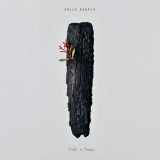
quête:produced by kid drama

Genres
Tout
  • 1
múm - Yesterday Was Dramatic – Today Is OK 3x12"

In 1999, on December 23 to be precise, the electronic music landscape changed forever. On that day, the now legendary Icelandic band múm released their debut album “Yesterday Was Dramatic – Today Is OK”. The thing is though, back in the day, hardly anybody realized. It was Christmas after all, people were busy with potentially more important things and didn’t pay attention to some kids selling records on Reykjavík’s high street. Little did those shoppers know.

Thankfully, those 10 tracks weren’t overlooked for long. On the contrary: the album went on to become one of the most influential building blocks of what back then was called electronica and today is considered an art form playing a crucial and important role in shaping and defining the rich electronic music culture of the 21st century. Now, 20 years after the record dropped onto planet Earth, Morr Music is re-issuing the remastered album with its original artwork, adding newly commissioned re-works: A note-for-note representation of “Smell Memory“ by Kronos Quartet (with additional drums by múm’s Samuli Kosminen), a gentle reinterpretation of “Random Summer” by acclaimed pianist and composer Hauschka and an otherworldly new version of “Ballad Of The Broken String” recorded by label mate Sóley. Additionally, four remixes produced in the early 2000s are made available for the first time ever on vinyl here.

In 1999, electronic music was in full bloom. The dance floors were thriving worldwide.Yet the concept of using electronic sounds in acoustic-based productions (or vice versa) was still in its infancy. Many producers were trying, most of them failed. The results felt often forced, fabricated, unimaginative, random and forgettable. New ideas require new mindsets after all. With “Yesterday Was Dramatic – Today Is OK”, múm established a new approach in music production. Instead of setting a fixed agenda and working with a distinct hierarchy for their sonic palette, Gyða Valtýsdóttir, Kristín Anna Valtýsdóttir, Gunnar Örn Tynes and Örvar Smárason let each instrument and sound source be true to itself, creating an ever-evolving universe of sonic bliss. Listening to the album in 2019 still makes every music lover’s heart jump. Combining Drill-and-Bass-inspired beat-chopping, future-informed DSP-programming, ethereal vocal work, indie rock’s boominess, folk music’s soulful brittleness and a lofty feeling for melody and arrangement, the album is a rare example of musical transcendence and remains impossible to categorize.

Many of the ideas formulated and recorded for the album quickly became an integral part of the canonical self-conception musicians around the world were and still are aspiring to. How these ideas really came about, though, is not known – the dynamics, the struggles, the qualms, the sudden realization of having achieved something which might actually stick. Maybe that is a good thing. Örvar Smárason remembers that most of the album “was recorded in a tiny, sweaty room in the summer of 1999 with carpenters banging nails around us, but sometimes we put on headphones so we couldn’t hear them.” It is a good thing they did. As is often the case with classics, all one can do is listen closely and let the magic sink in – again and again.

pas en stock

Commandez maintenant et nous commanderons l'article pour vous chez notre fournisseur.

31,05

Derniere entrée: 57 jours
Pretty Bitter - Pleaser

Pretty Bitter

Pleaser

12inchLPTEC217
Tiny Engines
01.08.2025

Mainstays of the D.C. DIY scene, Pretty Bitter live up to their name. Masters of all kinds of dissonance, they juxtapose stories of haunting and heartbreak with dazzling pop-rock arrangements. Pretty Bitter makes music that gets the emo kids dancing. They’re unafraid to infuse their blistering breakdowns with hits of disco and synthpop—and that’s exactly what they’ve done on Pleaser, their sophomore album, co-produced by Evan Weiss (Into It. Over It., Pet Symmetry) and Simon Small (Strawberry Boy) and out July 25th, 2025 via cult favorite indie label Tiny Engines. Following a string of ethereal singles, their 2022 debut Hinges formally introduced Pretty Bitter and their dreampunk to a rapidly growing audience. Fearlessly led by Mel Bleker and sharing studio and touring members with D.C. punk all-stars Ekko Astral, Pretty Bitter has been embraced by DIY fans far and wide. On Pleaser, Pretty Bitter have amped up the drama of their lush arrangements—a match made in heaven for the emotional ferocity of Bleker’s lyricism. “If everything is out there, nothing’s embarrassing,” they sigh on “I Hope You Do,” expertly toeing the line between the personal and the universal over bright, bubbling synths. On the arresting closer “Outer Heaven,” Bleker sings “Time isn’t a lover in the way it likes to play / I’m getting older, every due I pay / Time isn’t a bandage in the way you always say / I won’t be abandoned by myself again this way.” Their observational, heart-on-sleeve songwriting is as effortless as their flittering between the jangly, dreamy inclinations of rock, pop, and folk. Pleaser is a triumph, an instantly lovable record that reveals just how bright Pretty Bitter’s future is.

pré-commande01.08.2025

il devrait être publié sur 01.08.2025

30,88
Tózé Ferreira - Música de Baixa Fidelidade

Two records came out in 1988 that forever changed the perception of "experimental" or "serious" music produced in Portugal. These were "Plux Quba" by Nuno Canavarro and "Música de Baixa Fidelidade" by Tózé (António) Ferreira. Both were released by the same label - Ama Romanta -, an influential independent imprint closely linked to avantgarde pop band Pop Dell'Arte. Because those records appeared in what could be perceived as an "alternative pop" framework, they rescued this difficult music from Academia. It helps that Canavarro played in a successful new wave pop band (Street Kids) during the period 1980-83. By association, being a friend since 1976, António was in close contact with many of the musicians and bands that were part of the equally celebrated and detested Portuguese Rock Boom (roughly 79-82).

He was not a musician then but through his friendship with Canavarro, who had the means to acquire electronic equipment, António became involved with that equipment and shared Canavarro's passion for experimentation and curiosity for knowledge. They tried to get hold of as many technical magazines as possible and learn while testing ideas. In 1983, Street Kids were about to break up, young lives drafted into the Army and maybe, in Canavarro's case, a whole new passion for challenging music similar to his bandmate Nuno Rebelo, by then in the process of discovering a wide range of "other" music mainly through Jorge Lima Barreto. Barreto, who had started Telectu with Vítor Rua, possessed a huge book and record collection and, like Rua before them, Canavarro, Rebelo and Ferreira became fascinated by the pool of knowledge they now had access to by frequenting Barreto's house in Lisbon. He was roughly a decade older, had published several books and other writings throughout the 1970s, cultivated an anarchic stance and a penchant for cultural indoctrination. Rebelo was the first to be introduced via his contact with Rua (who had invited him to play in his other band GNR).

Overwhelmed, he felt the need to share his enthusiasm with friends and eventually took a few to the house in true pilgrimage fashion. To see the Light. Among the few he led there was even João Peste, founder of Ama Romanta. Canavarro and Ferreira preceded him.

Ferreira recalls an exciting learning process added to his experiments with Canavarro's array of synths such as the Korg Ms 20, Korg polysix, ARP Axxe, Roland SH-01, the Ensoniq Mirage sampler... He read in a magazine article about someone who had studied at the Institute of Sonology (then in Utrecht, Netherlands) and went there during a vacation trip in the Summer of 1983. He became excited by the prospect of studying at the Institute but money was a problem. Canavarro, on the other hand, was admitted there in the following year. Back in Portugal, Ferreira eventually abandoned his Chemical Engineering studies in Lisbon's Technical Institute in favour of a more focused music practice. He collaborated with Telectu during 1984 and 85 as a sort of technical engineer, implementing some recording solutions and background tapes and went to work at a thermoelectric power plant in Sines, hoping to make enough money to fund his musical studies. He did and proceeded with the paperwork for admission at the Institute of Sonology, now based in The Hague. António studied there in 1986-87 and the present album includes two compositions developed at the Institute: "More Adult Music" and "This Is Music, As It Was Expected", both featuring the voice of Rodney Waschka II. Among other activities and talents, Rodney is an expert in computer music and to António his voice sounded similar to Robert Ashley's, whose work he admired.

What happened at the Institute was a systematization of António's self-taught practice. Computer software, Musique Concrète, noise and silence, organisation of abstract ideas and sounds. The original notes on the back sleeve of the LP give some indication of process and thinking, but a more detailed account was given by António in the liner notes of the CD reissue in 2002, which are also included in this 2025 LP reissue.

The music sounds deep and detailed, despite the fact of António calling it low-fi ("Baixa Fidelidade"). It flows like an improvised performance where several musicians might be responding to each other, respectful of their mutual space. Drama occurs, as a natural emotional connection is sought by the listener. Piano, bells, drone, processed voices, even the clear narrative of Rodney Waschka II, contribute to create a sort of alternative perceptual reality. The sounds are almost tangible, more a part of the physical world than ethereal manifestations and thus it would not be correct to invoke "ambient music" as a selling point. But although "physical" and distinct, this music is still alien, more so in Portugal's 1988 environment. In March, helped by Canavarro, António set up a home studio and there he recorded the remaining material for this album: "Algumas Pessoas Olharam O Sul E Viram Deserto", "Um Som, Seguido De Uma Cena Negra E Malva" and "O Verão Nasceu Da Paixão De 1921".

"Música de Baixa Fidelidade" stands not only as a proof of great resilience but as one of those magnificent works of art coming from someone who balanced technical inclination and emotional sensibility. Because of that, Tózé Ferreira is able to decode the phantom world of sound for anyone who cares to experience the sensation of inhabiting a version of the Future. First ever vinyl reissue, reproduction of the original artwork with an additional insert. Made in collaboration with the artist and the support of Paulo Menezes (Plancton Music), who provided valuable assistance. Remastered by Taylor Deupree.

pré-commande21.02.2025

il devrait être publié sur 21.02.2025

21,22
Emily Barker - Fragile As Humans

The opening line of Emily Dickinson’s short poem ‘‘Hope’ is the thing with feathers’ inspired the central image of Emily Barker’s new single ‘Feathered Thing’, written while she navigated cumulative grief.

When Barker was first introduced to producer Luke Potashnick (Gabrielle Aplin, Jack Savoretti, Katie Melua) in May 2022, she brought with her a full album’s worth of songs. But after visiting Potashnick’s storied studio, The Wool Hall and hearing his ambitious production ideas, she was inspired to write one more song.

“I also needed to process some heavy news” she comments. Barker and her husband Lukas Drinkwater had been trying to start a family. Following a couple of failed IVF cycles (and other “starts that we’d lost”), they investigated adoption and had decided to relocate to Australia to be closer to Barker’s family.

“It felt like we couldn’t work out what we wanted, but we finally reached a point where we both felt at peace with not having kids,” Barker recalls. “It had been an incredibly intense time, coinciding with a house move and the pandemic.”

And then Barker found she was pregnant. “We’d done all these things to try to make it happen, and then it happened naturally (and against all biological odds). Having previously navigated losses throughout our pregnancy journey, we now had to get our heads around what having this new person in our lives might look like - emotionally and practically.”

Soon after work began on the album, Barker had a miscarriage.

“Songwriting has always been a way of processing throughout my life.” Barker reveals how the new song came quickly as she sat at her piano at home. She shared an early version with Potashnick and remembers him politely asking, “Do you mind telling me what this is about?”

“I think I’d left it too abstract, initially,” she reflects. “It was difficult to open up about the miscarriage, but Luke was very supportive and encouraged me to dig a little deeper without necessarily being specific. I revisited the lyrics, and the result is much stronger.”

“I went to the burnt-out woods/ A tourist with some damaged goods/ Remembered how the trees withstood fires before…”

“The opening line is a metaphor for knowing that I’ll get through this,” Barker clarifies. “It’s about recovery and hope, allowing yourself both the space to grieve and permission to move on”. But Barker’s optimism is never misplaced – she knows the imprint of imagined futures and lost children are carried in hearts and minds forever:

“It’s so hard to let go, wanted to know wanted to know you …”

“I think that it's important to share and normalise these stories, which are all too common, yet not openly spoken about. People hide their pain and don’t want to burden friends and family. I think behind all this anguish, there’s a deep, often untold story.”

Now that Barker is settled back in Western Australia, she’s embracing being an auntie. “I’ve got three younger siblings over here who I’m close to, and they all have kids,” she enthuses. “I look after my brother's kids, aged two and five, one morning a week.”

Recorded - along with the entirety of the new album - at The Wool Hall, ‘Feathered Thing’ begins gently, with oscillating piano and distant drums, until the arrangement gradually transforms into an instrumental dervish of vibrant strings, bass drones and cymbal crashes. Throughout, Barker’s vocals float tantalisingly like a slipstreaming feather.

Watch the video, filmed at The Wool Hall here. The Wool Hall is a studio in Beckington, Somerset, set up by Tears for Fears in the 1980s and used by artists including The Smiths, Pretenders, Joni Mitchell and many more.

Emily Barker is an award-winning singer-songwriter, best known as the writer and performer of the theme to the hugely successful BBC crime drama ‘Wallander’ starring Kenneth Branagh.

Her last album, 2020's ‘A Dark Murmuration of Words’, was produced by Greg Freeman and recorded at StudiOwz, a converted chapel in the Welsh countryside. Lyrically probing, by turns both dark and optimistic, Barker searches for meaning through the deafening clamour of fake news and algorithmically filtered conversation, delivering a timely exploration of the grand themes of our age. It garnered widespread acclaim, with Uncut calling it “…a kind of Australian equivalent of PJ Harvey’s Let England Shake”.

Barker has released music and toured as a solo artist as well as with various bands and collaborations, most notably her long association with Frank Turner, and has written for TV and film, including composing the soundtrack for Jake Gavin’s lauded debut feature ‘Hector’ starring Peter Mullan and Keith Allen.

‘Fragile as Humans’ is scheduled for release on May 3rd 2024 through Everyone Sang/Kartel Music Group. The album will also feature earlier singles: the vast, cinematic ‘Wild to be Sharing This Moment’ and the meditative, crestfallen ‘Loneliness’.

pré-commande03.05.2024

il devrait être publié sur 03.05.2024

27,10
SIDNEY SAGER & THE AMBROSIAN SINGERS - CHILDREN OF THE STONES (ORIGINAL TV MUSIC)’

ONE SIDED BLACK VINYL.
First ever release of the scariest, most inappropriate and possibly most influential kids TV music of ALL TIME.
'A first-ever release to the series' alarmingly experimental soundtrack'
SHINDIG! Five Page Feature.

There is only 17 minutes of music throughout the series, so we have fitted it all onto a one sided LP. Artwork is by Julian House – legendary hauntologist (Belbury Poly etc) and the man behind some of the greatest spooky band artwork of all time- Stereolab, Broadcast, Primal Scream etc etc.
Sleevenotes by Stewart Lee and inner sleeve notes by Alan Gubby of Buried Treasure Records.
It all looks and sounds superb. Of course it does because it’s a Trunk Records release. AND REMEMBER THIS IS NOT A REISSUE!!! SO DON’T SAY IT IS WHEN YOU TRY AND SELL IT.
anyone who watched was scared shitless. The 7 part drama centred around disturbing happenings in a strange pagan village of very weird and unusually happy people, all set in the midst of the stone circle at Avebury – known as Milbury for the show.
The series shown across British TV (and USA TV in 1980) would scar, disturb and influence an entire generation. Without COTS it’s unlikely we’d have hauntology, spooky folk stuff, stone circle clubs, weird walks and a hunger for such pagan oddities everywhere. And COTS really is the key TV series in many of these modern movements, way before The Wicker Man. Even though The Wicker Man was released in 1973 it was an adult film only released to a few cinemas.
Very few people saw it and its influence really started in the late 1990s with the first release of the music. Whereas COTS on the other hand was shown at 5pm, on schooldays, to a whole nation of impressionable kids, who had never seen or heard anything quite like it. The power of COTS runs deep. So much so Stewart Lee made a whole documentary about it. The release of this long-awaited album will be a “Happy Day” for many.
THE MUSIC:
According to rumour the director of the show was listening to Penderecki as he first approached Avebury to scope out locations. Sidney Sager and The Ambrosian Singers produced an avant-garde and often quite oddly terrifying sequence of vocal drones and dramatic peaks based on ancient Icelandic singular word “Hadave”. And yes, it’s still scary.

pré-commande13.01.2023

il devrait être publié sur 13.01.2023

19,79
Peter Zirbs - What If We Don't Exist

A girl stands at an arcade machine, her eyes fixed on the glowing screen with her back turned on the world. She seems to be alone, somehow lost and yet at one with herself. The cover art (by Carmen Alt-Chaplin) for Peter Zirbs' debut album as a solo artist conveys escapism - being totally immersed in another reality, in the virtual world. His equally futuristic and retro-futuristic aesthetic is permeated with melancholy. What if we really don't exist

Peter Zirbs himself also knows how to escape: how to hunker down in the studio, hide from the outside and lose himself in the music. He emphasizes that such an escape is healing, leading to the world of the romantic. The Viennese musician and producer has always felt most comfortable straddling genres, whether techno and rock in previous band projects, or now as a solo artist combining post-minimalist dramatic synth/piano ("Firmament") with modern wave pop ("Are You Reality") and poignant ballad-kitsch ("Dreamescape"). Here there are subtle changes in emphasis gracing otherwise repetitive harmonies; there a true appreciation of pop. Ten songs - five with lyrics, five without - some threatening, some heartbreaking, all stirring. They project a world - sometimes concrete, sometimes abstract - in which can be found beauty and disquiet, love and fear, failure and perseverance. A world one is happy to get lost in while the cinema in one's head tells its own stories. (by Manuel Fronhofer)

As part of the Viennese rave and techno scene of the 1990s, multi-instrumentalist and electronic producer Peter Zirbs has released music under several pseudonyms, produced and remixed various artists, and scored a range of experimental films. He has broken down genre boundaries over the years with the variety of his output. The circle closes now. In 2018 Peter Zirbs finally steps into the spotlight as a solo artist.

"What If We Do not Exist" by Peter Zirbs is released on 19th October 2018 by Fabrique Records. Guest vocalists include Monika Heidemann (Heidemann, The Phenomenal Handclap Band, The Juan MacLean / DFA Records), Tom Walkden (Wolventrix) and Gerard McNeice.

pas en stock

Commandez maintenant et nous commanderons l'article pour vous chez notre fournisseur.

19,29

Last In: 7 years ago
  • 1
Articles par page:
N/ABPM
Vinyl