
pre-order now26.09.2025
expected to be published on 26.09.2025
35,08 €
expected to be published on 26.09.2025
After Caposile, at the peak of his growth, now consacrate as one of the most sought and removed clubs in the Italian and world undergoing circuit, is back to release high level music, returning to pressing on vinyl in its acclaimed label the second volume of “The Sound of Garden”.
Spring 2024 deserved a release made by an exceptional cast, it will be always divided in to parts, both 12”, and it will include an incredible team of artists led by the visionary and immortal master Alex Neri, the local phenomenon known for his productions in Slow Life and Altered Circuits: Paolo Mosca, our family members and residents Twineffect and Maggio, the duo Francesco Maddalena and Manuel De Lorenzi, Lee Burton, Jamahr, Franko Lopez and Matteo Point.
A perfect mix of artists who strongly believe in the club and in what we transmit as an experience to live, these tracks are explosiveness, elegance, magnetism, each with a different facet of house music: progressive, balearic, electro, acid, this double vinyl contains everything that the dancefloor requires and it is a transposition into music of the current vibe that can be felt at After Caposile’s garden.
The first volume begins with the mastery of the multifaceted and always prolific artist Alex Neri who never makes a mistake, and even after years continues to release masterpieces, like this one: "H-Arp Odyssey", which already from the title we can imagine as an instrument takes the lead in the construction of the piece, a rush of adrenaline that immediately makes it clear what awaits us.
“Unreleased”, the track by Francesco Maddalena and Manuel De Lorenzi, is a clear representation of their way of playing that characterizes them and brings them together, and that always makes us dance, a direct groove, old school, tech-house in its most pure.
If the first two tracks get straight to the point, in side B we start with a bang with Paolo Mosca and his "Landscape", where with a maniacal arrangement, worthy of his now established name as a producer, he teleports us into a progressive world of the 90s, in Balearic style where floating pads, organs, melodies and sequenced vocals are linked to the complex and rhythmic percussive groove and the more aggressive synths.
Thus the first chapter ends with "Visions Of Disco" by Twineffect, a track where a more direct house part elegantly contrasts, which presupposes the more dance part of the piece, to then take you and envelop you in a long drop made up of a main piano and vocals that are perfect for a truly exciting moment to experience on the track.
After Caposile thus confirms itself once again in constant evolution, with an output full of new talents and sacred monsters and a European tour that continues to expand their party concept in the most important clubbing realities and the biggest festivals.
Both the first and second volumes will be released this May, ready to bring us a breath of joy and madness this summer.
On Stock and ready to ship

Shoal corrals three original solo productions into ISOTOOP’s fourth record, each demonstrating refinement of the artist’s sound and technique, finished by a fitting retelling of ‘Interlocking’ by Antony Linell.
It begins with helical hypnotism; ‘Strange Blue Knots’ drives directly forward on muscular bass, but pointillistic synthwork creates an aural illusion of a spiral aperture tightening; the landscape remains broad, but focus is drawn down to the loci of motion. All containment is blown away by the incomparable force of ‘Roxellana’. Here, the forward motion is not illusory but the irrefutable command of hurricane tailwinds. Thunder heralds full-band waves of unbridled sound, and though the rudder is surrendered to the billowing storm, no part of the weapon is directionless chaos.
Shoal’s tale concludes with ‘Interlocking’, a step back from the monstrous energy of the preceding track (anything and all would be); attention is built again on guile and quiet magnetism, commonly felt attributes throughout the artist’s repertoire. This concept of restraint as force receives a sharpening by Antony Linell, whose sonic influence is present throughout the record, like fossilised footprints. In the calm, sheltered lee of the mountain, the slope behind the wave’s punching crest, Linell’s calmer, stripped-back version feels like a fireside retelling of a myth; still full of the magnitude of the original events, the space surrounding the action is foregrounded.
Every tale may be reduced to the same core elements: the hand; the knife it holds; vivid silence presaging the moment of action. Fitting that the tale of three parts is summarised by a fourth, wider perspective.
On Stock and ready to ship
Shoal corrals three original solo productions into ISOTOOP’s fourth record, each demonstrating refinement of the artist’s sound and technique, finished by a fitting retelling of ‘Interlocking’ by Antony Linell.
It begins with helical hypnotism; ‘Strange Blue Knots’ drives directly forward on muscular bass, but pointillistic synthwork creates an aural illusion of a spiral aperture tightening; the landscape remains broad, but focus is drawn down to the loci of motion. All containment is blown away by the incomparable force of ‘Roxellana’. Here, the forward motion is not illusory but the irrefutable command of hurricane tailwinds. Thunder heralds full-band waves of unbridled sound, and though the rudder is surrendered to the billowing storm, no part of the weapon is directionless chaos.
Shoal’s tale concludes with ‘Interlocking’, a step back from the monstrous energy of the preceding track (anything and all would be); attention is built again on guile and quiet magnetism, commonly felt attributes throughout the artist’s repertoire. This concept of restraint as force receives a sharpening by Antony Linell, whose sonic influence is present throughout the record, like fossilised footprints. In the calm, sheltered lee of the mountain, the slope behind the wave’s punching crest, Linell’s calmer, stripped-back version feels like a fireside retelling of a myth; still full of the magnitude of the original events, the space surrounding the action is foregrounded.
Every tale may be reduced to the same core elements: the hand; the knife it holds; vivid silence presaging the moment of action. Fitting that the tale of three parts is summarised by a fourth, wider perspective.
On Stock and ready to ship

This record contains six tracks by Freephilipp and Robin — two Bremen-based musicians who meet where the void of digital subculture and experimental electronic music opens up. Freephilipp contributes four glitch-driven pieces that move between IDM-tinged ambient, electro, atmospheric broken beats and junglish fragments. Random Chords Memory is one of the reasons this release needed to be carried out into the nexus: it stands on its own, just like the rest of the EP, yet it may be the signature track of Freephilipp’s nocturnal enthusiasm — mixing between night shifts and sharing production skills with the people around him. Robin (zckr rec / ph17) completes the EP on the flipside. Tau-37 and Omega5, named after two star systems, invite you onto a dub-soaked, drifting flight. The Basic Channel- esque impact of Tau-37 rounds out the journey in combination with Omega5, whose drone-laden soundscape slowly opens and dissolves. This music was never meant to be produced for an audience. It is a document of what it sounds like when you say goodbye to the outer world and begin building landscapes in another.
On Stock and ready to ship

After launching its label in 2020, Mother's Finest comes back with fresh tracks courtesy of Nasty King Kurl. Following a strong start with a compilation curated by Hodge and Franklin De Costa, Hekate showcases the mysterious and fun producer honing the magic of his craft. The EP features five deadly and frantic pieces, sometimes otherworldly vocals collide with sounds seemingly coming from all directions. The formerly Berlin based producer relocated recently with a cute dog to Poland. He has released since 2017 on various imprints such as Serious Trouble or 777 Recordings. His background is firmly rooted in modern hip hop, he performs mostly live which explains maybe why his productions contain this certain quality, this bit of craziness: a high that can happen anytime, anyhow, anywhere. Life is never boring in the Nasty Kingdom.
On Stock and ready to ship

Verb T – Homer Loan 1 & 2 (Half 'N Half Splatter Vinyl Release)
UK hip-hop veteran Verb T returns with the long-awaited vinyl release of Homer Loan 1 & 2. A definitive collection capturing two distinct creative periods from one of the scene’s most respected voices.
Originally released digitally, the Homer Loan series has become a cult favourite among Verb T fans, offering an intimate glimpse into his trademark balance of sharp lyricism, dry humour, and unfiltered honesty. The vinyl release brings both volumes together for the first time, celebrating the evolution of a prolific artist still pushing his craft forward. Homer Loan 1 is entirely self-produced, showcasing Verb T’s production skills and ear for soulful textures and lo-fi warmth. Built around introspective rhymes and smooth, laid-back beats, it reflects the self-contained creative process that defined its making.
With Homer Loan 2, the palette expands — featuring production from Cuth, Farma G, and Forrest Moon, each contributing their distinctive sonic fingerprints while complementing Verb T’s unmistakable flow and storytelling. The result is a cohesive yet dynamic project that bridges the personal and the universal, the underground and the timeless. The Homer Loan 1 & 2 Yellow and Purple Half 'N Half Splatter vinyl release stands as both a collector’s piece and a testament to Verb T’s consistency and artistry within UK hip-hop’s ever-changing landscape.
On Stock and ready to ship
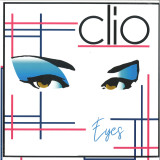
The decade of the 80s is revived through recordings like "Eyes" that allow you to travel through the music and trigger those old emotions of innocence, joy and adventure. It's possible you don't understand a word of what they're singing in the chorus, but the song is very catchy! Maybe not even Maria Chiara Perugini knows what she sings about, but she makes you hang on to every word of her like a nursery rhyme of synths, beach and bubblegum. "Eyes" is so amazing, so mesmerizing and more and more people are discovering this italo-disco masterpiece that usually satisfies and makes fun of you at the same time. If you try playing it at 75% speed gives a hypnotic vapor wave vibe! And even more, the song would have fit well in the dance club scenes from Scarface. Beyond the words - difficult to find a text that makes sense, sometimes out of context, unundestandable even for a French listener - the piece is so surprisingly likeable for the unique tone of Clio's voice, a strange cross between teenager and adult, and the part where she spoke another language, with some really cool synthesizers, are people's favorite parts. 0:31 "Je suis bien heureuse" , 0:47 "La nuit a ses merveilles", 0:57 "Il y a de quoi y perdre la tete, pour toi, sha, pour toi", 1:36 "Je n'ai plus de bulles", 1:52 "Je vous prie applaudissement". "Eyes" by Clio contains all the emotions that a dance-pop song should contain plus the essential element of mystery, a kind of magic that takes place between the chorus and the bass line, a shot in the dark drizzly night of the Italo-Disco. made by Roberto Ferrante, a guarantee for the perfect productions of the 80s, when he was only 20 years old.
On Stock and ready to ship

BLUE & WHITE COLOUR IN COLOUR VINYL
In the culinary arts, it’s easy to overcomplicate the final product. Theme, presentation, texture…they’re important but should work to complement the raison d'etre of any food. At the end of cooking a dish, it should taste good and feed people. Some dishes, like barbeque or provoleta, resist the tendency towards hollow showmanship. One of their expressions can be more or less aesthetic, but the first purpose is to be simple and tasteful. Argentinian provoleta goes so far as to blur the line between ingredient and dish. It relies on the inherent flavor of provolone being heated at the right speed for the perfect amount of time. You can add garlic or chives or red pepper to the slice, but ultimately they serve to bring out an essence that’s already there.
Los Angeles’ Cousin Feo has developed his rapping acumen in the five years since releasing Provoleta, but returning to the project today shows that he always had the penmanship, grit and delivery that christens an emcee worthy of remembrance. Like the bubbles rising up in the appetizer that is the album’s namesake, Feo showed that true profundity is found in the simple gestures.
Since dropping the project in 2019, Cousin Feo has expanded his vision of a world where hip-hop and football, two proletarian art forms, mingle in creative and compelling ways. He has collaborated across multiple continents, chronicled football histories, aided in canonizing legends, kept the flames high in age-old rivalries and constantly forced his audience to search for the last time they heard bars this hard. In anyone else’s hands it would be too great a task.
The maturity he showed on Provoleta wasn’t nascent, it was an inherent quality forcing itself to the surface. The songs refract his experience as a working class Angeleno through the archetypes of Argentinian football legends. The kernel that unites the two worlds is hustle. When Feo was coming up, missteps had greater consequences than crashing out in the group stage and street deals had the weight of a Boca-River Plate match.
Each track uses slightly different ingredients to let Feo’s underlying talent shine. “Maradona” feels salvific, fitting for a football legend canonized from the Andes to the Alps and a Los Angeles rapper looking to inspire similar hope in the neighborhoods that raised him. On “Di Stefano” Feo massages the instrumental with the same composure of the late forward, until he pierces through the headphones like one of Di Stefano’s arrows. It’s also refreshing to hear a song celebrating Messi before his meme-ification, focusing on the universal truths contained in his footballing talent instead of using number 10 as a stand-in to make a point in a fruitless argument. And he still finds space to show deference to Batistuta, Kempes and other members of the Argentinian pantheon who’ve been erased from the popular imagination by the national team's contemporary success.
Real ones know that true players, true rappers, and true artists will always stand the attacks of time and consensus. In Provoleta’s first verse, Cousin Feo says he moves with the hand of God. Maybe one day he’ll tell the whole truth and let us know how he was able to wrestle the pen away too. Limited edition of 300 hand-numbered copies.
expected to be published on 29.05.2026

Out now via 7 Mater, in collaboration with The Circle Music for worldwide distribution, this special edition of Stolen Season Pt. I captures both the essence of the project and the spirit of the upcoming full-length Stolen Season Pt. I. This first pressing is destined to become a collector's item: numbered and limited to 250 black vinyl copies and 250 gold vinyl copies, each edition comes housed in a deluxe sleeve with an exclusive 30x30 insert that perfectly frames the visual world of the band. It is a striking presentation that mirrors the richness of the music contained within. The creative force behind From The Land is Anatoly Pakhalenko, best known as the frontman of the acclaimed dark folk ensemble Nytt Land.
Conceived in 2025, this new project serves as an alter ego for Pakhalenko, allowing him to explore the darker edges of country, blues, and folk traditions while weaving them into a world described as "a black and white landscape, tired of all this s**t that's going on around and gradually sinking into an endless sleep". Together with Aleksandr Rosliakov, Pakhalenko composed Stolen Season Pt. I between January and May 2025 at Nytt Land Studio, handling recording, mixing, and production duties himself. The result is an album that resonates with uncompromising artistic vision and raw emotional depth. From The Land 's universe draws inspiration from the haunting literary realms of H.P. Lovecraft and Edgar Allan Poe, as well as the surreal, unsettling imagery of David Lynch. This heady mixture of influences creates a soundscape that is equally cinematic and visceral, where ritual meets ruin, and folk traditions dissolve into the smoke of blues and country noir.
expected to be published on 01.05.2026

For the first time, all the 1978 recording sessions of Lino Capra Vaccina's legendary Antico Adagio - including Frammenti da Antico Adagio and Echi Armonici da Antico Adagio - collected in one definitive deluxe edition. Minimalism, and so much more. Sheets of resonance, stunning harmonic interplay, intricate rhythms rising as one. Sidelong works of pulsing, hypnotic, ritualistic drone built from vibraphones, marimbas, gongs, bells, and cymbals, threaded by the sustained vocal tones of Juri Camisasca and Dana Matus. A trance-inducing, meditative, cosmic world of sonic interplay - the world beyond, joined with that which lays within.
Before an aberrant idea of progress ludicrously sped up our daily lives, even in hectic Milan it was possible to "play slowly" - with no pressure, simply following the path your art was showing you. This music moves between modal fascinations, ritual evocations, and states of hypnotic trance, evoking the acoustic environment of Tibetan and Zen Buddhist ceremonies and the temporal structures of Noh theatre, from which Vaccina took the name of his original label, Nō. Now, fittingly, this complete collection appears on Ubi Kū, the label of the Italian Buddhist Union.
Lino Vaccina (1953) first gained note as a member of Aktuala, creating a hybrid of rock, avant-garde, and ancient musics while incorporating sonic traditions from across the globe. After leaving in 1974, he studied at Milano's Civica Scuola di Musica, collaborating with Franco Battiato and Juri Camisasca, and forming Telaio Magnetico in 1975. In 1978 he self-released Antico Adagio in a tiny edition and wouldn't be heard from again until 1992. From 1979 to 1985 he was percussionist with the Orchestra of Teatro alla Scala under maestros such as Abbado and Ozawa. His career has been marked by an incredibly high bar of quality and a tragically slim recorded output - a rigorous and sensual language fusing Oriental, Mediterranean, and African influences with ritual elements and a cosmic sense of time.
As Massimo Torrigiani writes: "Lino Vaccina's music captivates through its internal coherence and its ability to generate states of suspension and deep listening - through undulations, small melodic fragments, dialogues between acoustic instruments and resonances that seem to evoke a phantom orchestra. An example of personal exploration, discipline and openness that speaks across time to anyone willing to be drawn into its sound."
Frammenti da Antico Adagio and Echi Armonici da Antico Adagio contain material from the original sessions, restored and issued by Die Schachtel in 2014 and 2017. The new masters, prepared by Giuseppe Ielasi, are based on those restorations and the original material. The package includes previously unpublished photographs from the May 1978 sessions and liner notes by Mauro Radice in Italian, English, and French. Cover art by Dana Matus. Printed by Legno, Milano & Mother Tongue, Verona.
Personnel: Lino Capra Vaccina (vibraphone, marimba, tablas, wooden drums, darbuka, cymbals, gong, metal sheets, bells, bass drum, tom, snare drum, piano, voice), Dana Matus (voice, percussion, cetra), Juri Camisasca (voice), Mario Garuti (violin), Roberto Mazza (oboe). Original production by Massimo Villa & Lino Vaccina with Piero Cannizzaro. Recorded May 1978 at Circle Studios, Milano.
The heights of the Italian avant-garde, at their very best.
expected to be published on 13.02.2026
The discovery of Doris Dennison's score represents a genuine musicological breakthrough—what once would have been "a tree falling in the woods" thirty years ago now holds the potential to render "a thunderous clap in our minds." While researching Anna Halprin's lesser-known collaborators, scholar Tom Welsh uncovered the archives of AA Leath, one of Halprin's principal dancers. Buried within these materials was Dennison's handwritten score for Earth Interval, dated May 1956. Born in Saskatchewan, Canada, in 1908, and raised near Seattle, Dennison (1908-2009) encountered John Cage while teaching Dalcroze eurythmics at the Cornish College of the Arts. She joined Cage's earliest percussion quartet—alongside Margaret Jansen, the composer and his wife Xenia—in the group widely regarded as having performed the first complete concert of percussion music in the United States. This historic December 1938 concert was followed by tours and the landmark May 1941 performance at the California Club, comprising Cage and Lou Harrison's Double Music, the premiere of Cage's Third Construction, and Harrison's 13th Simfony.
As Bradford Bailey observes in his extensive liner notes, Earth Interval demonstrates "an extraordinary balance of elements that imbues the piece with a sense of clarity, directness, and constraint that is both distinct and ahead of its time." The work's most remarkable innovation lies in its approach to extended techniques, particularly Dennison's notation for the central movement: "In 2nd movement, 1st player lowers + raises a gong into a tub of water while beating." This technique, absorbed from Cage's experimental vocabulary, generates what Bailey describes as "fields of acoustic abstraction that bend and warp time through sustained resonances, beat, and space." The temporal sophistication of these manipulations anticipated Karlheinz Stockhausen's Mikrophonie I (1964) and Annea Lockwood's water-based sound investigations by over a decade. After joining Mills College as dance accompanist, Dennison maintained crucial connections to the Bay Area's experimental scene, collaborating with figures like Merce Cunningham and programming Cage's music throughout the 1950s.
Comprising three movements—Land Form, Air Tide, and Earth Play—Earth Interval is scored for recorder, drums, gongs, maracas, muted gongs, and bowl gongs. In total, the piece is just under eight minutes: "a fleeting glimmer of moment in time, a life spent at the cutting edge, and a singular creative vision that packs a powerful punch." When viewed in historical context, placed in contrast to roughly contemporaneous avant-garde percussion works by Cage, Harrison, Louis Thomas Hardin (Moondog), and Harry Partch, or important precursors like Edgard Varèse's Ionisation (1931) and Henry Cowell's Ostinato Pianissimo (1934), it's clear that Dennison was following her own path. Earth Interval is not derivative. It is a precursor to what was yet to come, alluding to developments of avant-garde and experimental music that wouldn't begin to appear on the cultural landscape until the 1970s and '80s, with the emergence of Post-Minimalism and more idiosyncratic artists and ensembles like Midori Takada, Ros Bandt, Peter Giger, Frank Perry, Christopher Tree, Michael Ranta, Gamelan Son of Lion, and Niagara.
This recording by Chicago's Third Coast Percussion, captured in March 2022, represents the first complete documentation of this pioneering work. The ensemble's interpretation reveals the piece's remarkable contemporaneity while maintaining its historical specificity. Where Cage, Harrison, and Partch employed "self-consciously off-kilter polyrhythms," Dennison's rhythmic sensibility anticipates minimalist developments by nearly a decade, yet integrates "forceful rests, as well as sharp shifts in sonic character, tempo, and meter, that break the momentum and breathe a sense of life into the piece's structure." This positions her work closer to Post-Minimalism decades before its emergence. The architectural approach demonstrates Dennison's understanding that "the composer almost entirely disappears" in favor of phenomenological listening experience, creating what might be called an egoless music that places its realities and meaning entirely in the ear of the beholder. The present recording, realized by Chicago's distinguished Third Coast Percussion ensemble, represents a significant achievement in experimental music scholarship and performance practice. As specialists in the Cage tradition and contemporary percussion repertoire, Third Coast Percussion approached Earth Interval with the historical sensitivity and technical precision required to illuminate Dennison's subtle compositional innovations. The March 2022 recording sessions, engineered by Colin Campbell, capture both the work's intimate chamber music qualities and its bold exploration of extended techniques. The ensemble's interpretation reveals the piece's remarkable contemporaneity—its ability to speak directly to current musical concerns while maintaining its historical specificity.
This recording serves multiple scholarly functions: it provides the first complete documentation of Dennison's compositional voice, offers insight into the broader network of experimental music practitioners surrounding Cage and Harrison, and demonstrates the sophisticated level of compositional thinking that was occurring within the Bay Area's dance-music collaborations of the 1950s. The work's emphasis on phenomenological listening—what might be called an "egoless" approach to musical experience—places it within a lineage of American experimental music that prioritizes perceptual process over compositional personality. The work's original obscurity—limited to AA Leath's performances at venues like the 1957 Pacific Coast Arts Festival at Reed College—paradoxically allowed it to remain "entirely on its own terms," free from the constraints of historical categorization. Drawing on Jacques Derrida's Archive Fever, the argument emerges that "the archive can acknowledge, celebrate, and resurrect" overlooked voices, transforming our understanding of experimental music history. The present Blume edition, featuring Third Coast Percussion's authoritative interpretation, includes a lavishly illustrated 16-page booklet designed by Bruno Stucchi / dinamomilano, containing complete scholarly apparatus, historical photographs, and detailed production notes. This recording enables "cross-temporal intersectionality," allowing Dennison to "belong to a newly formed and more dynamic understanding of the present and past," demonstrating how forgotten voices can reshape entire historical narratives when given proper scholarly attention and performance advocacy.
expected to be published on 01.08.2025

For most members of the band it's the best album. But, tragically, the release of Operation Heavenly in 1996 was overshadowed by the sudden death of drummer Mathew Fletcher. The promotional tour was cancelled, the surviving members of the band went into emotional hibernation and no-one could bring themselves to celebrate these vibrant, upbeat songs. So, this release by Skep Wax Records, nearly thirty years on, is more like an album launch than a re-issue. Time has healed most wounds, and the songs on Operation Heavenly feel like they can finally emerge onto the stage, with Mathew's spirit very much alive: his effervescent witty drumming sounding as fresh now as it did then. These tracks are gleeful, melodic, sophisticated and knowing. The tough riot grrrl edge that Heavenly had developed a year before with seminal singles P.U.N.K. Girl and Atta Girl, has been blended with a deliberate quantity of Britpop styling. Heavenly were clearly listening to what was going on, liked the energy, but didn't necessarily feel the need to join in. Some of the tracks (eg Ben Sherman) are as jaunty as early Blur, but the lyrics, mocking a narcissistic boyfriend for his obsession with hair, clothes and his own erections, show that Heavenly didn't need or want to be part of the la - or even ladette - herd. Operation Heavenly was the band's first release on a label other than Sarah Records. Matt Haynes and Clare Wadd had brought that exceptional label to a deliberate and dramatic end. The liaison with US punk label K Records continued - as did the duets with Calvin Johnson: Pet Monkey is a moving duet between a growling Calvin Johnson and a sweet-voiced Cathy Rogers, as they dramatize another complex, maybe doomed relationship, with another self-centred boy finding himself frustrated by a girl who won't take any shit. But in the UK, Heavenly needed to find a new home - and Wiija Records were welcoming hosts, ushering the band into a brasher, less cloistered world: the production on this album is brighter than before, the artwork is colourful and upbeat. With tracks as catchy and as complete as Fat Lenny, Trophy Girlfriend and Space Manatee there was an expectation that Heavenly might finally emerge from the indiepop shadows and trouble the charts. And who knows if this might have happened. Mathew was lost before the album was released, and the band had no choice but to bring things to an end. This reissue also contains two tracks that appeared on the B side of the 7" single of Space Manatee. They are both cover versions, and along with Serge Gainsbourg's Nous Ne Sommes Pas Des Anges on the main album, these vivacious assaults on Art School by The Jam and You Tore Me Down by The Flamin' Groovies show that the band, briefly in its prime, could happily embrace any variant of pop music and make it something Heavenly.
expected to be published on 01.08.2025
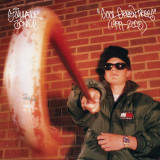
"Chasing the funky symphonies that filled my head and my dreams..."
December 25th, 2023 - an Instagram post. Stimulator Jones shared half a dozen FIRE tracks from his beat tape archive. We were immediately drawn to the rough hewn boom bap.
"I'd release that", Rob commented.
Hours of material was shared and the result is this: Cool Green Trees (1999-2005). A collection of beats and loops Stimulator Jones created between the ages of 14-20 at home in his basement, bedroom and computer room in Roanoke, Virginia.
You will not believe the profound soulful genius contained within these naive schoolboy melodies.
December 25th, 1998 - 25 years ago to the day and his much-coveted Yamaha SU10 sampler was finally bestowed upon young Stimmy AKA Sam Lunsford: "I immediately hooked up a CD Walkman to the input jack and looped the beginning two bars of Grover Washington Jr.'s "Mercy Mercy Me". I don't know what exactly was so thrilling about hearing two measures of music repeating over and over but it was so infectious and hypnotizing and enthralling to me. I'll never forget that ecstatic rush of making my first loop - an uncontrollable, gleeful smile plastered all over my face." When you hear the pocket breakbeat symphonies featured here on Cool Green Trees, you'll feel the same sense of frisson.
In the wake of his Stones Throw breakthrough - Exotic Worlds & Master Treasures - Stimulator Jones was pegged by many as a 90s throwback artist. However, he literally IS a 90s artist. He's been recording music most of his life and he's now 40. He created the bulk of Cool Green Trees as a teenager. Everything before 2004 was recorded when Sam was still in school. He was in 8th grade when he made the 1999 tracks - he didn't even have his learner's permit. This album is a snapshot of a young man in a simpler time. Things were still mysterious back then and he was flying blind, relying on his ears and having to figure things out for himself: "I had no road map for becoming a beatmaker. I have been collecting music since I was a kid, I am a lifelong digger and seeker of cool and interesting sounds. I was there in the golden age of Hip Hop, and while I may have been a suburban white kid in Roanoke, Virginia, I was tuned in and I bought so many classic albums when they came out. I was attracted to Hip Hop because of the musical and poetic quality. I was hypnotized by the rhythms, partially because I was a drummer. I didn't brag about collecting my breakbeat records or making beats - it was something I did in isolation. It wasn't something I generally wanted to bring attention to and it didn't really score me any cool points. I certainly wasn't flexing on social media about it."
Hell, he can do that now!
Opener "Pharoah Jones" was inspired by Yesterday's New Quintet and Madlib's ability to capture that classic 70s sound whilst playing all the instruments. Sam created this one stoned afternoon by laying down a 2 bar loop and a shaker loop on his Yamaha SU700 sampler. He hung a microphone from the ceiling and played his Yamaha Stage Custom drum kit over the top before adding ender Rhodes and playing his dad's Selmer tenor sax through an Electro Harmonix Memory Man echo pedal. Yes! Up next, "Ghost Gospel" utilises a dope loop from a gospel record and adds some soul-funk drums overtop, whilst working that filter knob. Says Sam: "The loop reminded me of something Ghostface would rap over. The sample was in 3/4 waltz time but I flipped it for a 4/4 groove, a technique I picked up from RZA. "Ill Feeling" uses sped-up pieces from a dusty old funk record and putting them over a classic NOLA drum loop; gain chopping up a slow, bluesy 3/4 time signature and bending it to a 4/4 groove. Classy shit. "Capital Punishment" features drums tapped in live, inspired by MF Doom's Special Herbs series. "Do Not Adjust" consists loops found on a compilation of 70s French music at Happy's Flea Market, a classic Roanoke digging spot.
The sublime, evocative title track, "Cool Green Trees" was created when Sam was still living at home. He dumped samples off his SU10 into the family desktop and arranged them in a demo version of Pro Tools: "This track was sort of my ode to the DJ Shadow style of sample based production. Super spacey, slow, and moody. The heavily filtered drums were inspired by Alec Empire's 'Low on Ice' album. I later added some scratches and sounds from a Spider Man storybook record." "Chill Scratch" snags the final bit of a bossanova record and pairs it with a drum loop before adding experimental scratching run through an Electro Harmonix Memory Man echo pedal. "Poisonous Fumes" was made using a sampler, mixer and a turntable; a kind of mixtape beat collage with added scratches and sounds from various records. Using dialogue from superhero records was a nod to Madlib. "Welcome Aboard The Starship" is dark, downtempo trip-hop with a spooky bent. Sam paired a slow, hard drum loop with a guitar sample grabbed off a psychedelic rock record. To finish, he added various backwards sounds and weird atmospheric effects and a little scratching. Swoon.
Side B opens with "Keep On Runnin", made on a borrowed Roland SP202 sampler. Having always loved the sound of the Lo-Fi filter on those machines, reminiscent of the Emu SP1200, Sam always imagined Del or another of the Hieroglyphics crew rapping over this beat. You can certainly hear why. "Sounds Impossible" sees Sam experimenting with layering multiple kick samples at different volumes to create patterns similar to those heard by Showbiz and Lord Finesse during their God-level 1995 period. "Painted Faces" was made by chopping up a REDACTED record which he had gotten from Happy's Flea Market and paired it with a REDACTED drum loop. By the time Sam recorded "The Knew Style", he had acquired a shitty old 1960s portable turntable off eBay. It didn't function properly when he bought it but his brother opened it up, cleaned it out and got it working: "I remember he told me that there was a bunch of sand inside of it when he opened it up, as if its previous owner had taken it to the beach. I would take that turntable on my Happy's Flea Market digs so I could preview records...that's how I found this loop."
"Chicken Wing Blues Sauce" loops up a classic blues joint and pairs it with some REDACTED drums. A bit of filtering and arranging et voilà! "Kool Breeze", from 1999, is one of Sam's oldest surviving beats, as is "Sexx Bullets". The Roots sampled the same record, leaving Sam frustrated yet vindicated. "Soul Child" was an early SU10 creation, looping a dusty old Soul Children 45 and pairing it with 70s rock drum loops to great effect. "Take Off Runnin" was another loop found digging with a portable turntable. Paired with some boom bap drums it makes for a hypnotic head-nod groove. "Centurian" was intended to be a little beat interlude a la Pete Rock. The sample is from a sun-dappled soft-psych record and it's paired with a Robin Trower drum loop that just happens to fit perfectly. Sometimes you slap things together kind of haphazardly and magic happens. "Bozack" was the first beat Sam made using Pro Tools, his first foray into using chopped sounds instead of loops, an exciting new world. "Church" is beat interlude using a Phil Upchurch loop with the "Long Red" drums - a favourite break of Dilla et al. Sam was really on a tear in late 2004, probably because he was unemployed and phoneless and able to just make beats all day. He made "Splash One" on a borrowed Yamaha SU700 and again was experimenting with tapping the drums in live with his fingers, instead of using a loop or sequenced pattern. Channeling 9th Wonder, Sam used a water splash sound effect from a Batman record as a percussive element, hence the title (also a 13th Floor Elevators reference). The main loop is a backwards portion of one of his favourite Roy Ayers songs.
"Hank" is another fun little beat interlude thing, created on a borrowed Roland SP202 sampler with the fantastic Lo-Fi effect that resembled the Emu SP1200 at a fraction of the price. "73 goatee", from 99, is another of his oldest surviving beats, created in his bedroom with his Yamaha SU10 and his brother's Vestax MR-300 4-track recorder: "This one will always feel special. I can remember having a feeling all the way back then on the night that I created it that this was a solid beat with a catchy loop. There was something in the Fender Rhodes melody that resonated with me emotionally, and I had never heard a producer sample that portion before. I felt like I had found my own unique sound, my own unique loop. It came from an Ahmad Jamal '73. I actually even recorded myself rapping and scratching over this beat way back then, I still have that version in all its imperfect sloppy glory."
Sam explains just how much these tracks mean to him: "They all have immense historical and sentimental value and I'm proud of them. These beats come from an innocent, simple time when I was just figuring out how to craft these sounds. They're something very personal to me. They are the initial part of a journey that I really was taking *alone*. There was no YouTube. I couldn't Google shit. I didn't even know any other beatmakers, producers or DJs in my town that could teach me anything. It was always just me, alone, in a room with some equipment - chasing the funky symphonies that filled my head and my dreams. What I was doing wasn't cool. Most of my peers thought I was a weirdo and couldn't care less. Creating these sounds was an anti-social endeavour. In a sense, I felt like it was me against the world, and all I had to instruct and assist me were the recordings produced by my heroes - RZA, DJ Premier, Erick Sermon, Beatminerz, Showbiz, Diamond D, Beatnuts, Prince Paul, The Bomb Squad, Pete Rock, Q-Tip, E-Swift, Mista Lawnge, DJ Shadow, Cut Chemist, Peanut Butter Wolf, El-P and so many more...I dedicate this collection to them, and to my older brother Joe who has always been a musical and technical guiding light for me.
This was a time before every kid was a self-described producer and beatmaker, before everyone had a DAW, before Kanye and "chipmunk soul", before Red Bull beat battles, before there was any social media beyond chat rooms and AOL Instant Messenger, before Soundcloud, before SP-404 mania, before lo-fi beats to study to, before Splice, before targeted ads for MIDI chord packs, etc. In 99 when I told people that I had a sampler and made beats I was mostly met with bewildered confusion and indifference. Kids and adults alike would wonder why I got this weird machine for Christmas instead of something worthwhile like a Playstation or a mountain bike or even a guitar for that matter because at least that could be used to make "real music". Back then, sampling was still not widely respected as an art form - it was seen as lazy, talentless and unoriginal at best and outright criminal theft at worst. I had gotten respect for playing drums and guitar and things of that nature but this was a step in the wrong direction in the eyes of many."
The cover photo is a picture of Sam standing on his back porch in the latter part of 1998, just before he got his first sampler. He was 13 years old, in 8th grade. His dad took the picture with his 35mm film camera: "I actually wanted to be pointing my dad's .22 pistol at the camera lens but he wouldn't let me. He gave me an old walking cane to use instead. The Tommy Hilfiger puffer jacket came from the lost and found at William Fleming High School where my mom worked as a secretary. I was thrilled when she brought it home because we never spent money on expensive name brand clothing like that - we were for the most part strictly a sale rack, bargain bin, thrift store, yard sale, flea market kind of family when it came to clothes. My watch is some cheap off-brand fake gold department store watch." Mastering for this vinyl edition was overseen by Be With regular Simon Francis and it was cut by the esteemed Cicely Balston at Abbey Road Studios to be pressed in the Netherlands by Record Industry.
Order now and we will order the item for you at our supplier.

Neo Gibson, born in Virginia and based in New York City, records, performs, and produces as 7038634357. This numerical alias, under which Gibson has been releasing work since 2016, offers a window into the careful ambivalences of the musical project. It conjures the impersonal_the opacity and randomness of data, a number that is hard to remember or even say out loud_while also suggesting a direct line of communication with the artist, down to an area code indexing their biography. 7038634357 uses a restricted palette to achieve music that is formally precise and emotionally direct. Their digital-native approach to production, in which frank melodies cross paths with heavy distortion, contains traces of both trance's maximalist arcs and a songwriterly intimacy. Expressive details may appear submerged or abraded, subjected to a canny sense of dynamics and textural specificity. Waterfall Horizon, Gibson's second vinyl record with Blank Forms Editions under the moniker 7038634357, was written for live performance and workshopped over successive shows during their 2022 European tour. Here, hallmarks of their earlier, studio-crafted recordings_digital distortion that obfuscates their lyrics and a slow-burning ambience_are noticeably pared back. Instead, Waterfall Horizon takes on a pop inflection, adopting more traditional lyric scaffolds so that the interstices from verse to chorus or track to track can flourish within their limited tonal range.Across recordings and performances, Gibson activates wide-ranging mechanisms of audience connection: from the relative anonymity of internet platforms to live experiments with the spatial effects of amplification. They have a particular interest in site-specific performances in non-musical spaces, and have performed in a variety of contexts, including the mezzanine of the West 4th Street subway station in New York City and INA GRM/Radio France's Présences électronique festival. Under their own name, Gibson has maintained a longstanding collaboration with the artist Charles Stobbs, working primarily with FM transmission and techniques derived from the early-seventeenth-century English tradition of change-ringing bells. The first 7038634357 vinyl record, Neo Seven, was released on Blank Forms Editions in 2023; previous releases include self-released cassettes and CD-Rs, as well as a pair of EPs on Genome 6.66 Mbp (2018, 2019).
expected to be published on 13.06.2025

Five for Fighting achieved a hit record with "Superman (It's Not Easy)" in 2001 leading to his America Town album going Platinum.
For the follow-up, The Battle Of Everything, John Ondrasik went into the studio with Bill Bottrell, best known for his production work with Sheryl Crow.
On the influences behind Battle and its recording, Ondrasik said, "When I was a kid I could put on Dark Side of the Moon, turn up the sound in my headphones, lie down in the dark, and go away. I wanted that experience again, and so Bill and I were ambitious to the point of absurdity. If we wanted drama, we'd get a thirty-piece orchestra. If we wanted a rock edge, we went after it with reckless abandonment. It was like doing my own private Quadrophenia."
The Battle for Everything was released in 2004. The first single, "100 Years" was a top 40 hit on the Billboard Hot 100 chart. The album itself was certified Platinum in 2009. and is now finally available on vinyl for the first time.
This is a limited edition of 500 individually numbered copies on gold coloured vinyl. The LP contains a 4-page booklet with lyrics and pictures.
expected to be published on 14.03.2025

"The, multi-platinum, 3x GRAMMY® Award-nominated, and Emmy® Award-winning rapper Cordae has releases his highly acclaimed third studio album, The Crossroads on 12"" LP.
The new album features production from Executive Producer Smoko Ono, as well as production from multi-platinum and award-winning hitmakers Bongo ByTheWay, Dem Jointz, Camper, BoogzDaBeast, FNZ, and more. Listen HERE.
The Crossroads arrives on the heels of “Syrup Sandwiches” (feat. Joey Bada$$), the fourth lead single released by Cordae ahead of today’s official album release. Previously, “Saturday Mornings” (feat. Lil Wayne), “Summer Drop” (feat. Anderson . Paak), and “Mad As Fuck” were released along with accompanying music videos. An official album trailer was also previously shared on Cordae’s YouTube channel last month. The Crossroads integrates the four lead singles into a cohesive 16-track album containing even more stellar collaborations from Juicy J, Ty Dolla $ign, Jordan Ward, Ravyn Lenae, and Kanye West.
Cordae’s inspiration for The Crossroads comes from his feelings of quite literally finding himself at a crossroads in his own life. Through the album, he conveys his conviction that one single decision doesn’t have the power to change everything, and that while there may be hard decisions to make, there is never truly a “wrong” choice.
The album has already had a viral moment online in the UK with the features being tagged on to the iconic Abbey Road crossing during release week. "
expected to be published on 28.02.2025

Vinyl is 180g and contains downloadcode
Wrocław-Toruń noise rock band founded by Szymon Szwarc (swrcfx, Jesień) and Damian Kowalski (SKI). They are currently collaborating with Cezary Rosiński (Młyn) and Krzysztof Rogalski (Pchełki). The band has performed in clubs and at festivals in Poland, Germany, the Czech Republic, Slovakia, Austria, Lithuania, Latvia, and Estonia. So far, two full-length albums by RZWD have been released: POMPY (Fonoradar Records 2020) and GOLD (Fonoradar Records 2022).
Album GAPS Recorded in November 2023, is the result of two years of work that merges classic POST-PUNK GUIDE with a rich electronic influence. On GAPS, RZWD aims to craft DANCE NOISE CLUB MUSIC on their own terms, pushing the limits of what a LIVE BAND can be in achieving this.
Most of the tracks evolved during RZWD's concerts in countries like Lithuania, the Czech Republic, Germany, and Estonia. These experiences and ideas were shaped into the album between November 2023 and May 2024. Live recordings in Szczecin were done by Adam Sołtysiak, while additional recordings and production were handled in Toruń under the supervision of swrcfx.
The core idea behind GAPS was to use developed themes as a starting point for further variations and exploration within DANCE NOISE CLUB MUSIC. This time, the instrumentation includes bass and an ever-expanding, mutating layer of modulation. Therefore, the album features four brand new compositions alongside four remixes of tracks from previous albums.
The album also features guest appearances by: DANIELIUS PANCEROVAS from the Lithuanian band KANALIZACJIA, adding a saxophone touch to the track DIESEL, and KRZYSZTOF FREEZE OSTROWSKI - a renowned Polish electronic musician and producer, bringing a new sonic perspective to EURO TRACK from the DMO EP.
Among the multidimensional concepts blending environments, genres, styles, and techniques found on GAPS, the pursuit of synthesizing acoustic and electronic sounds stands out. RZWD creates a space where the boundaries between these domains blur and lose their significance.
The result is a groove-driven and noisy mix of dance music styles such as RAVE, TECHNO, HOUSE, and FOOTWORK, played beyond rigid tempo measurements and DAW limitations, relying on natural skills and intuition. It's a soundtrack that works best as a backdrop to movement, whether coordinated or not.
RZWD:
SKI - DRUMS, ELECTRONICS
KRZYSZTOF ROGALSKI - BASS GUITAR
CEZARY ROSIŃSKI - DUBS, SYNTH, MOD. ELECTRONICS
swrcfx - DUBS, SYNTH, GUITAR
ALBUM GUESTS:
DANIELIUS PANCEROVAS - SAXOPHONE in DIESEL V3
KRZYSZTOF FREEZE OSTROWSKI - ELECTRONICS in EURO TRACK V2
Order now and we will order the item for you at our supplier.

The Equatoguinean Norberto de Nöah established in Madrid in the early 80s, where he became a firebrand of African culture in the vibrant Movida. In 1988 he self-released his first solo album, a blend of homeland sounds —modern and traditional— with new synth and drum machine touches. The vanished album finally gets its well-deserved reissue.
Edition of 500 albums on vinyl (Bandcamp download code included) - Original artwork with new 14 pages insert and poster
In the mid-1980s, the European media, music industry and public became increasingly interested in African music. This was a period of international success for King Sunny Adé, Salif Keita, Youssou N’Dour, Ray Lema, Touré Kunda, etc. Spain, with its own particular conditions, wasn’t oblivious to the phenomenon and the Equatoguinean Norberto de Nöah may be its best exponent.
Norberto moved in the early eighties from his hometown in the island Fernando Po (now known as Bioko) to its former colonial capital, Madrid. While studying dramatic arts, he created and led the band Nohkis, made up of African and Spanish musicians. In 1985 they released the maxi-single “Mujer española” / “África, ¿dónde está tu gloria?”, and the song “El loco”, was released on a compilation LP called Esto es increíble, both on the label Lollipop. According to the journalist Patricia Godes, they were first artists to record an African music record in Spain. It received positive reviews and a great impact on the most independent side of Madrid’s La Movida movement. Very soon afterwards, Nohkis’ band split up.
Afterwards, Norberto would concentrate on his solo career, and Norberto de Nöah and The Böhöbé Spirits Müsic was released in 1988, definitely a solo album. Norberto created his own label, Kilimandjaro Productions, and composed, arranged and produced all the songs of the LP. Moreover, he sang and played all the instruments: a vast selection of organic instruments, a Yamaha RX-5 drum machine and a Roland D-50 synthesizer.
In the album he exposed his deepest roots, updating the lexicon of traditional Bubi music, the musician’s ethnic group, a compendium of ceremonial melodies that ancient troubadours composed for the court. Doing so he showed new possibilities to one of the oldest ethnic groups in the world. Besides all this, he was also inspired by American music such as funk, R&B, Latin American music and also by a wide range of African and Caribbean rhythms.
Mixing the traditional and the avant-garde in a spontaneous and natural way, the music contained in the record’s grooves flows freely and takes you to places full of magic and mystery, while still transmitting new and exciting sensations. Even more, according to the Equatoguinean musician and writer Baron Ya Búk-Lu based in Madrid, the album’s sound was “the perfect combination of all characteristics that defined the Equatoguinean Afropop music made in Madrid during the 1980s”, a story that still needs to be told in all its depth and intensity!
Following the release of two LPs and several singles, the activity of Norberto de Nöah and Kilimandjaro Productions (and the subsequent Bananas Podridas) ceased. Nevertheless, Norberto’s links to music continued, as a promoter and DJ in Madrid’s nightlife.
Norberto de Nöah contributed greatly to changing Spain’s musical landscape, breaking barriers and mental frameworks. He was the first to make contemporary and popular Guinean music known to the Spanish public.
The repercussions in the African market of a Spanish (and Bube) speaking African musical project, where English and French dominate, was very difficult. In addition, the passage of time and changes in phonographic formats have diluted the memory of Norberto's legacy. Now it’s time to reverse the situation and break all the outdated frontiers!
Norberto de Nöah and The Böhöbé Spirits Müsic, as every important music piece, was at the same time part of a universal phenomenon of recognition of African music and a very personal project, based on the artist’s nostalgic and heartfelt need to show and homage his ethnic group, the Bubis. In this process he also refreshed his hometown music legacy, giving it a new air and opening the door to lots of other great Equatoguinean artists coming afterwards, as well as being an inspiration for many musicians in Spain.
expected to be published on 13.12.2024

The American Way is the second studio album by American thrash metal band Sacred Reich, released on May15, 1990 via Metal Blade Records. The video for "The American Way" was used in the 1992 film EncinoMan.The album debuted at No. 153 on September 1, 1990 on the Billboard 200 charts, lasting for nine weeks. Anenhanced remastered version released in 2009 contains pre-production demo recordings.
expected to be published on 22.11.2024

"As I'm getting older, chip up on my shoulder..." is the opening line from Mac DeMarco's second full-length LP `Salad Days,' the follow up to 2012's lauded `Mac DeMarco 2.' Amongst that familiar croon and lilting guitar, that initial line from the title track sets the tone for an LP of a maturing singer/songwriter/producer. Someone strangely self-aware of the positives and negatives of their current situation at the ripe old age of 23. Written and recorded around a relentless tour schedule (which picked up all over again as soon as the LP was done), `Salad Days' gives the listener a very personal insight into what it's all about to be Mac amidst the craziness of a rising career in a very public format. The lead single, "Passing Out Pieces," set to huge overdriven organ chords, contains lines like "...never been reluctant to share, passing out pieces of me..." Clearly, this isn't the same record that breezily gave us "Dreamin," and "Ode to Viceroy" but the result of what comes from their success. "Chamber of Reflection," a track featuring icy synth stabs and soulful crooning, wouldn't be out of place on a fantasy Shuggie Otis and Prince collaboration. Standout tracks like these show Mac's widening sound, whether insights into future directions or even just welcome one-off forays into new territory. Still, this is musically, lyrically and melodically good old Mac DeMarco, through and through. The same crisp John Lennon / Phil Spector era homegrown lush production that could have walked out of Geoff Emerick's mixing board in 1972, but with that peculiar Mac touch that's completely of right now. "Brother," a complete future classic, is Mac at his most soulful and easygoing but with that distinct weirdness and bite that can only come from Mr. DeMarco. "Treat Her Better" is rife with "Mac-isms," heavily chorused slinky lead guitar, swooning vocal melodies, effortless chords that come along only after years of effort, and the other elements seriously lacking in independent music: sentiment and heartfelt sincerity. We're only at Part 2 and 1/2 (one EP and two LP's in) into Mac's career. As you read this and as you hear the album on April Fool's Day of this year, he'll probably be on tour, or preparing for one... or maybe already writing new music. A relentless work ethic is something to be admired in today's indie music scene, but when it's of the quality Mac is giving us time and time again, it starts to turn from admiration to awe.
expected to be published on 08.11.2024

In collaboration with musicians and parody artists Auralnauts, Stumpy Frog Records has pressed the soundtrack to their ongoing series of ‘As Seen on TV’ parodies known as the ‘Infomercial Wars’. During an unspecified point in time, a faceless dystopian company pushes out products under the guise of improving the quality of life for humanity. The commercials have a sexy presentation to them, designed to lull the viewer into a hypnotic state and gloss over what is really being sold to them: enslavement to an evil entity. The true purpose of these products is clear to anyone with an iron will: to imprison your mind, strip away your humanity and weaponize what remains. Humanity’s only hope is a scrappy group of freedom fighters whose key to success is convincing you to buy their products instead of the enemy’s. May the best infomercial win. Beyond humanity. Beyond Copper. The parody series is made up of real life infomercials with complete audio makeovers. The products themselves vary from one commercial to the next, but a popular trend in these ads is the seemingly unlimited uses for copper, which is taken even further by the parody versions. The bubbly pitchman from the source material has been replaced by a soothing, yet vaguely threatening alien presence. This mysterious voice paints a picture of a world that would make David Cronenberg and James Cameron blush, and all of it is held together by a dystopian soundtrack that is perfect for ushering humanity into the next step of this forced evolution. Side A of the album contains six full length studio versions of the music featured in each ad. 1) 300% More Human 2) Techromancer 3) Full Body Copper System 4) Master of Reality 5) Final Boss (Sock Defense Grid) 6) Beyond Copper Side B features the ads themselves, presented faithfully as they appear on the Auralnauts Youtube channel.
expected to be published on 15.10.2024

Coming out on September 6th on Sharptone Records, Sundiver is Boston Manor’s fifth album and one that represents a glimmering dawn for the Blackpool five-piece. Grown from a seedbed of optimism and sobriety, the LP celebrates new beginnings, second chances and rebirth. With two members recently stepping into fatherhood, hope is baked into every note. “Datura came out of these really dark few years over the hangover of the pandemic,” Henry reflects. “I'd been struggling a lot with drinking and not taking care of myself and bad mental health and stuff. We wanted Sundiver to be the next morning of the following day.” He explains that it feels good this time round to write through the lens of positivity. “The themes began to emerge, of rebirth, spring, dawn, sunshine and then other elements just started to fit into that.” It was during the making of Sundiver that Henry found out he was going to be a dad. This album is a significant one for the band. Originally coming out of the emo and pop punk scene, they’ve explored sonics and genres throughout their career, taken risks and achieved more than they could ever had dreamed of. They’ve grown up as Boston Manor – their lives and the world changing around them. They’re now taking stock, at a crossroads of the band they were and the band they could be.
While writing the album, they revisited the bands that shaped them in the late 90s and early 00s. “I was listening to the music I loved when I was a teenager and I just thought, why don't we make music like our favourite bands?”, guitarist Mike Cuniff remembers with a smile. “So we brought our interests to the table that way. Y2K kind of vibe. There are elements of Deftones, there are elements of Portishead in there, some Garbage, The Cardigans.” He laughs and adds NSYNC to the list of inspirations. From this cocktail of classics comes a dynamic and ambitious record, rich with depth, groove and more hooks than Peter Pan’s nightmares. Lyrics that foxtrot from parallel universes to personal growth, vivid dreamscapes to raw grief. Individually they’re single strokes full of meaning and magic. Together they’re a landscape.
Container (out Feb 15th) is the first single and it’s them at their best – impassioned and infectious. “This song is about the stagnancy of life creeping up on you & how that can bring about change.,” Henry explains, citing Ocean Song by US band Daughters as an inspiration.
The concept of the butterfly effect is present on Sundiver – how small actions can lead to big changes. This is no clearer than on their second single, Sliding Doors (out April 5th). It has the golden sound of late 90s Lollapalooza rock – think Smashing Pumpkins - rebooted with crisp 2024 production and a potent heaviness. In the lyrics Henry wonders, what if?, pondering on what could be. The idea that there are infinite versions of you whose lives splinter off in different directions at every decision you make. That there’s another you out there somewhere right now reading this sentence, and another me writing it. “So much is down to chance and circumstance,” Henry says. “You might catch that train and your life totally changes. Or you might miss it and things stay the way they are.”
Heat Me Up (out May 30th) is defiant and victorious, the audio equivalent of quitting your shit job and driving into the hot summer sun with a head full of dreams. “The lyrics are about love and gratitude,” Henry shares. “Another theme on the record is just appreciating what you have. It’s about not taking for granted the things that you've been afforded.”
There was some natural magic in the creation of Sundiver. They worked with their usual producer, Larry Hibbitt, and engineer, Alex O’Donovan, but instead of recording in London again they ended up in the green pastures of Welwyn Garden City. “Because Larry lives out in the countryside now, it was a way different environment and way different experience recording this time,” Mike remembers. “That contributed a lot to the brighter sound of the record.” The daily barbecues they had during their recording sessions imbued the process with harmony – five old friends spending quality time together and making quality music.
However, the album is by no means one-note. Birthing this new world they’ve created wasn’t without it’s pain, and that can be heard in the heavier moments on Sundiver. What Is Taken Will Never Be Lost is the most-stripped back on the album, a slow rock number seasoned with the downtempo Portishead influence. The heartfelt lyrics are Henry’s way of processing the loss of his grandfather, who died in a hospice last year(?). “It was just fucking horrible. It was always cold when I went there and they were always trying to get rid of me. The song title, What Was Taken Can Ever Be Lost, is the idea of his memory fading at the time because of dementia.” Henry goes onto explain that shoeboxes of photographs, diaries and a legacy is what he’s left behind. “He lived a really rich life and it has really impacted me and my father. His legacy is etched into the fabric of history in a very small way.” This song continues the connection between his grandfather and the band, as his painted face is emblazoned on the cover of the very first Boston Manor EP, Driftwood. As well as emotionally heavy themes, there’s heaviness in the music of Sundiver too. The closing song, Oil In My Blood, descends into an intense shoegaze outro with Debbie Gough from Heriot screaming hellfire. It’s in moments like this that the band show us aggression and fury can be as much a part of positive change as quiet introspection. The last lyrics of the song, “It resets and starts again,” leaves us in contemplation as the final chord rings out.
Touring the US, Europe and Japan over the years makes for an impressive CV, but if you know anything about Boston Manor you’ll know that they’re all about their hometown. Their choice to work with Blackpool-based photographer Nick Barkworth is testament to that. They’ve been working with him since the pandemic. “He captures Blackpool in a light that really reflects the weirdness and quirkiness of the town,” Henry says.” He's got a really good way of presenting that.” For the Sundiver cover, Nick photographed a 30ft tall abstract glass sculpture made by the local artist John Ditchfield. A striking and bewitching monolith that’s familiar to them but unusual to most people. “It has such kind of a gravity and power to it,” Henry describes the sculpture which stands in a field just outside of the seaside town. “It reminds me of either an explosion or a star or a supernova. To me it represents new life, power and radiance.” Boston Manor have got a knack for that - connecting the otherworldly and the everyday, the stars and the streets.
They’re a band known for using their music to make bigger statements about society. This time round they’re harnessing the uplifting power of music, and the communion it creates, as an antidote to the daily doom and isolation. “It seems like absolute chaos out there at the moment,” Henry says. “You’ve got Gaza and Israel, you've got Russia, you've got the fact that 40% of the world is going to have an election this year and increasingly most governments are leaning very far to the Right. The internet is dividing everybody, people are getting poorer and more desperate. It's really, really scary.” They considered trying to tackle the weight of it all in their music. “We could’ve written Welcome to the Neighbourhood on steroids, where it's just absolute darkness and misery”. He’s referring to their 2018 concept album that deals with class, inequality and the bleaker side of Blackpool. “But I think it's really important to write something that people can be immersed in and find some sort of solace in. Somewhere they can escape to from the modern day pressures and everything that’s going on. We’re all in this together.”
expected to be published on 06.09.2024

Veiga lands straight on the dancefloor, no ambiguity about it. Spurred by the guys from RS Produções, he's been honing his DJ skills since he was 17 (currently 23), initially with partner Nunocoox, who gave him even more motivation. Production came naturally sometime in 2020. We venture: maybe one of the good things coming out of the lockdown? Summer of '22, his debut at Musicbox (at the Príncipe monthly residency) is recorded as a festive, lively set, punctuated by the kind of crowd shouts only heard when things go really happy and sweaty. Since then, Veiga's name has been spotted regularly in the afro club scene, growing in reputation
This side of kuduro, "Leandro" is as expressive as it gets, with percussive forces pulling in deceitfully different directions, much in the same style as the slower form of tarraxo. But we can call this house, yeah? No niceties, however: little over 3 minutes and the track abruptly cuts into silence, exuding the raw power of something made for the mix, not in the least "for the people". In a similar pragmatic mode, the stabs in "Sem Nome" get the party started unannounced. Full mode, for the duration. Minimal groove, broken beats and emotive highlights. "Boiler Room" may be wishful thinking, an interpretation of what is required to rock the place or, ultimately, just a title to wrap up the project. In any case, here's a feisty vocal-and-whistle driven stormer, building up to perfection over three and a half minutes. All elements exactly where they belong. Relentless pace in "X de Destroi", a dark side operation, unreal ambiance, breakneck beats, a purgation?
The title "Tudo É No Guetto" contains all the necessary theory. Everything happens in the ghetto. This uplifting house slab celebrates life as it is, freezing hardships for a moment, the ghetto seen as welcoming, a natural place to be. Vocals stashed away in his cell phone come from the animação crew Os Twinni (he joined them for a while). Clipped, repeated and manipulated to convey the very simple feeling of good times. Veiga himself talks about growing up with minimum resources but still happy. That is the memory he retains from being a kid in the ghettos of Amadora, just outside of Lisbon, born to a Cape Verdean father and Portuguese mother. Though the music sounds carefree and the message is chilled, let us not be tempted to rebrand Reality.
Order now and we will order the item for you at our supplier.

June 11, 2024 — Today, techno titan Charlotte de Witte announces her latest electrifying single, “How You Move”. The dynamic production is the second revelation from her highly-anticipated “Roar” EP, set to be released on vinyl June 20th. In sync with her latest offering, de Witte will captivate New York City once again with a monumental takeover inclusive of an Extra Butter Merchandise pop-up and a massive KNTXT show at Brooklyn Storehouse, marking a significant moment as one of the first headliners to conquer the new venue.
“How You Move” is a testament to de Witte’s signature style of pushing boundaries and encapsulating the raw essence of the techno genre. The release boasts a fusion of pulsating acid and a mesmerizing energy that promises to resonate deeply with listeners, mirroring the intense, adrenaline-fueled experiences of her live performances.
From Charlotte de Witte:
"This has been such a fun track to make. It's a high energy track containing all of the ingredients that I love the most: straightforward, engaging vocals and a powerful acid line. Show me how you move, how you get down!"
It’s a sonic exploration of motion and intensity, syncing with the heartbeat of the city that never sleeps. Coinciding with the release, de Witte’s forthcoming KNTXT takeover at the Brooklyn Storehouse is poised to be a highlight of the summer, aligning with the visceral energy of the “Roar” EP. Situated in the heart of the Brooklyn Navy Yard, The Brooklyn Storehouse is the first US-based venture from Broadrick Live – Drumsheds, and former Printworks operator – brought to fruition in partnership with Teksupport. The venue has been designed to host up to 6,000 attendees, setting the stage for an unforgettable experience.
Following her takeover last year that electrified New York City, de Witte returns to the city that never sleeps with an even bigger spectacle. Last May, de Witte kicked off an electrifying campaign and tour for her “Overdrive” EP which featured a pop-up store at Extra Butter, two sold out shows at Brooklyn Mirage and a guerilla-style surprise performance that closed down Orchard Street in NYC. This June, de Witte will deliver a high-octane immersion for New Yorkers once again with her second consecutive KNTXT pop-up shop at Extra Butter. Opening on Friday, June 21, the KNTXT pop-up at Extra Butter Lower East Side will offer exclusive merchandise, limited-run apparel and unexpected live music experiences at every turn, uniting loyal fans and new audiences alike.
Order now and we will order the item for you at our supplier.

"The Tragically Hip announce they will be releasing a special version of their sophomore album, Road Apples 30th Anniversary Deluxe, on Friday, October 15. The album is available in comprehensive physical deluxe CD and Vinyl and Pure Audio blu-ray audio box set editions.
Created to mark the 30th anniversary of the band’s second studio album which became their first record to hit #1, the Road Apples 30th Anniversary Deluxe editions were carefully crafted with input from each living member of the band. The outcome is a deep dive behind the scenes of what made this album one of the most beloved in The Tragically Hip’s vast catalogue. With all tracks completely remastered in 2021 by Ted Jensen at Sterling Sound in Nashville, for the first time, fans will hear music from the band with all the grit, vibrancy, and passion of their original recordings, second only to being in the recording studio with them. The physical box set editions, (CD and Vinyl), of the release will contain special Dolby Atmos, 7.1, 5.1 and binaural mixes by Richard Chycki of Road Apples and 5 cuts from Saskadelphia, ensuring fans have a one-of-a-kind listening experience. Fans and collectors will also appreciate the brand-new artwork for each of the packages within the physical box sets.
The expansive deluxe editions of the release are jam packed with rare and more previously unreleased and never heard before pieces of music chronicling The Tragically Hip’s Road Apples era, including:
• Road Apples, the original album re-mastered in 2021 by Ted Jensen at Sterling Sound in Nashville.
• Saskadelphia, as released earlier this year.
• Live At The Roxy Los Angeles, May 3rd 1991, originally recorded for a Westwood One radio show, often bootlegged and sought after by fans for many years. It has been re-mastered and expanded and includes the rare “Killer Whale Tank” version of New Orleans Is Sinking. This legendary Roxy show is now a double vinyl album. This album is available exclusively in physical product.
• Hoof-Hearted, an album of previously unreleased demos, outtakes, and alternate versions."
expected to be published on 17.08.2023

How sad, if timely: this stunning reissue of the 1994 live album arrived in the very week that trumpeter Masekela passed away. One of the most successful ambassadors ever for African music, his fusing of the continent's rhythms and instruments with contemporary jazz and rock proved irresistible. Nearly every one of you has heard him, thanks to guess spots with The Byrds and Paul Simon. His breakthough hit from 1968 — the infectious "Grazing In The Grass" — is here, along with another 11 tracks recorded at Blues Alley, the U.S. club that gave us Eva Cassidy. Notably, despite its early-1990s origins, this is all-analogue." — Sound Quality = 90% - Ken Kessler, HiFi News, May 2018
"...Hope is one of those intensely visceral, large as life, and immediately present recordings that will make pretty much any system sound at least very good, and will cause better ones to raise goose bumps." - Wayne Garcia, The Absolute Sound, August 2008
"...The high quality original mix plus Analogue Productions' superb mastering has resulted in a terrific, very transparent sonic with great impact." - John Henry, Audiophile Audition
What more can be captured from the masterpiece that the late trumpet great Hugh Masekela left devoted fans, the effervescent Hope. Now cut at 45 RPM and spread over four 200-gram premium LPs, you're about to discover the answer to that question. The eight sides of vinyl reduce distortion and high frequency loss as the wider-spaced grooves let your stereo cartridge track more accurately. And this set is plated and pressed at Quality Record Pressings, Acoustic Sounds' own industry-lauded LP manufacturer. Virtually silent surfaces coupled with sharp delineation of musical detail are QRP pressing hallmarks.
Two Stoughton Printing old-style tip-on gatefold jackets house the four LPs, which are contained in a custom-designed slipcase reproducing the original artwork.
A longtime audiophile demonstration disc. Hope will show off your system's dynamic range as well as any record ever released. Hugh Masekela, the outstanding South African trumpeter, assembled a seven-piece group and recorded this great set live at Washington, D.C.'s Blues Alley. The songs stretch over a period of nearly five decades and serve as an informal guided tour of Masekela's life. The songs are honest and bare, and as for the sound — WOW!
Unlike a prior 45 RPM version that included seven songs, this 45 RPM reissue contains the full program as originally recorded with all 12 tracks included! Plus, as an added bonus, we've included a special insert — featuring an exclusive interview with Grammy/Emmy Award-winning engineer David Hewitt, who recorded Hope originally.
"Hugh's record is right up near the top for a lot of reasons," Hewitt says.
Hewitt and his team were afforded the time they needed, and they pulled out all the stops to pull off what's now recognized as an all-time great recording. They used better-quality microphones, they were mic-ing the room for ambient sound, and Masekela was performing for a sophisticated and appreciative audience.
"We used stuff from our stash of mics as opposed to what you'd find typically at a jazz club. We actually had control via the record label and producers, so we could take our time. We had the ability to mic the room for abient sound. ... you've got people that actually know and appreciate the music and respond accordingly. What you've got there is all the right stuff at the right time and the right people, and then something magical happens."
Listen to that magic unfold — put on this Analogue Productions 45 RPM 4LP reissue of Hope, and be transported.
expected to be published on 14.08.2023

Following in the footsteps of his famed brother Madlib, Oh No has become one of the most celebrated independent hip-hop artists of the 21st century. His storied career has included not only rap success but an impressive resume behind the boards, with production credits for Mos Def, Freddie Gibbs, De La Soul, Action Bronson, Talib Kweli, Ab-Soul, and more. An innovator in the art of sampling with a history of exploring diverse source material, Oh No is now back with Good Vibes / Bad Vibes, a new instrumental album deconstructing the work of iconic vibraphonist Roy Ayers. A split collection with two thematically distinct halves, the album is entirely constructed from the early, jazz-centric realm of the Ayers archive. Good Vibes is "light and vibrant, with colorful layers radiating under the sun shine,” Oh No explains, while Bad Vibes contains “dark murky atmospheric tones for the angry moments, those times when it’s necessary to step in the mud.”
expected to be published on 09.06.2023

First time vinyl reissue of this awesome 1978 Latin jazz-funk gem by Venezuelan guitarist Alex Rodríguez, featuring top musicians like Jorge Dalto, Nené Quintero and George Benson’s band members Dennis Davis and Stanley Banks, among many others. Originally self-released and distributed in tiny quantities, “Búsqueda” has reached grail status among collectors worldwide. The album contains quite a few heaters for the dance floor, like ‘El Mercado’, and tight, keys and guitar punctuated fusion jams! (just check the groovy opener ‘Cumana’.) Rodríguez is a classical and jazz trained guitarist who in the early days of his career joined some of the best orchestras in Venezuela, including Aldemaro Romero’s Onda Nueva. He put together a brief project, La Retreta Mayor, in 1976 which only released one album and would later move to New York where he had the opportunity to record his own songs with renowned musicians of the city at
that time, like Víctor Paz, Charlie Camalliari, Sam Burtis, Mario Bauza, Guillermo Edgil, Bernard Purdie, Jorge Dalto, among others. It took him a little more than a year writing the songs and preparing the material for “Busqueda” but in 1978 Alex Rodríguez would return to New York City. Jorge Dalto had spoken with Dennis Davis (drums), Stanley Banks (bass) who played together with George Benson, and Víctor Paz contacted Alex with Ronnie Cuber (saxes), an excellent saxophonist, who later recorded ‘Cumana’ on his own album “The Eleventh Day Of Aquarius”. Before going to the recording studio they did a rehearsal to review the music, and the next day Dalto, Banks, Davis, Cuber and Alex Rodríguez were recording in the CBS studio on 52nd street in Manhattan. The production and mixing of the album were finished in Caracas, at Sono 2000 studios, with the participation of excellent Venezuelan musicians such as Nené Quintero, Lucio Caminiti, Edgar Saume, Carlos Acosta, Alberto Naranjo, Rolando Briceño, Leo and Frank Quintero, among others. The resulting album contains quite a few heaters for the dance floor, like ‘El Mercado’, and tight, keys and guitar punctuated fusion jams!“Búsqueda” was then self-released and distributed in tiny quantities, becoming over the years a very sought-after collectors item, probably one of the most obscure albums from Venezuela. It now gets reissued on vinyl for the first time, including notes by Alex Rodríguez. 180g vinyl.
Order now and we will order the item for you at our supplier.

Light Blue Vinyl 2022 Repress
Schwefelgelb is a Techno duo from Berlin, known for their raw but precise and cutting productions. Their reputation for a strikingly energetic live show brought them into clubs and festivals around the globe.
It seems almost ironic that in the midst of a pandemic their new 4 track EP "Der Rest Der Nacht" ("The Rest Of The Night") appears to be their clubbiest release ever. Massive kick drums, rave-like leads and hard-hitting impacts encapsulated in a detailed production - a sound that makes you long for dark concrete industrial clubs.
NPLX002 comes on 140 g colored vinyl and a download code and will be released 28th of May. The digital version contains a bonus remix by Randomer. (Presale starts 7th of May.) Previous releases on aufnahme+wiedergabe, Fleisch Records and Minimal Wave Records' imprint Cititrax have been frequently played by acclaimed DJs (Phase Fatale, Randomer, VTSS, Amelie Lens, Regis, Helena Hauff, Veronica Vasicka, Silent Servant to name a few).
Order now and we will order the item for you at our supplier.

Da Buze Bruvaz and Lord Beatjitzu come together for a truly hard hitting, no holds barred, HipHop grudge match with the tough as nails BoLO Yeung Barbarian Bicepz EP. The long-time collaborators, known for dropping at a prolific pace individually, found time to combine and give their prospective audiences a true gift. Expect nothing but explosive neck-snapping beats and hard-body drunken rhyming. This is truly a companion piece for the Lord Beatjitzu produced Bruce Li in Japan LP. Here we find Da Buze Bruvaz Him LO and Clever One, deconstructing a few of those tracks while also bringing heat to some exclusive gems from the vaults of the reclusive production wizard. You may want to take a few steps back before entering drunken dragon styles presented on this one. Bruce Li meets Da Buze Bruvaz and every track contained within qualifies as a lethal weapon! Protect your Necks, Arms, Heads and Chests! PLAY on 45 rpm!
expected to be published on 02.12.2022

Da Buze Bruvaz and Lord Beatjitzu come together for a truly hard hitting, no holds barred, HipHop grudge match with the tough as nails BoLO Yeung Barbarian Bicepz EP. The long-time collaborators, known for dropping at a prolific pace individually, found time to combine and give their prospective audiences a true gift. Expect nothing but explosive neck-snapping beats and hard-body drunken rhyming.
This is truly a companion piece for the Lord Beatjitzu produced Bruce Li in Japan LP. Here we find Da Buze Bruvaz Him LO and Clever One, deconstructing a few of those tracks while also bringing heat to some exclusive gems from the vaults of the reclusive production wizard. You may want to take a few steps back before entering drunken dragon styles presented on this one.
Bruce Li meets Da Buze Bruvaz and every track contained within qualifies as a lethal weapon! Protect your Necks, Arms, Heads and Chests! PLAY on 45 rpm!
expected to be published on 18.11.2022

The Blackploid resurgence of recent years continues to gather steam. After laying dormant for some time, Martin Matiske's project roared back into life in 2021 with a pair of EPs for Central Processing Unit. It doesn't look like he'll be taking his foot off the gas any time soon - not only does the new Blackploid collectionPlanetary Sciencecomplete Matiske's hat-trick for the Sheffield label, but it also serves as a prelude to the full-length album which Blackploid will deliver on CPU in 2023.
If that LP is as good as the tracks we get here, then it's safe to say that we're on to a winner. This EP contains a quartet of top-tier machine-funk productions, the kind of crisp post-Drexciya joints we've come to know and love Blackploid for. Each track onPlanetary Sciencemakes good on the record's title by delivering club tackle flecked with FX which sound distinctly like spaceships blasting off into the cosmos.
There is also progression acrossPlanetary Science. While it still aims for the dancefloor,Planetary Scienceis a somewhat more textured listen than eitherStrange StarsorCosmic Traveler, Blackploid's previous CPU drops. Most notable is the increased use of synth pads, with Matiske draping chord progressions over all of these tracks in order to give his music a newfound depth.
Blackploid's subtle evolution is clear from the opening track. 'Dimension Unknown' may begin with a precision-engineered groove reminiscent of an early Legowelt joint, but things soon soften with the introduction of some rich keyboard chords. A few well-chosen bleeps and bloops flit in and out of the mix, but whereas some would use these to scuff up the track further here they are warm and playful.
The more confrontational stance of following cut 'Magnetron' makes it a yin to 'Dimension Unknown's yang. Blackploid works with similar tools here - machine-gun beat programming, chords playing off boinging bass - but there is a tension and buzz to the track which isn't apparent on its predecessor. The synths have a slight Eighties deep space thriller vibe about them, and the FX cut through the mix with more bite.
'Magnetron's energy carries through to 'Wire', the first track on thePlanetary ScienceB-side. Here a big, brutish bassline takes centre stage from the off, a chunk squarewave equal-parts Dopplereffekt and early Eskibeat. Around this swirls a queasy brew of synthesised tones, with the component parts all arranged in order to channel 'Magnetron's sense of unease.
Planetary Sciencecloses out with 'Neurotransmitter'. On this cut, Blackploid returns somewhat to where we started off, finding a midpoint between 'Dimension Unknown's more spacious feel and the livewire flavour of 'Magnetron' and 'Wire'. Tension remains, particularly when Matiske serves up one of the EP's snakiest basslines, but there's also a deftness to the synth pads here which makes 'Neurotransmitter' a little softer around the edges.
Blackploid limbers up for a forthcoming full-length on Central Processing Unit withPlanetary Science, an EP of stargazing electro joints that quietly expand the project's sonic world.
RIYL:Drexciya, Dopplereffekt, DMX Krew, I-F, Annie Hall
Order now and we will order the item for you at our supplier.

• Ghost of Tsushima: Music from Iki Island and Legends builds on the groundbreaking soundtrack to Ghost of Tsushima, the third-person adventure game by Sucker Punch Productions and published by Sony Interactive Entertainment. Featuring music by Chad Cannon and Bill Hemstapat, it includes selections from Ghost of Tsushima’s popular Iki Island and Legends expansions.
• The 2020 award-winning open-world video game, Ghost of Tsushima, follows the samurai Jin Sakai, who must protect Tsushima Island from invasion, defeat the ruthless Mongol invaders and protect what’s left of his home and people. As he embarks on an epic adventure for the freedom of Tsushima, he is forced to set aside samurai traditions and become a new kind of warrior.
• This vinyl release from composers Chad Cannon and Bill Hemstapat features 45 minutes of all new music written for the Ghost of Tsushima Director’s Cut. It contains 15 tracks, of which 10 are from Iki Island and 5 are from Legends.
• This release includes a black LP housed in a beautiful gatefold jacket with a folded insert.
• Chad Cannon has worked with several of the world’s best-loved film composers as arranger and orchestrator. As chief arranger for Studio Ghibli composer Joe Hisaishi since 2017, Chad has created large symphonic suites for Kiki’s Delivery Service, Castle in the Sky, and Spirited Away. His score to the Academy Award- winning Netflix documentary American Factory has been called “stirring” (NY Times) and “graceful” (Washington Post) and was nominated for a Cinema Eye Honors Award for Outstanding Original Score. The film is the first release by Barack and Michelle Obama’s Higher Ground Productions.
• Originally from Thailand, Bill Piyatut Hemstapat is a composer and record producer based in LA whose works have been featured in Video Games, TV and cinemas all over the world. Bill’s passion for video games music has led him to working at Sony PlayStation’s music department. Along with his most recent work re-imagining Shunsuke Kida’s iconic music of Demon’s Souls for the PS5 remake, he also contributed additional music and arrangements for Ghost of Tsushima as well as music editing for God of War, Days Gone and Hideo Kojima’s critically acclaimed Death Stranding.
expected to be published on 15.07.2022

REMASTERED
Grönland Records announce a revised, remastered reissue of “Sleepwalkers” by DAVID SYLVIAN. Available as a gatefold 2LP with exclusive art print and as a gatefold digipack CD, this new edition also features the previously unreleased track “Modern Interiors”.
in the 00s, DAVID SYLVIAN produced two of his strongest and most solitary statements, BLEMISH and MANAFON. but those records don’t tell the whole story. during that the same period, SYLVIAN created an alternate body of work: a series of collaborations and side projects with leading talents of pop and improv, electronic and contemporary classical music. the best of these recordings are gathered here on SLEEPWALKERS, meticulously sequenced and remixed: the fruits of one-off meetings and lifelong partnerships, they jump from bliss to intrigue, romance to sensuality, as arch experiments lead into the lushest pop.
the single ‘world citizen – i won’t be disappointed,’ written with RYUICHI SAKAMOTO, is a sublime example, with an impeccable melody and lyric warmed by SYLVIAN’S gorgeous tenor. SYLVIAN has worked with SAKAMOTO for close to three decades. by contrast, on ‘pure genius,’ a collaboration with CHRIS VRENNA aka tweaker, he sounds like he’s walked into a heist flick, singing the part of a delusional, dangerous bedroom genius. as sylvian explains, tracks like this ‘give me a chance to write in a way that’s completely non-personal, playful. it’s an exercise of some kind, working within the parameters of a given assignment.’
intrigue of a different kind drives ‘sugarfuel,’ with music by JEAN-PHILIPPE VERDIN, aka READYMADE FC. the lyrics offered ‘an opportunity to grapple with a more overt sexual theme than anything i’d previously attempted, as suggested by a vocal sample in the original track provided, a threateningly insistent ‘i’m on your side.’ so i took that as my point of entry and ran with it. i would love to write more on this subject should i find the right context. you’re always aware of walking a thin line exploring sexuality with language alone. the failings of the great and the good are strewn all around.’
NINE HORSES’ ‘wonderful world’ strolls in on a black tie bassline and the echoing coos of swedish chanteuse STINA NORDENSTAM, whose high chirps brush hands with SYLVIAN’S lead; there’s the blistering ‘money for all’ by FRIEDMAN and SYLVIAN, an oblique response to the fallout of 9/11 and the war on iraq. this is followed by the last known recording of SYLVIAN’S singing voice in over a decade, ‘do you know me now?’, a live studio recording later augmented by JAN BANG, EIVIND AARSET and ERIK HONORÉ. it’s certainly a title that’s become more relevant over time as SYLVIAN, in the latter stages of his career, repeatedly comes face to face with a new generation of admirers fixated on the life and times of the band formed by his younger self. SYLVIAN is one of only a handful of musicians to have successfully moved on from overt pop beginnings into a domain all his own but is consistently plagued by the misguided desires or expectations of some unfamiliar with his evolution to do a u-turn, pick up where he left off in the late 90s. although this compilation, as well as his writing for NINE HORSES, adequately shows SYLVIAN’S traditional love of melody is
intact, that it’s consistently remained part of his output, there’s no denying his focus has shifted, evolved.
the refusal to embrace complacency, the need to cover new ground ‘as older generations of popular musicians have a moral duty to explore despite, or because of, the greater possibility of failure’ will, i believe, lead to a reassessment of his later work that embraces a sightly more complex relationship with what we’re referring to as ‘melodic’, accompanied by an exploration of improvisation without dogma or beholden to any ‘givens’ for which he’s not infrequently been castigated. for SYLVIAN, there are no such boundaries. it’s obvious that different facets of his work co-exist without conflict but not necessarily for the majority of his audience. again, this places SYLVIAN in the odd, rare, unenviable(?) position of moving forwards leaving many in his devoted audience behind as, should he decide to return to music, it’s unlikely he’ll be aiming to placate an audience in love with work that preceded the 00s. in fact we’ve no idea where new work, should it surface, may lead.
SLEEPWALKERS also spotlights the innovators who contributed to MANAFON and BLEMISH. CHRISTIAN FENNESZ hangs a crackling, shimmering curtain behind the vocal on ‘transit,’ matching his signature mass of sui generis sounds to sylvian’s stately performance. and the title track began with an instrumental handed to SYLVIAN by MARTIN BRANDLMAYR of POLWECHSEL, soon after the first recording session for MANAFON. spite crackles in the gaps between the percussion, and onkyo artists TOSHIMARU NAKAMURA and SACHIKO M set the stage for the scathing lyrics in the chorus.
it cuts close to the bone and so do the two spoken word cuts, ‘angel’ and ‘thermal,’ produced by SAMADHISOUND recording artists JAN BANG and ERIK HONORÉ (and featuring ARVE HENRIKSEN on trumpet). SYLVIAN describes the latter work as a ‘love poem’ to his daughter. ‘‘thermal’ reflects on a period when our time in sonoma, ca was coming to an end. we’d stayed in temporary accommodation which had lulled us into a false sense of security. we had pear, apple, lemon, and figs trees growing in the yard. a small but exotic paradise. a cocoon. but the cracks were beginning to show in the relationship between ex-wife INGRID CHAVEZ and i which is where i think this underlying sense of anxiety, which runs throughout the poem, is derived from, coupled with the need to provide physical and spiritual stability to the children, the youngest of whom was just under two at the time. the poem is addressed to her. our world was dissipating, coming apart at the seams, but we were an island unto ourselves.’
‘five lines’ marked the start of a new partnership with acclaimed young composer DAI FUJIKURA, who at the time of recording was also working on remixes of MANAFON for what became DIED IN THE WOOL. the string quartet was performed by the celebrated ICE ENSEMBLE and written for SYLVIAN, who FUJIKURA cites as an early influence. says SYLVIAN, ‘the composition moves through numerous changes in time signature but as i had no knowledge of what these were i just relied on my gut instinct, and responded, as i always do, with what felt right to me, composing an entirely new melody in the process. some months later i was working in a studio in london and dai dropped by. i rather tentatively asked if he’d like to hear a rough mix of the song as it stood, painfully aware that my contribution might make no sense to him at all but, to my relief he loved the result.’
there’s one further new addition to this collection, the first official release of a track composed in response to the tsunami in fukushma, ‘modern interiors’, featuring SYLVIAN once again in collaboration with BANG and AARSET.
like 2000s EVERYTHING AND NOTHING, SLEEPWALKERS is a retrospective of a particular decade when SYLVIAN was free of major label interference and could follow his own instincts without having to explaining himself – but it’s also an eye-opening complement to his solo releases. as SYLVIAN explains, ‘some collaborations seem to be a one-off exchange but you can never be too certain of that fact. others have been long term. in this respect, RYUICHI comes to mind. there’s others with whom you hope to continue working as you feel you’ve barely scratched the surface. other times offers come out of the blue, welcome, inspired. regardless, it’s wonderfully explorative to have so many possibilities to juggle with. each collaboration seems timely. it’s as if there’s a rightness to the exchange at a given moment in time.’
in the meantime, we hope you enjoy the work presented here, personally selected, remixed and sequenced and entirely remastered. these are the orphans, abused, estranged, exotic, migrating from diverse corners of the globe, brought together under one roof which they're learning to share despite their differences.
‘as many of you will already be aware, despite relatively continuous work on solo albums, i’ve maintained strong ties with a number of musicians throughout my life in one context or another. on this new collection, let’s call it SLEEPWALKERS 2.0, a selection of collaborative work produced over the period encompassing blemish through to manafon, i’ve included compositions by nine horses as well as more fleeting flirtations and one-offs. neglected offspring. represented also is long term friend and writing partner, RYUICHI SAKAMOTO, as well as more recent but potentially equally productive partnerships such as CHRISTIAN FENNESZ, ARVE HENRIKSEN and contemporary classical composer DAI FUJIKURA.
i hope you enjoy the work presented here, personally selected, remixed and sequenced and entirely remastered. these are the orphans, abused, estranged, exotic, migrating from diverse corners of the globe, brought together under one roof which they're learning to share despite their differences.
we contain multitudes. we’re nothing if not contradictory.’
DAVID SYLVIAN, 2010
(consistency is contrary to nature, contrary to life: aldous huxley)
Order now and we will order the item for you at our supplier.

Back in print, now on clear vinyl! Tingling tartness of jingle perfection! In addition to being a pioneer of early electronic music, Raymond Scott generated hymns to hunger, odes to pudding and pilsner, and crafted carols for countless other products, elevating the form of advertisement to an art
If Zappa had written music for commercials, it's not hard to think his approach would have been similar! Pressed on clear vinyl at Third Man Pressing and containing varied styles in both instrumentation and vocalization plus previously unavailable electronic works! Products may contain soy, wheat, dairy, or Mel Tormé.
expected to be published on 18.03.2022

"The Tragically Hip announce they will be releasing a special version of their sophomore album, Road Apples 30th Anniversary Deluxe, on Friday, October 15. The album is available in comprehensive physical deluxe CD and Vinyl and Pure Audio blu-ray audio box set editions.
Created to mark the 30th anniversary of the band’s second studio album which became their first record to hit #1, the Road Apples 30th Anniversary Deluxe editions were carefully crafted with input from each living member of the band. The outcome is a deep dive behind the scenes of what made this album one of the most beloved in The Tragically Hip’s vast catalogue. With all tracks completely remastered in 2021 by Ted Jensen at Sterling Sound in Nashville, for the first time, fans will hear music from the band with all the grit, vibrancy, and passion of their original recordings, second only to being in the recording studio with them. The physical box set editions, (CD and Vinyl), of the release will contain special Dolby Atmos, 7.1, 5.1 and binaural mixes by Richard Chycki of Road Apples and 5 cuts from Saskadelphia, ensuring fans have a one-of-a-kind listening experience. Fans and collectors will also appreciate the brand-new artwork for each of the packages within the physical box sets.
The expansive deluxe editions of the release are jam packed with rare and more previously unreleased and never heard before pieces of music chronicling The Tragically Hip’s Road Apples era, including:
• Road Apples, the original album re-mastered in 2021 by Ted Jensen at Sterling Sound in Nashville.
• Saskadelphia, as released earlier this year.
• Live At The Roxy Los Angeles, May 3rd 1991, originally recorded for a Westwood One radio show, often bootlegged and sought after by fans for many years. It has been re-mastered and expanded and includes the rare “Killer Whale Tank” version of New Orleans Is Sinking. This legendary Roxy show is now a double vinyl album. This album is available exclusively in physical product.
• Hoof-Hearted, an album of previously unreleased demos, outtakes, and alternate versions."
expected to be published on 03.12.2021

The Berliners present an unusual live album that is a testimony of strange times: their Phanerozoic concept album performed live in its entirety at a time when no shows were happening anywhere in the world. 3 LPs / 2 CDs plus DVD and access to HD video download and streaming. Phanerozoic I was streamed live from Pier 2, a big hall in the port of Bremen, on March 25, 2021. Phanerozoic II, recorded at "Die Mühle" studio, aired on April 16, 2021 as part of the digital edition of Roadburn Festival, this year abtly named Roadburn Redux. Both shows couldn't have been more different: where the first part boasts with a pompous, mesmerizing lighting production on a big stage, the 2nd part is quite the opposite: intimate, almost cosy, focused on musicianship rather than performance. A stripped down setup in a dark barn, with moody, minimal but not any less efficient lighting. "We wanted to give people 2 totally different experiences", says band leader Robin Staps. "In Bremen, we had the chance to record a proper Ocean live show, the way people know us. We played facing towards the front of the stage, to an invisible crowd, essentially to a huge empty room_ but we knew people were watching, even if we didn't see them. There was the same rush of adrenaline right before going on stage as you get before going on at any big open air festival_ maybe with a little extra anxiety added, because knowing that so many people are watching you without being able to see them yourself was super weird." This release is yet another master class of record packaging from Norwegian artist and long term friend and collaborator, Martin Kvamme: the trifold is made from thick, rough and incredibly fibrous cardboard, adorned with a filigrane copper foil embossing of a bitmapped live fotography from the Bremen event. It contains 3 vinyl records in printed inner sleeves or 2 CDs, plus a DVD and a concert ticket with a streaming and HD video download link to both concerts.
expected to be published on 26.11.2021

"The Tragically Hip announce they will be releasing a special version of their sophomore album, Road Apples 30th Anniversary Deluxe, on Friday, October 15. The album is available in comprehensive physical deluxe CD and Vinyl and Pure Audio blu-ray audio box set editions.
Created to mark the 30th anniversary of the band’s second studio album which became their first record to hit #1, the Road Apples 30th Anniversary Deluxe editions were carefully crafted with input from each living member of the band. The outcome is a deep dive behind the scenes of what made this album one of the most beloved in The Tragically Hip’s vast catalogue. With all tracks completely remastered in 2021 by Ted Jensen at Sterling Sound in Nashville, for the first time, fans will hear music from the band with all the grit, vibrancy, and passion of their original recordings, second only to being in the recording studio with them. The physical box set editions, (CD and Vinyl), of the release will contain special Dolby Atmos, 7.1, 5.1 and binaural mixes by Richard Chycki of Road Apples and 5 cuts from Saskadelphia, ensuring fans have a one-of-a-kind listening experience. Fans and collectors will also appreciate the brand-new artwork for each of the packages within the physical box sets.
The expansive deluxe editions of the release are jam packed with rare and more previously unreleased and never heard before pieces of music chronicling The Tragically Hip’s Road Apples era, including:
• Road Apples, the original album re-mastered in 2021 by Ted Jensen at Sterling Sound in Nashville.
• Saskadelphia, as released earlier this year.
• Live At The Roxy Los Angeles, May 3rd 1991, originally recorded for a Westwood One radio show, often bootlegged and sought after by fans for many years. It has been re-mastered and expanded and includes the rare “Killer Whale Tank” version of New Orleans Is Sinking. This legendary Roxy show is now a double vinyl album. This album is available exclusively in physical product.
• Hoof-Hearted, an album of previously unreleased demos, outtakes, and alternate versions."
expected to be published on 05.11.2021

The vinyl version was pressed in two vinyl options - transparent white (100 copies) and black. Both on 180g.
Moo Latte:
"Snax", my 5th longplay album, is a collection of 16 compositions, contrasting flavours and textures. Each of them is served as a small appetizer. Some are easily digestible, even dietary, some are greasy and full of calories. Each individual song is rather brief and can be a perfect little snack in the middle of a day. However! They will taste the best if you take your time, have a bite of one after another and enjoy the feast. From starters to desserts.
Warning! This album may contain peanut products!
Cooking those instrumental tracks, I yet again explored my jazz background and combined instrumental improvisations with hip-hop, ethno and soul inspirations. Whole album is kept in a non-binding lo-fi vibe but maintaining the hi-fi level of attention to details. With "Snax" I decided to go for a much wider palette of sounds unlike my previous, more conceptual albums. The last track "Worth it" features a charizmatic Philadelphia based artist - Ler Stevens which has shed a new light on my instrumental joint "Coins". The artwork has been created in a collaboration with a talented Polish illustrator - GBUR.
expected to be published on 01.10.2021