ANiML comprises accomplished and storied electronic artists. Their Stratasonic label has become a respected home for their freeform musical explorations, with no genre restrictions. They often call on friends and influential pioneers to collaborate on releases, and the originals they produce are defined by improvisation, creative songwriting, and intentional collisions of different moods and grooves.
'Unioness' is a tender but crisp late-night sound. Soft, jazzy melodies drift over orchestral swells with drum breaks cascading below. Abstracted vocals and serene strings further enrich this sophisticated sound, which draws on soundtracks and instrumental soul groups.
Stoned Autopilot is an alias of long-time studio magician Martin Buttrich, who is also part of Better Lost Than Stupid and has a fulsome catalogue on many of the scene's most recognisable labels. His dub rides smooth waves with aching vocals melting into the mix, and the melodies looped, smudged, and smeared in hypnotic fashion.
The second rework comes from DJ Sneak, the hugely prolific and consistent Chicago house innovator whose famously raw, tracky sound keeps him in a class of one. His fantastic Big Bawse Re-Rub brings a rolling four-four groove, a delicate sprinkling of percussion, and a loopy rhythm that locks you in and zones you out as curious melodies unfurl up top.
Suche:prolific
Forthcoming on our home label Prospektiva, PRZ11eleven marks the first VRSION release in nearly a decade.
The alias made its debut on Craig Richards’ The Nothing Special in 2015, with a remix from the late, great Trevino, before resurfacing in 2016 on Constant Sound, accompanied by a remix from Jesper Dahlbäck under his much-coveted moniker, The Persuader.
This release follows a long hiatus for VRSION, aka Irish producer Gavin Herlihy, a once-prolific fixture of the late 2000s whose work spanned a who’s who of leading techno labels before he retired his work under his own name in 2014. In 2024, Herlihy re-emerged with Between The Lines, a collaborative EP with debut artist Nikol under the name Body Copy, released via Barcelona's respected label O.C.D.
PRZ11eleven picks up where VRSION left off, delivering four tracks of timeless, acid-laced house and breakbeat techno with an ear to the future as well as the past.
‘Let’s take a trip’ – with major names on the psytrance scene Avalon and GMS releasing on KNTXT for the first time, combining forces for a full-on attack, 4-track EP ‘The Underground’, out December 11th. Their joint mission? ‘Combining two worlds where psytrance meets techno, a fusion which will take you on a mind-expanding journey! Welcome to The Underground…you have arrived!
London DJ/Producer Avalon was recently awarded the number 1 top-selling psytrance artist on Beatport with over 30+ psytrance chart #1s and 5 top-selling LPs to his name, and performs at the likes of Tomorrowland, Boom, EDC Las Vegas, Glastonbury, Exit, Burning Man, Ultra, ASOT, Ministry Of Sound,... GMS (Growling Mad Scientists) was founded by Dutch Ibiza-based DJ/Producer Riktam with the sadly late Bansi, to establish pioneering psytrance label Spun Records and to have director Tony Scott no less, using GMS tracks on three of his films. A prolific producer with over 300K album copies sold, GMS holds the most psytrance records released overall.
‘I'm beyond honoured to release this stunning four tracker from psytrance legends Avalon and GMS. With this release, friendships were formed and worlds truly started colliding. I have massive respect for both these artists and their long standing impact on electronic music. This release feels like a bridge between generations and genres. It carries an energy that deserves to be heard, experienced, and felt on dancefloors around the world.’ Charlotte de Witte
Title track ‘The Underground’: hyperspeed trance beats support a wild variety of acid-dripping pulsations, spacey arps, otherworldly swoops, mind-teasing stabs, it’s like a lightshow in sound. That transports its listeners into another dimension. On ‘Horizen’, psytrance thrives, while ethereal vocals call, with intricate sound design painting a mythical soundscape. On ‘Machines’, it’s driven by hypnotic acid lines, pulsating Kick & Bass with sprinkles of techno infused percussion! Its choral notes and alien-like spoken lyrics, both gripping and disorientating as builds & breaks come thick and fast. ‘Rave to the Grave’: constant pulsing high synth and vocals with twanging acid together with frantic percussion create a sustained, agonizing build, build, build – until ‘On the 7th day, the Lord said ‘Let the beat drop!’’ Phew!
‘We are very excited about our debut release on KNTXT ‘The Underground’ and can’t wait to share this 4 track EP with you all. We hope you enjoy it as much as we did creating it. This fusion of techno/psytrance is brought together by all of our mutual love for acid & driving hypnotic dance music! Enjoy… Play it loud! Welcome to The Underground… You have arrived!’- Avalon & GMS
A mind-bending EP, with racing beats that give the ‘trance’ in psytrance a huge adrenalin shot. This is high energy reaching new altitudes; hold on to your brain cells, they’re going for a ride!
We are excited to present Griffé's next release, a powerful solo debut from BOOH. Following his recent appearance on a split EP with Outdom, this marks his first full solo project. BOOH is also the founder of BooOOo Recordings, a label he created with his sister Bousti. His music, blending electro and techno, is designed for the dancefloor—pulsing, energetic, and meticulously produced. A fresh but prolific talent, BOOH’s sound is one to watch, and you can expect more from him soon on other prominent labels within our scene.
A heavyweight library record delivered straight from the Gods; truly, we are all blessed: Dubmaster Dennis Bovell presents cLOUD mUsIc. A miraculous set of loose limbed, slinky funk-forward dub on the A-Side with totally blunted, spaced out trippiness on the grooving versions gracing the flipside.
A pioneer of dub and progenitor of lovers rock, genius producer-arranger Dennis 'Blackbeard' Bovell's prolific and eclectic career encompasses a huge range of music: from dub poetry to lovers rock, afro-beat to post-punk, disco to pop and beyond.
His production work encompasses such diverse figures as Ryuichi Sakamoto, The Slits, Fela Kuti, Linton Kwesi Johnson, The Pop Group, Janet Kay, Saada Bonaire, Orange Juice, Golden Teacher, I Roy, Maximum Joy, Steel Pulse and more.
cLOUD mUsIc features 8 new, deep, never-heard heaters, initially created for upstart UK library label FOLD. Dennis had written some music under the influence of Cloud-watching and presented it to FOLD with a view to them presenting it as Library Music to be utilised by anyone interested in having music for incidentals, films, TV and advertising etc.
cLOUD mUsIc represents Dennis expressing himself freely and inviting others to join and express themselves. As Dennis explains: "Library music is what makes the difference between creating for specific reasons and creating for your own individual enjoyment. cLOUD mUsIc was created whenever I felt the urge to create music that I wanted to, with no pressure. It was recorded at various times and in various studios around the world with various musicians’ assistance. Much sonic indulgence with many different recording devices."
Who doesn't like the sound of that?
Soul Visions is an instrumental journey into the world of Deheb, who, after several years of continuous sound research, continues to draw inspiration from jazz, soul, funk, and progressive rock records, first discovered through his father and then through his fellow collectors and DJs, including his partner DJ Marrrtin from Funky Bijou.
The Breton artist is renowned in the beatmaking world for his collaborations in New York in the mid-2000s (Moka Only, Sean Price, Torae, Tye Phoenix, Apani B, etc.) and for his album “LEAF”, released in 2015 with Swiss producer Chief. He is best known for producing classic Funky Breaks in the global breakdance scene with Marrrtin under the name Funky Bijou, whose tracks have been played at the world's biggest breakdance events since 2011 (Battle Of The Year, Red Bull BC One, etc.). All their tracks have been listened to more than 30 million times on various platforms and social networks.
A prolific artist who draws much of his inspiration from funk and jazz, he is based in Nantes and has collaborated with groups from the French Neo Soul scene, such as J-Silk from Bordeaux, Jo Wedin from Sweden, and Keysuna from Nantes. Close to the dance scene, he has also collaborated with dancer and choreographer Mackenzy Bergile, which led him to join the CCNRB's choreographic project “Earthbound” by choreographers Saïdo Lehlouh and Johanna Faye in 2023.
Deheb has also been composing for documentary projects since his first collaboration with director Shyaka Kagamé in 2015 for “Bounty”. In 2024 and 2025, he worked on two critically acclaimed projects: “Boulevard du village noir”, produced by Radio Television Suisse, and “IMIHIGO, le pacte rwandais”.
This year, 2025, he brings us “Soul Visions”, a journey through the cinematic sound of the early 1970s to the soul funk and jazz funk of the late 1970s, a pivotal period in his own musical identity that contributed to the funk sound of his guitars and the texture of his synthesizers and electric pianos.
Soul Visions is first and foremost a tribute to the artists and composers, the geniuses of that era, such as the Mizell brothers in “Larry and Fonce”, the Bell brothers in “Ron and Don”, and giants of the genre such as Isaac Hayes, Yuji Ohno, Roy Ayers, and Clarence Reid. All these masters of the genre had their own distinctive sound and arrangements, which were easily recognizable and which are among Deheb's major inspirations.
The Éthiopiques series returns! Essential archive recordings from an extremely fruitful period in Ethiopian music.
Before “Swinging Addis” took over the world, there was Moussié Nerses Nalbandian — the Armenian-born composer who shaped modern Ethiopian music. Mentor, arranger, and pioneer, he laid the foundations of Ethio-jazz.
This Éthiopiques volume revives his forgotten legacy, recorded live by Either/ Orchestra First issue ever with new exclusive photos and in depth liner 8-page insert.
“Ethiopian jazzmen are the best musicians that we have seen so far in Africa.
They really are promising handlers of jazz instruments.”
Wilbur De Paris
(1959, after a concert in Addis Ababa)
አዲስ፡ዘመን። *Addis zèmèn* **A new era.**
The time is the mid-1950s and early 1960s, just before "Swinging Addis" bloomed – or rather boomed – onto the scene. Brass instruments are still dominant, but the advent of the electric guitar, and the very first electronic organs, are just around the corner. Rock’n'Roll, R’n’B, Soul and the Twist have not yet barged their way in. Addis Ababa is steeped in the big band atmosphere of the post-war era, with Glenn Miller's *In the* *Mood* as its world-wide theme song, neck and neck with the Latin craze that was in vogue at the same period. Life has become enjoyable once again, with the return of peace after the terrible Italian Fascist invasion of Ethiopia (1935-1941). The redeployment of modern music is part and parcel of the postwar reconstruction. *Addis zèmèn* – a new era – is the watchword of the postwar period, just as it was all across war-torn Europe.
The generation who were the young parents of baby boomers** were the first to enjoy this musical renaissance, before the baby boomers themselves took over and forever super-charged the soundtrack of the final days of imperial reign. Music is Ethiopia's most popular art form, and very often serves as the best barometer for the upsurge of energy that is critical for reconstruction. Whether it be jazz in Saint-Germain-des-Prés or the *zazous* who revolutionised both jazz and French *chanson* after the *Libération*, be it Madrid's post-Franco Movida, or Dada, the Surrealists and *les années folles* that followed World War I, the periods just after mourning and hardship always give rise to brighter and more tuneful tomorrows. Addis Ababa, as the country's capital, and the epicentre of change, was no exception to this vital rule.
**Two generations of Nalbandian musicians**
Nersès Nalbandian belonged to a family of Armenian exiles, who had moved to Ethiopia in the mid-1920s. The uncle Kevork arrived along with the fabled "*Arba Lidjotch*", the** "*40 Kids*", young Armenian orphans and musicians that the Ras Tafari had recruited when he visited Jerusalem in 1924, intending to turn their brass band into the official imperial band. If Kevork Nalbandian was the one who first opened the way of modernism, pushing innovation so far as to invent musical theatre, it was his nephew Nersès who would go on to become, from the 1940s and until his death in 1977, a pivotal figure of modern Ethiopian music and of the heights it. Going all the way back to the 1950s. Nothing less. And it is Nersès who is largely to thank for the brassy colours that so greatly contributed to the international renown of Ethiopian groove. While the younger generations today venture timidly into the genealogy of their country's modern music, often losing their way amidst a distinctly xenophobic historiographical complacency, many survivors of the imperial period are still around to bear witness and pay tribute to the essential role that "Moussié Nersès" played in the rise of Abyssinia's musical modernity.
Given the year of his birth (15 March 1915), no one knows for sure if Nersès Nalbandian was born in Aintab, today Gaziantep (Turkiye/former Ottoman Empire) or on the other side of the border in Alep, Syria... What is certain is that his family, like the entire Armenian community, was amongst the victims of the genocide perpetrated by the Turks. Alep, the place of safety – today in ruins.
Before Nersès then, there was uncle Kevork (1887-1963). For a quarter of a century, he was a whirlwind of activity in music teaching and theatrical innovation. *Guèbrè Mariam le Gondaré* (የጎንደሬ ገብረ ማርያም አጥቶ ማግኘት, 1926 EC=1934) is his most famous creation. This play included "ten Ethiopian songs" — a totally innovative approach. According to his autobiographical notes, preserved by the Nalbandian family, Kevork indicates that he composed some 50 such pieces over the course of his career. This shows just how much he understood, very early on, the critical importance of song as Ethiopia's crowning artistic form. Indeed, for Ethiopian listeners, the most important thing is the lyrics, with all their multifarious mischief, far more than a strong melody, sophisticated arrangements or even an exceptional voice. (This is also why Ethiopians by and large, and beginning with the artists and producers themselves, believed for a long time — and wrongly — that their music could not possibly be exported, and could never win over audiences abroad, who did not speak the country's languages).
Last but not least, one of Kevork's major contributions remains composing Ethiopia's first national anthem – with lyrics by Yoftahé Negussié.
Nersès Nalbandian moved to Ethiopia at the end of the 1930s, at the behest of his ground-breaking uncle. Proficient in many instruments (pretty much everything but the drums), conductor, choir director, composer, arranger, adapter, creator, piano tuner, purveyor of rented pianos,... he was above all an energetic and influential teacher. From 1946 onwards, thanks to Kevork's connexion, Nersès was appointed musical director of the Addis Ababa Municipality Band. In just a few years, Nersès transformed it into the first truly modern ensemble, thanks to the quality of his teaching, his choice of repertoire, and the sophistication of his arrangements. It was this group that would go on to become the orchestra of the Haile Selassie Theatre shortly after its inauguration in 1955, which was a major celebration of the Emperor's jubilee, marking the 25th anniversary of his on-again-off-again reign.
At some point or other in his long career, Nersès Nalbandian had a hand in the creation of just about every institutional band (Municipality Band, Police Orchestra, Imperial Bodyguard Band, Army Band, Yared Music School…), but it was with the Haile Selassie Theatre – today the National Theatre – that his abilities were most on display, up until his death in 1977. To this must be added the development of choral singing in Ethiopia, hitherto unknown, and a sort of secret garden dedicated to the memory of Armenian sacred music, and brought together in two thick, unpublished volumes. Shortly before his death (November 13, 1977), he was appointed to lead the impressive Ethiopian delegation at Festac in Lagos, Nigeria (January-February 1977).
His status as a stateless foreigner regularly excluded him from the most senior positions, in spite of the respect he commanded (and commands to this day) from the musicians of his era. Naturally gifted and largely self-taught, Nerses was tirelessly curious about new musical developments, drawing inspiration from the very first imported records, and especially from listening intensely to the musical programmes broadcast over short-wave radio – BBC *First*. A prolific composer and arranger, he was constantly mindful of formalising and integrating Ethiopian parameters (specific “musical modes”, pentatonic scale, and the dominance of ternary rhythms) into his “modernisation” of the musical culture, rather than trying to over-westernise it. It even seems very probable that *Moussié* Nerses made a decisive contribution to the development of tighter music-teaching methods, in order to revitalise musical education during this period of prodigious cultural ferment. Flying in the face of all the historiographical and musicological evidence, it is taken as sacrosanct dogma that the four musical modes or chords officially recognised today, the *qǝñǝt* or *qiñit* (ቅኝት), are every bit as millennial as Ethiopia itself. It would appear however that some streamlining of these chords actually took place in around 1960. It was only from this time onward that music teaching was structured around these four fundamental musical modes and chords: *Ambassel*, *Bati*, *Tezeta* and *Antchi Hoyé*. A historical and musical “details” that is, apparently, difficult to swallow, especially if that should honour a *foreigner*. Modern Ethiopian music has Nersès to thank for many of its standards and, to this day, it is not unusual for the National Radio to broadcast thunderous oldies that bear unmistakable traces of his outrageously groovy touch.
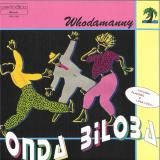
Raffaele Arcella, known under the moniker Whodamanny, is a hyper-prolific producer and remixer who has been active for many years within the independent underground electronic scene and beyond. Closely associated with the Neapolitan label Periodica Records, he has released and co-produced numerous projects, and since 2023 he has been curating his own imprint, Biloba, conceived as a platform to carry forward the legacy of the Latin Italo-Disco trend that marked many Italian productions from the late 1980s through the 1990s. Onda Biloba stands as a kind of album–compilation, bringing together the results of Arcella’s ongoing exploration in recent years — both in stylistic development and studio experimentation. The record offers a diverse and vibrant selection, shifting between potential “hit-not-hit” dancefloor bangers and more laid-back, downbeat digressions for blue-hour moments.
Kutiman joins Batov Records’ Middle Eastern Grooves Series with explosive double-sider
Batov Records is thrilled to announce the debut of pioneering producer, multi-instrumentalist, and multidisciplinary artist Kutiman on its highly collectable Middle Eastern Grooves 45s series. The release features two essential, souk-fuelled, psych-funk heaters: “Haraka” and “Khamsin”.
A prolific musical force, Kutiman delivers the goods on “Haraka” (“movement”), layering neck-snapping rock drums, irresistible psychedelic basslines, and haunting organ riffs, with microtonal-bending synths and tabla-inspired percussion.
On the B-side, “Khamsin” (“heatwave”) continues the trip with another heavy dose of Middle Eastern psych and funk, culminating in a blistering guitar solo in his signature Middle Eastern style by longtime collaborator Uri Brauner Kinrot (Ouzo Bazooka, Boom Pam), who also contributes beguilingly languid bass guitar riffs.
Both tracks showcase Kutiman’s distinctive ability to fuse regional traditions with modern grooves, marking a bold new addition to the label’s standout series.
Darren Nye and James Baker have both had prolific outputs on some of the most authentic, underground house & techno labels. Labels such as Exalt, Form@ Records, Neo Ouija, Revoke, Yore, Spacetime & We’re Going deep. This 12” sampler includes 4 tracks from their album on Fourier Transform which contains ReKaB and Darren’s trademark lush, deep, pad drenched melodies and is UK underground techno to make you move as well as sit and think.
The album they produced is the last James “ReKaB” Baker recorded before his passing in 2025, all proceeds of the album and the 12” sampler will be donated to a fund for his young son.
Recognized as one of the most prolific emerging producers of Latin American electronic music, Entrañas presents his second album Los Cueros Al Sol, a project that redefines his sound through a deeper connection with tradition, instrumentation, and his personal narrative. This album represents his most organic work to date, incorporating recorded instruments and showcasing Entrañas himself on guitar throughout several tracks, along with drums and guitars recorded by guest musicians.
The album offers an exploration of local rhythms, reimagined through his unique production style, characterized by carefully crafted sound design and rhythms full of distortion and energy that dissolve between textures and atmospheres. Alongside these traditions and sounds, aggressive and enveloping basses and synths emerge, accentuating the hybrid nature of his work.
True to its title, Los Cueros Al Sol, an expression that evokes the idea of laying bare the truth, of revealing oneself raw and without artifice, the project draws on everyday life in Quito, the hometown of Entrañas, with song titles reminiscent of traditional street foods. This intimate resource anchors the music in the land and memory, interweaving its local identity in every detail.
After a prolific run of off-centre house and acidic, proggy-techno on his new Globuli label, respected Germany based Brit Ed Davenport delivers the first instalment of GLOBULI LTD with 2 stand-out remixes.
Picking up heavy support from Massimiliano Pagliara, Ivan Smagghe, Call Super and the like, these two iconic remixes from the catalogue are now available on vinyl for the first time.
We The People were a vocal quarter who recorded a handful of singles between 1969 and 1976. Their most prolific release is this release from 1973 produced by Landy Mcneal. The music arranger was prolific Bert DeCoteaux Ace Spectrum (“Don’t Send Nobody Else”). Also Patti Austin, The Main Ingredient, Roy Ayers, Ramsey Lewis, Ben E.King, Sister Sledge, Lonnie Liston Smith and Marlena Shaw to name a few
Welcome to New Fair Tracks, a new and fair story in the New Fair Deal canon. Phase O'Matic, the young yet already prolific UK based artist, presents the first chapter with his potent style of new wave techno beat. With nods to EBM, acid and the early rave days, Phase O'Matic captures the raw and hypnotic sounds of the 80s and 90s with the precision and refinement required to carry forth through the 2020s and beyond. Four tracks for every phase of the night, the 'New Crusade' is geared to get floors moving in dark rooms around the globe. Will you heed the call?
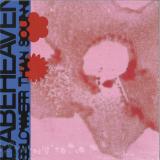
London duo Babeheaven — vocalist Nancy Andersen and producer/multi- instrumentalist Jamie Travis — return after four years with their highly anticipated 5-track EP ‘Slower Than Sound’, released via Scenic Route on October 24.
Following their singles ‘Beloved’ and the 6 Music-premiered track ‘Picture This’, ‘Slower Than Sound’ marks a deeply personal and intimate turn for Babeheaven. Written and recorded largely in Nancy’s home studio, the EP embraces minimal instrumentation, acoustic textures, and spacious arrangements, capturing the emotional vulnerability and euphoria the duo describe as “Post Rave” — the music you listen to on the ride home from a
party.
“It feels like a rebirth in a lot of ways,” says Nancy. “Writing at home gave me space to experiment, make mistakes, and rebuild confidence. Once I brought the songs to Jamie, we shaped them together into what you hear now.”
The EP explores love, reflection, and personal growth. Beloved conjures a comforting, almost mythic presence, while Lost For Words reflects the struggle to connect with the world and oneself. Picture This offers snapshots of a relationship, looking back while imagining its future. The cover Tiny Demons by Todd Rundgren blends seamlessly with the EP’s introspective mood, and Loud Thoughts, featuring Samba Jean-Baptiste, captures heartbreak, burnout, and creative pressure. “I hope people can find their own meaning in these songs,” Nancy says. “I’m writing for myself, but music is for each listener to interpret.”
Since debuting with Friday Sky in 2016, Babeheaven have steadily built a loyal following through their acclaimed albums Home For Now and Sink Into Me, amassing over 65 million Spotify streams and earning support from BBC Radio 1, 6 Music, and KCRW. Their live shows have sold out Village Underground,
Bush Hall, and Jazz Cafe, and they’ve shared stages with Cigarettes After Sex, Loyle Carner, and Nilüfer Yanya. Visually, Babeheaven’s world has been shaped alongside creatives including Margot Bowman, Frank Lebon, Tegen Williams, Sacha Beeley, and Joyce Ng, cementing their reputation as one of the UK’s most distinctive acts.
After facing cancelled tours, industry pressures, and a period of creative doubt, Slower Than Sound represents a return to the core of their artistry: intimate, honest, and self-produced. Jamie reflects: “Not putting out music for so long was hard, so we hope this is the start of a more prolific period for us, reconnecting with the London music community and beyond.”
A legend of the Chicago house scene, befriending Ron Hardy and Frankie Knuckles in his teens before forming influential house trio Risque III, and still prolific today via releases on Marcel Dettman’s ‘Bad Manners’ imprint, K'Alexi Shelby partners with Tony Loveless for their Planet E debut, ‘Ancestral Rhythm’.
Across a rolling nine-minute odyssey of old-school but future-facing jack, ‘Ancestral Rhythm’ finds the pair tapping into their most uncompromising rhythmic instincts, melding the tough machines of their studio with organic percussion and oscillating plunges into raw, escalating electronics.
In complimentary fashion, Carl Craig expands on the existing material for a subtle, tight C2 edit of the pair’s original material. Roadtested over the summer season in Ibiza and beyond, Craig masterfully sharpens the original’s frenetic edges, while adding another chorus of chants to Shelby and Loveless’s psychedelic soup.
- A1: Perot Ft. Seth Troxler & John Camp
- A2: World Keeps Changing
- A3: Midtown Mirage Ft. Taylor Bense & John Camp
- A4: Bond Ft. Taylor Bense, John Camp & Dillon Cooper
- A5: Nrg
- A6: Real Job Ft. Taylor Bense
- B1: Hat Down Ft. No Regular Play
- B2: $1000 Ft. Taylor Bense
- B3: Hold Dear
- B4: Carousel Ft. No Regular Play
- B5: Sometimes It's About Us Ft. John Camp & Michael Feinberg
A DJ, producer and prolific collaborator, Greg Paulus’s musical career has led to a truly enviable discography. Born in Minnesota and now an essential part of New York’s sprawling musical landscape, Paulus has taken the foundations of an organic childhood education by his father, the composer Stephen Paulus, and seen it blossom into an unpredictable musical journey encompassing house, soul, jazz and hip-hop.
While touring as a trumpet player with indie band Beirut, as well as in Matthew Dear’s live ensemble, back home he was helping to redefine New York’s underground dance scene as one half of No Regular Play. Alongside childhood friend Nick DeBruyn, the pair brought their deeply musical sound to no less than fifty countries across the world. A decade on, and Paulus arrives on Seth Troxler’s Slacker 85 imprint for his long-awaited debut solo LP, ‘Close To Home’, a deeply felt long-play celebration of his personal cornerstones; family, trust and hope.
From the opening, organic swell of ‘Perot’, arranged with Seth Troxler himself alongside John Camp, ‘Close To Home’ introduces itself as a focused, conscious trip, it’s languid trumpet spilling over into the reflective ‘World Keeps Changing’, which introduces Paulus’s philosophy of music as a constant. ‘Midtown Mirage’ meanwhile leans into the idea of the city itself as a collaborator, resisting pressure and finding its own restful groove. Back over the river, ‘Bond’ roots itself in Brooklyn with a contribution from resident Dillon Cooper, flipping rap standards amid psychedelic flourishes.
Paulus nods toward his dancefloor form on ‘NRG’, a slinky, lo-slung club groove that seamlessly evolves to meld the artist’s nocturnal and studio instincts. In contrast, ‘Real Job’ switches the tempo on Paulus’s MPC to embody an old-school, beatdown flavour, subtly teased out alongside composer and sound designer, Taylor Bense. Doubling down on this languorous groove, ‘Hat Down’ introduces a full-scale No Regular Play reunion, the first of two collaborative tracks that recall the duo’s imperial phase of confidently minimal productions, while evolving their craft.
Following a few missed calls made with love taken from Paulus’s answering machine on ‘$1000’ the minimal, reflective arrangement of ‘Hold Dear’ finds the artist stripping back his layered sound for a skittering, vulnerable exploration of intimacy and life’s devotions.
For a memorable finale, Paulus recruits jazz prodigy Michael Feinberg to deliver upright funk on the deliciously rich ‘Sometimes It’s About Us’. A purely celebratory collage of bopping rhythms and vocals, sharply plucked guitars and archive samples, ‘Close To Home’ concludes with Paulus leading his friends, ensemble and many influences in rare harmony.
R.F.I. is the first collaboration between London-based drummer Andy Baxter (Robohands) and LA-based multi-instrumentalist Jack Barone. The EP focuses on Middle Eastern scales and features 100% analog instrumentation, including guitar, bass, synth, and drums. It was recorded using fully analog gear to achieve a warm, saturated sound. Trumpeter Cesar Apolinar Hernandez and vocalist Alya Olcan appear on tracks A1 and A2. The record's title references Radio Frequency Interference, and the B-side includes an etching of radio towers as a visual nod to that concept. R.F.I. was designed with a clear structure across its tracks and highlights the artists' shared interest in analog production and global musical influences.
With over 81,000 Spotify followers and nearly 10,000 vinyl records sold worldwide, Robohands has earned widespread acclaim, including support from BBC Radio 2's Jamie Cullum (Best in Jazz), Huey Morgan (Album and Beat of the Week), KCRW's Morning Becomes Eclectic, Soho Radio, and Paste Magazine. His music—an evolving blend of jazz, krautrock, and ambient—has landed on top editorial playlists such as Jazz Vibes, State of Jazz, and Mellow Morning. A prolific artist, Robohands has released five albums since 2018, beginning with his debut LP Green on Village Live Records. He has performed at leading international festivals including London Jazz Festival, Montreal Jazz Fest, and Waking Life in Portugal. Robohands' latest project sees him collaborating with LA-based composer and producer Jack Barone, known for his film scores and commercial work.
Esteemed soul man of Panama Mr. Ralph Weeks has in recent years been enjoying a much overdue retrospective of his remarkable six decades-long musical journey with the help of Names You Can Trust. Now onto their fifth record release together since 2019, the label has covered both Weeks' original holy grail material as well as re-cuts and reimagining of some of his rarefied and unreleased songs.
One of Mr. Weeks' two iconic 45 releases on Panamanian label Sally Ruth was a funky soul side called "Let Me Do My Thing," originally recorded in 1971 as Weeks' answer to Charles Wright's big tune "Express Yourself," which had just hit the airwaves in 1970. Weeks' musical response would help define his legacy. He was gonna express himself, he was gonna Do His Thing. This golden age ultimatum recorded with the Dynamic Exciters of Panama as the backing band was a simple, straight ahead number with a defining message that would be carried on throughout Weeks' independent career. The funkified air and creative freedom of the original tune is a prime example of the crossover Combos Nationales sound that flourished in the prolific Panama recording industry of the era, and in the ensuing decades Weeks' tune would live on as a cherished rare groove for souleros, funk fans, and bootleggers alike.
Fast forward to 2023, when Ralph Weeks and Names You Can Trust prepared for a Bay Area appearance at the wonderful Latinos Con Soul weekender put on by San Francisco's Discodelic record shop, the groundwork was laid in the studio for a revival, a reawakening of Weeks' funky fan favorite. A spectacular ensemble of NYCT's All-Star artists and alumni was convened in the studio, including Caito Sánchez on drums, Victor Axelrod (Daptone Records) on clavinet and Sam Day Harmet (La Banda Chuska) on guitar. Anant Pradhan (The Skatalites), Eric Biondo (The Budos Band) and Alex Asher (Los Cumpleaños) occupied the brass section, and Ralph Weeks even lent his still formidable chops on electric bass and keyboards, a little OG flare to back up his silky voice with a deft musical touch. What came out of the sessions was a chance for NYCT to pay homage to Weeks' iconic original, without replacing it, and build a brand new version from the ground up with the maestro and composer himself!
- A1: Mountainous Regions
- A2: Catalogue Of Errors
- A3: Time Is Dissolving
- A4: Maybe I Should Try Acting Normal-Er
- A5: Nap Time (T-Mix)
- A6: Turn To
- B1: Clown College
- B2: All Will Settle
- B3: I Know Precisely What You Mean
- B4: Rain On A Humid Day
- B5: Journeys (Rest Easy)
- B6: A Story In 3 Parts
- B7: The Glow That Lights Your Face
- B8: Memory Bank
Verb T – Homer Loan 1 & 2 (Half 'N Half Splatter Vinyl Release)
UK hip-hop veteran Verb T returns with the long-awaited vinyl release of Homer Loan 1 & 2. A definitive collection capturing two distinct creative periods from one of the scene’s most respected voices.
Originally released digitally, the Homer Loan series has become a cult favourite among Verb T fans, offering an intimate glimpse into his trademark balance of sharp lyricism, dry humour, and unfiltered honesty. The vinyl release brings both volumes together for the first time, celebrating the evolution of a prolific artist still pushing his craft forward. Homer Loan 1 is entirely self-produced, showcasing Verb T’s production skills and ear for soulful textures and lo-fi warmth. Built around introspective rhymes and smooth, laid-back beats, it reflects the self-contained creative process that defined its making.
With Homer Loan 2, the palette expands — featuring production from Cuth, Farma G, and Forrest Moon, each contributing their distinctive sonic fingerprints while complementing Verb T’s unmistakable flow and storytelling. The result is a cohesive yet dynamic project that bridges the personal and the universal, the underground and the timeless. The Homer Loan 1 & 2 Yellow and Purple Half 'N Half Splatter vinyl release stands as both a collector’s piece and a testament to Verb T’s consistency and artistry within UK hip-hop’s ever-changing landscape.