Kapingbdi came together in Liberia, West Africa, during the late 1970’s and had their own unique style. This six to seven-piece band played original compositions in a vibrant mix of African Rhythms, Soul, Spiritual Jazz, Funk and Rock. Led by Kojo Samuels on sax, flute and vocals “Born in The Night” presents the essential tracks from their rare studio LPs produced between 1978-1981. The work has been carefully edited and remastered in 2019 for vinyl LP and a 6-Page Digipack CD, which includes two additional recordings. Kapingbdi toured through Europe and the U.S. and were the only Afro funk band to ever come out of Liberia.
Kapingbdi hail from Liberia, West Africa and have their own imitable style. They effortlessly combine traditional African music in a modern mix of Jazz, Funk, Soul and Rock. The band is a fusion of the old and the new.
The word "Kapingbdi" is taken from the Sierra Leone language Mende and means "born in the night". Kojo Samuels was given the name by his Latin teacher whilst attending high school in Freetown, They often meet and debate at night in the city and soon after Kojo is called Kapingbdi. The name serves as a description of his origin. Born In Lagos, Nigeria in 1943. The son of slave children. His mother from Nigeria and father from Sierra Leone who moved the family to Liberia, during the 1950’s.
Kojo has played music for as long as he can remember. He starts with the harmonica and later becomes a drummer and percussionist in his first band at school. During his art studies 1965-1972, he tours Germany and works as an art teacher in the USA. His band Kapingbdi is reorganized five times and consists of up to seven musicians. In a VW-Bulli he drives the group from concert to concert and if the drummer fails, he jumps in himself. Between 1978 and 1981 three Kapingbdi LPs are produced for the independent label Trikont, recorded in Hamburg and Munich. During this creative period, the band plays at festivals in Africa and Europe. In 1984, the band tours the United States and shortly after, they came to an end.
At their best, Kapingbdi would rouse the audience with original compositions like "Human Rights", justice for all, especially for South Africans, and "You Go Go You Go Come". The officials and employees in the government departments have no time for the common man, for any questions such as job search, scholarship or similar, he receives the answer "go, come back tomorrow" and the same thing the following day. Or "Now Is The Time For Cry For Love." Now it is time to scream for love and finally, time for humanity and justice. Despite immense difficulties, the musicians consciously live and work in Africa and are at home in Liberia.
On April 12, 1980, ordinary soldiers and non-commissioned officers organize a coup against the government. This is an attempt to put an end to a policy of exploitation of the Liberian people. Whilst efforts to eradicate poverty, lawlessness and illiteracy are obvious throughout the country, Liberia is still Americanized to a high degree. This is evident, as the radio programs of that time almost exclusively played American disco music. Under these conditions, the people seek a reconnection to their folk music, and Kapingbdi were aware of this. Kojo tried many times to come together with traditional Liberian musicians. This passion takes him north of the country. Meeting and playing with the old hornblowers and playing music on traditional instruments, such as the elephant tusk.
Kapingbdi make high quality tape copies of their own vinyl LPs and patiently try to displace all unauthorized tapes from the domestic "market". Nevertheless, it is hard to make a living through music in Liberia. Kapingbdi, is now celebrated. The radio plays are in abundance, but royalties are not forthcoming. Their musical link is the feeling of Afrobeat and Highlife, which is found in each of the many Kapingbdi pieces. They embody Jazz, which is understood to be the most refined example of black music outside of Africa. In Liberia, Jazz is virtually impossible to hear. Bright shining names such as John Coltrane, Charlie Parker or Miles Davis were widely unknown. Thus, the Black Jazz, including its Back-To-Africa movement of the 60’s and 70‘s, passes by without leaving a trace in Africa itself.
Kojo's claim at the time, was to make African music with the depth, sensitivity and the freedom of the technical level of Jazz. This makes Kapingbdi the torchbeares. The underpaid prophets in small Liberia. It is the passion with which the founder of the band continues to work on their music for years. Tirelessly, stimulating and encouraging his fellow musicians. This is ultimately responsible for the success of Kapingbdi in Liberia itself. The local audience seems to listen to the band in fascinated astonishment. One wonders about the ability to develop as demonstrated by Kapingbdi on the basis of their music. It is African and unusually jazzy, danceable and better than the American disco music heard on the radio.
Rather than chase the money and the job opportunities in Europe, Kapingbdi are firmly rooted in Africa. The musicians live in Monrovia, the capital of Liberia, at the Kabingbdi workshop, located in the Congotown area on the eastern edge of the sprawling city. Kojo works here as a sculptor, painter, batik artist and musician. The sales revenue that his activities generate, gives him the opportunity to support the development of African Jazz music. The highest percentage of funds are from Germany and Kojo’s work ethic is “to work on your own thing“. The stance taken aims to support the welfare of Liberians and Africans. The other musicians of the group live in a second house that is nearby.
For the sake of consistency, Kapingbdi is a full-time band. However, the revenue, from all of the sources, could not keep them afloat. Equally, as important to the group are Kojos's knowledge of traditional African music and his sculpting skills. His knowledge is shared with others at the afternoon workshops. It is here that they discuss new lyrics, engage in political debate and the self-imposed task of improving conditions in Africa. At times the debate became heated, especially during rehearsals. This was regarded as good and integrative, sowing the seeds of innitiative to keep the band together.
From 1980 to 1985 Kojo also opened and ran the club "Panjebota", located on the grounds of the U.S. Consulate in Monrovia. Almost every evening Kapingbdi perform the song "Wrong Curfew Walk", whose lyrics lament the killing of citizens during the curfew imposed by the Liberian government. When the head of state Samuel Doe hears the song, he behaves agressively and forces Kojo to close the "Panjebota". Kojo had already moved on. Soonafter he meets Fela Kuti at the Africa-Festival and plays concerts in Germany with Cecil Taylor's workshop band.
Kapingbdi is for thinking, dreaming, dancing. What they sing about is what they have experienced. Kojo Samuels is 76 years old today and still follows his vocation as a critical musician, artist and activist.
Ekkehart Fleischhammer / Sonorama 2019 (with the help of original press sheets and the memories of Kojo Samuels)
Поиск:prophets
Все
- A1: Audiobooks - Dance Your Life Away
- A2: Saint Etienne - Heart Failed (In The Back Of A Taxi) (In The Back Of A Taxi)
- B1: Doves - Compulsion
- B2: Toy - Dead & Gone
- C1: Confidence Man - Out The Window
- C2: Lcmdf - Gandhi (Andy Weatherall Remix Ii)
- D1: Espiritu - Bonita Manana (Sabres Of Paradise Remix)
- D2: Unloved - Devils Angels
Heavenly Recordings announce the release of ‘Heavenly remixes 3&4 - Andrew Weatherall volume 1&2’, a brace of compilation albums collecting together some of the finest remixes from the label’s long-time friend, collaborator and go-to remixer. These compilations follow ‘Heavenly remixes 1 & 2’, which showcases some of the label’s other great remixes.
By the time Heavenly was born in the spring of 1990, Andrew Weatherall was already an inspirational sounding board, as well as a fellow traveller on the bright new road that stretched out ahead, thanks to the massive cultural liberation of acid house. Back then every energised meeting could be turned into a fortuitous opportunity in this burgeoning new underground economy. Bored of your job? Start playing records out! Start a club night! Get in the studio!
Start a label! Just don’t stand still. Commandments Andrew would follow for the rest of his life.
At the start of things, Andrew was a regular visitor to Capersville - the pre-Heavenly press office run by label founder Jeff Barrett (soon to become Andrew’s manager). It was there that he famously picked up a copy of Primal Scream’s unloved second album and singled out a
track that would later become ‘Loaded’, after being given an instruction to “fucking destroy” it by the band’s Andrew Innes; it was there too that the idea to remix the first Heavenly release
came about.
Andrew’s mix of that first Heavenly record is very much a product of its time. ‘The World According To Sly and Lovechild’ is a swirling bass punch topped with a hypnotic marimba line and the kind of ecstatic diva vocal that you’d hear coming out of the speakers all night at postShoom clubs like Yellow Book.
His take on the label’s next release - Saint Etienne’s ‘Only Love Can Break Your Heart (A Mix of Two Halves’) - would set the template for his next three decades of audio exploration. A drawn-out imperial dub, the track builds and builds with a moody intensity (partly down to the
melodica played by Weather Prophets legend Pete Astor) that’s far more Kingston JA at dusk than Kingston-upon-Thames at kicking out time. It’s both a dancefloor record to get lost in and
headphone psychedelia of the highest order - a perfect example of what he did better than anyone else.
Between 1990 and his untimely death in 2020, Andrew fed more Heavenly bands through the mixing desk than those of any other label. Consistently, he returned visionary music to the
office, often in person for (at least) one ceremonial playback - a ritual that would involve the volume cranked up high and Andrew rocking back on his heels, eyes closed, lost in the alchemy of it all.
Each time, he would warp and twist originals into beautiful new shapes - elasticated club records that might evoke Detroit techno one second and Throbbing Gristle the next, before wheel-spinning into something akin to The Fall produced by King Tubby.
Andrew’s studio adventures would always be guided by that early advice to destroy the source material. It’s why he was the first name that came up when remixes were discussed; the first number on the speed dial. Listening back to these remixes now - to thirty years of glorious outsider sounds - it bangs home again just how fucking good Andrew was.
“The Death Of Meaning” is the translated rendering of the new Gnod album’s title, and this also reflects its creation. As Paddy Shine of Gnod notes: “I think the title sums it up well because this album was coming together at a time when confusion was king for us all - still is. I think we can all relate to that. This record is a really strange beast because of the big change that happened between mixing and recording. I think the title really does sum up the vibe of ‘What the Fuck’? Maybe we should have called it that! ”Wielding the taut, stripped-down and bludgeoning sound that had evolved on 2017’s ‘Just Say No The Psycho Right-Wing Capitalist Fascist Industrial Death Machine’ and 2018’s ‘Chapel Perilous’, Gnod initially recorded the tracks for ‘La Mort Du Sens’ around the Christmas period of 2019. Nonetheless, the arrival of the pandemic took the record on another course, adding to a turbulent and cathartic vitality that electrifies the likes of the caustic Melvins-in-hell assault of ‘Pink Champagne Blues’ and the post-punk angularity of ‘The Whip And The Tongue’ with a fearsome elemental charge Masters of an approach which manages to be both unmistakeable and unpredictable. Gnod are now well established as prophets of the dispossessed. ‘La Mort Du Sens’ is no less than another relentlessly invigorating stop off on their wild ride to who knows where. “Got No Obvious Destination, innit”
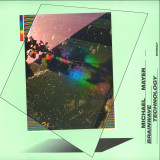
Michael Mayer’s latest EP, Brainwave Technology, comes at you purposeful, stealthy and sly. It’s a glorious left turn for the redoubtable producer, one that sees his typically lean and lithe productions buffed to a metallic, futurist sheen. There’s a gleam in the eyes of tracks like “Brainwave Technology” and “Alpha” that speaks of serious fun, of the intersection of the pleasure zone and the frontal lobe.
“Brainwave Technology” itself is informed by Mayer’s deep dive into the thorny terrain of artificial intelligence, transhumanism and posthumanism. Inspired by reading German philosopher Richard David Precht, Mayer found himself heading down the “proverbial rabbit hole,” as he describes it, “watching hours of YouTube material by self-proclaimed prophets of these ‘inevitable’ changes to come.” Never one to be taken in by the egotist’s dance, Mayer’s cynicism about the whole endeavour is tempered, a little, by the deeper questions that these figures gesture towards: “Is it really an evolutionary step that man and machine become one? Or is it rather a marketing plot by Silicon Valley billionaires?”
On “Brainwave Technology”, Mayer plays the charlatans at their own game, turning their logic against them by exposing the fruitiness of their ‘visions’. “I chose irony as my sword with which I chopped off some quotes from some of those batshit crazy prophets and self-promoters,” he explains of the drooling psychobabble he drops in the track’s lacuna. There’s a sense of humour here – how could you not laugh at these hungover egotists? – but there’s levity too, a sense that Mayer’s using sound to expose the contradictions and double-speak at the heart of these half-formed ideas. It’s a Burroughsian tactic, to slice into the heart of the voice to see what hidden truths surface.
It was Burroughs, too, who once said that “when you cut into the past, the future leaks out”; Brainwave Technology cuts into the logic of the futurologist to leak out the messiness of modern reality. On “Alpha” and “Gamma”, Mayer seems to conjure up the stark, ominous music that’d soundtrack a science fiction reinterpretation – or preinterpretation – of our modern malaise, all funereal wreaths of electronic noise and clatterboxing beats. As the EP resolves with “Device For The Young At Heart”, Mayer’s questions are piling up: “Do we want to become immortal and live on as a download? Do we really give up on Earth and put all our effort into colonising Mars?” There are no answers, of course, but plenty of imaginings-to-be. Brainwave Technology soundtracks both dystopian and utopian possibilities of what could come next.
Toxik is an American thrash metal band, formed in 1985 Peekskill, New York. They released two studio albums before breaking up in 1992, and reforming in 2013. Their first album, World Circus, was released in 1987 through Roadrunner Records. It was one of the first albums to introduce progressive thrash metal, and ended up on College Music Journal’s “Best New Metal Album of the Year” list.
The album, featuring the original tracklisting of the 1987 edition, is available as a limited edition of 1500 individually numbered copies on light green coloured vinyl, and contains an insert.
7TH May sees the release of London based trio Penya’s self-titled Sophomore LP, a wild and untamed album that reimagines the global music landscape
It’s an exciting return for the band who have been championed by the likes of Gilles Peterson and lit up festival and club stages in the UK and beyond. Penya look set to carry on the momentum with high profile support on BBC Radio 6 music and Worldwide FM to add to an influx of preorders from fans. Penya;s debut LP “Superliminal” was released via On the Corner Records in 2018. Gilles Peterson highlighted the band as “one to watch” and they enjoyed widespread support that included Tom Ravenscroft, Stuart Maconie, Jeremy Soul, Bonobo Worldwide FM, Boiler Room and The Vinyl Factory, not to mention a spin from Jordan Rakei while he was sitting in for Mary Anne Hobbs on BBC Radio 6 music,
Penya have made numerous live appearances, Worldwide Festival Leysin, We Out Here festival, Fusion Festival (Germany) and End of the Road festival (where they featured in a live broadcast on BBC Radio 3’s Late Junction to name a few, as well as supporting bands like Melt Yourself Down, and Sons of Kemet.
Studio work has expanded via collaborative releases with Dengue Dengue Dengue, Photay, Sarathy Korwar and the Tanzanian artist Msafiri Zawose
“Penya” will be released on 7th May 2021 via the band’s own label “Liminal Recordings” with support from PRS foundations Momentum fund
Thatmanmonkz returns after his critically acclaimed and just damn good 2nd LP 'Non Zero Sum Game' with a heavyweight remix package !!
Favourite LP cut 'Them Thangs' anchors the EP, with Detroit superhero Waajeed laying down a typically high class interpretation, trademark Dirt Tech vibes abound, with equal parts motor city machine soul and tough rhythms taking the original straight to the floor.
Talking of which, the OG Dubstramental concentrates the irresistible groove into an effortlessly fierce afro-centric House jam.
After the PPF crew submitted their tearaway rewire of one of the LP's tougher moments 'Freaks 'N Prophets' its place on this 12 was assured.
A Chicago style slammer that extends and leans into the powerhouse groove with a nod to the forefathers.
Finally, a previous digital release highlight (which got a lot of love) finishes off the EP, a flute-laden romp for dancin' close.
It's a strange new post-everything musical landscape we occupy.
The machines - you could argue - have been playing the humans for some time, and the conversation became pretty one-sided.
But you know, not everyone is singing from that hymn sheet. That Man Monkz enjoyed the apprenticeship at House PLC more than the opportunity to progress to middle management. Itchy musical feet meant extended exploration of fertile avenues of interest like the Madison Washington & Pan Amsterdam Hip Hop projects, meanwhile the pull of the 4/4 was never far from the studio door, and all accomplished with an assured versatility that shines.
Musical alliances formed in the disparate but related playgrounds of Detroit, Sheffield, Berkeley and Atlanta, all underpinned by an emphasis on seeking out collaborations and gigs, which represented a real exchange of energies, rather than a bank raid.
Letting things percolate in this more measured way means we've arrived here, a follow up of sorts to 2016's 'Columbusing'
This is Monkz allowing the ear ringing of gigs to feedback organically into bright dance floor flashes, which by virtue of their careful crafting are destined to last much longer.
On Zero Sum, we get a much greater economy of elements on the pared down dance floor ammo like 'Freaks N Prophets' & 'Chai Tea', a perfect counterpoint to beautifully realised pieces like 'Them Thangs feat Ms Fae' & 'After Dark with Nikki O' interspersed with funk-heavy workouts and sample jams like 'Easy Still', 'LvnLmtd' & the unashamedly KDJ influenced shamanism of 'WhatUthinkIDo'
It's a pick 'em and stick 'em ride of individual gems and a cohesive whole too. The opposite of thrown together, this has been worked and weathered, naturally. The House always wins, but sometimes...just sometimes.
2019 marks the 20th anniversary of ‘Low Birth Weight,’ the second album by Piano Magic, then a loose collective of musicians centred around founder songwriter, Glen Johnson. Though a year later, the collective would take shape as a bona fide internationally touring group, in 1999, Johnson had one foot in his native Nottingham and the other in his new home of London where, finding himself label manager at Rough Trade Records, also became highly prolific, releasing his own records across a myriad of micro-labels (Che, Wurtlitzer Jukebox, Darla, Rocket Girl, etc).
By his own admission, ‘Low Birth Weight,’ owes much to the East London experimental group, Disco Inferno who, embracing sampling technology, attempted to turn pop music inside out. By 1995, the Inferno had burnt out but Johnson remained inspired by their playful, subversive manifesto and thus, the album here, partly produced by “Nottingham’s own Martin Hannett,” Martin Cooper, is difficult to pigeonhole either at the end of the millennium or even now. Drum kit signals are fed through a tiny amp literally inside a cardboard box; breathing is employed for rhythms; kick drums are replaced with broken glass; there’s a ragbag of tablas, huge slap back delay and phase, theremin, shortwave radio, and more.
Aside from the DI benchmarks, ‘Low Birth Weight’ bears the marks of an infatuation with the dreampop of the time – the guitar saturated in delay and overdrive – inspired by the likes of AR Kane and Kitchens Of Distinction and not the more languid “shoegaze,” which has oft been levelled at LBW.
There’s a revolving door of guests on the album, including Pete Astor (The Loft/The Weather Prophets) on a cover of Disco Inferno’s ‘Waking Up’; Simon Rivers of The Bitter Springs supplies lyrics and voice to ‘Crown Estate’ and ‘Dark Secrets Look For Light’; Jen Adam, then an American art student on a year’s placement in London, writes and sings ‘The Fun Of The Century,’ a personal account of being pushed off a roof at a party by someone she thought a close friend.
‘Low Birth Weight’ is undoubtedly of its time, though undoubtedly more playful and literary than much of the music made during the late 90’s and a fascinating bridge between dream pop and experimental electronic music.
The Aroma are a production unit from Bristol UK who supply a bedrock of masterfully crafted soundscapes for a very carefully selected set of guest MCs. The beats are created by DJ Rumage and engineered and produced by Rola (both from the mighty Bristol Hip Hop crew The Numskullz) with scratch wizard Sir Beans OBE on turntable duty.
Volume 1 has vocals supplied by Junior Disprol, Upfront MC (of Split Prophets), NK (p/k/a Blaktrix), NiLLa, Retna, MCM (of Caveman), Stepasaur (a/k/a Stepchild), Kelz (of 3PM) and last but not least additional vocals by Lizz.E (of the legendary Fresh 4).
At 8 tracks deep this album is short by modern standards but takes you back to a time when albums were 7 or 8 tracks long but overall were a higher standard. Too often now albums have 20 plus tracks with 10 or more fillers and quiet vinyl pressings.
Here you have 8 killers no fillers cut nice and loud and so gives a better sounding product which is something very important to Ruztik Records and AE Productions who have joined forces for this release.