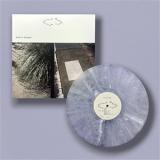
Im Sommer 1968 traf sich der 18-jährige Genesis P-Orridge (damals Neil Andrew Megson) mit Freunden in einem bescheidenen Dachgeschoss, um mit Klängen zu experimentieren. Das Ergebnis war "Early Worm", eine Sammlung von Aufnahmen, die die aufkeimende Kreativität eines Künstlers einfing, der später eine Schlüsselfigur der Avantgarde-Musik werden sollte. Diese Sessions, die 1969 auf ein einziges Acetat gepresst wurden, zeigen eine furchtlose Erforschung von Geräuschen, Improvisationen und Tonbandexperimenten, die Einflüsse von Psychedelia, Fluxus, John Cage und Beatnik Bohemia widerspiegeln. "Early Worm" ist ein Zeugnis für P-Orridges frühes Engagement, musikalische Grenzen zu überschreiten. Die rohen und ungefilterten Klanglandschaften des Albums bieten dem Hörer einen seltenen Einblick in die Gründungsmomente, die schließlich zur Gründung von COUM Transmissions, Throbbing Gristle und Psychic TV führen sollten. Remastered und in einer limitierten Vinyl-Pressung, mit Linernotes geschrieben von Genesis Breyer P-Orridge, die den Zeitgeist des UK Undergrounds der späten 60er Jahre in Erinnerung rufen. "If nothing else, (Early Worm) revealed that P-Orridge's approach to music was defiantly left-field from the start: noise, improvisations and tape experiments that sounded a little like a more chaotic version psychedelic folkies the Incredible String Band." . The Guardian
Buscar:psy
- Voodoo Experience
- Fractal Haze
- The Death Of The Crows
- 1976:
- Vers Les Terres-Rouges (La Mort De La Terre)
- Les Ferromagnétaux (La Mort De La Terre)
- L'eau Fugitive (La Mort De La Terre)
- Dans La Nuit Éternelle (La Mort De La Terre)
Aque Blue vinyl[24,58 €]
Red Blue Splatter Vinyl[32,98 €]
Orange / Red Vinyl[32,98 €]
With X-ÆON, Giöbia push their signature blend of mesmerizing neo-psychedelia and space rock into uncharted territory. Echoes of the '70s meet a bold, forward-looking vision, shaping an album that feels timeless. Each track offers a glimpse into a parallel reality, a plunge into a new era brimming with tension and mystery. As the band puts it: "This album is everything we've lived and learned, captured in the moment we're in now."
Aque Blue vinyl, limited to 350 copies. With X-ÆON, Giöbia push their signature blend of mesmerizing neo-psychedelia and space rock into uncharted territory. Echoes of the '70s meet a bold, forward-looking vision, shaping an album that feels timeless. Each track offers a glimpse into a parallel reality, a plunge into a new era brimming with tension and mystery. As the band puts it: "This album is everything we've lived and learned, captured in the moment we're in now."
Tame Impala’s fifth full-length album ‘Deadbeat’. On it, Parker sculpts a collection of wickedly potent club-psych explorations as a vehicle for some of his most direct, brain-wormy songwriting to date, recasting Tame Impala as a kind of future primitive rave act in the process.
Deadbeat sounds like the work of an artist with a levelled-up mastery and bristles with a revitalized energy for experimentation. 12 songs crafted with a newfound embrace of spontaneity for the renowned perfectionist. How that manifests is a distinct minimalism and crunch to many of the tracks, with a clutch of crucial details, timbres and textures that add an ineffably new dimension to the sound, as well as a richer, more playful vocal range than ever.
Chicago-based indie punks Sincere Engineer started as a solo acoustic punk act playing dive bars and open mics. Singer/guitarist/songwriter, Deanna Belos, decided to forego dental school for punk music, trading in teeth for corn dogs (as referenced in her fan favorite song "Corn Dog Sonnet No. 7"), and touring the world with bands like Hot Mulligan, Alkaline Trio, The Menzingers, and Joyce Manor. In 2020, she released Bless My Psyche, her first sophomore album on independent powerhouse Hopeless Records. Featuring the Sirius XM Faction hit "Trust Me," the album explored themes of insecurity, failure, and coming of age and was built for gut wrenching sing-a-longs. With the upcoming Cheap Grills, Sincere Engineer now takes a massive leap forward with catchy melodies, witty and sharp lyrics, and the sincerity of a person that wants to do the right thing in a world that doesn't always reward that. Working with producer Mike Sapone (Taking Back Sunday, Brand New), Sincere Engineer/Deanna Belos has crafted an album that sees her emerge as a face of the new generation of melodic punk. For Fans Of: The Menzingers, Alkaline Trio, Hot Mulligan, Jeff Rosenstock
Perc returns to Perc Trax for his first full EP since the release of his Resident Advisor recommended album 'The Cut Off' in March 2024. Across the three tracks of 'Soft Launch' Perc sets out his current sound, a groove led take on classic techno with the depth of production and unexpected twists that Perc's tracks are famous for.
Title track 'Soft Launch' is based around the interplay between the three main elements of the track, the driving kick & bass, cut up percussion loops and the ever building string chords, creating something unique that has been a key track in Perc's sets since it was completed.
'Tonight' sits somewhere between pulsing electro and gritty lo-fi techno, constantly pushing forward as a female vocal breaks through the wall of percussion demanding to hear something fresh.
Finally 'Gravity Drop' pushes the sound design further, mixing a crisp industrial kick drum groove with cut up atmospheric melodic and vocal elements creating a psychedelic dreamlike atmosphere to close the EP. Packaged in a full colour sleeve designed by Perc Trax design god Jonny Costello, Perc's Soft Launch is a statement of Perc Trax's future both sonically and visually.
- Tokyo 1
- Osaka
- Nagoya
- Matsumoto (Beginning)
- Matsumoto (Ending)
- Hokkaido
- Tokyo 2
- Each Story
Black Vinyl[22,27 €]
Emily A. Sprague's Cloud Time traces an audio-spiritual journey through time and place, recorded across a long-awaited debut tour of Japan in the fall of 2024. Compiled from environmental improvisations captured in and for the moment, material at once welcoming, responsive, and inimitable, the album distills a voyage guided by psychic wayfaring, unbound presence, and activating performance for a reciprocal exchange with space, listener, and each fully engaged instant. The Japanese tour documented on Cloud Time held an almost mythic significance for Sprague, taking on properties of her own sonic white whale. After many near-departures and dropped plans to play in the country, "the empty spaces of cancelled trips and forgotten music turned into strange little misty spirits that I felt followed by," she says. "When I began preparing for the tour, I couldn't shake a sense that the invitation to Japan was more about opening myself up to this new place instead of bringing something into it tightly under my control. Improvisation has always been such a pillar in my music practice, and I really wanted to meet the country, spaces and people through that process." To amplify these intuitive whispers on-stage, Sprague reimagined her time-tested live rig, designed to be as free from error as possible, as a looser, more flexible set up that would allow her to interface with what was essentially a blank sonic canvas every night. Each performance became a collaboration between environment and instinct, Sprague processing the events, energies, and emotions informing the evening through her new sound ecosystem, and projecting an entirely present and unique version of herself to each open-eared and hearted crowd. "It was very much more than just an act of playing for me, but a total experience of time and place," she says. The seven long-form pieces that plot the course of Cloud Time, excerpted from over eight hours of recordings archived on the artist's on-stage recorder and generously shared on the album with no additional mixing and only minimal editing, invite listeners to become still in these deep-rooted moments of presence as the album moves from city to city, venue to venue. Cloud Time chronicles material recorded at each tour stop, Sprague selecting and sequencing the album around mood-based storytelling more so than linear chronology. "I tried to make the whole album flow in the way that any one of the complete live performances did," she explains, "while also keeping the spirit of the whole thing as a journey." The result is equal parts travelog, love letter, and impressionistic collage channeled from the potent ferment of a now encased in the glowing amber of memory. Intrinsically inspired by kankyo ongaku, an environmental music philosophy, known both in and widely outside of Japan that tunes into the similarly expansive ethos as Pauline Oliveros' deep listening practice and posits the listener as composer, Cloud Time is ambient music that seems to be listening right back, grounded in heartfelt synthesized frequencies that abundantly hold and heal. Pieces like "Nagoya," "Tokyo 1," and the ten minute "Matsumoto" in particular hum with the atomic resonance of gently tended landscapes, offering space for tuning way in and dropping far out from perspectives that stifle and bind. Cloud Time is an invitation to embrace each moment as both fleeting and eternal, floating by with nothing to grasp onto and absolutely everything to gain. The exercise in acceptance and letting go that Sprague practiced throughout the tour deeply impacted her understanding of self as both a guest and venerable performer. "The process of loving wherever I am, being present and focusing on a clear channel of communication for mind and emotion, rooted so deeply in respect for the space, those within it, and myself, ended up being profoundly healing," she says. "My vision and hope is that this album can be released as a gift back to anyone who either was or wasn't there. A cloud time of life passing by."
Following their eponymous debut album and the vertiginous Everest, Rue des Garderies continue their semi-narcotic explorations with Jiddu.
Around a stretched, distorted sample, a 16-minute improvisation recorded on a summer's night, interacting with their immediate environment: truncated discussions, laughter, noises of joy, silences, love...
The whole piece seems to exist in an unknown zone of our psyche - unknown until then, but which was obvious at the time: an automatic writing done in total freedom, reminiscent of trip-hop and abstract electronic from the 90s.
Was it a dream?
On the b-side; a drawing by French artist Rebecca Bournigault is etched.
- A1: Nook & Cranny
- A2: Le Grand Dôme
- A3: Grandiflora
- A4: Black Lamb & Grey Falcon
- B1: Miniature Rock Dwellers
- B2: When I Leave
- B3: Iberia Eterea
- B4: Moistened & Dried
- C1: Algae & Fungi (Part 1)
- C2: Algae & Fungi (Part 2)
- C3: Too Fragile To Walk On
- D1: When I Leave (Finely Tuned Version)
- D2: Algae & Fungi (Candelaria Version)
- E1: Minuarta
- E2: Hoodoo
- F1: Slowly Etching
- F2: B9
Repress!
Biosphere is the main recording name of Geir Jenssen (born 30 May 1962), a Norwegian musician who has released a notable catalogue of ambient electronic music. He is well known for his works on ambient techno and arctic themed pieces, his use of music loops, and peculiar samples from sci-fi sources. His 1997 album Substrata was voted by the users of the Hyperreal website in 2001 as the best all-time classic ambient album.
Cirque - originally released in 2000 - was Biosphere's first album for the UK label Touch. This new re-issue comes with a 6-track bonus album and new artwork.
Mojo (UK): Fourth full album from ambient pioneer. Coming to prominence with 1992's Microgravity - which along with the first couple of Aphex/Polygon Window CDs, defined the genre ambient - Geir Jenssen as Biosphere has made three of the '90s' best albums, culminating with last year's near beatless Substrata. The idea - as it always was thanks to Eno's On Land - is music as environment (reflecting, creating): working from his base in Tromso, Arctic Norway, Jenssen offers a polar, Apollonian exploration of the human psyche. Cirque is a perfectly constructed 47-minute sequence: cold clarity up against real depth of field, synth cycles dissolving into sudden moments of sonic revelation that sound like a waking dream - try the first 20 seconds of Black Lamb and Grey Falcon. (And if you think that's pretentious - your loss). Inspired by the story of a young American, Chris McCandless, who walked alone into the Alaskan wilderness and perished, Cirque balances the tightrope between warmth and unease, resolving into a moon melody that leaves you a peace. What a good record! Jon Savage.
Having worked together on his 2024 album Colours & Light, Project Gemini aka Paul Osborne joins forces once again with Wendy Martinez, French singer and composer, and also part of renowned psych-girl group Gloria on a new collaborative EP. Landing on Mr Bongo, ‘Time Stands Still / Le temps s'arrête’ is a sonic exploration that shows a shared love of the progressive music emanating out of France in the ‘60s and ‘70s and the celebrated film soundtrack composers of the time. A more melodic and romantic excursion than Paul’s previous recordings, this EP marries his richly textured, cinematic psych rock with Martinez’s captivating vocal presence.
A body of work born during the period Paul was finishing up his last LP Colours & Light, he penned an album’s worth of instrumental library-style music and had the idea of having Wendy add vocals and lyrics to a selection of them. The instrumental record got scrapped, but thankfully ‘Time Stands Still’ grew out of it.
Paul was a fan of Wendy’s work as both a solo artist and in the band Gloria, and her inclusion on the Project Gemini tracks ‘Entre chien et loup’ & ‘Extra Nuit’ showed a clear synergy to their musical approaches and sounds. For ‘Time Stands Still’ he sent over instrumental tracks one by one, with Wendy taking time to find melodies and French poetry she was happy with and returning her ideas from her home just outside of Lyon.
Drawing inspiration from French soundtrack composers such as François de Roubaix, Frances Lai and Michel Colombier, as well as French female artists including Léonie and Laurence Vanay, these productions are a contemporary love letter to this sound, not a homage. Mixing psych, folk, chanson, and French new wave, it’s music that pulls you in deeper, with groove, grit and passion at its core.
'Je n'ai plus peur' kicks things off with a sultry energy. It’s a psych-funk production drenched in attitude, swagger, and edge, which nods to the left-field side of Serge Gainsbourg’s music. Elsewhere, 'Âme contre âme' feels like the opener from a forgotten new-wave film, managing to be at both beautiful yet sinister and longing. 'The Crawler' could be incidental music from the same film, with Wendy using her voice as an instrument layering the backing track as Paul's bass takes centre stage. The ghostly spoken word of 'Ce qui est intact' echoes a funky version of what the Théâtre du Chêne Noir d'Avignon may have recorded.
A transportive journey ‘Time Stands Still’ is nostalgic yet new in the same smoke-filled breath. Fuzzed-up guitars and driving basslines meld with folk-leaning organs and mellotron vibrations to give that eerie, otherworldly edge. All of which are seasoned by the sensuous, layered vocal tones of Wendy Martinez, alongside crisp drums from Tony Coote and considered percussive touches by Paul Elliot.
- A1: My Secret Reason
- A2: Trouble
- A3: Geek The Girl; Drums – Kenny Aronoff
- A4: Just Geek; Drums – Malcolm Burn; Written-By – Malcolm Burn
- A5: Cry Wolf; Written-By – Jay Joyce, Malcolm Burn
- A6: A Psychopath
- B1: Sexy Little Girl Princess; Drums, Dulcimer, Piano – Malcolm Burn; Written-By – Malcolm Burn
- B2: Phantom Love
- B3: Cancer Of Everything; Drums – Kenny Aronoff; Guitar – Malcolm Burn
- B4: A Guy Like You
- B5: Of Love And Colors
- B6: Stars; Drums – Kenny Aronoff
- B7: The Mirror Is Gone
- C1: Happiness
- C2: Energy
- C3: Puppet
- D1: Sycophant; Written-By – Jaye Joyce, Lisa Germano
- D2: (Late Night) Dresse
- Manasi Devi
- Ghunghru
- Veil Of Illusion
- Vighnaharta
- Jamuniya
- Bound
- Shankara
- Fading Light
RED VINYL[23,11 €]
Litania is a doom/hindustan psych band from Italy and Serbia. The sound is based on drones, heavy riffing and inspired by ancient hindustan singing and playing (with instruments such as Sitar, Dilruba and Harmonium). Litania is also the title of our first album, eight tracks of evocative, hypnotic doom, where the raw power of guitars merges with the spiritual depth of Indian classical music. The songs, intense and dark, are interspersed with instrumental passages featuring sitar, dilruba, harmonium, and tanpura. The vocals, deep and ritualistic, draw inspiration from ancient Indian Ragas, evoking a sonic journey suspended between abyss and transcendence.
Black Vinyl[21,81 €]
Red vinyl. Litania is a doom/hindustan psych band from Italy and Serbia. The sound is based on drones, heavy riffing and inspired by ancient hindustan singing and playing (with instruments such as Sitar, Dilruba and Harmonium). Litania is also the title of our first album, eight tracks of evocative, hypnotic doom, where the raw power of guitars merges with the spiritual depth of Indian classical music. The songs, intense and dark, are interspersed with instrumental passages featuring sitar, dilruba, harmonium, and tanpura. The vocals, deep and ritualistic, draw inspiration from ancient Indian Ragas, evoking a sonic journey suspended between abyss and transcendence.
Returning with its final instalments, Die Schachtel's Decay Music series extends its explorations of inspired contemporary experimental efforts of the ambient, ethereal, and emotively abstract with Luigi Turra and Elio Martusciello’s “Liminale” and Sergio Armaroli and David Toop’s “And I Entered Into Sleep”, two astounding electroacoustic gestures of blurred space and time, plumbing complexity of meaning bound to sonority. Creatively groundbreaking and inspired, radically rethinking the terms of what ambient music can be perceived to be, they stand among the most striking efforts to appear within the series to date.
Reconfiguring the notion of bridge building on a multitude of terms, it feels fitting that the tenth and final installment of Die Schachtel’s Decay Music series, Sergio Armaroli and David Toop’s “And I Entered Into Sleep”, was co-created by an artist whose work featured in the first suite of LPs issued by Brian Eno’s Obscure Records in 1975, the groundwork toward which Decay Music’s own efforts nod. Since that auspicious debut, “New and Rediscovered Musical Instruments” — his split with Max Eastley — David Toop has been regarded as a pioneer in British experimental and improvised music: a sonic voyager who has continuously challenged the sources and materiality of sound through rigorously thoughtful performances, a vast catalog of recordings, and a steady flow of highly influential texts. Be it as a member of Alterations, his group breaking group with Peter Cusack, Terry Day, and Steve Beresford that ran between 1977 to 1986, or through is noteworthy work with artists like Rie Nakajima, Thurston Moore, Paul Burwell, Rhodri Davies, Lee Patterson, Ryuichi Sakamoto, Akio Suzuki, Elaine Mitchener, and numerous others, collaboration has always played a central role within Toop’s singular practice, but few can claim the sprawling sense of beauty and intimacy that’s achieved by “And I Entered Into Sleep”, his first recorded outing with Sergio Armaroli.
A composer, percussionist, vibraphonist, and multidisciplinary artist, Armaroli has been issuing radical and forward-thinking musical gestures for decades, working as one of Italy’s most noteworthy interpreters of composer’s like Giacinto Scelsi, John Cage, Franco Evangelisti, Giancarlo Schiaffini, and Walter Branchi, as both a solo performer and member of the highly regarded Rib Trio, as well as forging a singular practice as a composer, intertwining his efforts as a painter, concrete percussionist, fragmentary poet and sound artist, within a total art, rooted “within the language of jazz and improvisation” as an “extension of the concept of art”. Like Toop, Armaroli’s career has been populated by many collaborators, notably with Riccardo Sinigaglia, Alvin Curran, and Walter Prati, among others, setting the stage for a remarkable meeting between the pair.
Featuring Armaroli on vibraphone and prepared vibraphone and Toop on electronics, “And I Entered Into Sleep” is “a sonic journey, a Proustian suggestion à la Recherche, into the unconscious between electronic and acoustic sounds”. Using a bell that sounds at the beginning of Proust’s “À la Recherché du Temps Perdu”, which reappears more than 3,000 pages later — signaling a transition of phases, as well an auditory trigger of memory — as a departure point, as an association to the percussive vibraphone pulses that thread the album’s two sides, the pair weave a striking interior world of immersive psychological depth. Feeling almost subaquatic at times, like captured glimpses of rumbling, shadowy ecosystems lost within murky ambiences, before washing ashore in a series of pointillistic, highly detailed alien landscapes of the mind, each artist’s markedly different sound-sources, and treatment of the subsequent material elements, dance in abstract grace, incorporating subtle nods to minimalism, free jazz, and musique concrète within its seamless total form of sparse texture and tone.
Easily one of the most striking and memorable releases by either artist to appear in recent years, Sergio Armaroli and David Toop’s “And I Entered Into Sleep” traverses uncharted realms at the borders of literary reference, sound art, ambience and abstraction through delicately musical sounds, revealing new depths at every turn. Issued as the tenth and final album in Die Schachtel’s Decay Music series, highlighting inspired contemporary experimental efforts of the ambient, ethereal, and emotively abstract.
- 1: Calling Ghostly Nations
- 2: Chemin De La Baie
- 3: Carried It All Around
- 4: In Hollywood
- 5: Pontiac Spirits
- 6: Battle Lines
- 7: The Clouds Are Casting Shadows From The Sunlight
- 8: Give Us Our Dominion
Metallic Gold Transparent Vinyl[26,01 €]
On their new album The Besnard Lakes are the Ghost Nation, Montreal’s The Besnard Lakes return with their post-rock psych; but this time around, with a lightness and optimism at play.
Unique among their furrowed brow peers, The Besnard Lakes are unafraid to marry textured, questing headphone sonics to the honeyed pleasure of radio hits past: the rapture of My Bloody Valentine entwined with the romance of Fleetwood Mac. Imagine dreamy Beach House riding Led Zeppelin dynamics, with unabashedly androgynous vocal harmonies; a melodic yet mountainous sound world.
In a crowded leaderboard of their own making, The Besnard Lakes are the Ghost Nation might just be their best album yet; a strive for hope when it is needed most.
After bending boundaries on the acclaimed labels Optimo Music and Höga Nord, Rudolf Abramov resurfaces with a fierce new statement – inaugurating Aquasonic Records, the freshly minted label founded by one half of the duo.
They unveil a sweeping collection of rare recordings, drawn from the shadows of their enigmatic Berlin studio.
This debut full-length album unfolds like a sonic tapestry, threading krautrock, new wave, dub, psychedelia, experimental electronics, ambient, and jazz into a singular, genre-bending experience.
True to form, the duo assembles a diverse ensemble of guest collaborators, fusing layered musical worlds into a cohesive, concept-driven whole.
At its core, the album captures a dynamic interplay: acoustic instruments recorded with raw intimacy and spatial breath meet the hypnotic churn of modular synths, samplers, and analog machines. A vivid document of process, presence, and unfiltered sound, resisting definition, yet wholly their own.
- Prudência
- Praga
"Prudência / Praga", or "Prudence / Plague", is a double single with these two songs that I composed and which were originally recorded by two of my heroes: Maria Bethânia and Alaíde Costa. Curiously, they are two sambas: although I come from the rock and roll scene in Sao Paulo, I wound up writing a samba as if it were the 50s. At the time of my first heartbreak, at the age of 17, I had the record Jamelao canta Lupicínio with the Orquestra Tabajara on my iPod, and I identified with those dramatic sorrows, almost a hundred years old. In a way, I felt that Lupicínio Rodrigues was bloody and direct, like Tarantino, and Nelson Cavaquinho, heavy metal like Black Sabbath. So, I feel it's a compact 45 of sambas but it's also very Rock n Roll to me. Raw and coming from hell. "Prudência" is that internal battle between the passionate side and the controlling side in the head of the former romantic bohemian. I wrote it for Bethânia to record on her album Noturno. Her version turned into a moving bolero. When I saw her singing it live and the audience singing along with her, I couldn't believe it. I cried, hidden in the audience. She said that when she showed the record to her brother, Caetano Veloso, he thought that "Prudência" was some old classic that she had dug up to bring back to light. Nothing could be a greater compliment than this mistake on Caetano's part. "Praga" also has to do with MPB heroes of mine that I never imagined I'd see up close or have any relationship with or any connection with. I was asked to write these lyrics in partnership with the main man Erasmo Carlos for Alaíde Costa's album! Surreal. Like many people, I got acquainted with Alaíde listening to "Clube da Esquina," her singing with Milton Nascimento. And the idea was to do a poisonous cabaret song samba. The curse of a woman who has dumped a drunk. I love it when Alaíde sings "BIBIDA" in her recording of the song_a total legend. I wanted to produce a kind of horror samba recording, because if it wasn't rock and roll, it wouldn't be much fun for me. I went over to Bielzinho's, and we recorded this chorus that explodes with the percussion and the choir of my friends Tulipa, Maria Beraldo, and Luiza Lian. This take of "Prudência" came from the unpretentiousness of recording two live sessions of the song with Fred Joseph with the cameras of the 70s' program "Ensaio" (MPB Especial) by the great Fernando Faro. The video take ended up being so unexpected and raw that it unseated the studio version, and that's what you hear on the single. The idea behind the video is a sort of this temporal mindfuck; like found lost tapes of the MPB Especial from the early the 70s. Same microphones, same cameras, that zoom_time travel. Between Mil Coisas Invisíveis, the end of the cycle with O Terno, and starting the new album process, I decided to take advantage of the respite to release this rock and roll 45 of sambas, without thinking too much or over-producing the thing. "Prudence? Don't talk to me about prudence!" ;) Tim Bernardes, 2025