"""Sam Salmon & the Grand Manan Bandits is a bare-bones country band made up of beloved Canadian alt-rock band Motherhood and “delta doom” guitarist Keith Hallett (Echodelick Records)
DOWN FOR LIFE features foot-stompin’ tracks like “No One Likes Losing,"""""""" a self-deprecating look at being competitive yet never managing to get ahead, “Waste Your Time,” about the confusion of suddenly losing someone you love, as well as a reflection on familial personality traits, and “If I Needed You Now,” showcasing country music at its finest - three chords and the truth. Or, in this case, two chords.
Sam Salmon & the Grand Manan Bandits features Penelope Stevens (bass/vocals), Brydon Crain (vocals/guitar), Keith Hallet (lead guitar, console steel), and Adam Sipkema (drums).
DOWN FOR LIFE also marks a trifecta of releases this year from Motherhood Music Inc., following the band’s “wildly entertaining!” (Bandcamp) fifth album Thunder Perfect Mind and side-project Penny & the Pits’ “delicate and
demanding” (LOUD Women) debut Liquid Compactor."""
Search:q bass
- 1: Throw It Out
- 2: Cockroaches
- 3Rabbit
- 4: She Used To Love Me
- 5: Killing Me
- 6: Two Horse Force
- 7: Show Me
- 8: Till 3
- 9: Lame
- 10: Head Up
- 11: No Struggle
Lange bevor er jemals ein Studio von innen sah, war Sam Snitchy auf der Straße unterwegs und schrie unter dem Namen Maniporno Gedichte - roh, furchtlos und im Einklang mit dem Chaos um ihn herum. Dann begann er, diesen Lärm in Platten zu verwandeln - zuerst als Melker, später als Sam Snitchy. Im April 2026 erscheint nun das dritte Snitchy-Album bei Voodoo Rhythm Records - ein weiterer Schritt auf diesem Weg, tiefer hinein in den Lärm, den Puls, die Verwirrung, mit der alles begann. Das neue Album ist ein klanglicher Exorzismus, aufgenommen mit Marco Fuorigioco, der Bass, Synthesizer und Gitarren verzerrt und das Tonband zerreißt, Philipp Schlotter (Me&Mobi, Music Against Airports) der den Raum mit geisterhaften Synthesizer- Halluzinationen erfüllt, und Domi Chansorn (Sophie Hunger, Knackeboul, Fai Baba, Bonaparte, Marie Krüttli, Béatrice Graf) der die Drums wie einstürzende Türme hämmert. Gemeinsam zerren sie dich durch psychedelische Punkwut, verschmelzen mit den Schatten dunkler Waves, mutieren zu Industrial Noise und Dub-Nebel, verwandeln sich in einen verzerrten Techno-Puls, bis du nicht mehr unterscheiden kannst, wo das eine aufhört und das andere anfängt - alles nährt das Feuer. Und über diesem Sturm spuckt Sam Snitchy seine Worte wie zerbrochene Spiegel - verzerrte und selbstreflexive Geschichten über Menschen, die in ihren eigenen Widersprüchen gefangen sind, über leere Routinen und bedeutungslose Lebensstile, die als Erfolg getarnt sind, über den absurden Tanz zwischen Ekstase und Verzweiflung. Die Texte erklären nicht - sie verstören. Sie halten dir ein zerbrochenes Glas vor und zwingen dich, dich selbst anzusehen, bis du nicht mehr weißt, ob du lachen oder schreien sollst. In VVR's own words: "Sam Snitchy transforms chaos into sound. Once a street poet known as Maniporno, he now blends punk energy with techno pulse, industrial grit, dub tension, and psychedelic garage haze. It's raw and hypnotic _ words like broken glass, beats like heartbeat and collapse spring to mind."
- 1: The Dog Dies In The End
- 2: Goldstar
- 3: Blitzed Again
- 4: Sweat
- 5: House
- 6: Sweetiepie
- 7: Death In The Family
- 8: A Sympathetic Person
- 9: They Told Me Jump, I Said How High
- 10: I'm Your Fiend
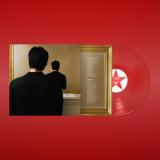
TRANSPARENT RED VINYL[23,32 €]
"The Sophs sind quasi aus dem Nichts aufgetaucht", sagen Rough-Trade-Mitgründer Geoff Travis und Jeannette Lee über ihr neuestes Signing: eine sechsköpfige Band aus L.A. mit dem feinsinnigen Namen The Sophs. Die kompromisslose Ehrlichkeit und der weite Soundkosmos der Band überzeugten sofort. Als Sänger Ethan Ramon ein Demo an seine Lieblingslabels schickte, rechnete er nicht mit einer Reaktion - doch schon am nächsten Tag meldete sich Rough Trade mit der Bitte um ein Gespräch. In den frühen Songs hörte das Label genau jene Kreativität, Vielseitigkeit und den draufgängerischen "Don"t expect me to act pretty"-Spirit, den The Sophs auf jede Bühne bringen: Ethan Ramon (Gesang), Sam Yuh (Keyboards), Austin Parker Jones (E-Gitarre), Seth Smades (Akustikgitarre), Devin Russ (Drums) und Cole Bobbitt (Bass). Die fünf Demo-Tracks bildeten die Blaupause für ihr Debütalbum "GOLDSTAR". Musikalisch bewegen sich The Sophs im Zickzack: Pop-Punk trifft auf Funk, Delta Blues auf ZZ Top. Ramons warme, kraftvolle Stimme wandert dabei wie ein vokales Chamäleon durch die Genres. "Wir versuchen nie, so vielseitig zu sein, wie wir am Ende klingen", sagt Ramon. Songwriting verstehen sie als Pop Art - ein spielerisches Zitieren, Verformen und Neuerschaffen. Oft entstehen Songs aus spontanen Ideen, die im Bandprozess eine völlig neue Richtung nehmen. Der Track "THE DOG DIES IN THE END" erinnert an 2000er-Pop-Punk, getragen von düsteren Gedankenspiralen und Akkordeon. "DEATH IN THE FAMILY" kombiniert sonnigen Rock mit bitterem Humor und der Sehnsucht nach Mitleid als Schutz vor Verantwortung. "GOLDSTAR" stellt dabei einfache, aber unbequeme Fragen nach Anerkennung und Moral. Weitere Highlights wie "SWEETIEPIE" und "BLITZED AGAIN" zeigen die Band zwischen Selbstentlarvung und euphorischer Energie - roh, lebendig und kompromisslos kreativ.
- 1: Skull Chamber
- 2: The Venus And The Sorcerer
- 3: Panel Of The Lions
- 4: Hillaire Chamber
- 5: Candle Gallery
- 6: Chamber Of The Bear Hollows (North)
- 7: Chamber Of The Bear Hollows (South) & Brunel Chamber
- 8: Entrance Chamber
Demetrio Castellucci and Massimo Pupillo present the music of Sleep Technique, a performance by Dewey Dell inspired by the Chauvet cave and its ancient cave paintings.
The music comes to life anew on record, an immersion into the depths of sonic particles, moist electroacoustic rhythms, the repeated forms of speleothems, and the electric bass that scrapes the walls, shaping them into concave or convex surfaces. A voice that moves incredibly slowly, yet is in constant motion, like the millennia-old, unceasing erosion of water.
The album’s journey follows the geography of the cave in reverse, moving from its deepest chamber back to the entrance.
Demetrio Castellucci is a composer and sound designer who has been involved in theater productions, choreography, and film since 2004. Around the same time, he began performing as a DJ, favoring an omnitemporal approach geared toward dance that transcends musical genres. Since 2006, he has been a member of the dance company Dewey Dell, and since 2007, he has been active as Black Fanfare, a maximalist electroacoustic project. He has collaborated on performances by Andreco and Enrico Ticconi/Ginevra Panzetti, as well as on films by Ahmed Ben Nessib, Beatrice Pucci, and Ilaria di Carlo. After living in London and Berlin, he settled in Vilnius, where in 2018 he founded Unarcheology, a digital platform that publishes music and radio programs. He is also active as Airport Gad, an ambient project which, together with Unarcheology, launched its own “Airline Company”: concerts in a flight simulator built from cardboard, where the pilots are also the musicians.
Massimo Pupillo is best known as a founding member of the band Zu, with whom he has released 18 albums and performed over 2,000 live shows worldwide. He has maintained a highly open and multidisciplinary approach that has led him to work with some of the most acclaimed figures in the contemporary art world: South African photographer Roger Ballen, actors Malcolm McDowell and Marton Csokas, Romeo Castellucci and Chiara Guidi of Societas Raffaello Sanzio, American choreographer Meg Stuart, poet Anne Waldman, and Italian poet Gabriele Tinti, among others. He has collaborated live and in the studio with avant-garde musicians and composers such as Alvin Curran, piano duo Katia & Marielle Labèque, and classical virtuosos like Viktoria Mullova and Giovanni Sollima. He has also worked with some of the most influential names in the international rock scene, including Mike Patton, Thurston Moore, Jim O’Rourke (Sonic Youth), Guy Picciotto & Joe Lally (Fugazi), Buzz Osborne (Melvins), and Damo Suzuki (CAN).
In the field of improvised music, he has collaborated with Peter Brötzmann, Toshinori Kondo, Mats Gustafsson, Ken Vandermark, and Tony Buck, among others. Within the experimental music scene, his collaborations include Oren Ambarchi, David Tibet (Current 93), Thighpaulsandra (Coil), Stephen O’Malley (Sunn O))), Abul Mogard, Mick Harris (Scorn), Gordon Sharp (This Mortal Coil), FM Einheit (Einstürzende Neubauten), and many more. In cinema, he composed the score for Kirill Serebrennikov’s film LIMONOV, presented at Festival de Cannes in 2024.

- Amazone Blues
- Chebika Courage
- Leila
- Greve Revolte
- Vent Poussiere
- Samba Loca
- Quand Tout S'arrete
Featuring a topflight quintet, Healing Songs includes Texier's son Sebastien on alto sax and clarinet, rising US trumpet star Hermon Mehari, plus internationally acclaimed drummer Manu Katche guesting on two tracks. Henri Texier, born in Paris in 1945, is a highly respected French double bassist and composer who has played a pivotal role in shaping modern European jazz. He began his career in the vibrant Paris jazz scene of the 1960s, quickly gaining acclaim for his work alongside vanguard musicians such as Don Cherry and Daniel Humair.
Over the decades, Texier became known for blending jazz with influences from folk, African, and Middle Eastern music, giving his sound a unique global flavour. His work has earned him several prestigious awards, including multiple 'Victoires du Jazz' (France's top jazz honour) and widespread international recognition. In the words of The Guardian newspaper, "Texier is one of Europe's consistently inspired jazz musicians, with a career that continues to inspire new generations.
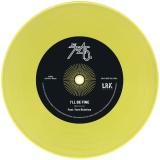
The 7:45s are a soul collective from Manchester, UK – the brainchild of songwriter and bassist Sam Flynn. Inspired by the house bands of labels from Motown to Big Crown, the young collective spotlights guest vocalists on each tune. Named after 7-inch vinyl, The 7:45s write snappy singles that blend the vintage feel of rare groove with the songcraft of perfect pop. BBC Radio 6 Music has played seven songs by The 7:45s this year.
Clocking in at under three minutes, 'I'll Be Fine' is a short and snappy soul sensation. The guitar hooks your ear, the rhythm reels you in, and the arrangement keeps you on your toes – adding exuberant horns, break downs and build ups. Featured vocalist Yemi Bolatiwa shines through the song's bittersweet theme, that it's better to have loved and lost… 'I'll Be Fine' has been played on BBC Radio 6 Music. Craig Charles called it "Proper up-tempo soul of the highest order".
Dancers of the Grove is the debut release from Colombian talent Dream Architect, mostly known for former releases as Buraye.
This 4-track EP explores the more human side of the floor. Melancholy, tension, release, wrapped in deep basslines and rolling percussion. Designed to hit in a club or deep in the woods, and to linger after: groove-driven, immersive, and quietly intense.
- A1: Four Winters Away
- A2: World Without Fear
- A3: Stand A Little Further In The Fire
- A4: Ramona
- B1: (How How How) How Do You Wanna Be Loved?
- B2: Knoxville On The Line
- B3: A Hymn For The City Of Angels
- C1: Down To The Well
- C2: Wanted Man In Arkansas
- C3: A Belief In Birds
- D1: Rain In Your Eyes
- D2: Say Goodbye To Crying
- D3: Forever Young
Long Ryder guitarist/mandolinist Sid Griffin states 'High Noon Hymns' is “two thirds the distilled altcountry genre we helped found back in the 1980s, one third Paisley Underground adventurism yet with a dash of our own crazed soulfulness thrown in." Due to the unexpected passing of Long Ryders' bassist Tom Stevens, bass duties on the new album were shared by Murry Hammond of Americana stalwarts The Old 97s and The Long Ryders’ own Stephen McCarthy. McCarthy also performs live with The Jayhawks and occasionally records with the Dream Syndicate. Guests appearing in the album include DJ Bonebrake of X on vibes and young bluegrass wunderkind Wyatt Ellis on mandolin. The album was recorded at Kozy Tone Studios in sunny Poway, California.
Die französisch-afrikanische Künstlerin Amy Gadiaga (AH-mee GAH-dee-ah-gah) ist eine in London lebende Bassistin, Sängerin und Komponistin. Ihre Debüt-EP "All Black Everything" hatte eine wichtige neue Stimme in der Londoner Jazzszene angekündigt. Mit ihrem neuen Projekt "BabyGoated" macht Gadiaga einen mutigen Schritt in Richtung Farbe und Selbstbewusstsein. Sie folgt ihrem Instinkt, über den Jazz hinaus zu expandieren und Musik zu machen, die sich weitläufig, grenzenlos und ihren Wurzeln treu anfühlt. "BabyGoated fasst zusammen, wer ich bin", erklärt Gadiaga. "Sowohl verletzlich (Baby) als auch mutig (Goated). Es ist niedlich und liebenswert, aber auch ein bisschen arrogant." Der Titel spiegelt die Dualitäten wider, die das Projekt prägen: zwischen Demut und Stolz, Sanftheit und Stärke, göttlicher Energie und menschlicher Unvollkommenheit. ,Das ganze Projekt ist ein ständiger Kampf zwischen Selbstbewusstsein und Verlorenheit - aber immer voller Anmut." Während "All Black Everything" sich auf erweiterte Jazz-Instrumentierung stützte, tauscht "BabyGoated" diese gegen Direktheit ein. Gadiagas Stimme rückt in den Vordergrund und verleiht ihrem inneren Dialog mit ungeschützter Klarheit Gestalt. "BabyGoated" setzt auf organische Texturen und nutzt warmes Klavier, Trompete und folkige Gitarrenklänge. Zum ersten Mal schreibt sie auch in französischer Umgangssprache. Das ist eine befreiende Wendung, die ihre französische und afrikanische Identität verbindet. "Normalerweise schreibe ich auf Französisch poetisch und extravagant", sagt sie. "Aber dieser Song entstand aus der Absicht, etwas zu schaffen, mit dem sich mein jüngeres Ich identifizieren und das es genießen kann." Die EP ist durchzogen von einer überschwänglichen Stimmung, sowohl in der Musik als auch in den Bildern. In Zusammenarbeit mit einem Kreis enger Mitarbeiter, die sie liebevoll ihre African Baddies nennt, ließ sich Gadiaga von ihrem afrikanischen Erbe inspirieren, um die Welt von "BabyGoated" zu einer farbenfrohen Vision zu formen, die Individualität und panafrikanischen Stolz zelebriert. Letztendlich ist "BabyGoated" eine Geschichte über Selbstvertrauen, Verwandlung und Freude.
The Reflex returns in unstoppable form with 'Whatson Ur Mind', the long-awaited vinyl drop after racking up over a million YouTube views. The A-side delivers pure feel-good heat by updating a disco-yacht rock gem into a modern dancefloor weapon with a carefree feel and loved-up sense of romance washing over the nodding bass. Meanwhile, the B-side flips into a soulful, synth-driven slow burner that channels deep funk and libidinousness. Already championed by Gilles Peterson and Ross Allen, this one's built for selectors who know their groove and dancers who like to move.
Ali Renault re ignites the Vivod catalogue after a four year hiatus with Circle of Sins — a solo EP built for italo fiends, horror romantics, and synth obsessives alike. You already know the vibe: detective-noir disco, low-slung BPM swagger, basslines that churn like midnight fog, and those unmistakably icy Renault melodies slithering through the mix.
Four tracks, one ultra-limited 12″, just 150 copies on the planet — each hand-numbered. They’re going to vanish faster than you can say “don’t sleep,” so get that pre-order in before they’re gone to the underworld.
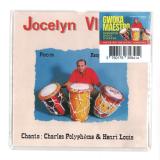
JOCELYN VIRAPIN is one of the master of the Guadeloupean Gwoka percussion.
Born October 17th, 1957 in Basse-Terre, he’s an author, composer, producer and a vinyl digger.
His Gwoka is a pure tribute to the traditional combination of responsorial singing in Guadeloupean creole, rhythms played on the Ka drums and dancing.
He started to play in the 90’s with his band Gwaka. He opened and collaborated with prestigious band such as Kassav or Zouk Machine.
He has a massive discography as arranger and musician: he appears on more than 78 albums! The track "Pasyon" was originally released in 1994 on a rare vinyl , but with the artist we decided to do an edit, so we invited the super talented jazz player Florian Pellissier for a Rhodes improvisation on the original take.
The track "Respè Pou Fanm" was originally released with his band BELOKA in 2010 and was only pressed on a Cd format at a very limited quantity. This beautiful song is a blend of Ka, fantastic jazzy keys on Rhodes, hypnotic bass, sublime creole spiritual chants. With an incredibly joyous feel, the lyrics gave a timeless advice to men: Respect Women .
It definitely deserves a vinyl version for all the music lovers, Dj’s and diggers from all over the world !
Kenbé red pa moli !
Swiss DJ and producer Audrey Danza returns with Next Stop, her first self-released vinyl EP on her own imprint, Proxima. The four-track release sharpens her sound into a direct, club-focused statement rooted in acid techno.
Each track is carefully engineered for the dancefloor. Driving acidic basslines and distinctive percussion interlock with warped, spacey textures to form forward-moving, high-pressure grooves. Processed vocal fragments punctuate the tracks, heightening tension and momentum. The EP moves through trippy, mental territory, balancing functional DJ tools with off-kilter details and strange sonic flourishes.
Built for movement and momentum, Next Stop works equally well in late-night warehouse settings and peak-time club moments.
- 1: Truest Sentece
- 2: West Coast Palm
- 3: Don't Let Go
- 4: Cinnamon
- 5: Punk Broke
- 6: Gingerman
- 7: Three Jewels
- 8: High Entertainment
Die Ende der 90er Jahre gegründete Band Unwed Sailor aus Tulsa macht einen einzigartigen Bass-lastigen Instrumental-Pop mit Post-Rock-Elementen, der zwischen knallharter Härte und luftiger Melodik schwankt. Seit sie 2019 nach einer zehnjährigen Pause zurück sind, haben sie mit ihrer kreativen Energie und dem Mischen von Genres ihre bisher besten Werke rausgebracht, darunter "Mute The Charm" (2023), "Underwater Over There" (2024) und "Cruel Entertainment" (2025). Für ihr elftes Album, "High Remembrance", brachte Gründungsmitglied Johnathon Ford eine Reihe von zu Hause aufgenommenen Entwürfen, Demos und Hooks ins Studio, wo sie unter der Leitung der langjährigen Mitstreiter Matt Putman (Schlagzeug) und David Swatzell (Gitarre) unter dem Motto Nostalgie und dem bittersüßen Trost der Erinnerung zum Leben erweckt wurden. Auf den acht Tracks des Albums gibt's Anklänge an den alternativen Rock der Blütezeit, die AM-Radio-Attitüde der späten 70er Jahre und die ekstatische Unbekümmertheit der New Wave, neben anderen Einflüssen, die sich einer einfachen Kategorisierung entziehen. Die Lead-Single ,West Coast Prism" verbindet einen unvergesslichen melodischen Hook mit optimistischen Drums und einem klirrenden Arrangement, das sich in einen treibenden, farbenfrohen Refrain verwandelt. Getreu seinem Titel erinnert der Song an weißes Licht, das sich in ein Spektrum aufspaltet, während weitläufige Synthesizer und sanfte Backing Vocals eine Aura melancholischer Glückseligkeit schaffen. Ford nennt treffend ,eine tiefe Vorliebe für das Meer, das Surfen, die Redwoods und die felsige Küste von Oregon" als spirituellen Hintergrund für seine Umgebung. Inspiriert von der Art und Weise, wie Erinnerungen die persönliche Identität prägen, könnte ,Don't Let Go" mit seinem straffen Tempo, seinem knackigen Ton und seinen schwindelerregenden Gitarren ein verlorener Alternative-Radio-Ohrwurm sein, während die täuschend einfache Rhythmusgruppe und seine glitchige Elektronik ,The Longest Day" fest in der Gegenwart verankern. ,Cinnamon" stellt wunderschön arrangierte Akustikgitarren-Gegenmelodien in den Vordergrund, zusammen mit Schichten subtiler Details, Chorstimmen und entspannten, hohen Bassgitarrenklängen. Laut Ford ist der Song ,eine Hommage an die Country-Musik der 70er und 80er Jahre, die die Familienausflüge in die Wüste begleitete, als ich ein Kind war", wobei Townes Van Zandts ,Pancho and Lefty" ein besonders bedeutender Ankerpunkt ist. An diesem Punkt in der bewegten Karriere von Unwed Sailor findet Ford einige seiner stärksten Inspirationen darin, darüber nachzudenken, wo das Projekt begonnen hat, während er es ständig mit neuen Ideen, Arrangements und Genre-Einflüssen vorantreibt. ,Es geht darum, an den Dingen festzuhalten, die man am meisten liebt", sagt er, ,einschließlich sich selbst." Sein akkordbetontes Bassspiel zieht sich wie ein roter Faden durch die Alben der Band und verleiht jeder neuen Sammlung eine vertraute Ernsthaftigkeit und Wärme.
In the ever-evolving yet foundational landscape of instrumental groove music, F-Spot Records is proud to debut "Monkey Part 2 b/w Lully" from up-and-coming, multi-faceted keyboardist and composer Max Naseck. Raised in Dallas, Texas, but having worked throughout the Los Angeles music scene for almost a decade, Max Naseck, joined by guitarist Brandon Bae and drummer Julian Allen, brings his new trio project to life. After chasing this sound and style of playing for several years, Appropriately given the name "The Left Hand of God" by some of his musical peers, Max takes the classic soul jazz trio setting of holding down both the bass and melody elements and moves them to a unique combination of funky Moog synth (Key bass) and a Wurlitzer 200A electric piano. This 45 provides a fresh yet retro sound that is sure to leave listeners grooving and locked in.
From the first notes and tight 4-on-the-floor rhythm, "Monkey Part 2" kicks off the A-side with a unique psychedelic blend of soul, funk, and a touch of disco. With Allen's groovy touch, Naseck perfectly locks in with his left hand, followed by Bae's precision-picked electric guitar, which completes the trio's solid groove, further propelled by Naseck's right hand taking the melodic lead. Then on side B, "Lully" brings the tempo down to a more soulful, atmospheric blend that's equal parts Khruangbin & modern jazz pioneers, a la John Scofield. Recorded live together in one room, Max brings his strong compositional style to the table, showcasing how three musicians can interact in a playful, melodic, and groove-focused way.
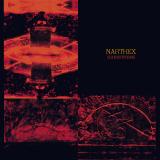
Narthex means railed-off western portico or ante-nave in earty Christian churches for women, penitents and catechumens.
Narthex is also a trio featuring (at the beginning) Daniel Denis (Universe Zero, Art Zoyd), Alain Neffe (Pseudocode, Human Flesh, Bene Gesserit) and Nicolas de Villemarqué (Nuwage Music). They had a very different musical background, mostly electric-electronic rock, and decided to work in the field of acoustic music recorded live (two microphones + portable DAT) in churches of their area. After several recording sessions, Nicolas de Villemarqué decides to leave the group. ln order to complete the trio, Daniel Denis and Alain Neffe ask the participation of some of their friends. Anna Homler, Michel Berckmans and Daniel Malempré have accepted the challenge and succeed to fit into their musical universe.
The instruments Church organ, harmonium, sitar, saxophone, oboe, bassoon, zither, valiha, senzas, tarang, voice, percussions, metal clarinet, classical guitar, mew's harp, ongolok, violin, dulcimer, mouth organ, etc.
The music Often dark, sometimes repetitive or experimental, sometimes rhythmical and exotic, always based on emotion inducted by the sound. One could define it as dark age music (as opposite to new age music), a sort of minimal come back to the roots and purity of acoustic sound without the cultural background linked to the 'academic' use of some instruments (for example African senzas are transformed and tuned to sound like Indonesian instruments, sitar or harmonium are used as rhythmical instruments, vahilla is played with a bow).
The places Churches located in an area of 20 kms in the region where Daniel Denis and Alain Neffe live for years and where they feel at home (and feel the vibrations. Every church, place emotionally loaded, has its own specific resonance and sound structure. Every church gave to the musicians a particular inspiration and fill the sound of the instruments with a natural reverberation/echo. The place but also the moment is important. They had the privilege to be allowed to record in the Ecaussines church at night lightened only by candles. lt was one of their most productive recording sessions.
ZHERAV unleashes hypnotic Middle Eastern grooves on NAJA / BAZAAR 45 for Batov’s highly collectable 45 series.
New Zealand-based producer ZHERAV announces his debut release, NAJA / BAZAAR, a double single and 45 on Batov’s Middle Eastern Grooves series. The record fuses psychedelic rock, hypnotic rhythms, and electronic production influences, creating a sound that moves between swung grooves and cinematic, reverb-soaked textures.
ZHERAV draws from his background in house and techno, layering live guitar, bass, and synths over programmed drums. “I had a production template for house music on Ableton” he explains, “and I thought about how to switch to this Middle Eastern sound using the same format”. Most of ZHERAV’s tracks developed through improvisation - starting with programmed drums, then experimenting around scales on instruments until something works. ZHERAV has already received support from independent radio in Australia and New Zealand, and encouragement from international artists like Ko Shin Moon.
Both tracks explore Middle Eastern scales, bringing a distinct flavour to the grooves, while maintaining ZHERAV’s signature hypnotic layered sound. ZHERAV had something in mind related to snakes and their charmers when creating the A-side, NAJA (“Indian Cobra”). An ominous bassline loops repeatedly over snapping drums and percussion, whilst ZHERAV improvises guitar riffs and effects over the top.