Bad Man Possee is a classic early Eighties dub reggae recording by Junior Murvin, who made his name working with Lee ""Scratch"" Perry on his 1976 debut album Police & Thieves. This album features some stirringly hypnotic tracks to go along with the hit title track. ""Guitar"" is an eerie ode to Murvin's first guitar, riding craftily over a headnodding rhythm provided by Dread At The Controls studio musicians the Roots Radics Band. While Murvin changes speeds quite mercurially, from the love lost recollection ""Never Fall in Love"" to the politically charged ""Rebellion,"" the high quality of the music remains even throughout. Murvin's outstanding doo wop-inspired falsetto is a uniquely inspired nod to the R&B tradition as well as the stylings of ska, rocksteady, and dub. Murvin tops the album off with simply astonishing version ""Man Is the Fire."" Bad Man Possee is available as a limited edition of 750 individually numbered copies on translucent yellow coloured vinyl.
Buscar:quit
Vinyl Packaging: Full color jacket featuring original artwork by Callum Rooney. Can I Communicate With the Unknown? is the new album from Go By Ocean, moniker of Northern California based singer / songwriter / producer Ryan McCaffrey. Co-produced alongside Tim Bluhm (The Mother Hips) and David Glasebrook, the album features contributions from a wide cast of characters, ranging from the tight knit community of Phil Lesh’s much loved Terrapin Crossroads to the wider West Coast indie-rock scene, including members of The Mother Hips, Sugar Candy Mountain, ALO, Tea Leaf Green, and more. Building upon McCaffrey’s catalog of songs, the new album finds inspiration in the down-to-earth music of 1970’s Marin County, when songwriters like Michael Hurley and Jesse Colin Young lived out in Olema and Point Reyes, the kind of places where songs blow in on the breeze from the Pacific Ocean. Lyrically, the album traces a hero’s journey as the narrator struggles with addiction, eventually finding peace and freedom in a tumultuous world, wrestling with metaphysical and spiritual ideas along the way. Highly anticipated new album from Go By Ocean, co-produced by Tim Bluhm of The Mother Hips. Press coverage includes reviews and features in Austin Town Hall, Glide Magazine, Psychedelic Baby Magazine, and more. UK/EU Publicity handled by Chris Carr & Mal Smith. “...washed with breezy beachy vibes…” - Glide Magazine // “...marries the bright guitar arrangement of The Byrds with an updated indie appeal.” - The Wild Is Calling // “...you can almost feel the hope over the hills waiting for you with open arms.” - Austin Town Hall // “‘...satisfyingly artful and I would venture to guess you’ve never heard anything quite like it.” - Ear To the Ground Music // “We will be spinning the hell out of this record for the rest of the summer.” - Up To Hear Music // “...it’s not hard to imagine some of these songs floating in on the coastal fog, ascending ghosts indeed.” - Psychedelic Baby Magazine
“YOU DON’T LOVE ME” is one of the truly great, iconic records, that deserves all of it’s accolades and (pardon the pun) “epitomises” the “sound” of Northern Soul. Since it exploded onto the scene circa 1974 it has remained close to our hearts and finds itself, quite rightly, in the top ten of the Northern Soul Hall of Fame.
2024 Repress
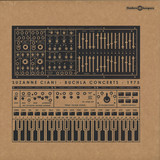
Finders Keepers invite you to witness the incredible first ever Buchla synthesiser concerts/demonstrations providing a distinctive feminine alternative to The Silver Apples Of The Moon if they had ever been presented in phonographic form. This is history in the remaking.
This spring Finders Keepers Records are proud to release an archival project that not only redefines musical history but boasts genuine claim to the overused buzzwords such as pioneering, maverick, experimental, groundbreaking and esoteric, while questioning social politics and the evolution of music technology as we've come to understand it. To describe this records as a game-changer is an understatement. This record represents a musical revolution, a scientific benchmark and a trophy in the cabinet of counter culture creativity. This record is a triumphant yardstick in the synthesiser space race and the untold story of the first woman on the proverbial moon. While pondering the early accolades of this record it's daunting to learn that this record was in fact not a record at all... It was a manifesto and a gateway to a new world, that somehow never quite opened. If the unfamiliar, modernistic, melodic, pulses, tones and harmonics found on this 1975 live presentation/grant application/educational demonstration had been placed in a phonographic context alongside the promoted work of Morton Subotnick, Walter Carlos or Tomita then the name Suzanne Ciani and her influence would have already radically changed the shape, sound and gender of our record collections. Hopefully there is still chance.
In short, Suzanne was a self-imposed twenty-year-old employee of the Buchla modular synthesiser company, San Francisco's neck and neck contender to New York's Moog. Buchla was run by a community of festival freaks and academic acid eaters whose roots in new age lifestyles and the reinvention of art and music replaced the business acumen enjoyed by its likeminded East Coasters. In the eyes of the consumer the creative refusal to adopt rudimentary facets like a piano keyboard controller rendered the Buchla synthesiser the more obscure stubborn sister of the synth marathon, steering these incredible units away from the mainstream into the homes and studios of free music aficionados, art house composers and die-hard revolutionaries. Championed and semi-showcased by composer Morton Subotnick on his albums The Bull and Silver Apples Of The Moon, Buchla's versatility began to open the minds of a new generation, but the high-end design features and no-compromise modus operandi was often confused with incompatibility and, in the pulsating shadow of Moog's marketing, the revolution would not be televised nor patronised. Suzanne Ciani, as one of the very few female composers on the frontline (and also providing the back line) did not lose faith.
These concerts' are the epitome of rare music technology historic documents, performed by a real musician whose skills and academic education in classical composition already outweighed her male synthesiser contemporaries of twice her age. At the very start of her fragile career these recordings are nothing short of sacrificial ode to her mentor and machine, sonic pickets of the revolution and love letters to an absolutely genuine vision of and 'alternative' musical future. In denouncing her own precocious polymathmatic past in a bid to persuade the world to sing from a new hymn sheet, Suzanne Ciani created a bi-product of never before heard music that would render the pigeon holes ambient' and futuristic' utterly inadequate. Providing nothing short of an entirely different feminine take on the experimental records' of Morton Subotnick and proving to a small, judgmental audience and jury the true versatility of one of the most radical and idiosyncratic musical instruments of the 20th century. These recordings have not been heard since then.
The importance of these genuinely lost pieces of electronic musics puzzle almost eclipses the glaring detail of Suzanne's gender as a distinct minority in an almost exclusively male dominated, faceless, coldly scientific landscape. Those familiar with Suzanne's work, a vast vault of previously unpublished non-records', will already know how the creative politics in her art of being' simultaneously reshaped the worlds of synth design, advertising and film composition before anyone had even dropped a stylus in her groove. Needless to say this record, finally commanding the archival format of choice, courtesy of the Ciani and Finders Keepers longstanding unison, was not the last first' with which this hugely important composer would gift society, and the future of a wide range of exciting evolving creative disciplines.
You have found a holy grail of electronic music and a female musical pioneer who was too proactive to take the trophies. With the light of Buchla and Ciani's initial flame Finders Keepers continues to take a torch through the vaults of this lesser-celebrated music legacy shining a beam on these non-records' that evaded the limelight for almost half a century. You can't write history when you are too busy making it. With fresh ink in the bottomless well, let's start at the beginning. Again. You, are invited!

“Dreaming With Alice” by British folk musician MARK FRY was released only in Italy in 1972.
This album has been quite an obscurity already by the time of its release. Recorded by 19 year old Mark Fry for an Italian sub label of RCA it presented a beautifully naive kind of psychedelic folk similar to what the INCREDIBLE STRING BAND laid down at the same time just a bit more straight forwarded. We saw originals in good condition go for about 1600 Euros already, therefore such a reissue is always welcome among fans of totally psyched out music ,done by mostly acoustic instrumentation and vocals. Young Mark enchants his listeners with dreamy vocal melodies of utter beauty which create an outmost peaceful atmosphere. The picturesque tunes take you onto a trip out to the English countryside on a gentle and warm spring morning and into a fairytale world. You might get lost within this colorful dream and not be willing to return to grey reality anymore but this music indeed burns on as the flame of love within your heart. The direction despite all psychedelic elements is definitely determined by British folk music of the 60's and 70's. One charmingly odd aspect of the album is that the title track has been split up over the whole album as short sections flanking the longer tunes. I cannot recall anybody else ever doing that, so this is making this nifty little record a unique effort. If you are a fan of PERRY LEOPOLD or the above mentioned INCREDIBLE STRING BAND this record will fulfill your wildest dreams but will also please those into STEELEYE SPAN, WOODS BAND or PENTANGLE. Mark Fry plays his acid folk from the bottom of his soul without thinking about satisfying the demands of the mainstream audience. This is a must have for all fans of acid folk from the late 60s to the early 70s era. This music is intriguing, keen and absolutely one of a kind with a mood changing from rainy days to sunny mornings out in the meadows.
Bringing together the undisputed talents of Nigerian percussionist Aleke Kanonu and soul legend from Alabama, O.C. Tolbert, this 12' created quite the buzz when it was released in New York in 1982. Shops and leading DJs were clamouring for it, but short supply saw it disappear into obscurity. The A-side, 'Happiness' is an uptown style Gospel ballad where Tolbert's gravelly, soulful voice channels years of hurt an pain. The B-side, 'Nwanne, Nwanne, Nwanne', is an Afrobeat disco monster that rattles along on the back of Kananu's awesome percussion skills. Both tracks were written and produced by Jack Taylor, a producer, songwriter and purported gangster from Harlem and released on his own label. This reissue comes courtesy of the good folk of PMG, purportedly cool guys, based in Austria. - Peter Moore,
Warehouse Find!
Masterful Gregory from 1997, sounding spooked and hunted over a juddering, propulsive Music Works rhythm, fulgent and full-on, with deep, pounding bass, clattering percussion, parping horns, classy backing vocals and harp starbursts... top-notch Gussies.
Two extended vocal versions, and two dubs, all quite different.
Recorded straight on the heels of Bad Company's 1974 debut — just a matter of three months later; not quite long enough to know how big a success the first LP would be — Straight Shooter is seemingly cut from the same cloth as its predecessor. It is, after all, a tight collection of eight strong, steady, heavy rockers that never, ever proceed in a hurry, but from the moment "Good Lovin' Gone Bad" kicks off the proceedings, it's clear that Bad Company have decided to expand their palette this second time around, writes AllMusic.
The album, released in April 1975, reached No. 3 on both the U.K. Albums Chart and the U.S. Billboard 200. It was certified gold (500,000 units sold) by the Recording Industry Association of America (RIAA) a month after its release.
The jacket for the album was designed by Hipgnosis, who also designed their debut album.
"Good Lovin' Gone Bad," was released in March 1975 and reached No. 36 on the Billboard Hot 100. The album was released in April. The album's final single "Feel like Makin' Love" was released in August and reached No. 10 on the Hot 100.
"Feel Like Makin' Love" and "Shooting Star," became classic rock staples due to this expanded aural vocabulary, and even straight-ahead rockers like "Good Lovin' Gone Bad" and "Deal with the Preacher" benefit from this additional muscle, while they feel comfortable enough to settle into a soulful groove on "Anna" and "Call on Me."
Pressed on 180-gram vinyl at Quality Record Pressings, and housed in a tip-on old style gatefold double pocket jacket by Stoughton Printing, this is the definitive pressing of Straight Shooter and one fans of Bad Company will be proud to own.
Filipovich is one of a kind. The Belarus-born, Paris-based artist works in a multitude of media - found footage films, painting, silkscreening and performance to name a few. It's her musical output that has caught the attention of late, though, with Filipovich dropping a run of releases in recent years which began with 2021's Magnificat on Time Released Sound. Filipovich takes as much of a novel approach to her music-making as she does with her other artistic endeavours - Magnificat was centred around treated samples of Sergei Rachmaninov's All-Night Vigil, and she's also combined classical composition with contemporary electronic techniques on her subsequent drops.
For Idealized, Filipovich's debut on Sheffield's Central Processing Unit, she maintains the gothic air which characterised her previous releases and applies it to a record of widescreen contemporary techno joints. These tracks represent something of a gear shift for CPU, a label which has long made its name by delivering top-quality electro and machine-funk jams, but such is the quality of Idealized that these superbly-executed techno productions are sure to win over label fans both old and new.
Idealized is very much schooled in the German tradition of minimal/dub techno. Tracks like 'Physical', 'Wave' and 'Dance Minor' all anchor themselves on single, steady drum pulses and delay-drenched single-chord loops. Filipovich generally lets the central idea of these tracks play out across several minutes while introducing increasingly disorientating elements into the rest of the mix - wiccan atmospherics, clashing chords, spiralling delays and so forth. It's an approach at once respectful of Filipovich's predecessors - Basic Channel, Deepchord, Ellen Allien and so on - but also full of idiosyncrasies and individuality.
Many of the club cuts here hardwire us into the moody, murky environs of the darkest Berlin Basements. 'Ultra Red' rides forward on a crisp drum machine snap, a menacing burble of bassline and an eerie single-note synth whistle in the upper end of the mix; 'Dance Minor' shows off a bit of KiNK in the brain-bending modular loop that waxes and wanes at its centre; the second-half run from 'Wave' to closer 'Small Cave' travels ever-further out into deep space - the kick drums remain insistent, yet the textural elements are delivered with an edge and flair that evidences Filipovich's ability to think outside the box.
Filipovich's unusual methods, and the influence of sound art and electroacoustic composition on her music, are drawn out further when Idealized steps away from the dancefloor. 'Hydra' comes off like a more gothic version of Pole - its central pulse draws from dub techno but never quite settles into a danceable groove, and this beat is combined with the kind of unnerving keyboard work that would make John Carpenter proud. Although closer 'Small Cave' eventually locks into another dark-room techno roller, the opening section of the track delivers a weightless soundscape of bright, tinny chords and a scene-setting field recording.
Idealized, the first drop on Central Processing Unit from Paris-based Belarusian Lina Filpovich, broadens the label's horizons with a selection of finely crafted minimal/dub techno joints.
RIYL: Andy Stott, Deepchord, Ellen Allien, Moritz von Oswald
Highly wanted amongst collectors for its unique sound, this Italian psychedelic percussion heavy disco single was originally only released on 7" format sometime in the late 70s on the Idea label. Quite experimental for its time, it stands out not only for the reckless use of percussion but also the use of early synthesiser sounds in very rhythmic conscientious manners, some moments almost sounding as if a pioneering example of Acid House years before its time. While it seems like all possible percussion instrument sounds are chaotically employed into the drum salad that unfolds, the clavinet and vibraphone offer a contrasting dreamy nuance via a simple and slowly moving melody. Besides the original “Parte 02a” version this release comes with a new remix “Drum Implosion (Parte 10a)” further propelling the chaos commenced in the original release with the aid of flangers and delays, already striking the fancy of DJs like Marcell Dettmann. Severely remastered at Manmade mastering, now featured in 12” format with full cover artwork.
Sunny Crypt is incredibly happy to announce its seventh release: a retrospective compilation of six previously CD-only tracks by Nightmare Lodge, a name that might ring the bell to many enthusiasts of Italian experimental music.
It Passed Like A Dream is a selection of some of our favourite tracks they released between 1994 and 2000, aiming to spotlight a small glimpse of the amazing body of music they did throughout the years.
Nightmare Lodge is a musical project by Minus Habens Records / Disturbance founder Ivan Iusco alongside vocalist B. Mazzilli and bass player Gianni Mantelli, when the Bari based trio decided to decided to embark on a path in search of their own dreamlike musical dimension tied to introspective explorations.
Over the years, the group's lineup evolved, eventually solidifying as a duo comprising Iusco and Russolo.
With their first release dated 1987 and staying active till the early 2000s, it is quite challenging to put the Nightmare Lodge discography in a precise musical box. Their first outings flirted with post-industrial music and a more stripped down sound palette marked by a DIY approach to composition, while in later years leaning towards a more horroresque / cinematic feeling and following the development of new technologies but always charactering their output with a ritualistic, trance inducing and mystical approach, whatever if it’s ambient, downtempo, techno not techno, or a whole lotta else...
Coloured vinyl repress of Penguin Cafe album Rain Before Seven… A sense of optimism infuses Penguin Cafe’s fifth studio album, not the braggadocious, overconfident kind, but more a blithe, self-effacing optimism in keeping with the national character. Even when all signs point to the contrary, it operates within the certainty that things are going to be alright. Probably.
The title comes from an old weather proverb with the rhyming prognostication — fine before eleven — hinting at a happy ending, irrespective of the science: “I found it in a book and I'd never heard it before,” says Arthur Jeffes, leader of Penguin Cafe. “It has faintly optimistic overtones and I quite like it. It's fallen out of usage recently but it does describe English weather patterns coming in off the Atlantic.”
From the widescreen reverie of opener ‘Welcome to London’ with its cheeky nod to Morricone to ‘Goldfinch Yodel’, the self-described “Maypole banger” at the denouement, there’s a welcome sense of sanguinity, always with an undercurrent of exotic rhythmic exuberance. Playfulness pervades, with a titular nod to A Matter of Life... from 2011, the last album title that concluded with an ellipsis. That Penguin Cafe debut is the bridge between the legendary Penguin Cafe Orchestra, led by Arthur’s father Simon Jeffes, and the much- loved descendent, led by Arthur.
“Stylistically it's really satisfying to get back to playful rhythms and instruments,” says the younger Jeffes, who kept the group’s debut from 12 years ago in mind when writing the new album. “Certainly when starting out, I became aware that we’d stopped using quite a few of the textures that had been there at the beginning—and it was certainly there in my dad's earlier stuff. So there's a lot of balafon and textures from completely different parts of the world, musically and geographically: ukuleles, cuatros and melodicas that you can hear.”
Encouraged by co-producer Robert Raths, the rhythmic elements of Rain Before Seven... have never been more to the fore and, at times, even hint at the electronic. ‘Find Your Feet’, for instance, is underpinned with more than just a pulse. Mixed by Tom Chichester-Clark, it brings to the musical melange what Arthur describes as a “near electronic feel”. He adds, excitedly: “There are elements of fun here which we haven't really done with the last three records.” Another ebullient highlight is ‘In Re Budd’, dedicated to the late ambient godfather Harold Budd, who Arthur discovered had died on the day he’d been writing the celebratory ear worm with a deceptively tricky syncopation. Played on an upright piano with some “prepared” felt to accentuate the bounce, Jeffes feels a track with an Afro Cuban Cafe vibe would appeal to Budd’s contrariness.
I needed to do some recording to cheer myself up. The studio I usually use was booked all month, but before the disasters of Brexit & Covid I’d met pianist Yves Meerschaut in Gent, and he’d shown me his recording studio, Room 13, and that did have a couple of days free in January… I decided to make a record of old songs that other people have liked, and / or that I play differently now, and / or that haven’t appeared on vinyl before. So, here, there’s: “Pennypot Lane”, a fox song that people like, “Winter Turns to Spring” that was Tony Benn’s favourite song, “The Blue Sea Says Yes”, a song about how the sea welcomes us all, heroic or fragile, equally in our mortality (something like that anyway) , that I had forgotten about till people started saying how much they liked it, “More Than Enough”, that Roy Bailey and Martin Simpson have kindly rescued from the obscurity of its previous appearance on a CD in 1992, “Babbecombe at the Closing of the Day”, a song about going to Babbecombe model village, “At the Siege of Madrid” which quite a few people like, but is one of those songs that always somehow eludes a definitive performance, “A True History of Couscous”, a song I like that is more or a less fictionalized autobiography, and lastly.. “You Don’t Have to Say Goodbye”. This is a song from my first CD; Thames Valley folk-stalwart Terry Silver used to enjoy performing it so that afterwards he could shock audiences who’d been happily singing along to it by revealing it had been written by that dreadful lefty Robb Johnson, It’s also, more recently, a song our son Arvin likes very much too, and he graces this version with his characteristically modest tasteful Spanish guitar playing. He also nagged me into doing the artwork for the cover. Three of these songs are lucky enough to have Yves’s breathtaking, exquisite piano playing embellishing them, and Sian Allen gifts “Madrid” some beautiful trumpet accompaniment too. But primarily, for good or ill, it’s mainly me with an acoustic guitar. Robb Johnson, May 24. “in my view one of the best songwriters this country has produced in many a year… the appellation National Treasure is often over-used, but in Robb’s case it is entirely appropriate (St Edith’s Folk) // “an English original”, (Robin Denselow, the Guardian) // “a national treasure” (Mike Harding) // “one of this country’s most important songwriters (no argument!)
There are certain occasions when you can truly feel the stars align. One of these is when the interstellar voyager of cosmic soul Jimi Tenor finally lands his spaceship at full force on a Timmion recording. In 2024, he will be serving us two spaced out album sessions recorded together with Cold Diamond & Mink. Jimi is no stranger in these space ways as he has operated behind the Timmion scenes for years, furnishing several of the label's artists with his flute and reeds artistry. The first album out is titled "Is There Love In Outer Space?", which begs the question with the force of five extended tracks that are guaranteed to blow your mind to the stratosphere. The pieces are loaded with whooshing and glistening synth noises and span from lofi space funk to cinematic soundscapes. The sweetly floating title track is like some of those galactic ballads that rare soul collectors are spending their pensions on. At the other side of the spectrum, album closer `What Are You Doing?' sounds like Sun Ra sat down at a JBs session, and is straight up meant to get that booty moving. Combined with the raw soul prowess of CD&M, Jimi is able to refine new shades from his already impressive repertoire of talent. Even if you are a friend of his previous work you might not have heard him get down quite like this.
Atlantic records impresario Jerry Wexler had many strings to his bow, but undoubtedly his greatest stroke of genius was leading Aretha towards the Fame Studios in 1967 to conduct her first sessions for the label. A lady with many quite uneven Columbia albums to her name would turn the world of soul music upside down and reveal the Queen of Soul to the world. The music created was both harrowing and spine-chilling in equal measure, leaving everyone in its radius in a state of soulful euphoria.
“Can” was recorded during the ‘Hey Now Hey’ LA album sessions circa 1972, with Quincy Jones at the helm, and is a scintillating slow burner of exquisite beauty.
“I’m Trying” is a glorious 1969/70 outtake from her ‘Spirit in the Dark’ LP, cut at Criteria with Wexler and the MSS boys in tow.
A friend of mine recently alluded that you sometimes don’t realise the true greatness of a track until it is embossed in 7” vinyl. So true!
7A Records are proud to present our deluxe reissue of Mungo Jerry’s Electronically Tested. Released on July 19th, the album has been remastered and expanded with four bonus tracks and features extensive liner notes including Ray Dorset’s own recollections.
Electronically Tested, Mungo Jerry’s second album, was first released in March 1971. Even the title clued in listeners that this was no ordinary record. As Ray Dorset reveals, “I came up with the name of the album. Durex used to have ‘electronically tested’ written on their packets. I thought that was quite the talking point, if people in the know said, ‘That’s the same name as on the packet of condoms!’ It was taboo to mention stuff like that.” Electronically Tested offered hints of the familiar via its inclusion of the UK #1 Hits “In the Summertime” and “Baby Jump,” but elsewhere, the album was pure, eclectic Mungo Jerry. Every side of Dorset’s talents as a singer, songwriter, and musician came to the fore on Electronically Tested, with his bandmates John Godfrey, Paul King, and Colin Earl–as well as producer Murray– joining him to create a joyful noise: “It’s got a lot of tracks that could have been singles in their own right. It was good for me to be able to play all that kind of stuff”. Mungo Jerry’s singular sound has been described as rock, folk, blues, country, good-time music, jug band music, pub rock, and gypsy rock–and that’s just a partial list. One can hear all of those elements in the disparate, timeless songs that form Electronically Tested. How would Mungo himself describe it? “It’s kind of rocky stuff. It’s got social commentary. It’s got all sorts of influences in there. It’s really best to say it’s Mungo Jerry music.” Electronically Tested originally peaked at # 14 on the U.K. Albums Chart the week of April 14, 1971.
- A1: Kielbasa 3:02
- A2: One Note Song 1:24
- A3: Tribute 4:08
- A4: Wonderboy 4:07
- A5: Hard Fucking 0:36
- A6: Fuck Her Gently 2:03
- B1: Explosivo 1:55
- B2: Dio 1:41
- B3: Inward Singing 2:13
- B4: Kyle Quit The Band 1:30
- B5: The Road 2:20
- C1: Cock Pushups 0:47
- C2: Lee 1:02
- C3: Friendship Test 1:31
- C4: Friendship 2:00
- C5: Karate Schnitzel 0:37
- C6: Karate 1:05
- C7: Rock Your Socks 3:33
- C8: Drive-Thru 3:01
- D1: Double Team 3:11
- D2: City Hall/I Believe/Malibu Nights Medley 9:02
Das erste Album des legendären amerikanischen Rockduos, "Tenacious D", erscheint im Doppel-LP-Format. Die unzertrennlichen Kumpels Jack Black und Kyles Gass haben sich bei der Aufnahme dieses Albums mit bekannten Musikern umgeben (Dave Grohl, Page McConnell oder Steven Shane McDonald). Dieses neue Vinyl ist die perfekte Gelegenheit, um in die Anfangszeit des Duos einzutauchen, zwischen Liedern.
At the latest with the release of the albums "Zauberberg" and "Königsforst", in the mid-1990s, one associates GAS, Wolfgang Voigt's very own artistic cross-linking of the spirit of Romanticism and the forest as an artistic fantasy projection surface, with intoxicatingly blurred boundaries of post-ambient infatuation and the impenetrable thicket of abstract atonality. The distant, iconic straight bass drum marching through highly condensed, abstract sounds taken from classical music by the sampler or modulated accordingly, and the enraptured gaze through pop art glasses into the hypnotic thicket of an imaginary forest, manifested over the years this unique connection of audio and visual, which to understand fully, then as now, would be neither possible nor desirable.
Quite the opposite. The album GAS - DER LANGE MARSCH once again invites us to follow the deep sounding bass drum, to give in to its irresistible pull into a psychedelic world of 1000 promises. In the process, the journey leads us past stations of memories sounding from afar, from "Zauberberg" to "Königsforst" and "Pop", from "Oktember" to "Narkopop" and "Rausch", back and forth, now and forever.
Way. Destination. Loop. - Forest loop.
No beginning. No end.
Spätestens mit der Veröffentlichung der Alben „Zauberberg“ und „Königsforst“, Mitte der 1990er Jahre verbindet man mit GAS, Wolfgang Voigts ganz eigene künstlerische Vernetzung mit dem Geist der Romantik und dem Wald als künstlerische Fantasie-Projektionsfläche, rauschhaft verschwimmender Grenzen von post-ambienter Betörung und dem undurchdringlichen Dickicht abstrakter Atonalität. Die entfernt, durch stark verdichtete, abstrakte, der Klassik durch den Sampler entnommene oder entsprechend modulierte Klänge marschierende, ikonische gerade Bassdrum, der entrückte Blick durch die Pop-Art Brille hinein in das hypnotische Dickicht eines imaginären Waldes, manifestierten über die Jahre diese einzigartige Verbindung von Audio und Visuellem, die ganz verstehen zu können, damals wie heute, weder möglich noch wünschenswert wäre.
Ganz im Gegenteil. Das Album GAS - DER LANGE MARSCH lädt uns einmal mehr ein, der tief tönenden Bassdrum zu folgen, ihrem unwiderstehlichen Sog hinein in eine psychedelische Welt der 1000 Verheißungen nachzugeben. Dabei führt die Reise vorbei an aus der Ferne klingende Stationen der Erinnerungen von “Zauberberg” bis “Königsforst” und “Pop”, von “Oktember” bis “Narkopop” und “Rausch”, vor und zurück, in alle Ewigkeit.
Weg. Ziel. Loop. - Waldloop.
Kein Anfang. Kein Ende.
LIMITED INDIES LOSER EDITION PRESSED ON BLUE TRANSPARENT VINYL! Stella makes her Sub Pop debut with the mesmerizing Up and Away, an old-school pop paean to the pangs and raptures of love. From the Greek folk-inflected get-go, we're swept up in Stella's world - and it's quite the captivating place to be. The singer-songwriter joined forces with artist and producer Tom Calvert (aka Redinho), and it was a match made in Athens; the results are heavenly. Tom caught one of Stella's gigs on a visit to the city. He reached out, they started hanging out, and the pair soon clicked creatively. Both mention chemistry when asked about their collaboration and it's clear, from what we hear, they had it in spades. The meld is seamless. Stella's songs have always riffed on American and Greek mid-century pop but Up and Away doubles down on the vintage aesthetic. Tom says he styled the record "as if it was a rare gem from the '60s found in a box of records in Athens," and Stella notes she was ready for a more "deeply Greek touch - it felt comfortable and right, smoothly fusing with the pop." The bouzouki appears on a full five tracks played by Christos Skondras who, she says, "was brilliant at improvising," while Sofia Labropoulou on the kanun "brought an insane amount of dreaminess to the last two songs. Having these amazing musicians play for Up and Away - I couldn't be more grateful." While not exclusively a confessional artist, Stella is always intimate - when she sings, it's personal. She writes "about things I feel passion for. Stories about me, about others, about all that's there in love and war." Stella was "in a very emotional state at the time, which came through in the lyrics and vocals." And it's true, her honeyed voice - layered in those unmistakable harmonies of hers - thrillingly runs the gamut from tender to terse, by turns bracing and smitten, aching and forlorn. But it's the lyrics that feel key. Across her output, Stella has proven herself a strong storyteller, and Up and Away is no exception (the guise of the medieval bard she assumes on the cover is telling). Past releases have been studded with gem-like vignettes - a diverse array of stories set tightly together to form non-linear narratives unified by emotion. Her latest feels singular in that it seems to trace a longer-form tale across songs, with each track escalating the record's erotic arc. By the end of the album, Up and Away's core concerns are clear: the conflicting and conflicted emotions inherent in love, that live on in ways we can't always understand or control. Love is like this record: when it's over, you still feel it for time to come.
Introducing ATA's latest Disco sensation: "United Disco Organisation's 'Feel It For Yourself'". Following the success of "Send The Rain/Funky Thing," this release features Kweku Sackey and his phenomenal backing singers, delivering a sun-soaked 70s afrobeat hit perfect for those endless Summer nights! Crafted during a creative session for an upcoming United Disco Organisation project, bassist Neil Innes conceived a captivating Afro-Disco concept. Picture a rhythmic journey, laden with percussion, reminiscent of Manu Dibango with a dash of Tony Allen's flair. With the UDO lineup of Neil on bass, Chris Dawkins on guitar, Joost Hendrickx on drums, and Danny Templeman on percussion, the foundation was set. Adding a distinctive touch, ATA regular Richard Ormrod contributed a mesmerizing alto sax solo, steering the track towards instrumental brilliance. However, it didn't quite align with the album's theme, so it took a brief hiatus. Enter Kweku Sackey (K.O.G.), who, during a studio visit....