quête:radical core

Genres
Tout
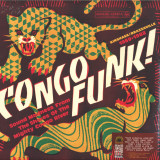
VARIOUS - CONGO FUNK! SOUND MADNESS FROM THE SHORES OF THE MIGHTY CONGO RIVER (KINSHASA/BRAZZAVILLE 1969-1982)

The making of Congo Funk!, our long-awaited journey to the musical heart of the African continent, took the Analog Africa Team on two journeys to Kinshasa and one to Brazzaville. Selected meticulously from around 2000 songs and boiled down to 14, this compilation aims to showcase the many facets of the funky, hypnotic and schizophrenic tunes emanating from the two Congolese capitals nestled on the banks of the Congo River.

On its south shore, the city of Kinshasa – capital of Democratic Republic of the Congo, the country formerly known as Zaïre – is often seen as Africa’s musical Mecca, the city that spawned such immortal bands as African Jazz, O.K. Jazz and African Fiesta, and the place to which aspiring musicians from throughout the continent would go to make a name for themselves.

But the city of Brazzaville on the north shore of the river – capital of the Congo Republic – played an equally important role in spreading Congolese sounds continentally. In addition to producing legendary bands such as Les Bantous de la Capital, it was the powerful transmitters of Radio Brazzaville that allowed the unmistakable groove of Congolese Rumba to be heard as far away as Nairobi, Yaoundé, Luanda and Lusaka thus turning the electric guitar into the continent’s most important instrument!

Although the musical landscape of these cities had been defined by a core group of bands in the late 1950s, the modernisation of Congolese music has been steadily evolving until the events surrounding the Muhammad Ali vs George Foreman boxing match marked a turning point. The promoter of that event known as “Rumble In The Jungle” was none other than the notorious Don King who needed 10 millions dollars to get Ali and Foreman into a boxing ring. The only candidate willing to put this kind of cash on the table was Mobutu Sese Seko, President of the Democratic Republic of the Congo.

Mobutu - the megalomaniac dictator who got to power with the support of the United States and Belgium in exchange for unlimited and affordable access to the riches of the country - had a soft spot for music and it doesn’t come as a surprise that he agreed to a three-day live music festival being organised prior to the “Rumble”. Zaïre 74 - as the festival was dubbed - was meant to hype the boxing match and many stars were invited.

Although a myriads of artists flocked in for the occasion, it was the performance of James Brown on Zairian soil that caused havoc among the younger generation, inspiring hundreds of would-be musicians to take up their electric guitars and reverbs cranked to the max in search of a new sound in which hyperactive Rumba was blended with elements of psych and funk. While the results were very different from the popular music of the three Musketeers - as Tabu Ley, Franco and Verckys were known - they weren’t a complete break with tradition.

These new sounds emerged at a time when the Congolese record industry – previously dominated by European major labels – was experiencing a period of decline due to rising production costs and needed a radical change. The void was filled by dozens of entrepreneurs willing to take chances on smaller scale releases. It was the beginning of a golden age for Congolese independent record labels, and the best of them – Cover N°1, Mondenge, Editions Moninga, Super Contact – preserved the work of some of the region’s finest artists, while launching a generation of younger musicians into the spotlight.

The movement was greatly helped by legendary radio shows but it was the dynamic productions of Télé-Zaïre that set the dynamite on fire. Legend has it that TV shows were so huge that president Mobutu himself ordered RTV du Zaïre to put on daily concerts since it halted criminal activities for the duration of the evening.

Congo Funk! is the story of these sounds and labels, but most of all it is the story of two cities, separated by water but united by an indestructible groove. The fourteen songs on this double LP showcase the many facets of the Congolese capitals, and highlight the bands and artists, famous and obscure, who pushed Rumba to new heights and ultimately influenced the musical landscape of the entire continent and beyond.

pas en stock

Commandez maintenant et nous commanderons l'article pour vous chez notre fournisseur.

Last In: 11 months ago
28,36 €
FIREFRIEND - DECREATION FACTS LP

Cardinal Fuzz and Little Cloud Records bring to you the new LP from a band we hold dear, Firefriend – ‘Decreation Facts’ – From São Paulo in Brazil and now close to two decades of creating and honing what has become their trademark, a heavy reverb, minimalistic slow-burn menace which sends chills down your bones. If you don't know Firefriend from somewhere along the last decade, you must cut a safe course through music. ‘Decreation’ is the undoing of creation, something destructive and primal and that Firefriend carry through on all the twelve songs written for this LP. Yury explained that the album "is a commentary on our 21st century, so violent and radical. We live in times of accelerated transformation. We wrote and recorded this album between the pandemic and WW3 – times of ground-breaking changes – and somehow that uneasy feeling got into our songs. Reality is the most crazy trip, isn it? And we are always trying to explore new territories: we want a new album to take you to new places, so we were chasing the sounds, structures and moods to make this a truly new album to match this wild new world’ ‘Decreation Facts’ is all this as they simply inject you with a liquid paranoia for their dark conjuring’s that is hugely dark and foreboding – Julia and Yury’s uber cool stoned and detached delivery creates a seriously dark menace with Julia’s delivery having echoes of Nico – all the while THAT claustrophobic reverb and tremolo encloses and swirls around the inside of your head and vibrates your inner core. This is HEAVY shit. Decreation Facts’ is an unsettling sonic fuck you to those that seek to destroy this planet for their love of money and power and we think it is a stunning achievement. As Terence McKenna might once have said – ‘Firefriend should be consumed alone, in the dark, in silence, with your eyes closed’. Firefriend advises, “Express yourself through any method you want. That is how you become a transmitter, generating waves that will open connections with others vibrating on the same frequencies. That energy field will change the game.” Now that is a truly psychedelic perspective if there ever was one. RCKNRLL, FUZZ, FEED YOUR HEAD

pré-commande16.03.2024

il devrait être publié sur 16.03.2024

25,17 €
Optimo - Optimo 25 Part 1. (2x12")

Optimo (Espacio) started life as a weekly club night. It was born at The Sub Club in Glasgow on a wet, windy, wintry November Sunday night in 1997. Run by JD Twitch and partner in crime Jonnie Wilkes. Optimo was a reaction against what felt like an increasingly conservative musical soundtrack in clubs here at that time. Clubland felt as if it had become very bland and a bit too serious; it was the era of the dawn of the Superstar DJ. Clubs often felt like bastions of male energy. It seemed dance music and culture was going somewhere far, far away from where it was meant to be. The notion of fun had got lost.

It was no longer the world they had devoted ten years of their lives to already, and lots of their friends felt the same. When the opportunity came up to do a Sunday night at The Sub Club it felt like the perfect opportunity to rip it all up and start again. So they did. There was nothing in the city (or possibly anywhere) like it. As the club believed wholeheartedly in what they were doing, there was no pressure from The Sub Club to fill the club. So, they embraced the freedom. Groups of people who had never been in the same room at the same time before came together. A community of kindred spirits started to emerge.

Word spread, slowly. Lots of people checked it out. Many loved it, some hated it. The core of the Optimo idea was to embrace music they loved that might work on the dancefloor from whatever era or genre they thought felt right. It might not seem very radical now but at that time it was revolutionary.

After about a year and a half, the club went from having 100 people attending most nights to suddenly one week having 500 people turn up. It was very weird. It was as if a collective light bulb went off in people’s heads in Glasgow. From that week on, until the very last weekly Sunday night at the Sub Club, in 2010, over a decade later, it was packed.

There were 550 Sunday Optimo nights. A LOT of music was played. So, what was the music? People often find it hard to pin down exactly what Optimo is. This has been a positive but also a negative as we live in a world where people want easily defined “brand identities”. The simplest definition of the music played is “music for dancing”, which of course is a very broad definition. Even better than trying to define it in words, we have these 2 volumes of music that give a hint of what that might be.

This is not a “Best of Optimo” or a “Greatest Hits of Optimo” compilation. For people who come to, or used to come to the nights there are of course “Greatest Hits”. But, over such a long timespan they are “hits” belonging to a certain moment in time and space. Someone who came to Optimo in 1997 would have a completely different notion of the big tracks at the club to someone coming in 2003, or 2010, or today. This compilation is just a snap shot missing several genres that might make up the DNA of Optimo. There is though a broad sweep through lots of music Optimo loves, that they believe is amazing. Music that they know will rock a dancefloor, that they have played between 1997 and 2023. Of course Optimo nights were not all about rocking the dancefloor. The first hour was always a time for them to play music they loved that often was far removed from the dance. Side 1, Volume 1 of this compilation is the kind of music one might hear at the very start of an Optimo night.

Optimo have always loved a good slogan. The most long lived, and fitting Optimo slogan is "We Love Your Ears", which is in essence what it is all about to them.

pas en stock

Commandez maintenant et nous commanderons l'article pour vous chez notre fournisseur.

Last In: 2 years ago
29,83 €
Optimo - Optimo 25 Part . (2x12")

Optimo (Espacio) started life as a weekly club night. It was born at The Sub Club in Glasgow on a wet, windy, wintry November Sunday night in 1997. Run by JD Twitch and partner in crime Jonnie Wilkes. Optimo was a reaction against what felt like an increasingly conservative musical soundtrack in clubs here at that time. Clubland felt as if it had become very bland and a bit too serious; it was the era of the dawn of the Superstar DJ. Clubs often felt like bastions of male energy. It seemed dance music and culture was going somewhere far, far away from where it was meant to be. The notion of fun had got lost.

It was no longer the world they had devoted ten years of their lives to already, and lots of their friends felt the same. When the opportunity came up to do a Sunday night at The Sub Club it felt like the perfect opportunity to rip it all up and start again. So they did. There was nothing in the city (or possibly anywhere) like it. As the club believed wholeheartedly in what they were doing, there was no pressure from The Sub Club to fill the club. So, they embraced the freedom. Groups of people who had never been in the same room at the same time before came together. A community of kindred spirits started to emerge.

Word spread, slowly. Lots of people checked it out. Many loved it, some hated it. The core of the Optimo idea was to embrace music they loved that might work on the dancefloor from whatever era or genre they thought felt right. It might not seem very radical now but at that time it was revolutionary.

After about a year and a half, the club went from having 100 people attending most nights to suddenly one week having 500 people turn up. It was very weird. It was as if a collective light bulb went off in people’s heads in Glasgow. From that week on, until the very last weekly Sunday night at the Sub Club, in 2010, over a decade later, it was packed.

There were 550 Sunday Optimo nights. A LOT of music was played. So, what was the music? People often find it hard to pin down exactly what Optimo is. This has been a positive but also a negative as we live in a world where people want easily defined “brand identities”. The simplest definition of the music played is “music for dancing”, which of course is a very broad definition. Even better than trying to define it in words, we have these 2 volumes of music that give a hint of what that might be.

This is not a “Best of Optimo” or a “Greatest Hits of Optimo” compilation. For people who come to, or used to come to the nights there are of course “Greatest Hits”. But, over such a long timespan they are “hits” belonging to a certain moment in time and space. Someone who came to Optimo in 1997 would have a completely different notion of the big tracks at the club to someone coming in 2003, or 2010, or today. This compilation is just a snap shot missing several genres that might make up the DNA of Optimo. There is though a broad sweep through lots of music Optimo loves, that they believe is amazing. Music that they know will rock a dancefloor, that they have played between 1997 and 2023. Of course Optimo nights were not all about rocking the dancefloor. The first hour was always a time for them to play music they loved that often was far removed from the dance. Side 1, Volume 1 of this compilation is the kind of music one might hear at the very start of an Optimo night.

Optimo have always loved a good slogan. The most long lived, and fitting Optimo slogan is "We Love Your Ears", which is in essence what it is all about to them.

pas en stock

Commandez maintenant et nous commanderons l'article pour vous chez notre fournisseur.

Last In: 11 months ago
29,83 €
Musique Infinie - I LP

Musique Infinie

I LP

12inchOUS044
-ous
13.12.2023

This music unites our common love for the essence of music, which contains harmonic structures and emotionality without borders." — Musique Infinie

Musique Infinie, the new duo consisting of Noémi Büchi and Feldermelder, is rooted in a shared desire to intertwine two composing veins, and to merge them into a new, massive core. While Büchi combined her background in classical and electro-acoustic music with a bold approach to composition on her highly acclaimed debut album 'Matter' (-OUS, 2022), multi-disciplinary musician and artist Feldermelder has been expanding his artistic practice into unexplored realms for over 20 years. Mutually, they've challenged themselves to fully engage on an artistic exploration aimed at making use of the elementary forces that unfold between them.

Their debut album, simply titled 'I', is a musical hybridization. The compositions make use of simple motives that are radically transformed by expanding them into intricate structures and fantastic layerings. The overcoming of genres with eclectic elements from classical music, jazz, film music and traditional music, combined with the vocabulary of experimental electronic music, complete the vertical plunge into this thickness. The emerging pieces lead into a paradoxical world, both disturbing and euphoric. Pieces that don't give in to calculations and expectations, but progress through ruptures and repetitions. The richness of the compositions and their analog, acoustic and orchestral character reflect the density of the world with its violence, its decadence, its fragility, but also its power, its ingenuity and its beauty.

Composer and sound artist Noémi Büchi creates electronic, symphonic maximalism. Her music is defined by a delicate synthesis of textural rhythms and electroacoustic-orchestral abstraction. She explores the potential of consonance and dissonance, contrasts rhythmic physicality with disruption and playfully emphasizes irregularities, creating an expansive listening experience marked by detail and elevation.

Feldermelder is a polymathic creative whose artistry spans composition, sound design, installation and code. He is co-founder of -OUS Records and an active member of Encor.studio, a collective specialising in creating immersive audio-visual installations. Through his work, he explores the idea of secrecy and its impact on our lives, using music and sound to create a thought-provoking and immersive experience for his audience.

pas en stock

Commandez maintenant et nous commanderons l'article pour vous chez notre fournisseur.

Last In: 2 years ago
18,45 €
Ben Prophet - From Dusk EP

Irish DJ and producer, Ben Prophet, has caught the attention of some of the electronic scene’s most influential names in recent years. Currently residing in the underground music hub of Newcastle, his dark and exhilarating tracks have proven to captivate dancefloors. Now the artist is set to embark on his most monumental release to date, with the four track EP ‘From Dusk’. Staying distinctly true to himself, the EP channels Prophet’s love for bassline, electronica, and techno, whilst placing a key focus on mechanical vocals that add a mind-bending element that listeners can get lost in. ‘From Dusk’ will be released to the world via HAAi and Alice Pelly’s Radical New Theory label, a proven base for projecting emerging talent.

‘From Dusk’ is an EP that serves as a bold declaration. Prophet was determined to take listeners on a journey across the four tracks. Never resting on his laurels, the artist ventured into many corners of the dance world, whilst maintaining a core signature sound. Opener ‘Telepathy’ Sees Prophet build an emphatic, heavy hitting techno track, centring around a manipulated spoken-word vocal. It’s a sound that holds nothing back and is showcased again on ‘Down The Rabbit Hole’. Equally dark in its design, Prophet once more places distorted vocals at the forefront, this time displaying an industrial take on breakbeat. On the flip side, we see ‘Ocarina’ and title track ‘From Dusk’ turn the dark energy on its head with a distinctly melodic approach which adds a touch of psychedelia and high emotion to the EP. What’s clear is there’s something on ‘From Dusk’ for anyone that loves club music.

Speaking on the release, Prophet states:“HAAi has been one of the biggest inspirations for my sound, so to have become friends and to release my music on her label Radical New Theory is a massive moment for me. I’ve taken a different approach on each track, but each has my signature sound and is ready for the dance floor.”

HAAi also offers an insight into why she wanted to release ‘From Dusk’ on Radical New Theory: “Ben Prophet’s tracks have such a driving force and a dark energy to them, which is so powerful in the club. I’m extremely excited to get this record out in the world.”

Prophet’s previous releases ‘Hyper Funk EP’ and ‘King Of Rock’ on Chapeau music and Happy Wax Records respectively reached dancefloors across the world with regular plays from the likes of Mall Grab, Skream and VTSS. His gritty and energetic productions are born for the peak-time dance floor where its power creates intoxicating effects. No longer a hidden gem of the North East, the artist's music has gathered serious momentum and ‘From Dusk’ might well be the record that makes Ben Prophet a household name.

‘From Dusk’ is the third release on Radical New Theory, a label created in 2020 by HAAi and Alice Pelly which aims to shine a light on unique emerging talent, and the inevitable stars of tomorrow. Last year the label released LUXE’s debut ‘Belonging EP’ which was championed by MaryAnn Hobbs on BBC 6Music, and the artist has since gone on to tour across Europe. Whilst Ozzy, who released the labels first record ‘Een’, has since released on Barnt’s Schalen imprint. Radical New Theory was born out of a love for the craft of dance music and the careful consideration of what they release ensures the highest standards. A safe space for emerging talent, be sure to keep your eyes out for what comes next from the label

pas en stock

Commandez maintenant et nous commanderons l'article pour vous chez notre fournisseur.

Last In: 3 years ago
14,50 €
MEV - Symphony No. 107 - The Bard
 
2

Black Truffle is pleased to announce Symphony No. 107 –The Bard, a previously unheard archival recording of the legendary improvising ensemble MEV (Musica Elettronica Viva), captured in concert at Bard College, New York in 2012. Formed by a group of American expat composers in Rome in 1966, the MEV ensemble played an important role in the development of free improvisation, bridging the live electronics tradition begun by Cage and Tudor and the high-energy squall of free jazz. Early recordings like Spacecraft or The Sound Pool unleash volleys of metal and glass amplified with contact microphones, howling winds, primitive synthesizer bleep and raucous audience participation, the intensity of which puts much later ‘noise’ to shame. In later decades, the ensemble would go through many iterations, often including legendary free players like Steve Lacy and George Lewis. In its final years, MEV settled into the core trio of founding members heard here: Alvin Curran, Frederic Rzewski, and Richard Teitelbaum, using piano, electronics, and small instruments.

Curran, Rzewski, and Teitelbaum were life-long friends blessed, as Curran says, with ‘incompatible personalities’: major figures in the post-Cagean experimental tradition, they explored countless divergent and even contradictory paths as composers and performers, from agitprop songs to brainwave-controlled synthesis. MEV is the sound of these three personalities coming together, their contributions radically individual yet attaining a state of ‘fundamental unity’ that Rzewski, in a text written in the collective’s earliest years, defined as the ‘final goal of improvisation’. Of course, listeners familiar with aspect of the trio’s individual works might hazard some guesses about who is doing what: the crisp piano figures are probably Rzewski’s, the cut-up hip-hop samples most likely Curran’s, the sliding, squelching synth possibly Teitelbaum’s. But often these identities are dissolved in a constantly shifting hall of mirrors, the listener unable to tell which of these pianos is live and which is a sample of a past virtuoso, or whether a horn blast derives from ethnographic documentation or Curran cutting loose on Shofar. The two side-long sets here occupy a similar terrain of constantly shifting texture and instrumentation, unexpected interruptions, and moments of sudden beauty. The first set is sparser, at times almost ominous, as a bell repeatedly sounds across wheezing harmonica, seasick orchestral textures, and creaking wood, making room for episodes of yodelling and delicate prepared piano before exploding into a storm of buzzing synth and piano fragments. The second set is more frenetic, moving rapidly across centuries and continents: cars crash into post-serial piano pointillism, wailing voices collide with chopped and screwed hip-hop samples, Hollywood strings are buried under layers of electronic gurgles. The performance slows in its final moments, making way for a sampled voice repeating the phrase ‘protest and the good of the world’, reminding us that MEV’s idea of freedom was always more than musical. Symphony No. 107 –The Bard is a beautifully recorded example of the endlessly multi-layered later MEV sound, accompanied by new liner notes by Alvin Curran (now the only surviving member of the group) and a selection of previously unseen photographs from across the many decades of the group’s activity. Arriving in an elegant sleeve bearing a beautiful photograph by Francis Zhou of the Olin Hall at Bard College where the concert was recorded, this is an essential document from a major group in the history of experimental music. As Rzewski wrote, this music is ‘like life, unpredictable, sometimes making sense, mostly not’.

pas en stock

Commandez maintenant et nous commanderons l'article pour vous chez notre fournisseur.

Last In: 3 years ago
23,95 €
Natural Information Society - Since Time Is Gravity LP 2x12"

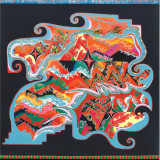
The next chapter of the Natural Information Society is here. Since Time Is Gravity, credited to Natural Information Society Community Ensemble with Ari Brown, presents a newly expanded manifestation of acclaimed composer & multi-instrumentalist Joshua Abrams nearly 15 year, 7 albums &-counting flagship ensemble. Joining the core NIS of Abrams (guimbri & bass), Lisa Alvarado (harmonium) Mikel Patrick Avery (drums) & Jason Stein (bass clarinet) are Hamid Drake (percussion), Josh Berman & Ben Lamar Gay (cornets), Nick Mazzarella & Mai Sugimoto (alto saxophones & flute), Kara Bershad (harp) & Chicago living legend of the tenor saxophone Ari Brown. Recorded live to tape at Electrical Audio & The Graham Foundation, cover painting Vibratory Cartography: Nepantla, by Lisa Alvarado. 2xLP on Eremite USA, 2xLP & CD on Aguirre/Eremite Europe. Out 14-04.

Since first developing Natural Information Society in 2010, Joshua Abrams has been gradually expanding the group’s conceptual underpinnings, its musical references & the sheer number of the group’s members. Its music is, in a sense, an expansive form of minimalism, based in repeated & overlaid rhythmic patterns, ostinatos & modality. Its roots, its scale & its meaning become clearer in time. If time is gravity, it also allows us to carry more. Having begun as fundamentally a rhythm section with Abrams’ guimbri at its core, the version here can stretch to a tentet, including six horns.

Abrams has been expanding his minimalism gradually, but he has long understood a key to minimalism’s potential: the breadth of its roots in the late 1950s & early 1960s, ranging from the dissatisfaction of young European-stream composers with the limitations of serialism to the simultaneous dissatisfaction of jazz musicians with the dense harmonic vocabulary of bop & hard bop. The former began exploring rhythmic complexity & narrow tonal palates in place of harmonic abstraction (Steve Reich’s Drumming, Philip Glass’ Music with Changing Parts; perhaps above all Terry Riley’s In C & his late ‘60s all-night organ & loop concerts); the later reduced dense chord changes to scales (signally with Miles Davis' Kind of Blue, but rapidly expanding with John Coltrane’s vast project). In the 1950s the LP record opened the world with documentation of Asian & African musics, key influences on both minimalists & jazz musicians. If John Coltrane’s soprano saxophone suggested the keening shehnai of Bismillah Khan, the instrument was rapidly taken up by two key minimalists, LaMonte Young & Riley, similarly appreciative of its flexible intonation, the same thing that kept it out of big bands.

If the guimbri, the North African hide-covered lute that Abrams plays with NIS, involves a rich tradition of hypnotic healing music associated with the Gnawa people, Abrams’ music also touches on other musics as well — other depths, memories & healings, different drones, rhythms & modes. As the group expands on Since Time Is Gravity, he has made certain jazz traditions in the same stream more explicit as well. If there is a mystical & elastic quality involved in the experience of time, both in direction & duration, you will catch it here. The parts for the choir of winds expand on the roles of Abrams’ guimbri, Mikel Patrick Avery & Hamid Drake’s percussion & Lisa Alvarado’s harmonium: at times, the winds are almost looping in the tentet version, each hitting a repeating note in turn, at once drone & distinct inflection on temporal sequence. The brilliance of the work resides in Abrams’ compositions, the NIS’ intuitive execution & in Ari Brown’s singular embodiment of the great tenor saxophone tradition, including the oracular genius of Eddie “Lockjaw” Davis, & Yusef Lateef. The three pieces by the expanded NIS featuring Brown —the opening “Moontide Chorus” & “Is” & the ultimate “Gravity”— have an immediate impact, & togther might be considered a kind of concerto for tenor saxophone. Here Brown presses almost indistinguishably from composed melody to improvised speech, getting so close to language that he might have a text. Everything here is a sign. Note the tap of the Rhythm Ace that links “Moontide Chorus” to “Is”, the attentive heart always present, even when signed by a machine. There’s a link here to the methodologies & meanings of dub music & the linear & vertical collage of beats, textures & tongues: treated with reverence, a sample of a beat-box can be as soulful, as hypnotic, as a mbira or a tamboura. If those pieces with Brown are heard as a suspended concerto, the three embrace & enfold the other works, like the sepals of a flower. That placement will also touch on the mysteries of our perception of time.

Particularly in “Is”, but elsewhere as well, a phenomenon of transcendence arises in which time appears to be tripartite, at once moving backwards & forwards & standing still. This is an act of technical brilliance certainly, but also an illumination of music’s ability to represent temporal consciousness through polymetrics. This particular listener has only heard it before in a few places, including the horn shouts & bowed basses of Coltrane’s Africa, in moments of Charles Mingus’ The Black Saint & the Sinner Lady, in certain pieces where tapes were literally running backwards, & earlier still in Dizzy Gillespie’s Cubana Be, Cubana Bop, in which the composer George Russell & conguero Chano Pozo found a music that spoke at once in the voices of Stravinsky’s Rite of Spring & the vestigial rites, rhythms & songs of the Yoruba language & Santeria religion of inland Cuba.

In Joshua Abrams’ compositions & the realization of them by the NIS, in the time of one’s close listening & memory thereof, distinctions between the “natural” & the “social”, the “quotidian” & the “transcendent” are erased, suspended or perhaps irrelevant. Consider two of the ensemble pieces, one named for nature, the other social science. In “Murmuration” the repeated wind figures of flute & alto saxophone combine with the interlocking patterns of harp, guimbri & frame drum (tar) to create a perfect moving stillness, not an imitation but a witness to the miracle of the starlings’ astonishing collective art, a surfeit of beauty that might be the ultimate defense tactic.

“Stigmergy” takes its name & concept from the Occupy movement’s Heather Marsh, who proposes a social system based on a cooperative rather than competitive models, one in which ideas are freely contributed & developed as ideas rather than an individual’s property. In its form, Abrams’ “Stigmergy” is the closes thing to traditional jazz, a series of accompanied solos by each of the wind players. However, the composed accompaniment is a radically collectivist notion: a repeated rhythmic figure, call it ostinato or riff, in which the different winds each play only a note or two of the figure, a concept both more collectivist & individualistic in its conception than any typical unison figure. It suggests another of the underlying recognitions that propel the Natural Information Society, the group as social organism, the teleology of hypnotic anarchy, all parts in place, functioning systematically, evolving & expressing itself, its nature & society, as a transformative organism.

George Lewis has described music as “a space for reflection on the human condition”. This suggests that, rather than a “distraction”, at least some music might serve as a distraction from distraction. It’s a focus, a clarity, a awareness, an external invitation to interiority, as if music itself is a model for form & contemplation, an organism contemplating for us or as us. If that is a possibility, & I am sure I have heard such musics, than this music is among them. How many of our rhythms, melodies & harmonies (cultural, historical, biological, psychic) might such music carry, translate & transform in the particulate ecstasy of our own murmuration? (Stuart Broomer, April 2022)

pas en stock

Commandez maintenant et nous commanderons l'article pour vous chez notre fournisseur.
Last In: 3 years ago
33,15 €
Arovane - Icol Diston LP 2x12"

Arovane

Icol Diston LP 2x12"

2x12inchKEPLARREV15LP
Keplar
10.05.2023

The »Icol Diston« compilation, released in 2002 on DIN, comprised the three first EPs released by Uwe Zahn under his Arovane moniker. Following up on vinyl reissues of his path-breaking debut album »Atol Scrap« as well as 2000’s »Tides,« the German Keplar label finally makes »Icol Diston« available in its entirety on vinyl for the first time in a remastered version with new artwork. This expansive reissue sheds a new light on Zahn’s first two outings as a producer on the »I.O.« and »Icol Diston« EPs on Torsten ›T++‹ Pröfrock’s legendary label as well as highlighting his radical inventiveness as a remixer with the two renditions of Pröfrock-produced material offered on »AMX.« Taken together, these musically complex and emotionally rich electronic compositions form the prologue to an artistic story like none other while also documenting a very specific era in cultural history.

The energy running through Berlin and its boundaryless electronic music scene at the end of the 1990s is reflected by and refined through these eleven tracks. »There was an overwhelming dynamic of liberation reverberating through the city—through the clubs, the arts, the people,« says Zahn today. At this early stage in his career, he had a head full of ideas and slowly started filling up his studio with samplers, synthesizers, and sequencers to put them into practice. »I would compose percussive structures in my mind during long metro rides and record them once I was back at the studio as well as composing melodies spontaneously on my sequencer.« The Yamaha QY700 would become his sketchbook that allowed him to experiment with different patterns, creating polymetric figures out of discrete musical elements.

Zahn’s sessions, recorded live in stereo and straight to DAT, resulted in two very different EPs of original material. His debut »I.O.« showcases a playful and gentle, albeit dubby and at times moody aesthetic. The four tracks are exercises in sonic worldbuilding, creating vast spaces and filling them with a plethora of intertwining melodies and rhythms. Its successor »Icol Diston« drew on similar parameters, but painted a very different picture in terms of atmosphere and mood. »Berlin’s history felt still so tangible and yet somewhat ghostly during the 1990s, and it is a reflection of all that,« explains Zahn. »The weight of its past, starting with World War II up to the end of the GDR, clashed with an atmosphere of departure, a new zest for life among the people in the city.« It is perhaps no surprise then that the five tracks put a firmer focus on beats, at times even approximating techno or electro grooves despite never eschewing the complexity that is so central to Zahn’s work.

The »AMX« EP features two remixes of tracks originally produced by Pröfrock under two different guises. »Außen vor« had been released under his Dynamo moniker and was reworked by Zahn after having been introduced to his label owner’s Studio 440 sampler, sequencer and drum machine. By leaving the groove at the core of the original track mostly intact but infusing it with more dub as well as anthemic synth drones, Zahn gave it more depth both sonically and emotionally. With his remix of »No. 8,« released under Pröfrock’s tongue-in-cheek pseudonym Various Artists, Zahn followed a more radical approach which led him even deeper into dub territory. »I used a relatively short sample as the tonal foundation and then added an incredibly deep bass and percussive elements,« he explains. Widely different from the original version, it perfectly translated the spirit of this singular masterpiece into another stylistic idiom.

The »Icol Diston« compilation is imbued with a forward-thinking spirit that remains exhilarating until today. It captures the sound of one unique artist, but also electronic music during that time more broadly. This is the sound of opening a new chapter, the willingness to venture into the unknown.

All tracks composed and recorded by Uwe Zahn in 1998/99.
D1 is a remix based on the track by Dynamo. D2 is a remix based on the track by Various Artists.
Originally released on three 12inches by DIN in 1998/99 and on CD in 2002.
Remaster and cut by Kassian Troyer @ D&M.
Cover art by Jim Kühnel based on a photograph by Uwe Zahn.
Text by Kristoffer Cornils.

pas en stock

Commandez maintenant et nous commanderons l'article pour vous chez notre fournisseur.

Last In: 3 years ago
21,22 €
RALPH HEIDEL - MODERN LIFE

Ralph Heidel

MODERN LIFE

12inchKRYLP25
Kryptox
03.03.2023

The great wealth of multifaceted skills is Ralph Heidel's core identity, evident in the attempt to classify his music into a genre. Drone Jazz, Organic Glitch, Neo Classic, Jazztronica, all these terms apply when we read about his music. He began his career as a saxophonist and by now has also become a highly requested composer and arranger for a wide variety of productions. The 28-year-old musician was signed by Mathias Modica (Gomma, ToyTonics) for the Kryptox label, while he was still studying at the Musikhochschule München. Heidel released his debut album"Moments of Resonance" (2019) with his eight-piece ensemble Homo Ludens, followed by his EP "Relief" (2021). This grandiose prelude received applause on an international level. BBC6 presenter Mary Anne Hobbs, decided right away to exclusively feature Ralph Heidel on her radio show.

pas en stock

Commandez maintenant et nous commanderons l'article pour vous chez notre fournisseur.

Last In: 3 years ago
19,29 €
Black Ox Orkestar - Everything Returns

RIYL: A Hawk And A Hacksaw, Leonard Cohen, Daniel Kahn, Xylouris White, Arooj Aftab, Tindersticks, Nick Cave, Alasdair Roberts, Geoff Berner, The Klezmatics. Deluxe 180gLP with 350gsm Arktika jacket/inner + 36”x12” art/lyrics fold-out + DL. CD in gatefold jacket + art/lyrics fold-out. Recorded by Greg Norman (Jason Molina, Nina Nastasia, Electrical Audio). Everything Returns reunites the original Black Ox Orkestar lineup following a 15-year hiatus. Arising from the fertile Montréal post-punk agit-prop scene of the early 2000s, the band comprises Scott Gilmore, Jessica Moss and Thierry Amar of Thee Silver Mt. Zion (Amar also continues to compose and play bass for Godspeed You! Black Emperor) and Gabriel Levine of Sackville. Black Ox made two acclaimed albums of roiling acoustic avant-folk in the mid-2000s, exploring Eastern European and North African folkways through the lens of a gritty, resonant indie rock sensibility, juxtaposing interpretations of instrumentals from various Jewish, Romani and Arabic traditions with originals led by Gilmore’s politically-charged Yiddish vocals. These early albums have since become lodestars for many among a new generation of Yiddish, Klezmer and radical Jewish diasporic music practitioners and fans. First revealing its resurrection in February 2022 with a surprise flexi 7” single issued by left journal Jewish Currents as a gift to its thousands of subscribers, Black Ox has indeed fully and fruitfully reunited. Exquisitely recorded by Greg Norman (Jason Molina, Nina Nastasia, Electrical Audio), Everything Returns picks up right where the band left off: an incisively atmospheric, melancholic yet resolute album of uniquely modern Jewish folk music, with piano, violin, upright bass, clarinet and cymbalom making up the core instrumentation, and the vocal tunes sung primarily in Yiddish, alongside album centerpiece “Viderkol” and closer “Lamed-Vovnik” where English also features. This is not fusion music, but diaspora music: a cross-cultural call and response of musical lexicons, emerging from the history of Jewish persecution and displacement, the musicology of 19th century repertoire from Jewish shtetls, the improvisational traditions of nusakh in Jewish music and taqsim in Arabic music, and a wider polyglot dialogue of Jewish, Slavic, Arabic, and Central Asian musical traditions. Lyrically and stylistically, Everything Returns connects key current issues from refugees forced to leave their homes, to the return of fascism and exclusionary nationalism—with the legacy of modernist Yiddish poetry and song. The new Black Ox Orkestar album is a sublime, poetic, politically-informed statement of re-energized diasporic musical intent, where Gilmore’s voice and the band’s simmering arrangements conjure an ardent, doleful balladry that echoes the sound and sensibility of artists like Tindersticks, The National, Nick Cave and Leonard Cohen. Everything Returns is a haunting, richly textured, darkly sparkling song cycle at once from a vanished world and very much of our time and place. Tracklist: 1 Tish Nign 2 Perpetual Peace 3 Oysgeforn / Bessarabia Hora 4 Mizrakh Mi Ma’arav 5 Skotschne 6 Viderkol (Echo) 7 Epigenetik 8 Moldovan Zhok 9 Lamed-Vovnik

pré-commande02.12.2022

il devrait être publié sur 02.12.2022

30,04 €
BLACK OX ORKESTAR - EVERYTHING RETURNS

Die Originalbesetzung von Black Ox Orkestar ist nach einer 15-jährigen Pause wieder zusammen. Die aus der fruchtbaren Montréaler Post-Punk-Agit-Prop-Szene der frühen 2000er Jahre hervorgegangene Band besteht aus Scott Gilmore, Jessica Moss und Thierry Amar von Thee Silver Mt. Zion (Amar komponiert und spielt auch weiterhin Bass für Godspeed You! Black Emperor) und Gabriel Levine von Sackville. Black Ox Orkestar haben Mitte der 2000er Jahre zwei gefeierte Alben mit aufgewühltem akustischem Avant-Folk veröffentlicht, auf denen sie osteuropäische und nordafrikanische Folklore durch die Linse einer düsteren, resonanten Indie-Rock-Sensibilität erforschten und Interpretationen von Instrumentalstücken aus verschiedenen jüdischen, rumänischen und arabischen Traditionen den Originalen gegenüberstellten. Auch dank Gilmores politisch aufgeladenem jiddischen Gesang sind diese frühen Alben für eine neue Generation von Musikern und Fans der jiddischen, Klezmer- und jüdischen Diaspora-Musik zu Meilensteinen geworden. Das von Greg Norman (Jason Molina, Nina Nastasia, Electrical Audio) hervorragend produzierte Album Everything Returns macht genau da weiter, wo die Band aufgehört hat: ein einschneidend atmosphärisches, melancholisches und doch entschlossenes Album einzigartiger moderner jüdischer Folkmusik, bei dem Klavier, Geige, Kontrabass, Klarinette und Cymbalom die Kerninstrumentierung bilden und die Gesangsstücke hauptsächlich auf Jiddisch gesungen werden. ENG Everything Returns reunites the original Black Ox Orkestar lineup following a 15-year hiatus. Arising from the fertile Montréal post-punk agit-prop scene of the early 2000s, the band comprises Scott Gilmore, Jessica Moss and Thierry Amar of Thee Silver Mt. Zion (Amar also continues to compose and play bass for Godspeed You! Black Emperor) and Gabriel Levine of Sackville. Black Ox made two acclaimed albums of roiling acoustic avant-folk in the mid-2000s, exploring Eastern European and North African folkways through the lens of a gritty, resonant indie rock sensibility, juxtaposing interpretations of instrumentals from various Jewish, Romani and Arabic traditions with originals led by Gilmore's politically-charged Yiddish vocals. These early albums have since become lodestars for many among a new generation of Yiddish, Klezmer and radical Jewish diasporic music practitioners and fans. First revealing its resurrection in February 2022 with a surprise flexi 7" single issued by left journal Jewish Currents as a gift to its thousands of subscribers, Black Ox has indeed fully and fruitfully reunited. Exquisitely recorded by Greg Norman (Jason Molina, Nina Nastasia, Electrical Audio), Everything Returns picks up right where the band left off: an incisively atmospheric, melancholic yet resolute album of uniquely modern Jewish folk music, with piano, violin, upright bass, clarinet and cymbalom making up the core instrumentation, and the vocal tunes sung primarily in Yiddish, alongside album centerpiece "Viderkol" and closer "Lamed-Vovnik" where English also features. This is not fusion music, but diaspora music: a cross-cultural call and response of musical lexicons, emerging from the history of Jewish persecution and displacement, the musicology of 19th century repertoire from Jewish shtetls , the improvisational traditions of nusakh in Jewish music and taqsim in Arabic music, and a wider polyglot dialogue of Jewish, Slavic, Arabic, and Central Asian musical traditions. Lyrically and stylistically, Everything Returns connects key current issues_from refugees forced to leave their homes, to the return of fascism and exclusionary nationalism_with the legacy of modernist Yiddish poetry and song. The new Black Ox Orkestar album is a sublime, poetic, politically-informed statement of re-energized diasporic musical intent, where Gilmore's voice and the band's simmering arrangements conjure an ardent, doleful balladry that echoes the sound and sensibility of artists like Tindersticks, The National, Nick Cave and Leonard Cohen. Everything Returns is a haunting, richly textured, darkly sparkling song cycle at once from a vanished world and very much of our time and place. Thanks for listening.

pré-commande02.12.2022

il devrait être publié sur 02.12.2022

24,33 €
Run Logan Run - Nature Will Take Care Of You

Bristolian power-improv duo Run Logan Run continue their link-up with Worm Discs and producer Riaan Vosloo on Nature Will Take Care Of You – a monumental slab of contemporary energy music that draws on the heavy soul of David Axelrod and the fiery commitment of Archie Shepp. Working with an expanded line-up that includes singer Annie Gardiner (daughter of the late guitarist Ricky Gardiner, who played and collaborated with Iggy Pop and David Bowie) plus a string quartet and a brass section, saxophonist Andrew Neil Hayes and drummer Matt Brown have once again steered Run Logan Run in a dramatic new direction. Churning, future-forwards and emotionally tuned in, Nature Will Take Care Of You reaches out towards propulsive rock and psychedelic soul, while keeping one foot in the radical jazz-not-jazz of Bristol’s ever fertile improv scene.

The core of Run Logan Run’s sound is the dynamic conjunction of Matt Brown’s agile and powerful drums with Andrew Hayes’ looping, pedal-treated sax motifs. No matter how the duo augment and enhance their music, the kernel of their art has always been the spiralling energies generated by this essential musical relationship. Explorations of repetition, dissolution and dervish-like disorientation remain a central part of their project, with Brown weaving a tight rhythmic armature for Hayes’ unshackled journeys into sound. But though they began within Bristol’s improvised music scene, their vision has been increasingly structured and expansive, and the arrival of producer and bassist Riaan Vosloo (Nostalgia 77) for 2021’s For a Brief Moment We Could Smell The Flowers allowed to them move outwards to explore pulsing, cinematic synth-scapes. Vosloo is behind the boards again on Nature Will Take Care of You – and the duo’s vision has broadened a step further.

pré-commande25.11.2022

il devrait être publié sur 25.11.2022

27,31 €
Andy Bell - I Am A Strange Loop

“It was so great to see what came back when I gave these tracks from Flicker to various comrades, friends and heroes to play with,” says Andy. “They’ve given them a new technicolour life.” “David Holmes requested the opening track as he had formed a bit of a connection with it, and what he came up with turns the song into an hallucinogenic beast, taking pride of place here as the opening track but in a whole different way to how Flicker opens. “James Chapman AKA Maps has taken ‘It Gets Easier’ to a bigger, brighter and shinier place, he’s given quite a downbeat track a euphoric and epic sheen. James is an absolute master of electronic production and he’s taken the same care and attention over this remix as he does with his own wonderful music. “I couldn’t put Richard Norris’ lovely widescreen take on ‘Something Like Love’ better than the man himself – in his own words he found the ‘hitherto undiscovered sweet spot between ‘Roscoe’ and ‘Outdoor Miner’’ and he tapped into the melancholy euphoria at the core of the song. “bdrmm’s remix of ‘Way Of The World’ is one for headphones. There are so many great moments to love, all held together by a bassline worthy of Jah Wobble (by way of Andrew Weatherall). Astonishing!” A1 The Sky Without You (David Holmes Radical Mycology Remix) A2 It Gets Easier (Maps Remix)B1 Something Like Love (Richard Norris Remix) B2 Way Of The World (bdrmm Remix) Reworkings of songs from Flicker by David Holmes, Maps, Richard Norris and bdrmm.

pré-commande25.11.2022

il devrait être publié sur 25.11.2022

15,34 €
Marc Richter - Diode, Triode

Marc Richter

Diode, Triode

12inchCELL-06LP
Cellule 75
16.09.2022

This album presents two multichannel works recorded at the seminal INA GRM Studio in Paris and ZKM Institute in Karlsruhe respectively, mixed to stereo at the composer's Cellule 75 Studio in Hamburg with excellent mastering by Rashad Becker. While his releases under the Black To Comm moniker often touched the fringes of acousmatic techniques and Musique Concrete this is Richter's first foray into a more abstract spatial music.

Recorded in the week leading up to the Paris terror attacks at the GRM studio, "Diode, Triode" (21:57) is loosely based on a reading of (and, in parts, a failure to understand) "Le Parasite" (1980) by Michel Serres, a philosophic metaphor about human interaction and communication (which can also be interpreted as a lyrical essay on capitalism; part confusion, part enlightenment).

As core elements Richter is using speech synthesis and the transformation and distortion of concrete sounds, instruments, voices and breathing. Abstract incognisable sounds are combined with strings, reeds and percussion while dismembered musical fragments emerge and vanish rapidly. Chunks of interfering noise are followed by long periods of silence; chaos and order are alternating. Choirs of synthetic and processed human voices are recounting stock market values, seemingly random sequences of numbers and inscrutable lyrics while parasitic sounds are trying to crack, collapse and fractionise the compositional stream and sonic interactions. Finally, a haunting piano chord is wrestling with a broken Publison machine. Like the book, it's part confusing, part enlightening - and a radical piece of sonic art.

"We are buried within ourselves; we send out signals, gestures, and sounds indefinitely and uselessly. No one listens to anyone else. Everyone speaks; no one hears; direct or reciprocal communication is blocked." (Le Parasite)

"Diode, Triode" was premiered on the Acousmonium at INA GRM's Akousma Festival in Paris, January 22, 2016 alongside new works by François Bayle, Robert Hampson, Leo Kupper and Ragnar Grippe.

The second piece "Spiral Organ of Corti" (17:00) has been composed in 2014 for the 47-speaker Klangdom concert hall at ZKM Karlsruhe at the foot of the Black Forest (where Richter was born and raised).

How does one listen with closed ears? Sine tones, alienated human voices and breathing noises build a labyrinthine puzzle alternating between the natural and the artificial. Human sounds merge with winds and strings, sine tones morph into metal sounds. Acoustic illusions confuse the listener, and dense noise-clouds slowly emerge from deceptive silence. Deep base sounds define space. Temporary focus glides into chaos. "Spiral Organ of Corti" is yet another extended composition that proves Richter is on a path of his very own.

"Spiral Organ of Corti" is dedicated to the late Gary Todd.

"Tongues that came from wind and noise. To speak in tongues after the fire." (Le Parasite)

Marc Richter records as Black To Comm for Thrill Jockey, Type and Dekorder and under the Mouchoir Ètanche and Jemh Circs monikers for his own Cellule 75 imprint. He collaborated with visual artists such as Ho Tzu Nyen, Jan van Hasselt and Mike Kelley. Under his own name he is composing for film and installations.

pré-commande16.09.2022

il devrait être publié sur 16.09.2022

18,61 €
The Ex - Tumult

The Ex

Tumult

12inchSV184LP
SUPERIOR VIADUCT
01.07.2022

While awaiting the release of Dignity Of Labour, The Ex headed back into the studio in early 1983; this time with a new friend – The Mekons' Jon Langford – helping produce.

Originally released in April 1983 (only a month after Dignity Of Labour), Tumult marks a major evolution in Ex-sound. Opener "Bouquet Of Barbed Wire" emerges snarling out of post-punk atmospherics with Terrie Ex's glacial guitar, Bas Masbeck's loping bass and cascading tom-toms from new recruit Sabien Witteman, while "Fear" and "Survival Of The Fattest" bring to bear the rhythmic core of the band, their signature angular style.

Lyrically, the songs on Tumult cycle through a series of familiar concerns: animal rights, squatters, the working class, punk's penchant for radical chic and the creeping fascism of nationalist sentiments. G.W. Sok's voice is squalling and perfectly wry throughout.

Tumult remains a high-water point of early Ex, serving as both developmental guide and way-station. The next 18 months would see the departure of Bas and Witteman and the arrival of long-serving bassist Luc Klaasen and drummer Kat Bornefeld (whose supple rhythms propel the group to this day). The album stands as one of the most compelling and unique documents of early '80s DIY exploration. If Mark E. Smith had only one favorite Dutch punk band, then it would undoubtedly be The Ex.

This first-time vinyl reissue comes with 28" x 39" full-color poster

pas en stock

Commandez maintenant et nous commanderons l'article pour vous chez notre fournisseur.

Last In: 4 years ago
22,65 €
Takayanagi Masayuki New Direction for the Art - La Grima

Famed free jazz concert registration of an early New Direction for the Art performance. Recorded in 1971. Old-style Gatefold LP, with rare photographs & extensive liner notes by Alan Cummings.

The performance by Takayanagi Masayuki New Direction for the Art at the Gen’yasai festival on August 14, 1971 was an intense, bruising collision between the radical, anti-establishment politics of the period in Japan and the febrile avant-garde music that had begun to emerge a few years before. The ferocious performance that you can hear here was received with outright hostility by the audience, who responded first with catcalls and later with showers of debris that were hurled at the performers. Takayanagi though described the group’s performance to jazz magazine Swing Journal as a success, “an authentic and realistic depiction of the situation”.

In 1962, Takayanagi, bassist Kanai Hideto and painter Kageyama Isamu went on to form an AACM-style musicians’ collective called the New Century Music Research Institute. Every Friday, members gathered at Gin-Paris, a chanson bar in the fashionable Ginza district of Tokyo, to push the outer limits of jazz creativity.

But the pivotal moment for his music was the creation a new trio version of his New Directions group in August 1969, with the free bassist Yoshizawa Motoharu and a young drummer Toyozumi (Sabu) Yoshisaburō. Experiments eventually led to the creation of two basic frameworks for improvisation that Takayagi referred to as Mass Projection and Gradually Projection.

“La Grima” (tears), the piece that was played at the Gen’yasai festival, is a mass projection and listening to it, you can get a clear sense of what Takayanagi was aiming at. Mass projection involves a dense, speedy and chaotic colouring in of space that destroys the listener’s perception of time, and thus of musical development.

The ferocity of the performance of “La Grima” at the Gen’yasai Festival in Sanrizuka on August 14, 1971 was consciously grounded by Takayanagi in a particular historical moment, ripe with conflict and violence. A month after the festival, on September 16, three policemen would die during struggles at the site. This was the context that the three-day Gen’yasai Festival existed within. The line-up reflected the radical politics of the movement, with leading free jazz musicians like Takayanagi, Abe Kaoru, and Takagi Mototeru appearing alongside radical ur-punkers Zuno Keisatsu, heavy electric blues bands like Blues Creation, and Haino Keiji’s scream-jazz unit Lost Aaraaff.

New Direction for the Arts trio topped the bill on the opening day, playing an aggressive, uncompromising “mass projection” set of polyphonic improvisation. Alongside drummer Hiroshi Yamazaki and saxophonist Kenji Mori, Takayanagi soloed hard and continuously for forty minutes. This was performance as precisely calibrated metaphor: three musicians responding to the demands of the moment with instinctive force and fury, untethered by rules, leaderless yet not rudderless (the direction part of the group’s name was no accident). The piece was entitled La Grima – tears - and the fusion between the palpable anger of the performance and hopeless sadness of its title were also perfectly apt for the situation. This was a fight that the state was always going to win. Yet, by all accounts, the band’s set went down like a fart at a funeral. The band were showered with catcalls and debris throughout, and by chants of “go home” when the music finally came to an end.

However, looking back at the event in the year-end issue of Japan’s leading jazz magazine, Swing Journal, Takayanagi was surprisingly upbeat: New Directions brought a solid political consciousness to our performance and succeeded in an authentic and realistic depiction of the situation. But journalism revealed its superficiality in its inability to penetrate the core of the music. I don’t know much about anyone else, but we at least left behind a competent record.

It’s a fascinating statement in many ways. Perhaps on one-hand it can be read as stubborn, solipsistic and self-justifying, yet in conjunction with his statement in 1971 there are points that guide us towards an understanding of just what Takayanagi intended with his performance at the festival. As Kitazato Yoshiyuki has argued, it becomes an almost religious act, directed at the earth deities of the land. A union of anger, sorrow and malevolence that can be placed nowhere effective, all it can do is find expression and channeling. The forcible land seizures at Narita, the eviction of farmers from land that had been in families for generations, the destruction of communities: none of this can be prevented, not least by an artistic action. All that can be done is an attempt to mark the land itself, to soak it with the combined force of emotions and the volume of the performances, to bury something there that cannot be drowned out, even by the coming roar of jet engines.

pré-commande06.05.2022

il devrait être publié sur 06.05.2022

25,17 €
GINA X PERFORMANCE - NICE MOVER + VOYEUR LP 2x12"

Les Disques du Crepuscule presents a new double vinyl remaster of two seminal albums by German synth wave pioneers Gina X Performance, whose groundbreaking singles Nice Mover, No G.D.M. and Kaddish remain enduring electroclash staples after four decades of club supremacy.

Remastered for vinyl in 2021 by Zeus B. Held and Lars Lafeyette Fassbender, the double album set is housed in a gatefold sleeve with new artwork and pressed on clear and green vinyl + digital copy. This pressing is limited to 1000 copies only worldwide. The inner sleeve features a brand new interview with Zeus.


Formed in Cologne in 1978, the core of Gina X Performance composed vocalist Gina Kikoine and producer/keyboard/vocoder wizard Zeus B. Held. ‘I had in mind science fiction-inspired tracks,’ explains Zeus.‘Really cold sounding music, with no blues-ey chords or melodies, no guitar and nothing rocky.’

Originally issued on German imprint Crystal 1979, icy, noirish debut album Nice Mover spawned two radical Eurodisco hits, with gender-bending single No G.D.M. becoming a firm favourite at the legendary Blitz Club in London’s Soho. At the same time Zeus B. Held also became an in-demandproducer, working with John Foxx, Fashion, Rockets and Dead or Alive.

The third GXP long player, Voyeur, from 1981, followed a brief spell on EMI and saw the duo return to their experimental, avant-gardist roots, the material by turns seductive, provocative and confrontational. Since then countless electronic artists have acknowledged or betrayed the influence of Gina X Performance, including Depeche Mode, Propaganda, Ladytron and Peaches.
Critical praise for Gina X Performance: “Pioneering electro-pop from 1979 with hints of Kraftwerk, Nico and Studio 54-era Grace Jones” (Mojo); “Like an artier Moroder” (Uncut); “No G.D.M. is one of the most influential songs to come out of the Continent” (Q); “Disco for the intellect” (NME)

pas en stock

Commandez maintenant et nous commanderons l'article pour vous chez notre fournisseur.

Last In: 2 years ago
22,48 €
Félicia Atkinson & Jefre Cantu-Ledesma - Un Hiver En Plein Été

From its earliest utterances, experimental music has been particularly disposed to transnational and cross-cultural collaboration. Seeking the answer for a fundamental problem - how to transcend the boundaries of difference, distance, and time - it presents a means to find common ground and communicate through the elemental form of sound. Over the last 5 years, this precisely what the duo of Félicia Atkinson & Jefre Cantu-Ledesma has achieved, intertwining sublime sonorities across the geographic expanses between their respective homes in France and the United States. Their third album for Shelter Press, ‘Un hiver en plein été’ (‘A winter in the middle of summer’) - the first to have been largely recorded by Atkinson and Cantu-Ledesma together in the same space - distills a mesmerizing pallet of acoustic and electronic sources into an open discourse of radically poetic forms, offering glimpses of warmth and intimacy waiting in the post-covid world to come.

Both veteran experimentalists with celebrated bodies of solo work behind them - each traversing the challenges of electroacoustic practice in their own singular ways - prior to their first recorded outing in 2016, Félicia Atkinson and Jefre Cantu-Ledesma had only crossed paths in person once, initially meeting in San Fransisco during 2009. The mutual bond formed during that brief encounter flowered into their first LP, ‘Comme Un Seul Narcisse’, followed two years later by 2018’s ‘Limpid As The Solitudes’. Both recorded remotely - sending files back and forth, fortified by conversations on a vast range of subjects - these two albums were guided by impassioned conceptual nods to Guy Debord, Baudelaire, Brion Gysin and Sylvia Plath, while seeking resolutions for the challenges and unique possibilities that working at a distance provoked.

Where the triumphs of its predecessors rose from the bridging of disparate moments and divergent spaces, ‘Un hiver en plein été’ culminates as a celebration of closeness, a result of Atkinson and Cantu-Ledesma working together in the studio, responsively in real time, for the first time. Recorded in Brooklyn during August of 2019 - a handful of months before the pandemic would impose chasmic distances across the globe - its six discrete works, carefully crafted and finalized over the ensuing year, evolve seamlessly across the album’s two sides, weaving a sprawling tapestry of sonority, within which both artists retaining their own voices and visions, while drawing each other towards uncharted ground.

Atkinson likens the recording of ‘Un hiver en plein été’ to have been akin to “a playground”, each artist “hungry for each sound, a bit like the rush in the Louvre in Godard’s Bande à part”, to which Cantu-Ledesma adds that the process seemed to have had “a mind of its own”, with both “along for the ride”. This organic sense of entropy and enthusiasm - a joyous exploration of the unknown - guides the momentum of the album’s evolving arc, as unfolding chasms of ambient space ripple with humanity, life, and fleeting glimpses of the actions that led to its material core.

Crafted from deconstructed melodic elements and drifting long-tones - laden with subtle nods to Indian classical ragas and free jazz - searching patterns of speech, textural elements captured within the studio and the outside world, and searching tonal and percussive interventions, ‘Un hiver en plein été’ coheres as a multi-faceted series of electroacoustic dialogues; nesting conversations between two artists working at the juncture of abstraction and narration, field recording and harmony, and the philosophical and phenomenological, in search for the meaning of friendship, and its manifestation in pure sound.

pré-commande14.01.2022

il devrait être publié sur 14.01.2022

28,53 €
Nate Morgan - Retribution, Reparation

"Pianist Nate Morgan (1964-2013) was a central figure on the Los Angeles jazz undergound. A core member of the circle around the legendary bandleader, pianist and community organiser Horace Tapscott, Morgan had been part of Tapscott’s U.G.M.A.A. (Union Of God’s Musicians and Artists Ascension) since he was just a teenager, and was a key member of the Pan Afrikan People’s Arkestra, known as ‘The Ark’. Through the 1980s and 1990s he kept the PAPA flame alive, organising the Ark’s sprawling songbook, running legendary jam sessions, and keeping LA’s deep jazz roots well watered. By the early 2000s he was bringing hard won knowledge to a new generation as part of the Build The Ark collective. He was a musician’s musician, at the beating heart of the radical, community-minded Los Angeles jazz network that Tapscott and his associates had first put together in the early 1960s.

Retribution, Reparation was the second of the two LPs Morgan recorded for Tom Albach’s storied Nimbus West imprint. His first, Journey Into Nigritia had been a declaration of arrival laced with energies drawn from Cecil Taylor and Coltrane. One year later, with nods to Herbie Hancock (‘One Finger Snap’) and Ellington (‘Come Sunday’), Retribution, Reparation was a confident statement of purpose. Politically charged with pan-Africanist and Black nationalist sentiments inspired by Marcus Garvey, and titled with uncompromising directness, the album focusses the sound world of the Ark into a surging, restless masterpiece of spiritualised modal jazz. With Danny Cortez on trumpet and Ark stalwart Jesse Sharps on saxophones the frontline is explosive (this set is also one of the few places the extraordinary Sharps can be heard in a small group setting), while Fritz Wise and Ark regular Joel Ector hold down the rhythm section. Morgan’s forceful, Tyner-like chords and virtuosic solos and bind the music together. From the poised drama of the opening dedication to Tapscott’s U.G.M.A.A. (‘U.G.M.A.A.GER’) to the propulsive militancy of the title track, Retribution, Reparation spreads the word: ‘Advance to Victory, Let Nigritia Be Free!’"

pré-commande08.10.2021

il devrait être publié sur 08.10.2021

30,21 €
SPACE AFRIKA - HONEST LABOUR

Space Afrika

HONEST LABOUR

12inchDAISLPC181
Dais Records
24.08.2021

Manchester UK's Space Afrika make music of what they term "overlapping moments" - oblique mosaics of dialogue, rhythm, texture, and shadow, half-heard through a bus window on a rainy night. Honest Labour, the group's first full-length since 2020's landmark hybtwibt? (have you been through what i've been through?) mixtape, expands the project's palette with classical strings, shimmering guitar, and visionary vocal cameos, leaning further into their enigmatic fusion of ambient unrest and cosmic downtempo. It's a sound both fogged and fragmented, at the axis of song craft and sound design, born from and for the yearning solitudes of life under lockdown. The album title is tiered, alluding to a legendary patriarch from co-founder Joshua Inyang's Nigerian family tree (who was lovingly called "Honest Labour" for his loyalty and resilience) as well as the nature of self-designated work, such as Space Afrika's music - a "labor of love" in its truest sense. With fellow co-founder Joshua Reid recently relocated to Berlin, the pair began sharing files last fall, piecing together poetic vignettes of looping haze and found sound, inspired by the notion of "records that leave an impression, and help the listener deal with their life." As the isolation of Covid compounded with the worsening winter, the songs skewed increasingly introspective and emotive, reflecting a mood of dissipating futures and the infinite nocturnal unknown. The artists cite two core motivations for Honest Labour: to transcend the sum of their influences, and "to show what we're capable of." Both ambitions are entirely realized. The collection's 19 tracks flow with a synergy and sophistication as rare as they are radical, untethered to the dusty dub-techno templates of Space Afrika's early years. These are interstitial anthems, expressionistic and open-ended, delirious but deliberate, attuned to the drift and dreamstate of the present moment: "Ultimately this is an homage to U.K. energy, and an album about love and loss."

pas en stock

Commandez maintenant et nous commanderons l'article pour vous chez notre fournisseur.

Last In: 4 years ago
22,48 €
Various - Radiant

Various

Radiant

12inchCNTRC003LP
Concentric Records
16.08.2021

Concentric Records presents Radiant, the third compilation of its introductory release trilogy. Featuring music by ASWA, HOLOVR, Max Loderbauer, Petre Inspirescu, Supply, The Waves, William Selman, the album evokes luminous, iridescent and ethereal sonic spaces - a journey that overcomes struggles, spinning upward towards the light.

The album opens with calm, bright and assertive tonalities, evoking mental spaces prone to exploration and wondering. Molecular textures and real-world sounds bring us closer to an intimate and physical sphere, a voice. Ultimately everything dissolves into a synthetic domain of acid-like washes, in a cinematic sense of departure.

MAX LODERBAUER has been an active engineer, producer, and musician across four decades. He first came to notice in the late ‘80s as a member of Fischerman’s Friend. Known then as Daimler Max, Loderbauer’s associates included Stephan Fischer and Tom Thiel, as well as producer Thomas Fehlmann. Once the group went dormant, Loderbauer and Thiel established Sun Electric; one of the leading sources of entrancing downtempo and ambient techno through the ‘90s. During the 2000s and 2010s, Loderbauer collaborated in numerous settings, including NSI with Tobias Freund, Chica & the Folder with Paula Schopf, and Moritz von Oswald Trio with Vladislav Delay and Moritz von Oswald. Loderbauer was partly responsible for some of the most progressive and experimental electronic music released during these years. In 2011, he and contemporary Ricardo Villalobos assembled Re: ECM, a project that involved radical transformations of ECM label recordings by the likes of Bennie Maupin, Christian Wallumrød, John Abercrombie, and Arvo Pärt. More recently he consolidated the collaboration with Ricardo Villalobos via the Vilod project, and with Samuel Rohrer and Claudio Puntin as Ambiq - both described as ‘a fertile patch of inspiration, shaking up the principles of minimal techno with the loose, expressive qualities of jazz’. The album opening track - ‘Harmonic’ - feels like a glowing dream. Composed of stunning electronics in a polychromatic, blinding and shimmering light; harmonious interwoven melodies calmly wind down invoking a serene mental state and grounding peace.

WILLIAM SELMAN was the very first artist ever approached by Concentric Records prior to the label’s birth, back in 2018, following his defining release ‘Musica Enterrada’. A musician and multimedia artist currently based in Portland, Oregon, his work employs analogue and digital synthesis techniques, live percussion and instrumentation, and his own rich field recordings to create compositions and sound art focused on the ideas of place and environment. Selman's recent works have been released on Mysteries of the Deep and Hausu Mountain.

PETRE INSPIRESCU is an extremely versatile composer. As co-founder of the legendary RPR Soundsystem together with Rhadoo and Raresh, he mostly produced club-ready, heavily textured takes on tech-house and minimal techno. In 2015 he released his first album on Mule Musiq, considered a significant departure from his previous work, scoring piano, strings and woodwind instruments for the first time, resulting in a set that sat somewhere between ambient and neo-classical. Since then, he continued to explore further sonic territories, adding in vintage synthesizers and occasional nods to dub techno, resulting in melodious sequences of musical movements that relate to the work of classical composers, American minimalists and ambient legends. ‘The Garden’ is a dreamy, intimate and nature inspired composition, recorded in his home studio in Ibiza sometime in the Summer.

DJ and producer SUPPLY (youngest so far on the label) was born and raised in Gießen, within sight of the skyscrapers of Frankfurt am Main, and has been living in Berlin since 2017. Musically socialised through hip hop, he found his connection to electronic music produced in Chicago and Detroit in the 90s by moving to FFM in 2013. For almost 6 years he has hosted his own events in his hometown. His productions connect the dots between hip hop, retro futuristic movie soundtracks and techno, he recently released on YAY Recordings. ‘Inhale / Exhale’ was created during a time of stress and mental tension, partly self-inflicted, partly result of my surroundings, as it turned out in retrospect. The track tries to capture a moment of taking a deep breath by releasing that tension for a moment. I came up with the first sketch one night around 4am, the final arrangement found its way onto a C60 Chromoxid Cassette - inhale - exhale.’ - Supply

THE WAVES is a post-punk and synthwave-inspired project led by Maayan Nidam, that places her vocals at its front and centre. As a musician obsessed with sound and the technology behind its creation, her workflow places a strong focus on the studio environment. Triggering chain reactions between guitar pedals, drum machines, modular synths and acoustic instruments, generating sounds in unpredictable ways. Drum machines keep a steady groove as to give support to an array of guitars and synthesisers, all topped with The Waves own, mostly unmasked, lyrics and voice. ‘Hold On’ was written by Maayan during the 2020 pandemic as she dived deeply in studio work in Berlin. Her lyrics are featured as part of the art print insert, and have became a central statement to the LP and its narrative - the power to hold on and break through.

Jimmy Billingham's HOLOVR project has racked up various releases on some of the most forward-thinking electronic music labels over the past few years, including Firecracker Recordings, Likemind, Further Records, Opal Tapes and his own Indole Records. Though best known for melodic, drifting acid techno and electronica, he's equally at home crafting textured ambient soundscapes. HOLOVR's deeply emotional synth passages and pads will take you on a journey into the outer. 'Melancholy of Time came out of a period exploring ways of producing and recording outside of the grid-based structures that I was previously working with. I wanted to strip it back to what I often find to be the emotional core of a piece of electronic music - ebbing and flowing synth pads - but to push and pull it a bit to create a slight disjointedness, unpredictability and shop-worn texture, as if it's coming apart and fraying, yet retaining a sonic clarity. I recorded it live using looped and layered synth phrases, underpinned by a layer of hiss and pin-prick textures. I find reflections on time and its passing to be a recurrent feature of my work, both in a more straightforward way of harking back to music of a certain period or pieces of equipment but also in a more abstract sense of creating a feeling where time doesn't matter - a deep feeling of now; that escape that you find in music and other ecstatic experiences. Though of course we’re always in - and running out of - time, and hence the melancholy.’ - Jimmy Billingham

Hailing from the German underground scene, ASWA aka Attila Fidan has an intricate, hypnotic style of electro, techno and ambient. Coming from visual arts and not primarily a trained musician, Attila produces under various and multiple monikers: ‘I never really start out knowing which moniker the track will be made under’. Since 2017 he runs a boutique Berlin label named ‘Tape Archive’. ‘Dust Palace’ is a synthetic piece that resonates with a cinematic vastness, closing the LP in an uplifting tone that evokes new departures and new beginnings.

pas en stock

Commandez maintenant et nous commanderons l'article pour vous chez notre fournisseur.

Last In: 3 months ago
19,79 €
The Twilight Sad - No One Can Ever Know

Long out of print and highly anticipated repress of the Andrew Weatherall ‘anti-produced’ long player. The Twilight Sad’s third full-length, No One Can Ever Know, marked a sonic shift for the band


'No One Can Ever Know' was released across all formats on 6th February 2012 and was the follow-up to 2009's acclaimed break-through 'Forget The Night Ahead'. Already flagged by the widely leaked 'Kill It In The Morning' and forthcoming first single proper, 'Sick', 'No One Can Ever Know' marked a sonic shift for The Twilight Sad. Freshly inspired by a listening diet of Caberet Voltaire, Liars, Magazine, Autechre, Banshees, Fad Gadget, PiL and Can, a synth-heavy sound characterizes 'No One Can Ever Know', a record thematically akin to 'Holy Bible' era Manics, 'Violator'-era Depeche Mode and 'The Downward Spiral' -era Nine Inch Nails.

"We wanted to be a lot more spontaneous, get outside our comfort zone - not to fall back into repeating what we've done previously", explains guitarist Andy MacFarlane. "So we moved to London for a month to record at The Pool and got Andrew Weatherall involved to bounce ideas off and to generally reassure us of the direction we were already progressing in - toward a sparser sound, with a colder, slightly militant feel."

Under the guidance of Weatherall the band experimented with vintage analogue synths - borrowed from Ben Hillier - to work on the core sounds they wanted, finding inspiration too in the distinctive production style of innovators like Martin Hannett and Conny Plank. For the first time the drums were also recorded separately utilising a lot of synthetic effects which allowed for the easy manipulation of the sounds and samples later in the process. Stylistically, the guitars tend to refract John McGeogh (Magazine/ Banshees) or Keith Levene (PiL) rather than the 'wall of sound' approach that defined The Twilight Sad's previous recordings.

Lyrically 'No One Can Ever Know' finds singer James Graham on typically ominous form, delivering lightning bolts of malevolent threat. "I'll find you - don't worry" he promises on forthcoming single, 'Another Bed' - The Twilight Sad's most radical and anthemic moment yet, it's driving disco motorik and glacial keys pushing a dizzy emotional uplift.

pas en stock

Commandez maintenant et nous commanderons l'article pour vous chez notre fournisseur.

Last In: 5 years ago
25,92 €
TYSHAWN SOREY - VERISIMILITUDE

Verisimilitude’ continues drummer/composer Tyshawn Sorey’s effort to shatter the jazz piano trio tradition by extending the form to encompass the influence of the likes of Feldman, Debussy and Xenakis.
Now available on vinyl for the first time.
One of the most in-demand drummers in improvised music - he has collaborated extensively with the likes of John Zorn, Vijay Iyer, Steve Lehman, Claire Chase, George Lewis, and Roscoe Mitchell, among myriad others - Sorey is also in the vanguard of artists working in that liminal space between spontaneous composition and notated music.
The New Yorker calls Sorey “among the most formidable denizens of that inbetween zone,” while The Wall Street Journal has called him “a composer of radical and seemingly boundless ideas.”
Featuring Cory Smythe on piano and Chris Tordini on bass, the trio’s first release, ‘Alloy’ (Pi 2014), was described as “shadowy and elegant” by The New York Times. His 2015 release, ‘The Inner Spectrum of Variables’, which also features the same group joined by a string trio, was called “devastatingly gorgeous” by The Chicago Reader and “a genuine masterwork” by Stereogum.
The new work utilizes a wide array of percussion, along with judicious use of electronics to explore a wider textural soundscape. The result is a far-reaching and intensely beautiful work that daringly blurs the boundaries between composition and improvisation.
Personnel: Tyshawn Sorey (drums, percussion), Corey Smythe (piano, toy piano, electronics), Chris Tordini (bass)

pré-commande09.04.2021

il devrait être publié sur 09.04.2021

34,41 €
Mesias Maiguashca - Oeldorf 8

First-ever official re-issue of the Ecuadorian composer's stunning electroacoustic composition "Oeldorf 8" on vinyl and CD. Remastered by KASSIAN TROYER at D&M, Berlin.

MESÍAS MAIGUASHCA (b. December 24th, 1938 in Quito / Ecuador) is a composer of Neue Musik, especially electroacoustic music, who studied at the Conservatorio Nacional de Quito, at the Eastman School of Music in Rochester, NY (1958–65), with ALBERTO GINASTERA at the Instituto di Tella in Buenos Aires, at the Hochschule für Musik in Cologne and, after a short return to Ecuador, attended the Internationale Ferienkurse für Neue Musik in Darmstadt and the Fourth Cologne Courses for New Music in 1966–67 where he studied with KARLHEINZ STOCKHAUSEN. From 1968 to 1972, MAIGUASHCA worked closely with STOCKHAUSEN in the Electronic Music Studio of the Westdeutscher Rundfunk in Cologne and joined STOCKHAUSEN's ensemble for performances at the German Pavilion at the Expo '70 in Osaka. In 1971 he became a founding member of the OELDORF GROUP of composers and performers, and began work at the Centre Européen pour la Recherche Musicale in Metz, at IRCAM in Paris, and at the ZKM in Karlsruhe. From 1990 – 2004 MAIGUASHCA was Professor of Electronic Music at the Musikhochschule of Freiburg im Breisgau where he still lives today.

The OELDORF GROUP, named after the small village 40 km away from Cologne where they lived and worked in a rented farmhouse where they set up their own studio for electronic music and studio productions, was a musicians' collective active during the 1970s. In the adjacent barn, the group held concerts for audiences up to 300 people with an emphasis on live-electronic music and other kinds of new and avant-garde music. Thanks to a long-standing contact with the Westdeutscher Rundfund, the core members of the OELDORF GROUP (PETER EÖTVÖS - electronics and keyboards, the violinist/violist and composer JOACHIM KRIST, electronics specialist and composer MESÍAS MAIGUASHCA, who also played keyboards, and his wife GABY SCHUMACHER – cello) received commissions for compositions, invitations to perform in the Musik der Zeit concert series, as well as having many of their summer concerts recorded for the late-night broadcasts of WDR3.

One of these commissioned compositions is "Oeldorf 8": a retrospective portrait of the OELDORF GROUP consisting of a series of ten short pieces for four instrumentalists (clarinet, violin, cello, electric organ/synthesizer) and tape which may be played either simultaneously or continuously without a break. It premiered in 1974 at the Darmstädter Ferienkurse and was released on LP two years later and turned into a sought-after, but not very well-known rarity achieving collector's prices., and was later unofficially reissued on KEITH FULLERTON-WHITMAN's Creep Pone CDr label.

Conceived as a sonic diary with an edge to encompass radical electronic synthesis, the 48 minute composition proves " … a thing of wonder; from the outset, MAIGUASHCA's spoken introduction of the players & concept gets slowly eroded by errant, pointillist electronic sound … which then lets loose for a good 10 minutes before a swarm of slowly rising held tones c/o the players acoustic arsenal slowly comes to the fore. On the second side, the acoustic sounds - patiently, elegantly state their cases across a good half of the segment until a rising pulse-wave drone essentially annihilates the more nuanced phrasing & slowly builds to an almost ROLAND KAYN-esque climax of raw oscillator gristle" (Soundohm).

44 years after its original release, MAIGUASHCA's stunning album finally sees its deserved and overdue re-release on CD and LP, carefully remastered by KASSIAN TROYER at D&M, Berlin.


"Maiguashca … is part of the first generation of South American maverick sound explorers that in the 1960s paved the way for a tradition of innovation that persists in the present noise and psychedelic scenes of the continent. Along with Edgar Valcárcel, César Bolaños, Beatriz Ferreyra, Mauricio Kagel or José Vicente Asuar, he contributed to expand the possibilities of musical language beyond the dominant Western canon …"

David Jarrin / Kraak Festival

pas en stock

Commandez maintenant et nous commanderons l'article pour vous chez notre fournisseur.

Last In: 5 years ago
18,61 €
GAZELLE TWIN & NYX - DEEP ENGLAND

Classic black vinyl, including DLC with estra track. "Here lies our ancient future, Deep England: our hope and compassion in the chokehold of power and glory.Hand in hand, here we cry our rage: summoning a lament into the ether, a divine androgynous force, a transcendental purge of the dizzying chaos of post-truth Britain." - Gazelle Twin & NYX. Gazelle Twin & NYX: electronic drone choir have announced details of their debut release, Deep England, an 8-track album out on vinyl, CD and digitally on 19 March 2021 via NYX Collective Records.Rooted in English pagan and sacred music, Deep England is an electronic-choral expansion of Gazelle Twin's 2018 album Pastoral (Anti-Ghost Moon Ray). Here, tracks from Pastoral, an album whose political themes have only intensified since its original release, are radically reworked and presented alongside original compositions by NYX, Paul Giovanni and William Blake.Gazelle Twin (aka Elizabeth Bernholz) and NYX, the electronic drone choir reshaping the role of the traditional female choir, originally created Deep England for live performance with Movement Director Imogen Knight, Sound Associate Peter Rice and Designer Chloe Lamford. The performance, described by The Times in their 4* review as a "spellbinding febrile techno-pagan pageant", premiered at the Queen Elizabeth Hall in November 2019. Deep England was transferred to the studio soon after, and the resulting album shows a powerful and often dreamlike Jarman-esque depiction of a country divided by its many selves. The performers are Adélaïde Pratoussy, Cecilia Forssberg, Elizabeth Bernholz, Natalie Sharp, Ruth Corey, Shireen Qureshi and Sian O'Gorman. The album was co-produced by Marta Salogni, Sian O'Gorman (NYX) and Elizabeth Bernholz (Gazelle Twin) with mix and additional programming by Marta Salogni, and mastering by Heba Kadry.

pré-commande19.03.2021

il devrait être publié sur 19.03.2021

22,56 €
Alvin Lucier - Works for the Ever Present Orchestra 2x12"

Black Truffle’s documentation of the prolific recent work of legendary American composer Alvin Lucier continues with Works for the Ever Present Orchestra. This is a very special release for the composer, as it presents pieces written for the thirteen-member Ever Present Orchestra, formed in 2016 exclusively to perform Lucier’s works. At the heart of the ensemble are four electric guitars, an instrument Lucier began composing for in 2013 with Criss-Cross (recorded by two core members of the Ever Present Orchestra, Oren Ambarchi and Stephen O’Malley, for whom it was composed, on Black Truffle 033). Through the use of e-bows, the guitars take on a role akin to the slow sweep pure wave oscillators heard in many of Lucier’s works since the early 1980s, but with added harmonic richness. Like much of Lucier’s instrumental music, the pieces recorded here focus on acoustic phenomena, especially beating patterns, produced by the interference between closely tuned pitches. The work presented here is some of the richest and most inviting that Lucier has composed. Though all of the pieces clearly belong to the same continuing exploration of the behaviour of sound in physical space and make use of related compositional devices, each takes on a strikingly different character. Titled Arc, for the full ensemble of four guitars, four saxophones, four violins, piano and bowed glockenspiel inhabits a world of sliding, uneasy tones, punctuated by a single piano note. Where Double Helix, for four guitars, rests on a pillow of warm, low hum, EPO-5, for two guitars, saxophone, violin, and glockenspiel possess a limpid, crystalline quality. Accompanying the four new compositions are two adaptations of existing pieces for radically different instrumentation, demonstrating Lucier’s excitement about the new possibilities suggested by this dedicated ensemble. Works for the Ever Present Orchestra is an essential document of the current state of Lucier’s continuing exploration, as well as offering a seductive entry-point for anyone who might yet be unacquainted with his singular body of work.

Presented in a deluxe gatefold sleeve with cover artwork and liner notes from Alvin Lucier. Includes a download code featuring hi-res vesions of the LP material. The download code also includes the bonus Adaptions for the Ever Present Orchestra featuring two pieces (“Two Circles” and “Braid”) that are not included on the LP version. Mastered by Rashad Becker. Design by Lasse Marhaug.

pas en stock

Commandez maintenant et nous commanderons l'article pour vous chez notre fournisseur.

Last In: 5 years ago
21,47 €
Nate Morgan - Retribution, Reparation

Available on vinyl for the first time since its original release in 1984, Outernational Sounds proudly presents Build An Ark pianist Nate Morgan’s second outing for the celebrated Nimbus West label – the conscious and spiritualised sounds of Retribution, Reparation.

Pianist Nate Morgan (1964-2013) was a central figure on the Los Angeles jazz undergound. A core member of the circle around the legendary bandleader, pianist and community organiser Horace Tapscott, Morgan had been part of Tapscott’s U.G.M.A.A. (Union Of God’s Musicians and Artists Ascension) since he was just a teenager, and was a key member of the Pan Afrikan People’s Arkestra, known as ‘The Ark’. Through the 1980s and 1990s he kept the PAPA flame alive, organising the Ark’s sprawling songbook, running legendary jam sessions, and keeping LA’s deep jazz roots well watered. By the early 2000s he was bringing hard won knowledge to a new generation as part of the Build The Ark collective. He was a musician’s musician, at the beating heart of the radical, community-minded Los Angeles jazz network that Tapscott and his associates had first put together in the early 1960s.

Retribution, Reparation was the second of the two LPs Morgan recorded for Tom Albach’s storied Nimbus West imprint. His first, Journey Into Nigritia (Outernational Sounds OTR- 008), had been a declaration of arrival laced with energies drawn from Cecil Taylor and Coltrane. One year later, with nods to Herbie Hancock (‘One Finger Snap’) and Ellington (‘Come Sunday’), Retribution, Reparation was a confident statement of purpose. Politically charged with pan-Africanist and Black nationalist sentiments inspired by Marcus Garvey, and titled with uncompromising directness, the album focusses the soundworld of the Ark into a surging, restless masterpiece of spiritualised modal jazz. With Danny Cortez on trumpet and Ark stalwart Jesse Sharps on saxophones the frontline is explosive (this set is also one of the few places the extraordinary Sharps can be heard in a small group setting), while Fritz Wise and Ark regular Joel Ector hold down the rhythm section. Morgan’s forceful, Tyner-like chords and virtuosic solos and bind the music together. From the poised drama of the opening dedication to Tapscott’s U.G.M.A.A. (‘U.G.M.A.A.GER’) to the propulsive militancy of the title track, Retribution, Reparation spreads the word: ‘Advance to Victory, Let Nigritia Be Free!’

pas en stock

Commandez maintenant et nous commanderons l'article pour vous chez notre fournisseur.

Last In: 6 years ago
25,17 €
Horace Tapscott - The Call

Available on vinyl for the first time in 40 years, Outernational Sounds is proud to present a masterpiece from the Los Angeles jazz underground - Horace Tapscott's burning, spiritualised 1978 set, The Call.

One of the unsung giants of jazz music, the composer, bandleader, arranger, pianist and community activist Horace Tapscott was the undisputed keystone in the grassroots Los Angeles jazz scene. Throughout the 1960s and 1970s, his radical community arts and music formations the UGMA (Underground Musicians Association, later changed to UGMAA - Union of God's Musicians and Artists Ascension), and his protean big band, the Pan Afrikan Peoples Arkestra, were at the epicentre of music, culture and politics in the Los Angeles area.

From their 1960s base at the Watt's Happening Coffee House on 103rd St, to their decade-plus- long 1970s residency at the Immanuel United Church of Christ on 85thE St and Holmes Ave, Tapscott's groups were the beating heart of underground music in LA. Hundreds of musicians passed through and played their part. Major figures in LA jazz such as Arthur Blythe, Azar Lawrence, Jimmy Woods, John Carter, Bobby Bradford, Sonny Criss, Ndugu Chancler and dozens of others all paid dues or just got down with Tapscott, not to mention the core Arkestra regulars who have since become celebrated names - Nate Morgan, Jesse Sharps, Adele Sebastian, Dadisi Komolafe, Gary Bias, to mention only a few.

Tapscott and the Arkestra were down on the ground - playing fundraisers in park and street, organising teach-ins and workshops for young and old, mixing it with radical theatre groups, firebrand poets, political radicals, Black separatists, community groups and churches. They lived communally, and built an ark for the Black arts in the heart of the city. But as a result of this grassroots community focus and Tapscott's antipathy to the music industry, the Arkestra didn't record for nearly two decades. That only changed when long-time jazz fan Tom Albach started Nimbus Records. The label was initiated specifically in order to document Tapscott and his circle, and the first three records showcased Horace and the Arkestra.

The Call was put together from two studio sessions in April 1978, one at Hollywood Sage and Sound, one at United Western - the latter session had the addition of a string section, who can be heard on the moody Cal Massey composition 'Nakatini Suite' and Jesse Sharps' swinging modal trip, 'Peyote Song No. III', with its swirling soprano solo. In keeping with the communal nature of the Arkestra, the other two compositions, 'The Call' and 'Quagmire Manor at Five A.M.' are also by Arkestra members. But at the centre of the music is the builder of the Ark, the visionary whose original call to action started a movement whose legacy continues to this day - Horace Tapscott.
Heed The Call!

pas en stock

Commandez maintenant et nous commanderons l'article pour vous chez notre fournisseur.

20,13 €
KLEFT - H+ Sexualis

Kleft

H+ Sexualis

12inchDEX005
Domestic Exile
22.01.2019

Domestic Exile are proud to present the devastatingly deplorable and malevolent recordings (that are sure to corrode yet electrify your ears) by Glasgow's very own KLEFT.

KLEFT aka Vickie McDonald is rooted in and has actively propagated the underground DIY radical queer punk and feminist movement here in Glasgow. Their projects have included the skull crushing sludge doom of Cartilage, the unflinching and infamous multi- membered hard core stars that were DIVORCE and the sacrificial, druid drone glitch of MOURN. Alongside these projects they have uncompromisingly disrupted, motivated and facilitated collective endeavors to take down the capital power structure of the dominant system of patriarchal club venues and abhorrent fuckers in this town.

For this record 'H+ Sexualis', KLEFT explores the neo-modern space where flesh is left behind. Negotiating, analyzing and tearing to shreds the relationship and balance between flesh and technology. KLEFT's expansive and palpable sonic offerings delve into themes of transhumanism and body hacking and seep into our collective skin begging the question; can flesh ever be created digitally. Does a lack of physicality alienate human experience in a post transhumanism society Are we all destined to be skinless yet digitally connected Will the body become superfluous Toward "the utopian dream of the hope for a monstrous world without gender," as stated on Donna Haraway's essay ''A Cyborg Manifesto.'

From the opening track 'Ossein' the listener grasps a foreboding lethargic build up, lurking out of the spatial ritualistic shadows into a sea of suffocating nothingness. A void where there is no gravity. Skeletal and brittle shattering rhythms which echo DMZ / Skull Disco dubstep alongside the more frozen, glacial ominous explorations of grime are often felt proving KLEFT is an artist whose inspirations run deep and wide and generally exist in the darkest recesses of our subconscious. These fearful, disjointed rhythms are set against weightless atmospheric oscillated synths, as if roaming through bleakly opaque, claustrophobic narrow corridors on a first person survival horror video game such as Resident Evil.

Moving through to 'CMBR', KLEFT's dissonant, degrading soundscape ferociously ascends. The resilient kick drum is propulsive and pulverizing akin to 'ardcore tekno - or intense gabba if you have the guts to adjust the tempo up to +8 - aesthetics that overwhelm and agitate finally revealing it's grotesque biological / amorphous bio structure. Elevating the repetitive 4/4 kick to a destructive, distorted banger of a track as layers of converging atonal noise and sound design simultaneously further enhances the sense of imminent radioactive contamination.

Next is 'Writhe, Squirm, Broken' continuing the convulsive, nauseating permutations of the prior track but reconfigured like a mangled, gruesome Cronenberg-esque parasite that has infiltrated an open wound, excruciatingly feeding off of the inner anatomy of it's hosts body from within. Repulsively reformulating the shape and dimension. The intro is akin to a panic stricken bouncy ball contracting and expanding, the spring reverb building momentum and traveling further away in distance and speed.

'Hackfleisch Deluxe' is a muuurrderous stomper and is one of the more grime / bass orientated tracks that deconstructs and disrupts the tempo familiar to sub-low producers on Black Ops / Jon E Cash / DJ Dread D. The crawling, plummeting frequency of the synth is a nauseating rush of coagulating blood to the heed; a deep throbbing sensory depravation in sharp, paradoxical contrast with the driving harmony layered on top which proves to be infectiously addictive. Furthermore are splintering programmed vocal samples that gives a sense of artificial disorientation, mind over matter, a possible hint at our evolving sentient cognition within a nightmarish simulated, augmented reality

Second to last we have 'Keratin' which is filled with the near fatal dissolving thud of Djax-Up acid that gives the impression that you're a biologist peering through a microscope into a petrie dish and witnessing the rapid and furious genetic cellular replication of bacterial and viral organisms.

Culminating in 'Bruised and Bleeding Hands' where the squashed density of a deflated and depressurized helium filled balloon and elastic umbilical cords, barbed wire and copper wires grind n' coil around the lens of a zooming camera. Taking no prisoners, this is a punishing grime weapon. A phat, surgical kick drum bulldozes its way thru causing carnage, syncopated punching snares after every rave stab and dizzying third beat. It won't be long until ye hear this on Silver Drizzle's youtube channel in the near future.

This record transports us to the hyperkinetic mutation scene on the cult cyberpunk film Tetsuo The Iron Man where the organic flesh / mechanical rust of the Iron Man metamorphoses with the Metal Fetishist during the rebirth sequence and we say 'LONG LIVE THE NEW FLESH!''.

pas en stock

Commandez maintenant et nous commanderons l'article pour vous chez notre fournisseur.

9,71 €
Articles par page:

Language