Die Black Lips sind mit einer 40-minütigen Rock'n'Roll-Odyssee quer durch die Genres zurück, bei der Garagenrock auf New-Wave-Pop trifft und verärgerter Country sich die Hand mit epischen Western-Soundtracks gibt. Das 14-Track-Album fängt die Energie und den Geist der frühen Black Lips ein und geht gleichzeitig neue Wege beim Songwriting. Das Album ist ein musikalisches Karussell, eine Trip mit straßengeschundenen Geschichten aus der Schattenseite eines lichtlosen Amerikas. Die Rahmung bildet "The Illusion", pt.I und II: eine Suche nach Hoffnung, Angst und Hass in einer Bar, die immer wieder von einem Gefühl der Resignation durchkreuzt wird: ,you reach for the sky / but it's an illusion". An anderer Stelle spielt sich "Wild One" wie ein Morricone-Taumel durch einen weiteren Tag in der Hölle ab. Ein Mantra für verkatertes, himmelschreiendes Klagelied zum Lob des Wilden im Herzen. "Tippy Tongue" zeigt, wie Black Lips den Soul der 60er-Jahre-Girlgroups aufgreifen, wie Shangri-Las oder Ronettes, die von Jayne/Wayne County infiltriert wurden, und ist eine Hommage an Buddha Records. "Kassandra" hat einen sonntäglichen Gitarrensound, der sich wie The Chocolate Watchband mit Zappa am Gesang durch immer wiederkehrende Salven schlängelt. "Zulu Saints" ist ein beschwingter Country-Hupf, ein Gute-Laune-Stück mit Bravour, gespickt mit Cole in einer ungläubigen Radio-Telefon-Show, der nach schwarzäugigen Erbsen sucht und an den Spielautomaten groß gewinnt. Für die Aufnahmen verschanzten sie sich in der idyllischen Umgebung von Schlagzeuger Oakleys neuem Sound At Manor Studio in den Catskills (das erste Album, das dort aufgenommen wurde, seit Oakley das Studio 2020 baute). In dieser idyllischen Umgebung entzog sich die Band dem Stadtleben und nahm ihre Musik analog auf Band auf - Teil ihres Bestrebens, Spontaneität zu leben und die Energie eines Live-Konzerts der Black Lips auf Platte einzufangen. Gelungen! "Simply masters in their field" NME" - Limitiertes, cremefarbenes Vinyl mit DLC sowie CD im Digisleeve
quête:radio band
- A1: Shoot Me Baby!
- A2: You’ve Got To Hide Your Love Away
- A3: The Mother Road (Live)
- A4: Dust My Blues
- A5: Come On A My House
- A6: On The Wayside (Live)
- A7: Driftin’ And Driftin’ (Live)
- B1: Seasons Of The Witch (Live)
- B2: Ayahuasca
The Shakes was a legendary Belgian psychedelic blues rock band founded by multi-instrumentalist Alain Verdier and active between 1967 and 1969. They played approximately 100 gigs in Belgium, Holland, France, and Germany, and once supported The Who. The young virtuoso guitarist in the group was none other than the late Dany Lademacher, who later gained fame as a sideman for Herman Brood and co-author of some of his biggest hits. Lademacher, also known for his own band Innersleeve and his work with Kleptomania, Vitesse, and The Radio’s, contributed to Shoot Me Baby with a wealth of previously unreleased material from personal archives.
- Flying North
- Commercial Breakup
- Weightless
- Europa And The Pirate Twins
- Windpower
- The Wreck Of The Fairchild
- Airwaves
- Radio Silence
- Cloudburst At Shingle Street
"The Golden Age of Wireless is the debut album by English musician Thomas Dolby. The album was originally released in May 1982. Several tracks have a submerged, barely audible layer of almost random sound that serves as a constant (and disturbing) subtext, occasionally erupting into a song. This sonic underworld is all part of Dolby's mechanical wizardry. Rolling Stone magazine awarded The Golden Age of Wireless four stars out of five, calling it ""one of the most impressive debuts"" of 1982. They compared the album's melodicism to the works of Paul McCartney and concluded that ""unlike many synthesizer bands from England, Dolby eschews morbid, droogy drones."" Musician magazine said the album was ""the best damned record to come out of Europe's current fascination with synth-pop. Period."" Theye added, ""Dolby is purely amazing. And best of all, he writes songs.""
The Golden Age Of Wireless is available as a limited edition of 1000 individually numbered copies on silver coloured vinyl and includes an insert. "
- Dimension Shifter
- Invaders On My Back
- Anxiety Reducer
- Radio Source Sagittarius
- Mutant
- No Warning
- Evolution Machine
- Triplanetary
- The Last Question
2025er Pressung in 5 Spoke Cornetto - Black and Transparent Vinyl! Die südkalifornischen Hardrock Veteranen von FU MANCHU veröffentlichen ihre neues Album ,Gigantoid" auf At The Dojo, dem eigenen Label der Band. Nach fast 25 Jahren Bandgeschichte und nach der Split 7" mit ihren Freunden von MOAB im letzten Jahr sowie ,Signs Of Infinite Power" von 2009 kehren die Mannen um Scott Hill mit ihrem ersten Album seit sage und schreibe fast fünf Jahren zurück. Aufgenommen mit Andrew Giacumakis, dem Sänger/Gitarrist der oben genannten MOAB, in seinem Studio im kalifornischen Simi Valley, ist das Album primitiver, roher und zerfuzzter als seine Vorgänger. ,Wir haben für dieses Album 17 Songs geschrieben und haben daraus final neun Songs destilliert", erklärt Hill. "Wir wollten ursprünglich etwas später dieses Jahr einen Teil 2 rauszubringen, haben dann aber angefangen, mit diesen Songs für unser 25. Bandjubiläum im Jahr 2015 zu planen."
- A1: Malavoi - Te Traigo Guajira
- A2: Los Caraibes - Donde
- A3: Tropicana - Amor En Chachacha
- A4: Ryco Jazz - Wachi Wara
- A5: Eugene Balthazar - Dap Pignan
- A6: Roger Jaffort - Oye Mi Consejo
- A7: Les Kings - Oriza
- B1: Les Supers Jaguars - Tatalibaba
- B2: Super Combo De Pointe A Pitre - Serrana
- B3: L'ensemble Abricot - Se Quedo Boogaloo
- B4: Henri Guedon - Bilonga
- B5: Les Aiglons - Pensando En Ti
- B6: Los Martiniquenos - Caterate
In Guadeloupe, many people think that jazz and ka music are like a ring and a finger. To some extent, the same could be said about so called Latin music and the music played in the French West Indies.
Both aesthetics were born in the Caribbean and bear so many connections that they can easily be considered cousins. In constant dialogue, there are lots of examples of their fruitful alliance and have been for a while. The English country dance that used to be practiced in European lounges came to be called kadrille in Martinique and contradanza in Cuba. They both featured additional percussion instruments inherited from the transatlantic deportation. Drawing from shared feelings about the same traumatized identity – later to be creolized – it would be hard not to assume that they were meant to inspire each other. The golden age of the orchestras that graced the Pigalle nights during the interwar period further proves the point. As soon as the 1930s, Havana-born Don Barreto naturally mixed danzón and biguine music in a combo based at Melody's Bar. In the following decade, Félix Valvert, a conductor who was born and raised in Basse-Terre in Guadelupe, also worked wonders in Montparnasse with La Coupole, which was an orchestra made up of eclectic musicians. Afro- Caribbean performers of various origins were often hired on rhythm and brass sections in jazz bands, which used to enliven the typical French balls of the capital. In the 1930s and onwards, Rico’s Creole Band was one of them.
Martinican violinist-clarinettist Ernest Léardée, who would become the king of biguine music as well as the main figure of French Uncle Ben's TV commercials (a dark stigma of post-colonial stereotypes), had musicians from the whole Caribbean sphere play at his Bal Blomet – and they all enchanted "ces Zazous-là" (according the words of Léardée's biguine-calypso piece). In les Antilles (French for French West Indies), music history started to speed up in the 1950s, when trade expanded and radio stations grew bigger. The Guadelupean and Martiniquais youth tuned in their old galena radio sets to South American and Caribbean music. As for the women traders, les pacotilleuses, they bought and sold goods across different islands (the "passing of items through various hands" was thought to be most pleasurable) and brought back countless sounds in their luggage. Such was the case of Madame Balthazar, who once returned from Puerto Rico with the first 45rpm and 33rpm to ever enter Martinique.
Out of this adventure was created the famous Martinican label La Maison des Merengues, a music business she opened and undertook with her husband and which proved to be a major landmark. At the end of the 1950s, in Puerto Rico, Marius Cultier competed in the Piano International Contest playing a version of Monk's Round 'Midnight. He won the first prize and this distinction foreshadowed everything that was to come. Cultier, the heretic Monk of jazz, was quickly praised for writing superb melodies, always tinged with a twist that conferred a unique sound to his music. It didn't take long for the gifted self-taught musician to get to play with Los Cubanos, making a name for himself thanks to his impressive maestria on merengues.
The rest is history. Besides, in the late 1950s, Frantz Charles-Denis, born into the upper middle class in Saint-Pierre and better known by his first name Francisco, went back home after working at La Cabane Cubaine – a club located rue Fontaine where he had caught the Latin fever. Francisco's music was therefore heavily marked by his Cuban cousins' influence, which gave the combos he led a specific style and also led to renewal. Things were swinging hard in La Savane, located in the main square in Fort-de-France. He set up the Shango club close by and tested out the biguine lélé there, a new music formula spiced up with Latin rhythms. Soon afterwards, fate had him fly to Puerto Rico and Venezuela.
As for percussionist Henri Guédon (percussions were only a part of his many talents), he was born in Fort-de-France in May 22nd 1944, the day marking the celebration of the abolition of slavery. As an old man, he could remember that in " his father's Teppaz, a lot of hectic 6/8 music was constantly playing...". In the opening lines of his Lettre à Dizzy, a small illustrated collection of writings published by Del Arco, he highlighted the huge impact that cubop had on him as a teenage boy, around 1960. He eventually turned out to be the lider maximo in La Contesta, a big band steeped in Latin jazz. He was also the one who originated the word zouk to describe music which brought the sound of the New York barrio to Paris. It was the culmination of a journey that started in Sainte-Marie: "a mythical place for bélé, the equivalent of Cuban guaguancó". In the early 1960s, the tertiary economy developed to the detriment of agriculture. Yet rural life was where roots music emerged in Martinique and in Guadeloupe.
Record companies played a major part in the process of Latin versions sweeping across the islands – before reaching everywhere else. Producer Célini, boss of the great Aux Ondes label, and Marcel Mavounzy, both the head of Émeraude records - a firm which was founded in 1953 - as well as the brother of famous saxophonist Robert Mavounzy, were big names to bear in mind. Although there were many of them - all of whom are featured on this record - Henri Debs was definitely the major figure in the recording adventure. He proved to be so influential that he even got compared to Berry Gordy. In the mid 1950s, when he acquired his first Teppaz, he worked on his first compositions: a bolero and a chachacha. Then, he became the one man who made people discover Caribbean music, from calypso to merengue. He was among the first ones to rush out to San Juan, Puerto Rico, to buy records and distribute them through a store run by one of his brothers in Fort-de-France. He had members of the Fania All Star come and perform there, which he was madly proud about. He was also the first one to pay attention to Haitian music, such as compas direct and various other rhythms which would soon flood the market. As a result, many of the combos hitting his legendary studio would end up boosted by widespread "Afro-Latin" rhythms. However, he never denied his identity: gwo ka drums were given a major role, although they were instruments which had long been banned from the "official" music spheres. The present selection bears witness to such a creative swarming. Here are fourteen tracks of untimely yet unprecedented cross-fertilization: all types of music rooted in the Creole archipelago have found their way, whatsoever, to the tracklisting. Whether originating from the city or being more rural, they all go back to what Edouard Glissant, in an interview about the place of West Indian music in the Afro-American scope, called "the trace of singing, the one which got erased by slavery." "It is so in jazz, but also in reggae, calypso, biguine, salsa... This trace also manifests through the drums, whether Guadelupean, Dominican, Jamaican or Cuban... None of them being quite the same. They all point to the idea of a trace, seeking it out and connecting to each other through it. This is the hallmark of the African diaspora: its ability to create something new, in relation to itself, out of a trace. It may be the memory of a rhythm, the crafting of a drum, a means of expression which doesn't resort to an old language but to the modalities of it." The opening track features one of the emblematic orchestras of this aesthetic identity, criscrossing many music types from the archipelago. The 1974 Ray Barretto guajira – Ray Barretto was a major New York drummer influenced by Charlie Parker and Chano Pozzo – is magnificently performed by Malavoi, a legendary Fayolais group (i.e from Fort-de-France). Additionally, the compilation ends on a piece by Los Martiniqueños de Francisco. It symbolically closes the circle as it is a genuine potomitan of Martinique culture which also functions as a tireless campaigner for Afro-Caribbean music. Practicing the danmyé rounds (a kind of capoeiria) to the rhythm of the bèlè drum, it delivers a terrific Caterete, a kind of champeta of Afro- Colombian obedience which was originally composed by Colombian Fabián Ramón Veloz Fernández for the group Wgenda Kenya. The icing on the cake is Brazilian Marku Ribas, who found refuge in Martinique in the early 1970s, bringing his singing to the last trance-inducing track. These two "versions" convey the whole tone of a selection composed of rarities and classics of the tropicalized genre, swarming with tonic accents and convoluted rhythms. It is the sort of cocktail that the West Indians never failed to spice up with their own ingredients. For instance, the Los Caraïbes cover of Dónde, a famous Cuban theme composed by producer Ernesto Duarte Brito, has a typical violin and features renowned Martinique singer Joby Valente and his piquant voice.
The track used to be – or so we think – their only existing 45rpm. The meaningful Amor en chachachá by L'Ensemble Tropicana, a band which included Haitian musicians among whom was composer and leader Michel Desgrotte, also recalls how Latin music was pervasive in the tropics in the mid-1960s. They were the ones keeping people dancing at Le Cocoteraie in Guadelupe and La Bananeraie in Martinique. Around the same time, another "foreign" band, Congolese Freddy Mars N'Kounkou's Ryco Jazz, achieved some success on both islands by covering Latin jazz classics – such as their adaptation of Wachi Wara, a "soul sauce" by Dizzy Gillespie and Chano Pozo whose interweaving of strings and percussions can have anyone hit the dancefloor. How can you resist Dap Pinian indeed, a powerful guaguancó by Eugene Balthazar, performed by the Tropicana Orchestra and published by the Martinique-founded La Maison des Merengues? It also acts as a symbol of the maelstrom at work. Going by the name Paco et L'orchestre Cachunga, Roger Jaffory used to play guaguancó too: his Fania-inspired Oye mi consejo is one example of his style. Baila!!!!! Dancing was also one of the Kings' focus points. Oriza is a Puerto Rican bomba and a "classic" originally composed by Nuevayorquino trumpeter Ernie Agosto, which reserves major space for brasses, giving it a special sheen.
Emerging from the New York barrios crucible was also La Perfecta, a Martinique group originating from Trinidad, whose name directly references the totemic Eddie Palmieri figure as well as his own band, also called La Perfecta. Here they borrow Toumbadora from Colombian producer and composer Efraín Lancheros and interpret it by emphasizing percussions, which set fire to the track even more than the wind instruments. The same goes for Martinique's Super Jaguars, who use Tatalibaba – a composition by Cuban guitarist Florencio "Picolo" Santana which was made famous by Celia Cruz & La Sonora Matencera – as a pretext for sending their cadences into a frenzy. In a more typically salsa vein, the Super Combo, a famous Guadelupean orchestra from Pointe-Noire that was formed around the Desplan family and had Roger Plonquitte and Elie Bianay on board, adapt Serana, a theme by Roberto Angleró Pepín, a Puerto Rican composer, singer and musician also known for his song Soy Boricua. Here again, their vision comes close to surpassing the original. In the 1970s, L'Ensemble Abricot provided a handful of tracks of different syles, hence reaching the pinnacle of the art of achieving variety and giving pleasure. They played boleros, biguines, compas direct, guaguancó and even a good old boogaloo - the type they wanted to keep close to their hearts for ever, "pour toujours", as they sang along together in one of their songs. Léon Bertide's Martinican ensemble excelled at the boogaloo which had been composed by Puerto Rican saxophonist Hector Santos for the legendary El Gran Combo.
Three years later, in 1972, Henri Guédon, with the help of Paul Rosine on the vibraphone, tackled the Bilongo made famous by Eddie Palmieri. Such a classic!!!!! And so were the Aiglons, the band from Guadelupe: choosing to execute Pensando en tí, a composition by Dominican Aniceto Batista, on a cooler tempo than the original, they noticeably used a wonderfully (un)tuned keyboard in place of the accordion. On the high-value collectible single – the first one released by Les Aiglons under the Duli Disc label – there is a sticker classifying the track under the generic name "Afro". Now that is what we call a symbol. Jacques Denis
- 1: Mein Fräulein
- 2: These New Communications
- 3: Tolerant Nation
- 4: Beryl
- 5: A Perishing Of Cherished Things
- 6: Property-Owning Democracy
- 7: Master Narrative
- 8: Pretty Straight Guy
- 9: The Contented Commuter
- 10: Brb
Barbara, das sind die Brüder Henry und John Tydeman aus Brighton, inspiriert von den Popgrößen der 1970er, The Kinks, ABBA, ELO, aber auch von charmanten, exzentrischen Werken britischer Schriftsteller wie George Orwell und Harold Pinter. Ihre Songs erzählen Geschichten von seltsamen Charakteren, die vom Leben hin- und hergerissen sind. Trotz der unvorhersehbaren Texte steckt in Barbaras Musik immer ein Hauch von Spaß, Uncoolem und – am wichtigsten – Tanz. Also, kommt zum Tanzen… und bleibt für die Geschichten. Oder auch andersrum. Barbara war mit The Divine Comedy, Haircut 100 und zuletzt Paul Weller auf Tour und erhält Probs von ihnen, den Medien, und dem legendären Produzenten Steve Lillywhite (Peter Gabriel, U2, Simple Minds, XTC, Ultravox).
- "Barbara ist eine der besten Gruppen überhaupt. Live sind sie großartig und ihre Songs auch. Clever und melodisch. Die Babs sind fabelhaft!" - Paul Weller
- "Sie sind genau mein Ding ... wirklich straffes Songwriting, sehr poptastisch!" - Neil Hannon (The Divine Comedy)
- "Diese Band ist mit nichts zu vergleichen, was ich je gehört habe, und ich liebe sie!" - Steve Lillywhite
- "Barbara ist wunderbar. Ich liebe ihre Songs und ihren Humor. Wir brauchen mehr Barbara in unserem Leben!" - Chris Difford (Squeeze)
- "Haircut One Hundred liebt Barbara. Sie sind so mutig wie unsere Blechbläser! Bacharach mit Schlägern und Bällen. Wir lieben sie!" - Nick Heyward (Haircut 100)
- "Barbara ist einer der einfallsreichsten und originellsten Musik-Acts, die ich je gesehen habe Eselsjahre! Sie machen in der britischen Musikszene bereits viel Lärm, und mit ihrer wunderbaren und originellen Herangehensweise an Text und Melodie, kombiniert mit einem mitreißenden und fröhlichen Vortragsstil, ist ihr zukünftiger Erfolg in einem unvermeidlich verrückten Musikgeschäft sicher. Geht hin und seht sie euch an!" - Dean Friedman
- "Barbara ist eine wahnsinnig talentierte Band mit einem angeborenen Gespür für Melodie und Arrangement ... Der ehrgeizige Umfang und die mitreißende Unmittelbarkeit ihres Sounds lassen ihr junges Alter nicht erahnen." - Phill Jupitus (BBC)
- "So ein fröhlicher, eingängiger und faszinierender Song." John Kennedy (Radio X) über "Property-Owning Democracy"
- "Ein absoluter Killersong ... eine Pop-Symphonie im Taschenformat!" Gary Crowley (BBC Radio) über "Property-Owning Democracy"
- No Sabes Que Me Siento Bien
- Mujer
- Dama
- Son Las 5
- En El Campo
- Everybody Is Free Bonus Track
- Ensueño
- El Tren Del Señor Taylor
- Atardecer De Un Verano
- Buscando Un Hogar
- Psiquiatra
- Dirty Girl Bonus Track
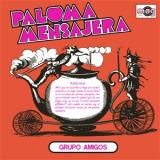
"Paloma mensajera" (featuring members of New Juggler Sound / Laghonia) shows the shift that was taking place within Peruvian rock away from psych and hard rock which had predominated during the early 70s. The style adopted by Grupo Amigos (and other bands and artists during this period) highlights the influence of soft rock, UK, US and Latin American folk rock and, above all, the desire to keep the melodic greatness of The Beatles alive. This reissue includes bonus tracks and extensive liner notes. DESCRIPTION "Paloma mensajera" (featuring members of New Juggler Sound / Laghonia) shows the shift that was taking place within Peruvian rock away from psych and hard rock which had predominated during the early 70s. The style adopted by Grupo Amigos (and other bands and artists during this period) highlights the influence of soft rock, UK, US and Latin American folk rock and, above all, the desire to keep the melodic greatness of The Beatles alive. The positive reception albums by artists such as We All Together, Telegraph Avenue and Zulu garnered between 1972 and 1975, marked a change of paradigm and in preferences within the Peruvian rock scene. Eclecticism gained new ground, to the detriment of the sectarian and orthodox, while melody grew more present and visible, moving away from the progressive experimentation that typified underground Peruvian rock up to the beginning of the 70s. For their first single on MAG, included on this reissue, the band adopted a formula in which Beatles harmonies converged symmetrically with folk motifs. 'Dirty Girl' was a hit on the radio. A full album followed but only a fairly small number of copies of the album were pressed, which seems to have been the main reason for omitting it from the historical accounts of Peruvian rock music from the late 90s onwards. In "Paloma mensajera" all compositions were penned by the group, after several years during which cover versions were a staple. Some of the musical resources that the band had at their disposal in terms of composition and arrangements are striking and even surprising, considering that they were a debut band, whose members were under the age of 20. The arrangements included the clever use of a Moog synthesizer which had just arrived at the MAG studio. The success achieved by the Beatles tribute performances played by the members of Grupo Amigos for decades have eclipsed the songs that Edmundo, Andrés Da Ros and Simón Ames composed with youthful enthusiasm and energy between 1972 and 1973 to the point where they have almost been forgotten. This re-release of "Paloma mensajera" should help rectify this major injustice. It includes bonus tracks and extensive liner notes.
"Los Angeles-based ska-punk band The Interrupters have just released Live In Tokyo! via Hellcat Records. The live record, produced by guitarist Kevin Bivona, is taken from the band"s 2019 performance at Tokyo"s Summer Sonic Festival in support of their latest album, Fight the Good Fight (2018). The past few years have been pivotal for The Interrupters. Fight the Good Fight debuted #1 Heatseekers, #5 Current Rock, and #5 Current Alternative Album on the Billboard charts. The lead single, "She"s Kerosene" charted #5 at Alternative Radio in US, #1 Alternative in Canada, and #1 Rock in Canada making The Interrupters the first female-fronted band with an Alternative Radio hit since No Doubt. The follow-up single, "Gave You Everything" charted #19 at Alternative Radio in US, and #2 Rock in Canada. In addition, the band made their US TV debut on Jimmy Kimmel Live! and were featured as iHeartRadio"s On The Verge Artist (Fall 2018)"
- 1: Shakedown Usa
- 2: Dying Boy's Crawl
- 3: Master's Words
- 4: Bully
- 5: Teen Police
- 6: Wild Weekend
- 7: I?Ve Got Levitation
- 8: Mercy Killer
- 9: Pharmaceutical Au-Go-Go
- 10: Human Crash
- 11: Crush On You
- 12: Hindu Gods Of Love
- 13: Head Off
- 14: Sock It To Me ? Baby!
- 15: Sockman
- 16: Horizontal Action
Black Vinyl[23,49 €]
Sydney's Lipstick Killers released just one single in their lifetime – the perfect ’79 pairing of “Hindu Gods of Love” and ”Shakedown USA”, released on both their own Lost in Space Records and Greg Shaw’s Voxx Records and produced by Deniz Tek of the band's heroes Radio Birdman - but a posthumous live album and a couple of archival releases followed. It was all incredible.
And it was all put together a few years ago on Grown Up Wrong!'s 2CD set Strange Flash! And while the 2LP version of that release included all the studio stuff and the live in LA 1981 set, there was no room for this brain-burning, chaotic live set from '79. Tour De Force, which was recorded for local radio station 5UV, captures the band as they were still emerging from the cocoon that was the Psycho Surgeons.
The Nuggets influences are there, but it's a Stooges influences which dominate proceedings, and definitive readings of both sides of the Psycho Surgeons classic 45 "Wild Weekend"/"Horizontal Action" are included alongside early Killers killers like "Teen Police" and "Sockman" and later faves like "Hindu Gods of Love', "Shakedown USA" and "Dying Boy's Crawl". The band's hot take on the Thirteenth Floor Elevators' "I've Got Levitation" is also featured. There's also plenty of tunes that were only ever captured on tape on this wild night, including "Human Crash", "Crush On You", "Head Off" and "Bully"!
Sydney's Lipstick Killers released just one single in their lifetime – the perfect ’79 pairing of “Hindu Gods of Love” and ”Shakedown USA”, released on both their own Lost in Space Records and Greg Shaw’s Voxx Records and produced by Deniz Tek of the band's heroes Radio Birdman - but a posthumous live album and a couple of archival releases followed. It was all incredible.
And it was all put together a few years ago on Grown Up Wrong!'s 2CD set Strange Flash! And while the 2LP version of that release included all the studio stuff and the live in LA 1981 set, there was no room for this brain-burning, chaotic live set from '79. Tour De Force, which was recorded for local radio station 5UV, captures the band as they were still emerging from the cocoon that was the Psycho Surgeons.
The Nuggets influences are there, but it's a Stooges influences which dominate proceedings, and definitive readings of both sides of the Psycho Surgeons classic 45 "Wild Weekend"/"Horizontal Action" are included alongside early Killers killers like "Teen Police" and "Sockman" and later faves like "Hindu Gods of Love', "Shakedown USA" and "Dying Boy's Crawl". The band's hot take on the Thirteenth Floor Elevators' "I've Got Levitation" is also featured. There's also plenty of tunes that were only ever captured on tape on this wild night, including "Human Crash", "Crush On You", "Head Off" and "Bully"!
Produced by Joe Barresi (Queens of the Stone Age, Tool), The Dissent of Man finds Bad Religion pushing the boundaries of their music as much today as they did in their formative years as a genre defining punk band. Over the course of making the album, primary songwriters Greg Graffin and Brett Gurewitz"s songwriting was informed by life changing events, with Graffin writing his forthcoming book "Anarchy Evolution" and Gurewitz embarking on parenthood again. The result is one of the band"s most forward thinking and musically varied albums ever. The Dissent of Man is not only a snapshot of the band"s personal experiences of the past years but also of their continued maturity in songwriting, capturing an array of styles ranging from blazing punk rock songs like the opener "The Day That the Earth Stalled" and "Meeting of the Minds" and classic rock-tinged cuts like "Cyanide" and "Turn Your Back on Me" to radio rock ready hits like the first single "The Devil in Stitches." The Dissent of Man is a testament to why Bad Religion has remained relevant for the better part of three decades. Already having cemented their place in history as a groundbreaking band who helped create a movement in Los Angeles with classic releases like How Could Hell Be Any Worse?, Suffer, Recipe for Hate, Stranger Than Fiction and Process of Belief, Bad Religion continue to inspire and create with a unique style that continues to cross boundaries and transcends genres."
- A1: London Calling
- A2: Safe European Home
- A3: Know Your Rights
- A4: (White Man) In Hammersmith Palais
- A5: Janie Jones
- A6: The Guns Of Brixton
- B1: Train In Vain
- B2: Bank Robber
- B3: Wrong ‘Em Boyo
- B4: The Magnificent Seven
- B5: Police On My Back
- B6: Rock The Casbah
- C1: Career Opportunities
- C2: Police & Thieves
- C3: Somebody Got Murdered
- C4: Brand New Cadillac
- C5: Clampdown
- C6: Ghetto Defendant
- D1: Armagideon Time
- D2: Stay Free
- D3: I Fought The Law
- D4: Straight To Hell
- D5: Should I Stay Or Should I Go
- D6: Garageland
- E3: Clash City Rockers
- E4: Tommy Gun
- F1: English Civil War
- F2: The Call Up
- F3: Hitsville Uk
- F4: Radio Clash
- E1: White Riot
- E2: Complete Control
The definitive best of collection from “the only band that matters”, Hits Back was originally released in September 2013 and sequenced to replicate the set played by the band at the Brixton Fair Deal (now the Academy) on 10 July 1982, with the addition of some essential numbers that were not included in the set that night.
Das zweite Album von Runnner, A Welcome Kind of Weakness, entstand aus einem gleichzeitigen Riss im Körper und im Leben des Songwriters Noah Weinman. Während der Monate, die er im Bett verbrachte, um sich von einem Achillessehnenriss und dem drastischen Umbruch einer Trennung zu erholen, schrieb er die 11 Songs auf diesem Album, die Weinmans stärkste sind und die vermeintliche Verletzlichkeit des Albumtitels bereitwillig aufnimmt. Aber zur gleichen Zeit sind diese Songs die präsentesten von Runnner, trotzig und selbstbewusst, eine Erinnerung an die Entschlossenheit, die aus der anmutigen Unterwerfung entstehen kann. Langjährige Fans von Weinman haben sich wahrscheinlich in seinen unverkennbaren Indie-Rock verguckt, der fast ausschließlich in Schlafzimmern und Heimstudios aufgenommen wurde, wo seine ergreifenden und selbstironischen Texte über Banjos, Gitarren und hallenden Bläsern schweben, die sich zu kathartischen Gipfeln steigern. Aber auf A Welcome Kind of Weakness erhebt sich Weinman zum ersten Mal in High Fidelity. Das erste richtige Studioalbum von Runnner erinnert an die überlebensgroßen Höhen des Rocks der frühen achtziger Jahre, mit dem Weinman aufgewachsen ist, an Bands wie Coldplay, Radiohead und Snow Patrol, mit ihrer unverfälschten stimmlichen Präsenz, ihren schillernden Gitarrenriffs und ihrem astralen Synthesizer-Glanz. Das ist Rockmusik in ihrer köstlichsten Form, Musik die Weinman etwas gab, worauf er sich freuen konnte, als er endlich wieder live spielen konnte. Aber so hoch die klanglichen Höhen auf A Welcome Kind of Weakness auch sein mögen, wir sehen Weinman auch, wie er anmutig mit den Fragen kämpft, die sich aus Momenten des körperlichen und emotionalen Verderbens ergeben. Es erfordert eine gewisse Tapferkeit, lange genug in der trüben Mitte zu sitzen, um darüber zu schreiben. Und in seiner Bereitschaft, diesen transitorischen Raum zu bezeugen, scheint Weinman uns zu beruhigen: Du magst denken, dass du nicht mehr laufen wirst, aber mit der Zeit, könntest du es.
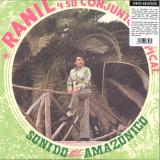
Ranil is undoubtedly the most unconventional figure among the greats of Amazonian cumbia, earning a well-deserved place alongside iconic bands like Los Mirlos, Los Wembler's, and Juaneco y su Combo. This compilation offers a glimpse into the vast musical output Ranil created in the late 1970s and early 1980s. Psychedelia, rock fusion, cumbia, salsa, mambo, Amazonian folk_ you'll find all these flavors blended into the vibrant, jungle-rich sound Ranil crafted. DESCRIPTION Ranil is undoubtedly the most unconventional figure among the greats of Amazonian cumbia, earning a well-deserved place alongside all the better-known iconic bands. He worked as a teacher, criollo guitarist, radio host, TV entrepreneur, and politician, but gained lasting fame as the founder of Ranil y Su Conjunto Tropical in the 1970s. By 1968, around the same time Los Destellos were making waves in Lima, groups like Los Wembler's de Iquitos and Juaneco y su Combo began electrifying cumbia in Iquitos. This new genre, dubbed Amazonian cumbia, exploded nationwide in 1973, thanks to hits by Juaneco y su Combo, Los Mirlos, and Los Wembler's. The success these bands achieved spawned dozens of other groups from the Amazon. Ranil, always a visionary, recognized the movement's potential and joined forces through his first single recorded on the Dinsa label in 1974. Unhappy with the contractual terms, he went on to found Producciones Llerena, the label on which he would release the rest of his discography. Over the years, Ranil y su Conjunto Tropical featured guitarists like Límber Zumba and Luis Nigro, while Ranil remained the lead vocalist and bassist for group. Zumba and Nigro had already played with other regional bands and written songs for groups like Los Destellos and Los Mirlos. This compilation offers a glimpse into the vast musical output Ranil created in the late 1970s and early 1980s, bringing together 14 tracks from the band's 10 LPs. These records have always been hard to come by as, despite being recorded in Lima, they were distributed by Ranil from Iquitos. Psychedelia, rock fusion, cumbia, salsa, mambo, Amazonian folk_ you'll find all these flavors blended into the vibrant, jungle-rich sound Ranil crafted.
White LP. Born out of the early 1980's Austin noise punk scene, Scratch Acid deliberately eschewed the loud, fast rules of hardcore as everything they didn't want to be and embraced a weirder, artier sound. Prior to the release of their 1984 debut S/T EP, someone gave Touch and Go Records owner Corey Rusk a cassette of the recording, and he was instantly a huge fan. Rusk was immediately interested in releasing the EP and contacted the band to express his admiration. At the time, Scratch Acid had already committed to working with Rabid Cat Records, who released the band's debut release S/T EP (1984) and their only full-length album, Just Keep Eating (1986). The group quickly developed a riveting performance aesthetic, and, as the debut S/T EP made its way around the country via fanzines, college radio, and word-of-mouth, the band mounted short tours to the Midwest and the East Coast. After playing a total of 146 shows, Scratch Acid broke up after the long tour that followed the release of the Berserker EP (Touch and Go Records, 1987). Since that time, the band have had many imitators, and many alternative bands have cited Scratch Acid as one of their influences.
Born out of the early 1980's Austin noise punk scene, Scratch Acid deliberately eschewed the loud, fast rules of hardcore as everything they didn't want to be and embraced a weirder, artier sound. Prior to the release of their 1984 debut S/T EP, someone gave Touch and Go Records owner Corey Rusk a cassette of the recording, and he was instantly a huge fan. Rusk was immediately interested in releasing the EP and contacted the band to express his admiration. At the time, Scratch Acid had already committed to working with Rabid Cat Records. The group quickly developed a riveting performance aesthetic, and, as the debut S/T EP made its way around the country via fanzines, college radio, and word-of-mouth, the band mounted short tours to the Midwest and the East Coast. While he was not able to work with Scratch Acid directly through Touch and Go, Rusk had begun booking shows with Scratch Acid in Detroit, so he could see them live and meet them. A friendship formed, and Touch and Go Records would eventually release the band's second EP, Berserker, in 1987.
- Watch The Water
- The Way Of The World
- Coombe House
- Wash What You Eat
- Like When
- Basic Everyday Life
- Hold Onto I.d
Recorded from late 1996 through early 1997, Hold Onto I.D., The Shadow Ring's fourth album, marks the apogee of the trio's experimental rock epoch - their last record clinging to their factitious bandness before they let all song and structure go awash in sonic malaise for their final run of releases on Swill Radio. The surrealist dreams of City Lights and Put the Music in Its Coffin give way to pseudo-expressionistic lyrics mired in the banality and bleakness of the everyday, set against the backdrop of the Coombe House (as pictured on the album's cover). While Hold Onto I.D. is the group's most overtly autobiographical release to date, Lambkin's lyrics obfuscate his expressionist tendencies filtering them through the codes and languages of officialdom, linking the "inner self" with documents of the state_identification cards, National Insurance numbers, and British passport numbers. Having moved out of their parents' homes and into the top floor of the famed Coombe House, Graham Lambkin and Darren Harris set out to rework material drafted over the previous year, aided by Tim Goss, still safely in residence at the "Valebrook Inn." While the familiar sounds of Harris's deadpan recitation and Lambkin's electric guitar, amateurishly strummed, dominate the album, the emotive interludes of Goss's keyboards populate the record along with of home-cooked tape experiments and dime-store concrète. Originally released on CD and supported by a US tour with friends Scott Foust and Karla Borecky's Idea Fire Company, Hold Onto I.D. is perhaps the band's best-known and most accessible album. (The Shadow Ring's sole representative on a streaming platform, it was once acknowledged by the Guardian as one of "the 101 strangest records on Spotify.") Offered here for the first time on vinyl, Hold Onto I.D. is an essential album for both completists and the uninitiated alike. Throughout their legendary, decade-long run, the Shadow Ring were an enigmatic force on the international musical sub-underground. Before their disbandment in 2002, this shambolic rock outfit, formed by a group of rowdy teenagers in southeast England, left behind a mighty run of eight LPs, a handful of 7"s, and a spate of raucous live shows and cryptic zine appearances on both sides of the Atlantic, all which have bolstered their enduring word-of-mouth mystique. Beginning in 2023 with the first-ever vinyl pressing of the self-released pre-Shadow Ring tape The Cat & Bells Club (1992), Blank Forms Editions has been conducting a systematic retrospective of the storied group. Wax-Work Echoes and Hold Onto I.D. are the latest releases in a multiyear reissue effort that includes several LPs, a comprehensive CD box set, and a nearly five-hundred-page book.
- Cliché
- Alcoholic Heart
- Tattooed Like Me
- Radio Callboy
- Glory Hole
- Where Is My Hope?
- Two Day Session
- Brainmelt
- Brigitte Bordeaux
- Fame
- Not My Thing
- Red Lips
Dass Hamburg eine gute Adresse für Streetpunk ist, beweisen nun auch BOLANOW BRAWL mit ihrer ersten Langrille ,First Shots!", die auf die bereits knapp neun Jahre zurückliegende Debüt-EP ,Total Escalation" folgt. Man lässt es halt ruhiger angehen im Norden - will's jetzt aber auch noch mal wissen. Der Bandname - eine Kombination aus der Billig-Wodka-Marke BOLANOW und dem englischen BRAWL für Rauferei oder Handgemenge - verweist auf ambivalente Erfahrungen, die die Bandmitglieder unter Alkoholeinfluss im jugendlichen Leichtsinn sammelten. Flotte Gitarrenriffs, treibende Drumbeats und ein rauer, oft rotziger Gesang bilden das musikalische Gerüst der Hanseaten - das im Kontrast zu den eingängigen Leadgitarren-Melodien steht. Singalongs verleihen dem Sound einen bierseligen Touch. Die Mischung aus englischen, amerikanischen und Buxtehuder Stilelementen gibt den zwölf Songs das gewisse Etwas, das den Stil von BOLANOW BRAWL ausmacht. Die alte Plattitüde von den ,Texten, die das Leben schrieb" trifft auch auf die Songs von BOLANOW BRAWL zu. Eigene Erlebnisse, Beobachtungen und Erfahrungen aus Arbeitswelt, Subkultur und Gesellschaft fließen in die Texte ein - ohne erhobenen Zeigefinger, dafür gern mit gehobener Bierflasche. Die Covergestaltung stammt von Alteau, einem frankobelgischen Skinhead und Comiczeichner, der schon mit 14 erste Arbeiten im Spirou-Comic-Magazin veröffentlichte. Seit Ende der Achtziger hat er etliche Plattencover für Punk- und Oi!-Bands gestaltet - darunter Klasse Kriminale, Rancid, Bérurier Noir und The Herberts, bei denen er auch selbst als Sänger aktiv war.
- A1: Malcolm's Cooking
- A2: Last Goodbye
- A3: Maybe You Have To
- A4: Setting Sun
- A5: Pie In The Sky
- B1: What’s A Good Life
- B2: Main Menu
- B3: Dorien Kregg
- B4: Common Denominator
- B5: Iron
Als Post Animal ihr neues Album IRON aufnahmen, waren zum ersten Mal seit fast einem Jahrzehnt alle sechs Originalmitglieder wieder zusammen im Studio. Das Ergebnis ist die Verkörperung von 30 Tagen voller Kameradschaft und grenzenloser musikalischer Entdeckungsreise – ihre erneuerte Verbundenheit ist unerschütterlich. Das Album nutzt die neue Schärfe, um Genregrenzen zu überwinden und erweitern, von Synthpop über Folk und Vintage-Radiorock bis zu spannungsgeladener Psychedelia. IRON versetzt den Hörer direkt in den Raum der Band – freizügig und experimentell, aber dennoch präzise gespielt. "Das Zusammentreffen all dieser kreativen Kräfte war wie geschärftes Eisen," sagt Sänger/Bassist Dalton Allison. "Wenn wir nah beieinander sind, machen wir uns gegenseitig besser."
- Nafwaya Fwaya
- Kalindawlo Ni Mfumu
- Elena
- Fosta Kayi
- Nalikwebele Sonka
- Shalapo
- Kapata Mukaya
- Bambi Balefi Sa Kumwabo
- Imbote
- Fodya
- Mayo Na Bwalya
- Tuli Beni Calo
Country, Township-Jazz und Pop-Hits aus der Hochphase der sambischen Freiheitsbewegung. Der Sänger, Gitarrist und Bandleader Alick Nkhata bewegt sich mühelos zwischen einsamem Country-Slide, Big-Band-Pop und luftdichten Gesangsharmonien, die alle ihre Wurzeln in Bemba- und anderen afrikanischen traditionellen Liedern und Rhythmen haben. Es ist eine schwindelerregende, umfassende und weitreichende Mischung von einem Künstler und Musikarchivar, der zur Stimme des Freiheitskampfes seines Landes wurde. Die Texte und die Musik spiegeln die Zeit wider - einsame ländliche Klagelieder wie ,Nafwaya Fwaya" und ,Fosta Kayi" driften entlang der Eisenbahnlinien in die städtischen Zentren und Kupferminen. "Nalikwebele Sonka (I Told You Sonka)", gesungen in ,Deep-Bemba`, verbindet honiggetränkte Jodler mit einer Warnung vor der Abwärtsspirale der Arbeitslosigkeit in den Townships, während "Mayo Na Bwalya" (Mother of Bwalya) die Bitte einer Mutter an einen traditionellen Singvogel ist, ihren missratenen Sohn zu führen. Lieder wie ,Shalapo", ,Kalindawalo Na Mfumwa" und sein größter Hit ,Imbote" vereinen Klavier, Big-Band-Hörner und sogar frühe elektronische Instrumente zu atemberaubenden synkretistischen Pop-Meisterwerken. Diese LP ist das erste Mal, dass seine Musik auf Vinyl wiederveröffentlicht wird. Auf hochwertigem schwarzem Vinyl mit 12-seitigem Deluxe-Booklet mit unveröffentlichten Fotos, Texten, Übersetzungen und Anmerkungen des NTS-Radiomoderators Jamal Khadar.