Suche:radio studio 54

Styles
Alle
Ferris & Sylvester - Otherness LP 2x12"

‘Otherness’ is Ferris & Sylvester’s second studio album. The music ranges across a spectrum of psychedelic folk, blues, rock and soul, yet the songs are connected by the duo’s stark and vivid storytelling. Echoes of Alabama Shakes, Madison Cunningham and The Teskey Brothers ripple throughout.  Recorded at the pair’s studio to a 1960’s tape machine and released through their label Archtop Records, the husband-and-wife duo dedicate the album to anyone who feels like an outsider.  The 14-track album, and its accompanying otherworldly artwork, is available on marble red heavyweight double vinyl, standard black heavyweight double vinyl, and CD.  The vinyl products include an exclusive hidden track, with the song’s handwritten lyrics etched onto Side D.  “Ferris & Sylvester have built their own world. Breaking down walls and claiming fresh territory as their own.” - Clash  “Folk-rock at its most elegantly haunting.” - Wonderland  UK / EU 26-date headline tour (February - March 2024), with London show at Lafayette, 1st March 2024.  Press - Reviews & features in Classic Rock, RNR, Rolling Stone, House Of Solo, MINT Magazine.  Radio - BBC Introducing (West) live session, BBC Scotland Another Country with Ricky Ross live session.

vorbestellen01.03.2024

erscheint voraussichtlich am 01.03.2024

33,57
MURDOCK - X-RAY LP 2x12"

Murdock

X-RAY LP 2x12"

2x12inchRMPG065V
RAMPAGE RECORDINGS
25.01.2024

Murdock will release his second album in January 2024. The first was released in 2018, collected 20 million streams, and reached radio in Belgium and abroad with a number of strong singles, partly thanks to guest appearances from UK legend Jenna G and reggae hero Errol?Dunkley.?Studio Brussel chose 'Make Me Stronger' and 'Different Way' for daytime radio, George FM in New Zealand played 'Dollars Aren't Cheap' so much that the track made it into the top 10 of the national Shazam list, and in the UK it was 'Double Dutch' with?Roni Size that convinced BBC Radio 1.?

This time he once again brings Sena Dagadu on board, with whom he scored his biggest hit to date: Can't Keep Me Down has almost 12 million streams and the title is tattooed on loads of body parts worldwide.?She will provide goosebumps again on the upcoming album with 'Reign'.?Omar Perry (son of!) gets on board for 'Fire Burning', which will also be the anthem of the upcoming Rampage edition in the Sportpaleis, Ayah Marar helps the euphoric 'Lost In You' to a dose of soul, and new talents Emilie Rachel and Medyk?steal the show on 'Living In The Moment' and 'Runaway' respectively, on which Murdock combines drum & bass with their pure songwriting skills.?Advance single 'Cola' has already done extremely well: 600,000 streams in a few months, and a lot of radio play in Belgium, New Zealand and United Kingdom.?The album is called X-Ray as each track represents a piece of the identity that makes Murdock a whole.

nicht am Lager

Bestelle jetzt und wir bestellen den Artikel für dich beim Lieferanten.

25,17

Last In: vor 2 Jahren
Bry Webb - Run With Me	LP

Die-cut sleeve. In the fall of 2013 Bry Webb was putting the finishing touches on his second album Free Will. Released on May 20th 2014, Bry, with his newly assembled band The Providers, spent the following few years traversing North America playing clubs, festivals and storied stages such as Toronto’s Massey Hall. Nothing new for an artist who had spent the aughts in a constant state of motion with Constantines, a band who on average had performed one of every three nights on a stage somewhere in the world. In fact, running in parallel to Bry’s solo touring schedule was a reunion with his former Constantines’ bandmates to once again present their incendiary live show and celebrate the 11th anniversary reissue of the band’s Shine A Light. It is what happened as the decade wound down that seemed out of character for an artist who had spent close to 20 years immersed in the studio and on the stage: the music stopped altogether. Bry explains his feelings at that time, “I lost the musical plot about 5 years ago and stopped playing music entirely, sold instruments and recording equipment, and committed myself to the idea that I was absolutely done”. Webb dedicated himself to his ongoing work in community radio, months turned to years and musical life seemed to be all but gone from view. Now in an unexpected turnaround 10 years on from the recording of his last studio album, there is not only a return to the stage for Bry but also a new record. Primarily composed in a season of upheaval, Run With Me contains some of Bry’s rawest sentiments. Fresh and painfully present there is an immediacy one can hear as emotional walls collapse in real time. Bry explains the context of the album’s creation: “In early 2023 my personal life exploded. In the process of dealing with that, I started writing music again and started recording at home. Advised that I needed to figure out how to ask for, and accept, help from other people, I sent early recordings of songs to friends from twenty-five years of music making - many folks I hadn’t connected with in years - and asked if they’d contribute anything to the songs. People came through in ways that overwhelmed me to the point that I cried when I wrote out the list of players for the liner notes. I felt incredibly cared for. From Andy Magoffin, who recorded the first Constantines album in 1999, to members of the Cons, to my nieces Addy and Ella playing drums, and a doppler recording of my daughter’s heartbeat, the record is a document of my creative life, and the people who made it possible to make music again.” If the cover of Run With Me looks familiar, it is with full intent. The album’s technicolor marbling and die cut text serve to signal the inclusion of the album in a trilogy started with Bry’s first record Provider. Just as that album starts with the track Asa, this new one introduces itself with the instrumental Webb. The trilogy is now completed with his daughter's first, middle and last names represented as the first tracks on each of the three albums. While the LP’s package signals its place in the collection, and tracks such as Older Than The Dirt and What I Do revisit their predecessor’s familiar sonic starkness, Run With Me is the outlier of the trio. A number of new tracks forego the quietude of Provider and Free Will, clearly recalling the rallying rhythms of Constantines’ anthems. Thunder Bay (instrumental backing courtesy of The Harbourcoats circa 2009), with its insistent kick drum and wall of electrics, support one of Webb’s most indelible melodies, and the not so subtly psychedelic Modern Mind reveal an expansion of Webb’s palette. Perhaps the furthest afield is the contextual centerpiece of the album, Goodbye, where we not only hear a joyful voice that lay dormant for years, but hear it reclaim its power. Backed by Constantines’ Will Kidman, Doug MacGregor and Dallas Wehrle, Bry belts out “I’m through with all the rage, now watch the light pour out of me.” As with all of Bry’s work, Run With Me’s lyrics take their time to settle in. Songs of self-examination, reconfigured love ballads, and songs for those who work to help others. Songs of singing abound. It’s there in Older Than The Dirt’s second verse: "Logic to the last intention, logic in the way we kept holding on forever, singing as the floor- was swept”, ten thousand birds sing a warning song in Thunder Bay and again in Goodbye’s telling of a cathartic return to one’s true self with its celebration of those “Who sing - sing all joy - all joy of language, in a single word”. Joining Bry in singing Run With Me’s songs of “death, transition and hope,” are kindred spirits Jennifer Castle, Julie Doiron, Daniel Romano and Steph Yates. All of these singers elevate the album’s healing sentiments and help express the album’s central plea; a prayer of sorts wrapped in the traditional Scottish Gaelic melody of She Is Here’s second verse: “Let the sun rise in the morning and any witness bring. Let all the blooming cosmos teach us to sing”.

vorbestellen27.11.2023

erscheint voraussichtlich am 27.11.2023

31,51
Laura Groves - Radio Red LP

Laura Groves

Radio Red LP

12inchBELLA1408V
Bella Union
11.08.2023

Much of Radio Red, the first full length album Laura Groves has released under her own name, was written, produced and recorded by Groves in her studio, watched over by two radio transmitting towers. “I became very drawn to them and they became like symbols to me; they were always awake, sending their messages, the red lights always came on at night and watched over whatever was going on in my life.” The album deals with themes of communication - missed and intercepted signals, chance meetings, synchronicities, the channels through which we try to express our true feelings, the outside interference that can get in the way and the joy of letting go and allowing the messages to flow freely.

Self-recording and production is a core part of Laura’s songwriting process. “I remember years ago getting hold of some basic recording software and being instantly drawn in. The idea of being able to layer up my voice was a dream, like building an orchestra out of what I had at home.” The passion for home-recording, using the resources available at the time, working through limitations and capturing textures through layering, forms the foundation of Groves’ experimental and off-centre pop music and electrified folk music. The sound world of Radio Red is made up of echoes, and snapshots of half-remembered pop songs, piano ballads, chopped up TV theme tunes, ambient synthesised sounds and electronic music; tuning in between channels without fully belonging to any one of them, with the comfort, familiarity and strangeness that can come with hearing voices on the radio.

vorbestellen11.08.2023

erscheint voraussichtlich am 11.08.2023

30,21
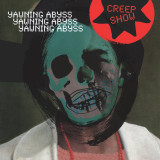
Creep Show - Yawning Abyss

Creep Show

Yawning Abyss

12inchBELLA1474V
Bella Union
16.06.2023

In the five years since Creep Show’s acclaimed Mr Dynamite album was released it’s fair to say that we’ve all been through a fair bit. Sitting here, in 2023, things don’t seem to be getting any better. There’s the cost of living crisis and political meltdowns; we're in deep water with global warming and to top it all there’s a war on our doorstep.

Back in 2018 everything seemed less complicated. Sure, there was stuff to get riled about, but we knew nothing about what was to come. Mr Dynamite was a fairground ride into the dark corners of a world that was on the brink of being blitzed in a blender. It was a record teetering on the edge. Five years down the line you’d expect the follow-up, Yawning Abyss, would double-down and bring the white-knuckled, teeth-gritted fury of the last five years to the boil. And yet….

A quick recap? No problem. Wrangler + John Grant = Creep Show. And Creep Show? “A band of musical misfits who have found a voice or two”, says Wrangler’s Ben “Benge” Edwards, whose Bond villain studio on the edge of a moorland is Creep Show Grand Central as well as home to an analogue synth arsenal that could sink ships.

Wrangler have known each other for a while. Tunng’s electronics wizard Phil Winter and Cabaret Voltaire’s trailblazing, pioneering frontman Stephen Mallinder go way back, while Phil and Benge crossed paths in the 21st century when they seemed to be increasingly in the same venues at the same times. Meanwhile, Mal had been living in Australia since the mid-90s and when, in 2007, he returned to the UK his old pal Phil suggested he meet Benge and the three of them immediately began working together.

Wrangler collectively bumped into Grant at their soundcheck for Sheffield’s Sensoria Festival in 2014 where they were playing with Carter Tutti. A friendship blossomed and when they were invited to perform together for Rough Trade’s 40th anniversary show at London’s Barbican in 2016, well, they jumped at the chance... and Creep Show was born.

Let’s talk about the new album... What is the ‘Yawning Abyss’? You might well ask. According to Mal, it’s “a cosmic event horizon that I can see from my attic window when stand on a chair”. Yeah. Thanks.

“On this album”, offers Benge, feet firmly on the floor, “Wrangler wrangled some vintage synths, mostly Roland, Moog, and the ‘Crystal Machine’ - then John Grant joined in the fun at Memetune Studios where lots of musical experiments were carried out. Then Mal and John ran off to Iceland with the master tapes and recorded a load of madcap vocals. Back at Memetune, me and Phil were left to try and make sense of it all. Which wasn’t hard because what they did in Iceland was totally magnificent.”

Which kind of brings us back to where we began. You’d imagine ‘Yawning Abyss’ would be blowing steam out of its furious ears. Mr Dynamite but kicking a wasps nest. Repeatedly. And yet…

Opener ‘The Bellows’ comes on like a modular ‘Radio Ga Ga’, the singalong ‘Moneyback’ (“You want your money back? / I didn’t think so”) sounds like Godley & Creme’s ‘Snack Attack’ meets Prince Charles And The City Beat Band (“Pennies, pounds, dollar bills, signed agreements, death wills”). ‘Yahtzee!’ is an unhinged electro breakdance party in four minutes and nine seconds.

Where Mr Dynamite was menace, a mélange of mangled voices, with Grant and Mallinder being heavily treated, pitched up or down, rendering their contributions largely indistinguishable, Yawning Abyss takes a more direct approach. You hesitate to say feelgood, but there’s a skip in the step here for sure.

The title track plays John Grant’s vocal straight. Completely. It’s good, so very good. Like ‘Axel F’ covered by Vangelis. The delicious shimmering synths of ‘Bungalow’ also plays those Grant pipes with a straight bat. ‘Matinee’ delves into darker, very funky territory. With Mal upfront it comes on like ‘The Crackdown’. Choice lyric: “You are starting to breakdown / And it’s so fun for me to see / You should have thought of that / You should have come prepared / You can see what’s happening and you look a little scared”.

So, you know, not all feelgood. But it does feel good. It’s probably best to draw your own conclusions... This is Creep Show after all.

vorbestellen16.06.2023

erscheint voraussichtlich am 16.06.2023

28,15
Texas - The Very Best Of 1989 - 2023 LP 2x12"

34 Jahre ist es her, dass Texas ihre erste Single „I Don’t Want A Lover“ aufgenommen und dann verblüfft zugesehen haben, wie sie Platz acht in den britischen Charts erreichte. Seit dem hat die Band aus Glasgow zehn Studioalben produziert, die sich weltweit über 40 Millionen Mal verkauft haben! Ihren größten Erfolg hierzulande feierten sie mit dem Album „The Hush“ (1999), das mit dem Radio-Überhit „Summer Son“ Gold-Status erreichte. Nun freuen wir uns sehr diese beeindruckende Karriere mit einer einzigartigen 24-Track-Compilation zu feiern! Ihre größten Songs (u.a. inkl. Wu-Tang Clan Feature) und zwei komplett neue Songs finden sich auf 2CD und 2LP: „After All“ und „Keep On Talking“.

nicht am Lager

Bestelle jetzt und wir bestellen den Artikel für dich beim Lieferanten.

27,69

Last In: vor 2 Jahren
Lanterns On The Lake - Versions Of Us LP

Lanterns On The Lake kündigen ihr neues Album 'Versions Of Us' an, das am 2. Juni über Bella Union erscheint. Die selbstproduzierte fünfte Studio-LP folgt auf das 2020 für den Mercury-Prize nominierte Album 'Spook the Herd'.

Die neun Songs werfen große Gedanken auf, die sich mit den Möglichkeiten des Lebens auseinandersetzen, und der Frage, ob wir unser Schicksal ändern können oder dazu verdammt sind, dieselben Fehler im Leben immer und immer zu wiederholen. Die Stimme von Songwriterin Hazel Wilde liegt schwer über den Songs, die mit melodischen Gitarren, aufwühlenden Vintage-Synthesizern und verträumten Streichern musikalisch und textlich neues Terrain erkunden.

Mental health Probleme und persönliche Konflikte innerhalb der Band hatten einen großen Einfluss darauf, dass eine erste Version des Albums bereits frühzeitig Gestalt annahm, dann aber doch so nicht erschien. Die Band verwarf die Arbeit von fast einem Jahr und ging zu Song-Demos zurück, bei denen nur Hazel Wilde mit Philip Selway von Radiohead am Schlagzeug und an den Percussions neu begann.

- Ltd. Col. LP: (Transparent Orange Vinyl)

vorbestellen02.06.2023

erscheint voraussichtlich am 02.06.2023

26,68
Karin Rabhansl - RODEO

Karin Rabhansl

RODEO

12inchDWM154
DONNERWETTER
24.02.2023

Wir dürfen uns Karin Rabhansl als einen glücklichen Menschen vorstellen. Beschwingt dreht die Sängerin aus dem Bayerischen Wald auf ihrem fünften Studioalbum "Rodeo" die Gitarren laut. Der Rabe fliegt wieder - doch diesmal will er dorthin, wo er noch nie war. Auf "Rodeo" verschiebt Karin Rabhansl munter ihre eigenen Parameter. Geschickt zitiert die furchtlose Niederbayerin mit den bunten Ringelstrümpfen Rockhelden wie Led Zeppelin, Kyuss und Weezer und frönt ihrer tiefen Liebe zu Radiohead, Sigur Rós und PJ Harvey. Der Albumtitel "Rodeo" steht für den Ritt des Lebens. Die Mundart-Riot-Queen aus Trautmannsdorf Rock City erzählt ihre dunkelbunten Milieustudien nicht mehr nur in der ersten Person, sondern aus der neutralen Position der Beobachterin und Chronistin heraus. Bemerkenswert in befindlichkeitsfixierten Zeiten wie diesen ist dabei ein Detail: In den Texten wird genau beobachtet, aber wenig bewertet und vor allem nicht gejammert. Ganz eigentlich geht es auf "Rodeo" ums Durchhalten. Ums Klarkommen. Und darum, seinen ganzen Mut zusammenzupacken und das Heft in die Hand zu nehmen, wenn es sich nicht mehr ausgeht. Über Rabhansls Geschichten schwebt stumm die Erkenntnis, dass dieses Leben kein leichtes ist und noch nie war. Und dass die Welt kein per se guter oder schlechter, sondern oft einfach nur ein heikler Ort ist - seltsam und schön und zugleich doch immer voller Falltüren und Untiefen.

vorbestellen24.02.2023

erscheint voraussichtlich am 24.02.2023

25,17
Mich L. - AIR NEAR SILENCE LP

Mich L.

AIR NEAR SILENCE LP

12inchCORTIZONA019
CORTIZONA
23.02.2023

Truly intrigued as a kid by the weird sounds his DIY electronica building kit could make, Mich L. (aka Mich Leemans of Paper Hats and curator of AB Salon) never stopped his quest for more beauty in hidden frequencies and harmonics of modular synths and old tape recorders.

His search into the deep mysterious sound spectrum unexpectedly made a surprising u-turn after a seizure of increasing tinnitus and enduring nausea.

The concept of listening, as stated by Pauline Oliveiros as 'the involuntary nature of hearing and the voluntary, selective nature of listening' took focus in his being.

These new insights, together with a studio rearrangement and the purchase of the EMS Synthi A are the keystones which shaped the contours of his debut solo album 'air near silence'

A precious, fragile and ultra personal sonic exploration of the inner self translated in carefully constructed synth and tape compositions : a microscopic auditive dissection of time and soul.

Slow burning stripped down shifting patterns, patched and wired straight from the heart, crawling steadily under your skin, with no plans to leave.

Hushed analogue splendor for patient music lovers who dare to be surprised.

File under:
deep immersive and profound listening, (dark) ambient, electronica, analogue synths, tape compositions

Recommended if you like:
Eliane Radigue, Coil, Kali Malone, Lucy Railton, The Caretaker, Pauline Oliveiros, BBC Radiophonic Workshop, Throbbing Ghristle, early electronics, DEATHPROD...

nicht am Lager

Bestelle jetzt und wir bestellen den Artikel für dich beim Lieferanten.

23,49

Last In: vor 3 Jahren
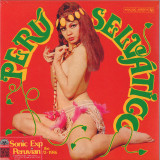
Various - Perú Selvático LP 2x12"
 
18

Less than a hundred miles inland from the capital city of Lima lies the great Peruvian jungle, an untamed land of impenetrable forests and endless winding rivers. In its isolated cities, cut off from the fashions of the capital, a unique style of music began to develop, inspired equally by the sounds of the surrounding forests, the roll of the mighty Amazon and Ucayali Rivers, and the rhythms of cumbia picked up from distant stations on transistor radios. With the arrival of electricity, a new generation of young musicians started plugging in their guitars and trading in their accordions for synthesizers: Amazonian cumbia was born.

Powered by fast-paced timbale rhythms, driven by spidery, treble-damaged guitar lines, and drenched in bright splashes of organ, Amazonian cumbia was like a hyperactive distant cousin of surf music crossed with an all-night dance party in the heart of the forest. While many of the genre’s greatest tracks were instrumental, and others were simple celebrations of life in the jungle, the goal of every song was to keep the party going.

Radio stations in Lima remained unaware of the new electric sounds emanating from the jungle, but a handful of pioneering
record producers ventured over the mountain passes to the cities of Tarapoto, Moyobamba, Pucallpa – even Iquitos, a city
reachable only by boat or plane – and lured dozens of bands to the recording studios of the capital to lay down their best
tracks. Although many became local hits, few were ever heard outside the Amazonian region … until now.
With eighteen tracks from some of the greatest names in Amazonian cumbia, Perú Selvatico is both the improbable soundtrack
to a beach party on a banks of the Amazon and a psychedelic safari into the sylvan mysteries of the Peruvian jungle.

nicht am Lager

Bestelle jetzt und wir bestellen den Artikel für dich beim Lieferanten.

29,37

Last In: vor 3 Jahren
Lee Tracy & Isaac Manning - Is it What You Want

As the sun sets on a quaint East Nashville house, a young man bares a piece of his soul. Facing the camera, sporting a silky suit jacket/shirt/slacks/fingerless gloves ensemble that announces "singer" before he's even opened his mouth, Lee Tracy Johnson settles onto his stage, the front yard. He sways to the dirge-like drum machine pulse of a synth-soaked slow jam, extends his arms as if gaining his balance, and croons in affecting, fragile earnest, "I need your love… oh baby…"

Dogs in the yard next door begin barking. A mysterious cardboard robot figure, beamed in from galaxies unknown and affixed to a tree, is less vocal. Lee doesn't acknowledge either's presence. He's busy feeling it, arms and hands gesticulating. His voice rises in falsetto over the now-quiet dogs, over the ambient noise from the street that seeps into the handheld camcorder's microphone, over the recording of his own voice played back from a boombox off-camera. After six minutes the single, continuous shot ends. In this intimate creative universe there are no re-takes. There are many more music videos to shoot, and as Lee later puts it, "The first time you do it is actually the best. Because you can never get that again. You expressing yourself from within."

"I Need Your Love" dates from a lost heyday. From some time in the '80s or early '90s, when Lee Tracy (as he was known in performance) and his music partner/producer/manager Isaac Manning committed hours upon hours of their sonic and visual ideas to tape. Embracing drum machines and synthesizers – electronics that made their personal futurism palpable – they recorded exclusively at home, live in a room into a simple cassette deck. Soul, funk, electro and new wave informed their songs, yet Lee and Isaac eschewed the confinement of conventional categories and genres, preferring to let experimentation guide them.

"Anytime somebody put out a new record they had the same instruments or the same sound," explains Isaac. "So I basically wanted to find something that's really gonna stand out away from all of the rest of 'em." Their ethos meant that every idea they came up with was at least worth trying: echoed out half-rapped exhortations over frantic techno-style beats, gospel synth soul, modal electro-funk, oddball pop reinterpretations, emo AOR balladry, nods to Prince and the Fat Boys, or arrangements that might collapse mid-song into a mess of arcade game-ish blips before rallying to reach the finish line. All of it conjoined by consistent tape hiss, and most vitally, Lee's chameleonic voice, which managed to wildly shape shift and still evoke something sincere – whether toggling between falsetto and tenor exalting Jesus's return, or punctuating a melismatic romantic adlib with a succinct, "We all know how it feels to be alone."

"People think we went to a studio," says Isaac derisively. "We never went to no studio. We didn't have the money to go to no studio! We did this stuff at home. I shot videos in my front yard with whatever we could to get things together." Sometimes Isaac would just put on an instrumental record, be it "Planet Rock" or "Don't Cry For Me Argentina" (from Evita), press "record," and let Lee improvise over it, yielding peculiar love songs, would-be patriotic anthems, or Elvis Presley or Marilyn Monroe tributes. Technical limitations and a lack of professional polish never dissuaded them. They believed they were onto something.

"That struggle," Isaac says, "made that sound sound good to me."

In the parlance of modern music criticism Lee and Isaac's dizzying DIY efforts would inevitably be described as "outsider." But "outsider" carries the burden of untold additional layers of meaning if you're Black and from the South, creating on a budget, and trying to get someone, anyone within the country music capital of the world to take your vision seriously. "What category should we put it in?" Isaac asks rhetorically. "I don't know. All I know is feeling. I ain't gonna name it nothing. It's music. If it grabs your soul and touch your heart that's what it basically is supposed to do."

=

Born in 1963, the baby boy of nine siblings, Lee Tracy spent his earliest years living amidst the shotgun houses on Nashville's south side. "We was poor, man!" he says, recalling the outhouse his family used for a bathroom and the blocks of ice they kept in the kitchen to chill perishables. "But I actually don't think I really realized I was in poverty until I got grown and started thinking about it." Lee's mom worked at the Holiday Inn; his dad did whatever he had to do, from selling fruit from a horse drawn cart to bootlegging. "We didn't have much," Lee continues, "but my mother and my father got us the things we needed, the clothes on our back." By the end of the decade with the city's urban renewal programs razing entire neighborhoods to accommodate construction of the Interstate, the family moved to Edgehill Projects. Lee remembers music and art as a constant source of inspiration for he and his brothers and sisters – especially after seeing the Jackson 5 perform on Ed Sullivan. "As a small child I just knew that was what I wanted to do."

His older brother Don began musically mentoring him, introducing Lee to a variety of instruments and sounds. "He would never play one particular type of music, like R&B," says Lee. "I was surrounded by jazz, hard rock and roll, easy listening, gospel, reggae, country music; I mean I was a sponge absorbing all of that." Lee taught himself to play drums by beating on cardboard boxes, gaining a rep around the way for his timekeeping, and his singing voice. Emulating his favorites, Earth Wind & Fire and Cameo, he formed groups with other kids with era-evocative band names like Concept and TNT Connection, and emerged as the leader of disciplined rehearsals. "I made them practice," says Lee. "We practiced and practiced and practiced. Because I wanted that perfection." By high school the most accomplished of these bands would take top prize in a prominent local talent show. It was a big moment for Lee, and he felt ready to take things to the next level. But his band-mates had other ideas.

"I don't know what happened," he says, still miffed at the memory. "It must have blew they mind after we won and people started showing notice, because it's like everybody quit! I was like, where the hell did everybody go?" Lee had always made a point of interrogating prospective musicians about their intentions before joining his groups: were they really serious or just looking for a way to pick up girls? Now he understood even more the importance of finding a collaborator just as committed to the music as he was.

=

Isaac Manning had spent much of his life immersed in music and the arts – singing in the church choir with his family on Nashville's north side, writing, painting, dancing, and working various gigs within the entertainment industry. After serving in the armed forces, in the early '70s he ran The Teenage Place, a music and performance venue that catered to the local youth. But he was forced out of town when word of one of his recreational routines created a stir beyond the safe haven of his bohemian circles.

"I was growing marijuana," Isaac explains. "It wasn't no business, I was smoking it myself… I would put marijuana in scrambled eggs, cornbread and stuff." His weed use originated as a form of self-medication to combat severe tooth pain. But when he began sharing it with some of the other young people he hung out with, some of who just so happened to be the kids of Nashville politicians, the cops came calling. "When I got busted," he remembers, "they were talking about how they were gonna get rid of me because they didn't want me saying nothing about they children because of the politics and stuff. So I got my family, took two raggedy cars, and left Nashville and went to Vegas."

Out in the desert, Isaac happened to meet Chubby Checker of "The Twist" fame while the singer was gigging at The Flamingo. Impressed by Isaac's zeal, Checker invited him to go on the road with him as his tour manager/roadie/valet. The experience gave Isaac a window into a part of the entertainment world he'd never encountered – a glimpse of what a true pop act's audience looked like. "Chubby Checker, none of his shows were played for Black folks," he remembers. "All his gigs were done at high-class white people areas." Returning home after a few years with Chubby, Isaac was properly motivated to make it in Music City. He began writing songs and scouting around Nashville for local talent anywhere he could find it with an expressed goal: "Find someone who can deliver your songs the way you want 'em delivered and make people feel what you want them to feel."

One day while walking through Edgehill Projects Isaac heard someone playing the drums in a way that made him stop and take notice. "The music was so tight, just the drums made me feel like, oh I'm-a find this person," he recalls. "So I circled through the projects until I found who it was.

"That's how I met him – Lee Tracy. When I found him and he started singing and stuff, I said, ohhh, this is somebody different."

=

Theirs was a true complementary partnership: young Lee possessed the raw talent, the older Isaac the belief. "He's really the only one besides my brother and my family that really seen the potential in me," says Lee. "He made me see that I could do it."

Isaac long being a night owl, his house also made for a fertile collaborative environment – a space where there always seemed to be a new piece of his visual art on display: paintings, illustrations, and dolls and figures (including an enigmatic cardboard robot). Lee and Issac would hang out together and talk, listen to music, conjure ideas, and smoke the herb Isaac had resumed growing in his yard. "It got to where I could trust him, he could trust me," Isaac says of their bond. They also worked together for hours on drawings, spreading larges rolls of paper on the walls and sketching faces with abstract patterns and imagery: alien-like beings, tri-horned horse heads, inverted Janus-like characters where one visage blurred into the other.

Soon it became apparent that they didn't need other collaborators; self-sufficiency was the natural way forward. At Isaac's behest Lee, already fed up with dealing with band musicians, began playing around with a poly-sonic Yamaha keyboard at the local music store. "It had everything on it – trumpet, bass, drums, organ," remembers Lee. "And that's when I started recording my own stuff."

The technology afforded Lee the flexibility and independence he craved, setting him on a path other bedroom musicians and producers around the world were simultaneously following through the '80s into the early '90s. Saving up money from day jobs, he eventually supplemented the Yamaha Isaac had gotten him with Roland and Casio drum machines and a Moog. Lee was living in an apartment in Hillside at that point caring for his dad, who'd been partially paralyzed since early in life. In the evenings up in his second floor room, the music put him in a zone where he could tune out everything and lose himself in his ideas.

"Oh I loved it," he recalls. "I would really experiment with the instruments and use a lot of different sound effects. I was looking for something nobody else had. I wanted something totally different. And once I found the sound I was looking for, I would just smoke me a good joint and just let it go, hit the record button." More potent a creative stimulant than even Isaac's weed was the holistic flow and spontaneity of recording. Between sessions at Isaac's place and Lee's apartment, their volume of output quickly ballooned.

"We was always recording," says Lee. "That's why we have so much music. Even when I went to Isaac's and we start creating, I get home, my mind is racing, I gotta start creating, creating, creating. I remember there were times when I took a 90-minute tape from front to back and just filled it up."

"We never practiced," says Isaac. "See, that was just so odd about the whole thing. I could relate to him, and tell him about the songs I had ideas for and everything and stuff. And then he would bring it back or whatever, and we'd get together and put it down." Once the taskmaster hell bent on rehearsing, Lee had flipped a full 180. Perfection was no longer an aspiration, but the enemy of inspiration.

"I seen where practicing and practicing got me," says Lee. "A lot of musicians you get to playing and they gotta stop, they have to analyze the music. But while you analyzing you losing a lot of the greatness of what you creating. Stop analyzing what you play, just play! And it'll all take shape."

=

"I hope you understood the beginning of the record because this was invented from a dream I had today… (You tell me, I'll tell you, we'll figure it out together)" – Lee Tracy and Isaac Manning, "Hope You Understand"

Lee lets loose a maniacal cackle when he acknowledges that the material that he and Isaac recorded was by anyone's estimation pretty out there. It's the same laugh that commences "Hope You Understand" – a chaotic transmission that encapsulates the duality at the heart of their music: a stated desire to reach people and a compulsion to go as leftfield as they saw fit.

"We just did it," says Lee. "We cut the music on and cut loose. I don't sit around and write. I do it by listening, get a feeling, play the music, and the lyrics and stuff just come out of me."

The approach proved adaptable to interpreting other artists' material. While recording a cover of Whitney Houston's pop ballad "Saving All My Love For You," Lee played Whitney's version in his headphones as he laid down his own vocals – partially following the lyrics, partially using them as a departure point. The end result is barely recognizable compared with the original, Lee and Isaac having switched up the time signature and reinvented the melody along the way towards morphing a slick mainstream radio standard into something that sounds solely their own.

"I really used that song to get me started," says Lee. "Then I said, well I need something else, something is missing. Something just came over me. That's when I came up with 'Is It What You Want.'"

The song would become the centerpiece of Lee and Isaac's repertoire. Pushed along by a percolating metronomic Rhythm King style beat somewhere between a military march and a samba, "Is It What You Want" finds Lee pleading the sincerity of his commitment to a potential love interest embellished by vocal tics and hiccups subtlely reminiscent of his childhood hero MJ. Absent chord changes, only synth riffs gliding in and out like apparitions, the song achieves a lingering lo-fi power that leaves you feeling like it's still playing, somewhere, even after the fade out.

"I don't know, it's like a real spiritual song," Lee reflects. "But it's not just spiritual. To me the more I listen to it it's like about everything that you do in your everyday life, period. Is it what you want? Do you want a car or you don't want a car? Do you want Jesus or do you want the Devil? It's basically asking you the question. Can't nobody answer the question but you yourself."

In 1989 Lee won a lawsuit stemming from injuries sustained from a fight he'd gotten into. He took part of the settlement money and with Isaac pressed up "Saving All My Love For You" b/w "Is It What You Want" as a 45 single. Isaac christened the label One Chance Records. "Because that's all we wanted," he says with a laugh, "one chance."

Isaac sent the record out to radio stations and major labels, hoping for it to make enough noise to get picked up nationally. But the response he and Lee were hoping for never materialized. According to Isaac the closest the single got to getting played on the radio is when a disk jock from a local station made a highly unusual announcement on air: "The dude said on the radio, 107.5 – 'We are not gonna play 'Is It What You Want.' We cracked up! Wow, that's deep.

"It was a whole racist thing that was going on," he reflects. "So we just looked over and kept on going. That was it. That was about the way it goes… If you were Black and you were living in Nashville and stuff, that's the way you got treated." Isaac already knew as much from all the times he'd brought he and Lee's tapes (even their cache of country music tunes) over to Music Row to try to drum up interest to no avail.

"Isaac, he really worked his ass off," says Lee. "He probably been to every record place down on Music Row." Nashville's famed recording and music business corridor wasn't but a few blocks from where Lee grew up. Close enough, he remembers, for him to ride his bike along its back alleys and stumble upon the occasional random treasure, like a discarded box of harmonicas. Getting in through the front door, however, still felt a world away.

"I just don't think at the time our music fell into a category for them," he concedes. "It was before its time."

=

Lee stopped making music some time in the latter part of the '90s, around the time his mom passed away and life became increasingly tough to manage. "When my mother died I had a nervous breakdown," he says, "So I shut down for a long time. I was in such a sadness frame of mind. That's why nobody seen me. I had just disappeared off the map." He fell out of touch with Isaac, and in an indication of just how bad things had gotten for him, lost track of all the recordings they'd made together. Music became a distant memory.

Fortunately, Isaac kept the faith. In a self-published collection of his poetry – paeans to some of his favorite entertainment and public figures entitled Friends and Dick Clark – he'd written that he believed "music has a life of its own." But his prescience and presence of mind were truly manifested in the fact that he kept an archive of he and Lee's work. As perfectly imperfect as "Is It What You Want" now sounds in a post-Personal Space world, Lee and Isaac's lone official release was in fact just a taste. The bulk of the Is It What You Want album is culled from the pair's essentially unheard home recordings – complete songs, half-realized experiments, Isaac's blue monologues and pronouncements et al – compiled, mixed and programmed in the loose and impulsive creative spirit of their regular get-togethers from decades ago. The rest of us, it seems, may have finally caught up to them.

On the prospect of at long last reaching a wider audience, Isaac says simply, "I been trying for a long time, it feels good." Ever the survivor, he adds, "The only way I know how to make it to the top is to keep climbing. If one leg break on the ladder, hey, you gotta fix it and keep on going… That's where I be at. I'll kill death to make it out there."

For Lee it all feels akin to a personal resurrection: "It's like I was in a tomb and the tomb was opened and I'm back… Man, it feels so great. I feel like I'm gonna jump out of my skin." Success at this stage of his life, he realizes, probably means something different than what it did back when he was singing and dancing in Isaac's front yard. "What I really mean by 'making it,'" he explains isn't just the music being heard but, "the story being told."

Occasionally Lee will pull up "Is It What You Want" on YouTube on his phone, put on his headphones, and listen. He remembers the first time he heard his recorded voice. How surreal it was, how he thought to himself, "Is that really me?" What would he say to that younger version of himself now?

"I would probably tell myself, hang in there, don't give up. Keep striving for the goal. And everything will work out."

Despite what's printed on the record label, sometimes you do get more than one chance.

nicht am Lager

Bestelle jetzt und wir bestellen den Artikel für dich beim Lieferanten.

11,72

Last In: vor 3 Jahren
Various - Lofts & Garages: Spring Records & The Birth Of Dance Music 2x12"

• 1980s New York was where modern dance music took its first steps; a phoenix rising out of the ashes of disco’s over-exposure and demise. The underground scene was the very opposite of the celebrity-sprinkled commercialism of Studio 54 – “Lofts & Garages” looks at how the Spring label, with its brand new 1980s subsidiary Posse, reacted to the new movement.

• As an independent New York label, it was perfectly placed to understand new trends in the clubs; it worked with some of those who would go on to define the dance music of the era, and for a glorious summer tracked the important early work of Arthur Baker, Maurice Starr and Michael Jonzun. These began their careers with productions that included Ritz, Glory and Blaze – records that sounded perfect for 12-inch singles and mixed electronic instruments with a real feel for the dancefloor.

• Label mainstays Fatback were always searching for a new groove and kept an eye on the floor. Their final single for the label, ‘Spread Love’, was remixed by Morales and Munzibai. Fatback’s Bill Curtis and Gerry Thomas also produced the sought-after boogie single ‘Get Up An’ Dance (Dance With Me)’ for Mynk.

• Others featured include one of the most distinctive voices in dance music, Fonda Rae, with her single ‘Live It Up’, released here in its rare radio edit; veteran soul man Lonnie Youngblood with his gospel-influenced ‘Sing A Song’; Detroit dance pioneers C-Brand’s ‘Wired For Sound’ and Body’s ‘Have Your Cake’, which has an early mixing credit for dance music legend Timmy Regisford.

• These records may not have all worked on the floor of the Paradise Garage, but they were part of the energy that was given off by that and the rest of New York’s vibrant post-disco era.

nicht am Lager

Bestelle jetzt und wir bestellen den Artikel für dich beim Lieferanten.

22,06

Last In: vor 3 Jahren
George Michael - Older LP (Deluxe Boxset)

George Michael

Older LP (Deluxe Boxset)

3x12inch19439902021
Sony UK
30.09.2022
 
61
auch erhältlich

Standard Edition 2LP[27,94 €]


Originally released in the UK on 13 May 1996 through Virgin Records, ‘Older’, George Michael’s iconic album, reached the pinnacle of chart success, where it remained for three consecutive weeks, spending 35 weeks in the top 10 overall. The album produced six singles, two of which - ‘Fastlove’ and the haunting ‘Jesus To A Child’ - reached No.1, with the other four peaking in the top three.

The album was a huge global commercial success, going 6x platinum in the UK, as well as verified platinum in another 22 countries – an achievement which is unparalleled to this day.

‘Older’ was George’s third album as a solo artist and would see him experimenting with new musical styles and expanding his artistic horizons. Hailed by critics as a triumph, it told the story of an extraordinary period in the life of the man who wrote, recorded and produced it, as he journeyed through one of the most turbulent periods of his professional and personal life. George channeled all his painful life experiences into one of the most personal, heart-felt albums he had ever written.

vorbestellen30.09.2022

erscheint voraussichtlich am 30.09.2022

168,03
Lee Tracy & Isaac Manning - Is it What You Want LP

As the sun sets on a quaint East Nashville house, a young man bares a piece of his soul. Facing the camera, sporting a silky suit jacket/shirt/slacks/fingerless gloves ensemble that announces "singer" before he's even opened his mouth, Lee Tracy Johnson settles onto his stage, the front yard. He sways to the dirge-like drum machine pulse of a synth-soaked slow jam, extends his arms as if gaining his balance, and croons in affecting, fragile earnest, "I need your love… oh baby…"

Dogs in the yard next door begin barking. A mysterious cardboard robot figure, beamed in from galaxies unknown and affixed to a tree, is less vocal. Lee doesn't acknowledge either's presence. He's busy feeling it, arms and hands gesticulating. His voice rises in falsetto over the now-quiet dogs, over the ambient noise from the street that seeps into the handheld camcorder's microphone, over the recording of his own voice played back from a boombox off-camera. After six minutes the single, continuous shot ends. In this intimate creative universe there are no re-takes. There are many more music videos to shoot, and as Lee later puts it, "The first time you do it is actually the best. Because you can never get that again. You expressing yourself from within."

"I Need Your Love" dates from a lost heyday. From some time in the '80s or early '90s, when Lee Tracy (as he was known in performance) and his music partner/producer/manager Isaac Manning committed hours upon hours of their sonic and visual ideas to tape. Embracing drum machines and synthesizers – electronics that made their personal futurism palpable – they recorded exclusively at home, live in a room into a simple cassette deck. Soul, funk, electro and new wave informed their songs, yet Lee and Isaac eschewed the confinement of conventional categories and genres, preferring to let experimentation guide them.

"Anytime somebody put out a new record they had the same instruments or the same sound," explains Isaac. "So I basically wanted to find something that's really gonna stand out away from all of the rest of 'em." Their ethos meant that every idea they came up with was at least worth trying: echoed out half-rapped exhortations over frantic techno-style beats, gospel synth soul, modal electro-funk, oddball pop reinterpretations, emo AOR balladry, nods to Prince and the Fat Boys, or arrangements that might collapse mid-song into a mess of arcade game-ish blips before rallying to reach the finish line. All of it conjoined by consistent tape hiss, and most vitally, Lee's chameleonic voice, which managed to wildly shape shift and still evoke something sincere – whether toggling between falsetto and tenor exalting Jesus's return, or punctuating a melismatic romantic adlib with a succinct, "We all know how it feels to be alone."

"People think we went to a studio," says Isaac derisively. "We never went to no studio. We didn't have the money to go to no studio! We did this stuff at home. I shot videos in my front yard with whatever we could to get things together." Sometimes Isaac would just put on an instrumental record, be it "Planet Rock" or "Don't Cry For Me Argentina" (from Evita), press "record," and let Lee improvise over it, yielding peculiar love songs, would-be patriotic anthems, or Elvis Presley or Marilyn Monroe tributes. Technical limitations and a lack of professional polish never dissuaded them. They believed they were onto something.

"That struggle," Isaac says, "made that sound sound good to me."

In the parlance of modern music criticism Lee and Isaac's dizzying DIY efforts would inevitably be described as "outsider." But "outsider" carries the burden of untold additional layers of meaning if you're Black and from the South, creating on a budget, and trying to get someone, anyone within the country music capital of the world to take your vision seriously. "What category should we put it in?" Isaac asks rhetorically. "I don't know. All I know is feeling. I ain't gonna name it nothing. It's music. If it grabs your soul and touch your heart that's what it basically is supposed to do."

=

Born in 1963, the baby boy of nine siblings, Lee Tracy spent his earliest years living amidst the shotgun houses on Nashville's south side. "We was poor, man!" he says, recalling the outhouse his family used for a bathroom and the blocks of ice they kept in the kitchen to chill perishables. "But I actually don't think I really realized I was in poverty until I got grown and started thinking about it." Lee's mom worked at the Holiday Inn; his dad did whatever he had to do, from selling fruit from a horse drawn cart to bootlegging. "We didn't have much," Lee continues, "but my mother and my father got us the things we needed, the clothes on our back." By the end of the decade with the city's urban renewal programs razing entire neighborhoods to accommodate construction of the Interstate, the family moved to Edgehill Projects. Lee remembers music and art as a constant source of inspiration for he and his brothers and sisters – especially after seeing the Jackson 5 perform on Ed Sullivan. "As a small child I just knew that was what I wanted to do."

His older brother Don began musically mentoring him, introducing Lee to a variety of instruments and sounds. "He would never play one particular type of music, like R&B," says Lee. "I was surrounded by jazz, hard rock and roll, easy listening, gospel, reggae, country music; I mean I was a sponge absorbing all of that." Lee taught himself to play drums by beating on cardboard boxes, gaining a rep around the way for his timekeeping, and his singing voice. Emulating his favorites, Earth Wind & Fire and Cameo, he formed groups with other kids with era-evocative band names like Concept and TNT Connection, and emerged as the leader of disciplined rehearsals. "I made them practice," says Lee. "We practiced and practiced and practiced. Because I wanted that perfection." By high school the most accomplished of these bands would take top prize in a prominent local talent show. It was a big moment for Lee, and he felt ready to take things to the next level. But his band-mates had other ideas.

"I don't know what happened," he says, still miffed at the memory. "It must have blew they mind after we won and people started showing notice, because it's like everybody quit! I was like, where the hell did everybody go?" Lee had always made a point of interrogating prospective musicians about their intentions before joining his groups: were they really serious or just looking for a way to pick up girls? Now he understood even more the importance of finding a collaborator just as committed to the music as he was.

=

Isaac Manning had spent much of his life immersed in music and the arts – singing in the church choir with his family on Nashville's north side, writing, painting, dancing, and working various gigs within the entertainment industry. After serving in the armed forces, in the early '70s he ran The Teenage Place, a music and performance venue that catered to the local youth. But he was forced out of town when word of one of his recreational routines created a stir beyond the safe haven of his bohemian circles.

"I was growing marijuana," Isaac explains. "It wasn't no business, I was smoking it myself… I would put marijuana in scrambled eggs, cornbread and stuff." His weed use originated as a form of self-medication to combat severe tooth pain. But when he began sharing it with some of the other young people he hung out with, some of who just so happened to be the kids of Nashville politicians, the cops came calling. "When I got busted," he remembers, "they were talking about how they were gonna get rid of me because they didn't want me saying nothing about they children because of the politics and stuff. So I got my family, took two raggedy cars, and left Nashville and went to Vegas."

Out in the desert, Isaac happened to meet Chubby Checker of "The Twist" fame while the singer was gigging at The Flamingo. Impressed by Isaac's zeal, Checker invited him to go on the road with him as his tour manager/roadie/valet. The experience gave Isaac a window into a part of the entertainment world he'd never encountered – a glimpse of what a true pop act's audience looked like. "Chubby Checker, none of his shows were played for Black folks," he remembers. "All his gigs were done at high-class white people areas." Returning home after a few years with Chubby, Isaac was properly motivated to make it in Music City. He began writing songs and scouting around Nashville for local talent anywhere he could find it with an expressed goal: "Find someone who can deliver your songs the way you want 'em delivered and make people feel what you want them to feel."

One day while walking through Edgehill Projects Isaac heard someone playing the drums in a way that made him stop and take notice. "The music was so tight, just the drums made me feel like, oh I'm-a find this person," he recalls. "So I circled through the projects until I found who it was.

"That's how I met him – Lee Tracy. When I found him and he started singing and stuff, I said, ohhh, this is somebody different."

=

Theirs was a true complementary partnership: young Lee possessed the raw talent, the older Isaac the belief. "He's really the only one besides my brother and my family that really seen the potential in me," says Lee. "He made me see that I could do it."

Isaac long being a night owl, his house also made for a fertile collaborative environment – a space where there always seemed to be a new piece of his visual art on display: paintings, illustrations, and dolls and figures (including an enigmatic cardboard robot). Lee and Issac would hang out together and talk, listen to music, conjure ideas, and smoke the herb Isaac had resumed growing in his yard. "It got to where I could trust him, he could trust me," Isaac says of their bond. They also worked together for hours on drawings, spreading larges rolls of paper on the walls and sketching faces with abstract patterns and imagery: alien-like beings, tri-horned horse heads, inverted Janus-like characters where one visage blurred into the other.

Soon it became apparent that they didn't need other collaborators; self-sufficiency was the natural way forward. At Isaac's behest Lee, already fed up with dealing with band musicians, began playing around with a poly-sonic Yamaha keyboard at the local music store. "It had everything on it – trumpet, bass, drums, organ," remembers Lee. "And that's when I started recording my own stuff."

The technology afforded Lee the flexibility and independence he craved, setting him on a path other bedroom musicians and producers around the world were simultaneously following through the '80s into the early '90s. Saving up money from day jobs, he eventually supplemented the Yamaha Isaac had gotten him with Roland and Casio drum machines and a Moog. Lee was living in an apartment in Hillside at that point caring for his dad, who'd been partially paralyzed since early in life. In the evenings up in his second floor room, the music put him in a zone where he could tune out everything and lose himself in his ideas.

"Oh I loved it," he recalls. "I would really experiment with the instruments and use a lot of different sound effects. I was looking for something nobody else had. I wanted something totally different. And once I found the sound I was looking for, I would just smoke me a good joint and just let it go, hit the record button." More potent a creative stimulant than even Isaac's weed was the holistic flow and spontaneity of recording. Between sessions at Isaac's place and Lee's apartment, their volume of output quickly ballooned.

"We was always recording," says Lee. "That's why we have so much music. Even when I went to Isaac's and we start creating, I get home, my mind is racing, I gotta start creating, creating, creating. I remember there were times when I took a 90-minute tape from front to back and just filled it up."

"We never practiced," says Isaac. "See, that was just so odd about the whole thing. I could relate to him, and tell him about the songs I had ideas for and everything and stuff. And then he would bring it back or whatever, and we'd get together and put it down." Once the taskmaster hell bent on rehearsing, Lee had flipped a full 180. Perfection was no longer an aspiration, but the enemy of inspiration.

"I seen where practicing and practicing got me," says Lee. "A lot of musicians you get to playing and they gotta stop, they have to analyze the music. But while you analyzing you losing a lot of the greatness of what you creating. Stop analyzing what you play, just play! And it'll all take shape."

=

"I hope you understood the beginning of the record because this was invented from a dream I had today… (You tell me, I'll tell you, we'll figure it out together)" – Lee Tracy and Isaac Manning, "Hope You Understand"

Lee lets loose a maniacal cackle when he acknowledges that the material that he and Isaac recorded was by anyone's estimation pretty out there. It's the same laugh that commences "Hope You Understand" – a chaotic transmission that encapsulates the duality at the heart of their music: a stated desire to reach people and a compulsion to go as leftfield as they saw fit.

"We just did it," says Lee. "We cut the music on and cut loose. I don't sit around and write. I do it by listening, get a feeling, play the music, and the lyrics and stuff just come out of me."

The approach proved adaptable to interpreting other artists' material. While recording a cover of Whitney Houston's pop ballad "Saving All My Love For You," Lee played Whitney's version in his headphones as he laid down his own vocals – partially following the lyrics, partially using them as a departure point. The end result is barely recognizable compared with the original, Lee and Isaac having switched up the time signature and reinvented the melody along the way towards morphing a slick mainstream radio standard into something that sounds solely their own.

"I really used that song to get me started," says Lee. "Then I said, well I need something else, something is missing. Something just came over me. That's when I came up with 'Is It What You Want.'"

The song would become the centerpiece of Lee and Isaac's repertoire. Pushed along by a percolating metronomic Rhythm King style beat somewhere between a military march and a samba, "Is It What You Want" finds Lee pleading the sincerity of his commitment to a potential love interest embellished by vocal tics and hiccups subtlely reminiscent of his childhood hero MJ. Absent chord changes, only synth riffs gliding in and out like apparitions, the song achieves a lingering lo-fi power that leaves you feeling like it's still playing, somewhere, even after the fade out.

"I don't know, it's like a real spiritual song," Lee reflects. "But it's not just spiritual. To me the more I listen to it it's like about everything that you do in your everyday life, period. Is it what you want? Do you want a car or you don't want a car? Do you want Jesus or do you want the Devil? It's basically asking you the question. Can't nobody answer the question but you yourself."

In 1989 Lee won a lawsuit stemming from injuries sustained from a fight he'd gotten into. He took part of the settlement money and with Isaac pressed up "Saving All My Love For You" b/w "Is It What You Want" as a 45 single. Isaac christened the label One Chance Records. "Because that's all we wanted," he says with a laugh, "one chance."

Isaac sent the record out to radio stations and major labels, hoping for it to make enough noise to get picked up nationally. But the response he and Lee were hoping for never materialized. According to Isaac the closest the single got to getting played on the radio is when a disk jock from a local station made a highly unusual announcement on air: "The dude said on the radio, 107.5 – 'We are not gonna play 'Is It What You Want.' We cracked up! Wow, that's deep.

"It was a whole racist thing that was going on," he reflects. "So we just looked over and kept on going. That was it. That was about the way it goes… If you were Black and you were living in Nashville and stuff, that's the way you got treated." Isaac already knew as much from all the times he'd brought he and Lee's tapes (even their cache of country music tunes) over to Music Row to try to drum up interest to no avail.

"Isaac, he really worked his ass off," says Lee. "He probably been to every record place down on Music Row." Nashville's famed recording and music business corridor wasn't but a few blocks from where Lee grew up. Close enough, he remembers, for him to ride his bike along its back alleys and stumble upon the occasional random treasure, like a discarded box of harmonicas. Getting in through the front door, however, still felt a world away.

"I just don't think at the time our music fell into a category for them," he concedes. "It was before its time."

=

Lee stopped making music some time in the latter part of the '90s, around the time his mom passed away and life became increasingly tough to manage. "When my mother died I had a nervous breakdown," he says, "So I shut down for a long time. I was in such a sadness frame of mind. That's why nobody seen me. I had just disappeared off the map." He fell out of touch with Isaac, and in an indication of just how bad things had gotten for him, lost track of all the recordings they'd made together. Music became a distant memory.

Fortunately, Isaac kept the faith. In a self-published collection of his poetry – paeans to some of his favorite entertainment and public figures entitled Friends and Dick Clark – he'd written that he believed "music has a life of its own." But his prescience and presence of mind were truly manifested in the fact that he kept an archive of he and Lee's work. As perfectly imperfect as "Is It What You Want" now sounds in a post-Personal Space world, Lee and Isaac's lone official release was in fact just a taste. The bulk of the Is It What You Want album is culled from the pair's essentially unheard home recordings – complete songs, half-realized experiments, Isaac's blue monologues and pronouncements et al – compiled, mixed and programmed in the loose and impulsive creative spirit of their regular get-togethers from decades ago. The rest of us, it seems, may have finally caught up to them.

On the prospect of at long last reaching a wider audience, Isaac says simply, "I been trying for a long time, it feels good." Ever the survivor, he adds, "The only way I know how to make it to the top is to keep climbing. If one leg break on the ladder, hey, you gotta fix it and keep on going… That's where I be at. I'll kill death to make it out there."

For Lee it all feels akin to a personal resurrection: "It's like I was in a tomb and the tomb was opened and I'm back… Man, it feels so great. I feel like I'm gonna jump out of my skin." Success at this stage of his life, he realizes, probably means something different than what it did back when he was singing and dancing in Isaac's front yard. "What I really mean by 'making it,'" he explains isn't just the music being heard but, "the story being told."

Occasionally Lee will pull up "Is It What You Want" on YouTube on his phone, put on his headphones, and listen. He remembers the first time he heard his recorded voice. How surreal it was, how he thought to himself, "Is that really me?" What would he say to that younger version of himself now?

"I would probably tell myself, hang in there, don't give up. Keep striving for the goal. And everything will work out."

Despite what's printed on the record label, sometimes you do get more than one chance.

nicht am Lager

Bestelle jetzt und wir bestellen den Artikel für dich beim Lieferanten.

23,49

Last In: vor 3 Jahren
Various - LEFTO PRESENTS JAZZ CATS VOLUME 2 LP (2x12")

Limited version 2LP on red vinyl in gatefold sleeve. An outstanding new collection of musical gems from Belgium's thriving jazz scene, compiled by Belgian DJ and eclectic connoisseur, Lefto.

The groove-obsessed Sdban Ultra label are pleased to present an outstanding new collection of musical gems from Belgium's thriving jazz scene, compiled by Belgian DJ and eclectic connoisseur, Lefto.


'Lefto presents Jazz Cats volume 2', released 24th June, features a balance of known and obscure artists. From the thrilling frenetic grooves and innovative soundscapes of Bandler Ching and the electronic influenced Stellar Legions (Andrew Claes from (STUFF.), to the jazz fusion collective L?p?GangGang and weaving musical odyssey that is M.CHUZI, 'Lefto presents Jazz Cats volume 2' is a melting pot of the best musical talent coming out one of the smallest countries in Europe. In addition, there's the beautiful unease of One Frame Movement, the laidback 'acoustic electronica' of Boombox Experiments, the classic funky jazz stylings of Cargo Mas and the cinematic The Brums, making 'Lefto presents Jazz Cats volume 2' an essential release for any jazzhead with a passion for new sounds.


"By collecting all the music for 'Jazz Cats volume 2', I come to the conclusion that we are living in an era of very talented individuals and collectives. Even more so than 4 years ago. I have the impression that the Belgian jazz sound is more diverse, with more influences and more creativity. There was a time that jazz would be the starting sample to create a beat for rappers, today it is electronica, rap or afrobeat that influences our youth to create a sound or style that suits their vision of what jazz sounds like in 2022. So, once again it is with extreme pleasure that I present to you some of the best present and next generation of jazz cats this little country has to offer."


2018's 'Lefto presents Jazz Cats' included tracks from some of Belgium's biggest hitters including Black Flower, STUFF., and Glass Museum who have all gone on to receive global acclaim. The album was given the accolade of 'Album of the Week' on Worldwide FM and also received further radio support from Jazz FM in addition to numerous glowing reviews.


Tastemaker, selector, curator, DJ and producer, Lefto is one of the most important and respected tastemakers around the world with a record collection of over 15,000 records. Cutting his teeth on jazz and new beat, a genre that moulded the shape of electronic music in 80s Belgium, Lefto formed his early tastemaker know-how via his dad's record collection.


Creating his fine ear for music and the cutting edge at Belgium's legendary Music Mania record store in his hometown Brussels, he has been a resident on Belgium's leading radio station Studio Brussel and currently hosts a show on Kiosk Radio (BE) and The Lot Radio (US). He also curates his own stage at the Dour Festival and hosts his own nights in Gent. World renowned, he regularly blesses sound systems from Tokyo to Seoul, Singapore to Manila, Kazakhstan to Germany, San Francisco and Los Angeles, with residencies in Amsterdam and New York.

nicht am Lager

Bestelle jetzt und wir bestellen den Artikel für dich beim Lieferanten.

26,01

Last In: vor 3 Jahren
Various - LEFTO PRESENTS JAZZ CATS VOLUME 2 LP (2x12")

The groove-obsessed Sdban Ultra label are pleased to present an outstanding new collection of musical gems from Belgium's thriving jazz scene, compiled by Belgian DJ and eclectic connoisseur, Lefto.


'Lefto presents Jazz Cats volume 2', released 24th June, features a balance of known and obscure artists. From the thrilling frenetic grooves and innovative soundscapes of Bandler Ching and the electronic influenced Stellar Legions (Andrew Claes from (STUFF.), to the jazz fusion collective L?p?GangGang and weaving musical odyssey that is M.CHUZI, 'Lefto presents Jazz Cats volume 2' is a melting pot of the best musical talent coming out one of the smallest countries in Europe. In addition, there's the beautiful unease of One Frame Movement, the laidback 'acoustic electronica' of Boombox Experiments, the classic funky jazz stylings of Cargo Mas and the cinematic The Brums, making 'Lefto presents Jazz Cats volume 2' an essential release for any jazzhead with a passion for new sounds.


"By collecting all the music for 'Jazz Cats volume 2', I come to the conclusion that we are living in an era of very talented individuals and collectives. Even more so than 4 years ago. I have the impression that the Belgian jazz sound is more diverse, with more influences and more creativity. There was a time that jazz would be the starting sample to create a beat for rappers, today it is electronica, rap or afrobeat that influences our youth to create a sound or style that suits their vision of what jazz sounds like in 2022. So, once again it is with extreme pleasure that I present to you some of the best present and next generation of jazz cats this little country has to offer."


2018's 'Lefto presents Jazz Cats' included tracks from some of Belgium's biggest hitters including Black Flower, STUFF., and Glass Museum who have all gone on to receive global acclaim. The album was given the accolade of 'Album of the Week' on Worldwide FM and also received further radio support from Jazz FM in addition to numerous glowing reviews.


Tastemaker, selector, curator, DJ and producer, Lefto is one of the most important and respected tastemakers around the world with a record collection of over 15,000 records. Cutting his teeth on jazz and new beat, a genre that moulded the shape of electronic music in 80s Belgium, Lefto formed his early tastemaker know-how via his dad's record collection.


Creating his fine ear for music and the cutting edge at Belgium's legendary Music Mania record store in his hometown Brussels, he has been a resident on Belgium's leading radio station Studio Brussel and currently hosts a show on Kiosk Radio (BE) and The Lot Radio (US). He also curates his own stage at the Dour Festival and hosts his own nights in Gent. World renowned, he regularly blesses sound systems from Tokyo to Seoul, Singapore to Manila, Kazakhstan to Germany, San Francisco and Los Angeles, with residencies in Amsterdam and New York.

nicht am Lager

Bestelle jetzt und wir bestellen den Artikel für dich beim Lieferanten.

24,79

Last In: vor 3 Jahren
Mandrake Handshake - Shake The Hand That Feeds You

Formed in Oxford where they lived, hung out and rehearsed
together on campus, eclectic group Mandrake Handshake
were christened after a song by The Brian Jonestown
Massacre, incorporating their influences of Krautrock, funk,
Japanese animation and Latin pastoral poetry to create a
unique brand of ‘Flowerkraut’ that vividly defines their sound.
 Having initially teamed up with the cult indie label for their
‘Nice Swan Introduces…’ series (in partnership with RIP
Records) late last year, the creative outfit have since found
labelmates in the likes of Courting, SPRINTS and Anorak
Patch, and fast established themselves as one of the most
enticing new acts in the UK psychedelic scene.
 With widespread acclaim arriving via multiple key indie press
titans (NME, NPR, DIY, The Line of Best Fit, Dork, So Young,
Clash, Loud & Quiet, Gigwise), the newcomers certainly
seem to be attracting the right kind of attention following the
release of mesmeric debut effort ‘Mandragora’ and
exhilarating follow-up ‘Gonkulator’, with their first few plays
on BBC Radio 1 (Jack Saunders) already opening them up
to a vast new audience.
 Detailing their EP, the band explained: “‘Shake the Hand
That Feeds You’ represents the culmination of many strands
of thought over the process of several months. It is designed
to announce the coming of the Mandrake in all her forms and
the ascent into her realm; as it soundtracks the listener
coming to know what will be expected of them for all future
sonic explorations.
 “No expense has been spared to bring the listener to the
zenith of psychedelic high-fidelity and have them fully
understand what they otherwise might only hint at knowing.
This is ‘Flowerkraut’. This is the beginning. This is the
Mandrake.”
 Recorded at Press Play Studios in Bermondsey with one of
their heroes - Stereolab’s Andy Ramsay.

vorbestellen22.04.2022

erscheint voraussichtlich am 22.04.2022

16,77
The Waltz - Looking-Glass Self

The Waltz

Looking-Glass Self

12inch39151901
Labelman
25.02.2022

Nineties-inspired alternative indie noise rock / post
punk.
 For fans of IDLES, The Jesus Lizard, (‘Worst Case
Scenario’-era) dEUS, Black Midi.
 If The Waltz were a drink, it’d be a slamming
cocktail of Panoramix’s magic potion, mixed with
Red Bull, some coffee and a strong Belgian Tripel
beer. A firm headbutt with a kiss on the cheek
afterwards. You won’t know what to remember first:
the bang or the catharsis.
 CD in digipack. LP pressed on 180gm yellow
coloured vinyl.
 First singles received airplay on Belgian national
radio (Studio Brussels / Radio Willy).
 Everything is Noise (US) premiered the single
‘Red-Orange Moon’ and will do an extended
feature on the album.

vorbestellen25.02.2022

erscheint voraussichtlich am 25.02.2022

22,06
Puma Blue - In Praise Of Shadows: B-Sides & Live Versions

Over the course of two EPs, two singles and a stripped-back
live album, Puma Blue has established himself as one of the
UK’s most vital new talents, quietly amassing over 50 million
streams in the process and selling out shows from London to LA
and Paris to Tokyo.
 His long-awaited debut album, ‘In Praise Of Shadows’, was a
delirious dreamland of soulful vocals, D'Angelo-ish guitars and
muted electronic beats. Its fourteen tracks are a contemplation
on “the balance of light and dark, the painful things you have to
heal from or accept, that bring you through to a better place,”
says the 25-year-old Puma Blue, real name Jacob Allen. “It's
about finding light in darkness and realizing that it’s what got me
here today.”
 Described by NME as “a brief moment of relief for those lost in
the darkness,” the album found his storytelling at its most
honest and vulnerable to date whilst his production reached
new heights, retaining its characteristic bedroom intimacy. Yet
for all the intimacy of his ‘voicemail-ballads’ on record, his songs
carry a different resonance in a live setting; a mix of
improvisation, in-the-moment escapism and the collective
power of an audience taking his music to new heights.
 ‘In Praise Of Shadows: B-Sides & Live Versions’ features
rarities and live recordings, mostly taken from rehearsals in
early 2021. With limited opportunities for people to hear the
album in a live setting thus far, this represents an intimate first
glimpse at the magic unique to the full band arrangements.
 This edition is completed by two new bedroom studio
recordings with new single ‘All I Need’ (a Radiohead cover)
perfectly extending the album’s small hours spirit, the raw
emotion of Puma Blue’s voice growing in tandem with the scale
of the initially skeletal production, and the previously unreleased
‘Postcard From Toyko’ exploring loneliness with brutal honesty
and a sparse acoustic atmosphere.
 Crystal clear LP in a deluxe clear PVC sleeve.

vorbestellen05.11.2021

erscheint voraussichtlich am 05.11.2021

18,61
Willie Williams - Give It All I Got / Do You Understand

Blind, Chicago soul singer Willie Williams was first discovered performing in clubs in and around the Windy City. He was signed to ABC records by their A&R Director for the Midwest Johnny Pate a former Jazz bassist, independent producer, arranger and songwriter in his own right. Pate was a friend and colleague of fellow musician, songwriter and founding member of one of ABC’s prolific vocal groups The Trends, Tom Dorsey. Pate and Dorsey would contribute heavily as writers and producer throughout Willie’s recording career, beginning with his first ABC 45 release in 1966 “Have You Ever Been Played For A Fool/With All My Soul”. The release’s b-side became a popular radio play at the time with Willie becoming known as Willie “Soul” Williams for a while. Two further ABC releases were to follow “It Doesn’t Pay/Just Because” (1967) and “I’m Through With You/Strung Out” (1968).

Willie’s next 45 release although recorded in Chicago under Johnny Pate’s supervision found it’s way to another major label, RCA, although credited as a GWP Production (Gerrard W. Purcell). The 45 in question being the excellent Tom Dorsey penned songs “Just To Be Loved By You/Name It” released during 1969.

Two Willie Williams 45 releases did appear on the Gamma label but I’m unsure if one or both of these are by the same Willie Williams in question.

Throughout his recording career Willie continued to work the clubs with his own band which was led by his bass guitarist and confidant Bradley (Brad) Bobo a man who featured as a session musician on many recording sessions including the creation of The Notation’s album of the same name for Curtis Mayfield’s Curtom subsidiary label Gemigo.

On the 22nd of December 1970 a recording session was held in RCA’s Studio B, on North Wacker Drive, Chicago with sound engineer Russ Vestuto. The session was financed by Tom Dorsey who amongst other song writing gratuities had been paid handsomely for the 3 songs “Love Machine”, “My Baby’s Love” and “How Are You Fixed For Love” which he had wrote and contributed to the blue-eyed hit group, The O’Kaysion’s “Girl Watcher” ABC album. The result of this session yielded four Willie Williams tracks. Brad Bobo played bass guitar on the session, the composer of the four songs Tom Dorsey supplied the arrangements and Tom’s wife Carolyn (also a former group members of The Trends) joined both he and Brad on backing vocals.

The four songs were then offered to Eddie Thomas who chose two of them to release on a 45 single. The two songs being “Must Mean Love” which was later renamed “The Baa Baa Song “and “Psyched Out” which Eddie then released on his own Lakeside label, thus leaving the two other songs to remain unissued in the can.

Willie has now sadly passed away but in his later life once the opportunity’s for performing artists began to dwindle he chose a different path in his life, gaining a Doctors degree, he went on to become a College Lecturer. Tom Dorsey too turned his back on the music industry apart from his publishing company to concentrate on his family life as well as founding a very successful business involving one of his other great life passions, photography. Luckily for us he never lost the master tape of Willie’s sessions and after several years of tentative enquiries he graciously relented to my request to put them out. So now before you we have the two excellent previously unissued Willie Williams songs that Eddie Thomas passed on, the delightfully soulful “Give It All I Got” backed with the funky, social conscience themed “Do You Understand”, lost early 1970’s Chicago Soul at its finest.

vorbestellen24.09.2021

erscheint voraussichtlich am 24.09.2021

13,91
Artikel pro Seite:
N/ABPM
Vinyl