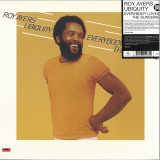
Mit "Everybody Loves the Sunshine" (1976) vermischt Roy Ayers nahtlos die Genres Soul, Funk & Jazz und erschafft einen zeitlosen Sound, der Musiker und DJs auf der ganzen Welt noch immer beeinflusst, mit dem Vibraphon als zentrales Instrument, ein Ansatz, der Ayers einzigartigen Stil definiert. Im Jahr 1976 veröffentlichte der legendäre Musiker und Komponist Roy Ayers mit ELTS eines der bedeutesten Alben seiner Karriere. Dieses Album festigte nicht nur Ayers' Stellung als Schlüsselfigur in der Welt des Jazz, sondern markierte auch einen Meilenstein in der Soulmusik und im zeitgenössischen Jazz-Funk. Es zeichnet sich durch eine raffinierte Mischung aus unwiderstehlichen Grooves, sanften Melodien und einem einzigartigen Sound aus, der über die Jahre hinweg nicht verblaaste und für mehrere Generationen von Musikern und Hörern zu einer Referenz wurde. Mitte der 70er Jahre hatte sich Ayers bereits mit seiner Band Roy Ayers Ubiquity und seinem unverwechselbaren Einsatz des Vibraphons, das zu seinem persönlichen Markenzeichen wurde, einen Namen gemacht. Und mit ELTS wagte sich Ayers an einen noch zugänglicheren Sound, auch als Reaktion auf den Aufstieg von Disco und das wachsende Interesse an Musik afro-amerikanischer Prägung überhaupt. In den zehn Tracks des Albums schafft Ayers eine Klangatmosphäre, die sowohl die Wärme des Sommers als auch die Raffinesse des Jazz jener Zeit heraufbeschwört, alles vor dem Hintergrund des modernen Soul. Produziert von Ayers selbst zusammen mit seinem Engineer und Freund David R. Williams zeichnet sich ELTS durch den wunderbaren Klang des Fender Rhodes Pianos von Phillip Woo sowie die kraftvolle Energie der restlichen Band aus, wodurch eine unverwechselbare Authentizität und Frische erreicht wird. Zu den bekanntesten Songs gehören der Titeltrack, "The Golden Rod" und "The Third Eye", die schnell zu Klassikern des Jazz-Funk und Soul wurden. Dieses Album ist für Roy Ayers' Karriere von entscheidender Bedeutung, da es seine Fähigkeit unter Beweis stellt, in einer sich ständig verändernden Musikindustrie relevant und kreativ zu bleiben. Im Laufe der Jahre wurde "Everybody Loves the Sunshine" zu einem Kultalbum, das häufig in DJ-Sets von Künstlern wie Gilles Peterson, Theo Parrish und Lefto gespielt Verwendung findet. Der Sommer-Soul-Klassiker jetzt wieder auf klassischem schwarzem 180g-Vinyl!
Cerca:raf fender
- 1
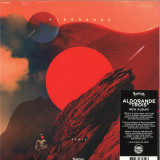
ALDORANDE is a band of five groove adventurers, led by their founder and captain Virgile Raffaëlli, who are pushing the boundaries of music with boundless passion and unparalleled instrumental mastery. After two critically acclaimed albums, the group returns with Trois, the final chapter of their cosmic trilogy, recorded on tape at a prestigious Parisian studio.
Trois is an epic album, driven by bold instrumental explorations and waves of celestial choirs. Drawing inspiration from the 70s fusion movement, it honors the genre’s masters while adding a unique, contemporary twist. The galactic textures and sophisticated arrangements transport the listener on an unforgettable astral journey.
Once again, Favorite Recordings has poured its heart and soul into this album. Every note, every arrangement has been meticulously crafted to capture the essence of that era, with a relentless drive to ensure that every step of production and recording stays as true as possible to the genre’s iconic references.
On drums, Mathieu Edouard lays down a killer groove that leaves no one indifferent. Florian Pellissier, on keyboards, unfolds an interstellar sound palette with a spectacular collection of instruments: Fender Rhodes, Yamaha CP-70B, Moog Minimoog Model D, Sequential Prophet 5, ARP Solina String Ensemble, Roland Juno 106, Roland Jupiter 8, and Oberheim OB-8. On percussion, Erwan Loeffel scatters a jungle of intoxicating rhythms. Laurent Guillet, on guitar, fires off hypnotic, irresistible riffs, while Virgile Raffaëlli, on bass, anchors the entire experience with deep, melodic bass lines that give the band a captivating and unique dimension.
Get ready to take off with ALDORANDE and their album Trois, which promises to take you beyond the stars.
»Chromacolor« is one of those records that immediately feels like home even though it is hard to locate stylistically. Written and recorded by Hanno Leichtmann in Berlin and Madeira between 2020 and 2022, it draws on rhythmic minimalism as a guiding principle and might call to mind organic, instrument-based ambient music, but also incorporates jazzy moments as well as Annie Garlids multi-layered vocals that permeate through these nine pieces.
The foundation for Leichtmann’s Chromacolor project was laid when the prolific Berlin-based producer, musician, and drummer borrowed a vibraphone and a Fender Rhodes from two friends. Combining their unique sonic affordances with those of a Guitaret, an electric lamellophone, he further expanded his sound palette by inviting other musicians—Anthea Caddy, Sabine Vogel, Tobias Delius, Els Vandeweyer, Sabine Ercklentz, Mike Majkowski, Andrei Ladeishchikov, Oona Farchy, Gonçalo Caboz as well as Rafael and Hugo Andrade—to play small but vital parts in the production of the album.
The opener »Kisses and Wine« masterfully sets the tone for an album that is as inviting as it is challenging. Working with relaxed repetitive rhythms, Garlid’s anthemic vocals and a sprinkle of saxophone and flute tones courtesy of Delius and Vogel, respectively, as well as tender piano notes played by Leichtmann, it evokes a lot with only few means: a certain melancholy, but also an elevated atmosphere that feels both exuberant and restrained.
Leichtmann’s elegant study of the power of repetition, minute rhythmic shifts and subtle use of melodic and harmonic elements creates ambiguities and polyvalences like these throughout the entire record, up until its understated finale, aptly titled »A Beautiful Day«—a drone-jazz piece, if you will, both longing and joyful.
As an album, »Chromacolor« is hard to pigeonhole, but rich and rewarding. All it takes is immersing yourself in it.
Following a ten-year hiatus, multi-instrumentalists Rafael Anton Irisarri and Benoît Pioulard return with »How to Color a Thousand Mistakes«, their third LP together as Orcas. Building on the electronic minimalism of »Orcas« (2012) and the Twin Peaks-inspired haze of »Yearling« (2014), the duo have expanded their sound and vision into a full-spectrum ensemble.
In the time since their last major collaboration, Irisarri and Pioulard have done plenty on their own, while also traversing significant life changes: relocation from Seattle to New York, separation and divorce, illness, hospitalizations, and the loss of siblings, parents, and friends. Yet from these tribulations, they gleaned inspiration to reconstruct their lives, creating music with new collaborators and partners. Recorded in a variety of studios and cities including Brooklyn, Cambridge, Oxford, Seattle, and upstate New York, the resulting album, under the tutelage of UK producer James Brown (Arctic Monkeys, Kevin Shields, Nine Inch Nails), is a patiently-crafted beast, equally inspired by impressionism, British new wave, and dream pop.
With Irisarri’s guidance and Brown’s encouragement, Pioulard brings his velvety voice to its harmonized peak on songs like »Wrong Way to Fall« and the Durutti Column-indebted »Fare«. Where his most recent solo albums for Morr Music (»Sylva« and »Eidetic«) navigated foggy forests of ambient pop and stacked tape loops, here his characteristic blur shifts into focus with a unique degree of clarity and confidence. »How fare against balance do I / Navigate my errors?«, Pioulard sings in a heartbreaking tenor, echoing the album’s broader themes of introspection, grief, loss, trial and trauma.
Lead single, »Riptide«, is a summary of Pioulard’s life changes and personal upheavals in the past decade, »flitting eastward toward a yen deep in the past« and learning to glide through the tumult of ocean waves, as a metaphor for the punches one takes in pursuit of grace. Its towering, key-changing midsection arrives with the monumental drumming of Slowdive’s Simon Scott, a long-time friend and cohort who appears on most songs in the set. Scott’s quintessentially English, jazzier approach offers a balance of force and restraint as the backdrop for Irisarri’s majestic guitars, analog synth lines, and Martin Heyne’s Fender Rhodes counterpoints.
Second single, »Next Life«, began as a sketch by Scott, and reached its final form in the hands of Pioulard and Irisarri, at a point that each had endured major concurrent losses, finding a commonality in the need to gaze over the horizon while acknowledging the unavoidable bittersweetness of letting go – not only of people, but of routines, places, and expectations. It’s one of Orcas’ most nuanced pieces, with a mid-tempo, sunset glow that unfolds into a sparkling, slide-guitar finale as it disappears in the rear view.
On third-act highlight, »Bruise«, Scott is doubled on the drum kit by MONO’s Dahm Majuri Cipolla, whose Liebezeit-influenced metronomy anchors a nimble bass groove from Andrew Tasselmyer (of Hotel Neon), and some of the album's most syncopated, spaced-out interplay, courtesy of Puerto Rican guitar player Orlando Méndez (a childhood friend of Irisarri’s). Originally a droney, fingerpicked guitar demo, »Bruise« is the most storied composition here, having gone through almost a dozen versions and lyrical edits, with Brown distilling hours of improvised performances into the final arrangement.
Throughout »How to Color a Thousand Mistakes«, Irisarri uses his deep well of production experience to paint the stereo field with meticulously designed textures, exemplified on the slow burn of »Heaven’s Despite« and the heady rush of »Swells«. As a mixing and mastering engineer with Black Knoll, he has built a client list that reads as a who’s-who of modern, forward-thinking composition, including Temporary Residence, All Saints Records, and Ghostly International, among many others.
As with previous collaborations, Irisarri and Pioulard bring disparate styles and specialties to the table, but with an interpersonal dynamic that transcends friendship into brotherhood, their open-minded workflow and mutual respect are evident at every turn. »How to Color a Thousand Mistakes« brims with tight, complex art rock songwriting, masterful production, and sonic versatility, informed by a plethora of genres and tonal hues. The title might promise answers, but the gravitational center of the album is the dawning realization that, as you reckon with the infinite whims of the cosmos, there could be none.
"Matasuna Records" returns to Mexico for a third time to dig for rare treasures. They got their hands on a special gem - two obscure Latin/Jazzfunk tunes by a band called "Colorado" from "Mexico City". The songs were released in 1976 on the Mexican label Peerless and the super rare original 7inch is virtually unavailable. Fortunately, the release is finally available for the first time as an official reissue in a remastered edition. An unjustly under-the-radar Latin jazzfunk highlight!
The song "Colorado", named after the band, opens the "A-side" of the single. The hypnotic fender rhodes puts the listener in the right mood right from the start, before the drums and percussion set the rhythm. The horns also add depth and melodiousness before the song takes a turn and reveals its funky side with guitars, synths and bass. A nice guitar solo also reveals the affinity for rock music without losing sight of the vibe of the song or tipping it a different direction. Definitely a fabulous song that comes up with a lot of ideas and inspirations, offering an unexpected richness in the under 3-minute running time.
The "B-side" also continues musically energetic in the same way with "Para Ti". Here, too, you can feel and hear the playfulness and experimentation of these extraordinary musicians. Atmospherically dense passages alternate with quieter phases and solo parts, before the tension rises again and literally explodes. As in the song "Colorado", rhodes, brass, guitars & bass offer a great and varied interplay. The secret highlight, however, might be the drum and percussion parts in the middle of the track, which will surely enchant not only the B-Boys and B-Girls.
Artist info:
The internet, a source of almost endless knowledge, offers no information about the band Colorado. All the more fortunate that one of the band's founding members, "Emilio Espinosa Becerra", provides detailed info for the reissue.
In 1968 the three brothers "Luis", "Francisco" and "Emilio Espinosa Becerra" from Mexico City started to rehearse together to play wellknown rock & pop songs at friends or family parties. At first, they played on Japanese guitars and a Teisco bass borrowed from a school friend. They saved up money to then buy guitar & bass amps and a microphone, which they always had to rent until then. However, the budget was only enough for Mexican replicas of the legendary Fender Bassman and the Fender Super Reverb. Original equipment was simply unaffordable.
Shortly thereafter, more members joined the band. Three musicians from the school band "Tepeyac": "Marco Nieto Bermudez" (trumpet), "Raymundo Mier Garza" (tenor saxophone) and "Alfonso Romero" (trombone). Another classmate named "Carlos Mauricio Fernández Ordóñez", who studied piano, also joined the group. His father had a chemical factory in the United States and helped bring equipment (amplifiers and a Farfisa Fast 5 organ) - hidden in the back of a truck - to Mexico. In the time that followed, more instruments were acquired, including bass and guitars (from Gibson, Rickenbacher and Fender) and microphones (from Shure) for vocals and horns.
With a larger band and new equipment, they played many parties in their district of "Lindavista" in "Mexico City" and neighboring areas from 1970 to 1973, as well as gigs at various festivals and school events. The group's band name at the time was "Sound Core Brass". However, more and more often people with turntables and speakers showed up at parties, which were also able to heat up. The so-called "Sonideros", a sound system culture that was emerging in the 1960s, charged less than a multi-piece live band, so the band's performances declined.
During those years, three other "Espinosa Becerra" family members joined the band: "Jorge Rafael" (trombone), "Sergio Alejandro" (tenor saxophone) and "Felipe de Jesus" (drums and percussion).
A brother of the musicians, "Carlos Espinosa Becerra", studied electrical engineering at the University. Together with another fellow student, he designed and built a 10-channel console with a variety of functions and features that far surpassed the devices available at the time. They also went to the US again to buy JBL speakers & tweeters to build their own sound system. On another trip to Los Angeles, they bought Phase Linear amplifiers, which offered enormous power by the standards of the time and had an extremely low distortion factor. With this equipment they could turn up the volume really loud and noise-free.
This was also the time when they stopped playing music from English bands & youth groups and changed their repertoire completely. They played mambos, chachachas, pasodobles and tangos on special occasions in big ballrooms and halls. Also, every now and then they hired a string quartet of well-known Mexican violinists to provide the musical entertainment at dinner events.
During those years, classmate "Pablo Rached Diaz" joined the band, playing tenor saxophone. Pablo was very active and organized many parties. He was also the one who helped the band to record on the Mexican label "Peerless". So in 1975 they were asked by Peerles Records to record their own songs. They had recorded a total of 12 songs - six of these songs were released on three vinyl singles (45rpm). Most of the songs were composed by "Gustavo Ruiz de Chavez Sr.". The band was asked to adopt a more commercial name, and so they had chosen the band name "Colorado". In the course of the releases, the band made some promotional tours and appeared in shows on "Televisa", the most important television station in Mexico in those years.
Later, several members of "Colorado" graduated and began to pursue regular professions. They didn't stop playing at events, but priority was given to more formal duties and the band was no longer as active as it had been in its heyday.
About 8 years ago, the band got back together to play again. The next generation of musicians also joined the band: two sons, a nephew and a brother-in-law of the original band members. Currently, they are back playing at friends' parties and family gatherings in Mexico City.
- 1


