Energy and inspiration come from the Gwoka. From these hands which, when they are not a raised fist, pound the drums, proud of their roots and of their Guadeloupean identity.
This is where Celia Wa comes from, from all that she inherited by spending her childhood between the West Indies and France.
The first years of her life were spent discovering the musical soul of the island, letting the seven gwoka rhythms seep into her until they became an integral part of her. The following years were spent discovering reggae, salsa, jazz and the omnipresent hip hop. Music whose original source was close to her, but to which she only opened up after having travelled thousands of kilometres.
After two self-produced EPs, Wastral is the sum of these inspirations and influences. Born in the acoustic, it is under the modern and futuristic production of Victor Vagh (producer of Flavia Coelo) that the seven tracks were revealed and then sublimated. Dissipated in the vaporous arrangements, softened under the effect of the synthetic layers, the organic was meticulously covered with an electro varnish disturbed by the echoes and reverbs of the dub. Celia Wa's soaring, twirling flute grazes or stirring the groove, her lyrics reviving the memory of her island. In Creole or in English, they tell the story in the present tense without forgetting the past. A past full of the sounds of struggles, of clashing chains and cracking whips, marks that have disappeared from bodies but remain deeply rooted in families and history. New feminine signature at Heavenly Sweetness, Celia Wa draws with Wastral the map of an avant-garde stellar journey in which the musical star of Guadeloupe shines the brightest.
Поиск:raíz
Все
Long time in the making, finally here:
Belgrade’s Tapan debut on Offen.
2022 sees Turin Brakes release their ninth studio album - Wide-Eyed Nowhere. Of Wide-Eyed Nowhere the band say "We surprised ourselves with what came out; a sweeter, groovier set of songs in no hurry to be anything but themselves. The South London 4-Piece comprising Olly Knights, Gale Paridjanian, Rob Allum and Eddie Myer recorded this new set of songs at Twin Palms - Olly"s garden studio - over the summer of 2021, choosing to let time infuse into the music and mature in a way it couldn"t in a pressurised commercial studio setting. "Friends would visit, kids would add a voice or two, bees would buzz and we"d get to sit in the South London sun while the music poured out of the speakers and floated across the lawn. Sometimes we decided it"s okay to just let it happen naturally, not to try too hard - just get out of the way let the songs take shape, and that maybe you don"t have to be in a bad place to make the deeper cuts." Turin Brakes released Mercury Prize shortlisted the Optimist Lp in March 2001 (achieving gold status in the UK), followed up by 2003"s Ether Song which featured the top 5 hit single Pain Killer (Summer Rain). The band has since moved on to rack up seven top 40 singles, seven top 40 albums and over a million record sales worldwide.
Magnetic Ghost Orchestra! It's a 17-piece big band from Berlin between jazz and electropop under the direction of their bandleader and composer Moritz Sembritzki. Moritz Sembritzki is a guitarist and composer living in Berlin. His music is characterized by simple basic ideas, to which something unexpected regularly happens.
Grey Marbled Vinyl
Clear water hits the surface of a grainy ball. The stream slowly dissolves and flows down the spherical structure until it finally drops on a candle. The flame extinguishes; fragile streaks of smoke ascend until they hit the rough surface of the colossal globe again.
The cover art to Marble Arch, the second long-player of Vienna- and Berlin-based artists Oberst & Buchner, depicts masterly the dramatic juxtapositions the musicians have always been reflecting in their musical outcome.
The massive density of a giant sound wall is contrasted by spacious openness. Fragile sonic details are sparkling out of colossal pitch-black clouds. The songs are filled with gentle warmth and cold roughness, bright digital clarity and deep analogue crackle, ranging in style from pulsating dark-disco over classic pop to experimental ambient.
The duo's two-week artist residency in a 250-year-old house, located in the mystic landscape of the Bavarian woods set this specific mood for the 10-track album which became a mixture of electronic synthesis, organic instrumentals and field recordings. Heavy-weight basslines in combination with bitter-sweet orchestral instrumentation and the minutiae of precise percussion recordings and drum programming are the characteristics that formed the sound of Marble Arch.
Oberst & Buchner's way to deal with tension is in how they compose their song structures as extreme arcs of suspense in a near classical manner. Their intense dynamic arrangements always alternate between rise and explosion or implosion and fall. This way the compositions pick up the motive of creation and destruction throughout the long-player in the same way as the cover-art.
Taken together, all these fragments form the duo`s signature cinematic articulation of dramatic slowed down club music and moments of surprise.
BIO
Oberst & Buchner are two friends and musicians living in Vienna and Berlin. They look back on a mutual musical journey that is as rich in variety as it is more then 15 years long. For one thing, countless high-energy DJ sets in clubs and at festivals all over Europe in recent years have earned them a reputation as a dynamic duo infernale. At the same time, their own productions draw from the full palette of moods and emotions.
Boiled down to the very essence, there's one common denominator running through the duo's musical works: colossally massive elements are masterfully set against a shimmering backdrop of incredibly detailed layers. Each so full of subtle suspense that they feel like the first raindrops before a monstrous thunderstorm. You can literally hear the calm before the storm in every break they build up, then feel the force of the wind in your face when it hits you.
Ranging from pulsating electronica over slow organic sounds derived from both nature and acoustic instruments to deep dance pop ballads, their songs are full of suspense and packed with drama. In their productions, the two friends conjure up soundscapes that are extremely dense and at the same time infinitely open and spacious. Within this framework, they play with stark contrasts of antithetic elements: repetition and improvisation, functionality and emotions, emptiness and overload, clarity and crackling.
Tape
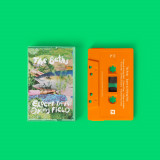
The third LP from the New Zealand quartet houses 12 jewels of tight, guitar-heavy songs that worm their way into your head, an incandescent collision of power-pop and skuzz. With Expert, The Beths wanted to make an album meant to be experienced live, for both the listeners and themselves. They wanted it to be fun -- to hear, to play -- in spite of the prickling anxiety throughout the lyrics, the fear of change and struggle to cope.
Most of Expert was recorded at guitarist Jonathan Pearce’s studio on Karangahape Road in Tāmaki Makaurau, Aotearoa (Auckland, New Zealand) -- and sometimes in the building's cavernous stairwell at 1am -- toward the end of 2021, until they were interrupted by a four-month national lockdown. They traded notes remotely for months, songwriting from afar and fleshing out the arrangements alone, the first time they’d written together in such a way. The following February, The Beths left the country for the first time in more than two years to tour across the US, and simultaneously finish mixing the album on the road. That latter half felt more collaborative, with everyone on-hand to trade notes in real time, until it all culminated in a chaotic three-day studio mad-dash in Los Angeles. There, Expert finally became the record they were hearing in their heads.
Expert is an extension of the same skuzzy palette the band has built across their catalog, pop hooks embedded in incisive indie rock. The album’s title track “Expert In A Dying Field” introduces the thesis for the record: “How does it feel to be an expert in a dying field? How do you know it’s over when you can’t let go?” Stokes asks. “Love is learned over time ‘til you’re an expert in a dying field.”
The rest is a capsule of The Beths’ most electrifying and exciting output, a sonic spectrum: “Your Side” is a forlorn and sincere love song, emotive; while “Silence is Golden,” with its propulsive drum line and stop-start staccato of a guitar line winding up and down, is one of the band’s sharpest and most driving. “When You Know You Know” skews a bit groovier, pure pop and a natural addition to the band’s live set. “Knees Deep” was written last minute, but yields one of the best guitar lines on Expert. There’s a certain chaos across the 12 tracks, the palpable joy of playing music with long-time friends colliding with the raw nerves of pain.
Stokes strings it all together through her singular songwriting lens, earnest and self-effacing, zeroing in on the granules of doubt and how they snowball. Did I do the wrong thing? Or did you? And are we still good people at the end of it? She isn’t interested in villains, but instead interested in just telling the story. That insecurity and thoughtfulness, translated into universality and understanding, has been the guiding light of The Beths’ output since 2016. In the face of pain, there’s no dwelling on internal anguish - instead, through The Beths’ musi
The Dangermen Sessions is the eight studio album from Madness. Originally released in August 2005, the album consists of cover versions of reggae and ska tracks such as Prince Buster’s ‘Girl Why Don’t You’ and Desmond Dekker & the Aces ‘Israelites’, alongside ska covers of tracks including The Supremes ‘You Keep Me Hanging On’ and The Kinks ‘Lola’. It reached No.11 in the UK chart, which at the time was the band’s highest chart position in the UK since 1984’s Keep Moving. This new reissue features exclusive liner notes containing in-depth interviews with band members Chrissyboy Foreman, Mike Barson and Mark Bedford.
First thought, best thought. Until the next thought: a guiding principle for No Age in the 16ish years they've been around. Constantly responding to their own streams of consciousness with reductive flexibility, they've taken the basic duo of guitar and drums with vocals WAY farther than anyone listening in halcyon Weirdo Rippers days could have guessed. Expounding on those larval possibilities, they've zig-zagged in serpentine precision, in and out of the teeth of the wringer - ranging outside and back in again, as befits the present thought. And now, six albums into it, these principles have led them to make People Helping People. Composed in their studio of ten years in the "pre pandemic" times, then an eviction from said space, and finished deep in the midst at their new basecamp: Randy's Garage. It starts with an instrumental, too. First counter-intuition, best counter intuition! Nearly five minutes prelude Dean's debut vocal interjection - a zoom in from the upper atmosphere, Randy's guitar clouds pulsing with radiation, paced by spare, percussive accents. When the first song with singing ("Compact Flashes") bounces in on an insane synthetic beat, the only recognizable sound of No Age is a sputtering of enchanted clicks and creaks - muted guitar strings and drumkit rattlings that cycle for a full minute before voice song and snare fall into place. This is the sound of People Helping People: No Age, deep in the lab, scraping available nuclii together to see what new compound they find next. Erasing the starting points, reordering the pieces and beginning anew. It's an everyday mindset - and as the first No Age album recorded entirely by No Agee, People Helping People is a broadcast of entirely lived-in proportions. Side one ricochets expertly back and forth between magisterial instrumentals and sing-song forms cut up on the mixing desk, as with the undeniable hitness of "Plastic (You Want It)", winningly rewired to MIDI-mangled beat squelches. They don't really land on a straight up punk-style riff until it's almost time to flip the side, and even once they've got off on a run of rockers on side B, their aesthetic choices continuously reframe the norms, enhancing their inherent power. People Helping People finds their disparate desires operating in perfect sync; prolegomenic weirdness fused immaculately to classic rock propulsion, transforming the energy pouring out from their hands and feet with electronics. Dean's lyrics are like pieces taken off the belt at the factory and put together into a John Chamberlin-esque sculpture, meant to sit out in the rain. Randy's guitars, collaged into arrangements that reflect, again, boundless curiosity and exquisite restraint. This is People Helping People: unpretentious, suspicious, inviting, confident, left field. The most accurate display of the No Age ethos put to record. Yet!
Repress!
Blu is the leader of West Coast Hip Hop. Since the days of Pharcyde, Freestyle Fellowship, and Jurassic 5, there have been few wordsmiths that have grasped the attention of listeners worldwide. Introduced to NWA and Public Enemy by his father, Blu later was captivated by the likes of Black Star, The Roots, and Common, creating a unique balance that is displayed in Blu’s personality and music. Blu’s first full length LP, “Below the Heavens” pairs Blu with producer Exile on the Sound in Color imprint. His first single, “Narrow Path” has rocked stages across the world, as fans begin to feel the impact of Blu’s music. His delivery flows flawlessly, while the content reflects the joy and pain of working class youth everywhere. Since the release of “Narrow Path,” Blu has performed alongside Slum Village, X-Clan, Platinum Pied Pipers, Lyrics Born, DJ Houseshoes, and many others, while participating in 3 high-profile nationwide tours alongside musical family members: Ta’Raach, Aloe Blacc, and Exile. The buzz has fans salivating for new music. Worldwide, people are looking to put hope into the ‘next’ emcee that will give them the same feeling when they first heard Black Thought, Common, or Slum Village. Blu fulfills this need, but maintains something that is entirely new, while not recycled.
This album presents two multichannel works recorded at the seminal INA GRM Studio in Paris and ZKM Institute in Karlsruhe respectively, mixed to stereo at the composer's Cellule 75 Studio in Hamburg with excellent mastering by Rashad Becker. While his releases under the Black To Comm moniker often touched the fringes of acousmatic techniques and Musique Concrete this is Richter's first foray into a more abstract spatial music.
Recorded in the week leading up to the Paris terror attacks at the GRM studio, "Diode, Triode" (21:57) is loosely based on a reading of (and, in parts, a failure to understand) "Le Parasite" (1980) by Michel Serres, a philosophic metaphor about human interaction and communication (which can also be interpreted as a lyrical essay on capitalism; part confusion, part enlightenment).
As core elements Richter is using speech synthesis and the transformation and distortion of concrete sounds, instruments, voices and breathing. Abstract incognisable sounds are combined with strings, reeds and percussion while dismembered musical fragments emerge and vanish rapidly. Chunks of interfering noise are followed by long periods of silence; chaos and order are alternating. Choirs of synthetic and processed human voices are recounting stock market values, seemingly random sequences of numbers and inscrutable lyrics while parasitic sounds are trying to crack, collapse and fractionise the compositional stream and sonic interactions. Finally, a haunting piano chord is wrestling with a broken Publison machine. Like the book, it's part confusing, part enlightening - and a radical piece of sonic art.
"We are buried within ourselves; we send out signals, gestures, and sounds indefinitely and uselessly. No one listens to anyone else. Everyone speaks; no one hears; direct or reciprocal communication is blocked." (Le Parasite)
"Diode, Triode" was premiered on the Acousmonium at INA GRM's Akousma Festival in Paris, January 22, 2016 alongside new works by François Bayle, Robert Hampson, Leo Kupper and Ragnar Grippe.
The second piece "Spiral Organ of Corti" (17:00) has been composed in 2014 for the 47-speaker Klangdom concert hall at ZKM Karlsruhe at the foot of the Black Forest (where Richter was born and raised).
How does one listen with closed ears? Sine tones, alienated human voices and breathing noises build a labyrinthine puzzle alternating between the natural and the artificial. Human sounds merge with winds and strings, sine tones morph into metal sounds. Acoustic illusions confuse the listener, and dense noise-clouds slowly emerge from deceptive silence. Deep base sounds define space. Temporary focus glides into chaos. "Spiral Organ of Corti" is yet another extended composition that proves Richter is on a path of his very own.
"Spiral Organ of Corti" is dedicated to the late Gary Todd.
"Tongues that came from wind and noise. To speak in tongues after the fire." (Le Parasite)
Marc Richter records as Black To Comm for Thrill Jockey, Type and Dekorder and under the Mouchoir Ètanche and Jemh Circs monikers for his own Cellule 75 imprint. He collaborated with visual artists such as Ho Tzu Nyen, Jan van Hasselt and Mike Kelley. Under his own name he is composing for film and installations.
Gold Vinyl
10 brand new recordings from the legendary Jamaican singer and longtime Massive Attack collaborator, Horace Andy, produced by Adrian Sherwood.
Midnight Rocker has been approached in a similar fashion to the late-career quality that Sherwood coaxed out of Lee "Scratch" Perry with the Rainford and Heavy Rain albums, assembling a crack team of players and spending many months perfecting performance, arrangements and mixing. The result is a remarkable suite of tracks that sparkle with superb musicianship, carefully crafted production and Horace’s beautiful vocals.
The material includes revisiting and updating a few classic Horace Andy songs such as “Mr. Bassie”, but the bulk of the tracks are brand new compositions with contemporary messages, such as “Watch Over Them” and “Materialist”. The pair have also versioned “Safe From Harm”, a much-loved early single by the group that Andy is most associated with – Massive Attack.
“On-U Sound are very proud to present a truly wonderful album with one of the all-time great singer-songwriters in the rich history of Jamaican music, Horace Andy. This is a true gold star performance, and I’m very proud of it.” Adrian Sherwood.
Never Before Released! Vinyl Only! Captured at the height of their powers during the heyday of the grunge movement that they inspired, J Mascis and Dinosaur Jr perform tracks from their back catalogue live on MTV’s 120 Minutes show. Loud and heavy as ever, the band turn in an inspired performance, which has since become a legendary favourite among fans. Never officially released until now, and produced in association with MTV and the band, ‘Seventytwohundredseconds’ is the latest in our ongoing extensive exploration of Dinosaur Jr’s brilliant Sire Records period. A must-hear glimpse of one of the treasures from the rich seam of American alternative rock and grunge artists who reinvigorated guitar-orientated music in the late 1980s and 1990s.
- A1: Revue Noire
- A2: Swinging In The Rain
- A3: La Pegre
- A4: The End Of A Love Affair (Billy In The Sky) (Billy In The Sky)
- A5: Drum Rain
- A6: Les Annees Folles
- A7: Swing Swing
- B1: The Drummer
- B10: Soul Computer
- B2: Black Musette
- B3: Tambours Battants
- B4: Negro Digital
- B5: La Nuit Mene Une Existence Obscure
- B6: Be Bop Vaudoo
- B7: The Dancer
- B8: Harlem Jungle
- B9: Tant Qu'il Y Aura Des Etoiles
For the first time Nicolas Repac's album Swing-Swing, originally out in 2004, is released on vinyl LP!
He has a reputation as a musician's musician, a talented Jack-of-all-Trades as much at ease playing the guitar alongside his old accomplice, French songwriter Arthur H, as he is when tinkering with all kinds of machines by instinct, and creating made-to-measure contexts for instrumentalists like Michel Portal. Everyone knew he had a secret garden, the song' world of a composer and performer who was difficult to categorize, a world not only lyrical but also dark and full of tender melancholy, not to mention easily surrealist (his first record of songs, La vile', which was released on the Indigo label in 1997, has a sequel in preparation in the form of a new opus, Lovni'.) But, once again,
Nicolas Repac had a surprise in store, because he has turned up where no one was expecting him: Swing Swing is a record as magnificent as it is difficult to place, with electro ramblings around jazz (its subjects and virtues, its spirit and memory), wanderings that are playful, light, fluid in gesture and crammed with ideas, discoveries and intuition, they are at once naive and instinctive (Repac is an erudite amateur, the Ferdinand Cheval of the already-established world of electronic music), and extremely elaborate in their crushed samples, hallucinatory, rhythmic whirls and sensual, dreamlike atmospheres.
The cosmic funk sounds of Crazy P are sure to endure through the ages but it's always good to hear classic tackle through a fresh lens. And so it is that Walk Don't Walk asks four crucial artists to add their own spin to some fine originals. DJ Nature brings his textbook rawness and heaviness to 'SOS' while Ilija Rudman's take on 'Night Rain' is lovely downtempo boogie funk. Running Back label head Gerd Janson is in dazzling disco mode on his take on 'We Will F**k You Up' and last of all is a super vibe and atmospheric house joint from Ron Basejam.
Tape
Spirit Fest is an underground avant-pop supergroup (for those of us that feel the weight of each member’s individual power), made up of Saya and Takashi (Tenniscoats), Markus Acher and Cico Beck (Notwist), and Mat Fowler (Jam Money). They have steadily been crafting and solidifying a beautifully surreal world since their inception in 2016. Their independent artistic selves have been stripped back to their rawest forms, and they then have become a centralized being. The building blocks used are made with materials that have already started to decompose. It’s familiar, but also “kind of off”. Their sounds become a part of our collective consciousness. Spirit Fest is more than a band. It’s an idea that we can all participate in. A spirit we can all conjure. The freedom and space they give is a gift. This is an invitation into a freedom we can all experience. But first, you have to follow suit, rid yourself of your preconceived ideas and become your rawest form.
Moone Records bring you Spirit Fest’s first live album entitled, “Live at Import Export”. Here are some words Markus Acher shared about this show and the tour surrounding it:
“In 2021 Spirit Fest went on a summer tour to Italy which ended at our favourite alternative venue in Munich, called Import Export. Italy had been like heaven, Through mountains and tunnels with a soundtrack by Morricone, Yo La Tengo and Teenage Fanclub we drove from Autogrill to Autogrill and played outdoor-concerts at welcoming places. Although our dear friend Mat, who is an important part of Spirit Fest couldn‘t come, we felt like a real band and there were many evenings, when the moment and the music, the heart and the hand became one. We visited the tower of Pisa and had the best ice-cream. And the food of course! Another drive + another tunnel and then a last concert in Munich. A new song by Saya about Fuchur from the „Never Ending Story“. Saya‘s singing on Takeda No Komoriuta stopped time. So moving. I will never forget this tour and I am happy, there is a recording of the Import-export concert and Caleb from Moone Records made this beautiful tape from it.” - Markus Acher
Recorded live at Import Export, Munich, on June 27, 2021 by Noel Riedel
After the Pacific Northwest grunge raids of the early '90s that saw Nirvana, Mudhoney, and even the Melvins hoisted up the major label flagpole, Unwound's 1993 debut came as a welcomed reprieve for underground noise-niks everywhere. A pulsing cluster of wiry feedback, lurching bass, and single stroke rolls, Fake Train entangles the energies of frustrated backpack emo, faded Riot Grrrl back issues, and their own dash of teen spirit and unleashes it all in an earsplitting 10-song assault.
Comes on like an homage to Wire's 1 2 X U' as filtered through Minor Threat and a broken bottle of Robitussin.' —Pitchfork
It's no contest: Unwound is the best band of the '90s.' — A.V. Club
Under The Sun is the follow-up to the astonishing Roots and contains yet more absolutely essential Nucleus material. Originally released on Vertigo in 1974, Under The Sun was never re-pressed and of course those original copies are now very tricky to score. Like all the Nucleus records, it’s aged ridiculously well and this Be With re-issue, re-mastered from the original analogue tapes, shows off just why this deserves to be back in press.
Genius trumpeter and visionary composer Ian Carr was one of the most respected British musicians of his era. He was a true pioneer and saw the potential in fusing the worlds of jazz with rock, just as Miles Davis and The Tony Williams Lifetime did in the US. In late 1969, following the demise of the Rendell-Carr quintet, and tiring of British jazz, Carr assembled the legendary Nucleus. Regarding music as a continuous process, Nucleus refused to “recognise rigid boundaries” and worked on delivering what they saw as a “total musical experience”. We can get behind that.
Under bandleader Carr, Nucleus existed as a fluid line-up of inventive, skilled musicians. This constant evolution and revolution was all part of the continuous musical exploration and discovery that took jazz to new levels. And the music has stayed relevant. To steal a line from a recent review of our re-issue of Roots, when it comes to anything Nucleus “it’s basically already hip-hop”.
Under The Sun opens with the crisp, medium tempo “In Procession”. It’s a typically inventive Carr track with layers of dramatic, riff-led themes and repeating brass blasts. Bryan Spring’s “The Addison Trip” is a moody funk piece, with Kieran White guesting on wordless vocals. Roger Sutton contributes some fine bass guitar on this track, particularly the great solo at around the two minute mark. The excellently-named cool, jazzy ballad “Pastoral Graffiti” paints bucolic pictures with its mellow sonics, plaintive horns and Bob Bertles’ flute.
Sutton’s superb, bass-driven “New Life” brings a different dynamic. Horns, guitar and electric piano swirl over the head-nod bass motif and a killer Ken Shaw guitar solo. A false fade out halfway through brings in a new bass riff that’s picked up by the whole ensemble as Carr wah-wah noodles over the top. It’s full-on. The gorgeous, laidback “A Taste of Sarsaparilla” is exactly that - closing out the first side with a cute blast of what is to come over on the killer flip.
The whole of Under The Sun’s second side is a suite of three “Themes” written by Ian Carr. The uptempo first theme “Sarsaparilla” is comfortably one of Nucleus’ best. What would’ve been a cluttered mess in the hands of most is instead an effortless lesson in clarity and zing. Between Geoff Castle’s electric piano solo, the relentless funky drumming and more wild wah-wah trumpet from Carr, Nucleus show you how it’s done.
The languid groove of second theme “Feast Alfresco” is much more typical of “classic” Nucleus and sounds like something that might’ve been on Roots. A Bertles baritone solo and a guitar solo from Shaw weave around the core, serpentine brass theme.
The darker “Rites of Man”, the third and final theme, is a slow build to a solid bass and electric piano riff, shored up by some tricky brass. Carr takes the theme even further and there’s still plenty of room for soloing from all corners of the Nucleus. As usual, the dynamic Sutton/Spring, bass/drums duo is holding down the rhythm for the rest to jam around.
This Be With edition of Under The Sun has been re-mastered from the original Vertigo master tapes, Simon Francis’ mastering working together with Pete Norman’s cut to weave their usual magic with these wonderful recordings. The bleak, rain-dappled cover matches the melancholic vibe of the record and has been restored as the finishing touch to this long overdue re-issue.
"What took you so long?" might be a valid question concerning the ten year gap between Zanshin's new album "In Any Case By Any Chance" and his first album "Rain Are In Clouds".
Of course it is a question that the Viennese musician has asked himself quite startled in his usual self-critical manner, just to realize at a closer look that it has not been a lack of creativity or laziness at least. He used the Zanshin moniker on four EP releases and several remixes, plus a game soundtrack. Not to forget all his output as one half of producer duo Ogris Debris (the album "Constant Spring" from 2016 and roughly two dozen singles and remixes) and the many, partly award-winning audiovisual installations and performances with Leonhard Lass as DEPART (depart.at). Furthermore he has also built two sound installations in 2021, "I Gong" at Elevate Festival and "Cymatic Sands" at Ars Electronica. In addition, Zanshin performs with the Max-Brand-Synthesizer from time to time as part of the compositions by Elisabeth Schimana, and together with label mate Dorian Concept he has also composed and performed the piece "Half Chance/Music for Moogtonium" for this unique instrument, built by Bob Moog himself.
Not spared by certain global developments of recent years, but rather invigorated by exploring his own resilience, Zanshin had a talk with Affine Records Operator Jamal in the beginning of 2021, speaking of future ideas and releases. And what was initially a single release spawned into a whole album in seemingly no time. An old skit ("Polar Polychrome") on the Roland MC-505 groove-box that had never really been forgotten, but was rather waiting patiently somewhere in the back of his mind, suddenly proved to be the initial spark for the album.
The term "Zanshin", roughly translated as un-focussed attention, is in fact more than just a pseudonym but rather a directive in the artists life. Zanshin really likes to go in several directions at once, kind of according to Wittgenstein's claim that "The world is everything that is the case.", to find out where his love for music might lead him this time. He also somehow went back to his roots with this album. Not necessarily in the sense of certain musical influences or genres, because then the album would be even more eclectic than it already is. More like a focus on the core values in the fabrication process of the music itself, the freedom to rather follow the structures and sounds than to shape them in a completely predetermined way. Somebody once called it, "to weave what the music demands."
In this regard, Zanshin often feels more like a sculptor and tries not toadhereto strongly to the rules of specific sub-genres of electronic music. Searching for sounds and designing them is one of the energies that fuels his interest the most, thus at the beginning of a lot of tracks there are small skits and ideas that have the freedom to grow in whatever direction.
Hence this album has no elaborate story to tell, there is no extensive "narrative" or big time "storytelling" at work. "In Any Case By Any Chance" is not a novel but rather a collection of short stories (which are certainly dense and have complex plots nonetheless). The result is a long-player where playful electronica, skillful songwriting, extrovert dance music and symphonic film music enter into a symbiotic relationship. Returning to another Wittgenstein quote, "Whereof one cannot speak, thereof one must be silent", the emotional impact of music is the main focus and the results can be quite solemn at times, but around the corner always lurks the next bone-breaking rhythm pattern and gnarly sound design.
The infamous saying, "writing about music is like dancing about architecture", is another brick in the wall of sound in Zanshin's approach to music. He rarely roots himself in traditions or uses them too overtly, he really likes to agglomerate sounds, to challenge the listeners. It seems like he tries to avoid classification on purpose, because he knows that everyone has their own perception anyway. The only thing that this music demands implicitly is a willingness to listen attentively.
Very dense, at times really heavy and massive, then again airy and playful. "Music for clubs that don't exist.", might be another fitting caption to describe this album, which lasts for a little more than an hour.
The opener "Heatseeker" rushes to a sudden head start with its steel pan extravaganza, tropical vibes meet a bass line drenched in electro funk, and electrified synth stabs support the declaration of love in the lyrics. Kind of Jamie XX meets Electro meets Diva House. The monster that is "Bronteroc Brawl" is up next, a serious test for the speakers and a wild ride with metallic, growling sounds. The aggressive sound design reminds of suspense ridden shark chases, vicious dogs and cunning dinosaurs, in any case a track for people who love a proper bass stomper.
A new approach for the "indie discotheque" brings the emotional roller-coaster "In Gloom" with snappy drums and hypnotic synth motives á la Alessandro Cortini, creating an epic atmosphere together with the multi-layered vocals. A psycho-acoustic treat is position 4, the crisp instrumental "Polar Polychrome", you could even go as far as calling this a Zanshin signature track. Like mentioned before, the roots of this track go back to 2002 and you can hear the unmistakable influence of beat wizards like Photek, a piercing bass line is supported by poly-rhythmic drums, while dense pads try to escape the claustrophobic lockdown mood of winter 2020/21.
Another round of intense pathos waits for the listeners in the ensuing track "In Search Of". Moderat say "Hello", a melancholy piano melody is rushed to a climax by a wild bass arpeggio and forceful drums, the desire for a perfect sunrise at the next after-hour to the max. Initially just an appendix to the preceding track, "Time After Thought" swiftly developed from a mere improvisation to an ambient epic with a croaking alien piano, as if Keith Jarrett were on his way to Alpha Centauri.
Up next is the first single "Because Why", a breakbeat driven, synth-heavy track with winged vocals and a popular film quote. The title refers to the movie "Alphaville" by Jean-Luc Godard, a dystopian science fiction film noir, in which an omniscient computer system named Alpha 60 is ruling society and humans can only say "because" but never "why". As if the gears of a galactic mechanism were spinning into motion sounds "Identity Slices". A raspy chord structure finds its counterbalance in a kind of stumbling, wonky beat, and Zanshin would never deny the huge influence that Autechre's sounds and structures always have had on his music. Micro- and macrocosm meet on the same level and this friction is also a metaphor for questions of identity and self-awareness, without using voices or lyrics.
Off we go into the IDM bubble bath of "Enzyme Enigma", the bass drum is stomping and a fizzy acid-line is twisting in all directions behind rolling dub-techno chords. "Corrosion Creak" is a kind of acoustic degradation process, the rave dogs are finally let loose and everything happens at once, funky synths shred, string sounds wail and then there is this bass that sounds like smashing a rusty metal plate in the junk yard with a vengeance.
Towards the end everything slows down a bit, the beat in "Whatever Words" is Warp school cerebral hop at its best and therefore loads of glittery, creaky sounds swarm out until the synapses are overloaded, cumulating in a mighty bass ending. Last but never least, "Rebus Redux" guides us into the limitless night sky, with long indulgent pads dotted by an aimlessly wandering piano, while a compact net of tamed resonances and meandering sub frequencies unfolds in the background, enticing navel-gazing imagination.
Tedeschi Trucks Band - das von dem Ehepaar Derek Trucks und Susan Tedeschi gegründete 12-köpfige Kollektiv - veröffentlichen in diesem Jahr das ehrgeizigste Studioprojekt ihrer langjährigen Karriere : I Am The Moon, ein episches Unterfangen in vier Alben mit 24 Originalsongs. Inspiriert von einer mythischen persischen Geschichte über ein unglücklich verliebtes Paar und emotional getrieben von der Isolation und Abgeschiedenheit der Pandemie-Ära, umfasst das thematische I Am The Moon mehr als zwei Stunden Musik insgesamt, die sich in einem robusten Wandteppich aus genreübergreifenden Musik -Erkundungen entfaltet
Jedes der einzelnen Alben wird durch einen eigenen Film begleitet.
Die vier Alben, aus denen I Am The Moon besteht - I. Crescent, II. Ascension, III. The Fall, und IV. Farewell - werden in aufeinanderfolgenden Monaten veröffentlicht, beginnend mit I. Crescent, das ab Freitag, dem 3. Juni, digital und auf CD erhältlich ist (alle Vinyl-Konfigurationen werden am 9. September
erhältlich sein).