
vorbestellen07.11.2025
erscheint voraussichtlich am 07.11.2025
19,96 €
erscheint voraussichtlich am 07.11.2025

Fin" is the fourth album by Spanish band Exnovios, a group that has been described as a blend of Spacemen 3 influences and the best of Spanish '60s pop. The new dozen songs that make up their fourth LP happily shifts away a bit from to the usual unbeatable formula of this Pamplona-based quartet (garage reverbcore as if sung by Spanish legends Juan y Junior) and add new and fascinating layers-at once fresh yet entirely logical in the evolution of such a unique band within the local scene. Exnovios' new collection of songs wasn't created in a rehearsal space or recorded in a single week in the studio. Rather, it was composed and rehearsed slowly in bedrooms and living rooms-songs that were later brought into the studio with the idea of finishing building them there. Over the course of nearly a year, the band approached each song one by one, in a handcrafted manner, alongside their trusted ally, producer Guillermo Mutiloa. The result is a treasure trove of songs, perhaps more psych-folk than ever, as acoustic pieces abound-full of exquisite melodies without abandoning the consciousness-expanding journeys that have made Exnovios a cult favorite: from the instant classic 'Nubes' (with its very Byrds-like harmonies and gorgeous twelve-string acoustic guitar), to the delightful Big Star-style fiction of 'El cine se queda en silencio', or even the fabulous cover of Stephin Merritt's 'Tú tú tú tú.' These are often drumless tracks, perhaps with some light percussion, always featuring detailed and exquisite arrangements of guitar, electronics, percussion, and even touches of strings. And despite the reduced presence of drums (which, along with the laid-back recording approach, makes this almost Exnovios' "White Album"), fans of the band's legendary fuzz-guitar reverbcore sound won't be disappointed: there's the psychedelic 'Viaje Alucinante', full of their classic riffs; their brutal cover of Psychic TV's 'Godstar' (drenched in echo and eccentric vocal effects); and the perfectly crafted 'Naves Misteriosas', which pulls off the impossible feat of sounding like 'Cerca de las Estrellas'-era Los Pekenikes in the verses, Phil Spector in the chorus, and the Ramones in the post-chorus. And there's much more: percussion reminiscent of the most 'baggy' Primal Scream on the brilliant 'Aún no es tarde'; love lyrics wrapped in an exquisite drum machine soaked in reverb and Suicide-style Farfisa on 'Ha venido a quedarse'; the beautiful two-chord electronic Christmas carol 'Ya es Navidad'; and that lysergic waltz that sings of the peace brought by karmic revenge, carried along by waves of fuzz and delay, titled 'El día del juicio final.' "Fin" reveals more sides and nuances of Exnovios than ever before-a festival of eclectic styles that all remain true to the musical vision that has defined them over the past decade, with their melodic powers at the peak of their talent.
erscheint voraussichtlich am 07.11.2025

erscheint voraussichtlich am 31.10.2025

Take Brian Jackson and Gil Scott-Heron’s iconic track “The Bottle”, add a sublime vocal performance from UK soul legend Omar, and put it in the hands of house music pioneers Masters At Work—and you get a version that’s both timeless and urgent, filled with joy, fire, and social consciousness, and built for the dancefloor. Driven by Masters At Work’s signature attention to detail, and elevated by the calibre of the musicians and vocalists involved, this reimagining of “The Bottle” evolved into something truly epic. In fact, the final mix turned out too long to fit on Brian Jackson’s upcoming 3LP album, Now More Than Ever—but everyone agreed: fans had to hear it in its full glory.
So here it is, released exactly as intended on this twin 12" vinyl and digital EP. Also included are exclusive versions of: “Winter in America” featuring sonorous vocals from Rich Medina “New York City”, reimagined as a deeply soulful, downtempo groove featuring Cindy Mizelle, Dawn Tallman, and Ramona Dunlap This EP is a love letter to the role of music in Black Liberation, reconnecting the powerful legacy of Brian Jackson and Gil Scott-Heron with the voices and vision of 2025. A powerful taste of what’s to come on Now More Than Ever—but also a vital standalone statement, delivered by legends at the top of their game
Bestelle jetzt und wir bestellen den Artikel für dich beim Lieferanten.

2025 jährt sich zum 15. Mal die Komödie Scott Pilgrim Vs The World aus dem Jahr 2010, die von Edgar
Wright geschrieben, produziert und inszeniert wurde und auf der Graphic-Novel-Serie Scott Pilgrim von
Bryan Lee O’Malley basiert. Mit Michael Cera als Scott Pilgrim, einem Slacker-Musiker, der versucht,
einen Wettbewerb zu gewinnen, um einen Plattenvertrag zu bekommen, während er gleichzeitig gegen die
sieben Ex-Freunde seiner neuen Freundin Ramona Flowers kämpft.
Der Soundtrack der nun auf roter Vinyl erhältlich ist, wurde von Nigel Godrich zusammen mit Edgar Wright
produziert und enthält eine Reihe von Originalstücken, die von Beck komponiert und im Film von Michael
Ceras Band ”Sex Bob-Omb” eingespielt. wurden. Außerdem gibt es auch einen bisher unveröffentlichten
Song von Metric und auch Songs von Broken Social Scene, Beachwood Sparks, The Bluetones, Blood Red
Shoes, Black Lips , Frank Black und den Rolling Stones.
erscheint voraussichtlich am 24.10.2025

Dayseeker wurden in Südkalifornien gegründet und haben sich von Post-Hardcore-Urgesteinen zu einer der emotionalsten und stilistisch beweglichsten Bands der heutigen Heavy-Musik entwickelt. Ihre Songs verarbeiten nicht nur Trauer, Herzschmerz und Traumata - sie verwandeln sie in etwas Magnetisches, Kraftvolles und letztlich Ermächtigendes.
Die Band, bestehend aus Sänger Rory Rodriguez, Gitarrist Gino Sgambelluri, Bassist Ramone Valerio (seit 2017) und Schlagzeuger Zac Mayfield (seit 2022), stellt emotionale Wahrheit über Trends und verbindet authentische Leidenschaft, klangliche Innovation mit lyrischer Verletzlichkeit.
Die tiefe Resonanz, die die Musik der Band bei anderen Außenseitern auf der ganzen Welt hervorruft, zeigt sich in ihren über 600 Millionen Streams. Und sie ist bei jeder Show spürbar, von ausverkauften Headline-Terminen bis hin zu Touren mit Pierce The Veil, Bad Omens oder Ice Nine Kills.
Dieses Gefühl der kreativen Träumerei pulsiert durch Dayseekers sechstes Album, Creature in the Black Night. Produziert von Daniel Braunstein (Spiritbox, Silent Planet) und gemischt von Zakk Cervini (Blink-182, Bring Me The Horizon, Lorna Shore), ist das Album Dayseekers bisher eindringlichstes und ambitioniertetes Album - gewaltig, cineastisch und durchzogen von einer dunklen, emotionalen und sexy Strömung.
Fans, die einen traurigen Abstieg in die Depression erwarten, werden überrascht sein - "Creature in the Black Night" hat schärfere Kanten, härtere Riffs und einen neu entdeckten Sinn für Klarheit. Dayseeker haben sich nicht nur weiterentwickelt. Sie haben einen gewaltigen Schritt auf eine neue Ebene gemacht.
erscheint voraussichtlich am 24.10.2025

Black Vinyl[24,79 €]
Dayseeker wurden in Südkalifornien gegründet und haben sich von Post-Hardcore-Urgesteinen zu einer der emotionalsten und stilistisch beweglichsten Bands der heutigen Heavy-Musik entwickelt. Ihre Songs verarbeiten nicht nur Trauer, Herzschmerz und Traumata - sie verwandeln sie in etwas Magnetisches, Kraftvolles und letztlich Ermächtigendes.
Die Band, bestehend aus Sänger Rory Rodriguez, Gitarrist Gino Sgambelluri, Bassist Ramone Valerio (seit 2017) und Schlagzeuger Zac Mayfield (seit 2022), stellt emotionale Wahrheit über Trends und verbindet authentische Leidenschaft, klangliche Innovation mit lyrischer Verletzlichkeit.
Die tiefe Resonanz, die die Musik der Band bei anderen Außenseitern auf der ganzen Welt hervorruft, zeigt sich in ihren über 600 Millionen Streams. Und sie ist bei jeder Show spürbar, von ausverkauften Headline-Terminen bis hin zu Touren mit Pierce The Veil, Bad Omens oder Ice Nine Kills.
Dieses Gefühl der kreativen Träumerei pulsiert durch Dayseekers sechstes Album, Creature in the Black Night. Produziert von Daniel Braunstein (Spiritbox, Silent Planet) und gemischt von Zakk Cervini (Blink-182, Bring Me The Horizon, Lorna Shore), ist das Album Dayseekers bisher eindringlichstes und ambitioniertetes Album - gewaltig, cineastisch und durchzogen von einer dunklen, emotionalen und sexy Strömung.
Fans, die einen traurigen Abstieg in die Depression erwarten, werden überrascht sein - "Creature in the Black Night" hat schärfere Kanten, härtere Riffs und einen neu entdeckten Sinn für Klarheit. Dayseeker haben sich nicht nur weiterentwickelt. Sie haben einen gewaltigen Schritt auf eine neue Ebene gemacht.
erscheint voraussichtlich am 24.10.2025

Dayseeker wurden in Südkalifornien gegründet und haben sich von Post-Hardcore-Urgesteinen zu einer der emotionalsten und stilistisch beweglichsten Bands der heutigen Heavy-Musik entwickelt. Ihre Songs verarbeiten nicht nur Trauer, Herzschmerz und Traumata - sie verwandeln sie in etwas Magnetisches, Kraftvolles und letztlich Ermächtigendes.
Die Band, bestehend aus Sänger Rory Rodriguez, Gitarrist Gino Sgambelluri, Bassist Ramone Valerio (seit 2017) und Schlagzeuger Zac Mayfield (seit 2022), stellt emotionale Wahrheit über Trends und verbindet authentische Leidenschaft, klangliche Innovation mit lyrischer Verletzlichkeit.
Die tiefe Resonanz, die die Musik der Band bei anderen Außenseitern auf der ganzen Welt hervorruft, zeigt sich in ihren über 600 Millionen Streams. Und sie ist bei jeder Show spürbar, von ausverkauften Headline-Terminen bis hin zu Touren mit Pierce The Veil, Bad Omens oder Ice Nine Kills.
Dieses Gefühl der kreativen Träumerei pulsiert durch Dayseekers sechstes Album, Creature in the Black Night. Produziert von Daniel Braunstein (Spiritbox, Silent Planet) und gemischt von Zakk Cervini (Blink-182, Bring Me The Horizon, Lorna Shore), ist das Album Dayseekers bisher eindringlichstes und ambitioniertetes Album - gewaltig, cineastisch und durchzogen von einer dunklen, emotionalen und sexy Strömung.
Fans, die einen traurigen Abstieg in die Depression erwarten, werden überrascht sein - "Creature in the Black Night" hat schärfere Kanten, härtere Riffs und einen neu entdeckten Sinn für Klarheit. Dayseeker haben sich nicht nur weiterentwickelt. Sie haben einen gewaltigen Schritt auf eine neue Ebene gemacht.
erscheint voraussichtlich am 24.10.2025

Uncharted musical terrains beyond jazz standards, precise and beautiful vocal arrangements, pop minimalism, Portuguese folk, R&B and playful loops. This is how we could define the first album “Un a Un”, by the Portuguese musician and singer based in Barcelona, Marta Garrett, which has been produced and multiinstrumented by Leo Aldrey and with the collaborations of guitarist Santi Careta and bassist Ramon Vagué. An album that tells us about the melancholic but hopeful search for a sense of belonging and the impulsive fight against fear and insecurity.
erscheint voraussichtlich am 18.10.2025

Supergrass kündigen die 20-Jahre-Jubiläumsausgabe von „Road to Rouen“ an, ihrem fünften Studioalbum,
das ursprünglich am 15. August 2005 erschien und Platz 9 der britischen Top 10 erreichte. Der Titel
bezieht sich sowohl auf die französische Stadt, in der es aufgenommen wurde, als auch auf das 1978er
Album „Road to Ruin“ der Ramones. Dieses Album markierte eine nachdenklichere Phase für die Band
und enthielt längere, orchestralere Kompositionen.
Es erntete viel Lob von Kritikern und erhielt 4- und 5-Sterne-Rezensionen von Publikationen wie The
Guardian, Mojo und Uncut. Das Album enthält die Singles „Low C“, „Fin“ und den Fan-Favoriten „St
Petersburg“, einen fesselnden und wunderschönen Track mit einem Hauch von John Lennons Einfluss. Es
ist wohl ihr persönlichstes Album und markierte eine Abkehr vom typischen, optimistischen Sound von
Supergrass. Diese neue, sanfte und introspektive Ausrichtung machte das gesamte Album zu einem Erfolg
bei den Kritikern. Zur Feier des 20-jährigen Jubiläums veröffentlichen wir eine erweiterte Neuauflage von
„Road to Rouen“ mit bisher unveröffentlichten Live- und Studioaufnahmen. Das Album wurde für 2025
komplett neu gemastert. Es erscheint am 3. Oktober als Gatefold-Doppelalbum in Petrol und Forest Green
mit bedruckten Innenhüllen und als Doppel-CD-Digisleeve, beide Formate mit einem 16-seitigen Booklet
mit Linernotes von Mark Radcliffe.
erscheint voraussichtlich am 03.10.2025

erscheint voraussichtlich am 29.09.2025

Crystal Clear Vinyl, limited to 1000 copies. Who were the first punks? Do The Damned have more of a shout than The Sex Pistols? The Stooges or Ramones? Gregg Deal, the acclaimed visual and performance artist behind his new project Dead Pioneers, is making a claim that Indigenous Americans were the first real punks. Deal suggests that the overarching theme of the album is "an introduction to the band itself". Created with a DIY disposition and the "love of a scene that saves lives", they reel off a roll call of marginalised groups and protected characteristics: "Indigenous rights, Black rights, Brown rights, Asian rights, Gay rights, Trans rights, Workers rights and beyond_". This is central to their identity and focus, saying that "with a North American Indigenous person as the vocalist, being unapologetically upfront on the social, political and cultural side of things doesn't seem necessary, but paramount to the overall tone of the band." This self-titled debut, coming in at a lithe 22 minutes with only one of the twelve tracks exceeding three minutes, is almost over before it begins, but covers a huge amount of ground in that time. Blistering opener 'Tired' sets out their stall; as with the whole album, it is passionate, but never preaching. Capitalised 'Political Music' can be hard to land without coming across as hectoring or earnest, but Deal's literary, humorous lyrics effortlessly cut through complex issues of marginalisation and colonialism.
erscheint voraussichtlich am 26.09.2025

Bestelle jetzt und wir bestellen den Artikel für dich beim Lieferanten.

In Guadeloupe, many people think that jazz and ka music are like a ring and a finger. To some extent, the same could be said about so called Latin music and the music played in the French West Indies.
Both aesthetics were born in the Caribbean and bear so many connections that they can easily be considered cousins. In constant dialogue, there are lots of examples of their fruitful alliance and have been for a while. The English country dance that used to be practiced in European lounges came to be called kadrille in Martinique and contradanza in Cuba. They both featured additional percussion instruments inherited from the transatlantic deportation. Drawing from shared feelings about the same traumatized identity – later to be creolized – it would be hard not to assume that they were meant to inspire each other. The golden age of the orchestras that graced the Pigalle nights during the interwar period further proves the point. As soon as the 1930s, Havana-born Don Barreto naturally mixed danzón and biguine music in a combo based at Melody's Bar. In the following decade, Félix Valvert, a conductor who was born and raised in Basse-Terre in Guadelupe, also worked wonders in Montparnasse with La Coupole, which was an orchestra made up of eclectic musicians. Afro- Caribbean performers of various origins were often hired on rhythm and brass sections in jazz bands, which used to enliven the typical French balls of the capital. In the 1930s and onwards, Rico’s Creole Band was one of them.
Martinican violinist-clarinettist Ernest Léardée, who would become the king of biguine music as well as the main figure of French Uncle Ben's TV commercials (a dark stigma of post-colonial stereotypes), had musicians from the whole Caribbean sphere play at his Bal Blomet – and they all enchanted "ces Zazous-là" (according the words of Léardée's biguine-calypso piece). In les Antilles (French for French West Indies), music history started to speed up in the 1950s, when trade expanded and radio stations grew bigger. The Guadelupean and Martiniquais youth tuned in their old galena radio sets to South American and Caribbean music. As for the women traders, les pacotilleuses, they bought and sold goods across different islands (the "passing of items through various hands" was thought to be most pleasurable) and brought back countless sounds in their luggage. Such was the case of Madame Balthazar, who once returned from Puerto Rico with the first 45rpm and 33rpm to ever enter Martinique.
Out of this adventure was created the famous Martinican label La Maison des Merengues, a music business she opened and undertook with her husband and which proved to be a major landmark. At the end of the 1950s, in Puerto Rico, Marius Cultier competed in the Piano International Contest playing a version of Monk's Round 'Midnight. He won the first prize and this distinction foreshadowed everything that was to come. Cultier, the heretic Monk of jazz, was quickly praised for writing superb melodies, always tinged with a twist that conferred a unique sound to his music. It didn't take long for the gifted self-taught musician to get to play with Los Cubanos, making a name for himself thanks to his impressive maestria on merengues.
The rest is history. Besides, in the late 1950s, Frantz Charles-Denis, born into the upper middle class in Saint-Pierre and better known by his first name Francisco, went back home after working at La Cabane Cubaine – a club located rue Fontaine where he had caught the Latin fever. Francisco's music was therefore heavily marked by his Cuban cousins' influence, which gave the combos he led a specific style and also led to renewal. Things were swinging hard in La Savane, located in the main square in Fort-de-France. He set up the Shango club close by and tested out the biguine lélé there, a new music formula spiced up with Latin rhythms. Soon afterwards, fate had him fly to Puerto Rico and Venezuela.
As for percussionist Henri Guédon (percussions were only a part of his many talents), he was born in Fort-de-France in May 22nd 1944, the day marking the celebration of the abolition of slavery. As an old man, he could remember that in " his father's Teppaz, a lot of hectic 6/8 music was constantly playing...". In the opening lines of his Lettre à Dizzy, a small illustrated collection of writings published by Del Arco, he highlighted the huge impact that cubop had on him as a teenage boy, around 1960. He eventually turned out to be the lider maximo in La Contesta, a big band steeped in Latin jazz. He was also the one who originated the word zouk to describe music which brought the sound of the New York barrio to Paris. It was the culmination of a journey that started in Sainte-Marie: "a mythical place for bélé, the equivalent of Cuban guaguancó". In the early 1960s, the tertiary economy developed to the detriment of agriculture. Yet rural life was where roots music emerged in Martinique and in Guadeloupe.
Record companies played a major part in the process of Latin versions sweeping across the islands – before reaching everywhere else. Producer Célini, boss of the great Aux Ondes label, and Marcel Mavounzy, both the head of Émeraude records - a firm which was founded in 1953 - as well as the brother of famous saxophonist Robert Mavounzy, were big names to bear in mind. Although there were many of them - all of whom are featured on this record - Henri Debs was definitely the major figure in the recording adventure. He proved to be so influential that he even got compared to Berry Gordy. In the mid 1950s, when he acquired his first Teppaz, he worked on his first compositions: a bolero and a chachacha. Then, he became the one man who made people discover Caribbean music, from calypso to merengue. He was among the first ones to rush out to San Juan, Puerto Rico, to buy records and distribute them through a store run by one of his brothers in Fort-de-France. He had members of the Fania All Star come and perform there, which he was madly proud about. He was also the first one to pay attention to Haitian music, such as compas direct and various other rhythms which would soon flood the market. As a result, many of the combos hitting his legendary studio would end up boosted by widespread "Afro-Latin" rhythms. However, he never denied his identity: gwo ka drums were given a major role, although they were instruments which had long been banned from the "official" music spheres. The present selection bears witness to such a creative swarming. Here are fourteen tracks of untimely yet unprecedented cross-fertilization: all types of music rooted in the Creole archipelago have found their way, whatsoever, to the tracklisting. Whether originating from the city or being more rural, they all go back to what Edouard Glissant, in an interview about the place of West Indian music in the Afro-American scope, called "the trace of singing, the one which got erased by slavery." "It is so in jazz, but also in reggae, calypso, biguine, salsa... This trace also manifests through the drums, whether Guadelupean, Dominican, Jamaican or Cuban... None of them being quite the same. They all point to the idea of a trace, seeking it out and connecting to each other through it. This is the hallmark of the African diaspora: its ability to create something new, in relation to itself, out of a trace. It may be the memory of a rhythm, the crafting of a drum, a means of expression which doesn't resort to an old language but to the modalities of it." The opening track features one of the emblematic orchestras of this aesthetic identity, criscrossing many music types from the archipelago. The 1974 Ray Barretto guajira – Ray Barretto was a major New York drummer influenced by Charlie Parker and Chano Pozzo – is magnificently performed by Malavoi, a legendary Fayolais group (i.e from Fort-de-France). Additionally, the compilation ends on a piece by Los Martiniqueños de Francisco. It symbolically closes the circle as it is a genuine potomitan of Martinique culture which also functions as a tireless campaigner for Afro-Caribbean music. Practicing the danmyé rounds (a kind of capoeiria) to the rhythm of the bèlè drum, it delivers a terrific Caterete, a kind of champeta of Afro- Colombian obedience which was originally composed by Colombian Fabián Ramón Veloz Fernández for the group Wgenda Kenya. The icing on the cake is Brazilian Marku Ribas, who found refuge in Martinique in the early 1970s, bringing his singing to the last trance-inducing track. These two "versions" convey the whole tone of a selection composed of rarities and classics of the tropicalized genre, swarming with tonic accents and convoluted rhythms. It is the sort of cocktail that the West Indians never failed to spice up with their own ingredients. For instance, the Los Caraïbes cover of Dónde, a famous Cuban theme composed by producer Ernesto Duarte Brito, has a typical violin and features renowned Martinique singer Joby Valente and his piquant voice.
The track used to be – or so we think – their only existing 45rpm. The meaningful Amor en chachachá by L'Ensemble Tropicana, a band which included Haitian musicians among whom was composer and leader Michel Desgrotte, also recalls how Latin music was pervasive in the tropics in the mid-1960s. They were the ones keeping people dancing at Le Cocoteraie in Guadelupe and La Bananeraie in Martinique. Around the same time, another "foreign" band, Congolese Freddy Mars N'Kounkou's Ryco Jazz, achieved some success on both islands by covering Latin jazz classics – such as their adaptation of Wachi Wara, a "soul sauce" by Dizzy Gillespie and Chano Pozo whose interweaving of strings and percussions can have anyone hit the dancefloor. How can you resist Dap Pinian indeed, a powerful guaguancó by Eugene Balthazar, performed by the Tropicana Orchestra and published by the Martinique-founded La Maison des Merengues? It also acts as a symbol of the maelstrom at work. Going by the name Paco et L'orchestre Cachunga, Roger Jaffory used to play guaguancó too: his Fania-inspired Oye mi consejo is one example of his style. Baila!!!!! Dancing was also one of the Kings' focus points. Oriza is a Puerto Rican bomba and a "classic" originally composed by Nuevayorquino trumpeter Ernie Agosto, which reserves major space for brasses, giving it a special sheen.
Emerging from the New York barrios crucible was also La Perfecta, a Martinique group originating from Trinidad, whose name directly references the totemic Eddie Palmieri figure as well as his own band, also called La Perfecta. Here they borrow Toumbadora from Colombian producer and composer Efraín Lancheros and interpret it by emphasizing percussions, which set fire to the track even more than the wind instruments. The same goes for Martinique's Super Jaguars, who use Tatalibaba – a composition by Cuban guitarist Florencio "Picolo" Santana which was made famous by Celia Cruz & La Sonora Matencera – as a pretext for sending their cadences into a frenzy. In a more typically salsa vein, the Super Combo, a famous Guadelupean orchestra from Pointe-Noire that was formed around the Desplan family and had Roger Plonquitte and Elie Bianay on board, adapt Serana, a theme by Roberto Angleró Pepín, a Puerto Rican composer, singer and musician also known for his song Soy Boricua. Here again, their vision comes close to surpassing the original. In the 1970s, L'Ensemble Abricot provided a handful of tracks of different syles, hence reaching the pinnacle of the art of achieving variety and giving pleasure. They played boleros, biguines, compas direct, guaguancó and even a good old boogaloo - the type they wanted to keep close to their hearts for ever, "pour toujours", as they sang along together in one of their songs. Léon Bertide's Martinican ensemble excelled at the boogaloo which had been composed by Puerto Rican saxophonist Hector Santos for the legendary El Gran Combo.
Three years later, in 1972, Henri Guédon, with the help of Paul Rosine on the vibraphone, tackled the Bilongo made famous by Eddie Palmieri. Such a classic!!!!! And so were the Aiglons, the band from Guadelupe: choosing to execute Pensando en tí, a composition by Dominican Aniceto Batista, on a cooler tempo than the original, they noticeably used a wonderfully (un)tuned keyboard in place of the accordion. On the high-value collectible single – the first one released by Les Aiglons under the Duli Disc label – there is a sticker classifying the track under the generic name "Afro". Now that is what we call a symbol. Jacques Denis
Bestelle jetzt und wir bestellen den Artikel für dich beim Lieferanten.
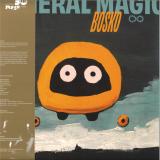
Editions Mego presents Bosko, landing exactly 30 years after the initial General Magic flights into the fantastic; the legendary first Mego release, a collaboration with Pita whereby all sounds were harnessed from the buzzing, drinking, humming sounds of fridges MEGO 001 General Magic & Pita and a 12” with Elin called Die Mondlandung (The Moon Landing) MEGO 002 which embarked on a minimal techno template so austere and strange it was one of the historic progenitors of austere and wonky rhythms alongside Sakho and other European explorers.
The initial return of the playful and mystical Austrian outfit General Magic came with the 20th year anniversary vinyl reissue of their classic debut Frantz eMEGO 010. A record so audacious and playful it still baffles as much as it entertains. At some point whilst working on this reissue GM’s Ramon Bauer and Andi Pieper were spurred on to rummage around with ideas and tools once more and after more than two decades of inactivity sonic sorcery was conjured once again. Live shows in honour of Peter Rehberg were performed in Vienna and London. Softbop, a limited risograph collaboration with Tina Frank came with the first new recordings as a digital download came out discreetly online. The first full length album following Rechenkönig in 2000 MEGO 032 “Nein Aber Ja” released in 2023 on Finlay Shakespeare’s GOTO Records on CD and cassette. An ongoing series of mix tapes online further highlights their interests encapsulating a new found angle on electronic mayhem. All of these elements retain the wildly eclectic and ecstatic glow that only they can harness and hand out to an unprepared world.
Now, we have General Magic’s second official full length comeback recording, Bosko. The new album is initially notable prior to the needle hitting the wax or the cursor identifying a track due to the artwork. Made by long term collaborator Tina Frank, this is Frank’s first analogue artwork, with a painting of a happy/nervous machine thing hovering in a landscape of no discernible identity. It’s quasi science fiction hovering amongst the potential for fun. Suited to the music? Natürlich.
Bosko sees Bauer and Pieper update and reframe their original investigations with a fresh supply of head scratching, heart racing tunes that hit the inexplicable with a wild mesh of drums, pianos, synthetic voices and all manner of immaterial sonic play. Startling sonics shock the ears on Club Duchamp which sounds like a conversation between synthetic adult ants in an environment still in development. Elfer features vocals supplied by a female-ish voice who, whilst grappling melody, has trouble executing a firm identity. Noorenhalt catapults along a mainframe of syncopation so unwieldy it feels like the voice, which is utterly alien, provides the only comfort. Seite 5 inhabits a fuzzy zone where a synthetic Horn of Jericho type ambience competes with rhythms never quite sure of who they are. Rise of the Ombré raises the spectral dread. Is this Science Fact? Absolutely nothing within Bosko is predictable.
The amount of change in the miasma of existence and the things we touch in order to make things has shifted so exponentially we are at the point where minds are starting to glaze over. All of this makes the return of the always original, always surprising, always fresh and exciting General Magic totally in tune with the artificial intelligent apocalyptic age we currently inhabit. The tools may have changed but the wonderfully warped gaze of Bosko offers a fresh new vision of perplexing funk and robotic punk.
Bestelle jetzt und wir bestellen den Artikel für dich beim Lieferanten.

Mit nur 14 Jahren begann Trelane als Backgroundsängerin bei Billy Childish und CTMF und sprang bei einer BBC6 Session als Leadsängerin für einen Ramones-Song ein. Als die Band Trelanes großartige Stimme hörte, beschloss sie, ihn bei einigen Monkees-Covers als Leadsängerin auszuprobieren. Trelane kam auf die Idee für den Bandnamen. Weitere Aufnahmen sind geplant. Der folgende Text steht in englischer Originalsprache auf der Rückseite der ersten 7"-Single der Band... "Wir trafen Trelane zum ersten Mal im Jahr 2267 n. Chr. während einer Versorgungsmission zur Kolonie Beta VI. Trelane war jung, mutig, trug knielange Mokassins - angeblich aus dem Besitz eines gewissen Peter Tork - eine Cowboyjacke mit idiotisch langen Fransen und ,hippe" Hosen. ,Steht ihr auf die Monkees?", fragte Trelane. ,Natürlich", antworteten wir. ,Groovy", lachte Trelane, ,ich taufe euch auf den Namen The Squires of Gothos. Habt ihr ein Cembalo?" ,Nein, tut mir leid." ,Keine Sorge, ich zaubern eins her - und hier ist ein Studio. Jetzt hört auf, rumzualbern, und lasst uns aufnehmen!" Und so kam es, und hier ist das Ergebnis. Dig!!!" - Mister Schneider: The Vincent van Gogh-Gogh, Malibu, LA Lead-Gesang - Trelane The Squires of Gothos: Bass / Backing-Gesang - Jableeta Schlagzeug - Ginger Chunks Gitarre - Sir Quentin Gaydish - eine Childish Produktion!
erscheint voraussichtlich am 29.08.2025

Chickasha, Oklahoma is not a place known for producing a lot of original proto-punk bands. In fact, there is, to our knowledge, only one: Debris'. Formed in 1975 by bassist Chuck Ivey, guitarist Oliver "Rectomo" Powers and drummer Johnny Gregg, the trio created some of the most art-damaged outsider rock 'n' roll this side of MX-80 Sound.
When a local studio offered the package deal of ten hours for recording and mixing as well as pressing 1,000 LPs and two-color jackets, Debris' came in well-rehearsed – nailing all eleven of their songs in just one take. In April 1976, the same month as Ramones' debut album, Debris' would release their lone record onto the world.
Opener "One Way Spit" could easily be mistaken for a lost KBD single – from Chuck's bizarre count-in to the band's trashy start-stop rhythms, unfurling a Dadaist flag around Johnny's visceral vocals. On "Tricia," a reference to the then-current Patty Hearst trial, Oliver's gruesome groans are sardonically juxtaposed with an electric saw. These LSD-tinged tunes are a potent mix of Beefheart-ian controlled chaos and the genuinely weird avant-rock associated with the mid-'70s Cleveland scene.
Enhanced by analog synthesizers and electronic effects, the album sounds like Eno-era Roxy Music or Stooges' Fun House buried deep in the red Oklahoma dirt. While punk would spark a handful of bands who boldly straddled the line between the primal and the experimental, the relatively unsung Debris' were one of the first to do so.
Debris' had a standing invitation to play New York at Max's Kansas City and CBGB in 1976, although they never made it out of Oklahoma. The private-press edition of their self-titled album (also known as Static Disposal, which was actually the label name printed on the original front cover) has since become a collector's item and is even namechecked on the infamous NWW list.
erscheint voraussichtlich am 22.08.2025

Featuring radio staples like “Dirty Water Ocean” and “Ludes And Cherrybombs,” GAQS found themselves once again beside their friends, Pearl Jam, but instead of sharing a stage, they were sharing the airwaves. Over 30 years later, Wonderful Virus returns, remastered on red vinyl, and is also included on the double CD Dizzy: The Medicine Label Anthology. It’s time to get checked out for a Wonderful Virus.
BUY! HERE’S WHY!
• The return of their debut release on opaque red vinyl.
• Produced by Daniel Rey (Ramones, King Missile, Misfits).
• Available on vinyl for the first time in over three decades.
erscheint voraussichtlich am 25.07.2025
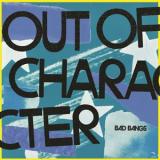
Turning heads with their unique blend of garage, psych, punk rock Bad Bangs played across notable festivals and club shows throughout a 23 show run in 2024. Making waves at Left of The Dial (NL), Leffingeleuren (BE), Truenorayo (ES) and Gliding Barnacles Festival (PT) Bad Bangs make a charging return to the 2025 European Summer festival circuit. Their 2024 sophomore release Out Of Character was the first offering since their debut album Character Building. Somewhere between punk and country, folk and psych, Bad Bangs find themselves Out Of Character. The Melbourne based outfit's sophomore album bends across genres to form a unique soundscape of their own. Live tracking with the masterful Paul Maybury (Cash Savage & The Last Drinks, The Murlocs) captured the bands enigmatic live energy, whilst mastering by Jim Diamond (Ghetto Recorders, The White Stripes, The Dirtbombs, The Gore Gore Girls) secured the signature gritty sound of Bad Bangs. The album arrives with the punchy, punk-laced opening track Contest, which questions the fabric of an industry hell bent on image and conformity, and concludes with the psych infused Wild Mess which laments the shifting state of the natural world. Themes of social and environmental unrest swirl in the undercurrent of an album reflecting on immediate frustrations and personal reflection. With a staple cult following in their hometown of Melbourne, Bad Bangs have supported a high caliber of contemporaries over the years such as Shannon and The Clams, The Murlocs, Rolling Blackouts Coastal Fever and Chastity Belt. Bad Bangs Out Of Character is set for re-release through Beast records (FR) and locally released via Blossom Rot Records (AU&NZ) (Snowy Band, Cassie Ramone and more) Bad Bangs are part of Ya Ya Yeah's booking roster throughout EU. Bad Bangs members are Shelby De Fazio, Tim Ryles, Sophia Lubczenko and Gab Portocarrero.
erscheint voraussichtlich am 18.07.2025

comes in deluxe black Priplak jacket with postcard
The Techno Wave" was the first single released in 1990 by this famous project created by Jens Lissat and Ramon Zenker (Hardfloor). One of the most well-known tracks of the so called Frankfurt Tekkno scene that invaded Germany during the early 90s. This re-issue includes the original Castle Mix", the b-side The Bass is on Fire' and a new killer remix prepared by Ancient Methods who described The Techno Wave" as "one of the influential tracks that brought me alongside Zoth Ommog and R&S into techno".
Bestelle jetzt und wir bestellen den Artikel für dich beim Lieferanten.
