Mickey Nox is a techno enthusiast, label owner, DJ and producer from Melbourne, Australia. His impressively unique style and attitude towards his constantly evolving productions and DJ sets is dark, menacing and always maniacally exhilarating as he becomes progressively more entangled within his heavy hitting hardware.
Continuing with the ‘Limited As Fuck’ series of releases, on our fiercely independent techno label based in Scotland, we witness the return of the Australian assassin himself with the most rampant, fast paced release we’ve ever put out on our infamous label …….. so far. After the rip-roaring success of his first RIOT Radio Records release a few years back with his double vinyl album ‘Mad As A Cut Snake’, he’s back once more to knock some sense out of, or is it into you?
He’s pulled out all of the bashing implements he can muster into forging this conk buster of a release. Full bore mallets, truncheons, heavy mounted metal clubs and even franticly abused frying pans have all been industriously employed by this long-haired behemoth of an artist for driving, battering, pummelling, pounding, striking, bludgeoning and cudgeling all for the purpose of taking you into his world of being a ‘Hammerhead’.
The full digital release also features one bonus track with the ‘Rough Mix’ of ‘Tropic Corridors’ which you won’t find nowhere else. Rough by name, rough by nature.
WARNING: LISTENING TO THIS WEAPONIZATION WILL ENDUCE FILTH OF THE MOST OBSCENE NATURE

Cerca:rampant
With Pere Ubu on hiatus since 1982’s excellent ‘Song Of The Bailing Man’, David Thomas had recorded a` much-praised solo album and the band had now signed to a major label. In a period of rampant world commercialism, what would happen next? Another crucial era for the band unravelled, Pere Ubu’s journey charted new undulating territory and so began a three-album escapade that retooled our understanding of what pop music is. Things were further obscured with ‘Cloudland’ when they released “their industrial strength equivalent of a class Beach Boys album from musicians more familiar with factories than surf.” (Greg Kot, Chicago Sun Times).
The music industry, once revered as a realm of artistic expression and creativity, has gradually transformed into a breeding ground for commercial nonsense. The rampant commercialization of music has resulted in an environment where genuine talent often takes a backseat to profit-driven motives. It’s high time we unmask and challenge the prevailing commercial bullshit that plagues the music scene today.
In the midst of all this commercial nonsense, it’s essential to recognize that there is a thriving underground and independent music scene where authenticity and creativity still flourish. Listeners can play a vital role in reshaping the music industry by supporting independent artists, seeking out diverse sounds, and rejecting the homogenized offerings of major labels.
To combat the commercial bullshit in the music scene, we must prioritize artistry over profit, diversity over uniformity, and creativity over conformity. Only by championing these values can we hope to revive the music industry as a bastion of authentic expression and genuine talent, free from the shackles of commercial exploitation.
With Pere Ubu on hiatus since 1982’s excellent ‘Song Of The Bailing Man’, David Thomas had recorded a` much-praised solo album and the band had now signed to a major label. In a period of rampant world commercialism, what would happen next? Another crucial era for the band unravelled, Pere Ubu’s journey charted new undulating territory and so began a three-album escapade that retooled our understanding of what pop music is. “Solid as the band can be, it's also likely to dissolve songs from the bottom up. For all Pere Ubu's uncertainty, the band isn't arbitrary; its music has the off-the-wall unity of a Marx Brothers routine,” said Jon Pareles of The New York Times. In 1991, ‘Worlds In Collision’ became “the most atmospheric, carefully sculpted recording in the band's 13-album catalog.” (Tom Moon, Spin).
The music industry, once revered as a realm of artistic expression and creativity, has gradually transformed into a breeding ground for commercial nonsense. The rampant commercialization of music has resulted in an environment where genuine talent often takes a backseat to profit-driven motives. It’s high time we unmask and challenge the prevailing commercial bullshit that plagues the music scene today.
In the midst of all this commercial nonsense, it’s essential to recognize that there is a thriving underground and independent music scene where authenticity and creativity still flourish. Listeners can play a vital role in reshaping the music industry by supporting independent artists, seeking out diverse sounds, and rejecting the homogenized offerings of major labels.
To combat the commercial bullshit in the music scene, we must prioritize artistry over profit, diversity over uniformity, and creativity over conformity. Only by championing these values can we hope to revive the music industry as a bastion of authentic expression and genuine talent, free from the shackles of commercial exploitation.
20TH ANNIVERSARY DELUXE EDITION
“One Day,” the critically acclaimed Bambu Station album now celebrating its 20th Anniversary with this Deluxe Edition Double Vinyl and digital release. Bambu Station believes “Vibes is everything” and their impact on fans and their community activism have been just that. Founded in 1997 by lead singer, songwriter, producer Jalani Horton, of St. Thomas, Virgin Islands, Bambu Station is the culmination of a lifetime of love for music and the quest for sharing and uplifting through sound, poetry, words, and action, which has since grown to a musical force supported by roots fans around the world. The sound of Bambu Station is best described as heavy, natural and
relentlessly captivating. From its conscious roots music to its powerful, insightful and timeless lyrics, Bambu Station's sound is very percussive, profound and inviting.
As the explosion of roots reggae music from Jamaica in the sixties and seventies turned to dancehall, unexpectedly there came a resurgence of roots reggae from the Virgin Islands. Bambu Station was a main progenitor of that resurgence. It would be a band that would create music and write songs that reach into the difficult spaces in the lives of people. It would be a band that would have a positive impact on the lives of people. It would strive to keep a mighty torch lit -- lit by ancestors and musician-prophets alike. On the first release of their breathtaking third album “One Day”, many songs quickly became instant favorites. Fans, writers and industry experts all continue to praise the album as “classic”, “very powerful”, and “one for the ages”. From The Beat Magazine, Reggae Reviews, Urban Ambience Journal and countless others, critics dubbed Bambu Station’s “One Day” as one of the most significant albums of the modern reggae scene. Creation Steppin’ Radio selected “One Day” as its “Album of the Year” for 2003. The D.C. Annual Reggae Awards selected “One Day” as “Album of the Year 2003,” the song “One Day” as “Song of the Year 2003” and Bambu Station as “Producer of the Year 2003.” Terry Wilson ‘Midnight Ravers’ on WBAI FM, NY says, "Bambu Station is the best and most important band in Reggae music." “This is a fabulous album that demands a place of pride in every cultural fan's collection.”
Many of the instant favorites on “One Day” include the provocative opener “Humanity Bawlin’,” “Gunsmoke”, the first single from “One Day”, a very deep, roving and powerful reflection of the rampant gun violence that hit the Virgin Islands hard and haunts us in America and around the world today. "The anthemic “Fya!”, and the mesmerizing “Move On”. "Pass It" captures the passion and spirit of the roots rockers era, while the haunting title track "One Day" is reminiscent of The Specials at their best. The heart wrenching tribute to “Amadou Diallo” is in memory of the brutally slain innocent West African immigrant in New York. “Eyes of Men” is a call for female dignity and homage to Betty Shabazz, Malcolm X’s widow.
Four years and one pandemic after his latest Dreams Of A Dark Building EP, the herald of dungeon synth pop is finally back from his shallow grave.
Life has not been gentle with Seattle-based solo producer Parker Lautenschlager over the past few years, imposing its unpredictability and forcing him to channel all the feelings that come with it into Profit Prison’s music.
It’s no surprise that his first full-length album Gilt marks one futher step towards the dark corners of italo / hi-nrg body music. Typical Profit Prison’s vocals and melodies, reminiscent of OG synth masters Kraftwerk, Giorgio Moroder and Orchestral Manoeuvres in the Dark, are still here, buried in the mix and waiting to haunt the listeners and drag them down in one sulfurous dancing spiral.
Lead single Sophia juxtaposes some weirdly camouflaged vocals with one heavenly chorus that seems willing to revive your fortunes while instead it literally sings “But I lost it all”. A Matter Of Tact displays pop escapism over some throbbing minimal synth tension, Seven Words sounds like a throwback to 70’s italo filtered through the eyes of a 21st century punk rocker. Katalina has a rampant synth à la Carpenter climbing over a story of loss and Katalina, An Ascetic is a solo ramble reaching for the inner light on a carpet of cold keys.
What’s more, tracks got longer in Parker’s recent songwriting, with most of the songs being now five minute long and reaching peaks of seven minutes with the closing, almost progressive disco jam of A.R.P. (Amphetamine Research Project), nothing short of a lucid dream on the floor of Studio 54.
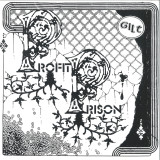
Last but not least, the artwork by French artist Robin Roche delivers medieval-yet-punk graphic vibes to match just perfectly the sounds on this record.
Four years and one pandemic after his latest Dreams Of A Dark Building EP, the herald of dungeon synth pop is finally back from his shallow grave.
Life has not been gentle with Seattle-based solo producer Parker Lautenschlager over the past few years, imposing its unpredictability and forcing him to channel all the feelings that come with it into Profit Prison’s music.
It’s no surprise that his first full-length album Gilt marks one futher step towards the dark corners of italo / hi-nrg body music. Typical Profit Prison’s vocals and melodies, reminiscent of OG synth masters Kraftwerk, Giorgio Moroder and Orchestral Manoeuvres in the Dark, are still here, buried in the mix and waiting to haunt the listeners and drag them down in one sulfurous dancing spiral.
Lead single Sophia juxtaposes some weirdly camouflaged vocals with one heavenly chorus that seems willing to revive your fortunes while instead it literally sings “But I lost it all”. A Matter Of Tact displays pop escapism over some throbbing minimal synth tension, Seven Words sounds like a throwback to 70’s italo filtered through the eyes of a 21st century punk rocker. Katalina has a rampant synth à la Carpenter climbing over a story of loss and Katalina, An Ascetic is a solo ramble reaching for the inner light on a carpet of cold keys.
What’s more, tracks got longer in Parker’s recent songwriting, with most of the songs being now five minute long and reaching peaks of seven minutes with the closing, almost progressive disco jam of A.R.P. (Amphetamine Research Project), nothing short of a lucid dream on the floor of Studio 54.
Last but not least, the artwork by French artist Robin Roche delivers medieval-yet-punk graphic vibes to match just perfectly the sounds on this record.
This is The Wreckery album that never was but always should have been!
At the crest of the Australian post punk era, The Wreckery played atmospheric rock with film-noir swagger and renegade attitude, carving a loyal following. Critics quickly positioned them as successors to a darkly exciting avant-garde Melbourne tradition previously marked out by The Birthday Party.
Early recordings for Rampant Records (1985-87) showcased The Wreckery's fusion of swamp blues and noir-jazz, delivered with a deadpan, reckless, and romantic cut (check out the 'Ruling Energy' video!). Creative tensions saw the band implode as they were reaching their peak with the Laying Down Law album (Citadel Records, 1988). Yet another great and dangerous rock 'n' roll band who became a danger to themselves.
35 years later, the new album Fake is Forever delivers on unfulfilled promises, revealing The Wreckery on fire like never before. The DNA is still there – the signature sound of Charles Todd's baritone sax; the scathing lyrics and vocals of Hugo Race; the distorted angular guitars of Clayton-Jones; the eclecticism of multi-instrumentalist Robin Casinader; Nick Barker and former Plays With Marionettes drummer Frank Trobbiani fuse as the solid engine room of this iconic group. All the original edge with a new maturity and control.
The songs still emanate from the deep, dark end of the musical gene pool. The sarcastic, provocative lyrics of 'Smack Me Down', 'Get A Name' and 'Young People'; the musical fury of 'Stole it from Alpha Ray' and 'Evil Eye', the romantic melodrama of 'The Devil in You' and 'Whistle Clean', the deranged rock of 'Dragonfly' and 'Garbage Juice' – The Wreckery's range is as vast as it is ferocious. Whereas the band in the 80's were brash and angry this record finds the band conjuring quiet menace, sensual, intoxicating.
Hugo Race – vocals, guitars, keys
Ed Clayton-Jones - guitar, piano, synth, Mellotron, slide guitar , Solina string synth
Nick Barker – bass guitar and backing vocals
Charles Todd - the saxophones
Robin Casinader - Hammond organ, mellotron, mandolin and violin
Frank Trobbiani - the drums and percussion
Recorded by Andrew 'Idge' Hehir at Soundpark Studios, Melbourne
Mixed by Hugo Race at Helixed
Mastered by Toto Strapporava at 3Faders Studio, Buenos Aires
Published by Peermusic
This is The Wreckery album that never was but always should have been!
At the crest of the Australian post punk era, The Wreckery played atmospheric rock with film-noir swagger and renegade attitude, carving a loyal following. Critics quickly positioned them as successors to a darkly exciting avant-garde Melbourne tradition previously marked out by The Birthday Party.
Early recordings for Rampant Records (1985-87) showcased The Wreckery's fusion of swamp blues and noir-jazz, delivered with a deadpan, reckless, and romantic cut (check out the 'Ruling Energy' video!). Creative tensions saw the band implode as they were reaching their peak with the Laying Down Law album (Citadel Records, 1988). Yet another great and dangerous rock 'n' roll band who became a danger to themselves.
35 years later, the new album Fake is Forever delivers on unfulfilled promises, revealing The Wreckery on fire like never before. The DNA is still there – the signature sound of Charles Todd's baritone sax; the scathing lyrics and vocals of Hugo Race; the distorted angular guitars of Clayton-Jones; the eclecticism of multi-instrumentalist Robin Casinader; Nick Barker and former Plays With Marionettes drummer Frank Trobbiani fuse as the solid engine room of this iconic group. All the original edge with a new maturity and control.
The songs still emanate from the deep, dark end of the musical gene pool. The sarcastic, provocative lyrics of 'Smack Me Down', 'Get A Name' and 'Young People'; the musical fury of 'Stole it from Alpha Ray' and 'Evil Eye', the romantic melodrama of 'The Devil in You' and 'Whistle Clean', the deranged rock of 'Dragonfly' and 'Garbage Juice' – The Wreckery's range is as vast as it is ferocious. Whereas the band in the 80's were brash and angry this record finds the band conjuring quiet menace, sensual, intoxicating.
Hugo Race – vocals, guitars, keys
Ed Clayton-Jones - guitar, piano, synth, Mellotron, slide guitar , Solina string synth
Nick Barker – bass guitar and backing vocals
Charles Todd - the saxophones
Robin Casinader - Hammond organ, mellotron, mandolin and violin
Frank Trobbiani - the drums and percussion
Recorded by Andrew 'Idge' Hehir at Soundpark Studios, Melbourne
Mixed by Hugo Race at Helixed
Mastered by Toto Strapporava at 3Faders Studio, Buenos Aires
Published by Peermusic
The Minneapolis Uranium Club Band, along with Static Shock Records are proud to present “Infants Under the Bulb”; The Uranium Club’s fourth album and first full length since 2018’s "The Cosmo Cleaners". Precisely timed ahead of the band’s debut tour of Australia commencing March 19, Infants Under the Bulb will light up stores across the globe from March 1st. Recorded in Minneapolis over the course of 2023 by long time collaborator Grant Richardson and just as rampant and agitated as ever.
The Uranium Club once again win their dear listeners over with eccentrically wild guitar parts, revolving voices, elastic-tight drums and the addition of their very own Saints-styled horn section. Lyrically, Under the Bulb opens up the history books of unsolved mysteries - unidentified, unsolved, unanswered subjects of suspicious acts or individuals across the last century. Who, what, when and where… but mostly, why? Ignorant humanity of earth orbits the sun once again.
The Somerton Man, Bergmann, Bauby, Denton, phone phreakers, and just what is lurking behind the cosmic organ of The Wall? As always, the artwork was handled in-house by the Club and ambitious as ever. The spectacular cover shot captures a carefully coordinated event orchestrated by the Club to photograph a crowd of the local volunteers wearing ponchos standing together in an open field to make the shape of a giant spiral. The spiral pictured is 120 feet (36.5 meters) wide, photographed by drone, and was plotted out on the ground using a protractor specially fabricated for the occasion by the band with a pivoting centre and 60ft long adjustable
The Pheromoans are tenants of an unruly domain. Over the last 18 years the group have evolved from garage rock primitivists to auteurs of their own curious sound; a frothy brew of loose electronics, refractory rock and humdrum musing. Their songs are mutable, capricious, unreliable narrations, often withholding as much as they reveal. Russell Walker’s understated vocal has always been the band’s unifying focus, it is wry, unsparing and wilfully honest. Walker’s lyrics are an observational tour de force, sometimes droll, yet often tipping over into unlikely pathos. With previous releases on Upset The Rhythm, Convulsive and Alter, 2024 will witness The Pheromoans return with lucky album number 13, entitled ‘Wyrd Psearch’ (out March 1st on Upset The Rhythm).
‘Wyrd Psearch’ was recorded in Lewes throughout 2023. This was undertaken by founding member James Tranmer, his keen instinct for how the band should sound shaping many of the creative decisions. Joined by new guitarist Henry Holmes, the five piece doubled down on a decidedly breezy, melodic approach. Scott Reeve’s drumming is ever brisk, whilst Daniel Bolger explores AOR peripheries on keyboard and bass. “Wyrd Psearch finds us on relatively zestful form” affirms Walker “whether it be merrily recalling the Jason Williamson / Tim Lovejoy Covid summit, or mentally bathing in the pleasures of lunch hours spent strapped to a listening post in Borders.” With The Pheromoans there is always a familiarity at play, only broken and reassembled, like a bygone sitcom gone rogue in your memory. This contributes to the group’s peculiarly British outsider perspective, one that shouts from the sidelines, but never goes unnoticed.
Subjects covered lyrically on ‘Wyrd Psearch’ include “mid-life crises, male pattern baldness, and thwarted artistic and personal ambitions” according to Walker himself. “Nothing is off limits for scrutiny, even rural arts communities” he concludes. Lead single ‘Downtown’ swings with chiming guitars and finds Walker mid-breakdown trying to persuade a loved one to accompany him into the town centre to collect controlled medication and wind back the clock to happier times. “I want to keep you in cotton wool until pay day” he confides. ‘Cropped to Death’ and ‘Father Austin’ are ruminative and more relaxed in nature, whilst ‘Twibbon Wife’ is a more energetic effort, all jabbed synth chords, circuitous basslines and rampant drum fills. ‘Faith in the Future’ similarly bounds along with reverie.
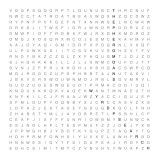
Walker claims that the album’s title is an expression of his frustration at the ubiquity of people claiming things are eerie or weird / wyrd in the present cultural milieu. The artwork for the record is designed as an actual word search too, a knowing nod to how we all grapple for meaning amongst the absurdity of each day. Leaning into ‘weird’ as a coping mechanism is not on The Pheromoans’ agenda however. This album holds little sway with the supernatural, it’s not enough. The overriding impression given by ‘Wyrd Psearch’ is of a band renewed with ideas. There’s no trouble finding the right words, they’re hitting their mark, keeping up with the commentary. ‘Wyrd Psearch’ is a document of The Pheromoans mastering their unquiet moment.
The new recordings from The Dengie Hundred unfurl on Tain Records after a busy year releasing a solo tape on Sagome and a collaborative LP and tape with Japan Blues on Demdike Stare's DDS imprint.
Lammas Land is an album which meditates on the Walthamstow Marshes, an ever-changing watery landscape, rich with history and wildlife. The Dengie Hundred writes:
"I am sitting at my table overlooking the marshes listening to Lammas Land in November 2023, watching crows fight a never-ending aerial battle with the gulls. In summer, you can see bats from here every evening, fluttering around the windows as the light begins to fade, but today it is colder so there is smoke rising from the boats on the River Lea and the dog walkers are wrapped up tight against the wind.
Most of Lammas Land was made sitting right here, playing guitar and recording the sounds passing by. I would hang a microphone out of the window to capture the ‘putput’ boat which delivers provisions, or the trains that rattle along the tracks that cut across the marshes and up to Stanstead, carrying passengers to the airport and away.
I wonder what tourists make of the marshes as they cross them, the landscape opening up for a moment between the urban sprawl of the East End and the rampant development of Tottenham. They offer a jarring pause of green and sky. I feel very lucky to be living in that pause, a resident, for now…
The album contains a whole year of found sounds recorded from the window and while out walking. It is full of bird song and radio sounds, singing, life.
Many others have been inspired by this space, this pause. The author Esther Kinsky who wrote River, published by Fitzcarraldo Editions, captures this area so perfectly. I borrowed the two track names for this album from her book. I hope she doesn’t mind.
Also, the photographer Paul Fuller whose work reflects the atmosphere I feel here precisely. On hearing the music he wanted to collaborate on the Lammas Land project, He spent a year filming the marsh through the seasons. Some of his images are included with the vinyl release, and there is an accompanying film close to completion. I am so pleased this project is continuing in new forms.
The vinyl also contains a piece of writing, ‘Sound Fishing’, by Gemma Blackshaw, an author, art historian and curator who in a twist of fate also found herself spending time on the marshes, but that is her story, for another day."
The Dengie Hundred
Lammas Land
LP, with essay insert + five photographic prints
Cat No: TAIN02
Price: £14.49
Due next week
A: A hand full of ever thickening twilight
(Sample clips 1 / 2 / 3)
B: A string of pearls pulling
the night away
(Sample clips 1 / 2 / 3)
- A1: From The Sun
- A2: Swim And Sleep (Like A Shark)
- A3: So Good At Being In Trouble
- A4: One At A Time
- A5: The Opposite Of Afternoon
- A6: No Need For A Leader
- A7: Monki
- A8: Dawn
- A9: Faded In The Morning
- A10: Secret Xtians
- B1: Swim And Sleep (Like A Shark)
- B2: Faded In The Morning
- B3: So Good At Being In Trouble
- B4: Swing Lo Magellan
- B5: Puttin' It Down
- B6: Two Generations Of Excess
- B7: Waves Of Confidence
Unknown Mortal Orchestra came to life in basements and bedrooms, the musical vision of Portlander-via-New Zealand Ruban Nielson that fused guitar-god riffs, choppy percussion, soul and funk. II, the sophomore album from UMO, emerged in an era rampant hedonism and isolationism and became the blueprint for everything Nielson has become renowned for. It was, and is, the solidification of Unknown Mortal Orchestra as an endlessly intriguing, brave and addictive band. Ten years on, it's back with an expanded edition. Written during a punishing, debauched touring schedule during which Nielson feared for both his sanity and health, II illustrates the emotional turmoil of life on the road, painting surrealist, cartoonish portraits of loneliness, love and despair. These conflicting themes are evident immediately; on the album's sleeve is an unnerving image of Janet Farrar, the famous British witch, Wiccan, author and teacher of witchcraft. The chilling refrain of opener "Into The Sun" sees Nielson deliver the line "Isolation can put a gun in your hand," softly, his words starkly intelligible above a warm, slow-burning melody that quickly brands itself onto your brain. His playful imagery ("I'm so lonely I've gotta eat my popcorn all alone") mirrors the melody, before a solo that borders on psychotropic ends II`s introduction. UMO is unafraid to dig deeper than the rest, their intoxicating, opiate groove bringing rock'n'roll's exaggerated myths to life. And as it unfolds, II does find Nielson reenergized. "One At A Time" and "Faded In The Morning" boast dizzying choruses and instrumentals; these crusty hunks could have been excavated from a lost 1960s treasure trove. "Monki" unravels over seven minutes like the yarn from a stoner's cardigan with an eye-frying pattern. "Dawn" is a minute of disconcerting noise that stands out between the nooks and crannies of the choruses, guitar solos, groove-heavy bass and drums that were recorded live by newly-recruited drummer Greg Rogove and Kody Nielson in a move away from the electronic percussion employed on album one. II closes with "Secret Xtians," a tender observational puzzle that fizzes to a satisfied end. In celebration of the album's 10th anniversary Nielson's complete collection from the II era is finally available in one compilation, and features the five acoustic tracks from the Blue EP as well as two additional B-sides. Unknown Mortal Orchestra was once Nielson's closeted concern. With an album that uses his singular musical imagination and extraordinary talent to parade his emotions with unyielding honesty, it is now a fully realized band operating at the peak of its powers ten years on.
Mit dem sehr stimmungsvollen und intensiv atmosphärischem Grundtenor ist "6" ein weiterer Meilenstein in ihrer bemerkenswerten Karriere.
Die Band hat sich noch einmal weiterentwickelt, sowohl in personeller Hinsicht als auch auf musikalischer Ebene.
Das sechste Studioalbum der Band trägt den schlichten Titel 6 und mag sofort als das Werk von Nilsson und seinen Mitstreitern zu erkennen sein, aber es ist eine ganz andere Art von Graveyard-Album.
Mit ihrem bisher düstersten, aber zugänglichsten Album, haben Graveyard ein paar Jahre der Isolation und Frustration überstanden und kehren mutiger, kühner und bluesiger als je zuvor zurück!
Mit dem sehr stimmungsvollen und intensiv atmosphärischem Grundtenor ist "6" ein weiterer Meilenstein in ihrer bemerkenswerten Karriere.
Die Band hat sich noch einmal weiterentwickelt, sowohl in personeller Hinsicht als auch auf musikalischer Ebene.
Das sechste Studioalbum der Band trägt den schlichten Titel 6 und mag sofort als das Werk von Nilsson und seinen Mitstreitern zu erkennen sein, aber es ist eine ganz andere Art von Graveyard-Album.
Mit ihrem bisher düstersten, aber zugänglichsten Album, haben Graveyard ein paar Jahre der Isolation und Frustration überstanden und kehren mutiger, kühner und bluesiger als je zuvor zurück!
Mit dem sehr stimmungsvollen und intensiv atmosphärischem Grundtenor ist "6" ein weiterer Meilenstein in ihrer bemerkenswerten Karriere.
Die Band hat sich noch einmal weiterentwickelt, sowohl in personeller Hinsicht als auch auf musikalischer Ebene.
Das sechste Studioalbum der Band trägt den schlichten Titel 6 und mag sofort als das Werk von Nilsson und seinen Mitstreitern zu erkennen sein, aber es ist eine ganz andere Art von Graveyard-Album.
Mit ihrem bisher düstersten, aber zugänglichsten Album, haben Graveyard ein paar Jahre der Isolation und Frustration überstanden und kehren mutiger, kühner und bluesiger als je zuvor zurück!
Remastered for its 10th Anniversary, the newly cut vinyl edition of Ripely Pine features the bonus track “Up In The Rafters,” long a live favorite that really should have been on the album in the first place. More than anything, Aly Spaltro has 20,000 second-hand DVDs to thank for her first album. Despite being recorded at a proper studio in her recently adopted home of Brooklyn, Ripely Pine showcases songs conceived during her tenure at Bart’s & Greg’s DVD Explosion in Brunswick, Maine. Little did customers know, the same store they’d drop off their Transformers movies was providing the ideal four-year cocoon for the development of a major musical talent. Spaltro worked the 3:00 PM to 11:00 PM shift. Each night, after locking up, she’d walk past Drama and Horror, pull out her music gear from behind a wall of movies, and write and record songs until morning broke. She did this every day, drawing strength from the monotony of her routine and testing out multiple techniques, approaches and instrumentation. Anger, confusion, love, happiness and sadness reigned, and the songs ran rampant, with little form or structure. Isolated for those many hours, Spaltro let melodies morph together, break apart and pair up. This is how she taught herself to write music and sing. Taking the name Lady Lamb the Beekeeper, Spaltro became one of the most beloved musicians in Portland. Her live shows were unhinged, as melodies followed an internal logic only apparent to Spaltro herself. She sang and played guitar, and the songs offered a vivid yet brief snapshot of her expansive world. At 23, with years of writing and performing music already under her belt, she ventured to the next milestone—recording an album. This would be the first time she did so in a professional studio and the first time she shared the process with anyone else. Luckily, she met Nadim Issa at Let ’Em Music in Brooklyn. He was taken enough by her abilities to dedicate nine full months toward the recording of Ripely Pine, and she with his producing abilities to ease comfortably into making him a part of her recording process. She wrote everything—all the songs, all the arrangements. And the two of them assembled an album that finally fit what existed in Spaltro’s mind. Keeping the songs’ stark rawness, the record is a pure representation of her sound. Ripely Pine shouts the introduction of a new talent from every groove. These recordings come as close as possible to conveying the intense majesty of her live shows, and, much like those performances, a narrative breathes through the record’s progression. The album opens with urgency and anger, settles into reconciliation and reciprocation, and ultimately reaches toward resolution, realizing infatuation leads to a loss of self; instead, embracing one’s own strengths is the most powerful thing of all.
No shortage of colorful characters emerged from Cameroon’s bikutsi scene in the 1980’s and early 90’s. Gibraltar Drakus is one of the most enduring and enigmatic of the artists who helped transform bikutsi into a beautifully endless fabric of triplet rhythms that eventually reached ears around the world.
Following the advent of Cameroon Radio Television in 1987, bikutsi began to supplant makossa and soukous for domination of the local airwaves and the attention of cosmopolitan, thrill-seeking residents of Cameroon’s capital Yaoundé and beyond. Biktusi perfectly fused Beti traditional music and increasingly electronic, highly rhythmic guitarbased bikutsi. Mimicking the sound of village-based xylophone music by rigging a mute to electric guitar strings, bikutsi artists provided a relentlessly energetic dance format for those with a taste for music steeped in their hometown sensibility (countering the popular makossa that many felt sounded less indigenous).
By the early 1990’s, Les Tetes Brûlées were indisputably the most famous and influential artists in bikutsi, due in part to the innovations of their incendiary guitarist Théodore Zanzibar Epeme. Following their first European tour in 1987, the band blew up internationally but Zanzibar tragically, and mysteriously, passed away, which nearly brought an end to the band completely. In hindsight, the consensus among most Cameroonians is Zanzibar’s contributions to biktusi were transformational and immeasurable.
“Zanzibar is the one who taught me how to compose a song, and I learned a lot from Zanzibar musically. We spent whole nights working on methods and other approaches to compose beautiful songs. I owe half of everything I have today to Zanzibar!”
Swept up in all this was Gibraltar Drakus, who was the youngest member of Les Têtes Brûlées and was also the protégé of his biggest supporter, Zanzibar. So it was fitting that he dedicate his 1989 debut to their groundbreaking late guitarist who had meant so much to him. Drakus literally exploded from his first album Hommage A Zanzibar (1989), which sold over 100,000 copies despite rampant piracy. For the recording, Drakus made sure he engaged prolific producer Mystic Jim to record and mix the album. The innovation musically rests both within the guitar interplay and the discipline in the orchestration, which result in a mind-bending clockwork of cross-rhythmic harmony.
repressed !
Jex Opolis Presents: In The Nite--"Look At My Car!," a versatile new EP featuring three cosmic cuts from Jex and Ian D. Knight, a St. Louis-based performance artist. Knight features most prominently on the Compass Point-tinged "Look At My Car!," a Paean to the joys of both consumerism and rampant motorism. On the flip, Jexy whips out the Strat for some Chic-inspired licks on the chugging "Guitar Sands," with the Italo-bumping 120 BPMer "Rimini Nites" along for the ride, too.