
vorbestellen29.08.2025
erscheint voraussichtlich am 29.08.2025
32,35 €
erscheint voraussichtlich am 29.08.2025

2023 marks the 10th anniversary of Daft Punk’s multi Grammy winning hit record ‘Random Access Memories’ including ‘Get Lucky’, ‘Instant Crush’, ‘Lose Yourself To Dance’ and features Pharell Willams, Nile Rodgers, Julien Casablancas, Paul Williams, Panda Bear and Todd Edwards. To celebrate this milestone a special expanded edition will be released including 35 minutes of unreleased music (Demo and Studio Outtakes). The triple vinyl also includes a special Lose Yourself To Dance poster.
Bestelle jetzt und wir bestellen den Artikel für dich beim Lieferanten.

Bestelle jetzt und wir bestellen den Artikel für dich beim Lieferanten.
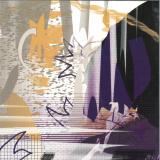
Mean Field Mutation is a thermodynamic phenomenon occurring just below the vaporization point of voracious growth. It relies on the debris of false and almost forgotten narratives. Astral residue of consumer angst, echoes of obsolete newspeak and oscillations of promotional imbecilities collide with free floating particles hovering under the radar of the megamachine. In steady intervals, this results in a meltdown producing random waves of reconfigurations driven by cryptic but sanguine naivety.
Released on Lustpoderosa, Mean Field Mutation is the first musical output by Des Coda. Written and produced by Piero Scherer during the pandemic winter of 2021 in his bedroom studio in Zurich. Moving between playful
serenity and feral distortion, it was produced by layering sounds from field recordings, radio and TV clips, as wellas sequences from drum machines and analogue synthesizers. Taking a stance against commercial copyright, all stems of this production are available for download free of charge and ready to be reappropriated.
Des Coda is an open field for collaborative, cultural experiments beyond the conventional understanding of authorship and representation. It engages with an artistic position that defines the creative process as an interplay between context and concept. The resulting work is not a rigid product of authoritarian ingenuity, but a sensitive, living organism guided by the tensions between society and individual. Des Coda is the zestful curiosity rummaging through the rubble of the present in search of future aesthetics.
Bei uns am Lager und sofort versandfertig
Limited 2025 Repress
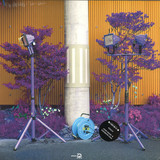
Black Truffle is pleased to announce the release of Ichida, the first release from the duo of two important yet often underappreciated musicians, Eiko Ishibashi and Darin Gray. Ishibashi is a singer-songwriter, keyboardist, drummer, and multi-instrumentalist, known in Japan both for her own elaborately conceptual solo albums and for her frequent collaborations with figures such as Jim O'Rourke, Merzbow, and Phew. Darin Gray is a bassist and multi-instrumentalist known for a multitude of collaborations (with O'Rourke and Loren Connors, among many others), for On Fillmore, his cinematic post-exotica project with Glenn Kotche, and as one half of Chikamorachi with Chris Corsano, one of the finest free-jazz rhythm sections around. Presenting the entirely of a live set performed at Tokyo's Super Deluxe in March 2013, the set begins as a duet for Ishibashi's flute and Gray's upright bass. Calmly melodic yet harmonically inventive, with shades of 'spiritual jazz', the pair's acoustic ruminations are gradually joined by Ishibashi's lush electronics, which randomly flicker between chords in a manner recalling the classic work of David Behrman. As the electronics build into a gloomy fog of slowly cycling loops, Gray lays his bass aside and turns to making strangely mournful interjections on a mouthpiece. Eventually Ishibashi moves to the piano, enveloping the audience in rippling pools of sustained, octave-doubled melody, provided by Gray's bass with a fluid and dynamic foundation. For much of the second side, both Ishibashi and Gray turn to electronics, ultimately arriving in a bizarre space of melancholic arpeggios and random sputter and sizzle, oddly reminiscent of 70s outsider prog acts like Wapassou. An uneasy coda of rich piano chords ends the set. Captured in warm room ambience and beautifully mixed by Jim O'Rourke, Ichida is a rare combination of improvisational acumen and emotional directness, both adventurous and immediately accessible.
Bei uns am Lager und sofort versandfertig
As Nathan Fake rises from the nocturnal subterranea and rave catharsis of his previous records, on Evaporator, he resurfaces into the domain of daylight, bringing a tangible sense of air rushing against your face, of big skies, and endless landscapes.
The idea of pop accessibility that trickled into 2023’s Crystal Vision is refracted here through the prism of sweeping ambient, deep electronica, and trance uplift. Evaporator is Fake’s idea of “airy daytime music”, with each track a different barometer reading across the album’s varying atmospheres, which range from vibrant sunbursts, bracing rainscapes, and fine mists of clement melodics. “It’s not overtly confrontational electronic club music,” states Fake. “It’s quite pleasant, it’s accessible. As I was progressing through making the tracklist, I called it a daytime album. It doesn’t feel like an afterparty album.” For the past decade Fake has been gingerly introducing collaborations with heroes and friends alike into his lone, idiosyncratic working process.
Border Community alumni Dextro AKA Ewan Mackenzie transmutes his ferocious drumming for Pigs Pigs Pigs Pigs Pigs Pigs Pigs into the blurred choral thump of ‘Baltasound’. ‘Orbiting Meadows’, meanwhile, is his second collaboration with Clark, an eerily idyllic duet where microtonal 18EDO piano clangs slowly twirl around wailing pads. Evaporator marks the junction point of old technology and ever fresh creativity for Nathan. The trusty “dinosaur” age software, particularly Cubase VST5, that has powered two decades of music is rarely updated. “I used to sort of feel a bit ashamed of using such old software, and then I kind of had an epiphany – that’s just how I work”, comments Fake. “That’s just how I play. I’m very fond of these old tools, and I get the most joy out of them, but now I’ve incorporated new technology too.” When an artist accumulates so much synergy with their instrument, music making becomes instinctual. By Fake’s account, much of Evaporator just fell into place. The album title arrived randomly in his head (“it felt completely perfect. Airy.”), ideas looped and developed until things locked into place and just felt right. ‘The Ice House’ is a fleeting glimpse of the sonic world he taps into in this creative state, its glassy FM synths built around a counterpoint between rough-hewn crystalline arpeggios and sparse yet gravitas-bearing bass. “That riff I just wrote out on the keyboard, I just played it forever and ever and ever.
The original track ended up being really short. Here you go, and it’s gone!” These unplanned channellings of sound call forth records from Fake’s past while he looks ahead, perhaps getting at the very essence of his musicianship. The opener ‘Aiwa’ (“the breeziest,” he muses) reminds of the introspection that characterised Providence, excited by the fire and grit of Steam Days’ textural experiments, its chunky slams and clatters surging into a flood of harmonic buzzing as they reach out for old wisdom. ‘Hypercube’ stampedes in a similar chronological confluence, infusing an incessant synth line reminiscent of the golden age of rave with the crackling, ecstatic energy of modern festival anthems. Like the vaporisation of liquid to particles, everything that Evaporator presents has a mutant desire to be amorphous. Sounds rarely settle; the irradiated garage beat of ‘Bialystok’ is pitched downwards to driving, rebounding effect, while ‘You’ll Find a Way’ warps static into shivering energy, cinematic synth strings building anticipation into a gradual gush of chords. This translates into a more expansive stereo field than Fake has explored before.
‘Slow Yamaha’ saves the wildest, most kinetic transformations for last with a cornucopia of crispy melodies and fried drums; a sibilance of cymbals on the left, a susurrus of shakers on the right, and kaleidoscopic lasers pulsing and fizzing all around. Evaporation culminating in pure excited atoms.
Bestelle jetzt und wir bestellen den Artikel für dich beim Lieferanten.
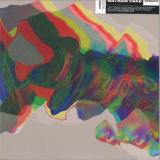
As Nathan Fake rises from the nocturnal subterranea and rave catharsis of his previous records, on Evaporator, he resurfaces into the domain of daylight, bringing a tangible sense of air rushing against your face, of big skies, and endless landscapes. The idea of pop accessibility that trickled into 2023’s Crystal Vision is refracted here through the prism of sweeping ambient, deep electronica, and trance uplift. Evaporator is Fake’s idea of “airy daytime music”, with each track a different barometer reading across the album’s varying atmospheres, which range from vibrant sunbursts, bracing rainscapes, and fine mists of clement melodics. “It’s not overtly confrontational electronic club music,” states Fake. “It’s quite pleasant, it’s accessible. As I was progressing through making the tracklist, I called it a daytime album. It doesn’t feel like an afterparty album.” For the past decade Fake has been gingerly introducing collaborations with heroes and friends alike into his lone, idiosyncratic working process. Border Community alumni Dextro AKA Ewan Mackenzie transmutes his ferocious drumming for Pigs Pigs Pigs Pigs Pigs Pigs Pigs into the blurred choral thump of ‘Baltasound’. ‘Orbiting Meadows’, meanwhile, is his second collaboration with Clark, an eerily idyllic duet where microtonal 18EDO piano clangs slowly twirl around wailing pads. Evaporator marks the junction point of old technology and ever fresh creativity for Nathan. The trusty “dinosaur” age software, particularly Cubase VST5, that has powered two decades of music is rarely updated. “I used to sort of feel a bit ashamed of using such old software, and then I kind of had an epiphany – that’s just how I work”, comments Fake. “That’s just how I play. I’m very fond of these old tools, and I get the most joy out of them, but now I’ve incorporated new technology too.” When an artist accumulates so much synergy with their instrument, music making becomes instinctual. By Fake’s account, much of Evaporator just fell into place. The album title arrived randomly in his head (“it felt completely perfect. Airy.”), ideas looped and developed until things locked into place and just felt right. ‘The Ice House’ is a fleeting glimpse of the sonic world he taps into in this creative state, its glassy FM synths built around a counterpoint between rough-hewn crystalline arpeggios and sparse yet gravitas-bearing bass. “That riff I just wrote out on the keyboard, I just played it forever and ever and ever. The original track ended up being really short. Here you go, and it’s gone!” These unplanned channellings of sound call forth records from Fake’s past while he looks ahead, perhaps getting at the very essence of his musicianship. The opener ‘Aiwa’ (“the breeziest,” he muses) reminds of the introspection that characterised Providence, excited by the fire and grit of Steam Days’ textural experiments, its chunky slams and clatters surging into a flood of harmonic buzzing as they reach out for old wisdom. ‘Hypercube’ stampedes in a similar chronological confluence, infusing an incessant synth line reminiscent of the golden age of rave with the crackling, ecstatic energy of modern festival anthems. Like the vaporisation of liquid to particles, everything that Evaporator presents has a mutant desire to be amorphous. Sounds rarely settle; the irradiated garage beat of ‘Bialystok’ is pitched downwards to driving, rebounding effect, while ‘You’ll Find a Way’ warps static into shivering energy, cinematic synth strings building anticipation into a gradual gush of chords. This translates into a more expansive stereo field than Fake has explored before. ‘Slow Yamaha’ saves the wildest, most kinetic transformations for last with a cornucopia of crispy melodies and fried drums; a sibilance of cymbals on the left, a susurrus of shakers on the right, and kaleidoscopic lasers pulsing and fizzing all around. Evaporation culminating in pure excited atoms. In a world where music has increasingly become background content, making albums remains lifeblood for Fake: “It makes me realise how long; twenty years is ages! It’s weird to see how much the world has changed. Release day back then you did fuck all, now you spend all day on socials. When I grew up the people who made the electronic music I was into were quite mysterious, and the artwork was very abstract. There was a massive distance between you and that music, and that was a key part of it, really. Now it helps to be an extrovert, and I'm just not, but the album marks the first time my face has graced the cover art. I’ve never wanted to do this before, I'm very shy, and generally I don’t like being seen,” he professes. “But, twenty years in, I supposed I could try something new. I'm very lucky that I'm somehow surviving in this world, where the media world favours extroverts and interesting looking people. It’s not my world but somehow I’m still in it.” Evaporator continues to prove Nathan’s necessary presence, with some of his most engaging, varied, and magical music yet.
Bestelle jetzt und wir bestellen den Artikel für dich beim Lieferanten.

NPVR is the avant garde duo made up of the late Peter Rehberg and Nik Void. Editions Mego is proud to present their second and final release. No this is not some kind of Beatles synthetic AI that raises the dead reconstructed recordings but rather a new album made by the humans and their machines.
The initial meeting of Rehberg and Void was in London in 2016 and despite or due to their mutual awkwardness found solace and compatibility in the fact that they both had a similar electronic modular set up, along with matching cases to transport all. The idea to collaborate was an obvious and organic process as a means to connect their individual gear together and observe the outcome. The fruits of these initial experiments, recorded in London, resulted in the playful experimentation of their acclaimed 2017 release 33 33 (eMego 251).
Now in 2024 Editions Mego presents the logically titled follow up, 33 34. These sessions were recorded six months after the initial recordings at Peter’s home in Vienna. This was planned out as a mirror city release to the original London recordings. With Peter having access to his full studio set up this time around we encounter a rich audio landscape which organically folds together a variety of musical genres blurring any distinction between these forms so the resulting music hovers as a new cloud of sound. Any musical form, be it industrial, electro-acoustic, ambient, drone and techno all coexist and melt into the other as the ensuing result unveils a hypnotic swarm of divergent sounds (music). When active there were no lines or contexts with NPVR, either between sound or genre within these recordings or live where NPVR were at home playing at a techno club one night and an avant garde venue the next.
The initial session of these recordings was edited by Rehberg and sent to Void to further develop. Over time the final versions were agreed on and then shelved as other outside projects took over. The awkwardness had been surmounted and the two had become close friends. NPVR performed at a range of venues such as Tresor, Sutton House, Corsica, Blitz, Paris GRM #Focus2, LEV Festival and Rigas Skanumezs Festival. Following Rehberg’s untimely passing Void had difficulty listening back to the sessions but eventually thought it fit to complete and release this album, of which even the artwork (like 33 33, an image from Zurich photographer, Georg Gatsas) had been decided upon prior to Rehberg parting ways.
There is an unmistakable joy to these recordings. One encounters an enthralling exploration of their chosen machines which conveys the excitement of what can be randomly conjured when people speak through such devices. There is no grand statement or argument here, just the sheer thrill of creation and the recorded results of random encounters. The art of collaboration was always a mainstay of Rehberg’s practice from the advent of the MEGO adventure. Rehberg & Bauer was an initial collaboration with former business partner Ramon Bauer. Even at this stage one can hear a relaxed sense of delight in the sheer discovery of sound.
A mix made for the Wire magazine following the release of 33 33 hints at the freedom that comes with endless urge for exploration and discovery. Abstract tracks from Z'EV. Jérôme Noetinger and Jung An Tagen are included alongside British stalwarts The Fall and New Order. There were no lines between pop / academic / underground or mainstream in Rehberg’s world. All of it sat at the same table. It is just matter in the atmosphere, like the diverse exploration found in these recordings that comprise 33 34.
Towards the end of his life Rehberg was obsessing over the immense output of the German ambient musician Pete Namlook. An artist renowned for not only his sprawling catalogue of ambient masterpieces but one who often said his main inspiration was nature. This is apt with regards to the work of NPVR which also aligns with such thought as the intertwining of the two individual artists and their machines results in a natural symbiotic flow, as it happens, just like in the world around us.
Bestelle jetzt und wir bestellen den Artikel für dich beim Lieferanten.

late night drive home have never known a world without Wifi - without access to the endless stream of joy, sorrow, heartbreak, and hope that we all tune in and tune out to on the daily. In many ways, the guys can"t really extricate themselves from that reality - even their band name comes from a random Wikipedia page - but they"re trying to at least grapple with it. "Most of us grew up on the internet with unsupervised access at a very young age," says singer Andre Portillo. "As we started foreseeing all the outcomes - both good and bad - of this kind of access and advancement, we started writing... forming a sound and message that would become our next record." The culmination of that, then, is the buoyant yet ominous as I watch my life online, the band"s debut album. late night drive home was born in El Paso, Texas, and Chaparral, New Mexico, hardworking communities where folks built their houses by hand and collars were mostly blue. Comprising guitarist Juan "Ockz" Vargas, singer Andre Portillo, drummer Brian Dolan, and bassist Freddy Baca, the entirely self-taught quartet released their first digital EP as a full band, 2021"s Am I sinking or Am I swimming?, and blew up with the single "Stress Relief," a blast of early-Aughts indie that racked in tens of millions of streams. After they signed with Epitaph Records in 2023 - and releasing 2024"s grunge-inspired 3 song EP i"ll remember you for the same feeling you gave me as i slept - they found themselves playing stages their indie idols previously shredded: Coachella, Shaky Knees, Austin City Limits, and Kilby Block Party. Since the end of the pandemic, though, the band had been dreaming up as i watch my life online. "I started thinking about the time after the pandemic and how much things were changing," says Vargas. "So the whole album is a critique of social media and the way we use the internet to distance ourselves from each other." The resulting suite of tracks is a series of online vignettes that hammers home the band"s message: the photos on your phone shouldn"t be your identity; your posts aren"t your inner monologue. A bigger life is lived where there"s no service - in your hometown on a late night road with your friends, and on stage, where the band finally found their destination after that long drive.
erscheint voraussichtlich am 08.08.2025

Sintering or frittage is the process of compacting and forming a solid mass of material by heat or pressure without melting it to the point of liquefaction. The material produced by sintering is called sinter. The word sinter comes from the Middle High German sinter, a cognate of English cinder.
Born in the mid-60s, German musician and sound designer Uwe Zahn came on the scene of electronic music with his debut full-length album for DIN, titled “Atol Scrap.” In the very same year of 2000, the influential City Centre Offices label has signed Arovane for his majestic “Tides,” which has withstood the test of time for over two decades now. Back then, electronic music was split between the dance floors and the bedroom listening, with the latter carrying the now-famous acronym for Intelligent Dance Music. And Zahn’s compositions were indeed just that – more than a gimmicky, knob-twisting, stuttering randomization of experimental rhythms and tone, Arovane’s music evoked real emotion which has assembled his followers from around the globe. But his arrival on the scene was more than a predictable trajectory. Zahn’s sound began to take shape in the late 80s when the cut-up hip-hop beats were layered with synthesizer pads and looped samples. This experimentation progressed into what the 90s coined as breakbeat and glitch.
As the 2000s rolled over, and the monumental imprints, such as Skam and Warp, honed their staple repertoire defining the future of electronic music, City Centre Offices had a staple of their own. Often referenced alongside Boards of Canada and Autechre, Arovane’s sound quickly gained a discerning audience, tuning into his melancholic melodies, advanced textures, and complex polyrhythms. The pinnacle of his production was released in 2004, when suddenly, on “Lilies,” Zahn signed off with the final track, which he has titled “Good Bye Forever.” And then there was silence. For nearly nine years, the scene and yours truly mourned the loss of Arovane, assuming that he’s given up. That is until, in 2013, Zahn came out with a brand new album, “Ve Palor,” on the surviving post-IDM imprint, n5MD.
While on hiatus, Uwe spent his time researching, reconnecting, and reflecting on all he’s built. The sound experiments went on, and so did the music scene, morphing, dissolving, re-shaping itself into a new form for new followers. During that time, Zahn spent some time with sound design, creating patches for Access Virus TI, as well as sample packs for various sound developers. After “Ve Palor,” Zahn began collaborating with various musicians from around the world, exploring, directing, and fusing their distinguished sound with his own. On his subsequent releases, he shared credits with ambient artists Porya Hatami, Hior Chronik, Darren McClure, and even yours truly. During our collaboration, Zahn often described the process of building a new vocabulary for our very own defined language, with which my piano spoke through sound.
With nearly two dozen studio releases under his belt, numerous EPs and singles, and just as many appearances on various compilations, Zahn continues to split his time between his fascination with sound design, sonic programming, and musical composition, which sees the light via his ongoing projects, releases, and contributions towards audio plug-ins, software synths, and sound sets for advanced hardware. It’s effortless to slot Zahn’s sound between the genres, scenes, and names, but very difficult to peel apart, define, and then express the essence using words. However, what is simple and essential for the ones who understand, is recognizing, admiring, and subsequently falling in love with all that is encompassing of Arovane. (by Mike Lazarev)
Bestelle jetzt und wir bestellen den Artikel für dich beim Lieferanten.

Jan Anderzén and his partners celebrate the transcendental power of ecstatic music. Alas Rattoisaa Virtaa is the first Kemialliset Ystävät album in four years. It is the result of chance enhancing online collaboration methods, desire to get lost in the sound archives and the high art of meticulous editing. The album title is from visions of rivers running down from Heart of Darkness to the City of Joyful Noise. If contemporary music is a high speed train passing by then KY's music would be an orgy of light under a railway bridge.
A band member Lars Mattila experiences the music of Alas Rattoisaa Virtaa in spatial terms:
"There are worlds accessed only through our auditory system. I hear a Wunderkammer of freestanding sound objects. Rhythms like sequences of seemingly random stuff laid out on the forest floor: a pair of thrones, a Henry Moore sculpture, a watermelon, two thrones, a Moore sculpture, a melon... I trust the path to go on even if I can't see behind the hill. There's motion, wether it be drunk driving or super human rapid eye movement. The sheer amount of detail makes it impossible to take everything in at once. One's perception and shifting focus reshape the experience on each listen. I remember my visit to Cappella Palatina in Palermo where Normann architecture, Arabic arches and Byzantine dome form a harmonious whole. Various cultural and spiritual influences are recognized as equals. The sense of space also brings to mind the end scene of The Lawnmower Man when the dude is trying to escape the virtual world."
erscheint voraussichtlich am 21.10.2022

Die Pioniere des French House, Alan Braxe und DJ Falcon, alias Alain und Stèphane Quême, veröffentlichen ihre erste gemeinsame EP als Braxe + Falcon auf Smugglers Way, dem neuen, auf Dance & Electronic fokussierten Imprint von Domino.
Alain und Stéphane Quême, oder Alan Braxe und DJ Falcon, sind die unbestrittenen Architekten des French Touch - der gefühlvollen House-Musik, die aus geloopten Samples mit einem unnachahmlichen gallischen Flair gezaubert wird und Mitte der 90er Jahre in Paris entstand. Im Jahr 2022 werden diese beiden Originale ihre erste Zusammenarbeit als Braxe & Falcon in Form der Step By Step EP präsentieren, die auf Smugglers Way erscheint. Braxe ist bekannt für einige der wichtigsten und kultigsten House- und Popmusik-Platten der späten 90er und frühen 2000er Jahre, darunter "Music Sounds Better With You" (The Upper Cuts) als Stardust mit Thomas Bangalter von Daft Punk und offizielle Remixe für Beyoncé, Britney Spears, Kelis, Kylie Minogue und mehr. Bangalter arbeitete in den frühen Tagen auch mit DJ Falcon zusammen und veröffentlichte als Duo Together die French Touch-Hymne "So Much Love To Give". Neben wichtigen Remixen für Phoenix, Cassius und Justice hat Falcon zuletzt "Contact", den explosiven Abschlusstrack von Daft Punks Megalith "Random Access Memories" aus dem Jahr 2013, mitproduziert, geschrieben und mitgespielt.
Bestelle jetzt und wir bestellen den Artikel für dich beim Lieferanten.

Repress
Punctual like a Swiss watch, Driftmachine presents a new album that once again astounds and delights. We know their trademark: solid mechanical percussions, forceful bass and melodies systematically built around circular patterns. "Spume & Recollection" is the sixth Umor Rex album by the Berlin duo, and what better way to celebrate the label's 15th anniversary than with a new record from the masters of labyrinthine cables and patches. Regarding "Nocturnes" (UR 2014), their debut album, we described their sound as precise and symmetrical, identical concrete blocks mounted and articulated in a random order. Their already obsessive style continued to evolve with their third record, "Colliding Contours" (UR 2016), now pushing further into abstract dub, ultra-tense grooves, and even more kinetic loops, moving further away from conventional musical structures. Between these two albums they released the remarkable "Eis Heauton" (UR 2015), a kind of hypnotic experiment informed by shadowy atmospheres, chance, and an intuitive dialogue with their musical machines, a unique situation in which they acted as bemused observers in hunt for epiphanies, resulting in an exquisite amalgamation of lucid dream-logic and mechanical precision. A one-of-a-kind soundtrack for minute and wordless scenes unfolding in pitch-black back alleys and hidden, alchemical basements. A similar map was explored with "Shunter" (UR 2018), a superb secret meeting between avant-garde phantasmagoria and concrete experimentation. "Radiations" (UR 2017) offered B-sides and bonus tracks, in addition to collaborations with Shackleton and The Sight Below, a kind of preamble that united Driftmachine’s different expressions and leanings.
When Andreas Gerth and Florian Zimmer come up with new material, one listens with high expectation. Looking back on their discography, one could safely anticipate a high quality album densely layered with their familiar leitmotifs. And yet, "Spume & Recollection" takes us by surprise and finds a new way to transfix. Fresh methods and ideas are introduced to their dynamics and formula. Yes, of course, you can still expect a healthy dose of kosmische, which is one of the dominant features in Driftmachine’s DNA; but this is now entwined with novel materials, semi-material patterns of alien code stretching over exhilaratingly tense and detailed grooves, clouds of gas shifting on top of deep dub architecture and blocking out the sun for prismatic effect. Even more of a surprise is the immediate, streamlined nature of these tracks, making "Spume & Recollection" their most accessible record and, perhaps, the most addictive (and this without sacrificing the essential mystery and strangeness at the core of Driftmachine’s sound).
We have previously described their work as post-industrial-dub; right now, we might just call it hypno-music for man and machine to dance and dream together. "Spume & Recollection" takes this concept as far as it can go without breaking, and finds some strange new feelings, and weirdly danceable grooves, to shed some light on this dark and dazzling ride.
All songs written & produced by Andreas Gerth & Florian Zimmer in Berlin Mastered by John Tejada Artwork & Photos by Daniel Castrejón
Bestelle jetzt und wir bestellen den Artikel für dich beim Lieferanten.

“Jazzrausch Bigband is making jazz sexy again” -
Bayerischer Rundfunk
The ensemble’s ingenious mix of techno and big
band jazz has proved to be just as accessible to
people listening to the band from the comfort of
their seats in a concert hall as it has to those
sweating it out on the dancefloor.
Since 2015 Jazzrausch Bigband have been in
residence at Harry Klein in Munich, a club
renowned for its house and techno acts as well as
for its stunning live visuals; this cooperation
between a techno club and a big band is a truly
unique one.
DownBeat magazine singled out not just the
band’s “high-voltage performances” and “party
atmosphere” but also the amount of
experimentation going on.
LP pressed on 180g vinyl.
erscheint voraussichtlich am 26.03.2021

Chris Korda's new album "Polymeter" is unique as entirely composed in complex polymeter sequences, a unique way to compose music with a new generation of algorithm, inside which Chris injects DNA of neo classical, ambient and jazz music.
This refreshing album will please both those who are into complex musical composition, conceptual music and who are just seeking for a beautiful, emotional and accessible, unique, musical moment.
This is a "In your hearts not the charts" album, as Irdial Discs once said.
Chris Korda is a transgender, vegan and relentless critic of consumerism, leader of The Church of Euthanasia (willing to halt the overpopulation through suicide, sodomy, abortion and cannibalism) and composer/performer of electronic dance music. She has previously released albums on Kevorkian, International Deejay Gigolo Records and Perlon.
Please read below Chris Korda's introduction to his new album "Polymeter":
Polymeter is an album of virtual solo instrumental performances. They're mostly piano pieces, along with a couple of guitar pieces. They sound uncannily similar to human performances, but they aren't. On the contrary, they are algorithmic music, pure applied mathematics.
The compositions are generated by elaborate networks of polymeter modulation. This sounds complicated and will need some explaining. But the most important point is that these are compositions I didn't write in any usual sense of the word. I created systems of rules, and the compositions emerged from those rules. The rules that generated these pieces can be conceptualized as kinetic sculptures that produce intricate non-random patterns of musical interference. The resulting patterns repeat themselves over long periods, measured in hours, days, or in some cases years.
In order to create this album, I had to write my own MIDI sequencer from scratch, because commercial MIDI sequencers lack the necessary degrees of freedom. My sequencer is also called Polymeter, and I started writing it in 1994. I used a relatively primitive version of it to create my earlier techno and electro releases, but the rapid evolution of computer technology made my original so ware hopelessly obsolete by the 21st century. Like its immediate predecessor "Akoko Ajeji" (Perlon) this album was created using a much more sophisticated version of my sequencer. It took me many years to learn the programming skills I needed to modernize my sequencer, which is one reason why such a long hiatus occurred between my older and newer releases.
Chris Korda
Bestelle jetzt und wir bestellen den Artikel für dich beim Lieferanten.

his time with rapid-fire synths and dance beats that worm their way into your brain and get stuck there. Keeping it Cyberpunk and dance-able, he surprisingly tops himself once again. We can just spew more praise but let's let this album speak for itself, along with his amazing collaborators.
Scottish producer Alex returns to Playmaker Media Records after his previous album ‘X’ was released through the label last year. After a few releases through New Retro Wave he’s becoming a house hold name in the alternative synth scene with his unique mix of dark synth and cyber pop".
Bestelle jetzt und wir bestellen den Artikel für dich beim Lieferanten.

Paul DeMarinis is a key figure in the history of electronic music since the 1970s. Collaborator with the likes of Robert Ashley, David Behrman, and David Tudor, DeMarinis is a pioneer in the development of gallery sound installation and digital music technologies. Black Truffle is thrilled to announce the release of a double-LP collection, selected in collaboration with the artist, focussing on DeMarinis's exploration of synthesized voice and the digital analysis and manipulation of speech sounds. Drawing together tracks dispersed on compilations along with a number of pieces previously unheard in any form, Songs Without Throats offers a revelatory look into DeMarinis's alternately accessible and uncompromising production between 1978 and 1995. Opening with a mesmerizing piece from 1978 pairing the voice and tamboura playing of Anne Klingensmith with strings of letters spat out by a Speak n' Spell to the accompaniment of the randomised melodic patterns of DeMarinis's homebuilt electronic instrument 'The Pygmy Gamelan', the record then dispenses with the live human voice in favour of its recorded and synthetic doubles. We follow DeMarinis's restless probing of the possibilities of new technologies, from the hacked Speak n' Spell (which gives us the austere 'Et Tu, Klaatu' 1979, another duet with Klingensmith, this time on bowed psaltery, in which the toy's synthetic voice is stretched into an alien song) through to the use of digital audio samples manipulated with home computer technology in the early 1990s (including a remarkable dream-like collage piece that weaves a rare recording of Stalin's voice and bird-like electronic twittering derived from its formant-glides into a rich tapestry of samples reflective of the dictator's musical life). In between we get a rich sampling of DeMarinis's signature work with speech melodies - usually unnoticed melodic inflections that lie within speech patterns - which he analyses and translates into synthesized musical accompaniment. These pieces draw on a wide variety of textual and vocal sources, which range from the hilarious to the menacing ('Cincinatti (1830-1850)' sets a detailed description of butchering techniques, for example) and an equally broad range of musical conceptions, combining elements as seemingly unlikely as Beethoven's Opus 31 pianos sonatas and the sounds of 80s synth pop. The results are an extraordinary combination of the alien and the familiar. As DeMarinis himself characterises his work with vocal synthesis, this is 'a kind of signal that simultaneously carried and obscured meaning and ideation, even as it created a sound world totally alien in esthetic'. Presented in a deluxe gatefold sleeve with archival images and liner notes by Paul DeMarinis. Design by Stephen O'Malley. Mastered and cut by Rashad Becker at D&M, Berlin
Bestelle jetzt und wir bestellen den Artikel für dich beim Lieferanten.

If you read the name Shankar you may right away think of Ravi Shankar, the grand master of contemporary Indian folk music who was very popular in the 60s due to his connection with the music industry in the United States despite staying away from the pure pop music by maintaining his classic sitar and tabla style ragas to express himself musically. Ananda Shankar used to be his nephew who also made a journey to the USA to gather inspirations from rock artists like Jimi Hendrix among others. His first album from 1970, a conglomerate of classic Indian folk tunes and instrumental versions of the hottest rock songs of the day clothed in a veil of sitar melodies and backed up with tabla drum grooves, was an attempt to combine the spiritual approach of his cultural origins with the light minded blissful attitude of western psychedelic pop music. It worked well in the sense that it is still, nearly fifty years later on, a groovy little album that leaves nobody sitting around at any random hippie party. He took a five year break from recording to create what should become his second album and this is what I am about to present to you now. The cover-tunes were replaced by all original compositions with a lush instrumentation that features the typical sitar, tabla and bowed string instruments such as sarong and sera arrangements mixed with sounds that have a definite western origin such as rock guitars, Hammond organ and moog synthesizers plus full drum kits that take care to enhance the actual groove. Psychedelic rock, raga, fusion-jazz and funk flow into each other quite naturally giving birth to something fresh and exciting I would label as Bengali pop'. The borders between eastern and western music get abrogated here. If it was not for a few deeply mythical chants on a bed of drones here and there you could not even tell this was a record by an Indian artist. This album is quite accessible most of the time and comes with a certain slickness that makes it easy for the listener to understand and appreciate what is going on. Still there is the other side of the coin, the depth pop music often lacks. So in the end this might have been too far out for the average western mainstream fanatic back in 1975 when disco began to rule but it is an awesome sound trip for fans of psychedelic dance music like INCREDIBLE BONGO BAND and all eastern influenced popular rock.
Bestelle jetzt und wir bestellen den Artikel für dich beim Lieferanten.

The New York Downtown Producer/Composer Returns With His First New Album In 3 Years
EIGHTEEN: the year of release, 2018. EIGHTEEN: the age at which I first used a synthesizer.
In creating EIGHTEEN I worked independently in the studio, initially building up tracks with synthesizers and found sounds recorded in my daily comings and goings. After working with the tracks over a period of months,I shared them with a few musicians, who added their own instrumental layers. Though working independently, we all shared a similar working process: working in our personal recording spaces, as opposed to larger recording studios.
The musicians are: Gabe Gurnsey (drums) of Factory Floor, with whom I collaborated on the Beachcombing EP and performed live at London's ICA. I appear on Gabe's newly released album Physical;
Larry Saltzman (guitar) has played in my Love Of Life Orchestra since the 1970's. Well-known for his work with Arthur Russell ('Kiss Me Again', Flying Hearts), he is in high demand in NYC by acts such as Simon and Garfunkel;
Paul Nowinski, (bass) has played with LOLO since the 1980's. Paul has an impressive list of credits, including Les Paul, Keith Richards, Bernard Purdie and the Boston Pops; Matt Mottel, (electric piano), is the newest addition to the Love Of Life Orchestra. He is half the duo Talibam!, a leading act in the noise jazz scene; Lewin Barringer, (guitar), is a talented guitarist and producer in Philadelphia.
After mixing the final tracks, I brought the mixes to Berlin. There I worked with the brilliant mastering engineer Mike Grinser who helped to give the album a unified sound.
I think of this album as electronic music. It was created in my home studio, using analog and digital synthesizers, found sounds recorded on my phone, and instrumental parts contributed by friends. Finely crafted melodies and harmonies are set against subway noises, street construction, and distant foghorns. Sometimes there are sustained clusters, generated by my leaning against the keyboard. Deliberateness paired with randomness: this is what guided the artistic process.
This album is atypical for me as I am not playing saxophone. (I do play one reed instrument - a harmonica.) I grew up with the sax as my primary instrument. Yet my father was a radio journalist so the reel-to-reel tape recorder was a ubiquitous presence in the family home. From an early age,
I experimented with the tape machine: recording, overdubbing and splicing tape. I learned about Varese from Frank Zappa liner notes; I read John Cage's 'Silence.' Electronic music was on my radar.
My first exposure to an actual synthesizer came when I recorded my first single at the fabled Sound City Studio in Van Nuys, CA. The studio had a custom Neve board, but it also had a firstgeneration Moog modular synthesizer sitting unused in the maintenance room. I asked and they kindly let me experiment with it. Soon, I enrolled at the University of California - San Diego after I discovered they had separate studios for their Moog and Buchla systems. These large modular synthesizers were affordable then only by institutions and rock stars. But these would be soon eclipsed by smaller, cheaper synths in the 70's and early 80's. In the same way, recording studio technology became accessible in the 90's. . And thus the personal computer and digital audio allowed studio quality production in the home studio. Electronic music had become democratized.
Handmade music by way of digital technology: this is the music of EIGHTEEN
Bestelle jetzt und wir bestellen den Artikel für dich beim Lieferanten.

Dais Records Is Proud To Announce The Official Reissue Of "elph Vs Coil - Worship The Glitch". Remastered By Engineer Josh Bonati And Supervised By Coil's Drew Mcdowall, The Vinyl Release Is Pressed Onto Double 12" Lp Vinyl (from The Original 10" Release), And Is Packaged In A Gorgeous 24pt Stock Matte Gatefold Lp With Sticker And Vellum Track Listing Insert. . Also Available On Digipack Cd And Digital.
"unexplainable" May Well Be The Best Explanation For The Members Of The Uk Based Electronic Outfit Coil. Making A Radical Shift From Intentional Accessibility, By Means Of Traditional Pop Songwriting, To Abstract Happenstance, Coil Had Entered Into A New Phase In Their Career...uncharted Waters Utilizing What Was Then The Newest Computer Technology, Digital And Analog Synthesis And The Newly Formed Ideas That Something Outside Of Themselves Was Steering The Ship.
During The Studio Sessions That Developed Into What Would Become 'worship The Glitch'. Coil Became Aware Of Random Compositions Emitting From Their Gear, And Were At Odds With Constant 'accidents' That Were Perpetually Plaguing The Recordings. The Band Called These Unintentional Emissions "elph": A Conceptual Being That Is One Part Physical Equipment, One Part Celestial Being...constantly Playing The Role Of Trickster, Throwing A Wrench Into Coil's Methodology. Eventually, These Accidents And Mistakes Were Embraced By The Band, And The Process Of Misusing Audio Software To Create Intentional "errors" Was Adopted As A Musical Technique. The Acceptance Of The "mistake", And The Use Of Discovered Mistakes As Intentional Elements Slowly Became The Drive And Concept Behind The Album, Thus Birthing The Title 'worship The Glitch'.
Originally Released In 1995 On Coil's In-house Imprint Eskaton, Worship The Glitch Was Coil's First Proper Album-length Attempt At Conceptual Ambient Composition, With A Radical Focus On Chance. Seamless Vignettes Of Shattered Electronics (though Ebbing Softly And In Delicate Balance With Each Other) Provide An Underlying Uncertainty And Discomfort To The Listener.
Bestelle jetzt und wir bestellen den Artikel für dich beim Lieferanten.
