Whenever you think you've seen it all, SNC Recs comes round the corner with a brand new banger. Drum roll please for SNC007, shaken not stirred - the first Various Artists EP of the Ingolstadt based record label.
Fresh approach - with well known favorites. All artists on the EP have released solo or split EPs on SNC already. So you can look forward to The Duty Freedom, Raphael Schön, Maurice Paloni and Salomo. SNC 007 will make you shed a tear on the dancefloor with a late summer acid anthem from The Duty Freedom on the one hand, and on the other hand wrap you in a cozy blanket knitted from Salomo’s legendary soundscapes. However, the record not only creates romantic feelings, but also delivers breaky and trancey vibes by the Bavarian based producers Raphael Schön and Maurice Paloni, where you certainly won’t be able to stay still. What else could you ask for?
Поиск:rap
Все
DEDICATED COPY !
Calle Sound System est un mini-album conçu par Sidi Wacho en réponse à la crise sanitaire. Leur univers musical est constamment en
renouvellement pour sortir des stéréotypes et des étiquettes.
Leur groove binaire s’inspire de la cumbia chilienne avec des arrangements inspirés des fanfares balkaniques.
Rap, rythmes latinos et reggae peuvent aussi plonger dans cette sauce relevée à souhait !
- A1: Visioning Shared Tomorrows
- A2: Ant City
- A3: Whisper Fate
- A4: Onset (Escapism) (Escapism)
- B1: Scissors
- B2: Truth Flood
- B3: Reality Drift
- B4: Ascension Phase
- C1: Salt Lake Cuts
- C2: Seeing The Edges
- C3: Flight Path
- C4: Vectoral
- D1: As We Lie Promising
- D2: Work, Live & Sleep Incollapsing Space
- D3: Shutter Light Girl
- D4: Memory Rain
We are excited to reissue Kuedo's classic 2011 album 'Severant' on double vinyl for the first time, and with a bonus track 'Work, Live & Sleep In Collapsing Space'. The cover artwork has been redesigned by Raf Rennie (Who also designed Kuedo's recent album on Brainfeeder, Infinite Window). In terms of feeling, ‘Severant’ explores the space between the detached world of the imagination and the real-time world; that feeling of coming out of a daydream, on the edge of the drift from the day-to-day grind. Jamie says of this moment ”As reality shapes imagination and escapism affects your choices in the real world, there is a strange relational loop between the two and the space in between the two. There’s a bitter sweetness in that gap, it has a certain emotive quality, kind of in between being and non-being”. Again, musically ‘Severant’ is inspired by related themes. It sounds as if it’s in a sweet spot between the emotive, innately futurist synth soundtracks of Tangerine Dream and Vangelis, borne from a time when the very idea of futurism was more prevalent, in combination with musical ideas and inspiration from the emotionally ambivalent, materialist fantasies of ‘coke rap‘ such as The Clipse. Rhythmically the record is influenced by what Jamie calls ”the two ultra modernmusics of modern times”, footwork from Chicago, which Planet Mu has explored in depth on its recent releases, and again the drum machine grids of coke rap. Jamie says ”I wanted to capture a really futurist sentiment, kind of melancholy and grand luminescent, so I used the instrument that most evokes that for me - that sweeping Vangelis brass sound.” And on coke rap he talks about the emotional ‘half being’ of the music, the energetically charged, detached ambivalence of the MCs, and the admission that the MCs could be ”fantasising without admitting to doing so.”
What happens when you mix gangster rap legend Schoolly D, punk rock & skateboard icon Chuck Treece, with the bluesy Philly soul of G-Love? Love from Philly! G.Love feat. Schoolly D & Chuck Treece, the first release from the "Live From Philly" series from Brewerytown records and 30amp circuit - the premier Philly based musician not-for-profit. For more info see: https://30amp.org/
- A1: Rock This Mother
- A2: Talk To Me Girl
- A3: You Can Find Me
- A4: Check This Out
- A5: Jesus Going To Clean House
- A6: Hope You Understood
- A7: Is It What You Want
- A8: Love Is Everlasting
- A9: This Is Hip-Hop Art
- A10: Opposite Of Love
- A11: Do You Know What I Mean
- B1: Saving All My Love For You
- B2: Look Out Here I Come
- B3: Girl You Always Talking
- B4: Have A Great Day
- B5: Take My Hand
- B6: I Need Your Love
- B7: Your Town
- B8: Talk Around Town
- B9: Booty Head/Take A Little Walk
- B10: I Love My Mama
- B11: I Never Found Anyone Like You
Vinyl LP[23,49 €]
As the sun sets on a quaint East Nashville house, a young man bares a piece of his soul. Facing the camera, sporting a silky suit jacket/shirt/slacks/fingerless gloves ensemble that announces "singer" before he's even opened his mouth, Lee Tracy Johnson settles onto his stage, the front yard. He sways to the dirge-like drum machine pulse of a synth-soaked slow jam, extends his arms as if gaining his balance, and croons in affecting, fragile earnest, "I need your love… oh baby…"
Dogs in the yard next door begin barking. A mysterious cardboard robot figure, beamed in from galaxies unknown and affixed to a tree, is less vocal. Lee doesn't acknowledge either's presence. He's busy feeling it, arms and hands gesticulating. His voice rises in falsetto over the now-quiet dogs, over the ambient noise from the street that seeps into the handheld camcorder's microphone, over the recording of his own voice played back from a boombox off-camera. After six minutes the single, continuous shot ends. In this intimate creative universe there are no re-takes. There are many more music videos to shoot, and as Lee later puts it, "The first time you do it is actually the best. Because you can never get that again. You expressing yourself from within."
"I Need Your Love" dates from a lost heyday. From some time in the '80s or early '90s, when Lee Tracy (as he was known in performance) and his music partner/producer/manager Isaac Manning committed hours upon hours of their sonic and visual ideas to tape. Embracing drum machines and synthesizers – electronics that made their personal futurism palpable – they recorded exclusively at home, live in a room into a simple cassette deck. Soul, funk, electro and new wave informed their songs, yet Lee and Isaac eschewed the confinement of conventional categories and genres, preferring to let experimentation guide them.
"Anytime somebody put out a new record they had the same instruments or the same sound," explains Isaac. "So I basically wanted to find something that's really gonna stand out away from all of the rest of 'em." Their ethos meant that every idea they came up with was at least worth trying: echoed out half-rapped exhortations over frantic techno-style beats, gospel synth soul, modal electro-funk, oddball pop reinterpretations, emo AOR balladry, nods to Prince and the Fat Boys, or arrangements that might collapse mid-song into a mess of arcade game-ish blips before rallying to reach the finish line. All of it conjoined by consistent tape hiss, and most vitally, Lee's chameleonic voice, which managed to wildly shape shift and still evoke something sincere – whether toggling between falsetto and tenor exalting Jesus's return, or punctuating a melismatic romantic adlib with a succinct, "We all know how it feels to be alone."
"People think we went to a studio," says Isaac derisively. "We never went to no studio. We didn't have the money to go to no studio! We did this stuff at home. I shot videos in my front yard with whatever we could to get things together." Sometimes Isaac would just put on an instrumental record, be it "Planet Rock" or "Don't Cry For Me Argentina" (from Evita), press "record," and let Lee improvise over it, yielding peculiar love songs, would-be patriotic anthems, or Elvis Presley or Marilyn Monroe tributes. Technical limitations and a lack of professional polish never dissuaded them. They believed they were onto something.
"That struggle," Isaac says, "made that sound sound good to me."
In the parlance of modern music criticism Lee and Isaac's dizzying DIY efforts would inevitably be described as "outsider." But "outsider" carries the burden of untold additional layers of meaning if you're Black and from the South, creating on a budget, and trying to get someone, anyone within the country music capital of the world to take your vision seriously. "What category should we put it in?" Isaac asks rhetorically. "I don't know. All I know is feeling. I ain't gonna name it nothing. It's music. If it grabs your soul and touch your heart that's what it basically is supposed to do."
=
Born in 1963, the baby boy of nine siblings, Lee Tracy spent his earliest years living amidst the shotgun houses on Nashville's south side. "We was poor, man!" he says, recalling the outhouse his family used for a bathroom and the blocks of ice they kept in the kitchen to chill perishables. "But I actually don't think I really realized I was in poverty until I got grown and started thinking about it." Lee's mom worked at the Holiday Inn; his dad did whatever he had to do, from selling fruit from a horse drawn cart to bootlegging. "We didn't have much," Lee continues, "but my mother and my father got us the things we needed, the clothes on our back." By the end of the decade with the city's urban renewal programs razing entire neighborhoods to accommodate construction of the Interstate, the family moved to Edgehill Projects. Lee remembers music and art as a constant source of inspiration for he and his brothers and sisters – especially after seeing the Jackson 5 perform on Ed Sullivan. "As a small child I just knew that was what I wanted to do."
His older brother Don began musically mentoring him, introducing Lee to a variety of instruments and sounds. "He would never play one particular type of music, like R&B," says Lee. "I was surrounded by jazz, hard rock and roll, easy listening, gospel, reggae, country music; I mean I was a sponge absorbing all of that." Lee taught himself to play drums by beating on cardboard boxes, gaining a rep around the way for his timekeeping, and his singing voice. Emulating his favorites, Earth Wind & Fire and Cameo, he formed groups with other kids with era-evocative band names like Concept and TNT Connection, and emerged as the leader of disciplined rehearsals. "I made them practice," says Lee. "We practiced and practiced and practiced. Because I wanted that perfection." By high school the most accomplished of these bands would take top prize in a prominent local talent show. It was a big moment for Lee, and he felt ready to take things to the next level. But his band-mates had other ideas.
"I don't know what happened," he says, still miffed at the memory. "It must have blew they mind after we won and people started showing notice, because it's like everybody quit! I was like, where the hell did everybody go?" Lee had always made a point of interrogating prospective musicians about their intentions before joining his groups: were they really serious or just looking for a way to pick up girls? Now he understood even more the importance of finding a collaborator just as committed to the music as he was.
=
Isaac Manning had spent much of his life immersed in music and the arts – singing in the church choir with his family on Nashville's north side, writing, painting, dancing, and working various gigs within the entertainment industry. After serving in the armed forces, in the early '70s he ran The Teenage Place, a music and performance venue that catered to the local youth. But he was forced out of town when word of one of his recreational routines created a stir beyond the safe haven of his bohemian circles.
"I was growing marijuana," Isaac explains. "It wasn't no business, I was smoking it myself… I would put marijuana in scrambled eggs, cornbread and stuff." His weed use originated as a form of self-medication to combat severe tooth pain. But when he began sharing it with some of the other young people he hung out with, some of who just so happened to be the kids of Nashville politicians, the cops came calling. "When I got busted," he remembers, "they were talking about how they were gonna get rid of me because they didn't want me saying nothing about they children because of the politics and stuff. So I got my family, took two raggedy cars, and left Nashville and went to Vegas."
Out in the desert, Isaac happened to meet Chubby Checker of "The Twist" fame while the singer was gigging at The Flamingo. Impressed by Isaac's zeal, Checker invited him to go on the road with him as his tour manager/roadie/valet. The experience gave Isaac a window into a part of the entertainment world he'd never encountered – a glimpse of what a true pop act's audience looked like. "Chubby Checker, none of his shows were played for Black folks," he remembers. "All his gigs were done at high-class white people areas." Returning home after a few years with Chubby, Isaac was properly motivated to make it in Music City. He began writing songs and scouting around Nashville for local talent anywhere he could find it with an expressed goal: "Find someone who can deliver your songs the way you want 'em delivered and make people feel what you want them to feel."
One day while walking through Edgehill Projects Isaac heard someone playing the drums in a way that made him stop and take notice. "The music was so tight, just the drums made me feel like, oh I'm-a find this person," he recalls. "So I circled through the projects until I found who it was.
"That's how I met him – Lee Tracy. When I found him and he started singing and stuff, I said, ohhh, this is somebody different."
=
Theirs was a true complementary partnership: young Lee possessed the raw talent, the older Isaac the belief. "He's really the only one besides my brother and my family that really seen the potential in me," says Lee. "He made me see that I could do it."
Isaac long being a night owl, his house also made for a fertile collaborative environment – a space where there always seemed to be a new piece of his visual art on display: paintings, illustrations, and dolls and figures (including an enigmatic cardboard robot). Lee and Issac would hang out together and talk, listen to music, conjure ideas, and smoke the herb Isaac had resumed growing in his yard. "It got to where I could trust him, he could trust me," Isaac says of their bond. They also worked together for hours on drawings, spreading larges rolls of paper on the walls and sketching faces with abstract patterns and imagery: alien-like beings, tri-horned horse heads, inverted Janus-like characters where one visage blurred into the other.
Soon it became apparent that they didn't need other collaborators; self-sufficiency was the natural way forward. At Isaac's behest Lee, already fed up with dealing with band musicians, began playing around with a poly-sonic Yamaha keyboard at the local music store. "It had everything on it – trumpet, bass, drums, organ," remembers Lee. "And that's when I started recording my own stuff."
The technology afforded Lee the flexibility and independence he craved, setting him on a path other bedroom musicians and producers around the world were simultaneously following through the '80s into the early '90s. Saving up money from day jobs, he eventually supplemented the Yamaha Isaac had gotten him with Roland and Casio drum machines and a Moog. Lee was living in an apartment in Hillside at that point caring for his dad, who'd been partially paralyzed since early in life. In the evenings up in his second floor room, the music put him in a zone where he could tune out everything and lose himself in his ideas.
"Oh I loved it," he recalls. "I would really experiment with the instruments and use a lot of different sound effects. I was looking for something nobody else had. I wanted something totally different. And once I found the sound I was looking for, I would just smoke me a good joint and just let it go, hit the record button." More potent a creative stimulant than even Isaac's weed was the holistic flow and spontaneity of recording. Between sessions at Isaac's place and Lee's apartment, their volume of output quickly ballooned.
"We was always recording," says Lee. "That's why we have so much music. Even when I went to Isaac's and we start creating, I get home, my mind is racing, I gotta start creating, creating, creating. I remember there were times when I took a 90-minute tape from front to back and just filled it up."
"We never practiced," says Isaac. "See, that was just so odd about the whole thing. I could relate to him, and tell him about the songs I had ideas for and everything and stuff. And then he would bring it back or whatever, and we'd get together and put it down." Once the taskmaster hell bent on rehearsing, Lee had flipped a full 180. Perfection was no longer an aspiration, but the enemy of inspiration.
"I seen where practicing and practicing got me," says Lee. "A lot of musicians you get to playing and they gotta stop, they have to analyze the music. But while you analyzing you losing a lot of the greatness of what you creating. Stop analyzing what you play, just play! And it'll all take shape."
=
"I hope you understood the beginning of the record because this was invented from a dream I had today… (You tell me, I'll tell you, we'll figure it out together)" – Lee Tracy and Isaac Manning, "Hope You Understand"
Lee lets loose a maniacal cackle when he acknowledges that the material that he and Isaac recorded was by anyone's estimation pretty out there. It's the same laugh that commences "Hope You Understand" – a chaotic transmission that encapsulates the duality at the heart of their music: a stated desire to reach people and a compulsion to go as leftfield as they saw fit.
"We just did it," says Lee. "We cut the music on and cut loose. I don't sit around and write. I do it by listening, get a feeling, play the music, and the lyrics and stuff just come out of me."
The approach proved adaptable to interpreting other artists' material. While recording a cover of Whitney Houston's pop ballad "Saving All My Love For You," Lee played Whitney's version in his headphones as he laid down his own vocals – partially following the lyrics, partially using them as a departure point. The end result is barely recognizable compared with the original, Lee and Isaac having switched up the time signature and reinvented the melody along the way towards morphing a slick mainstream radio standard into something that sounds solely their own.
"I really used that song to get me started," says Lee. "Then I said, well I need something else, something is missing. Something just came over me. That's when I came up with 'Is It What You Want.'"
The song would become the centerpiece of Lee and Isaac's repertoire. Pushed along by a percolating metronomic Rhythm King style beat somewhere between a military march and a samba, "Is It What You Want" finds Lee pleading the sincerity of his commitment to a potential love interest embellished by vocal tics and hiccups subtlely reminiscent of his childhood hero MJ. Absent chord changes, only synth riffs gliding in and out like apparitions, the song achieves a lingering lo-fi power that leaves you feeling like it's still playing, somewhere, even after the fade out.
"I don't know, it's like a real spiritual song," Lee reflects. "But it's not just spiritual. To me the more I listen to it it's like about everything that you do in your everyday life, period. Is it what you want? Do you want a car or you don't want a car? Do you want Jesus or do you want the Devil? It's basically asking you the question. Can't nobody answer the question but you yourself."
In 1989 Lee won a lawsuit stemming from injuries sustained from a fight he'd gotten into. He took part of the settlement money and with Isaac pressed up "Saving All My Love For You" b/w "Is It What You Want" as a 45 single. Isaac christened the label One Chance Records. "Because that's all we wanted," he says with a laugh, "one chance."
Isaac sent the record out to radio stations and major labels, hoping for it to make enough noise to get picked up nationally. But the response he and Lee were hoping for never materialized. According to Isaac the closest the single got to getting played on the radio is when a disk jock from a local station made a highly unusual announcement on air: "The dude said on the radio, 107.5 – 'We are not gonna play 'Is It What You Want.' We cracked up! Wow, that's deep.
"It was a whole racist thing that was going on," he reflects. "So we just looked over and kept on going. That was it. That was about the way it goes… If you were Black and you were living in Nashville and stuff, that's the way you got treated." Isaac already knew as much from all the times he'd brought he and Lee's tapes (even their cache of country music tunes) over to Music Row to try to drum up interest to no avail.
"Isaac, he really worked his ass off," says Lee. "He probably been to every record place down on Music Row." Nashville's famed recording and music business corridor wasn't but a few blocks from where Lee grew up. Close enough, he remembers, for him to ride his bike along its back alleys and stumble upon the occasional random treasure, like a discarded box of harmonicas. Getting in through the front door, however, still felt a world away.
"I just don't think at the time our music fell into a category for them," he concedes. "It was before its time."
=
Lee stopped making music some time in the latter part of the '90s, around the time his mom passed away and life became increasingly tough to manage. "When my mother died I had a nervous breakdown," he says, "So I shut down for a long time. I was in such a sadness frame of mind. That's why nobody seen me. I had just disappeared off the map." He fell out of touch with Isaac, and in an indication of just how bad things had gotten for him, lost track of all the recordings they'd made together. Music became a distant memory.
Fortunately, Isaac kept the faith. In a self-published collection of his poetry – paeans to some of his favorite entertainment and public figures entitled Friends and Dick Clark – he'd written that he believed "music has a life of its own." But his prescience and presence of mind were truly manifested in the fact that he kept an archive of he and Lee's work. As perfectly imperfect as "Is It What You Want" now sounds in a post-Personal Space world, Lee and Isaac's lone official release was in fact just a taste. The bulk of the Is It What You Want album is culled from the pair's essentially unheard home recordings – complete songs, half-realized experiments, Isaac's blue monologues and pronouncements et al – compiled, mixed and programmed in the loose and impulsive creative spirit of their regular get-togethers from decades ago. The rest of us, it seems, may have finally caught up to them.
On the prospect of at long last reaching a wider audience, Isaac says simply, "I been trying for a long time, it feels good." Ever the survivor, he adds, "The only way I know how to make it to the top is to keep climbing. If one leg break on the ladder, hey, you gotta fix it and keep on going… That's where I be at. I'll kill death to make it out there."
For Lee it all feels akin to a personal resurrection: "It's like I was in a tomb and the tomb was opened and I'm back… Man, it feels so great. I feel like I'm gonna jump out of my skin." Success at this stage of his life, he realizes, probably means something different than what it did back when he was singing and dancing in Isaac's front yard. "What I really mean by 'making it,'" he explains isn't just the music being heard but, "the story being told."
Occasionally Lee will pull up "Is It What You Want" on YouTube on his phone, put on his headphones, and listen. He remembers the first time he heard his recorded voice. How surreal it was, how he thought to himself, "Is that really me?" What would he say to that younger version of himself now?
"I would probably tell myself, hang in there, don't give up. Keep striving for the goal. And everything will work out."
Despite what's printed on the record label, sometimes you do get more than one chance.
In 1973, a fast-talking hustler by the name of Sport played a huge part in the birth of Hip-Hop. Brought to life by Lightnin’ Rod a.k.a Jalal of The Last Poets and backed by music from Kool & The Gang, Buddy Miles, Billy Preston and more, ‘Hustlers' Convention’ is a concept album documenting the rise and fall of Sport, a street gambler who ends up in jail after a shoot-out with the police. His street tales of card games, throwing dice and chasing women influenced the Wu Tang Clan, Ice T, Public Enemy, Jungle Brothers and many more while also playing a key role in establishing rap as an accepted modern musical art form. A documentary about the album and its pivotal role in the evolution of hip hop is currently being made. The film features interviews with Chuck D, Melle Mel, KRS One, Fab 5 Freddy and more. This remastered vinyl edition is pressed on 180-gram vinyl and is packaged in a facsimile gatefold sleeve and also reproduces the illustrated inner booklet from original pressings. “this is a masterpiece of jailhouse blues and cinematic street rap... it deserves its growing reputation as a lost classic.” * * * * Uncut “a cornerstone in the development of what is now a part of global culture” Fab 5 Freddy “a verbal bible” Chuck D (Public Enemy)
- 1: Fantastic Damage
- 2: Squeegee Man Shooting
- 3: Deep Space 9Mm
- 4: Tuned Mass Damper
- 5: Dead Disnee
- 6: Delorean
- 7: Truancy
- 8: The Nang, The Front, The Bush & The Shit
- 9: Accidents Don't Happen
- 10: Stepfather Factory
- 11: T.o.j
- 12: Dr. Hellno & The Praying Mantus
- 13: Lazerfaces' Warning
- 14: Innocent Leader
- 15: Constellation Funk
- 16: Blood
El-P - Fantastic Damage - 20th Anniversary Reissue. Fantastic Damage marked the beginning of El-P’s career as a solo artist, following a groundbreaking career as frontman and producer of legendary NYC underground hip hop crew, Company Flow. Fan Dam was a foundational release for his fledgling record label Definitive Jux, which would soon establish itself as an iconic juggernaut of independent rap in the wake of trailblazing solo records by El-P and label mates Aesop Rock, Cannibal Ox, RJD2, Murs, and more. The template El-P established on Fantastic Damage - a singular aesthetic pairing futuristic, post B-Boy production style with insightful, provocative & often prescient subject matter - was met with accolades across the media landscape, including Rolling Stone, Entertainment Weekly, Pitchfork, NME, VIBE, and SPIN among many others. The impact and influence of Fantastic Damage established it as one of the most important independent releases of its era, and charted a course to be followed by generations of artists in its wake. The album has been widely unavailable since El-P put Def Jux on hiatus in 2010, making it ripe for rediscovery in the new music ecosystem due to El-P’s monumental success with Run The Jewels. Credits
Transparent Blue Vinyl[32,35 €]
Hailing from the UK, Boston Manor are rapidly becoming a global force to be reckoned with. Currently signed with respected label SharpTone Records, they have successfully built a name for themselves with their modern day emotive rock Anthems and DIY work ethic. A mainstay on the likes of SiriusXM’s Octane, BBC Radio 1, Kerrang! TV and MTV, the band has also been in constant circulation with significant coverage from Alt Press, Kerrang!, Rocksound, Upset and Revolver, culminating in their first Kerrang! Magazine front cover in 2020.
Since releasing their debut album “Be Nothing” to widespread acclaim, the band toured the world, including the Vans Warped Tour, nabbing a Kerrang! Award Nomination for “Best British Breakthrough Act”. Accepting invitations to further tour the world with the likes of Good Charlotte, A Day To Remember and Moose Blood, Boston Manor’s follow up album “ Welcome To The Neighborhood” saw the band achieve their first Top 40 UK album chart position and lead single “HALO” achieved Top 10 rotation at Active Rock radio.
In 2021, Boston Manor played the main stage at Download Festival, were direct support to headliners at Reading & Leeds Festivals on the Lock Up stage and headlined their stage at Slam Dunk Festival. They did a full USA tour with fellow UK punk band Neck Deep in the autumn, and will support them again later on in 2022 in Europe. The band also completed their own UK and US headline tours earlier this year and are currently on the festival circuit this Summer.
With the announcement of the new album, Boston Manor continued to go from strength to strength proudly waving the flag for progressive and anthemic British Rock music.
Black Vinyl[27,31 €]
Hailing from the UK, Boston Manor are rapidly becoming a global force to be reckoned with. Currently signed with respected label SharpTone Records, they have successfully built a name for themselves with their modern day emotive rock Anthems and DIY work ethic. A mainstay on the likes of SiriusXM’s Octane, BBC Radio 1, Kerrang! TV and MTV, the band has also been in constant circulation with significant coverage from Alt Press, Kerrang!, Rocksound, Upset and Revolver, culminating in their first Kerrang! Magazine front cover in 2020.
Since releasing their debut album “Be Nothing” to widespread acclaim, the band toured the world, including the Vans Warped Tour, nabbing a Kerrang! Award Nomination for “Best British Breakthrough Act”. Accepting invitations to further tour the world with the likes of Good Charlotte, A Day To Remember and Moose Blood, Boston Manor’s follow up album “ Welcome To The Neighborhood” saw the band achieve their first Top 40 UK album chart position and lead single “HALO” achieved Top 10 rotation at Active Rock radio.
In 2021, Boston Manor played the main stage at Download Festival, were direct support to headliners at Reading & Leeds Festivals on the Lock Up stage and headlined their stage at Slam Dunk Festival. They did a full USA tour with fellow UK punk band Neck Deep in the autumn, and will support them again later on in 2022 in Europe. The band also completed their own UK and US headline tours earlier this year and are currently on the festival circuit this Summer.
With the announcement of the new album, Boston Manor continued to go from strength to strength proudly waving the flag for progressive and anthemic British Rock music.
Three cassettes from The Koreatown Oddity: two maxisingles (‘Aggro Crag’ and ‘MISOPHONIA LOVE’) and a
custom edition of Ktown’s latest album, ‘ISTHISFORREAL?’.
Cassettes designed by Ktown and his close circle -
collaborators Mark Bijasa and Skyler Dufelmeier.
All three cassettes are exclusive to the UK. Aggro Crag sold
out within a day when it first dropped in the US.
Dominique Purdy, aka The Koreatown Oddity, is a Los
Angeles MC / producer who is also a rapper, producer,
filmmaker, writer and humourist.
‘Aggro Crag’ contains three oddball singles which were
inspired by making art on a shoestring. Transparent green
cassette.
‘ISTHISFORREAL?’ is a sketch show / mockumentary
concept album about realising that the things you thought
were real are actually different. Clear cassette.
‘MISOPHONIA LOVE’ contains a remix of the title track
which is a tongue-in-cheek love song about him and his girl
who has misophonia. The tracks on this cassette are all
exclusive to tape. Transparent pink cassette.
For fans of Danny Brown, Quelle Chris, Knxwledge, Reggie
Watts.
Ktown has collaborated with artists such as Benny Sings,
Ras G, Quakers, J Rocc and many more.
Press - Reviews & features in The Line of Best Fit, Loud & Quiet, Clash,
Earmilk, The Needle Drop.
Radio - 6 Music (Album Of The Week), 2SER, RTR.
Cassette[14,24 €]
Fly Anakin's debut studio album 'Frank' draws influence from the classic
R&B and Soul his dad played him as a child, showcasing a gift for
songwriting alongside the breathless raps he's become known for
Recorded at the same time as 'FlySiifu's', it features Pink Siifu on the DJ Harrison
produced 'Black Be The Source', as well as link ups with another Richmond hero
and Anakin mentor Nickelus F, and fellow Mutant Academy members Big Kahuna
OG and Henny L.O..
Beats by Madlib, Evidence, Jay Versace, DJ Harrison, Ohbliv, Foisey, Graymatter
and Like of Pac Div.
"A perfect display of Anakin's captivating lyricism and delivery... flexes the New
York-tinged ruggedness in his breakneck raps as he reflects on his past, present
and future." Paste.
Fly Anakin is a rapper from Richmond, Virginia, who was described by Madlib as
"one of the illest MCs", and has previously collaborated with Freddie Gibbs. He's
co-founder of the Richmond rap collective Mutant Academy.
"Anakin's detail isn't a skill that could just be picked up from studying the legends
of the genre, it's a gift." Pitchfork
Singles have received press suport so far from Pitchfork, Rolling Stone, FADER,
Hypebeast, Stereogum, Vibe and Okayplayer.Fly Anakin recently performed on
Benji B's BBC Radio 1 show, and guested on Mary Anne Hobbs' BBC 6Music show
and Ebro's Apple Music 1 show. US radio support on the singles from Peter
Rosenberg on Hot97, Sirius XM and NPR. Singles have been featured in playlists
by Spotify, Apple Music, Tidal, Dummy, Crack, Ryan Schreiber Pitchfork, Brooklyn
Vegan, Vinyl Me Please, Red Bull, Warp Records and Fool's Gold Records.
Fly Anakin will tour the UK and US this Spring in support of album release. In
November 2021 he performed a European tour alongside Pink Siifu, with dates
across the UK, France & the Netherlands, including Le Guess Who? Festival,
Utrecht.
Vinyl LP[26,01 €]
Fly Anakin's debut studio album 'Frank' draws influence from the classic
R&B and Soul his dad played him as a child, showcasing a gift for
songwriting alongside the breathless raps he's become known for
Recorded at the same time as 'FlySiifu's', it features Pink Siifu on the DJ Harrison
produced 'Black Be The Source', as well as link ups with another Richmond hero
and Anakin mentor Nickelus F, and fellow Mutant Academy members Big Kahuna
OG and Henny L.O..
Beats by Madlib, Evidence, Jay Versace, DJ Harrison, Ohbliv, Foisey, Graymatter
and Like of Pac Div.
"A perfect display of Anakin's captivating lyricism and delivery... flexes the New
York-tinged ruggedness in his breakneck raps as he reflects on his past, present
and future." Paste.
Fly Anakin is a rapper from Richmond, Virginia, who was described by Madlib as
"one of the illest MCs", and has previously collaborated with Freddie Gibbs. He's
co-founder of the Richmond rap collective Mutant Academy.
"Anakin's detail isn't a skill that could just be picked up from studying the legends
of the genre, it's a gift." Pitchfork
Singles have received press suport so far from Pitchfork, Rolling Stone, FADER,
Hypebeast, Stereogum, Vibe and Okayplayer.Fly Anakin recently performed on
Benji B's BBC Radio 1 show, and guested on Mary Anne Hobbs' BBC 6Music show
and Ebro's Apple Music 1 show. US radio support on the singles from Peter
Rosenberg on Hot97, Sirius XM and NPR. Singles have been featured in playlists
by Spotify, Apple Music, Tidal, Dummy, Crack, Ryan Schreiber Pitchfork, Brooklyn
Vegan, Vinyl Me Please, Red Bull, Warp Records and Fool's Gold Records.
Fly Anakin will tour the UK and US this Spring in support of album release. In
November 2021 he performed a European tour alongside Pink Siifu, with dates
across the UK, France & the Netherlands, including Le Guess Who? Festival,
Utrecht.
For Fans Of... Lady Wray, Monophonics, Michael Kiwanuka, Raphael Saadiq, Curtis Harding, Brittany Howard. Debut 45 on Colemine Records. Featuring Alanna’s most-streamed track ‘Fall In Love Again’. Produced by Kelly Finnigan of Monophonics! Alanna Royale has long searched for a way to marry her life-long reverence for classic soul and modern r&b influence and has finally found it with her newest single "Fall In Love Again". Teaming up with producer Kelly Finnigan, Alanna was able to fully access the depth of her songwriting abilities bringing a lush vocal arrangement and pointed lyricism that digs deep into the pain of an aging relationship. "Fall In Love Again" is a low and slow groove with an irresistible hook that will keep you coming back listen after listen. Tracks: 1. Fall In Love Again 2. Fall In Love Again (Instrumental)
Folk Songs Of Black British Experience
PLEASE NOTE - LP RELEASE DATE IS 10th MARCH 2023
The Sorrow Songs: Folk Songs of Black British Experience is the
upcoming album by Cornwall-based folk singer, songwriter and multiinstrumentalist Angeline Morrison, her first record for the historic Topic
Records label
Produced by Eliza Carthy and featuring some of her beautiful, soaring
string arrangements, The Sorrow Songs was recorded in Cornwall at
Cube Studio and is a work of what she calls 're-storying'
"The traditional songs of the UK are rich with storytelling, and you can find songs
with examples of almost any kind of situation or person you can think of. But
whilst people of the African diaspora have been present in these islands since at
least Roman Times, their histories are little known - and they don't tend to appear
in the folk songs of these islands." Angeline Morrison began to wonder if she
could discover more about the lives of these ordinary and extraordinary Black
ancestors and create an album of songs in the sonic style of UK folk and
traditional music, in the hope that this silent space could then begin to be filled
with stories. With the help of Arts Council National Lottery funding, Angeline
began what became a year of research into this neglected area of Black British
history. The Sorrow Songs: Folk Songs of Black British Experience is the result.
Released to commemorate Black History Month in October, this powerful record
is intended to honour these Black ancestors who lived in these islands and to act
as a gift to the folk community.
The musicians on the album are: Cohen Braithwaite-Kilcoyne (anglo concertina,
melodeon, vocals), Clarke Camilleri (guitar, banjo, vocals), Hamilton Gross (violin,
vocals), Rosie Crow (piano, vocals), Alex Neilson (drums, vocals), Eliza Carthy
(violin, fiddlesticks, vocals), Martin Carthy (guitar) and Angeline Morrison (vocals,
autoharp, double bass).
In July 2022, Angeline Morrison became the fourth recipient of the prestigious
Christian Raphael Prize, which generously supports the development of emerging
talent in the folk genre.
- A1: Nothing To Declare
- A2: Totally Spies (Feat Lafawndah)
- A3: Nightflame (Feat Orion Sun)
- A4: Anthology
- A5: Discipline
- A6: Blessgrips
- A7: Easy Jet
- A8: Candace Parker (Feat Muqata'a)
- B1: No More Kings
- B2: Capitol (Feat Alli Logout)
- B3: Sixteen
- B4: Spirit Airlines
- B5: Crown
- B6: More Victories (Feat M Tellez)
- B7: Seven
- B8: Lead Level 15 (Feat Ase Manual)
The LP version is limited to 1000 copies, pressed on blue vinyl, in a high grade spot-varnished gatefold sleeve.
700 Bliss is the forward-thinking duo of DJ Haram and Moor Mother. Their first full length for Hyperdub is an album of noise rap that ties together the raw edges of club music and hip hop with punk energy, jazz, house-party catharsis, percussion-heavy analogue sound design, and cheeky skits, ranging from experimental rap tracks with rolling hi hats and lyrical bravado, to poetry set to noise and sound collage.
Moor Mother and DJ Haram started collaborating in 2014 and eventually formed 700 Bliss, a blistering live act in Philly's DIY scene, releasing their 2018 debut, Spa 700 on Halcyon Veil / Don Giovanni Records. Since that time, both artists have grown global followings. Moor Mother is a prolific solo artist and collaborator, writer, and member of Black Quantum Futurism while Haram has been curating and creating radio shows, DJing, and producing (including an EP for Hyperdub in 2019).
‘Nothing To Declare’ is a smart, danceable revelation, a chiseled soundscape of dive bombing bass, piercing bleeps, crunchy distortion, and wavering synth lines. Welcoming in a variety of voices from their extended, cross-genre scene, 700 Bliss also bring along a cast of collaborators, including vocalists Orion Sun, Lawfandah, Ase Manual, and Ali Logout (from the band Special Interest), plus Palestinian producer Muqata'a, and writer M Téllez who delivers a surreal sci fi monologue over a pounding kick drum on ‘More Victories’.
‘Nothing To Declare’ is a deeply layered rewriting of hip hop and electronic music that gives more with each listen. You won't hear another rap album like it in 2022.
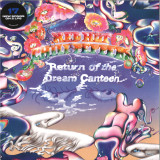
Red Hot Chili Peppers announce their brand new studio album, Return of the Dream Canteen which will be released October 14th on Warner Records. The surprise announcement was dropped at Denver’s Empower Field to rapturous response as the North American leg of their critically and commercially acclaimed global stadium tour kicked off.
The news of Return of the Dream Canteen's imminent release marks the band’s second album of 2022, hot on the heels of the platinum-selling chart topper Unlimited Love which was released in April debuting at #1 in the UK. It will also be the band's second Rick Rubin produced album of 2022, and reinforces their reputation as a band at their absolute peak, riding the crest of an undeniable creative wave.
Continuing to win over audiences across the generations, the band performed a run of sold-out UK/EU dates earlier this year, including two nights at London Stadium. "A scorching European touch-down from the California legends" – CLASH
We went in search of ourselves as the band that we have somehow always been. Just for the fun of it we jammed and learned some old songs. Before long we started the mysterious process of building new songs. A beautiful bit of chemistry meddling that had befriended us hundreds of times along the way. Once we found that slip stream of sound and vision, we just kept mining. With time turned into an elastic waist band of oversized underwear, we had no reason to stop writing and rocking. It felt like a dream. When all was said and done, our moody love for each other and the magic of music had gifted us with more songs than we knew what to do with. Well we figured it out. 2 double albums released back to back. The second of which is easily as meaningful as the first or should that be reversed. 'Return of the Dream Canteen' is everything we are and ever dreamed of being. It’s packed. Made with the blood of our hearts, yours truly, the Red Hot Chili Peppers.
Als renommierter Produzent, der für seine innovativen Produktionen und sein Gehör gelobt wird, ist Pete Rock weithin als einer der einflussreichsten Hip-Hop-Produzenten aller Zeiten anerkannt. Als Pionier der Verschmelzung von Jazz, Funk und Soul im Hip-Hop gilt er für viele als Wegbereiter einer gefühlvollen Produktion im Hip-Hop. Er revolutionierte die Rap-Produktion mit seinen Studiotechniken, machte Remixe wichtiger als Originalsongs, etablierte Ad-Libs als Standard für Aufnahmen ... und die Liste geht weiter. Pete Rock hat mit großen Namen wie Run-D.M.C, Public Enemy, J Dilla und Busta Rhymes etc. zusammengearbeitet und seine Arbeit als Produzent hat sich in über 25 Millionen verkauften Alben weltweit niedergeschlagen.
On his fourth solo album, much as in Oh! (2020), the French composer, pianist and vocalist follows his ongoing exploration of the crossroads between poetry and songs, piano and synth, old-time verses and contemporary sounds. Inspired by the rhythms, effects and speech patterns of urban music, he also delivers, with a warm and moving voice, the texts of three poetesses from the past.
Since 2013, Ezéchiel Pailhès has been crafting a unique French synth pop. On his first three albums, he switched between songs inspired by poetry, instrumental ballads and electronica with hummed
choruses. This latest record is a collection of eleven new songs, two of which he wrote: "Opaline" and "Ni toi, ni moi" (neither you nor me). The others are adaptations of poems written in the 16th, 18th and
19th centuries by French poetesses Louise Labé (1524-1566), Marceline Desbordes-Valmore (1786- 1859) and Renée Vivien (1877-1909).
Poetesses from the past...
From classical music to songs, poetry adaptation is an old French tradition. "My universe has always embraced the musicality of this literary genre," the artist recalls. He actually started this project in 2017 with poems and sonnets by William Shakespeare, Pablo Neruda, Victor Hugo and above all Marceline Desbordes-Valmore, who can be heard again on songs such as "Dors-tu?" (Are you sleeping?),
"Élégie" or "L'attente" (The wait). A figure of romanticism, the author left her mark on the early 19th century through the quality of her texts and her formal inventions, particularly praised by Balzac, and
apparently a decisive influence on Verlaine and Baudelaire. "Marceline's poetry is very musical," says Ezéchiel admiringly. "Her use of rhythm and repetition sounds great and takes on a new perspective when set to music. In fact, she wrote some of her texts with singing in mind.”
“Ces longs secrets dont l'amour nous accuse, Viens-tu les rompre en songe à mes genoux ? Dors-tu, ma vie ! ou rêves-tu de moi ?”
“These long secrets for which love accuses us, Do you come to my knees to break them in a dream?
Are you sleeping, my life! or do you dream of me” (“Dors-tu ?”, after “Les pleurs” (the tears), 1833)
Besides her, we find the more famous, and rebellious, Renée Vivien, whose texts inspired three songs, "Regard en arrière" (Looking backwards), "Mélopée" (Melopoeia) and "La fille de la nuit" (The
night girl). Sometimes nicknamed "Sapho 1900", this figure of lesbian culture and, more broadly, of female genius, combined in her work the themes of desire, dreams, melancholy and the relationship with nature.
“Ta forme est un éclair
Ton sourire est l’instant Tu fuis, lorsque l’appel
T’implore, ô mon Désir !”
"Your shape is a spark of lightning
Your smile, the very moment
You flee, when the calling
Begs you, O my Desire!"
(After “Parle-moi, de ta voix pareille à l’eau courante” (Speak to me, with a voice like flowing waters) and “Ta forme est un éclair” (Your shape is a spark of lightning), Renée Vivien, 1901)
Lastly, with "Tant que mes yeux" (As long as my eyes), Ezéchiel was inspired by a 1555 poem by Renaissance poet Louise Labé, whose main topic explored female love, physical and spiritual desire,
and the torments and pains they generate.
" At the start of the project ", Ezéchiel continues, " I was interested in many poets, men and women, past and present, before my selection was narrowed down to these three female authors. Their works,
often written in difficult or secret conditions, express a raging romanticism, a passionate soul, fuelled by desperate and tormented love. I found it interesting, as a man coming from another world and time, to face this otherness, to trade viewpoints. Obviously, I could loudly claim that the album was the result of a concept, that it reflects today's world, and that it allows me to explore the notion of gender,
giving visibility to the work of a few women, while at the same time pairing these ancient texts with a more modern and rhythmic music, and obviously, there is some truth in that. But more than anything, I
wanted to serve the text itself, to express the emotion and connection I felt with these works.”
Today's rhythms and prosody...
Ezéchiel Pailhès combines texts from French literature with electronic music, its effects and rhythms, as well as a form of scansion that echoes rap, R&B or the current fusion between hip hop and pop,
which is part of our musical background and that of younger generations. "I wanted to cross-reference texts from the beginning of the century with this type of music. I wanted to use today’s techniques to tell the tale of different daily lives and experiences.
The album is thus marked by contemporary electronic orchestrations, in which he drops his favourite instrument, the piano, and his digital collage technique to use more extensive synth melodies, enhanced by drum machines, bringing a gentle and bright vibe to the romantic texts. Lastly, we can hear slight digital tones of Auto-Tune, which Ezéchiel uses sparingly and inventively.
Beyond its sophistication, the term "melopoeia" means a "sung declamation", a "recitative song", sometimes interpreted in a monotonous way. On this album, it could also refer to a sense of phrasing, which does not come from rap, but rather from jazz, Ezéchiel's first love. " In the past, I tried to hide my jazz culture, but it naturally came back on this new album, as can be heard, for instance, in Regard en arrière.” With its verses anchored in our literary memory, the following track "Mélopée", perfectly illustrates the album's vision. It manages to transcend eras, mixing past romanticism with a modern
prosody, fuelled by the nonchalance of hip hop and the warm chords of jazz.
“Qu’un hasard guide enfin mon désespoir tranquille
Vers l’eau d’une oasis ou les berges d’une île,
Où je puisse dormir, mon voyage accompli,
Dans la sécurité profonde de l’oubli”
"May chance guide my quiet sorrow, at last
To the water of an oasis, the shores of an island,
Where I may sleep, having traveled my way,
In the safe depths of oblivion".
(After “Sillages” (Trails), René Vivien, 1908)
PLZ Make It Ruins founder Vegyn is an artist that
pushes diverse sonics in both his solo work and his
collaborations. ‘Like A Good Old Friend’ sees him
follow up 2019’s debut album ‘Only Diamonds Cut
Diamonds’ with a six track EP that effortlessly
traverses electronic, dance, alternative and rap
influences whilst retaining a playful, carefree
attitude.
Vegyn created an impact on a global level through
collaborating with Frank Ocean on his seminal
‘Endless’ and ‘Blonde’ projects, a partnership that
lives on with Vegyn co-hosting Ocean’s Blonded
show.
Vegyn’s other production credits, collaborations
and remixes include Travis Scott, Kali Uchis, Dean
Blunt, KUČKA, Duval Timothy, John Glacier,
SebastiAn (Ed Banger), Porches.
12” with printed inner sleeve.
Contemporary DIY Street Soul, New Jack, Electro Funk studio project from Parisian DJ Raphaël Top-Secret & Antoine Kogut (Syracuse).
For lovers of Loose Ends, Larry Heard, Mad Professor, Strafe or Sade. This EP includes two smash-hit A-side remixes by LA and Vancouver underground celebrities Benedek and Pender Street Steppers (PPU / Mood Hut) that sound like 1986 or 1992 !
Original versions are found on the B-side with “Give It Up”, a smooth and romantic 112 bpm G-Funk jam that is the perfect track for your drive to the coast, while “The Way They Do …”, a 98 bpm dreamy electronic AOR indie-pop dubby, will take you to an island.
Using original vintage gear as the TR-808, Emulator II, DX-7 and Rhodes, electric guitar, studio bass arrangements, the release shows sophisticated skills in the production stages, while being a very refreshing pop and dance release.
A stunning debut for the Cachette label !