
non in magazzino
Ordina ora e ordineremo l'articolo per te presso il nostro fornitore.
11,72 €
Last In: 20 months ago
Ordina ora e ordineremo l'articolo per te presso il nostro fornitore.

Ordina ora e ordineremo l'articolo per te presso il nostro fornitore.

A private press rarity that few know of, ‘Song of Island’ was the third album from pianist Yasuhiro Kohno’s trio, recorded live at the jazz club and live house (gig venue) ‘Again’ in August 1985. Pressed up in small numbers, ‘Song for Island’ was issued on the private ASCAP Records, set up by pianist and band leader Yasuhiro Kohno. The album is a follow up to Kohno-san’s previous two albums, ‘Peace’ and ‘Roma in the Rain’, released on the cult Aketa’s Disk label. However, unlike the ‘Peace’ and ‘Roma in the Rain’ albums, ‘Song of Island’ has never been reissued before – until now. The title track was included on J Jazz volume 3. This is a very special album that captures a special time in Japanese jazz, when exemplary acoustic jazz was still being performed and recorded by dedicated and talented artists at the height of mid-80s synth pop. ‘Song of Island’ features four original compositions by Yasuhiro Kohno plus a distinctive take on a jazz standard. Yasuhiro Kohno was born in Nara, southern Japan, in 1953 and made his professional debut as a member of Japanese rocker Eikichi Yazawa's band before going on to accompany actor/singer Masatoshi Nakamura. As well as recording and performing under his own name, Kohno has also played with American musicians such as Richard Davis and Mal Waldron and continues to perform regularly in Japan. ‘Song of Island’ will be issued as a full reproduction of the original work, with inserts, translated original sleeve notes, plus new sleeve notes, photos, and interview with Yasuhiro Kohno by Tony Higgins.
dovrebbe essere pubblicato su 18.11.2022

Drummer and composer Edward Vesala, the most internationally renowned jazz musician from Finland, was very keen on percussion instruments. Oddly enough, this broad and enduring interest is hardly evident on his albums. Whether playing on his own albums or contributing to other musicians’ work, Vesala played a standard drum kit most of the time. He hardly used external percussionists on his own albums either. And most of all: his music was almost never percussive, at least in the traditional manner. Perhaps even stranger is the fact that he barely played any drum solos on his own albums. That’s why I’m Here (Blue Master Special, SPEL 311, 1974), recorded in Helsinki in 1973, is such a rarity. Of course, being a limited release has also made it an expensive treasure among collectors. Additionally, I’m Here is Vesala’s only solo album and only percussive album, and one of the few where he can be said to play drum solos, albeit in his own idiosyncratic way..
dovrebbe essere pubblicato su 18.11.2022

Here is the much anticipated volume 3 of the HOT SAUCE compilation LPs dedicated to the Trojan related UK labels between 1965 and 1975.
HOT SAUCE VOLUME 3 features outstanding original Rocksteady, Boss Reggae and early Reggae (“Reggay”) tracks including rare songs, overlooked gems, hidden treasures and a couple of hits.
The record labels showcased on this third volume are Amalgamated, Duke, Gayfeet, Grape, Harry J, Rio, Randy’s, Treasure Isle, Upsetter and Trojan. The tracks here have been selected according to their musical interest firstly, their rarity, and their complementarity.
These tracks are all outstanding tracks, “killer tracks”, there is no “filler” whatsoever.
Particular attention has been paid to the way the songs are sequenced (or “mixed”) so that the album builds up nicely and gradually, generally starting with the Rocksteady songs on the A side and the 70s songs on the B side.
HOT SAUCE is a musical journey across early Jamaican Reggae - highlighting its diverse musical genres and outstanding artists – as it was once published by the U.K. record labels during this golden decade…
Since the early 70s “Tighten Up” series, no compilations have really explored these labels in depth on vinyl.
dovrebbe essere pubblicato su 18.11.2022

Finnish metalheads have always been puzzled by the question of which is our country's first heavy metal band. Svart Records gives the answer. It's Hard Rock Sallinen, which was founded in 1974, and so far we haven't found an older Finnish metal band. If you have better information, you can contact the history and UFO department of our record company. In any case, the band's founder and bass singer Seppo Sallinen says he is looking into the band's background. -"Even though Hard Rock Sallinen was our country's first heavy band, it wasn't my first band. I already played with my nephew Juke Salline in various gigs in Ostrobothnia, covering Led Zeppelin, Cream and other contemporaries with the band Jew's Harp", When Hard Rock Sallinen was founded, the source of inspiration for the line-up moved to the heavier department, when Rainbow, Deep Purple, Uriah Heep, Mountain, Aerosmith and Cactus were selected as influences. The band started with the name Sallinen, but the words hard and rock were soon added to the name. This was simply due to the fact that the band was mistaken for a hit band based on the name at early gigs. After facing an aggressive and drunken crowd, the band changed into Hard Rock Sallis to make a clear difference to the music taste of the trampers. It took a long time before the band signed their first recording contract, when in the early 1980s the Finnish Zero Records signed the band. The debut album Heavy Metal Symphony began to take shape quickly and the album recorded at Esko "Suikki" Jääskä's Botnia Sound Studio still evokes emotions in its creators. -"Contemporary critics and the public liked the record, musically it is on point, but of course the overall sound is a product of its time. Of course, it's great that the album is being re-released after 40 years, because the original edition has become a valuable collector's rarity", Seppo Sallinen says about his feelings. Why then did Hard Rock Sallinen stop already in 1984? The background is a familiar story: the band worked excellently, but in Finland at that time there were no managers, proper gig sellers or really any infrastructure that could have pushed heavy rock forward. The result was only frustration and the band simply disappeared from the world map.
dovrebbe essere pubblicato su 11.11.2022

Ordina ora e ordineremo l'articolo per te presso il nostro fornitore.

Horse Lords return with Comradely Objects, an alloy of erudite influences and approaches given frenetic gravity in pursuit of a united musical and political vision. The band's fifth album doesn't document a new utopia, so much as limn a thrilling portrait of revolution underway. Comradely Objects adheres to the essential instrumental sound documented on the previous four albums and four mixtapes by the quartet of Andrew Bernstein (saxophone, percussion, electronics), Max Eilbacher (bass, electronics), Owen Gardner (guitar, electronics), and Sam Haberman (drums). But the album refocuses that sound, pulling the disparate strands of the band's restless musical purview tightly around propulsive, rhythmic grids. Comradely Objects ripples, drones, chugs, and soars with a new abandon and steely control. This transformation came, in part, due to circumstance. Sidelined from touring their early 2020 album The Common Task in a world turned upside down, Horse Lords promptly returned to their Baltimore practice space and began piecing together the music that became Comradely Objects (Bernstein, Eilbacher, and Gardner have since relocated to Germany). Removed from their tried and true method of refining new music on the road, the quartet invested less energy ensuring live playability and more rehearsing and recording. The deliberate writing and tracking process, a rarity since the band's earliest days, led to a collection of pieces that signal a new peak of creativity and musical heft without devolving into studio sprawl or frippery. Comradely Objects reflects familiar elements of Horse Lords' established palette_the mantra-like repetition of minimalism and global traditional musics, complex counterpoint, the subtleties of microtonality, a breadth of timbres and textures drawn from all across the avant-garde_with some standout stylistic innovations. At different moments, the album veers closer to free jazz than anything else in the band's catalog, channels spectral electroacoustic tones, and throbs with unexpected yet felicitous synth. While these new elements are evidence of additional studio time and care, Comradely Objects retains the dizzying obsessive rhythmic energy that galvanizes the best moments of the band. Music for people who like Mdou Moctar, This Heat!, Battles, Ndagga Rhythm Force, Can, Captain Beefheart, Art Ensemble of Chicago, LaMonte Young.
dovrebbe essere pubblicato su 04.11.2022

Horse Lords return with Comradely Objects, an alloy of erudite influences and approaches given frenetic gravity in pursuit of a united musical and political vision. The band's fifth album doesn't document a new utopia, so much as limn a thrilling portrait of revolution underway. Comradely Objects adheres to the essential instrumental sound documented on the previous four albums and four mixtapes by the quartet of Andrew Bernstein (saxophone, percussion, electronics), Max Eilbacher (bass, electronics), Owen Gardner (guitar, electronics), and Sam Haberman (drums). But the album refocuses that sound, pulling the disparate strands of the band's restless musical purview tightly around propulsive, rhythmic grids. Comradely Objects ripples, drones, chugs, and soars with a new abandon and steely control. This transformation came, in part, due to circumstance. Sidelined from touring their early 2020 album The Common Task in a world turned upside down, Horse Lords promptly returned to their Baltimore practice space and began piecing together the music that became Comradely Objects (Bernstein, Eilbacher, and Gardner have since relocated to Germany). Removed from their tried and true method of refining new music on the road, the quartet invested less energy ensuring live playability and more rehearsing and recording. The deliberate writing and tracking process, a rarity since the band's earliest days, led to a collection of pieces that signal a new peak of creativity and musical heft without devolving into studio sprawl or frippery. Comradely Objects reflects familiar elements of Horse Lords' established palette_the mantra-like repetition of minimalism and global traditional musics, complex counterpoint, the subtleties of microtonality, a breadth of timbres and textures drawn from all across the avant-garde_with some standout stylistic innovations. At different moments, the album veers closer to free jazz than anything else in the band's catalog, channels spectral electroacoustic tones, and throbs with unexpected yet felicitous synth. While these new elements are evidence of additional studio time and care, Comradely Objects retains the dizzying obsessive rhythmic energy that galvanizes the best moments of the band. Music for people who like Mdou Moctar, This Heat!, Battles, Ndagga Rhythm Force, Can, Captain Beefheart, Art Ensemble of Chicago, LaMonte Young.
dovrebbe essere pubblicato su 04.11.2022

'Razen is the collective consciousness of core members Brecht Ameel and Kim Delcour, who since 2010 have realized themselves through virtuoistic and highly expressive improvisations with lesser-heard instruments. Experimenting with repetition of tones through controlled breathing and phrasing, Razen arrive at a synesthetic playground of auditory textures and colorful imagery.
The ensemble is carefully orchestrated for every occasion with the intent and desire to escape to environments unbeknownst to them, taking shelter in the fleeting ego-dissolving moments that arise, whether divine or disturbing. While the formula of instrumentation and like-minded peers may appear mundane on paper, it’s Brecht and Kim’s outlook and imagination beyond musical references that’s the immeasurable catalyst to their peculiar pursuits. Conversations about paintings, books, or films ultimately manifest themselves into live performances or album recordings - with the philosophy of embracing playfulness and exploration through the lens of a child’s eye.
Only six collaborators have been invited to their inner circle to date. This is mainly attributed to the rarity of finding spiritual counterparts that are seeking freedom outside the confines of written musical scores. Trading notes and rhythms for strokes and color, the band embodies emotive and meditative drones that demand a deep listening state. Joined by Will Guthrie and Paul Garriau, Razen venture into their vision of Arcadia through Regression, proudly presented by Marionette. On this album, Brecht Ameel turns to his trusty prepared harmonium and celesta, while Kim Delcour controls air and breath on various wind and reed instruments. Featuring Will Guthrie on tuned and melodic percussion (timpani, glockenspiel, marimba, vibraphone), the recordings have a distinct flow and fluid movement when compared to some of Razen’s previous works where rhythm is taking a backseat. Hurdy-gurdy specialist, Paul Garriau, plays accompanying melodies and drones on Moon, Aether and Nebula.
The album's earthly elements deal with survival, timelessness, and simplicity; such as the life affirming rewards of finding refuge and the wonders of observing the interstellar. The unearthly elements pitch this narrative into the realm of mythology and superstition, in the hopes of trying to understand our primeval universe and thrive in the unknown. Regression also addresses Razen’s fascination with inhospitable places and how to adapt to the sorrows that come with this sort of brutalism. The resulting destination is a mind and time bending zone - one that can be reached by riding sound waves that transcend the past, future, and present.'
Ordina ora e ordineremo l'articolo per te presso il nostro fornitore.

Finnish Disco and Electronic Music from Private Pressings and Unreleased Tapes 1980–1991
Hot on the sold-out heels of the three previous Svart-issued early 80’s synth pop and underground electronic music compilations (Satan in Love, Dance For Your Life, Cold War On The Rocks comes the last part of the quadrilogy: Black Hole, that reaches the final frontier of collectable cult synth disco music: privately released and completely unreleased music from 40 years ago. Black Hole has been again compiled by Mikko Mattlar, whose encyclopedic knowledge in the field of Finnish electronic music produces 20 cuts of electro-cult has helped him dig up 20 cuts of rare groove from obscure regional compilation records, seven inches of which only a test pressing exists, demo tapes and privately financed singles. Stylistically the compilation moves from 1979 disco funk as performed by Peak Funktion on their unreleased record to homebrewed synth visions by late 80’s bedroom wizards. Interesting curiosities among the 20 tracks include the riveting dance number by Jarkko Väljä, who received some fame back in the day as a Michael Jackson impersonator, and released one 7” single, that has become an expensive rarity. Another thing you wouldn’t believe existed at all if it wasn’t included here is “Israel Is Real” by We, a short-lived gospel vocal quartet, accompanied here by a drum machine and a synthesizer, which makes for an unforgettable and surprisingly catchy four minute piece of underground gospel disco from 1983. The compilation Black Hole – Finnish Disco and Electronic Music From Private Pressings and Unreleased Tapes 1979-1991 will be released by Svart Records on double vinyl and CD on October 14th.
dovrebbe essere pubblicato su 14.10.2022

Unearthed by Mike Peden for BBE Music, Per Husby Septett's ‘The Peacemaker’ is a beautiful, deep and under-the-radar small big band set recorded in 1976 by the elite of Norway's jazz cognoscenti, led by pianist and band leader Per Husby. Originally issued for Husby on the Studentersamfundets Plateselskap label by the Student Society in Trondheim, Norway, this obscure jazz rarity had no budget for PR or distribution, and with just a mere 500 copies pressed sales were scarce; it soon became a collectors item in Norway and across the globe. The album creates a big-sounding dynamic mix of original compositions by Per Husby and covers, including Harold Land's modal masterpiece title cut ‘The Peacemaker’, plus a top-draw selection of tunes encompassing post bop, modal, bossa and ballads by the likes of Kenny Wheeler, Cedar Walton and Charlie Parker. Reissued with original artwork and the approval of Per Husby himself, who has also provided the sleeve notes, ‘The Peacemaker’ is now available once again for download, streaming, CD and as a double 180g LP cut at 45rpm by the Grammy-nominated Carvery studio.
dovrebbe essere pubblicato su 14.10.2022

Ordina ora e ordineremo l'articolo per te presso il nostro fornitore.

Freestyle dig out another rarity in the form of a DIY brit-funk 7" from Highway Motion aka David Humphrey (a session drummer who played with Sparks, and with PiL on the iconic Metal Box LP & Death Disco 12"). Tinged with raw post-punk edge and 70s library music-style synth leads, this 45 is quite simply massive amounts of fun.
------------
David Humphrey's professional career as a drummer began aged 19 with Public Image Ltd, providing some of the drum tracks on their iconic Metal Box album and Death Disco single. Humphrey would then go on to work with Mike Oldfield and then Sparks, playing with the latter on their Number One Song in Heaven tour, Top of The Pops and recording sessions for Beat the Clock and Tryouts for the Human Race (those sessions were included and featured in Edgar Wright's recent film 'The Sparks Brothers).
In 1980, Clap Hands and Double O One Disco were recorded under the name 'Highway Motion' - intended by Humphrey as "raw experimental tracks" they were both laid down on a 4-track and subsequently released on the DIY Star Records imprint. Rough, grooving, candid and playful; these two tracks seem to somehow simultaneously meld the burgeoning brit-funk sound of the early 80s with a riotous post-punk edge, along with a good dollop of synth-led library music.
Following it's release David formed the group Reflex, recording and releasing the Funny Situation 7" in 1981 - forming the only other title in the Star Records catalogue. A more straight-up brit-funk dancer yet still pressed and sold in small quantities, Funny Situation became a sought-after record on the second hand collector's market, and finally saw reissue last September 2020 on the start-up Paint A Picture label - garnering plays from from Gilles Peterson on BBC 6 Music and Worldwide FM, StreetSounds radio and reaching No 1 in Juno records Chart. David has now started to working on new music using the name Davey H, and released his first new material in decades recently on Six Nine Records.
Ordina ora e ordineremo l'articolo per te presso il nostro fornitore.
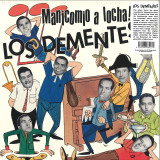
This album marks the debut recording for Venezuela's Velvet label by pianist Ray Pérez and his trombone-led salsa band Los Dementes. Heavy dance numbers and the distinctive vocals of Perucho Torcat make this historic 1967 rarity a sought-after collector's item. Now the LP has been lovingly restored, mastered from the original tapes, with its original artwork intact, preserving the legacy of Los Dementes for today's generation of salsa lovers everywhere. First time reissue. Salsa pianist, vocalist, composer and arranger Ray Pérez, acquired his nickname "Loco" by being a free, independent spirit, an innovator and iconoclast who was initially branded as "crazy" for the freshness and audacity of his sound. Amazingly, he is not that well known in the US, where he spent some time in the late 1960s and salsa was king during the 1970s. Yet he was quite popular in his home country from the beginning, especially amongst the working class of Caracas and Maracaibo, who adopted Cuban music played by New York Puerto Ricans as their own and called it "salsa" years before the term was employed by US labels like Fania as a marketing tool. Pérez is revered in Venezuela, as well as in Mexico and Colombia, and his storied career, which spans seven decades and thousands of concerts, has yielded more than 35 albums recorded by his various bands, including Los Dementes, Los Kenya, and Los Calvos, all of which are collector's items today. At the start of 1967 Pérez debuted Los Dementes, with vocalists Claudio Zerpa and Perucho Torcat backed by an ace band featuring only trombones in the brass section. Titled "¡Alerta mundo! Llegaron los 'The Crazy Men'" the record was released on the small Venezuelan label Prodansa. Soon after, Prodansa folded and Los Dementes were left without representation or much compensation for their efforts, being paid only in records. In the end of February of that year, Pérez returned to Caracas from a stint in Maracaibo in order to finish his first LP with the well-established and larger Velvet label, entitled "Manicomio a locha". In the first quarter of 1967, Velvet unleashed a trilogy of salsa records in order to compete with rival label Palacio and their recent success with Federico y su Combo Latino: "Porfi '67 Salsa & Boogaloo" by Porfi Jiménez y su Orquesta, "Guasancó" by Sexteto Juventud and lastly "Manicomio a locha". The LP begins appropriately with the boisterous title track, written by the band's conguero Carlos "Nené" Quintero, who would become a legend in coming years. Torcat describes a jam session in mental institution and introduces the band, with tasty solos by trombonist Rufo García followed by Ray on piano. Already you can hear something was different about Ray and his "Crazy Men"-a sound as wild and innovative as what was happening in New York with Eddie Palmieri, but with a more unhinged, raw feeling in line with Willie Colón and other younger Nuyorican bands. Next up is an intriguing track sung in a mix of Italian, English, Spanish and Papiamento by Pérez himself, performed in the complicated rhythm of the mozambique, an Afro-Cuban carnival beat developed in the early 1960s. This is followed by the heavy dancer 'Rico guaguancó', penned by Angelito Pérez, which changes from the guaguancó to the mozambique rhythm mid-way through, proving that Los Dementes were "different from the rest" as the lyrics say. 'Puerto Libre', sung by Torcat, is dedicated to the Venezuelan island of Margarita in the Oriente region, and the independent spirit of its working people. The rhythm changes from guaguancó to guajira and back again but remains danceable all the way through. The side closes out with a "3 in 1" medley inspired by the popular formula of the mosaicos of Billo's Caracas Boys, seamlessly knitting together several different tempos, rhythms, moods and compositions. Side two starts strong with the fierce yet satirical 'Corte e' patas', then 'Alma Cumanesa', a typical folk song refashioned as a guaguancó. This is followed by the funky 'Guajira con Boogaloo'. The tune echoes the sound of young Latin New York, pointing out the connection between Cuban and African American soul music. The pace picks up again with 'Fiesta de trombones', a hot descarga and then the album closes with another medley. Though this marks the end of a rather short album, it also signaled the emerging success of Los Dementes and their involvement with the salsa boom in Venezuela, quickly selling out of its initial run of 1000 records and making for a memorable debut on the Velvet label. Now this rare and sought-after LP has been lovingly restored, mastered from the original tapes, with its original artwork intact, preserving the legacy of Los Dementes for today's generation of salsa lovers everywhere.
Ordina ora e ordineremo l'articolo per te presso il nostro fornitore.

Oslo's Ultima Festival for contemporary music in 2014. The idea was to give revered Norwegian experimental electronic musician Helge Sten, aka Deathprod, access to seminal avant-garde composer Harry Partch's self-designed, custom-made, specialized, invented instruments - an orchestra tuned to just intonation, using up to 43 intervals instead of the standard 12 for the most commonly used Western equal temperament. An artist with a 30+ year career and an uncompromising reputation that reflects the emotional specificity of his uneasy, yet compelling sound, maintained throughout his expansive discography, Sten was an intriguing choice for such a project. Although he attended art school, training in electronic music and sound art, he had little experience with acoustic instruments and can neither read nor write music notation. Yet he's been engaged with Partch's music, and outsider art more generally, since he was a teenager. His resulting piece/composition for the project was originally intended only for performance by Cologne-based Ensemble Musikfabrik, for a series of concerts in five European cities between 2015 and 2018. It's Musikfabrik that undertook the painstaking, expensive process of building an entire set of the composer's creations - the second only to the originals built by Partch himself. They are the professional musicians and virtuosic instrumentalists that had to re-train and re-educate on these unknown and experimental sound sculptures in non-standard tunings. And they house this large, gorgeous physical instrumentarium and deal with the enormous logistics of working with it, sometimes shipping the fragile pieces to other locales via semi-trucks or ships. Because of such monumental efforts, Musikfabrik are notoriously guarded with recordings of the instruments. And rightly so. They're the only ones allowed to perform on them, too. But Sow Your Gold isn't Musikfabrik playing. Instead, Sten spent days and nights alone with the instrumentarium in Cologne. He played the instruments himself while recording, layering the recordings and editing without effects to compose an `audio score' for Musikfabrik to work from in order for the ensemble to perform the piece. (Partch also regularly worked this way, although he would transcribe afterwards. Likewise, Sten worked with a professional arranger to create a detailed score, too.) So, that makes Sow Your Gold an even less likely rarity - partly why its release comes seven years after its creation. If you ask Sten about the album's title, he'll point you to the text he borrowed it from - Michael Maier's Atalanta Fugiens by H.M.E. De Jong, a 1969 study of a 1617 book of alchemical emblems - and notable passages dealing with alchemy, chemistry, and agriculture, all transformative processes. And while that may sound complicated, his takeaway is simple: "You have to break something down to create something new," - a lesson he felt related strongly to his own musical process, especially in this project. So, while Sow Your Gold in the White Foliated Earth is a piece written for specific, oddly tuned, extremely rare and unusual instruments, and for a certain ensemble - namely, some of the finest contemporary musicians in Europe - Sten grew fond of the audio score, recognizing it as coming directly from the creative process in its purest, most natural form. And so from a foliated earth, where obscure tradition, treasured scarcity, immense effort, and patient certainty layer and criss-cross, comes rugged gold, polished to shining by one outsider for another.
dovrebbe essere pubblicato su 23.09.2022

Limited Pressing.
Invisible City Editions returns with an official repress of a fantastic double-sided private press rarity from 1989 Detroit. Featuring two legendary Inner City alumni Producer/keyboardist Engineer Art Forest and Inner City background vocalist dancer/singer Shawn Pittman. On the A side a lush slow modern soul slow burner “Dreams'' features a deep,spatial throbbing bass line with glistening synths floating underneath cool angelic hypnotic vocals by Ms Pittman.” 'Dreams are only Dreams till you make it real' chants Shawn Pittman and we’re lead down a dazzling maze of mirrors. With “I'm Losing Control (Extended Bass-ment Club Mix)” on the flipside a wild late night warehouse dub remix features sci-fi vocal effects,fostex tape loops and ultra-heavy bass and driving drum machines. Minimal lush soul perfect for early mornings and the post-club world and a wild sci-fi house winner for late night club sessions. An IC fave! Remastered by Brandenberg/The Carvery (Note: we’ve also removed the drum machine going out of sync that was on the original press) Official Repress via Art Forest and his label Wildboy.Essential stuff!
Art Forest is an Electronic Engineer and production wizard from Detroit Michigan. He originally recorded 2 of Inner CItys’ Biggest Hits “Good Life” and “Big Fun” and continues to record to this day. Art Forest still finds and repairs equipment to add to his studio today. He also recorded for Paula Abdul “Straight Up” and Madonnas’ “Justify My Love” Shawn Pittman was a singer and dancer from Detroit who was a good friend of Inner City vocalist Paris Grey. Shawn Pittman sang backing vocals and harmonies on “Good Life” and “Big Fun”.
Ordina ora e ordineremo l'articolo per te presso il nostro fornitore.

'No Sub Reino dos Metazoários' is the first and only record by musician and poet Marconi Notaro, out of Pernambuco, Brazil. Originally released independently, however, with the support and distribution of Rozenblit, the 1973 album featuring Lula Cortes, Zé Ramalho and Robertinho de Recife is part of the holy trilogy of "Psicodelia Nordestina" amongst the equally mindblowing Paebiru (1975) and Satwa (1973). For its non-comercial a raw aesthetics, the record became a true rarity among collectors worldwide and one of the most important albums of Brazilian Psychedelia. For years it was known that the master tape of 'No Sub Reino dos Metazoários' had been lost during two floods that wrecked the Rozenblit Studios. Lots of equipment were damaged and plenty of material gone. However what no one expected was that the tapes were kept on the highest shelves in the studio where the water did not reach with the thought of "equipment can be replaced, master tapes are unique". Notaro's daughters inherited and rescued the tape and made it available so that Fatiado Discos could release the first and remastered version from the original tapes since 1973. The lysergic highest moments come with nature elements textures as water and wind mixing together with the unmistaken sound of the Tricórdio Acústico - which is a very unique instrument that Lula Côrtes brought himself from India and then adapted it with the help of a local luthier to the regional sound of the Brazilian northeast. The gatefold designed by Lula Côrtes is portrayed in this release and it also has its inner side designed by Cátia Mezel, apart from an extra insert with unpublished photos of Marconi provided by the musician's family.
dovrebbe essere pubblicato su 26.08.2022
Repress !
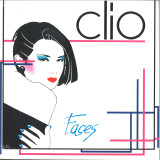
Worthy italo re-issue (in a newly mastered version) of this early Roberto Ferrante's project. Roberto started his career being part of various electronic music groups in Naples around the early 80s! His career took off when he made his first deal with Best Record by Claudio Casalini for ''Come On Closer'' by Pineapples which obtained worldwide success and was played at the legendary Chicago Radio Station WBMX by the mythological DJ's collective, Hot Mix 5. In 1985 it was time for another classic named â??Facesâ?Â�, a simple but direct and honest song with an irresistible rhythm and lyrics that tends to move away from that typical dark sound in other Italo-Disco songs of that era. This song is a triumph for synthesizers and electronic drums as it's fully electronic, something still a rarity in those days! The beautiful melody and spiritual essence of ''Faces'' represent the revolution of a new beginning of the Italian pop of the 80s with a perfect arrangement by Roberto Ferrante, a bouncing bassline, and strong and clear vocal. The sweet and sensual voice, full of personality and charm is by Clio (Maria Chiara Perugini). The graphics are by Patrizio Squeglia and all together it made this groundbreaking release which is one of the best Italo-Disco songs ever made.
Ordina ora e ordineremo l'articolo per te presso il nostro fornitore.

The second 7" in the Konduko series reissues this mega-rarity, Noel Williams aka King Sporty's own version of Bob Marley's Concrete Jungle. The connection between Marley and Williams was long-standing, both living in the tenements of West Kingston and gaining their musical foundations as part of the Studio One, that would reach fruition when they later co-wrote Buffalo Soldier together.
Clement Dodd's organisation was more than a label, running a sound system, studio, pressing plant and its own distribution. As Deejay on the system and later releasing his debut single on the label, William's learnt his craft, taking this knowledge to Miami and replicating much - expanding the Konduko label to encompass studio, plant and distribution.
First recorded with Lee Perry, Marley's 1971 original was famously rerecorded for The Wailers move to Island Records and their 1973 album, Catch A Fire. Here, a rare Williams' vocal is backed with horns atop a reggae-funk groove. The songs message of struggle is universal and everlasting, even with a touch of Miami swing.
This is backed by Young Girl, a single in its own right, from the same period. A rocksteady, breakbeat shuffle bely the songs roots in late 60s soul, with a powerful counterpoint vocal from wife and partner, Betty Wright. A collector's item itself, together they are essential.
Ordina ora e ordineremo l'articolo per te presso il nostro fornitore.
