
Buscar:ras p
10
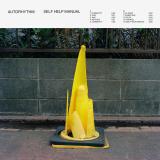
/// First track, Symmetry, debuted on BBC Radio 6 New Music Fix, 10th February: "A beautiful, beautiful album" /// I got my life back. On 17 February 2025, 1024 rays of ultra sound converged at an operation table in Bern, Switzerland, and disconnected a noisy circuit on my brain. 90% of the manifestation ceased – of a disease that I no longer wish to mention by its name. During the same period, I completed my new album: Self Help Manual. I’ve read more current research about the nameless disease than my neurologist, who despite that I didn’t follow his advice on suitable treatment, called me after the successful operation: a brave, brave man. I have composed the music in the same way as in my previous album – Songs for the Nervous System – through layers upon layers of improvisations in dialogue with my synthesizers, most of which are the same age as me. I made the majority of the songs in my studio in the remains of Old Hagalund in Solna. I edited the recordings in my bed during the waking hours of clarity at night. Some songs – NAC, Ketosis, Overkill – were recorded in the basement of my childhood home in Skutskär, in Norduppland, where I’d returned to be nurtured by my retired parents – who during a night when I couldn’t turn over in bed, or pull the blanket over me – made a list of what would happen to my belongings. To my friends who have stood out with me despite my disease, I want to state: you will not inherit me yet. On the new album, the electric bass takes on a leading role. ESG and Liquid Liquid have been important when I reinvented my baselines, limited and liberated by my poor fine motor skills. Plasma is my homage to Summertime Rolls by Jane’s Addiction, that I listened to frequently in my youth. I guess that no one will hear the resemblance. In several songs, the Fender Rhodes plays an important role, a magical instrument that I bought shortly after my diagnosis over a decade ago, and for a long time didn’t dare to touch out of respect for Herbie Hancock and Fela Kuti. A couple of songs draw inspiration from the Horn of Africa – Inner Nile and Delta. At first, subconsciously in the reverb-drenched Inner Nile, then more consciously in Delta. I’m sorry it doesn’t swing the right way, but it was my attempt to return to the cradle of humanity. Longevity is possibly my favourite. The melody is played by an arpeggiator that I controlled by pressing down different keys in an exhilarating sense of freedom. One song in particular, the second track – One – has caused friends to associate freely: one thought it sounded like Patrick Cowley, another like Sly & Robbie meets Kraftwerk, a third like Air – Moonlight Safari. I made one song just before the surgery: opening track Symmetry. It’s the mightiest and most minimal song. I made one song after the surgery: finishing track Self Help Manual. My previous medication pump is heard through the microphone of my Ovation Magnum. It’s the most hopeful song on the album. I took the cover photos with my Hasselblad during walks in Tokyo suburbs of Ōmori and Kamata more than ten years ago. It was something about the faith of the traffic cones that fascinated me – born in the same streamlined form, they had over the years become increasingly individual and lovable. The mixing was finalized by Christoffer Roth in the newly built Studio Dubious in Nacka. Rashad Becker, who in an interview said that he listens as much with his mouth as with his ears, mastered the album at Clunk in Berlin. Right now it feels like anything is possible. My recovery is perhaps a small step for mankind, but a giant leap for me. I hereby leave the music to you. Joakim Forsgren

- A1: Echi Tribali 2 01
- A2: Danza Della Pioggia 2 31
- A3: Totem 2 51
- A4: Danza Della Morte 3 14
- A5: Rito Della Fecondazione 2 45
- A6: Danza Di Guerra 2 29
- B1: Rito Nuziale 1 55
- B2: Iniziazione 2 09
- B3: Rito Del Sole 1 14
- B4: Invocazione 1 07
- B5: Rito Della Fertilità 1 23
- B6: Danza Dello Stregone 2 28
- B7: Rito Di Propiziazione 2 35
- B8: Adorazione 1 58
14
También disponible
Blue Vinyl[22,65 €]
“Alle Sorgenti Delle Civiltà Vol. 3 - Africa, Australia, Nuova Zelanda” (1971) is the third and final chapter of a triptych of folk-based sound recordings released by Folkmusic. The album contains a total of fourteen tracks by Braen and Raskovich, i.e. the a formidable multi-instrumentalists Alessandro Alessandroni and Giuliano Sorgini, each grappling with seven different compositions characterised by a tribal mood. Among the grooves of this record, repressed on vinyl for the first time by Musica Per Immagini, it is possible to discern an in-depth study of one of those forms of popular culture referring to a specific geographic area, comprising the types of traditions often handed down orally and concerning knowledge, beliefs, fairy tales, legends, myths, narratives linked to the dimension of the fantastic, customs and traditions, namely music. Festivals and propitiatory rites, fights and dances, magical and sacred representations were all expressions of life whose sound and rhythm contributed to an appropriate description of the environment. Alessandro Alessandroni and Giuliano Sorgini have chosen some of the most significant musical characters that even belong to specific ethnic realities scattered across two distant continents, where the use of some of the typical instruments has favoured the realisation of sonorities of considerable interest.

6
The first release in King Shiloh's Africa Series, now available for world wide distribution. Addis Ababa based Tiger Simeon & Brada Jahziel feature on Rastaman Vibration, while Kenyan singer Lavosti pays tribute to the Real Reggae Warrior on the flip. Both sides come with two Jah Works dubs.

Samurai Music offshoot SAIBAI welcomes legendary producer ASC to expand upon the label's widescreen strain of electronic music plumbing the depths between techno, electronica and broken beat.
ASC is the flagship project for James Clements, a prolific veteran of the scene who started releasing his distinctive twist on drum & bass back in the late 90s. Across a variety of aliases and many different label projects and collaborations, Clements has retained a strong artistic identity defined by steely atmospherics, rhythmic intrigue and precisely sculpted sound design. He brings those qualities to SAIBAI3.
On 'Raijin' the tempo prowls at 90 BPM, all the better to carry the bass snarls and haunted melodies hovering in the middle distance. 'Rasetsu' meanwhile hides its much sprightlier 150 pace behind a half time construction punctuated by a tactile, almost organic set of percussion. 'Kyubi' sinks into a deep, inky well of spatial sound design with just a light smattering of percussion and a weighty kick for guidance. 'Shigure' completes the picture with a mesmeric tapestry of shifting textures and brooding melancholy.
Clements has devoted much time recently to his ambient output, and it shows in the richness of the space he shapes around his needlepoint patterns, while his roots in more propulsive club music show their hand in subtle, understated ways. It's this balance that makes the release the perfect addition to SAIBAI's evolving story.
Limited to 200 copies

RASTER MEDIA 30 YEARS ANNIVERSARY EDITION REPRESS / 180 G VINYL
Ich bin meine Maschine features remixes by Boys Noize, Function and AtomTM himself.
to underline this tryptic statement (and to demonstrate the diversity) of one of atom™'s compositions that appeared on his 2013 'HD' album, raster-noton now releases a vinyl ep featuring remixes by boys noize, function and atom™ himself. 'ich bin meine maschine', in an elaborate manner, illustrates uwe schmidt´s main musical concern - the exploration of electronics in pop music. inspired by a statement of the cybernetician heinz von foerster, atom™ constructed/generated a message that is playing around with a widely-cited kraftwerk quotation, turning 'ich bin eine maschine' into 'ich bin meine maschine' (i am my machine). besides the album version of 'ich bin meine machine,' the ep features some dominantly techno infuenced versions that perfectly connect the pop attitude of 'HD' with dancefoor functionality. the boys noize remix shows off alexander ridha´s deft skills for translating atom™´s futuristic pop into his own rough and driving electronic language. on the other hand, atom™'s 'linear remix' breaks down the original structure of the song and turns it into a reduced and much straighter, forward looking composition. function - one of techno's true underground heroes - provides a remix that is breathing the air of solid and hypnotic club music, in which just the essential elements are streamlined and ondensed into perfection. all 3 remixers adapt the track to their particular universe. by doing so, they prepare the 12' vinyl for its fnal destination - the club.

- A1: Drain
- A2: Murk
- A3: Doom
- A4: Bones
- A5: Sift
- B1: Tomb
- B2: Fumes
- B3: Evil
- B4: Blame
- B5: Spiraling
Best known as one half of KIASMOS alongside Ólafur Arnalds, the Faroe Islands born, Reykjavik based producer Janus Rasmussen has consistently refined an elegant sound that marries sonic precision with emotional depth. Over the past decade, he has built a wide-ranging body of work through collaborations across multiple genres as a producer, songwriter, musician, and mix engineer.
As a solo artist, Janus has crafted compositions that balance immersive sound design, subtle melodic shifts and rhythmic drive, drawing on his diverse musical appreciation and studio experimentation. These experiences have shaped a creative identity that now comes into sharp focus on his most ambitious solo project to date - Inert.
The album marks a bold step forward, thematically exploring the act of breaking free from inertia through embracing creative freedom. With his new work, Janus incorporates his own vocals more than ever, weaving them seamlessly around intricate electronics as he expands his sound into new territory, while retaining the subtle restraint that has defined his output. Drawing inspiration from the dance music spectrum, Inert reflects a renewed sense of momentum, vulnerability and adventurousness in his sound.

Ideologic Organ freut sich, die brandneuen Aufnahmen von The Necks zu präsentieren, dem legendären australischen Trio, das sich durch die Umgehung musikalischer Klischees auszeichnet und gleichzeitig die Praktiken der Improvisation, des Jazz, des Post-Rock, des Ambient, des Minimal und der texturierten, ,klangbasierten" Musik erforscht und erweitert. Das neueste Werk dieses langjährigen Ensembles, Unfold, präsentiert sich als Doppel-LP mit vier seitenlangen Tracks. Das bewusste Fehlen von nummerierten Seiten gibt dem Hörer viel Raum, sich einzubringen, und lässt ihn seinen eigenen Weg durch die Klanglandschaft finden. Die kürzere Länge des Vinylformats ist für die Mitglieder des Ensembles kein Hindernis, sondern bietet ihnen einen kompakteren Horizont zum Nachdenken, in dem die zurückgelegte Strecke auf unmittelbarere und dynamischere texturale Aspekte neu ausgerichtet wird. Die Unmittelbarkeit von ,Rise" bestätigt diesen neuen Weg, während die traurigen Töne von Lloyd Swantons Bass um Chris Abrahams' kristallklares Klaviermotiv wirbeln und Tony Bucks Percussion den Prozess in erleuchtende Free-Jazz-Gefilde lenkt. ,Blue Mountain" bahnt sich einen Weg durch das klangliche Unterholz, wobei Soul-Orgel, rasselnde Percussion, Pfeifen und hüpfende Schallwellen um den Vordergrund wetteifern. ,Overheard" behält eine erhabene melancholische Aura, während Percussion und Keyboards sich gleichzeitig umarmen und auseinanderfallen, während ,Timepiece" als sanfte Geste weiterer Möglichkeiten dahinspringt. Wie genau The Necks ihre besondere Magie entfalten - so einfach es auch scheinen mag -, während sie sich immer weiterentwickeln, kann nur vermutet werden, aber ,Unfold" beweist einmal mehr, dass Regeln und Schulen gebrochen und zu Mustern und Rahmenwerken umgestaltet werden müssen, die sich von denen unterscheiden, die wir kennen.

12
Ausdrucksstarke Gesänge in freien Versen, begleitet von gleitenden Violinen, gehämmertem Santouri, Gitarre und Oud - die hybriden Klänge des Mittelmeerraums zu Beginn des 20. Jahrhunderts. ,Aman Aman" rufen die Sänger auf diesen Aufnahmen, deren Stimmen auf 78-U/min-Schallplatten aus den Jahren 1911 bis 1935 verewigt sind. Der Ausdruck bedeutet in etwa ,Gnade" und ist ein Ausdruck der Verzweiflung, aber auch der Freude und Bewunderung. Auf vielen dieser Platten wird die ganze Bandbreite dieser Emotionen auf einmal vermittelt. Einige dieser Künstler sind Legenden, andere sind in Vergessenheit geraten. Fast die Hälfte sind Sängerinnen, die einen großen Teil der Tradition des Cafe Aman ausmachen, aber in zeitgenössischen Veröffentlichungen nicht so stark vertreten sind. Alle waren von den Konflikten betroffen, die zur Kleinasiatischen Katastrophe von 1923 führten, sowie von den Zwangsmigrationen zwischen Griechenland und der Türkei davor und danach. Ihre Werke spiegeln diese Reisen wider - erschütternde Gedichte über den Verlust der Liebe und der Heimat, begleitet von einigen der besten Musiker der damaligen Zeit. Nach jahrelanger intensiver Recherche hören wir die präzisen, einfühlsamen und überwältigend kraftvollen Stimmen von Künstlern wie Antonis ,Dalgas" Diamantidis, Sofrouniou und Stellakis Perpiniadis, zusammen mit aufschlussreichen Aufnahmen von weitgehend unbekannten Musikern, deren Werke hier zum ersten Mal veröffentlicht werden. Die LP wurde von Jordan McLeod im Osiris Studio sorgfältig remastered und restauriert und enthält detaillierte historische und diskografische Anmerkungen von Stavros Kourousis sowie poetische Übersetzungen der Texte von Tony Klein. Gepresst auf hochwertigem Vinyl bei Smashed Plastic in Chicago und gemeinsam mit dem großartigen Label Olvido Records veröffentlicht.

- 1: Spoken
- 2: Blister
- 3: Decade
- 4: Paradise Lost
- 5: Revolution
- 6: Static
- 7: Inquisition
- 8: Ideal
- 9: Love
- 10: Firecracker
- 11: Industry
- 12: Obscene Jigsaw Puzzle
- 13: Brothers And Sisters
- 14: American As Apple Pie
- 15: Simply By The Book
- 16: Things Can Turn Around
- 17: Promise
6
Post-Hardcore nach Philly-Art. Unzufrieden mit dem metallischen Youth-Crew-Format, verfolgte Frail die wilde, lärmende Wut der Generation X gegen alles und jeden im rasanten Tempo von San Diego. ,No Indus Try" - die erste und einzige Vinyl-Compilation des Quintetts - enthält wichtige Singles für die Labels Yuletide, Bloodlink und Kidney Room sowie seltene Compilation-Tracks aus ihrer Zeit von 1993 bis 1995. Kommt mit 24-seitigen Zine, das die Band in Notizen, Zitaten, Fotos, Flyern und revolutionärer Literatur dokumentiert. Make Your Own Noise.
- 1: White Noise
- 228: Grams
- 3: Revolutionary Blues
- 4: Come Around
- 5: Still Nothing
- 6: I Dream Of Fever
- 7: Desolation Grows
También disponible
Ckear Vinyl[24,79 €]
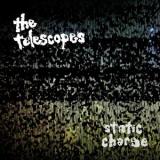
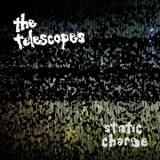
Seit ihrer Gründung im Jahr 1988 bewegen sich The Telescopes in einer ganz eigenen Umlaufbahn. Vage zwischen Noise, Space Rock, Dream Pop und Psychedelia verortet, hat die Band um Stephen Lawrie ihre Klanggrenzen stets verschoben und sich konsequent jenseits etablierter Strömungen bewegt. Static Charge ist bereits das 19. Studioalbum der Gruppe und zugleich die achte Veröffentlichung bei Tapete Records - ein weiteres eindrucksvolles Kapitel ihrer rastlosen, genreübergreifenden Geschichte. Nach einer dreimonatigen Tour durch Großbritannien und Europa kehren The Telescopes mit einem kompakten, fokussierten Werk zurück. Sieben Songs, überwiegend live eingespielt, entfalten eine rohe, elektrisierte Energie: primitive Beats, Außenseiterklänge und tief vibrierende Frequenzen verbinden sich zu einem widerständigen Sound, der bewusst gegen die Absurditäten der Gegenwart arbeitet. Aufgenommen und produziert innerhalb von zwei Monaten im hauseigenen Butterfly House Studio in Shropshire, präsentiert sich Static Charge reduziert, direkt und kompromisslos. In der aktuellen Viererbesetzung bündeln The Telescopes ihre Kräfte zu einem Album, das zugleich wuchtig, hypnotisch und erstaunlich konzentriert wirkt - Musik, die nicht gefallen will, sondern nachhallt.
Seit ihrer Gründung im Jahr 1988 bewegen sich The Telescopes in einer ganz eigenen Umlaufbahn. Vage zwischen Noise, Space Rock, Dream Pop und Psychedelia verortet, hat die Band um Stephen Lawrie ihre Klanggrenzen stets verschoben und sich konsequent jenseits etablierter Strömungen bewegt. Static Charge ist bereits das 19. Studioalbum der Gruppe und zugleich die achte Veröffentlichung bei Tapete Records - ein weiteres eindrucksvolles Kapitel ihrer rastlosen, genreübergreifenden Geschichte. Nach einer dreimonatigen Tour durch Großbritannien und Europa kehren The Telescopes mit einem kompakten, fokussierten Werk zurück. Sieben Songs, überwiegend live eingespielt, entfalten eine rohe, elektrisierte Energie: primitive Beats, Außenseiterklänge und tief vibrierende Frequenzen verbinden sich zu einem widerständigen Sound, der bewusst gegen die Absurditäten der Gegenwart arbeitet. Aufgenommen und produziert innerhalb von zwei Monaten im hauseigenen Butterfly House Studio in Shropshire, präsentiert sich Static Charge reduziert, direkt und kompromisslos. In der aktuellen Viererbesetzung bündeln The Telescopes ihre Kräfte zu einem Album, das zugleich wuchtig, hypnotisch und erstaunlich konzentriert wirkt - Musik, die nicht gefallen will, sondern nachhallt.

From Germany to Montreal, a cross-continental dialogue takes form as Oovation and Jares unite for The Shift, a sweeping coalition of emotion and rhythm marking both artists’ debut on W. Anchored in cinematic depth and driven by kinetic pulse, The Shift stands as a powerful first statement, further expanded through stunning reinterpretations by Coeus, ACNØR, and Turker.
The original take of “The Shift” finds Oovation & Jares constructing a restrained groove before thumping kicks and meandering blips send us off on a highly narcotic affair. With the foundations in place, a swaying bassline takes control of the piece, infusing it with an irresistible sense of movement. As we venture deeper inside the rabbit hole, a lush arpeggio rummages across the piece, taking us closer to an airy break where echoes osurrender to a new directive.
For the first reimagining, Coeus drives “The Shift” into more dangerous, sensual territory. Built on a thunderous rhythmic foundation, the Serbian producer laces the mix with ghostly vocal traces and a relentless synthetic tension. The result feels cinematic in scope: an after-hours odyssey pulsing with urgency and redemption, where desire and danger move in lockstep.
Next, ACNØR transforms The Shift into a perpetual motion device where tension breathes and recedes like a living organism, shimmering under dim light. Reflective and transportive, this version feels like moving through mirrored corridors. Each twist refracts a new emotion, a new identity, culminating in a tantalizing entropy.
Finally, Turker closes the circle with a radiant reconstruction that leans toward transcendence. Textured percussion, raspy stabs, and a gleaming lead line spiral upward, pushing “The Shift” toward a horizon bathed in gold as vocal phrases drift in and out of focus, painting the mirage in full technicolor for a finale that feels both cathartic and luminous.

- A1: Piano
- A2: Eyes
- A3: 海のにおい - Umi No Nioi
- A4: Little Rascal
- A5: 天使はどこに - Missing Angels
- A6: こんにちは今日 - The Sun’s Song
- B1: 月光 – Moonlight
- B2: Kujira
- B3: 水と風のダンス - Dancing With Water And Wind
- B4: なみだのうみ - The Sea Of Tears
- B5: Birth
- B6: Fine
Towa Mafune is a rare singer-songwriter known for her gentle voice and warmly embracing melodic sensibility. As suggested by the title, means "Sleeping with the sea in my arms",
this record is a conceptual work inspired by Mafune’s upbringing in a seaside town and her lifelong connection with nature.
The album imagines a dialogue between the artist herself and natural elements such as the sea, wind, and light.
Layered arrangements featuring the album’s striking introductory piano, along with strings, horns, acoustic and nylon-string guitars, and rich vocal ensembles, create a liberating and
expansive soundscape. The album also marks new artistic territory for Mafune, supported by trusted musicians including paya (Yūtai Communications), Kota Yamauchi, and
Keitaro Kanamine.
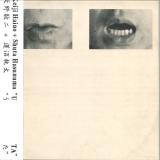
Haino sings. Hasunuma plays. It’s a minimal framework, but what emerges is a boundary-blurring sonic exploration. Across the album, Haino’s voice threads through Hasunuma’s layered soundscapes built from analog synths, electric guitar, piano, field recordings, and more. Haino entered the studio with only lyrics in hand, improvising melodies in response to Hasunuma’s evolving arrangements. The result is a work of deep trust, intuition, and sonic tension.
Keiji Haino and Shuta Hasunuma’’s creative connection began in 2017 with an impromptu performance in Shibuya—Hasunuma on a Buchla modular synthesizer, Haino responding with the Japanese national anthem, “Kimigayo.” That moment sparked their unlikely collaboration.
In 2018 Haino appeared at the Hasunuma-organized event “MUSIC TODAY IN KYOTO” at Rohm Theater, alongside Nobukazu Takemura, Manami Kakudo, Elena Tutatchikova, Kukangendai among others. In September 2021 during the pandemic, the two performed "U TA" for the first time at in Shibuya. They began planning the album soon afterwards.
For the recording of U TA, Haino entered the studio with only the lyrics in hand, with no knowledge of what sounds Hasunuma would produce. Responding to Hasunuma’s music in real time, Haino composed the melodies and layered in his voice on the spot. With additional sessions at Hasunuma’s private studio and Haino’s preferred studio, the album was completed.
All melody and vocals by Keiji Haino
All instrument, written, played, arranged, mixed and produced by Shuta Hasunuma
Recorded by zak at st-robo studio, Shuta Hasunuma at Studio i.M.O and windandwindows
Mastered by Rashad Becker at clunk
Production Management: Eishin Yoshida, Kento Ono (windandwindows)
For Temporal Drift: Yosuke Kitazawa, Patrick McCarthy
Art Direction: Aiko Koike
Special Thanks to Toshihiko Kasai, Ryoichi Kiyomiya, zAk, Yumiko Ohno
license

- A1: Dead Poet 03 03
- A2: Wild Turkey 03 15
- A3: Keeping Secrets 02 49
- A4: Raspberry Ripple 03 06
- A5: Willow 04 12
- A6: La Muerte 02 52
- A7: Toots 02 46
- B1: Mosquito Bite 02 45
- B2: Heavy Petting 02 37
- B3: Into Dust 02 29
- B4: Bonus 1 Raspberry Ripple - Buckshot Version 03 01
- B5: Bonus 2 Willow - Skepta Version 03 55
- B6: Bonus 3 Keeping Secrets - Nas Version 03 33
13
14
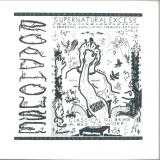
“An extremely dynamic and creative release — Roadhouse combines acoustic and electronic music with a strong balance to invoke the complexity and confusion of a growing planet earth.” - Delroy Edwards, 2021
“‘Supernatural XS' is more bombastic (than its predacessor, ‘Aladdin Sales’). Imagine if French prog-dogs Heldon grew up on a diet of Hip Hop and high fructose corn syrup, or a mid-point between early Blues Control and Foodman's blissful mutations of Footwork. This Southern Indiana self-identified producer shows no particular allegiance to any lineage and evokes a couple they potentially aren't even privy to. Like Footwork, this music feels new and unique without outwardly attempting to break new ground, or inheriting any technological innovation. While I’m stoked on new music every single goddamn day, Roadhouse makes me particularly excited for the future of creativity, even if the odds are against it. Contemporary "Fusion" at it's best!. Very, very recommended!” - Repressed Records

7
"Next up in Mr Bongo's Groove Merchant Records reissue series, we present the only solo album saxophonist Ramon Morris recorded as a bandleader. Having cut his teeth playing with the iconic band Art Blakey & The Jazz Messengers and working with other jazz greats, including Reuben Wilson, Shirley Scott, Rashied Ali Quintet, and Woody Shaw, 1973 saw Ramon take the step into solo territory. The resulting album Sweet Sister Funk became a certified classic and a landmark showcase of the cherished ‘70s jazz-funk sound, later sampled by the likes of DJ Premier, The Alchemist and DJ Shadow.
Originally released on Sonny Lester's iconic Groove Merchant record label and produced by Lester himself, Sweet Sister Funk is a jazz-funk masterclass. It features a slick line-up including Cecil Bridgewater on trumpet, Mickey Roker on drums, and Albert Dailey on electric piano. Rich and beautiful, the seven songs ebb and flow in energy, fusing jazz funk and soul jazz with style and swagger. There are bags of groove with Ramon and Cecil trading off on sax and trumpet in an effortless conversation throughout the LP, supplemented by brilliant solos from the rest of the players.
A gold mine of sampling material, the album includes a sublime cover version of The Stylistics' much-loved 'People Make The World Go Round', which was sampled by DJ Shadow on Blackalicious's 'Swan Lake' in 1994. Elsewhere, the percussion and bass intro of the opening track 'First Come, First Serve' is a sampler's delight - a deep, heavy groove with a fine saxophone workout by Ramon. Head to 'Don't Ask Me' and you’ll find the swinging horn intro that formed the basis of 'You Came Up' by Big Pun featuring Noreaga from 1998, whilst 'Wijinia' has echoes of ‘70s indie jazz by labels such as Strata East & Black Jazz.
Here at Mr Bongo, we are proud to be delving into the vaults of Groove Merchant Records once again, reissuing this iconic LP from Ramon Morris."

4
2026 Repress
Supported by Cio D'Or, Deepbass, Etapp Kyle, Mattias Fridell, Ness, Samuli Kemppi, Svreca, Takaaki Itoh, Unam Zetineb, Exium, Alessio Pili, Antonio de Angelis, Artefakt, Edit/Select, Jonas Kopp, Kwartz, Mod21, Reggy van Oers, Juho Kahilainen, Eric Cloutier, Johanna Knutsson, Tom Bonaty, Arnaud le Texier, Brando Lupi, I/Y, Iori, MTD, Nima Khak, Par Grindvik, SNTS, The Noisemaker, VSK, Attemporal, Casual Violence, Rasmus Hedlund, Sleeparchive, Terence Fixmer, Eastern Renaissance, Victor Martinez and many, many more.
Luigi Tozzi / Deepbass / Claudio Prc - Deep Blue
