Influenced by the vibrant Caribbean community and the reggae sounds that permeated his environment, Danny Red was drawn to music at a young age. His journey began in the 1980s, but it was in the early 1990s that Danny Red truly started to make his mark in the reggae scene. Rise to prominence was marked by his unique voice and his commitment to the Rastafari movement, which heavily influenced his music. In the 1990s, as dancehall began to dominate the reggae scene, Danny Red stayed true to his roots reggae origins, focusing on socially conscious themes and spiritual messages.
Known for his powerful vocal delivery and a profound lyrical approach, Danny Red’s music often explores themes of cultural identity, social justice, and spiritual awareness. Here teamed up with south Italian collective Mystical Powa to bring lyrically rich and musically vibrant single. Exploring Rasta believe in holy place called Mount Zion that awaits for each good person. Backed with highly popular anthem horn piece entitled Kunta Kinte played by Eddie T-Bone. Both tunes comes with tuff dub versions ready to mash up all dances worldwide.
Поиск:ras g
Все
- Keine Erlösung
- Sirenen
- Gabionenzaun
- Az!
- Pflugscharen Zu Schwertern
- 1789:
- Panzerliebe
- Salamanderin
- Ich Denke Über Gewalt Nach
- Jahr Ohne Sommer
- Was Wahr Ist (Hidden Track)
LTD. MARBLED VINYL[21,81 €]
Vergesst alles, was ihr dachtet, über Postpunk zu wissen - BERLIN 2.0 zünden die Endstufe in der Punk-Evolution. Nach dem szeneübergreifend gefeierten Debüt "Scherbenhügel" droppt die Stuttgarter Band mit "Kaltental" jetzt ein zweites Mal eine Bombe über Postpunk Germany - und mit diesem Monster eines Longplayers ist klar: Hier wird keine Welle geritten. Hier wird eine Welle ausgelöst werden. "Kaltental" ist der dystopische Soundtrack einer brennenden Welt im Endspiel kapitalistischer Ideologie, zwischen Endzeit und Aufbruch, Resignation und Kampfbereitschaft. Härter, düsterer, dringlicher. Mit einer Mischung aus rasenden Hardcore-Ausbrüchen, klassischen Rock-Elementen, Post-Hardcore-Gitarrenwänden und melodischem Endzeitpop kracht "Kaltental" unverschämt souverän durch Genremauern und zerbombt mit radikal-klarsichtigen Texten von Ausnahmesängerin Elena Wolf Gabionenzäune in Vorgärten und Köpfen "ganz normaler" Deutscher im Aufrüstungswahnsinn. Ferdinand Führer von Fieser Schwan Recordings hat "Kaltental" aufgenommen, gemixt und gemastert und in eine rohe, dröhnende Elegie verwandelt, die aber auch keine Gefangenen auf dem Dancefloor macht. Die antifaschistische Bladerunner-Jeanne d'Arc in mittelalterlicher Rüstung auf dem Cover ist dabei mehr als eine Reminiszenz an revolutionäre Frauenfiguren in Geschichte und Kunst. Das neo-retrofuturistische Artwork der Wiener Fotografin Doris Himmelbauer ist die cineastische Visualisierung eines Albums, das Gewalt, Verletzbarkeit und die Sehnsucht nach einer besseren Welt verhandelt. "Kaltental" ist Krieg. Innerlich wie äußerlich. Aber auch ein Urschrei nach Liebe und Solidarität in der unbeirrbaren Überzeugung, dass alles auch ganz anders sein kann.
- 1: The Flood (In Memoriam)
- 2: Foreverland
- 3: Winter Visions
- 4: Twilight Stream
- 5: The Crowned King Of Ancient Forest
- 6: 1473 Ounas
- 7: Hatebreeder (Bodom-Cover)
Nach zwei Jahren unermüdlichen Tourens und zahlreicher Festivalauftritte kehrt die finnische Melodic-Death-Metal-Band Suotana mit ihrem bislang ambitioniertesten Album zurück: „Ounas II“, dessen Veröffentlichung für den 29. August 2025 geplant ist.
Als epische Fortsetzung von „Ounas I“ aus dem Jahr 2023 hebt dieses Album den charakteristisch frostigen Sound der Band auf ein neues Level und liefert eisige, zugleich mitreißende Melodic-Death-Hymnen, die das Genre neu definieren werden. Nach dem Erfolg ihres letzten Albums begab sich Suotana Anfang 2024 auf eine Asientour mit Kalmah sowie auf eine Europatour mit Finntroll und brachte ihren energiegeladenen, atmosphärischen Sound einem neuen internationalen Publikum näher. Auch bei namhaften Festivals wie Summer Breeze, Ragnarök Festival, Nummirock, Tuska und dem Hellsinki Metal Festival konnte die Band ihren Ruf als ernstzunehmende Größe der Szene weiter festigen. Die Rückkehr ins Studio mündete in einem Werk, das Aggression, Melodie und monumentales Storytelling meisterhaft vereint. Ounas II ist ein eindrucksvolles Zeugnis für Suotanas Weiterentwicklung – epische, frostklirrende Melodic-DeathHymnen mit Einflüssen aus Black und Power Metal. Songs wie „Twilight Stream“ und „Winter Visions“ demonstrieren das gereifte Songwriting und die eiskalte, zugleich elektrisierende Atmosphäre der Band. Das unbestrittene Herzstück des Albums ist jedoch „1473 Ounas“ – eine zehnminütige Melodic-Death-Odyssee mit einem atemberaubenden Gastauftritt von Zoe Marie Federoff-Šmerda (Cradle of Filth). Ihre eindringlichen Gesangslinien verschmelzen nahtlos mit Suotanas Signature-Sound und machen den Song zu einem sofortigen Klassiker.
Zum Abschluss der Ounas-Saga präsentiert Suotana eine eiskalte Neuinterpretation des Children-of-Bodom-Klassikers „Hatebreeder“, in ihrem eigenen, rauen und arktisch geprägten Stil.Das beeindruckende Cover-Artwork, erneut geschaffen von Simo Räsänen, fängt die majestätische nordische Landschaft und die rohe Intensität perfekt ein, die Suotana auszeichnet. Mit „Ounas II“ festigt Suotana ihren Platz in der Elite des nordischen Metals und liefert ein Album ab, das die Maßstäbe des Melodic Death Metals mit Black-Metal-Einflüssen neu setzt.
Black Vinyl LP with insert (including the story behind the album and lyrics with English translation)
After their first LP, in 1987, Pedro gathered his usual band, Carlos Sousa on keyboard, Bulimundo on drums, Nuno Santos and Zézé on lead and rhythm guitars, Augusto Rasta on bass, Daló on sax and finally Dalú on percussions, for yet another project, one that carried both their names: Jacinta Sanches - Pedro Ramos. Eight days, no more, that’s all Pedro Ramos and Jacinta Sanches needed inside the Estúdios Musicorde. The process was natural, as with all their music, memories recollected and arranged by Pedro on café napkins, rehearsed and perfected at home with Jacinta. Together they imagined music where Cape Verdean saudade could dance together with Kingston’s skank, two island hearts beating inside European concrete.
His name is Pedro Correia Ramos Varela, born in Praia, Santiago, Cabo Verde on April 6th 1954; her name is Jacinta Lopes Veiga Varela, born in Cidade Velha, Santiago, Cabo Verde on January 22nd 1959. The two met in Praia, where a few exchanged words turned into long evening conversations; conversations into friendship; friendship into love; and love into six wonderful children. After the independence of Cabo Verde, they got married in 1978 and moved to Portugal, where Pedro started working as a welder for Lisnave and playing the guitar in a band in Ramada. Trading shipyard sparks by day for the after-hours pulse of Cova da Moura, his love for music proved harder than steel. And in 1982, after seeing Bob Marley and Peter Tosh in Rotterdam, he opened his own Dancing Bar just below their house, a pioneering space for the promotion of reggae music in Portugal.
Their Dancing Bar kept its doors open from 1982 to 1994, seeing the release of two albums and more singles. To this day, Pedro and Jacinta are still making music, one the inspiration of the other. They define themselves as simple people, living happy without prejudice, friends with the world.
Limited 180g black vinyl (500 copies worldwide)
“Marcel Wave combine sharp-eyed Northern lyricism with DIY guitar-janglers rooted in a retro C86 aesthetic. Epic finale ‘Linoleum Floor’...is a gloriously bleak rumination on the horrors of enforced late-night hedonism worthy of prime Pulp” UNCUT
Marcel Wave write eulogies for tragic actresses, ancient riverbeds and concrete obscenity. Their inaugural sonic instalment ‘Something Looming’ is part trades club symphony, part itchy serenade, and part wistful lament. As their heady concoction of ‘Meades meets Pat-E-Smith meets Kirklees Borough Council’ gets prepped to be formally baptised on a dank stage near you, Upset the Rhythm and Feel It Records have dutifully stepped in to deliver its songbook to the masses on both sides of the pond.
Formed when Lindsay Corstorphine and Christopher Murphy of Sauna Youth and brethren Oliver and Patrick Fisher of Cold Pumas were summoned by northern ink-slinger Maike Hale-Jones, Marcel Wave’s debut offering is a walk through a smoke-filled pub with yellowing wallpaper and all eyes on you. It’s a chronicle of the death of the docklands, the decline of industry, of the high street, of civic pride, of civilisations, of hopes and dreams. As Hale-Jones delivers the bad news in her low, West Yorkshire brogue, Corstorphine adds the bells and whistles via the frantic pulsations of a wheezing Hohner organ in tandem with Fisher O’s rasping guitar. MW are completed by the throbbing basslines of Murphy and Fisher P’s fervent rhythms.
The title itself sets the tone for the listener. There’s a sense of foreboding in Hale-Jones’ lyrics which sit at the quintet’s core—elegiac, sardonic and piquant in equal measure. A mixture of narrative epilogues and inward paeans, her words weave tales across a broad thematic church. Crooked tales of urban renewal and the voices left behind are probed in ‘Barrow Boys’ and ‘Stop/Continue’ and are at the fore in ‘Where There’s Muck There’s Brass’ with its refrain lamenting ‘Concrete and slate shine in the rain, cities destroyed, nothing to gain’. In these lyrics, tower blocks loom over terraced houses with the same shadows that the Hollywood sign casts over Peg Entwistle before she takes her tragic leap. ‘Peg’ and ‘Elsie’ are both meditations on two different actresses with different fates crushed by the cut-throat trappings of showbusiness: ‘The mad hopes break, fragile as glass. She traded it all, for the cutting room floor.’ A snaking, existential dread also runs through the album, stated more obliquely in the otherwise poppier interludes of the title track ‘Something Looming’ and album opener ‘Bent Out of Shape’, and present too on the comparatively ramshackle ‘Discount Centre’, where Hale-Jones reports ‘On a mini bus on the outskirts of Enfield, I’m losing all of my spark’. On the album closing weeper ‘Linoleum Floor’, it is laid barer still—a keyboard-led reflection on the deflating nights out of our early-twenties.
Marcel Wave invites the listener to dance to society’s decline, and then to later weep into its lukewarm pint.
Kerala Dusts großartiges neues Album 'An Echo of Love' ist ein Paradebeispiel dafür, niemals stillzustehen. Im Mittelpunkt seiner musikalischen Hybridität - wo Artrock auf innovative Elektronik trifft und die warme Umarmung der Tanzfläche Raum für weite Ausblicke auf Americana, Wüstenblues und dämmrige Fahrten durch eine neonbeleuchtete Stadt lässt - steht ein Album, das die Möglichkeiten des ständigen Wandels lebt.
Es ist ein wunderbar wandelbares Album; eine rastlose Fusion, deren Bedeutung eher in Fragmenten als in etwas Festem oder Statischem liegt. Kurz gesagt: Es dreht sich alles um Dynamik. Dieses Gefühl der ständigen Bewegung spiegelt sich nicht nur in der wechselnden Besetzung der Band wieder - Keyboarder Tim Gardner und Schlagzeuger Pascal Karier sind Neuzugänge und gesellen sich zu den langjährigen Mitgliedern Edmund Kenny (Gesang und Elektronik) und Lawrence Howarth (Gitarre) -, sondern auch in den Orten, an denen das Album geschrieben und aufgenommen wurde. Die Sessions fanden in der Toskana, Austin, Berlin, Zürich und schließlich Rom statt. Für Sänger Edmund "existiert das Album in gewisser Weise an all diesen Orten". Im Oktober und September ist die Band auf GSA-Tour!
- Acid Sweet Happening
- Awareness For Fun
- Scent Sample Feed
- Sonic Seller Song
- Fake Calm Existing
- Lovely Kill Smile
- Happy Frown Styles
Eine Band, die so laut spielte, dass ihre gesamte Fangemeinde taub wurde und nie wieder über sie sprach. Super Static Fever wurde 1993 im Vorort von San Jose, Kalifornien, gegründet und spielte in den kurzen zwei Jahren ihres Bestehens nur eine Handvoll Gigs, bei denen sie die Zuschauer mit einer Tinnitus verursachenden Wah-Wah-Wand aus Marshall-gestapelter Verzerrung bestraften. Ihr Sound war eine Mischung aus Melvins-esque Sludge, dem melodischen Crunch von Swervedriver und der Vorliebe von Black Flag für Lautstärke, wie man sie aus der Stereoanlage eines 1985er Ford Econoline hört. Unvollendete Bänder von zwei ohrenbetäubenden Sessions sind alles, was die folgenden 25 Jahre seit ihrer gleichgültigen Auflösung überlebt hat, gemischt von dem anspruchsvollen Steve Albini als einzige Bedingung der Band für die Wiederveröffentlichung. Die Verpackung riecht nach der computerverkrüppelten D.I.Y.-Ästhetik der 90er Jahre, mit VHS Unschärfe und undurchsichtigem weißem Raster auf Spanplatten. Eine Platte, die es gerade noch so gibt und wahrscheinlich auch nicht geben sollte.
- A1: Into Abysmal Oblivion
- A2: Insomnia Nervosa
- A3: Aeons Adrift
- A4: Bleed With The Moon
- A5: Defiance Infernus
- B1: Provoking The Obscene
- B2: Disease Of The Soul
- B3: Feast Of Leeches
- B4: Return To The Unknown
- B5: Writhing Lunacy
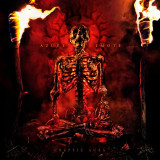
Auf "Cryptic Aura" rotiert der fette Wahnsinn! AZURE EMOTE laden mit ihrem vierten Album zu einer "Tour de Force" durch die äußeren stellaren Gefilde des Death Metal ein, wo die musikalischen Möglichkeiten gegen die Unendlichkeit konvergieren und sich in alle Richtungen und Dimensionen auszudehnen scheinen, bis die Gravitation ihres ultraschweren Sounds alles in den Schlund eines zermalmenden Ereignishorizonts zieht. Jeder Track auf "Cryptic Aura" ist in seiner eigenen abstrakten Verrücktheit einzigartig, aber sie sind dennoch allesamt durch eine Verschmelzung von verstörenden Atmosphären, rastloser Unruhe und trotziger Kreativität miteinander verbunden. AZURE EMOTE wurden im Jahr 2003 von Sänger und Keyboarder Mike Hrubovcak mit Unterstützung seines langjährigen Freundes, den Gitarristen Ryan Moll (TOTAL FUCKING DESTRUCTION), in Philadelphia, Pennsylvania gegründet. Sein Ziel war die Erschaffung eines experimentell-musikalischen Ventils, um persönliche Negativität auszudrücken. Alle willkürlichen Einschränkungen wie etwa Genregrenzen, die oft die extreme Metal-Szene prägen, lehnte Hrubovcak dagegen entschieden ab. Dieses Ziel wurde bereits mit dem Debüt "Chronicles of an Aging Mammal" (2007) erreicht. Obwohl das Album schnell Kultstatus erlangte, mussten AZURE EMOTE eine Pause einlegen, da sich Hrubovcak auf ausgiebige Tourneen mit seinen anderen Bands konzentrierte – insbesondere MONSTROSITY und VILE. Im Sommer 2011 wurden AZURE EMOTE gemeinsam mit dem FEAR FACTORY- und MALIGNANCY-Schlagzeuger Mike Heller wiederbelebt, was schließlich zur Veröffentlichung des zweiten Langspielers "The Gravity of Impermanence" im Jahr 2013 führte. Das Line-up besteht weiterhin aus Kelly Conlon, der auf DEATHs "Symbolic"-Meisterwerk den Bass spielte und u.a. auch Mitglied von MONSTROSITY war. Mit der Aufnahme der ehemaligen ELUVEITIE-Sängerin und Multi-Instrumentalistin Anna Murphy, jetzt CELLAR DARLING, sowie dem Violinisten Pete Johansen (ex-SIRENIA) haben AZURE EMOTE ihre beeindruckende musikalische Spannweite erneut ausgebaut. "Cryptic Aura" ist das in Töne gegossene Gedankenspiel, wie Death Metal klingen kann, wenn alle Überlegungen zu stilistischer "Reinheit" und musikalische Vorurteile über Bord geworfen werden. Dabei bleibt der brutale Kern des Genres unangetastet. AZURE EMOTE laden zu einem atemberaubenden Ritt in die Unendlichkeit des Death Metal ein.
- By Your Side
- Raspberry Smile
- The Other Day
- Dusk
- Swirl
- Messenger
- Jenny
The band has aimed to create music that balances the ethereal and the grounded. Featuring seven tracks, the album explores emotional and musical territories, with melodies and lyrics woven together like chapters in a story. Inspired by artists like Alvvays, Melody's Echo Chamber, Crumb and Radiohead, Gravity Racer blends modern and nostalgic sounds, inviting the listener to explore new sonic horizons.
Das dritte Album der Supersuckers aus Tucson, AZ - "The Sacrilicious Sounds of the Supersuckers" von 1995 - ist ein Klassiker und endlich wieder erhältlich, und zwar auf limitiertem, undurchsichtigem, rotem Vinyl! "The Sacrilicious Sounds of The Supersuckers" wurde von Paul Leary von den Butthole Surfers produziert und ist wütender, höhnischer Punkrock, der die besondere Mischung aus Hardrock, Punk und anspruchsloser Country-Kultur der Band perfekt auf den Punkt bringt. The Damned trifft ZZ Top? Die Motörhead des Südwestens? So etwas in der Art, sicher, aber letztendlich sind The Supersuckers ihr eigenes Ding, und auf "The Sacrilicious Sounds..." - und vor allem auf der Single "Born With a Tail" - beginnen die kläglichen Country-Klagen von Sänger Eddie Spaghetti selbstbewusster durch das rohe Punk-Aggregat zu stoßen. Apropos Aggro: Dies ist das einzige Album der Band mit Rick Sims von den Punk-Legenden Didjits aus Illinois an der Gitarre, und Sims treibt die ohnehin schon gewaltige Wand aus übersteuerten Gitarren der Supersuckers pflichtbewusst in die Höhe. Als zusätzliches Schmankerl übernimmt Sims den Leadgesang bei dem rasanten "Run Like a Motherfucker".
- 1: Hip Hug-Her
- 2: Soul Sanction
- 3: Get Ready
- 4: More
- 5: Double Or Nothing
- 6: Carnaby St
- 7: Slim Jenkins’ Place
- 8: Pigmy
- 9: Groovin’
- 10: Booker’s Notion
- 11: Sunny
One of the treasures of listening to this album is hearing their signature sound moving through the culture of the 60s while holding onto what made them…well…them. Even as the album art veered towards a counter-culture sensibility, the music inside was not letting the listener mistake them for anyone else but themselves… always Booker T. & The MGs. 1967’s Hip Hug-Her is one of their most beloved records, with its toe tapping into the pop world. Spawning two significant hits, their cover of the Young Rascals “Groovin” and the title track, which many recognize as the iconic opening and closing credit sequence music for the movie ‘Barfly.’
- A1: The Toast (Intro)
- A2: Wedding Bands Ft. Dj Eclipse
- A3: Barrel
- A4: Fistful
- A5: Ramu$ Ft. The Musalini
- B1: Project City
- B2: We Outside Ft. Maf & B.a. Badd
- B3: Type Time
- B4: Affidavit
Two titans of the underground link up for a sharp, cinematic journey through the realities of street life, loyalty, and legacy. On Checks & Balances, veteran lyricist Rasheed Chappell delivers thought-provoking bars with precision and grit, while 38 Spesh handles the boards and mic with equal finesse. The production is raw and soulful, driven by moody loops, neck-snapping drums, and minimalist flourishes that let the verses breathe. The chemistry is undeniable—this is a record that demands your full attention and rewards every listen with layers of wisdom, hunger, and mastery.
I envision this music as emanating from a moon inhabited by otherworldly life forms and ecosystems; these sounds as evoking the moon’s topographies, beings, lunar rivers, and strands of light — as if this moon’s essence were itself sonic, vibrational matter.
Musically and acoustically, Strands Of Lunar Light departs from a set of tones corresponding to a confined harmonic series segment of a very low fundamental frequency: 5.15 hertz. Through twelve continuous sections, each employing various methods of activating openly tuned guitar strings, the music is sculpted from the twenty-four pitches corresponding to harmonics 24 through 47 of this fundamental frequency.
At times, the natural second (octave) harmonics of the open strings are activated and introduce a secondary, octave transposed version of the original harmonic series segment, doubling the fundamental frequency to 10.30 hertz, and thereby revealing a brighter vibrational realm.
As a consequence of the rational pitch relationships integral to harmonic series of tones, these two sub-audio fundamental frequencies (pitch wise existing two and three octaves below the E-string of a double bass, respectively) can be heard in the music as the frequencies of the interference patterns produced by the simultaneous sounding of any pair of adjacent tones in the respective sets of tones.
These interference patterns, of 5.15 or 10.30 hertz (depending on the octave of the tones produced), are perceived as even pulsations occurring with varying degrees of clarity over the course of the piece.
I imagine these fundamental frequencies and their related harmonic tones as the elemental components of a moon, and this music as offering a glimpse into its vast lunar-sonic existence.
Fredrik Rasten, August 2024
For his first Mondoj release, Finnish musician Olli Aarni journeys to the wide oblique, where shapes are implied by slants of light previously thought impossible, coming from sources dispersed and hidden. The paranoid eye turns them into phantasms: distant pop songs, fields of fair folk spinning vocoded fudge, an exquisite tasting menu, the shiny towers of an inflatable castle protruding from underground. Scientific inquiry reveals spoken word, diatonic harmony, wide stereo fields, spectral shenanigans, strong scores of wonder and tenderness on the Geneva Emotional Music Scale.
Bubblegum as they are, it's imperative to take these phantasms at face value. The real is elusive; they are all we have. And yet it's also imperative to question them with the greatest scrutiny, because what is wonder and tenderness worth if artificial? Cotton candy can be damned to the void by a single drop of rain. Lucky thing it's drought season. It's up to you, now, whether and how to partake.
And for the hidden truth: among these mirages hide true wonders, the likes of which you've never seen, undiscovered insectile joys, passionate hearts, berries blue to black, rasp to lingon. They are never to be disregarded.
3XL boss and scene hyper-connector Special Guest DJ (aka uon, shy, Caveman LSD) lands on their own label with a debut album of hazed ambient noise and aquatic club anarchitextures, with a patented, heady style bent into new shapes.
For nigh on a decade, Berlin-based American producer, label boss, promoter and DJ Shy has operated at the centre of a scene that's still not fully defined. Their mythical DJ sets, where you're likely to hear precision-tweaked dubstep, dreampop, decelerated rap and dubwise ambient blended into vapour; gives some sense of the vibes at play, and a comb thru their spiderweb of a catalog - as Caveman LSD or uon, as part of Ghostride the Drift, Hoodie, crimeboys, virtualdemonlaxative and Cypher, or as the figurehead of 3XL, Experiences Ltd, xpq? and bblisss labels - further blurs that gist.
They've been caught in the crossfire of Big Ambient, sure, but there's always been something scrappier, sexier and more present going on under the hood. Shy and his network of associates - Huerco, Ulla, Perila, Ben Bondy, Naemi/Exael, Ponteac Streator and Arad Acid, among others - have asserted the interrelatedness of their discrete approaches. So-called "ambient" music doesn't exist in a vacuum, it un-focuses elements that undergird so many more corporeal sounds, and for Shy, their music reflects the druggy, DIY, genre-agnostic ethos of a trans-Atlantic neo-punk underground that exists in some liminal zone between the club, the bedsit and the basement.
Concerned with themes of “anger, sensuality, and dreaming”, the 40 minute roil of ‘Our Fantasy Complex’ frames Special Guest DJ at their most unapologetically oblique and illusive, expanding and contracting between whorls of shoegazing dynamics and extended portions of quasi-speed D&B x dub tech smeared on the mind’s-eye, with a vivid sense of bruised lushness that’s perfused all shy’s work thus far.
Joined by kindred collaborators Ben Bondy, Arad Acid and mu tate, and suspended in agitated bliss by Rashad Becker’s lucid mastering, the results feel out some of 2025’s most considered and distinctive within an amorphous zone that’s become a world unto itself. Ambient music’s fluffier signifiers are swapped out for a sort of sublime tension that, like the sound’s original ‘90s explosion, can be heard to reflect states of altered consciousness - both individual and collective.
Shy's layered, undulating productions are more like the chewed remnants of a thousand mixtapes cooked into a stream-of-consciousness hex. Save for the glistening, zoomed-out parting piece ‘Dream’, it all mostly avoids pretty melodies in favour of a spatio-textural sensuality that wraps us up, sometimes uncomfortably intimately, in shy’s thoughts. That oneiric closer is one of three gritty palate cleansers that swirl around its peaks, where elements of Reese-bass are suspended, writhing below looming atmospheric pressure in ‘How Long Can I Burn?’, emerging charred and flecked with rattled percussion on ‘Yoro (pt I & II)’, as though K-holing thru a blazing summer’s day.
In step with Perila’s notably darker turn of events on her ‘Omnis Festinatio Ex parts Diaboli Est’, album, or the unexpected ferocity of recent Space Afrika live shows, it’s not hard to hear a darkside gravitational pull on this one, where ambient music is no longer just a balm for troubled souls, but also suggestive of humanity’s most frightful odours.
- 1: Press Play
- 2: Pop’s Love Suicide
- 3: Tumble In The Rough
- 4: Big Bang Baby
- 5: Lady Picture Show
- 6: And So I Know
- 7: Trippin’ On A Hole In A Paper Heart
- 8: Art School Girl
- 9: Adhesive
- 10: Ride The Cliché
- 11: Daisy
- 12: Seven Caged Tigers
Experience the Double-Platinum 1996 Album in Audiophile Sound for the First Time
Mobile Fidelity’s Numbered-Edition 180g 45RPM 2LP Set Is Sourced from the Original Analogue Tapes
1/2” / 30 IPS analogue master to DSD 256 to analogue console to lathe
If great art, as many believe, is inherently polarizing, then the Stone Temple Pilots’ Tiny Music… Songs from the Vatican Gift Shop easily ranks as the California-based band’s finest album. Simultaneously celebrated and castigated upon release in spring 1996, the group’s third full-length finds vocalist Scott Weiland and company expanding their “grunge” palette with a smart blend of glam rock, psychedelia, jangle pop, and other related styles. Having benefited from long-view reassessments that shed the biases and meanness of initial criticisms, the double-platinum effort is now largely and rightly seen as a creative masterwork. All the more reason why it deserves reference-grade production.
Overseen by producer Brendan O’Brien, Stone Temple Pilots used bedrooms, hallways, bathrooms, and the lawn to capture a broad blend of textures, spaciousness, and ambience that helped underline the group’s obvious (and somewhat unexpected) leap from normal “alternative” status to an artist whose aspirations went beyond that of many of its contemporaries. You can hear the multitude of details and tonalities with previously unattained clarity, presence, and scope on this fantastic reissue, which also delivers the impact and punch every rock record deserves. Another tremendous asset: The depth, grain, and pitch of Weiland’s voice.
For all the contagious choruses and glossy melodies that help make Tiny Music… Songs from the Vatican Gift Shop sparkle, the vocal performances of the late singer arguably rank as the best that the much-missed Weiland committed to tape. None other than the Smashing Pumpkins’ Billy Corgan — who, like many peers and critics, felt a pressing need to reevaluate the record as both time marched on and the self-importance attached to the “alternative” scene faded — praised Weiland’s efforts by noting: “Like Bowie can and does, it was Scott's phrasing that pushed his music into a unique, and hard to pin down, aesthetic sonicsphere.”
Smooth and diverse, those traits are everywhere on Tiny Music… Songs from the Vatican Gift Shop. From the clever combination of emotional closeness and distance he brings to the catchy albeit ultimately melancholic “Lady Picture Show”; to the lounge-fly balladeering that causes “And So I Know” to lightly swing akin to a bleary-eyed house band’s final number at a 4 A.M. bar; to the effortless cool and laissez-faire casualness he articulates on the grinding “Pop’s Love Suicide”; to the dimensional raspiness, defiant energy, and let-loose wail that sail through the crunchy “Big Bang Baby.”
The latter tune, the record’s first single and per Weiland a conscious attempt by the band to deconstruct its prior approaches, clearly borrows from the Rolling Stones’ “Jumpin’ Jack Flash.” Because of it, the song drew all kinds of barbs from naysayers. Their disdain extended to most material on Tiny Music… Songs from the Vatican Gift Shop, which indirectly references other prized acts such as the Beatles, Cheap Trick, T. Rex, and Lush. Those cynics failed to grasp that Stone Temple Pilots were paying homage and having a blast, with even Weiland, then battling serious substance-abuse and legal issues, getting in on the action.
Stone Temple Pilots’ skeptics also turned a deaf ear to the records’ stellar pop craftsmanship, sticky hooks, and sly commentary on music-industry machinations and fame. Not to mention the band’s intent, made clear from the outset. In an interview conducted in 1994, guitarist Robert DeLeo stated: “The last thing I wanted to do with this band was make everybody believe we invented something.”
Seen through that lens and the hindsight afforded history, and appreciated independent of the self-righteous authenticity standards of the day, Tiny Music… Songs from the Vatican Gift Shop sounds borderline fearless while authoritatively checking all the right boxes for fun, flavor, and finesse. Part winking send-up, part tribute to the glitter rock age, and part middle finger towards the hip crowd that didn’t know what they were missing, this mid-90s classic repeatedly invites you to drop the needle and press play.
- A1: Positive Vibration
- A2: Roots, Rock, Reggae
- B1: Johnny Was
- B2: Cry To Me
- B3: Want More
- C1: Crazy Baldhead
- C2: Who The Cap Fit
- D1: Night Shift
- D2: War
- D3: Rat Race
Bob Marley & The Wailers' Rastaman Vibration Analogue Productions' UHQR, the pinnacle of high-quality vinyl! 45 RPM 2LP Ultra High Quality Record release limited to 4,500 copies Mastered from the original tapes by Ryan K. Smith at Sterling Sound Pressed on 180-gram at Quality Record Pressings using Clarity Vinyl® Includes "12 x 12" 8-page booklet featuring new liner notes by musician and Marley biographer Leroy Jodie Pierson (APO Records Direct-To-Disc AAPO 005), plus exclusive photos by Kim-Gottlieb Walker Purest possible pressing and most visually stunning presentation and packaging!
When Rastaman Vibration was first released in America in 1976 it did what some in the music industry considered nearly impossible at the time. It took Bob Marley into the Top Ten alongside disco records and corporate rock, points out Rolling Stone, which rates the album 4 stars. Despite the good cheer of the title track and the upbeat "Roots, Rock, Reggae," Rastaman Vibration contains some of Marley's most intense images of oppression, paranoia and despair. Tracks such as "Who the Cap Fit," "Crazy Baldhead" and "War" are offered by the Wailers with dire urgency as Marley's brutal visions are echoed by his own church choir, the I-Threes.
More than four decades later, neither Marley's music nor his message has lost its sting. Now, Analogue Productions presents perfection — Rastaman Vibration cut at 45 RPM in UHQR format on 180-gram 2LP Clarity Vinyl. This Ultra High Quality Record release will be limited to 4,500 copies, with gold foil individually numbered jackets. For Bob Marley, 1975 was a triumphant year. The singer's Natty Dread album featured one of his strongest batches of original material (the first compiled after the departure of Peter Tosh and Bunny Wailer) and delivered Top 40 hit "No Woman No Cry." The follow-up Live set, a document of Marley's appearance at London's Lyceum, found the singer conquering England as well. Upon completing the tour, Marley and his band returned to Jamaica, laying down the tracks for Rastaman Vibration (1976) at legendary studios run by Harry Johnson and Joe Gibbs.
At the mixing board for the sessions were Sylvan Morris and Errol Thompson, Jamaican engineers of the highest caliber. Of the material on Rastaman Vibration, "War," for one, remains one of the most stunning statements of the singer's career. Though it is essentially a straight reading of one of Haile Selassie's speeches, Marley phrases the text exquisitely to fit a musical setting, a quiet intensity lying just below the surface. Equally strong are the likes of "Rat Race,""'Crazy Baldhead," and "Want More."
These songs are tempered by buoyant, lighthearted material like "Cry to Me," "Night Shift," and "Positive Vibration." Not quite as strong as some of the love songs Marley would score hits with on subsequent albums, "Cry to Me" seems like an obvious choice for a single and remains underrated. This UHQR is remastered at 45 RPM by Sterling Sound's Ryan K. Smith from the original analog master tapes. Each UHQR will be pressed at Acoustic Sounds' industry-leading pressing plant Quality Record Pressings (QRP) using hand-selected Clarity Vinyl® with attention paid to every single detail. These records will feature the same flat profile that helped to make the original UHQR so desirable. From the lead-in groove to the run-out groove, there is no pitch to the profile, allowing the customer's stylus to play truly perpendicular to the grooves from edge to center.
Clarity Vinyl allows for the purest possible pressing and the most visually stunning presentation. Every UHQR will be hand inspected upon pressing completion, and only the truly flawless will be allowed to go to market. Each UHQR will be packaged in a custom clamshell box and will include a booklet detailing the entire process of making a UHQR along with a hand-signed certificate of inspection. This will be a truly deluxe, collectible product. In addition to the UHQR booklet the package will contain a 8-page 12" x 12" booklet containing new liner notes by musican and Marley biographer Leroy Jodie Pierson as well as exclusive photos by Kim-Gottlieb Walker. Pierson is a past performer for Blues Masters at the Crossroads, the two-night historic blues festival at Blue Heaven Studios in Salina, Kansas. He's also recorded a Direct-To-Disc blues album for APO Records. (AAPO 005) Rastaman Vibration — now a landmark production on 180-gram 45 RPM Analogue Productions UHQR Clarity Vinyl!
- A1: Jamming
- A2: Waiting In Vain
- B1: Turn Your Lights Down Low
- B2: Three Little Birds
- B3: *One Love / People Get Ready
- C1: Natural Mystic
- C2: So Much Things To Say
- C3: Guiltiness
- D1: The Heathen
- D2: Exodus
Analogue Productions' UHQR, the pinnacle of high-quality vinyl! 45 RPM Ultra High Quality Record release limited to 5,000 copies Mastered from the original tapes by Ryan K. Smith at Sterling Sound Pressed at Quality Record Pressings using Clarity Vinyl® Purest possible pressing and most visually stunning presentation and packaging!
By the time Bob Marley died, he was one of the world's first global superstars, famous and lauded from Europe through Africa and the Americas. Some even saw him as not just a reggae singer but as a folk hero, a sort of freedom fighter, and to this day his enduring image feels greater than the music he made, writes Pitchfork. In the 21st century, Bob Marley is a global cultural icon and the first Jamaican inducted into the Rock & Roll Hall of Fame. 1977's Exodus — recorded in London exile after a failed attempt on his life — turned out to be Marley's biggest-selling studio album.
Time magazine named it the greatest LP of the 20th century. Other Marley discs had bigger hits and still others had better album tracks, but the balance Marley strikes between politics, religion, and romance on Exodus — compare and contrast the urgent title track and the laid-back "Jamming" — shows a pop star at the peak of his powers.
Now, Analogue Productions presents perfection — Exodus in UHQR 45 RPM format on Clarity Vinyl. This Ultra High Quality Record release will be limited to 4,500 copies, with gold foil individually numbered jackets. After the success of 1974's Natty Dread and 1976's Rastaman Vibration, Bob Marley was not only the most successful reggae musician in the world, he was one of the most powerful men in Jamaica. Powerful enough, in fact, that he was shot by gunmen who broke into his home in December 1976, days before he was to play a massive free concert intended to ease tensions days before a contentious election for Jamaican Prime Minister.
In the wake of the assassination attempt, Marley and his band left Jamaica and settled in London for two years, where he recorded Exodus. Exodus represented a subtle but significant shift for Marley; while he continued to speak out against political corruption and for freedom and equality for Third World people, his skill as a songwriter was as strong as ever, and Exodus boasted more than a few classics, "including the title song, 'Three Little Birds,' 'Waiting in Vain,' and 'Turn Your Lights Down Low,' tunes that defined Marley's gift for sounding laid-back and incisive at once," writes AllMusic. This UHQR is remastered at 45 RPM by Sterling Sound's Ryan K. Smith from the original analog master tapes. Each UHQR will be pressed on 180-gram vinyl at Acoustic Sounds' industry-leading pressing plant Quality Record Pressings (QRP) using hand-selected Clarity Vinyl® with attention paid to every single detail. These records will feature the same flat profile that helped to make the original UHQR so desirable. From the lead-in groove to the run-out groove, there is no pitch to the profile, allowing the customer's stylus to play truly perpendicular to the grooves from edge to center. Clarity Vinyl allows for the purest possible pressing and the most visually stunning presentation. Every UHQR will be hand inspected upon pressing completion, and only the truly flawless will be allowed to go to market. Each UHQR will be packaged in a custom clamshell box and will include a booklet detailing the entire process of making a UHQR along with a hand-signed certificate of inspection. This will be a truly deluxe, collectible product.
- 1: Bufadeiros De São Vicente (São Vincente, Cabo Verde)
- 2: La Cueva Scuba Libre (La Gomera, Canarias)
- 3: Chá Da Gorreana (São Miguel, Açores)
- 4: Noite Em Rabo De Peixe (São Miguel, Açores)
- 5: Pardelas - Dueto (La Gomera, Canarias)
- 6: Rãs Em Xoxo (Santo Antão, Cabo Verde)
- 7: El Chat Gracioso (La Graciosa, Canarias)
- 8: Cozido Na Caldeira Velha (São Miguel, Açores)
- 9: Salinas De Pedra Lume ( Sal, Cabo Verde)
- 10: Noche En Punta Brava (Tenerife, Canarias)
- 11: A Lagoa Do Combro (São Miguel, Açores)
- 12: Piedras Húmedas En Castro (Tenerife, Canarias)
- 13: Digestão Nas Furnas (São Miguel, Açores)
- 14: O Peixe Tá Congelado (Santo Antão, Cabo Verde)
After impressions of Unguja and Borneo islands, Discrepant's chieftain Gonçalo F. Cardoso continues his sonic travelogue on insularity with 'Impressões de Várias Ilhas’.
Literally translated as "impressions from various islands", this third tome dwells on recordings and inspirations from three archipelagos of Macaronésia. Soaking in the sounds and recollections from Azores, Cape Verde and Canary Islands these diaristic endeavours spread throughout a number of real environments, from water caves and black stone beaches and lagoons to small harbours and everyday life scenarios, to project them into this not quite imaginary but not quite real memory haze that goes from a deeply personal impression to a resonating one.
Melding raw field recordings with processed ones and synthesized landscapes, Cardoso never falters into sonic tourism, conjuring small-ish takes both vivid and dreamy, infused with a sense of wonder that feels both bewildering, comforting and escapist. The breaking waves of 'Bufadeiros de São Vicente' soothing in their irregular pattern, mingling with the lone echoing tones not completely removed from Black Dice's 'Beaches & Canyon's most pensive passages, flow into the underwater ambience and suspended pads of 'La Cueva Scuba Livre', as reflections of the same sea crashing in on different lands, nature’s psychogeography. Further on, the queasy warm chord and scraping murmurs of 'Noite em Rabo de Peixe' mirror their nighttime framing while 'Rãs em Xoxo' veers closer to pure musique concréte, crossed by a subdued feeling of unease that lingers in the nostalgia of 'Cozido da Caldeira Velha', brimming within the haze of a Boards of Canada vignette. Summoning the past lives and future hauntings of its scenery, 'Salinas de Pedra Lume' is like the quiet epic of the album, meandering into the unknown among crackling field recordings, decaying synths and flute-like howls - or is it howl-like flutes? - recurring as glimpses from foregone existences, not necessarily Gonçalo’s own. Maybe ours?
Music & Photography by Gonçalo F. Cardoso
Artwork layout by Jeroen Wille
Master by Rashad Becker
Discrepant 2025
Pressed in Spain