
Auf Lager
Bei uns am Lager und sofort versandfertig
Last In: vor 7 Monaten
18,45 €
Bei uns am Lager und sofort versandfertig

Having featured on the Diamonds in the Night series with the epic “Midnight Opera”, it was only a matter of time before Lukas Zeringis, better known as Zakmina, had his own 12” on Bordello A Parigi. Following appearances on Correspondant, Future Boogie and XXX, the Lithuanian born musician arrives with two tracks that break the mould. A speeding rhythm sees “For U” race out of the stocks. Bright strings arc before a generous break and this old-school rave anthem reveals itself in all of its brazen glory. Glowsticks at the ready for this seven minute romp into sweaty ecstasy. The flip is inhabited by a completely different animal. “Take Me Back” comes to life with blissful notes before rasping rhythms give way to a rumbling arpeggiator. Sailing strings are countered by squalid acid undercurrents as Zeringis finds a sweet spot between braindance bleep and soulful electronics. A seriously strong debut.
Bei uns am Lager und sofort versandfertig

Son of Detroit Waajeed is back with the three-track “Ten Toes Down” EP, the next chapter in a musical odyssey through struggle and self-awareness that finds the producer creating some of the strongest work of his career.
Joined by Wu-Tang songstress Blue Raspberry under alias Candi Lindsey on “Heavy” and the tribal soliloquy “Deeper Into Blue,” this new project is a reflection of many changes since last year’s “From the Dirt” full-length.
'Ten Toes Down' is the first in a string of releases in 2019.
Bei uns am Lager und sofort versandfertig

“Bumpers” is the latest EP on T4T LUV NRG by DJ Autopay, the alias of musician and DJ Russell E.L. Butler. All of these tunes were written with DJs and blending in mind—like bumper cars, they are fun yet emotionally charged and built for unexpected collisions of sound. “More Femme, More Masc” is a queer non-binary anthem with heavy Baltimore-influenced vibes, written by Russell during the pandemic in a time of peak vulnerability, their voice cracking throughout. The track is an interpretation of “Fast Car” by Tracy Chapman and “Sometimes I Rhyme Slow” by Nice & Smooth but sounds like nothing we have heard before. Tropes 1, 2 & 3 are all house instrumentals in the spirit of the golden age of American house music yet interpreted through Russell’s unique lens. These cuts would have been as at home on Guidance records years ago as they are today on T4T LUV NRG, evoking the swinging dance beats and heady vibes of producers like Callisto and the early Large records by Kerri Chandler and DJ Rasoul. Russell has created something truly special for the contemporary dance floor with this timeless EP.
Bei uns am Lager und sofort versandfertig

Bei uns am Lager und sofort versandfertig

Bei uns am Lager und sofort versandfertig
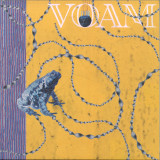
4 curly time wasters
Written & produced by Arthur Cayzer & Jamie Roberts Mastered by Rashad Becker
Bei uns am Lager und sofort versandfertig

Since Interstellar Space, John Coltrane's posthumously released duo album with Rashied Ali, the combination of sax and drums has received an aura of sublime spiritual ambition. It is where tireless truth seekers come together to aim for something transcendental. Something too big for words. Of course, a lot has happened in the meantime.
The available options - philosophically, stylistically, temperamentally - are endless. Musicians are aware of those historical turning points, yet they also try to add their own twists and interpretations. Some of them succeed. One of reed player Mattias De Craene's many projects - MDC III - is a project involving drums and saxophone. A striking difference: De Craene invited two drummers (Simon Segers, Lennert Jacobs), that have been active in the worlds of jazz, pop, free improvisation and experimental music. They are the ideal foil for De Craene's vision, which seems to exclude no opposites. While the use of a recorder, electronics and percussion steers the music beyond the classic acoustic limitations, the result becomes strikingly rich with contrasts. What is abstract and introspective the first moment can switch - gradually or abruptly - to moments of fierce ecstasy the next.
The music feels free (free from limitations, free to choose its own logic), but also invites. Shifting moods and textures are combined with intricate rhythmical patterns, as the drummers lock together in dense, complex and/or ritualistic grooves. A minimal pulse, accompanied by murmuring hisses of brushes and a serenading sax is contrasted with moments of exuberance. The result is many things at once, but despite these wildly varying colors, sounds, textures, rhythms and moods, they are all linked, part of a generous, iridescent whole.
The trance-inducing trio MDCIII is back. And that equals yet another delicious load of modular drums, wildly processed saxophone sounds, improvisation & pulsating grooves.
After their first EP, MDCIII ft. Sylvie Kreusch, and their subsequent first (internationally) acclaimed album 'Dreamhatcher', the 'double drums' saxophone trio with Mattias De Craene, Simon Segers & Lennert Jacobs is all set to show what angle rock 'n roll can really come from. On their new album 'Drawn In Dusk' (release: end of September via W.E.R.F records) the trio delivers a whole new palette of sounds that are just as mystical, energetic and wild as 'Dreamhatcher'.
Bei uns am Lager und sofort versandfertig

Ken Boothe, der wohl begabteste jamaikanische Musiker seiner Generation, gilt heute als lebende Legende, dieüber einen Zeitraum von rund 60 Jahren unzählige Ska-, Rock-Steady- und Reggae-Klassiker aufgenommen hat.
Nach seinem Aufnahmedebüt im Jahr 1962 erlebte Ken Boothe eine äußerst erfolgreiche Karriere in Jamaika, bevor er 1974 mit seiner Interpretation von "Everything I Own" und dem Top-10-Nachfolger "Crying Over You" internationalen Ruhm erlangte.
Diese beiden äußerst beliebten Titel sind auf dieser Sammlung enthalten, die Teil der neuen "Essential Artist"-Serie von Trojan Record ist und die beliebtesten Aufnahmen einiger der größten
Musiktalente Jamaikas präsentiert.
Erhältlich als 28-Track-Doppel-Vinyl-LP und als umfassende 2CD-Compilation, zeigen beide Veröffentlichungen das außergewöhnliche Gesangstalent eines der besten und gefühlvollsten Interpreten, die der modernen Popmusikszene seit den Sechzigern ihren Stempel aufgedrückt haben.
Bei uns am Lager und sofort versandfertig

A classic dub set from Nick Manasseh & Jeremy The Equalzer, originally released on the Acid Jazz label in 1996, back on the streets courtesy of Partial Records.
A balanced mixture of traditional roots dub - including a tasteful reworking on Bob Marley’s `Sun is Shining; rhythm - intwined with digital sounds and experimental leanings
Bei uns am Lager und sofort versandfertig

Igziabeher Yi mas gan (Let Jah be Praised!) - as we follow up with the next release forwarding from Ashanti Selah Music; we are proud to present a fresh combination to the label with Iqulah Rastafari who is a true ambassador and master of his faith as well as being a high-caliber artist in his own right; this release delivers the whole roots and nothing but the roots in its full entirety. Hailing from Jamaica and toured the 4 corners of the world with his band 'Giddeon Family' as well as performing many shows in Africa with the 'Azania Band' - Iqulah always brings the spiritual power and most honourable Rasta energy in connection with the music; making it a such an engaging experience when being among the vibration.
The Maxi-single offers two original vocals and two dub mixes per side with strong lyrics and heavy riddims to accompany!
Bei uns am Lager und sofort versandfertig

Ursprünglich im Jahr 2004 veröffentlicht, macht "The Book Of Heavy Metal? seinem Namen alle Ehre und präsentiert rasanten Power Metal im Stil der 80er.
Dieses Dream Evil Album war das letzte, das Snowy Show und
Gitarrenmeister Gus G. mit der Band aufgenommen hatten und wurde von Fredrik Nordström produziert.
Nachdem das Album zahreiche Jahre vergriffen war, ist es nun wieder auf weiß-schwarz marmorierten Vinyl erhältlich als Teil von Atomic Fire Records? "Backfire"- Reihe.
Limitiert auf 1.000 Einheiten.
Bei uns am Lager und sofort versandfertig

Featuring music from a lost tape of devotional keyboard jams, field recordings of migrating birds, mysterious bells, meditative noise and crooked new beat/EBM, made god-knows-when and subsequently discovered in a Thessaloniki charity shop years later. It now somehow finds its way to vinyl, newly mastered by Rashad Becker, and sounding like a lost Hype Williams x Muslimgauze madness.
Originally discovered in a musty charity shop by Live Adult Entertainment, and issued in minuscule numbers on CD in ’21, Christian Love Forum’s raverential debut ‘Naked Light’ documents the fraternal post-church jams of siblings, Scott, Kiro and N•X, plus their mate Steve, who would regularly channel the light and pain of Sunday mass sermons into their ecclesiastic crud.
As previously heard on their blink ’n miss ‘Unconditional Love’ tape, the trio express their higher purpose thru ribboning microtonal keyboard jams that sound like Gurdjieff with a Casio and a knackered drum machine after too much sacramental wine. They hit the strangest, most affective seam of religious cinematic epic soundtracks, gnarled noise and clandestine Belgian new beat that seriously pushes our buttons, sounding quite unlike anything in the contemporary sphere, but eerily also echoing sentiments explored on record by James Leyland Kirby or Bryn Jones.
Now reshuffled and clad in custom artwork, ‘Naked Light’ is unveiled to believers and skeptics as a definitive article of faith. The lord works in mysterious ways within, manifest in stages of sun-bleached post-church field recordings, whirligig melodies, blown-out bouzouki and choral tape howls and a Béla Tarr soundtrack-like campanology on the A-side, before letting their passions flow in ‘Wicked City (Parts I-IV)’; a spellbinding side-long collage of slurred synths, neo-noir hardbeat rhythms and speaking-in-tongues vox recalling V/Vm’s new beat apocrypha as much as bits from Hype Williams’ hypnagogic ‘One Nation’, thee dustiest gooches of Dirk Desaever’s archive, or even aspects of Rat Heart at his cruddiest.
‘Naked Light’ rarely fails to induce uncontrolled eye movement in susceptible skulls, destined to become an occult hit with lapsed churchgoers, new beat fiends and anyone missing the enigma and ineffable flavour of ‘00s underground noise tapes in this auspicious year of AD2023.
Bei uns am Lager und sofort versandfertig
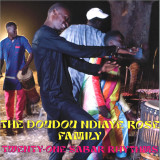
Magnificent Wolof drum music, performed by an extended griot family over seven consecutive days, in the mystical setting of Lac Rose, outside Dakar.
Doudou Ndiaye Rose — who died in 2015 — is a key drummer in the musical history of the world. He developed a system of five hundred original drumming patterns, ancient and new. Amongst the modern rhythms here is Bench Mi — ‘under the Baobab tree,’ a spot where problems get solved. Also Hibar Yi — ‘passing on information’ — the theme-tune of Senegalese TV national news for decades — and Les Rosettes, the signature rhythm of Senegal’s first ever all-female percussion group, convened by Doudou, and named after his grandmother.
These original compositions sit alongside important traditional rhythms, familiar to every Sabar player, such as Farwu Jar (a courtship game sometimes resulting in a wedding), Ceebu Jin (also the name of the national dish of fish and rice), and Gumbé, often played after a successful harvest.
Recorded in joyful single takes, with no overdubs, mastered by Rashad Becker, the music is deep and thrilling, polyrhythmic to the bone, with a complex, pointillistic intensity at times evoking Jeff Mills in full flight.
Bei uns am Lager und sofort versandfertig

AI-31 sees the debut release from a new collaboration between Samuel van Dijk (Netherlands) and Rasmus Hedlund (Finland). Both key proponents to the scene in Northern Europe, they come together with mutual understanding and a common vision to sound. Dialog acts as a conversational exchange that sees the interplay of dynamic frequencies, evocative imagery and contemporary sonic art. Spread across four sides, the album as a whole exists as a kind of metaphysical process, eternally growing and contracting — change is the only constant, marked by a continuous progression of sound and space.
Expansive, deep, and at moments arresting, Dialog unfolds with sweeping soundscapes and shimmers with tactile sonic details. A chasmic rift of scintillating drone structures, each layer exposes a series of ever-deeper shades. In a play of dynamic dualities, the pair harnesses both earthly materials as well as access to more ethereal dimensions in the music. Side A begins with sub-terrestrial ruptures, gestating in a process of constant elemental changes. Rattling hits sputter amongst a state of nascent chaos, yet continues to be maintained in self-regulating stasis. Side B sets a more introspective tone, whispering with ghostly artefacts and bubbling synth lines, before building into a driving energy of layered field recordings and mechanistic timbres. The essence of form continues to be contested, until it subsides into momentary calm on side C. A cleansing period of soft drones float into the space and the pace slows, washing away remnants of past. The journey continues with side D’s conclusion - a solemn contour that reaches its internal extent, to then finally return to its source.
Bei uns am Lager und sofort versandfertig
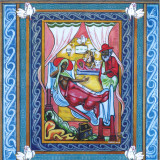
Akae Beka's inimitable style, developed over decades performing with St. Croix based band Midnite and countless recordings (including 2014 iTunes reggae album of the year BEAUTY FOR ASHES and RIDE TRU). At the point of his untimely passing in 2019, he had released over 70LP's. He is without a doubt one of the most prolific reggae artists ever known and his quanity is always matched with quality, with his albums consistently featuring in the top 10 on the billboard charts reggae LPs.
A unique contribution to the sea of Akae Beka titles, this LP showcases Vaughn Benjamin in a stripped back, raw accoustic fashion. An LP which will not be easily confined to any one genre, but for the fans of Vaughns uniquly rich, deep, textrued songwriting, uncompromising devotion to RasTafari and soulful healing melodies an absolute must have!
Bei uns am Lager und sofort versandfertig

Lee Burridges’ All Day I Dream Presents Jim Rider’s Fantastic New EP, The Final Straw
The UK-Producer Revives the Labels’ Heavier Melodic Sensibilities Across 4-Originals
The title track opens an EP led by intention, accenting a time in the producer’s life where he was disillusioned with his day job and intent on pursuing music full time once again. “The Final Straw'' includes a romantic, husky narrative delivered by Namibian vocalist “Black Soda” (AKA Annely Ickua). Here we find him pulling from his musical upbringing - melodic elements afforded to him by his Mother, a folk musician and singer, and his focus on percussion fueled by his background as a drummer.
“Rascals” is a follow up to “Fools” from Jim’s 2021 Beatport category #1 EP “Popcorn & Politics”. It pays homage to the classic 1950s American TV show “Little Rascals” with eccentric keys and playful percussion alongside dazzling, eccentric elements from keys to tropical-inspired marimbas. “Los Que Caen,” as the name suggests, is inspired by Rider’s love of latin music and percussion and includes a heavy bass guitar riff, bouncy synths and a harp-led rhythm section. EP closer “The Cypriot” blends lead flute lines with plucky synths and a driving bassline while sporadic haunting vocal ad-libs and delayed keys add decoration to the track.
Bei uns am Lager und sofort versandfertig

Bei uns am Lager und sofort versandfertig

Roughly a year after his Kodak Dreams LP Submorphics returns to The North Quarter with Newport Magnetic: a six track project that sees the Detroit native reinvent his trademark lo-f take on Drum & Bass. While looking to the future and growing artistically on this project, Submorphics continues to drawn inspiration from hazy rare grooves, resulting in a refreshing showcase of his creative vision.
Bei uns am Lager und sofort versandfertig

With „Time Machine EP“ Next Door launches a new motto vinyl record.
Dark, driving, Acid!
On the first track on “Eloi-side” you will find a completely astounded inhabitant of a far future world, who has no answers to the questions of a time-traveler. The second track takes place during a rapid trip - plunging into two worlds.
On the “Morlock-side” machines are working monotonically with the inhabitants in dark caves below the earth’s surface in a far future. Track two is a serious call for a wild dance in a driving ¾ beat.
Have you ever heard anything like it?
The Computer Controlled Minds deliver four remarkable tracks on vinyl. You must experience this!
Mit der Time Machine EP bringt Next Door eine weitere Mottoplatte an den Start.
Dunkel, treibend, Acid !
Auf der Eloi Seite findet Ihr im ersten Track eine völlig verblüffte Bewohnerin einer fernen Zukunft, die auf die Fragen des Zeitreisenden keinerlei Antworten hat. Der zweite Track spielt sich während der rasanten Reise beim Eintauchen zwischen den Welten ab.
Auf der Morlock Seite hingegen arbeiten im ersten Track die Maschinen monoton, in einer fernen Zukunft, unterhalb der Erdoberfläche in dunkeln Höhlen mit ihren Bewohnern. Track zwei dieser Seite ist ein eindringlicher Aufruf zum wilden Tanz im treibenden ¾ Takt!
Habt Ihr so etwas schon mal gehört?
The Computer Controlled Minds bringen hier vier vollkommen krasse Tracks auf Vinyl, das solltet Ihr euch unbedingt geben!
Bei uns am Lager und sofort versandfertig

The concluding chapter of Jamaica Suk’s 17-track ‘Uncertain Landscape’ series arrives with a bang, with another four explosive tracks to round it off.
Milton Bradley — aka Alien Rain — begins proceedings with a hammering assault in the form of ‘Driving Force’. Detuned, ravey synths produce a cacophonous barrage of sound as the rubbery kick groove intones more hardcore vibes. There’s a touch of John Carpenter vibes in the spooky arpeggios that permeate the more stripped back sections. Bone-crushing groove abounds throughout.
Italy’s Kill Ref delivers a distorted thumper on ‘Subbaculta’, slowly eeking out a rasping groove from the underbelly of his pummeling drums. The track keeps building throughout, the shuffling rhythm
bolstering some seriously raw machine funk in the latter half that emerges almost imperceptibly.
The ringmaster herself, Jamaica Suk, makes her contribution to the series on ‘Escape’. She conjures up a tripped-out soundscape where layers stack in potent combination. Squelchy acid licks do battle
with the stomping bass groove and heavily-reverbered sustained textures. It sounds as if there are monsters loose in the speakers.
Nicolas Bougaïeff closes this momentous four-part release with his second contribution, ‘Nocturne 3’. Rocking a stuttered kick pattern, it revolves around grunting swathes of industrial noise, on-beat
clap patterns and all manner of weird and wonderful sounds that pitch-bend, tweak and freak to delightful levels of intensity. It’s a very well arranged and sequenced track that keeps you guessing.
Bei uns am Lager und sofort versandfertig

talo-Iranian producer Sciahriar Tavakoli, commonly known as Sciahri, after releasing on renowned label as Ilian Tape, Mord, Opal Tapes/Black Opal and MANHIGH finally presents his first long playing record “Double-Edged”, and he does it on his own imprint, Sublunar Records.
The LP is an extended, carefully compiled exploration of the many facets of his signature sound, where emotional melodies collide with dense and rasping basslines.
The artist aims to express emotions with unsettling simplicity, showcasing techno compositions that are both thoughtful and primal.
Within the space of ten tracks, Sciahri’s sound design reveals his structure, pushing the listener through a labyrinth of textures and rhythms.
Bei uns am Lager und sofort versandfertig

As the liner notes in this special Anniversary Edition of DUB SIDE OF THE MOON begin: This is the reggae record that changed it all. Some day music histortians may look back and divide a time in reggae before Dub Side and after. Celebrate a decade plus of this timeless and ingenious musical experiment with this release, which includes two new bonus tracks (including a new version of 'Breathe' that features Rebelution's Eric Rachmany along with Metric Man, Ruff Scott and Sluggy Ranks), new artwork, and a 12 page booklet that tells the history of the project and catches fans up on what the people involved have been up to in the years since.
Bei uns am Lager und sofort versandfertig

Black Truffle is pleased to make Oren Ambarchi's Grapes from The Estate available once more on vinyl. Originally released on CD on Touch in 2004 and reissued on Southern Lord as a limited double LP in 2006 during Ambarchi's tenure as a member of Sunn O))), Grapes from the Estate was a landmark release for Ambarchi, seeing him expand his sonic palette beyond the clipped, bass-heavy electric guitar tones he was known for at that point. Incorporating subtle layers of strings, keyboards, percussion over a bedrock of his signature guitar tones, in retrospect this album can be seen as the beginning of a broadening and evolution in Ambarchi's work that would lead to his acclaimed, densely layered epics for Editions Mego, Quixotism (2014) and Hubris (2016). Beginning with the shuddering pure tones of opener 'Corkscrew', which looks back to previous guitar-only releases such as Suspension (2001), the album's next two pieces show a progressive broadening of the instrumental palette and a corresponding move away from textural abstraction and sustained tones towards more traditional notions of musicality. This reached its high point on the album's third piece, the fifteen-minute long 'Remedios The Beauty', where guitars, both acoustic and electric, strings, piano, and bells build from a murmur to an interlockinging web of repeating melodic patterns over gently swinging brushed snare and cymbals. The epic closer, 'Stars Aligned, Webs Spun', returns us to a space populated only by the electric guitar, but unlike everything Ambarchi had produced up until this point in his career, the piece has a liquid, psychedelic edge that looks forward to the shimmering harmonics of his more recent work. As Brendan Walls wrote at the time of the original release, this is 'another outpouring of personal, intimate and enduring music from Oren Ambarchi'. Presented in a stunning gatefold sleeve featuring the original artwork and design by Jon Wozencroft. Redesigned by Stephen O'Malley Remastered and cut by Rashad Becker at D&M, Berlin.
Bei uns am Lager und sofort versandfertig

Returning to Iceland to focus on fresh material, Kiasmos will release new EP 'Blurred' through Erased Tapes on October 6th.
Janus Rasmussen explains: "To write new material felt like a new beginning for us after two years of touring. The plan was to write something a tad darker than our previous stuff. Spring in Reykjavík had other plans though, as this turned out to be our brightest release to date." Remixes on the EP come from Bonobo and Stimming, each taking Kiasmos' music in fresh directions
Bei uns am Lager und sofort versandfertig

After dropping several tracks and performing at select festivals throughout the years, Ólafur Arnalds and Janus Rasmussen dedicated the year 2014 to explore the area in-between Ólafur's more acoustic, piano-based solo work and Janus's synth-heavy electro pop, with their collaborative electronic project Kiasmos.
By focusing solely on their self-titled debut album, Ólafur and Janus have been able to combine and further develop their unique sound aesthetics to complete an album driven by their mutual love for electronic music. Made in Ólafur's newly build studio in Reykjavík, Iceland, a majority of the album was recorded using acoustic instruments next to a variety of synthesisers, drum machines and tape delays. It features a live drummer, string quartet and Ólafur performing on the grand piano, producing an ambient, textured sound, which makes it a perfect home listen and equally danceable record. If you listen closely, you can spot them record the thumb piano, finger snapping and even the sound of the metal grinder of a lighter slowly to replace the usual electronic hi-hat sounds, giving the album a far more intimate and unique atmosphere.
We decided to start almost completely over with this record, so most of the material is written this year with the idea of making a record that can stand as one piece rather than a collection of songs. I am very excited to get a proper record out exploring a different territory than I am used to. I touch a lot on electronic genres in my own music but never have the opportunity to go full out electronic like we do here.' - Ólafur Arnalds
The Kiasmos project has been around since 2007, but because of all our other projects we never really got the time to sit down and write all the tracks we always wanted to. So when we early this year finally found the time to sit down and make a full length album there was so much we wanted to try out. The result surprised us a bit, it's deeper and more emotional than we imagined it to be, but that's the beauty of being able to make an album.' - Janus Rasmussen
Long-term Erased Tapes graphics collaborator Torsten Posselt at Feld Studios in Berlin created the cover artwork. Feld Studios was a natural choice for Kiasmos, seeing he also designed the cover for their Thrown EP, released previously.
Kiasmos is made up of Icelandic BAFTA-winning composer Ólafur Arnalds, known for his unique blend of minimal piano and string compositions with electronic sounds, and Janus Rasmussen from the Faroe Islands, known as the mastermind of the electro-pop outfit Bloodgroup. Based in Reykjavík, Arnalds used to work as a sound engineer, often for Rasmussen's other projects, where the two musicians discovered their common love for minimal, experimental music. They eventually became best friends, often hanging out in their studio, exploring electronic sounds.
Bei uns am Lager und sofort versandfertig

Bei uns am Lager und sofort versandfertig

Stefan Goldmann's very first release from 2001, thoroughly remastered. Long out of print, this has been extremely sought after classic vinyl. In their day, these tracks (together with Missing Days / That Ghost) created the prototype of today's stripped down house sound. Especially 'Gee Baby' has recently been rediscovered and became a signature tune of Ibiza's DC10 / Circo Loco with DJs like Raresh and Matthias Tanzmann - which made it swap back to its native Berlin and its legendary eternal afterhours. The A side's 'Closing In' with its broken funk predated a lot of convergence happening now between house and bass music. And last but not least, Stefan Goldmann provides a brand new, ultra-stripped down EDIT of the mesmerizing 'Read That Lips.' Essential all the way. Remastered by D+M's Rashad from the original DAT source and cut to premium vinyl, they are finally available again in unprecedented quality.
Bei uns am Lager und sofort versandfertig

the tale of the mythic pentaki mountain has been engraved on a two-sided circular piece of wax. the north face of the peak is steep, abrasive, and has been the subject of many legends in the region. it is said that whoever would manage to climb it would find a plateau, leading to a place called "the single source of truth". considered as the ultimate goal by both psychedelic gurus and database optimization corporations, and as an ideal retirement destination for a couple of lost souls in search for coherence and objectivity, the source diffuses endless loops of haunted voices, apparently sampled from a discarded call center, running low on power, encouraging listeners to shorten cycles, deliver requests and improve user experience. it is also said that anyone climbing from the south side would never reach the summit or find his way to the plateau, and would always end up on a lower altitude than where he started. this topographical anomaly is probably the reason why the south face of the pentaki has always been favorited by locals, with its sunny weather and its luxurious vegetation flourishing along the soft downward slope, leading to a slow and peaceful end.
Bei uns am Lager und sofort versandfertig
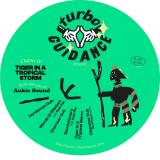
Following his debut 12" on Futura Resistenza, Aukio Sound returns with a new release on Turbo Guidance Entertainment — a deep dub techno exploration rooted in heavy reggae influence, featuring the late Baba Ras. A solemn tribute to a singular voice. Like Rousseau's Tiger in a Tropical Storm, this record paints a dense, dreamlike fresco — where rhythm and texture grow wild beneath the surface. The record also includes a remix by Non Posso, a mysterious duo. Mastered by Carsten Dämbkes and pressed on 180g vinyl for the full listening experience.
Der Artikel ist noch nicht erschienen. Du kannst den Artikel jetzt vorbestellen, dieser ist nach Wareneingang für dich versandbereit.
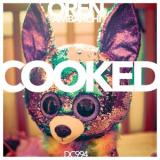
Keen listeners who have dug below the surface of Oren Ambarchi"s triple-digit discography know that alongside hypnotic minimalism, veins of irreverent and joyously wayward exploration run deep. Cooked is something of a landmark in Oren"s work, bringing this gloriously cuckoo sensibility right into the heart of his most high-profile solo work. Carrying on the grand Ambarchi tradition of meticulously constructed all-star studio jams (which reached new heights with Shebang), Cooked brings together collaborators from Australia, Germany, Japan and Sweden for two side-long epics where the foot keeps tapping even as the mind boggles. Cooked is a long way from the spacious, light-dappled grooves of Ghosted, but Oren"s Swedish bandmates play starring roles here, with Johan Berthling"s double bass anchoring both sides, and drummer Andreas Werliin lending his delicate touch to the second piece, "Sleight of Hand". Beginning with glistening layers of electric 12-string guitar, "Sleight of Hand" takes some key cues from electric Miles touchstones like "Feio" or his epic take on David Crosby"s "Guinnevere", with Berthling"s sparse basslines punctuating an almost weightless cornucopia of shifting detail, glimmering with subtle contributions from Michiko Ogawa on sho and James Rushford on a panoply of acoustic keyboards. Suddenly, everything is overwhelmed by a knotty, hyper-complex "solo" from Marcus Pal on digital synthesis, teleporting us to an alternate history where Allan Holdsworth traded the SynthAxe for Xenakis" UPIC. Building with additional drums and percussion from Will Guthrie to a peak of sizzling intensity, the music then goes sideways into a gently surreal coda, where some distinctly Zawinul-esque chords and Fredrik Rasten"s guitar float over a sprightly rhythm box, the avian inventions of Swedish virtuoso whistler Isak Hedtjärn wafting atop the sunlit stew.
Der Artikel ist noch nicht erschienen. Du kannst den Artikel jetzt vorbestellen, dieser ist nach Wareneingang für dich versandbereit.

Repress auf goldenem Vinyl. Limitiert auf 300 Exemplare. Vergesst alles, was ihr dachtet, über Postpunk zu wissen - BERLIN 2.0 zünden die Endstufe in der Punk-Evolution. Nach dem szeneübergreifend gefeierten Debüt "Scherbenhügel" droppt die Stuttgarter Band mit "Kaltental" jetzt ein zweites Mal eine Bombe über Postpunk Germany - und mit diesem Monster eines Longplayers ist klar: Hier wird keine Welle geritten. Hier wird eine Welle ausgelöst werden. "Kaltental" ist der dystopische Soundtrack einer brennenden Welt im Endspiel kapitalistischer Ideologie, zwischen Endzeit und Aufbruch, Resignation und Kampfbereitschaft. Härter, düsterer, dringlicher. Mit einer Mischung aus rasenden Hardcore-Ausbrüchen, klassischen Rock-Elementen, Post-Hardcore-Gitarrenwänden und melodischem Endzeitpop kracht "Kaltental" unverschämt souverän durch Genremauern und zerbombt mit radikal-klarsichtigen Texten von Ausnahmesängerin Elena Wolf Gabionenzäune in Vorgärten und Köpfen "ganz normaler" Deutscher im Aufrüstungswahnsinn. Ferdinand Führer von Fieser Schwan Recordings hat "Kaltental" aufgenommen, gemixt und gemastert und in eine rohe, dröhnende Elegie verwandelt, die aber auch keine Gefangenen auf dem Dancefloor macht. Die antifaschistische Bladerunner-Jeanne d'Arc in mittelalterlicher Rüstung auf dem Cover ist dabei mehr als eine Reminiszenz an revolutionäre Frauenfiguren in Geschichte und Kunst. Das neo-retrofuturistische Artwork der Wiener Fotografin Doris Himmelbauer ist die cineastische Visualisierung eines Albums, das Gewalt, Verletzbarkeit und die Sehnsucht nach einer besseren Welt verhandelt. "Kaltental" ist Krieg. Innerlich wie äußerlich. Aber auch ein Urschrei nach Liebe und Solidarität in der unbeirrbaren Überzeugung, dass alles auch ganz anders sein kann.
erscheint voraussichtlich am 25.09.2026

Some recordings herald the future in ways that are impossible to see in real time. Teodros Makonnen With His Organ (ቴዎድሮስ መኮንን ከኦርጋኑ ጋር), by the artist Teodros Makonnen, also known as Teddy Mak, is one of those. Today, electronic sounds, synthesizers, and digital production are taken for granted in Ethiopian music, but in the early 1980s, they were novelties that polarized opinion. Even to this day, the story of Teodros Makonnen’s legacy has never been properly told. He played a decisive role in defining the sound of the digital era of Ethiopian music that emerged in the 1980s and beyond, both as a keyboard player and as a producer, songwriter, performer, and sound designer.
Ethiopian music was at a crossroads in the early 1980s. Much like music in the rest of the world, technology and automation heralded either a quantum leap in musical development or the annihilation of musicianship, depending on who you’d ask. The changes were incremental nonetheless, but with the benefit of hindsight one can clearly see that the changes meant different things in different contexts. Drum machines and electric organs came to replace many hotel bands because, all of a sudden, one musician could control drums, melody, and accompaniment. Teodros was one of the first musicians in Ethiopia to explore the possibilities this opened up.
Teodros’ father, Captain Makonnen Beri, was a chief pilot at Ethiopian Airlines and a music enthusiast at that. This would prove important to his development, as Makonnen brought back a piano from Germany, which would lead to the first steps in Teodros’ long musical career. Captain Makonnen’s work as Head of Flight Operations and as a pilot exposed him to the wider world that was far from commonplace for most Ethiopians. In a house where music captivated the whole family, the piano gave Teodros’ talent an outlet. Not only was a piano at home rare in Ethiopian households, his father also brought an Indian teacher to their home to teach Teodros and his brother, Captain Samuel Makonnen, music theory (solfeggio or ear training) and piano. Teodros and his youngest brother, the late great Dereje, a member of both the legendary Ibex Band and the Ethiopian reggae group Dallol, took up music from that point onward, with Teodros beginning to develop his proficiency at the age of eight. His father encouraged him to practice tirelessly at home, and Teodros later received musical schooling at the German School in Addis Ababa.
His obvious talent led to studies and formal education at the Yared School of Music, followed by continued studies in American jazz at Northern Virginia Community College in Virginia. Teodros cut his teeth professionally in his mid-teens, not only as a keyboardist, but also as an arranger for the Wabi Shebelle and Dahlak bands in the 1970s. He mastered electronic sequencing early, rising to prominence through the midnight recording sessions held during the military curfew. The pressures imposed by the curfew required precise and disciplined recordings, and Teodros delivered just that. This, in turn, led to collaborations with iconic artists such as Mulatu Astatke, Aster Aweke, Menelik Wossenachew, Tilahun Gessesse, Mahmoud Ahmed, and Alemayehu Eshete.
In those days, he sat in as a keyboardist with the Dahlak Band when Dawit Yifru took a hiatus to study in Russia, and also with the Ethiostar Band. He secured a residency at the Wabi Shebelle Hotel with the Shebele Band, together with Zelalem Tadese (drums), later succeeded by Elias Bekele, Mulugeta Hailu (bass), Teferi ‘Bibisha’ Mengesha (guitar), Kumelachew G/Selassie (trumpet), and Teshome Deneke (saxophone). A friendly competition developed between the bands associated with the Ras Hotel (the Ibex Band), Ghion Hotel (the Dahlak Band), and Wabi Shebelle Hotel (the Shebele Band). The music scene at Wabi Shebelle saw teenagers commanding the spotlight in an industry otherwise dominated by musicians of an older generation.
At the Wabi Shebelle Hotel, Teodros met a diplomat from Saudi Arabia and later visited him at his home in Addis Ababa, a meeting that had unexpected musical consequences. The man owned a Yamaha double-deck keyboard. That evening, they recorded Teodros Makonnen With His Organ (ቴዎድሮስ መኮንን ከኦርጋኑ ጋር) in one take. This recording, a cornerstone in the early digital sound of Ethiopian music, came about almost by chance, simply because Teodros got the opportunity. Traditional Ethiopian songs were cast in a wholly electronic style.
Once freed from backing duties, Teodros’ keyboards could explore dreamlike soundscapes that took Ethiopian music in new directions. Even though the cassette contained well-known Ethiopian songs, they were given highly original arrangements, performed on an electric organ with drum machine backing and rhythm patterns that left the listener with suggestive, lingering sounds. “Libesh Kabashen” (also known as “Anchi Bale Game”) and “Odu Gol Golesa” wrap you in the very stuff that dreams are made of.
Originally released on cassette only, this recording exudes a mystique that surpasses even some of the most obscure Ethiopian recordings of the day. It remained more or less unknown outside of Ethiopia until now. Some of the tracks, like “Addis Fikir,” are permeated with an almost naive buoyancy, free-floating sounds that lost contact with the ground the moment they were conceived. Others, like “Meche New Hageren Yemayew” and “Lelitu Alnega Alegn,” carry a moodier, quirkier timbre, with pulsating rhythms in the background. Yet even the darker pieces contain an unmistakable wave, something essentially Ethiopian. If most recordings of Teodros’s contemporaries at the time were teeming with atmosphere, his songs seem instead at home in the stratosphere, almost ethereal. Some of the music here could be filed under “lullabies,” were it not for the recurring, almost brooding feeling that engulfs the listener on the aforementioned tracks. You could easily be forgiven for drifting into a blissful haze as the music washes over you.
Up to the advent of electronic music production, Ethiopia was totally dominated by big bands on the one hand, and small groups on the other. The former were tied to large institutions such as the military, the latter emerged from the entertainment industry, in hotel bars and nightclubs. These groups were commercially driven, and bands ultimately had to foster a mercenary approach to employment, albeit not to the passion for music. In the light of this, Teodros’ musical legacy can be seen in two ways. On the one hand, he is a key player in Ethiopian music from the 1970s onwards, leaving an indelible mark through hundreds of compositions and arrangements, including soundtracks for numerous documentary films and advertisements for different companies. On the other hand, the way he and others employed electronics brought Ethiopian music onto a fork in the road.
The replacement of traditional instruments with electronic equipment was seen as impending doom by some. Others, like Teodros, saw new avenues for performance, production, and creativity. Just as later producers like Abegasu Shiota of Admas, Teodros was a trailblazer who opened paths that it took Ethiopian music as a whole more than a decade to rush into. The hotel scene had already been pushed toward electronic music by financial necessity and cost-cutting. Today’s revived global interest in Ethiopian music from the seventies and eighties, alongside a broader resurgence, has changed the reasons for using digital means of music production. They have become tools for musical dreaming. This is where the dreaming began.
Bestelle jetzt und wir bestellen den Artikel für dich beim Lieferanten.

Forest Swords' debut album 'Engravings' is back in print on vinyl and CD for the first time in years, newly remastered by Rashad Becker with previously unheard bonus tracks exclusive to this edition.
Created by electronic producer and composer Matthew Barnes, and originally released via Tri Angle Records, 'Engravings' received instant acclaim from the likes of Resident Advisor, Pitchfork, The Guardian and saw Barnes take his hypnotic live show across festivals like Sonar, Glastonbury, Unsound and Le Guess Who.
While much of British electronica is defined by its inner cities, 'Engravings' was recorded in Barnes' hometown on the banks of an ancient river in Merseyside, the album's earthy, organic soundscape reflected the landscape and climate: all silt and sandstone, woodlands and wind, with the ghosts of Liverpool's pop music and clubbing history echoing in the near distance.
The album was a prototype for a sonic vocabulary Barnes has expanded on over the next few years: in critically acclaimed studio albums ('Compassion' and 'Bolted' via Ninja Tune), collaborations with Massive Attack and Neneh Cherry, remixes for the likes of Bjork, as well as commissions for video games, ballet and film scores - of which he has carved a career as an in-demand composer and sound designer.
'Engravings' is a snapshot of an artist confidently defining their own language: a piece of work that distills influences like dub, ambient, rave, post-rock and psychedelia into an ancient-futurist musical vision that feels timeless and vital.
erscheint voraussichtlich am 21.09.2026

2026 repress of classic Alpha Steppa album.
Raise The Ark - The new album from Alpha Steppa, marking ten years of Steppas Records. This vocal-dub album defies convention and introduces the listener to a new world of soundsystem music. Raise The Ark evolves and expands the distinct avant-guard dub style of Alpha Steppa, exploring the realms of Hip Hop, Trap, Trad, Folk and Bass Music. True to the Steppas Records ethos, the music carries a deep and crucial message, covering current and timeless topics; from the climate crisis, sociopolitical issues, to roots, culture and spirituality. Working closely with known artists from the Steppas imprint and as we have come to expect, introducing us to new and emerging talent from across the globe. Raise The Ark features include; Pupa Jim of Stand High Patrol (France), Sista Awa (Italy/Senegal), Cian Finn (Ireland), Ras Tinny (Suriname), Nai-Jah (Nigeria), Tenor Youthman (Russia), Eva Keyes (Ireland) and Block Mameli (Italy/Ghana). The collection features 12 evocative and provocative vocal tracks and 10 thundering instrumental / dub mixes. Raise The Ark is a truly eclectic, profound and exciting album not to be missed.
In partnership with onetreeplanted.org we will plant a tree in Ethiopia for every record sold.
“One of the most prolific and inventive dub producers around” Wire
“A serious player in the soundsystem world” Mixmag
“Obliteratingly heavy bass” Q Mag
“Album of The Month” MIXMAG (March 2013 & October 2014)
Bestelle jetzt und wir bestellen den Artikel für dich beim Lieferanten.

Individually, Justo the MC & maticulous have impressive resumes in the underground hip hop circuit. Justo, who came up under the Gang Starr Foundation, has worked with Lord Finesse, Rockwilder, Marco Polo and DJ Skizz, releasing numerous projects, most recently “Black Ops,” produced entirely by Showbiz of DITC.
maticulous, who came up under Fat Beats NY, has delivered several producer albums and instrumental projects having produced for the likes of MF Doom, Masta Ace, Your Old Droog, Fame Of MOP, Blu, RA the Rugged Man and many more.
After a chance meeting at SiriusXM studios, the duo started to craft what would become “Mind Of A Man.” This album showcases the feeling of Brooklyn hip hop that stands firm on tradition, giving you true school flavor you’ve been missing. Featuring guest appearances by Kev Brown, Rasheed Chappell, DJ Eclipse and Davenport Grimes.
Limited edition of 300 hand-numbered copies, with the first 100 pressed on black / grey A-side B-side vinyl, the remaining 200 pressed on black vinyl.
erscheint voraussichtlich am 18.09.2026

The Homesick sind ein abenteuerlustiges niederländisches Trio, das Stile wie Post-Punk, Krautrock, New Wave und experimentellen Pop mit furchtloser Neugier und Hingabe meisterhaft miteinander verschmilzt. Frei von Dogmen und doch rastlos romantisch, haben sich THE HOMESICK über mehrere Alben hinweg immer wieder neu erfunden - vom mitreißenden Debütalbum *Youth Hunt* bis hin zum barock angehauchten Durchbruchsalbum *The Big Exercise*, das bei Sub Pop erschien. Auf ihrem dritten, unabhängig veröffentlichten selbstbetitelten Album - entstanden in der Zeit nach der Pandemie - verschmolz das Trio sein breites Referenzspektrum zu einem schlankeren, pulsierenden Sound. Nun, auf ihrem vierten Album (und dem ersten bei Siluh Records), haben The Homesick in zehn Tracks ihre ganz eigene, höchst einfallsreiche und durchweg unterhaltsame Version von Clubmusik geschmiedet. Dabei schaffen sie einen mitreißenden Fluss zwischen den Stücken und pendeln mühelos zwischen der eingängigen, von City-Pop inspirierten Lead-Single ,Esperanto", dem von 808-Beats getragenen Herzschmerz-Song ,Policelessness" und der märchenhaften Disco-Nummer ,The Bees". Um diese funktionale und zugleich fantastische Tanz-Odyssee zu realisieren, holten sich The Homesick ein viertes Paar Ohren zur Unterstützung ins Boot. Der in Amsterdam ansässige Produzent und Künstler Rimer London - eine Schlüsselfigur sowohl im Mainstream als auch im Underground - verlieh dem Material seine eigene, markante und pop-orientierte Note, nachdem das Trio seine Tüfteleien im Studio abgeschlossen hatte. Dieser frische kreative Schub half der Band, sich an pop-geschukten Vorbildern zu orientieren, etwa beim sinnlichen ,Love off the Leash" oder dem wehmütigen West-Coast-Pop von ,Hey". Indem sie stärker auf clubbige, von den 80ern inspirierte Sounds setzten als auf den disharmonischen Post-Punk früherer Tage, ließ sich das Trio oft von einer Lawine aus Ideen mitreißen - so etwa beim treibenden Electro-Pop von ,Sway the Needy". Letztlich ging es darum, jedem Track einen ganz eigenen klanglichen Charakter zu verleihen: ,Humdrum" wagt die Nähe zu den Talking-Heads-Klassikern, während der hektische Dub von ,Street Cyst" in unwiderstehliche Hyperpop-Anleihen mündet. Ihren Ruf als eigenwillige Scenesters untermauern The Homesick zudem mit dem mitreißenden Synth-Pop-Marsch ,Horse Alone". Und eines ist sicher - es gibt noch weitaus mehr eklektische Grandezza auf "What's Up With All These Shangri-Las" zu entdecken. Lass The Homesick der Soundtrack zu deinen offenen Fragen sein - es lohnt sich wirklich.
erscheint voraussichtlich am 18.09.2026

The Homesick sind ein abenteuerlustiges niederländisches Trio, das Stile wie Post-Punk, Krautrock, New Wave und experimentellen Pop mit furchtloser Neugier und Hingabe meisterhaft miteinander verschmilzt. Frei von Dogmen und doch rastlos romantisch, haben sich THE HOMESICK über mehrere Alben hinweg immer wieder neu erfunden - vom mitreißenden Debütalbum *Youth Hunt* bis hin zum barock angehauchten Durchbruchsalbum *The Big Exercise*, das bei Sub Pop erschien. Auf ihrem dritten, unabhängig veröffentlichten selbstbetitelten Album - entstanden in der Zeit nach der Pandemie - verschmolz das Trio sein breites Referenzspektrum zu einem schlankeren, pulsierenden Sound. Nun, auf ihrem vierten Album (und dem ersten bei Siluh Records), haben The Homesick in zehn Tracks ihre ganz eigene, höchst einfallsreiche und durchweg unterhaltsame Version von Clubmusik geschmiedet. Dabei schaffen sie einen mitreißenden Fluss zwischen den Stücken und pendeln mühelos zwischen der eingängigen, von City-Pop inspirierten Lead-Single ,Esperanto", dem von 808-Beats getragenen Herzschmerz-Song ,Policelessness" und der märchenhaften Disco-Nummer ,The Bees". Um diese funktionale und zugleich fantastische Tanz-Odyssee zu realisieren, holten sich The Homesick ein viertes Paar Ohren zur Unterstützung ins Boot. Der in Amsterdam ansässige Produzent und Künstler Rimer London - eine Schlüsselfigur sowohl im Mainstream als auch im Underground - verlieh dem Material seine eigene, markante und pop-orientierte Note, nachdem das Trio seine Tüfteleien im Studio abgeschlossen hatte. Dieser frische kreative Schub half der Band, sich an pop-geschukten Vorbildern zu orientieren, etwa beim sinnlichen ,Love off the Leash" oder dem wehmütigen West-Coast-Pop von ,Hey". Indem sie stärker auf clubbige, von den 80ern inspirierte Sounds setzten als auf den disharmonischen Post-Punk früherer Tage, ließ sich das Trio oft von einer Lawine aus Ideen mitreißen - so etwa beim treibenden Electro-Pop von ,Sway the Needy". Letztlich ging es darum, jedem Track einen ganz eigenen klanglichen Charakter zu verleihen: ,Humdrum" wagt die Nähe zu den Talking-Heads-Klassikern, während der hektische Dub von ,Street Cyst" in unwiderstehliche Hyperpop-Anleihen mündet. Ihren Ruf als eigenwillige Scenesters untermauern The Homesick zudem mit dem mitreißenden Synth-Pop-Marsch ,Horse Alone". Und eines ist sicher - es gibt noch weitaus mehr eklektische Grandezza auf "What's Up With All These Shangri-Las" zu entdecken. Lass The Homesick der Soundtrack zu deinen offenen Fragen sein - es lohnt sich wirklich.
erscheint voraussichtlich am 18.09.2026
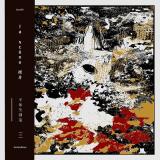
Futaishitsu Souzou is the first vinyl album released by Japanese duo la scène 裸身, a duo of Saya on vocals and bass, and Eiji on guitar. They’ve been an understated but deeply impressive presence on the Japanese underground for the best part of a decade now, having self-released a debut album, Ten No Sekido, in 2018, which saw them co-producing by Atsuo of Boris, who also worked with them on the following year’s Corridor EP. The mystery and magic of their songs, which vibrate in a curious space between psychedelic rock, acid folk and slowcore, is at its strongest on Futaishitsu Souzou.
la scène 裸身 have long been interested in art that’s stripped back to its simplest, most elemental form, much as their name represents the Japanese word ‘rashin’, which means naked body. There is something unadorned about the three songs on Futaishitsu Souzou; Saya’s becalmed, unhurried vocal delivery reflects the gentle intensity of the simple, gem-like chord changes strewn through songs like “Futaishitsu Souzou” itself, and the bittersweet, folkish lament of “Reiyou”, a song inspired by the loss of the band’s friend, Gazelle.
Futaishitsu Souzou is steeped in melancholy, but it is not resigned to this emotional state; there are threads of rebirth and transcendence woven through the album’s three lovely, slowly enveloping, and deeply moving songs. Often, you can hear that transcendence in the soaring, sky- burning guitar playing that cleaves these songs in twain, from guest guitarist Hiroshi Kurosawa (of Asylum). At times, the music here recalls the drift-like psych-rock of the Paisley Underground; elsewhere, it explodes with vibrant intensity, swarming with noise and feedback, that runs alongside similarly delirious examples from the Japanese underground.
And yet, la scène 裸身 is entirely its own thing, a unique, singular vibration, a oneiric manifestation of hermetic visionary art.
erscheint voraussichtlich am 18.09.2026

Evidence has traveled the world, released a string of acclaimed albums with Dilated Peoples and as a solo artist, has become a respected producer crafting beats for Kanye West, Beastie Boys and Linkin Park among others. For his part, Alchemist has become one of rap's triple threats, producing for Snoop Dogg, Eminem, Nas and many more. Alchemist is also an accomplished rapper and Eminem's touring DJ. While they were building their respective careers, Evidence and Alchemist had worked together regularly collaborating on Dilated Peoples albums, Evidence's solo material and Alchemist's releases. As the pair continued collaborating, they began labeling themselves as Step Brothers when they would record, as noted on Evidence's The Layover EP. The pair then decided it was time to record an album together.Now as the Step Brothers, Evidence and Alchemist deliver another stellar musical achievement, Lord Steppington, which delivers lyric-driven, punchline-heavy and intricate rhymes. Lord Steppington boasts the best of the duo peppered with frequent collaborators and friends, including Action Bronson, Roc Marciano, Domo Genesis, The Whooliganz, Styles P, Fashawn, Rakaa, Blu and Oh No.
Der Artikel ist noch nicht erschienen. Du kannst den Artikel jetzt vorbestellen, dieser ist nach Wareneingang für dich versandbereit.
