Cerca:raw tunes

Generi
Tutto
Lee Holman - Urban Warfare

URBAN WARFARE

Music has always been a common means to deal with global events – so does this new release on Snork Enterprises by Lee Holman. Having actually performed in Ukraine shortly before the war, Lee Holman clearly has chosen the title of his new release by purpose. “Urban Warfare” dedicates for titles, all of them bearing names with military connotation, to the recent events in Ukraine and beyond.
The musical means of his choice to process the happenings are raw, straight forward electronic sounds echoing from the underground. His combination of beeping, roaring and crooked tunes creates a dystopian atmosphere in each track – yet, each in its unique way. This makes the release a diverse collection of four tracks of unadorned urban club sounds dashing through present day history.

LEE HOLMAN

An uncompromising underground ethos, Lee Holman has garnered support from a host of Techno's brightest names.
Performing in clubs since the late nineties, he has travelled throughout Europe, North America, South America, Asia and everywhere inbetween, compounding a reputation for his unique vision on Techno. Playing a fusion of deep, raw and energetic electronics, his sound creates a myriad of tension, constructing the perfect combination of musicality for club appearances.
Performances both as a live act and as a DJ have unlocked opportunities to share hallowed ground with Techno’s elite, appearing in prestigious underground venues such as TRESOR Berlin, Corsica Studios London, 8Bahn Arnhem, Sub-Scape Antwerp, Move Medellin, Tag Chengdu, Arkham Shanghai, Nechto events Kyiv + many more.
Production has earned him international recognition, leaving his mark at the forefront, building a reputation for consistency, originality and delivering his dynamic sound on both cutting edge and classic Techno Labels. Generating consistent support, he has remixed for high profile artists such as Aubrey and Gary Beck and has himself been remixed by leading Techno mainstays ranging from Orlando Voorn to Mike Dehnert.
Founding the Kawl Imprint, the label’s aim was to provide diversity in Techno and this formula was immediately picked up on and amounted to rave reviews and impressive charts and plays by leading connoisseurs of the underground.
This year, his releases have been frequent and in demand, with his production skills confirmed for Knotweed Records, Science Cult, Shaded Music, Nechto and more, adding to an already excellent discography.
With an ever expanding release schedule, combining remixes and a new label project called Demarcation, Lee Holman promises to be unrelenting in his definition of essential timeless Techno.

non in magazzino

Ordina ora e ordineremo l'articolo per te presso il nostro fornitore.

10,04

Last In: 19 months ago
baze.djunkiii & THE D3VI7 - present DIURNAL TIDES: First Wave

Tape

Welcome to Carsharing Tapes. Welcome to the future.

With "DIURNAL TIDES: First Wave" we're proud to present not only the first release of our new imprint for classic electronic music mixtape culture but also the first ever official gathering of two long standing figures which both have been relentlessly and continuously contributing to the German underground scene for more than two decades now.

And these two are: baze.djunkiii and THE D3VI7.

baze.djunkiii, Hamburg-born and based, officially entered the electronic music scene as a DJ back in 1997 from an angle of being an enthusiastic raver, launched his very own label Intrauterin Recordings in 1999 and - apart from becoming an 24/7 networker, knowledge hub, music blogger etc. - evolved into one of the most versatile underground DJs and purveyor of original DJ culture around whose journey on the decks has taken him all over Germany as well as to Greece and the United States and to countless hours of air time on a plethora of underground radio stations as well.

THE D3VI7, on the other hand, remains an elusive figure. Deeply rooted in electronic music production and the hell'ish jungle of circuit board wiring as well as DAW madness THE D3VI7 is a moniker created by one of the most active, yet probably most underrated figures on the release circuit, a nom de guerre which serves the sole purpose of being able to operate anonymously without any confirmation bias being attached to other musical guises which might, or might have not, been used previously and in earlier stages of a long lasting involvement in music. And btw - this is the first time ever THE D3VI7 agreed to provide an official DJ mix for a mixtape release.

With baze.djunkiii's mix opening the roughly hour long journey of "DIURNAL TIDES: First Wave" on the A-side we're getting a prime example of what original DJ culture is all about as he's taking us on a fascinating journey from deepest underground Electro to screaming, spiralling Acid madness and beyond, digging up most underground vinyl cuts and making proper use of his extensive collection of rare 7" releases - a format that has been criminally overlooked by many DJs but provides a treasure trove of goodness as this mix easily proves.

Turning the tape THE D3VI7 does what THE D3VI7 does best on the flip: Being a force. A dark one. Forging a pounding, most relentless stream of hammering Techno tunes to take out unsuspecting punters on heaving dancefloors one by one THE D3VI7 provides a high octane selection of peak time excess that either thrills or kills - an ode to the power of raw and unpolished Techno madness in its purest form. A power that cannot be contested. Ever.

non in magazzino

Ordina ora e ordineremo l'articolo per te presso il nostro fornitore.

14,24

Last In: 3 years ago
Sam Sweeney - Escape That

Sam Sweeney

Escape That

12inchHUD032LP
Hudson Records
11.11.2022
disponibile anche

Red Vinyl[20,97 €]


Renowned fiddle player and tireless musical adventurer Sam Sweeney
returns with the passionate, raw and expressive new album 'Escape That'
The record ties together the threads and footpaths of all of Sam's musical loves;
an honest and fearless expression of himself, combining pop hooks and
aesthetics with his pioneering work in the world of traditional dance tunes.
'Escape That' simultaneously presses the reset button on what a folk record
should sound like while marking a major stride forward for Sam into the world of
composition. Written without ever touching the violin, Sam retreated to his attic
during the lockdowns of 2020-21 and created over twenty pieces of
music. Composed almost entirely on synths and guitars, with snapshots of loved
ones and memories as inspiration in a time of isolation, he devised a way of
writing where he'd lay down a chord sequence and then record an improvisation
over the top. On listening back, anything that could be considered a hook would
be kept, everything else was deleted and tracks developed by linking the hooks
together to create dance tunes. Sam then translated the melodies back to the
fiddle, an instrument of which he is considered a modern master. Nominated four
times, and winner in 2015, of Musician Of The Year at the BBC Radio 2 Folk
Awards, Sam has been at the forefront of the revival in English music for the last
fifteen years.
He is a veteran of the mighty Bellowhead, former and inaugural Artistic Director of
the National Youth Folk Ensemble, a founder member of ground- breaking trio
Leveret as well as a passionate and experienced educator. He has collaborated,
recorded and performed with The Full English, Eliza Carthy, Martin Carthy, Jon
Boden, Fay Hield and Emily Portman as well as creating his own theatre
production Made In The Great War.

pre-ordina ora11.11.2022

dovrebbe essere pubblicato su 11.11.2022

20,97

Last In: 2026 years ago
Sam Sweeney - Escape That

Sam Sweeney

Escape That

12inchHUD032LP
Hudson Records
11.11.2022
disponibile anche

Black Vinyl[20,97 €]


Renowned fiddle player and tireless musical adventurer Sam Sweeney
returns with the passionate, raw and expressive new album 'Escape That'
The record ties together the threads and footpaths of all of Sam's musical loves;
an honest and fearless expression of himself, combining pop hooks and
aesthetics with his pioneering work in the world of traditional dance tunes.
'Escape That' simultaneously presses the reset button on what a folk record
should sound like while marking a major stride forward for Sam into the world of
composition. Written without ever touching the violin, Sam retreated to his attic
during the lockdowns of 2020-21 and created over twenty pieces of
music. Composed almost entirely on synths and guitars, with snapshots of loved
ones and memories as inspiration in a time of isolation, he devised a way of
writing where he'd lay down a chord sequence and then record an improvisation
over the top. On listening back, anything that could be considered a hook would
be kept, everything else was deleted and tracks developed by linking the hooks
together to create dance tunes. Sam then translated the melodies back to the
fiddle, an instrument of which he is considered a modern master. Nominated four
times, and winner in 2015, of Musician Of The Year at the BBC Radio 2 Folk
Awards, Sam has been at the forefront of the revival in English music for the last
fifteen years.
He is a veteran of the mighty Bellowhead, former and inaugural Artistic Director of
the National Youth Folk Ensemble, a founder member of ground- breaking trio
Leveret as well as a passionate and experienced educator. He has collaborated,
recorded and performed with The Full English, Eliza Carthy, Martin Carthy, Jon
Boden, Fay Hield and Emily Portman as well as creating his own theatre
production Made In The Great War.

pre-ordina ora11.11.2022

dovrebbe essere pubblicato su 11.11.2022

20,97

Last In: 2026 years ago
Lee Tracy & Isaac Manning - Is it What You Want

As the sun sets on a quaint East Nashville house, a young man bares a piece of his soul. Facing the camera, sporting a silky suit jacket/shirt/slacks/fingerless gloves ensemble that announces "singer" before he's even opened his mouth, Lee Tracy Johnson settles onto his stage, the front yard. He sways to the dirge-like drum machine pulse of a synth-soaked slow jam, extends his arms as if gaining his balance, and croons in affecting, fragile earnest, "I need your love… oh baby…"

Dogs in the yard next door begin barking. A mysterious cardboard robot figure, beamed in from galaxies unknown and affixed to a tree, is less vocal. Lee doesn't acknowledge either's presence. He's busy feeling it, arms and hands gesticulating. His voice rises in falsetto over the now-quiet dogs, over the ambient noise from the street that seeps into the handheld camcorder's microphone, over the recording of his own voice played back from a boombox off-camera. After six minutes the single, continuous shot ends. In this intimate creative universe there are no re-takes. There are many more music videos to shoot, and as Lee later puts it, "The first time you do it is actually the best. Because you can never get that again. You expressing yourself from within."

"I Need Your Love" dates from a lost heyday. From some time in the '80s or early '90s, when Lee Tracy (as he was known in performance) and his music partner/producer/manager Isaac Manning committed hours upon hours of their sonic and visual ideas to tape. Embracing drum machines and synthesizers – electronics that made their personal futurism palpable – they recorded exclusively at home, live in a room into a simple cassette deck. Soul, funk, electro and new wave informed their songs, yet Lee and Isaac eschewed the confinement of conventional categories and genres, preferring to let experimentation guide them.

"Anytime somebody put out a new record they had the same instruments or the same sound," explains Isaac. "So I basically wanted to find something that's really gonna stand out away from all of the rest of 'em." Their ethos meant that every idea they came up with was at least worth trying: echoed out half-rapped exhortations over frantic techno-style beats, gospel synth soul, modal electro-funk, oddball pop reinterpretations, emo AOR balladry, nods to Prince and the Fat Boys, or arrangements that might collapse mid-song into a mess of arcade game-ish blips before rallying to reach the finish line. All of it conjoined by consistent tape hiss, and most vitally, Lee's chameleonic voice, which managed to wildly shape shift and still evoke something sincere – whether toggling between falsetto and tenor exalting Jesus's return, or punctuating a melismatic romantic adlib with a succinct, "We all know how it feels to be alone."

"People think we went to a studio," says Isaac derisively. "We never went to no studio. We didn't have the money to go to no studio! We did this stuff at home. I shot videos in my front yard with whatever we could to get things together." Sometimes Isaac would just put on an instrumental record, be it "Planet Rock" or "Don't Cry For Me Argentina" (from Evita), press "record," and let Lee improvise over it, yielding peculiar love songs, would-be patriotic anthems, or Elvis Presley or Marilyn Monroe tributes. Technical limitations and a lack of professional polish never dissuaded them. They believed they were onto something.

"That struggle," Isaac says, "made that sound sound good to me."

In the parlance of modern music criticism Lee and Isaac's dizzying DIY efforts would inevitably be described as "outsider." But "outsider" carries the burden of untold additional layers of meaning if you're Black and from the South, creating on a budget, and trying to get someone, anyone within the country music capital of the world to take your vision seriously. "What category should we put it in?" Isaac asks rhetorically. "I don't know. All I know is feeling. I ain't gonna name it nothing. It's music. If it grabs your soul and touch your heart that's what it basically is supposed to do."

=

Born in 1963, the baby boy of nine siblings, Lee Tracy spent his earliest years living amidst the shotgun houses on Nashville's south side. "We was poor, man!" he says, recalling the outhouse his family used for a bathroom and the blocks of ice they kept in the kitchen to chill perishables. "But I actually don't think I really realized I was in poverty until I got grown and started thinking about it." Lee's mom worked at the Holiday Inn; his dad did whatever he had to do, from selling fruit from a horse drawn cart to bootlegging. "We didn't have much," Lee continues, "but my mother and my father got us the things we needed, the clothes on our back." By the end of the decade with the city's urban renewal programs razing entire neighborhoods to accommodate construction of the Interstate, the family moved to Edgehill Projects. Lee remembers music and art as a constant source of inspiration for he and his brothers and sisters – especially after seeing the Jackson 5 perform on Ed Sullivan. "As a small child I just knew that was what I wanted to do."

His older brother Don began musically mentoring him, introducing Lee to a variety of instruments and sounds. "He would never play one particular type of music, like R&B," says Lee. "I was surrounded by jazz, hard rock and roll, easy listening, gospel, reggae, country music; I mean I was a sponge absorbing all of that." Lee taught himself to play drums by beating on cardboard boxes, gaining a rep around the way for his timekeeping, and his singing voice. Emulating his favorites, Earth Wind & Fire and Cameo, he formed groups with other kids with era-evocative band names like Concept and TNT Connection, and emerged as the leader of disciplined rehearsals. "I made them practice," says Lee. "We practiced and practiced and practiced. Because I wanted that perfection." By high school the most accomplished of these bands would take top prize in a prominent local talent show. It was a big moment for Lee, and he felt ready to take things to the next level. But his band-mates had other ideas.

"I don't know what happened," he says, still miffed at the memory. "It must have blew they mind after we won and people started showing notice, because it's like everybody quit! I was like, where the hell did everybody go?" Lee had always made a point of interrogating prospective musicians about their intentions before joining his groups: were they really serious or just looking for a way to pick up girls? Now he understood even more the importance of finding a collaborator just as committed to the music as he was.

=

Isaac Manning had spent much of his life immersed in music and the arts – singing in the church choir with his family on Nashville's north side, writing, painting, dancing, and working various gigs within the entertainment industry. After serving in the armed forces, in the early '70s he ran The Teenage Place, a music and performance venue that catered to the local youth. But he was forced out of town when word of one of his recreational routines created a stir beyond the safe haven of his bohemian circles.

"I was growing marijuana," Isaac explains. "It wasn't no business, I was smoking it myself… I would put marijuana in scrambled eggs, cornbread and stuff." His weed use originated as a form of self-medication to combat severe tooth pain. But when he began sharing it with some of the other young people he hung out with, some of who just so happened to be the kids of Nashville politicians, the cops came calling. "When I got busted," he remembers, "they were talking about how they were gonna get rid of me because they didn't want me saying nothing about they children because of the politics and stuff. So I got my family, took two raggedy cars, and left Nashville and went to Vegas."

Out in the desert, Isaac happened to meet Chubby Checker of "The Twist" fame while the singer was gigging at The Flamingo. Impressed by Isaac's zeal, Checker invited him to go on the road with him as his tour manager/roadie/valet. The experience gave Isaac a window into a part of the entertainment world he'd never encountered – a glimpse of what a true pop act's audience looked like. "Chubby Checker, none of his shows were played for Black folks," he remembers. "All his gigs were done at high-class white people areas." Returning home after a few years with Chubby, Isaac was properly motivated to make it in Music City. He began writing songs and scouting around Nashville for local talent anywhere he could find it with an expressed goal: "Find someone who can deliver your songs the way you want 'em delivered and make people feel what you want them to feel."

One day while walking through Edgehill Projects Isaac heard someone playing the drums in a way that made him stop and take notice. "The music was so tight, just the drums made me feel like, oh I'm-a find this person," he recalls. "So I circled through the projects until I found who it was.

"That's how I met him – Lee Tracy. When I found him and he started singing and stuff, I said, ohhh, this is somebody different."

=

Theirs was a true complementary partnership: young Lee possessed the raw talent, the older Isaac the belief. "He's really the only one besides my brother and my family that really seen the potential in me," says Lee. "He made me see that I could do it."

Isaac long being a night owl, his house also made for a fertile collaborative environment – a space where there always seemed to be a new piece of his visual art on display: paintings, illustrations, and dolls and figures (including an enigmatic cardboard robot). Lee and Issac would hang out together and talk, listen to music, conjure ideas, and smoke the herb Isaac had resumed growing in his yard. "It got to where I could trust him, he could trust me," Isaac says of their bond. They also worked together for hours on drawings, spreading larges rolls of paper on the walls and sketching faces with abstract patterns and imagery: alien-like beings, tri-horned horse heads, inverted Janus-like characters where one visage blurred into the other.

Soon it became apparent that they didn't need other collaborators; self-sufficiency was the natural way forward. At Isaac's behest Lee, already fed up with dealing with band musicians, began playing around with a poly-sonic Yamaha keyboard at the local music store. "It had everything on it – trumpet, bass, drums, organ," remembers Lee. "And that's when I started recording my own stuff."

The technology afforded Lee the flexibility and independence he craved, setting him on a path other bedroom musicians and producers around the world were simultaneously following through the '80s into the early '90s. Saving up money from day jobs, he eventually supplemented the Yamaha Isaac had gotten him with Roland and Casio drum machines and a Moog. Lee was living in an apartment in Hillside at that point caring for his dad, who'd been partially paralyzed since early in life. In the evenings up in his second floor room, the music put him in a zone where he could tune out everything and lose himself in his ideas.

"Oh I loved it," he recalls. "I would really experiment with the instruments and use a lot of different sound effects. I was looking for something nobody else had. I wanted something totally different. And once I found the sound I was looking for, I would just smoke me a good joint and just let it go, hit the record button." More potent a creative stimulant than even Isaac's weed was the holistic flow and spontaneity of recording. Between sessions at Isaac's place and Lee's apartment, their volume of output quickly ballooned.

"We was always recording," says Lee. "That's why we have so much music. Even when I went to Isaac's and we start creating, I get home, my mind is racing, I gotta start creating, creating, creating. I remember there were times when I took a 90-minute tape from front to back and just filled it up."

"We never practiced," says Isaac. "See, that was just so odd about the whole thing. I could relate to him, and tell him about the songs I had ideas for and everything and stuff. And then he would bring it back or whatever, and we'd get together and put it down." Once the taskmaster hell bent on rehearsing, Lee had flipped a full 180. Perfection was no longer an aspiration, but the enemy of inspiration.

"I seen where practicing and practicing got me," says Lee. "A lot of musicians you get to playing and they gotta stop, they have to analyze the music. But while you analyzing you losing a lot of the greatness of what you creating. Stop analyzing what you play, just play! And it'll all take shape."

=

"I hope you understood the beginning of the record because this was invented from a dream I had today… (You tell me, I'll tell you, we'll figure it out together)" – Lee Tracy and Isaac Manning, "Hope You Understand"

Lee lets loose a maniacal cackle when he acknowledges that the material that he and Isaac recorded was by anyone's estimation pretty out there. It's the same laugh that commences "Hope You Understand" – a chaotic transmission that encapsulates the duality at the heart of their music: a stated desire to reach people and a compulsion to go as leftfield as they saw fit.

"We just did it," says Lee. "We cut the music on and cut loose. I don't sit around and write. I do it by listening, get a feeling, play the music, and the lyrics and stuff just come out of me."

The approach proved adaptable to interpreting other artists' material. While recording a cover of Whitney Houston's pop ballad "Saving All My Love For You," Lee played Whitney's version in his headphones as he laid down his own vocals – partially following the lyrics, partially using them as a departure point. The end result is barely recognizable compared with the original, Lee and Isaac having switched up the time signature and reinvented the melody along the way towards morphing a slick mainstream radio standard into something that sounds solely their own.

"I really used that song to get me started," says Lee. "Then I said, well I need something else, something is missing. Something just came over me. That's when I came up with 'Is It What You Want.'"

The song would become the centerpiece of Lee and Isaac's repertoire. Pushed along by a percolating metronomic Rhythm King style beat somewhere between a military march and a samba, "Is It What You Want" finds Lee pleading the sincerity of his commitment to a potential love interest embellished by vocal tics and hiccups subtlely reminiscent of his childhood hero MJ. Absent chord changes, only synth riffs gliding in and out like apparitions, the song achieves a lingering lo-fi power that leaves you feeling like it's still playing, somewhere, even after the fade out.

"I don't know, it's like a real spiritual song," Lee reflects. "But it's not just spiritual. To me the more I listen to it it's like about everything that you do in your everyday life, period. Is it what you want? Do you want a car or you don't want a car? Do you want Jesus or do you want the Devil? It's basically asking you the question. Can't nobody answer the question but you yourself."

In 1989 Lee won a lawsuit stemming from injuries sustained from a fight he'd gotten into. He took part of the settlement money and with Isaac pressed up "Saving All My Love For You" b/w "Is It What You Want" as a 45 single. Isaac christened the label One Chance Records. "Because that's all we wanted," he says with a laugh, "one chance."

Isaac sent the record out to radio stations and major labels, hoping for it to make enough noise to get picked up nationally. But the response he and Lee were hoping for never materialized. According to Isaac the closest the single got to getting played on the radio is when a disk jock from a local station made a highly unusual announcement on air: "The dude said on the radio, 107.5 – 'We are not gonna play 'Is It What You Want.' We cracked up! Wow, that's deep.

"It was a whole racist thing that was going on," he reflects. "So we just looked over and kept on going. That was it. That was about the way it goes… If you were Black and you were living in Nashville and stuff, that's the way you got treated." Isaac already knew as much from all the times he'd brought he and Lee's tapes (even their cache of country music tunes) over to Music Row to try to drum up interest to no avail.

"Isaac, he really worked his ass off," says Lee. "He probably been to every record place down on Music Row." Nashville's famed recording and music business corridor wasn't but a few blocks from where Lee grew up. Close enough, he remembers, for him to ride his bike along its back alleys and stumble upon the occasional random treasure, like a discarded box of harmonicas. Getting in through the front door, however, still felt a world away.

"I just don't think at the time our music fell into a category for them," he concedes. "It was before its time."

=

Lee stopped making music some time in the latter part of the '90s, around the time his mom passed away and life became increasingly tough to manage. "When my mother died I had a nervous breakdown," he says, "So I shut down for a long time. I was in such a sadness frame of mind. That's why nobody seen me. I had just disappeared off the map." He fell out of touch with Isaac, and in an indication of just how bad things had gotten for him, lost track of all the recordings they'd made together. Music became a distant memory.

Fortunately, Isaac kept the faith. In a self-published collection of his poetry – paeans to some of his favorite entertainment and public figures entitled Friends and Dick Clark – he'd written that he believed "music has a life of its own." But his prescience and presence of mind were truly manifested in the fact that he kept an archive of he and Lee's work. As perfectly imperfect as "Is It What You Want" now sounds in a post-Personal Space world, Lee and Isaac's lone official release was in fact just a taste. The bulk of the Is It What You Want album is culled from the pair's essentially unheard home recordings – complete songs, half-realized experiments, Isaac's blue monologues and pronouncements et al – compiled, mixed and programmed in the loose and impulsive creative spirit of their regular get-togethers from decades ago. The rest of us, it seems, may have finally caught up to them.

On the prospect of at long last reaching a wider audience, Isaac says simply, "I been trying for a long time, it feels good." Ever the survivor, he adds, "The only way I know how to make it to the top is to keep climbing. If one leg break on the ladder, hey, you gotta fix it and keep on going… That's where I be at. I'll kill death to make it out there."

For Lee it all feels akin to a personal resurrection: "It's like I was in a tomb and the tomb was opened and I'm back… Man, it feels so great. I feel like I'm gonna jump out of my skin." Success at this stage of his life, he realizes, probably means something different than what it did back when he was singing and dancing in Isaac's front yard. "What I really mean by 'making it,'" he explains isn't just the music being heard but, "the story being told."

Occasionally Lee will pull up "Is It What You Want" on YouTube on his phone, put on his headphones, and listen. He remembers the first time he heard his recorded voice. How surreal it was, how he thought to himself, "Is that really me?" What would he say to that younger version of himself now?

"I would probably tell myself, hang in there, don't give up. Keep striving for the goal. And everything will work out."

Despite what's printed on the record label, sometimes you do get more than one chance.

non in magazzino

Ordina ora e ordineremo l'articolo per te presso il nostro fornitore.

11,72

Last In: 3 years ago
Web Web - Oracle LP

Web Web

Oracle LP

12inchCPT499-1
Compost Records
07.10.2022

The first album of Web Web is very uncut, raw, live and direct. Oracle is the first output of a German Supergroup. Check the musician credits below and you'll get the score. The initial idea was to record a spiritual-jazz type of album, with all its imperfection as far as intonation, sound, influences of tunes... just like from their big jazz-heroes in the 70ies (e.g. Strata East, Black Jazz).

Web Web's idea was to record a jazz jam session while to found and proclaim being a fictive band, a formation, which did not exist, while telling people, it would be a secret jam session recording of the Seventies. The prompt problem they were facing: Oh, we never would be able to play concerts, doing interviews, or placing photos on sleeves or post likeness images online. So they decided to reveal their real identities:

Web Web are: Roberto Di Gioia (Piano, Synth, Percussion), Tony Lakatos (Tenor- and Sopranosaxophone), Christian von Kaphengst (Upright Bass) and Peter Gall (Drums).

Roberto Di Gioia (Mastermind of Web Web): - The four of us set up very close in a big room, so we could hear and feel each other the best way. The music became more intensive, improvisations became more dynamic and it was impulsive .

The album Oracle' was recorded on one day, only first takes were used!

We want to keep the burning spirit and the loose vibe we had during the recording session. And we play concerts the wild and free way we recorded this album. Web Web will be on tour 2018, but playing a few concerts in 2017.
Furthermore, one main decision to blab their real identities was: The second Web Web album is recorded in June (with guests like the famous and unique Gembri-player and multiinstrumentalist and singer Majid Bekkas from Morocco).
Both albums were engineered, recorded and mixed by Jan Krause (Beanfield, Poets Of Rhythm).

Roberto Di Gioia: - Tony was tuning his Soprano too high, and his (overdubbed) tenor way too flat!
My synthesizers were somewhere in between...HA! We exactly had the sound we had in our minds, we had it exactly there were we wanted it: a bit of Sun Ra here, a bit of Horace Tapscott there. On some tunes Tony's soprano just sounds like a trumpet, since due to his weird tuning the soprano develops different frequencies in relation to other instruments.

Oracle' is the first live jazz release on Compost. Produced by Roberto Di Gioia and Michael Reinboth.

Roberto Di Gioia has been working with numerous jazz-legends, such as Woody Shaw, Art Farmer, James Moody, Johnny Griffin, Charlie Rouse, Clifford Jordan, Clark Terry, Roy Ayers, Gregory Porter and many more.

From 1990 to 2008: member Klaus Doldingers Passport. As a pianist he made recordings with Udo Lindenberg (MTV-Unplugged, 2011), Charlie Watts ( Music Of The Rolling Stones , 2005), Console ( Reset The Preset , 2003), The Notwist ( Shrink 1998, Neon Golden , 2002). Since 2007 he is working together with Samon Kawamura and Max Herre as KAHEDI: Max Herre ( Hallo Welt , 2012), Joy Denalane ( Gleisdreieck , 2017), u.v.m...His own group MARSMOBIL (produced by Peter Kruder) will release his fourth studioalbum in winter 2017.

Tony Lakatos originates from the world famous Lakatos-familiy from Budapest, Hungary. His father was a famous violinist, as well as his younger brother Roby. He started playing saxophone when he was 15 years old. Tony studied at the Bela-Bartok-Conservatory in Budapest, and made his degree in 1979. Since then he played on over 350 jazz albums (!!), to name a few: Al Foster, Kirk Lightsey, Randy Brecker, George Mraz, David Witham, Terri Lyne Carrington, Anthony Jackson. Tony was a member of Jasper Van´t Hofs PILI PILI. Since 1993 he is working with the HR Radio-Bigband as a soloist.

Christian von Kaphengst learned the piano at the Peter-Cornelius-Conservatory in Mainz when he was 6 years old. From 1988 to 1995 he studied upright-bass at the - Musikhochschule in Cologne. He was touring with his own Jazzquartett - Cafe du Sport to Pakistan, India, Turkey and West-Africa. Since 1999 he regularly plays with Patti Austin and The New York Voices in Europe. Von Kaphengst played with the greatest musicians, such as Randy Brecker, Nat Adderley, Roy Hargrove, Joe Sample, Charlie Mariano, Katja Ebstein, Xavier Naidoo, Roachford, Yvonne Catterfeld.

Peter Gall won some important German awards already when he was a youngster, like - Jugend Jazzt . He was touring with the famous - Bundesjazzorchester conducted by German jazz legend Peter Herbholzheimer. He studied at the Berlin University Of Fine Arts and at the Jazz Institute Berlin with John Hollenbeck. Gall made a masterclass at the Manhattan School Of Music with John Riley. He has been working with Seamus Blake, Ben Street, Gabriel Rios, Jasmin Tabatabai, Thomas Quasthoff, Peter Fessler.

non in magazzino

Ordina ora e ordineremo l'articolo per te presso il nostro fornitore.

15,76

Last In: 8 years ago
TIGRIS - UTRY

Tigris

UTRY

12inchLPRAW0088
Raw Tapes
30.09.2022

For nearly 10 years, there's been one address in Tel Aviv where people
know they can find pure, fiery musical energy: TIGRIS - And with UTRY,
we've collected all the band's tightest grooves and most exciting
melodies on one career-spanning compilation
It's a Raw Tapes celebration; consider it our gift to you - nine party- starting
polyrhythmic tunes that melt down Senegalese percussion, East African tezeta
jazz, swirling psychedelic keys and surf guitar into a potent brew. Keyboardist
Roei Hermon, percussionist Oded Aloni, bassist Amir Sadot, guitarist Ilan Smilan
and drummer Itamar Katzir first assembled their musical vision in an Ethiopian
restaurant in Tel Aviv, and they've been diving head-first into electrifying grooves
ever since. On "UTRY," you'll vibe with their finest cuts, pulled from TIGRIS's three
LPs. It's your own tailor-made house party playlist. Just don't be surprised when
the party spins out of control.

pre-ordina ora30.09.2022

dovrebbe essere pubblicato su 30.09.2022

29,83

Last In: 2026 years ago
Lee Tracy & Isaac Manning - Is it What You Want LP

As the sun sets on a quaint East Nashville house, a young man bares a piece of his soul. Facing the camera, sporting a silky suit jacket/shirt/slacks/fingerless gloves ensemble that announces "singer" before he's even opened his mouth, Lee Tracy Johnson settles onto his stage, the front yard. He sways to the dirge-like drum machine pulse of a synth-soaked slow jam, extends his arms as if gaining his balance, and croons in affecting, fragile earnest, "I need your love… oh baby…"

Dogs in the yard next door begin barking. A mysterious cardboard robot figure, beamed in from galaxies unknown and affixed to a tree, is less vocal. Lee doesn't acknowledge either's presence. He's busy feeling it, arms and hands gesticulating. His voice rises in falsetto over the now-quiet dogs, over the ambient noise from the street that seeps into the handheld camcorder's microphone, over the recording of his own voice played back from a boombox off-camera. After six minutes the single, continuous shot ends. In this intimate creative universe there are no re-takes. There are many more music videos to shoot, and as Lee later puts it, "The first time you do it is actually the best. Because you can never get that again. You expressing yourself from within."

"I Need Your Love" dates from a lost heyday. From some time in the '80s or early '90s, when Lee Tracy (as he was known in performance) and his music partner/producer/manager Isaac Manning committed hours upon hours of their sonic and visual ideas to tape. Embracing drum machines and synthesizers – electronics that made their personal futurism palpable – they recorded exclusively at home, live in a room into a simple cassette deck. Soul, funk, electro and new wave informed their songs, yet Lee and Isaac eschewed the confinement of conventional categories and genres, preferring to let experimentation guide them.

"Anytime somebody put out a new record they had the same instruments or the same sound," explains Isaac. "So I basically wanted to find something that's really gonna stand out away from all of the rest of 'em." Their ethos meant that every idea they came up with was at least worth trying: echoed out half-rapped exhortations over frantic techno-style beats, gospel synth soul, modal electro-funk, oddball pop reinterpretations, emo AOR balladry, nods to Prince and the Fat Boys, or arrangements that might collapse mid-song into a mess of arcade game-ish blips before rallying to reach the finish line. All of it conjoined by consistent tape hiss, and most vitally, Lee's chameleonic voice, which managed to wildly shape shift and still evoke something sincere – whether toggling between falsetto and tenor exalting Jesus's return, or punctuating a melismatic romantic adlib with a succinct, "We all know how it feels to be alone."

"People think we went to a studio," says Isaac derisively. "We never went to no studio. We didn't have the money to go to no studio! We did this stuff at home. I shot videos in my front yard with whatever we could to get things together." Sometimes Isaac would just put on an instrumental record, be it "Planet Rock" or "Don't Cry For Me Argentina" (from Evita), press "record," and let Lee improvise over it, yielding peculiar love songs, would-be patriotic anthems, or Elvis Presley or Marilyn Monroe tributes. Technical limitations and a lack of professional polish never dissuaded them. They believed they were onto something.

"That struggle," Isaac says, "made that sound sound good to me."

In the parlance of modern music criticism Lee and Isaac's dizzying DIY efforts would inevitably be described as "outsider." But "outsider" carries the burden of untold additional layers of meaning if you're Black and from the South, creating on a budget, and trying to get someone, anyone within the country music capital of the world to take your vision seriously. "What category should we put it in?" Isaac asks rhetorically. "I don't know. All I know is feeling. I ain't gonna name it nothing. It's music. If it grabs your soul and touch your heart that's what it basically is supposed to do."

=

Born in 1963, the baby boy of nine siblings, Lee Tracy spent his earliest years living amidst the shotgun houses on Nashville's south side. "We was poor, man!" he says, recalling the outhouse his family used for a bathroom and the blocks of ice they kept in the kitchen to chill perishables. "But I actually don't think I really realized I was in poverty until I got grown and started thinking about it." Lee's mom worked at the Holiday Inn; his dad did whatever he had to do, from selling fruit from a horse drawn cart to bootlegging. "We didn't have much," Lee continues, "but my mother and my father got us the things we needed, the clothes on our back." By the end of the decade with the city's urban renewal programs razing entire neighborhoods to accommodate construction of the Interstate, the family moved to Edgehill Projects. Lee remembers music and art as a constant source of inspiration for he and his brothers and sisters – especially after seeing the Jackson 5 perform on Ed Sullivan. "As a small child I just knew that was what I wanted to do."

His older brother Don began musically mentoring him, introducing Lee to a variety of instruments and sounds. "He would never play one particular type of music, like R&B," says Lee. "I was surrounded by jazz, hard rock and roll, easy listening, gospel, reggae, country music; I mean I was a sponge absorbing all of that." Lee taught himself to play drums by beating on cardboard boxes, gaining a rep around the way for his timekeeping, and his singing voice. Emulating his favorites, Earth Wind & Fire and Cameo, he formed groups with other kids with era-evocative band names like Concept and TNT Connection, and emerged as the leader of disciplined rehearsals. "I made them practice," says Lee. "We practiced and practiced and practiced. Because I wanted that perfection." By high school the most accomplished of these bands would take top prize in a prominent local talent show. It was a big moment for Lee, and he felt ready to take things to the next level. But his band-mates had other ideas.

"I don't know what happened," he says, still miffed at the memory. "It must have blew they mind after we won and people started showing notice, because it's like everybody quit! I was like, where the hell did everybody go?" Lee had always made a point of interrogating prospective musicians about their intentions before joining his groups: were they really serious or just looking for a way to pick up girls? Now he understood even more the importance of finding a collaborator just as committed to the music as he was.

=

Isaac Manning had spent much of his life immersed in music and the arts – singing in the church choir with his family on Nashville's north side, writing, painting, dancing, and working various gigs within the entertainment industry. After serving in the armed forces, in the early '70s he ran The Teenage Place, a music and performance venue that catered to the local youth. But he was forced out of town when word of one of his recreational routines created a stir beyond the safe haven of his bohemian circles.

"I was growing marijuana," Isaac explains. "It wasn't no business, I was smoking it myself… I would put marijuana in scrambled eggs, cornbread and stuff." His weed use originated as a form of self-medication to combat severe tooth pain. But when he began sharing it with some of the other young people he hung out with, some of who just so happened to be the kids of Nashville politicians, the cops came calling. "When I got busted," he remembers, "they were talking about how they were gonna get rid of me because they didn't want me saying nothing about they children because of the politics and stuff. So I got my family, took two raggedy cars, and left Nashville and went to Vegas."

Out in the desert, Isaac happened to meet Chubby Checker of "The Twist" fame while the singer was gigging at The Flamingo. Impressed by Isaac's zeal, Checker invited him to go on the road with him as his tour manager/roadie/valet. The experience gave Isaac a window into a part of the entertainment world he'd never encountered – a glimpse of what a true pop act's audience looked like. "Chubby Checker, none of his shows were played for Black folks," he remembers. "All his gigs were done at high-class white people areas." Returning home after a few years with Chubby, Isaac was properly motivated to make it in Music City. He began writing songs and scouting around Nashville for local talent anywhere he could find it with an expressed goal: "Find someone who can deliver your songs the way you want 'em delivered and make people feel what you want them to feel."

One day while walking through Edgehill Projects Isaac heard someone playing the drums in a way that made him stop and take notice. "The music was so tight, just the drums made me feel like, oh I'm-a find this person," he recalls. "So I circled through the projects until I found who it was.

"That's how I met him – Lee Tracy. When I found him and he started singing and stuff, I said, ohhh, this is somebody different."

=

Theirs was a true complementary partnership: young Lee possessed the raw talent, the older Isaac the belief. "He's really the only one besides my brother and my family that really seen the potential in me," says Lee. "He made me see that I could do it."

Isaac long being a night owl, his house also made for a fertile collaborative environment – a space where there always seemed to be a new piece of his visual art on display: paintings, illustrations, and dolls and figures (including an enigmatic cardboard robot). Lee and Issac would hang out together and talk, listen to music, conjure ideas, and smoke the herb Isaac had resumed growing in his yard. "It got to where I could trust him, he could trust me," Isaac says of their bond. They also worked together for hours on drawings, spreading larges rolls of paper on the walls and sketching faces with abstract patterns and imagery: alien-like beings, tri-horned horse heads, inverted Janus-like characters where one visage blurred into the other.

Soon it became apparent that they didn't need other collaborators; self-sufficiency was the natural way forward. At Isaac's behest Lee, already fed up with dealing with band musicians, began playing around with a poly-sonic Yamaha keyboard at the local music store. "It had everything on it – trumpet, bass, drums, organ," remembers Lee. "And that's when I started recording my own stuff."

The technology afforded Lee the flexibility and independence he craved, setting him on a path other bedroom musicians and producers around the world were simultaneously following through the '80s into the early '90s. Saving up money from day jobs, he eventually supplemented the Yamaha Isaac had gotten him with Roland and Casio drum machines and a Moog. Lee was living in an apartment in Hillside at that point caring for his dad, who'd been partially paralyzed since early in life. In the evenings up in his second floor room, the music put him in a zone where he could tune out everything and lose himself in his ideas.

"Oh I loved it," he recalls. "I would really experiment with the instruments and use a lot of different sound effects. I was looking for something nobody else had. I wanted something totally different. And once I found the sound I was looking for, I would just smoke me a good joint and just let it go, hit the record button." More potent a creative stimulant than even Isaac's weed was the holistic flow and spontaneity of recording. Between sessions at Isaac's place and Lee's apartment, their volume of output quickly ballooned.

"We was always recording," says Lee. "That's why we have so much music. Even when I went to Isaac's and we start creating, I get home, my mind is racing, I gotta start creating, creating, creating. I remember there were times when I took a 90-minute tape from front to back and just filled it up."

"We never practiced," says Isaac. "See, that was just so odd about the whole thing. I could relate to him, and tell him about the songs I had ideas for and everything and stuff. And then he would bring it back or whatever, and we'd get together and put it down." Once the taskmaster hell bent on rehearsing, Lee had flipped a full 180. Perfection was no longer an aspiration, but the enemy of inspiration.

"I seen where practicing and practicing got me," says Lee. "A lot of musicians you get to playing and they gotta stop, they have to analyze the music. But while you analyzing you losing a lot of the greatness of what you creating. Stop analyzing what you play, just play! And it'll all take shape."

=

"I hope you understood the beginning of the record because this was invented from a dream I had today… (You tell me, I'll tell you, we'll figure it out together)" – Lee Tracy and Isaac Manning, "Hope You Understand"

Lee lets loose a maniacal cackle when he acknowledges that the material that he and Isaac recorded was by anyone's estimation pretty out there. It's the same laugh that commences "Hope You Understand" – a chaotic transmission that encapsulates the duality at the heart of their music: a stated desire to reach people and a compulsion to go as leftfield as they saw fit.

"We just did it," says Lee. "We cut the music on and cut loose. I don't sit around and write. I do it by listening, get a feeling, play the music, and the lyrics and stuff just come out of me."

The approach proved adaptable to interpreting other artists' material. While recording a cover of Whitney Houston's pop ballad "Saving All My Love For You," Lee played Whitney's version in his headphones as he laid down his own vocals – partially following the lyrics, partially using them as a departure point. The end result is barely recognizable compared with the original, Lee and Isaac having switched up the time signature and reinvented the melody along the way towards morphing a slick mainstream radio standard into something that sounds solely their own.

"I really used that song to get me started," says Lee. "Then I said, well I need something else, something is missing. Something just came over me. That's when I came up with 'Is It What You Want.'"

The song would become the centerpiece of Lee and Isaac's repertoire. Pushed along by a percolating metronomic Rhythm King style beat somewhere between a military march and a samba, "Is It What You Want" finds Lee pleading the sincerity of his commitment to a potential love interest embellished by vocal tics and hiccups subtlely reminiscent of his childhood hero MJ. Absent chord changes, only synth riffs gliding in and out like apparitions, the song achieves a lingering lo-fi power that leaves you feeling like it's still playing, somewhere, even after the fade out.

"I don't know, it's like a real spiritual song," Lee reflects. "But it's not just spiritual. To me the more I listen to it it's like about everything that you do in your everyday life, period. Is it what you want? Do you want a car or you don't want a car? Do you want Jesus or do you want the Devil? It's basically asking you the question. Can't nobody answer the question but you yourself."

In 1989 Lee won a lawsuit stemming from injuries sustained from a fight he'd gotten into. He took part of the settlement money and with Isaac pressed up "Saving All My Love For You" b/w "Is It What You Want" as a 45 single. Isaac christened the label One Chance Records. "Because that's all we wanted," he says with a laugh, "one chance."

Isaac sent the record out to radio stations and major labels, hoping for it to make enough noise to get picked up nationally. But the response he and Lee were hoping for never materialized. According to Isaac the closest the single got to getting played on the radio is when a disk jock from a local station made a highly unusual announcement on air: "The dude said on the radio, 107.5 – 'We are not gonna play 'Is It What You Want.' We cracked up! Wow, that's deep.

"It was a whole racist thing that was going on," he reflects. "So we just looked over and kept on going. That was it. That was about the way it goes… If you were Black and you were living in Nashville and stuff, that's the way you got treated." Isaac already knew as much from all the times he'd brought he and Lee's tapes (even their cache of country music tunes) over to Music Row to try to drum up interest to no avail.

"Isaac, he really worked his ass off," says Lee. "He probably been to every record place down on Music Row." Nashville's famed recording and music business corridor wasn't but a few blocks from where Lee grew up. Close enough, he remembers, for him to ride his bike along its back alleys and stumble upon the occasional random treasure, like a discarded box of harmonicas. Getting in through the front door, however, still felt a world away.

"I just don't think at the time our music fell into a category for them," he concedes. "It was before its time."

=

Lee stopped making music some time in the latter part of the '90s, around the time his mom passed away and life became increasingly tough to manage. "When my mother died I had a nervous breakdown," he says, "So I shut down for a long time. I was in such a sadness frame of mind. That's why nobody seen me. I had just disappeared off the map." He fell out of touch with Isaac, and in an indication of just how bad things had gotten for him, lost track of all the recordings they'd made together. Music became a distant memory.

Fortunately, Isaac kept the faith. In a self-published collection of his poetry – paeans to some of his favorite entertainment and public figures entitled Friends and Dick Clark – he'd written that he believed "music has a life of its own." But his prescience and presence of mind were truly manifested in the fact that he kept an archive of he and Lee's work. As perfectly imperfect as "Is It What You Want" now sounds in a post-Personal Space world, Lee and Isaac's lone official release was in fact just a taste. The bulk of the Is It What You Want album is culled from the pair's essentially unheard home recordings – complete songs, half-realized experiments, Isaac's blue monologues and pronouncements et al – compiled, mixed and programmed in the loose and impulsive creative spirit of their regular get-togethers from decades ago. The rest of us, it seems, may have finally caught up to them.

On the prospect of at long last reaching a wider audience, Isaac says simply, "I been trying for a long time, it feels good." Ever the survivor, he adds, "The only way I know how to make it to the top is to keep climbing. If one leg break on the ladder, hey, you gotta fix it and keep on going… That's where I be at. I'll kill death to make it out there."

For Lee it all feels akin to a personal resurrection: "It's like I was in a tomb and the tomb was opened and I'm back… Man, it feels so great. I feel like I'm gonna jump out of my skin." Success at this stage of his life, he realizes, probably means something different than what it did back when he was singing and dancing in Isaac's front yard. "What I really mean by 'making it,'" he explains isn't just the music being heard but, "the story being told."

Occasionally Lee will pull up "Is It What You Want" on YouTube on his phone, put on his headphones, and listen. He remembers the first time he heard his recorded voice. How surreal it was, how he thought to himself, "Is that really me?" What would he say to that younger version of himself now?

"I would probably tell myself, hang in there, don't give up. Keep striving for the goal. And everything will work out."

Despite what's printed on the record label, sometimes you do get more than one chance.

non in magazzino

Ordina ora e ordineremo l'articolo per te presso il nostro fornitore.

23,49

Last In: 3 years ago
Triform - Underground Grooves Vol 01
 
3
disponibile anche

Vol.2[14,08 €]

Vol.3[13,66 €]


Welcome to Is A Feeling, a brand new label presumably from Triform who is also known as Scott Featherstone, and Beyond A Void, and Lemongrass. He has a kick for digging deep into his archives to turn out old but still godlier tackle and we guess that Underground Grooves Vol 01 is another such project. This 2" packs plenty of irresistible heat with the lively and low slung drums of 'Take Control', silvery tech edges of 'Skipron' and best of all, the raw, jacked up house of 'Remember Me.' All three are timeless and very useful tunes.

non in magazzino

Ordina ora e ordineremo l'articolo per te presso il nostro fornitore.

12,19

Last In: 14 months ago
Bullet S - First Sign of Trouble EP

If you thought the Erupt-ion was over and done with, think again. Another earful of heavy breaks and hardcore junglism have risen from the ashes to keep your residential area vibrating. This time, the ballistics are blasted out by the label's head man, Bullet S.

Bullet uses his EP to tell a story of growing up around urban decay, and claustrophobic city centres. He translates that angst into three tunes' worth of furious beats and staccato riff overload, with the moody aesthetic to boot. This is the first sign of trouble, you cannot ignore it.

Erupt Records was established in 2016 to cover tougher, faster styles of electronic dance music, with a view of openness towards introducing contemporary influences alongside the familiar; Hardcore that reflects today, not yesterday. The objective? Push the boundaries, keep the drums raw, compromise for noone.

Grab the vinyl while you can to get yourself an exclusive bonus track which won't be on any digital releases of this EP, "No Loss".

non in magazzino

Ordina ora e ordineremo l'articolo per te presso il nostro fornitore.

10,88

Last In: 3 years ago
Weird Nightmare - Weird Nightmare

If you’re looking for a raw, sugary blast of distorted pop, look no further than
‘Weird Nightmare’. The debut album from METZ guitarist and vocalist Alex
Edkins contains all of his main band’s bite with an unexpected, yet totally
satisfying, sweetness. Imagine The Amps covering Big Star, or the gloriously
hissy miniature epics of classic-era Guided by Voices combined with the
bombast of ‘Copper Blue’- era Sugar - just tons of red-line distortion cut with the
type of tunecraft that thrills the moment it hits your ears.
 These ten songs showcase a new side of Edkins’ already-established
songwriting, but even though the bulk of ‘Weird Nightmare’ was recorded during
the COVID-19 pandemic, some of its tunes date back to 2013 in demo form.
“Hooks and melody have always been a big part of my writing, but they really
became the main focus this time” he explains. “It was about doing what felt
natural.”
 To be clear: Weird Nightmare is not a ‘pandemic album’, but an album - some of
which had been gestating for quite a while - that just so happened to be recorded
during the pandemic. “I had always planned on finishing these songs, but being
unable to tour with METZ, and forced to lock down, really gave me a push.” After
days spent homeschooling his son, Edkins would drive to the METZ rehearsal
room and tinker deep into the night on these songs’ deceptively simple structures
and rich, static-laden textures. “It was a godsend for me,” he states about the
creative process. “The hours would disappear and I would get lost in the music
and record. It was a beautiful escape.”
 ‘Weird Nightmare’ is, in its own way, a study in extremes: Edkins’ melodic
instincts and penchant for dissonance are both turned up to the max throughout,
the latter reflecting not only the barn-burning tendencies of METZ, but Alex’s own
sonic predilections. “It doesn’t sound right to my ears until it’s pushed over the
edge.” He also cites other artists who are masterful at mixing the sublime and the
punishing - Kim Deal and Scout Niblett among them - as influences on his own
songwriting. “My favorite songs are the simple ones,” he explains. “I’ve never
been attracted to virtuosity or technicality. Certain songs have the power to lift
your spirits like nothing else can. I wanted to create that type of song.”
 A few guests pitch in on Weird Nightmare: Canadian alt-pop genius Chad
VanGaalen adds his unmistakable touch to the ever-escalating ‘Oh No’, while
Alicia Bognanno of Bully lends her distinctive pipes to the thrashing ‘Wrecked’, a
collaboration that effectively saved the song. “I almost didn’t put it on the album
because I thought it was missing something,” Edkins explains. “I sent it to Alicia
and she lifted it way up.”
 And taking risks and reaching out of Edkins’ comfort zone was the name of the
game when it came to making ‘Weird Nightmare’. “I found myself doing new
things I didn’t have the guts to do before, recording everything by myself and
trusting all of my musical instincts,” he states. “I think when music manifests
quickly, a certain amount of honesty automatically comes along with it. When it is
a purely instinctual creation, there is no opportunity to obscure the truth.”
 Loser Edition LP pressed on Coke Bottle Green transparent vinyl.

pre-ordina ora20.05.2022

dovrebbe essere pubblicato su 20.05.2022

25,42

Last In: 2026 years ago
Weird Nightmare - Weird Nightmare

Weird Nightmare

Weird Nightmare

CassetteSP1475
Sub Pop
20.05.2022

If you’re looking for a raw, sugary blast of distorted pop, look no further than
‘Weird Nightmare’. The debut album from METZ guitarist and vocalist Alex
Edkins contains all of his main band’s bite with an unexpected, yet totally
satisfying, sweetness. Imagine The Amps covering Big Star, or the gloriously
hissy miniature epics of classic-era Guided by Voices combined with the
bombast of ‘Copper Blue’- era Sugar - just tons of red-line distortion cut with the
type of tunecraft that thrills the moment it hits your ears.
 These ten songs showcase a new side of Edkins’ already-established
songwriting, but even though the bulk of ‘Weird Nightmare’ was recorded during
the COVID-19 pandemic, some of its tunes date back to 2013 in demo form.
“Hooks and melody have always been a big part of my writing, but they really
became the main focus this time” he explains. “It was about doing what felt
natural.”
 To be clear: Weird Nightmare is not a ‘pandemic album’, but an album - some of
which had been gestating for quite a while - that just so happened to be recorded
during the pandemic. “I had always planned on finishing these songs, but being
unable to tour with METZ, and forced to lock down, really gave me a push.” After
days spent homeschooling his son, Edkins would drive to the METZ rehearsal
room and tinker deep into the night on these songs’ deceptively simple structures
and rich, static-laden textures. “It was a godsend for me,” he states about the
creative process. “The hours would disappear and I would get lost in the music
and record. It was a beautiful escape.”
 ‘Weird Nightmare’ is, in its own way, a study in extremes: Edkins’ melodic
instincts and penchant for dissonance are both turned up to the max throughout,
the latter reflecting not only the barn-burning tendencies of METZ, but Alex’s own
sonic predilections. “It doesn’t sound right to my ears until it’s pushed over the
edge.” He also cites other artists who are masterful at mixing the sublime and the
punishing - Kim Deal and Scout Niblett among them - as influences on his own
songwriting. “My favorite songs are the simple ones,” he explains. “I’ve never
been attracted to virtuosity or technicality. Certain songs have the power to lift
your spirits like nothing else can. I wanted to create that type of song.”
 A few guests pitch in on Weird Nightmare: Canadian alt-pop genius Chad
VanGaalen adds his unmistakable touch to the ever-escalating ‘Oh No’, while
Alicia Bognanno of Bully lends her distinctive pipes to the thrashing ‘Wrecked’, a
collaboration that effectively saved the song. “I almost didn’t put it on the album
because I thought it was missing something,” Edkins explains. “I sent it to Alicia
and she lifted it way up.”
 And taking risks and reaching out of Edkins’ comfort zone was the name of the
game when it came to making ‘Weird Nightmare’. “I found myself doing new
things I didn’t have the guts to do before, recording everything by myself and
trusting all of my musical instincts,” he states. “I think when music manifests
quickly, a certain amount of honesty automatically comes along with it. When it is
a purely instinctual creation, there is no opportunity to obscure the truth.”
 Loser Edition LP pressed on Coke Bottle Green transparent vinyl.

pre-ordina ora20.05.2022

dovrebbe essere pubblicato su 20.05.2022

10,04

Last In: 2026 years ago
Jeremy Ivey - Invisible Pictures

Jeremy Ivey

Invisible Pictures

12inch5222721
Anti
11.03.2022

"This is the kind of songwriting I've always been drawn to," says Jeremy Ivey. "The perpetual motion, the intricate melodies, the sprawling arrangements. This album is the real me." Juxtaposing raw, unflinching personal reckonings with jaunty, buoyant melodies and rich, kaleidoscopic production, Invisible Pictures, Ivey's third album for ANTI- Records, is indeed a revelation. Though the songs are rooted in a 21st century swirl of chaos and uncertainty, the record is, at its core, an undeniably feel-good collection, one that refuses to surrender to the existential ache it so artfully captures. Instead, Ivey embraces the sheer, unmitigated joy of creative freedom and sonic exploration here, drawing on everything from flamenco and classical music to vintage indie rock and British Invasion tunes to craft a passionate, transcendent album more reminiscent of John Lennon or Elliott Smith than anything coming out of Nashville these days. "I try to put a little bit of hope into everything I do," Ivey reflects. "No matter how heavy, no matter how dark things may get, there's always a little bit of light shining through."

pre-ordina ora11.03.2022

dovrebbe essere pubblicato su 11.03.2022

21,81

Last In: 2026 years ago
wAFF - Colours EP

Waff

Colours EP

12inchNATURE001
Nature
09.02.2022

Influential house and techno titan wAFF is branching out with his own new label, Nature. As well as donating a portion of profits to animal charities, the label will become a platform for music that in some ways heals us, just like nature itself. The innovative DJ and producer kicks it off with his own new three tracker, Colours.

You name it, wAFF has done it. The UK artist has headlined every major club and festival in the world, has released for labels like Cocoon, Hot Creations, Desolat and Moon Harbour Recordings and always brings his own flavours every time he steps out. It is now almost a decade since he broke through, so is the perfect time to start his own imprint.

Says wAFF, "There’s so much that’s happened over the past two years that I really wanted to create a platform of expression and creativity that would be meaningful not just for me but for everyone. I hope the label will be something that brings us back down to earth, to ground us. Nature is so important to me so I wanted something that felt like an extension of myself and what I care about so much. Nature, provides all life with what we need, nature heals us and that’s something I like to think of with this label. By providing the best quality of music for everyone, it can help with healing."

The stylish Colours is a taught, driving house track with slinky hi hats and rubbery drums. The monstrous bassline bobbles away down low and is sure to lock in any crowd. Django is another inventive groove, with lush claps and a knotted bassline that drives the track along beneath infectious percussion and silky smooth synths. Switchin is the most raw of the lot with its busy leads, razor sharp tech house drums and glitchy effects. Add in some turbocharged chords and you have a sleazy and standout banger.

These are three vital tunes that start off this label in fantastic fashion.

non in magazzino

Ordina ora e ordineremo l'articolo per te presso il nostro fornitore.

16,77

Last In: 16 months ago
IGAXX - Here And There

Igaxx

Here And There

10inchMMS404
Macadam Mambo
03.02.2022

It’s all about timing! This release wasn’t on the schedule, but when we’ve received the demos of Igaxx (that we didn’t knew earlier), it made evidence that it should be release on Macadam Mambo as soon as possible. All ingredients were here to make a very special record. The fully analog music produced by the Tokyoite, Shota Ikawa aka Igaxx, immediatly rang a bell to our memory : Irdial Discs, the legendary UK label that we instantly connected with his music, the long housy loops, the deepness of the atmosphere, the tropical jungle sounds was not without remembering Aqua Regia or Pluto to name a few… the EP alternates infectious ambient tunes, hypnotic beats and dance music. It’s the kind of gem that could very quickly become a classic, TIP.

non in magazzino

Ordina ora e ordineremo l'articolo per te presso il nostro fornitore.

11,13

Last In: 3 years ago
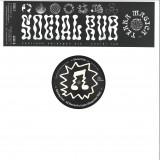
HEKTISCHE SPRENGEN DJ'S - SOCIAL RUB EP

This is the first release of the brand new vinyl label Terra Magica Rec. which was founded by Munich based music producers and DJs Mirko Hecktor and Tom Sprenger in mid-pandemic times of 2021.

The first release hosts two tracks of the label bosses themselves under their moniker Hektisch Sprengen DJs. In German language the term Hektisch Sprengen basically means blowing up things in a very hectic manner. Instead prepare for quite the contrary sound vise. Their tracks Social Rub and Dancing Dust are electronic, analog Slow-Disco-Cosmic-Trance-Tunes containing some SH101 and Korg synth lines with TR-808 beats and some Japanese, African 2 South-American hints. While one track is tracing an ultra rare psychedelic voice sample from Nigeria’s 70’s Highlife scene the other one uses a little boinx gag.

To round things up no other than Dirk Leyers from Africaine 808 did the final mixdown on those tunes.

On top DJ Normal 4 straight outta ‚Pott’ hits full on groove with an uncanny Funk Breaks anthem recalling early 90s Warp and the best of UK-Big-Beat-Acid and conga easiness.

Last but not least Down Under`s DJ Chrysalis jumps into the genre madness on Terra M`s first release delivering a raw UK-Garage-IDM influenced dreamy synth shiver down your spines transcending those fellow e-dancers straight into the golden years of club culture.

non in magazzino

Ordina ora e ordineremo l'articolo per te presso il nostro fornitore.

11,35

Last In: 2 years ago
Mr Teenage - Automatic Love

Mr Teenage

Automatic Love

7"-VinylDRUNKENSAILOR143
Drunken Sailor
24.01.2022

"We all know what teenagers are like. Bratty little gobshites. Moody shits. Forever toeing the line between cocky arrogance and whiny self-doubt, and to hell with anyone who gets caught in the crossfire. And this old fucker should know; he was really good at all of the above (still keeping on top of the ‘gobshite’ part, you’ll notice). For some reason, the entirety of rock’n’roll is predicated on music made for and about these states of mind - well, I guess if you mix ‘em all together, they can make for one helluva sense of reckless abandon. So it shouldn’t come as a surprise that Melbourne quartet Mr Teenage sound exactly like their name suggests: chaotic, raw, emotionally volatile… and of course they bind all this together with their own brand of heroically melodic garage rock. Produced by Billy Gardener (of Ausmuteants, Smarts, Cereal Killer and god knows how many other vital Aus-punx), this debut EP snarls, spits and swaggers with all the glorious self-belief of a drunken 4am stumble to the petrol station to buy a pack of skins. And the songs are fucking great too. Title track ‘Automatic Love’ expertly showcases the combined sounds of their cited influences (Thin Lizzy, Dictators, Martha Reeves, etc), with frontman Nic Imfeld’s voice at times edging close to the sandpaper soul of their countryman Shogun (ex-Royal Headache). Meanwhile ‘Waste Of Time’ sees him blending their garage licks with Joey Ramone bubblegum, just as ‘The Loser’ fashions a delightfully adolescent chorus of ‘the loser says what?’ from an airy melody that either The Shangri-Las or Del Shannon would be proud of. They wrap things up with another slab of pure punk/pub rock genius called ‘Kids’ that’ll get the hairs on the back of your neck standing on end, as you fight the urge to crank-call your former school teachers and blame the kid who used to take your lunch money. Of course, singing about ‘kids these days’ marks Mr Teenage out as being older than their name suggests, and sure enough their name comes from an old wrestler rather than identifying with an age bracket they’ve outgrown. But with tunes like this… honestly, who gives a fuck what they’re called? This record is perfect." Will Fitzpatrick.

pre-ordina ora24.01.2022

dovrebbe essere pubblicato su 24.01.2022

8,28

Last In: 2026 years ago
Dev / Null - Microjunglizm

Dev/Null

Microjunglizm

12inchRAVE4EVAR002VL
RAVE4EVAR
14.12.2021

This November, American cult hero Dev/Null debuts on Trickfinger & Aura T-09's Evar Records with MICROJUNGLIZM, an 8-track album that explores the power and beauty of darkcore, jungle tekno and breakbeat rave. Chopped drums, hairpin turns and alluringly emotional pads open up a time portal between the past and the future, decorated with haunting samples and musical Easter eggs that show off Boston-based Dev/Null's deep history as a rave historian and scholar.

MICROJUNGLIZM's fantasy suite was written over the last year, arranged and sequenced entirely without a computer. Dev/Null fell in love with Teenage Engineering's PO-33 Pocket Operator – a portable, pocket-sized sequencer that he started using during his DJ sets to create special versions on the fly. The limitations of making entire tracks inside the PO-33 immediately suggested the sampling techniques and stylistic hallmarks of early jungle, already one of Pete's longtime obsessions.

"The PO-33 has some of the same low-fi sonic charm as retro gear used back in the day," Pete explains. "8-bit samples, 11khz mono sound, kind of like an Amiga computer. It's been really fun and exciting to have my own tracks to throw into sets – even if they're raw, unfinished 3-minute things which get played once and never again. A few of these tunes were done for my sets at parties thrown by Aura T-09 in L.A., so I'm happy they're coming out on her label."

non in magazzino

Ordina ora e ordineremo l'articolo per te presso il nostro fornitore.

10,88

Last In: 3 years ago
Brion Starr - 2020

Brion Starr

2020

12inchTGR022
Taxi Gauche
12.11.2021

On 2020, the first full length album recorded at the infamous Chateau d’Herouville in France since its closure in 1985, Starr explores a year which none of us will soon forget.
Starr says of the album “I feel like this is us at our most blunt, I certainly haven’t felt very poetic this last year.
I’ve been writing about what is right in front of me and have chosen to eschew beauty for the raw reality of what has been happening in NYC this year.”
2020 is a genre hopping, time traveling whirlwind with heavy depth and impeccable range which is set very firmly in the surreal and manic time we are living in. The music and lyrics found within equal the surreal with the subtly psychedelic, the manic with a frantic talent.

About Brion Starr:
To qualify Brion Starr as a rock artist would be missing the point, an auteur in the deepest sense, the singer/songwriter makes records which stitch together familiar sounds from each generation past back to the dawn of popular music without ever crossing the fine line of retro-nostalgia, it sounds new while also accessing memories of something from your past that never actually happened, some band you’ve heard before that never actually existed or perhaps did on some alternate timeline.
Starr continues the complex derivation through the ages which was started on previous albums Global Identity (2018) and Rope Memories (2019) like a time traveler sent back to serenade us into a trance, once fallen under the spell of these melodies, hooks, and lyrics you become helpless, they embed themselves in your mind until you find yourself humming the tunes and wondering how you got here.

pre-ordina ora12.11.2021

dovrebbe essere pubblicato su 12.11.2021

16,43

Last In: 2026 years ago
The Grease Traps - Solid Ground

Record Kicks drops "Solid Ground", the explosive debut album by US band The Grease Traps, recorded at Kelly Finnigan' Transistor Sounds and mixed by Orgone's Sergio Rios.

Recorded between Kelly Finningn's Transistor Sound in San Francisco and Fifty Filth Studio in Oakland and mixed by Orgone' producer Sergio Rios and Kevin O' Dea, Record Kicks is proud to finally present Solid Ground, the long-awaited debut album by US very finest deep funk & soul outfit The Grease Traps. The album is set for worldwide release on November 5 on vinyl, CD and digital format. The band, based in Oakland, CA, is the latest addition to Milan-based Record Kicks roster. Active since 2002, with a 45 released on well-respected funk/soul label, Colemine Records, now, after six years spent working on the album's recording and mixing, they are ready to present their first full-length release Solid Ground on Record Kicks. The album is anticipated by the two killer funk singles "Bird of Paradise" and "More and More" on limited edition 45 vinyl.

As avid record collectors and fans of that old school analog sound, Solid Ground was recorded straight to 8-track tape on a Tascam 388, which also graces the cover art. Half of the tracks were recorded live at Transistor Sound Studio by soul crooner, Kelly Finnigan, and Ian McDonald where both Kelly and their band, Monophonics, have recorded their last few albums. The other half of the tunes were recorded by Kevin and Aaron at Fifty Filth Studio in Oakland, CA where the band also rehearses and mixed by analog-obsessive Orgone producer Sergio Rios. The album's original tunes draw from the Traps' various soul influences ranging from gritty funk ("Bird of Paradise" and "Hungry") to fuzzed-out psychedelic ("Residue") to sweet lowrider soul ("More and More"). The lyrics by lead singer The Gata also don't shy away from pressing issues of the day such as racism in America ("Roots") and finding hope in a world that seems pitted against you (the JB's style "Solid Ground"). The rare funk covers from the album provide a taste of the raw energy one would experience at a Grease Traps live show. The Traps also supplemented their sound with special guests including the Monophonics horns, background vocals from seasoned Bay Area vocalists, Sally Green and Bryan Dyer, as well as strings organized by Kansas City master viola player, Alyssa Bell.

The seed of The Grease Traps formed back in 2000 when keyboardist, Aaron Julin, answered an ad put out by guitarist, Kevin O'Dea, searching for players who were hip to the rare grooves laid down by Blue Note artists such as Grant Green and Lou Donaldson. They quickly formed Groovement, covering those same artists along with other jazz-funk staples. When their sax player and frontman moved away, they switched gears to form the band, Brown Baggin, getting into the harder funk of the JB's, the Meters, Kool & the Gang, and lesser known acts such as Mickey & the Soul Generation. They also started digging into the rare funk compilations put out by Keb Darge, Jazzman Gerald,and labels like Harmless, Ubiquity, Soul Jazz, and Now-Again. Modern day soul and funk outfits such as Breakestra, the Whitefield Brothers, and the Daptone/Soul Fire crews provided additional inspiration.

In 2005, while still playing with Brown Baggin yet fed up with juggling the schedules of seven band members, Aaron and Kevin put out an ad to find a bassist and drummer to jam with as a quartet. The first two cats to show up were bassist, Goopy Rossi, and drummer, Dave Brick. It was clear from the get-go that this rhythm section had great chemistry. Originally intended as a fun side project, the Traps quickly took priority as Brown Baggin dissolved. Performing as an instrumental quartet for a number of years, they eventually expanded their repertoire to include horns as well as that sharp-dressing soul brother, The Gata, on lead vocals. Over the years, they've shared the stage with acts such as Shuggie Otis, Robert Walter, Durand Jones, Monophonics, Neal Francis, and Jungle Fire.

non in magazzino

Ordina ora e ordineremo l'articolo per te presso il nostro fornitore.

20,97

Last In: 4 years ago
Wunderhorse - Teal

Wunderhorse

Teal

7"-VinylYALA15
Yala
24.09.2021

Wunderhorse announces a debut single, Teal. It is streaming now via Yala! Records.

Wunderhorse is the alias of British musician Jacob Slater. Jacob fronted The Dead Pretties, a London band who arrived in a haze of hedonism and hype, bowing out before the dust had time to settle. Blink and you’d have missed them.

This new project arrives no less frenetically. Teal is a feral, romantic, visceral, chaotic and enchanting cacophony of sound that contradicts itself with each sleight of hand and change of chord. A rare, raw and assured talent, Teal is an urgent fever-dream of a number, tumbling downhill with the brakes off. Belligerent and unblinking. Arthouse indie-rock, but without the connotations. It’s one of those.

If this all sounds exciting that’s because it is. Teal is one of those tunes that has a rare ability to define the very moment in which its heard and forever associate itself with the memories long after. Time-stamped yet timeless. If there’s any justice, it’ll soon be played out live in sticky basement rooms up and down the country, limbs everywhere, sweat dripping from the walls. An absolute mess, but what a beautiful one.

There will be more from Wunderhorse, but for now this is Teal. Play it again, but play it louder.

pre-ordina ora24.09.2021

dovrebbe essere pubblicato su 24.09.2021

10,04

Last In: 2026 years ago
Cliff Nobles & Russell Evans & The Nite Hawks - My Love Is Getting Stronger / The Bold

With their latest release, "Matasuna Records" brings together two songs from 1966 that were originally released on "J-V/Atlantic Records" & "ATCO Records". Now officially reissued for the first time on 7inch vinyl. Aside from the same release year, the two songs - a Northern Soul joint by "Cliff Nobles" and a Mod Jazz tune by "Russell Evans & The Nite Hawks" - seem to have little in common. However, both are delicacies for any dance floor and combine an irrepressible energy. The two songs thus fit perfectly together on this hot & fiery 45!

"My Love Is Getting Stronger" by "Cliff Nobles" on the A-side is not only a super rare soul gem whose original single cost at least $700 dollars. The song can also be considered one of the best (Northern) soul tunes. A grooving bass, infectious drums & bongos meet great orchestrated horns driven by Nobles' raw yet sweet voice. A smokin' soul cut for any dance floor.

The instrumental "The Bold" by "Russell Evans & The Nite Hawks" on the B-side brings out the same irrepressible energy. The deep bassline, drumbreaks and funky guitar riffs introduce this terrific song. A deep organ joins in perfect interplay and enchants the listener. A great groover that shouldn't leave any record box!

"Cliff Nobles", born in 1944 in "Groove Hill" (Alabama) got into singing in his high school choir in "Mobile" (Alabama). He also became the lead singer of a popular local group called "The Delroys". After school, he moved to Philadelphia to work on his career. He recorded 3 songs for "Atlantic Records", which went unnoticed. He later formed the band "Cliff Nobles & Co" in "Norristown" with "Benny Williams" (bass), "Bobby Tucker" (lead guitar) and "Tommy Soul" (drums).

Through demo tapes, Nobles came to the attention of producer "Jesse James", who began to write songs for the band and helped them get a contract with "Phil L.A. Of Soul" Records. The first release bombed, but the second single, "Love Is All Right/The Horse", brought success. Ironically, the instrumental B-side "The Horse," which Nobles didn't even perform on, became a huge hit. It reached #2 on the charts, sold over 1 million copies and was awarded a gold record by the R.I.A.A..

However, subsequent releases failed to match his success, and he retired from the music business in the early 1970s. Nobles died in October 2008 at the age of 67 in "Norristown", Pennsylvania.

non in magazzino

Ordina ora e ordineremo l'articolo per te presso il nostro fornitore.

12,23

Last In: 4 years ago
Bernardo Mota - Simple Times 001

At last Bernardo Mota makes his debut on vinyl and this is not one to be missed! Simple Times 1 hits the shelves hard with deep, bouncy vibes that capture Bernardo's essence at his finest - Simplicity and Groove are all we care about. This is a bundle of slapping, deep tunes ready for the dance-floor!

This work is stamped with a timeless feel good attitude that Bernardo has gotten the reputation for and we have made sure to press all those vibrations on wax.

Includes a tasty dub dub Remix by Italian maestro, Ezzy!

non in magazzino

Ordina ora e ordineremo l'articolo per te presso il nostro fornitore.

5,84

Last In: 23 months ago
THALIA ZEDEK - BEEN HERE AND GONE

In celebration of the 20th anniversary of the release legendary singer/ guitarist Thalia Zedek's Been Here and Gone, Thrill Jockey is proud to present the album unlike it has ever been heard before: on vinyl, re-mastered by Sarah Register. Thalia Zedek has been one of the most enduring rock musicians of the past four decades. From her auspicious beginnings in bands Uzi, Live Skull, and Dangerous Birds to her wider recognition in Come, Zedek established herself as a singular voice accruing accolades from critics and contemporaries including J. Mascis, Kurt Cobain, and Bob Mould. Been Here and Gone, her debut solo release originally released on Matador in 2001 on CD, marked a turning point in Zedek's music. As Come was coming to a close, Zedek began exploring writing and performing as a solo artist, eventually backed by violist David Curry, pianist Mel Lederman (both of which went on to perform with Zedek for two decades), as well as former Come bandmates Chris Brokaw and Daniel Coughlin. The idiosyncrasies of her voice were laid bare for the first time, revealing an even greater depth to her unique songwriting. The more spacious and rich arrangements sprawl and whisper with powerful vulnerability. "There was definitely something magical about the making of Been Here and Gone," says Zedek. "I'm not sure if it was because it was made at a studio called Higher Power in a recently desanctified church in Stuyvesant, NY, or if it was because it was the end of a century, not to mention a millennium, the end of a decade of being in Come, the longest running band I'd had up to that point, and the end of 5 years of unhappy breakups and tumultuous relationships in my personal life." The eleven tracks that comprise Been Here and Gone embody that tension of uncertainty with a hopeful edge of renewal. Zedek's indelible resilience lifts even the somberest laments into triumphs. Even on the album's three cover tunes, including a haunting rendition of Leonard Cohen's "Dance Me to the End of Love," Zedek's voice and guitar color every note with raw emotion, making each passing gesture personal. Been Here and Gone channels the thunder and roar of Zedek's past into a fragile magnificence.

pre-ordina ora23.07.2021

dovrebbe essere pubblicato su 23.07.2021

24,50

Last In: 2026 years ago
The Flatlanders - Treasure of Love

We’ve all been fans of each other from the start, says Jimmie Dale Gilmore, “but the thing that’s always struck me about The Flatlanders is that, first and foremost, it’s a band rooted in friendship. Beyond the music, we just connect with each other in these deep and personal ways, and that’s been a lifelong treasure.” Take a listen to Treasure of Love, The Flatlanders’ first new album in more than a decade, and it’s clear that those bonds are deeper and stronger now than ever before. Completed during COVID-19 lockdowns with the help of longtime friend and collaborator Lloyd Maines, the record finds the iconic Texas trio of Joe Ely, Jimmie Dale Gilmore, and Butch Hancock in classic form, serving up a rollicking collection of twang-fueled, harmony-laden performances full of wry humor and raw heartbreak. While a few of the songs here are never-before-heard originals, the vast majority of the tracklist consists of vintage tunes the band picked up during their 50-year career, some stretching as far back as the group’s earliest performances in the honkytonks around Lubbock, TX, where you might have spotted Willie Nelson or Townes Van Zandt in the audience on any given night.

pre-ordina ora09.07.2021

dovrebbe essere pubblicato su 09.07.2021

26,01

Last In: 2026 years ago
Messer & Toto Belmont - No Future Dubs

There’s something new under the sun. If you look at it closely,
something new is only (and always) created at crossroads –
when different and signi¦cant traditions are connected and
combined. On their own, these traditions have often existed
for a while. However, in this new form they have never
appeared together. The latest manifestation of something
new can now be found on the album “No Future Dubs”, the
interpretations of “No Future Days” – the most recent album
by German band Messer – by Finnish producer and old
friend of the group Kimmo Saastamoinen aka Toto Belmont.
The intentional traditions that merge on this grand and
digni¦ed album are post-punk, dub and techno. A new
chapter in the culturally constant narrative of dub is written
here. Through their past and parallel activities in hardcore
and post-punk bands, Messer drummer Philipp Wulf met and
befriended Kimmo, originally a drummer too. In their
continuous dialogue discussing their musical journey, Philipp
and Kimmo over the years more and more immersed
themselves in the aesthetic possibilities of dub and reggae.
Indeed, lots of musicians do not listen to the type of music at
home that they write and play in their respective projects
(Take me as an example: House is the music that I produce
and put on as a DJ. On my own, I listen to various stuff,
music by Monk and Messer for example). The same applies
to the protagonists involved here. By discussing dub und
through Toto Belmont’s steadily increasing producingexpertise, the idea of creating dub versions of selected
Messer tracks was born. The Messer album “No Future
Days”, released in 2020, proved to contain the perfect raw
material as the songs on this album are already produced in
a much more transparent way than on previous LPs – and
are hence more suitable for dub. Still, it’s a giant leap from
the originals to the dubs. These add a third dimension to the
described character of the post-punk/dub amalgam: techno.
The result is a sound that hasn’t existed before, especially
not with German lyrics (which scarcely, however, carry
meaning or messages here. Hendrik Otremba’s voice is used
more like an instrument, as if he was the ghostly ¦gure which
he often sings about and which now §oats and screams
through the sound space). The history of mutual contact and
in§uence of (post-)punk and dub (reggae), which Messer
have kept on writing, is glorious and reaches back far in
musical history. Still, it has always been a rather marginal
chapter not only in punk but also in dub history. But already
in the beginnings of punk (the British version, less the
American one), the presence and in§uence of reggae was
obvious in many places as both are united in their resolute
attitude as rebel music. This is how the two genres
recognized each other – especially the punks regarded
reggae as rebellious. As is known, already Johnny Rotten
mainly listened to dub in private. By using the name John
Lydon, he then – together with bass player Jah Wobble –
established the group PiL as one of the most exemplary
bands at the crossroads of dub and punk. The Slits, Pop
Group, Killing Joke, The Ruts and last but not least The Clash
along with the Mick Jones offshoot Big Audio Dynamite –
the thriving British music scene in the early 80s was full of
dub-in§uenced acts. The echoes meandered everywhere. In
the USA, it took longer until the in§uence of dub became
noticeable and it has never been as distinctive as in the UK.
The history of US hardcore, however, cannot be told without
bands like Bad Brains from Washington D.C. who on their
albums occasionally inserted conscious reggae and dub
tracks between breakneck hardcore tracks. Another
important group is Blind Idiot God who similarly included
dub tracks on their LPs – the contrast between densely
droning rock tunes and widely breathing dub versions can be
experienced very vividly here. In the 90s, dub’s in§uence on
post-punk decreased while turning up even more distinctively
somewhere else: Techno was in many respects susceptible
to dub, to say nothing of the music from the so-called British
hardcore continuum (jungle, drum & bass etc.), which directlydeveloped from dub and reggae. But also “pure” techno –
meaning techno without breakbeats – discovered its a¨nity
for the possibilities of dub at an early stage, in England for
instance in projects like Left¦eld or The Orb. In addition, the
project Rhythm & Sound was established in Berlin with close
ties to the Hardwax record store. With regard to this project,
you can’t really say where dub ends and where techno begins
(or vice versa) because of the interconnection of the two
genres here – everything is based on the steppers pulse
which links the two styles like a common DNA. With dub
techno a new genre was created. Until the present day, there
are producers who don’t produce anything else and DJs who
don’t put on any other music. The Messer dubs are
characterized by a grand majestic manner and force that
presumably someone like Mad Professor is able to produce
and that is also inherent in many Scandinavian productions
of the last 15 years; a crystal-clear aesthetic which locates
itself far away from Kingston or Brixton, but features a pulse
referring clearly to Berlin and Helsinki. The songs appear in a
completely new and deconstructed form, the instruments are
exclusively used as particles and raw material, not as riffs;
merely glaring guitar textures ¦ll the wide dub space. There
are many new elements that were added by Toto Belmont,
especially synthesizer sounds and drums. The ¦nal result
creates an enormous aesthetic power and dignity, and an
atmosphere you don’t want to leave anymore. “No Future” is
a well-chosen title as a reference to the protagonists’ punk
association; as a main thrust of the album, however, a
comma between these two words is imaginable as well.

non in magazzino

Ordina ora e ordineremo l'articolo per te presso il nostro fornitore.

14,08

Last In: 4 years ago
Zwen - Space Zone

Zwen

Space Zone

12inchTRAPID01
Trapid
15.03.2021

Zwen makes a strong impression as they circumnavigate the stars to impart their strain of machine music. This first release on Trapid has little to no reference point, placing all the focus on the tunes contained within. "Space Zone" aptly launches this mission in a muscular fashion with a hefty kick and some strafing synth blasts, while "Etching" gets tangled up in a more tightly wound loop with a raw, deliciously early 90s finish. "Restriction" keeps things stripped back, but it's certainly still orbiting the same quadrant as the other tracks. "Trapid" switches focus by embracing a more dub techno-informed approach, and Zwen does a masterful job of capturing that vibe too.

non in magazzino

Ordina ora e ordineremo l'articolo per te presso il nostro fornitore.

10,29

Last In: 3 years ago
Keith Mansfield - Vivid Underscores

They Say: “Contemporary scores for visual effect”.

We say: Synth-heavy, low-slung space-funk masterpiece.

The creator of the romping tunes that became the iconic themes to the BBC’s Grandstand programme and their televised Wimbledon Tennis Championship coverage, Keith Mansfield was perhaps KPM’s most prolific artist from the mid 1960s right the way through the 1980s. As well as the sort of pop orchestral sound that is all over these classic library records, he could also turn his hand to raw, edgy rock and funk. Quentin Tarantino is a big fan, going as far as including some of Keith’s work on the soundtracks to Kill Bill and Grindhouse.

This is it. This is THE ONE for us: Keith “The Man” Mansfield’s Vivid Underscores from 1977. A sample freak’s wet dream and one of Be With Rob’s favourite ever KPM records. A must for fans of Brian Bennett’s Voyage (yes, THAT good). And no, we’ve no idea either why it took us this long to get round to tackling this monster of a record. But then again some things are worth waiting for.

Attention! Calling all crate diggers, DJs, beat heads, Hip Hop junkies, MF DOOM fans! Behold! Vivid Underscores makes sampling easy. Prepare to be up all night, every night, chopping, looping and splicing these endless grooves and spacey synths. The highlights are too many and too mind-blowing so we’ll pull out a few particular highlights. Trust us, this library LP is just jaw-dropping.

“High Velocity” sets the tone with its aggressive horns, wah-wah guitars, funky baseline and wobbly synth refrain. So good and so hypnotic that Memphis Bleek just had to swipe the ominous, frazzled intro for “What You Think of That” featuring Jay-Z. Also, for real drama, the 1985 Lakers retrospective “Return to Glory” used it to soundtrack the footage from the legendary game five of the NBA finals at the Forum. Heady days. “Crash Course” - Stetsasonic horn refrain? Beautiful - jazzy chase-funk, amazing warm keys, percussion and funky horns - all action.

The more restrained “Matter Of Urgency” is an utterly amazing, brass-heavy underscore. The grandiose, uplifting “Dawn Of Aquarius” still sounds like the future with its tense, thundering drums, killer bassline and swirling synths. Version II loses the drums and percussion but is no less startling. “Staying Power” closes the first side with a relentless, pounding groove which *will* snap your neck. Be warned.

“Trucking Company” is a pacey, synth-and-string masterpiece and its accompanying parts (a–c) mess with the formula to great effect. Part (a) adds echo delay to really dazzle and part (c) plays the breezy, beautiful middle section without the tension. “Hot Cargo” and “Espionage” are both tense spy-funk themes par excellence. “Interplay” is a quiet killer, with flutes over a glistening piano refrain just waiting to be looped. The intro to the menacing “Omen” might’ve been sampled by 7L & Esoteric for their classic “So Glorious” but the entire 5 minute track is a mini-drama masterpiece, one only Mansfield could create.

Even though its a mix of short themes in-and-amongst longer, full-length tracks, Vivid Underscores is still thoroughly listenable from start to finish. That’s not something that can be said of all library records and it still manages to serve as rich resource to keep even the keenest samplers busy for a while.

As with all of our KPM re-issues, the audio for Vivid Underscores comes from the original analogue tapes and has been remastered for vinyl by Be With regular Simon Francis. And as usual, the sleeve reproduction duties were handed over to Richard Robinson, the current custodian of KPM’s brand ident

non in magazzino

Ordina ora e ordineremo l'articolo per te presso il nostro fornitore.

20,63

Last In: 4 years ago
Keith Mansfield - Contempo

Keith Mansfield

Contempo

12inchBEWITH093LP
Be With Records
15.03.2021

They Say: “New directions in contemporary scoring”.

We say: Contempo is one of the best full album listens in the KPM 1000 library. Succinct smoking soul, super tight breaks and string-drenched sleaze composed by the library master, Keith Mansfield.

The creator of the romping tunes that became the iconic themes to the BBC’s Grandstand programme and their televised Wimbledon Tennis Championship coverage, Keith Mansfield was perhaps KPM’s most prolific artist from the mid 1960s right the way through the 1980s. As well as the sort of pop orchestral sound that is all over these classic library records, he could also turn his hand to raw, edgy rock and funk. Quentin Tarantino is a big fan, going as far as including some of Keith’s work on the soundtracks to Kill Bill and Grindhouse.

Many library records are a game of two halves and Contempo is certainly one of those. The first side cooks on a high funk breaks flame whilst the flip is something altogether more tranquil, yet no less groovy. It lays back with dreamier, post-coital grooves.

Rugged funk opener “The Fix” confidently displays its low slung languid grooves with heavy drums, horns and bass. Smokin’ in slow motion. The punchy “What’s Cooking” follows and has a lighter, more whimsical touch. But the drums still roll and the clavs wiggle in fascinating opposition to those horns. The dark and moody intro to “Cut To Music” gives way to a more inclusive, relaxed funk that’s all irresistible bass and stabbing horns. The mid-tempo “Man Alive” signals the time to really get down. A percussive monster jam. If you can’t strut to this then we really can’t help you! Closing out the A side, fresh guitar licks drip all over the slick drums of “Funky Footage”, with a New Orleans piano vibe coming on to really light a fire.

Whilst the dramatic crime funk of the A side is enough on its own to have earned this record its place in the great library record canon, it’s undoubtedly the more smoothed out B side for which Contempo is rightfully adored and celebrated. It’s so chilled and mellow, with beautifully arranged, sweeping strings, sax solos aplenty and a real 70s soundtrack feel. Think Love Boat, CTI label, Bob James, Grover Washington Jr.-type jams.

The super sleek and sexy jazz funk of “Breezin’” is as light and magical as you’d hope. An open-air masterpiece, its indulgent sound is just a taster of the sophisticated funk to follow. The elegant, romantic feels of “Good Vibrations” (used brilliantly by Odd Future’s Mike G for “Swiss Army”) is a string-drenched, wah-wah fuelled ode to living your best life. Nonchalantly. Whilst it keeps a very West Coast feel, the blaxploitation strut is certainly more Blackbyrds than Brian Wilson. “Sun Goddess” will blow your mind with the sensuous sound of glorious horns and beautiful keys. The luxurious “Love De Luxe” and its horizontal grooves have been much sampled, but here it proves that it doesn’t need any help to get you in an intimate mood. Closer “Snake Hips” is a cool mid-pace slouch. Just divine.

Originally released in 1976 but, like the very best KPM records, wonderfully timeless, Contempo is also no mere LP-length collection of loosely related tracks. This is a rare example of a library record that is a genuinely great listen from start to finish.

As with all of our KPM re-issues, the audio for Contempo comes from the original analogue tapes and has been remastered for vinyl by Be With regular Simon Francis. And as usual, the sleeve reproduction duties were handed over to Richard Robinson, the current custodian of KPM’s brand identity.
: Contempo (KPM) (LP)

non in magazzino

Ordina ora e ordineremo l'articolo per te presso il nostro fornitore.

20,63

Last In: 4 years ago
KERENDUN - AFTERNOON

Kerendun

AFTERNOON

7"-VinylSIRAW0083
Raw Tapes
01.03.2021

KerenDun (Buttering Trio) returns with a new two-track single titled ‘Afternoon.’ As always, KerenDun delivers super smooth tunes laced with vibrant colorful lyrics that offer us a peak into her life.
Jazz and soul influences are very apparent in this release; the result of collaborating with drummer/jazz head/producer Yuval Garin & trumpet player/pianist Roee Hermon.
Released together on 7” vinyl, this release is packed with soul and promises a vibeful journey.

non in magazzino

Ordina ora e ordineremo l'articolo per te presso il nostro fornitore.

15,92

Last In: 5 years ago
Direct Hits - The Broadway Recording Sessions'

Remastered Limited Blue Vinyl with Gatefold Sleeve.
Includes A2 poster and 3 art prints of each individual band member.

Way back in 1982, Battersea based mod heroes The Direct Hits had released one single on Dan Treacy’s Whamm! record label, ‘Modesty Blaise’ earlier in the year. This was singled out in the music press as not just one of your average Jam crash / bang /wallop mod revivalist tunes.
Live gigs showed they had a mighty powerful set of catchy mod / pop tunes in the back pocket. Whamm! were struggling to provide the funds to record an album, the songs were too good not to commit to a full 12’ set, so the Direct Hits pooled their limited resources and self financed a very cheap one day recording session in a tiny studio in Tooting, South London called Broadway Sound.
Early on the morning of August 12th 1982 the band, comprising of Colin Swan, Geno Buckmaster, Brian Grover and their trusty roadie ‘Robbo’ assembled at the tiny studio to begin recording as many of their songs as they could get down on tape for the tiny budget they had scraped together. As most of the songs were already well rehearsed thanks to the band’s busy live schedule, the recording of the first nine songs on this disc were finished by mid afternoon without any problems. Throughout the late afternoon and early evening the band toiled over scant overdubs with limited keyboard facilities and a distinct lack of musical ability. The recordings immediately came to life however, when Colin Swan and Geno Buckmaster’s stage-honed tight harmonies were added, there was no time for vocal overdubs, and the mixing was completed by midnight. Tired and worn out, the band ventured out into the cold night air happy with the days work, clutching the precious reel to reel tape.
Two weeks later the band came back with a friend producing, and recorded the three final tracks featured on this album which have a more rounded slightly less raw sound. All three were completed in an afternoon. Almost two years later they re-recorded some of these songs, and along with a handful of new songs from the pen of Buckmaster and Swan, recorded their ‘Blow Up’ debut album at Rendezvous Studios in Sydenham, South East London, released on Whaam! Records in August 1984.
So what you have here are the roots of some of these great songs. A few didn’t make it to the first album those that did, as you will hear, stayed reasonably faithful to the original arrangements.
The Broadway Recording Sessions take you right back to where it all started!

pre-ordina ora26.02.2021

dovrebbe essere pubblicato su 26.02.2021

15,76

Last In: 2026 years ago
KEN RHODES - PROFILE

Ken Rhodes

PROFILE

12inchSCO002
SCONSOLATO
12.02.2021

An obscure and deep acoustic jazz-funk LP from 1974, remastered and repressed in an edition of only 300 copies !

“Profile” is the first and only Ken Rhodes LP as a leader. This intimate and rare recording captures an explosive concoction between blues, jazz and a touch of funky swing. Though an acoustic performance, this LP offers overwhelming grooves, breaks as well as introspective moments .
The upbeat and funky titile track “The Profile” forshadows the raw grooves of the session.The composition is driven by Rhode’s very soulful and bluesy improvasitions in a colorful dialogue with Joachim Knauer’s percussive and obsessive bassline which embraces the funky rhymthms of George Greene. However, this raw “in-your-face” formula is beautifully constrated in “Nothing New” and the piano solo “Robyn’s Lullaby” where the trio slows down to play deep, dreamy and hazy tunes.

Biography
Ken Rhodes was born August 14, 1945 in Memphis, USA and grew up in a family of excellent musicians. He attended the American Convervatorium of Music in Chicago, studied classical music and received Bachelors and Masters Degree. At the age of 16 he toured with his own jazzband throughout the eastern states. During this time he wrote classical compositions for symphony orchestras and organ-music. Gerry Mulligan called him for an extended tour. Studying at the University of Cincinnatti he received the Down-Beat Prize in 1970 as “Best Arranger”. In August 1970 he came to Germany and worked four years as writer, arranger and conductor at the theatres in Augsburg and Nürnberg. Besides that he played with wellknown european musicians at the famous “Domicle” club in Munich, he founded his own group and performed in Germany and Austria. Since July 1975 he works as a professional jazzmusician travelling Europe.

non in magazzino

Ordina ora e ordineremo l'articolo per te presso il nostro fornitore.

23,49

Last In: 5 years ago
Drumskull - Interlocked

Drumskull

Interlocked

2x12inchSR083
Seagrave
03.11.2020

Slick jungle, low-slung broken beat and even a deep house banger, 'Interlocked' assembles 8 tracks of some of the purest old-school vibes by a veteran of the scene under a brand new alias for a frustrated and precarious (post)-lockdown summer. Tapping the drama and energy of the largely pre-generic party days of '91-94 - a halcyon time of transition in which Drumskull himself, as a life-long skater otherwise stoked on the the raw energy of 80s skate video soundtracks - to Black Flag, JFA, Minor Threat, Stupids et al, to Primus, Gang Starr and Meat Beat Manifesto, made the passage into syncopated machine funk, to sub bass, time-stretched breaks and automated beat production.

Physically drumming in a couple of skate punk bands in the early 90s, exposure to hardcore and early jungle tapes in '93 by DJ Dimension and DJ Rob (Leeds Orbit, UK), amongst countless others, inspired an archetypal move to sell his drum kit so as to land a set of Technics 1210s. Spinning techno and jungle on the local free party scene and clubs as part of a DJ collective from '94-96, crafting early tunes on Amiga ProTracker software, and shortly after running club nights in mid-90s London with Mo' Wax and Ninja Tune artists, Drumskull expresses the eclecticism of the era across 8 big tracks of previously unreleased material. Evoking all the energy and excitement of being involved in those early years of dance culture, 'Interlocked' powerfully yet playfully connects then to now, reveling in a sense of timelessness, mutation and hybridity.

Album photography by Amir Zaki from his book with legendary Skateboarder Tony Hawk and author Peter Zellner 'California Concrete: A Landscape of Skateparks (2019). Graffiti lettering by original UK stylemaster and beatmaker REQ TDK.

non in magazzino

Ordina ora e ordineremo l'articolo per te presso il nostro fornitore.

18,45

Last In: 4 years ago
Various - Peace Chant Vol. 2

Various

Peace Chant Vol. 2

12inchTRLP90552
Tramp Records
27.10.2020

From 1963 to 2014: "Peace Chant - raw deep and spiritual jazz" exhibits 51 years of music. A well matched anthology with sounds to dive into, hard rhythms to dance to and vocals to meditate on.

The Tramp Records crew has compiled 8 tracks in nice order and dramaturgy. Some tunes you might have never heard before unless you own one of the rare original vintage vinyl records. Peace Chant is released on two separate LPs with own catalogue numbers and on one CD. Some songs I can't get out of my mind.

These days Mabon Dawud Quintet from Ethiopia is on the trail of Mulatu Astatke. Tramp Records provides the first release of "Abeba" - a funky and stoic track in Amharic mother tongue sung by a high male lamenting voice.

Even more haunting is "Ain't Gonna Wait Too Long" by Thomas Meloncon. The self-taught guitar player recorded this protest song at the age of 20. Voice, guitar, congas and double bass are plenty enough for a heavily pushing song complaining that black man's slavery isn't gone after 400 years. Artist, poet and civil right activist Meloncon (alias Muntu Mwaminifu) wrote and directed theatre and radio plays. His works are collected at Texas Southern University in Houston. "Ain't gonna wait too long" probably is his earliest artistic outing, he just had left school in 1968.

The compilation concludes with a song by Now, a band no one outside Munich might know. "Easy Tune for Dancing" can be found on a record of cultural and concert location Feierwerk form 1990. It really was a surprise to hear the quintet of trumpeter Konstantin Kern and Klaus Pfister on sax playing Afro-Cuban jazz that easily and nonchalant. If Dizzy Gillespie turned up with his bent trumpet and Lalo Schifrin sat in like he did on "Gillespiana Suite" I wouldn't be astonished!

non in magazzino

Ordina ora e ordineremo l'articolo per te presso il nostro fornitore.

12,73

Last In: 5 years ago
The Mighty Mocambos - Live At JAM PDM!

German funk stalwarts The Mighty Mocambos unleash another sample of their explosive live energy, a 7" of two brand new tunes recorded straight to 8-track tapeduring JAM PDM! Breakdance Battle at Fabrik Potsdam on February 1st 2020.

"Arabesque Breakin' Suite" on side A is an original instrumental medley written for the occasion and delivers the raw, heavyweight sound that has made The Mighty Mocambos a staple of b-boy battles the world over. Side B is a cover of the Axel F Theme from Beverly Hills Cop, taking the tune from 80s synth-heavy electro-pop to soulful, tropical-flavored b-boy funk.

In these peculiar times without concerts, these live recordings are a real labor of love that capture the special vibes of a Mighty Mocambos performance while remaining suitable for DJ-use and enjoyable to the dedicated listener.

The 45 comes in a beautiful picture sleeve - a reproduction of the tape box used for the recording with a b/w photo from the event.

non in magazzino

Ordina ora e ordineremo l'articolo per te presso il nostro fornitore.

9,62

Last In: 4 years ago
Various - Peace Chant Vol.1

Various

Peace Chant Vol.1

12inchTRLP90551
Tramp Records
13.10.2020

From 1963 to 2014: "Peace Chant - raw deep and spiritual jazz" exhibits 51 years of music. A well matched anthology with sounds to dive into, hard rhythms to dance to and vocals to meditate on.

The Tramp Records crew has compiled 9 tracks in nice order and dramaturgy. Some tunes you might have never heard before unless you own one of the rare original vintage vinyl records. Peace Chant is released on two separate LPs with own catalogue numbers and on one CD. Some songs I can't get out of my mind:

The previously unreleased "Don't Give Up Your Smile Today" is opening the compilation. It's from Das Goldene Zeitalter, a band that didn't survive - but whose members had a huge influence on German jazz, soul, afrobeat and funk within the last years merging into groups like The Poets of Rhythm, The Whitefiled Bros., and The Malcouns. Boris Geiger aka. Bo Baral sings a Pharoah Sanders like tune, his voice deeply resonating, the rhythm section heavily grooving.

After the first three woolly recorded tracks Walt Bolen's "Peace Chant" with its dry and funky sounds with flute, two guitars and percussion is quite a pleasure to listen to. Organ and voice are Bolen's who used to play the keys in San Fernando Valley church when he was a child. "Peace Chant" was recorded for his own Ar-Que label in 1972 and is one of the few cuts with him as a leader. He has played sessions and clubs for years and today he is sitting at the church organ again.

This publication's oldest recording dates back to 1963: "Mozambique" by Luna Brothers Trio, a Caribbean and hypnotic instrumental. For my jazz trained ears it is rather unusual that the güiro (the gherkin played with a stick) is being played throughout the entire song. Heavily laid back cowbell, concas and timbales and the slightly detuned piano are wonderful! "Mozambique" sounds like from another star but its origin is Los Angeles, where the brothers Fred and Ricardo Luna had their night club band. You could imagine a bast skirt strip and at the same time the great Raumpatrouille (Space Patrol) landing on German B&W TV screens in 1966.

Hozan Yamamoto recorded crime jazz with the Japanese bamboo flute shakuhachi. He belonged to Tony Scotts "Music for Zen Meditation" in 1964, played with Ravi Shankar, avant-garde jazz bassist Gary Peacock and appeared at Donaueschingen Festival for contemporary music. Tokio university's open minded lecturer recorded the funky and modal "Spotlight on Sapporo" in 1972.

non in magazzino

Ordina ora e ordineremo l'articolo per te presso il nostro fornitore.

12,73

Last In: 5 years ago
JR Bailey - Just Me ’N’ You

A dramatic, string-drenched epic, James Ralph Bailey’s Just Me ’N’ You has been a sought-after soul masterpiece for decades. A lush suite of beautiful songs, it was conceived as a concept album; a sophisticated paean to love.

Originally released by MAM Records in 1974, Just Me ’N’ You is a breathtaking jazzy soul album. It’s similar in style to Marvin Gaye’s What’s Going On - particularly the performances, orchestrations and chord progressions - but dealing with a different universal subject matter. If What’s Going On was about romance instead of politics, it would sound like this.

Fans of Marvin, Leon Ware, Donny Hathaway, Leroy Hutson and Willie Hutch will love this record. Not as well known - this is definitely an underrated gem - the work of James Ralph Bailey is no less mind-blowing. It’s got to be one of the best soul albums of all time.

The original productions were made on a basic home tape machine and enhanced with strings, rhythmic overdubs and a variety of other instrumentation. These are beautiful arrangements of strings and jazzy horns. Rhythm guitars and bouncy bass serve as the groove foundation, congas provide a Latin feel whilst the vibraphone and harmonica add colour. And then of course there’s JR’s voice.

His style recalls Hathaway, with a delivery akin to Marvin at the time. As he scats and sings, accompanying himself in sweet harmonies, there is still a rawness of pain and longing in his voice, the rawness familiar to all deep soul.

As an album, Just Me ’N’ You is no mere collection of songs. The tender, smooth tunes flow perfectly together into a fluid, single artistic statement. This is one where it’s hard to pick out any standouts. You may have heard the soaring title track before, maybe on Gilles Peterson’s Digs America compilation. The opening track “After Hours” sounds as fresh now as it ever was and segues beautifully into the majestic “Heaven On Earth”. Recorded by Hathaway the previous year, Bailey’s original of “Love Love Love” is incredible and arguably the definitive version. The powerful, dreamy, sax-and-harmony-laced “All Strung Out Over You” has echoes of the Chi-Lites, it’s that good. Goosebumps. And we could go on.

Mastered by Simon Francis, cut by Pete Norman and pressed at Record Industry, this Be With edition of Just Me ’N’ You sounds every bit as brilliant as it should. A joyous celebration of love, this album is perfect in every way. If you don’t already own a copy then now is the time.

non in magazzino

Ordina ora e ordineremo l'articolo per te presso il nostro fornitore.

20,63

Last In: 5 years ago
The Mighty Mocambos - Live At Groove City

Celebrating live music and record store culture.

After having completed the first run of shows for their recent album "2066" through UK, France and Germany, the Mighty Mocambos did an intimate performance at world-renowned Groove City Record Store in their hometown Hamburg.
Not content with just playing stripped down versions of existing material, the band wanted to step up a notch from the "tiny desk" type concert idea and decided to record unreleased tunes for a vinyl single capturing the live energy and crowd atmosphere with analog studio techniques. After having warmed up with a couple of songs from "2066", a cheerful crowd in the packed shop witnessed the band tracking magic takes of unheard songs directly to tape.
"St. Pauli Second Line", an instrumental live favourite with simple but irresistant swamp funk ostinatoes turned into a frenetic call and response chant workout midway of the song. Singer Nichola Richards' tune "Keep It Movin'", a mainstay of the band's live repertoire for years, was cut with great energy, finally finding its way onto wax. "Something's Missing" is a brand new tune with a raw sister funk vibe - written and arranged for the occasion, rehearsed once and performed live for the first time in the version you hear on this record.
While many live recordings a are mere mix of crowd noise and neglectable renditions of well-worn tunes that are unusable for DJs and hardly appealing to the dedicated listener, THE MIGHTY MOCAMBOS - Live At Groove City au contraire is a treat for turntableists and a testimony of the spark that a well-attuned live band can light up, combining the vibes of a concert with the no-nonsense analog sound of their well-loved studio recordings.

non in magazzino

Ordina ora e ordineremo l'articolo per te presso il nostro fornitore.

9,96

Last In: 5 years ago
Azu Tiwaline - Draw Me A Silence LP 2x12"

Fantastic first album of Tunisian producer Azu Tiwaline, melting psychedelic dub, industrial and hypnotic techno deeply rooted in her berber culture, supported by Lena Willikens, Nicola Cruz, Toma Kami and Violet, to name a few!

Azu Tiwaline is a new name for a new spirit: one of a producer inspired by the need to explore her origins, rooted in the Tunisian Sahara. The Call to a different sound, organic and raw, vibrating in the great spaces of the African desert where trance music resonates... Ecstatic ritual.

Her first album, Draw Me A Silence, conceived as a diptych, reveals the multiple facets of her identity. Uniting the bonds that connect Berber music, dub culture and techno hypnosis, Azu Tiwaline invites us to refocus on our senses and our Nature. She knows how to use contrasts between light and the invisible, exploring the complexity of our emotions and the mystery that emanates from them, in a polyrhythmic chiaroscuro that runs through each one of her tracks, and of which we discover, as we go along, all the outlines.

Draw Me A Silence Part. I (to be released in February 2020), delivers the most hypnotic variant of her music, centered on dark percussive rhythms and a skillful use of repetition; each of the 5 tracks ineluctably carrying the listener into a trance. Two major tunes particularly illustrate the artist's imagination: "Itrik" and "Berbeka", perfectly synthesizing the heritage of Berber trance music and her techniques derived from minimalist and repetitive electronic music.

The continuation, Draw Me A Silence Part. II (to be released in April 2020), gives prominence to a deep heritage drawn from the dub culture and its numerous bass music filiations. This second part thus gives a new breath in the use of sound space, exploited in a much broader way, leaving all their space to complex syncopated percussive lines, supported by massive basslines dedicated to the best sound-systems. Omok, the first of the five tracks of this Part II is the perfect demonstration of this, playing here the essential role of a bridge to the darker waters of this album's end.

Each of these two parts exist as an Entity, and it is only when they are united that they will reveal their full meaning. Thus, in May, Draw Me A Silence will find its final form in a double-vinyl unifying them. Listening to this album in its entirety offers us a wide panorama of the sound landscapes visited by Azu Tiwaline, who seems to breathe primitive sounds of a faraway desert into a music with modern tones - and vice versa. A resolutely hybrid sound and a singular experience, playing with contrasts and nuances to catch the listener in vast and so far unexplored territories.

non in magazzino

Ordina ora e ordineremo l'articolo per te presso il nostro fornitore.

19,54

Last In: 10 months ago
The Mabon Dawud Republic - The Mabon Dawud Republic

Following their first 7" in 2018 Budabeats Records is proud the release the debut LP of pioneering Hungarian Afrobeat supergroup, the Mabon Dawud Republic.

The band started out as the Fela Kuti tribute band for the very first Felabration event in Budapest.
In the past two years they created an impressive repertoire of their own tunes. The rawness you can hear on their early recordings transformed into a more mature and sophisticated sound, still deeply rooted in the traditions of West-African music.
They even toured in Ghana where they had the chance to record with highlife legend Pat Thomas, as you can hear on 'Gyae Abrabi'.
On 'Na Lie' they are joined by Fela's original Egypt 80 band member, keyboard player and singer Dele Sosimi.
Other guest performances include Ghanaian vocalist and kologo player Stevo Atambire (on 'Mawadioh' and 'Talk to Me') and vocalist Abate Berihun (on 'Nanu Nanu Neye').

non in magazzino

Ordina ora e ordineremo l'articolo per te presso il nostro fornitore.

12,56

Last In: 6 years ago
Articoli per pagina:
N/ABPM
Vinyl