Renowned for their distinctive songwriting, unique sound with beautifully
produced recordings, onstage chemistry and electrifying live shows,
European and British blues award nominees the Starlite Campbell Band
are Suzy Starlite and Simon Campbell who fell in love on stage and
married following a whirlwind musical romance
With their fresh taste of original '70s British rock and British blues, the husband
and wife duo have been on an exciting roller-coaster of a musical ride following
the release of their debut album 'Blueberry Pie' to rave reviews worldwide and a
prestigious nomination for Best Album in the European Blues Awards.The band's
exciting and highly anticipated second album 'The Language of Curiosity' is
released on November 5th, 2021 and supported by a European tour.
'The Language of Curiosity' is a collection of stories about different facets of
post- modern real- life experiences from working for the man, attitudes towards
lust, passion and casual sex, space travel, social systems and abuse by power
and money, war and the global refugee crisis, gatekeepers in the music industry,
people giving up and growing old before their time and feel good '70s inspired
British rock and British blues; it's like looking at different sides of a Rubik's cube.
From full-on rock 'n' roll tribal drums, thunderous bass, badass dirty guitar riffs,
drunken echoes of slide and lap steel, melting melodies and vocal harmonies
combined with old school valve guitar amps and analog tape machines, Starlite &
Campbell have a very British sound! With a vibe and feel reminiscent of the mid
'60s to early '70s British rock & British blues; think Peter Green, Faces, Deep
Purple, Led Zeppelin but not like those really... more like Starlite-Campbell!
quête:re rub
Neuauflage des Kult Albums "Deth Red Sabaoth" als limitierte Red/Black Ink Spot Vinyl. Neben bluesigem Biker Rock a la „Hammer of the Gods“, und „The Revengeful“ belegt die mitreißende Gänsehaut-Nummer „Rebel Spirits, einmal mehr den verdientermaßen Kultstatus des Ausnahme Sängers. Doch damit der Höhepunkte nicht genug: Das epische „Black Candy“ (erstmals mit Glen Danzig hinter dem Schlagzeug), „Night Star Hel“ sowie das treibende „Juju Bone“ lassen erneut Erinnerungen an die goldene Rick-Rubin-Ära wach werden. Auch nach zahlreichen Durchläufen zeigen sich keine Abnutzungserscheinungen. Über den abwechslungsreichen Songs thront dabei das unverwechselbare Organ Glenn Danzigs, das mit diesem Klassiker zu alter Stärke zurückfand. In bester Jim-Morrison-Manier heult, schreit und flüstert sich das Kraftpaket durch die 11 Highlights ohne Schwachpunkte auf Deth Red Sabaoth, das die Rückkehr Danzigs in Höchstform feierte.
Tortoise has spent nearly 30 years making music that defies description. While the Chicago-based instrumental quintet has nodded to dub, rock, jazz, electronica, and minimalism throughout its revered and influential discography, the resulting sounds have always been distinctly, even stubbornly, their own. There is a always the pervasive element of group play, or ensemble?mindedness, as opposed to emphasis on a virtuoso soloist or frontman, despite the fact Tortoise is composed of members who could each easily have taken center stage in another group. In their debut, Tortoise is composed of Douglas McCombs, John Herndon, Dan Bitney, John McEntire, and Bundy K. Brown. This self-titled, incorporates many musical styles and influences, but no one style alone is sufficient to fully describe the distinct sound they craft. This unique blending of styles caused them to be recognized as the leaders of a new musical movement. Tortoise utilize the recording studio, not only to put their music to wax, but in a way that their recording process becomes a compostional tool described at times as the "sixth member", thus creating a boundless parameter in which to create and manipulate music. Tortoise's self-titled debut was originally released in 1994. This re-issue is re-mastered by Roger Seibel at SAE Mastering, in jacket with art insert, both designed by Sam Prekop as well as a free download card. 2022 version is available on limited edition white with hi-melt black vinyl
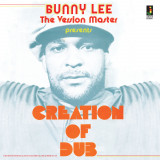
King Tubby and Producer Bunny ‘Striker’ Lee are intertwined in the birth of Dub Music. After discovering a mistake that made a ‘serious joke’ (more of which later...) they went on to release the first pressings of this new musical genre namely ‘Dub Music’. Tubby’s vast knowledge of electronics and Bunny’s vast catalogue of rhythms would lay the foundations of what today is taken as a standard... the Remix / Version cuts to an existing vocal tune.
Osbourne ‘King Tubby’ Ruddock was born in Kingston, Jamaica on 28th January 1941 and grew up in the High Holborn Street area of downtown Kingston. He studied electronics at Kingston’s National Technical College and also on two correspondence courses from the U.S.A... When he had qualified Tubby began repairing radios and other electrical appliances in a shack in the back yard of his mother’s home. His work in the early days included winding transformers and building amplifiers for Kingston’s Sound Systems. Tubby built his first Sound System in 1957 playing jazz and Rhythm & Blues at local weddings and birthday parties. His reputation as a man who knew and understood both electronics and music grew steadily and as the sixties drew to a close. Tubby purchased his own basic two track equipment. He installed this alongside his dub cutting machine, a homemade mixing console and his impressive collection of Jazz albums in the back bedroom of his home at 18 Dromilly Avenue which he christened his music room.
Tubby and Striker were at Treasure Isle Studio’s one day while Ruddy from Spanish Town was working with the engineer Byron Smith....
“Tubby and myself was talking when Ruddy was cutting some dub but Smithy (engineer) made a mistake through we were talking and forgot to put in the voice. It was two track recording in those days. Ruddy said ‘No Man! Make it stay! and so they cut the rhythm. When I went over to Ruddy’s that Saturday night a dance was in progress and when they played the vocal to the tune... then he said we’re going to play ‘Part Two’. They never called it ‘Version’..and then he played the rhythm track. The song was a catchy song and everybody started to sing along and the deejay started to toast so everything went down well. On Monday morning I went up and I said ‘Tubbs the mistake we made was a serious joke. It mash up Spanish Town! The people went wild. So you have to start to do that now ‘cause when the man put on the ‘Part Two’ everyone start singing this song. It played about twenty times. I said you try Tubbs!’...Well the next Saturday night now when Tubby strung up down the farm U Roy said he’s going to play ‘Part Two’ but Tubby did it different now. He started with the voice then dropped it out and let the rhythm run and then he brought in the voice in the middle and from there Tubby started to get really popular.’’
Bunny ‘Striker’ Lee
Dynamic Sounds upgraded to sixteen track recording in 1972 and Tubby purchased, again with the help of a deal brokered by Bunny Lee. The old four track equipment and the MCI console from their Studio B. The four tracks now gave him far wider scope to work with and he began to create a new musical form where the bass and drum parts were brought up while the faders allowed Tubby to ease the vocal and rhythm in and out of the mix. It was only a matter of time before Tubby’s dub plate experiments began to make it on to vinyl and the first ever long-playing King Tubby releases would feature a collection of his mixes to a selection of Strikers rhythms. So please sit back and enjoy this historic set of sounds, mixed by King Tubby and Mr Prince Phillip Smart and another set of scorcher Bunny Lee rhythms.
Three slices of unashamedly old skool (two) stepping action from the Above Sound label and 2Step2 (squared) aka DJ Ruby and Jo Public, that'll transport you back to the Sunday scene and UKG's earliest days. On this EP's lead track 'Give Me Some Of That' the duo perfectly catch that intersection between rave elements - the wispy, eerie synths and pitch shifted vocals - and the sophisticated shuffle of American garage. 'Drop The Bass (2022 Remaster)' leans slightly more towards the hardcore flavour, its choppier beats more evocative of the inspired syncopations of breakstep,, while 'What's Gonna Happen' is the trippiest and most optimistic sounding of the three while still packing plenty of rhythmic punch.
blue marbled vinyl / vinyl only
- 01: Baluba Shake - Brunetta E I Suoi Balubas
- 02: No - Mina
- 03: Il Mio Posto Qual'è - Ornella Vanoni
- 04: Sono Qui Con Voi (Baby Please Don't Go) - Caterina Caselli Con Gli Amici
- 05: Un Amore Inutile - Isabella Iannetti
- 06: La Notte È Fatta Per Rubare - Catherine Spaak
- 07: Il Geghegè - Rita Pavone
- 08: Questa Sinfonia (Symphonie) - Carmen Villani
- 09: Ragazzo Triste (But You're Mine) - Patty Pravo
- 10: Non È Mai Tardi (Dressed In Black) - Rita Monico
- 11: Se Telefonando... - Mina
- 12: Pà Diglielo A Mà - Nada
Limited 300 COPIES
PHONOREM: ITALIAN DJ, RECORD COLLECTOR AND BEAT-MAKER HE SPROUTS HIS ROOTS INTO GOLDEN-ERA HIP HOP. SINCE 2017 HE LEADS THE PHAT! RADIO SHOW, AT ROCKET RADIO VERONA, OCCASIONALLY WITH INTERNATIONAL HOSTS.
IN 2020 PHONOREM RELEASED A CASSETTE ALBUM “CRUISE CONTROL”, FUSING DOWNTEMPO BEATS, SYNTH AND SAMPLES MANIPULATIONS, INCLUDED ALSO A REMIX BY MAX GRAEF (TAX FREE RECORDS).
ALGORYTHM SHINES LIGHT ON HIS BACKGROUND IN ELECTRONIC MUSIC: SYNTH-WAVE SOUNDS ON WONKY HOMEMADE DOWNTEMPO BEATS, FUSED TOWARDS AMBIENT AND CINEMATIC ATMOSPHERES, WITH LIVE DRUM RECORDINGS, DRUM MACHINES AND FEW SAMPLES.
Music Produced by PHONOREM
Master by REEL MASTERING
Cover Artwork by AYCE BIO
Distributed by RUBADUB
All Rights Reserved to FUNCLAB RECORDS
When the whole world collapses around you, sometimes the only thing you can do is stomp it all loose. Erin Anne's second album, the gleaming, electrified Do Your Worst, charts that uninhibited romp through disaster. Written amid the rubble of personal grief and professional disappointment, later exacerbated by the devastation of a global pandemic, the record deepens Erin's venture into the blur between human and machine, adding a new roster of digital instruments to the mix. Drawing on dark, glossy '80s synthpop as well as the unabashed bombast of bands like The Killers, the L.A.-based songwriter deploys a cyborg persona to articulate a feeling of displacement from the world as a queer artist struggling to survive the machinations of late capitalism. With bright, interweaving synthesizers and ripples of Auto-Tuned vocals, Do Your Worst poses a dare to the world: Whatever you have in store, I'll take it standing.
Erin began writing her second album not long after adding a MIDI keyboard and vocal processing hardware to her home studio setup. While exploring her new gear, she found that she could work in the same vein as the artists and producers she loved the most. Do Your Worst takes inspiration from the music of Patrick Cowley, the disco and hi-NRG producer best known for working alongside Sylvester. Erin was taken by Cowley's use of vocoder on the 1982 album Mind Warp, where his distorted vocals create a queer, mutant subjectivity. That album rang out against the cataclysm of the AIDS epidemic; Erin found resonance in Cowley's music during the present-day pandemic. "I have found the most catharsis and the most safety in listening to the music of people in really, really horrific circumstances making something lasting and profoundly beautiful," she says.
Throughout Do Your Worst, which was mixed by Sarah Tudzin of Illuminati Hotties, songs like "Typhoid Mary" and "Florida" reckon with loss, despair, and abjection. "This Hungry Body" sears through pandemic-era touch starvation, while "Mirror Mirror" attends to the noxious but necessary funhouse of social media. On the playful, guitar-driven “Eve Polastri’s Last Two Brain Cells Have a Debate,” Erin uses the spy thriller TV show Killing Eve to explore queer codependency and masochism. Among these fraught subjects, Erin Anne finds opportunities for release. She stages internal conflict on a scale so massive that its details start to become clear; if they don't resolve, they at least become palpable.
"I’m very much a maximalist when it comes to production. I like vast landscapes. I like a stratosphere and a core -- I want the bass to be beneath the floor," Erin says. "This record is, in a lot of ways, a collection of some of the first moments that I was technologically able to achieve accurate renderings of how I hear my own emotional world."
- A1: Kaiser Chiefs - Ruby
- A2: P!Nk - Just Like A Pill
- A3: Owl City - Fireflies
- A4: Melee - Built To Last
- A5: Nelly Furtado - I'm Like A Bird
- A6: Orson - No Tomorrow
- A7: Elbow - Grounds For Divorce
- B1: The Script - Breakeven
- B2: Amy Winehouse - Back To Black
- B3: Daniel Bedingfield - Gotta Get Thru This
- B4: Keane - Everybody's Changing
- B5: Uncle Kracker - Follow Me
- B6: Gabriella Cilmi - Sweet About Me
- B7: The Black Eyed Peas - I Gotta Feeling
- C1: La Roux - Bulletproof
- C2: Groove Armada - My Friend
- C3: Joss Stone - Super Duper Love
- C4: The Dandy Warhols - Bohemian Like You
- C5: Corinne Bailey Rae - Put Your Records On
- C6: Train - Drops Of Jupiter
- C7: Duffy - Warwick Avenue
- D1: The Feeling - Fill My Little World
- D2: Sia - The Girl You Lost To Cocaine
- D3: Hoobastank - The Reason
- D6: Mika - Grace Kelly
- D7: Amy Macdonald - This Is The Life
- D8: The Fratellis - Chelsea Dagger
- D4: Alphabeat - Fascination
- D5: Tatu - All The Things She Said
Translucent yellow vinyl[36,09 €]
The Decades Collected compilations are part of the new Collected compilation series, which is a collaboration between Universal Music and Music On Vinyl. The compilations bring together the biggest names of each decade, combined with forgotten hits and less discovered gems, giving the listener an experience of listening to their favorite tunes while uncovering new musical grounds at the same time.
Various Artists - Zeroes Collected features Nelly Furtado “I’m Like A Bird”, The Script “Breakeven”, The Black Eyed Peas “I Gotta Feeling”, Alphabeat “Fascination”, T.A.T.U. “All The Things She Said” and Mika “Grace Kelly” amongst others.
Tape
Charlemagne Palestine (born Charles Martin ni 1947 in Brooklyn, New York) wrote intense, ritualistic music in the 1970s, intended by the composer to rub against audiences' expectations of what is beautiful and meaningful in music. A composer-performer, he always performed his own works as soloist. His earliest works were compositions for carillon and electronic drones, and he is best known for his intensely performed piano works. He also performs as a vocalist. Palestine's performance style is ritualistic; he generally surrounds himself (and his piano) with stuffed animals, smokes large numbers of kretek (Indonesian clove cigarettes) and drinks cognac.
Oren Ambarchi (born 1969 in Australia) is a composer and multi-instrumentalist with longstanding interests in transcending conventional instrumental approaches. His work focuses mainly on the exploration of the guitar, "re-routing the instrument into a zone of alien abstraction where it's no longer easily identifiable as itself. Instead, it's a laboratory for extended sonic investigation". (The Wire, UK).
Oren Ambarchi's works are hesitant and tense extended songforms located in the cracks between several schools: modern electronics and processing; laminal improvisation and minimalism; hushed, pensive songwriting; the deceptive simplicity and temporal suspensions of composers such as Morton Feldman and Alvin Lucier; and the physicality of rock music, slowed down and stripped back to its bare bones, abstracted and replaced with pure signal.
From the late 90's his experiments in guitar abstraction and extended technique have led to a more personal and unique sound-world incorporating a broader palette of instruments and sensibilities. On releases such as Grapes From The Estate and In The Pendulum's Embrace Ambarchi has employed glass harmonica, strings, bells, piano, drums and percussion, creating fragile textures as light as air which tenuously coexist with the deep, wall-shaking bass tones derived from his guitar.
Ambarchi works with simple constructs and parameters; exploring one idea over an extended duration and patiently teasing every nuance and implication from each texture; the phenomena of sum and difference tones; carefully tended arrangements that unravel gently; unprepossessing melodies that slowly work their way through various permutations; resulting in an otherworldly, cumulative impact of patiently unfolding compositions.
Ambarchi has performed and recorded with a diverse array of artists such as Fennesz, Otomo Yoshihide, Pimmon, Keiji Haino, John Zorn, Rizili, Voice Crack, Jim O'Rourke, Keith Rowe, Phill Niblock, Dave Grohl, Gunter Muller, Evan Parker, z'ev, Toshimaru Nakamura, Peter Rehberg, Merzbow, Kassel Jaeger, Anthony Pateras, Crys Cole, Giuseppe Ielasi, Judith Hamann, Sunn 0))), James Rushford, Stephen O'Malley and many more.
For 10 years together with Robbie Avenaim, Ambarchi was the co-organiser of the What Is Music? festival, Australia's premier annual showcase of local and international experimental music. Ambarchi now curates the Maximum Arousal series at The Toff In Town in Melbourne and has recently co-produced an Australian television series on experimental music called Subsonics. Ambarchi co-curated the sound program for the 2008 Yokohama Triennale. Ambarchi has released numerous recordings for international labels such as Touch, Southern Lord, Table Of The Elements and Tzadik.
Belgian drummer Eric Thielemans is one of the most idiosyncratic figures in Belgian music, someone who not only demonstrates that special musicians always seek out (and find) their own place, but above all that they always remain students of the art of questioning and listening. No musician better illustrates the difference between playing music and playing with music than percussionist Eric Thielemans. He gets to the heart of the matter with an at times extremely minimalist approach, but on the other hand he frequently relies on a range of objects beyond the regular drum kit: a drum placed on its side, a bicycle wheel with a bow, hands and the body.
Tape
Charlemagne Palestine (born Charles Martin ni 1947 in Brooklyn, New York) wrote intense, ritualistic music in the 1970s, intended by the composer to rub against audiences' expectations of what is beautiful and meaningful in music. A composer-performer, he always performed his own works as soloist. His earliest works were compositions for carillon and electronic drones, and he is best known for his intensely performed piano works. He also performs as a vocalist. Palestine's performance style is ritualistic; he generally surrounds himself (and his piano) with stuffed animals, smokes large numbers of kretek (Indonesian clove cigarettes) and drinks cognac.
Oren Ambarchi (born 1969 in Australia) is a composer and multi-instrumentalist with longstanding interests in transcending conventional instrumental approaches. His work focuses mainly on the exploration of the guitar, "re-routing the instrument into a zone of alien abstraction where it's no longer easily identifiable as itself. Instead, it's a laboratory for extended sonic investigation". (The Wire, UK).
Oren Ambarchi's works are hesitant and tense extended songforms located in the cracks between several schools: modern electronics and processing; laminal improvisation and minimalism; hushed, pensive songwriting; the deceptive simplicity and temporal suspensions of composers such as Morton Feldman and Alvin Lucier; and the physicality of rock music, slowed down and stripped back to its bare bones, abstracted and replaced with pure signal.
From the late 90's his experiments in guitar abstraction and extended technique have led to a more personal and unique sound-world incorporating a broader palette of instruments and sensibilities. On releases such as Grapes From The Estate and In The Pendulum's Embrace Ambarchi has employed glass harmonica, strings, bells, piano, drums and percussion, creating fragile textures as light as air which tenuously coexist with the deep, wall-shaking bass tones derived from his guitar.
Ambarchi works with simple constructs and parameters; exploring one idea over an extended duration and patiently teasing every nuance and implication from each texture; the phenomena of sum and difference tones; carefully tended arrangements that unravel gently; unprepossessing melodies that slowly work their way through various permutations; resulting in an otherworldly, cumulative impact of patiently unfolding compositions.
Ambarchi has performed and recorded with a diverse array of artists such as Fennesz, Otomo Yoshihide, Pimmon, Keiji Haino, John Zorn, Rizili, Voice Crack, Jim O'Rourke, Keith Rowe, Phill Niblock, Dave Grohl, Gunter Muller, Evan Parker, z'ev, Toshimaru Nakamura, Peter Rehberg, Merzbow, Kassel Jaeger, Anthony Pateras, Crys Cole, Giuseppe Ielasi, Judith Hamann, Sunn 0))), James Rushford, Stephen O'Malley and many more.
For 10 years together with Robbie Avenaim, Ambarchi was the co-organiser of the What Is Music? festival, Australia's premier annual showcase of local and international experimental music. Ambarchi now curates the Maximum Arousal series at The Toff In Town in Melbourne and has recently co-produced an Australian television series on experimental music called Subsonics. Ambarchi co-curated the sound program for the 2008 Yokohama Triennale. Ambarchi has released numerous recordings for international labels such as Touch, Southern Lord, Table Of The Elements and Tzadik.
Belgian drummer Eric Thielemans is one of the most idiosyncratic figures in Belgian music, someone who not only demonstrates that special musicians always seek out (and find) their own place, but above all that they always remain students of the art of questioning and listening. No musician better illustrates the difference between playing music and playing with music than percussionist Eric Thielemans. He gets to the heart of the matter with an at times extremely minimalist approach, but on the other hand he frequently relies on a range of objects beyond the regular drum kit: a drum placed on its side, a bicycle wheel with a bow, hands and the body.
Twelve years since Brendon Moeller first appeared on Delsin's Ann Aimee offshoot it's time for a welcome return to Delsin Records. The prolific producer, also active as Echologist and Beat Pharmacy, hereby presents one of his most deep going, spaced out and experimental modular works to date. Crispy noodling electronics diluted with Moeller's trademark minimalist dub scapes, reaching from the mesmerizing the rubbery basslines of 'Route' to the energizing fast paced rhythms of 'Motor'.
Sweetness and noise, light and dark, soul and body - KICK are back with
the new album Light Figures
KICK are Chiara Amalia Bernardini (vocals, bass) and Nicola Mora (guitars,
electric piano, synths, samplers), from Brescia. Their sound combines rough
elements and others more dreamy in a sound that could ideally be defined "sweet
noise", a style on their own melting the noise with the softness of the
atmosphere, without any limits of genre. The production of Light Figures,
composed between 2019 and 2020, was curated together with Marco Fasolo
(Jennifer Gentle, I Hate My Village), known for the international reach of his
works.
- A1: Grand Master Caz & Chris Stein - Wild Style Theme
- A2: The Chief Rocker Busy Bee Vs Lil Rodney Cee & Dj Grand Wizard Theodore - Mc Battle
- A3: The Cold Crush Bros Vs The Fantastic Freaks - Basketball Throwdown
- A4: Kevie Kev, Master Rob, Prince Whipper Whip, Mc, Rubie Dee, Dota Rock & Dj Grand Wizard Theodore - Fantastic Freaks At The Dixie
- A5: Grand Wizard Theodore & Dj Kevie Kev Rockwell - Military Cut (Scratch Mix)
- A6: Grand Master Caz, Jdl, Easy Ad, Kg, Dj Charlie Chase & Dj Toney Tone - Cold Crush Bros At The Dixie
- B1: Double Trouble, Rodney Cee & K K Rockwell - Stoop Rap
- B2: Rodney Cee, K K Rockwell & Dj Stevie Steve - Double Trouble At The Amphitheatre
- B3: Grand Master Caz & Chris Stein - Wild Style Subway Rap
- B4: The Chief Rocker Busy Bee & Dj Aj - The Chief Rocker Busy Bee, Dj Aj At The Amphitheatre
- B5: Dj Grand Wizard Theodore & Kevie Kev Rockwell - Gangbusters (Scratch Mix)
- B6: Rammellzee & Shock Dell & The Grand Mixer Dst - Rammellzee & Shock Dell At The Amphitheatre
Animal Records – founded by Chris Stein of Blondie fame – only ever released one album in its brief early-80s history, but what an album that was. Wild Style remains the most seminal soundtrack in hip-hop history, a snapshot of the scene as it evolved from the streets to the recording studio. But it’s not just a vital document, it’s also a damn good listen.
The line-up is a who’s who of those who stood out from hip-hop’s nascent block party days. The Double Trouble pairing of Rodney Cee and KK Rockwell, The Chief Rocker himself, Busy Bee, the mighty line-ups of both The Cold Crush Brothers and The Fantastic Freaks. The music captures the free-form, roaming nature of the film – it’s rough at the edges, it’s occasionally amateurish, but it’s completely, utterly glorious.
The original Animal tracklisting, of which this is a reissue, is full of recurring sounds and motifs, all of them co-produced by Chris Stein and Fab Five Freddy, stepping away from breakbeats to produce a sound that reminds you of them, while being totally unique. The epic drums are courtesy of Lenny ‘Ferrari’ Ferraro, a Vietnam vet and punk drummer whose career spanned stints backing Aretha Franklin and Lou Reed.
Over time, those sounds – the Charlie Chase and Grand Wizard Theodore scratches, the indelible lyrics - have become hip-hop touchstones, endlessly sampled and referenced, the bedrock of so much music to follow. That’s because the soundtrack perfectly encapsulated the essence of the film, the scene and hip-hop’s emergence from The Bronx to the attention of the wider world. Presented in this reissue with the original artwork, it remains the blueprint.
Since slipping out a decade ago, Fürsattl’s sole 12” on Claremont 56 has become an in-demand item, thanks to a mixture of its’ undeniable quality and the patronage of several high-profile, well-regarded DJs. Because of this, the label has responded to demand for a reissue of those two tracks and announced the release of a double-album of the krautrock-inspired trio’s works for the label.
Presented in a gatefold sleeve sporting Mark Warrington’s original 2012 artwork and limited to 400 copies, the 2022 album edition of Rheinlust not only tells the tale of the band’s now decade-long association with Claremont 56, but also features a previously unreleased track from the archives, ‘Für Paul’. Tucked away at the end of the LP, the track is amongst the most atmospheric in their catalogue – a slowly building number in which celestial synthesizer chords, ambient textures, echo-laden electric piano chords and lilting synth strings rise above a rubbery bassline and Jaki Liebezeit style drums.
It provides a superb conclusion to a genuinely evocative album of music you can get lost in, but it’s by no means the only highlight. Fittingly, the album’s first slab of wax boasts both tracks from Fürsattl’s hard-to-find debut 12”: title track ‘Rheinlust’, a driving but deep and hypnotic krautrock masterpiece full of elongated chords, restless bass, twinkling motifs and cascading electronic melodies, and the wonderfully epic ‘Links Der Pegnitz’. Clocking in at just under 15 minutes, this sublime excursion features band members trading glistening guitar and colourful synthesizer solos over a funky but laidback groove that sits somewhere between krautrock and cosmic funk.
The album’s second slab of wax showcases Fürsattl’s lesser-known tracks for Claremont 56, alongside the previously mentioned unreleased cut. These two workouts were originally featured on the label’s Claremont Editions compilations and further expand on their now trademark krautrock sound. There’s ‘Leerlauf’, a breathlessly up-tempo, weighty and immersive chunk of low-slung dancefloor creepiness that you’ll want to get lost in time and again, and the twangy and buzzing ‘Haru’, a birdsong-splattered affair that sounds like their tribute to krautrock originals Neu! and Harmonium. Like the rest of the album, these are seriously seductive outings that slowly build towards impactful, emotive conclusions.
(T Groove Edit)
Floating Points reissued the 1976 debut album Open Soul from Chicagoan soul/jazz-funk fusionists six-member outfit Tomorrow's People on his Melodies International imprint. Now P-Vine serve up a couple of singles from it, one of which has had a T Groove edit. Spanning a wide range of soul and jazz-funk styles, 'Open Soul' has a rubbery bassline and sock chord work with some big vocals and smooth grooves. It is an epic trip into space-soul territory. On the flip is 'It Ain't Fair', a much more slow and sentimental cut with romantic vocals and yearning chords.
- A1: Gloria Lucas - One Sweet Song
- A2: Lyn Collins - Think (About It)
- A3: Minnie Riperton - Adventures In Paradise
- A4: Ruby Delicious - Rock Steady
- A5: Brenda George - What You See Is What You're Gonna Get
- A6: Jackie Dee - Love You Wholeheartedly
- A7: Gwen Mccrae - All This Love That I'm Givin
- B1: Marva Whitney - What Do I Have To Do To Prove My Love To You
- B2: Ruth Davis - I Need Money
- B3: Millie Jackson - Do What Makes The World Go Round
- B4: Gladys Knight & The Pips - Thank You (Falettin Me Be Mice Elf Agin)
- B5: Spanky Wilson & The Quantic Soul Orchestra - Don't Joke With A Hungry Man
- B6: Ann Peepbles - Slipped, Tripped & Fell In Love
- C1: Betty Wright - Clean Up Woman
- C2: Little Rose Little - Family Tree
- C3: The Quantic Sould Orchestra - Hold It Up
- C4: Jackson Sisters - I Believe In Miracles
- C5: Rose Royce - Car Wash
- C6: Taana Gardner - Heartbeat
- D1: Melba Moore - Mind Up Tonight
- D2: Sisters Love - Gimme Your Love
- D3: Diana Ross - Upside Down
- D4: Donna Summer - Hot Stuff (Single Edit)
- D5: Carrie Lucas - Dance With You
- A1: Hortense Ellis - Can I Change My Mind
- A2: Marcia Griffiths - Melody Life
- A3: Myrna Hague - New World
- A4: Marcia Griffiths - Shimmering Star
- B1: Nora Dean - Heartaches
- B2: The Jay Tees - Buck Town Corner
- B3: Jennifer Lara - Turn Turn Turn
- B4: Doreen & Alton - I'm Still In Love
- B5: Doreen Schaeffer - Sugar Sugar
- C1: Denise Darlington - Feel So Good
- C2: Angela Prince - My Man Is Gone
- C3: Nana Mclean - Till I Kissed You
- C4: Nina Soul - Barb Wire
- D1: Jackie & Doreen - Welcome You Back Home
- D2: Nina Soul - Sleeping Trees
- D3: Rita Marley - Friends & Lovers
- D4: Hortense Ellis - Secretly
- D5: Marcia Griffiths - You're No Good
Soul Jazz Records follows up one its most popular Studio One releases with a brand new selection of rare and classic releases by women in reggae. Featuring legendary artists such as Marcia Griffiths, Rita Marley and Hortense Ellis (with a guest appearance by her brother Alton), alongside a host of rarities from lesser known names such as Nina Soul, Nana Mclean, Denise Darlington, Myrna Hague and also Doreen Schaeffer, a vocalist who was a founding member of The Skatalites.
There are notable covers (from Tyrone Davis’ soul classic Can I Change My Mind to the Band’s 60s psychedelic classic Turn Turn Turn in a rub-a-dub style!). Doreen Schaeffer reversions Alton Ellis’s seminal I’m Still in Love with You, Nina Soul reversions the slack rocksteady anthem Barb Wire. A number of these tracks are almost impossible to find and many have never been issued ever since their initial release.
The music on the album is of course 100% killer and features backing from all of the seminal groups at 13 Brentford Road including The Skatalites, Sound Dimension, Soul Brothers and the Brentford All Stars, and ranges from ska, rocksteady, roots, lovers and more from the 60s, 70s and 80s. All produced by Clement ‘Sir Coxsone’ Dodd at Studio One Records, the number one sound in reggae music.
The album is released on Soul Jazz Records as a double-vinyl with gatefold sleeve, download code, the CD comes in slipcase and both come with extensive sleevenotes.
- A1: Roulette Dares (The Haunt Of)
- A2: Son Et Lumière (Unfinished Original Recordings Of De-Loused In The Comatorium)
- A3: Inertiatic Esp (Unfinished Original Recordings Of De-Loused In The Comatorium)
- A4: Drunkship Of Lanterns (Unfinished Original Recordings Of De-Loused In The Comatorium)
- A5: Eriatarka (Unfinished Original Recordings Of De-Loused In The Comatorium)
- B1: This Apparatus Must Be Unearthed (Unfinished Original Recordings Of De-Loused In The Comatorium)
- B2: Televators (Unfinished Original Recordings Of De-Loused In The Comatorium)
- B3: Take The Veil Cerpin Taxt (Unfinished Original Recordings Of De-Loused In The Comatorium)
Landscape Tantrums Lost for two decades, the recent rediscovery of Landscape Tantrums the first attempt at recording the music that would become The Mars Volta’s De-Loused In The Comatorium revealed an important and hitherto missing chapter in the group’s evolution. Selfrecorded by Omar (assisted by Jon DeBaun) at Burbank’s Mad Dog Studios within a head spinning four days, Landscape Tantrums captures De-Loused in somewhat embryonic form, though much of what would make The Mars Volta’s debut album such an electrifying, sublime experience was already in place: the fearless invention, the fusion of futurist rock elements and traditions from outside of the rock orthodoxy, the sense of virtuosity working in service of emotional effect. From a distance, The Mars Volta must have seemed as if they were on a high when they walked into the studio to record what they expected to be their debut album (“I didn’t think of it as demos or a dry run,” Omar says). The group had recently played the Coachella festival to rave reviews, a vindication of the quixotic risk Omar and Cedric had taken, quitting At The Drive In to lead such an uncompromising musical proposition.
Their debut EP, Tremulant, had similarly signalled their singular vision, and been rewarded with similarly positive feedback. But the truth was that The Mars Volta entered Mad Dog in tatters, scarcely believing anything other than failure lay within their reach. They’d recently lost their bassist, Eva Gardner, and parted ways with keyboard play Ikey Owens. Tensions were brewing with drummer Jon Theodore, too himself a replacement for founding drummer Blake Fleming Omar questioning Theodore’s commitment to the group. And sound manipulator Jeremy Michael Ward’s drug problem had gotten so far out of hand that he’d been sent to rehab, and wouldn’t return until two days into the Landscape Tantrums. The pressure upon Omar was intense, and it began to manifest in the form of physical and emotional breakdowns. His art was his life, but now he began to wonder if it was actually going to kill him. Under such heavy manners, miracles occurred at Mad Dog. Surely that’s the only way to describe the music contained on Landscape Tantrums, as Omar fashioned early versions of Inertiatic ESP, Drunkship Of Lanterns and Eriatarka that rivalled the Rick Rubin produced versions that ended up on De- Loused for intensity, precision and immediacy, as Cedric delivered a powerfully intimate reading of Televators, and as a bare bones version of the group sketched out the peaks of what would become their debut masterpiece in barely half a week, on a shoestring, and believing they wouldn’t last long enough to see it hit the shelves. Listening to Landscape Tantrums now, with the benefit of hindsight and the knowledge of what these songs will become, one notices Cedric has yet to fully find the voice that will lend The Mars Volta their devastating authority, that Eriatarka will evolve even further under Rick Rubin’s watch, and that the lyrics to De-Loused’s climactic chapter, Take The Veil Cerpin Taxt, have yet to be penned. But one also notices how lithe the group sound here, how hungry, and one appreciates the raw edge that Rubin would later polish to a venomous sharpness. More than mere historical curiosity, Landscape Tantrums is an essential text for the dedicated Mars Volta aficionado, and a breathtaking album in its own right.
[a] a1. Roulette Dares (The Haunt Of) [Unfinished Original Recordings Of De-Loused In The Comatorium]