Es ist vier Jahre her, dass Cherry Glazerr ihr glänzendes drittes Album "Stuffed and Ready" veröffentlicht haben, aber Clementine Creevy hatte es nicht eilig. "Ich habe diese Jahre damit verbracht, mich selbst und meine Beziehungen unter die Lupe zu nehmen und darüber zu schreiben", sagt sie. "Ich schätze, ich komme mit einer Menge Mist klar." Cherry Glazerr ist seit Creevys Highschoolzeit viel unterwegs, und als die Pandemie ausbrach, tauchte sie in eine statische Existenz ein. Creevy beschreibt Cherry Glazerrs ehrgeiziges neues Album "I Don't Want You Anymore" als ihre bisher persönlichste und roheste Musik, eine Sammlung von Songs, die diese Zeit der Selbstaufgabe verarbeiten. Es ist das erste Album, das sie seit Cherry Glazerrs Garage-Rock-Debüt "Haxel Princess" selbst produziert hat, das vor fast einem Jahrzehnt erschien, als Creevy noch ein Teenager war. Creevy beschreibt "I Don't Want You Anymore" als ein "reifes" Album, was mehr mit ihrer persönlichen Entwicklung zu tun hat, als mit dem Album selbst, das in wahrer Cherry Glazerr-Manier am besten als Extremely Fun beschrieben werden kann. Für die Produktion des Albums hat sich Creevy mit dem Produzenten Yves Rothman zusammengetan, der vor allem für seine Arbeit mit Yves Tumor bekannt ist. Die Leadsingle "Soft Like a Flower" ist ein Beispiel für diese Entwicklung. Ein düsteres Gitarrenriff leitet den Track ein, bevor Creevys unverhüllter Gesang einsetzt. Sie singt von einer verzehrenden Besessenheit und wird im Refrain von ihrer langjährigen Bandkollegin Sami Perez unterstützt. Es ist ein stolzes, gefühlvolles Stück, das Creevy einen "Evanescence-Moment" nennt. "Es ist ein echter `losing your fucking shit'-Style", sagt sie. "Ich wollte, dass dieses Album nur aus Herz und Seele besteht. Völlig offen." "I Don't Want You Anymore" nutzt das Element der Überraschung zu seinem Vorteil; jeder Track ist eine radikale Neuinterpretation dessen, was Cherry Glazerr ist und sein kann. "Bad Habit" beginnt mit einer spiralförmigen Gesangsschleife, die Creevy zu Hause aufgenommen hat, und entwickelt sich zu einem delirierenden Downtempo-Dance-Track, ohne dass jemals eine Gitarre zum Einsatz kommt. Der darauf folgende Track "Ready for You" wird im funkigen Stakkato gesungen, und die anfänglich sparsame Bassline in der ersten Strophe wird schließlich von einem massiven, statischen Gitarrenriff überholt, das einen daran erinnert, dass es sich hier im Kern um ein Rockalbum handelt. Dies sind Songs, die das Leben des Hörers untermalen, eine Partitur, die zu jeder Gelegenheit passt. Das titelgebende Stück ist ein Versprechen an eine namenlose Person, aber der sich wiederholende Text in der Bridge könnte genauso gut als Liebesbrief an den Hörer dienen: "In the end, you're always holding me."
Suche:re style
Es ist vier Jahre her, dass Cherry Glazerr ihr glänzendes drittes Album "Stuffed and Ready" veröffentlicht haben, aber Clementine Creevy hatte es nicht eilig. "Ich habe diese Jahre damit verbracht, mich selbst und meine Beziehungen unter die Lupe zu nehmen und darüber zu schreiben", sagt sie. "Ich schätze, ich komme mit einer Menge Mist klar." Cherry Glazerr ist seit Creevys Highschoolzeit viel unterwegs, und als die Pandemie ausbrach, tauchte sie in eine statische Existenz ein. Creevy beschreibt Cherry Glazerrs ehrgeiziges neues Album "I Don't Want You Anymore" als ihre bisher persönlichste und roheste Musik, eine Sammlung von Songs, die diese Zeit der Selbstaufgabe verarbeiten. Es ist das erste Album, das sie seit Cherry Glazerrs Garage-Rock-Debüt "Haxel Princess" selbst produziert hat, das vor fast einem Jahrzehnt erschien, als Creevy noch ein Teenager war. Creevy beschreibt "I Don't Want You Anymore" als ein "reifes" Album, was mehr mit ihrer persönlichen Entwicklung zu tun hat, als mit dem Album selbst, das in wahrer Cherry Glazerr-Manier am besten als Extremely Fun beschrieben werden kann. Für die Produktion des Albums hat sich Creevy mit dem Produzenten Yves Rothman zusammengetan, der vor allem für seine Arbeit mit Yves Tumor bekannt ist. Die Leadsingle "Soft Like a Flower" ist ein Beispiel für diese Entwicklung. Ein düsteres Gitarrenriff leitet den Track ein, bevor Creevys unverhüllter Gesang einsetzt. Sie singt von einer verzehrenden Besessenheit und wird im Refrain von ihrer langjährigen Bandkollegin Sami Perez unterstützt. Es ist ein stolzes, gefühlvolles Stück, das Creevy einen "Evanescence-Moment" nennt. "Es ist ein echter `losing your fucking shit'-Style", sagt sie. "Ich wollte, dass dieses Album nur aus Herz und Seele besteht. Völlig offen." "I Don't Want You Anymore" nutzt das Element der Überraschung zu seinem Vorteil; jeder Track ist eine radikale Neuinterpretation dessen, was Cherry Glazerr ist und sein kann. "Bad Habit" beginnt mit einer spiralförmigen Gesangsschleife, die Creevy zu Hause aufgenommen hat, und entwickelt sich zu einem delirierenden Downtempo-Dance-Track, ohne dass jemals eine Gitarre zum Einsatz kommt. Der darauf folgende Track "Ready for You" wird im funkigen Stakkato gesungen, und die anfänglich sparsame Bassline in der ersten Strophe wird schließlich von einem massiven, statischen Gitarrenriff überholt, das einen daran erinnert, dass es sich hier im Kern um ein Rockalbum handelt. Dies sind Songs, die das Leben des Hörers untermalen, eine Partitur, die zu jeder Gelegenheit passt. Das titelgebende Stück ist ein Versprechen an eine namenlose Person, aber der sich wiederholende Text in der Bridge könnte genauso gut als Liebesbrief an den Hörer dienen: "In the end, you're always holding me."
Jorja Smith is officially back. Further to making a recent return to the musical sphere with her singles ‘Try Me’ and ‘Little Things’, today she has confirmed the details of her highly anticipated second album,
‘falling or flying’, set for release globally on September 29th 2023 via FAMM and available to pre-order now - here.
Alongside the announcement, Jorja has also unveiled the album's poignant artwork; a stunning portrait of her, shot on film by the prestigious British photographer, Liz Johnson Artur. In addition, Jorja has also announced a series of UK live shows in September, commemorating the release of the album. Further details below.
Through her new record, Jorja has delivered an undeniable modern classic, effortlessly condensing any number of disparate styles and genres into music which thrillingly broaches any gap between Jazz, Soul, R&B and Funky House. A bold, brave nd courageous leap forward from her critically acclaimed debut album ‘Lost and Found’ -
‘falling or flying’ is an album that speaks to the musical and emotional era where Jorja is now, and how she got here. It isn’t so much an exploration of how she’s found herself but more a statement that she has arrived, and that her understanding of her life, her relationships, and her feelings, have deepened, matured and crystallised as she
enters her twenty six year. ‘And despite it all,’ she says, ‘it's definitely a journey I've just started. That's what's crazy. It's only just begun.’
Sonically, this album, a no-skips body of work, isn’t like anything you’ve heard before. It sits masterfully in this same space of excitement, self-exploration and self-assertion that Jorja does. Compromised of deep, thumping drums, racing basslines, irresistible hooks and distinctive beats, ‘falling or flying’ runs at the same pace that Jorja’s mind does. ‘I don't slow down enough’ she says. ‘This album is like my brain. There’s always so much going on but each
song is definitely a standstill moment.’
Much of the creative energy that shaped the album emerged from studio sessions with the producer duo DAMEDAME* back in her hometown of Walsall, where, to Jorja, the heart is. The album is both a sonic and an emotional tour of where she’s been, and what she’s been about, in the two years since she dropped her latest offering, ‘Be Right Back’. ‘It touches on breakups, relationships with my friends, relationships with old friends,
relationships with myself.’ She says. ‘It's definitely about a lot of relationships, but every song I write I can sing it to myself.’
Of the many British voices in music today, Jorja is among the most commanding, writing at a pitch of intensity and urgency that few can match. Over the past five and half years, since the release of her debut album ‘Lost & Found’, she has been celebrated unanimously across the world for her evocative song-writing, powerful delivery, pure emotion and unbridled talent as a young woman navigating her way through life and in 2021 was the year Jorja’s hiatus from music was broken. Enter ‘Be Right Back’, the holding space between the sensation that was ‘Lost & Found’, and ‘falling or flying’. ‘Be Right Back’ was born from playing, jamming, freestyling, and sounding out what Jorja had been on the edge of expressing all her life. It was a project entirely for her fans. “Be Right Back did exactly what I wanted it to do. It was a little waiting room so people knew I was coming back.”
And come back she has - entering a chapter of her return to music that’s certain to draw in and intoxicate Jorja’s fans and new listeners alike. And what has changed for her, in the five years since ‘Lost & Found’ dominated the charts and the soundscape? “I like this world that I've just come into. And I’m still figuring things out. Always
figuring things out.” Jorja says. “This is the first time I’m putting stuff out there that I can connect with right now.” Over the last few years, it’s been a reflective and transformative step into her mid twenties for her. She’s been able to step into herself and evolve as a songwriter and a woman despite an ever-changing musical landscape.
While she recognises that the global pandemic has been completely devastating, she acknowledges that it allowed her to stay still, to come more into herself, and to be more in control of the person she is, and of her musical output. Like some of the legendary musicians that came before her, Jorja is looking at the chaos and disorder in the
world right now with resourceful, refined eyes, and she sees the glorious opportunity and enormous responsibility that affords. The net result is that while ‘falling or flying' sounds very much like Jorja Smith, it sounds like no Jorja Smith album you have ever heard before. ‘falling or flying’- released on September 29th
Imprint is the 1st V/A on MBMUSIC LTD. and features tracks from artists that inspired the concept of the label and comes in both digital and vinyl format. 5 Tracks to reflect the inner voice of the artists involved and their musical imprints, expressing themselves thru sound. A1.
Track "Contemplate" is signed by DanielI very well know for his great production skills with dub/ambient texture and deep groovy rhythms. A2. "Crystalline" by label head MBM showcase his musical taste for harmonies and slow-deep beats, a track that suits perfectly for club and listening environments.
B side opens with track "Peal Of Nian" by Polygonia, an artists that very well respected in the scene for her specific sound inspired by nature and plants giving us a pure gem for the record. B2. "Toki Fuko - 9128" goes deeper into the abyss with a more hypnotic approach perfectly reflecting the style of the artist. The release closes with B3. track from emerging Vyria: "Dome" track combines tribal rhythms and sounds with drive and subtle distortion to open new perspective on label sound.
The EP also includes a remix of the popular single ‘SAMO’, which
spent four weeks on the BBC 6 Music playlist, accompanied by an
animated lyric video paying homage to the graffiti tag it was named
after by Al Diaz and American artist and wunderkind, Jean-Michel
Basquiat. The final track on the EP is a remix of ‘Waiting on a Train’,
presenting a new and special version of the original song, with the
presence of featuring artists Ellen Beth Abdi and Chunky remaining
strong.
Formed in 1978 with a core line-up of Jez Kerr, Martin Moscrop and
Donald Johnson, A Certain Ratio emerged from the hallowed grounds
of the late 1970s punk scene, and from that day on they’ve moved
forwards with gleeful disregard for the boundaries of style and genre,
their eye fixed firmly on constant progression.
David Eugene Edwards has always been larger than life. His music with innovative heavy droning folk band Wovenhand, and before that the haunting revivification of high lonesome sound antique Americana of 16 Horsepower breathed a near apocalyptic sense of urgency and power into musical archetypes long abandoned in the latter-20th Century. On his first-ever solo album under his own name, Hyacinth, David Eugene Edwards delivers a sound uniquely his own, with a vulnerability and introspection unheard from him before. Stripping back the heavy rock of his recent work with Wovenhand, Hyacinth puts the man's voice, and sparing instrumentation into the main focus. There's a somber beauty and world-weary tone throughout these songs. The album could've been considered a slight return to the more melodic sounds of 16 Horsepower's Secret South (2000) and the first, self-titled Wovenhand album (2002). But there's more going on here: a rhythmic, pulsating undercurrent reminiscent of the tape loops and rudimentary rhythms of 80s Industrial post-punk as well as 808 Drill Style beats. The overall effect is often as if we're hearing the clock ticking away our own mortality. "Hyacinth was a sort of vision," Edwards says. "A dream. I sought out of my old wooden banjo and nylon string guitar a hidden path. Secrets they had kept from me within themselves all these years and created a new Mythos to myself of philosophical and spiritual ideas or concepts." Once he'd harnessed the music within, he enlisted multi-instrumentalist and producer Ben Chisholm (The Armed, Chelsea Wolfe, Converge) to help him realize the album's recording and mix. "Overall, the album is a weaving of narratives ancient and modern, of humankind's search for understanding of this world we find ourselves in and of each other. In all its simplicity and complexity," Edwards continues. "Hyacinth is a reference to the Greek myth of Apollo. And, the word meaning a precious stone and blue larkspur flower of purple and pall."
Industrial Music Producer Geistform Releases New Album "Resonancia". Renowned industrial music producer Geistform has released a brand new album titled "Resonancia", featuring 11 mesmerizing tracks that explore the boundaries of industrial minimalism. The album is undoubtedly their best work to date and is reminiscent of legendary bands such as Pansonic, as well as other experimental industrial music pioneers, blending together elements of noise, electronica, and minimalism to create a sound that is uniquely Geistform. "Resonancia" is an exploration of sound and texture, and it takes listeners on a journey through haunting soundscapes and intricate rhythms that evoke feelings of both dread and fascination. Geistform's distinct style shines through in every track. From the opening track "Ciclos Por Segundo" to the haunting "Metaobjeto", Resonancia is a captivating listening experience. Geistform has been creating unique and innovative music for over the years, and "Resonancia" is a testimony to his artistic prowess. By exploring the possibilities of industrial music and raw minimalism, Geistform has created an album that challenges fearless listeners and it showcases Geistform's ability to push the boundaries of the genre while still remaining faithful to its roots.
Delsin is pleased to welcome the unique sound experimentalist Machine Woman, presenting a captivating five-track journey out to the glitchy fringes of techno. MW, with her force of personality, continues to push the boundaries of her practice, offering bold and innovative approaches. She skillfully interlaces her voice through disorienting processes, embodying the essence of her self-styled mechanical organism.
Jorja Smith is officially back. Further to making a recent return to the musical sphere with her singles ‘Try Me’ and ‘Little Things’, today she has confirmed the details of her highly anticipated second album, ‘falling or flying’, set for release globally on September 29th 2023 via FAMM and available to pre-order now - here.
Alongside the announcement, Jorja has also unveiled the album's poignant artwork; a stunning portrait of her, shot on film by the prestigious British photographer, Liz Johnson Artur. In addition, Jorja has also announced a series of UK live shows in September, commemorating the release of the album. Further details below.
Through her new record, Jorja has delivered an undeniable modern classic, effortlessly condensing any number of disparate styles and genres into music which thrillingly broaches any gap between Jazz, Soul, R&B and Funky House. A bold, brave and courageous leap forward from her critically acclaimed debut album ‘Lost and Found’ - ‘falling or flying’ is an album that speaks to the musical and emotional era where Jorja is now, and how she got here. It isn’t so much an exploration of how she’s found herself but more a statement that she has arrived, and that her understanding of her life, her relationships, and her feelings, have deepened, matured and crystallised as she enters her twenty six year. ‘And despite it all,’ she says, ‘it's definitely a journey I've just started. That's what's crazy.
It's only just begun.’ Sonically, this album, a no-skips body of work, isn’t like anything you’ve heard before. It sits masterfully in this same space of excitement, self-exploration and self-assertion that Jorja does. Compromised of deep, thumping drums, racing basslines, irresistible hooks and distinctive beats, ‘falling or flying’ runs at the same pace that Jorja’s mind does. ‘I don't slow down enough’ she says. ‘This album is like my brain. There’s always so much going on but each song is definitely a standstill moment.’
Much of the creative energy that shaped the album emerged from studio sessions with the producer duo DAMEDAME* back in her hometown of Walsall, where, to Jorja, the heart is. The album is both a sonic and an emotional tour of where she’s been, and what she’s been about, in the two years since she dropped her latest offering, ‘Be Right Back’. ‘It touches on breakups, relationships with my friends, relationships with old friends, relationships with myself.’ She says. ‘It's definitely about a lot of relationships, but every song I write I can sing it to myself.’
Of the many British voices in music today, Jorja is among the most commanding, writing at a pitch of intensity and urgency that few can match. Over the past five and half years, since the release of her debut album ‘Lost & Found’, she has been celebrated unanimously across the world for her evocative song-writing, powerful delivery, pure emotion and unbridled talent as a young woman navigating her way through life and in 2021 was the year Jorja’s hiatus from music was broken. Enter ‘Be Right Back’, the holding space between the sensation that was ‘Lost & Found’, and ‘falling or flying’. ‘Be Right Back’ was born from playing, jamming, freestyling, and sounding out what Jorja had been on the edge of expressing all her life. It was a project entirely for her fans. “Be Right Back did exactly what I wanted it to do. It was a little waiting room so people knew I was coming back.”
And come back she has - entering a chapter of her return to music that’s certain to draw in and intoxicate Jorja’s fans and new listeners alike. And what has changed for her, in the five years since ‘Lost & Found’ dominated the charts and the soundscape? “I like this world that I've just come into. And I’m still figuring things out. Always figuring things out.” Jorja says. “This is the first time I’m putting stuff out there that I can connect with right now.” Over the last few years, it’s been a reflective and transformative step into her mid twenties for her.
She’s been able to step into herself and evolve as a songwriter and a woman despite an ever-changing musical landscape.
While she recognises that the global pandemic has been completely devastating, she acknowledges that it allowed her to stay still, to come more into herself, and to be more in control of the person she is, and of her musical output. Like some of the legendary musicians that came before her, Jorja is looking at the chaos and disorder in the world right now with resourceful, refined eyes, and she sees the glorious opportunity and enormous responsibility that affords. The net result is that while ‘falling or flying' sounds very much like Jorja Smith, it sounds like no Jorja Smith album you have ever heard before.
‘falling or flying’- released on September 29th
• It was standard practice in the 1960s for British beat groups to pepper their repertoires with American R&B songs. Formed by five music-loving schools from Blackpool, the Missfits were no exception. Although they group released no records during their time together, for two brief years they were the toast of Blackpool clubland. They played at the same veues as local bands such as the Rockin’ Vickers, including some gigs at the famous Oasis Club in Manchester and at the short-lived Blackpool branch of the Twisted Wheel.
• In February 1964, they won a recording test in a talent competition and travelled to London that summer to commit some of their favourite songs to tape. The tape reel was soon forgotten and thought lost but Janet had thankfully kept it safe, enabling the appearance of the four tracks on this 60s-style vinyl EP. Drummer Janet Baily provides lead vocals on their version of John Lee Hooker’s ‘Dimples’, and bass player Pauline Moran sang lead on Bo Diddley’s ‘You Can’t Judge A Book By The Cover’, Chuck Berry’s ‘I’m Talking About You’ and Ray Charles’ ‘What’d I Say’, with guitarists Andrea Hine, Carola Daish and Liz Hall joining in on backing vocals.
Michael Campbell started out as an engineer with the Jamaica Broadcasting Corporation and made reggae history presenting his Dread At The Controls radio program, after which he embarked on a successful career as an innovative performing artist, producer and bona fide dubmaster. As such, he was among the first to utilize the incredibly talented, young the Roots Radics to lay the foundations of his tracks. Much less relying on endlessly recycled riddims from the Studio One and Treasure Isle catalogues than many of his peers, Mikey mostly delivered crisp, original tunes. They were 'deconstructed' at King Tubby's studio - the birthplace of dub - in this case by virtuoso Scientist with Mikey himself. Dread at the Controls indeed! This catalogue includes the majestic "Two Track Dub" (a version of the Roots & Culture riddim) and "Demo Dub" (versioning Radio One, featured on the B-side of The Clash' Hitsville UK).
Dub Catalogue Volume 1 is available as a limited edition of 1000 individually numbered copies on translucent yellow coloured vinyl.
It almost seems churlish to regard Celtic Frost as one of the great extreme metal bands, because they were so much more than that. It’s better to hail them as among the finest extreme and experimental bands of the 1980s. Refusing ever to do what was expected or demanded, the band constantly changed musical direction, always brought in surprising influences, and kept people guessing as to where they might venture next. Their catalogue of albums is formidable and unmatched. Each is not only unique, but part of an entire tapestry that only now can be appreciated for being a remarkable part of music history. Despite, or maybe because of, constant turmoil on so many fronts, Celtic Frost achieved an artistic level few others would even have dared to dream of aspiring towards. They climbed high because they were never afraid to fall. Which is why the band are now rightly regarded as icons, and iconoclasts.
Emperor's Return is the second release by the Swiss extreme metal band Celtic Frost. It was released in 1985 as an extended play and was their first record featuring American drummer Reid Cruickshank (a.k.a. "Reed St. Mark"). The band's bleak publicity photographs from this period had an influence on the fashion and style of the developing black metal genre. This EP has been out of print and available on its own since 1985.
The party goes on! Here, in the second part of the historic Christmas salsa album Asalto Navideño, Willie Colón and vocalist Héctor Lavoe treat us to more of the special sounds that made Volume 1 of the collection one of the most popular Latin music albums of all time. In Volume 2, the team of bandleader/trombonist Willie Colón and inimitable singer Lavoe joins forces again with premier cuatro player Yomo Toro and legendary percussionists Milton Cardona and José Mangual Jr. to cook up New York salsa versions of typical Christmas songs familiar to Puerto Rican audiences of all ages. This típico sound of traditional country music, called música jíbara, is mixed and blended, salsa-style, with a range of other rhythms, starting with Cuban guaguancó and son montuno and African-American jazz.
In 1995 the self-titled full-length debut of Die Anarchistische Abendunterhaltung (DAAU) was released. The band consisted of four young, 'classically derailed' musicians who played their own compositions with acoustic instruments such as violin, cello, clarinet and accordion. Their work contained influences from Roma music, Eastern European folk, klezmer and jazz, but was performed with the energy, rebellious spirit and Sturm und Drang of a bona fide punk band. DAAU was part of the fertile Antwerp scene, which also produced dEUS, Zita Swoon and Kiss My Jazz, and soon signed an international record deal with Sony Classical.
The group's influential first record, which has been out of print for a while, is now finally being released again and is available on vinyl for the very first time.
In those early days, DAAU consisted of four young, classically trained musicians who tackled their instrumental compositions with a true punk spirit. 'If we'd had guitars, bass or drums at that time, we would probably have been just another rock band', says accordionist Roel Van Camp, who, together with his schoolmates Buni Lenski on violin, the latter's brother Simon on cello and Han Stubbe on clarinet made up the Antwerp quartet. 'With our acoustic instruments we tried to create our own version of the music we loved listening to, from sixties rock and prog to new wave.'
The quartet, which initially played in streets and cafes, appealed to a diverse audience and sometimes joked that they were a classically trained unit that had 'gone off the rails'. 'As befits teenagers, we wanted to shake things up', Stubbe remembers, 'even though we always kept cherishing our classical backgrounds.' Van Camp: 'Our education was never supposed to feel like a straitjacket. We were free-spirited enough to ignore the laws and regulations of the music academy and to create our own sound. Our compositions were open to influences from Roma music, Eastern European folk, klezmer and jazz'. 'That eclecticism was a direct result of the zeitgeist', Han Stubbe adds. 'We loved different styles and happily mixed them together'.
The monniker Die Anarchistische Abendunterhaltung was derived from Steppenwolf, a novel by German writer Hermann Hesse about a character who was outside society. 'In the book, the narrator talks of a theatre', Van Camp explains. 'And at the entrance there is a warning sign sign that says: if you go in here, you are guaranteed to lose your mind. That was an apt description of the way our music worked'.
Almost all tracks on DAAU's first album were 'Drieslagstelsels' (or 'three-course rotations'). The term referred to an agricultural method of the early Middle Ages, but also to the fact that each song of the group consisted of three major movements. Van Camp: 'The titles of those pieces referred to our method of writing. We piled up a huge bunch of ideas, because we wanted to tell more than just one story. With each composition, we took the listener for a ride'.
In 1995 the self-titled full-length debut of Die Anarchistische Abendunterhaltung (DAAU) was released. The band consisted of four young, 'classically derailed' musicians who played their own compositions with acoustic instruments such as violin, cello, clarinet and accordion. Their work contained influences from Roma music, Eastern European folk, klezmer and jazz, but was performed with the energy, rebellious spirit and Sturm und Drang of a bona fide punk band. DAAU was part of the fertile Antwerp scene, which also produced dEUS, Zita Swoon and Kiss My Jazz, and soon signed an international record deal with Sony Classical.
The group's influential first record, which has been out of print for a while, is now finally being released again and is available on vinyl for the very first time.
In those early days, DAAU consisted of four young, classically trained musicians who tackled their instrumental compositions with a true punk spirit. 'If we'd had guitars, bass or drums at that time, we would probably have been just another rock band', says accordionist Roel Van Camp, who, together with his schoolmates Buni Lenski on violin, the latter's brother Simon on cello and Han Stubbe on clarinet made up the Antwerp quartet. 'With our acoustic instruments we tried to create our own version of the music we loved listening to, from sixties rock and prog to new wave.'
The quartet, which initially played in streets and cafes, appealed to a diverse audience and sometimes joked that they were a classically trained unit that had 'gone off the rails'. 'As befits teenagers, we wanted to shake things up', Stubbe remembers, 'even though we always kept cherishing our classical backgrounds.' Van Camp: 'Our education was never supposed to feel like a straitjacket. We were free-spirited enough to ignore the laws and regulations of the music academy and to create our own sound. Our compositions were open to influences from Roma music, Eastern European folk, klezmer and jazz'. 'That eclecticism was a direct result of the zeitgeist', Han Stubbe adds. 'We loved different styles and happily mixed them together'.
The monniker Die Anarchistische Abendunterhaltung was derived from Steppenwolf, a novel by German writer Hermann Hesse about a character who was outside society. 'In the book, the narrator talks of a theatre', Van Camp explains. 'And at the entrance there is a warning sign sign that says: if you go in here, you are guaranteed to lose your mind. That was an apt description of the way our music worked'.
Almost all tracks on DAAU's first album were 'Drieslagstelsels' (or 'three-course rotations'). The term referred to an agricultural method of the early Middle Ages, but also to the fact that each song of the group consisted of three major movements. Van Camp: 'The titles of those pieces referred to our method of writing. We piled up a huge bunch of ideas, because we wanted to tell more than just one story. With each composition, we took the listener for a ride'.
- A1: Dejen Bailar Al Loco (2 42)
- A2: Ahorita Va Llove (2 34)
- A3: El Limoncito (2 48)
- A4: Libre De Pacado (2 54)
- A5: Pa' Goza Candela (2 20)
- A6: Dos Almas (2 39)
- B1: No Es Un Gato (3 28)
- B2: Carta De Mamita (3 21)
- B3: Quiero Casarme Contigo (2 19)
- B4: Los Goles De Pele (2 05)
- B5: Cobardia (2 36)
- B6: Trisagio Del Soltero (3 01)
Despite his popularity in Peru as a famous comedian, Melcochita devoted himself to music for many years and worked as in-house studio musician for the label Discos MAG, taking part in countless sessions. This album was recorded between 1967 and 1968, accompanied by the orchestras of Betico Salas, Joe di Roma, Nilo Espinoza, Carlos Muñoz and Tito Chicoma. The album comprises amazing guarachas, mainly international hits, and the hilarious bolero 'Cobardía' where Melcochita brings in his comedian talent. First time reissue! - Back in 1968, the year "Dejen bailar al loco" was released, Pablo was still known as Pacocha (the name of a popular brand of soap) and worked during the day as a session musician for the MAG label. At night, from eight to six in the morning, he used to play percussion in clubs. Then, at the weekends, he performed on the popular variety show La Peña Ferrando, which featured "Quality acting; very funny, simple sketches", impersonations and musical performancs. Most of the guarachas on the album are international hits, such as 'El limoncito' and 'Pa' gozá candela'. The track, 'Quiero casarme contigo' has Mexican origins, and it has been adapted to guaracha style by Betico Salas' orchestra. The humorous 'No es un gato' hails from Colombia, while 'Ahorita va a llové' and 'Carta de mamita' come from Cuba. 'Dejen bailar al loco' and 'Libre de pecado' are also from the Caribbean Island. 'Cobardía' and 'Dos almas' are classic boleros, which were already part of the repertoire of most singers back then and were also included on this album. The only way to perform them to the demanding audience at La Peña without being booed was to put a new spin on the songs, deconstruct them and reinvent the structure, as the Tito Chicoma and Joe di Roma orchestras did, and above all Melcochita, who sang them in a supernatural voice and a created Creole scat that must have wowed the audience, who would then burst into applause and laughter, going home happy after a great night out.
Dreams are made and displaced on Mark Fell & Rian Treanor’s oneiric electro-acoustic inception 'Last Exit', borne from long days in the family garden, and assembled into a mesmerising masterpiece of minimalist modal rhythm and atmospheric exploration, into rapt smallsound detailing in breathtaking form. It’s a bit like listening to Virginia Astley’s ‘From Gardens Where We Feel Secure’, with washes of Autechre seeping into the mix from outside.
‘Last Exit…’ originally appeared in a different form as a cassette release for our Documenting Sound series in 2021, and was edited this year by Mark and Rian for this new expanded and altered edition, mastered by Rashad Becker. It renders a painterly,psychedelic, and diaristic depiction of sublime atmospheric tension, occasionally ruptured by their typical, asymmetric rhythm impulses in a form that rudely transcends their respective aesthetics. Across four parts, they kern, juxtapose and diffract synthesised percussion and field recordings into polymetric arrangements riddled with timbral nuance of a highly unpredictable nature.
While patently inflected with nods to Indonesian gamelan, Ugandan folk, Indian Carnatic classical, Morton Feldman-esque minimalism, free jazz improvisation and a sort of rhythmic cubism that speaks to their mutual, voracious listening habits and tastes, the results are arguably without direct compare. Attentive listeners will recognise, however, that ‘Last Exit’ effortlessly transcends their respective styles, achieving a new high watermark of imaginary future-hyperfolk expressed in a sort of personalised but highly relatable meta-musical language.
Seriously, they’re working beyond known conventions here; opening to a sublime frisson of Feldman-esque keys, birdsong and distant car engines, and closing to a combo of just-intoned drone and wafts of distant ballroom music. The 80 minutes in between feel like returning to a dream, with flashes of FM strings dabbed to sloshing rhythms and domestic detritus, tilting into a nervously tentative tension ruptured with abstract dance dynamism and angular free jazz ballistics.
The rejigged recordings also reflect the fidelity of memory recall, expressing an altered perspective on their time spent in the multigenerational family’s Rotherham garden during spring/summer 2020, replete with their mum/grandmother on piano and overheard singing and in convo, but now fraught with a more melancholic, distempered quality that makes for a genuinely unforgettable listening experience. A long-form isolationist fantasy, consider it crucial listening if yr into Robert Ashley's 'Automatic Writing', Graham Lambkin, Autechre or Nuno Canavarro.
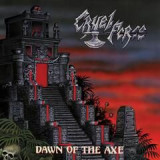
'Dawn of the Axe' harkens to dustier, more archaic times - ones where subgenre delineations weren't so strict and all was mostly heavy metal. For sure, Cruel Force can still thrash with the best of them. The nine songs comprising the 39- minute album exude a wider variety of moods and dynamics, and also sees Cruel Force exploring their more epic side, with three of those songs topping six minutes.
No matter the mood or dynamic, though, energy bristles from every second of 'Dawn of the Axe'- riff, rhythm, lead, vocal, everything - and with the slightly-more-atmospheric recording style, it all gels together to create the band's strongest and most complete statement to date.
No matter how you (axe) slice it, there's no wimping out whatsoever!
It's rare for a band to be away a full decade and then come back with their best work, but such is the case with Cruel Force and 'Dawn of the Axe'. There's some strange magick brewing in the Devil's Dungeon, and they've crossed the Styx to bring you that Power Surge!
Early on, his prodigious technique and wide-ranging style garnered comparisons with the great Oscar Peterson. But there has always been another side to Alexander's playing. Usually, jazz grabs the upper hand, but on occasion he digs deep into his Jamaican roots.
The 1974 We've Only Just Begun recording signals the beginning of Jamaican pianist Monty Alexander's fruitful relationship with MPS, lasting over a decade and encompassing some dozen albums. On many he partners with no one else than fellow Jamaican and one of the fathers of ska, guitarist Ernest Ranglin.
Among others, this Best Of includes tracks from Monty's MPS classics like RASS!, Here Comes The Sun, Montreux Alexander - The Monty Alexander Trio Live At Montreux, We've Only Just Begun, Monty Strikes Again, Cobilimbo, or the untitled Monty Alexander & Ernest Ranglin.