Sonetos del Amor Oscuro is an ode performed by four enchanted souls who have intertwined their hearts and conjured harmonies and rhythms that wander endlessly among the spellbinding words of a poet from Granada... Federico García Lorca;
He wrung, pushed and vibrated words like tectonic plates, transforming plains into poetic mountain landscapes. He then covered them with a Moorish carpet of snow crystals and had them reflected by the dark locks of hair of a gypsy girl from Albaicín who, with a voice forged in gold and silver, sings her little sister to sleep with a soothing lullaby.
Helena Casella – vocals
Myrddin De Cauter – flamenco guitar
Stijn Kuppens – cello
Stefan Bracaval – flute, bass flute
Helena Casella, the Belgian-Brazilian vocalist with a deep, soft and warm voice, translates her multicultural background and personal thoughts into music in a passionate, soulful and refined way. With her roots in an exceptionally musical family, her music exudes this unique heritage. She effortlessly interweaves genres such as R&B, soul, hip hop and modern jazz, while remaining true to the vibrant sounds of Brazil, an essential part of her roots.
Her debut album was released earlier this year on W.E.R.F. records.
Myrddin De Cauter's music is deeply moving, complex, passionately rhythmic and deeply emotional. He has mastered the compás of flamenco, which gives him the freedom to converse with elements from jazz or classical music. His speed sometimes seems otherworldly, but those who take the time to listen closely to his music will quickly discover an immense world of pure emotion, beauty and tranquillity. After six albums and countless concerts, Myrddin proves that great virtuosos do not necessarily have to come from Spain. At the tender age of eleven, his father taught him to play the clarinet in jazz and gypsy swing style; he became part of the family orchestra and gained his first experiences on stage. A classical melody composed on the guitar prompted him to ask his father to teach him the basics of flamenco guitar. Soon after, Myrddin seemed ready for the real thing and went to Andalusia to learn from Manolo Sanlucar and Gerardo Núñez. This inspired him to compose in his own unique language, deeply rooted in the pure flamenco tradition but enriched by boundless creativity.
Stijn Kuppens is a cellist, composer and producer. In his own genre, which he describes as non-classical cello, he uses the cello in his own unique way. His profound knowledge of the complex history and techniques of the style is clearly audible: Kuppens' mastery of classical music is evident in every note he plays, whether he is performing solo or collaborating with other musicians. His skill as a musician and ambition to explore the boundaries of conventional classical music is evident in his ability to seamlessly blend different genres.
Stefan Bracaval is a classically trained flutist who graduated from the Royal Conservatory of Antwerp. His fascination with the expressive potential of improvisation led him to jazz, where he became a self-taught jazz flutist. Bracaval has collaborated on projects with prominent jazz figures such as Charles Loos, Bert Joris and the Brussels Jazz Orchestra. In addition, he worked as a soloist and arranger with the VRT Radio Choir in 2016. Bracaval leads the Stefan Bracaval QU4RTET, which emphasises the flute as a central jazz instrument and brings new repertoire rooted in jazz traditions.
Live
31/10/2025 – Café Silverio, Gent (BE)
15/01/2026 – Kloosterkapel Diepenbeek (BE)
16/01/2026 – ‘t Ey, Belsele (BE)
17/01/2026 – Sint-Luciakerk (kerkconcerten Merode), Engsbergen (BE)
23/01/2026 – Muziekcentrum Dranouter (BE)
Cerca:re grad
- 01: Grotesque (Chapter 2)
- 02: Duo + 1
- 03: Night Out (Theme From Early Snow In Munich)
- 04: Paraphrase Sw (Theme For Stevie Wonder)
- 05: Feat. Zdenka Kovacicek - Peep Show (Theme From Early Snow In Munich)
- 06: Love Experiment (End Credits From Whatever You Can Spare)
- 07: Video Games (Theme From Early Snow In Munich)
- 08: Whatever You Can Spare (Orchestral Version)
- 09: Early Snow In Munich (Opening Credits)
- 10: The Forrest Date (Theme From Whatever You Can Spare)
- 11: The Graduates (Theme From The Graduates)
- 12: Oberhausen (Theme From Way To Your Neighbour)
- 13: Winter's Wish (Theme From Winter's Wish)
A new release from Fox & His Friends Records, Chapters (Screen & Stage Dancefloor Jazz from Yugoslavia 1971-1984) by Ozren Depolo brings to light a trove of previously unreleased music spanning more than a decade of his work in film, theater and television. This gatefold audiophile 180g LP, including a 12-page booklet with archival photos and detailed liner notes, offers for the first time a full album composed exclusively of Depolo's own authorship, drawn from master tapes held in private and institutional archives. Mastering and cutting was done by Frank Merritt from The Carvery Ozren Depolo rarely pursued opportunities to record original material, in part due to a general lack of interest among local publishers in jazz discography. Yet he was more than a gifted composer: he was also an accomplished saxophonist, clarinettist, flutist, pianist, arranger and occasionally, a jazz journalist who contributed articles to specialized programs on Radio Zagreb. Depolo also played in international big bands alongside jazz greats such as Clark Terry, Oliver Nelson and Gerry Mulligan, as well as in formations led by Bosko Petrovic, including the Nonconvertible All Stars and the B.P. Convention Big Band. He was a member of ensembles including The Alfi Kabiljo Orchestra, The Dragutin Diklic Ensemble, Jugoslovenska Pop Selekcija, The Stipica Kalogjera Octet, Vaclav Zahradnik & His East All Stars Band and the Zagreb Jazz Quintet. As both composer and arranger, he produced a significant body of work for large jazz orchestras and small ensembles. He was deeply engaged in jazz improvisation and avant-garde classical music, recording numerous chamber pieces for saxophone. A long-standing member of Acezantez, Zagreb's renowned contemporary music ensemble, he also collaborated with international figures such as Ted Curson, John Lewis, Johnny Griffin, Art Farmer, Leo Wright, Art Taylor, Slide Hampton and Lucky Thompson. This selection also includes his collaboration with Igor Savin and jazz vocalist Zdenka Kovacicek who were played on Karl Lagerfeld's fashion shows. The release demonstrates how Depolo was able to shift fluidly between idioms: from driving big-band passages to intimate chamber-like arrangements, from funk-tinged motifs to lyrical, impressionistic soundscapes. This stylistic breadth, always anchored in his deep jazz and funk sensibility, gave his music an adaptability perfectly suited to the hybrid world of stage and screen. The LP highlights that versatility while also presenting the coherence of his artistic voice, one that had gone unrecognized precisely because it was dispersed across so many contexts.
Old-time and traditional music stay exciting for their contrasts. Exacting instrumentation honed through mentorships and late-night jams at fiddler's conventions tangles with a community-sourced inventiveness that influences variants and new sounds. Joseph Decosimo is a master of this genre for this very reason, blending deep technique with an openness and curiosity that keep his music crackling with life. A "marvelous fiddler" (No Depression) and banjo player who braids "exultation and veneration" (INDY Week) into his music, on his third solo album Fiery Gizzard Decosimo gathers a close-knit ensemble of friends from his musical career to infuse his interpretations of fiddle and banjo pieces with a contagious communal joy. As an artist working with traditional music from the South and Appalachia, Decosimo chooses songs based not only on historical significance and lineage but also his own sensory approach. For Fiery Gizzard, his ear was tuned to otherworldly tones and mystery, sourcing from field recordings such as Virginia fiddler Luther Davis' hypnotic version of "Shady Grove" while amping up the music's psychedelic potential. On the middle Tennessee banjo composition "Flowery Girls," a VHS of bluesman Abner Jay inspired Decosimo to rig up a pickup inside a fretless banjo and play it thr ough a tube amp to capture some of Jay's edge and funkiness. But to round out the sound and keep it kinetic meant galvanizing a genre-eschewing crew to jam out - and not in a "spaced-out drooly" kind of way, he laughs, but as a sort of "responsive conversation." Decosimo has always been a community-minded artist. He began playing as a seventh graderin Tennessee, fostering relationships with older players at jams and in homes, a learning mode natural to his inquisitive nature and desire for musical connection. A folklorist by intuition, he later became one by profession, studying with old-time legend Clyde Davenport, teaching in East Tennessee State University's renowned bluegrass program, and receiving his PhD at the University of North Carolina with a dissertation titled "Catching the `Wild Note': Listening, Learning, and Connoisseurship in Old-Time Music." In North Carolina, Decosimo kicked about in the verdant environment of Durham and Chapel Hill's folk and indie scenes, collaborating with artists including Alice Gerrard, Hiss Golden Messenger, and Jake Xerxes Fussell. This community has influenced his own music, including his "sublime and strangely heartening" (Bandcamp Daily) 2022 release While You Were Slumbering and Beehive Cathedral, Decosimo's 2024 "Appalachian mountain music treasury" (New Commute) trio album with Luke Richardson and Cleek Schrey for Dear Life Records. Continuing on this path, Fiery Gizzard is home base for a loose outfit of mostly Tarheel-based musicians from within and beyond traditional music. Inspired by a tour with fiddler Stephanie Coleman (Nora Brown), guitarist Jay Hammond, and synth builder and multi-instrumentalist Matthew O'Connell, Decosimo assembled studiomates based on close friendships and comfort. Coleman, O'Connell, and Hammond contribute to Fiery Gizzard, along with bassist and producer Andy Stack (Helado Negro, Wye Oak), horn player Kelly Pratt (Beirut, David Byrne), Mipso and Fust's Libby Rodenbough, Joseph O'Connell (Elephant Micah), and trad/experimental artist Cleek Schrey. Decosimo's fiddle and banjo work is virtuosic, intricate and simple simultaneously, a testament to his many years of study. On some tracks, his playing or lovely, plain-hearted singing is the centerpiece, such as on his interpretations of Texan street preacher Washington Phillips' 1929 recording "I Had a Good Father and Mother" or the Eastern Kentucky fiddle barn-burner "Glory in the Meetinghouse," famously played by Luther Strong for Alan Lomax. But there's also a trusting open-door policy, like where Southern Appalachian tune "Ida Red" relaxes into Coleman's sweet, confident fiddling and Hammond's loping guitar. As a bandleader, Decosimo's confidence and enthusiasm for the music reveal the heart of traditional music and how it can come to life through community. Fiery Gizzard is Joseph Decosimo as a powerful champion of traditional music - a sponge who soaks up as much as he squeezes out, a responsive artist who makes his genre accessible, and a magnet who can bring musicians of all sorts into his orbit with his same passion.
- New Day Rising (Live January 30Th, 1985 At First Ave)
- Everything Falls Apart (Live January 30Th, 1985 At First Ave
- The Girl Who Lives On Heaven Hill (Live January 30Th, 1985 At First Ave)
- I Apologize (Live January 30Th, 1985 At First Ave)
- If I Told You (Live January 30Th, 1985 At First Ave)
- Every Everything (Live January 30Th, 1985 At First Ave)
- Makes No Sense At All (Live January 30Th, 1985 At First Ave)
- Terms Of Psychic Warfare (Live January 30Th, 1985 At First Ave)
- Powerline (Live January 30Th, 1985 At First Ave)
- Books About Ufos (Live January 30Th, 1985 At First Ave)
- Broken Home, Broken Heart (Live January 30Th, 1985 At First Ave)
- Diane (Live January 30Th, 1985 At First Ave)
- Hate Paper Doll (Live January 30Th, 1985 At First Ave)
- Green Eyes (Live January 30Th, 1985 At First Ave)
- Divide And Conquer (Live January 30Th, 1985 At First Ave)
- Pink Turns To Blue (Live January 30Th, 1985 At First Ave)
- Eight Miles High (Live January 30Th, 1985 At First Ave)
- Out On A Limb (Live January 30Th, 1985 At First Ave)
- Helter Skelter (Live January 30Th, 1985 At First Ave)
- Ticket To Ride (Live January 30Th, 1985 At First Ave)
- Love Is All Around (Live January 30Th, 1985 At First Ave)
- Don't Want To Know If You're Lonely (Live 1985)
- I Don't Know For Sure (Live 1985)
- Hardly Getting Over It (Live 1985)
- What's Going On (Live 1985)
- Private Plane (Live 1985)
- Celebrated Summer (Live 1985)
- All Work And No Play (Live 1985)
- Keep Hanging On (Live 1985)
- Find Me (Live 1985)
- Flexible Flyer (Live 1985)
- Sunshine Superman (Live 1985)
- In A Free Land (Live 1985)
- Somewhere (Live 1985)
- Flip Your Wig (Live 1985)
- Never Talking To You Again (Live 1985)
- Chartered Trips (Live 1985)
- The Wit And The Wisdom (Live 1985)
- Misty Modern Days (Live 1985)
- Sorry Somehow (Live 1985)
- Eiffffel Tower High (Live 1985)
Hüsker Dü. Live. 1985. Das transzendente Punk-Trio aus Minneapolis in seinem explosivsten Jahr, live aufgenommen auf der Bühne im First Avenue, in der vielleicht am besten klingenden Aufnahme der gefeierten SST-Ära der Band. Diese 4xLP/2xCD-Edition enthält Beau Sorensons Restaurierung der 21 Songs des gesamten Sets vom 30. Januar 1985, dazu 20 zusätzliche Live-Tracks aus dem weiteren Tourneeverlauf des Jahres und ein Deluxe-Booklet mit detaillierten Informationen zu den zwölf geschichtsträchtigen Monaten von Hüsker Dü. Wie klingt eine Legende, in dem Moment, wenn sie geschrieben wird? Betrachtet man das Jahr 1985 durch die dynamische Linse der Independent/DIY-Musik, so gab es Mitte des Jahrzehnts für Hüsker Dü einen kraftvollen und unbestreitbaren Sprint von der rauen Punk-Institution bei SST zur künstlerischen Empathie bei Warner Bros. Die New York Times bezeichnete die Band als "die beste, die aus der Hardcore-Szene hervorgegangen ist". Im Einklang mit diesem Lob zeigte Hüsker Dü ein kreatives Tempo, das in keiner anderen Musikära zuvor oder seitdem jemals erreicht wurde. Nachdem sie im Juli des Vorjahres mit dem Doppelalbum "Zen Arcade" die aufkeimende Alternative-Rock-Bewegung sprengte, veröffentlichte die Band nur sechs Monate später, am 14. Januar 1985, das epochale "New Day Rising" und hörte nie auf, dem Sonnenaufgang über dem Hidden Beach nachzujagen, der das Cover des Albums zierte. Am 30. Januar 1985 erreichte Minneapolis am Abend zum Zeitpunkt des Konzerts -11 °C, was einem gnadenlosen Temperatursturz von 19 Grad gegenüber dem Tageshöchstwert von 8 °C bedeutete. Die 1500 Besucher im First Avenue brauchten jedoch kein T-Shirt, geschweige denn eine Daunenjacke: Von den ersten blendenden Momenten von "New Day Rising" an war klar, dass Bob Mould, Grant Hart und Greg Norton fest entschlossen waren, jedes Molekül im Raum in Brand zu setzen. Ihre Setlist bot eine nächtliche Kaskade von Feuerbällen aus den Alben "Everything Falls Apart", "Metal Circus", "Zen Arcade" und "New Day Rising" sowie fünf neue Songs, die später auf "Flip Your Wig" wieder auftauchen sollten. Außerdem würdigten sie ihre rockigen Vorfahren: mit einer rasanten Version von "Eight Miles High" von The Byrds, einer turbulenten Interpretation von "Helter Skelter" von den Beatles mit Dave Pirner von Soul Asylum, einem Pop-Punk-Remake von "Ticket To Ride" ebenfalls von den Beatles und ihrem charakteristischen Cover von Sonny Curtis' Mary-Tyler-Moore-Titelsong "Love Is All Around" zum Abschluss. Die First-Avenue-Bänder von 1985 zeigen Hüsker Dü in Höchstform mit bereits beliebten Songs, ein paar Jahre bevor sie ihren Status als Blaupause für den kommenden Alternative-Rock-Boom endgültig gefestigt hatten. Dieses Box-Set feiert diese Aufnahmen, die vielleicht die besten Hüsker-Dü-Aufnahmen sind, die während der legendenhaften SST-Jahre der Band produziert wurden. "Wenn ich an diese Zeit zurückdenke", kommentiert Greg Norton, "waren das drei Jungs, die das taten, was sie liebten, Spaß hatten und im Grunde anderen Menschen zeigten, dass man sich selbst treu bleiben kann, seiner Musik treu bleiben kann und sich nicht der Mode oder den Erwartungen beugen muss, um etwas wirklich Großartiges zu schaffen."
Volpe is the finely tuned trio led by Ghent-based pianist Heleen Andriessen. Drummer Stijn Demuynck and bassist Kobe Boon support Andriessen's lyrical melodies with an infectious groove. The carefully crafted compositions alternate between energetic and melancholic, allowing the listener to feel immersed in a warm bath while transporting them to an uncanny world.
'elders' (Dutch for "elsewhere"), doesn't refer to a physical place but to a refuge in Heleen's mind-a sanctuary where she searches for beauty on gray, rainy November days. A simple detail taken from everyday life can serve as a gateway to this hopeful, imaginative world. Musically, this translates to repetitive patterns that gradually evolve or suddenly burst open. Subtle dissonance is welcome here, with the band lovingly embracing the slight disruption it offers. Heleen's playful runs and Stijn Demuynck's grooves balance the melancholic undertones. Seemingly simple melodies tell stories and offer familiarity to listening ears.
keywords: piano trio, contemporary jazz, keith jarrett, modal jazz, minimalist
- 1: Rhythm Riff
- 2: Easy To Love
- 3: Old Folks
- 4: Tangerine
- 5: After You've Gone
- 6: Pennies From Heaven
During the past 50 years, tenor-saxophonist Scott Hamilton has been one of the most consistent jazz artists, always taking thoughtful and swinging solos while displaying a warm tone. His 2004 live recording brought a top-notch quartet to the Jazzclub De Tor, Enschede, the Netherlands. Accompanied by pianist Rein de Graaf, bassplayer Marius Beets and on drums Eric Ineke, Scott Hamilton plays six jazz tracks from the set including "Rhythm Riff", a 12-chorus solo that gradually builds in excitement. Live at De Tor is available as a limited edition on silver coloured vinyl, contains liner notes on back of the sleeve by jazz journalist/author Scott Yanow.
- A1: Her Begynner Mine Arr
- A2: Tragediens Trone
- A3: Trollskogen
- A4: Ulverytternes Kamp
- A5: Nattens Madrigal
- A6: Vargnatt
- A7: Vargnatt ( Live 1993 )
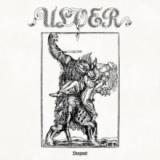
Ulver geben heute bekannt, dass ihr klassisches Promo-Tape aus dem Jahr 1993 auf Peaceville Records neu aufgelegt wird. 2023 markiert dreißig Jahre seit der Aufnahme und die Platte zeigt Ulvers Black-Metal-Wurzeln, bevor die Band begann, sich außerhalb der Grenzen des Genres zu entwickeln.
Weithin bekannt für hochkarätige Klanglandschaften und exquisite experimentelle und elektronische Kunst als Teil ihrer kontinuierlichen und sich ständig verändernden Entwicklung, verschmolzen Ulver's Anfänge ätherischen Black Metal mit zarten Folk-inspirierten Passagen. Trotz der rauen Kanten sticht das Material der Band mit seinen höchst unkonventionellen Kompositionen im Vergleich zu den primitiveren und roheren Angeboten anderer schnell aufstrebender Acts in der norwegischen Szene jener Zeit hervor.
Vargnatt war Ulvers erster Ausflug in die Wildnis und ein außergewöhnliches Debüt-Demo, das das verwendete, was zu einem Grundelement ihrer legendären Trilogie (Bergtatt, Kveldssanger und Nattens Madrigal) werden sollte, nämlich akustische Gitarren inmitten melodischer und oft komplexer und verworrener Arrangements, die mit einem bereits fortgeschrittenen Grad an Musikalität gezaubert und vorgetragen wurden, mit dem unheimlichen Gesang des langjährigen Frontmanns Kristoffer Garm" Rygg. Zu dieser frühen Inkarnation von Ulver gehörten auch Carl-Michael Eide von Aura Noir / Ved Buens Ende am Schlagzeug sowie Robin "Mean" Malmberg (von den norwegischen Pionieren Mysticum) am Bass.
Das auf dieser Platte enthaltene Audiomaterial besteht aus Originalmaterial, das vom Original-DAT stammt. Die Veröffentlichung enthält außerdem den Bonustrack "Vargnatt", der 1993 live bei Bootleg TV in Oslo aufgenommen wurde und aus der Nationalbibliothek Norwegens stammt.
Kristoffer "Garm" Rygg äußerte sich wie folgt zu der Wiederveröffentlichung:
Das ist das erste, was wir als Ulver aufgenommen haben. Wikipedia sagt, es sei unser zweites Demo, aber es ist unser erstes und einziges. Stovner, Oslo, 1993, zwei-drei Tage, wham, bam, thank you mam, mit sehr wenig oder gar keiner Erfahrung. Wir waren Kinder, 17-19 Jahre alt, und haben das Wasser getestet. Abgesehen vom Gesang und einigen merkwürdigen musikalischen Entscheidungen muss ich sagen, dass ich mich heute weit weniger dafür schäme, als ich es wahrscheinlich in den Neunzigern tat, und ich muss darüber lächeln, dass diese Aufnahme 30 Jahre später immer noch aktuell ist. Es erfüllt mich mit Freude (und etwas Traurigkeit), die verrückten Launen und Dinge, die wir erlebt haben, in relativ unberührter Form wiederzuhören. Peaceville, der Hauptlieferant vieler unserer Lieblingsplatten von damals, leistet hervorragende Arbeit bei der Wiederveröffentlichung einiger dieser alten Underground-Tapes. Also, nach ein paar limitierten Auflagen, "warum zum Teufel nicht", oder? (Kristoffer Rygg, Ulver)
Tracklisting
Tape
Atsuko Hatano is a contemporay classical Viola player who works with electronics to add textures and layers to her sound. Located in Tokyo, Japan, she is a commanding instrumentalist and composer who constructs innovative compositions with strings and layered electronics.
Cells #5 is an orchestral collection and sequel to her previous album Cells #2 which will also be released on cassette via Imprec’s Cassauna label. Cells #5 required three years to complete and the work features the artist’s signature methodology where the instrumental performances are gradually enveloped by multiple layers of a string orchestration.
When not playing solo Atsuko is extremely active recording, collaborating and playing live with Jim O’ Rourke, Eiko Ishibashi, Mocky, Midori Hirano and many more acts.
Atsuko Hatano: Violin, Viola, Cello, Contrabass, Piano (track 1), Xylophone, Oscillator and Chorus
Guest Musicians:
Eiko Ishibashi: Piano, Marimba, Vibraphone
Yuko Ikoma: Accordion
Natsumi Kudo: Horn and flugelhorn
Icchie: Trumpet, Flugelhorn, Piccolo Trumpet
Tatsuhisa Yamamoto: Snare Drum
Composed and Mixed by Atsuko Hatano. Mastered by Jim O’Rourke. Cover by Saskia Griepink.
In between the folds of ceremony and commonality lies a perennial spring of musical expression.
A statement along the time continuum, or a testament to the resilient resourcefulness embedded in that truth, forms the philosophical approach of this album – the first outing of Dídac.
Studying an extensive archive of instruments, artifacts, and field recordings at the Musée d’ethnographie de Genève—a space steeped in folkloric gesture – Dídac encountered a cosmos of liturgical music and folk song. Anchored in reverance for tradition and transformation alike, this album navigates the old-world Mediterranean lore through a post-modern ambient lens, threading drone, gentle rhythm, electroacoustic textures and the crude tactility of archival material into one woven tapestry.
Under the guidance of Dr. Madeleine Leclair, Dídac was invited to work within one of the world’s most extensive ethno- musicological archives—L’AIMP. In the saturated basements and tape-lined backrooms of the museum, he submerged himself in the sounds of ritual and rural life: wax cylinders from the Eastern Mediterranean, tapes of liturgical hymn, the worn edges of communal song.
In a makeshift studio on the fourth floor of the museum, he sifted through the hours of material he collected, gradually discovering that the archive was no static source – It did not dictate; rather, it served as a companion—offering not answers, but questions. Not a beaten track, but a cluster of sonic clues and riddles. Samples do appear occasionally, tenderly interwoven into the dialogue of the songs. In Dídac’s self-titled debut, the past is not worn as ornament or kitsch; it is listened to and responded to. The museum, its archives, and the visit to Geneva became a foundational culisse of sorts, igniting a myriad of rough cuts and improvisational outtakes.
Dídac, or Diego Ocejo Muñoz, was born in Madrid in 1994 to a family of both Catalan and Castilian origin.
Brought up in a religious household, the influence of the Catholic Church innately shaped the social fabric, schooling and daily life. This lingering dominance led the adolescent Diego into a path of rejection of everything sacramental, promptly resorting to subversion in the shape of grafitti, skateboarding and underground music. Only later in life, after a rigorous venture as an acid and electro producer, the Church re-emerged before him in new light, invoking a deep fascination for its mysticism, iconography and choral tradition.
Spain in general and Catalonia in particular, has long served as a crossroads of the eastern–western Mediterranean continuum, with many of its cultures sharing aspects of way of life and ceremony. At the MEG, Diego found himself puzzled with this realization, resulting in a sonic amalgamation that reaches farther away from the rugged mountains of Catalonia than you might perceive at first encounter.
The deeply embedded memory of rite and public ceremony, religious hymn and landscape—sieved through the undercurrent of personal re-emergence, forms the emotional topography of this album. The record does not trace this landscape; it inhabits it. Its repetitive mysticism and ambient, wide-eyed gaze could possibly evoke (perhaps redundant) comparisons to artists such as Dimitris Petsetakis, or Popol Vuh’s late 70’s cinema scores.
The delicate lines between the sacred and the secular – between memory and re-invention – serve as a cipher to understanding this album in its entirety. Titles like Malpàs Mines or Pantocrator’s Portal Outro nudge toward a folkloric and devotional bedrock—places where labor and spirituality coexist, where names preserve both dust and veneration.
Nevertheless, this is far from mere nostalgia. It is a reclamation — singing alongside the spirits of the past, nurturing what still hums beneath the soil. It is an intimate reflection on tradition, rebellion, adolescence, ceremony and fantasy – a pastoral contemplation on what once was and what is to be.
Comes with DL card, wrapped in shrink + a sticker. EN/JP liner notes. ** High grade experimental computer music that deserves a check - tip! **
The first LP release to commemorate the 10th anniversary of the release and to honor the late composer.
This collection, featuring seven pieces from 2011 to 2015, celebrates Noah Creshevsky's 70th year with a fittingly life-affirming and masterful verve. An award-winning composer who has studied with Nadia Boulanger and Luciano Berio, he began composing electronic music in 1971, using the power of circuitry, tape and then digital technology to create a "hyperreal" musical world in which recordings of human performers, both vocalists and instrumentalists, are juxtaposed and recombined in compositions which span eras, cultures and genres. His use of expanded musical palettes arises from an aesthetic of inclusion, guided by an open spirit and an expansive musical sense. The combination of the emotional power of human performances with the precision of computers create real-beyond-real super-performances of surprising control and virtuosity, resulting in a hypothetical and yet very real music, full of drama, humor, and tenderness. This album, Creshevsky's second release on EM, following the 2004 "Tape Music" compilation, gives ample evidence of both his mastery of digital technology and his profound, empathetic musical instincts. His ability to use the computer to highlight the gifts of human performers is displayed on every track, including a piece which focuses on Japanese vocalist Tomomi Adachi.
Body Clinic joins us for our next 12” release with four tribal tech-house cuts, recalling the sound of early-2000s Pacha. With E-Talking on Papa Nugs’ label running the festival circuit this summer, he’s already become the talk of the scene—and this EP makes clear why.
Each track is driven by drums at the highest grade—rugged, weighty basslines locking in with sci-fi warped FX, keeping the floor in constant motion. Trippy vocal cuts thread through the grooves, getting deep into our heads and sending minds off into nearby dimensions. And that’s just the a-side.
Flip it over and Bongo Loco comes rolling in—a true cruiser. Built around a huge breakdown of layered bongos, it kicks back in with the kind of chest-rattling low end that have become Body Clinic’s signature. It’s the moment where hands shoot in the air, the rhythm carrying you further into the night. On b2, My Mate Dave shifts gears again—jumping off the old-school tech foundations and landing closer to the progressive sound we know BC for. It’s a peak-time anthem through and through.
Promo downloads have quickly come in from Chris Stussy, Josh Baker, Christopher Ledger, Roza Terenzi, and East End Dubs, marking it as one of the most anticipated releases of 2025.
- A1: Displacement (Kmru Rework) Feat Kmru
- A2: Reprisal (Penelope Trappes Rework) Feat Penelope Trappes
- A3: Empire Systems (Kevin Richard Martin Rework - Iced Mix) Feat Kevin Richard Martin
- B1: Ausencia (Mabe Fratti Hiatus Rework) Mabe Fratti
- B2: Persistence (Abul Mogard Rework)Feat Abul Mogard
- B3: Secretly Wishing For Rain (William Basinski & Gary Thomas Wright Rework)
A decade after its release, A Fragile Geography returns transformed. This limited edition cassette accompanies the AFG10 anniversary reissue, offering an inspired re-envisioning of Rafael Anton Irisarri’s landmark compositions. Reworks presents distinctive readings of these pieces, with each artist leaving their personal mark on the material. The titles remain unchanged, with the sole exception of “Hiatus,” reborn here as “Ausencia.” Together, these reimaginings extend the emotional cartography of the album into new terrains.
KMRU reframes “Displacement” with expansive, glimmering layers that open into meditative ambient landscapes. Nairobi born and Berlin based, he is known for morphing field recordings into vivid aural experiences, often capturing the texture of footsteps, foliage, and distant city life and weaving them into contemplative soundscapes. In this version he introduces subtle new sounds, including stringlike synths that trace and heighten the piece’s emotional arc. The result invites close listening, offering enveloping tones where the organic and the synthetic gently collide and flow.
Penelope Trappes renders “Reprisal” as a voice-led invocation of the delicate and the intimate. Her wistful vocals bloom with fragile sorrow, rising over shimmering strands of strings to create a sound world at once sacred and shadowed. She is adept at channeling inherited grief into music that is transcendent and otherworldly. The interplay of her voice, the strings, and her use of space and depth draws those qualities into Irisarri’s orbit, imbuing “Reprisal” with the same spiritual weight and clarity that define her most powerful work.
Kevin Richard Martin (a.k.a. The Bug) transforms “Empire Systems” into a cavernous “Iced Mix,” driven by polyrhythmic double bass motifs and sculpted from subterranean pressure and negative space. Known for pushing sound to its physical limits, Martin brings the stark intensity of his dub and noise infused practice into Irisarri’s architecture. The track seethes with harmonic distortion and erupts in white noise rhythms, its brooding low end depth and icy reverberant textures amplifying the tension. Vulnerability and force are set in stark relief, as silences feel as heavy as the bursts of sound themselves. The result is a stark study in atmosphere, restraint and impact, reframed through Martin’s singular lens of sonic mass and low end intensity.
On Side B, Mabe Fratti opens with a cinematic, dreamlike, Lynchian reimagining of “Hiatus” in her native Spanish (“Ausencia”). She threads cello and voice so wondrously that her rendering feels at once hauntingly beautiful and disquieting. Emotionally charged melodies shift in unexpected directions, while her soft, intimate vocals hover above Irisarri’s brooding synth textures. Fratti’s gift for blending experimental and avant pop sensibilities with visceral, emotionally powerful expression shines resplendently here. She gives voice to Irisarri’s reflections on the passage of time and his growing desire to reconnect with his familial roots.
Abul Mogard stretches “Persistence” into a vast drone elegy. A master of patient sound sculpting, Mogard layers evolving waves of analog synths into a dense shroud that radiates its own internal light. Gradual surges of tone and subtle harmonic shifts emphasize the piece’s endurance and inevitability. Irisarri’s original composition, in Mogard's hands, becomes a rumination on time’s unrelenting flow. Melancholy and transcendence coexist in equal measure in this engulfing, cathartic rework.
William Basinski and Gary Thomas Wright close the cycle with a spectral version of “Secretly Wishing for Rain.” Basinski’s field recordings of Reseda rainfall and birdsong, which open and close the rework, add a personal touch and evoke the imagined sound of a grainy film reel flickering to life. The piece suspends Irisarri’s yearning for the Pacific Northwest, lodging it hazily between memory, place and an unreachable dream. It feels like a fading recollection, half forgotten and half felt. A final gesture that dissolves the album into vapor, leaving the listener adrift in its lingering afterglow.
Mastered with great care by Stephan Mathieu and featuring a remixed version of the original artwork by Daniel Castrejón, this edition refracts the language of the original through new prisms. Less a return than a passage, across time, across interpretation, into uncharted emotional realms.
From the bellows of a galactic abyss, n-trip offers their first solo EP release on DU:RA. The label boss reveals 4 deep techno tracks cultivated from an appreciation of the stylings of Valentino Mora, Ntogn and Simone Bauer adjacent sound palettes. Attending festivals such as Organik and experiences with deep techno doofs out in the Aussie bushland has also heavily influenced this release.
Reservation and propulsive sound design shape the tracks for the most part, while aspects of field recordings are littered throughout the release of rocks, leaves and sticks from recent travels. The structural simplicity and minimalistic elements make for perfect DJ tracks to accompany swamp-like sets and throbbing sub basslines are sure to shake any doof or club system.
‘Domina’ opens the release with chiming pads and heavily delayed artefacts invoking an ethereal cosmos of which the kicks and bass gently reinforce in movement. A broken snare beat follows as gradually layers of percussion increase in intensity.
‘MML’ takes what energy has built and adds pounding toms to the rhythm. Harsh live synthesis swells in the backdrop as hi-hats and clicks pan around the white noise and minimal yet intentional synth work.
‘dddBBB’ drops the tempo as it comes in full of field recordings. Taking you on a bushwalk through a desolate dreamscape – it slowly grows and pulsates like a giant snake writhing through the cosmic jungle, stalking its prey.
‘MR13’ then takes these ideas and jacks up the tempo to finish off the release. Shakers pan about as sticks, rocks and leaves reinforce the rhythm. FM chords slowly add life to the beat and are accompanied by giant bassy pads that gradually coalesce into its humble yet driving finale.
All tracks have been produced on Gadigal Land. Always was, always will be Aboriginal Land.
- A1: This Is A Never Ending Story (You Just Need To Close It)
- A2: Hidden Road (For Yoo Jae-Ha)
- A3: It Must've Been The Sunset (That Altered My Memory From That Day)
- A4: Good Morning, Harrison, It's Time To Go
- A5: Let's Walk Down To The Swamp Together
- B1: Rainy Night Ride With Roy
- B2: Crows Over My Shoulder (Take Me)
- B3: Spiral Dance (Up Or Down, I'm Not Too Sure)
- B4: Dear Oddie, Today Rainbows Are Falling From The Sky
- B5: Lying Here Half Awake, I Hear Kids Outside Laughing With Their Hearts
Unlike anything we have heard from her before, Okkyung Lee returns to Shelter Press with "Just Like Any Other Day: Background Music For Your Mundane Activities", a deeply intimate body of recordings at the juncture of ambient music, minimalism, and the baroque, that stands as radical intervention with what experimental music can be, and the place that organisations of sound occupy in our lives. For more than two decades, Okkyung Lee has stood at the forefront of the most radical trajectories of experimental music: a virtuosic cellist and improviser, renowned for her creative rigour and emotive depth. Particularly noteworthy for her range, dexterity, and adaptability, over the last five years Lee's output has revealed unexpected shifts and developments that move far afield from the realms of free improvisation for which she is most well known. 2020's "Yeo - Neun", a heart-wrenching, ambient chamber work - drawing inspiration from the Korean popular music of her youth - was issued by Shelter Press to great critical response, followed closely by "Teum (The Silvery Slit)" - one of a series engrossing electroacoustic works created at Groupe de Recherches Musicales in Paris - on Portraits GRM, and then "Na-Reul" in 2021, regarded by Lee as a closing statement of more than two decades living in New York, which set the precedent of her allowing her emotions to fully occupy the forefront of the music for the first time. Marking her return to Shelter press, "Just Like Any Other Day": Background Music For Your Mundane Activities", encounters Lee upturning the apple cart once again, weaving a profoundly intimate artistic statement on completely unexpected terms. Like its three aforementioned predecessors, "Just Like Any Other Day" belongs to broadening shift in Lee's approach to composing that roughly aligns with her return to her native South Korea, having lived in the United States since her late teens. Infused with a deep reengagement with her own culture and relationship to memory, it is equally a response to those critical challenges and questions provoked by significant life change. Worked on in isolation, and continuously returned to, over the course of four years, the album's nine pieces began with a simple recognition that experimental music is not always what we imagine it to be. It is a practice and a pursuit - a music for which, at its inception, the outcome is unknown - rather than an idiom defined by certain syntaxes, approaches, and qualities of structure and sound. From this departure point, Lee began to inquire after the utility of music itself: what is it for, what does it do, and what place does it (or can it) occupy in our lives? This solitary and durational journey, each composition gradually moving through different phases and evolutions over years, led Lee toward uncharted ground: a music that is not only playful, introspective, and seductive, but also intended to provoke a relationship to experimental music beyond its normative expectations. Rather active or deep listening, it pursues passive listening. Rather than a grand statement, it is discreet. Rather than virtuosity, it embraces the elegant and direct. Even more strikingly, for the first time, the music of "Just Like Any Other Day" encounters Lee leaving the cello entirely behind. Created at home on keyboard, computer, and an inexpensive cassette recorder, "Just Like Any Other Day" presents a remarkable form of ambient music - organisations of sound that become their own environment, to be occupied - intended, as the album's subheading infers, as Background Music For Your Mundane Activities. An expansion of the creative pathways opened by the Korean pop imbued compositions of Yeo - Neun, aspects of electronic process explored by "Teum (The Silvery Slit)", and the emotive foregrounding of "Na-Reul", each of the pieces presented across the two sides of "Just Like Any Other Day" implies something far greater than the limits of its own temporarily: a mood, provocations of memory and place, mirrors for the solitude within which it was made, and palpable emotion lingering just out of grasp. For Lee, each of the album's compositions could be continued or looped for an indeterminate duration: straddling a ground between the minimal and the baroque, enveloping the listener in endless cycles of appreciating, repetitive and rhythmical notes, flirting with the melodic and implying a disembodied imagism that borders on the profound. Remarkably beautiful and direct, Okkyung Lee's "Just Like Any Other Day: Background Music For Your Mundane Activities" - issued by Shelter Press on vinyl - represents a radical reconfiguration of experiential music, stripped to its bare essence in defiance of the widely presumed aesthetic signifiers. Unlike anything we've heard from her before, this immersive body of intimate recordings not only reveals new dimensions of Lee's striking range as an artist, but also of how we might regard and occupy music itself: an ambience to lived and felt like a second skin.
- A1: Crumbling Concrete
- B1: Rusted Iron
DINTE issues another cassette-only mixtape taking in Soviet punk selections, 1985 to 1992, issued in partnership with Philadelphia's World Gone Mad.
Absolute fire this, a mixtape survey of punk, no wave and all sorts of angular post-punk fantasies from the USSR, 1985-1992.
You can go whistle for a tracklist for this one, but trust that it’s all top grade, shot from the hip, frazzled, growling and assymetric as fuck, from stomping jangle to more light-footed, motorilk post-punk to some lost-in-translation Casio dub bubblers and into more bleak gothic realms - and not a dud in sight.
Issued in partnership with Philadelphia's World Gone Mad.
At daybreak, as sunlight travels through the atmosphere and begins to reach Earth’s surface, daylight gradually emerges. This marks the transition from night to the beginning of a brand-new day. As the temperature rises—especially after clear, calm nights—relative humidity decreases, and mist, formed of tiny suspended droplets, begins to evaporate. Warm air rises and cool air sinks, creating an interplay of temperature, humidity and sunlight that gives way to a soft, diffuse glow. The sea breeze slowly clears the morning mist, setting life in motion once again as the world wakes up.
‘Daybreak’ is Sven Wunder’s fifth full-length album, seamlessly continuing the progression of his musical oeuvre. It takes the listener on a vivid maritime expedition, beginning the moment the first rays of light break the darkness of the night and embarking on a lush journey through the early hours of the day and far beyond, until the light slowly fades and night falls once again. True to Wunder’s now-distinctive artistry, ‘Daybreak’ is marked by elaborately crafted compositions and elegant pop-jazz arrangements for flute, percussion, brass and strings—supported by a decisive rhythm section, all of which add depth and build on his body of work, continuing to unfold his creative path.
10 year anniversary edition of Kreng's massive »Works for Abattoir Férme 2007 - 2011”« 4 LPs worth of slow, skin crawling cinematic ambience made for the Belgian theatre group Abattoir Fermé.
It could hardly be a better time to again dive deep into Kreng and Abattoir Fermé's disturbingly beautiful underground worlds. Through 8 full- length vinyl sides we are transported through the most terrifying, shadow- filled, down-right bizarre moments of the subconscious. What could be the sound of your darkest dreams or most surreal fantasies gradually unfolds throughout the three and a half hour duration. Exactly this is what Abattoir Fermé specialises in, and Pepijn Caudron's scores perfectly reflect and accompanies both this theatricality as well as our own fears and desires in a masterful way.
Each extended side is crafted from an arsenal of samples, disintegrating vinyl and corroded tape, and Pepijn Caudron manipulates these sounds in a way that belies the sources. Rather than allow the sounds to emerge, they stay trapped beneath swathes of noise, tape delay and oppressive bass giving us a compositions that emerge like a cross between William Basinski, Jerry Goldsmith (circa Alien) and Henryk Górecki.’ »Works for Abattoir Fermé« is not for the faint of heart, but for the rest of us it might be just what the Doctor ordered...
“Is all that we see or seem but a dream within a dream?” This quote from a poem by Edgar Allan Poe sums up the lamenting, primal work that is "All That We See or Seem"; a project conceived between Finland, England and Brazil. The self-titled album consists of two long-form pieces of droning mysticism hailing from the trio of Gruth (concept, production, electronics), Ellen Southern (vocals, field recordings, percussion) and Johanna Puuperä (violin, modular synthesizer, additional vocals).
The album opens straight into a thousand yard stare with “Myrskymielellä", adapted from a 1891 poem by the Finnish national poet, Eino Leino, who wrote it at the tender age of 13. Here a blank distant droning of synths and the sounds of flowing water hover underneath like a dark river observed from the air. This is a sound and feeling that will stay constant for the entirety of the piece´s thirty minute duration. It is a trance-inducing composition that slowly unfolds elements of pagan ancestry into its own life. At first, faint female vocals are introduced as distant spatial elements, which gradually advance into waves of cries and anguish as the piece progresses and moves further into the storm. The tranquility of the first half is slowly morphed into a full blown ceremony as driving ritualistic percussion and a foreboding witch-like presence shifts the piece into a Dead Can Dance-like territory. Here a constant enveloping mixture of violins, modular synths, field recordings and vocal screams creates the feeling of a grande finale. It is an astounding piece of music that develops like a drone symphony for the beginning of time.
With the second piece, “A Dream Within A Dream”, from Edgar Allan Poe´s 1849 poem, you are transported to the shores of an undisclosed island; a place where it´s only you, your thoughts and the endless emptiness. The continual sound of waves is soon brought together with a cloud of synths and mourning violins that will keep a steady dreamlike state during most of the piece´s duration. This time the wordless vocals feel almost angelic in their pageantry. The composition flows like a slow caress of the soul and feels like the spirit twin of Gavin Bryars' “The Sinking of the Titanic” with its lamenting slow movements towards the unknown.
Truly a ghost of a record, “All That We See or Seem” is an experience hard to shake and feels like entering sacred ground. We are in a place surrounded by earth, both ancient and present. "Let loose, Vanha, the rage of an earthly storm! Detach the elements, completely open the sky! In the Earth, let an incessant storm prevail, so that in my chest I would not feel the miserable pain” - Eino Leino
Fetter’s Body of Noise erupts at the threshold between ravey hypnosis and avant-pop experiment, slithering through the hinterlands of unconscious desire. Nine shape-shifting tracks conjure haunted landscapes where beauty refuses clarity and dancefloor logic warps underfoot. Vocals swoon, drift, and demand—stacking into fragments that multiply and weave through saturated pulses and shimmering, snarling synths.
Opening track "Like a Rose" traces a dreamer’s transition into the unstable physics of a perplexing but familiar dream world, where they gradually become lucid. “Beast” follows up humming with shadowed urgency, threading a path through self-sabotage and metamorphosis. “Spathiphyllums” drifts a while in a lush lostness, aching for something new before fracturing into wild, cathartic collapse. Side B’s “Do I Exist? (D.I.E)” and “The Longing” spiral into existential wonder, searching for a human origin story—both personal and collective—against a backdrop of uncertainty, while “Headache” thrusts forward as an absurd and insistent manifesto to stay the course and harness one’s own power within the madness.
Body of Noise is crafted not only for sweating bodies in motion, but for distorting time and opening psychic portals, where surrender becomes strategy and uncertainty transforms into ecstatic navigation. Rooted in all-hardware improvised production and shaped by Fetter’s years of boundary-blurring visual and performance art, their debut LP feels alive and in flux. Reminiscent of a spectral pop chorus trapped in a loop of broken machinery, or a lost broadcast from a dancefloor in a parallel realm, Body of Noise is a journey into chaos, transformation, and a bold refusal to be contained.
About Fetter:
Fetter makes clubby self-destructing noise pop to dance and weep to. Oscillating between ethereal and pounding, their all-hardware, largely improvised live sets take listeners through a foggy wilderness of saturated rhythms and menacing synth lines, a golden voice guiding the way through. Fetter is the stage moniker of multimedia artist Jess Tucker. Their performances take place in clubs as well as galleries, often incorporating video, installation, and interactive performance art elements to create other-worldly surrounds of mesmerizingly unhinged bodies and faces.
An extremely rare Northern Soul 45 RPM single originally released in 1965 on the Holly label, Billy Arnell And The Sparkles "Tough Girl" was the product of two childhood friends that lived less than a block apart in suburban Fairlawn, New Jersey in the early 1960s - Billy Smith and Lou Hemsey.
Billy played guitar and sang; Lou played guitar and wrote songs, so they decided to form a band. They added friends Eddie Hoffman on organ and Jack Gullone on drums and began playing lots of gigs locally as Little Willie & The Sparkles. They were young, ambitious, and imagined themselves as the next Beatles. By a stroke of fate, they met Joe Martin of Apex-Martin Distributors in Newark, NJ, who caught the band's live show and was duly impressed. That meeting led to the recording session for the "Tough Girl" single. When they recorded the first version of the song, the producer wasn't happy, nor was Joe Martin - so he fired that producer and brought in the young, up and coming producer, George Kerr. Kerr didn't care much for the band, so they redid the entire thing without Hoffman and Guilone - with just Billy singing and Lou playing guitar.
The pair of old friends were buoyed by session aces Eric Gale on guitar, Bernard Purdie on drums, Bobbie Banks on organ, as well as a bass player whose name has been lost to time. In addition to those changes, they used the studio horn section that Hemsey arranged for, plus two trumpets, two saxes and two vibes players. The resulting single was an infectious amalgamation of rock and soul. Billy changed his surname to Arnell for the 45 release (because he thought it sounded more "show-biz") and the rest is pop history. Arnell later started a record company (Fire Sign Records) and purchased a recording studio (112 Greene Street Recording) in the trendy SoHo section of Manhattan with Steve Loeb.
As for the rest of The Sparkles, Hoffman became a teacher somewhere on Long Island, Guilone graduated from the Culinary Institute of America in Massachusetts and ended up living in Northern New Jersey. Hemsey became a well-known recording engineer, composer (Lou was the one who wrote "Tough Girl"), guitarist, arranger, orchestrator, editor, film director and producer for records and commercials.