A Compilation Of Astonishing And Rare Pieces Taken From The Celluloid Records Archive And Recorded By Ma-terial, The Ensemble Founded In 1979 In Nyc By The Legendary Producers And Musicians Bill Laswell (afrika Bambaataa, Run Dmc) And Michael Beinhorn (red Hot Chili Peppers, Soundgarden, Marilyn Manson). A Glimpse Into The Creative Spirit Of New York In The Early 80s. A Collection Of Remarkable Tracks Spanning Funk, Jazz, Soul And Electronic.
Search:reacted
- 1
ZENA, the contemporary ethio-jazz duo from London comprised of producer, keyboardist
and synth player Yohan Kebede and bassist/producer Menelik, have announced the forthcoming release of their debut EP ‘TEMESGEN’; is a six-track aural odyssey that balances uncompromising experimentation with a deep sense of home, comfort, and exploration. In accordance with the duo’s mission, the project is seeking to redefine and reimagine Ethiopian music for a new generation.
Speaking on the inspiration behind the EP’s title, Yohan said: “‘TEMESGEN’ means “Thank God” in Amharic, and for me, I never heard my mother receive good news without saying it aloud. After the first couple gigs we did as ZENA, we saw how people reacted to our music and how it resonated with them. It spurred in us a feeling of overwhelming gratitude, after which the EP kind of named itself”
Born out of a mutual love and respect for the music of their shared Ethiopian heritage, ZENA are charting a new endeavour where Ethiopian musical traditions meet the future. Building upon the roots and foundations laid by legendary Ethiopian musicians Haliu Mergia, Alemayehu Eshete and Mulatu Astatke, ZENA fuses the haunting spirituality and earthiness of the ethio-jazz tradition with a modernity, sensuality and sense of disruption that is distinctly London.
Following three sold-out London headline shows, plus appearances at We Out Here Festival and on NTS Radio, ZENA arrive on Brownswood Recordings with a bold debut that’s equally at home across jazz-minded selectors and leftfield crate-diggers. The duo’s momentum is fuelled by Yohan Kebede’s landmark year with Kokoroko; from the release of Tuff Times Never Last to an NPR Tiny Desk, a North American tour, and their biggest headline show yet at O2 Academy Brixton, alongside Menelik’s quietly formidable reputation in London’s inner circle, shaped by time on the road and in the studio with Muva Of Earth and Bill Laurance.
d B1 IT'S YOU (ANTE NEH) ft. Meron T
d B1 IT'S YOU (ANTE NEH) [ft. Meron T]
[d] B1 IT'S YOU (ANTE NEH) [ft. Meron T]
When a Russian missile struck the ground not far from my studio in Kyiv, I vividly remember how my body reacted to the explosion, milliseconds before my mind did. That traumatic explosion reduced my essence to a primal state. There existed nothing but dread—the kind that, in scripture, accompanies the appearance of angels announcing, ’Be not afraid’.
The visions of Abbess, composer and mystic Hildegard von Bingen were preceded by bright, excruciating flashes of light. Modern medicine reduces them to cluster migraines, one symptom of which is the retinal aura, often accompanied by blurred vision and blind spots. Hildegard’s music can place great demands on the bodies of its performers, emphasizing uncomfortable intervals and the wide distance between the lowest and highest pitch. In comparison, Gregorian chant, the liturgical standard of the time, represents a tempered attempt to grasp God intellectually; indeed, Hildegard’s music was once described as a stick of dynamite thrown into a Gregorian chant.
This album is not a historically informed performance. Hildegard’s persona and music are a starting point—a distant mirror, akin to the shield of Perseus, used to reflect Medusa. It allows us to reflect, comprehend, externalise, and transcend traumatic wartime experience, reinstating the embodied origins of Christianity, which contained suffering but also offered the promise of transcendence. Andriana-Yaroslava Saienko emphasises this physical aspect of Hildegard’s music by drawing on authentic Ukrainian folk singing, a form that survived despite efforts by the Soviet occupation to replace it with a simulacrum that is naive, harmless, and devoid of contradictions—an attempt to ‘civilise’ the body by disembodying it.
The musical approach is also informed by my ongoing practice of reimagining early music in modular synthesis. I accompany Andriana-Yaroslava’s fiery singing with drones—extended sounds that also occurred in medieval music. The drones alternate with improvisations, one taking its starting point in medieval polyphony, the other working with the concept of the interchangeability of sound and light, referring both to Hildegard’s visions and the space in which we recorded the album: the Cistercian abbey of Sylvanès in Occitania, known for contemporary stained glass windows whose patterns reference the dispersion of acoustic waves inside the church.
The album features two compositions by Hildegard von Bingen: O Ignis Spiritus Paracliti (O Fire of the Spirit and Defender), dedicated to the Holy Spirit, and O Tu Suavissima Virga (O Sweetest Branch), in honour of the Virgin Mary. Both pieces are performed radically slower than usual, expanding in time and space. On vinyl, the compositions are designed to reflect one another and can be listened to in either order. In the digital edition, there is a bonus track titled Zelenaia Dubrovonka (The Green Oak Grove). Based on a Ukrainian folk song from the Polissia region, Andriana Yaroslava adapted the lyrics to reflect our contemporary reality. The green oak grove does not rustle with the wind; instead, it resonates with a different sound—perhaps the missile that struck near my Kyiv studio.
- A1: Jezebel
- A2: Parce Que
- A3: Les Deux Gitares
- A4: Je M'voyais Déjà
- A5: Il Faut Savoir
- A6: Les Comédiens
- A7: La Mamma
- A8: Sa Jeunesse Entre Ses Mains
- A9: Et Pourtant
- B1: For Me Formidable
- B2: Sur Ma Vie
- B3: A Ma Fille
- B4: Que C'est Triste Venise
- B5: Une Enfant
- B6: Hier Encore
- B7: Au Printemps Tu Reviendras
- B8: La Bohème
- B9: Paris Au Mois D'août
- C1: Tout S'en Va
- C2: Emmenez-Moi
- C3: Le Cabotin
- C4: Non Je N'ai Rien Oublié
- C5: Mourir D'aimer
- C6: Les Plaisirs Démodés
- D1: Comme Ils Disent
- D2: A Ma Femme
- D3: Tous Les Visages De L'amour
- D4: Mes Emmerdes
- D5: J'ai Vu Paris
- D6: Toi Et Moi
- D7: Je T'aime Aime
- E1: Avec Un Brin De Nostalgie
- E2: Tomorrow Is My Turn
- E3: How Sad Venice Can Be
- E4: The Old Fashioned Way
- E5: The I Love You' Song
- E6: She
- E7: Yesterday When I Was Young
- E8: I'll Be There
- F1: La Légende De Stenka Razine (With Les Compagnons De La Chanson)
- F2: Je Voyage (With Katia Aznavour)
- F3: Il Faut Savoir (With Johnny Hallyday)
- F4: Young At Heart (With Frank Sinatra)
- F5: J'aime Paris Au Mois De Mai (With Zaz)
- F6: Ave Maria
Collected by Charles Aznavour is a wonderful collection of hits and classics by the French chansonnier, that touches your soul at every moment. It’s an overview of his work during the sixties, seventies and duets with Johnny Hallyday on “Il Faut Savoir” and with Frank Sinatra “Young At Heart”. Also his English versions of “How Sad Venice Can Be”, “The Old Fashioned Way”, “She” and four more English songs are included on this deluxe Trifold 3LP album.
In the early 1950s a man of short stature attempts to win over his audience. With a hoarse voice he delivers songs that do not catch on. People jeer at him. Tomatoes fly through the air. The Frenchman with Armenian roots slinks off the stage, but does not quit. Ironically, the song that makes him a household name is the song in which he recalls his agonising trial. The audience reacted indifferently when Charles Aznavour decided to try out his new song on stage. But when he went on to greet the audience for one final time they all stood and gave him a thundering standing ovation.
In the sixties, hits and classics succeed one another. Nobody is bothered any more by his husky voice, by his small stature or his rugged characterful face. The croony “For Me Formidable” (1963), the heart breaking “Et Pourtant” (1963) and the nostalgic “Hier Encore” (1964) confirm his standing as a fan favourite. “La Bohème” (1965) and “Emmenez-moi” (1967) turn Aznavour into a superstar. In “La Bohème”, there are impressionist painters strolling in the shadows of the Sacré-Coeur, the compelling “Comme Ils Dissent” (1972) is the first chanson after Vichy France to overtly endorse homo sexuality and in the present “France Of La Manif Pour Tous” (the movement that opposes gay marriage), does it again to sound particularly topical. “Camarade” (1977) was about the nomenklatura, the ruling elite in the Soviet Union and is a social and historical topic. “Avec Un Brin De Nostalgie” is an Aznavour grand cru, maybe even the best he has made over the last thirty years.
Charles Aznavour Collected is available as a limited pressing of 1000 individually numbered copies on gold vinyl. The package includes a 4-page booklet with liner notes and photos.
- A1: Scattered Cipher
- A2: Divagation With Pavel Milyakov & Mizu
- A3: Take It All With Dorothy Carlos & Muein
- A4: Residue With Mizu
- A5: Greg's Thesis With Kevin Eichenberger
- B1: Chimera With Scott Li
- B2: Surrender Your Will With Mizu
- B3: Quake
- B4: Trace With Ryan Easter
- B5: Image / Player
- B6: Splinter With Sarilou & Aliya Ultan
H.D. Reliquary is the first eponymous release from Ben Shirken a.k.a. Ex Wiish, and finds him returning home to his own label, 29 Speedway. The songs sparked during sessions with close collaborators - across 11 pieces, artists such as Pavel Milyakov, MIZU, Dorothy Carlos, Kevin Eichenberger and Muein breathe personality into the record. H.D.R. coaxes beauty from a serrated, raw, yet subdued palette drawn from improvised recordings of trumpet, violin, upright bass, cello, and modular synthesis.
The title references the hard drive as a sacred container for relics, contemplating how digitally archived fragments of one’s existence can burn eternally after death. Archives, and in this case recordings, splinter and warp. Some distort what they contain. Some vanish, and others are eternally preserved, immune to deletion. Your information on these digital drives becomes archival shrapnel, the music that survives the remnants of collaboration. Pieces of recordings were fed into a series of proprietary neural networks, generating MIDI information and audio that reacted to on-the-fly soloing, imaginary sessions between players and algorithms invented posthumously (in post).
Shirken will release H.D. Reliquary alongside a sound installation on April 11. Where his prior work was geared towards dissociation, H.D. Reliquary invites us to contemplate how our tools for understanding and containing the world fundamentally alter our relationship with it. He has performed in spaces such as The New Museum, Pioneer Works, Public Records and Nowadays in New York City; Dripping Music And Arts Festival in New Jersey; La Station in Paris; and Cafe Oto in London.
Acclaimed Canadian indie folk trio Wild Rivers presented nine undeniable and unforgettable tracks on their self-titled debut in 2016. “Wandering Child,” “Heart Attack,” and “Speak Too Soon” instantly reacted with audiences everywhere, continuing to generate tens of millions of streams. It attracted widespread tastemaker praise. The Line Of Best Fit enthusiastically asserted, “Together, the band create dynamic, intimate and heart-rending indie-pop that lays brutally bare lyricism over rich and emotional melody.” Now available on vinyl with the previously unavailable track “Fish On A Hook.”
The band was founded on January 20, 1966 by Cologne students, initially as a political cabaret. The group grew out of the Cologne APO Non-parliamentary Opposition in Germany (Außerparlamentarische Opposition APO) around the SDS German Socialist Students‘ Union, its political orientation evolving over the years towards a clearly dialectical and Marxist position. Independently of each other, group members joined the DKP German Communist Party between 1970 and 1973. On September 6, 1970, the band performed at the Fehmarn Festival following Jimi Hendrix; this was their last appearance for a long time. In 1973, Floh from Cologne performed as part of a West German delegation at the 10th World Youth Festival in East Berlin. From 1980, part of the band (with Vridolin Enxing as chairman) was active in “Rock gegen Rechts” Rock against the extreme right; in the same year, the band was awarded the Deutscher Kleinkunstpreis with Gerhard Polt.
After more than 3,000 concerts in Germany and Europe, Cologne Floh disbanded in May 1983 after a farewell tour. The farewell concert in Cologne‘s sports hall attracted 6,000 spectators and lasted 14 hours, with the participation of numerous musicians such as Hannes Wader, Dieter Süverkrüp, Franz-Josef Degenhardt, Hanns-Dieter Hüsch, Die 3 Tornados, BAP and Ina Deter. In 2023, the group was awarded the Holger Czukay Honorary Prize by the City of Cologne for its lifetime artistic achievement.
With the rock band cantata „Mumien“, the group reacted in 1974 to the 1973 putsch in Chile, notably by setting to music the last speech of deposed president Salvador Allende. In the same year, the band worked with Hans Werner Henze on alternative musical settings of Chilelied (“Dieser chilenische Sommer war süß” / This Chilean summer was sweet; 1974), lyrics: Rudi Bergmann (* 1950), first performed on May 31, 1974 in Essen (Grugahalle: memorial concert for Víctor Jara, at the same time a demonstration of solidarity with the resistance in Chile). „Mumien“ has not yet been reissued on vinyl, and the only CD version (with the album „Vietnam“) dates from 1995.
Third Pressing of Gilroy Mere's Adlestrop on blue vinyl with a blue cover.
Adlestrop is inspired by the remains of the rural railway stations, that were closed in the wake of the 1963 Beeching Report.
“This record started with Edward Thomas’s poem Adlestrop and a chance visit to the village that it takes its title from. I wanted to see the station, but found it was no longer there, all that remains is the old platform sign Adlestrop, now part of a local bus shelter. However as I walked around the village I was struck that; “all the birds of Oxfordshire and Gloucestershire” were still singing away - like ghosts from Thomas’ verse.
Visiting Adlestrop spurred me to get hold of a copy of the Beeching Report which, in Appendix 2, lists all the services and stations recommended for closure in the 1960s. The names read like an epic British poem, from halts to branch-line stops and stations and singular terminals for public schools, mines, ferries and even an asylum. There’s Ravenscar where a resort was planned but got no further in its construction than the station, and a hotel - the grid marked out for the roads never laid. Bethesda, a short branch line from Bangor up towards Snowdonia, was used for slate and passengers and is now just a quiet green valley, Christ’s Hospital on the old Cranleigh Line, opened with seven platforms to cope with the daily flood of pupils attending the famous school nearby which never came as it was a boarding school. Many of the stations have vanished, with just fields and car parks left in their place, some are repurposed as houses, or shops, or abandoned as artefacts of a lone-gone industrial past.
Armed with a digital recorder, and with a copy of Beechings Report as my guidebook I made notes and recordings on my travels around the country, and used them as the starting point for a set of pieces that try to capture the fading layers of history, in the areas where the stations had once stood making sure each track retains something of the real place within them. Back in my studio I reacted, improvised, and crafted musical responses to each station, trying to capture the ghosts and former lives of the stations and their imprint on the present.”
Gilroy Mere is Oliver Cherer who trading as Dollboy, Rhododendron, and Australian Testing Labs as well as his own name has meandered his way through the backwaters of left of centre English folk, ambient and electronic music, issuing numerous albums of original music to much critical acclaim via highly regarded boutique labels such as Static Caravan, Second Language, Deep Distance, Polytechnic Youth, and Awkward Formats.
Hayley released her highly anticipated sophomore album ‘PANORAMA’, on 29th July 2022 on CD, & vinyl 3rd March 2023. Co-written by Hayley and produced by Kiyoko, Danja (Beyoncé, Britney Spears) and Pat Morrissey & Kill Dave, the transformative 12-track collection featured previously released singles, “For The Girls,” “Deep In The Woods,” “Chance,” and “Found My Friends”
“I went through a period of time after my last album where I'd lost my confidence and my self-worth. Thankfully I was surrounded by friends and family who kept me grounded, always supporting me in my lowest moments and reminding me who I was along the way. ‘Panorama’ was the last song I wrote for this album, in a moment of clarity to enjoy the present and not let my trauma define me. One of my favourite lyrics from this song is ‘I’m done confusing all these ashes with my worth,’ which is a metaphor for when we measure our own value only by our struggles and hardships, but in reality, our worth is unwavering. We just need to give ourselves the space to appreciate the highs and the lows of this beautiful journey.” – HAYLEY KIYOKO
In 2018, Hayley was at a high point. Following the success of her gold-certified anthem “Girls Like Girls,” Hayley’s landmark debut album, EXPECTATIONS, reacted with tastemakers and a legion of fans. Hayley resonated with a newfound community who brought her total streams to just shy of 1 billion as she sold out tours on multiple continents, lit up the stage at Coachella, and picked up “Push Artist of the Year” at the MTV VMAs.
Since her 2015 debut, Hayley has amassed over 606 million+ career WW audio streams, 507 million+ YouTube lifetime video views, and over 6 million followers across socials, notably 1.9m on Instagram and 1.7m on TikTok alone.
"I begin our sixth album by exploring melodies that take me to the boundaries of my voice. I write myself into my highest highs and lowest lows. There is a precariousness in the outer limits of my range that demands vulnerability. As our demos take shape, I realize this will be our first album without any belting, the first time I can’t force my way through the notes," recalls Tennis' Alania Moore. "In the studio, Patrick compresses the shit out of my mic and I sing with the gentleness of breathing. In that softness, lyrics take shape. We want to write a big album—something suited for radio, but our songs don’t follow conventional pop structures. Instead of choruses with universal themes, I write with a specificity that is new to me, narrowing in on the smallest details of our lives. The more we try to broaden our scope, the more we turn inward." "We name the album Pollen. It is about small things with big consequences: a particle, a moment, a choice. It is me in a fragile state; sometimes inhabited freely, sometimes reacted against. It is striving to remain in a moment without slipping into dread. It is about the way I can be undone by a very small thing." Tennis is Alaina Moore and Patrick Riley. Pollen is their sixth album. The two met in the philosophy department at the University of Colorado in 2008 after dropping out of their respective music programs. In the years after graduating, they got involved in Denver’s DIY music scene. Through house shows, they were connected with Underwater Peoples and Firetalk. The band went blog-viral nearly overnight, landing them a record deal with Fat Possum and then Communion Records, but with shifting labels and new interests, Tennis chose an alternate path for their band and career. In 2016, Moore and Riley formed the label Mutually Detrimental and began self-releasing. Their newfound freedom allowed them to return to their sailboat to write their next full-length, this time in the Sea of Cortez. Yours Conditionally, released in 2017, became their most commercially successful album–charting at #4 on Billboard’s Independent list and in the top 100 highest selling vinyl releases that year. They played Coachella and opened for artists like The National, Father John Misty and The Shins–proving their DIY roots as a cornerstone to their sound and narrative. Their follow up Swimmer (2020), was recorded in their home studio with Moore and Riley producing and engineering. The pair brought their long-time touring member Steve Voss in for the second time to drum on record. The singles, Need Your Love and Runner, were Tennis’ most successful releases to date.
- A1: Logic System - Unit
- A2: Kraftwerk - Computerwelt (2009 Remastered
- B1: Whodini - Magic's Wand
- B2: Rocker's Revenger - Walking On Sunshine (Feat Donnie Calvin
- C1: Klein & Mbo - Dirty Talk (European Connection
- D1: Liaisons Dangereuses - Los Niños Del Parque
- D2: Yello - Bostich
- E1: The The - Giant
- F1: The Residents - Kaw-Liga
- G1: Clan Of Xymox - Stranger
- G2: A Split - Second - Flesh
- H1: Severed Heads - Dead Eyes Opened
- H2: The Weathermen - Poison!
- I1: New Order - Blue Monday
- J1: Anne Clark - Our Darkness
- J2: 16 Bit - Where Are You?
- K1: Phuture - We Are Phuture
- K2: Model 500 - No Ufo's (Vocal
- L1: Frankie Knuckles Feat Jamie Principle - Your Love
- L2: Quest - Mind Games (Street Mix
- M1: Jasper Van't Hof - Pili Pili
- N1: Guem Et Zaka Percussion - Le Serpent
- N2: Hugh Masekela - Don't Go Lose It Baby
- O1: Sly & Robbie - Make 'Em Move
- Q1: The Ecstasy Club - Jesus Loves The Acid
- R1: Foremost Poets - Reason To Be Dismal?
- S1: Lhasa - The Attic
- S2: A Guy Called Gerald - Voodoo Ray
- T1: M/A/R/R/S - Pump Up The Volume - Usa 12" Mix
- T2: Bobby Konders - Nervous Acid
- U1: Meat Beat Manifesto - Helter Skelter
- V1: Raze - Break 4 Love
- W1: Sueño Latino With Manuel Goettsching Performing E2-E4 - Sueño Latino (Paradise Version
- X1: Off - Electrica Salsa
- O2: Brian Eno - David Byrne - Help Me Somebody
- P1: Primal Scream - Loaded (Andy Weatherall Mix
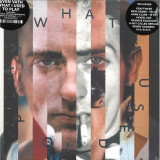
For this uniquely personal retrospective spread over twelve vinyl discs, Sven Väth takes us back to the early days of his DJ career. On What I Used To Play we meet great pioneers of electronic music, gifted percussionists, obscure wave bands, and innovative producers of a bygone 'new electronic' era. Rough beats and irresistible grooves from the identification stage of house, techno, and acid remind us not just how far electronic music has evolved over the past four decades, but how great it was to dance to EBM, techno, and house for the very first time.
If there is one protagonist of the electronic music scene who has remained curious, innovative and at the very cutting edge of music for over four decades, it's Sven Väth. His multi-layered artist albums and Sound of the Season mix compilations have been defining the genre for over two decades, and even today, he is constantly on the lookout for the next top tune to add to the highlights of his next set. At least, that's the case when he's not producing them himself as an artist or remixer. "Actually, it's always been part of my DNA to think ahead," and nothing had been further from his mind than looking back at his past, but when in spring of 2020 the international DJ circuit had to be scaled down to virtually zero, the 'restless traveler' suddenly had time. Time to stop and reflect on "how it actually was back then, at the very beginning of my career..."
"It was a great trip and with every track, beautiful memories came flooding back".
In the London apartment, he had just moved into, Sven has set up a "little music room", where he cocooned himself for several days, "to look way back for the first time and review my musical journey through the eighties, so to speak."
The interim result was six thematically oriented playlists with a grand total of 120 tracks from 'early 80s' to 'Balearic late 80s', together with excursions into afrobeat, European new wave, and EBM sounds and a few epochal techno/house tracks from the USA in between. From these 'Best of Sven Väth's favorites', the project What I Used To Play crystallized. Sven remembers how the Cocoon team reacted to his proposal: "They found the idea of making a compilation out of it MEGA from the beginning and everyone said 'Sven, go for it', but then, of course, the work really started, namely, to clear the rights and to get clean sounding masters of the up to 40-year-old tracks. There was also disappointment, of course. We couldn't clear certain titles because the rights holders in the USA had fallen out with each other or simply disappeared from the scene. In short, it wasn't easy, but now I can safely say we got the most important tracks."
Finally, after two years of research, curation, design, and administrative fine-tuning, the "little retrospective" from 1981 to 1990 is available. The exquisitely packaged, and three-kilo heavy box set is not only physically impressive, WIUTP is also the definitive record of Sven Väth's musical development. On each of the twenty-four sides of vinyl, you can trace track by track, what influenced him during which phase, and how he took off as a DJ from his parents' Queen's Pub straight into the spotlight at Dorian Gray. There and at Vogue (later OMEN), Sven became the style-defining player in the DJ booth that he still is today.
1981 - 1990: Future Sounds of Now
In the early eighties, the crowd in clubs like Vogue and Dorian Gray danced to what nowadays we call 'dance classics' - mainly disco, funk, soul, and chart pop. It was up to a new generation of DJs, including Sven Väth, the youngest protagonist in the Rhine-Main area at the time, to create their own club-ready music mix. Good new tracks and potential floor-fillers were rarities that had to be sought out and found, in order to prove oneself worthy.
Without MP3s, internet streaming, or other digital download possibilities, music didn't just gravitate to the DJ, instead, it had to be tracked down. In well-stocked record stores in Frankfurt and Wiesbaden or even in Amsterdam, London, or New York, Sven and friends sourced the material for countless magical nights. On WIUTP we can follow Sven's very personal journey through this wild, innovative era in which synth-pop, funk, hip-hop, and disco were successively replaced as 'club music' by house, techno, acid, and breakbeat. By the end of the decade, it was clear to see that these once exotic 'fringe' phenomena would soon become 'mass' phenomena.
Early 80s
Dirty Talk by the Italian-American duo Klein & M.B.O. represents the most innovative phase of the Italo-disco genre in the early eighties like no other track. Mario Boncaldo (I) and Tony Carrasco relied entirely on the original synthetic drum and percussion sounds of the Roland TR-808, coupled with the raunchy vocals of Rossana Casale and guitar accents of Davide Piatto. Of course, other tracks from this period were also influential in style, most notably Unit by Logic System, which worked as the perfect soundtrack to the laser lighting system at the legendary Dorian Gray club. With stomping beats and robotic rap interludes, Bostich by Yello also belongs on Sven's eternal playlist - after all, it caught the attention of Afrikaa Bambaataa, who invited the Swiss duo to perform at the Roxy in New York in 1983.
EBM Wave - Mid 80s
From today's point of view, the almost ten-minute-long, downtempo track Giant by Matt Johnson's band project The The, would probably not be considered an obvious club classic. However, a closer (re)listen reveals the rhythmic intricacies of the percussion overdubs by JG Thirlwell (aka Foetus) on Johnson's composition, and it becomes clear why this exceptional piece of music is one of Sven's absolute favorites. Other classics from this phase include Kaw-Liga by the mysterious The Residents, the hypnotic-synthetic Our Darkness by Anne Clark (and David Harrow), and last but not least, the somber, monotonous anthem Where Are You? by 16Bit, one of Sven Väth's projects together with Michael Münzing, Luca Anzilotti from 1986.
US House - Late 80s
You certainly can't talk about Chicago house without mentioning Frankie Knuckles. The resident DJ at the Warehouse not only gave the name to an entire genre, but also produced epochal floor fillers on the Trax label like the timeless Your Love, sung (and moaned) by Jamie Principle. Acid house protagonists Phuture also hail from Chicago, and on We Are Phuture (also released on Trax) we hear the chirping acid sounds of the legendary Roland TB-303 in full effect. Another featured classic is No UFO's by Detroit's Model 500 aka Juan Atkins, who is rightly considered the 'Godfather of Techno' even if the genre-defining track from 1985 still breathes with the spirit of hip-hop and electro from the first breakdance era.
Afrobeat
Le Serpent, by Algerian-born Abdelmadjid Guemguem, is a track that sounds completely different from everything else on WIUTP. Made in 1978, it's a monumental, rousing groove created without bass or synths, just with five congas! Even though Guem sadly passed away in 2021, his immortal, acoustic beats are understood all over the world and will continue to enrich many thousands of DJ sets for years to come. Another classic that not only Sven appreciates beyond measure is Hugh Masekela's Don't Go Lose it, Baby. In addition to being one of the most important jazz pioneers, the trumpeter and freedom fighter from Johannesburg was very experimental, integrating electronic sounds into his music in later years, in a similar vein to Miles Davis and Herbie Hancock. Dutch jazz pianist Jasper van't Hof's afrobeat project Pili Pili has also aged well. The trance-like, almost sixteen-minute-long track of the same name, manages to fill a whole side on the seventh of twelve vinyl discs in the WIUTP box.
UK-US-Euro - Late 80s
Time for a change of scene, in the truest sense of the word, and from a musical perspective, this section is like landing on another planet. First up is Andrew Weatherall's classic remix of Primal Scream's Loaded, featuring the iconic Peter Fonda sample (lifted from the 1966 biker film Wild Angels) that came to personify the mood triggered by the British Second Summer of Love in the late eighties: "We wanna be free to do what we wanna do, and we wanna get loaded...". This period also saw the emergence of M/A/R/R/S whose only single, 1987's Pump Up The Volume, became a club classic with support from DJ legend CJ Mackintosh. In this most eclectic of sections, we also encounter New York house and reggae producer Bobby Konders and his seminal Nervous Acid.
Balearic - Late 80s
Those who know him, know that Sven had already lost his heart to the 'magic island' of Ibiza as a teenager, so with that in mind, the WIUTP project couldn't end without a Balearic chapter. Inspired by Manuel Göttsching's E2-E4, the immortal, eponymously titled Sueño Latino belongs in there without question. Equally popular on the island was, and still is Break 4 Love by Raze, which thinking about it, would also fit perfectly into the house chapter. Last, but not least, there's an overdue reunion with Sven Väth himself, in his role as frontman of the successful Frankfurt trio OFF. Together with Michael Münzing and Luca Anzilotti (later of Snap!) this 'Organization For Fun' created the off-the-wall club hit Electric Salsa in 1986 which incidentally turned into an international chart smash, putting Sven in the enviable position of having to decide between pop stardom and a DJ career. Well, we all know how that decision turned out and the rest, as they say, is history. A not insignificant part of his story is What I Used To Play. Enjoy!
Re-mastered from the original master tapes.
180 gr vinyl pressed by Optimal in Germany using the Metal Mothers from Pallas.
Facsimile reissue using the original photo by Jean-Pierre Leloir.
Double insert using an original color photo by JP Leloir.
Each record has been visually checked to prevent defects.
Recorded October 22, 1958, Olympia hall, Paris.
Original LP issue: Brunswick 87 903.
“They’d been living in Europe for months. They’d appeared in Cannes and at Knokke (…) yet the only thing missing was the consecration that a great concert in Paris would bring. They won that last battle with astounding brio, in front of an audience of connoisseurs. There were many there who thought modern jazz had never been so well- served in Paris.” (Jazz Magazine). Hard bop had arrived! Hallelujah! On its first French appearance, in July ‘58 at the Cannes Festival – the first and only Cannes jazz festival – the Donald Byrd Quintet had brought the house down. Yet four of its five members were relatively unknown in France… The French knew that the leader had replaced Kenny Dorham in the Jazz Messengers, that Doug Watkins was the Messengers’ bassist, and that pianist Walter Davis Jr. was still only 18 when he’d played with Charlie Parker. As for Art Taylor, even if his name meant something to fans, it was still difficult for people to have a more precise idea of his musical qualities. Only Bobby Jaspar was well-known to Paris audiences, and the tour marked the return of the prodigal son, the musician who’d decided, after setting the Club St. Germain on fire, to try his luck in the States early in 1956 – J.J. Johnson had hired him, and then Miles Davis (for a short spell) before Donald Byrd brought him into the group he was taking to Europe. This new tour would climax at the Olympia theatre during one of the “Jazz Wednesdays” that were organised there, ever since the Jazz At Carnegie Hall” tour – Zoot Sims, JJ. Johnson, Lee Konitz, Phineas Newborn – had inaugurated the series a little earlier. Byrd and his band took pains not to disappoint a Paris audience they knew to be particularly fickle, and they astutely varied the public’s pleasures throughout the evening. The complicity that united the rhythm section – Walter Davis Jr., Doug Watkins and Art Taylor – was much in evidence on Ray’s Idea; mistrusting the traps of the spectacular at all costs, Donald Byrd, producing brilliant inventions on the trumpet, took the lion’s share of the honours on a theme that was then much in fashion, Dear Old Stockholm, adapted from a Swedish traditional song; on Flute Blues, Bobby Jaspar proved he was still a specialist on that instrument, and Paul’s Pal showed that, on tenor, the playing of Sonny Rollins hadn’t gone unnoticed. It must be said that it didn’t have much effect on the discreet lyricism underlying the choruses he played during his “St. Germain” period. The Olympia spectators weren’t sparing in their applause for the five musicians. How else could they have reacted, faced with the fire the band showed during a tune like The Blues Walk? It wouldn’t take much for us to applaud, too, even if it is fifty-five years later…
Text – Alain Tercinet
- A1: C Brand - Wired For Games (Long Version)
- A2: Ritz - Workin' Out
- B1: Fonda Rae - Live It Up (Short Vocal Version)
- B2: Feel - Got To Have Your Lovin' (Short Vocal Version)
- B3: Mynk - Get Up An' Dance (Dance With Me) (Dance With Me)
- C1: Fatback - Spread Love
- C2: Glory - Let's Get Nice
- C3: Blaze - We Come To Jam
- D1: Body - Have Your Cake
- D2: Lonnie Youngblood - Sing A Song
• 1980s New York was where modern dance music took its first steps; a phoenix rising out of the ashes of disco’s over-exposure and demise. The underground scene was the very opposite of the celebrity-sprinkled commercialism of Studio 54 – “Lofts & Garages” looks at how the Spring label, with its brand new 1980s subsidiary Posse, reacted to the new movement.
• As an independent New York label, it was perfectly placed to understand new trends in the clubs; it worked with some of those who would go on to define the dance music of the era, and for a glorious summer tracked the important early work of Arthur Baker, Maurice Starr and Michael Jonzun. These began their careers with productions that included Ritz, Glory and Blaze – records that sounded perfect for 12-inch singles and mixed electronic instruments with a real feel for the dancefloor.
• Label mainstays Fatback were always searching for a new groove and kept an eye on the floor. Their final single for the label, ‘Spread Love’, was remixed by Morales and Munzibai. Fatback’s Bill Curtis and Gerry Thomas also produced the sought-after boogie single ‘Get Up An’ Dance (Dance With Me)’ for Mynk.
• Others featured include one of the most distinctive voices in dance music, Fonda Rae, with her single ‘Live It Up’, released here in its rare radio edit; veteran soul man Lonnie Youngblood with his gospel-influenced ‘Sing A Song’; Detroit dance pioneers C-Brand’s ‘Wired For Sound’ and Body’s ‘Have Your Cake’, which has an early mixing credit for dance music legend Timmy Regisford.
• These records may not have all worked on the floor of the Paradise Garage, but they were part of the energy that was given off by that and the rest of New York’s vibrant post-disco era.
- 1: Por La Mañana
- 2: Oda A La Gente Mediocre
- 3: Hay Un Extraño Esperando En La Puerta
- 4: Si La Guerra Es Buen Negocio, Invierte En Tus Hijos
- 5: Reflejos De Olla
- 6: Historia De Un Loto Que Floreci En Otoño
- 7: Niños
- 8: No Como Antes
- 9: La Banda Le Hace Ud. Caer En Cuenta Que
- 10: Nosotros, Nuestra Arcadia, Nuestra Hermanita Pequeña
- 11: Un Sueño MGico
- 12: Psalmo Siglo Xx, Era De La DestrucciN
Last album recorded by Colombian rock pioneers Los Speakers in 1968 after leaving behind its affinity with yéyé and go-go music. One of the most brilliantly whacked-out psych LPs to emerge from South America. Originally self-released on their own Producciones Kris label, this is an almost impossible to find cult record. Officially reissued for the first time. By 1968, Colombian rock had left behind its affinity with yéyé and go-go music. In Medellín, Discos Fuentes had terminated its contract with Los Yetis, whose farewell record "Olvídate" set a strong anti-establishment tone. While the fire of protest that had spread rapidly among students in Paris was dying out, young people in Bogotá voiced their discontent. Aware of the effervescent political climate across the world, Los Speakers wrote their last record between June and September of the convulsive year of 1968. In order to give shape to these new songs they needed a space where they could experiment freely with sound. The music historian and critic and sound engineer, Manuel Drezner, made a providential appearance and offered the innovative Ingeson studios to the trio under one condition: that his company's name was included in the title of the record. For four months, Rodrigo, Manuel and Roberto created a record that was completely different to anything on the Colombian rock scene at that time. Los Speakers used cutting-edge equipment to record and mix "El maravilloso mundo de Ingeson", It was the first time local musicians had access to a multichannel mixing desk where they could experiment with all kinds of bold sound effects. The silences between songs were replaced with brief intervals of sound including the noise of a train running over a passer-by, a bomb exploding_ Although it's often labelled a conceptual record, the four compositions that each of the band members contribute reveal different aesthetic personalities. From the strong influence of Renaissance and Baroque poetry and music to the virulent social critique and pacifist statements, suffused with religiosity and mysticism. Armed with the demo tape, Los Speakers presented the project to CBS, Philips, Sonolux and Bambuco. The labels' verdict was unanimous: not very commercial and very costly. The group reacted to this negative response by pooling their personal savings, inventing a fictious record label called Kris and released the record just as they had imagined it. This led to the creation of a graphic concept unheard of in Colombia: the record included a booklet containing photos, texts and illustrations. Although there was a big media roll out, which included TV appearances and features in newspapers and magazines, as predicted the album was a commercial failure_ "El maravilloso mundo de Ingesón" is one of the most brilliantly whacked-out psych LPs to emerge from South America.
Truly adventurous and life enhancing music that invigorates your soul. TIP!
Press Release:
Gordan join traditional Serbian singing with abstraction, energy and minimalism. Their music is marked by radical reduction, seemingly endless ascension and a passion for experiments.
The Serbian singer Svetlana Spajić is an internationally recognized and acclaimed artist. She, like almost no other contemporary singer, is a master of all the complex local stylistic variations of singing from Balkan music. Guido Möbius plays bass and various electronic sound generators. Additionally he uses guitar amps, microphones and effects to provoke feedback which either harmonize or are juxtaposed with the song. It is a dialogue between sound and noise which is accentuated or fragmented by means of Andi Stecher’s expressive drumming. With a rich pool of ideas the percussionist drives the sound forward breathlessly and grounds it. Together the trio form a dynamic body of sound.
Gordan recorded their debut during the first wave of the Covid19 pandemic in Europe in March 2020. Due to the lockdown in Berlin at that time the city didn’t have many distractions to offer, so the trio just concentrated on work. The atmosphere of being isolated in a recording studio had a big impact on the musical results. All three band members came up with ideas for new pieces, which were immediately tested, worked out and recorded. On abstract instrumentals provided by Stecher and Möbius, Svetlana Spajic sometimes reacted with personal interpretations of serbian traditionals, and the other way around. Most of the time it was as if the music just happend to the band; playing together felt natural from the first moment on.
Some of the old serbian traditional songs that Spajic sang are extinct forms with a specific local melodic mode. The skillful improvisation of their lyrics and ornaments was of great importance and very estimated among village singers. The title song Down In The Meadow for instance originally is a love song from the village of Odevce in eastern Kosovo, Serbia. The singing manner is of a great intensity and sonority, with lots of specific local ornaments. It disappeared along with the village communities from the area. Oh, my Rose flowers is from the region of Kopaonik mountain (southwest Serbia) and the mode, scale is known as ”kopaonički glas” (Kopaonik mountain air). Svetlana adopted the style from the late singer Veličko Veličković from the village of Ostraće. It is an old mountain solo chant, rich in fast ornamentation movements and microtonal intervals. Don’t ask how I live is Svetlana’s homage to the new popular folk music movement from the 80ies known as Južni Vetar (Southern Wind) led by a musician and composer Mile Ilić, known as Mile Bas (“Mile the Bass”) which revolutionized popular music introducing tabooed oriental music and original arrangements.
All music by Spajic Stecher Möbius except ‘Don’t Ask How I Live’ by Miodrag M. Ilić, original title Što me pitaš
All lyrics are traditional, except ‘Don’t Ask How I Live’
Svetlana Spajic — vocals
Andi Stecher — drums & percussion
Guido Möbius — bass, feedback, electronics
Recorded by Alberto Lucendo at UFO sound studios Berlin in March 2020 mixed by Morphosis
Mastering by Neel at Enisslab, Rome
Artwork by Lorenzo Mason Studio
Looks like we are hittin’ a milestone here. A little background has to be provided though, in order everyone to fully understand why it took us that long to put out this Album, which was already
announced at the dawn of 2020. The ELECTRIFIED project started almost 2 (TWO) years ago, with the first vocal takes recorded a few days ahead of Cannonball Weekender in November 2019. Everything seemed fine and in good working order so the release date was
planned and announced for june 2020. All self financed, self conceived and self realised in that style that’s a point of distinction of our small group of labels. Then the CVD damn thing kicked in. “So What?” some of you would be very entitled to ask. And,
believe me, I’d be on the very same
#sowhat lines as you, only that each member of our team reacted to the shitstorm in his very different and individual way. While folks all over the world were confined home
setting up new ventures, creating new labels and dedicating themselves to something productive not to get psychologically annihilated by the media induced fear, our project was totally disrupted instead. It took the first wave to fade away to gather our stuff
together and movin’ the production forward. Anyway, whatever the reasons, the album came ready and mixed by march 2021. So here we are. Further than the two acclaimed singles
“Break Free” and “Sitting On Top Of The World”, the tracklist includes 6 completely new songs, a smashing cover of
Massive Attack’s “Unfinished Sympathy” and the rearrangement of the two classics
“There Are No Winners” and “Mother Got A Way”. The style goes from modern funk experimentation to a more classic soul and a groovy electronic ender foreseeing the future of this beautiful music.
As if the ever evolving style and sprawling narratives of Creeper didn’t already keep him busy enough, Will Gould reacted to last year’s initial lockdown by delving into the archives to complete the debut EP from his side project SALEM. Working alongside his friend and collaborator Matt Reynolds, SALEM quickly sold-out the first vinyl pressing of their self-titled debut EP while also earning fresh acclaim and streaming an In The K! Pit show for Kerrang!.
Now the second chapter in the SALEM story emerges from the underworld with the news that they’ll release their new EP ‘SALEM II’ on May 7TH and now share the first taste of the EP in the shape of the new single ‘DRACULADS’.
‘DRACULADS’ opens with the kind of larger-than-life b-movie horror love letter that can only come from Gould’s poison pen: “Maybe the blood of Jesus Christ is laced upon your lips / I get a little closer to God and too drunk each time we kiss.” It sets the tone for a blitzkrieg rush of melodic punk and raucous rock ‘n’ roll that only stops for breath for the song’s cabaret croon breakdown.
Elsewhere, the EP builds upon the style that SALEM established with their debut. From the tongue-in-cheek reference to The Smiths on the opening track ‘William, It Was Really Something’ to the closing ‘Heaven Help Me’, SALEM play it fast, frenetic and fun. As with the best old school punk EPs, ‘SALEM II’ is an escapist rush of attention that commands your attention for 15 minutes before it’s time to drop the needle back to the start.
Once upon a time, two operators stared at their screens. They sat silently for hours, their whole being dedicated to the task they had been assigned to. Days and nights passed in the same monotonous manner. Suddenly signals showed up on their monitors. Alarms started to ring. Both reacted at the same speed and did what they were supposed to do. Controls and commands were entered, as was protocol. After observing these waves for 61:01 minutes, everything became quiet again. What they had just witnessed made them wonder. For the first time they addressed each other. "The data is transferring through our system," announced the first. “Let us both check how this can be interpreted.” The second validated the response. Together, they looked at what had been recorded. Ideas raced through their complicated minds until they realized simultaneously: sounds! They listened. “Is this an unknown language?” one asked. “This is the first time this has been heard throughout our history,” the other answered. They listened again and again. “This electricity has been arranged to form a cohesive entity,” the first said. “Why would machines be used to create that?” the second mused. Something had awakened inside of them, an obsessive curiosity they had never experienced before. They did not understand and were blown away by the beauty of it. “Do you think it could have been left by humans before us?” one whispered. “If it was, these would be Major Signals,” the other concluded. As they processed these thoughts, the two artificial intelligences sat still.
Jemek was never easy to read: Is he serious or is it all a
joke
With his new album »Jemek Jemowit is Doktor Dres« the one-man
band, DJ and conceptual artist that is Jemek Jemowit moves
between old-school rap, Southern trap and EBM, skillfully
mixed by the infamous hardcore techno legend Marc Acardipane.
Jemowit's anarchistic-dadaistic and often quite explicit
lyrics (there is a sticker on the front of the vinyl record
warning the listener of »swear words«) the, to quote the
artist, »post-patriotic« Jemek sings in Polish, the language
of his parents and in German, the language of the country he
grew up in, he studied in and in which he lives today.
On his last »hyper-patriotic« (Jemowit) EP »Tekkno Polo«
which came out on the Polish Label Oficyna Biedota in 2012,
Jemowit focused on Polish culture in Poland. On the Polish
market the Pole with a German passport, presenting music that
was recorded in Italy and which had used the Polish sub-genre
»Disco Polo«, the Polish equivalent to »Euro Dance«, as
template was an exotic. Subjects Jemowit touched were
national dishes like bigos or bizarre figures of Polish pop
culture. Was he serious or was it all a joke
Until today Jemowit finds it »remarkable«, without taking
sides, that Poles in Germany »so easily adapt, they seem to
merge into German culture so quickly«. On his new album
»Jemek Jemowit is Doktor Dres« which is released on the
Berlin-based label »Martin Hossbach« Jemek embraces the role
of the Pole in Berlin. In Polish, peppered with new word
creations and grammatical mistakes, he states that his alter
ego »Doktor Dres« (Dres is the Polish word for tracksuit)
leads a better live in Berlin that he used to do in Poland.
He often switches into the German language, too. In an
interview with label founder Martin Hossbach Jemowit said:
»I'm the perfect Pole in Germany who goes shopping at the
most expensive warehouse in West-Berlin, the KaDeWe, without
reproach and my German is pretty good, too!« He has now
become the person that »Tekkno Polo« reacted against with its
»hyper-patriotic« approach. Germany is now the sacred land
and on album track »Oryginalne Adidasy« he invites his fellow
Poles to come and visit him, he who »grew up between The Wall
and Moschino«, in Berlin and have Polish dumplings (pierogi),
made by Gucci at KaDeWe. »Endlessly bragging / Style without
class / Deutsche Mark / Oryginalne Adidasy« - this is Doktor
Dres' slogan and the read threat for Jemek Jemowit's new
album.
- 1