2019 Repress !
Featuring Sim Simmer on the A Side in a cheesy electek track - "Get a little fizzee"/ On the B "The vinyl tune" - a message of hope for all you vinyl headz out there and "sounds of the intergalactic undeground" a space bass number which actually includes samples from real live aliens!!!!
Cerca:real d
Lucas Chantre, aka WORLD BRAIN, last graced us with a solo release half a decade ago, with 2019’s Peer 2 Peer. As its name suggests, that album explored the promise and perils of universal connectivity via quirked-up songwriting and instrumental psychedelia. His new release, Open Source, deepens this internal and external journey. Bursting beyond the four walls of ‘bedroom pop’ and reflecting a move from Berlin to Paris—where much of the album was recorded—and on to Brussels, the album has a jazzy, cinematic scope (as on the Brubeck-inspired march “Fromage collatéral,”) enveloping the listener in a cosmic-pastoral audiosphere.
There are still many tones that evoke the software sounds of decades past (the exemplar here is “cAPTCHA,” whose virtual marimba and vocalese suggest a breathless, Exotica-inspired introduction .mov for the information superhighway) but the palette has become richer and more organic, lead by the woodwinds which play a major role throughout, with flute provided by labelmate Martha Rose. (On the aforementioned “cAPTCHA” one also hears the world-class whistling talents of the incomparable Molly Lewis.)
Yet the single most noticeable new element may be the use of Chantre’s native French, sung by his sister on “Ville fleurie” and the gorgeous, fluttering “Minute papillion” (the title an idiomatic injunction to slow down!) Chantre initially wrote these lyrics in English, but felt something wasn’t quite right, only realizing what was off when he heard them sung in another language. That spirit of discovery – of finding a new spark in returning home – suffuses Open Source. It invites us to play, beckons us to relax, reminds us to find serenity amidst the churn of the present: minute papillon, dans le tourbillon.
Rivet’s new album for Editions Mego is an uplifting and joyous affair coming in the wake of tragedy and disenchantment. It is yet another rebirth from an artist willing to take a step back and reprise the current situation he is in. Mika Hallbäck has a long credible history in the Swedish underground. First recognised for his industrial techno works under the Grovskopa moniker he worked privately on more experimental works that eventually came out as On Feather and Wire, an album released on Editions Mego in 2020. After much acclaim for this bold new direction that blended electronic abstraction, pop and industrial forms into a heavy synthetic trip two tragedies struck. One was the passing of label boss Peter Rehberg and then the passing of his dog Lilo, who was as close as a companion one could have. These events led to the release of the more unsettling follow up L+P-2 (Lilo and Pita minus two) on Midnight Shift Records in 2023. Peck Glamour sees Rivet return to the reawakened Editions Mego with an album of optimism inspired by reconciliation with loss and further explorations of new mental/sonic realms.
Hallbäck defines his approach as not being married to any particular machine, instrument, process or genre. However he holds a particular affinity to sampling, of which, he says, provides the dirt and grit amongst what would otherwise be pristine, generic machine music. The contemporary crate digging method of scouring obscure download music bogs for unique sounds was his preferred research practice.
Peck Glamour is an album full of tracks brimming with the excitement of exploration. It's the results of a mind informed by punk, industrial, techno, dancefloor, disappointment, trauma and rebirth. Here the synthetic and authentic is viewed simply as the same means of human rationale and expression.
The opening, ‘Catch Up to Light’, sets the scene with ecstatic and odd fluorescent vocals sliding amongst crystalline likembe whilst synths swirl amongst the external festivities. ‘Orbiting Empty Cocoon’ is somewhat a homage to the alien sound worlds of The Orb, one which takes the listener deeper into a mind melting array of teased potential as visual elements are executed in a mask of audio wizardry and euphoric staccato rhythms, the later being a nod to Singeli music. ‘Patitur Butcher’ is more dance frontal utilising the Ghatam drum and a YouTube rip of a Chinese language lesson. ‘Plastic Bag Putain’ was made during the beginning of Russia's invasion of Ukraine and should be clear of its intent. ‘All that Heaven Allows’ is a marimba cover of an imaginary Love Parade anthem. 'Kyrie Geire’ potentially briefly fills the void left by the demise of Coil. The entire trip of Peck Glamour is sewn up with ‘We left before we came’ whereby extraneous recordings of double bass player Gregory Vartian-Foss (tuning/strumming/moving the bass) are superimposed with local field recordings to create a gorgeous bed of sounds acting as an exciting exit music to this sharp collection of cinematic ear excursions.
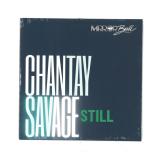
Legendary R&B vocalist Chantay Savage returns with "Still", a stunning new single released on Mirror Ball Recordings. Known for her timeless voice and emotive delivery, Chantay brings soulful elegance to a modern groove—blending classic R&B sensibilities with contemporary production.
This release marks a powerful moment of reflection, resilience, and growth, perfectly suited for lovers of real soul music and fans of artists like Jill Scott, Angie Stone, and H.E.R. • Return of legendary 90's R&B talent Chantay Savage. • Still is a certified modern soul classic gaining huge support from the scene since it's digital release. • Produced by Chicago house music legend Terry Hunter & James Poyser (The Roots)
Founded by Karigan and Organiks (The Roots Makers), The Earliers consists of 5 musicians and two singers. Sebah's voice will not go unnoticed, since he is part of a family of singers for whom soul is no longer a secret: a real pleasure for the ears! He has been singing for more than ten years in the emblematic French ska/reggae group "100Gr de Têtes". Musician from father to son also, Congo Lion is bringing a very rich background from his Congolese origins and a very tribal universe in his musical style. A perfect blend between the soul and early reggae period which makes the show of "The Earliers" a true tribute to the roots of reggae.
In the smoggy orange light of a new millennium, the young Deb Demure would take the bus, once a week, from his home in crumbling Hollywood to his grandmother's apartment, nestled in the pastel pristineness of Beverly Hills. During these visits, Deb couldn't help but notice the disconnect between the glow of his grandmother's temple, and the downtrodden, alienated figures that populated the seats of the mass transit that took him there. Week after week, he would observe these characters: fading B-movie starlets, leisure-suited alcoholics and forgotten civil servants. But one fateful commute home, as the twilight waned to the purple Los Angeles night, he realized these figures were not as lost as they appeared - there was a nobility in their failure, reflective of the dignity of the city's vanishing golden era. They were survivors, in need of a voice: a spokesperson for every color of hope and hopelessness, transcendent of gender and time; Drab Majesty became Deb's musical podium for this undertaking. Raised in a music-centric household, Deb would find the time to teach himself to play his father's right-handed guitar upside down and left-handed; an unorthodox fashion from where his earliest understanding of chords and harmony were conceived. Exploring the bins of discarded vinyl in his neighborhood thrift stores, his toolkit expanded with the subterranean sonic gems of the recent past. Influences range from the virtuosic arpeggiated guitar work of Felt's Maurice Deebank and the grittier pop progressions of Red Lorry Yellow Lorry's Chris Reed as well as Steve Severin from Siouxsie and The Banshees. He also studied the harmonic oscillations and utilization of the occult power of vibratory frequency present in New Age sounds of Greek artist, IASOS. In terms of orchestration, he consciously culls from the seaside maximalism of Martin Dupont and mechanized grooves of early Depeche Mode. Like a dualistic pendulum, his vocals swing from a preistly baritone to a choir boy's falsetto reflecting the sepulchral ambiance of church visits with his grandmother. Currently the drummer for Los Angeles lo-fi rock ensemble Marriages and having honed an unorthodox home recording style, Deb sources his sounds from a repository of "mid-fi" synthesizers and other lesser-quality instruments. Following the release of his debut cassette EP, "Unarian Dances", he also shared a split 12" with synth pop forefathers, Eleven Pond. During the Spring of 2015, Drab Majesty signed with Dais Records and released his first single, Unknown to the I, as a introduction for his first initial foray into the album format, romantically titled Careless. Written over the course of 2 years, "Careless" is a compendium of songs that have outlasted a malicious burglary of his studio, his struggles with substance addiction, and most recently, the death of his beloved grandmother.
hook releases a new LP “RPG” composed with one hand and Influenced by Retro Video Game and Japanese Ambient Music.
“RPG” is composed entirely with one hand. Despite breaking his other arm and being unable to play his synthesizers, Wijnands did not give up and created the EP, showcasing his determination and passion for music.
Wijnands says: “I have been listening to Nintendo soundtracks nonstop while creating this LP, and it really cheered me up when I just broke my arm.”
Besides Retro Video Game Music, “RPG” draws heavily from Japanese environmental, ambient and new age music from the 1980s.
“RPG” showcases Wijnands’ skill as a composer and his ability to create evocative and immersive musical landscapes. The songs have a similar minimalistic aesthetic, where less is more, and the focus is on creating a serene and meditative atmosphere through the use of delicate piano melodies, subtle electronic textures, and synthesizer sound recordings to mimic the sounds of nature.
Despite the challenges Wijnands’ faced during the creation of “RPG,” the LP proves that he is still pushing the boundaries of electronic music.
Cat Can Do presents Emotional/Apres on vinyl. Two emotionally charged tracks that will move you from the very first second. A perfect blend of Detroit Techno with Acid influences, hypnotic sequences, and an immersive energy that keeps you locked in throughout. Special edition with printed cover!
- A1: Time Was
- B1: Sometime World
- B2: Blowin' Free
- C1: The King Will Come
- C2: Leaf And Stream
- D1: Warrior
- D2: Throw Down The Sword
Wishbone Ash reigned supreme through the 1970s — centered on inspired musicianship, joyful spirit and inventive songs. Their concerts were uplifting and their recorded work sublime. Argus remains a stunning high point in the band's startling repertoire. Argus was a 1972 tour de force, a hard-rocking masterpiece that has gone on to have a huge impact on rock bands moving forward. If you've never heard Argus, you've surely heard music that it inspired.
The British quartet's trademark harmony guitars became a touchstone for many: Thin Lizzy, Iron Maiden, Opeth, and Lynyrd Skynyrd have all acknowledged an Ash influence, and tracks such as Lizzy's "The Boys Are Back in Town," Maiden's "The Trooper," and even Steely Dan's "Reeling in the Years" all have twin-guitar moments that hark back to Argus. But Wishbone Ash were different from the start. They were never strictly a hard rock band; their soaring vocal harmonies and musical grandeur placed them close to progressive rock.
But they weren't strictly prog either: They had no keyboards, no real classical influence and weren't into side-long suites. Their roots were in the blues, and their calling card was twin lead guitars in harmony (played in the original lineup by Ted Turner and Andy Powell). Even the hardest Ash rockers — like "Blowin' Free," the most famous track from Argus — had an ethereal touch. They could rock the big stages, but they did it with subtlety and grace. This is reflected perfectly in the classic album sleeve by prog-associated designers Hipgnosis: The front cover shows a Greek sentry — the "argus" of the title — staring off into the distance. It's a mythic, old-world kind of image until you look closely at the back cover, and see that he's heralding the arrival (or perhaps watching the departure) of a spaceship.
Two worlds colliding. Exactly what the band and album were all about. By the time of Argus, Wishbone Ash were stars in England and cult heroes among Anglophiles in the US. What made Argus a step forward was its flow of moods. The songs don't run together, but there's an emotional connecting thread from the album's somber beginning to its heroic end. The band insisted at the time that lyrics were something of an afterthought: Shortly after its release, main lyricist Martin Turner told NME that he wrote them mainly to fit the mood of the music: "The music that was coming out was very English, very medieval, and the lyrics had to reflect that." Added Powell at the time, "The expression comes out in the guitars. We wouldn't play it if it didn't express something." Now, Analogue Productions has applied all of its vaunted craft and technical expertise to make this epic album shine! Two 45 RPM LPs pressed on virtually silent 180-gram vinyl at Quality Record Pressings make the remastered audio sparkle. Quieter lyrical sentiments and softer musical passages are rendered precisely, while majestic riffs and fist-waving anthems fully reveal the energy of the music! Argus isn't just another rock record — it's a journey through a sonic landscape rich with depth, emotion and technical prowess. It's the album that solidified Wishbone Ash as masters of twin guitar harmony. Discerning audiophiles will find Argus an essential addition to their record collection. It's a masterclass in sound engineering that fully captures the intricate interplay of dual guitars with pristine clarity and a warmth that only analog recordings can provide.
- Inside Out
- Minneapolis
- Say It Again
- Tell Me When It Rains
- Tight Grip
- Reality
- Poplar Tree
- Everything
- Before The Hour's Up
Canadian singer-songwriter Marissa Burwell creates moments of warm musical tones featuring thick harmonies wrapped around gentle guitars and drums, while other moments showcase cathartic bursts of energetic alternative rock. Burwell"s sophomore album "Before the Hour"s Up" was born from a push and pull from within. The record is titled after the closing track, which explores the hopeless desire for all of life"s issues to be solved by the end of a therapy session. The creation and release of this album echoed this sentiment; there was a hope that by the time it was released, Marissa"s questions would be answered and her feelings resolved. Instead, she is humbled (yet unsurprised) by the reality that no matter how many topics you address in the hour, they do not simply disappear.
LA-based composer/arranger E. Lundquist (aka Eric Borders) returns with ‘Art Between Minds’. Having cut his teeth in the LA hip-hop and beats scene and explored realms of cosmic-funk under previous monikers, E. Lundquist’s music displays a rich tapestry of influences including the cinematic & experimental jazz-infused library music that influenced his previous LP ‘Multiple Images’. Now he is back with another ample helping of his hallucinogenic sonics, utilizing a bevy of vintage gear to replicate that warm glow of ’70s jazz-funk. From the Fender Rhodes MKI to the ARP Odyssey, to the Mellotron, the keys and synths he employs on these tracks display a genuine appreciation for the groove-driven music of The ‘Me” Decade.
The album plays like the score to a cult classic B-movie. The sun-drenched haze of “Soliloquy” could easily be what you hear during the calm before the storm in a Blaxploitation flick and the laidback crawl of “Euphoria” seems ripped right out of a fuzzy ‘70s blue movie. But there is a certain sophistication here, like the way the horn section, slinky guitar, and trippy synths combine on “Escape” to sound like liquid one moment and like a summer breeze the next.
While E. Lundquist’s artistry will eventually take him to new plateaus of sound, where he is right now is undoubtedly a high watermark in his career. He has become a torchbearer for jazz-funk in a new jazz revolution, updating the sub-genre with his delicate balance of digital and analog elements that will easily appeal to fans of Kamaal Williams, Surprise Chef, BADBADNOTGOOD, Khurangbin, Robohands and similar.
Soul Media, led by Jiro Inagaki, played a part in the development of jazz rock in Japan. This work, "Memory Lane" recorded in 1980, was the final work under the same name. Inagaki said about this work, "We tried to create this work while predicting the fate of fusion music" and it is true that the sound is completely different from ordinary fusion. The mellow and emotional "Memory Lane" the stormy and refreshing "I Will Give You Samba" and the groovy and edgy "Take My Hand". The sound that was created with his ally Norio Maeda, which looks , is of an extraordinary level of perfection in the songs, arrangements, and performances. It is a masterpiece that is still vivid and fresh when listened to today.
text by Yusuke Ogawa (UNIVERSOUNDS/DEEP JAZZ REALITY)
- A1: Pocket
- A2: Maggie Went Back To Mineola
- A3: Everybody Loves You (When You're Down)
- A4: Kathleen
- A5: Fool Don't Play With Fire
- A6: Headhunters Themea
- B1: Gun Barrel Boogie
- B2: Independence Day
- B3: Seeing Around Corners
- B4: Who Will Your Next Lover Be?
- B5: Gimme Some Love
- B6: Burnin' Daylight
Ian Moore, Johnny Moeller, and Jesse Dayton-three of Texas' fiercest fretmen-join forces at last as Texas Headhunters, a band born from deep roots, old friendships, and a shared reverence for the raw, swaggering spirit of Texas blues. Their self-titled debut isn't a nostalgia trip. It's a declaration.
Cut over five days at Willie Nelson's Pedernales Studio, 'Texas Headhunters' deals 12 tracks of grit, groove, and gut-level truth. No smoke, no mirrors-just seasoned musicians in a room, plugged in and turned up. The chemistry is real. The result is mind blowing. Clifford Antone looms large in the story of Texas Headhunters-the spiritual godfather of the project, and the man who first recognized the fire in each of its members. All three-Johnny, Jesse, and Ian-were among the last generation of young guns taken under his wing.
Texas Headhunters isn't just a summit of three badasses with guitars. It's a reclamation. A statement. A reminder that Texas blues, in all its grit and glory, still matters. It's not retro-it's revival. And it's not a tribute-it's a shot across the bow.
Format: Standard Jacket with printed sleeve with lyrics. Pressed on Opaque Red Vinyl.
Das zweite Album von Runnner, A Welcome Kind of Weakness, entstand aus einem gleichzeitigen Riss im Körper und im Leben des Songwriters Noah Weinman. Während der Monate, die er im Bett verbrachte, um sich von einem Achillessehnenriss und dem drastischen Umbruch einer Trennung zu erholen, schrieb er die 11 Songs auf diesem Album, die Weinmans stärkste sind und die vermeintliche Verletzlichkeit des Albumtitels bereitwillig aufnimmt. Aber zur gleichen Zeit sind diese Songs die präsentesten von Runnner, trotzig und selbstbewusst, eine Erinnerung an die Entschlossenheit, die aus der anmutigen Unterwerfung entstehen kann. Langjährige Fans von Weinman haben sich wahrscheinlich in seinen unverkennbaren Indie-Rock verguckt, der fast ausschließlich in Schlafzimmern und Heimstudios aufgenommen wurde, wo seine ergreifenden und selbstironischen Texte über Banjos, Gitarren und hallenden Bläsern schweben, die sich zu kathartischen Gipfeln steigern. Aber auf A Welcome Kind of Weakness erhebt sich Weinman zum ersten Mal in High Fidelity. Das erste richtige Studioalbum von Runnner erinnert an die überlebensgroßen Höhen des Rocks der frühen achtziger Jahre, mit dem Weinman aufgewachsen ist, an Bands wie Coldplay, Radiohead und Snow Patrol, mit ihrer unverfälschten stimmlichen Präsenz, ihren schillernden Gitarrenriffs und ihrem astralen Synthesizer-Glanz. Das ist Rockmusik in ihrer köstlichsten Form, Musik die Weinman etwas gab, worauf er sich freuen konnte, als er endlich wieder live spielen konnte. Aber so hoch die klanglichen Höhen auf A Welcome Kind of Weakness auch sein mögen, wir sehen Weinman auch, wie er anmutig mit den Fragen kämpft, die sich aus Momenten des körperlichen und emotionalen Verderbens ergeben. Es erfordert eine gewisse Tapferkeit, lange genug in der trüben Mitte zu sitzen, um darüber zu schreiben. Und in seiner Bereitschaft, diesen transitorischen Raum zu bezeugen, scheint Weinman uns zu beruhigen: Du magst denken, dass du nicht mehr laufen wirst, aber mit der Zeit, könntest du es.
- Exodus
- Aurora
- Portrait Of A Scorched-Earth
- Just Beyond The Reach Of Light
- Oblivion
- Kaleidoscope
- Matrix Of Control
- Catatonia
- Infinity's Kiss
- Automation Bias
- Rorschach
Lathe of Heaven kehren mit ihrem zweiten Album Aurora zurück, einer kühnen Erweiterung ihrer klanglichen und thematischen Palette, die sich wie eine Reihe lebendiger, emotionaler Vignetten entfaltet. "Aurora" ist eine bisher unerforschte Variante des Lathe of Heaven-Sounds, die eine delikate Balance zwischen ihren Punk-Wurzeln und einer fesselnden New-Wave- und 80er-Jahre-Post-Punk-Ästhetik bietet, die Einflüsse aus dem britischen und finnischen Post-Punk der mittleren 80er-Jahre mit subtilen Nuancen aus dem Underground-Pop der 90er-Jahre und der Gegenwart kombiniert. Aufgenommen mit Ben Greenberg bei Circular Ruin und gemastert von Brad Boatright, ist das Album klanglich beeinflusst vom melodischen Rock von The Cure, Musta Paraatis Gothic-Post-Punk-Synthie und intensivem Schlagzeugspiel und A Flock of Seagulls' Art-Pop-Gesang und Gitarrenriffs. Textlich schreckt Aurora nicht vor schweren Themen zurück. Aurora ist als eine Sammlung von Science-Fiction-Kurzgeschichten gedacht, die von Themen wie Antikolonialismus, Vielfalt und Gleichberechtigung beeinflusst sind und sich in den Texten niederschlagen. Diese Geschichten sind von den Romanen von Ursula K. le Guin, Octavia Butler, Greg Egan und Peter Watts inspiriert und führen den Hörer in mythische, kühne und etwas beunruhigende Realitäten. Der Titeltrack "Aurora" spielt in einer dystopischen Zukunft, in der die Erde aufgrund von nuklearem Fallout längst verlassen ist - er erforscht Themen wie Verlust, Liebe und Hingabe. "Oblivion" befasst sich mit dem Phänomen der semantischen Sättigung - wenn man ein Wort oft genug sagt, verliert es seine Bedeutung. "Exodus" ist eine Neuinterpretation des Schiffsparadoxons von Theseus und erzählt von der Erfahrung, das Bewusstsein in einen neuen, perfekten Körper zu übertragen. An anderer Stelle steht "Portrait of a Scorched-Earth" für einen direkten Akt des Widerstands. Als einer der emotionalsten Songs des Albums bricht er mit der üblichen lyrischen Abstraktion der Band und ist eine schonungslose Abrechnung mit den Schrecken der modernen Kriegsführung und der Vertreibung, die in der gelebten Tragödie von Gaza wurzelt. Lathe of Heaven hoffen, dass "Aurora" ein breites Spektrum an Emotionen hervor ruft und zum Nachdenken über den Zustand unserer Realität und der Menschheit anregt. Es ist literarisch, ohne prätentiös zu sein, politisch, ohne zu predigen, und emotional, ohne mit der Wimper zu zucken. Jeder Song hält ein Stück eines zerbrochenen Spiegels, und was zum Vorschein kommt, ist eine prismatische, verwundete Schönheit, die mit tausend Gesichtern zurückstarrt. "Aurora" erhebt den Anspruch, "ohne Angst in das traumlose Vergessen zu zittern". Sie sind herzlich eingeladen.
Students of Decay presents The Dip, a new full-length recording by Berlin-based artist and composer Thomas Ankersmit, marking his debut with the label and sixth album to date. Comprised of two expansive, sidelong pieces composed entirely on the Serge Modular synthesizer, it signals a subtle yet significant shift in Ankersmit’s trajectory, imbuing the hyper-physical, psychoacoustic intensities of his live performances with introspective, atmospheric, and even melodic elements.
Primarily known for a site-responsive approach to sound, often realized in the moment of performance, Ankersmit’s turn toward the studio in the last few years has opened up a new dimension within his practice. It is in this quiet rupture that The Dip emerged, a study in internality and suspended states, rich with cinematic undercurrents and ghostly spatial suggestion. Here, electricity itself feels transfigured – becoming supple, even organic – within an environment shaped entirely by analog signals.
Over the past two decades, Ankersmit has established himself as one of the foremost practitioners of the Serge, the notoriously idiosyncratic and expressive instrument that has remained central to his work. On The Dip, he harnesses its potential not for brute force or disorientation, but for spaciousness, resonance, and lyrical abstraction. Without resorting to additional processing or effects, he draws out tones that feel simultaneously raw and refined, articulated and blurred – intricate structures that seem to breathe and evolve of their own volition.
The result is a kind of auditory hallucination, a “cinema for the ears,” wherein impressions, emotional arcs, and imagined topographies unfold. Each side of The Dip plays like a single gesture unfolding in time – a spatial narrative constructed through vibration, density, and the movement of air.
The Dip follows acclaimed works on PAN, Touch, and Shelter Press, and reaffirms Thomas Ankersmit’s position as one of the most focused and probing voices in contemporary experimental music. Quietly radical and meticulously constructed, it is less a departure than a deepening – a descent into a more private sonic world, where the boundaries between perception, memory, and pure signal dissolve.
Cody Currie with a new EP! Jamiroquai in the studio with Masters at Work and Todd Terje and u got the vibe!
The London super soul talent did 5 more tracks for his label Toy Tonics. Being part of the Toy Tonics crew since day one almost.. he has been sharing studio, stages and free time with the Berlin label bunch for more than 5 years now. The new EP shows his talent as a musician who plays bass, guitar and keyboard on the highest level again as well his skills as a superb electronic producer. The new sound for the edgy dancefloor of 2025. It's not dancefloor tools, it's real music for dancers. Taste & quality.
- A1: All Of Everything
- A2: Saturday Love (Cherry)
- A3: Sweet N Sour
- A4: Donahoo’s Chicken
- A5: Human ?
'it’s his loosest, dreamiest dispatch yet, an enveloping and atmospheric collection that constantly comes together and breaks apart.'
Maxo releases his new album Mars Is Electric. Earlier this week, Maxo released a third haunting video, directed by Vincent Haycock, from the visual world of ‘Mars’ for the title track. Maxo previewed the album with the release of singles “Human?” and “Donahoo’s Chicken” this spring, which arrived with equally raw, inventive, and unnerving music videos.
Mars Is Electric is Maxo’s first official release since he dropped two critically acclaimed albums in 2023 with Even God Has A Sense of Humor and Debbie’s Son. His fifth full-length album finds the Southern Californian artist self-aware and mature. Having lived the last decade of his musical life intentionally creating specific bodies of work rooted in imagery, observation, and capturing moments, Maxo spent this previous year freely creating without a specific plan, relieved from all obligations and restrictions.
“This is the first time that I really didn’t care, I didn’t approach things so seriously,” the artist shrugs off, meaning that without expectations or specific goals, his creativity flourished. This opening finds the artist having conversations he’s been avoiding, having lived silently in the pain of those topics for the past few years. Exploring uncomfortable themes about personal life, relationships, and family fractures, life before and after the loss of innocence, and an abundance of existential spirals.
The exploration was not only thematic but also musical in nature. During the creation process, Maxo was immersed in a wide array of music from past to present - France Joli, $amaad, Steve Spacek, Cherelle, DJ Quik, Lisha G - influences that seeped their way into these songs. The album opens in a loose, dreamlike state—experimental and searching, mirroring the emotional fog of someone looking for something real to hold onto. But as it progresses, so does Maxo’s energy as he fiercely rides and weaves on songs with a contagious confidence, producing some of his most kinetic and lyrically impressive music to date.
As the work and vision coalesced into a body of work, Maxo found that he was unlocking a creative language with his collaborators that felt wholly new - a new understanding of why and how he was making art for this world. What emerged from this year-long process was a new musical journey and a future where Maxo refuses to be another bad example of what could be, refusing to mind the blueprint set down. Maxo is the sole voice on the album featuring production by lastnamedavid, Quelle Chris, Baird, Groove, and more.
Listen to Mars Is Electric above, see full album details below, and stay tuned for more from Maxo very soon.