The Konduko 7" series ends with the 4th and possibly best single with Noel Williams aka King Sporty's cover version of Bob Marley's Them Belly Full, here released as Dance To The Music.
First released on the Natty Dread album of 1974, it was Marley's first album working away from Peter Tosh and Bunny Wailer and was a spiritually charged political and social statement, also featuring classics No Women, No Cry, Lively Up Yourself and Rebel Music.
As an associate and friend from their Studio One days, William's version makes sense, in the tradition of covers throughout reggae's history. Appearing a year late, the 1975 single came in Jamaican and US pressings, a nod to Konduko's roots, having started in Kingston before the move to Miami in the earlier part of the decade.
A warning against allowing the poor to go hungry, with the prophetic "a hungry mob is an angry mob", the cover includes a lot of the Miami feel Sporty was incorporating. With instrumentation again from the Ocean Liners KC And Sunshine backing band), the horns and guitar raise the soul, with counter keys, Part 1 is a straight vocal, while Part 2 is close to a Version but more than an instrumental and in its title, shows its funk and soul background too. A perfect end to the series, the uplifting tracking belies the powerful message, bringing the Miami swing to the JA groove once more.
Suche:rebel funk
After just over a year-long hiatus from the Earthly Tapes series – the 3rd Chapter is finally upon us. Offering more mind-altering tracks to the series, we welcome 6 new members to the Earthly Measures familia!
We kick things off with ‘Comets (part I & II)’, the first release by ORSO, the new musical project from Jean Dasso AKA Yeahman, stepping into club and drum music. Alongside faster rhythms, with influences of UK Break music, African dances and traditional instruments, we’re taken through a two-chapter journey led by modular melodic loops, old traditional voices samples and ORSO’s own recordings.
Up next is a trip to Argentina as we welcome Balam to the EM family, join him as he takes you on a daydream across the Latin-American rainforest where synthesizers and nature collide to create the perfect mix, guided by a voice from the deep jungle. ‘Ensueño’ is a dance-floor tool fitting for both the start and end of the night.
Japanese native Mamazu steps up the tempo for the third track ‘Tombi’. Transporting us to a hypnotic and hedonistic state as delightful aerophones sound with the exotic chant, delivering the feeling of a dry breeze from the unseen frontier. Another dance floor ripper!
The B-side starts with ‘Voces’, a track inspired by the music that Chilean artist DJ Raff’s mum listened to when he was a teenager making beats in his bedroom. He used to take her records and tapes to sample and make boom-bap beats. Voces is influenced by both Spanish and Chilean 70’s music, although deconstructed to make an amazingly catchy melody. .
Ditti takes us through an ever-twisting groove as we swim upstream, spot a wave and take off... welcome to ‘Poly Party’. The soundtrack to a carnivalesque funked out ballad on a Polynesian beach shifting between the rhythms of a guitar & riding the surf, cutting synths & dripping flows.
We wrap things up with ‘Small Town Rebellion’, a story told by Scottish producer Kusht – this downtempo chugger reflects the story of a young man in a dead-end town with no future. He needs to break his fate and carve his own path by revolting and manifesting his own destiny.
Some things take time to happen, some things perhaps take a bit longer than they should but, finally, we are delighted to present an issue of the iconic, and sought-after, Brazilian album 'Alucinolândia' by Zito Righi e Seu Conjunto from 1969.
The trippy, surrealist 60s cover design with hands holding eyeballs is somewhat confusing. Rather than the stoner acid rock record that the art may suggest, 'Alucinolândia' is actually a quintessential 60s gem, mixing samba, MPB, bossa nova, quirky organ-led mod-jazz groovers and easy-listening crooners with a relaxed cool swagger.
Zito Righi aka Isidoro Righi, the Brazilian saxophonist, instrumentalist, conductor and composer brought together an illustrious cast for this masterpiece, including the much-loved vocalist Sônia Santos. Sônia delivers a masterclass on the album's opener, and maybe its crown-jewel 'Poema Ritmico Do Malandro’. The song is fierce and driving with an enticing funk intro that bursts into a Samba / Batucada workout. A real monster that works magic on the dancefloor. Sônia would later re-visit this track in 1971 on a recording for Copacabana Records, which Mr Bongo released as part of the Brazil45 series. The Brazilian songwriter Roberval penned three tracks on the record, including another highlight and the far too short 'Birimbau'; a catchy Brazilian jazzy-samba dancer at its finest. Other musicians include the drummer Fernando who also recorded with the greats Dila & Guilherme Coutinho.
The fact the record was released in 1969 meant it was probably a bit out of step with its contemporaries in comparison to the works of artists such as Os Mutantes, Gilberto Gil et al. The core of 'Alucinolândia' is that of a more optimistic early to mid-sixties party feelgood vibe rather than the angsty, psychedelia, and rebellion of the Tropicália movement. Over 50 years since its release, the work can finally be judged on its own merit; and what a beauty it is.
Ahead of the release of his much awaited debut album « blablablue » , Belgian singer-songwriter Delv!s just shares a new single, the dreamy “Human Trumpet”.
It’s no secret that Belgium owes much of its cultural prestige to its vibrant music scene. Lately, with much of the attention turned to Flanders, the Flemish side of the country is playing host to many exciting, genre-bending projects, including a tremendously innovative rap scene and a lively pool of electro bands walking in the footsteps of pioneers such as Soulwax: A tradition that Delv!s, one of the country’s most exciting newcomers to the soul, blues, disco-funk and pop genres, is set on honouring.
Delv!s is now ready to introduce “blablablue" to the world: a soul album infused with electro, funk and rock sounds, blended with a score of field recording samples; twelve tracks all penned by himself, unveiling a whirlwind of emotions that fuel the singer’s unique voice. The nostalgic brass arrangements and vintage-sounding harmonies may evoke Billie Holiday, Nina Simone or even James Brown at times, but “blablablue” nevertheless triumphs as a current and socially relevant record thanks to its topical commentary and diverse influences. Addressing many of the great issues plaguing the world today, including the sense of urban solitude, this is the first offering by a great artist, a sensitive soul also fluent in the language of love. Something to reflect on, unite us and even comfort us at times when we need it the most.
White Vinyl
Maceo Plex’s seminal debut album ‘Life Index’ is released on Vinyl for the first time ever, as a Record Store Day exclusive on white vinyl
Maceo Plex is the Crosstown Rebels production moniker for renowned Techno producers Maetrik (Eric Estornel). ‘Life Index’ is a collection of truly outstanding tracks, which have a more accomplished and musical feel than your average house album. From the deep and rich G-Funk-soaked house of ‘Gravy Train’, and the string driven odyssey of ‘Sleazy E’, and Detroit influenced ‘Dexter’s Flight’ this is a sumptuous album full of real gems!
Repressed !
Luca Cazal & Josh Baker kickstart Richy Ahmed’s new vinyl focused imprint, Back 2 Black, with a brace of intergalactic tracks. The new label’s first release also features a remix from British electronic stalwart, Radioactive Man.
Cazal remains a central figure within the house & techno community; his DJ residency at Circoloco is longstanding and releases for labels like Crosstown Rebels, Classic Music Company, his own See Double label, and Richy Ahmed’s Four Thirty Two imprint have marked out his production prowess and ear for a good groove. Josh Baker has been rising up the ranks over the last few years, with releases for Ben Rau’s META label, Locus and his own You&Me label.
On ‘Organ Nuke’, Cazal & Baker dip into the kind of spacey techno house that was forged by Detroit pioneers Underground Resistance, as funky percussion and organ stabs are coupled with dreamy pads and cosmic tones. ‘Rocket Ship’ continues these themes, with heavy 909 drums anchoring a cheeky acid bassline and flashes of cosmogonic sound.
British DJ & producer, Radioactive Man, has long since been at the coalface of electronic music’s leftfield. As one half of Two Lone Swordsman (with the late, great Andrew Weatherall), and multiple aliases for his industrious flow of releases, the revered producer injects a heavy dose of classy electro and Drexciyan vibes into ‘Rocket Ship’. Rolling breaks unfurl in the electro beats as head scrambling keys and rasping bass stimulate the senses for a funkin’ body poppin’ workout.
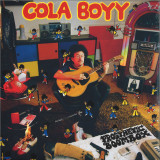
There’s liberation on the dance floor in the songs of Matthew Urango – glimpses of revolution that glimmer beneath the disco ball. “I want my music to bring people together,” says the Californian pop innovator, best known as Cola Boyy. “Because standing together is our best chance at fighting this shit show.” The shit show in question is a broken, brutal system the acclaimed multi-instrumentalist has witnessed up-close. Urango was born with spina bifida and scoliosis in Oxnard, California: a town in which almost 30,000 are estimated to live in poverty. Prosthetic Boombox, his eagerly awaited debut album, might at first glance seem a joyous confetti-burst of pop eclecticism, engineered to sound like “scanning between stations on a car radio, landing on all these different sounds and styles” as Urango puts it. Dig deeper, though, and you’ll discover a simmering sense of rebellion. “The working class are injured, struggling to pay rent and struggling to put food on the table,” he says. “I want to represent that.” Prosthetic Boombox
achieves that goal in a thrilling flurry of inventive indie, funk and soul: take Urango’s car radio analogy, place it in a time-travelling Delorean with Prince in the passenger seat, and you’re half-way there.
Look no closer than Prosthetic Boombox’s euphoric opener, the Avalanches-assisted ‘Don’t Forget Your Neighbourhood.’ The track – which Urango says mixes “the Beach Boys, French disco, house keys and ragtime piano, kinda like the Cheers soundtrack!” – ends with lyrics urging listeners to “fight for your town with your fist closed, strike it and make it more than just a memory.” It’s a reminder that the working classes need to “turn our fists against our oppressors instead of each other,” he explains. After that emphatic introduction comes a horn-laced funk wig-out titled ‘Mailbox’ – a song that gives Dua Lipa’s Future Nostalgia a run for its Studio 54-themed money, featuring rising Londoner JGrrey. Elsewhere, ‘Song for the Mister’ ventures into smooth R&B territory, before ‘Roses’ – a collaboration with Myd of Ed Banger fame – offers a bouquet of bustling disco guitars and infinite bisous of Connan Mockasin’s band drops in on the immaculate ‘Go the Mile’. Urango saves his most introspective moment for the album’s starry closer. ‘Kid Born in Space’, a cosmic collaboration with MGMT frontman Andrew VanWyngarden, sees the artist reflect on what he once had to overcome as a disabled person of colour. “I see them looking down on my dreams of being,” he sings tenderly. “I hear them making fun of my voice, but I keep on moving forward, I refuse to live in anyone else’s shadow.” Prosthetic Boombox, on this subject, is more than an album title – it’s a statement of intent.
“The message of my music is that our class is exploited, oppressed and murdered on the daily. That’s not right, and the system that enables that deserves to be wiped off the face of the earth,” he says. “The only way that happens is if we’re united. That’s the point of my music – to relate to people and unite them.” And what unites more than raucous, irresistibly danceable pop? Prosthetic Boombox is a riot of joyous grooves and catchy hooks for good reason. “I want to reach and spread my message to as many people as possible. You can’t do that if you’re some obscure motherfucker, you know?” he laughs. Don’t bet on him being an “obscure motherfucker” for long.
- 1: Ringo
- 2: Gaelic
- 3: Lumpi
- 4: Stack-A-Lee (Feat Prince Buster)
- 5: Arna-Fari
- 6: Stop Breaking My Heart
- 7: Save The World
- 8: Skalalitude
- 9: Brother Can You Spare A Pound
- 10: Only You (Feat Rico)
- 11: Mixed Feelings (Feat Jennie Bellestar)
- 12: Great British Spliff
- 13: Can't Kill The Spirit
- 14: One World
- 15: Grim Reaper
- 16: Elephant Killers
- 17: Perfidia (Feat Zoe Devlin)
- 18: Aulde Lang Syne
Spanning four decades over 32 years, The Trojans have constantly evolved, re-inventing themselves through several incarnations
while always remaining one happy family.
Formed By Gaz Mayall in the Autumn of 1986 after the demise of his first band, Gaz's Rebel Blues Rockers, The Trojans filled a gap
on the ska scene of the time of the time with a sound that encompassed ska and reggae with a dash of soul, funk, R&B and world roots.
During the first few years they recorded several albums that were well received on the UK underground, all on Gaz's own
independent label Gaz's Rockin' Records. The first was 'Ala-Ska' which featured the classic single 'Gaelic Ska' and launched a whole
new genre of Afro-Celtic fusion that has since become a hallmark of The Trojans' sound.
The 12 tracks included here cover the three main incarnations of The Trojans line-ups and features guest appearances from Prince
Buster, Jennie Bellestar and Zoe Devlin. Now available exclusively for RSD 2019 on 180g vinyl - a very limited Red edition and a
limited Black version
Cryovac Recordings recognizes and recruits artists with individualism and creativity to add to its list of collaborators. Cryovac has evolved into a project that is brought to life by craftsmen, musicians and visual artists that give their time and effort for a common cause. Cryovac aims to weave a thread between the varying sonic approaches that describe a direction techno must go. A. García tends the cryovac from conception to press; combining with Mike Kretsch to create a unique minimal sound. Mr. Joshooa has the tools and know how to describe his personality as his work. He swims the Detroit techno-sphere wearing many hats, and is always pushing techno forward by any means necessary. Cryovac is a vehicle for the rebel spirit; we hope you listen to it.
The Cat Lover E.P. starts with Mr. Joshooa taking his time weaving a slow funky grind. “Horse Hockey’ is the name of this 4/4 two step that gallops and bangs its way through cinematic synth rises, heroic harmony, and crunchy to smooth samples. Mr. Joshooa's mischievousness is on full display with his second jam “fuck around”. Tumbling samples form a bop that is maneuvered playfully through a hectic arrangement. Side 2 is a. garcia and Mike Kretsch’s domain. Their first effort minimally clicks and rings into a soulful melody; popping rhythm holds your body to terra firma so your mind can “spacetravel”. B2 ,”meerkat”, opens with a raw kick on top of marmic synth evolving into a dramatic techno drive turning and shaking along a desolate road
- A1: Latest Record Project
- A2: Where Have All The Rebels Gone?
- A3: Psychoanalysts' Ball
- A4: No Good Deed Goes Unpunished
- A5: Tried To Do The Right Thing
- B1: The Long Con
- B2: Thank God For The Blues
- B3: Big Lie
- B4: A Few Bars Early
- C1: It Hurts Me Too
- C2: Only A Song
- C3: Diabolic Pressure
- C4: Deadbeat Saturday Night
- C5: Blue Funk
- D1: Double Agent
- D2: Double Bind
- D3: Love Should Come With A Warning
- D4: Breaking The Spell
- D5: Up County Down
- E1: Duper's Delight
- E2: My Time After A While
- E3: He's Not The Kingpin
- E4: Mistaken Identity
- F1: Stop Bitching, Do Something
- F2: Western Man
- F3: They Own The Media
- F4: Why Are You On Facebook?
- F5: Jealousy
- A Just Message (Intro) W/ Just Blaze
- Welcome To Planet X (We're Coming 4 You) W/Jonny Rice Eminem & The Observer - Produced By Lavi$H
- Dem People W/ Xzibit - Produced By Beat Busta Beats
- Robocop Went Pop - Produced By Young Jordan
- Rebel Party W/ Commentary By The Observer - Produced By Lavi$H
- I Want 2 Kill You W/ Astray & The Observer - Produced By Lavi$H
- Crazypsycholoco - Produced By Aktive
- Intergalactic Hustling W/ Boroc - Produced By Claudio Audio
- Revolutionary Funk W/ P-Funk Pavarotti - Produced By Ynot Of Soundsmith Beats
- Shoot Back (Dear Officer) W/ Tech N9Ne - Produced By Deborahs Son
- Obey/Kxngs Speech - Produced By Klasiq
- The Oath - Produced By Klasiq
- Kxng Tut - Produced By Lew Jay
- Puppet Master W/ King! Rza & The Observer - Produced By Lavi$H
Good vs. Evil is the third studio album by American rapper KXNG CROOKED (formerly known as Crooked I). The album was released on November 11, 2016 and features cameo appearances from notable rappers such as Eminem, RZA, Xzibit, Tech N9ne among other guests The album was well received by critics, who praised its direction, dark beats and narrative skills.
After the most controversial Presidential election in this country’s history, one that has not only created further divisiveness amongst the people residing in it, but one that now includes handful of cities across our nation protesting in the streets it has become evident we are living in a complicated and dangerous time. The societal divide widens so deeply with every passing day that it seems as if at any moment the pendulum could shift. KXNG CROOKED's Good Vs Evil could not appear at a more needed time.
Standard Light Rose LP! 'Flock' is the record that Jane Weaver always wanted to make, the most genuine version of herself, complete with unpretentious Day-Glo pop sensibilities, wit, kindness, humour and glamour. A consciously positive vision for negative times, a brooding and ethereal creation. The album features an untested new fusion of seemingly unrelated compounds fused into an eco-friendly hum; pop music for post-new-normal times. Created from elements that should never date, its pop music reinvented. Still prevalent are the cosmic sounds, but 'Flock' is a natural rebellion to the recent releases which sees her decidedly move away from conceptual roots in favour of writing pop music. Produced on a complicated diet of bygone Lebanese torch songs, 1980's Russian Aerobics records and Australian Punk. Amongst this broadcast of glistening sounds is 'The Revolution Of Super Visions', an untelevised Mothership connection, with Prince floating by as he plays scratchy guitar; it also features a funky whack-a-mole bass line and synth worms. It underlines the discordant pop vibe that permeates 'Flock' and concludes on 'Solarised', a super-catchy, totally infectious apocalypse, a radio-friendly groove for last dance lovers clinging together in an effort to save themselves before the end of the night. The musician's exposure to an abundance of lost records served as a reminder that you still feel like an outsider in this world and that by overcoming fears you can achieve artistic freedom. Jane Weaver continues to metamorphise_ "A mind-expanding delight, devoid of retro posturing." The Guardian "Ominous and luminous, expansively spacious and sonically imploding, scientific, ephemeral and eternal" The Quietus
It’s hard not to notice such an unforgettable sleeve, and if the music it protects is half as memorable as the artwork, you know you just have to hear it. We don’t think you’ll be disappointed because yes, this is the majestic 1971 album Un Muñeco De Madera, courtesy of the shadowy Sola, and it sounds exactly as you’d want it to. Originally released on RCA in Mexico, it’s kaleidoscopic Acapulcan-funk.
The album’s endless grooves are propelled by softly rocking, quasi-library funk breaks. Vocally, Sola is in step with the 60s French pop-chanteuse style, but of course her lyrics are delivered in sensuous Spanish. Her voice is beautiful. Pillowy soft and tender, it can suddenly explode in mystical anger. These are ten tracks of moody, mysterious vibes that stir the spirit and sooth the soul.
The LP was written, arranged and directed by prolific Spanish composer Manuel Alejandro, the man behind an incredible number of now classic Latin love songs from the 60s, 70s and 80s. As for Sola herself, next to nothing is known about the Mexican singer except the occasional whisper heard in only the darkest corners of the annals of music history. It’s said that upon growing disillusioned with the music industry she ended up in a convent of Carmelite Sisters. Fitting perhaps, given that Un Muñeco De Madera is a spiritual wonder of a record.
Much-loved single and title-track “Un Muñeco De Madera” opens the album. It introduces us to Sola’s sparkling Latin-funk, bursting with swaggering grooves sewn by tight drums, sweeping strings and lush keys. It’s followed by the serene but melancholic bossa groove of “Oye Mamá, Oye Papá” and the strings and guitar of “He Bajado Al Infierno” that hold up vocals reaching for an eternal truth. With full-on soundtracky feels, the rolling keys underpinning the Morricone-esque soundscape of “En Ellos Creo” will give you goosebumps. The gorgeous “Soy Rebelde” (“I’m Rebellious”), sets its gentle, piano-led delivery in delicate contrast to the lyrical sentiment.
Perhaps Sola’s most well-known track, the exotic bossa of “Tabu, Tabu”, is a formidable groove. Elegant bongos, prominent bass, delicate acoustics and a persistent flute blend with Sola’s unique voice; sinuous, sassy and forceful at the same time. The stunning “La Última Palabra”, while not literally the album’s last word, is nevertheless a stirring statement of strutting Latin soul, with more musical ideas packed into this one song than the entirety of most long-players.
If you hadn’t decided already, the final two tracks that are the funk-fuelled “Bada-Bada-Ba” and the horn-heavy percussive masterclass “Únete A Mi” will leave you in no doubt that this is one very special record.
Mastered with great respect by Simon Francis, cut by the master Pete Norman and with that sleeve lovingly restored by the Be With team, this re-issue ensures that Un Muñeco De Madera now sounds, looks and feels as beautiful as it deserves to.
: Un Muñeco De Madera (LP)
We are happy to announce the first in anew series of 12" releases under DJ'S CHOICE, Four Flies Records' division devoted to fresh and cool new music in genres ranging from tropical funk and nu-soul to hip hop.
Created during the global lockdown, this new release is a joyful invitation to move our bodies and dance – something that, alas, has become almost impossible in this pandemic-ridden year.
Quero Ver Você Dançar is a collaboration between Rome-based DJ/producer The Rebel, Portuguese DJ/producer Dedy Dread, and Brazilian jazz singer Keila Abeid. Other musicians playing on the track – including Neney Santos (percussions), Marco Ravallese (keys), and Fab Samperi (flute) – masterly contribute to its soulful favela vibes.
Housed in a single jacket with beautiful artwork by Roman illustrator Federica Fruhwirth, the 12-inch single also features a super groovy remix by Mo'Horizons which, with its powerful combination of bossa and drum'n'bass rhythms, makes this release a must for tropical-music aficionados.
Also available on all major digital outlets, with two additional remixes by young Brazilian producers Afterclapp and Brasila Strut.
The horn of plenty arrives at your door, full of freshly harvested produce. It contains fruits of artists you already know and from others waiting to be introduced to you. Don’t be afraid though – they are only your new neighbours. Clear Memory Farms recommends this five track Various Artist EP: EDM-free, sustain-able, enriched with biodynamic electro spells and mystic funk chants. Have a try at this asymmetric game but don’t be surprised to turn into a hairy rebel. Is it worth it? Will you experience all die goede dingen? Seems like we can’t find any good answer for that – find out for yourself.
Mastering by Rude 66
Artwork by Dr. Rekorder
-Dedicated to Theo-
Reissue of this long lost funky Afrobeat/Reggae classic from 1978
For fans of Fela Kuti, Peter Tosh, Bob Marley, Segun Bucknor
The year is 1978 and one hot thing from the musical underground is Reggae music from Jamaica, the USA or the UK, where most of the acts had musicians of Caribbean descent. Reggae had the groove, the rebel spirit, and the relaxed attitude all in one, to enchant a big part of the world’s inhabitants. And while at least Jamaica as a relatively poor and so-called "Third World“ country proved to spawn Reggae acts of the highest quality, literally nobody dared to look further and dig deeper into the underground except of a few maniacs who were not satisfied with spinning Marley over and over again. And maybe they stumbled over the 1970s Afro Beat sound from countries like Zambia or Nigeria and then got interested. What did they find in the simmering metropolises of this still mysterious continent? Somewhere in Nigeria, they would have certainly caught a glimpse of mind-blowing performances of The Sea Lions, a six-piece group mixing the then hip Reggae and Afro Beat styles to generate fresh and furious music with a hypnotizing atmosphere.
Polyrhythmic beat patterns build the foundation, the utterly fruitful soil for the heartwarming melodies wailed out by the guitars and the commanding vocals with their conjuring charm. Great organ work builds the link between the groove section and the melody instruments. You can imagine what a pleasant experience this band might have been live back in 1978 when their sole album "Free The People“ got released. And this album, of which copies in only good conditions already fetch prices of $450, while nice clean pieces might go up to $1200, lives up to the expectations one might have from watching a live show by the Sea Lions. The sound is vivid, transparent, powerful, and clean enough to make the music a real pleasure listening to, but earthy enough to present nothing but the band going wild here. The songs all have a similar pace, not too fast, but swinging and pulsating to spread their energy to and among the listeners. The melodies are simple but come from the depth of the heart. This feels typical for African 70s music and despite being kind of reduced, these melodies keep haunting you still even hours after the record been taken off the turntable and put back into its sleeve. They bring images of an ever pulsating city by night, warm climate, palm trees, people at the bar, a witches cauldron of sounds, smells, voice, and pictures. And you feel the magic floating through the air while this groove will not let you go so easily.
You can either dance your soul out to this ultimate reissue or you can sit down, listen and let the music tell you a story of the dark corners of the big city, the narrow alleys that lead you into a boiling labyrinth of mystical dreams. And in songs like "You Can Make It If You Try“ you will find the whole magic of the African world, a world so fascinating for us Europeans but still so unapproachable in some ways and dangerous for the weak. Do not try to resist, this is your pleasure. Grab a copy and the Sea Lions will carry you off to their place. I haven’t heard such a killer Afro Beat and Reggae album with songs this exciting and wild in a long time. If you equally love Peter Tosh, Bob Marley, Segun Bucknor, and Fela Kuti, look no further. Here is the spiritual essence of all these great artists merged into one giant act.
Underground Mod Obscurity from South Africa
• South African take on the London Beat scene, mixing British beat, R&B, reggae and funk.
• “Reggae Shh!” and “Reggae Meadowlands” - both issued on 45 in the UK and Italy - became huge underground hits on the Mod scene.
• Zorro Five were top-flight session musicians whose once-off inspiration won them the 1971 South African Recording Industry award for “Best Beat Group”.
• Zane Cronje (organ, keyboards) was a prolific composer, Johnny Fourie (guitar) was later called out by John McLoughlin as “one of the greatest guitar players of our epoque”.
Historic cassette of first Tuareg guitar studio recording. Newly restored and remastered. Tuareg guitar gets the electronic treatment, with a reissue of the cassette by legendary Nigerien composer Abdallah Oumbadougou. Produced in Benin in 1995, “Anou Malane” is one of the first studio recordings of Tuareg guitar. The genre, known for minimal folk ballads performed on acoustic guitar, is transformed with a full-on 90s swinging groove. Abdallah Oumbadougou is one of the original creators of Tuareg guitar music. Active in the Tuareg rebellion in the 1990s, his early compositions were politically charged, addressing the fighters scattered in the desert. These low-fi recordings were recorded on boomboxes, and found their way throughout the diaspora, passed through clandestine networks of cassette dubbers. In exile, Abdallah traveled to Benin to record an official release with Nel Oliver, a West African producer known for his work on a number of seminal boogie and afro-funk records. Oliver’s influence is heavily felt on the recordings with early digital techniques of programmed drum effects and backing synthesizer, transforming Saharan political ballads into Afro-boogie anthems for the discotheque. The resulting album went on to become a classic and pushed Tuareg guitar and the rebellion into the public consciousness
Emerging from the epic Scottish house and techno scene of the 90s, George Thomson started his musical adventures as a promoter, bringing to Scotland DJs from Chicago, New York, Toronto, Paris and London to play at the legendary Tribal Funktion parties in Edinburgh.
Aside from co-founding Edinburgh's Underground Solushn record shop, he also started producing his own blend of techno and house in the mid-nineties. This led to a string of releases with seminal labels such as NRK, Stickman, 2020 vision, Crosstown Rebels, Tirk and more recently Greco-Roman and Output Recordings. His various monikers from then and now include Plastic Avengers, George Demure and more recently the George part of of Jeanga and George.
After a move to London in 2000 his George T moniker began a long hiatus. Nothing was heard until Joe Goddard released an EP of rediscovered hidden gems on Greco-Roman in 2017. This awoke the fire within and he’s back today with the first new George T material in 19 years.
The Midway EP was recorded in North London over a period of 2 years, using only analog gear and embracing memory, movement and the moment. These four tracks are a love letter to club life, both then and now. This love is best demonstrated with the four accompanying short films using either nightclub footage from 1996, slow motion lido footage or Bauhaus triadic ballet inspired time lapse choreography.